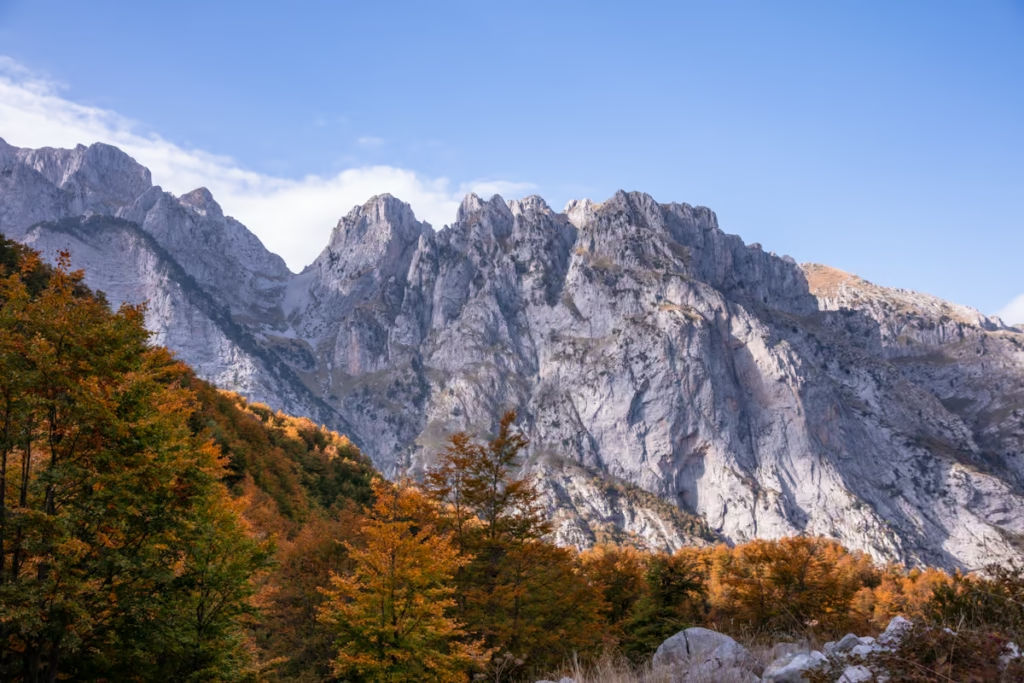
Peja Travel Guide, Kosovo
Updated November 2026, Peja, Kosovo Travel Guide was originally published in May 2026
Peja (Pejë), in western Kosovo, is one of the country’s lovliest cities for travelers interested in mountain scenery, outdoor adventures, and cultural heritage. Set at the entrance to the Rugova Mountains, the town combines a lively Ottoman-era Old Bazaar, historic mosques, medieval monasteries, and the rushing waters of the Lumbardhi River.
Often treated as little more than a jumping-off point for Rugova Canyon and the Accursed Mountains, Peja deserves more than a quick stop. The surrounding region offers some of Kosovo’s best hiking, rock climbing, via ferrata routes, and alpine scenery, while the town itself has plenty of history, traditional food, and local character worth exploring.
Whether you’re planning a weekend in Peja, looking for the best things to do in Peja, or using the town as a base for exploring western Kosovo, this guide covers the attractions, day trips, accommodation, transportation, and practical travel tips you need to plan your visit.
Need Travel Insurance and Evacuation Services?
Start shopping for travel insurance plans over at IATI Insurance. Readers of the Adventures of Nicole get a 5% discount off your plan.
The Adventures of Nicole partners with Global Rescue to offer the world’s leading medical evacuation and security advisory services. To travel with peace of mind, explore their evacuation coverage.
Best Things to Do in Peja, Kosovo
Wander the Old Bazaar (Çarshia e Pejës)

The Old Bazaar (Çarshia e Pejës) is one of the best places to start exploring Peja. Located in the heart of town, this historic commercial district has been an important center of trade and craftsmanship for centuries. Its narrow streets are lined with traditional shops, cafés, workshops, and small businesses selling everything from gold jewelry and handmade crafts to traditional Albanian clothing.
Look out for the qeleshe, the distinctive white felt cap traditionally worn by Albanian men, alongside handwoven textiles and other locally made products. The bazaar has experienced considerable destruction and reconstruction throughout its history, including during the 1999 Kosovo War, but it remains an important part of Peja’s cultural identity.
Take your time wandering through the streets, stopping for a coffee, and watching life unfold.
Visit Peja Town Square (Sheshi Haxhi Zeka)

Haxhi Zeka Square (Sheshi Haxhi Zeka) is one of the central gathering places in Peja. Surrounded by cafés, bakeries, shops, and historic buildings, the square is a convenient place to stop for a coffee or something to eat while exploring the town.
The square is also a useful starting point for exploring Peja’s historic center. The Old Bazaar, Peja Museum, and several other cultural attractions are within walking distance.
Grab a macchiato, find a seat outside, and watch the town go about its day. Peja is a relatively easy city to explore on foot, and this is a good place to get your bearings.
The square is also the stage for festivals, public gatherings, and occasional live music, especially during summer evenings. The surrounding architecture is a mix of post-war modern structures and traditional styles, reflecting Peja’s turbulent but resilient past.
Visit the Patriarchate of Peć
One of the most historically significant places to visit in Peja is the Patriarchate of Peć (Pećka Patrijaršija), a Serbian Orthodox monastery complex dating back to the 13th century.
Located just outside the town center, near the entrance to Rugova Canyon, the monastery is an important religious and cultural site. It served as the seat of the Serbian Orthodox Church’s patriarchs for centuries and is particularly renowned for its medieval frescoes, which cover the interiors of its churches.
The Patriarchate of Peć forms part of the UNESCO-listed Medieval Monuments in Kosovo, a collection of four medieval Serbian Orthodox monuments recognized for their exceptional Byzantine-Romanesque architecture and artistic heritage.
The monastery is still active, so visitors should dress respectfully and be mindful of religious services. Security arrangements can include a KFOR checkpoint, and visitors may be asked to show identification. Bring your passport and check current visiting arrangements before heading out.
Visit the Peja Museum (Muzeu i Pejës)
If you want to learn more about the history and traditions of western Kosovo, make time for the Peja Museum (Muzeu i Pejës).
The museum is housed inside the historic Konak of Tahir Bey, an 18th-century Ottoman-era residence located near Haxhi Zeka Square. The traditional house once served as accommodation for merchants and travelers passing through Peja.
Inside, the museum has ethnological and archaeological exhibitions featuring approximately 2,000 objects that trace the region’s history from ancient Illyrian times through more recent periods. It’s a worthwhile stop for understanding the cultural influences that have shaped Peja and the wider Dukagjin region.
Visit Bajrakli Mosque

The Bajrakli Mosque is one of Peja’s oldest surviving religious landmarks. Built in the 15th century, it has stood through earthquakes, wars, and multiple reconstructions, serving as a focal point for the city’s Muslim community. The mosque’s name, “Bajrakli,” refers to the military banners historically associated with the Ottoman administrative divisions, a reminder of Kosovo’s centuries under Ottoman rule.
Its traditional Ottoman architecture, elegant minaret, and relatively understated exterior make it an interesting stop while exploring the historic center. Inside, visitors can see the prayer hall and its decorative details, including the mihrab and painted wooden elements.
If you would like to enter, avoid prayer times, dress modestly, and remove your shoes before stepping inside. Remember that it remains an active place of worship, so be respectful of those using the mosque.
Haxhi Zeka Watermill (Mulliri i Haxhi Zekës)
Haxhi Zeka’s Watermill (Mulliri i Haxhi Zekës) is another interesting historical attraction in Peja. Dating to the late 19th century, the mill is associated with Haxhi Zeka, an influential Albanian political figure and national activist who played an important role in the Albanian national movement.
Historically, watermills were essential to rural communities, providing a way to grind grain and support local agricultural production. The mill offers a glimpse into this traditional way of life and the importance of water-powered industry in the region.
The restored building is an important part of Peja’s cultural heritage, and recent local tourism initiatives have helped bring renewed attention to the site.
Taste Peja’s Local Food and Beer

Food is another good reason to spend some time in Peja. The cuisine of western Kosovo draws on Albanian culinary traditions, with hearty dishes, fresh dairy products, homemade bread, and plenty of grilled meat.
Some local foods worth trying include:
- Flija: A traditional layered pastry made by repeatedly adding thin layers of batter and cream, traditionally cooked beneath a metal dome called a saç.
- Burek: A savory filo pastry filled with meat, cheese, or vegetables.
- Tavë: A variety of baked dishes, often prepared with meat, vegetables, or dairy.
- Fresh trout: Particularly worth looking for in restaurants around the Rugova region.
And then there’s Birra Peja, the locally produced beer that has become one of Kosovo’s best-known brands. The brewery was established in Peja in 1971, making it a recognizable part of the town’s identity.
For a casual stop, grab a coffee or meal around Haxhi Zeka Square or the Old Bazaar. If you’re heading into Rugova Canyon, you’ll also find restaurants along the road serving traditional food with mountain views.
Day Trips from Peja, Kosovo
One of the biggest reasons to visit Peja is its location. Sitting at the entrance to the Rugova Mountains and the Accursed Mountains National Park, the town is an excellent base for exploring some of Kosovo’s most impressive natural landscapes.
From dramatic limestone gorges and alpine lakes to mountain hiking trails, waterfalls, and medieval monasteries, there are plenty of places to visit around Peja. Some can be reached in a short drive, while others make better full-day excursions.
Here are some of the best day trips and outdoor adventures to add to your Peja itinerary.
Explore Rugova Canyon (Gryka e Rugovës)
Rugova Canyon is arguably the biggest natural attraction near Peja and one of the most impressive landscapes in Kosovo. Beginning just a couple of kilometers outside the town center, the gorge cuts through the Accursed Mountains, with steep limestone cliffs rising dramatically above the Lumbardhi River.
The scenic road through the canyon is an attraction in itself. As you travel deeper into Rugova, you’ll pass rocky cliffs, forested slopes, mountain villages, traditional guesthouses, and roadside restaurants.
There are plenty of ways to experience the canyon beyond simply driving through it. Popular activities include hiking, rock climbing, via ferrata, ziplining, caving, and mountain biking.
One of the most recognizable landmarks is the historic arched stone bridge, located along the main road through the gorge. The bridge is a protected cultural heritage site and has become one of the symbols of Peja.
You can visit Rugova Canyon independently by car or taxi, or arrange an outdoor activity with a local adventure operator.
Hike in the Rugova Mountains
Beyond Rugova Canyon, the wider Rugova Mountains offer some of the best hiking opportunities in Kosovo. Part of the Accursed Mountains range, this rugged landscape is characterized by alpine meadows, dense forests, glacial lakes, waterfalls, and limestone peaks.
The region has hiking routes ranging from relatively easy walks to demanding mountain ascents. Several peaks in the municipality rise above 2,000 meters, making Rugova particularly appealing to trekkers and mountaineers.
For travelers wanting to explore beyond the main canyon road, the villages and mountain trails around Kuqishtë and other settlements provide access to some beautiful alpine scenery.
If you enjoy outdoor adventures, consider spending at least one full day exploring the mountains rather than treating Rugova as a quick sightseeing stop.
Take the Rugova Mountains Cable Car
For panoramic views without breaking a sweat, hop on the cable car from Bogë or the newer lift just outside Peja. In winter, the area becomes a ski hub, but the summer views of rolling green valleys are equally stunning.
Explore Rugova Canyon

Just a short drive west, the Rugova Canyon is a jaw-dropper. Sheer cliffs rise dramatically above the Lumbardi River, and every bend reveals another photo-perfect viewpoint. Hiking trails, zip lines, and small roadside restaurants make it easy to spend a full day here.
Livadhi Sakes Trail
The Livadhi i Sakes Trail is one of the hiking options to consider when exploring the Rugova Mountains. The route takes you through the region’s mountainous landscape, with open meadows, forested slopes, and views across the surrounding Accursed Mountains.
It’s a good option for travelers who want to get away from the main road and experience more of Rugova’s alpine scenery.
Mountain conditions can change quickly, particularly at higher elevations, so bring appropriate footwear, sufficient water, and layers even during summer.
Drini i Bardhe Waterfall
Located near the village of Radavc, approximately 10 kilometers from Peja, the Drini i Bardhë Waterfall (Ujëvara e Drinit të Bardhë) is one of the region’s best-known natural attractions.
The waterfall emerges from a karst spring at the foot of the Accursed Mountains before cascading down the rocky landscape. The water is particularly striking, with the surrounding greenery and limestone creating a beautiful setting.
Nearby, you can also visit Radavc Cave (Shpella e Radacit), a cave system associated with the spring. The cave and waterfall make a convenient combination for a short excursion from Peja.
This is an especially good stop if you want to experience some of Kosovo’s natural scenery without committing to a full day of hiking.
Visit the Leqinat Lakes near Kuqishtë
Located high in the Rugova Mountains, these alpine lakes are among the region’s most beautiful natural attractions. Surrounded by forests and mountain slopes, they offer a peaceful setting for hiking, photography, and enjoying the scenery.
The lakes sit at approximately 1,860 meters above sea level and are particularly popular during the warmer months, when hiking conditions are more favorable.
Getting here requires traveling deeper into the Rugova region, so allow time for the winding mountain roads and check local conditions before setting out.
Hike the Peaks of the Balkans Trail

Peja is one of the main gateways to the famous Peaks of the Balkans Trail, a multi-day trekking route connecting remote mountain communities across Kosovo, Albania, and Montenegro.
The circular trail covers approximately 192 kilometers, depending on the chosen route and variations, passing through some of the most spectacular mountain scenery in the western Balkans.
Although the complete trek typically takes around 10–12 days, you don’t need to commit to the entire route to enjoy the region. Peja is an excellent starting or ending point for longer trekking itineraries, and local operators can help arrange guided hikes and shorter excursions.
If you plan to complete the international route, remember that you’ll need to arrange the Peaks of the Balkans border-crossing permits in advance.
Visit Visoki Dečani Monastery
Located approximately 15 kilometers south of Peja, Visoki Dečani Monastery is one of the most important medieval monuments in the Balkans.
Founded in the 14th century under Serbian King Stefan Dečanski, the monastery is renowned for its Romanesque-Gothic architecture and remarkable collection of Byzantine-style frescoes. More than 1,000 compositions depicting biblical scenes and religious figures cover the interior walls.
Like the Patriarchate of Peć, Visoki Dečani forms part of the UNESCO-listed Medieval Monuments in Kosovo. It remains an active Serbian Orthodox monastery and is a significant religious destination.
Visitors should dress modestly and respect the rules of the monastery. There is a KFOR checkpoint en route, so bring your passport.
Hike to Liqeni i Zemrës (Heart Lake)
Liqeni i Zemrës, or Heart Lake, is another beautiful mountain destination in the Rugova region. Named for its distinctive heart-like shape, the lake sits high in the mountains and offers the kind of scenery that makes the Accursed Mountains such a popular destination for hikers.
The trail is a more demanding excursion than a casual walk through Rugova Canyon. Your original route description gives a starting point near Koshutan and an estimated five-to-six-hour round trip, but I’d verify the trailhead and current route conditions with a local guide before publishing those specifics.
If you’re comfortable with longer mountain hikes, this is a worthwhile addition to a Rugova itinerary.
Mirusha Waterfalls (Ujëvarat e Mirushës)
If you have additional time in western Kosovo, consider a trip to Mirusha Waterfalls (Ujëvarat e Mirushës).
Located farther east of Peja, this series of waterfalls and turquoise pools is one of Kosovo’s best-known natural attractions. The Mirusha River has carved a series of cascades and limestone formations through the surrounding landscape, creating a succession of small lakes and waterfalls.
The area is popular for hiking, picnicking, and enjoying the scenery during warmer months. Some visitors also swim in designated pools, although water conditions and access can vary.
Allow a substantial part of the day for this excursion, especially if you’re planning to explore beyond the main viewing areas.
Try the Via Ferrata Near Peja in Rugova
If you’re looking for something more adventurous to do near Peja, Rugova Canyon has plenty of options beyond hiking. The area has developed into one of Kosovo’s main outdoor adventure destinations, with activities including via ferrata, rock climbing, ziplining, caving, and mountain biking.
Via ferrata routes are particularly popular, allowing visitors to climb sections of the canyon using fixed steel cables, ladders, and other safety equipment. They’re a great way to experience the dramatic limestone landscape from a different perspective without needing traditional rock-climbing experience.
Several local adventure operators offer guided activities and equipment rental. If you’ve never tried via ferrata before, I’d recommend going with a qualified local guide rather than attempting a route independently.
Where to Stay in Peja, Kosovo

Choosing where to stay in Peja largely depends on whether you want to explore the town on foot or use it as a base for outdoor adventures in the Rugova Mountains.
The town center is the most convenient area for first-time visitors, with restaurants, cafés, the Old Bazaar, and the main cultural attractions all within walking distance.
Here are a few accommodation options worth considering:
- Hotel Dukagjini: A historic hotel in the center with views over the river and mountains. Great location for exploring on foot and overall stunning property.
- 1863 Boutique Hotel: Another great option that is both centrally located and inside a historic building with rave reviews.
- Sky Hostel: A great option for those on a backpacker budget, located close to the center of Peja.
How to Get to Peja, Kosovo

Peja is located in western Kosovo and is relatively easy to reach from Pristina and other major towns in the country. You can travel by public bus, private vehicle, or taxi, depending on your budget and itinerary.
The town has its own bus station, with connections to Pristina and other destinations around Kosovo.
From Pristina
- By Bus: Regular buses connect Prishtina’s main bus station with Peja throughout the day. The journey typically takes around 2–2.5 hours, depending on the service and traffic. Tickets are generally inexpensive, and you can usually purchase them at the station or directly from the operator.
- By Car: Driving from Pristina to Peja takes approximately 1.5–2 hours via the main road through western Kosovo. Having your own vehicle gives you more flexibility to stop in towns and villages along the way.
From Prizren
- By Bus: There are bus connections between Prizren and Peja, although services may be less frequent than those from Pristina. Some journeys involve changing buses in Gjakova, so check the route before departure. Plan for 3-3.5 hours.
- By Car: Driving from Prizren to Peja takes approximately 2-2.5 hours, depending on your route and traffic conditions.
Getting to Peja from Gjakova
- By Bus: Gjakova is relatively close to Peja, and buses connect the two towns. This is a convenient option if you’re exploring western Kosovo without a rental car.
- By Car: The drive generally takes around 30–40 minutes, making Gjakova an easy addition to a Peja itinerary.
Getting Around Peja
Peja’s historic center is compact enough to explore on foot. The Old Bazaar, Haxhi Zeka Square, Peja Museum, and several other attractions are within easy walking distance of one another.
However, you’ll need additional transportation to explore Rugova Canyon, the mountain villages, and more distant attractions such as Mirusha Waterfalls.
If you don’t have a rental car, taxis and local tour operators are your best options for exploring the surrounding countryside.
Best Time to Visit Peja, Kosovo

Peja is a year-round destination, although the best time to visit depends on what you want to do. Summer is ideal for hiking and outdoor adventures in the Rugova Mountains, while winter brings opportunities for skiing and other snow activities.
Here’s what to expect during each season.
- Spring (April–June): Perfect for hiking, with wildflowers in bloom and pleasant temperatures.
- Summer (July–September): Warm weather and clear skies make it ideal for mountain adventures, but expect more tourists.
- Autumn (October): Crisp air and colorful foliage in Rugova Canyon.
- Winter (December–February): Great for skiing and snowboarding in the surrounding mountains.
Travel Tips for Peja, Kosovo

Before visiting Peja, here are a few practical things worth knowing.
Currency: Kosovo uses the euro (€), despite not being a member of the European Union. Cards are accepted at many hotels, restaurants, and larger businesses, but it’s useful to carry cash for smaller establishments, taxis, and rural areas.
Language: Albanian is the primary language spoken in Peja. Serbian is also spoken in the region, and English is understood by many people working in tourism, hotels, and restaurants.
Safety: Peja is generally a welcoming destination for travelers. As with anywhere, use normal precautions and remain respectful when discussing Kosovo’s complex political and historical issues.
Getting around: The town center is walkable, but a rental car, taxi, or organized excursion will make exploring Rugova and the surrounding countryside much easier.
Mountain safety: Weather in the Accursed Mountains can change quickly. If you’re hiking, bring appropriate clothing, water, and navigation equipment. For more challenging routes, consider hiring a local mountain guide.
Identification: Bring your passport when visiting the Patriarchate of Peć and Visoki Dečani Monastery, as security procedures may require visitors to show identification.
Internet and connectivity: Kosovo has local mobile networks, and international roaming arrangements vary by provider. Check your mobile plan before arriving if you rely on data for navigation.
Day trips: Don’t limit yourself to Peja’s town center. Rugova Canyon, the Drini i Bardhë Waterfall, Gjakova, and Visoki Dečani Monastery are all worth considering when planning your itinerary.
Why Peja Should Be On Your Kosovo Itinerary

Peja is adestination that deserves more attention than it often receives on a Kosovo itinerary. While many travelers pass through on their way into the Accursed Mountains, the town has enough history, culture, food, and outdoor activities to justify spending a few days here.
From wandering the Ottoman-era Old Bazaar and visiting medieval monasteries to hiking through Rugova Canyon and exploring the alpine lakes of the surrounding mountains, there’s a surprising amount to experience in and around Peja.
Whether you’re visiting for a quick city break, planning a longer mountain adventure, or following the Peaks of the Balkans Trail, Peja is an excellent base for exploring western Kosovo.
If you’re putting together a Kosovo itinerary, don’t overlook this corner of the country. The combination of mountain scenery, cultural heritage, and welcoming local atmosphere makes Peja a great stop in the Balkans.
Have Any Questions About Visiting Peja?
Ask your questions about Peja in the comments section below. Been to Peja? Let us know your favorite things to do and places to eat in the comments.