This post contains affiliate links, and this post comes in partnership with booking.com. Comments submitted may be displayed on other websites owned by the sponsoring brand.
Northern Lights Guide: Top Tips For Seeing The Aurora
Updated July 2025, Top Tips For Viewing The Aurora was originally written in March 2018
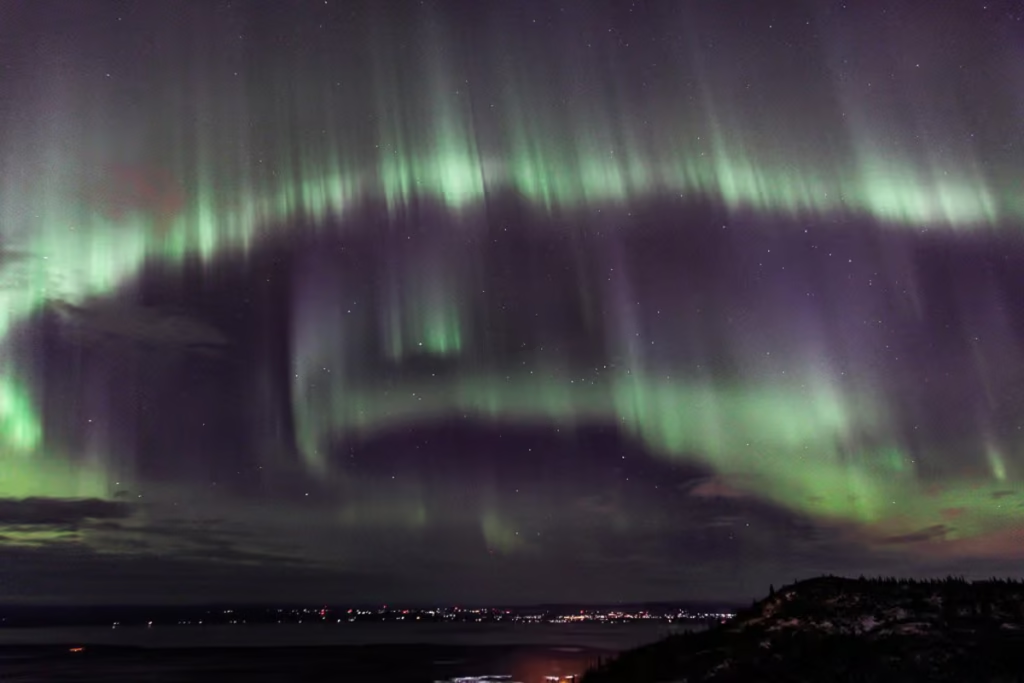
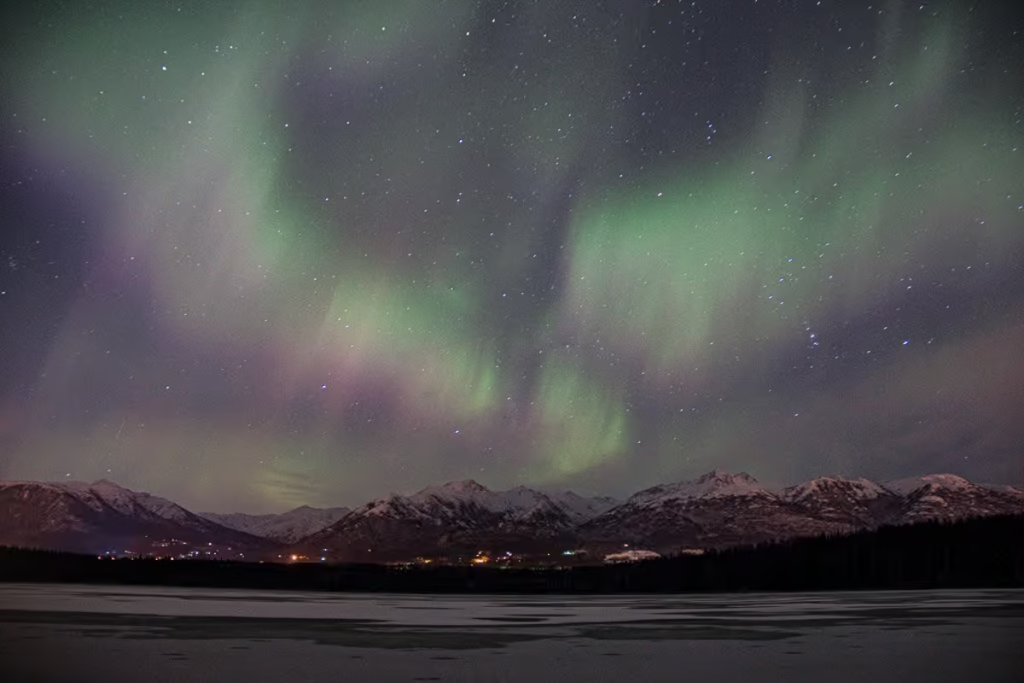
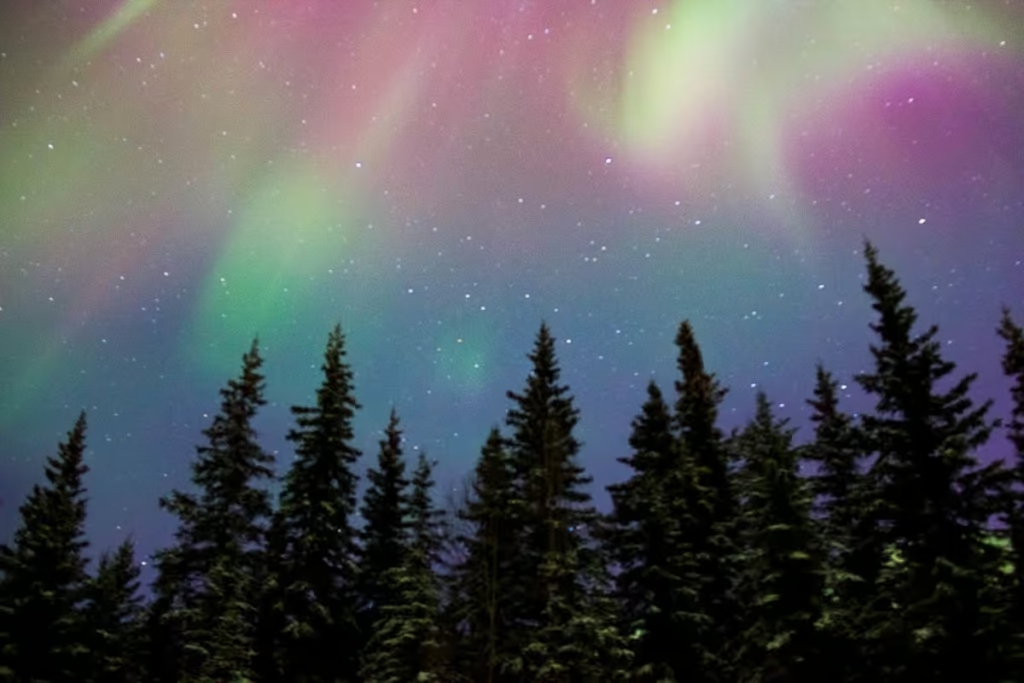
Seeing the aurora, an item on many a traveler’s bucketlist. Growing up in Alaska I’ve been lucky to see the northern lights countless times. Not everyone has the convenience of watching the lights dance out their window as I do, and some travel just to see the aurora.
But seeing the aurora can be a difficult task. Predicting the northern lights is tricky and forecasts arent very reliable. Pair that with the need for clear skies and little light pollution and seeing the aurora becomes a difficult task.
So to help you increase your chances of seeing the aurora in Alaska, Canada, Scandinavia and beyond I’m sharing a few tips on where to see them, how to track them, and more.
Need Travel Insurance and Evacuation Services?
Start shopping for travel insurance plans over at IATI Insurance. Readers of the Adventures of Nicole get a 5% discount off your plan.
The Adventures of Nicole partners with Global Rescue to offer the world’s leading medical evacuation and security advisory services. To travel with peace of mind, explore their evacuation coverage.
1. Head North (Or South)
The best places to view the Aurora can be found in Alaska, Canada, Scandinavia, Iceland, and Russia. Latitudes around 65ºN seem to be optimal for viewing the aurora in the northern hemisphere.
However, if you plan to view them around the Southern Hemisphere, your best bets will be Southern New Zealand, Tasmania, and the Antarctic Peninsula, though seeing them in the southern hemisphere is a bit less likely with the lack of landmass at the optimal aurora viewing latitudes.
2. Plan For The Right Time Of Year
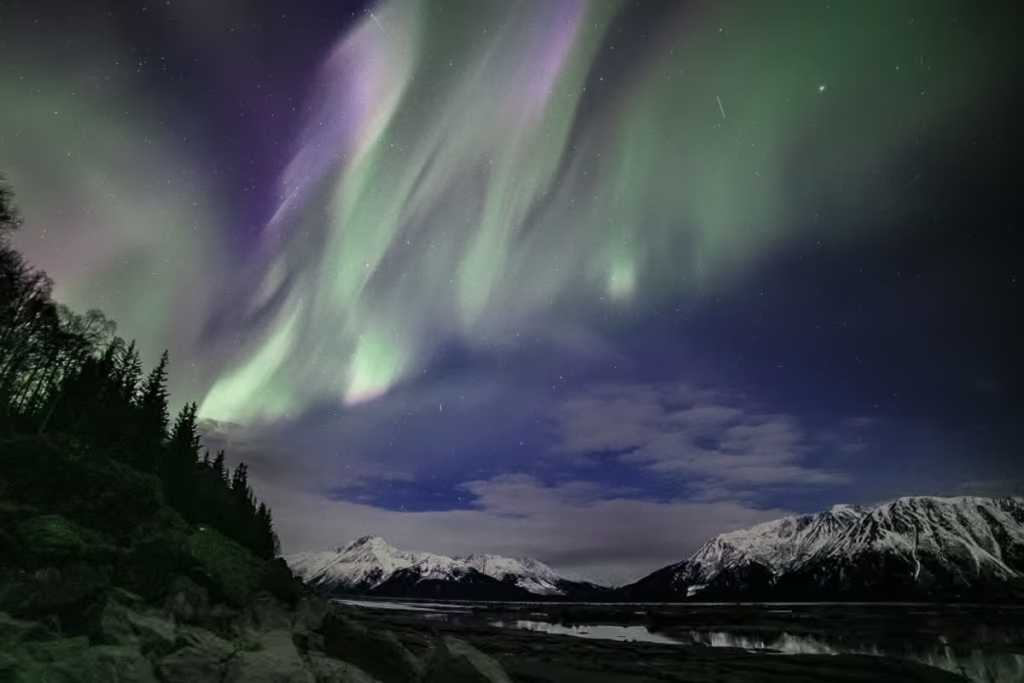
As you approach the poles summer days are extremely long and winter nights can go on forever. It’s not usually possible to see the Aurora in the summertime as most places that do get them don’t have dark night skies then.
The best months for viewing the Aurora are September-April in the northern hemisphere and March-September in the Southern Hemisphere. September and March typically see the most auroral activity each year.
3. Check The Aurora Forecast
The northern lights can be difficult to predict but there are websites that put out aurora forecasts. Scientists are always measuring what kind of activity we may receive based on solar flares headed towards Earth, paired with the strength of the planet’s magnetic field. These forecasts aren’t perfect, but they can come in handy.
My favorite apps and websites to track the aurora forecasts are Aurora Alerts, NOAA’s Space Weather, and the University of Alaska Fairbanks Geophysical Institute’s Forecast.
KP Index is the measurement of a solar flare’s strength. KP index can range from 0 to 9, with 9 being the highest.
At KP 3-4 you can typically see the lights so long as you’re somewhere dark and the sky is clear. KP 5+ is when you get the wildest shows where you can really see the aurora dance. The highest I’ve seen was a KP 7 and that’s when you feel like you could reach out and touch them.
Another aspect of the aurora forecasts to look for is low Bz. The lower the Bz, typically the better (meaning you want a negative number). If the Bz is very low it can yield awesome aurora shows, even if the KP index is pretty low (say a 2).
Learn how to photograph the aurora
4. And Check Local Weather Forecasts Too
Predicting whether you can see the northern lights on a given night is a two-part process. If you have a cloudy sky, you’re just not going to see them.
5. Avoid The Full Moon
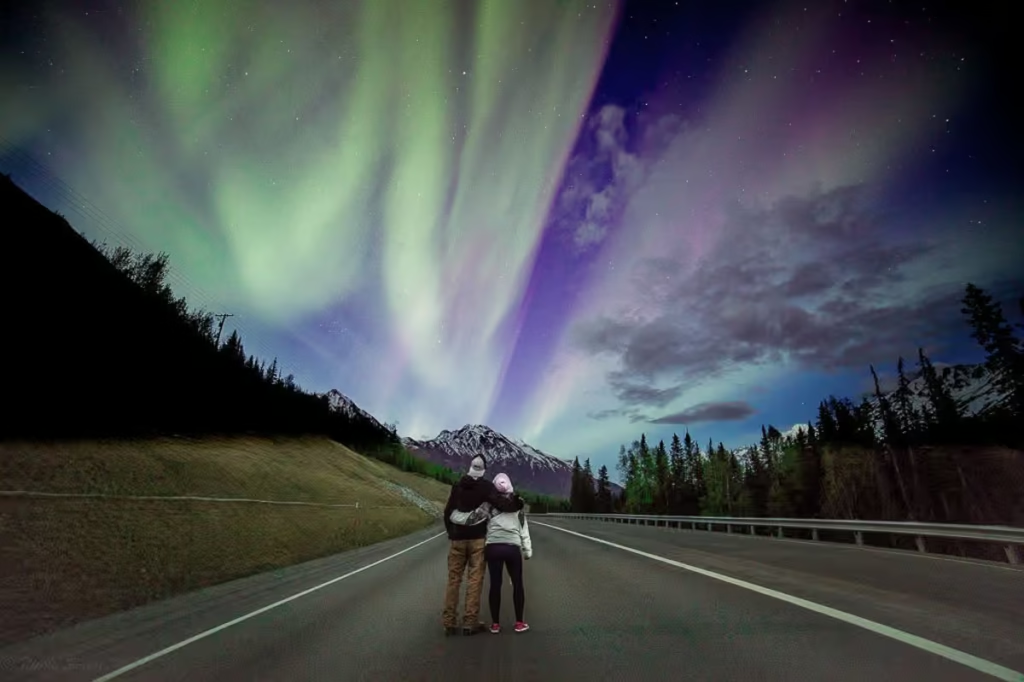
The full moon can make the sky too bright for getting to see the northern lights. Anything under a 1/4 moon is the best for viewing. The moon can help light up foregrounds though, creating great photos.
6. Get Yourself Ready For An All-Nighter
The Aurora tends to be the most active from 12 am to 4 am, although it is possible that they could appear in the skies earlier in the evening and even a little later into the morning. The earliest and latest I’ve watched the northern lights is 6 pm and 8 am.
7. Go Somewhere Dark
Light pollution from city lights can make it more difficult to view the Aurora, so it’s best to get away from it all. If you plan to see the aurora in Alaska, check out the Borealis Basecamp which is hands down the coolest hotel to see the aurora from.
8. Always Look To The Northern Horizon (Or Southern)
On weaker KP index nights your best bet for seeing the aurora is by looking toward the northern horizon (or southern horizon if you’re in the southern hemisphere). But if the KP index is high and the Earth gets hit with a stronger solar flare, you’ll see the entire sky erupt in color.
9. Stay Warm & Enjoy!
It’s usually cold out there on those long dark winter nights when Auroras are more frequent, so stay warm when you kick back and watch the lights dance above you!
Northern Lights Photography Tips
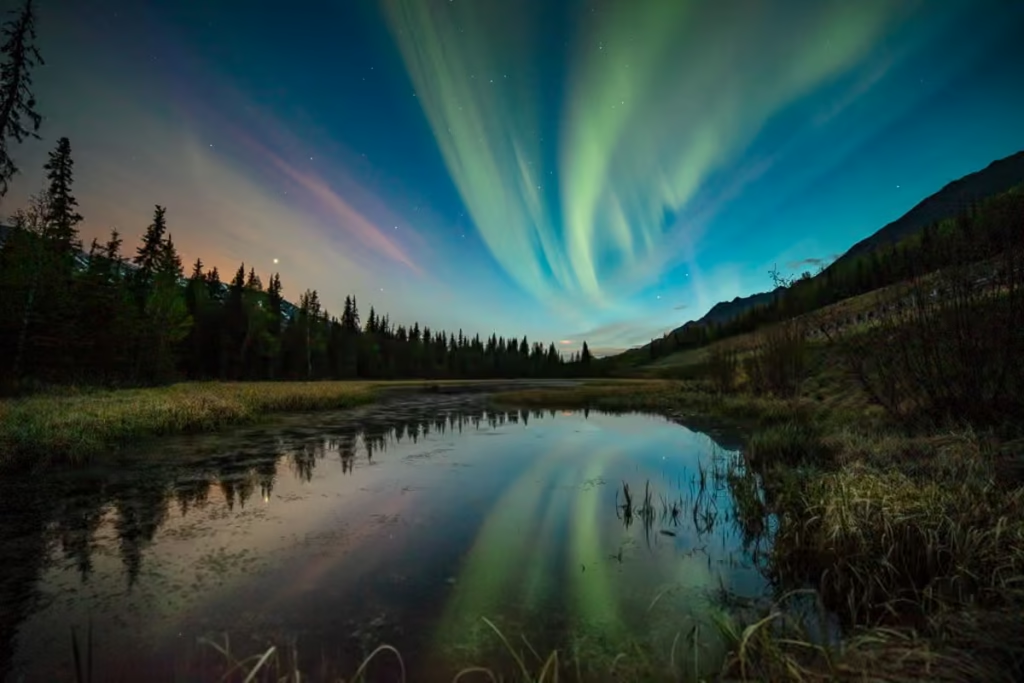
Shooting the aurora can be a bit tricky and take a little practice to master. I highly recommend if you’re planning to travel to see the aurora to practice shooting the stars and night sky before leaving home to get a good feel for your gear and to experience the steps on how to do it. For more in-depth information on camera equipment to shoot the aurora with, click here.
Photography Gear You’ll Need
- Camera with manual mode and high ISO. Personally, I shoot on a Canon 5 DS-R but have captured the aurora in the past with the Canon 600D without issues.
- Low aperture wide-angle lens. A lens 24mm or wider with an aperture f/3.5 is optimal. My go-to night sky lens is the Rokinon 14mm SP f/2.4. In the past, I’ve shot with a Canon 18-55mm kit lens that comes with the 600D and the Canon 10-22mm (both are for EF-S crop sensor mounts).
- A sturdy tripod or GorillaPod.
- Two or more camera batteries. The cold zaps ’em quick.
Camera Settings
Here are some basic tips and info on your camera settings for shooting the aurora. Read more in-depth info on shooting the aurora.
File Format: Make sure you have your camera set to shoot in RAW format prior to heading out to shoot the aurora, this will give you a bit more editing capabilities in the post-processing step. If you forget to switch it and shoot in jpeg don’t worry, the images will still be usable.
Shutter Speed: Your shutter speed will vary widely depending on how active and how visible the northern lights are. If it’s low activity and the lights aren’t very vibrant I’ll shoot fairly long exposure times, anywhere between 6-20 seconds. If the lights are very active and dancing around quickly I’ll shoot as low as 1 second exposures.
Aperture: For shooting the northern lights, you’ll want to ramp your f/ stop as wide as it will go. f/3.5 or lower is best, my widest lens goes down to f/2.4.
ISO: My ISO will differ depending on how bright or dark my scene is. If I have a little light pollution or a partial moon lighting up the foreground I’ll shoot a lower ISO between 800-2000. If it’s really dark where I’m shooting my ISO will be as high as 3200. The downside with higher ISO is that your photos will be grainier.
Editing Your Aurora Photos
Editing is highly subjective and greatly depends on your preferences and tastes. First and foremost, I recommend using Adobe Lightroom for handling your images.
As far as editing your northern lights photos, you’ll need to play around with settings to discover what you like. Personally, I tend to bump shadows to bring out foreground details, clarify a little to bring up details. I then will usually bring up the noise luminance a little to counter out any grain/noise, especially if I had shot with higher ISO. Sometimes I might need to mess with the white balance to counter out an orangy sky from city light pollution. That’s a very simplified explanation on how I edit my aurora photos, check out my in depth post on processing aurora images for more info.
Have Any Questions About Viewing the Northern Lights?
Ask your aurora viewing questions in the comments section below.