As of September 2026, traveling in Iran is not adviseable due to the illegal war being carried out across the country by the US and Israel.
Hormuz Island Travel Guide: Everything You Need to Know
Updated September 2026, The Hormuz Island Travel Guide: Everything you Need to Know was originally written in July 2019
Hormuz Island is a small island in Iran’s Strait of Hormuz famous for its intensely colorful mountains, red beaches, salt formations and Portuguese fortress. Often called Iran’s Rainbow Island, Hormuz is one of the most unusual destinations in southern Iran and can be visited as a day trip or as an overnight stop.
Truth be told, Hormuz Island was my favorite place I visited on my month-long trip to Iran owing to its unbelievable landscapes smattered in reds, pinks, oranges, greens, and golds, and its wild beaches that you have to see to believe- all of which help secure its nickname of the Rainbow Island of Iran.
Even after having returned to Iran several times now, and to Hormuz mujtliple times, Hormuz Island still remains my favorite destination in the country.
Another thing I fell in love with in Hormuz is its laid-back feel- with a population of only about 3,000 people, it’s a great relaxing escape.
When I decided that I was going to backpack across Iran overland from Afghanistan I started listing off all the places I’d like to visit in a month.
I quickly noticed that my plans largely neglected that long coastline along the Persian Gulf, and that’s when Qeshm Island landed on my projected Iran travel itinerary (let’s be real though, I never end up following my itinerary anyway…).
In Mashhad, I met a Spanish backpacker who I ended up crossing paths with again in Kerman.
This was who told me about Hormuz, as that was his next destination after Kerman. I asked him about it as I was planning to head to Qeshm, and his response was to just look up photos.
So I did. That’s when my plans changed (sorry, Qeshm, I’ll visit you next time, don’t worry, I finally did visit Qeshm in 2022).
This Hormuz Island travel guide covers how to get to Hormuz Island from Bandar Abbas and Qeshm Island, the best things to do, how to get around, where to stay, what to eat, the best time to visit, how many days you need, and practical tips for planning your trip.
Plan your trip: An Iran itinerary
Need Travel Insurance for Iran?
Start shopping plans over at 1st Quest.
- Hormuz Island at a glance
- Why Is Hormuz Island Famous?
- Where is Hormuz Island?
- How to Get to Hormuz
- How to Get Around Hormuz Island
- How Long to Visit Hormuz Island
- Best Time to Visit Hormuz Island
- Where to Stay on Hormuz
- Best Things to Do on Hormuz Island
- Hormuz Island Itinerary
- What to Eat in Hormuz
- Where to Eat on Hormuz Island
- What Foods Should You Try on Hormuz Island?
- What to Pack for Hormuz Island
- Important Hormuz Island Info
- Beyond the Colors: Final Thoughts on Hormuz Island
Hormuz Island at a glance
| Where is Hormuz Island? | Southern Iran, in the Strait of Hormuz |
| Nearest mainland city | Bandar Abbas |
| Nearest major island | Qeshm Island |
| Known for | Colorful mountains, Red Beach, salt formations |
| Best time to visit | October-April |
| How long to stay | 1-2 days |
| Getting around | Tuk-tuk, motorcycle, bicycle and walking |
| Main attractions | Rainbow Valley, Red Beach |
| Famous historic site | Portuguese Castle |
Why Is Hormuz Island Famous?
Hormuz Island is best known for its unusually colorful geology. Iron-rich red earth, salt formations and layers of different minerals create landscapes ranging from deep crimson and orange to yellow, white and gray. This unusual geology has earned Hormuz the nickname “Rainbow Island.”
But the island is more than colorful scenery. Hormuz has a long history as an important trading and strategic location in the Strait of Hormuz, and its Portuguese Castle is a surviving reminder of the Portuguese presence in the Persian Gulf. The island is also known for its local art scene, including the work of environmental artist Ahmad Nadalian and his museum and gallery
Where is Hormuz Island?
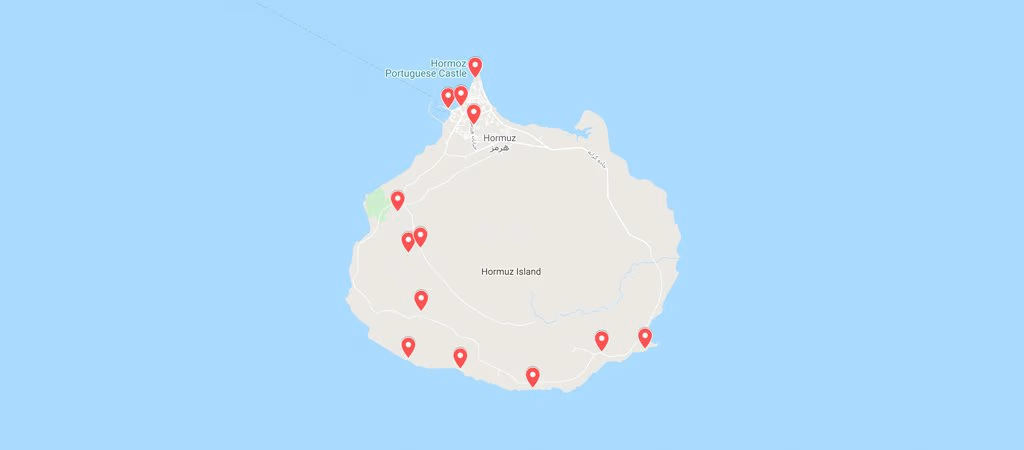
Hormuz Island lies in southern Iran’s Hormozgan Province, in the Strait of Hormuz at the entrance to the Persian Gulf. The island is roughly 8 km off Iran’s southern coast and sits approximately 20 km from Qeshm Island and 22 km from Bandar Abbas.
The island is tiny, covering roughly 42 square kilometers, which makes it possible to explore most of its major sights in a single day.
Coordinates: approximately 27.063701, 56.460334.
Hormuz is often confused with Qeshm Island, its much larger neighbor. They are separate islands, however, and reaching one does not mean you have reached the other. Ferries connect Hormuz with both Qeshm and Bandar Abbas.
How to Get to Hormuz
Hormuz Island is accessible by passenger ferry from Bandar Abbas and Qeshm Island. For most travelers, Qeshm is the more convenient option if you’re already exploring the islands of southern Iran, while Bandar Abbas makes more sense if you’re traveling through the mainland.
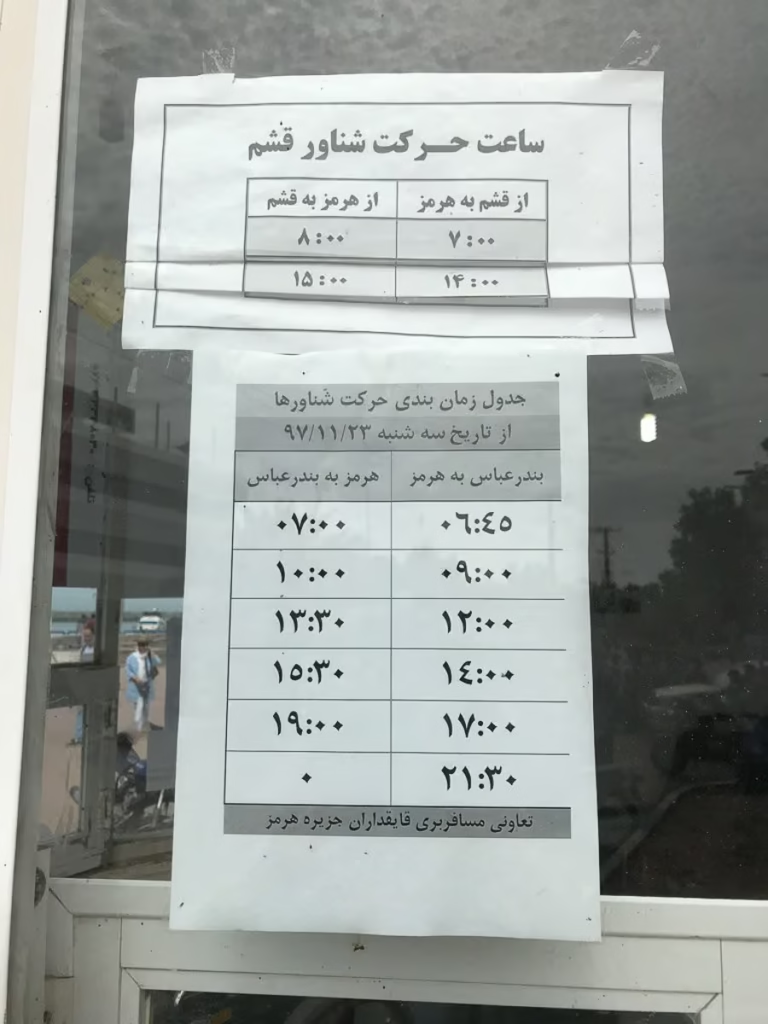
Ferry schedules are not fixed year-round. Departures can change with seasonal operations, demand and sea conditions, so don’t always rely on an old timetable you find in a travel blog. Check the current schedule locally before traveling, particularly if you’re planning a day trip and need to catch a specific ferry back.
Bandar Abbas to Hormuz Island
The most straightforward mainland route to Hormuz is from Shahid Haqqani Passenger Terminal ( اسکله شهید حقانی ) in Bandar Abbas. This is the main passenger ferry terminal serving Hormuz and Qeshm.
The crossing takes roughly 45 minutes, depending on the vessel and sea conditions. Ferries are passenger services rather than car ferries, so you’ll leave your vehicle in Bandar Abbas if you’re traveling with one.
Where to buy tickets: Tickets are generally purchased at the passenger terminal.
How often do ferries run? There are typically several departures per day, but the schedule is subject to change. For example, a revised schedule announced in April 2026 listed departures from Bandar Abbas to Hormuz at 8:00 and 13:00, but these have been heavily disrupted by the ongoing war.
How early should you arrive? Aim to be at the terminal at least 30 minutes before departure. The port authorities have specifically advised passengers to arrive around 30 minutes early. I’d allow more time during busy periods, weekends and Iranian holidays.
What if the ferry is canceled? Sailings can be suspended because of strong winds, high waves, other unfavorable sea conditions, and the ongoing war. If your ferry is canceled, check with the terminal for the next available sailing rather than assuming the next scheduled departure will operate.
Do you need to book ahead? For most travelers, advance booking is not essential, but I would avoid leaving your ferry until the last minute if you’re visiting during the busy winter season, an Iranian holiday or a weekend. If you are planning a same-day return, check the return schedule before boarding the outbound ferry.
Bandar Abbas to Hormuz at a glance
Departure: Shahid Haqqani Passenger Terminal, Bandar Abbas
Crossing time: Approximately 45 minutes
Tickets: Generally purchased at the passenger terminal
Frequency: Several departures may operate daily, depending on the current schedule
Arrival: Hormuz Island passenger terminal
Recommended arrival: At least 30 minutes before departure
Booking ahead: Not normally essential, but useful to check availability during busy periods
Important: Ferry schedules and fares can change, particularly with weather and seasonal conditions. Check locally before traveling rather than relying solely on schedules published online.
Qeshm Island to Hormuz Island
If you’re already traveling around Qeshm Island, taking the ferry from Qeshm to Hormuz is often the easiest way to combine the two islands. Passenger services depart from Shahid Zakari Passenger Terminal ( اسکله شهید ذاکری ) in Qeshm City.
The crossing takes approximately 45 minutes by fast passenger vessel, although the actual journey can vary with the vessel and sea conditions.
Where to buy tickets: Tickets can be purchased at the passenger terminal. Local ferry information indicates that the Hormuz route generally operates with a relatively small number of daily services compared with the much more frequent Qeshm-Bandar Abbas route.
How often do ferries run? This is where you need to pay attention. The Qeshm-Hormuz route has historically operated with only a couple of scheduled departures per day, rather than the frequent shuttle service you’ll find between Qeshm and Bandar Abbas. Recent published schedules have shown morning and afternoon departures, but these should be treated as examples rather than a permanent timetable.
That limited frequency has an important consequence: don’t arrive at Shahid Zakari Terminal without checking the day’s schedule first. Missing the ferry can mean a significant wait for the next sailing.
How early should you arrive? I’d aim for at least 30 minutes before departure, and earlier during busy periods. Give yourself enough time to buy your ticket and find the correct boarding area without turning your ferry connection into an unnecessary sprint.
What if the ferry is canceled? As with Bandar Abbas, services can be affected by wind and sea conditions. Check the status of the ferry before heading to the port and again on the day of travel. If conditions are poor, don’t assume that a later sailing will operate.
Do you need to book ahead? Advance booking is not always necessary, but I would plan more carefully from Qeshm because there are fewer daily services. If you’re visiting Hormuz as a day trip, confirm both your outbound and return options before setting off.
Qeshm to Hormuz at a glance
Departure: Shahid Zakari Passenger Terminal, Qeshm City
Crossing time: Approximately 45 minutes
Tickets: Available through the passenger terminal
Frequency: Limited daily services, with schedules subject to change
Arrival: Hormuz Island passenger terminal
Recommended arrival: At least 30 minutes before departure
Booking ahead: Worth considering during busy periods
Which Route Should You Take?
If you’re traveling around southern Iran, the best route depends largely on where you’re coming from.
Coming from mainland Iran? Take the ferry from Bandar Abbas.
Already visiting Qeshm Island? Take the ferry directly from Qeshm to Hormuz. This is particularly convenient if you’re building a Qeshm-Hormuz itinerary.
Want to visit Hormuz as a day trip? Either route can work, but check the return ferry before you leave. The limited number of services from Qeshm makes this especially important.
Want to stay overnight on Hormuz? You have considerably more flexibility. You can take whichever outbound sailing works best and return the following day or later.
Hormuz Island Ferry Options
| Route | Departure | Approx. journey | Best for |
|---|---|---|---|
| Bandar Abbas → Hormuz | Bandar Abbas | ~40-50 min | Travelers coming from mainland Iran |
| Qeshm → Hormuz | Qeshm | ~40-60 min | Travelers already visiting Qeshm |
| Hormuz → Bandar Abbas | Hormuz | ~40-50 min | Returning to mainland |
| Hormuz → Qeshm | Hormuz | ~40-60 min | Continuing around the islands |
Read: Shiraz Travel Guide
How to Get Around Hormuz Island
Tuk Tuks on Hormuz
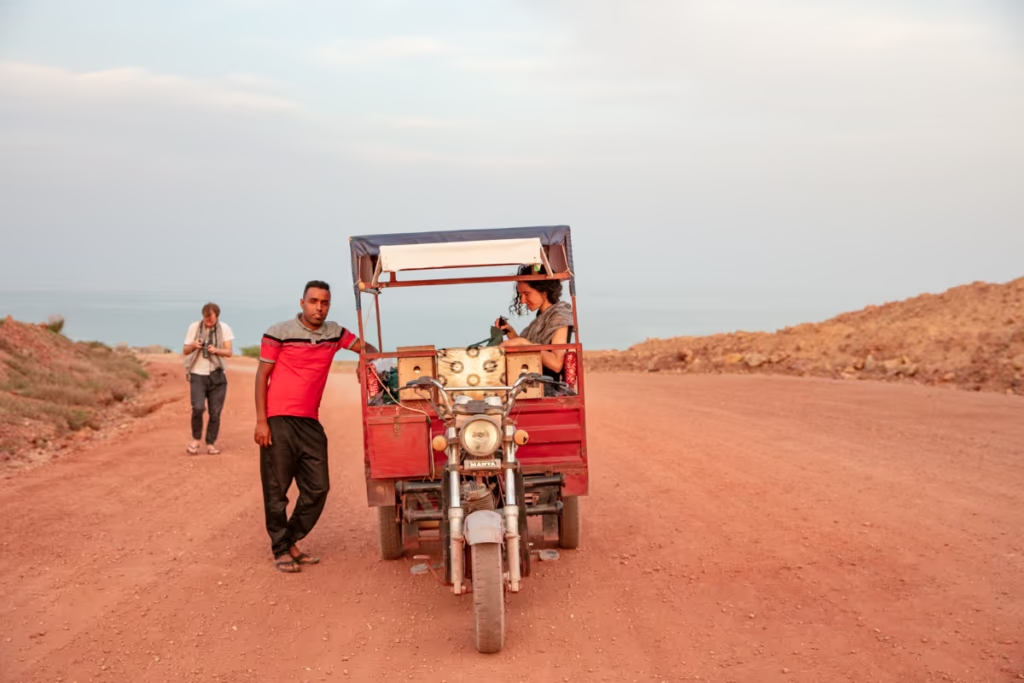
Most who visit will lap the island by a hired tuk-tuk from just outside the gates at the port. This is the most time-efficient way of seeing Hormuz, so day-trippers—this is the option for you.
Expect a trip around to take 4 hours. After a little haggling, you can expect to pay about $2.00 per hour.
If you’d like to visit and want to hire a driver beforehand, contact Mohamad at +98 990499662 (text, call, WhatsApp) or on Instagram. Mohamad can also help arrange guesthouses.
Rent a Bicycle in Hormuz
You can also rent bicycles and cruise the 24km circumference of Hormuz.
When you arrive, don’t go out of the gate at the port—there are two dome-shaped buildings to the right of the gate.
The first one sells coffee, small dishes, and milkshakes (grab a tahini and date milkshake before or after your bike ride, ps: you’re welcome). The second dome rents bikes for 0.75¢ per hour.
If you show up on the first ferry, you can do the bike trip on a day trip to Hormuz, but to not put time constraints on yourself, I mostly recommend this for those who are spending at least a night on the island.
It took me 7 hours to circle the island, visiting the sites and stopping along the road for various (a bazillion) photo ops. Not counting all my stops, my total cycle time was about 4 hours.
I took on the island counter-clockwise in direction.
Pick up a copy of the Bradt Iran Guidebook and start planning your visit to Hormuz and beyond
How Long to Visit Hormuz Island
As I mentioned earlier, most who come to Hormuz are day-trippers from Bandar Abbas. If that’s all you got, then, by all means, still go, but if you can swing spending a night or more here, do it!
Personally, I spent four solid days on my first trip to Hormuz Island and felt it was enough time to see the sites around Hormuz, though I definitely could have stayed an entire week without getting bored.
Given Hormuz’s sleepy and slower-paced nature, I recommend taking in the island at a more leisurely pace if your itinerary allows it.
Best Time to Visit Hormuz Island
The best time to visit Hormuz Island is generally October through April, when temperatures are much more manageable for exploring the island’s colorful valleys, beaches and geological formations. Winter offers the most comfortable weather, but it is also the busiest season.
October-November
October marks the end of the intense summer heat, although temperatures can still reach around 34°C (93°F). By November, daytime temperatures are closer to 29°C (84°F), making outdoor exploration much more comfortable.
The sea remains warm enough for swimming, while visitor numbers are generally lower than during the peak winter months. October is a good choice if you want warmer weather and fewer crowds, while November offers a better balance of temperature and comfort.
Best for: Warm weather, swimming, photography and fewer crowds
Watch out for: October heat
December-February
December through February is the best overall time to visit Hormuz Island. Daytime temperatures generally sit in the mid-20s°C (70s°F), making it ideal for hiking, photography and exploring the island’s exposed landscapes.
This is also peak season, particularly among Iranian travelers. Expect more visitors on weekends and holidays, and book accommodation ahead when possible.
Best for: Hiking, sightseeing, photography and comfortable temperatures
Watch out for: Peak-season crowds and occasional ferry disruptions from rough seas
March-April
March remains pleasantly warm, with temperatures around 27°C (81°F), while April becomes hotter, averaging around 31°C (88°F). The sea is still comfortable for swimming, and longer daylight hours are useful for exploring.
The major consideration is Nowruz, the Iranian New Year. Hormuz becomes extremely busy around the late-March holiday period, with increased demand for ferries and accommodation. If visiting during Nowruz, book well ahead.
Best for: Swimming, photography and warm weather
Watch out for: Nowruz crowds and rising temperatures
May-September
Summer is generally the least comfortable time to visit Hormuz. Daytime temperatures can reach 36-38°C (97-100°F) or higher, while humidity can make it feel considerably hotter. With little shade at many attractions, hiking and sightseeing in the middle of the day can be unpleasant.
The upside is warm sea temperatures, making summer more appealing if swimming is your priority. If you visit during these months, plan outdoor activities for early morning and late afternoon.
Best for: Warm-water swimming and heat lovers
Watch out for: Extreme heat and humidity
Ramadan and Iranian Holidays
Ramadan moves through the calendar each year. During Ramadan, restaurants and cafés may have altered hours, and you should avoid eating, drinking or smoking openly during daylight hours out of respect for those fasting.
Nowruz is the bigger consideration for travelers. The Iranian New Year falls around March 20-21, followed by a major holiday period when Hormuz can become exceptionally busy. Ferries, accommodation and popular attractions may be crowded, so book ahead if traveling during this period.
When Should You Visit Hormuz Island?
Best overall: November-February
Best for swimming: October-April
Best for photography: November-April
Best for fewer crowds: October-November or February, outside holidays
Avoid if possible: May-September for sightseeing
Busiest period: Nowruz
Finally, keep your itinerary flexible. Ferry schedules can change because of weather and sea conditions, so don’t plan a tight same-day itinerary around a single sailing. Check locally before traveling and leave some wiggle room in your plans.
Where to Stay on Hormuz
Hormuz Island Guesthouses
Several local families rent out rooms in their homes for about $7-10 per night. Otherwise, there are a few hostels renting dorm beds located in the village.
I stayed in a guest room that I arranged on the spot after my arrival, and I have zero complaints (can’t really beat a private room, A/C, kitchen, and toilet for under $10 USD/night).
Hormuz Island Hotels
For those of you who like to plan ahead, the only accommodation I’ve found bookable online is the Red Beach Hotel for $14 per night.
Mohamed, the tuk-tuk driver I mentioned previously in this post, can help make guesthouse arrangements on Hormuz Island too if you’d like to plan ahead of your arrival.
Camping on Hormuz Island
A popular option, especially among local Iranian travelers, is to camp around Hormuz. It’s possible to camp almost everywhere in Hormuz, with the beaches being quite popular. Just make sure you’re not setting up camp on someone’s private property, and if so, ask to make sure it’s okay.
Heading to Kerman next: Plan a visit to the Kaluts Desert
Best Things to Do on Hormuz Island
All the breathtaking and mind-blowing sites on Hormuz Island can easily be seen in one day, but if you have extra time, you’ll really be able to get to some of the most little-known gems.
Hormuz Village
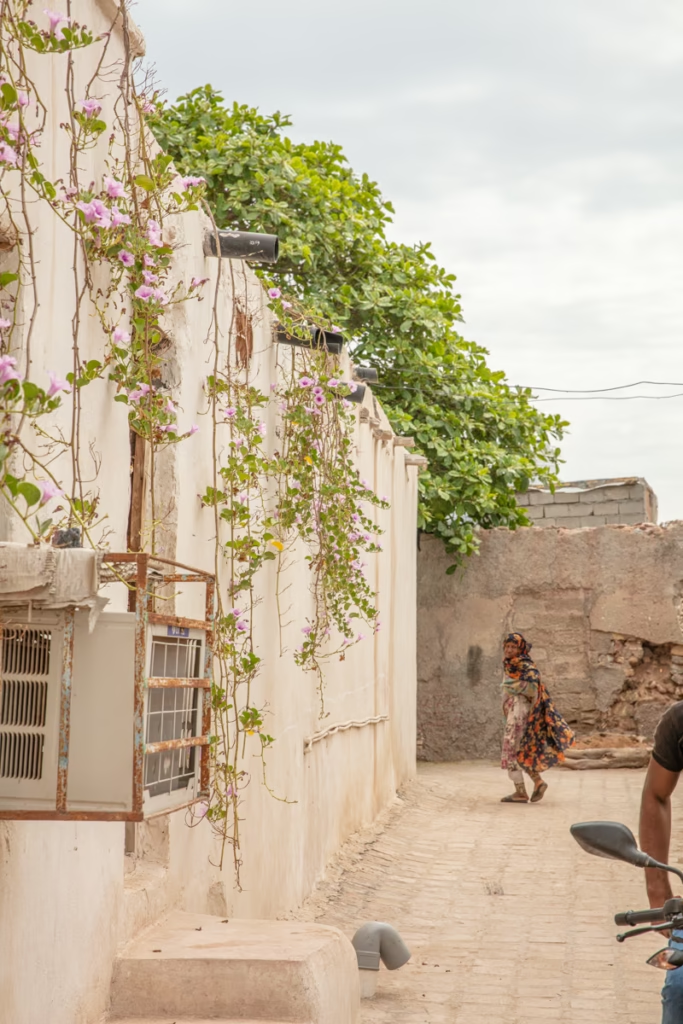
Hormuz Village is the island’s main settlement and the best place to get a feel for everyday life on Hormuz beyond its famous geological landscapes. This is where you’ll find local homes, small shops, cafés, restaurants, guesthouses and the island’s ferry terminal, making it a natural base for exploring.
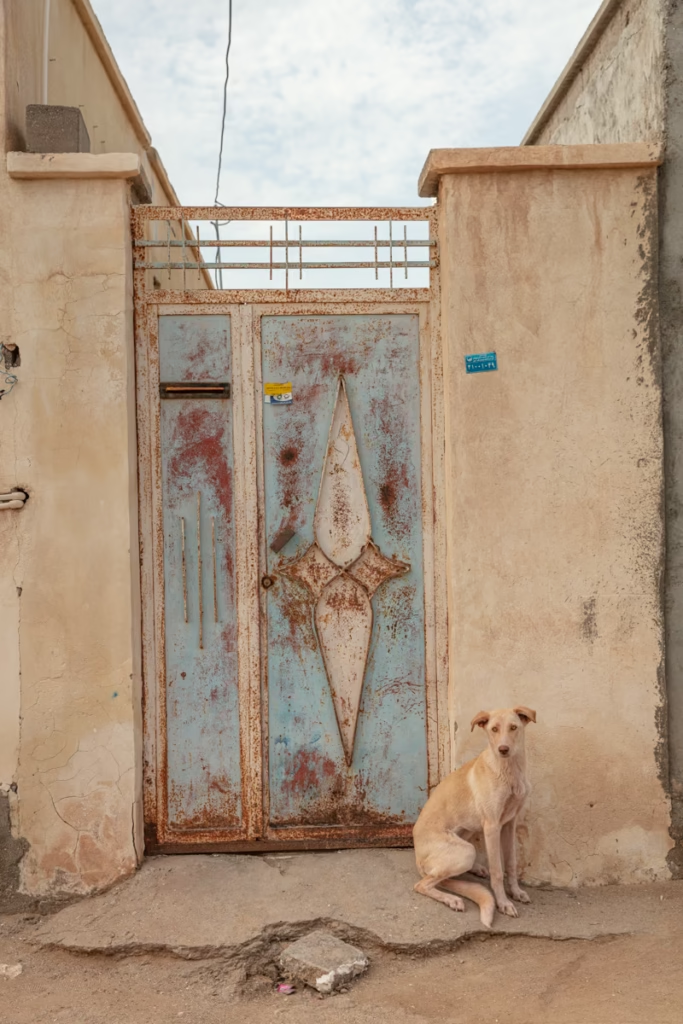
It is worth spending some time wandering rather than treating the village simply as a place to arrive and leave. Look for colorful doors and houses, local fishing activity, small businesses and the everyday rhythms of island life. The village is also where you’ll find several cultural attractions, including the Dr. Ahmad Nadalian Museum and the Portuguese Castle.
Time needed: 1-2 hours
Best for: Local culture, photography, food and everyday island life
How to get there: The village surrounds Hormuz’s ferry port, so you’ll arrive here when traveling to the island by ferry. Most other parts of the island can be reached from the village by tuk-tuk, bicycle or on foot.
Best time to visit: Early morning or late afternoon, when the village is cooler and more active.
What to know: Hormuz is a small island community, so dress respectfully and ask before photographing people, homes or businesses. If you’re staying overnight, the village is the most convenient area for accommodation, food and basic supplies.
Hormuz Earth Carpet
The Hormuz Earth Carpet is one of the island’s more unusual cultural attractions. Rather than being woven from fabric, the artwork is created from the island’s naturally colored soils and minerals, turning Hormuz’s famous geology into a large-scale piece of art.
The carpet has become a recognizable symbol of the island and its relationship with its colorful landscape. However, its appearance can vary depending on when it was created or last restored, so don’t expect a permanent, perfectly vivid installation.
Time needed: 15-20 minutes
Best for: Photography, art and culture
How to get there: Accessible by road and commonly included in a tuk-tuk tour of Hormuz Island.
Best time to visit: Any time of day, although morning or late afternoon is more comfortable.
What to know: The earth carpet has changed over time and may not always look as vibrant as photographs online suggestr a thousand years—usually created at festival times using the colorful soils Hormuz Island is blessed with.
Salt Mountain
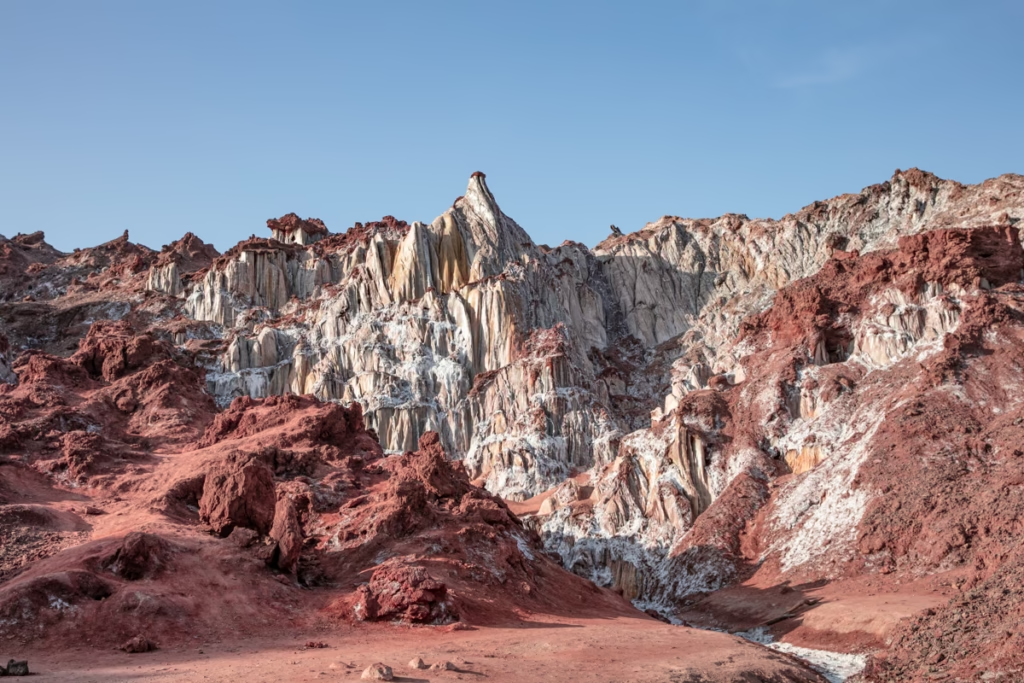
A turn off the main Hormuz Island road down a dirt path toward the interior and you’ll find yourself at the Salt Mountain (also called the Salt Goddess), one of Hormuz Island’s most distinctive geological formations, where colorful rock and salt deposits come together to create a striking natural landscape. The formation gets its name from its unusual shape, which resembles a sculpted figure rising from the surrounding terrain.
It is a good example of how varied Hormuz’s geology can be. Just when you think you’ve seen every possible shade of red and orange on the island, the landscape shifts to brilliant whites and salt-covered rock.
Time needed: 20-30 minutes
Best for: Geology, photography and short walks
How to get there: Accessible by road as part of a tuk-tuk tour around the island, followed by a short walk to the formation.
Best time to visit: Morning or late afternoon, when temperatures are more comfortable.
What to wear: Closed-toe shoes with good traction
What to know: The terrain around the formation is uneven and exposed, so bring water and sun protection. Avoid climbing on or damaging the fragile rock formations
Salt Cave
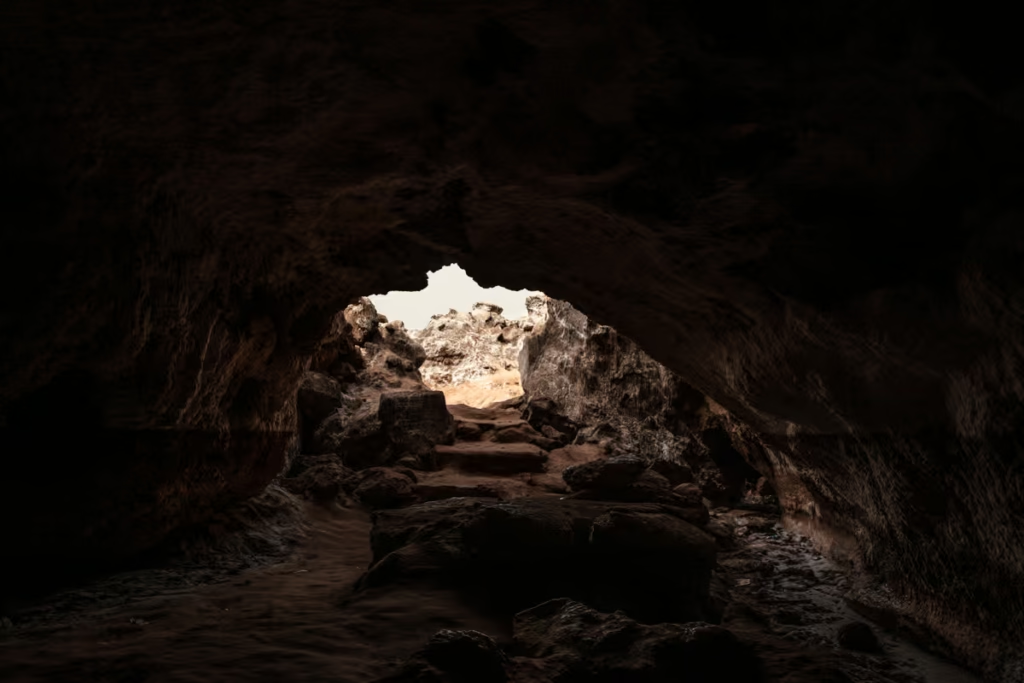
The Salt Cave is another showcase of Hormuz Island’s unusual geology, with white salt deposits and mineral-rich rock contrasting with the vivid colors found throughout the surrounding landscape. Entering the cave provides a completely different perspective on the island’s geology, with salt formations replacing the open valleys and colorful cliffs you’ve likely been exploring elsewhere.
The cave is relatively compact, making it an easy addition to a tuk-tuk circuit of Hormuz’s geological attractions.
Time needed: 20-30 minutes
Best for: Geology, photography and exploring
How to get there: Reached by road as part of a tuk-tuk tour, followed by a short walk to the cave entrance.
Best time to visit: Earlier in the day or late afternoon, particularly during the warmer months.
What to wear: Closed-toe shoes with good traction
What to know: Cave conditions and accessibility can vary. Follow local advice before entering, and be careful on uneven or slippery surfaces. Bring a small flashlight if your guide recommends one.
Solo female travelers: Check out my solo female guide to Iran
Rainbow Mountains & Valley
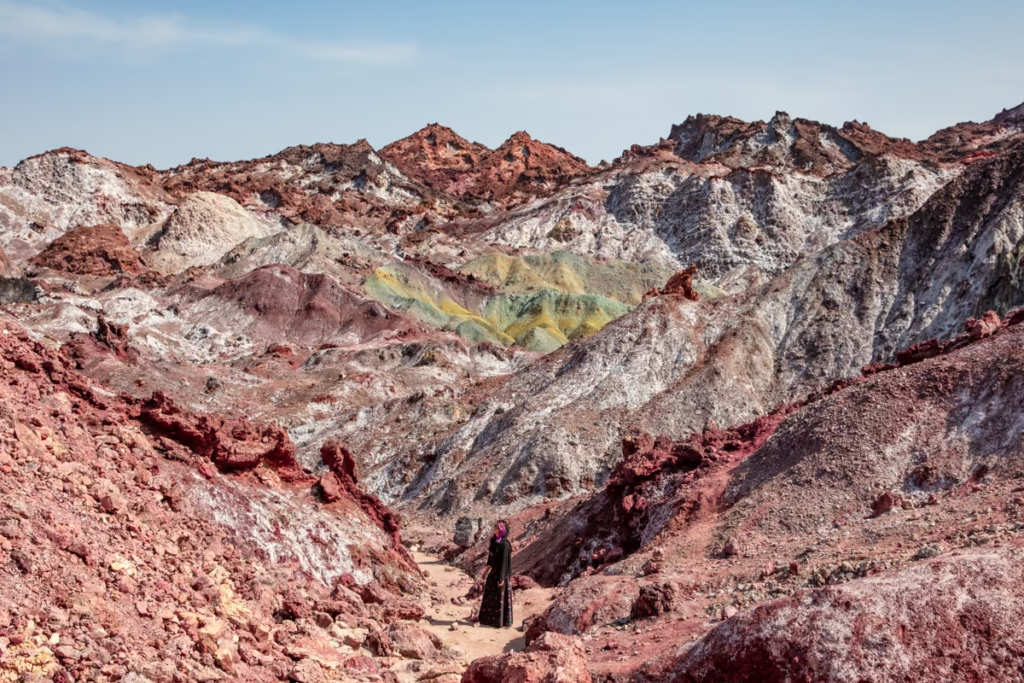
Rainbow Valley is one of the best-known natural attractions on Hormuz Island and one of the clearest examples of the island’s unusual geology. The valley cuts through layers of brightly colored earth and rock, with shades ranging from reds and oranges to yellows and ochres.
Unlike some of Hormuz’s attractions, Rainbow Valley is not something you simply pull up beside and photograph from the road. Give yourself time to walk into the valley and look closely at the different layers and textures.
Time needed: 30-60 minutes
Best for: Photography, geology and short walks
What to wear: Closed-toe shoes with good traction
Tip: Visit earlier or later in the day when temperatures are more manageable.nt color on display but striped with purples, greens, oranges, and even a golden-looking dry river bed.
Valley of Statues
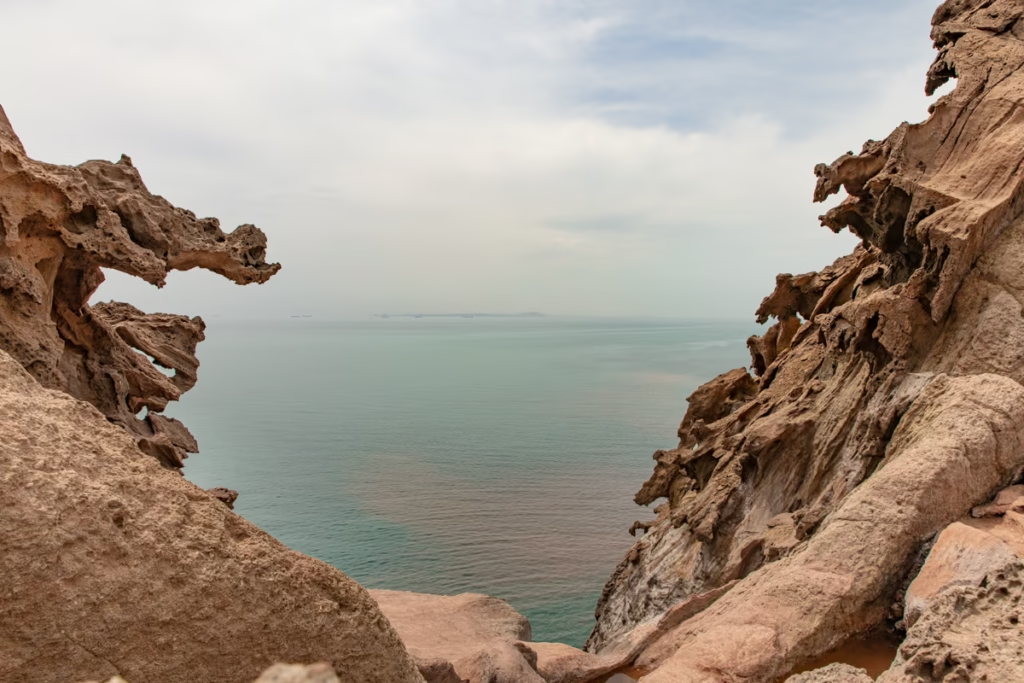
The Valley of Statues is a striking coastal landscape where erosion has carved the island’s soft, layered rock into unusual shapes. As you walk toward the coast, some formations begin to resemble animals, faces and other figures, which is where the valley gets its name.
The trail eventually opens toward dramatic views of the Persian Gulf and Mofanegh Beach below. The walk is part of the experience, so don’t rush straight to the viewpoint and turn around.
Time needed: 45-60 minutes
Best for: Hiking, photography and coastal views
How to get there: Reachable by road with a tuk-tuk, followed by a walk along the trail toward the coast.
What to wear: Proper walking shoes with good grip
What to know: There is limited shade along the trail, so bring water and sun protection
Mofanegh Beach
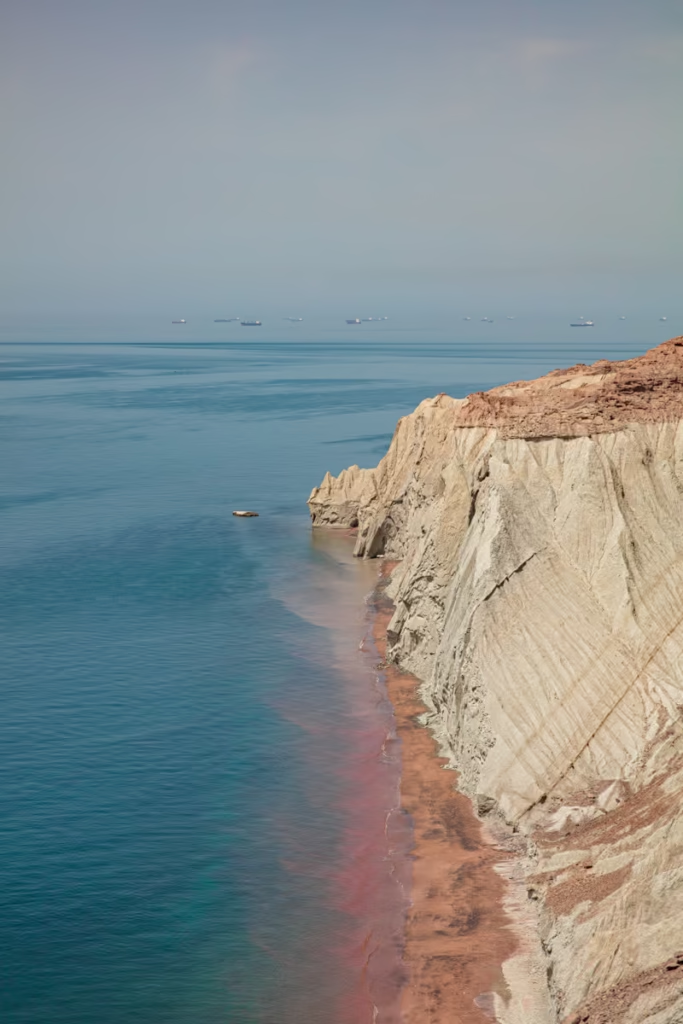
Mofanegh Beach is a quieter coastal stop on Hormuz and is particularly impressive when viewed from the surrounding cliffs and trails. The beach sits beneath the island’s colorful rock formations, giving you a chance to see how Hormuz’s unusual geology meets the Persian Gulf.
Rather than being a conventional swimming beach, Mofanegh is best appreciated for its scenery and the surrounding landscape.
Time needed: 20-30 minutes
Best for: Coastal scenery, photography and geology
How to get there: Usually visited from the Valley of Statues area, with access involving a walk rather than simply pulling up directly beside the beach.
Best time to visit: Morning or late afternoon.
What to know: Bring water and proper footwear if you’re approaching the beach via the surrounding trail.
Visiting the Iranian capital: Two Day Tehran Itinerary
Snowy Mountains
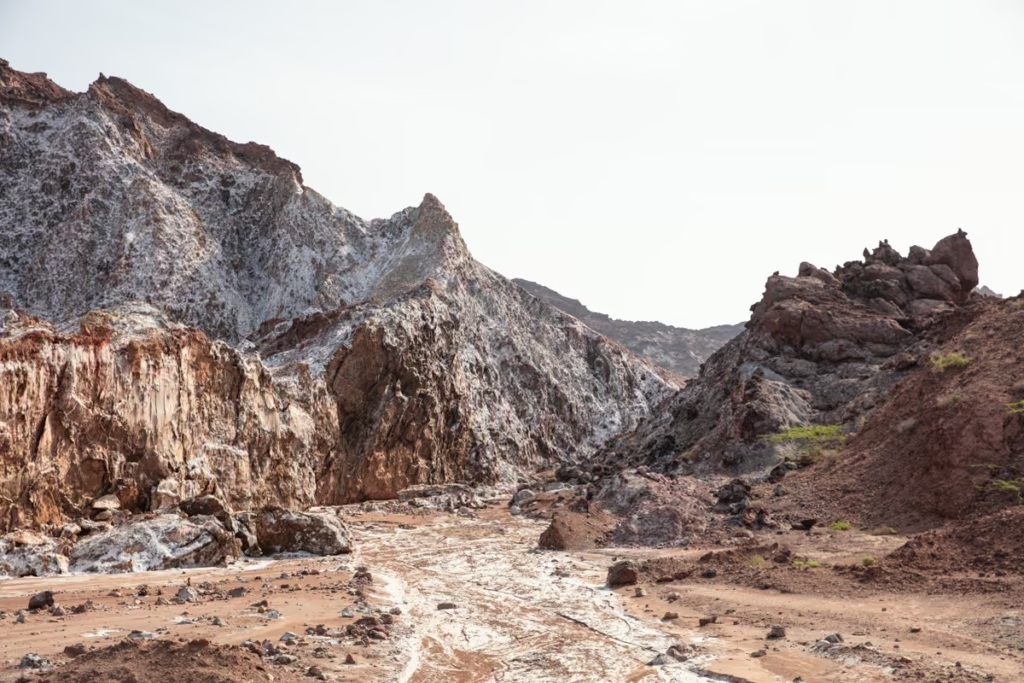
The Snowy Mountains are one of Hormuz Island’s more unusual geological sights, where bright white mineral deposits cover the otherwise colorful landscape. The stark contrast between the pale mountains, rusty reds and oranges of the surrounding earth, and the blue of the Persian Gulf makes this a particularly photogenic part of the island.
The name can be slightly misleading because there is, unsurprisingly, no actual snow involved. The white appearance comes from the island’s mineral-rich geology, particularly salt and other light-colored deposits. Seeing these pale formations alongside Hormuz’s famous red and ochre landscapes is a good reminder of just how geologically diverse this tiny island is.
Time needed: 20-30 minutes
Best for: Geology, photography and short walks
How to get there: The Snowy Mountains can be visited by road as part of a tuk-tuk tour around Hormuz Island, with a short walk required to explore the formations.
Best time to visit: Morning or late afternoon, when the temperatures are cooler and the light creates more definition across the pale landscape.
What to know: There is little shade and the pale rock can reflect strong sunlight, so bring plenty of water, sunscreen and sun protection. Avoid climbing on fragile formations or taking pieces of rock or mineral deposits.
Red Beach
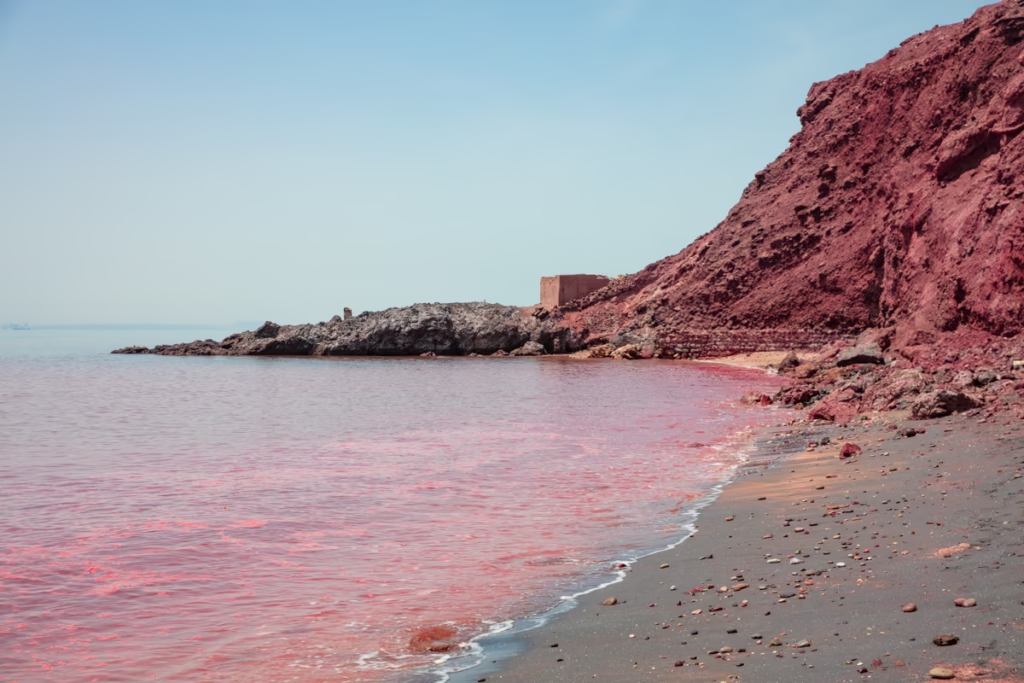
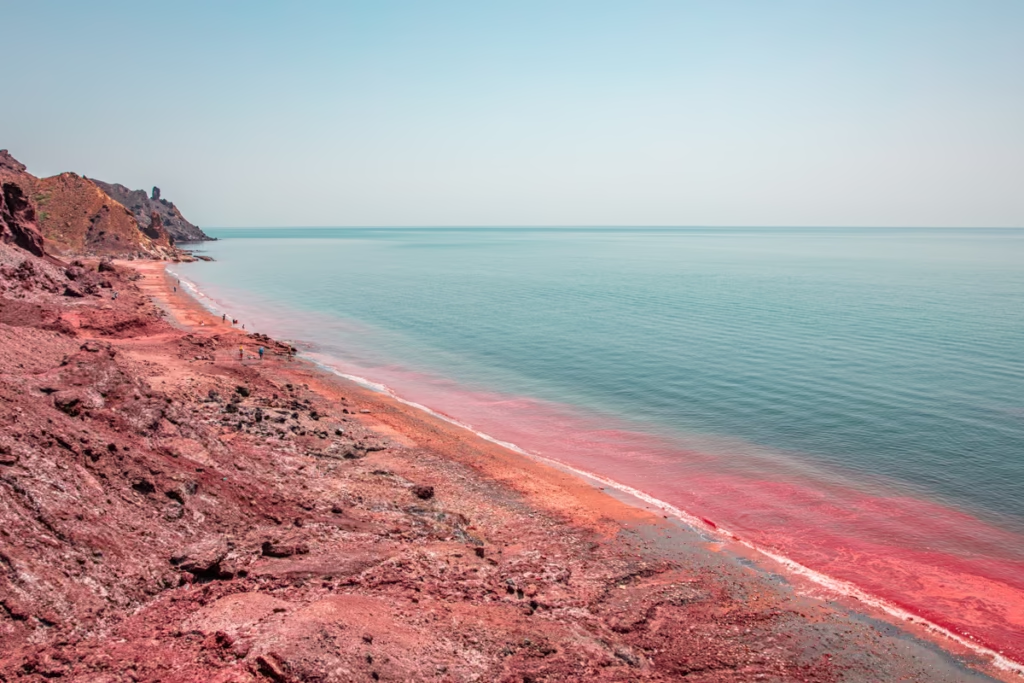
Red Beach is one of Hormuz Island’s most famous sights, where intensely red earth meets the blue-green waters of the Persian Gulf. The color comes from the island’s iron-rich geology, and after waves wash the red sediment into the water, the shoreline can take on a distinctly reddish or pinkish hue.
The beach is particularly impressive when you can see the contrast between the glittery black sands and the red tones of the water. You may also see the beach referred to online as “Blood Beach” or “Bloody Beach,” but Red Beach is the most commonly use name.
Time needed: 20-30 minutes
Best for: Photography, geology and coastal scenery
How to get there: Easily reached by road as part of a tuk-tuk tour around Hormuz Island.
Best time to visit: Morning or late afternoon for softer light and cooler temperatures.
What to know: The red color is natural and comes from iron-rich soil and rock.
Rainbow Cave
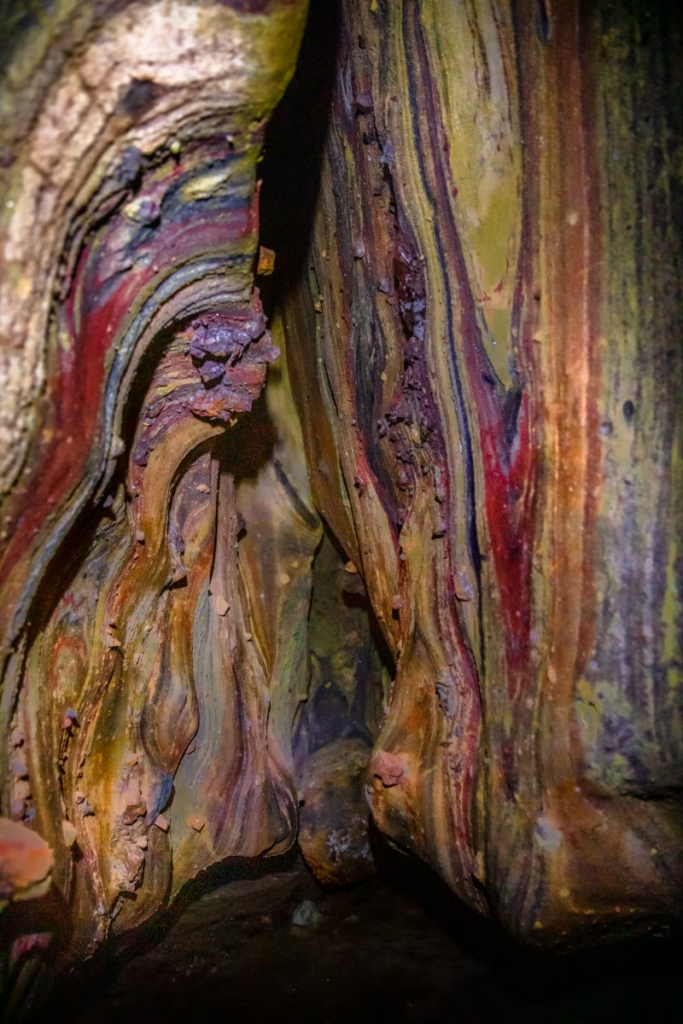
Rainbow Cave is another example of Hormuz’s extraordinary geology, with colorful mineral layers visible inside the cave and along its walls. The enclosed space makes the colors and textures feel particularly dramatic compared with the island’s open valleys and mountains.
Mohamed, who introduced me to the cave, had said that it had only been discovered in the last 4 months (not sure if it’s for sure true, but I only saw one other group of Iranian visitors enter one of the two different days I visited it on my first trip to Hormuz Island).
When you arrive, you’ll park your tuk-tuk or bicycle just off the road and hike down a sandy path a little way to arrive at a colorful opening to a cave. Once inside, be prepped to be impressed.
The cave is relatively small, so you won’t need hours here, but it is worth taking a moment to look closely at the walls rather than simply snapping a photograph and moving on.
Time needed: 20-30 minutes
Best for: Geology, photography and exploring
How to get there: Usually visited as part of a tuk-tuk tour of Hormuz’s geological attractions, followed by a short walk.
What to wear: Closed-toe shoes with good traction
What to know: Cave access and conditions can vary, so follow local guidance and don’t enter if conditions are unsafe.
Explore more of the south of Iran: Continue east to beautiful Sistan & Balochistan Province
The Overlook & the Hole in the Rock
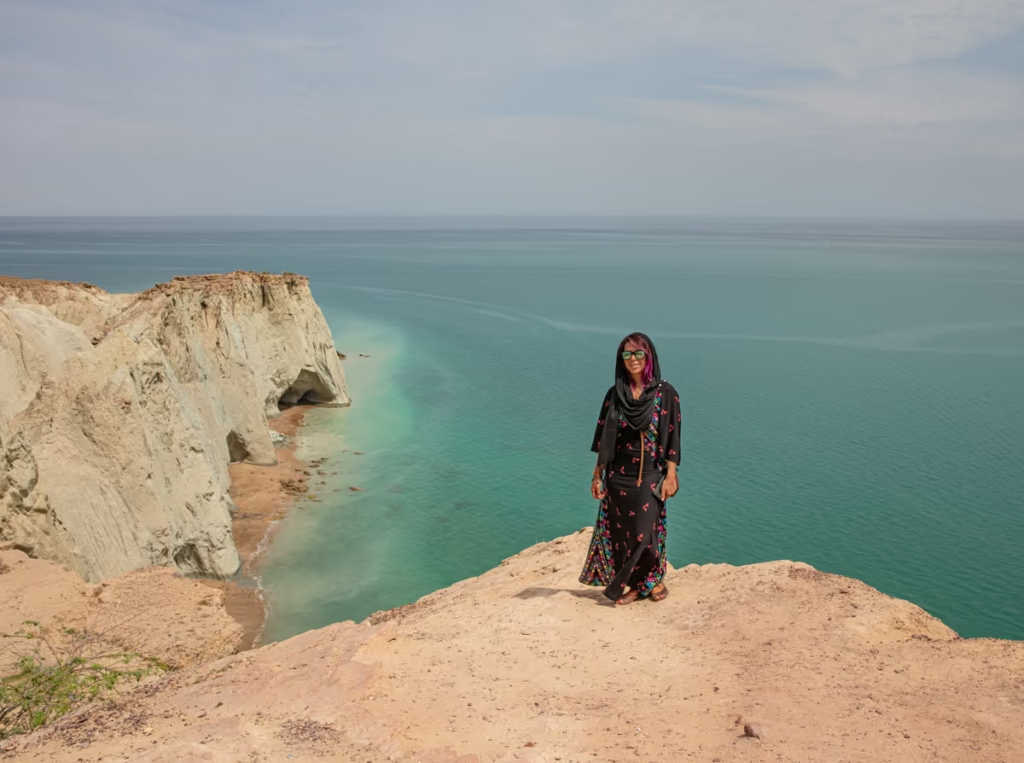
The Hole in the Rock is exactly what its name suggests: a natural opening carved through the island’s coastal rock. It’s a relatively simple attraction compared with Hormuz’s larger valleys and geological formations, but its position along the coast makes it a fun addition to an island tour.
The surrounding cliffs and sea also provide some good opportunities for photographs, particularly when viewed through the opening itself.
Time needed: 15-20 minutes
Best for: Photography and coastal scenery
How to get there: Usually visited as part of a tuk-tuk tour, with a short walk from the road.
Best time to visit: Morning or late afternoon.
What to know: Be careful around the cliffs and uneven rock surfaces, particularly in windy conditions.
Going north to the desert: Plan a perfect two day stay in Yazd
Saffron Valley

Saffron Valley is another of Hormuz Island’s colorful geological landscapes, where layers of warm yellow, orange, red and ochre rock create a distinctly different look from the island’s better-known Rainbow Valley, from which most will hike to the Saffron Valley from. The colors and textures become especially interesting when you walk through the valley rather than viewing it from the road.
It is a worthwhile stop for seeing another side of Hormuz’s geology and for photography, particularly if you enjoy close-up details of the mineral-rich earth. Like many of the island’s natural attractions, the experience is more about wandering through the landscape than checking off a single viewpoint.
Time needed: 20-30 minutes
Best for: Geology, photography and short walks
How to get there: Saffron Valley is generally visited as part of a tuk-tuk tour around Hormuz Island, with a short walk from the road into the colorful formations.
Best time to visit: Morning or late afternoon, when the lower light brings out the different colors and temperatures are more manageable.
What to wear: Closed-toe shoes with good traction
What to know: The terrain is uneven and exposed, with little shade. Bring water and avoid climbing on or collecting the colorful rocks and soil.
Portuguese Fort
The Portuguese Castle is the most significant historical attraction on Hormuz Island. Built by the Portuguese in the early 16th century, the fortress reflects Hormuz’s strategic importance during the era of Portuguese expansion into the Persian Gulf.
Unlike the island’s colorful geological attractions, the castle offers a glimpse into Hormuz’s human history and its importance as a trading center. Its weathered red-toned stone walls also fit surprisingly well into the island’s colorful landscape.
Time needed: 30-60 minutes
Best for: History, architecture and photography
How to get there: The castle is in the main settlement of Hormuz and is easily reached by tuk-tuk or on foot if you’re staying nearby.
Best time to visit: Morning or late afternoon, particularly during the warmer months.
What to know: The site involves uneven surfaces and stairs, so wear shoes with good traction.
Dr. Ahmad Nadalian’s Museum & Art Gallery
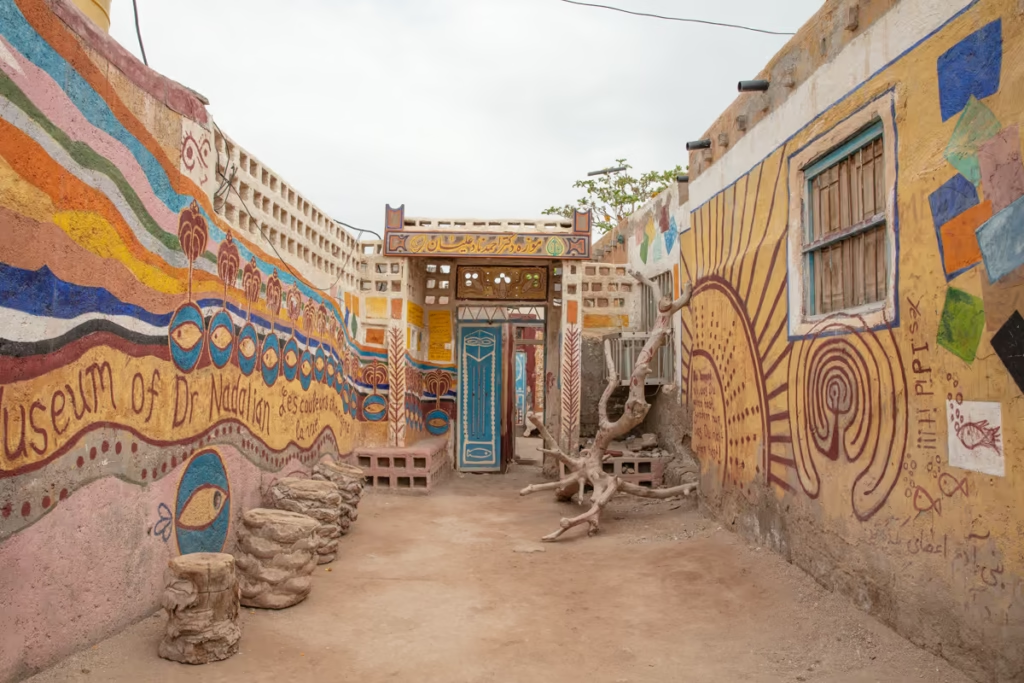
The Dr. Ahmad Nadalian Museum offers a different perspective on Hormuz, focusing on the island’s contemporary art and local culture rather than its geology. The museum and art center are associated with Iranian artist Ahmad Nadalian, whose work incorporates natural materials and imagery connected to the island.
The center has also supported local women through art and handicraft programs, making it a worthwhile stop if you want to understand more about contemporary life on Hormuz rather than simply touring its landscapes.
Time needed: 30-60 minutes
Entrance fee: ~55¢
Best for: Art, culture and local handicrafts
How to get there: Located in the village of Hormuz and easily reached by tuk-tuk or on foot from nearby accommodation.
Best time to visit: During posted opening hours, ideally earlier in the day.
What to know: This is one of the better places on Hormuz to buy locally made art or handicrafts while supporting the island’s creative community
Hormuz Island Itinerary
One Day on Hormuz Island
You can see the highlights of Hormuz Island in a day, but don’t underestimate how long the island’s attractions can take. Most visitors explore by tuk-tuk, stopping at the major geological sites along the way. If you have the time, spending two nights gives you a much better chance to slow down, revisit places in better light and experience the island beyond a whirlwind day trip.
Morning
- Arrive by ferry and have breakfast in Hormuz Village
- Visit the Portuguese Castle
- Wander through Hormuz Village
- Stop at the Dr. Ahmad Nadalian Museum
- Hire a tuk-tuk and head into the island’s colorful interior
Late morning
- Explore Rainbow Valley
- Visit the Salt Goddess and nearby salt formations
- Continue through the island’s colorful landscapes
Afternoon
- Walk through the Valley of Statues
- Stop at Mofannagh Beach
- Continue to Red Beach to explore the glittery black sands and red waters
Late afternoon
- Visit Rainbow Cave or another nearby coastal attraction
- Return to Hormuz Village
- Catch your ferry back to Qeshm Island or Bandar Abbas
Tip: Don’t try to visit every attraction on the island in one day. Choose the places that interest you most and leave some breathing room. Ferry schedules can also determine how much time you actually have on the island, so check your return departure before setting off.
Two Days on Hormuz Island
Two days (or more!) is my preferred option if your schedule allows. Instead of spending the entire day racing between geological formations, you can take longer walks, spend more time at the beaches and explore Hormuz Village at a slower pace.
Day 1: Historic Hormuz and the Colorful Interior
Start in Hormuz Village, visiting the Portuguese Castle and Dr. Ahmad Nadalian Museum before heading into the island’s interior.
Spend the rest of the day exploring:
- Rainbow Valley
- Salt Goddess
- Salt Cave
- Saffron Valley
- Snowy Mountains
- Rainbow Cave
Finish the day back in the village or at a coastal viewpoint for sunset.
Day 2: Beaches, Valleys and Slow Exploration
Use your second day to explore the island’s coast and spend more time in the landscapes you rushed through on day one.
- Valley of Statues
- Mofanegh Beach
- Red Beach
- Silver Beach
- Silence Valley
- Hole in the Rock
Leave some time to wander around Hormuz Village, eat a local meal and simply enjoy being on the island. Honestly, this is where Hormuz gets more interesting than the standard “stop, photograph, leave” circuit.
Should You Spend One or Two Days on Hormuz Island?
If you’re short on time: One day is enough to see the major highlights, especially if you hire a tuk-tuk and plan your route around your ferry schedule.
If you want a slower experience: Stay for two nights. You’ll have more time for walking, beaches, photography and exploring Hormuz Village without constantly watching the clock.
If photography is your priority: Spend at least two days. The island’s colors change dramatically with the angle and quality of the light, so having extra time lets you return to landscapes when conditions are better.
If you’re already visiting Qeshm Island: I’d strongly consider spending at least one night on Hormuz rather than treating it solely as a day trip. The island feels quite different once the daytime sightseeing crowds have departed.
What to Eat in Hormuz
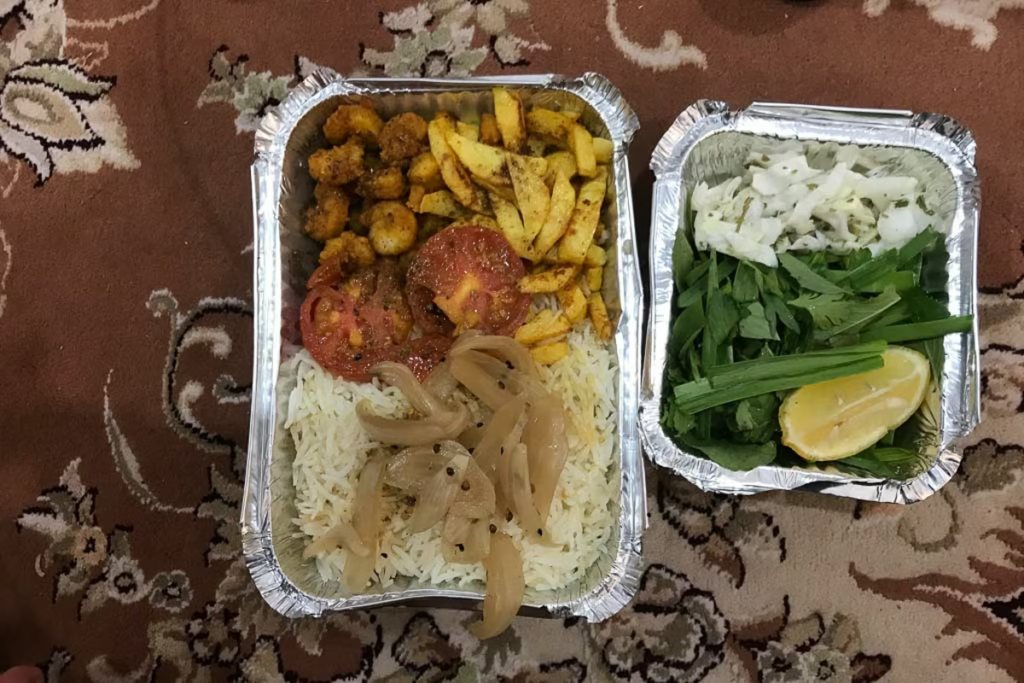
Food is one of the best ways to experience Hormuz beyond its famous landscapes. The island’s cuisine is closely tied to the Persian Gulf, with fresh seafood, strongly seasoned sauces, flatbreads and local spices reflecting the wider food traditions of southern Iran and Bandari cuisine.
Don’t expect a huge restaurant scene. Much of the food on Hormuz is served in small local restaurants, cafés, guesthouses and homestays, and some of the best meals can be simple home-cooked dishes. If you’re staying with a local family, ask what they are cooking that day rather than searching for a specific dish. Freshly caught fish is about as local as lunch gets.
For those planning to prepare their own meals, there is a larger supermarket on the corner of the main roundabout in town, and there are also a couple of shops selling fresh produce in the village.
Seafood & Local Fish
Given Hormuz’s location in the Persian Gulf, seafood is central to the local diet. Fish is commonly grilled, fried or incorporated into stews and rice dishes, with spices and herbs giving the food the bold, savory flavors typical of southern Iran.
You’ll find different fish depending on the season and what’s been caught locally, so don’t be surprised if a restaurant simply offers the catch of the day. Grilled or fried fish with rice, herbs and a spicy sauce makes for an excellent island meal.
Shrimp
Shrimp is another common seafood choice on Hormuz. It may be grilled or fried, cooked with spices, or incorporated into rice and other regional dishes.
If you’re a seafood fan, Hormuz is a good place to order whatever is freshest rather than sticking to a familiar menu item. The Gulf is right there, after all. It would be slightly rude to order a frozen chicken sandwich on an island surrounded by seafood.
A favorite meal I had in Hormuz was a home-cooked one from my guesthouse of shrimp and rice (maygoo and birinj is the name in Farsi).
Ghalieh Mahi
One of the southern Iranian dishes worth seeking out is ghalieh mahi, a flavorful fish stew associated with Khuzestan and the Persian Gulf region. Fish is cooked with fresh herbs, garlic, spices and tamarind, giving the dish a rich, tangy and slightly spicy flavor.
It is typically served with rice and is quite different from the grilled fish you might otherwise encounter on the island. If you enjoy sour, herb-heavy dishes, this is one to look for.
Tomshi: Hormuz’s Local Flatbread
One of the foods most closely associated with Hormuz and the surrounding islands is tomshi, a thin flatbread traditionally made with a simple dough and filled with ingredients such as cheese, egg and a flavorful sauce or seasoning.
On Hormuz, you may encounter versions made with suragh, a distinctive red-orange condiment traditionally produced from small fish and colored with the island’s famous red ochre. The result is a thin, crispy, savory bread with a salty, slightly fishy flavor.
Tomshi is particularly good as a quick breakfast or snack while exploring the island.
Suragh and Hormuz’s Red Soil
One of the most unusual things you’ll encounter when researching Hormuz Island food is the island’s famous red earth.
Hormuz is rich in colorful mineral deposits, including iron-rich ochre. Some of the island’s edible red ochre has traditionally been incorporated into local food, most notably in suragh, a savory preparation made using fish, spices and the island’s red mineral pigment.
This isn’t simply a case of locals sprinkling handfuls of dirt over their dinner, despite how some travel articles make it sound. The edible ochre is a specific local culinary ingredient with cultural and traditional significance, and its use is part of the food heritage of Hormuz and the wider Persian Gulf region.
It’s also important to understand that not all of the colorful soil you see around Hormuz is food-grade. Don’t scoop up red earth from a beach or mountain and assume it’s safe to eat. If you want to try the tradition, do it through a local dish prepared by someone who knows how the ingredient is traditionally sourced and used.
Bandari Cuisine
Hormuz’s food belongs to the broader culinary traditions of southern Iran, often referred to as Bandari cuisine. Compared with the milder dishes you may encounter elsewhere in Iran, food from the Persian Gulf coast tends to be more heavily seasoned, with plenty of herbs, garlic, chili, turmeric, tamarind and other spices.
Seafood naturally features heavily, but the cuisine isn’t simply “fish and rice.” Local cooking reflects centuries of trade and cultural exchange across the Persian Gulf, with influences from communities and trading networks stretching around southern Iran, the Arabian Peninsula and the Indian Ocean.
That history shows up on the plate in the combination of seafood, sour flavors, aromatic spices and rice.
Falafel and Quick Meals
You’ll also find falafel around Hormuz, particularly at small casual eateries. It isn’t unique to the island, but it is cheap, filling and easy to find when you want something quick between sightseeing stops.
Small cafés and local eateries may also serve sandwiches, eggs, tea and other simple meals. Don’t expect a polished restaurant scene everywhere.
My favorite quick meal I had multiple times while on Hormuz Island, was a falafel shop called Cafe Barcelon. They have a small table out front that you can sit and eat at. It’s very popular with the locals.
A cafe at the port (there are two dome-shaped buildings, the nearest is a cafe and the far one is a bicycle rental) that has delicious tahini and date shakes.
Where to Eat on Hormuz Island
For the most authentic experience, I’d look beyond conventional restaurants.
Homestays
If you’re staying in a local homestay, ask your hosts about meals. This can be one of the best ways to try homemade Hormuzi and Bandari dishes, particularly seafood prepared with family recipes.
Local Restaurants
There are small restaurants around Hormuz Village serving seafood, rice dishes, sandwiches and other local food. Menus and opening hours can be limited, particularly outside the busiest tourist season, so don’t wait until late at night to start thinking about dinner.
Cafés and Street Food
Small cafés and informal food stalls are useful for breakfast, tea, snacks and quick meals. You’ll also find people selling homemade foods from small shops or homes.
Tip: If you see a busy local place with a small menu, that’s often a good sign. Ask what’s fresh that day and order accordingly.
What Foods Should You Try on Hormuz Island?
If you only have a short time on the island, I’d prioritize:
- Fresh local fish, grilled or fried
- Shrimp
- Ghalieh mahi, if available
- Tomshi with local suragh
- Other Bandari seafood dishes
- Local tea and snacks
- Falafel for an inexpensive quick meal
What to Pack for Hormuz Island
- Water bottle
- Sunscreen
- Hat
- Sunglasses
- Closed-toe shoes
- Light clothing
- Lightweight scarf
- Cash
- Power bank
- Offline maps
- Camera
- Small daypack
Important Hormuz Island Info
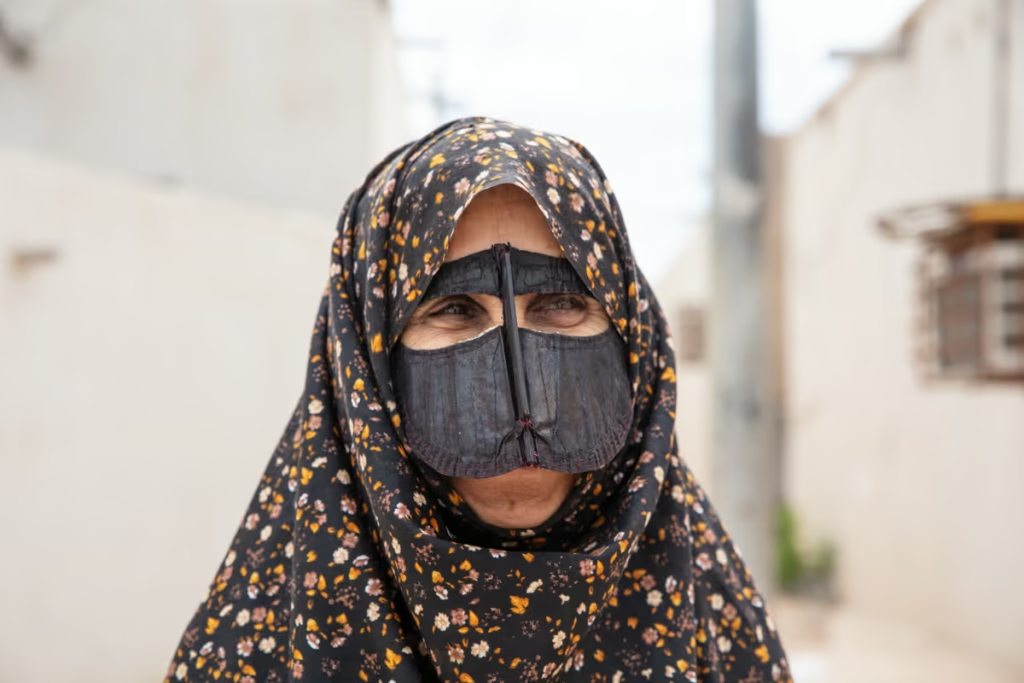
- The language spoken in Hormuz is a dialect of Farsi, though it is similar enough that you’ll be able to get the gist if you understand some Farsi.
- The Iranian Rial is used here just like everywhere in Iran. The currency is extremely unstable, hence why I’ve given prices in dollars instead.
- Plan to carry cash. There are no exchange desks or banks in Hormuz. There are also no ATMs, either, not that your cards would likely work anyway.
- If you have a sim card you’ll have 3G sporadically around the island. Data seemed to work best in Hormuz Village.
- La pausa, or siesta, is a common thing in these sweltering hot parts of Iran. The village nearly shuts down from 2 pm-5 pm.
Beyond the Colors: Final Thoughts on Hormuz Island
I arrived on Hormuz with a fairly ridiculous expectation that I’d spend the day chasing colorful rocks from one viewpoint to the next. And, yes, there was plenty of that. But what surprised me most was how quickly the island’s landscape shifts. One minute I was looking at deep-red earth beside the Gulf, and shortly afterward you’re walking through pale salt formations that look like they’ve been dropped onto the island from another planet.
Hormuz Island is easy to reduce to a collection of colorful landscapes. The red beaches make great photographs, the rainbow-colored mountains look almost unreal, and the salt formations seem designed for Instagram. But spend a little more time here and the island becomes much more than a geological oddity.
What I loved most about Hormuz was the way its landscape, history and culture are so closely intertwined. The same colorful earth that creates those surreal mountains has found its way into local food and art, while the Portuguese Castle hints at the island’s much larger role in Persian Gulf trade. In the village, meanwhile, life carries on around all of this, largely at its own pace.
You can certainly visit Hormuz as a day trip and see its biggest sights, but staying overnight gives you a chance to experience the island rather than simply tour it. Slow down, eat something local, wander through the village, and give yourself time to sit with the landscape instead of racing from one colorful viewpoint to the next.
Hormuz is one of those places that photographs beautifully but makes considerably more sense once you’ve stood there yourself, with red earth under your shoes and the Persian Gulf stretching toward the horizon. If you’re already traveling through southern Iran, I’d make the effort to visit. Rainbow Island is colorful, yes, but its real appeal is everything beneath the surface.
Have any Questions about Visiting Hormuz Island?
Let us know any of your Hormuz Island questions in the comments section below. Been to Hormuz? Let us know your favorite spots.
Posts From Iran
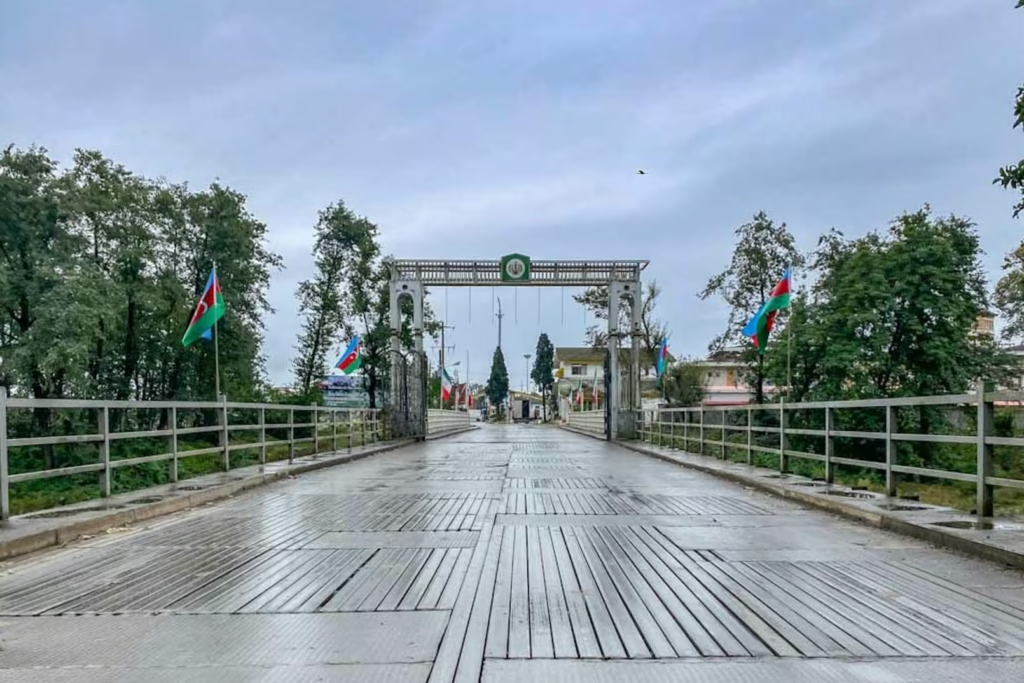
Astara Border Crossing: Azerbaijan-Iran
Hormuz Island Travel Guide: Everything You Need to Know
How to Get an Iran Visa on a US Passport
Kashan Travel Guide
How to Get to Kandovan
Kaluts Iran: Day Trip to the Lut Desert’s Surreal Yardangs
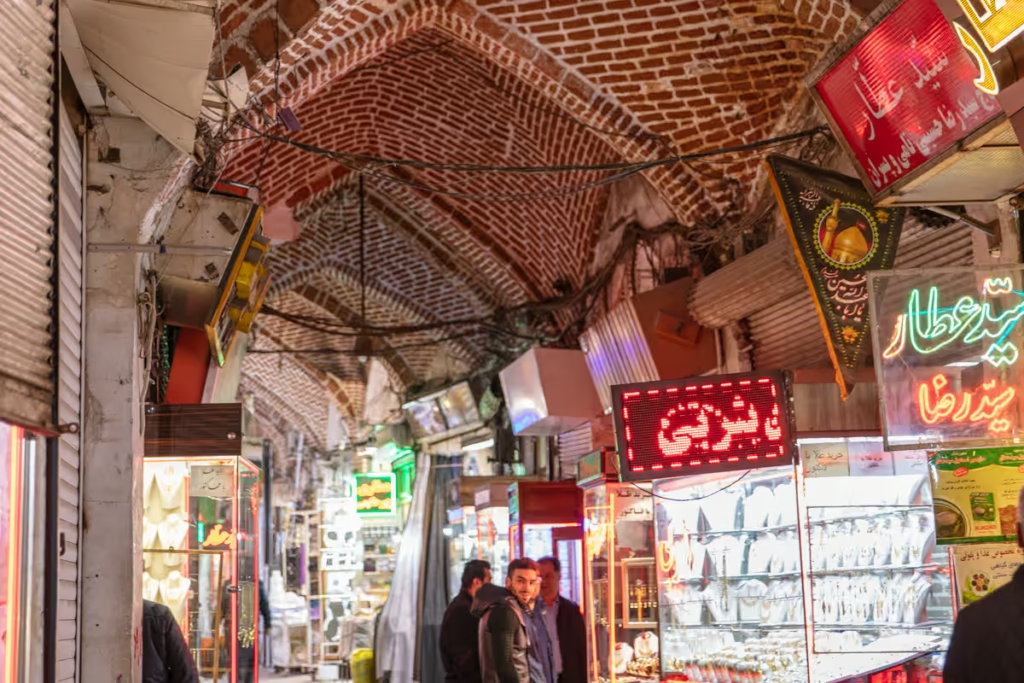
Tabriz Travel Guide
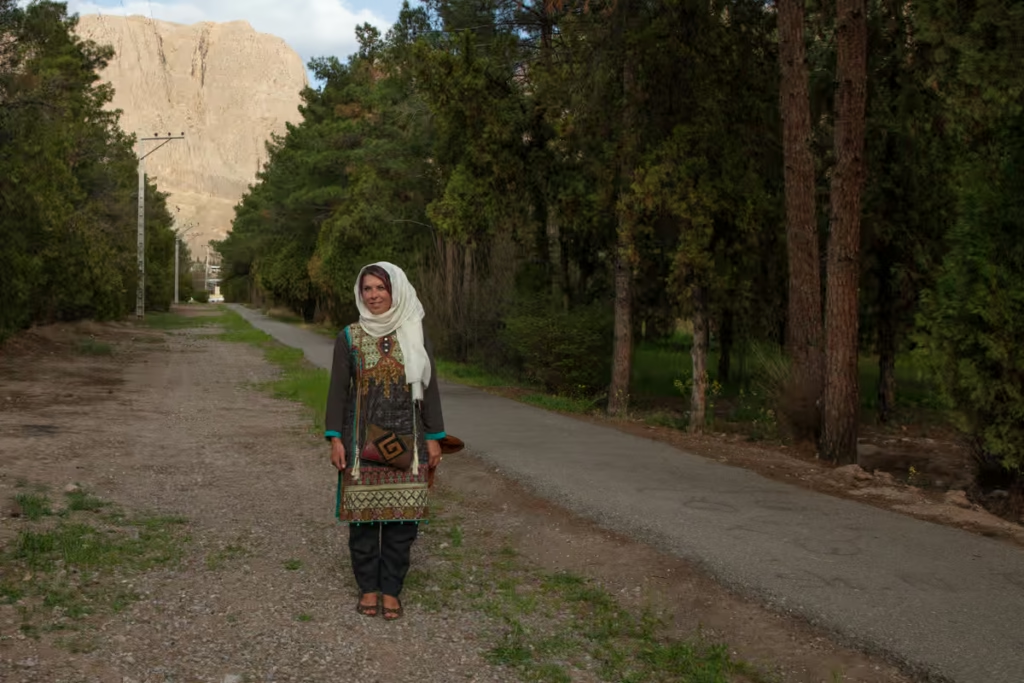
Solo Female Travel in Iran
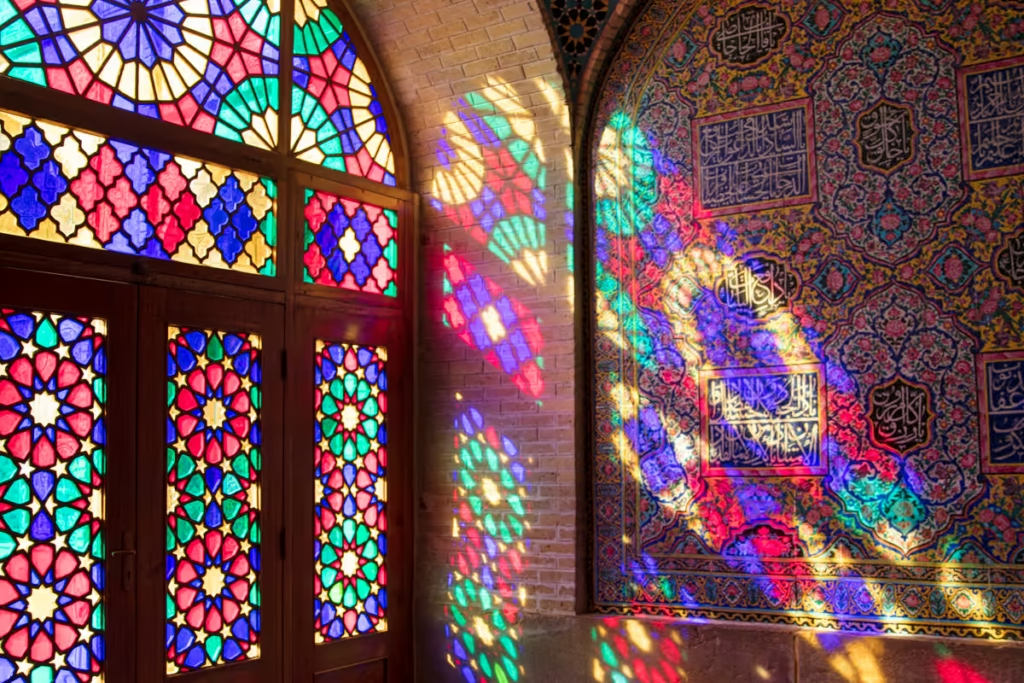
Shiraz Travel Guide
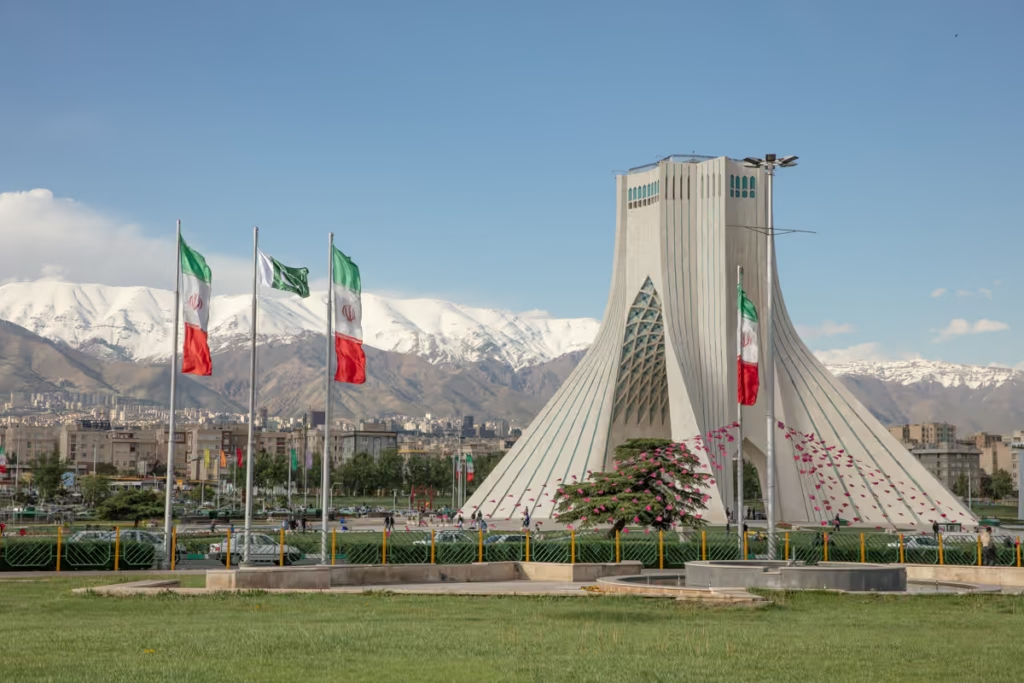
How Much it Cost to Travel Iran
Maharloo: Iran’s Pink Lake
Esfahan Travel Guide
Iran Itinerary for Independent Travelers
8 Unique & Cheap Places To Travel In Summer 2026
The Iran-Iraq Border Crossing at Haji Omaran
Two Day Tehran Itinerary
Two Day Yazd Itinerary
How to Get a Visa for Iran
Sistan & Balochistan Travel Guide, Iran
Afghanistan Iran Border Crossing at Islam Qala Dogharoun
Best Road Trips in the World