Moldova Travel Guide: Everything You Need to Know
Updated October 2026, Moldova Travel Guide: Everything You Need to Know was originally written in May 2018
Moldova is one of Europe’s least-visited countries, but that is exactly what makes traveling here so interesting. Tucked between Romania and Ukraine, this small Eastern European country packs a surprising amount into a relatively compact package: sprawling underground wine cellars, Orthodox monasteries, rolling countryside, Soviet-era architecture, lively markets, and the breakaway territory of Transnistria.
I’ve visited Moldova twice, first in 2012 and again in 2017, and it was one of those places that surprised me enough to make me want to come back. I spent time wandering the streets of Chișinău, eating langos at the market, exploring monasteries carved into limestone cliffs, drinking Moldovan wine with new friends, and crossing into Transnistria with just enough Russian to get myself into interesting conversations.
Moldova is also changing. Tourism has been growing in recent years, and the country is increasingly being recognized for its wine, rural tourism, food, cultural heritage, and surprisingly accessible countryside. In 2025, the number of foreign visitors using Moldovan travel agencies increased by 33.8% compared with the previous year.
This Moldova travel guide covers everything you need to plan a trip, including the best places to visit in Moldova, how to get around, the best time to visit, visa requirements, travel costs, Moldovan food and wine, and what you should know before visiting Transnistria.
If you like destinations that haven’t been polished smooth for mass tourism, Moldova is worth putting on your list.
Need Travel Insurance and Evacuation Services?
Start shopping for travel insurance plans over at IATI Insurance. Readers of the Adventures of Nicole get a 5% discount off your plan.
The Adventures of Nicole partners with Global Rescue to offer the world’s leading medical evacuation and security advisory services. To travel with peace of mind, explore their evacuation coverage.
Moldova at a Glance
| Capital | Chișinău |
| Official language | Romanian |
| Currency | Moldovan leu (MDL) |
| Time zone | Eastern European Time |
| Best time to visit | May-June and September-October |
| Ideal trip length | 5-10 days |
| Main airport | Chișinău International Airport |
| Wine regions | Cricova, Mileștii Mici, Purcari and more |
| Main attractions | Chișinău, Orheiul Vechi, wineries, Soroca, Gagauzia |
| EU member? | No |
| Visa | Depends on nationality |
Planning a trip to Moldova? Start with Chișinău, spend a day exploring Orheiul Vechi, visit at least one winery, and allow extra time if you want to explore northern Moldova or Gagauzia.
Is Moldova Worth Visiting?
Absolutely, especially if you’re looking for a destination that feels different from the more heavily visited parts of Europe.
Moldova is particularly rewarding for travelers interested in wine, history, Orthodox monasteries, Soviet architecture, rural landscapes and local food. The country is small enough that you can see a surprising amount in a week, while getting beyond Chișinău is relatively straightforward.
The biggest draw for me is that Moldova doesn’t feel like it has been built around tourism. You can spend the morning exploring an underground wine cellar, the afternoon eating lunch in a village and the evening wandering through Chișinău without feeling like you’re following the same itinerary as everyone else.
Moldova also has a surprisingly deep wine culture. The country’s tourism office highlights major wine destinations including Cricova, Mileștii Mici, Purcari, Castel Mimi, Château Vartely and several smaller wineries.
If you want polished resort tourism, Moldova probably isn’t your place. If you want somewhere inexpensive, culturally interesting and still relatively underexplored, that’s where Moldova gets fun.
A Quick Moldova History
Moldova’s history is complicated, which is probably the understatement of the century. The territory has sat between competing empires and political spheres for centuries, and those layers are still visible when you travel around the country today.
Much of modern Moldova lies within the historical region of Bessarabia, while the broader medieval Principality of Moldavia encompassed territory that is now divided between Moldova, Romania and Ukraine.
Bessarabia became part of the Russian Empire in 1812 following the Russo-Turkish War. After the Russian Revolution, Bessarabia briefly formed the Moldavian Democratic Republic before uniting with Romania in 1918.
In 1940, the Soviet Union annexed Bessarabia and established the Moldavian Soviet Socialist Republic. Moldova remained part of the USSR until declaring independence on August 27, 1991.
The complicated part didn’t end with independence. Fighting broke out between Moldovan forces and separatists in Pridnestrovie (Transnistria) in 1992. A ceasefire was reached that year, but Transnistria remains outside the control of Moldova’s central government and operates as a de facto separatist territory.
You can see traces of all these different periods while traveling through Moldova, from Romanian cultural influences and Orthodox monasteries to Soviet architecture and the distinctly Soviet atmosphere of Tiraspol.
What Is Moldova Famous For?
Moldova is best known for its wine, enormous underground wine cellars, Orthodox monasteries, rolling countryside and complicated history between Romania, Russia and the Soviet Union.
The country is particularly famous for its wine culture. Major attractions include Cricova, Mileștii Mici and Purcari, while Orheiul Vechi and Soroca offer some of Moldova’s most interesting historical sights. The country also has an unusually large collection of monasteries, fortresses and natural areas for its size.
Moldova Practical Information
Money in Moldova
The currency of Moldova is the Moldovan leu (MDL).
ATMs are widely available in Chișinău and other larger towns, and cards are increasingly accepted at hotels, restaurants and larger businesses. Cash is still useful for markets, marshrutkas, small businesses and rural travel.
Exchange rates fluctuate, so I recommend checking the current USD-to-MDL or EUR-to-MDL rate immediately before your trip rather than relying on a fixed conversion published in a travel guide.
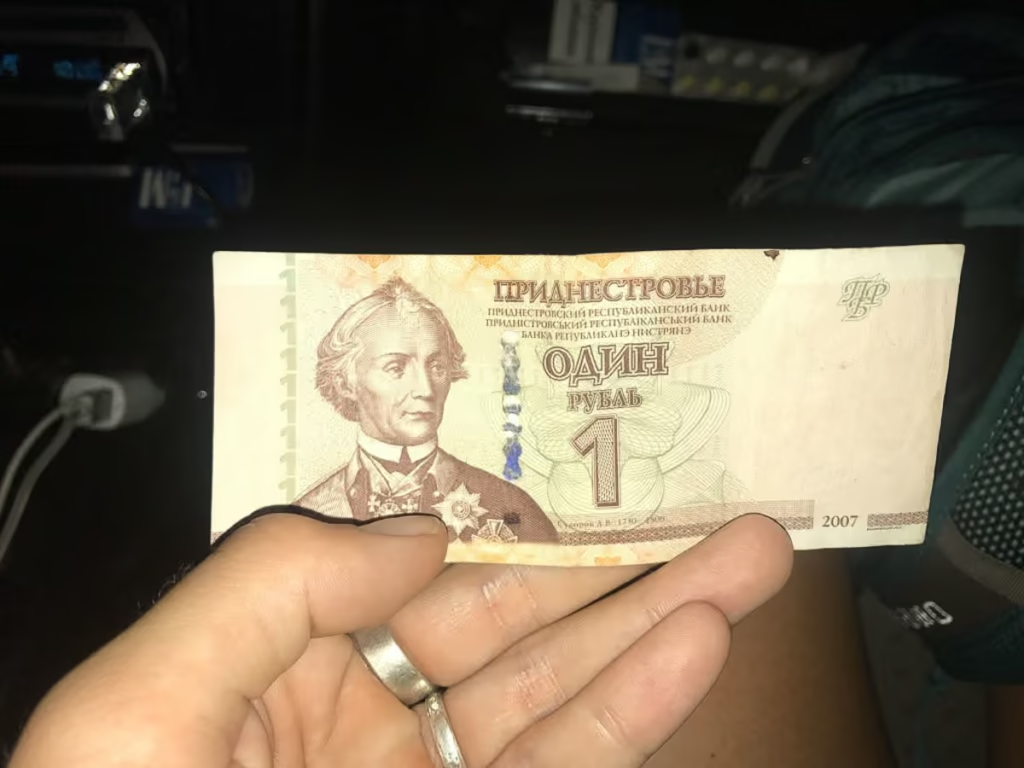
If you visit Transnistria, things become more complicated because the region uses the Transnistrian ruble (PRB). Don’t assume that you can use Moldovan lei everywhere there.
And importantly, I’d delete the old exchange-rate table for Transnistrian rubles. For up-to-date exchange rates of the Transnistrian Ruble, check the Bank Pridenestrovia website.
Language in Moldova
The official language in Moldova is Moldovan, but standard Moldovan is essentially identical to Romanian. Regionally recognized languages include Gaugaz and Ukrainian. Russian is widely understood for the obvious reason that Moldova was a republic of the USSR.
In the region of Transnistria Russian is the main language, but Moldovan and Ukrainian are spoken as well. English is becoming a more popular foreign language among younger Moldovans to learn at school (as well as French), but you will find it helpful to at least know a few words and phrases in Moldovan/Romanian or Russian.
How Many Days Do You Need in Moldova?
I’d recommend 5-7 days for a first trip to Moldova.
With five days, you can comfortably explore Chișinău, visit Orheiul Vechi and spend a day touring one or two wineries.
With a week, you can slow things down and add places such as Soroca, northern Moldova or Gagauzia.
With 10-14 days, you can explore much more of the countryside and build a trip around Moldova’s wineries, monasteries and smaller towns rather than simply ticking off the main attractions.
Suggested Moldova itineraries
3 days: Chișinău + winery + Orheiul Vechi
5 days: Chișinău + Orheiul Vechi + Cricova/Mileștii Mici + winery
7 days: Chișinău + Orheiul Vechi + wineries + Soroca + northern Moldova
10-14 days: Add Gagauzia, Purcari and more rural destinations
Best Time to Visit Moldova
The best time to visit Moldova is May, June, September and early October, when temperatures are generally comfortable for sightseeing, hiking and exploring wineries.
May-June
Probably my favorite period for exploring Moldova. The countryside is green, temperatures are generally pleasant, and you’re ahead of the hottest summer weather.
July-August
Summer is the busiest period for outdoor activities and wine tourism, but temperatures can get seriously hot. Pack accordingly.
September-October
Another excellent time to visit. September brings pleasant temperatures, while autumn is particularly appealing for wine lovers.
National Wine Day is one of Moldova’s biggest tourism events. The holiday happens in October.
November-March
Winter is the quietest period for tourism and can be cold and gray. If you don’t mind the weather, you’ll encounter fewer tourists and can experience Moldova at its most subdued.
Need more convincing? Read: 10 reasons to visit Moldova
Is Moldova Expensive?
Moldova remains one of the more affordable destinations in Europe, although prices have increased since my earlier trips.
Budget travelers can keep costs down by staying in hostels or guesthouses, eating at local restaurants and markets, and using public transportation. Midrange travelers can comfortably add nicer hotels, winery visits and private transportation without European Western-country prices.
Your actual budget will depend heavily on accommodation and how many winery tours or private excursions you book.
Backpacker Moldova Budget
$30-45 USD per day is a reasonable backpacker budget for Moldova. Stay in hostels or budget guesthouses, eat at local markets and inexpensive restaurants, and use marshrutkas and buses to get around. You can also keep costs down by exploring Chișinău and attractions like Orheiul Vechi independently.
Midrange Moldova Budget
$60-90 USD per day gives you a comfortable trip around Moldova. Expect to stay in good midrange hotels, eat at a mix of local and nicer restaurants, use taxis when convenient, and fit in a winery tour or two.
Comfortable Moldova Budget
$120-175+ USD per day allows for comfortable hotels, frequent taxis or private transportation, winery tours, nicer restaurants, and paid activities without having to watch every expense. If you’re hiring a private driver for several days or staying at higher-end wineries, budget more.
How to Get to Moldova
Most international travelers arrive through Chișinău International Airport, Moldova’s main international gateway.
Chișinău is well connected with European cities, making Moldova relatively easy to combine with a trip through Romania or elsewhere in Eastern Europe.
From Romania
Romania is one of the easiest countries to combine with Moldova. Travelers can cross the land border by bus, car or train depending on the route.
From Ukraine
Travel between Moldova and Ukraine has been affected by Russia’s war against Ukraine, and routes can change. Check current border and transportation conditions before planning an overland crossing.
By car
You can enter Moldova by road from neighboring Romania or Ukraine. If you’re driving, make sure you have the required vehicle documents and insurance.
By Train
You can enter Moldova by train from neighboring Romania. It’s a unique process has Moldova’s trains run on narrower tracks than those of Romania and remaining EU nations.
How to Get Around Moldova
Moldova is small enough that you don’t need an elaborate transportation strategy.
Marshrutkas
Marshrutkas, or shared minibuses, are one of the traditional ways to travel between Moldovan towns. They’re inexpensive and connect Chișinău with many destinations.
Buses
Buses provide another option for traveling between cities and towns.
Taxis and rideshares
Taxis are useful for shorter trips, especially around Chișinău. For winery visits and rural attractions, hiring a private driver or joining a tour can be much easier than piecing together public transportation.
Renting a car
A rental car is worth considering if you want to explore northern or southern Moldova independently.
Moldova Visa Requirements
Visa requirements for Moldova depend on your nationality, so check the current rules before traveling.
Citizens of the United States and many European countries can visit Moldova visa-free for stays of up to 90 days within the applicable period. Moldova’s Ministry of Foreign Affairs maintains the current visa regime, so use the official list to confirm your eligibility before departure.
If you need a visa, Moldova also provides an online eVisa application system for eligible short-stay applications.
Transnistria Entry Requirements
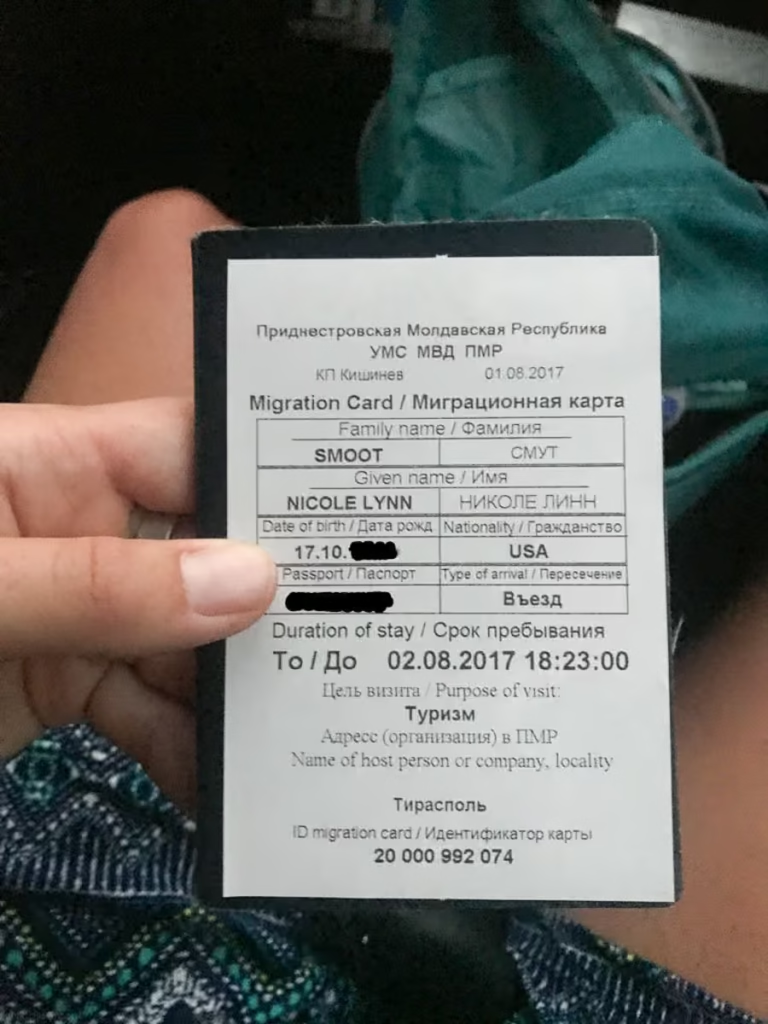
Entering Transnistria will require you to obtain a migration card, which you can get on arrival at the border. Read more on the Transnistrian Migration Card here.
Important: Visa and entry rules can change. Check Moldova’s official immigration information before your trip.
Food & Drink in Moldova
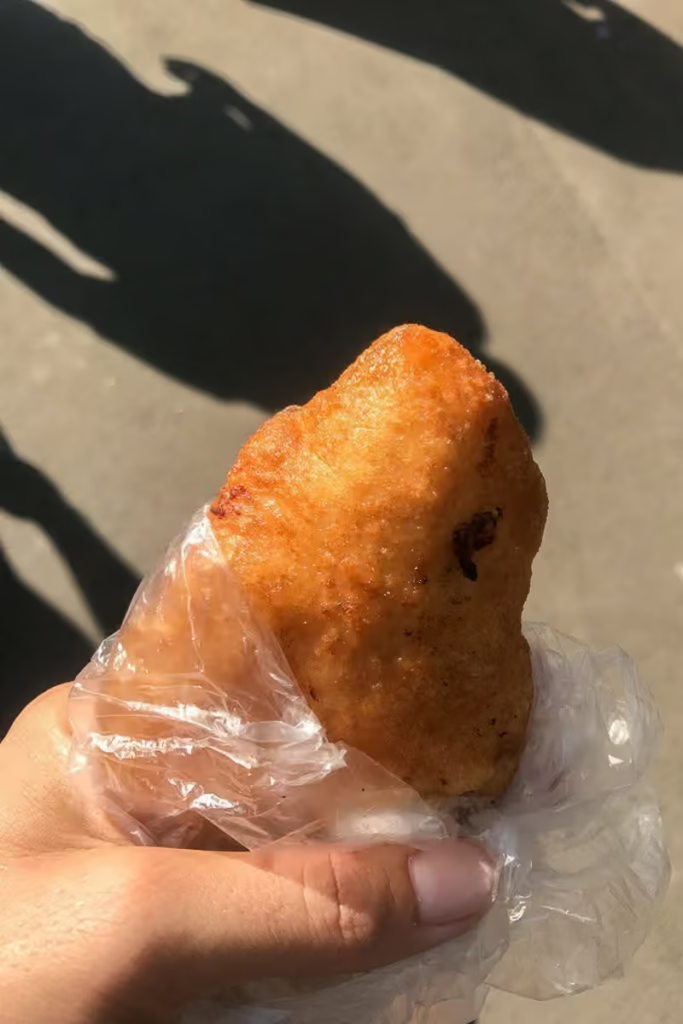
One of the most fun ways of getting to know Moldova’s culture is through its delicious cuisine. Mămăligă is the national dish. It’s a polenta-style dish that accompanies most meals.
Brânză is a must-try locally made salty brine cheese, it’s extra yummy served up in a langos (fried dough). Ghiveci is a locally made stew usually of goat or lamb meat.
Moldovan wine will almost always accompany meals. Purcari winery is known to make the best wine in Moldova, and Cricova is well known for its sparkling wines. Cognac is also a commonly made alcoholic drink in Moldova.
Make sure to try some before you leave- Kvint Distillery in Tiraspol is one of the most well-known cognacs in Moldova/Transnistria. And then there is Kvas (квас in Russian).
Kvas is a fermented beery-fruity drink sold in barrels all over Moldova and countries of the former USSR or those with Slavic influence. It is considered non-alcoholic.
Internet & Mobile in Moldova
Staying connected is pretty easy as you travel around Moldova. Most accommodations offer Wi-Fi, and SIM cards are easily purchased from local providers. For those that want to hit the ground running and don’t want to deal with getting a SIM card after arriving should explore Holafly’s unlimited eSIM plans for Moldova.
Is Moldova Safe to Visit?
Moldova is generally straightforward to travel around, but travelers should pay attention to the current regional security situation.
The situation in Transnistria is particularly important. The region is outside the control of the Moldovan government, Russian troops are stationed there, and conditions can change quickly. Consular assistance may also be limited.
Wine Tourism in Moldova
Moldova has one of Europe’s most interesting wine cultures, and wine tourism is one of the biggest reasons to visit.
The country’s wine routes include major cellars and wineries such as Cricova, Mileștii Mici, Purcari, Castel Mimi, Château Vartely and others.
Best Places to Visit in Moldova
Moldova may be small, but there’s more to the country than Chișinău and its famous wine cellars.
For a first trip, I’d prioritize Chișinău, Orheiul Vechi, Cricova or Mileștii Mici, and at least one countryside winery. Travelers with more time can head north to Soroca and Bălți or south toward Gagauzia and Purcari.
If you have the time and want to veer off the beaten path in Moldova (which is easy!), try the colorful city of Soroca, the breakaway region of Transnistria, Comrat- the capital of semiautonomous Gaugazia, and the lavender fields of Cobusca Nouă.
Best places to visit in Moldova
- Chișinău
- Orheiul Vechi
- Cricova
- Mileștii Mici
- Soroca
- Bălți
- Gagauzia
- Purcari
- Castel Mimi
- Transnistria
Chișinău & Around
Chișinău is the capital and largest city in Moldova and the natural starting point for most trips around the country. Give yourself at least one full day to explore the city, although two days makes a much better introduction to Moldova.
Chișinău
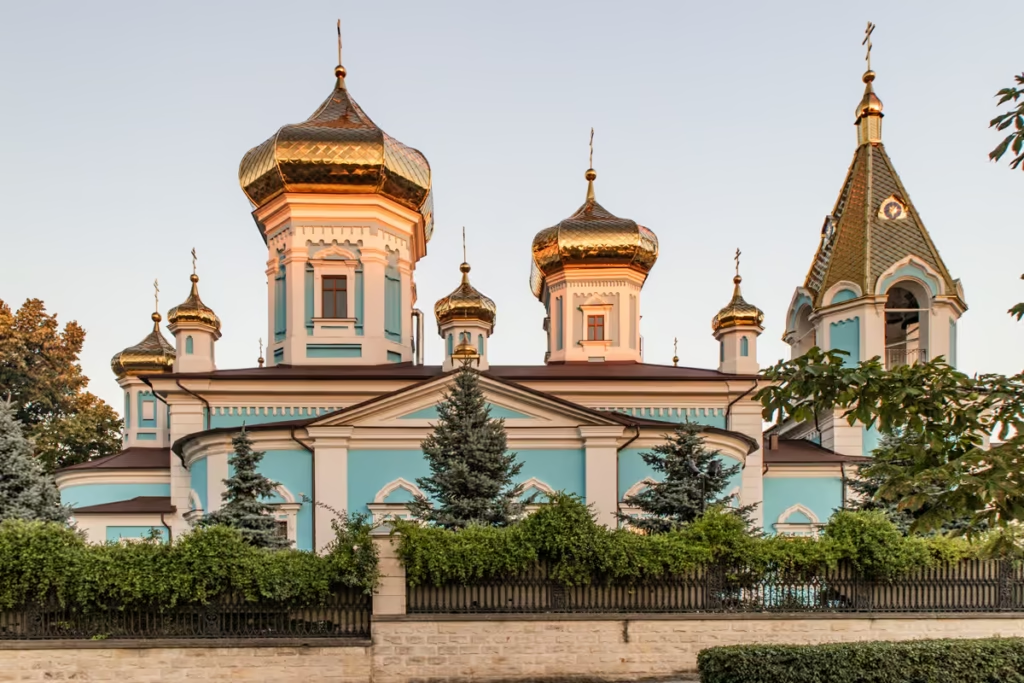
Chișinău has a reputation for being boring, grey, depressing, and dingy. But take the time to explore the city, sample the restaurants & bars, hang out in the leafy green parks, and make some local friends and you’ll find the capital anything but boring. You’ll stumble across many of the city’s attractions along B-dul Ştefan cel Mare (Chișinău’s main avenue) and nearby.
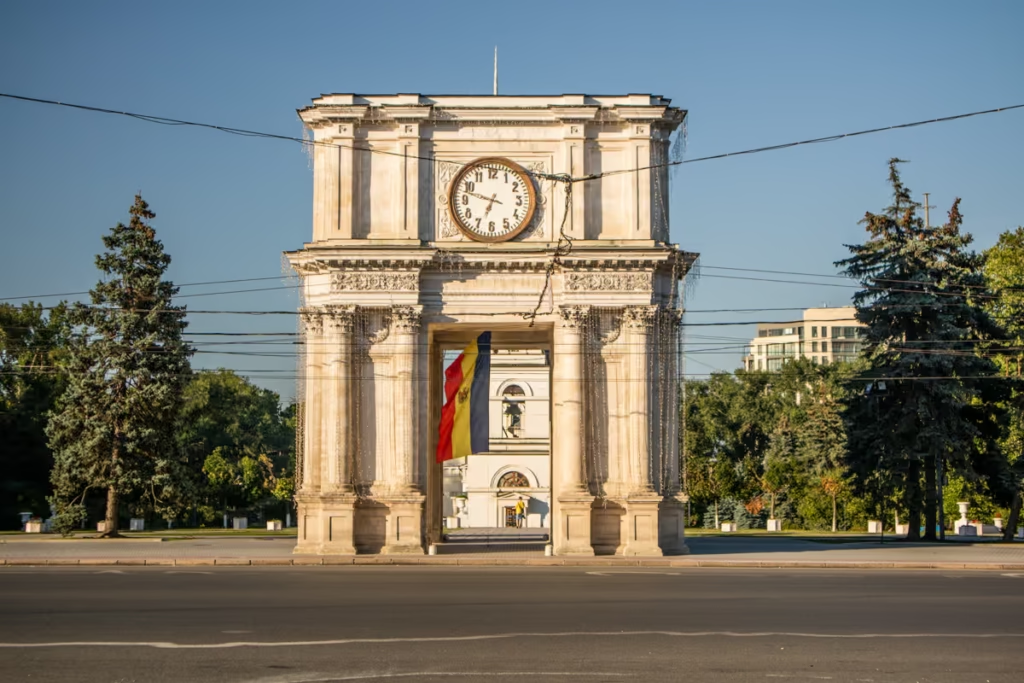
A few things to see while in Chișinău include: Cathedral & Ştefan cel Mare Park, Arc de Triomph, Ciuflea Monastery, Piata Centrala, Rose Valley Park, The Artisan Market, Valea Morilor Park, St. Teodora de la Sihla Church, Riscani Park, Moldova National Opera & Ballet Theater, Botanica Park, National Archaeology & History Museum, Pushkin Museum, Military Museum, and the National Ethnographic & Nature Museum.
Make sure and try out some local foods and hit up some of Chișinău’s best restaurants and bars while you’re in the city. Some tasty restaurants to try out are Vatra Neamului, Propaganda Cafe, and La Placinte.
My favorite spot for quick local foods is from the food stalls at Piata Centrala. Make sure to try the brânză langos and cartofi langos with a glass of cvas.Ciuflea Monastery
If you’re in need of a place to stay in Chisinau try the Hostel City Center if you’re on a budget or the Radisson Blu Leogrande Chisinau if you’re looking to splurge.
Check Out Chisinau Tours
Orheiul Vechi
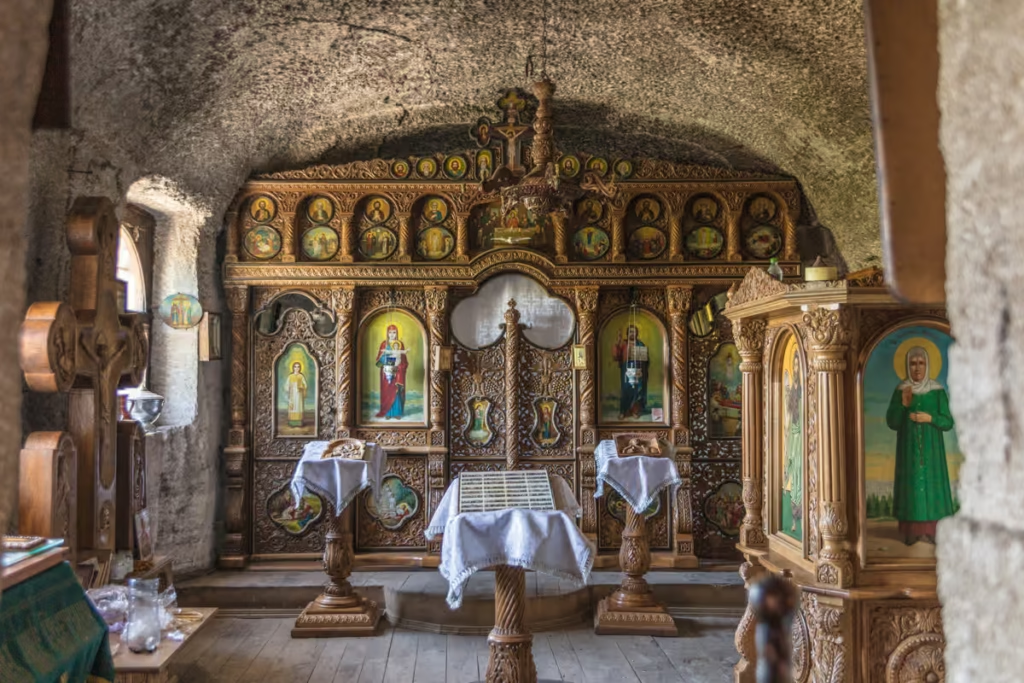
Orheiul Vechi is one of Moldova’s most spectacular cultural landscapes, where limestone cliffs rise above the Răut River and centuries of human settlement have left their mark on the landscape.
The site is best known for its rock-cut Orthodox monastery, but there’s much more to explore, including archaeological remains, cave complexes, traditional villages, viewpoints and hiking trails around Trebujeni and Butuceni.
It makes one of the best day trips from Chișinău and is one of the places I’d prioritize on a first Moldova itinerary.
For those that don’t want to deal with the hassle of getting to Orheiul Vechi on their own, you can book a tour of the monastery here.
If you would like to stay in the countryside out here try Villa Roz or Krolichya Ferma in nearby Trebujeni, or Resedinta Rotundu in Butaceni.
Day Trips To Old Orhei
Cricova
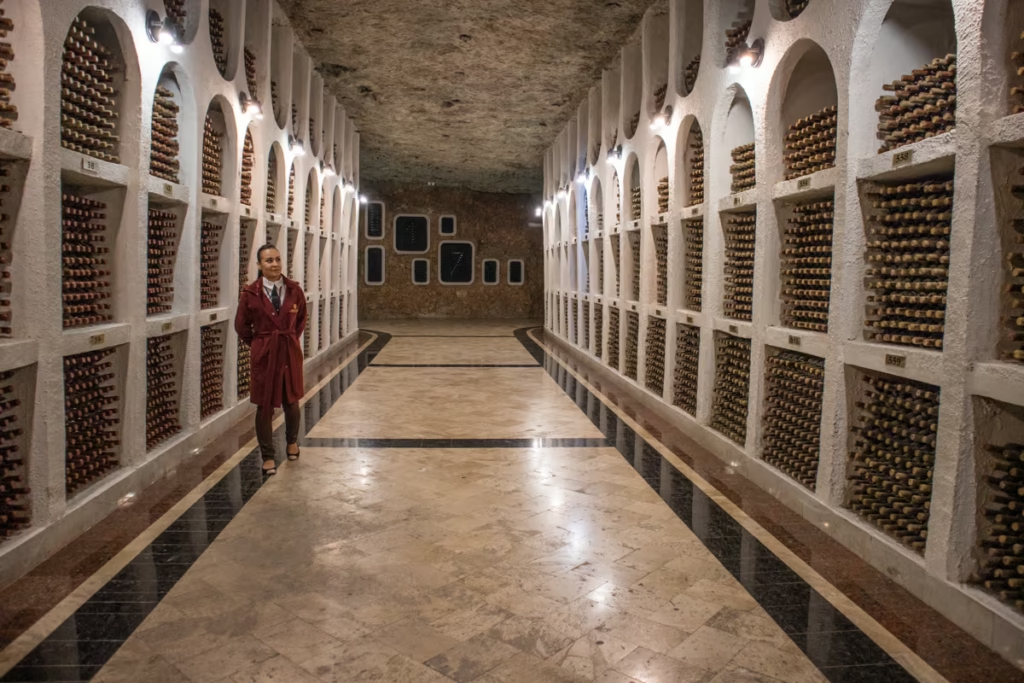
Cricova is one of Moldova’s most famous wineries and is best known for its enormous underground network of wine cellars. The tunnels stretch beneath the town and are large enough that visitors travel through parts of the complex by vehicle.
A guided visit typically combines the underground cellars with wine tasting, making Cricova one of the easiest wine experiences to add to a Chișinău itinerary.
f you want to book a full package including transport, cellar tour and tasting click here.
For those wanting to spend the night out here in Cricova, check out the newly opened and stylishly modern Hotel Gio Wine. Vila Family is a great option for those on a smaller budget.
Tip: Book ahead and check the winery’s current tour schedule and prices before visiting.
Cricova Wine Tours
Castel Mimi
Castel Mimi is one of Moldova’s best-known wine estates and makes an excellent addition to a Moldova wine itinerary. Located southeast of Chișinău, the estate combines wine tourism with restaurants, events and accommodation.
Mileștii Mici
Mileștii Mici is a former mine turned Guinness World Record largest underground wine cellar. Mileștii Mici is located in Ialoveni, about 11 km southwest of Chișinău.
The hours are M-F 9 am- 5 pm, Sat. Sun. and holidays after 5 pm. A guided tour will cost 200 MDL per person on weekdays, and 300 MDL per person on weekends and holidays. Wine tastings start at 310 MDL per person and include a guided tour of the cellars.
Call +373 22 382 333 to schedule a tour or tasting.
If you want to book a full package including transport, cellar tour and tasting click here.
Milesti Mici Tours
Cobusca Nouă
Cobusca Nouă is a village just 35 km southeast of Chișinău known for its lavender crops that look like all those beautiful photos you see in France, just better because you’ll likely have them to yourselves! If you’re looking to stay close to the village you can stay in nearby Anenii Noi.
Northern Moldova
Northern Moldova receives far fewer visitors than Chișinău and the country’s major wineries, making it an excellent region for travelers who want to get further off the usual Moldova itinerary.
The main destinations to consider are Soroca and Bălți, with historic monasteries, rural landscapes and the Dniester River providing additional reasons to explore farther north.
Bălți
Moldova’s second-largest city after Chișinău, and nicknamed the ‘Northern Capital’. Highlights in Bălți include St. Nicolas Church, Children’s Park, Ştefan cel Mare Monument, and the Ethnographic Museum. A good option to sleep is at the Elite Hotel.
Soroca
The main attraction in Soroca is the Soroca Fortress built between the 14th and 16th centuries. Other attractions include the Candle of Gratitude and the Museum of Soroca History and Ethnography.
Another feature of the city that draws in tourists is Gypsy Hill. Roma people (an ethnic group often referred to as Gypsies) have built elaborate and colorful mansions along this hilltop with the influence of famous buildings like the Bolshoi Theatre and St. Peter’s Basilica. Soroca sits perched on the banks of the Dniester River.
Try Central Hotel if you’re planning to spend the night in Soroca.
Ungheni
Ungheni is known to be one of Moldova’s most beautiful cities. Ungheni sits rights on the border with Romania, only separated from the Romanian city of Ungheni by the Prut River. Make sure to pay a visit to Frances Park and the numerous churches scattered about the city.
Gaugazia & Southern Moldova
Comrat/Komrat
The capital of Gagauzia. Highlights of Comrat include Lenin’s Square, Cathedral of St. John Baptist, Gagauz History Museum, Gaugaz Cultural Museum, Gagauz Bazaar, Gaugazian Art Gallery, and the Gagauz National Theatre. Comrat will be the easiest place to be situated in order to explore the rest of Gagauzia.
For accommodation, check out Caral.
Purcari
The main attraction in Purcari is, of course, Chateau Purcari Winery. Boating, bicycling, fishing, and hiking are a few activities to do in the area aside from the winery. To arrange winery tours call +373 60 121 221.
If you’d like to spend the night at the winery set in the Southern Moldovan countryside near the Dniester River you can book a stay here.
Vulcănești
The far southwestern exclave of Gagauzia. Vulcanesti is rarely visited. Check out the House of Culture as well as several monuments, churches, and memorials scattered about the town.
Transnistria/Приднестровская Молдавская Республика
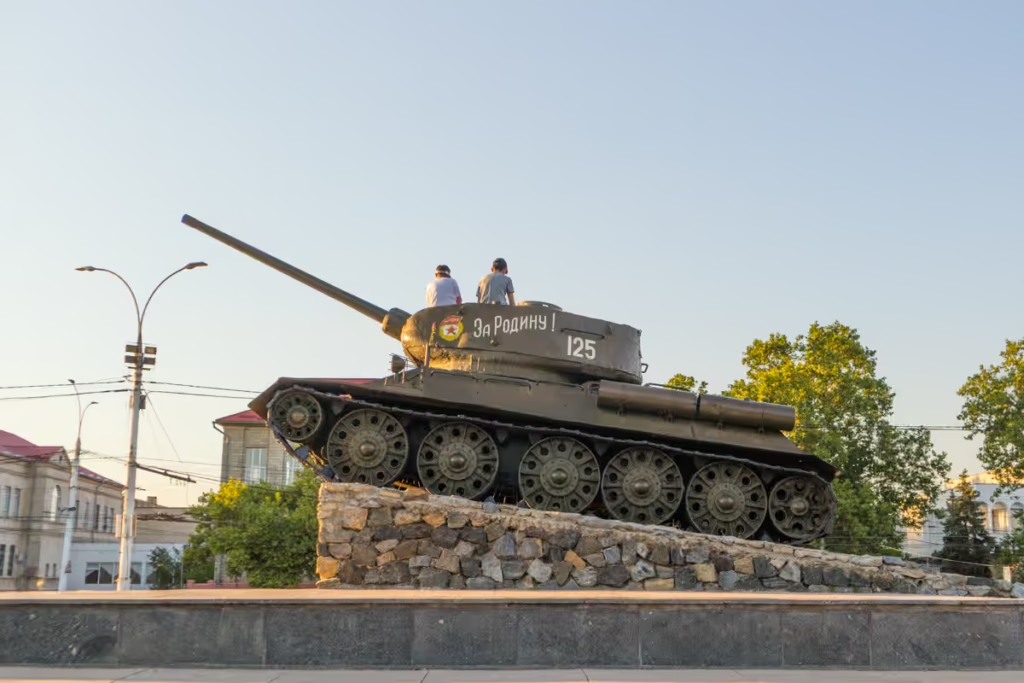
Ah Transnistria (Pridnestrovie is the name the territory has given itself), the unusual little slice of Soviet times alive and well on the banks of the Dniester River squished between Moldova and Ukraine. Most who do visit Transnistria do so as a day trip from Chișinău, or as a stopover while transiting from Chișinău to Odessa.
It is possible to get a 3-day migration card if you do plan to spend a night or two in Transnistria. And don’t worry, getting into and out of Transnistria isn’t as difficult as it used to be, and being asked for bribes and/or hassled is getting less and less common. To find out how to visit Transnistria, read on here.
Tiraspol/Тирасполь
Tiraspol is the official capital of the unofficial and unrecognized self-declared country. If you’ve traveled much of the former USSR, then Tiraspol probably won’t be as shocking to you. But for those that Moldova and Transnistria are their first times delving into former Soviet nations it may be a little, well.. different.
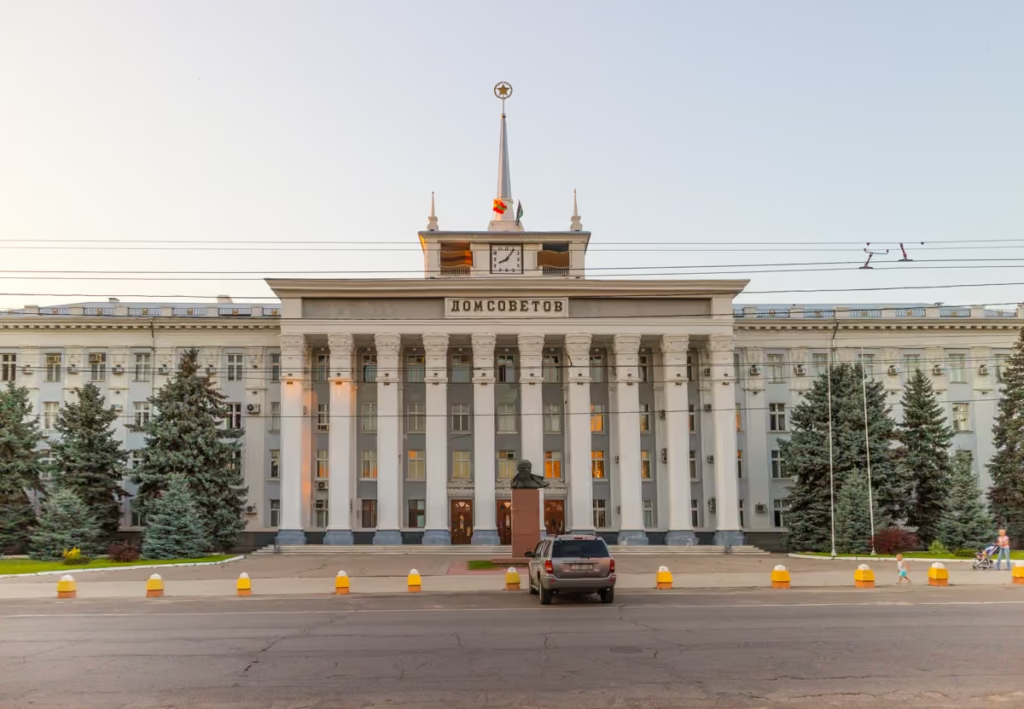
Statues of Lenin and very Soviet-looking architecture are a few of the peculiarities that draw foreigners in. A few of the attractions of Tiraspol include; The House of Soviets, Kirov Park, Kvint Distillery, Eternal Flame & Transnistrian War Memorial, walking along the Dniester River, Church of Nativity, Zelony Bazaar, and the Tiraspol National Museum.
Tiraspol even has a skatepark. You can find most of the main attractions in Tiraspol on 25 October Street. Read more about what to do and see, as well as how to get to Tiraspol in my Transnistria Travel Guide.
Grab a marshrutka from Chișinău’s Piata Centrala bound for Tiraspol (the sign in the window may also show Тирасполь). A seat will set you back 37 MDL and takes about an hour. The marshrutka will stop at the ‘border’ for you to get a migration card. Note that marshrutkas bound for Chișinău from Tiraspol cost 68 MDL per seat.
A few accommodations to check out are: Tiraspol Hostel, Like Home Hostel, Old Tiraspol, and City Club Hotel.
For those wanting to make a hassle-free trip to Transnistria and Tiraspol check out this tour from Chișinău.
Transnistria Tours
Bendery/Бендеры
Bendery, also known as Tighina. The main highlight for visitors to Bendery is the Ottoman Bendery Fortress. Other attractions to check out in Bendery are Tighina War Memorial & Park, and the Church of Joaquim.
Hotel Prietenia is a good option for those wanting to stay in Bendery, however, Tiraspol is right across the Dniester River if you’d like more options.
Looking for a tour of Bendery and Tiraspol? Check out this day tour here!
Chițcani/Кицканы
Chițcani is very near to Tiraspol. The main site that most people come here to visit is the Noul Neamt Monastery.
Camanca/Каменка
Camanca is located about 2.5 hours north of Tiraspol by car. The main draw is to visit the Sanatorii Dniester, a Soviet-style spa.
Start planning: The Transnistria travel guide
Moldova Travel Tips
Carry some cash
Cards are increasingly common, but cash is still useful outside major businesses.
Learn a few Romanian words
Even “bună,” “mulțumesc,” and “noroc” will go a long way.
Don’t overpack your itinerary
Moldova is small, but getting between rural destinations can take longer than the map suggests.
Book winery visits ahead
Don’t assume you can simply turn up at every winery and join a tour.
Check current information before visiting Transnistria
This one is particularly important in 2026. Current security conditions matter more than an old traveler’s experience.
What to pack for Moldova
Traveling in Moldova won’t require any special items. Summer can get stifling hot so I’d recommend a lifestraw water bottle to reduce your plastic waste.
For women, make sure and pack a scarf, because you will need to cover your hair when entering orthodox churches.
You can also pick up a copy of Lonely Planet’s Eastern Europe if you’re looking for a travel guide, but it is very, very limited. I’d recommend just purchasing the Moldova chapter in ebook form if you do want the guide unless you plan to travel more of Eastern Europe.
Have any Questions about this Moldova Travel Guide?
Ask any of your Moldova travel-related questions in the comments section below.