Hiking Mount Circeo in Italy’s Lazio Region
Updated November 2026, Hiking Mount Circeo in Italy’s Lazio Region was originally published in May 2020
Mount Circeo is one of the most distinctive landmarks along Italy’s Lazio coast. I first became familiar with its dramatic silhouette while temporarily living in Terracina in 2018, where the rocky promontory seemed to rise straight out of the Tyrrhenian Sea.
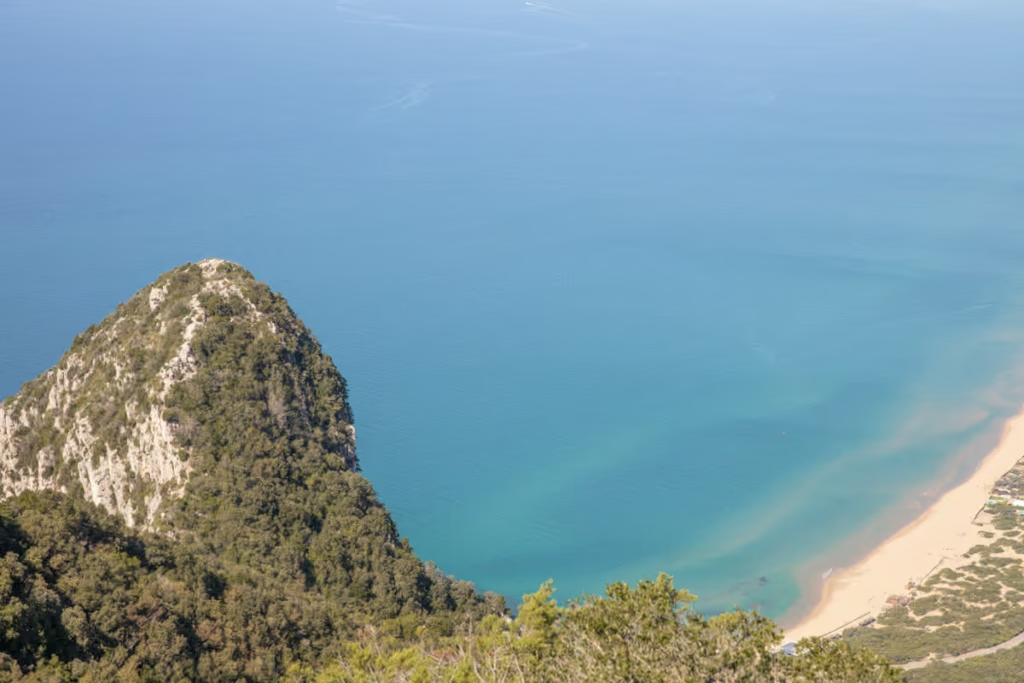
Located between San Felice Circeo and Sabaudia, Mount Circeo (Monte Circeo) is part of Circeo National Park, a protected area encompassing coastal dunes, Mediterranean forest, wetlands, and the Pontine Islands. The mountain’s highest point, Picco di Circe, reaches 541 meters above sea level and offers sweeping views across the coastline and Pontine Marshes.
I eventually set out to hike Mount Circeo, following a route from San Felice Circeo toward Torre Paola and Sabaudia. The trail combines rocky ridgelines, forest paths, ancient archaeological remains, and some spectacular coastal scenery. It’s a memorable way to experience this corner of Lazio beyond its beaches and seaside towns.
There is an important access update for anyone planning this hike: parts of the official mountain trail have since been closed or restricted because of landslide risks. I’ll explain the current restrictions below so you can plan accordingly.
In this guide, I’ll share my firsthand experience hiking Mount Circeo, explain the route and its highlights, and cover transportation, alternative hikes, and what to bring.
Looking for off the beaten path Italy? Check out my list of Italy’s best hidden gems
Need Travel Insurance and Evacuation Services?
Start shopping for travel insurance plans over at IATI Insurance. Readers of the Adventures of Nicole get a 5% discount off your plan.
The Adventures of Nicole partners with Global Rescue to offer the world’s leading medical evacuation and security advisory services. To travel with peace of mind, explore their evacuation coverage.
The Mount Circeo Hike
The Mount Circeo hike follows the rocky ridgeline of the Circeo promontory, connecting the historic seaside town of San Felice Circeo with Torre Paola near Sabaudia. Along the way, the route passes ancient archaeological remains, Mediterranean woodland, exposed rocky terrain, and Picco di Circe, the mountain’s 541-meter summit.
I hiked this route in 2018, starting in San Felice Circeo and making my way west toward Sabaudia. The route can be approached from different starting points, and there are several trails crossing the promontory, although current closures mean you should not assume the entire traverse is accessible.
When I completed the hike, I found the terrain more challenging than its relatively short distance might suggest. There were steep sections, loose rocks, exposed ridgelines, and muddy stretches through the forest. The coastal views were fantastic, but this was not quite the leisurely seaside stroll you might expect from looking at the map.
The official park classification now rates the main ridge route as an expert-level hike (EE), rather than an easy or moderate walk. Take that classification seriously, particularly if you’re inexperienced with exposed mountain trails
Check out my guide to Terracina, Italy

The great thing about the Mount Circeo hike, as well as many of the other hikes and walks in the National Park of Circeo, is that the trails are marked with red paint.
Looking for a great Italian getaway nearby? Check out my guide to Sperlonga
The Start of the Mount Circeo Hike from San Felice Circeo
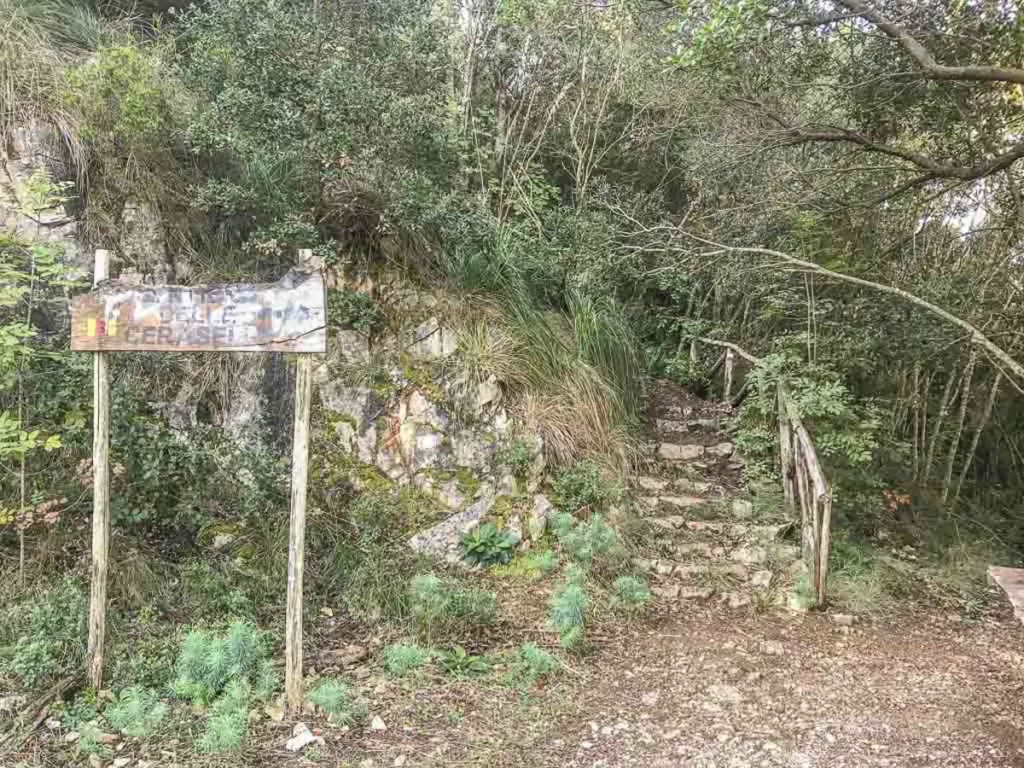
My Mount Circeo hike began in San Felice Circeo, a picturesque coastal town perched above the Tyrrhenian Sea. Before heading onto the trail, I’d recommend allowing a little time to wander through the Centro Storico. Its narrow streets, stone buildings, and panoramic terraces make it worth exploring.
From the historic center, I walked along Via del Faro before continuing onto Via Acropoli. This road leads toward the archaeological remains of the ancient settlement of Circeii and the higher trails on the promontory.
There are paths through the forest that connect to Via Acropoli farther uphill, or you can follow the paved road itself. Signposts and painted trail markings help identify the various routes through this section.
San Felice Circeo is also one of the most convenient places to begin exploring the Circeo promontory, with its historic center, coastal viewpoints, and access to several hiking trails
Planning a trip to Italy’s south? Check out my Southern Italy road trip itinerary
Acropoli di Circeii
As you make your way uphill along Via Acropoli, you’ll eventually reach the Acropoli di Circeii, the remains of an ancient fortified settlement overlooking the surrounding coastline.
The most striking feature is its cyclopean walls, constructed from enormous blocks of stone fitted together without mortar. These fortifications once served as the citadel of Circeii, which predated San Felice Circeo. The acropolis is thought to date back somewhere between 500-390 BC and was dedicated to either Circe or Venus.
The archaeological remains provide a glimpse into the area’s long history, which stretches back well before the Roman period. The promontory’s distinctive geography made it a strategically important location, offering natural defenses and commanding views over the surrounding sea and plains.
Take some time to walk around the remains before continuing along Via Acropoli toward the higher trails.
After you’ve finished checking out the wall, you’ll continue west on the Via Acropoli.
The Via Acropoli ends at the Monte Circello Observatory. At this point, you’ll veer off to the northwest onto a dirt path through the first to Fortino di Cretarossa.
Alternatively, you can continue along the main Via Acopoli to the Crocette Viewpoint over the sea and then take a path that switchbacks down to the Torra Cervia, on the coast and then continue back to San Felice Circeo on one of the three roadways along the coast.
Fortino di Cretarossa
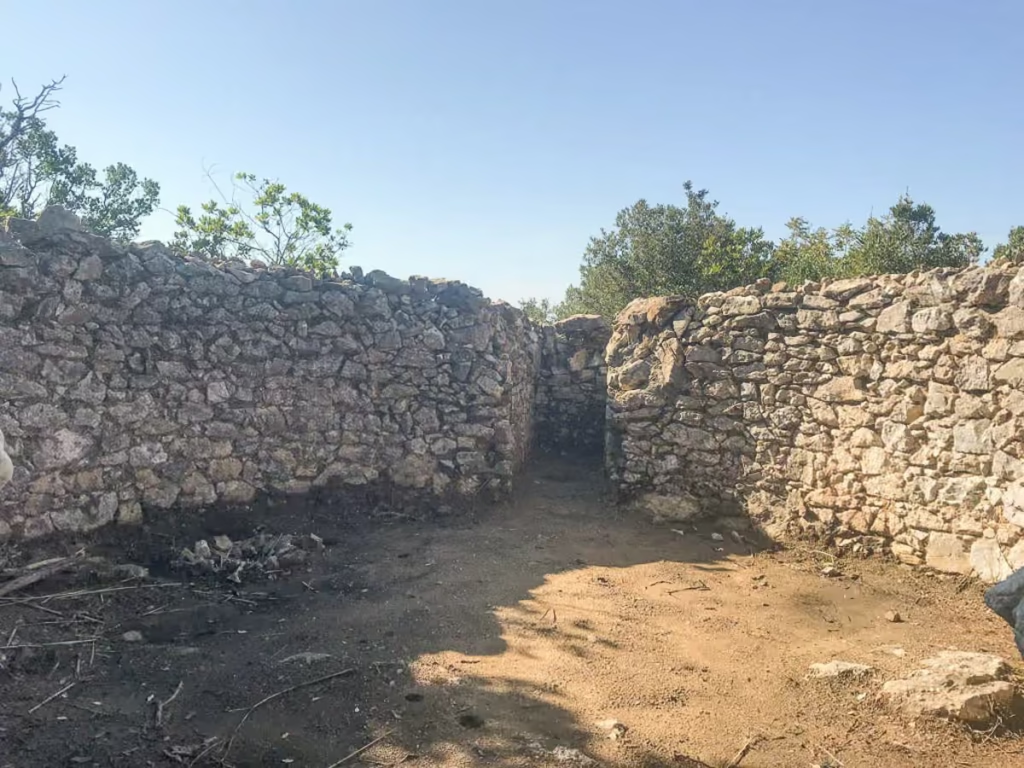
After continuing along Via Acropoli, you’ll eventually reach the Monte Circello Observatory. From here, the route I followed veered northwest onto a dirt path through the forest toward Fortino di Cretarossa.
Fortino di Cretarossa consists of the remains of an old circular fortification tucked into the woodland on Mount Circeo. Today, much of the structure has disappeared, leaving sections of its stone walls behind.
It’s a quieter historical stop along the Mount Circeo trail, although the surrounding woodland is arguably just as interesting as the ruins themselves.
From Fortino di Cretarossa, I continued uphill along the ridge toward Picco di Circe.
There are alternative paths in this area, including routes descending toward Hotel Punta Rossa and the coast. However, with the current restrictions on trail 750, don’t use these older directions as an indication that those connections are open.
Picco di Circe
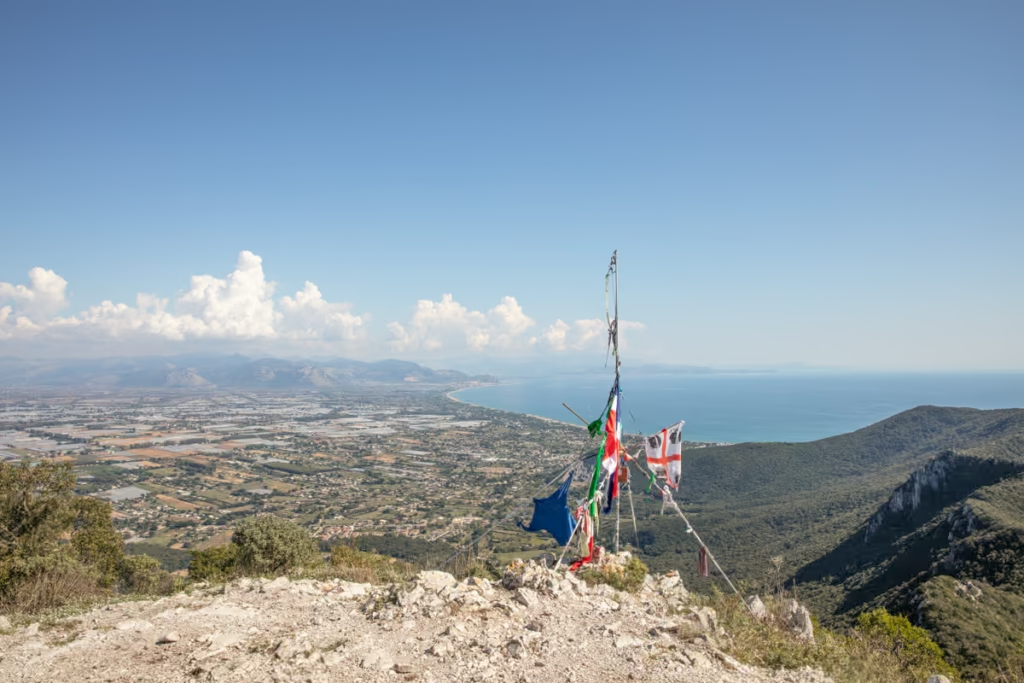
Picco di Circe is the highest point on the Circeo promontory, reaching 541 meters above sea level. It’s one of the main highlights of hiking Mount Circeo, with expansive views across the Tyrrhenian coastline and the surrounding landscape.
When I hiked here, the trail followed the ridgeline west from Fortino di Cretarossa. Much of this section was exposed, with little shade and uneven, rocky terrain underfoot. It was one of the sections where I needed to pay particular attention to my footing, especially along the steeper portions.
At the summit, you’ll find a small tower with flags attached. From here, the views stretch east toward Terracina and the coastline leading down toward Gaeta.
Continuing along the ridgeline, the scenery changes as the views open toward Sabaudia and the Pontine Marshes. This was my favorite section of the hike, with the long coastal dunes, wetlands, and lakes creating a striking contrast against the blue Tyrrhenian Sea.
The trail eventually descends through the forest toward Torre Paola. When I hiked it, this lower section was surprisingly muddy despite the hot, sunny weather. I’d be especially careful here after rainfall, as the combination of steep terrain and slippery ground can make the descent tricky.
Want to see Italy’s southernmost island? Check out my quick guide to Lampedusa
Torre Paola
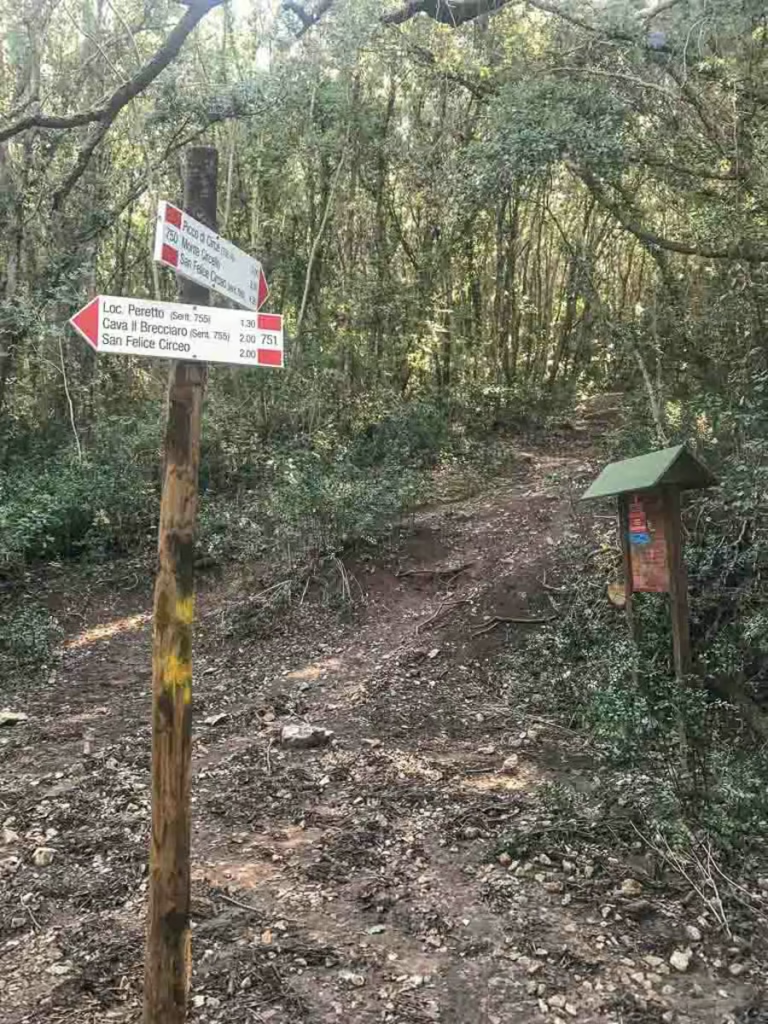
Torre Paola marks the western end of the Mount Circeo promontory trail, near the coastal town of Sabaudia.
The historic tower stands beside the canal connecting Lake Paola with the Tyrrhenian Sea. Its position was strategically important for coastal defense, and it remains one of the most recognizable landmarks in this part of Circeo National Park.
When I completed the Mount Circeo hike, I continued down toward Torre Paola after descending from the ridge. There’s a parking area nearby, making this a convenient access point for visitors exploring the surrounding coastline.
However, it’s important to distinguish between reaching Torre Paola and hiking the mountain trail to get there. The Torre Paola to Picco di Circe section is currently subject to a permanent access prohibition because of geological instability
There is a parking lot near Torre Paola if you have your own vehicle and plan to drive yourself. If you plan to take the bus, you’ll need to continue onto Sabaudia.
Going to or from Rome afterward? Check out my one day in Rome guide
Sabaudia Sand Dunes
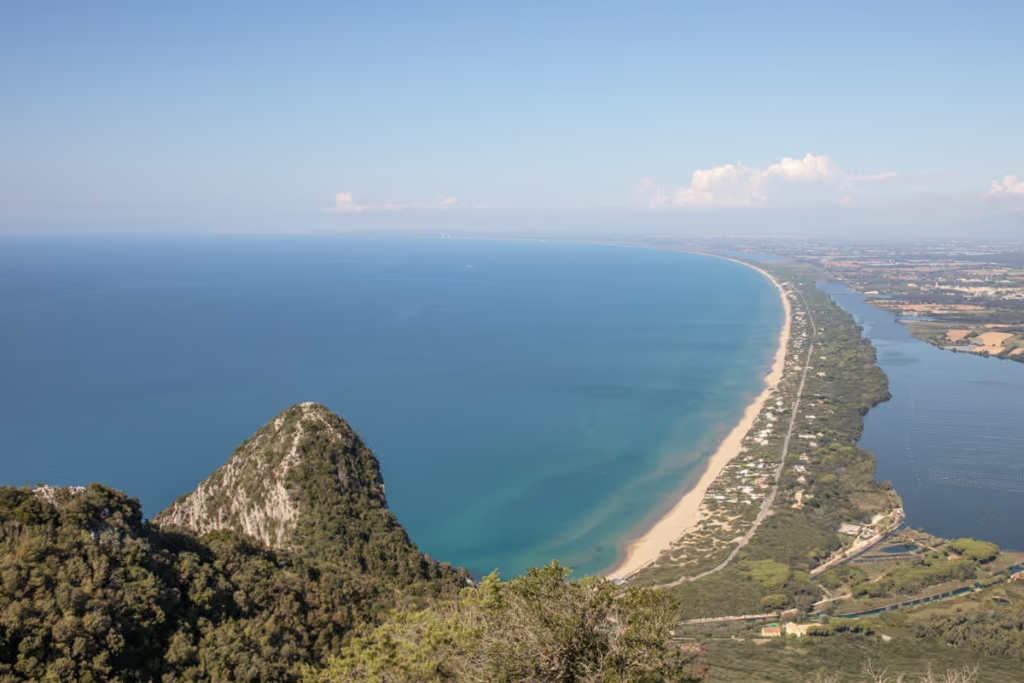
One of the best things about finishing a Mount Circeo hike near Sabaudia is the opportunity to explore the spectacular coastline and sand dunes.
The Sabaudia Sand Dunes form part of the coastal dune system within Circeo National Park. Fine, pale sand is interspersed with Mediterranean vegetation, creating a natural barrier between the Tyrrhenian Sea and the coastal lakes behind it.
When I made the journey in 2018, I continued on foot from Torre Paola toward Sabaudia’s town center. The walk along the beach was approximately 7 kilometers, although I certainly didn’t rush it.
I spent the afternoon alternating between walking along the sand, swimming in the sea, and relaxing on the beach. After the rocky terrain and exposed sections of the Mount Circeo hike, a leisurely afternoon by the water was a pretty excellent way to finish the day.
If you’re planning to explore this area, I’d recommend setting aside additional time for Sabaudia rather than treating it simply as the endpoint of the hike.
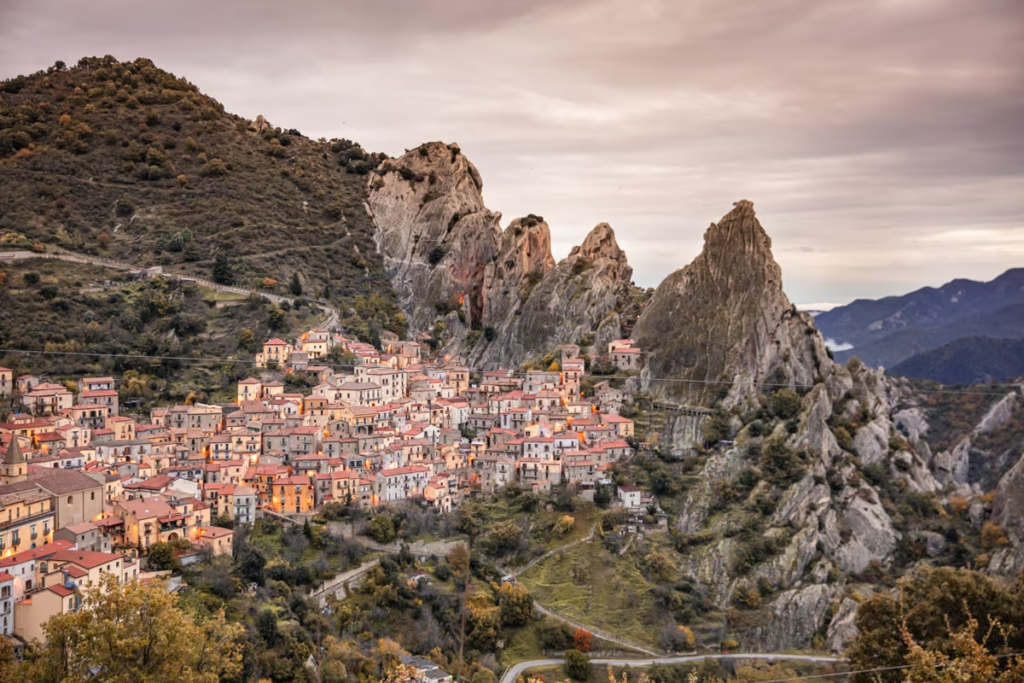
Planning to head further down Italy’s coast? Don’t miss out on Castelmezzano, Basilicata’s hidden gem
Other Hikes in the National Park of Circeo
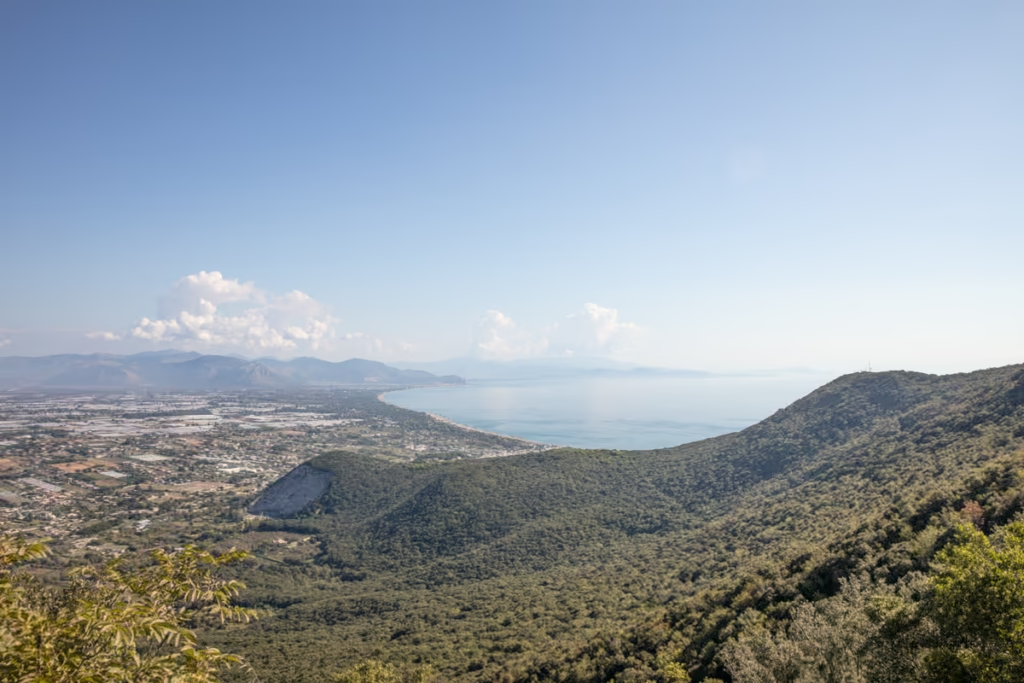
Circeo National Park has several other hiking trails worth exploring beyond the main Mount Circeo ridge route. The park encompasses a surprisingly diverse landscape, from Mediterranean woodland and coastal dunes to wetlands, lakes, and archaeological remains.
If you’re looking for alternative hikes in Circeo National Park, here are several trails listed by the park authorities:
| Trail | Official difficulty | Estimated time |
|---|---|---|
| Sentiero dell’Uliveto (751) | Moderate | 3 hours |
| Sentiero delle Mura Ciclopiche (754) | Challenging | 2.5 hours |
| Sentiero del Brecciaro (755) | Easy-Moderate | 2 hours |
| Sentiero di Guardia Orlando (756) | Easy | 1 hour |
| Sentiero Torre Fico – La Batteria (757) | Easy-Moderate | 2 hours |
I’d recommend checking the official Circeo National Park hiking trails page before heading out. Trail conditions and access restrictions can change, particularly around the more exposed sections of the promontory.
Explore the city of Naples
How to Get to Mount Circeo and Circeo National Park
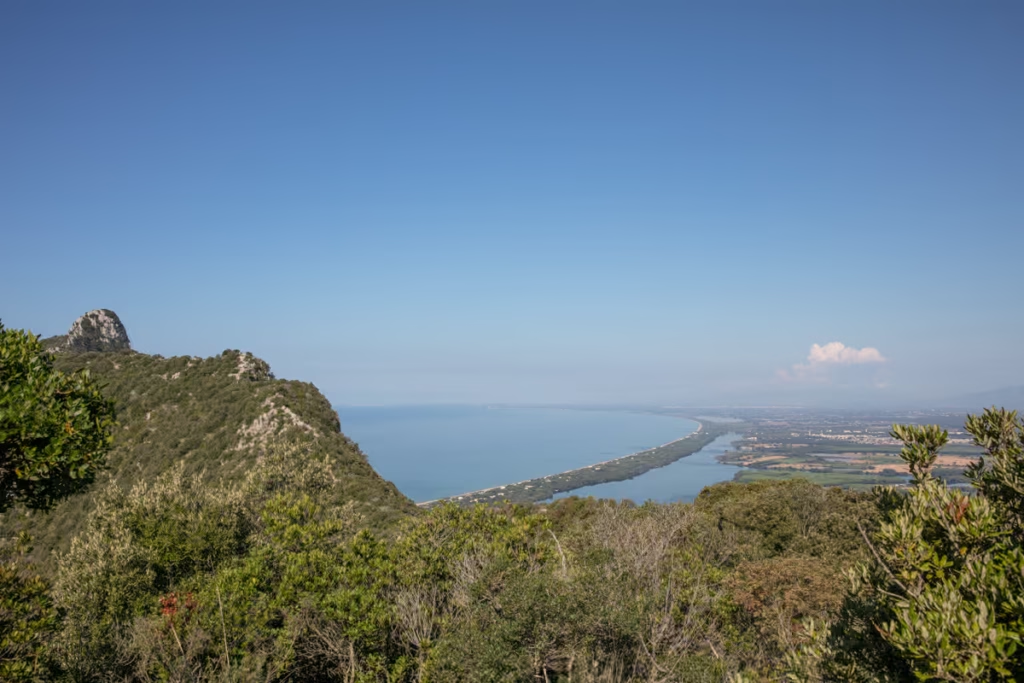
How to Get to San Felice Circeo
San Felice Circeo is one of the main access points for exploring Mount Circeo and the surrounding national park. The town is easiest to reach by car, although public transportation is available through the regional Cotral bus network.
If you’re traveling by car, you can drive directly into San Felice Circeo and find parking near the town center or the various trail access points.
For those relying on public transportation, Cotral operates buses connecting San Felice Circeo with other towns in Lazio. The stop you want for the historic center is on Via Domenichelli, near Piazza Ivo Ceccarelli.
From there, it’s approximately a 1-kilometer walk to the Centro Storico, where you can explore the old town and access the routes leading toward the Mount Circeo promontory.
Keep in mind that reaching San Felice Circeo by bus doesn’t necessarily mean you’ll be able to access the mountain trails. Check current restrictions before planning your hike
How to Get to Sabaudia
Sabaudia is another convenient base for exploring Circeo National Park, particularly if you’re interested in the coastal dunes, beaches, and surrounding wetlands.
If you’re driving, Sabaudia is straightforward to reach, and there are parking areas around the town and near Torre Paola.
For public transportation, Cotral buses connect Sabaudia with other destinations in the Lazio region. The main bus station is located at Piazza Oberdan in the town center.
If you’re planning to visit Torre Paola, be aware that the bus station is approximately 7 kilometers from the coastal trailhead. You’ll need to arrange additional transportation or account for the walk.
Sabaudia is also a good place to spend some extra time after exploring the national park. Its beaches, coastal lakes, and sand dunes are among the area’s main attractions
Heading down to Sicily? Don’t miss Syracuse & Ortygia
Getting to Mount Circeo from Rome
Mount Circeo is located approximately 100 kilometers southeast of Rome, making it a possible day trip from the Italian capital. The easiest way to reach the area is by rental car, although you can also travel by train toward Latina or Priverno-Fossanova and continue by bus or taxi.
Public transportation requires more planning, as neither San Felice Circeo nor Sabaudia has a railway station. If you’re planning to hike, I’d recommend staying overnight in the area rather than trying to squeeze everything into a day trip from Rome.
What to Pack for the Mount Circeo Hike
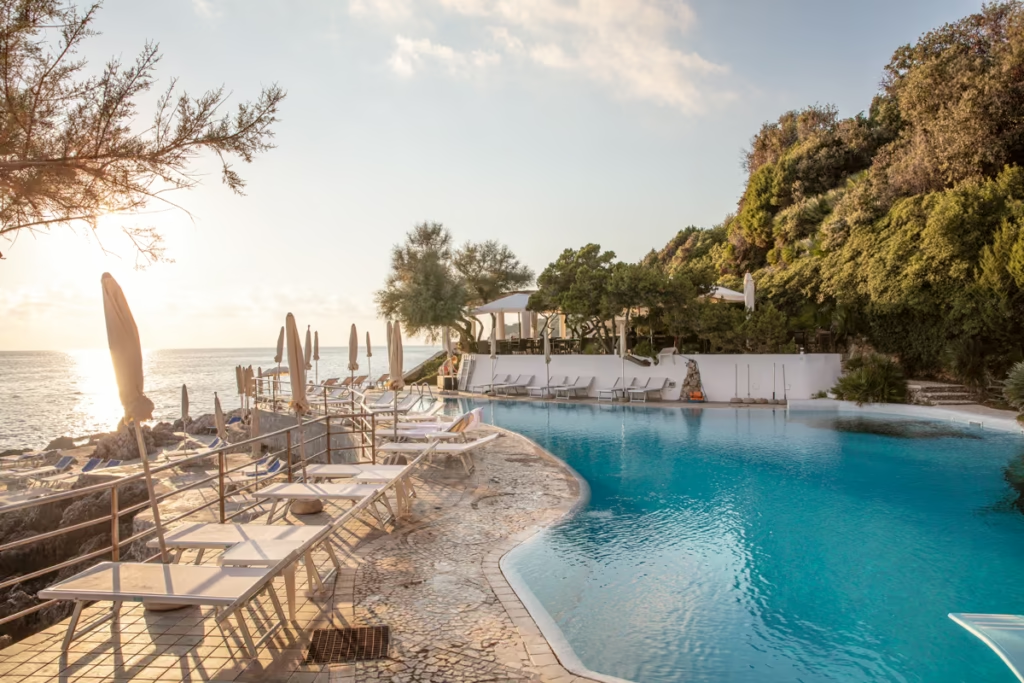
Mount Circeo’s exposed ridgelines, rocky terrain, and Mediterranean climate mean you’ll want to come prepared, even if you’re only planning a shorter walk in the national park.
If you’re hiking during the warmer months, sun protection is particularly important. Much of the higher trail is exposed, with limited shade along the ridgeline.
You’ll want to bring a daypack with plenty of water and snacks to hold you over for the day. A good pair of running shoes or hiking boots are a must-have for this trek too.
Everything You Need to Know for the Mount Circeo Hike
Mount Circeo is one of the most distinctive landscapes along Italy’s Lazio coast. Between its rocky promontory, ancient archaeological remains, Mediterranean woodland, and sweeping views over the Tyrrhenian Sea, there’s plenty to appreciate beyond the usual beach destinations.
Although access to the main Mount Circeo hiking route is currently restricted, the surrounding Circeo National Park has plenty of other trails, coastal landscapes, and historic towns worth exploring.
If you’re traveling through Lazio, I’d definitely recommend making time for this corner of Italy. It’s a side of the country that often gets overlooked in favor of Rome, Tuscany, Naples, and the Amalfi Coast, but it’s well worth getting off the beaten path to experience.
Have Any Questions About the Mount Circeo Hike?
Ask in the comments section below.
Posts from Italy
Best Road Trips in the World
Hiking Mount Circeo: Complete Trail Guide
Terracina Travel Guide: Things to Do
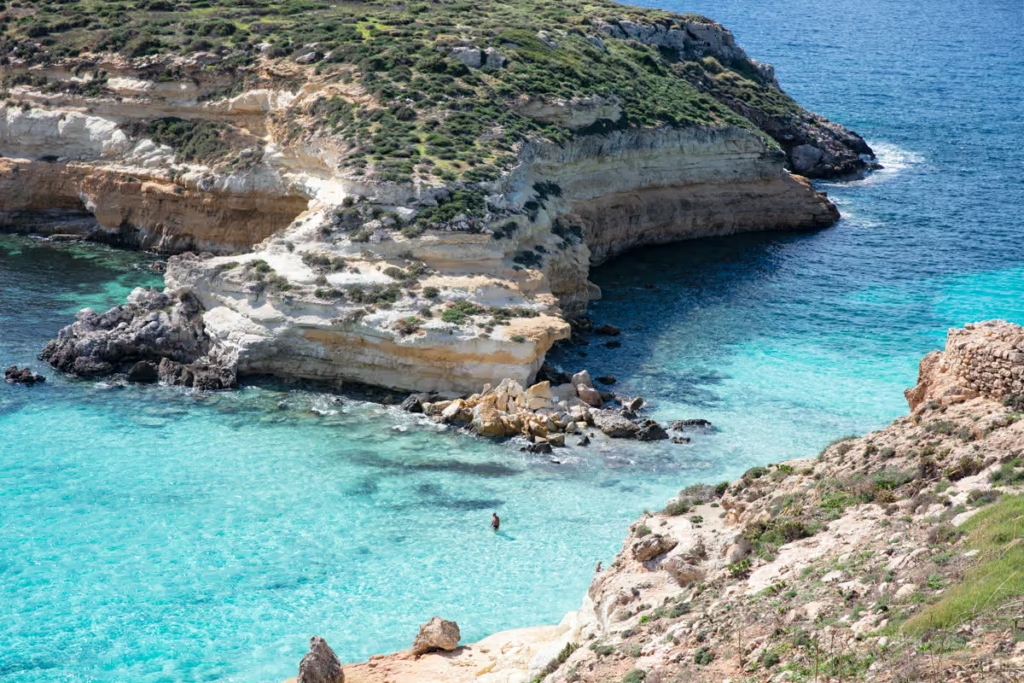
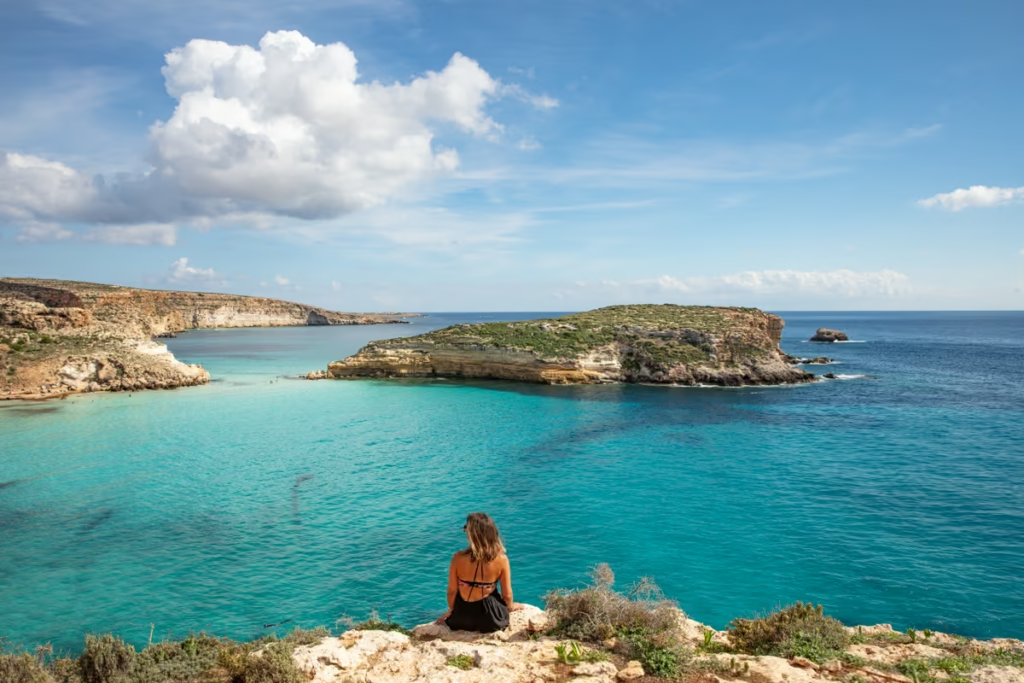
Lampedusa Travel Guide: Beaches & Tips
20 Off the Beaten Path Destinations in Italy
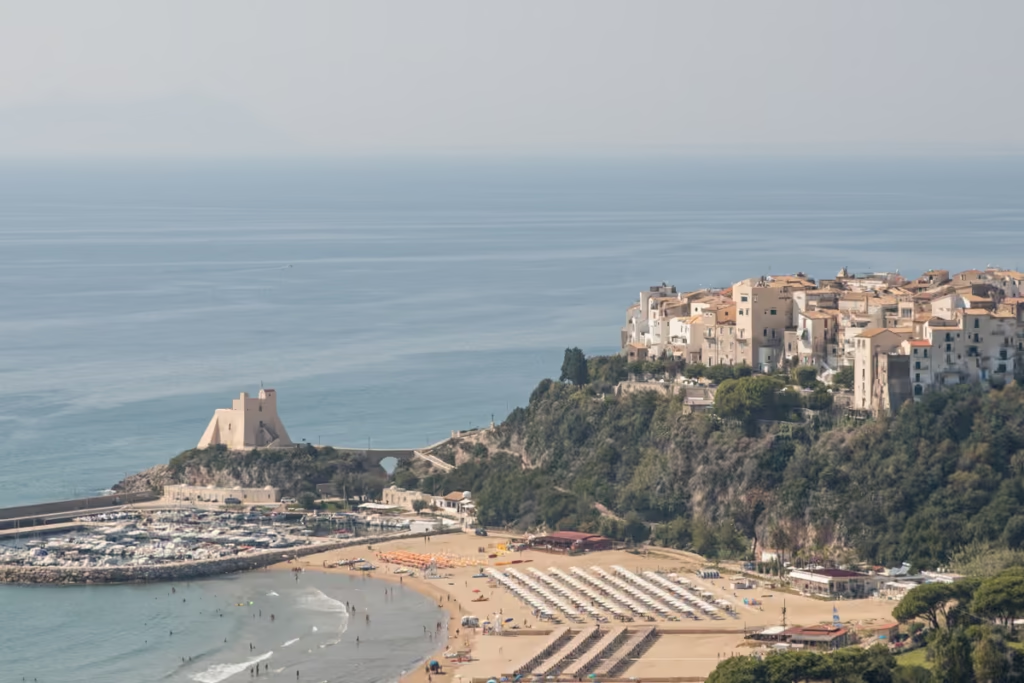
Sperlonga, Italy: A Complete Travel Guide
Best Wine Routes in the World

One Day Rome Itinerary
A Quick Syracuse Travel Guide
Two Week Classic Italy Itinerary
Guide to Italy’s Cave City of Matera
Amalfi Coast Travel Guide
Alberobello Travel Guide
Naples Travel Guide
Castelmezzano & Pietrapertosa, Italy: A Quick Guide