Travel Palau on a Budget
Updated January 2026, Travel Palau on a Budget was originally written in October 2017
Spoiler alert: Palau isn’t a cheap destination. Flights are limited, accommodation can be surprisingly expensive, and the permits and boat trips needed to experience the Rock Islands and other destinations around the archipelago add up quickly. But after traveling through Palau myself, I found there are several ways to bring the cost down without skipping the places that make the country special.
This guide covers how much it costs to travel to Palau, where to stay, how to get around, cheap things to do, which expenses you can’t avoid, and where I would actually splurge.
Need Travel Insurance and Evacuation Services?
Start shopping for travel insurance plans over at IATI Insurance. Readers of the Adventures of Nicole get a 5% discount off your plan.
The Adventures of Nicole partners with Global Rescue to offer the world’s leading medical evacuation and security advisory services. To travel with peace of mind, explore their evacuation coverage.
Palau Travel at a Glance
| Planning Detail | What to Know |
|---|---|
| Currency | US dollar (USD) |
| Airport | Roman Tmetuchl International Airport (ROR) |
| Budget | Minmum $100-$150 per person/day, excluding international flights and major excursions |
| Best way to save | Stay in Koror, eat local, share a rental car, and choose activities carefully |
| Biggest expenses | Accommodation, boat tours, diving, and permits |
| Best budget splurge | A scenic flight over the Rock Islands |
| Cheapest way to visit outer islands | Government/state boats, where available |
| Best base for most travelers | Koror |
Getting to Palau
Flights to Palau
The main gateways for reaching Palau by air are:
And explain that flight schedules change, so travelers should check current schedules before booking.
The Tokyo route is particularly worth mentioning because it is new relative to your original article. United launched the direct Tokyo-Narita to Koror service in October 2025.
Start shopping flights to Palau here!
Depending on what flight network you belong to you can sometimes take one of these flights from East Asia or Guam for as little as 15,000 miles if your airline or a partner fly there.
Keep an eye out for Palau flight deals. Palau has been making efforts to diversify its tourism to entice more Europeans and North Americans to visit (Palau’s tourism has long been comprised mostly of tourists from China).
Going to the Philippines? Start planning your visit to El Nido
Best Time to Visit Palau on a Budget
Palau is warm and humid year-round, so there isn’t a bad month if your main goal is to escape winter and spend your days in the water. The bigger question is when you can balance weather, crowds and prices.
Rain is possible at any time of year, but Palau generally sees more frequent rainfall from July through October. The good news for budget travelers is that a wetter forecast doesn’t necessarily mean nonstop rain. Showers can be brief, with plenty of sunshine between them. Palau also sits outside the main typhoon belt, so tropical storms are less of a concern than they are in some other parts of the western Pacific.
Best Months For a Budget Palau Trip
If you’re trying to keep costs down, I’d look at the shoulder and wetter months rather than automatically targeting the traditional “best weather” period. Accommodation and flights can vary considerably by where you’re coming from, so there isn’t a single month when everything in Palau suddenly becomes cheap. Still, traveling outside the busiest periods can give you more flexibility when comparing flights and hotels.
July through October is the wetter period, but it can be a good option if you’re willing to gamble a little on the weather. Just build some flexibility into your itinerary, particularly if you’re planning boat trips or diving. A rainy afternoon is one thing; having your only Rock Islands day rained out is another.
For the best combination of weather and value, I’d look at the months around the edges of the wetter period rather than chasing peak conditions. And if you’re a diver, prioritize sea conditions and your preferred dive season over saving a few dollars. There isn’t much point traveling all the way to Palau to spend the trip staring at the rain radar because you saved $30 on a hotel.
When is Palau Most Expensive?
The periods with stronger demand can mean higher prices for accommodation and flights, particularly when you’re traveling during holidays or when a limited number of direct flights makes seats scarce. Palau’s small tourism market means that airfare can have a bigger effect on your overall budget than a modest difference in hotel rates.
Rather than choosing your dates based solely on a “cheap season,” compare flights first and then build your trip around the best airfare you can find. This is especially important for travelers coming from North America or Europe, where getting to Palau is likely to be one of the largest expenses of the trip.
My Budget Tip
If your schedule is flexible, I’d prioritize finding an inexpensive flight and traveling for at least five to seven days rather than trying to squeeze Palau into a three-day trip. The Palau Visitors Authority currently recommends roughly five to seven days for seeing the country’s major highlights, which also gives you some flexibility if weather forces you to move a boat trip.
And don’t forget that Palau’s expensive activities are often the reason you’re there in the first place. If you’re going to spend money on a Rock Islands boat trip, diving or a scenic flight, I’d rather save on accommodation and food than visit during a supposedly cheaper period that makes those experiences harder to enjoy.
Bottom line: For a budget-conscious trip, look for good airfare, consider the wetter months if you’re comfortable with some rain, and leave enough flexibility in your itinerary to work around the weather. Palau isn’t a destination where I’d obsess over finding the absolute cheapest week. The bigger savings come from how you travel once you arrive.
Accommodation
Yet again, most accommodation in Palau is catered to the tastes of Chinese package tourists with big budgets. If you look and are willing to sacrifice, it is possible to find accommodation for those who want to travel Palau on a budget.
Where to Stay tn Koror
Budget
Palau 8090 Dreamhouse
| Booking.com |
Palau Hotel
| Booking.com | Hotels.com |
Midrange
Palau Central Hotel
| Booking.com | Hotels.com |
Garden Palace Downtown Koror
| Booking.com | Hotels.com |
Splurge
Palau Pacific Resort
| Booking.com | Hotels.com |
Where To Stay In Peleliu
Midrange
Adventures Inn Peleliu
| Hotels.com |
Where To Stay On Carp Island
Midrange
Carp Island Resort
$95/night, dbl (including boat transfer from Koror)
Other Ways to Stay in Palau
- Couchsurfing is a great option for those trying to stretch their budget as far as possible, but hosts in Palau can be few and far between.
How to Get Around Palau
Getting around Palau is relatively straightforward once you understand the geography. Koror and Babeldaob are connected by road, while most of the places that make Palau famous are reached by boat. The country has more than 340 islands, but only nine are inhabited, so don’t expect an island-hopping network like you might find in the Philippines or Indonesia.
For a budget trip, I’d base yourself in Koror, rent a car for the days you want to explore Babeldaob, and use shared or scheduled boats for trips farther afield. If you’re heading to the Rock Islands, Jellyfish Lake or diving sites, your tour or dive operator will generally handle the boat transportation.
Renting a Car in Palau
Renting a car is the easiest way to explore Koror, Babeldaob and the northern part of the main island at your own pace. The compact road network makes independent exploration pretty easy, and having your own wheels gives you access to places that aren’t practical to visit by tour.
This is especially useful for exploring Babeldaob, where you can visit places such as the Badrulchau Stone Monoliths, Ngardmau Waterfall and the traditional bai in Airai without having to organize separate tours.
Rental cars are available at or near Roman Tmetuchl International Airport, and booking ahead is a good idea. Palau’s tourism infrastructure is small enough that I wouldn’t count on simply walking up to an airport counter and getting whatever car you want, particularly during busy periods. Palau’s government also recommends reserving rental cars before arrival.
Budget tip: If you’re traveling with two or more people, sharing a rental car can actually be one of the more economical ways to explore Palau. Just remember to factor fuel into your budget.
Getting Around Koror
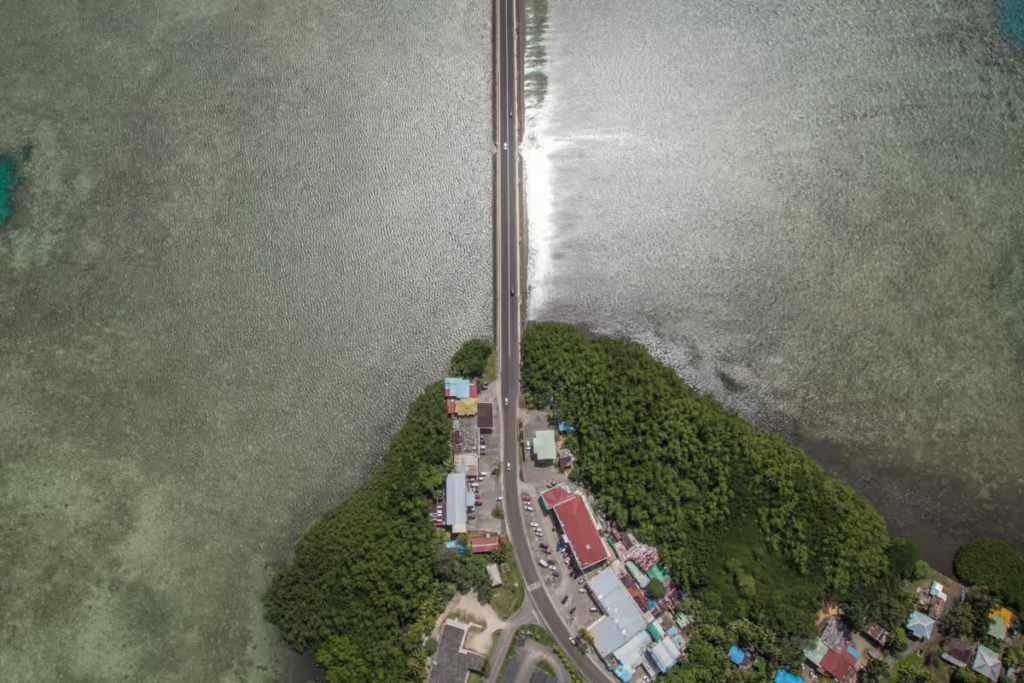
You don’t necessarily need a rental car for your entire trip if you’re staying in Koror. Many hotels, restaurants and dive operators are concentrated around town, and taxis and hotel transportation can cover some of your shorter journeys.
If you’re trying to travel Palau on a budget, I’d consider renting a car only for the days you plan to explore Babeldaob rather than paying for one throughout your stay.
Tip: Most flights do arrive very late at night so give flight details to your rental company so that they do have someone there at their counter when you arrive.
Getting Around Babeldaob
Babeldaob is where having a car really starts to pay off. The island is much larger and more spread out than Koror, with roads leading through forest, villages and rural landscapes.
The Compact Road makes a loop around much of the island, connecting the states and communities that are otherwise difficult to reach without your own transportation. Give yourself more time than the distances suggest. You’re not driving through a massive country, but there are plenty of places where you’ll want to stop.
This is also where I’d recommend going beyond the standard Koror itinerary. Waterfalls, stone monoliths, traditional meeting houses and quiet stretches of coastline give you a very different impression of Palau.
Getting Around Peleliu
Peleliu is small enough that you don’t need a car. Bicycles are a practical and inexpensive way to get around, although don’t expect a perfectly flat island. You can also arrange transportation with local operators or your accommodation.
If you’re visiting primarily for the Battle of Peleliu sites, having a local guide or arranging transportation can be worthwhile. The battlefield is spread across the island, and the history is much easier to understand when someone can explain what you’re actually looking at rather than leaving you wandering around the jungle wondering whether that rusted piece of metal was a tank or just someone’s unfortunate lawn ornament.
Getting Between Palau’s Islands
This is where transportation gets more complicated, and where planning ahead can save you a surprising amount of money.
Flights Between the Islands
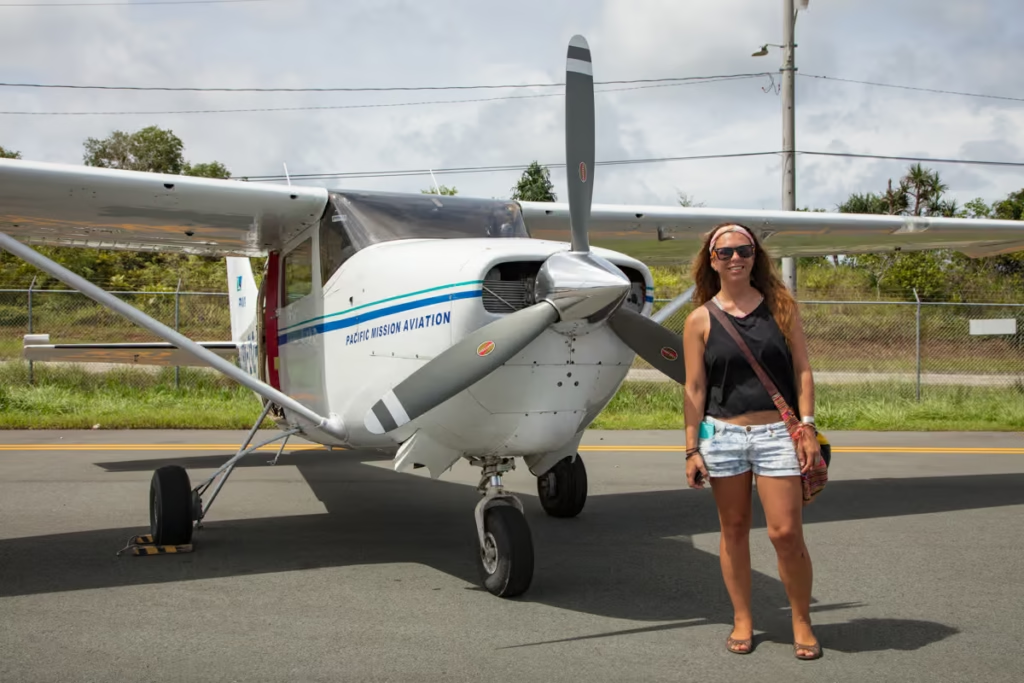
Domestic flights are another option for reaching places such as Peleliu and Angaur. They are considerably quicker than traveling by boat, but they’re not generally the budget choice. Pacific Mission Aviation offers this service in addition to connections with Yap and other islands of Micronesia with Palau. You can also take a scenic flight over the Rock Islands.
For most travelers, I’d take the boat if the schedule works and the flight if time is more valuable than money.
Government Boats
Government and state-operated boats are generally the cheapest way to travel between Koror and some of Palau’s outer island states. Palau’s current national development plan confirms that state governments operate boats serving Peleliu, Angaur and Kayangel, with services generally running several times a week.
The catch? These are not tourist ferries with a convenient online booking system. Schedules can change, boats may be used for cargo or state business, and weather can affect departures. Palau’s government documents specifically describe these boats as passenger and cargo services, rather than a conventional tourist ferry network.
When I traveled through Palau, the state boats were dramatically cheaper than chartering a private boat. At the time, fares I found were approximately:
| Route | Historical fare |
|---|---|
| Koror (Malakal) ↔ Peleliu | $30 round trip |
| Koror (Malakal) ↔ Angaur | $40 round trip |
| Koror (T-Dock) ↔ Kayangel | $40 round trip + $8 tourist fee |
The current government documentation confirms that these state-boat services still exist, but it does not provide a reliable tourist timetable or current fare schedule.
My advice: If you’re planning to use a state boat, contact the relevant state office before your trip and again shortly before departure. Don’t build a tightly scheduled itinerary around a boat departure until you’ve confirmed that it is actually running.
Private Boat Charter
Private charters are the most flexible option, but also one of the quickest ways to destroy your budget. They’re useful if you’re traveling with a group and can divide the cost, or if you want a customized itinerary that doesn’t fit a regular tour.
For solo and budget travelers, I’d generally choose a shared group tour instead.
Dive and Tour Boats
If you’re heading into the Rock Islands for diving, snorkeling or Jellyfish Lake, you’ll normally travel with your tour or dive operator. Most visitors use Koror as their base and make day trips into the Southern Lagoon.
This is also why I wouldn’t recommend trying to arrange independent transportation to the Rock Islands simply to save money. The marine environment is complicated, permits are required, and experienced local boat operators know the channels and conditions.
Activities
Palau is one of those destinations where the phrase “budget travel” needs a little explaining. There are plenty of inexpensive or free things to see, but many of Palau’s signature experiences involve boats, permits, guides or diving, and those costs add up quickly.
The trick isn’t trying to make every activity cheap. It’s deciding which experiences are worth paying for and where you can save everywhere else.
P few left alive in later 2016, and it was decided to close the lake to swimming and snorkeling until the population had a chance to bounce back (I visited in December 2016, so no jellyfish lake for me).
Free and Cheap Things to Do in Palau
You don’t need to spend hundreds of dollars every day to enjoy Palau.
Some of the best budget-friendly options include:
- Exploring Koror on foot
- Visiting WWII sites around Koror and Babeldaob
- Exploring Babeldaob by rental car
- Visiting traditional bai and cultural sites
- Hiking to waterfalls
- Exploring Peleliu’s historical sites independently
- Spending time on local beaches
- Visiting viewpoints and scenic areas around the islands
One of the easiest ways to keep your costs down is simply to leave some days unstructured. You don’t need a boat tour every morning just because you’re in Palau.
Explore Babeldaob by Car
Babeldaob is one of my favorite places to save money in Palau because you can see a lot of the island without paying for a boat tour.
Rent a car and follow the roads through the island’s interior, stopping at waterfalls, traditional villages, archaeological sites and viewpoints along the way. The landscape is noticeably different from the limestone Rock Islands, with thick jungle, rolling hills and broad stretches of undeveloped land.
The Badrulchau Stone Monoliths and Ngardmau Waterfall are two worthwhile stops if you’re putting together a day of exploring.
This is also a good counterbalance to Palau’s marine attractions. Yes, the water is spectacular. But there is an entire tropical island sitting above it.
Explore the Rock Islands
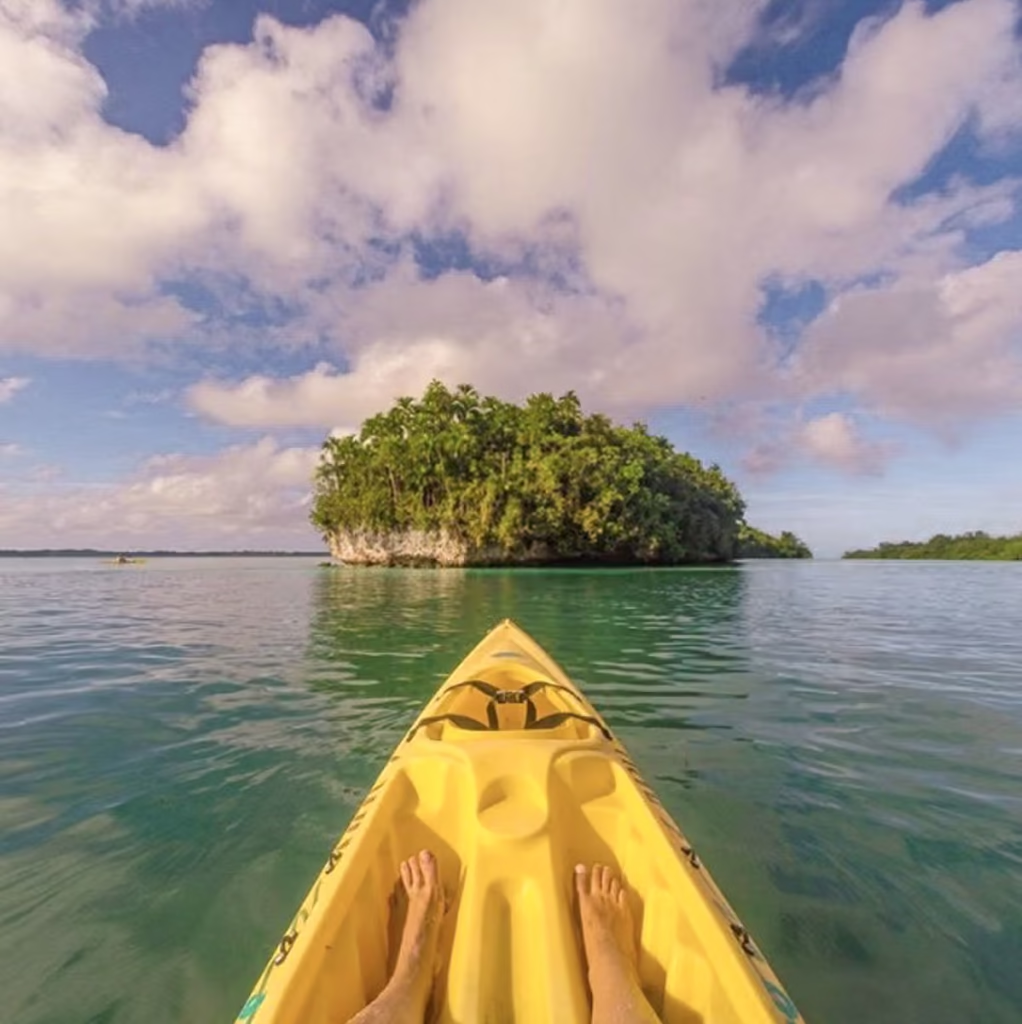
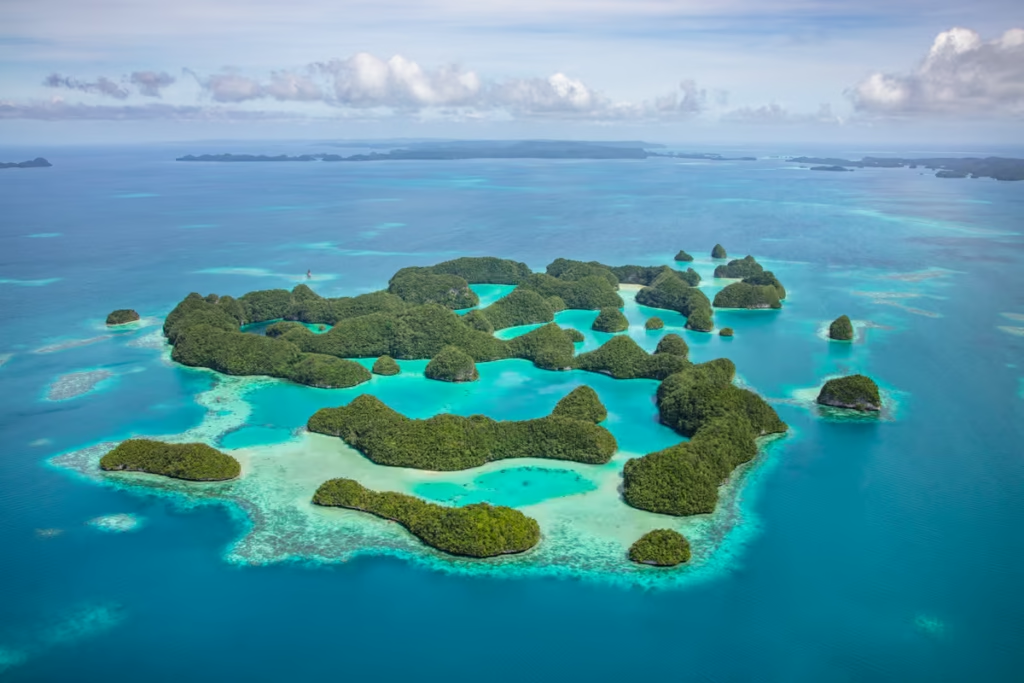
The Rock Islands Southern Lagoon is the experience most people picture when they think of Palau. Hundreds of mushroom-shaped limestone islands rise from brilliant blue and turquoise water, with sheltered lagoons, beaches and coral reefs tucked between them.
For most travelers, this is worth spending money on.
A typical boat day can combine several experiences, such as snorkeling, beaches, the Milky Way, Long Beach and other Rock Islands sites. Current tour prices vary considerably depending on the itinerary and operator, so compare what is actually included before booking.
Remember to budget for the Koror State permit separately. The current permit information lists the Rock Islands permit at $50 per person, while the Jellyfish Lake permit is $100 and covers the Rock Islands as well.
Budget tip: If you’re traveling alone, look for a group tour rather than chartering a private boat. If you’re traveling with several people, compare the cost of a private boat divided among the group.
Snorkeling in Palau
You don’t have to be a scuba diver to enjoy Palau.
Many of the Rock Islands tours include snorkeling stops, and the reefs around Palau are home to an extraordinary variety of marine life. While the Rock Islands are still the center of most snorkeling and diving adventures in Palau, there are heaps of other places to snorkel. We even snorkled a number of times from the shore near my friend’s house in Koror.
If you’re not a diver, I’d put your activity budget toward one really good snorkeling/boat day rather than trying to cram several mediocre tours into your itinerary.
Jellyfish Lake
Jellyfish Lake is one of Palau’s most famous attractions, but it isn’t necessarily the budget activity it once was.
The lake is on Eil Malk in the Rock Islands and requires the appropriate permit. The current Koror State permit information lists the Jellyfish Lake permit at $100 per person, compared with $50 for the standard Rock Islands permit.
There’s also an important reason to check current conditions before you go. Jellyfish numbers can fluctuate, and operators have periodically stopped visiting the lake when the population has declined. Unfortunately I did not get to visit the Jellyfish Lake as I was there following really bad droughts that killed off much of the jellyfish population.
So, if swimming with jellyfish is high on your list, confirm that the lake is open and that tours are currently visiting before paying for the permit.
Diving in Palau
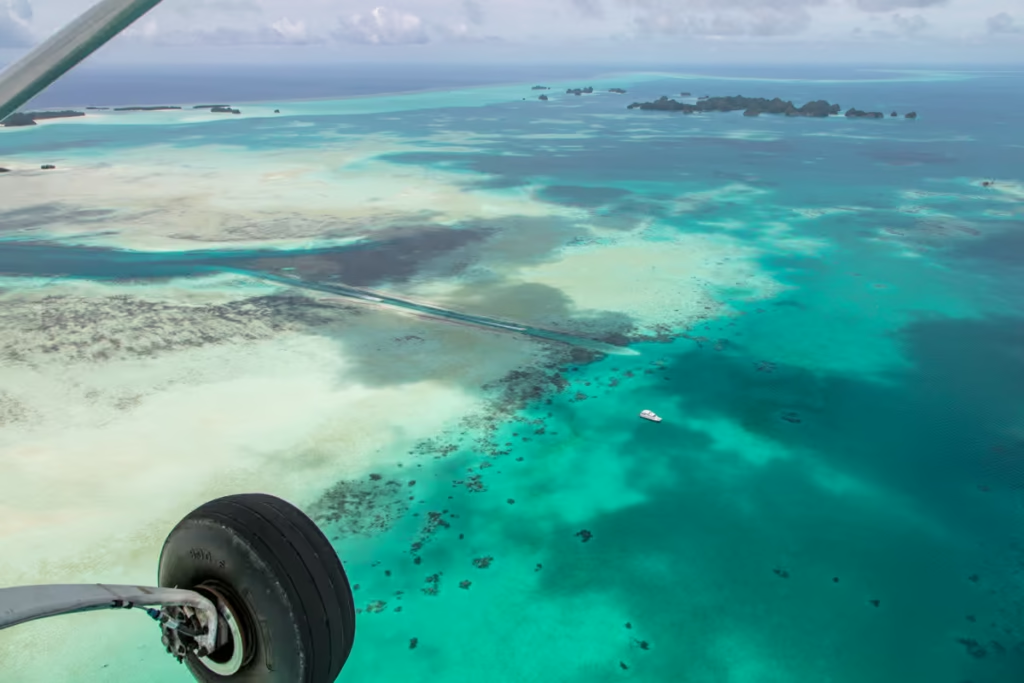
If you’re a diver, this is probably why you’re coming to Palau in the first place.
The country is famous for sites including Blue Corner, German Channel, Blue Hole, the Drop-Off and Chandelier Cave, with strong currents, walls, wrecks, sharks, rays and enormous schools of fish all part of the appeal.
And this is one area where I wouldn’t recommend trying to travel Palau on an ultra-tight budget. If you’re spending thousands of dollars and many hours getting to Palau specifically to dive, saving $50 on the dive operation isn’t necessarily the smartest place to cut corners.
Budget tip: If you’re diving, compare multi-day packages. The per-day cost can be better than booking individual trips, and you’ll already have transportation to the Rock Islands built into the experience.
The Battle of Peleliu
Peleliu is one of the places in Palau where the landscape and history are inseparable.
The island was the site of the Battle of Peleliu, one of the bloodiest battles of the Pacific War. WWII relics remain scattered throughout the island, including tanks, aircraft wreckage, bunkers, caves and other remnants of the battle.
You can explore some sites independently, but I strongly recommend hiring a local guide if your budget allows. The battlefield is dense with history, and without context it can be difficult to understand what happened where.
If you’re trying to save money, combine your visit with transportation to Peleliu rather than paying for a standalone private excursion.
Carp Island Resort
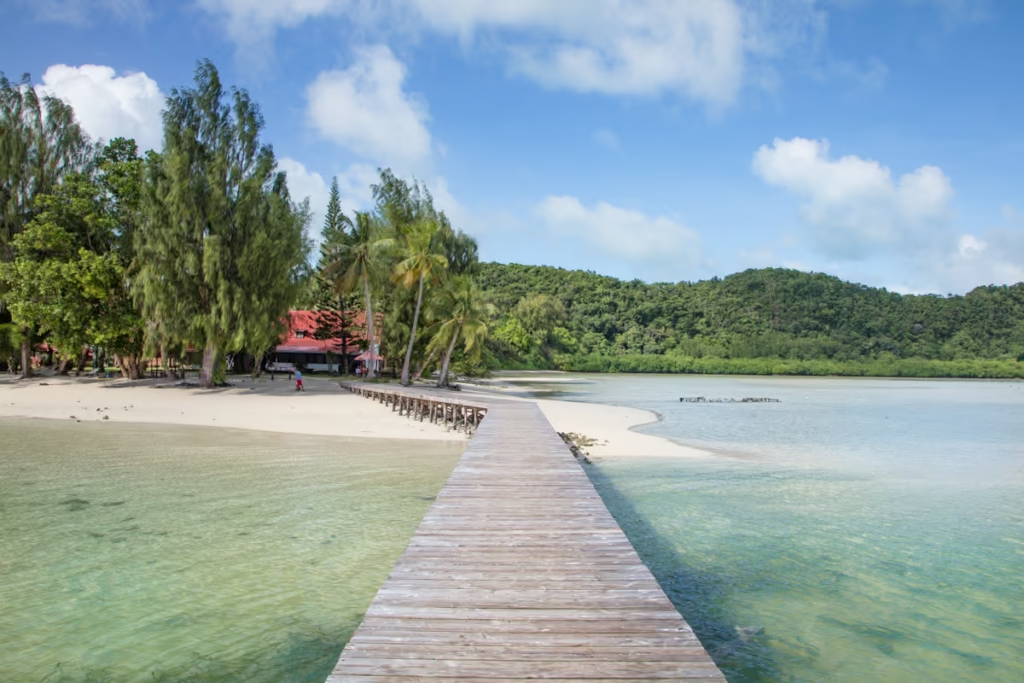
Carp Island was one of my favorite places to slow down in Palau.
It’s a good option if you want a few days of beaches, snorkeling and island life rather than another packed sightseeing itinerary. Accommodation includes boat transportation, and you can keep costs down by buying provisions beforehand and bringing your own food.
This is one of those places where saving money actually improves the experience. You don’t need to spend your day booking activities when you can grab a kayak, walk along the beach or simply sit around and watch the afternoon fade away over crystal clear water.
Diving trips can be arranged during your Carp Island stay. Kayaks are also on rental.
Scenic Rock Islands Flight
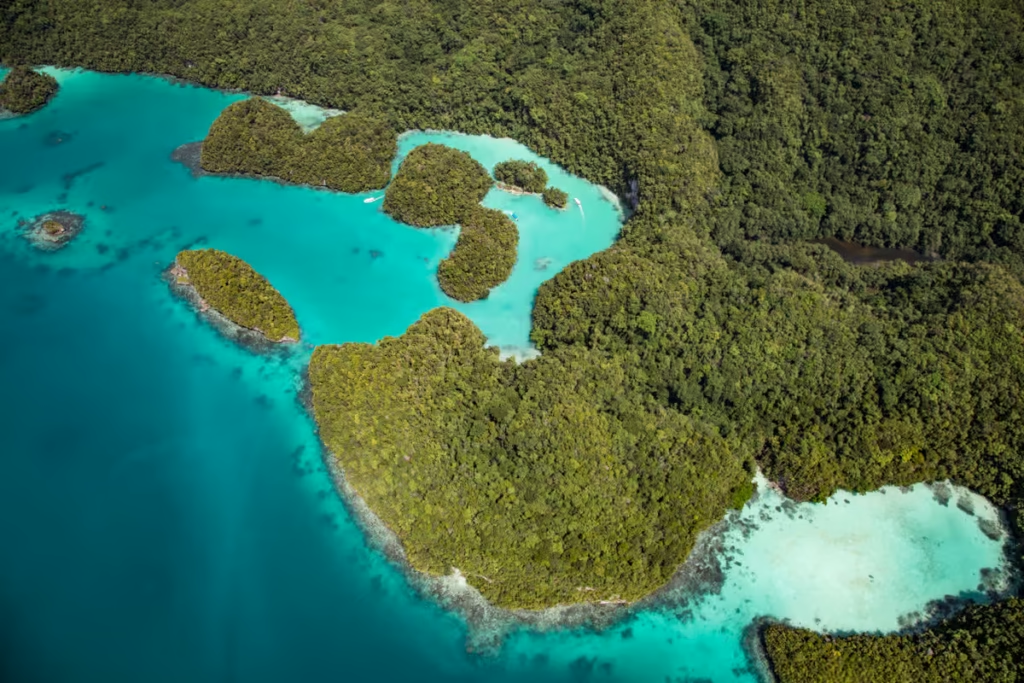
This was my personal budget splurge.
I know, recommending a $160-$200 flight in a budget guide sounds slightly unhinged. But hear me out.
Seeing the Rock Islands from the water is spectacular. Seeing them from the air gives you an entirely different understanding of the landscape. The little limestone islands scattered through the lagoon suddenly look like pieces of green velvet dropped into a giant turquoise swimming pool.
Pacific Mission Aviation currently offers 25-minute flights for $160 per person and 40-minute flights for $200 per person, subject to minimum passenger requirements. The flights operate at around 1,000 feet, and the company currently offers free pickup and drop-off from many hotels and restaurants within 25 km.
If I were traveling Palau on a budget and could only splurge on one thing, this would be it.
WWII Sites Around Palau
You don’t have to go all the way to Peleliu to encounter Palau’s WWII history.
Remnants of the war are scattered throughout the country, and exploring them can be one of the more affordable ways to spend a day. Koror and Babeldaob both have historical sites, while Peleliu is the obvious destination for travelers who want to go deeper into the history.
For me, this is one of the things that gives Palau more depth than simply being another tropical island destination. The jungle isn’t just jungle, and the reefs aren’t just reefs. In many places, the landscape still carries evidence of the battles that took place here.
Palau Permits and Fees
One of the easiest ways to underestimate the cost of a trip to Palau is to look at your hotel and flights and forget about all the permits and fees that come once you’re actually on the islands.
Palau has a strong conservation focus, and many of the places you’ll want to visit are protected areas managed by individual states. That means your trip can involve several additional fees, particularly if you plan to explore the Rock Islands or visit Jellyfish Lake.
Palau’s Main Permits & Fees
| Permit or Fee | Current Cost |
|---|---|
| Pristine Paradise Environmental Fee (PPEF) | $100/person |
| Rock Islands Permit | $50/person |
| Jellyfish Lake Permit | $100/person |
| Fishing Permit | $20/person |
| Departure tax/green fee | $50 |
| State and site-specific permits | Varies |
The $100 Pristine Paradise Environmental Fee (PPEF) is charged to international visitors and is generally incorporated into the airline ticket. The current Palau Visitors Authority information says the fee supports conservation and the country’s Protected Areas Network. A $50 green fee and departure tax apply to tickets issued under the older system, while tickets issued under the current system include the $100 PPEF instead.
The Rock Islands Permit costs $50 per person and is required for activities and exploration in the Rock Islands Southern Lagoon. If you’re visiting Jellyfish Lake, the combined permit costs $100 per person and includes the Rock Islands permit.
There can also be additional state permits when you travel independently outside Koror. Palau’s tourism authority recommends contacting the relevant state office in advance rather than assuming that one permit covers everything.
Don’t Forget the Permits When Comparing Tour Prices
This is particularly important when you’re shopping around for a Rock Islands tour.
A tour advertised at $130 isn’t necessarily a $130 day. Ask whether the required state permit is included. Some operators list the tour price separately from the permit, while others bundle everything together.
That makes comparing the total price, including permits, transportation, meals and equipment, much more useful than comparing the headline tour price alone.
Budget tip: If you’re going to visit Jellyfish Lake, the $100 combined permit already includes the Rock Islands permit, so don’t accidentally budget another $50 on top of it.
How to Eat Cheaply in Palau
Food isn’t where Palau’s budget usually falls apart. Accommodation, transportation and marine activities are much more likely to eat through your money. Still, eating at restaurants for every meal can add up quickly, particularly if you’re traveling solo.
The good news is that you don’t need to eat at resort restaurants every day.
Eat Local
Look for local restaurants, small cafés and inexpensive lunch counters rather than restaurants attached to the big resorts. Filipino, Japanese, American and Palauan influences all show up in Palau’s food scene, so inexpensive meals can range from rice plates and grilled fish to noodles, soups and bento-style meals.
Current budget estimates put inexpensive food at roughly $25-$45 per person per day, while individual budget meals can be around $10-$13.
When I was in Palau, one of my favorite budget tricks was grabbing bento boxes, which could be found for just a few dollars. Prices have obviously changed since my trip, but the principle still applies: look for the places locals actually eat rather than assuming every meal needs to be a sit-down restaurant experience.
Shop at Supermarkets
If you’re staying somewhere with a refrigerator or kitchen, buying groceries can make a noticeable difference.
This is especially useful if you’re heading to Peleliu or Carp Island, where food options are more limited and resort meals can be expensive.
I’d stock up in Koror on things like:
- Breakfast supplies
- Fruit
- Snacks
- Sandwich ingredients
- Drinks
- Instant noodles
- Meals for travel days
- Anything you’ll want on an outer island
You don’t need to turn your Palau vacation into a week of peanut-butter sandwiches, but replacing one or two restaurant meals a day with groceries can make a difference.
Bring Food to the Outer Islands
This is probably my biggest food-saving tip.
If you’re heading to Peleliu or staying somewhere like Carp Island, buy provisions in Koror first. Once you’re on a smaller island, your choices are naturally more limited.
That doesn’t mean you should arrive with a suitcase full of groceries. Just think ahead about what you actually need.
Budget for About $25-$45 a Day for Food
For a budget traveler, I’d use $25-$45 per person per day as a realistic starting point in 2026. That’s enough to eat inexpensive local meals while leaving some room for a nicer meal or coffee.
You can spend less if you’re cooking and buying groceries, while restaurant-heavy trips can easily push food costs much higher. Currently an inexpensive lunch is around $13 and a mid-range restaurant meal around $30.
Palau Travel Costs at a Glance
| Expense | Budget estimate |
|---|---|
| Accommodation | $70-$110/night |
| Food | $20-$40/day |
| Rental car | $45-$70/day |
| Fuel | $5-$15/day |
| Rock Islands permit | $50/person |
| Jellyfish Lake permit | $100/person |
| Rock Islands boat tour | $100-$200+/person |
| 2-tank dive trip | $175-$215/person |
| International flights | $470-$1,000+ round trip |
A realistic budget for Palau is around $100-$150 per person per day, excluding international flights and major activities such as diving and Rock Islands boat tours. You can spend less by sharing a rental car, cooking or eating inexpensive local meals and choosing free activities, but the permits and marine excursions make Palau considerably more expensive than many other destinations in Southeast Asia.
How Much Does a Week in Palau Cost?
For a 7-day trip excluding international airfare, I’d budget a minimum of $700-$1,050 per person, assuming two people share a room and rental car and you aren’t diving every day.
That said, the above budget doesn’t include outings such as visiting the Rock Islands or diving. These activities can push that number up very quickly.
Is Palau Worth Visiting on a Budget?
Palau isn’t going to compete with Southeast Asia when it comes to cheap accommodation, street food or island-hopping. That’s simply not the game here. The country is remote, tourism infrastructure is limited, and the permits and boat trips add up quickly.
But that’s also what makes planning a budget trip to Palau so rewarding. You don’t have to spend thousands of dollars on a luxury resort to experience the Rock Islands, WWII history, jungle landscapes and some of the world’s best marine life. Stay somewhere simple, eat locally, share transportation and choose your splurges carefully.
If I were doing Palau again on a budget, I’d save on accommodation and transportation and spend the money on the experiences that make Palau, well, Palau.
Have Any Questions About How To Travel Palau On A Budget?
Ask your Palau on a budget questions in the comments below!