
Kandahar Travel Guide & Photos
Updated February 2026, Kandahar Travel Guide & Photos was written in August 2019
Kandahar is one of the most historically significant cities in Afghanistan. Located in the country’s south, it has been shaped by centuries of conquest, trade, and empire, with a history stretching from Alexander the Great and the Mughal Empire to the rise of modern Afghanistan.
I first visited Kandahar in March 2019 as part of what I jokingly called ‘my vacation’ in Afghanistan. It was my first time traveling through the south of the country, and I immediately noticed how different the atmosphere was from the northern and central regions I’d previously explored. It felt tenser, considerably hotter, and distinctly different, but I was also welcomed by many of the people I met.
I’ve returned to Kandahar several times since that first visit. Those trips gave me the opportunity to explore its historic mosques, mausoleums, ancient ruins, and surrounding landscapes, while learning more about a city that has played an enormous role in Afghanistan’s history.
In this Kandahar travel guide, I’m sharing my photographs and firsthand experiences alongside an overview of the city’s most important historical sites, things to see, transportation, accommodation information, and safety considerations.
Need Travel Insurance?
Start shopping for travel insurance plans over at IATI Insurance. Readers of the Adventures of Nicole get a 5% discount off your plan.
Kandahar Travel Guide
11 Historical Sites and Things to Do in Kandahar
Mosque of the Cloak of Prophet Mohammed
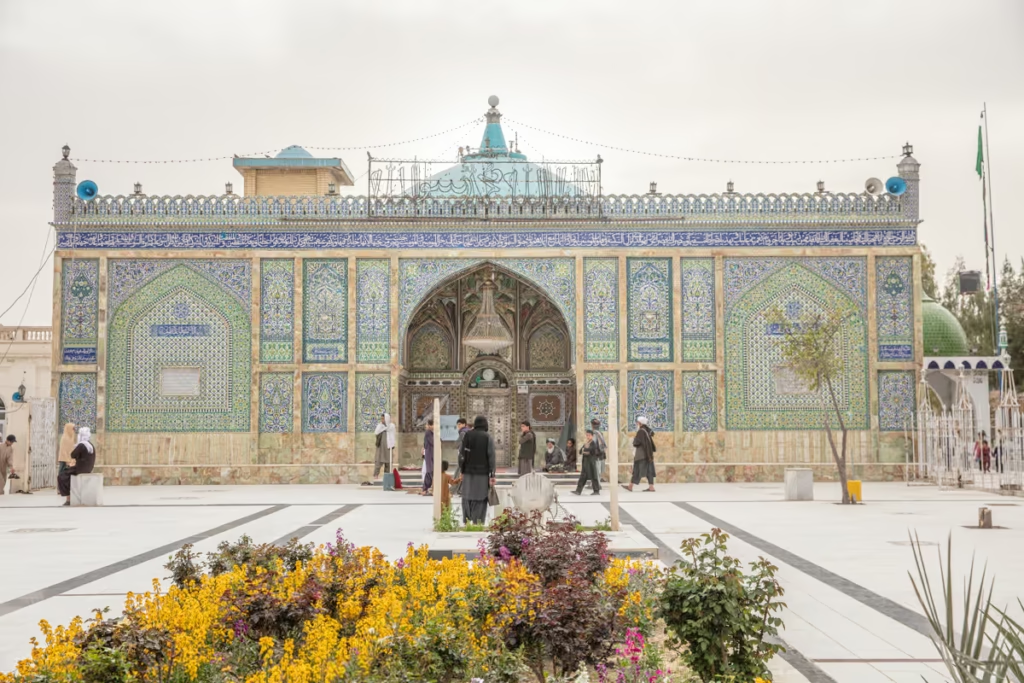
The Mosque of the Cloak of the Prophet Mohammed is among the most revered religious sites in Afghanistan. Also known as Kirka Sharif, the mosque is believed to house a cloak worn by the Prophet Mohammed during his lifetime.
According to tradition, the cloak was brought to Kandahar more than 250 years ago and has remained inside the mosque ever since. It is considered an exceptionally sacred relic and is only brought out on rare occasions.
One of the most notable appearances occurred in 1996, when Taliban leader Mullah Omar emerged from the mosque holding the cloak and presented himself to a gathering of followers as Amir al-Mu’minin, or Commander of the Faithful. Whether he actually wore the cloak remains a subject of debate.
The mosque is an important part of Kandahar’s religious and political history, making it one of the city’s most significant landmarks.
Mausoleum of Baba Wali Kandahari
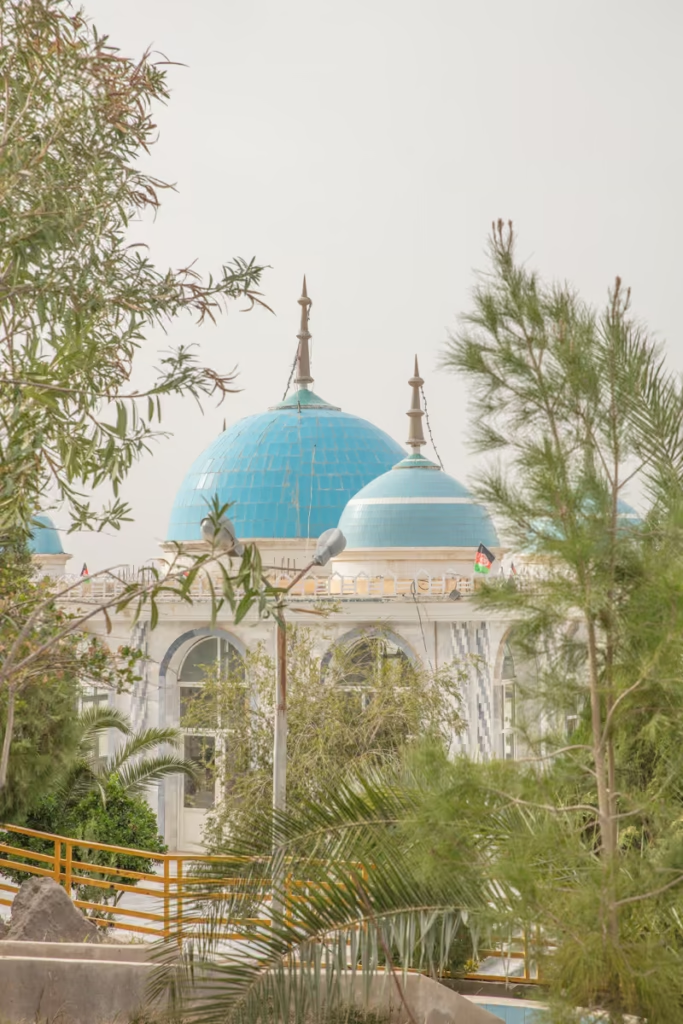
The Baba Wali Mausoleum is a shrine dedicated to Baba Wali Kandahari, a revered Sufi figure hailing from Kandahar. Baba Wali was an honored tribesman, born in 1476, with the shrine built in his name, ordered by Gul Agha Sherzai, a former governor of Kandahar, warlord, and mujahideen.
The mausoleum sits on a small hill overlooking the Arghandab River, with views across the surrounding countryside. The site is also a popular gathering and picnic spot for local families.
During my visits, I had the opportunity to spend time around the shrine and meet some of the people who live and work there. One man I met, Sayed, was a Malang who had spent his entire life at the shrine. He offered visitors blessings using holy water and salt, a practice associated with some local spiritual traditions.
Baba Wali is one of the more interesting places to visit around Kandahar, particularly if you’re interested in Sufi traditions and local religious life.
Mosque of the Hair of the Prophet
Located in Kandahar’s Old City, the Mosque of the Hair of the Prophet is another religious site associated with the Prophet Mohammed.
According to local tradition, a strand of the Prophet Mohammed’s hair is preserved inside the mosque, giving the building its name and religious significance.
Together with the Mosque of the Cloak, the site highlights Kandahar’s importance as a center of Islamic religious heritage. Its location in the Old City also makes it an interesting stop when learning about the city’s historic religious architecture.
Ahmed Shah Durrani Mausoleum
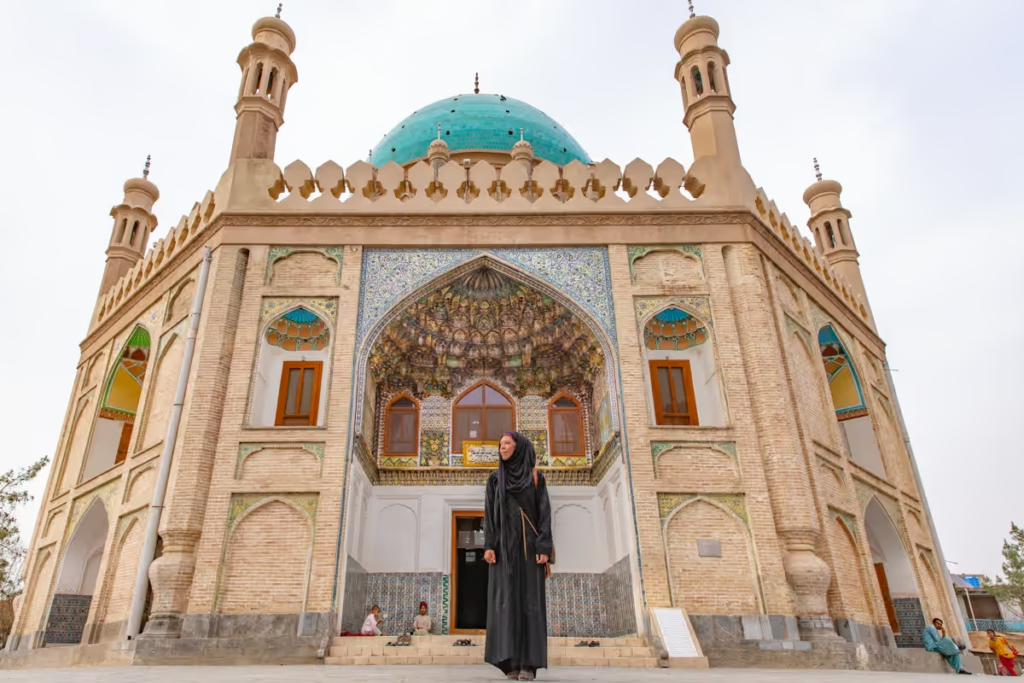
The Ahmad Shah Durrani Mausoleum is the resting place of Ahmad Shah Durrani, widely regarded as the founder of modern Afghanistan.
Durrani became king in 1747 and established the Durrani Empire, which eventually stretched across large parts of present-day Afghanistan, Iran, Pakistan, and northern India.
His mausoleum is located on the same grounds as the Mosque of the Cloak of the Prophet Mohammed, making it possible to see two of Kandahar’s most historically important landmarks in the same area.
For anyone interested in Afghan history, this is one of the most significant historical sites in Kandahar.
Chilzina
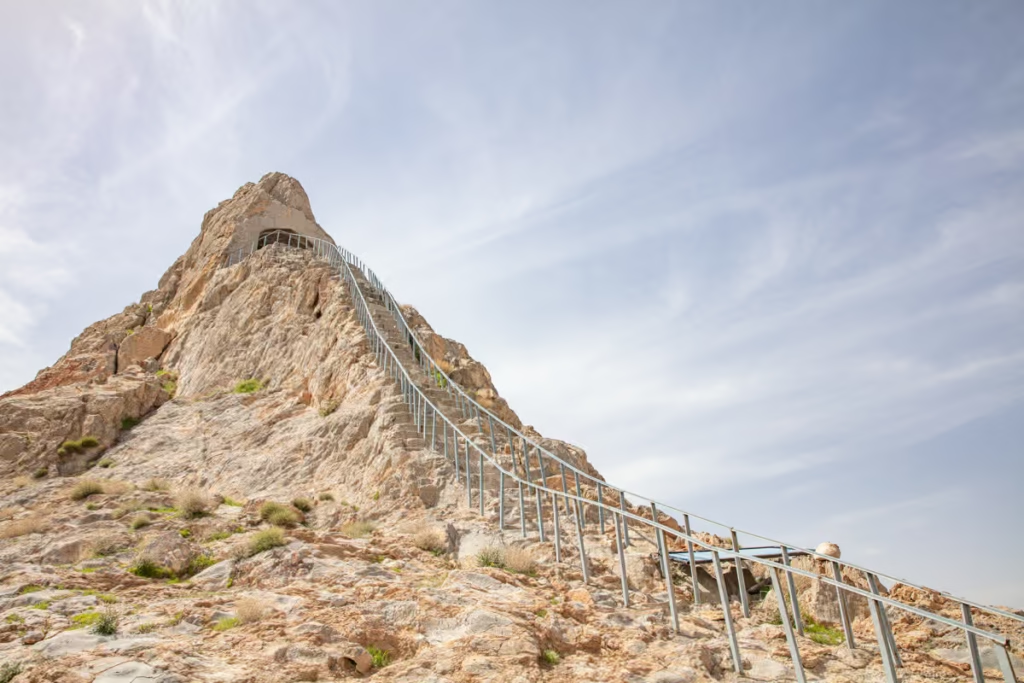
Chilzina, also spelled Chehelzina, is one of the most recognizable historical landmarks in Kandahar. Its name translates to Forty Steps, referring to the staircase carved into a rocky mountain overlooking the city.
The monument dates to the 16th centurey, during the reign of Mughal Emperor Zahiruddin Babur, who ordered its construction during his campaign to capture Kandahar in the 16th century. The carved staircase leads to a rock-cut chamber containing an inscription commemorating Babur’s victories.
Two stone lions guard the entrance, and the site offers expansive views across Kandahar’s surrounding plains and rugged mountains.
I found the landscape around Chilzina particularly striking. Before visiting, I hadn’t expected the mountains surrounding Kandahar to be so jagged and dramatic. From the elevated position, the city appears to sit within an expansive dusty plain, with rocky peaks rising abruptly from the landscape.
Chilzina is one of the most interesting historical attractions in Kandahar, combining Mughal history, rock-cut architecture, and excellent views.
Mausoleum of Mirwas Khan Hotak
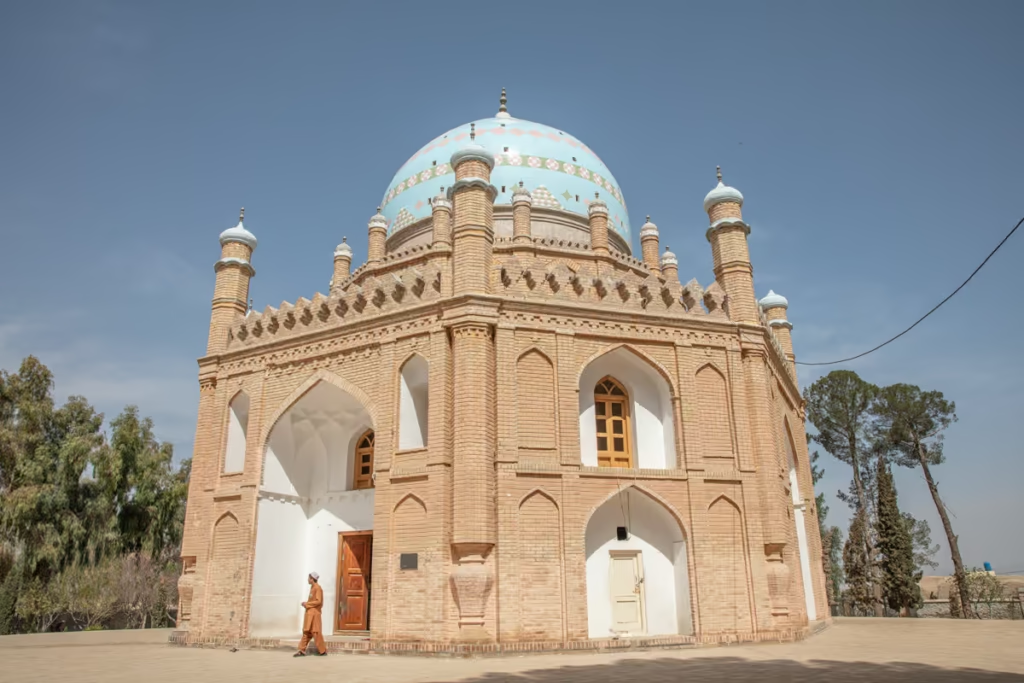
The Mirwais Khan Hotak Mausoleum is dedicated to Mirwais Khan Hotak, a Ghilji Pashtun leader who founded the Hotak dynasty in the early 18th century.
In 1709, Mirwais Khan led a revolt against Safavid rule in Kandahar, establishing an independent Afghan state in the region. The Hotak dynasty subsequently ruled parts of Persia and Afghanistan between 1709 and 1738.
The mausoleum marks his resting place and is one of Kandahar’s important historical monuments.
Make sure to appreciate the interior if access is permitted. The colorful painted ceiling is particularly interesting and offers a different architectural experience from the city’s many mosques and shrines.
Kandahar Museum
Finally re-opened in 2026, the Kandahar Museum houses archaeological and historical artifacts connected to Kandahar and the surrounding region.
Given Kandahar’s position at the crossroads of major historical empires and trade routes, the city has a particularly rich archaeological history. Its past has been shaped by Greek, Persian, Mauryan, Islamic, and Mughal influences, among others.
A museum visit can provide additional context for understanding the region’s history beyond its better-known religious landmarks and monuments.
Sra Jama (Red Mosque)
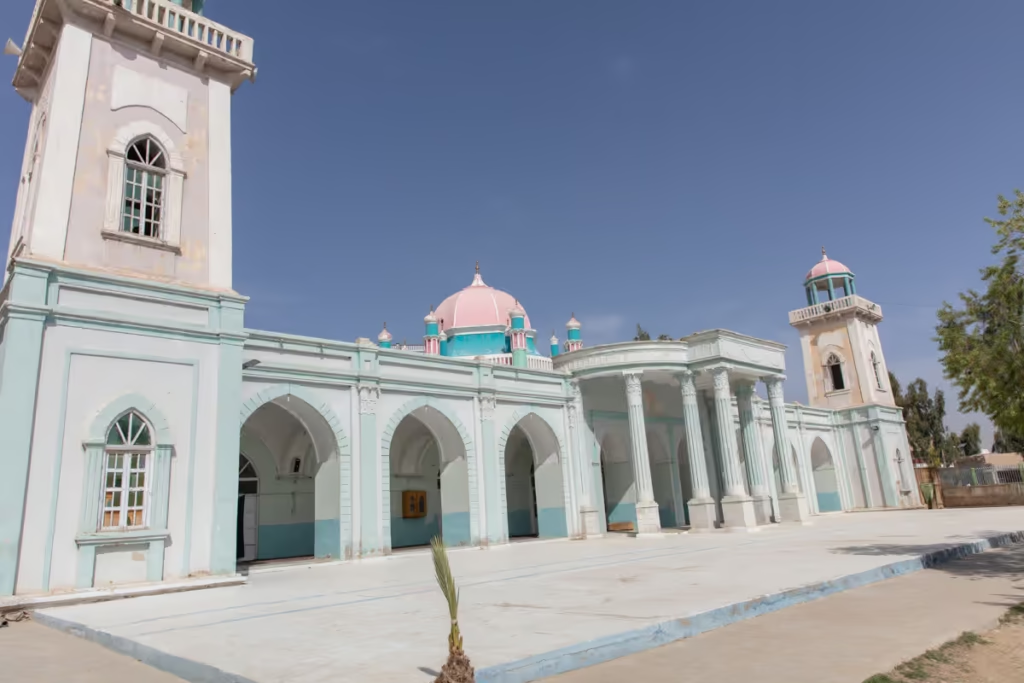
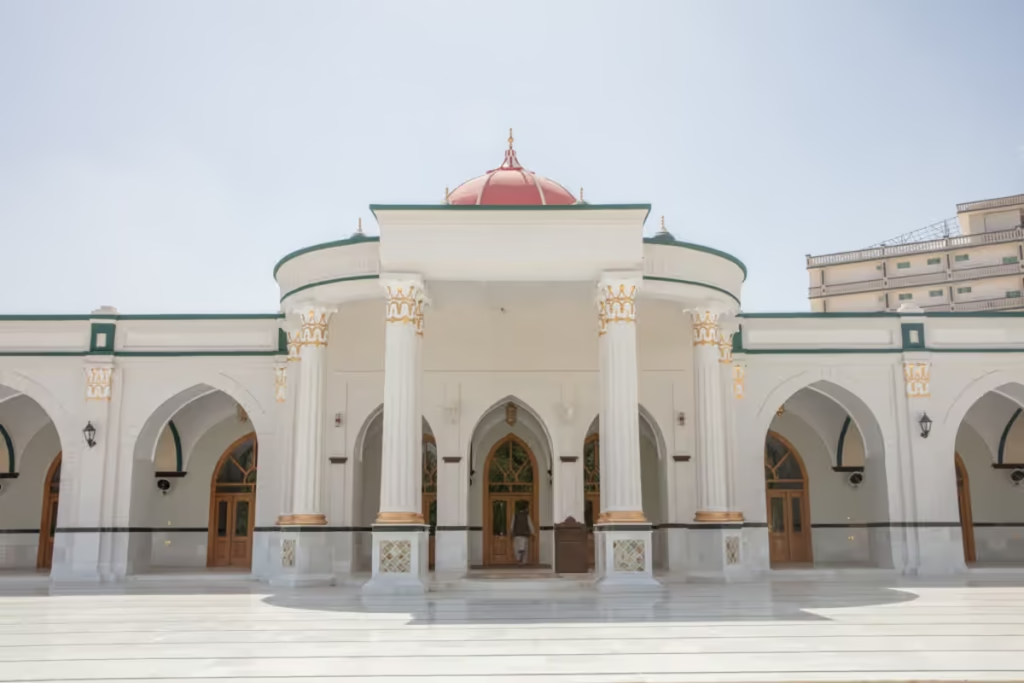
Sra Jama, commonly known as the Red Mosque, is a prominent mosque in Kandahar with a notable connection to the city’s recent history.
The mosque was frequented by Mullah Omar, the founder of the Taliban, who reportedly attended Friday prayers here. This association made Sra Jama particularly well-known during the Taliban’s rise to power.
The mosque underwent extensive restoration in early 2021, changing its appearance considerably. I photographed the older structure during a February 2019 visit and returned to photograph the restored building in May 2021.
Seeing the two versions side by side provides an interesting glimpse into how Kandahar has changed over time in recent years.
Sarposa Bazaar
If you’re interested in seeing a different side of Kandahar beyond its historical monuments and religious landmarks, Sarposa Bazaar offers a glimpse into everyday life in the city.
Bazaars have long been central to Kandahar as a trading center in southern Afghanistan. The city historically connected routes running between Central Asia, Persia, the Indian Subcontinent, and the Middle East.
Zorr Shah (Old Kandahar)
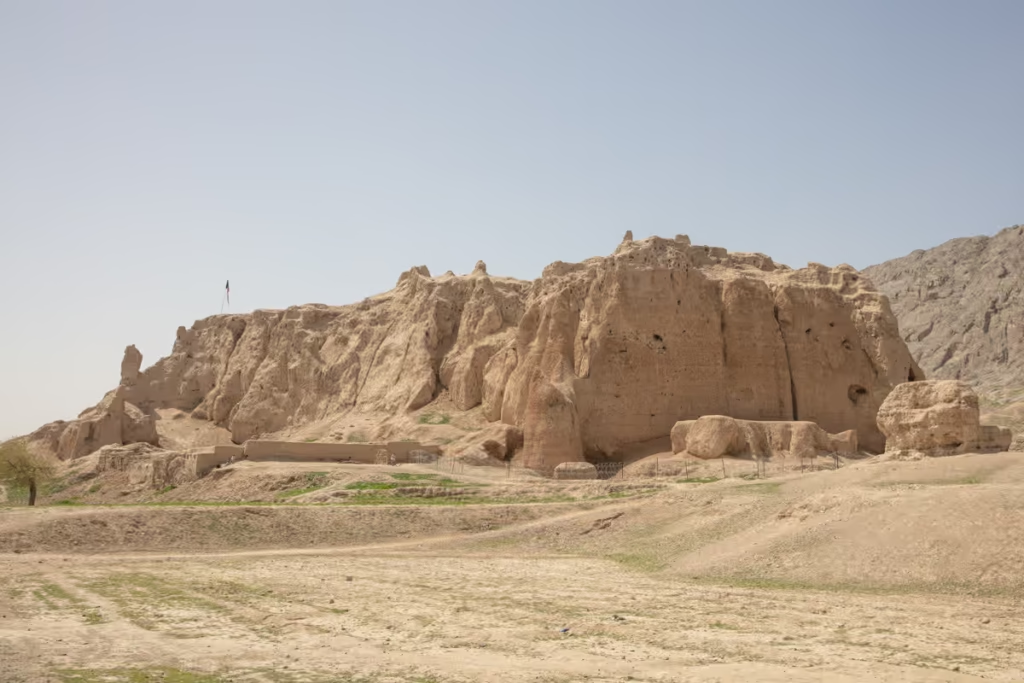
Zorr Shah, meaning Old Kandahar in Pashto, refers to the historic settlement whose ruins lie near the modern city.
Kandahar has occupied an important strategic position for centuries, sitting along historic trade routes connecting Central Asia, Persia, the Middle East, and the Indian Subcontinent. Its location made it a prize for successive empires and rulers.
The city’s ancient history is often associated with Alexander the Great, who conquered the region in the 4th century BC. Kandahar subsequently developed under numerous Greek, Mauryan, Indo-Greek, Persian, and Islamic rulers.
Exploring the remains of Old Kandahar offers a glimpse into the layers of history that have shaped this part of Afghanistan.
Eid Gah Mosque
Eid Gah Mosque is one of the city’s major mosques and is located on its northern side.
The mosque is known for its large scale and capacity to accommodate thousands of worshippers. It is also associated with the Taliban’s former leader Mullah Omar, who reportedly helped fund its construction.
As with Kandahar’s other major religious landmarks, the mosque provides insight into the city’s religious and political history.
How to Get to Kandahar
Kandahar is located in southern Afghanistan and is connected to other major Afghan cities by road and air.
Flights to Kandahar
Kandahar International Airport, also known as Ahmad Shah Baba International Airport, serves the city. Flights have historically connected Kandahar with Kabul through Afghan airlines, including Kam Air and Ariana Afghan Airlines.
Traveling to Kandahar by Road
Kandahar is connected to other parts of Afghanistan through several major highways. Routes historically used by travelers include:
- Kabul to Kandahar: traveling south through Wardak, Ghazni, and Zabul.
- Herat to Kandahar: traveling east through Farah and Helmand.
Road conditions, checkpoints, security restrictions, and access can change significantly, so check locally before making the road trip south.
Where to Stay in Kandahar
Kandahar has historically had a limited selection of accommodation options for international visitors compared with larger regional destinations.
During my earlier visits, some of the properties that were options for foreign travelers included:
- Afghan Guesthouse
- Armani Hotel
- Continental Guesthouse
- Royal Afghan Hotel
Before considering any accommodation in Kandahar, travelers would need to establish whether the property is operating and accepting foreign guests.
Is Kandahar Safe to Visit?
Kandahar, like most of Afghanistan, has a complicated and often turbulent history, and its security situation has changed considerably over the years.
When I first visited in March 2019, the atmosphere felt noticeably tenser than in other parts of Afghanistan I had previously explored. At the time, Abdul Raziq, the powerful Kandahar police chief, had been assassinated in October 2018, and the province remained an important center of conflict.
I returned in May 2021, when I was able to revisit some of the sites around Kandahar. Access to Baba Wali, for example, was not something we could simply assume. We received permission from a police commander on the day of our visit.
As always, I recommend the help of Let’s Be Friends Afghanistan to set up a visit to Afghanistan, including Kandahar.
Start planning here: The Afghanistan Travel Guide
Kandahar Photos: A Look Around Southern Afghanistan
Kandahar is a city of striking contrasts. Beyond its historic mosques and mausoleums, the surrounding landscape is characterized by dusty plains, rugged mountains, river valleys, and traditional settlements.
During my visits, I photographed everything from the city’s religious landmarks to everyday scenes around the Arghandab River and the surrounding countryside.
The following Kandahar photos offer a glimpse into the city’s architecture, landscapes, people, and historical sites, as I experienced them during those trips.
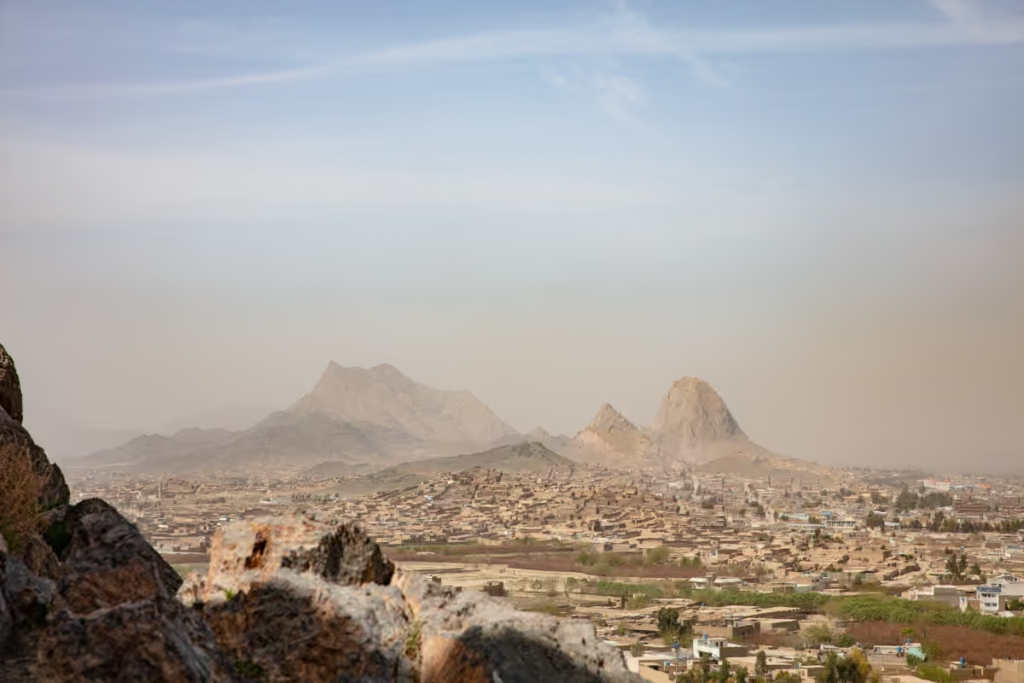
Until I visited Kandahar, I honestly thought it was flat. The mountains surrounding Kandahar are completely unique from the mountains I’ve seen elsewhere in Afghanistan. These jagged, uninviting peaks appear to rise from a flat steppe.
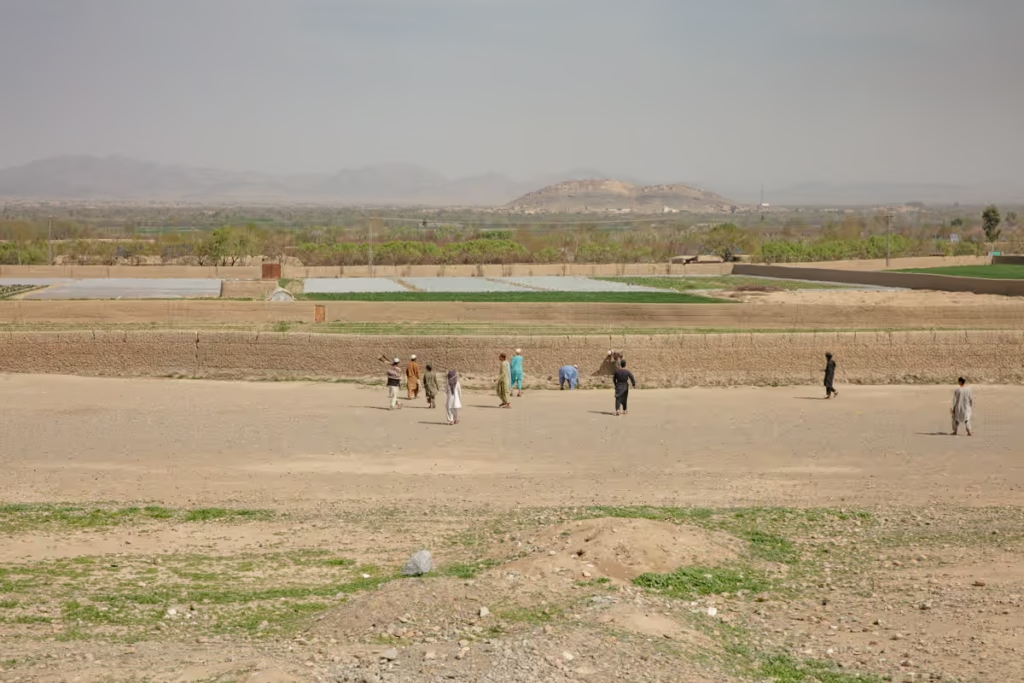
Boys playing football out on a pitch in Kandahar.
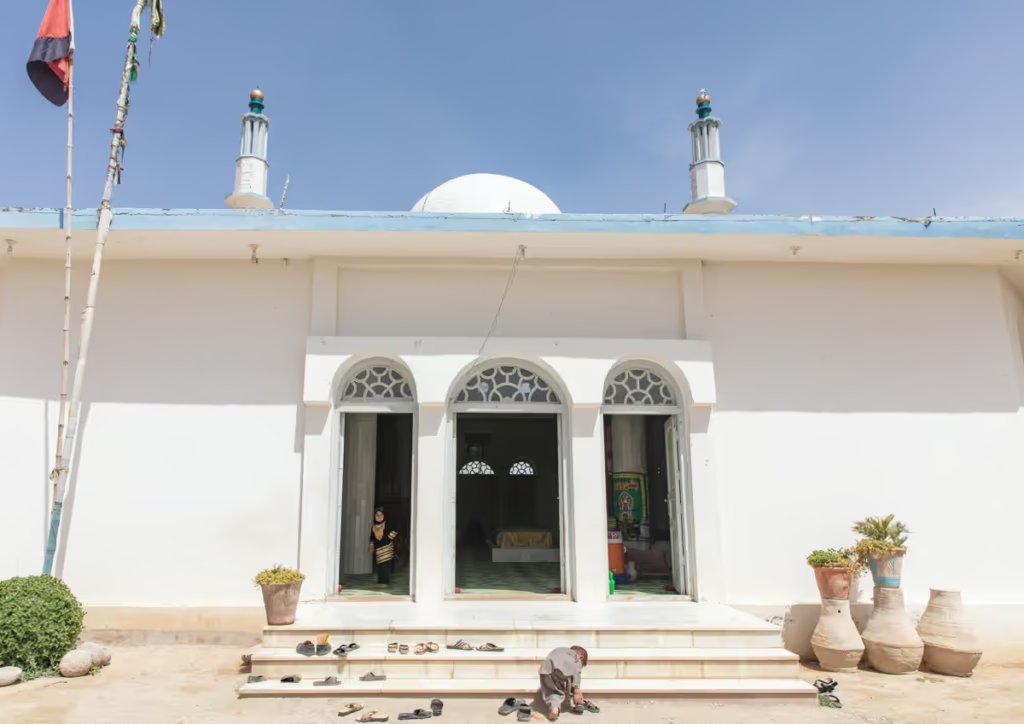
Children playing around at a mosque near to Zorr Shah.
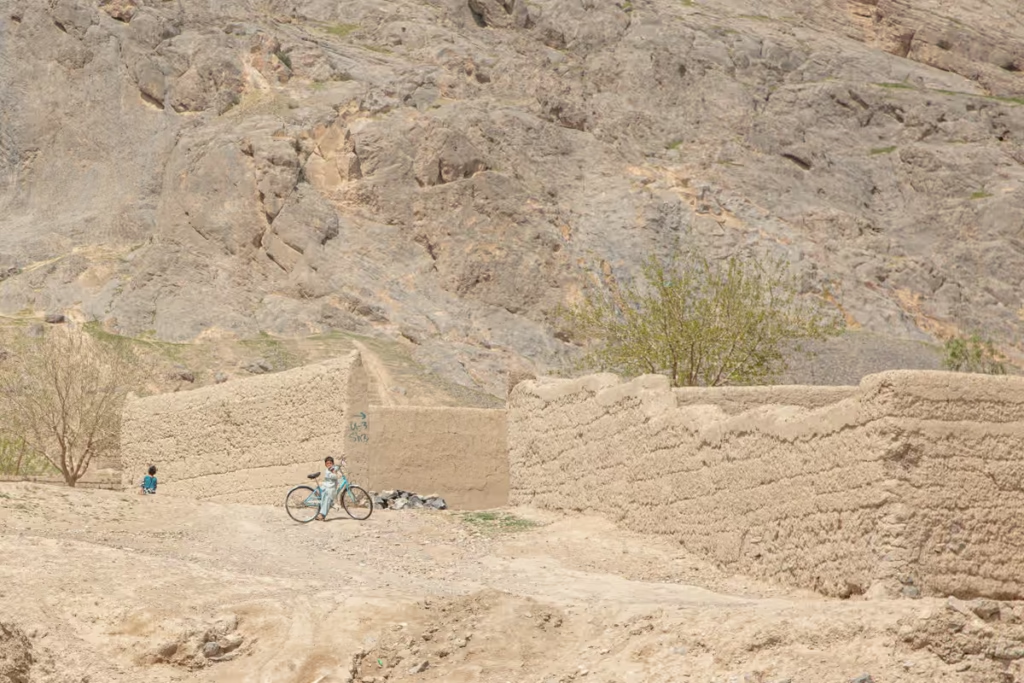
A boy pushes a bicycle near to Zorr Shah.
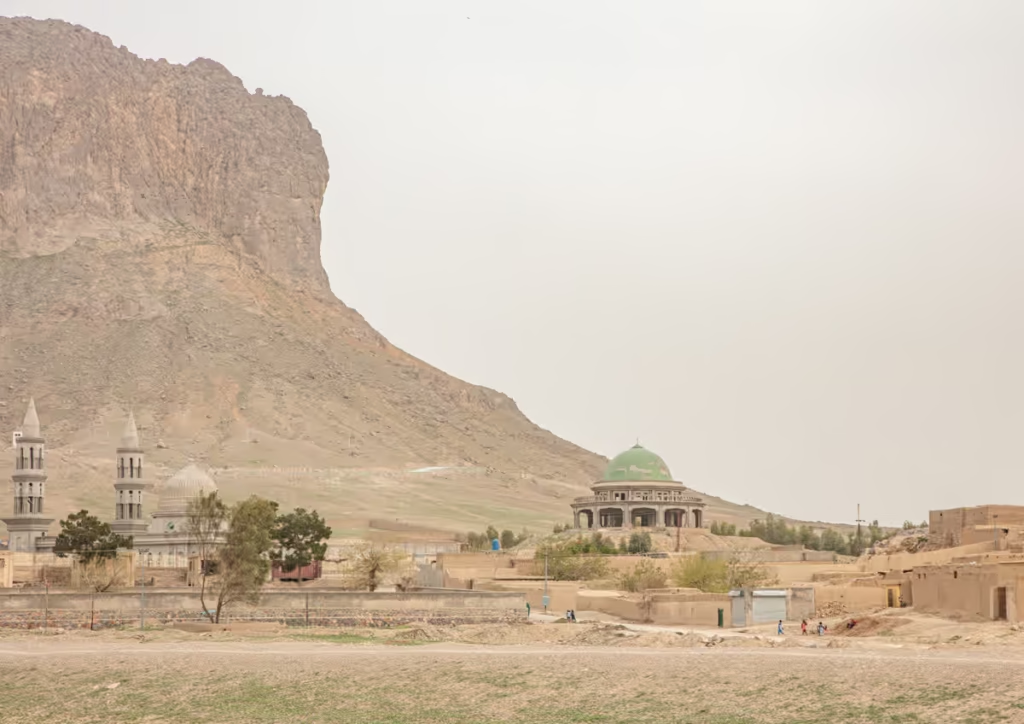
A green domed mausoleum and nearby mosque on the outskirts of Kandahar.
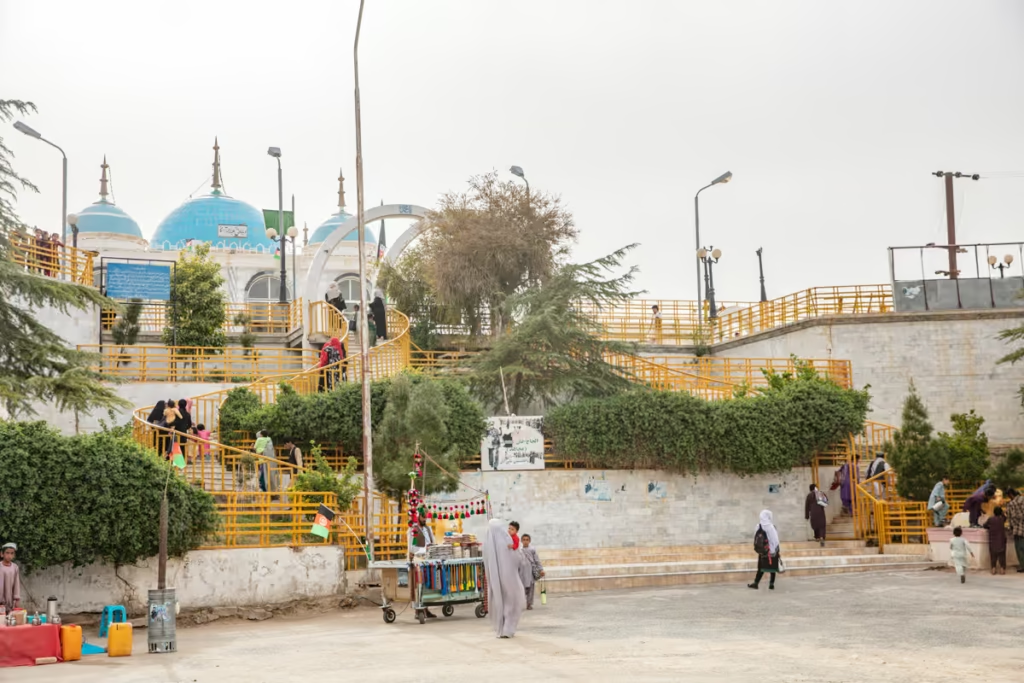
Women and children arriving at Baba Wali Khandahari Mausoleum.
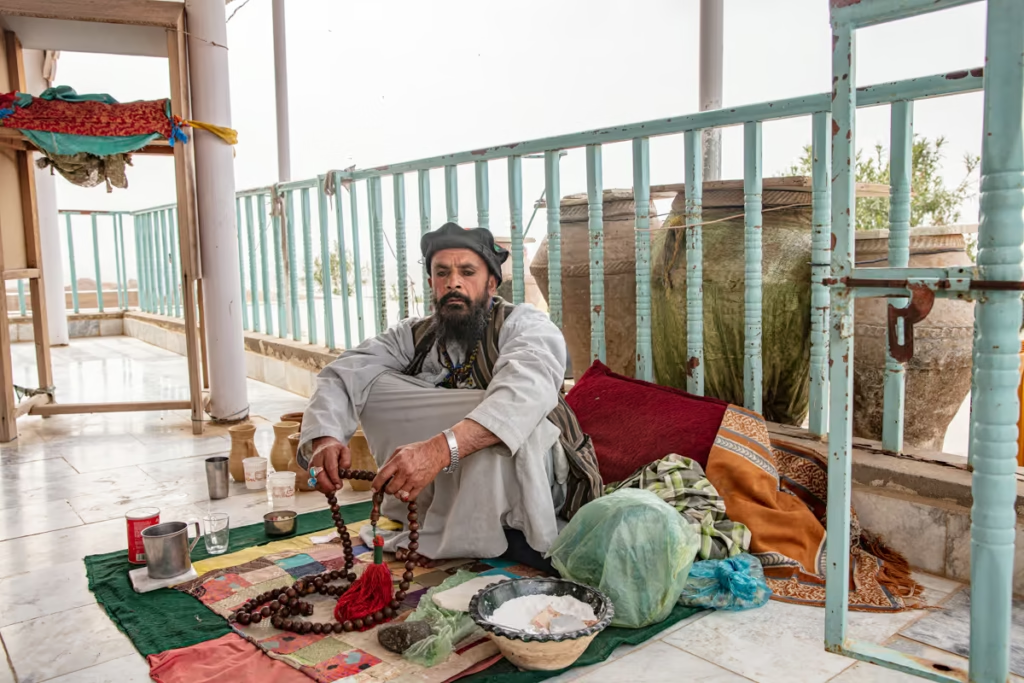
A Malang named Sayed is pictured here holding beads, he has lived his entire life here at Baba Wali Shrine. Malangs are believed by some to be men of God. Using holy water in glasses and salt from the bowl next to him he blesses visitors to the shrine.
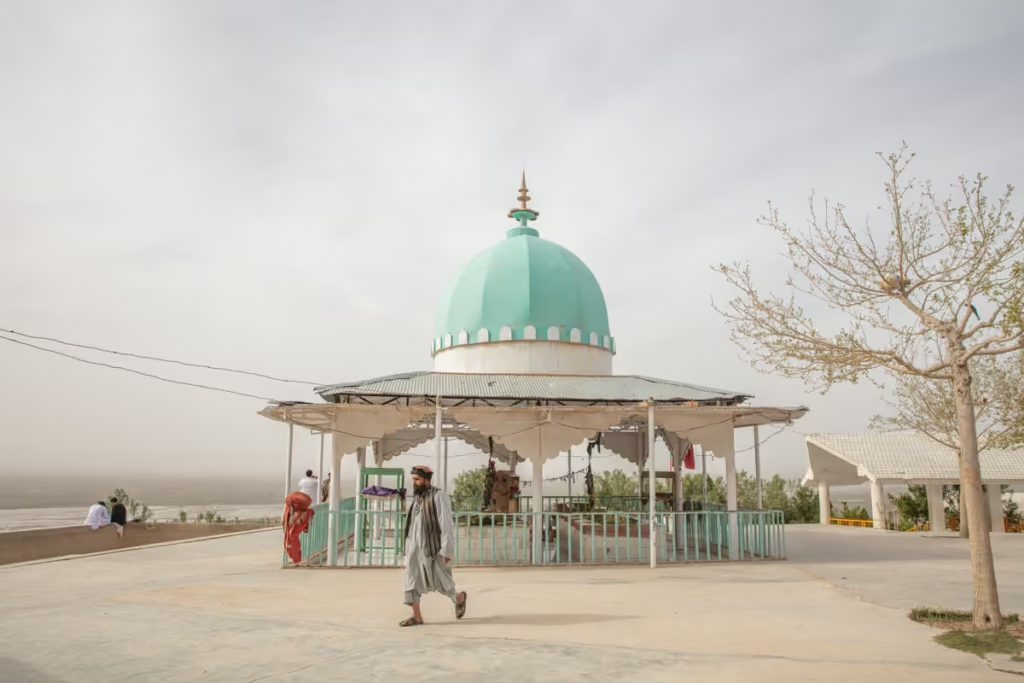
The Baba Wali Mausoleum sits perched above the Arghandab River and is a popular picnic spot for Kandaharis.
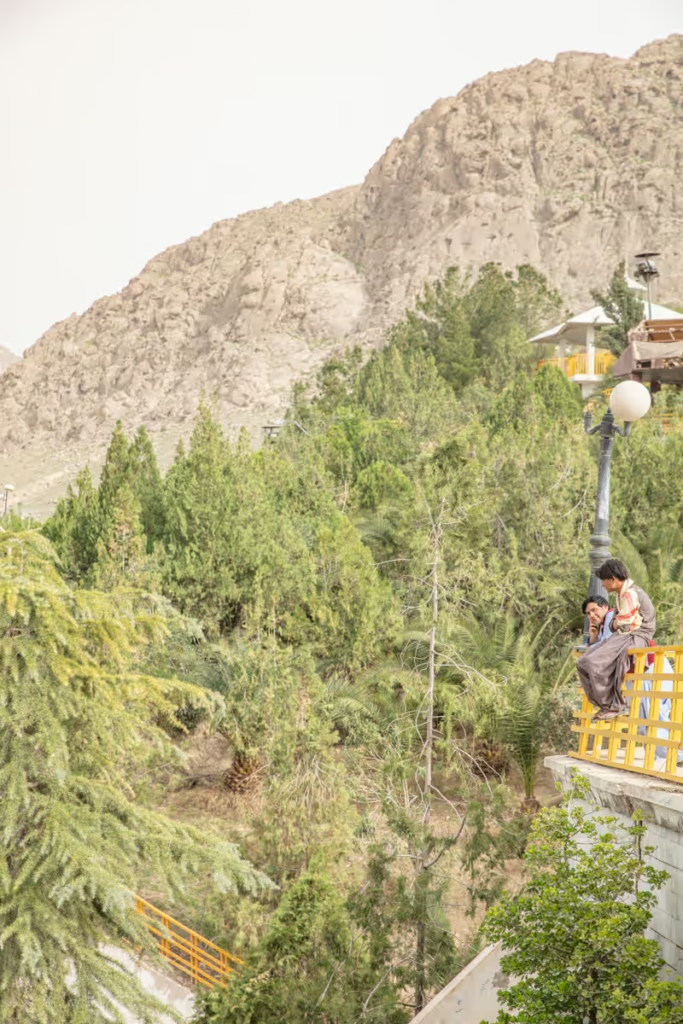
A couple of men chatting at Baba Wali Shine.
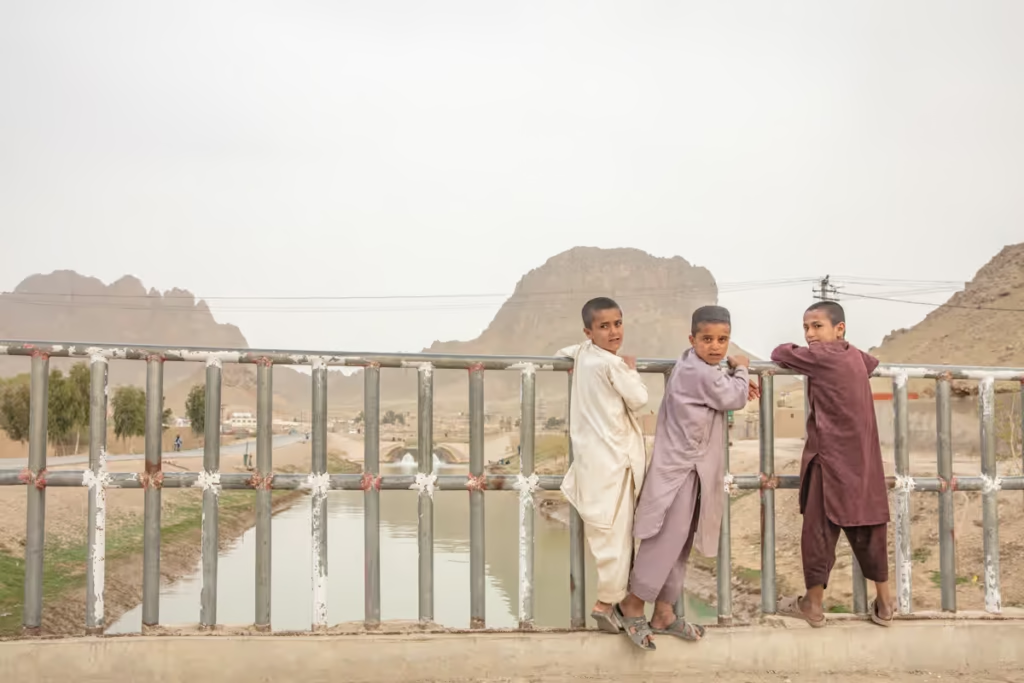
Boys playing on a bridge in Arghandab District, just outside Kandahar. Arghandab was the stage of the 2008 Battle of Arghandab, where the Canadian Forces and Afghan National Army attacked Taliban militants in response to the Taliban fighters who raided the Sarposa Prison releasing 900 inmates, many of whom which were tied to insurgents.
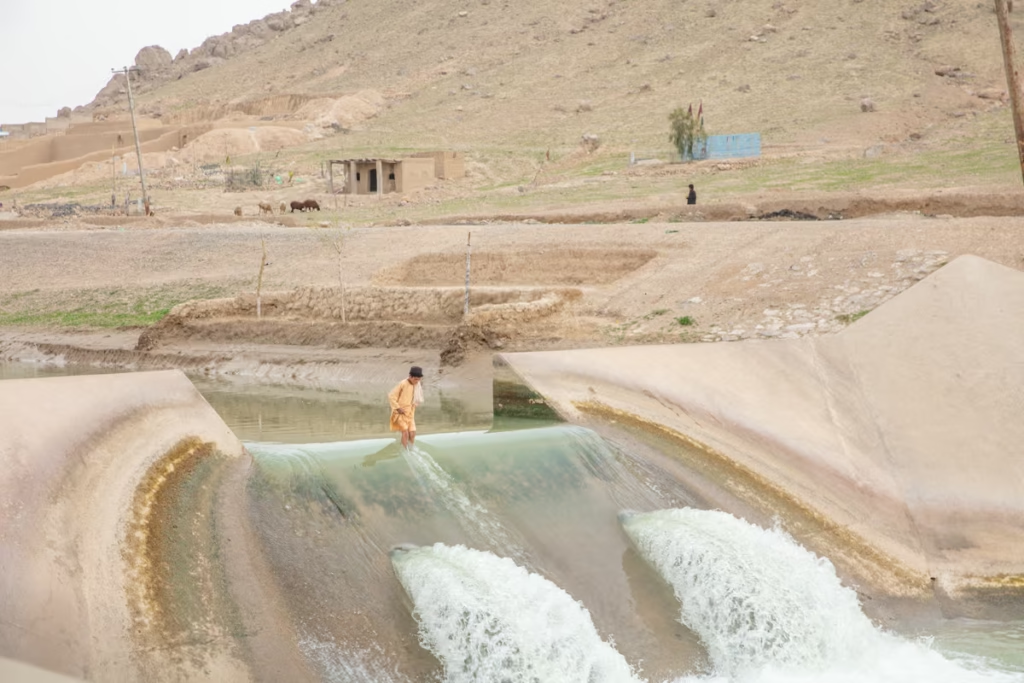
A boy carefully crosses the river.
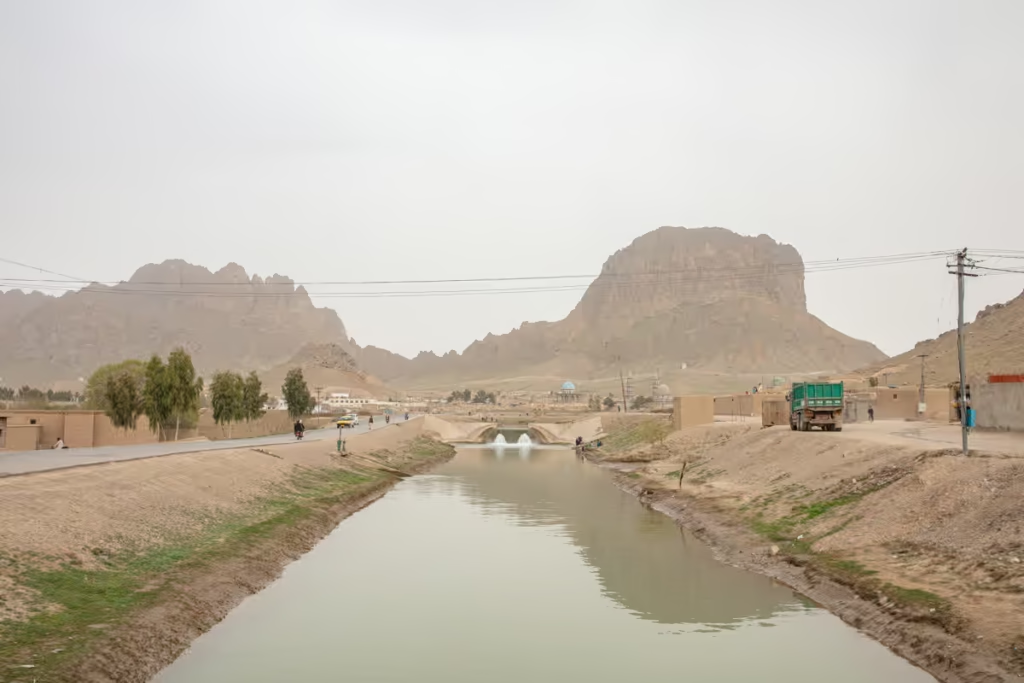
A view of ‘The Elephant’, a mountain near Kandahar.
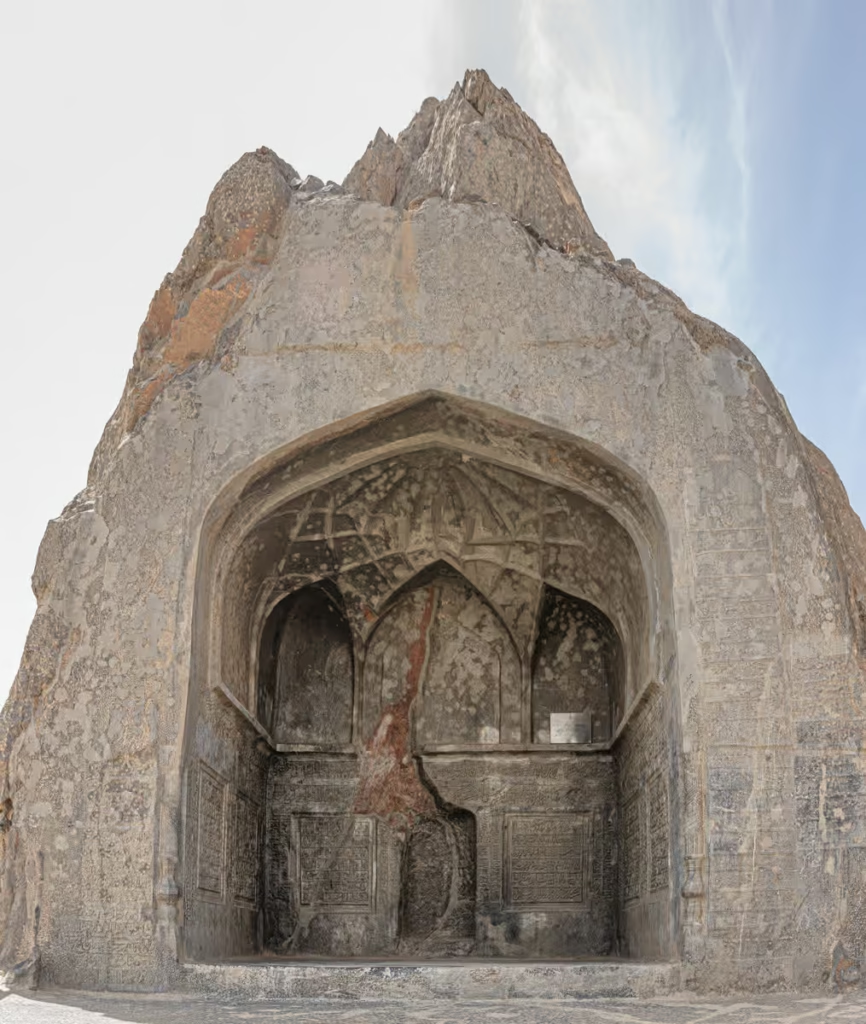
Babur had 40 steps built leading up the mountain top and then continued to hollow out a small enclave. At the top of the steps are two lions carved of stone guarding the entrance. Inside the enclave is a tribute to Babur’s conquests written in Persian. It took 70 men and 9 years to complete the enclave and steps of Chehilzina.
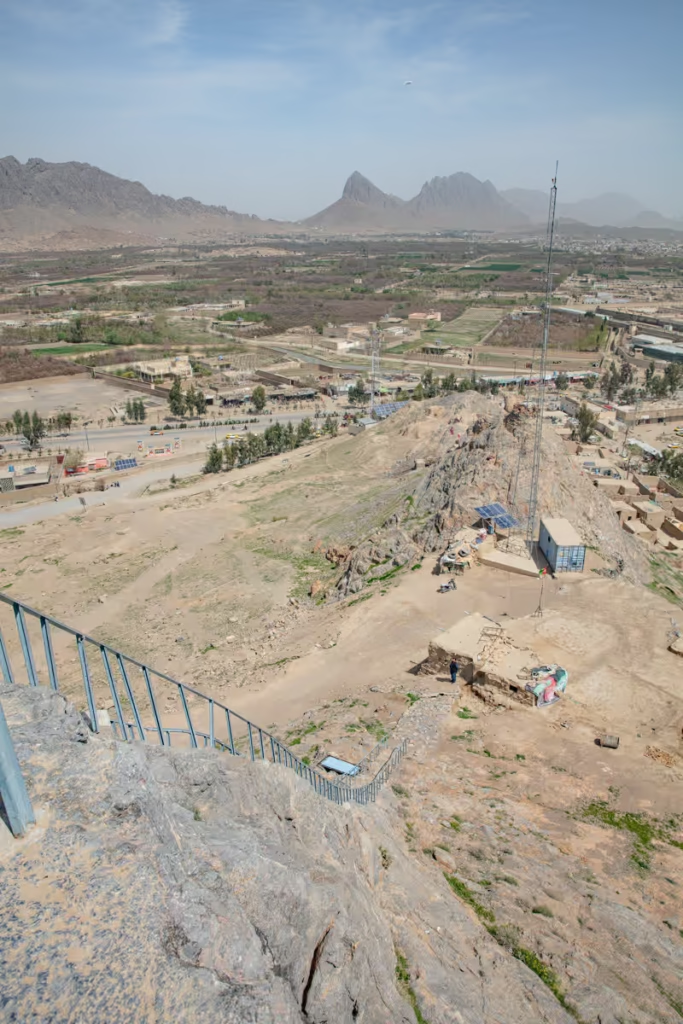
From the top of the steps, you can see out onto the dusty plain surrounding Kandahar and the jagged peaks that seem to rise from a flat surrounding.
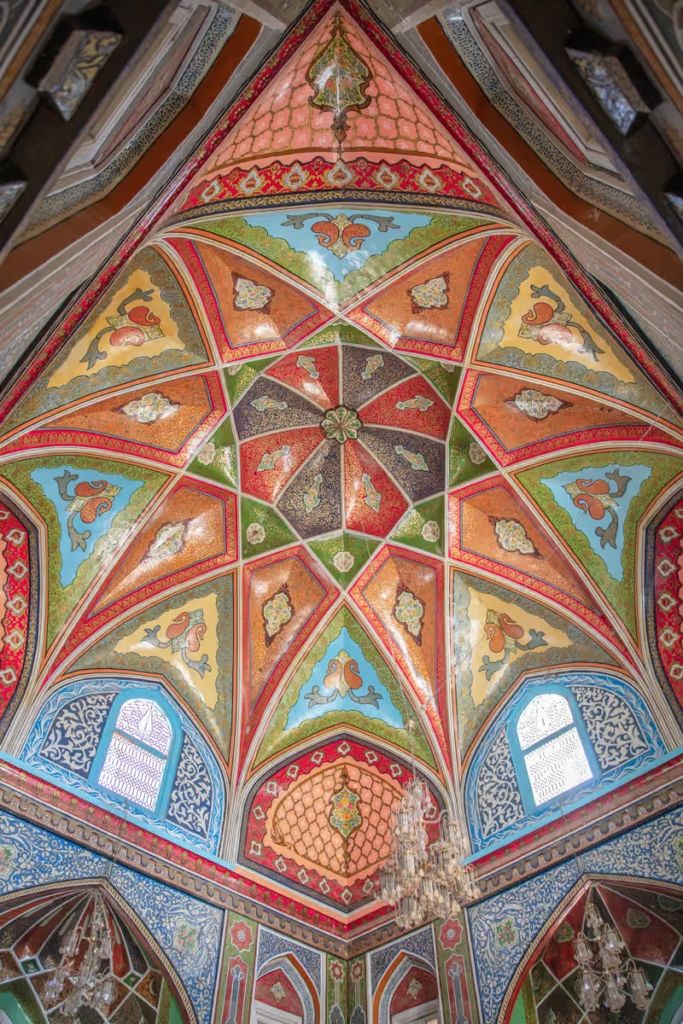
The ceiling of the Hotak Mausoleum. In April 1709 Hotak declared the independence of Kandahar from the chaos of the Safavids and Mughals that had been warring for power in the south of Afghanistan.
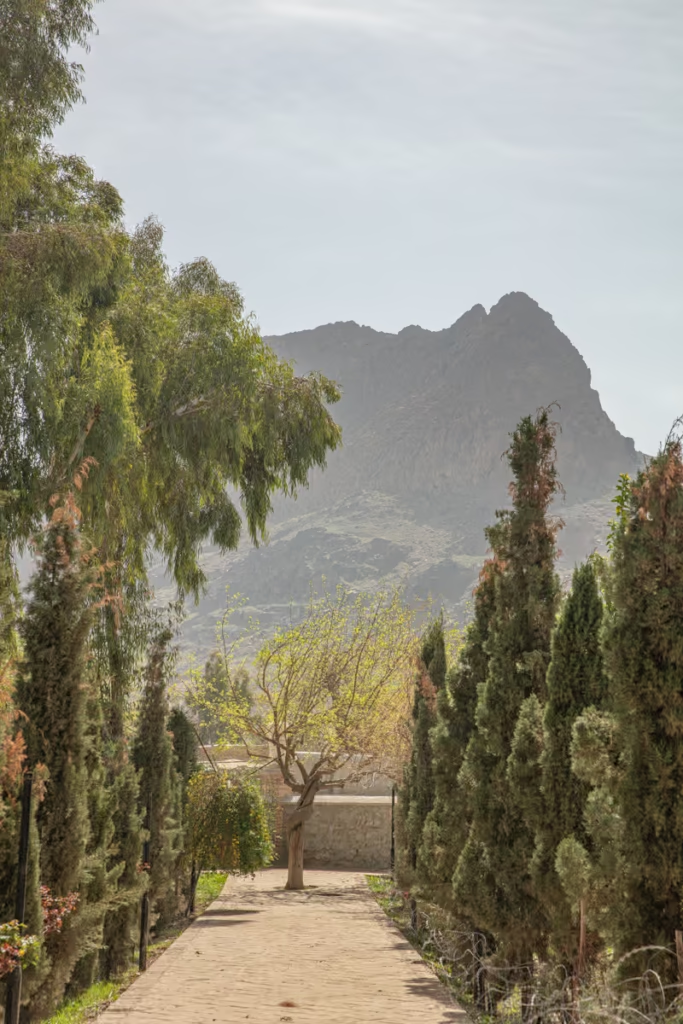
Views of a nearby mountain from the Mausoleum of Mirwais Khan Hotak.
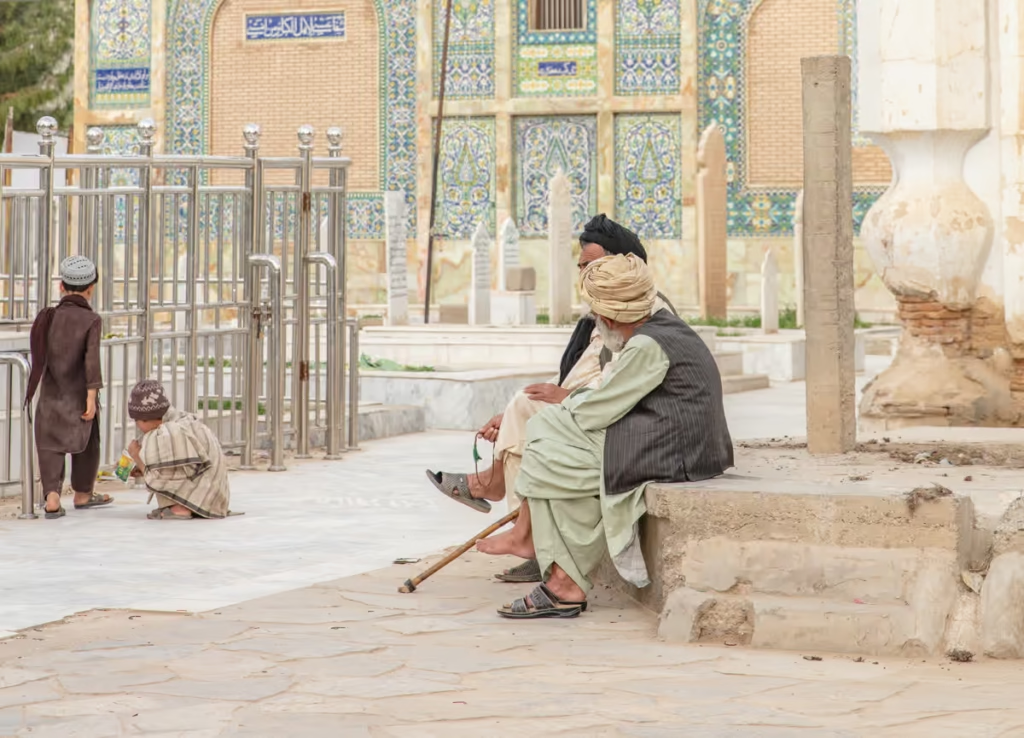
Men chatting and flicking prayer beads around outside the Mosque of the Cloak.
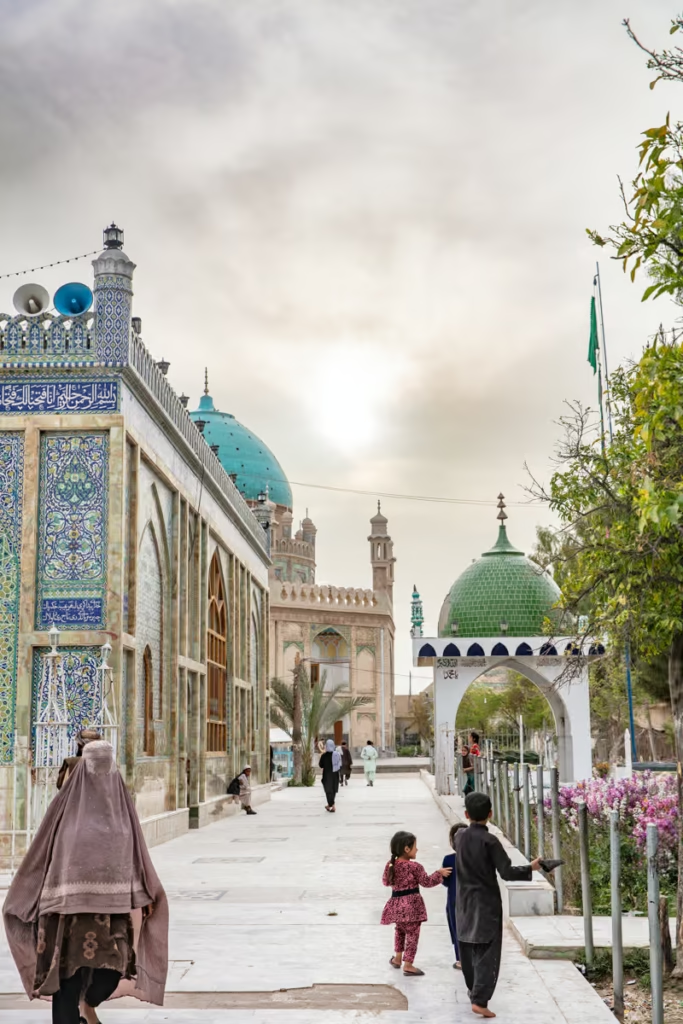
A woman in a lavender chadri and children walk past the Mosque of the Cloak of the Prophet Mohammed with Ahmad Shah Durrani’s Mausoleum towering in the background. Ahmad Shah Durrani is largely regarded as the founder and father of the modern state of Afghanistan. Durrani became the King of Afghanistan in 1747 after the assassination of the Nadar Shah Afshar. Under Durrani’s rule, the Durrani Empire at its zenith reached west to east from Khorasan to Kashmir and north to south from Amu Darya River to the Arabian Sea.
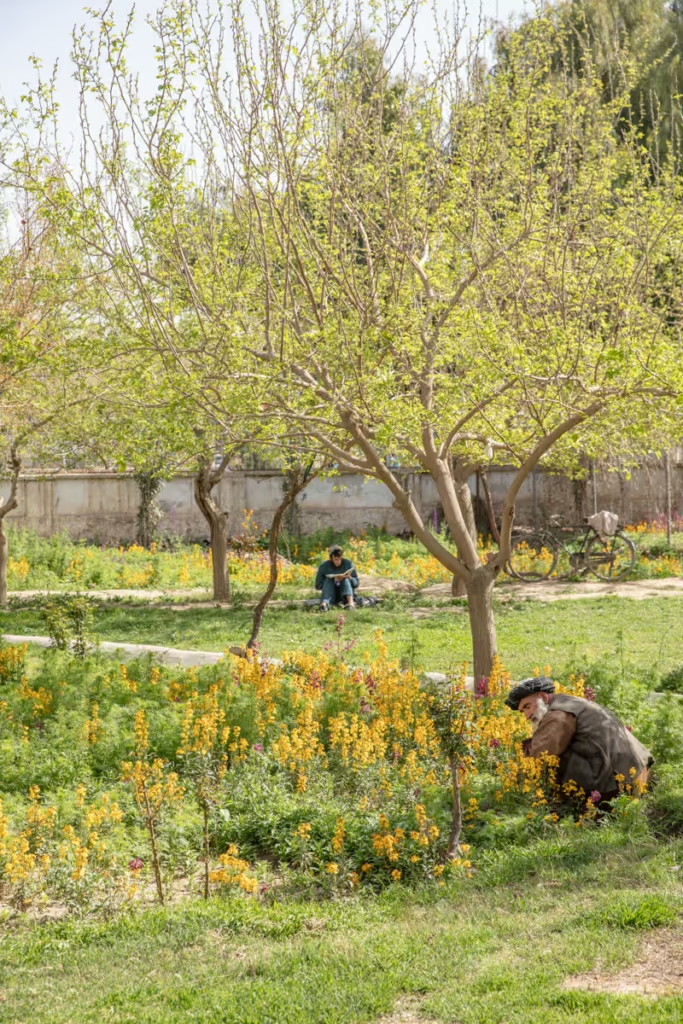
A man tends to the garden and a student of the madrasa reads at Sra Jama (Red Mosque). Mullah Omar used to come to the Red Mosque to pray every Friday.
Kandahar: A City That Stays With You
Kandahar is a city unlike anywhere else I’ve visited in Afghanistan. Its history stretches back thousands of years, its religious landmarks hold enormous significance, and its surrounding landscape is far more rugged than I ever expected. From the Mughal-era carvings of Chilzina to the mausoleums of Afghanistan’s founding figures, there is no shortage of history to explore.
Having visited Kandahar several times, I came away with a deeper appreciation for the city’s complexity and the people who call it home. It wasn’t always an easy place to travel, and the atmosphere was noticeably different from other parts of Afghanistan I’d experienced, but those visits left a lasting impression.
Have Any Questions About Kandahar Travel?
Ask any Kandahar Travel questions in the comments section below.
Posts From Afghanistan
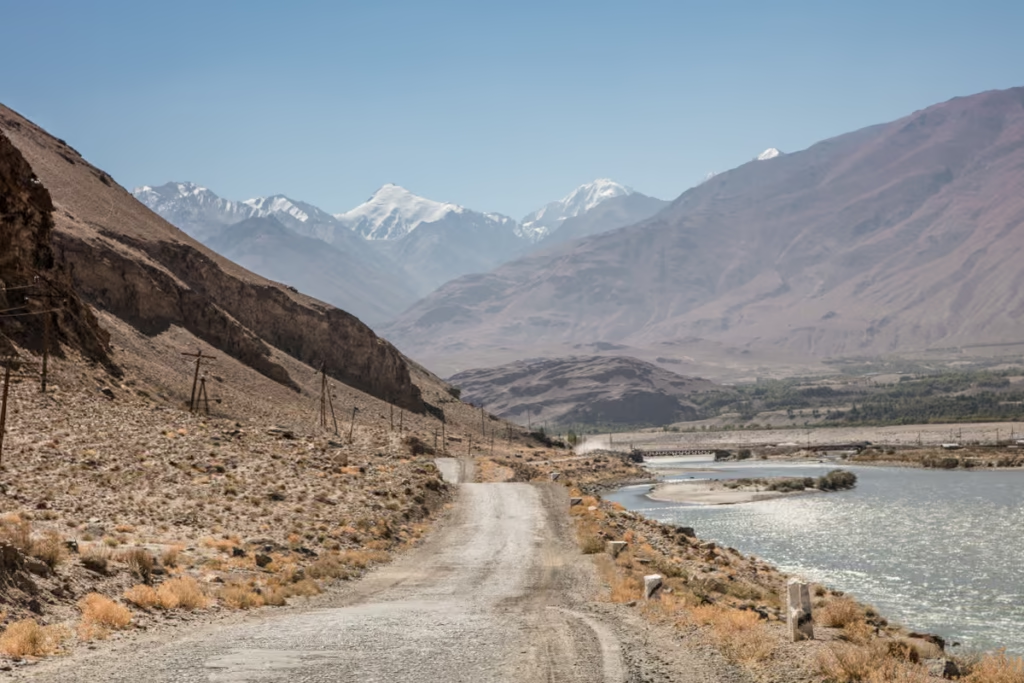
Ishkashim Border Crossing
Women’s Travel in Afghanistan
Uzbekistan-Afghanistan Border Crossing at Hairatan
Central Asia Travel Guide
Caught in an Electric Storm on Koh e Mekh, Afghanistan
Central Asia Packing List
Day Trip to Takht e Rustam, Afghanistan
Climbing Shah Foladi, Afghanistan
A Guide to Trekking in Bamyan, Afghanistan
How to Get an Afghanistan Visa
Ishkar & Ceramics in Istalif, Afghanistan
Daykundi Travel Guide, Afghanistan
Getting High On Balkh: Old Walls, Blue Tiles & Hash
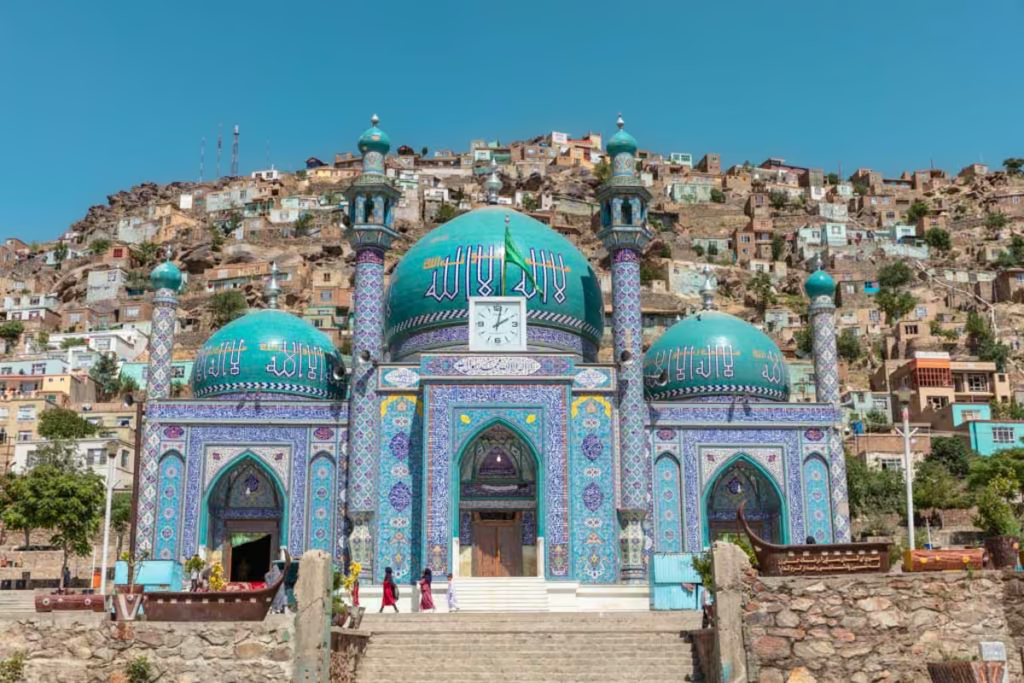
Visiting Kabul, Afghanistan

Visiting Panjshir Valley, Afghanistan
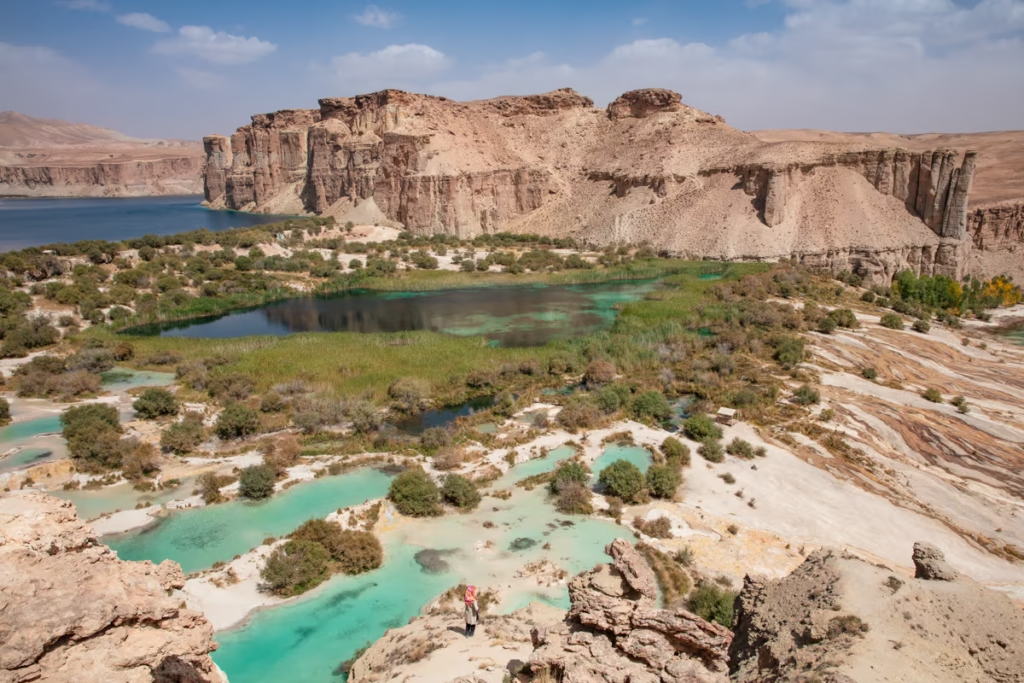
The Lakes of Band e Amir, Afghanistan
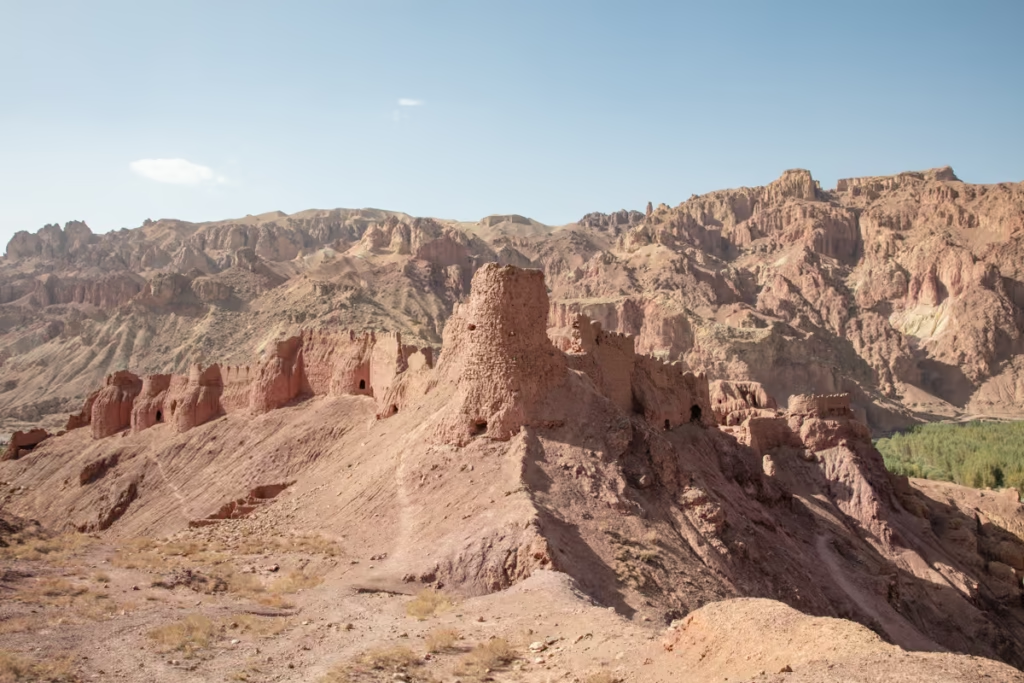
Shahr e Zohak
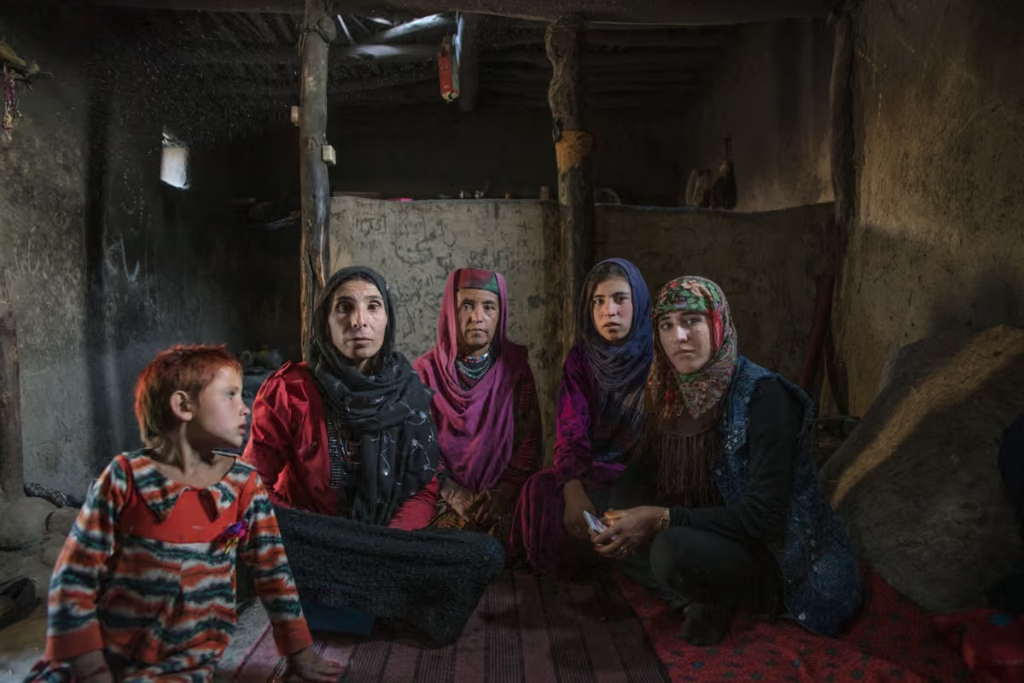
Wakhan Corridor, Afghanistan in Photos
Herat Travel Guide + Photos
Dara e Ajdarhar: Dragon Valley, Afghanistan
Female Travel in the Afghan Wakhan Corridor
Bamyan Travel Guide
Shahr e Gholghola, the City of Screams
Mazar e Sharif in Photos & Travel Guide
Afghanistan Travel Guide
Bamyan’s 40 Towers of Chehelburj