Crossing Khunjerab Pass Between Pakistan and China
Updated October 2026, Crossing Khunjerab Pass Between Pakistan and China was originally written in August 2018
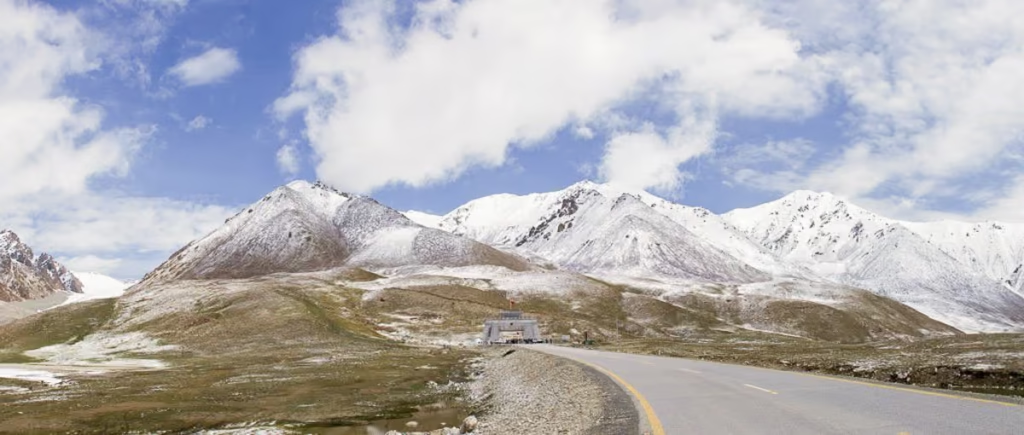
At 4,693 m (15,397 ft), Khunjerab Pass is the highest paved international border crossing in the world. It sits on the Karakoram Highway between Pakistan’s Gilgit-Baltistan and China’s Xinjiang region, with the Pakistani immigration and customs post at Sost and the Chinese border facilities in Tashkurgan.
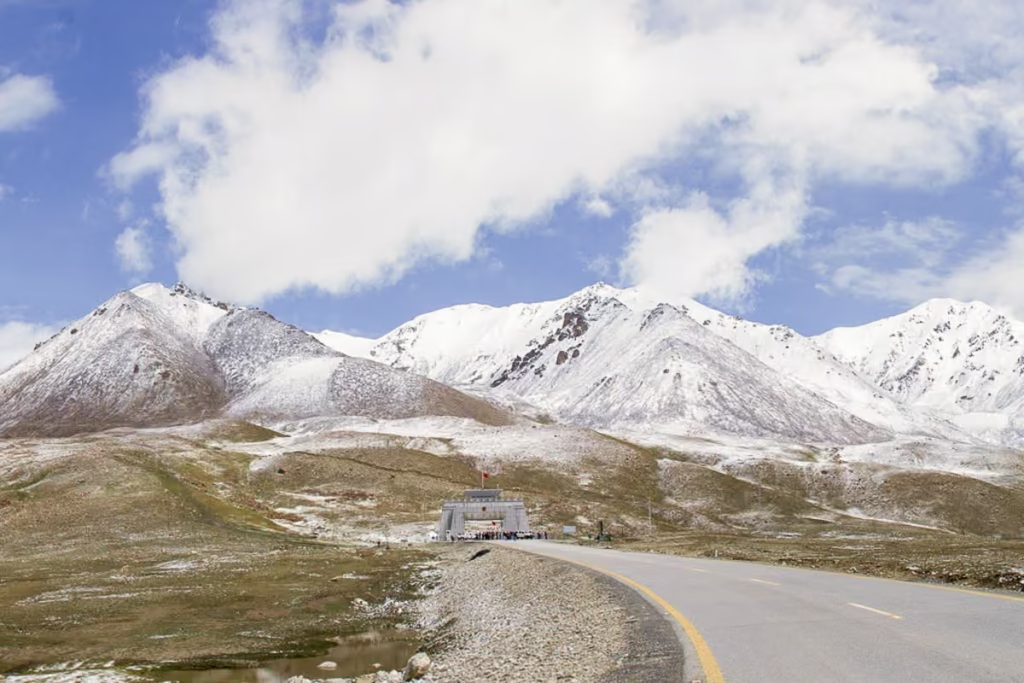
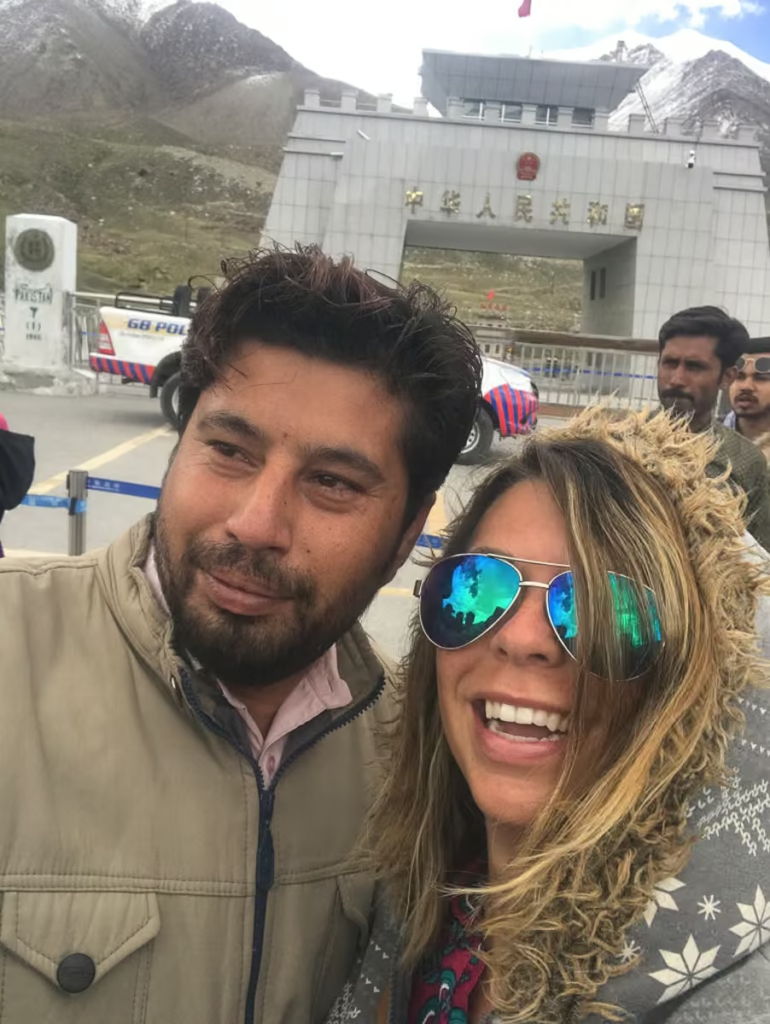
Crossing the Pakistan-China border at Khunjerab Pass is one of the more unusual overland border crossings I’ve done. The road itself is spectacular, but the actual border procedure is considerably more complicated than simply driving up to the giant gate, taking a photo, and carrying on your merry way.
I’ve crossed Khunjerab Pass and put together this guide to explain how to cross the Pakistan-China border overland, where to get the buses, how much the crossing costs, what happens at immigration and customs, which visas you need, and what to expect on both sides of the border.
Plan your visit to Northern Pakistan with my Gilgit-Baltistan Travel Guide
Need Travel Insurance and Evacuation Services?
Start shopping for travel insurance plans over at IATI Insurance. Readers of the Adventures of Nicole get a 5% discount off your plan.
The Adventures of Nicole partners with Global Rescue to offer the world’s leading medical evacuation and security advisory services. To travel with peace of mind, explore their evacuation coverage.
Khunjerab Pass Border Crossing at a Glance
| Countries | Pakistan and China |
| Border crossing | Khunjerab Pass |
| Elevation | 4,693 m / 15,397 ft |
| Road | Karakoram Highway |
| Pakistan side | Sost, Gilgit-Baltistan |
| China side | Tashkurgan, Xinjiang |
| Border status | Year-round port operation, subject to conditions and passenger arrangements |
| Typical crossing | Official cross-border bus/transport |
| Pakistan-China bus | Sost ↔ Tashkurgan |
| Chinese currency | RMB/CNY |
| Pakistani currency | PKR |
| Park fee | Check the current rate before crossing |
| Highest paved international border crossing | Yes |
Can Foreigners Cross Khunjerab Pass?
Yes, foreigners can cross between Pakistan and China through Khunjerab Pass when the passenger crossing is operating and they meet the immigration, visa, and transport requirements of both countries.
The important distinction is that Khunjerab Pass is not an unrestricted walk-across border. Foreign travelers need the appropriate visas and must follow the designated crossing procedure and transport arrangements.
Do You Need a Permit to Cross Khunjerab Pass?
For ordinary foreign tourists, the key requirement is having the appropriate visa and travel documents for the country you are entering, along with following the border transport procedures.
There is conflicting information online about additional border permits, particularly on the Chinese side. Recent 2026 travelers have reported crossing with a Pakistani visa without an additional permit, while others have encountered requests for additional documentation. Because requirements can vary according to nationality and current border procedures, confirm your documents with the relevant authorities or transport operator before departure.
Why Cross Khunjerab Pass?
There are a few reasons travelers find themselves staring at that enormous border gate at 4,693 meters:
- You’re traveling overland between Pakistan and China via the Karakoram Highway.
- You’re completing one of Asia’s great overland routes between Gilgit-Baltistan and Xinjiang.
- You’re traveling the full Karakoram Highway and want to cross into China or Pakistan without flying.
- You’re a border-crossing obsessive and cannot resist adding another ridiculously high checkpoint to the collection.
The important thing to understand is that Khunjerab Pass is not simply a sightseeing stop if you’re actually crossing the international border. Passenger movement is controlled, and travelers crossing between Pakistan and China need to follow the designated transport and immigration procedures.
Important Things to Know Before Crossing Khunjerab Pass
There are a few things I wish I had known before attempting the Pakistan-China border crossing at Khunjerab Pass.
- Khunjerab Pass sits at 4,693 m (15,397 ft), so altitude is a genuine consideration even though you are traveling by road.
- The international border facilities are not located directly beside the towns travelers usually associate with the crossing. Sost is the main Pakistani border town, while Tashkurgan is the main Chinese-side town and customs location.
- You cannot simply walk or drive yourself across the border on the Chinese side. Passenger crossings are handled through designated transportation and border procedures.
- Cyclists should expect to load their bicycles onto the designated transport rather than cycling across the international border.
- Travelers in private vehicles need to arrange the required permissions and cross according to the authorities’ procedures. Do not assume you can simply turn up and drive through.
- Carry cash in the currency you’ll need on each side. Recent travelers report paying RMB 225 for the Tashkurgan-Sost bus and paying the Pakistani national park fee separately.
- Bring water, snacks, warm clothing, and layers. There is very little infrastructure along the high-altitude stretch of the journey.
- Khunjerab Pass is now officially a year-round border port, rather than the old April-November seasonal arrangement. However, passenger crossings remain subject to operating schedules, weather, holidays, and border authorities, so confirm your intended crossing date before traveling.
- Keep your China and Pakistan visas/documents accessible throughout the journey. You will be asked to produce them repeatedly.
Khunjerab Pass Opening Hours and Border Days
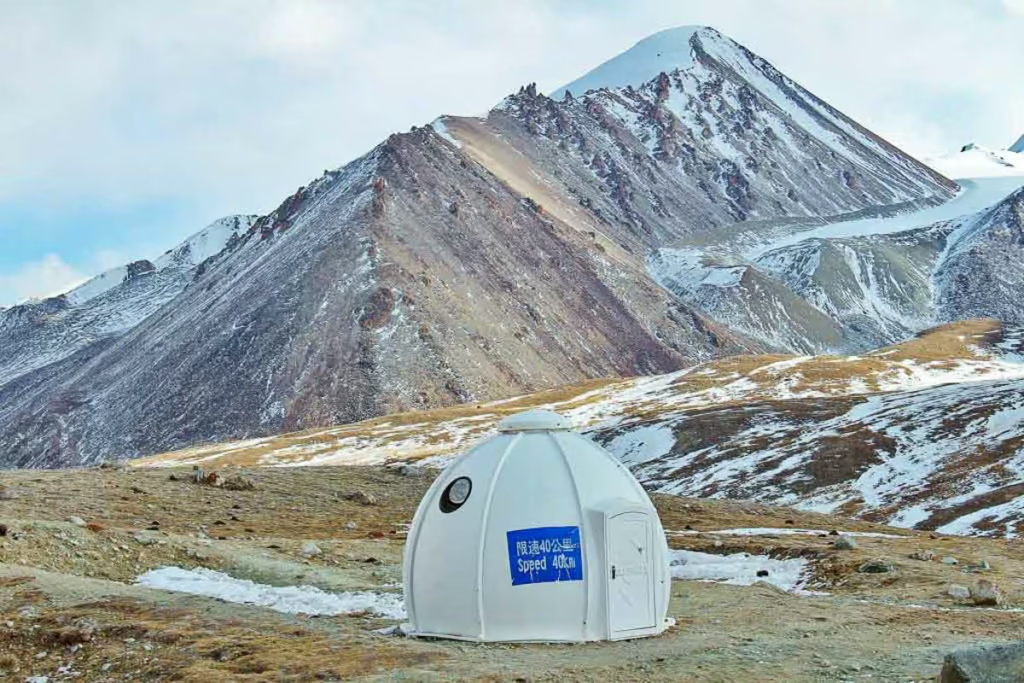
The Khunjerab Pass is only open Monday through Friday. Hours of opening aren’t really of concern to travelers as the border is only open to those taking the NATCO and Hunza-Xinjiang Trading Co. buses, andKhunjerab Pass is now officially a year-round border port, although the practical experience for passengers can vary according to weather, holidays, security arrangements, and transport schedules.
For travelers, the important distinction is between the port’s year-round status and the days when passenger transport actually operates.
\Confirm the schedule with NATCO or the relevant transport office in Sost or Tashkurgan immediately before traveling.
The Chinese side traditionally operates on Beijing Time, while Pakistan uses Pakistan Standard Time. Xinjiang also commonly uses an unofficial local time that is two hours behind Beijing Time, which can make an already confusing border crossing even more entertaining.
Getting to Khunjerab Pass: Buses and Transportation
Sost to Tashkurgan
The standard way for independent travelers to cross the Pakistan-China border at Khunjerab Pass is by the designated passenger transport operating between Sost and Tashkurgan.
NATCO operates passenger services on the Pakistani side, while Chinese-side services connect Tashkurgan with Sost. Schedules and ticket arrangements can change, so treat published times as a starting point rather than a guarantee.
Tashkurgan to Sost
The Tashkurgan-Sost bus fare is 225 RMB per person. Tickets are purchased at the designated international bus station in Tashkurgan, and recent travelers report being able to buy tickets in advance.
How long does Khunjerab Pass take?
Allow most of a day for the actual border crossing.
The road journey itself is relatively straightforward, but immigration, customs, security checks, waiting for the convoy, and the high-altitude border procedures can add several hours. Recent travelers reported leaving Tashkurgan around midday and reaching Sost around 18:00 Beijing time.
China to Pakistan Border Crossing via Khunjerab Pass
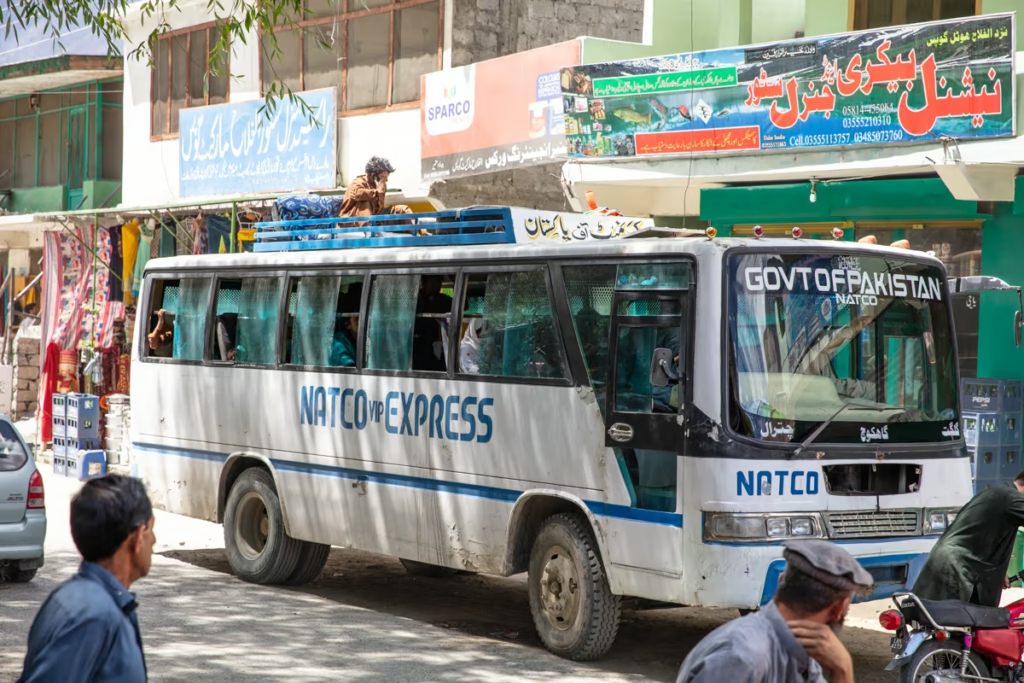
The China-to-Pakistan border crossing begins in Tashkurgan, Xinjiang, and ends at Sost in Gilgit-Baltistan. Travelers take designated transport over Khunjerab Pass and complete Chinese exit procedures before crossing the pass and completing Pakistani immigration and customs in Sost.
Traveling from China into Pakistan is a bit of a clusterf**k, you’ve been warned. Here is the entire procedure, start to finish:
Get to the Tashkurgan Bus Station at 9:30 am Beijing time/11:30 Xinjiang time when tickets go on sale. Go in, show your passport and purchase your 225 RMB ticket, remember that you can only pay in RMB.
Next, you’ll need to either walk about 20 minutes or take a 5 RMB taxi ride to Khunjerab Port to clear customs and exit China. Khunjerab Port is where the buses will depart from.
Khunjerab Port doesn’t open until 11 am Beijing/1 pm Xinjiang time. So there is no need to rush if you bought your ticket when ticket sales opened. There are a couple of shops serving food open near the bus station, so grab some breakfast and a few snacks for the road before heading to Khunjerab Port.
At Khunjerab Port you’ll go through a security checkpoint and then enter the main building. Here you’ll scan bags through an X-ray and then get your exit stamp out of China. You’ll then be brought to the steps out back to sit and wait. Buses do not leave until everyone gets through.
Between sitting and waiting to get on the buses, getting on the buses, and sitting on the bus waiting to leave the port, you’ll be asked to see your exit stamps a ridiculous number of times by border officials. Just hand over your passport, open to the exit stamp. Or just hand over your closed passport, you’ll thoroughly entertain the entire bus at your own expense.
Finally, your buses will depart, which typically doesn’t happen until 1 pm Beijing/11 am Xinjiang time. You’ll travel directly to the post on the Chinese side of the Khunjerab border gate which will take about 3 hours.
At this military checkpoint, they will check your exit stamp (yet again). You’ll then have to wait until on the bus they open the gate.
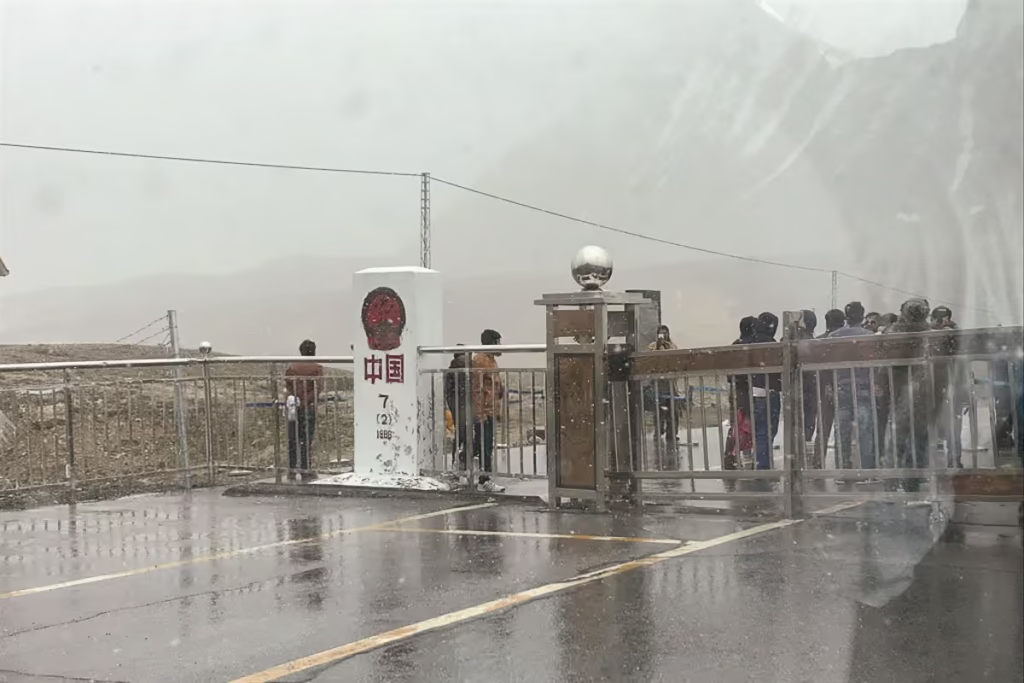
The Khunjerab Pass gate finally opens, you drive through. Celebrations ensue on buses as Pakistanis yell things like “FREEDOM!” and turn up the music as they’re stoked to leave police-state Xinjiang. You will arrive in Sost about 3 hours later (Pakistanis are treated poorly in Xinjiang).
Next, you’ll make your way down the pass toward Sost. You’ll stop first at the Khunjerab National Park to pay the park fee (8300 PKR/220 RMB/$30 USD). You’ll then walk down the highway a short way and go into the Khunjerab police station where you’ll register with the police, have your photo taken, and then be given your police registration card.
After registering with the police you’ll continue to Sost where you’ll clear immigration and go through a quick and easy customs check. Welcome to Pakistan!
There will be buses outside the customs office where you can continue to places in the Hunza Valley, Gilgit, and beyond. You can exchange money into PKR in Sost.
I recommend exchanging enough to get on a bus and buy some snacks but wait until Gilgit to exchange the bulk of your money as you’ll get a better rate there. There are also ATMs in Gilgit.
Pakistan to China Border Crossing via Khunjerab Pass
To travel from Pakistan to China overland, you first complete Pakistani immigration and customs in Sost, then travel by designated transport along the Karakoram Highway to Khunjerab Pass and onward to Chinese immigration facilities near Tashkurgan.
Traveling from Pakistan to China is a fairly simple process (aside from the near-anal-probing that will ensue at the Chinese military checkpoint at the border).
You can book tickets in advance by visiting the NATCO or Hunza-Xinjiang offices or calling on the phone.
When you arrive in Sost on the day you plan to depart, go over and purchase your ticket. You’ll need to pay 3,300 PKR and present your passport. Pay for your ticket at around 8:00 am.
Customs and immigration do not open until 9:15 am, so you can grab breakfast at a shop in Sost and pick up snacks for the road while you wait.
Next, walk across the road to the Sost immigration and customs post. Exiting Pakistan is simple and quick.
Once you enter the building you’ll be asked to set your bags on the floor and wait. Drug sniffing dogs will be brought out.
Next, you’ll have to go through a health inspection. You’ll then have your passport checked and stamped and hand over your police registration card. Then go through a quick customs check.
Buses leave around 10 am outside the immigration and customs office after everyone with tickets has cleared.
The journey up to the Pakistan-China border at Khunjerab Pass will take about 3 hours including the stop at Khunjerab National Park to pay the 800 PKR/500 RMB/$8 USD fee.
Once you arrive at the Khunjerab Pass border gate you’ll have to wait until the gate is opened (we waited about 30 minutes). You can get out and join the Pakistani tourists (you’ll probably be asked to be in hundreds of selfies), while you enjoy your last moments of freedom before crossing into the military police state commonly known as Xinjiang.
Going to China? Check out my posts on Kashgar and Turpan, and start planning
Once through the Khunjerab Pass gate, you’ll visit the military checkpoint where you’ll be thoroughly searched. This will include the typical military search with a Chinese authoritarian flair: cameras, laptops, and phones will be thoroughly searched (it’s recommended for any photos and such that may be deemed sensitive to be uploaded to the cloud or a similar service prior to heading to the border), bags scanned and then physically rifled through, you’ll even go through an X-ray (I probably have a tumor from the ridiculous number of X-rays I had to go through in Xinjiang), and questioning by officers.
You’ll have to wait for all people on the buses to clear the checkpoint because you’ll all be required to travel as a convoy back to Tashkurgan. You aren’t even allowed to use the toilet without a police escort (hint: they say they’ll take you and never do). And don’t you dare go relieve yourself once you’re outside (one Pakistani did after proclaiming he’d go “make China green again”) without fully intending to be publicly chided by a Chinese officer (thank Allah for the Pakistani sense of humor on this 3 hour bus trip down to Tashkurgan as the general atmosphere of your bus will be that of hopelessness and despair).*
Next, you’ll arrive at Khunjerab Port on the south end of Tashkurgan. Before getting out of your bus you must wait for it to be sprayed (on the outside) with a disinfectant (not even kidding). You’ll go through customs and immigration quickly here in comparison to the check you endured up in the pass.
Plan to walk back to the center of Tashkurgan, which will take about 15 minutes. There likely won’t be any taxis waiting in the port parking lot. Y
ou will see many taxis on your walk back. They either already have passengers or if not most won’t stop if you flag them. We did get one that stopped on the whole walk back to stop, but we gave it to a Pakistani trio walking with us because one was quite elderly (it took a lot of insisting that they take it because even outside Pakistan they’re still the kindest people).
Most will opt to spend one night in Tashkurgan and then take a bus or taxi to Kashgar the next day. There isn’t really much of anything you can do or see in Tashkurgan. For those planning to head to Tajikistan, the Kalasu Port for Qolma Pass Border Crossing to the GBAO region of Tajikistan is about an hour’s drive away.
*People talk about the hardcore police states in Turkmenistan & Uzbekistan. I felt 1,000,000x more free in those countries than in Xinjiang.
Where to Sleep
Tashkurgan
Khunjerab Inn (185 RMB) per night and Crown Inn Tashkurgan (520 RMB per night).
Kashgar
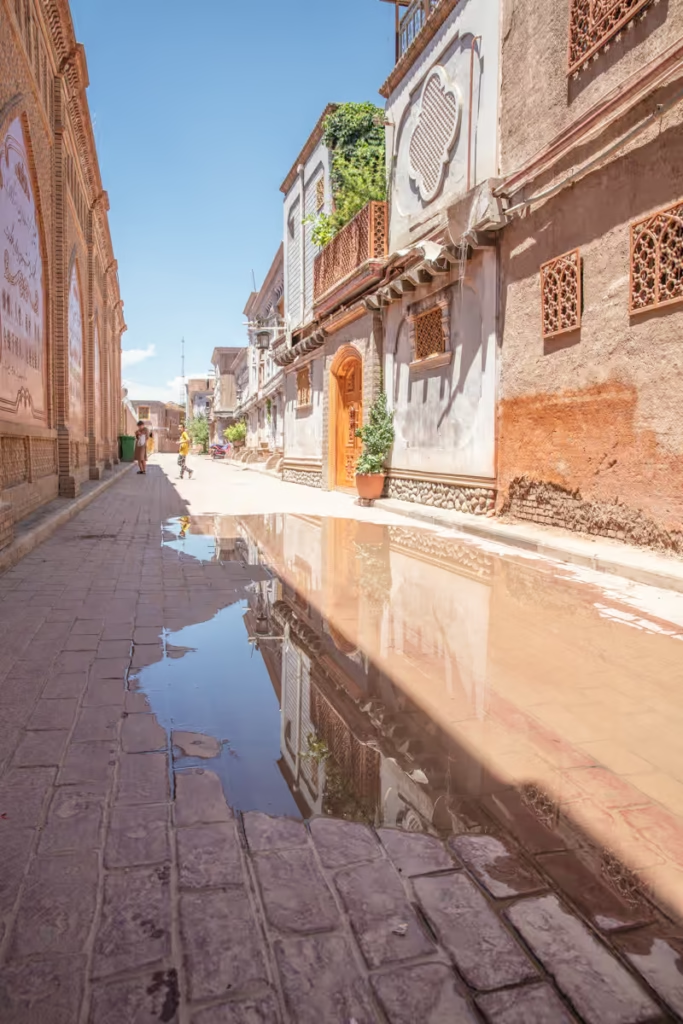
A great budget option is Tiancheng International Youth Hostel Kashgar (Booking.com). My favorite is the beautiful homestay Kashgar Ancient City Scenic Area (Booking.com).
Sost, Pakistan: There are a few places around, you can also try Pamir Serai Guesthouse.
Beyond in Gilgit-Baltistan, Pakistan: There are a number of guesthouses, homestays, inns, and hotels scattered throughout Gilgit-Baltistan, check out where to stay here.
Need inspiration? Check out 12 photos from Gilgit-Baltistan
Visas for the Pakistan-China Border Crossing
You need to be eligible to enter both Pakistan and China to cross Khunjerab Pass. A visa for one country does not give you permission to enter the other.
China
Check with Chinese authorities the entry scheme for your passport before traveling.
If you want to learn how to apply for a Chinese visa as a US citizen, read my post on the topic here. In order to apply, you will need your passport, a filled-out application, a passport photo, the fee, and either an LOI (letter of invitation) or a detailed itinerary & airline tickets.
Pakistan
Pakistan’s visa requirements depend on nationality. Pakistan currently processes tourist visa applications through its online visa system, and some nationalities have access to visa-on-arrival arrangements. Check the current rules for your passport before traveling rather than assuming that eligibility for air arrival also guarantees eligibility at Khunjerab Pass.
Need More Information on Crossing Khunjerab Pass?
Ask in the questions below!