One Day in Turpan Travel Guide
Updated September 2026, One Day in Turpan Travel Guide was originally written in August 2018
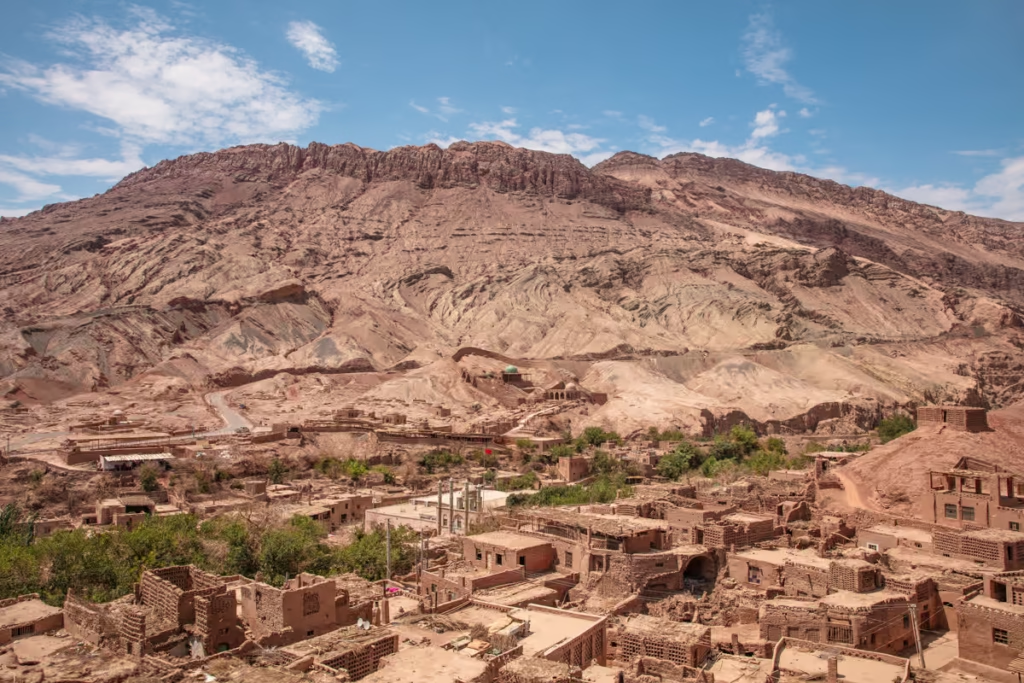
Turpan is one of the most unusual stops in Xinjiang. This desert oasis sits in the Turpan Depression, one of the lowest places on Earth, surrounded by the Flaming Mountains and the ruins of Silk Road cities. It is also famous for its grapes, Uyghur culture, ancient irrigation canals, and seriously brutal summer heat.
Can you see Turpan in one day? Absolutely. With a private taxi or driver, you can visit the city’s major historical sights and several attractions outside town in a single day.
This Turpan travel guide covers the best things to do in Turpan in one day, how to get around, where to stay, how much a day in Turpan costs, and how to get to Turpan from Urumqi, Hami, and Kashgar.
Turpan is one of those places where the geography is half the attraction. The city sits in a desert basin roughly 150 km southeast of Ürümqi, while Aydingkol Lake reaches about 154.5 m below sea level. The region’s extreme heat, ancient Silk Road ruins, vineyards, and karez irrigation system have made Turpan one of Xinjiang’s most distinctive destinations.
I also found traveling through Xinjiang challenging when I visited, particularly because of the extensive security checks and restrictions I encountered throughout the region. Conditions and travel procedures can change, so check current requirements before your trip.
My biggest tip: Don’t try to see every attraction listed below in one day. Pick a route and prioritize. Turpan’s sights are spread across a surprisingly large area.
Need Travel Insurance and Evacuation Services?
Start shopping for travel insurance plans over at IATI Insurance. Readers of the Adventures of Nicole get a 5% discount off your plan.
The Adventures of Nicole partners with Global Rescue to offer the world’s leading medical evacuation and security advisory services. To travel with peace of mind, explore their evacuation coverage.
Is One Day in Turpan Enough?
Yes, one day in Turpan is enough to see the major highlights, particularly if you hire a driver or taxi for the day.
For a first visit, I would prioritize:
- Jiaohe Ancient City
- Emin Minaret
- Flaming Mountains
- Bezeklik Thousand Buddha Caves
- Tuyoq Village
If you have extra time, add the Gaochang Ancient City ruins or the Karez irrigation system.
Trying to squeeze Jiaohe, Gaochang, Bezeklik, Tuyoq, Emin Minaret, Kumtag Desert, and every other attraction into one day will turn your sightseeing itinerary into a race against the clock. Trust me, Turpan is not the place to speedrun.
One Day in Turpan Itinerary
If you only have one day in Turpan, this is the route I recommend.
Morning: Jiaohe Ancient City
Start early at Jiaohe Ancient City, one of the most impressive Silk Road ruins around Turpan. The ancient city sits on a naturally defended plateau between two river valleys, and its earthen ruins are remarkably extensive.
Give yourself around 2 hours to walk through the ruins. There is very little shade, so an early start is especially important in summer.
Late Morning: Emin Minaret
Return toward Turpan and visit the Emin Minaret, also known as Sugong Ta. At 44 m tall, it is the tallest surviving ancient minaret in China and one of the region’s most recognizable Islamic monuments. The tower was built in the 1770s in honor of Emin Khoja.
Lunch: Turpan
Stop in Turpan for lunch and try some local Uyghur food. Look for polo, laghman, naan, kebabs, samsa, and fresh grapes or melons when they’re in season.
Afternoon: Flaming Mountains + Bezeklik Caves

Head east from Turpan toward the Flaming Mountains. The mountains are especially striking in the harsh midday light, when their red and orange ridges really do look like they are on fire.
Continue to the Bezeklik Thousand Buddha Caves, a series of Buddhist grottoes cut into the cliffs of the Flaming Mountains. The caves preserve important Silk Road Buddhist art, although many of the original murals were removed from the site during early archaeological expeditions.
Late Afternoon: Tuyoq Village

Finish the day in Tuyoq Village, a traditional Uyghur settlement tucked into a green valley in the Flaming Mountains.
Tuyoq is a particularly nice contrast to Turpan’s surrounding desert. Walk beneath the grapevines, explore the village lanes, and stop for tea, fruit, or a meal before heading back to Turpan.
Alternative: Gaochang Ancient City
If ancient ruins are more your thing than village wandering, substitute Gaochang Ancient City for Tuyoq.
Gaochang was one of the major oasis cities of the ancient Silk Road and later became an important center of the Uyghur Kingdom. The ruins are considerably more spread out than Jiaohe, so allow at least 2 hours.
10 Best Things to Do in Turpan
Emin Minaret
The 44 m-tall Emin Minaret, or Sugong Ta, is the tallest surviving ancient minaret in China. Built in 1778, its brick exterior is decorated with geometric patterns associated with local Uyghur architecture.
Allow: 45-60 minutes
Admission: Around ¥45
Jiaohe Ancient City
Jiaohe Ancient City is one of the highlights of any Turpan itinerary. The ruins occupy a naturally fortified plateau between two river valleys and contain streets, homes, temples, government buildings, and other structures carved from packed earth.
The site was an important Silk Road settlement for centuries and is one of the best places around Turpan to understand the scale of the ancient oasis cities that once flourished here.
Allow: 2 hours
Best time: Early morning
Bezeklik Thousand Buddha Caves
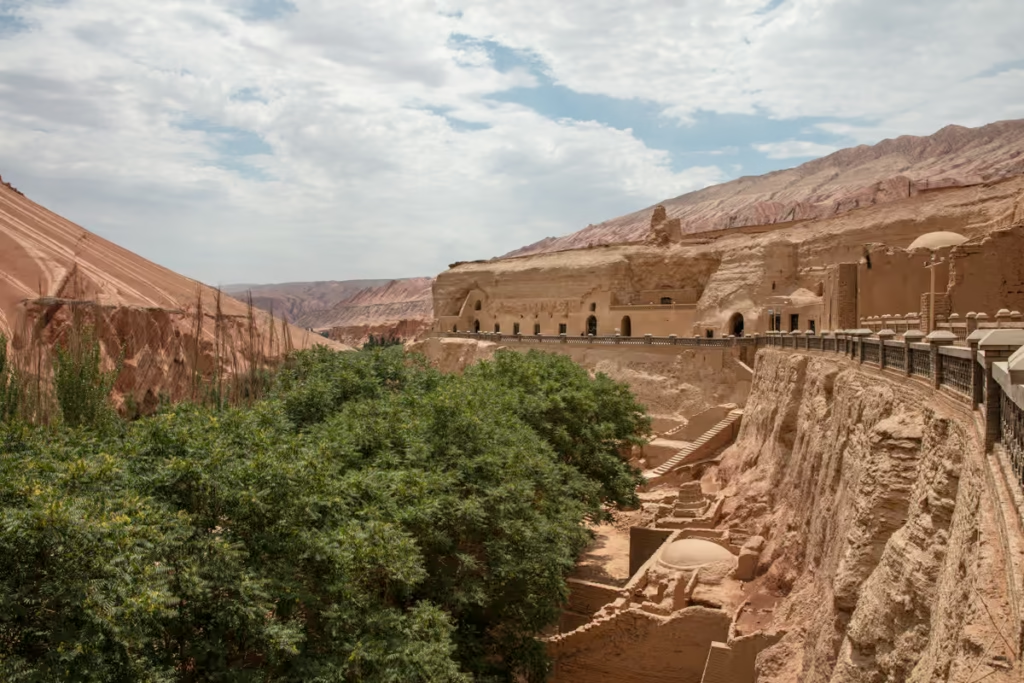
The Bezeklik Thousand Buddha Caves are carved into the cliffs of the Flaming Mountains and contain Buddhist grottoes dating from roughly the 5th to 14th centuries. The site provides a fascinating look at the religious and cultural exchange that took place along the Silk Road.
Allow: 1 hour
Going to Kashgar too? Read the Kashgar Travel Guide to start planning
Gaochang Ancient City
Gaochang was a major Silk Road oasis city and an important political and religious center in the Turpan Basin.
Today, the enormous mud-brick ruins spread across the desert, with the remains of temples, streets, homes, and other structures still visible.
Allow: 2 hours
Best for: History and archaeology
Tuyoq Village
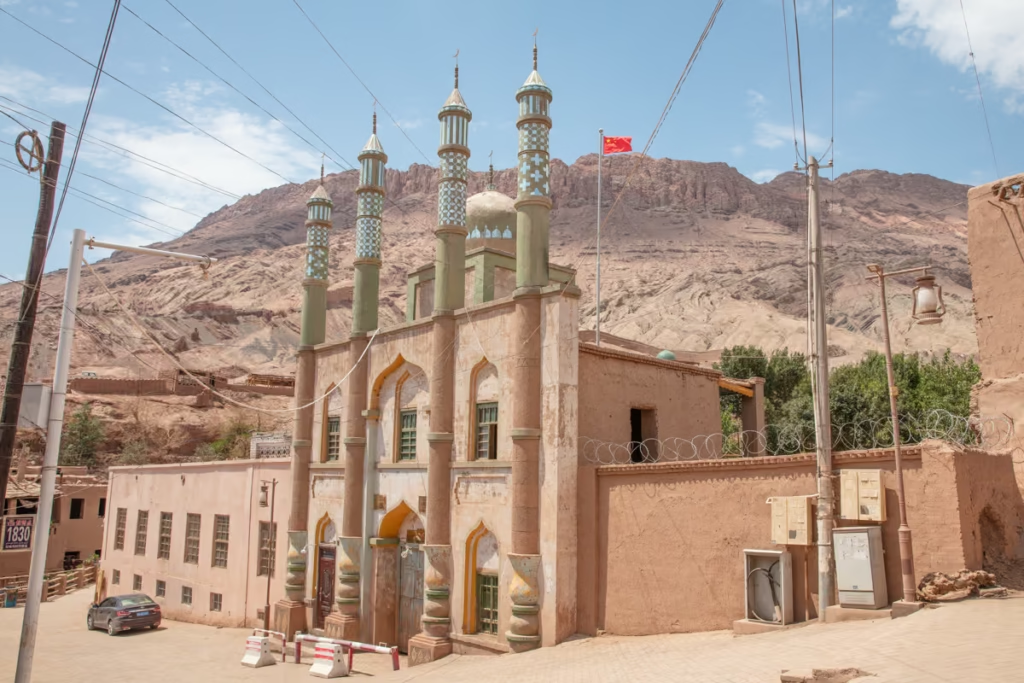
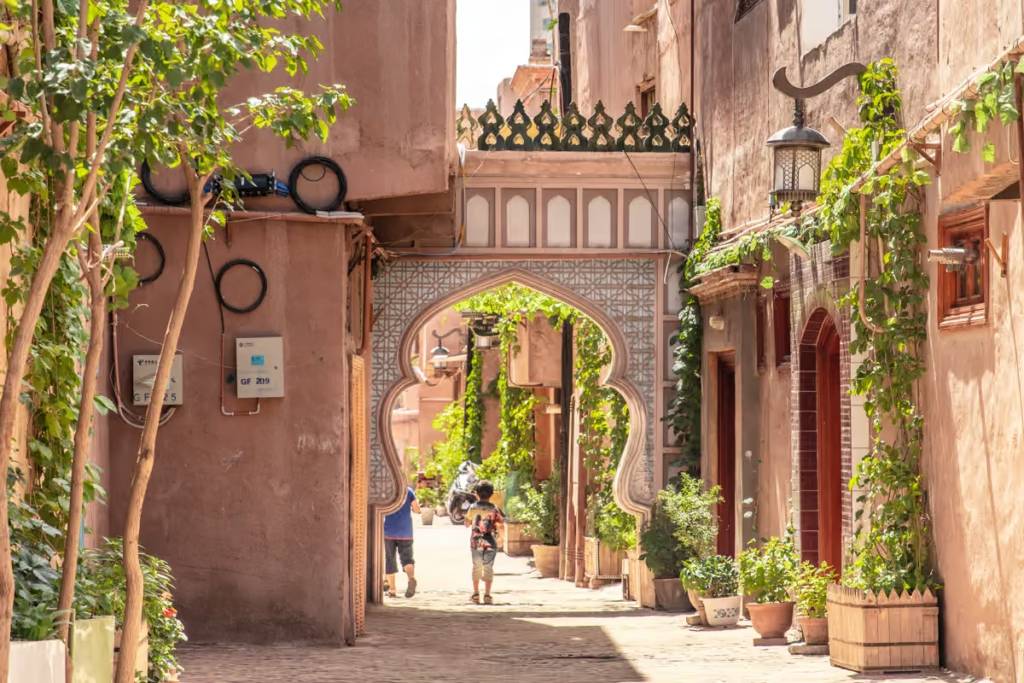
Tuyoq is a traditional Uyghur village surrounded by lush green vineyards and cliffs in the Flaming Mountains. For centuries it has been a Muslim Pilgrimage site and the town’s Hojamu Mazar is said to hold the first Uyghur to convert to Islam.
It’s worth visiting for the contrast between the dry desert landscape and the surprisingly lush oasis. Turpan is famous for its grapes, and this is a good place to see how agriculture survives in such an arid environment.
Karez Irrigation System
The Karez irrigation system is one of the most important things to understand about Turpan.
These underground channels transport water from the surrounding mountains into the oasis, allowing agriculture and settlement to thrive in one of China’s driest regions.
I’d actually add this attraction to your existing article. It’s highly relevant to the Turpan story and gives readers something beyond the usual ruins-and-desert itinerary. Turpan’s oasis has historically depended on this underground water system.
Kumtag Shamo National Park
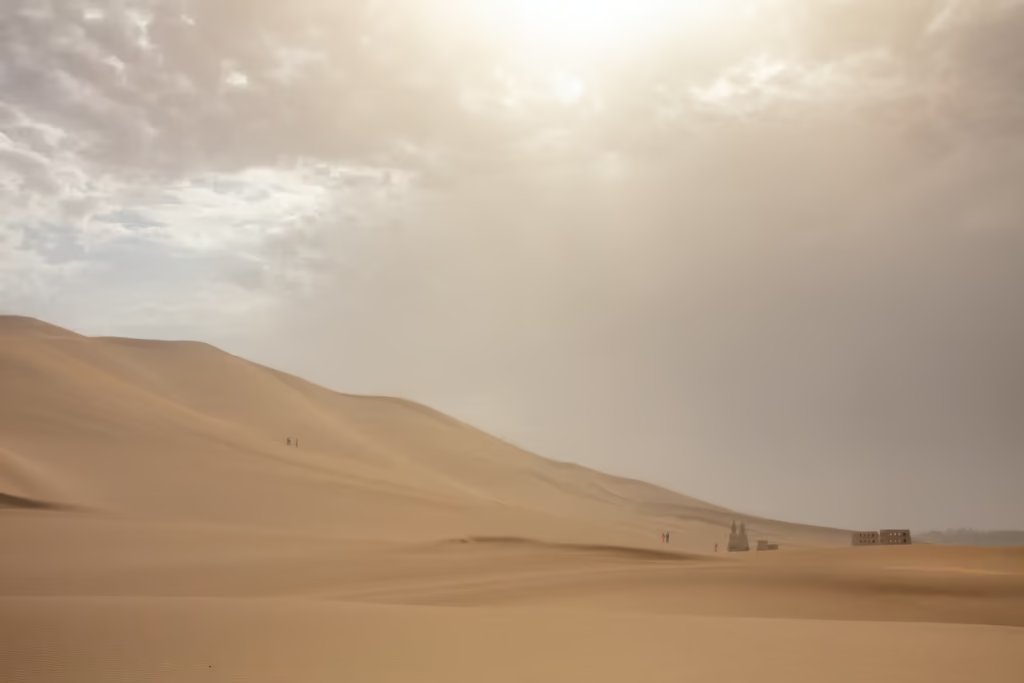
A section of the Taklamakan Desert that is easily accessed from the town of Shanshan about 90km east of Turpan. Since it is a National Park in China, it was the most “Disneyified” stop we had on our one day self tour around Turpan.
Trollies take you to and from the sand dunes from the park entrance. There are newly built but made to look old buildings out in the sand dunes. I don’t recall the entrance fee and trolly cost but I want to say it was a grand total of about ¥100.
The Flaming Mountains
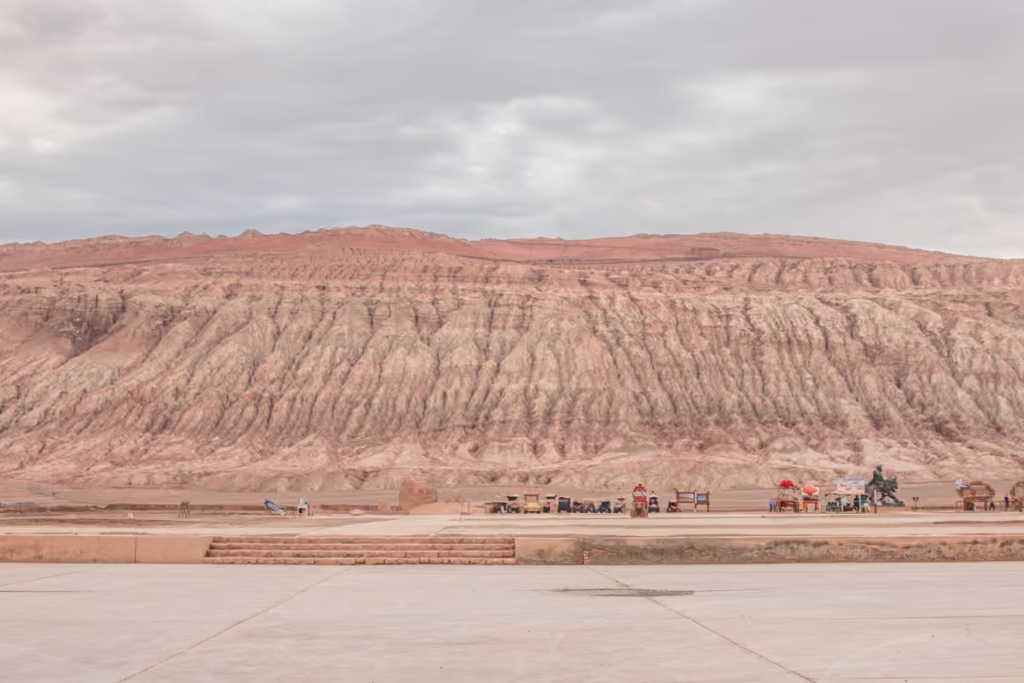
The Flaming Mountains are probably Turpan’s most recognizable natural landmark. Their bare red ridges stretch across the Turpan Basin and become particularly intense under the summer sun.
There are several places to see the mountains, and you don’t necessarily need to pay for the main tourist viewpoint to get a good look at them.
Tip: Don’t underestimate the heat. The Flaming Mountains are exactly as exposed as they look
Everything you need to know to apply for your Chinese visa
Astana Ancient Tombs
The Astana Tombs are an ancient cemetery associated with the people who lived around Gaochang. Excavations have revealed manuscripts, textiles, paintings, mummies, and other artifacts.
They’re worth considering if you’re especially interested in Silk Road archaeology, but I would rank them below Jiaohe, Gaochang, Bezeklik, and Emin Minaret for a first visit.
Eat Uyghur Food
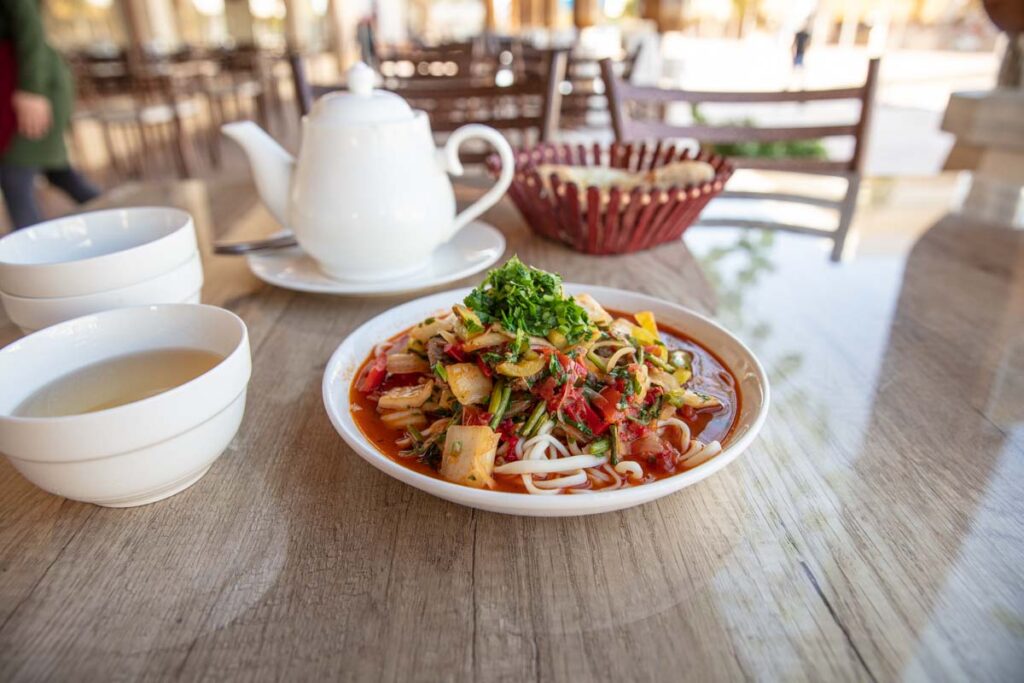
Don’t turn your Turpan itinerary into a nonstop archaeological expedition.
Make time for laghman noodles, polo, naan, lamb kebabs, samsa, dapanji, grapes, melons, and raisins.
Turpan is one of Xinjiang’s major grape-growing areas, and the oasis’s agricultural landscape is a huge part of what makes the city so unusual.
How Much Does a Day in Turpan Cost?
Your Turpan day-trip budget will depend mainly on transportation and how many attractions you visit.
The Turpan government currently lists individual admission prices including ¥45 for Emin Minaret, ¥40 for the Flaming Mountains, ¥40 for Bezeklik, ¥30 for Tuyoq, ¥30 for Kumtag Desert, and ¥40 for the Astana Tombs. Ticket combinations and sightseeing transportation can change, so check the current price when planning your route.
If you hire a private taxi or driver, expect that to be your biggest expense. Splitting a vehicle between two to four travelers can make a one-day Turpan itinerary considerably more affordable.
What if I Want to Book a Tour?
Sometimes you don’t want to deal with the hassle, I get it. For those looking to book a tour, check out this 1 day Tour of Turpan from Urumqi , as well as a 7 Day Tour of Xinjiang, which includes Turpan.
Best Time to Visit Turpan
The best time to visit Turpan is spring or autumn, particularly April-May and September-October.
Summer is extremely hot, and July and August can be punishing when you’re walking around exposed archaeological sites with almost no shade. Turpan is famous for its extreme summer temperatures, with temperatures above 40°C common during the hottest periods.
If you visit in summer, start early, carry significantly more water than you think you’ll need, and avoid spending the hottest part of the afternoon wandering around exposed ruins.
Autumn is particularly appealing because the grape harvest season adds another dimension to the oasis landscape.
Where to Stay in Turpan
I would recommend getting in contact with hotels well in advance to see if they will accept foreign guests at this time (not all will post-Covid)
Budget
Dap Youth Hostel
| Hotels.com |
Splurge
Jinjiang Metropolo Hotel Turpan
| Agoda.com |
Heading over to Tajikistan? Learn about Qolma Pass, the border crossing you have to hitchhike across
Taking on the Karakoram Highway? Read the Khunjerab Border Crossing Report & the Gilgit-Baltistan Travel Guide
How to Get to Turpan
From Urumqi to Turpan
The easiest way to get to Turpan from Urumqi is by high-speed train.
Trains between Urumqi and Turpan take roughly 50 minutes to 1 hour, with second-class tickets currently around ¥49-52. Trains use Turpan North Railway Station, which is outside the city center.
Once you arrive at Turpan North, you’ll need a taxi or other transportation into Turpan and onward to the attractions.
My recommendation: Take the train rather than the bus if you’re coming from Urumqi. It’s dramatically faster and makes a one-day Turpan trip much more practical.
From Hami to Turpan
High-speed trains connect Hami and Turpan, making rail the easiest option for most travelers. Check the current timetable and fares when booking because schedules change.
From Kashgar to Turpan
Traveling between Kashgar and Turpan by train takes considerably longer. If you’re building a Xinjiang itinerary, I’d generally recommend treating Turpan as part of a larger rail route rather than trying to squeeze it into a quick side trip from Kashgar.
Turpan Travel Tips
Carry plenty of water
This is not optional in summer. Turpan is extremely hot and dry, and many of the major archaeological sites have almost no shade.
Start early
Jiaohe, Gaochang, and the Flaming Mountains are much more enjoyable before the worst heat of the day.
Carry your passport
Keep your passport with you while traveling around Xinjiang. You may encounter identity checks and security procedures.
Download offline translation
English is not widely spoken outside tourist-facing businesses. Download Chinese offline in your translation app before arriving.
Try Uyghur food
Don’t leave Turpan without eating local food. The cuisine is one of the best parts of traveling through Xinjiang.
Don’t underestimate travel times
The attractions around Turpan look close together on a map, but the sightseeing area is spread across the basin. This is why having a driver for a one-day itinerary makes such a difference.
Protect your camera from sand
If you’re heading to Kumtag Desert, protect your camera and other electronics from blowing sand. When I visited, the weather went from perfectly calm to a sandstorm with almost no warning.
Is Turpan Worth Visiting?
Yes, especially if you’re interested in Silk Road history, desert landscapes, archaeology, and Uyghur culture.
Turpan isn’t a city I’d recommend simply because it has a long list of attractions. What makes it special is the combination of things that shouldn’t logically coexist: a green agricultural oasis surrounded by desert, ancient cities built along the Silk Road, underground irrigation channels, Buddhist cave art, Islamic architecture, vineyards, and some of China’s most extreme summer temperatures.
One day is enough to get a taste of it, but I’d happily spend longer here if your Xinjiang itinerary allows.
Have Any Questions About This One Day in Turpan Travel Guide?
Ask in the comments section below.