
The Adventures of Nicole was invited to Syria to partner with Syrian Guides to promote tourism and sites around the country. All views are her own.
Syria Travel Guide: What to Know Before You Go
Updated September 2026, Syria Travel Guide: What to Know Before You Go was originally published in October 2024
Traveling to Syria had been on my list for years. I actually had loose plans to visit in 2011, intending to take a ferry from Europe that has long since disappeared from the map. Then the Arab Spring began, the situation deteriorated, and those plans went firmly onto the back burner.
I eventually made it to Syria in 2024, and have since returned to continue exploring the country.
Traveling through Syria was unlike most of the difficult countries I’ve visited. There are the obvious reminders of war and destruction, but there is also an enormous amount of history, lively cities, ancient archaeological sites, Mediterranean coastline, Christian villages, souks and, perhaps most importantly, ordinary life continuing around all of it.
This Syria travel guide covers what I experienced traveling through the country, including the best places to visit, safety, independent travel, visas and border crossings, and what to expect on the ground.
Important: The security and entry situation in Syria can change quickly. Check current government travel advisories and entry requirements before making plans.
Need Travel Insurance and Evacuation Services?
Start shopping for travel insurance plans over at IATI Insurance. Readers of the Adventures of Nicole get a 5% discount off your plan.
The Adventures of Nicole partners with Global Rescue to offer the world’s leading medical evacuation and security advisory services. To travel with peace of mind, explore their evacuation coverage.
- Syria Travel at a Glance
- So What Was it like to Travel to Syria?
- Should You Travel to Syria in 2026?
- Is It Ethical to Travel to Syria?
- Is it Safe to Travel to Syria Right Now?
- Independent Travel in Syria
- Syria Visa Requirements
- Entering Syria by Land
- How to Get Around Syria
- Best Places to Visit in Syria
- How Long Do You Need in Syria?
- Is it Worth it to Travel to Syria?
Syria Travel at a Glance
| Capital | Damascus |
| Currency | Syrian pound |
| Language | Arabic |
| Best known for | Ancient cities, Roman ruins, castles, souks and religious sites |
| Major destinations | Damascus, Aleppo, Palmyra, Bosra, Hama, Homs, Maaloula |
| Main entry points | Damascus International Airport, Aleppo International Airport, Lebanon and Jordan land borders |
| Independent travel | Possible in some areas, but access and requirements vary |
| Safety | Highly changeable. Check current government advisories before traveling |
So What Was it like to Travel to Syria?
Syria was quite different from the slew of difficult nations I’ve visited over the years. Unlike countries that I’ve frequented over the past decade such as Yemen and Afghanistan, Syria was a tourism powerhouse until rather recently, with a developed tourism infrastructure.
Strife due to the proxy war, terror organizations, and economic woes, among other hindrances, Syria has suffered immensely, despite housing a few of the most impressive archeological sites dating back to the times of the Greek, Roman Empire, and Byzantine eras as well as some of the world’s longest continuously inhabited cities.
With reminders of both Syria’s once-bustling tourism sector and of the scars of war, it’s a juxtaposition of two sides to a nation pushing forward.
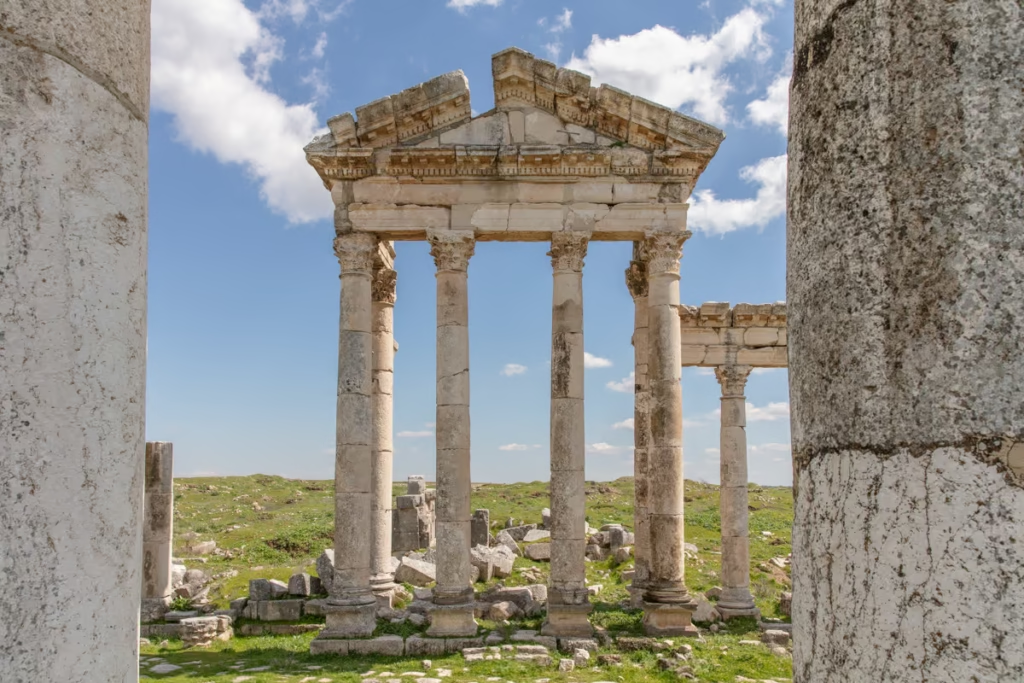
Wandering the Roman ruins of Palmyra as it sat largely destroyed, and those of Bosra and Apamea featuring stones pockmarked with bullet holes or pieces missing altogether after looting across borders. All of which sites we had entirely to ourselves.
Courtyard cafes full of patrons sipping chai and even alcohol in a cloud of shisha hidden behind high walls and closed Damascene doors. Gorgeous stretches of Mediterranean coastline with nary a soul wandering its sands.
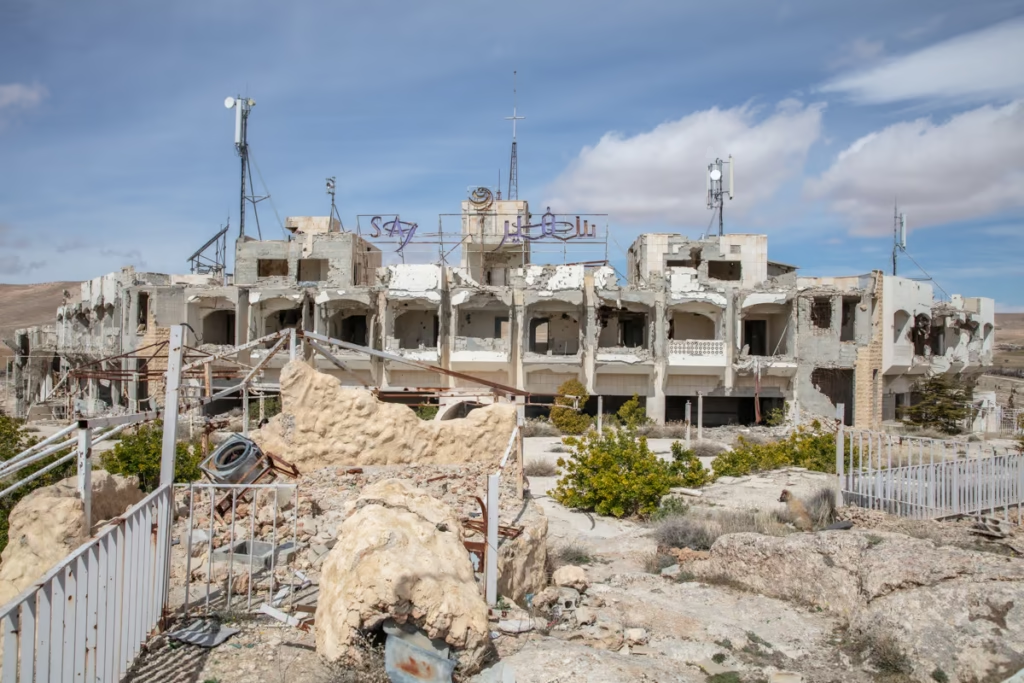
Hotels both grand and boutique sat desolate or in some cases burned and nearly razed- spiraled into a state of disuse. Trundling past towns between major cities sat largely abandoned and blown to pieces. This is the mixture of what I witnessed as I traveled across Syria.
Should You Travel to Syria in 2026?
Syria is complicated. That’s probably the most honest answer I can give.
There is an extraordinary amount to see here, from ancient cities and Roman ruins to medieval castles, Christian villages, bustling souks and the Mediterranean coast. But Syria is also a country still dealing with the consequences of a devastating conflict, and traveling here carries risks that don’t exist in most conventional tourist destinations.
I think the decision ultimately comes down to whether you understand those realities and are comfortable accepting the risks involved.
What I wouldn’t recommend is coming to Syria simply for the bragging rights of having visited a “war zone.” That’s not particularly interesting, and more importantly, it reduces a complicated country and its people to a travel trophy.
If you do visit, come prepared to listen, learn and accept that Syria is much more complicated than the version of it you may have seen in headlines.
Is It Ethical to Travel to Syria?
Traveling to a country affected by war raises legitimate ethical questions, and I don’t think there’s a universal answer.
I’ve seen some self-righteous travel influencers and bloggers whining about the ethics of visiting war zones. Making the point that no one should visit, period. Of course, ethically visiting these destinations is a complex topic and you could argue either way if you should or shouldn’t go- and I think these all need to be assessed on a case-by-case basis.
Some money spent by travelers will inevitably reach government-controlled systems through things like visas, taxes and other fees. That’s unavoidable.
At the same time, spending money with local hotels, restaurants, guides, drivers and other businesses can directly support people working in Syria’s tourism economy.
For me, the bigger question is how you travel and how you portray the experience afterward.
If Syria is treated as an edgy backdrop for photos or a story about “surviving” a war zone, you’ve missed a huge part of what makes the country worth visiting.
I’d rather travel through Syria, talk to people, learn about the country and come home with a more complicated understanding of it than the one I arrived with.
Is it Safe to Travel to Syria Right Now?
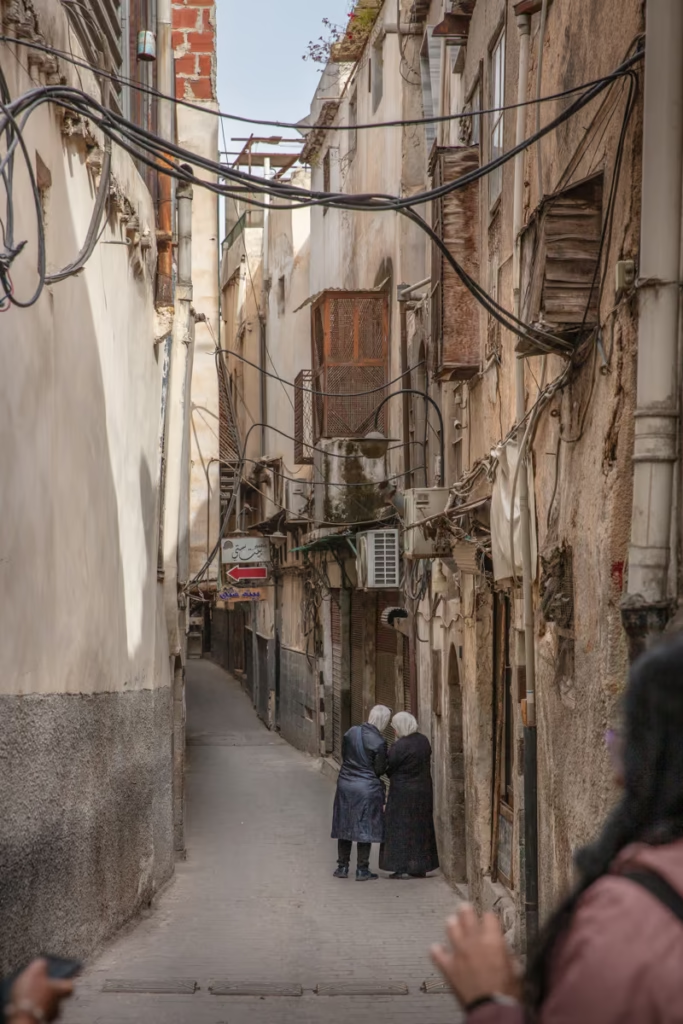
Traveling in Syria is possible, but that does not mean Syria is currently considered a safe destination by foreign governments. That said, I’ve never felt in danger or even slightly uncomfortable in Syria.
My own experience traveling through Syria was calmer and easier than I initially expected. Tourist movement in the areas I visited was closely monitored, and checkpoints were a normal part of traveling between destinations.
That experience, however, shouldn’t be interpreted as a guarantee of safety. Conditions can change quickly, and the security situation varies considerably by region.
If you decide to travel despite the current advisories, I strongly recommend using experienced local guides, monitoring the situation throughout your trip and having contingency plans for changes to your itinerary.
A thing to note about attacks in Syria is that when they do happen, they tend to be targeted, and these targets are rarely places a tourist would be visiting anyway.
Although a guide is not required any longer to visit Syria, I still would recommend hiring one as they will enrich the experience with their extensive knowledge of the history and politics of the country as well as sharing their stories of life in Syria before, during, and now as the country rebuilds from the war. In my experience with Syrian Guides, Rami, Mary, and Bashar all take security quite seriously and make assessments throughout the trip based on information they might receive.
Independent Travel in Syria
Foreign visitors are now able to travel independently in certain parts of Syria. They can visit the cities, but not all the tourist sites like Palmyra or Bosra.
Alternatively, they can come with a travel company, which will organize everything including transfers, transportation, accommodation, etc. (I 100% recommend Syrian Guides for this).
Syria Visa Requirements
Syria’s visa and entry requirements have changed considerably in recent years, and they can vary depending on your nationality and how you enter the country. Check the current requirements for your nationality before traveling, as rules and fees can change with little notice.
For most travelers, a passport and Syrian visa are required. Some nationalities may be eligible for a visa on arrival at Damascus International Airport or when entering Syria by land from Lebanon or Jordan, while others may need to arrange a visa in advance through a Syrian embassy or consulate.
Visa on Arrival in Syria
Some foreign nationals can obtain a tourist visa on arrival, including certain travelers entering through Damascus International Airport or the land borders with Lebanon and Jordan.
Eligibility, fees and permitted length of stay depend on your nationality. Don’t rely on an old visa fee or an outdated blog post you found online. Syria’s entry regulations have changed several times, and information that was accurate a few months ago may no longer apply.
If flying directly to Syria, you will likely need to pay a visa-free on arrival. See this post for approximate costs of visa fees at Damascus Airport.
If you are traveling to Syria, I recommend confirming the current requirements with a reputable local operator shortly before your trip.
Do You Need a Visa in Advance for Syria?
Whether you need to arrange your Syrian visa before traveling depends on your nationality and entry point.
If you are eligible for a visa on arrival, you may be able to obtain one at Damascus International Airport or at certain land borders. Other travelers will need to arrange their visa in advance through a Syrian diplomatic mission.
My advice: Don’t book a non-refundable trip based solely on a visa policy you found online. Confirm your eligibility immediately before traveling.
Visa-Free Entry to Syria
As of January 2026, following the regime change Syria has undergone, many nationalities may enter Syria with a visa on arrival from the borders of Lebanon and Jordan based on reciprocity. Fees seem to range between $25-300 depending on nationality.
Be aware that this current visa scheme could end at any moment.
Entering Syria by Land
Syria shares land borders with Lebanon, Jordan, Iraq and Turkey, although the practical options for foreign travelers vary considerably by border and current security conditions.
For most travelers coming overland, Lebanon and Jordan are the most relevant entry points.
Lebanon-Syria Border
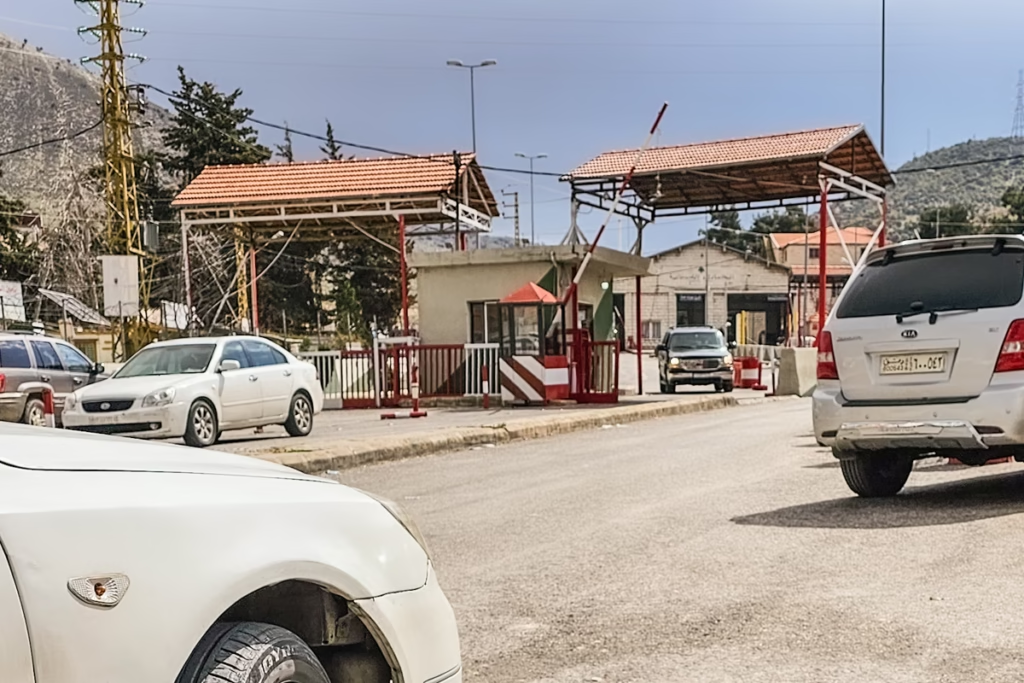
I entered Syria overland from Lebanon, and the Masnaa-Jdeidet Yabous border crossing is one of the main routes between the two countries.
I’ve written a separate guide covering the crossing in much more detail:
Lebanon-Syria Border Crossing at Masnaa
Jordan-Syria Border
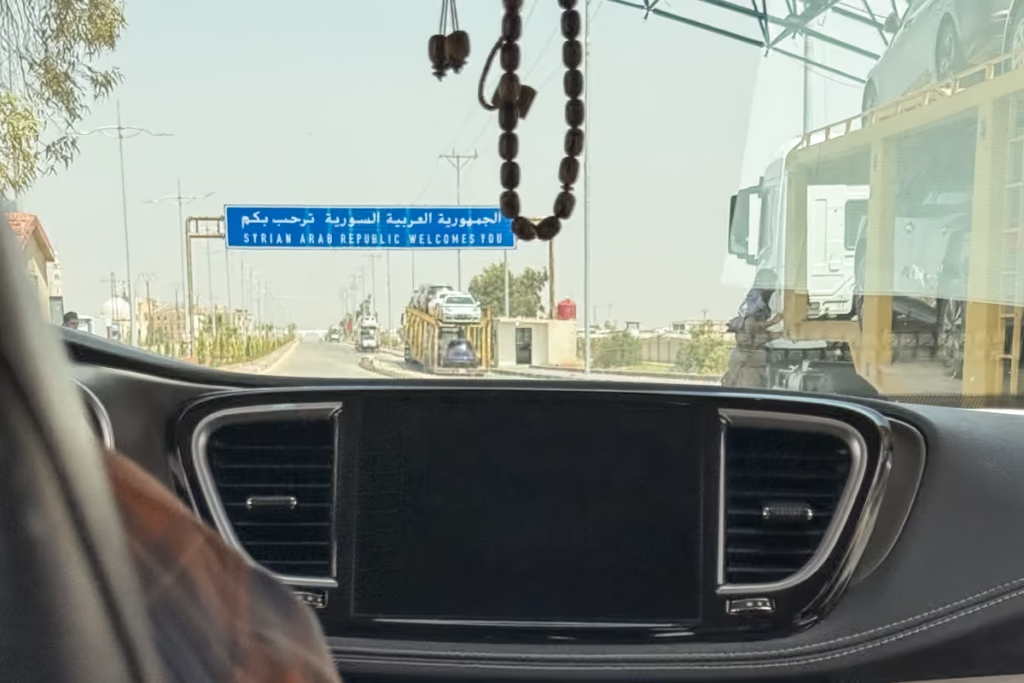
The Jaber-Nasib border crossing connects Jordan with Syria and is another possible overland entry point for foreign travelers.
However, border procedures, opening hours, visa requirements and eligibility can change, so check the latest information before setting out.
How to Get Around Syria
Most travel around Syria is done by road. Intercity buses, minibuses and shared taxis connect the major cities, while hiring a private car and driver is the most convenient option if you’re visiting archaeological sites or traveling on a tight itinerary.
Traveling Between Cities
Intercity buses are the most affordable way to travel between major cities such as Damascus, Homs, Hama and Aleppo. Coaches are generally comfortable and air-conditioned, although schedules and booking options can be less straightforward than what you may be used to elsewhere.
Shared taxis and minibuses, locally known as servees, are another option. They’re inexpensive and useful for shorter journeys, but they can be crowded and typically operate on a more informal basis.
For travelers visiting multiple archaeological sites, a private car with a driver is usually the easiest option. It gives you considerably more flexibility and makes it much easier to reach places that aren’t directly served by public transportation.
Taxis in Syrian Cities
Taxis are widely available in Damascus, Aleppo and other larger cities. Within the cities, they’re an easy way to get around, although you should agree on the fare or confirm that the meter will be used before setting off.
The historic centers of cities such as Damascus and Aleppo are best explored on foot, particularly if you’re staying near the Old City.
Driving in Syria
Although rental cars are available in some cities, I wouldn’t recommend self-driving as the default option for most foreign visitors. Traffic can be hectic, road conditions vary, and navigating checkpoints and changing access restrictions adds another layer of complexity.
A local driver also has the advantage of knowing the roads and current conditions, which is particularly useful when traveling between cities or visiting sites outside the main tourist circuit.
Checkpoints and Road Travel
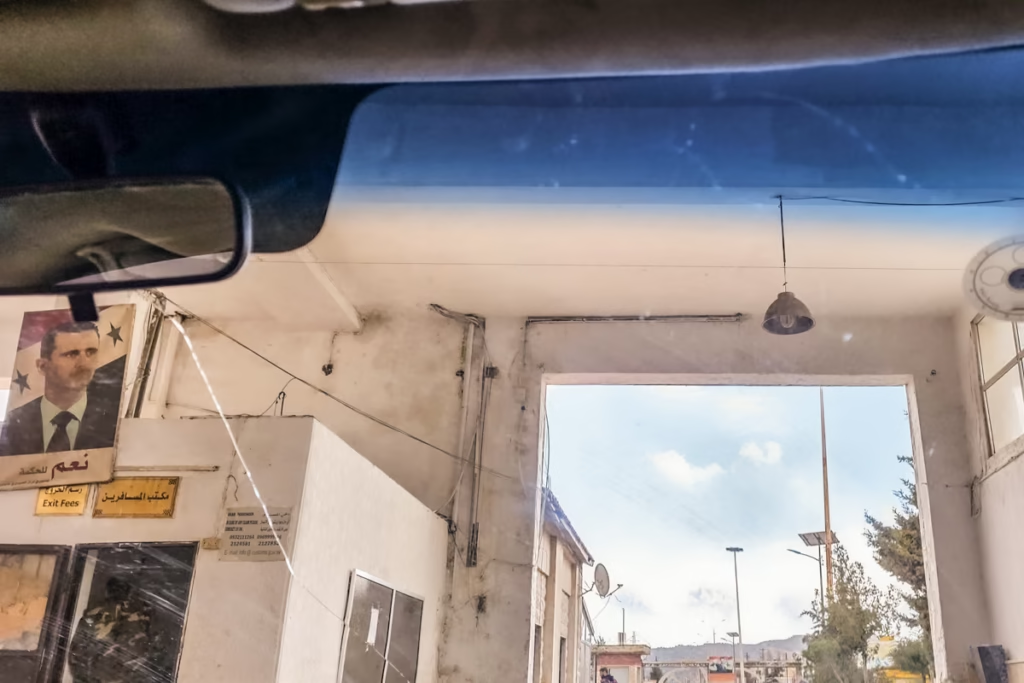
Expect security checkpoints when traveling between Syrian cities. Keep your passport and travel documents readily accessible, and don’t photograph checkpoints or other sensitive infrastructure.
Travel times can also be unpredictable, so I wouldn’t build a Syria itinerary around overly tight connections. Leave yourself some wiggle room, particularly when traveling longer distances.
Best Places to Visit in Syria
Although I absolutely love Damascus, Syria is much more than only Damascus. One of the things that surprised me most while traveling through the country was just how dramatically the landscape and experience changed between destinations, from the maze of Damascus’s Old City to Roman ruins in the desert and the Mediterranean coast.
These are some of the main destinations to consider when planning travel to Syria.
Damascus
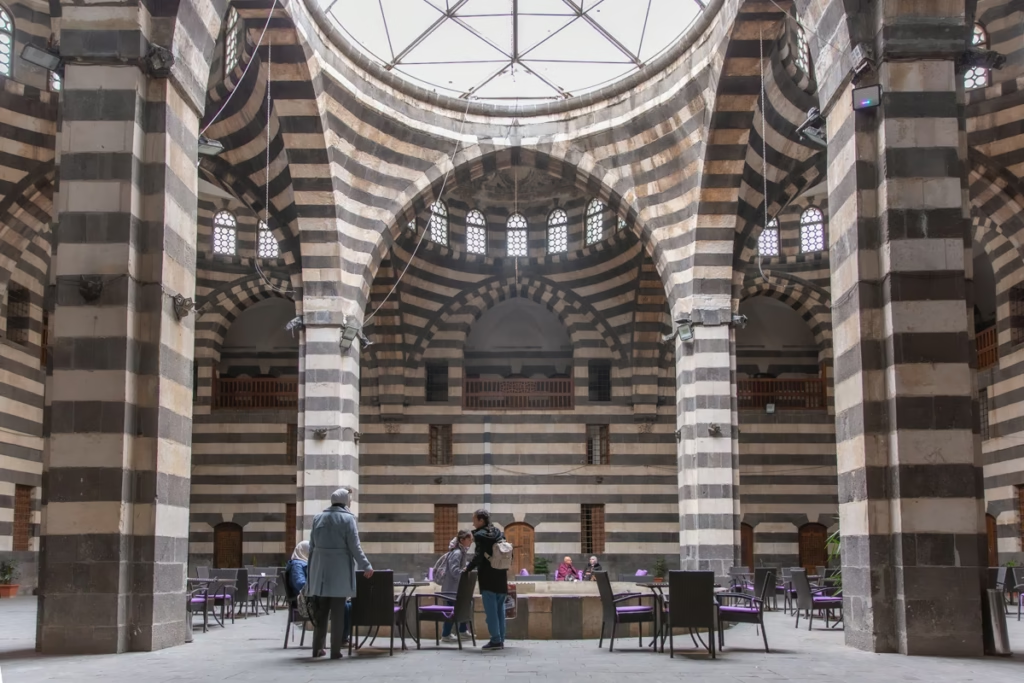
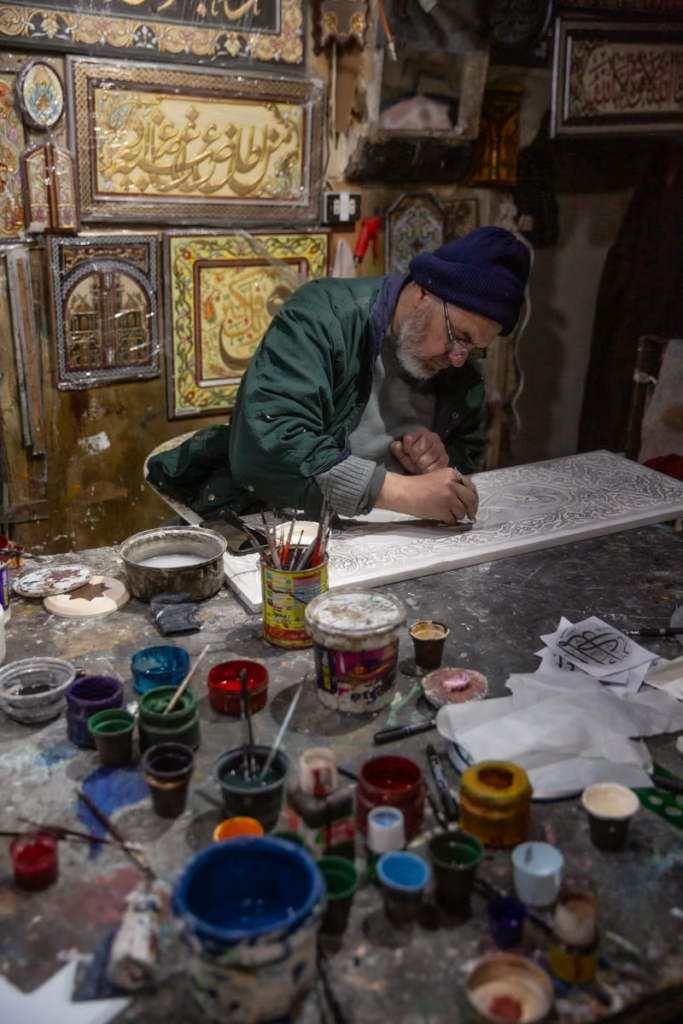
Damascus is the natural starting point for most trips to Syria and one of the country’s most important historical cities. The Old City is the highlight, with the Umayyad Mosque, Souq al-Hamidiyah, historic courtyard houses, churches and atmospheric lanes packed into a relatively compact area.
I’d give Damascus at least two days if your itinerary allows.
Don’t miss: Old City, Umayyad Mosque, Souq al-Hamidiyah, Azm Palace, Bab Touma and the National Museum of Damascus.
Maaloula
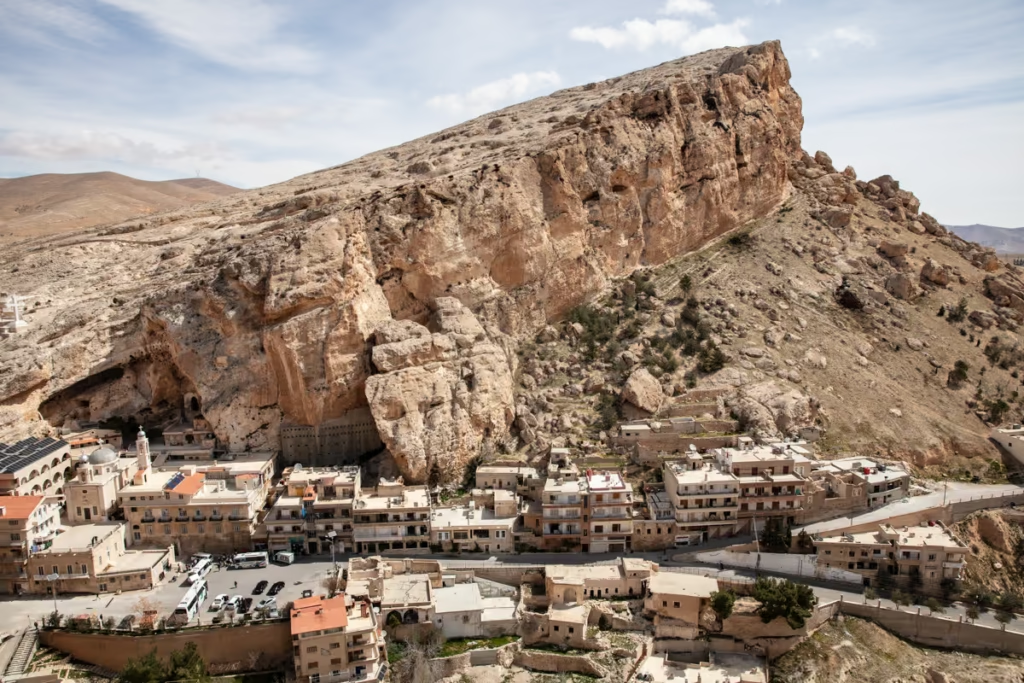
Maaloula is one of Syria’s most distinctive destinations. The mountain village is famous for its Christian heritage and its association with Western Neo-Aramaic, a modern descendant of the language traditionally associated with Jesus.
The dramatic mountain setting makes Maaloula a worthwhile excursion from Damascus.
Mar Musa Monastery
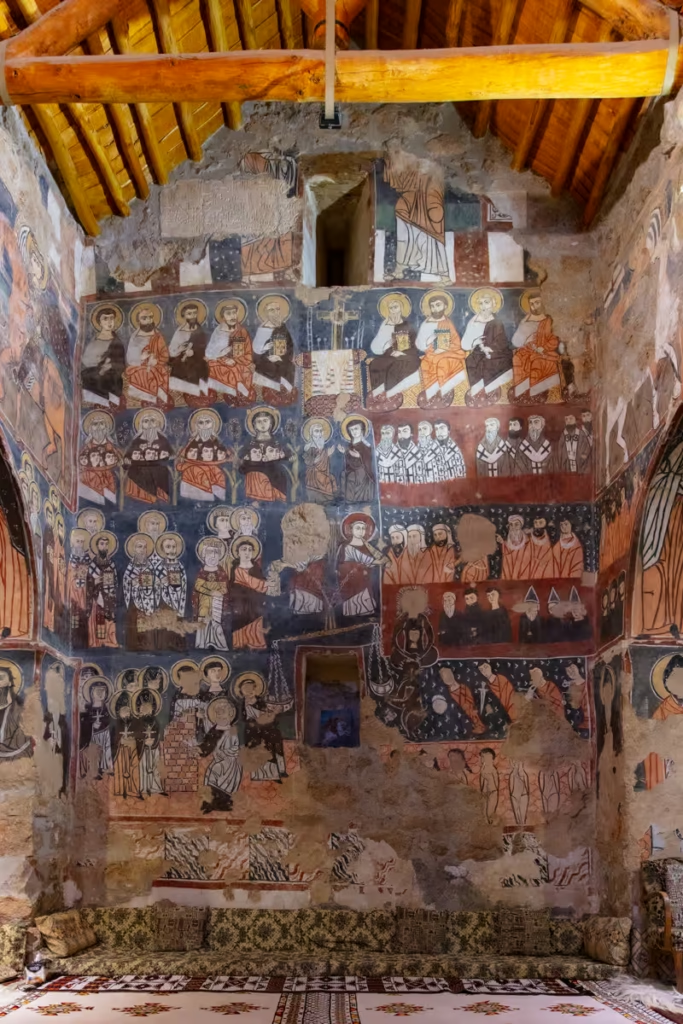
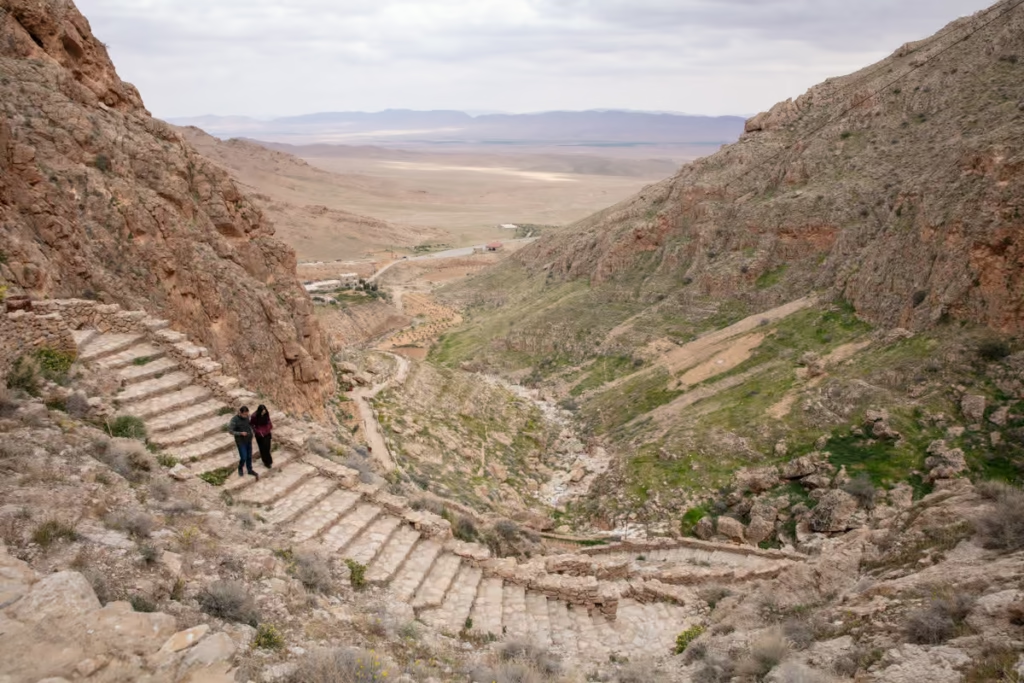
Hidden in the mountains north of Damascus, Mar Musa Monastery is one of Syria’s most atmospheric religious sites.
Officially known as the Monastery of Saint Moses the Abyssinian, the monastery is believed to date back to the sixth century. Reaching it requires a hike through the surrounding mountains, where the isolated setting feels a world away from Damascus.
Inside, the monastery is particularly notable for its medieval frescoes, which depict biblical scenes and saints.
Mar Musa is not simply an archaeological attraction. It remains an active Christian monastic community and has become known for its emphasis on interfaith dialogue and peaceful coexistence.
Aleppo
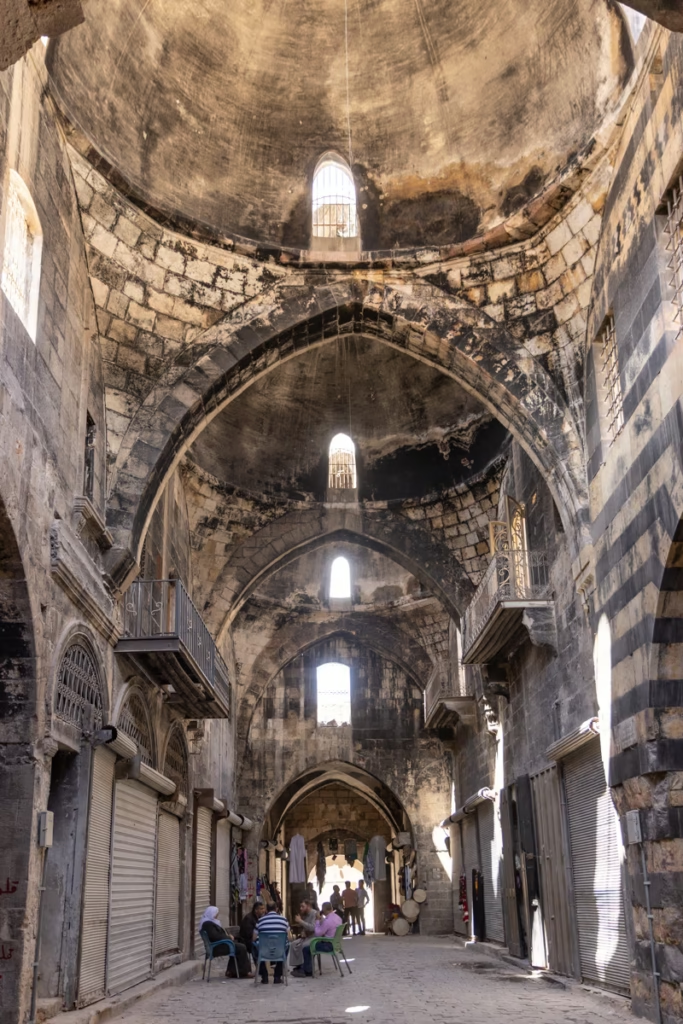
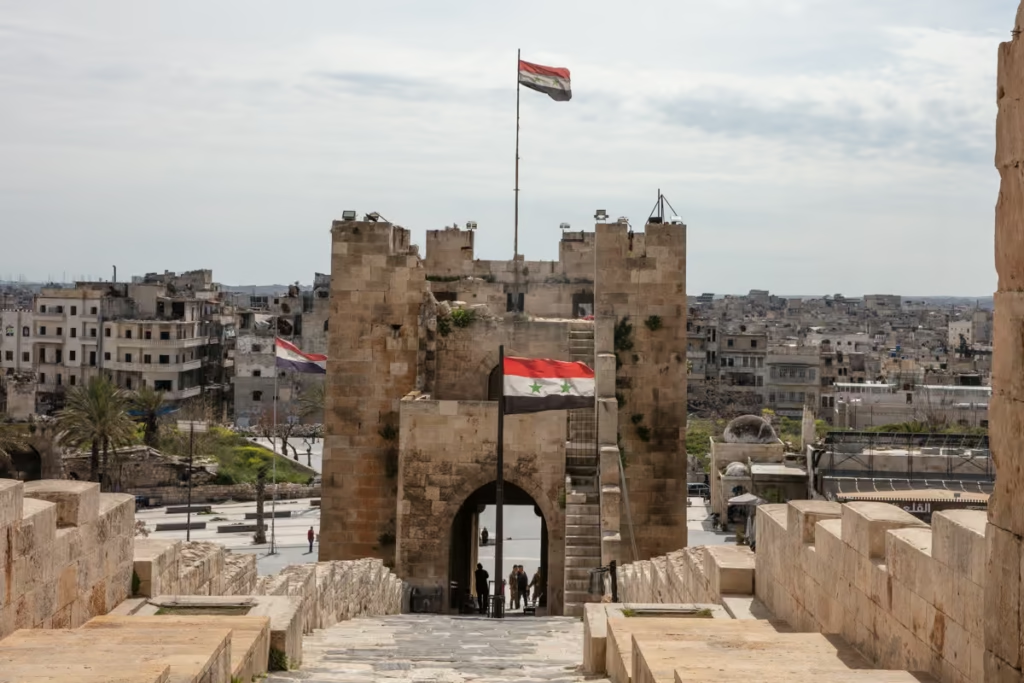
Aleppo is one of Syria’s great historic cities and another essential stop. Its enormous citadel dominates the city, while the surrounding Old City contains centuries of mosques, churches, khans, hammams and souks.
The city suffered catastrophic damage during the war, but walking around Aleppo today also gives you a glimpse of its return to life.
UNESCO lists the Ancient City of Aleppo as a World Heritage Site.
Don’t miss: Aleppo Citadel, Al-Madina Souq, Al-Jdeideh and the historic mosques and khans.
Palmyra
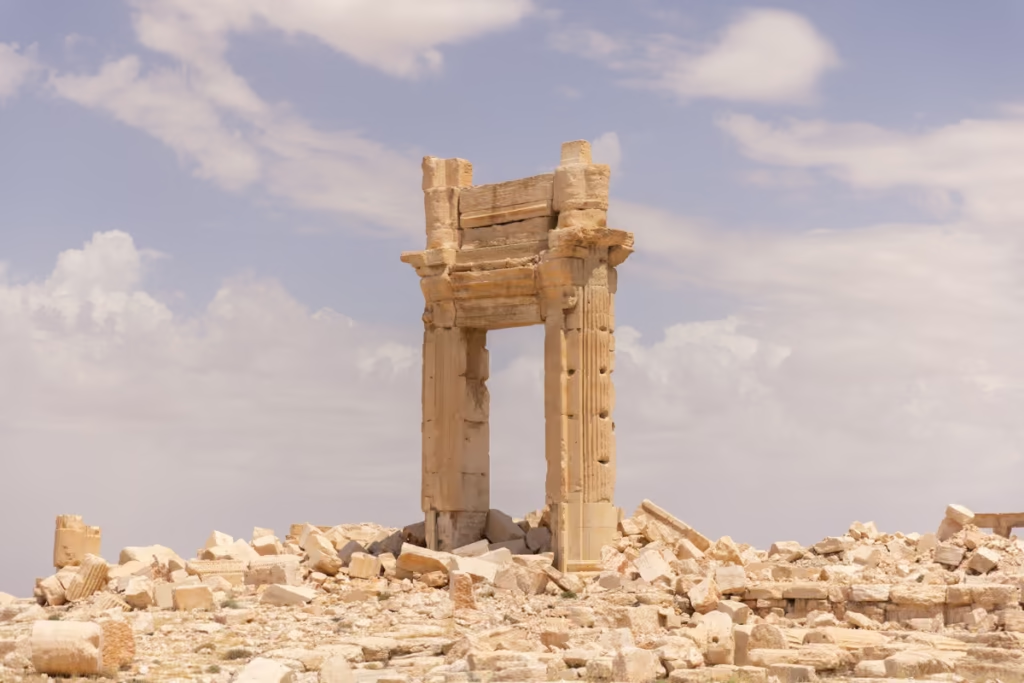
Palmyra is arguably Syria’s most famous archaeological site. The ancient city grew into an important trading center between the Mediterranean and the East, leaving behind an extraordinary collection of temples, columns, tombs and other ruins.
Palmyra suffered extensive destruction during the war, which makes visiting the site an especially complicated experience. It’s simultaneously an extraordinary archaeological landscape and a stark reminder of what Syria has lost.
Access can be subject to current security conditions, so don’t treat a Palmyra visit as guaranteed.
Bosra
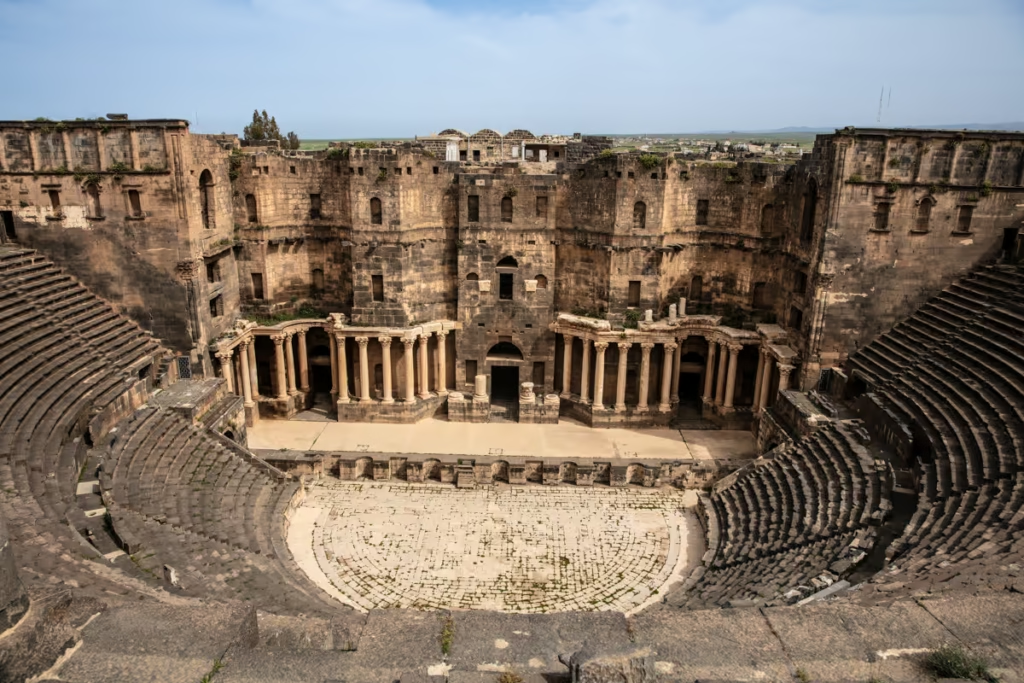
Bosra is best known for its enormous Roman theatre, built from the distinctive black basalt used throughout the historic city.
The theatre itself is remarkable, but I actually found wandering through Bosra to be just as interesting as seeing its headline attraction. Roman, Byzantine and Islamic history all overlap here.
Bosra is another UNESCO World Heritage Site.
Hama
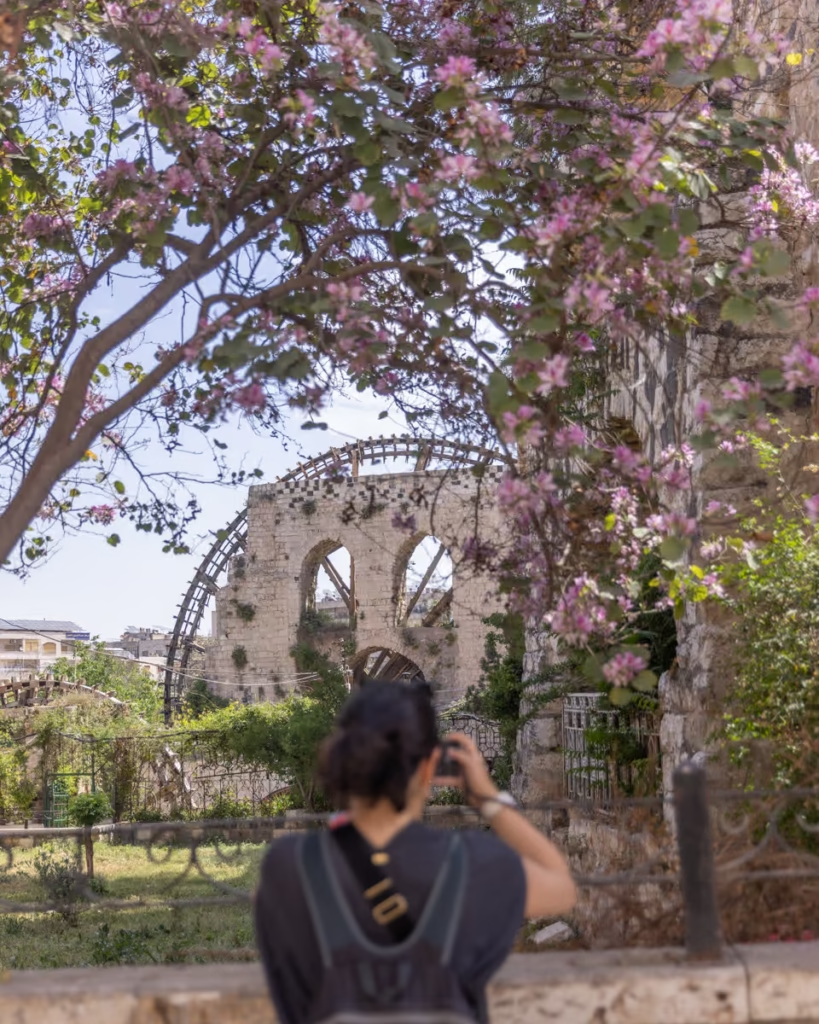
Hama is famous for its enormous wooden norias, or water wheels, along the Orontes River.
The city makes a particularly useful stop between Damascus and northern Syria and can also serve as a base for exploring nearby archaeological sites such as Apamea.
Don’t miss: Norias (water wheels), Orontes River Promenade.
Homs
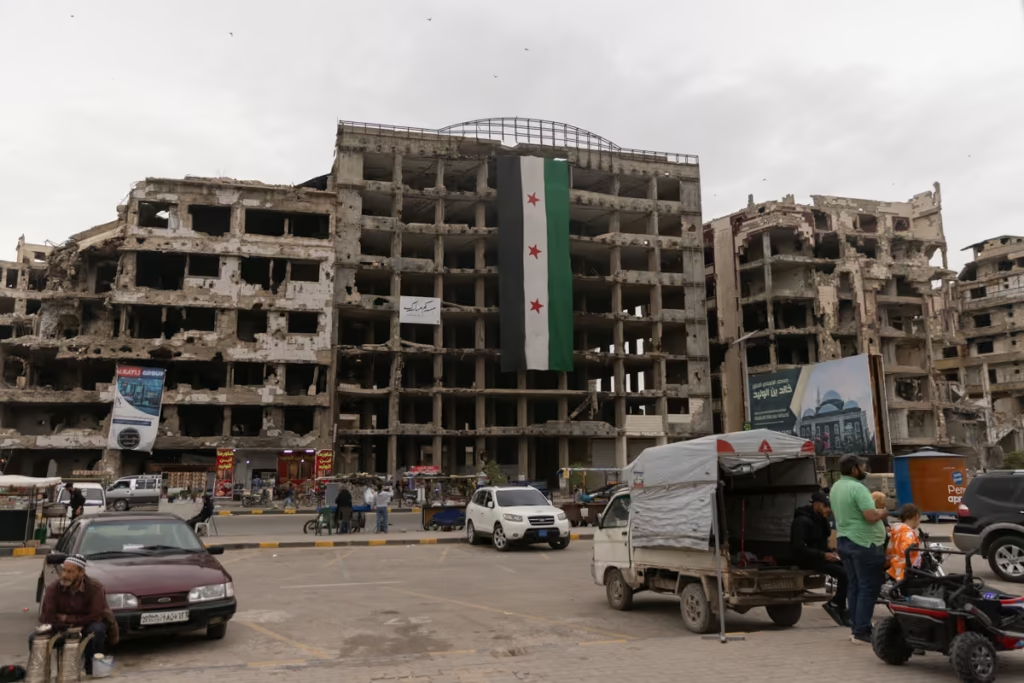
Homs is primarily useful as a stopping point when traveling through central Syria, particularly for visiting Krak des Chevaliers.
The city itself has also experienced enormous destruction during the conflict, making it another place where the realities of modern Syria sit directly alongside its long history.
Krak des Chevaliers
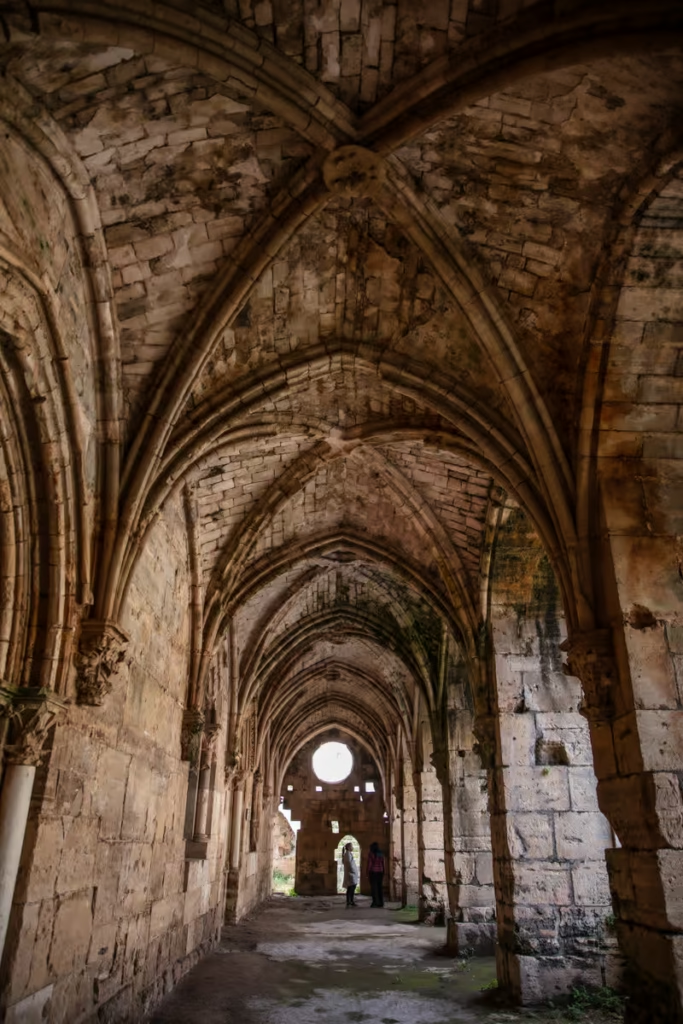
Krak des Chevaliers is one of the world’s best-known Crusader castles and one of Syria’s major historical attractions.
The fortress sits on a hill overlooking the surrounding countryside and is generally visited as part of a journey between Homs and the coast.
UNESCO includes Krak des Chevaliers on its World Heritage List along with Qal’at Salah El-Din.
Apamea
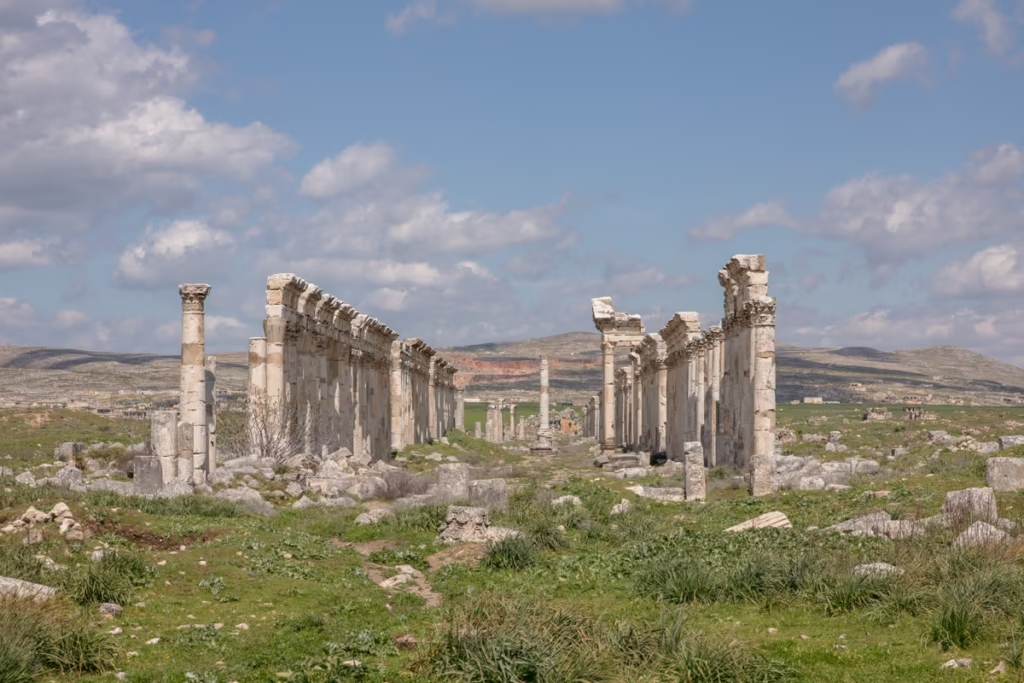
Apamea is another major archaeological site worth adding to a Syria itinerary. Its enormous Roman colonnaded street stretches across an open landscape, and unlike some of Syria’s better-known attractions, it can feel remarkably empty.
It’s an especially good pairing with Hama.
Idlib and the Dead Cities
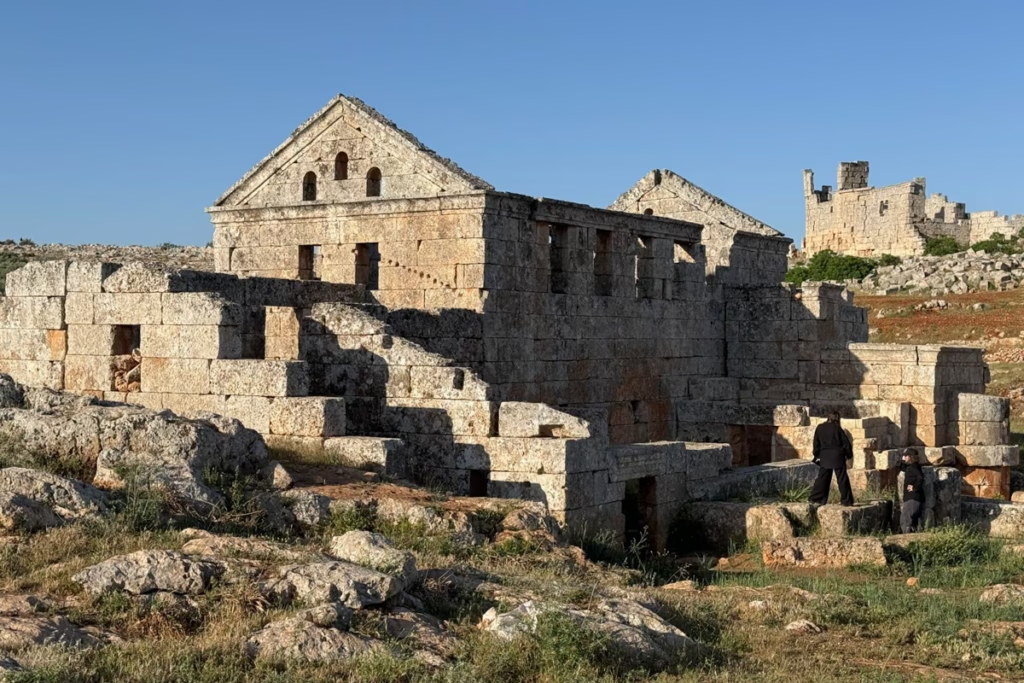
Idlib is the center of a region in northwestern Syria that has played an important role throughout the country’s modern conflict. Historically, however, the wider area is home to some of Syria’s most significant archaeological remains, including the Dead Cities, also known as the Ancient Villages of Northern Syria.
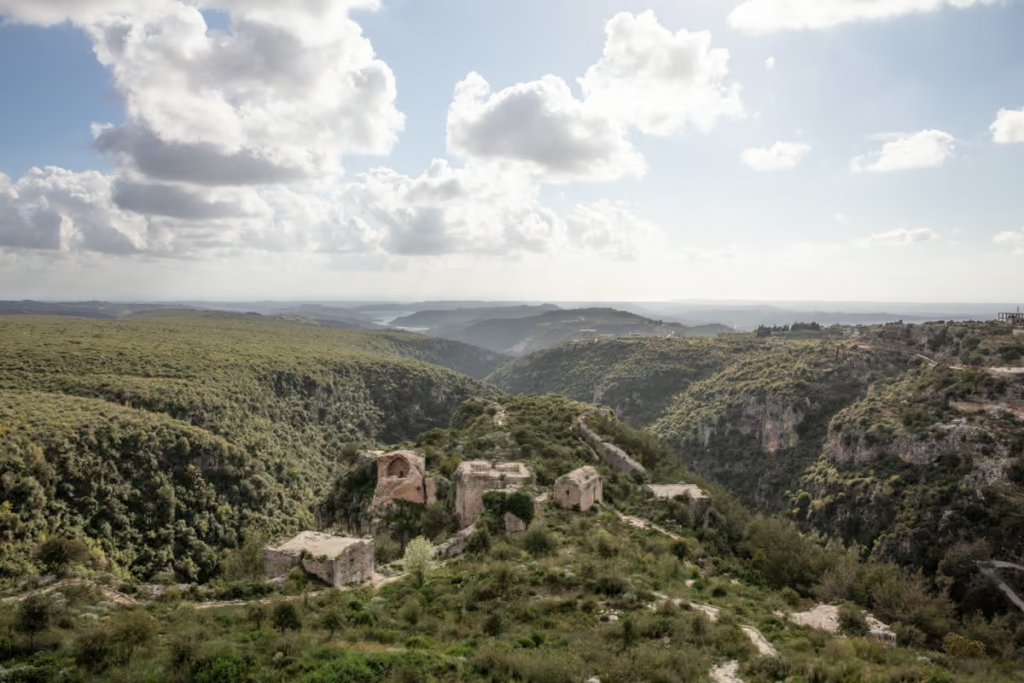
The Dead Cities are a collection of hundreds of abandoned settlements dating primarily from the Roman and Byzantine periods, when the region was an important agricultural and commercial center. Many sites contain remarkably well-preserved stone houses, churches, olive presses, tombs, and other structures. One of the best known is St. Simeon, centered around the remains of the basilica built around the column where the ascetic Saint Simeon Stylites is said to have lived. The Ancient Villages of Northern Syria are a UNESCO World Heritage Site and represent one of Syria’s most unusual archaeological landscapes.
Access to the Idlib region can be complicated, so check current security conditions and local access before planning a visit. For now, I would recommend visiting with a local guide.
The Syrian Coast
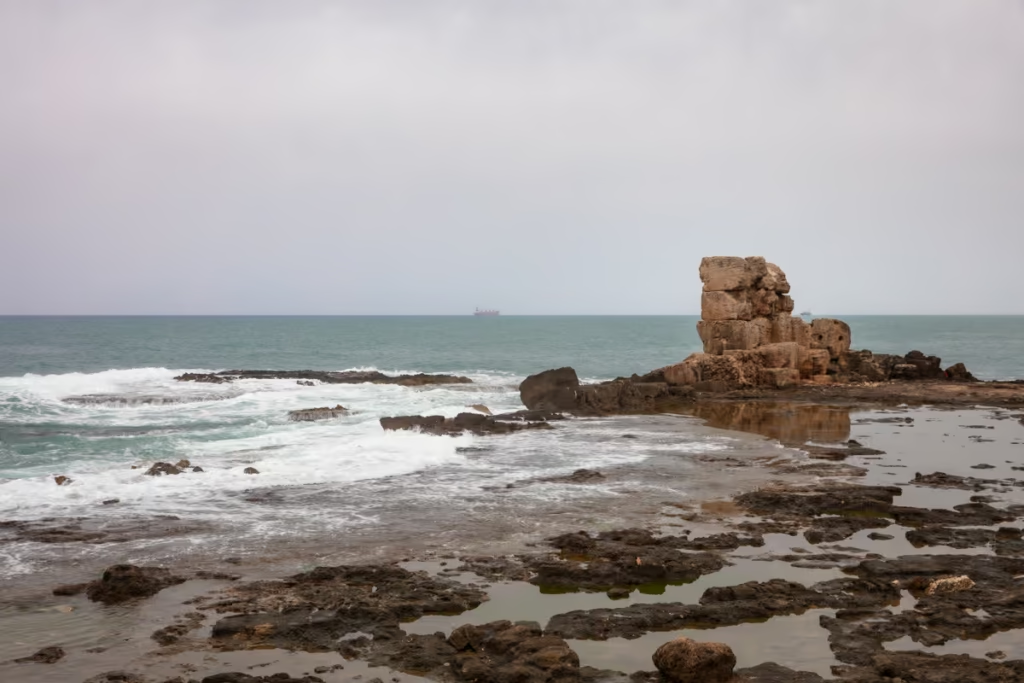
Syria also has a Mediterranean side that gets considerably less attention than Damascus, Aleppo and Palmyra.
Latakia, Tartus and the surrounding coastal region offer a completely different landscape, with beaches, mountains, forests and Mediterranean scenery.
Unfortunately, the Syrian Coast has become a bit unstable with Latakia being one of the places recommended to avoid for the time being.
Note: Conditions on Syria’s coast can change quickly, so check the current security situation before including Tartus in your itinerary.
Tartus
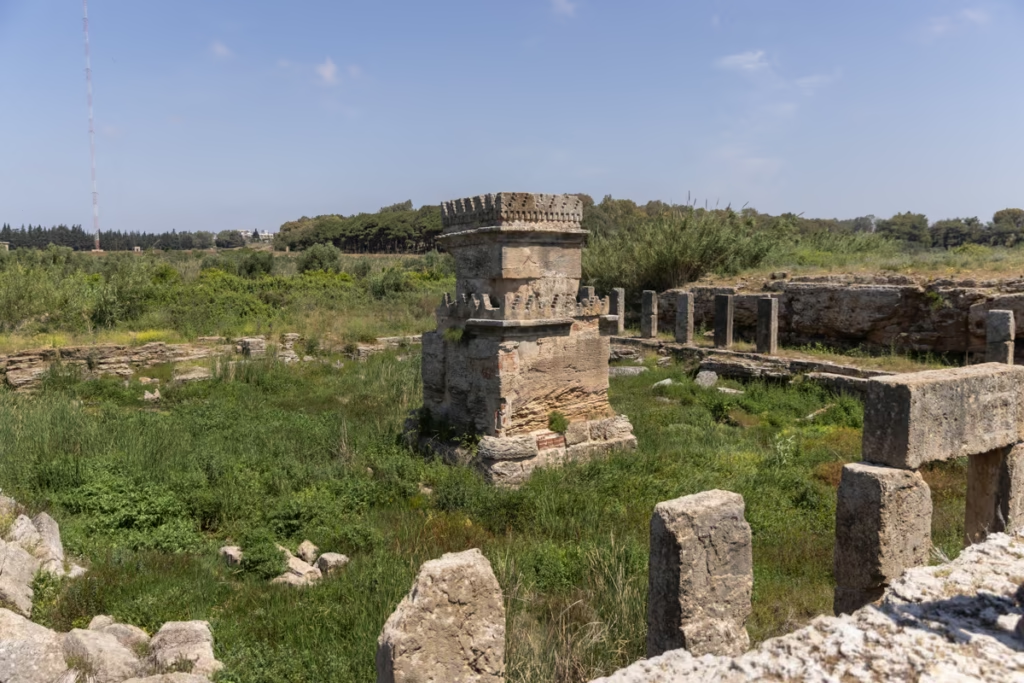
Tartus is a Mediterranean port city on Syria’s western coast and one of the country’s more relaxed destinations. Its historic center contains remnants of medieval fortifications and the impressive Cathedral of Our Lady of Tortosa, while the waterfront looks out across the Mediterranean.
Tartus has a noticeably different feel from inland cities such as Damascus and Aleppo. The coastal climate, seafood restaurants and nearby beaches make it an interesting contrast to Syria’s archaeological and historical sites.
Tartus is also the main jumping-off point for Arwad Island, Syria’s only inhabited island, as well as the ruins of Amrit..
Arwad Island
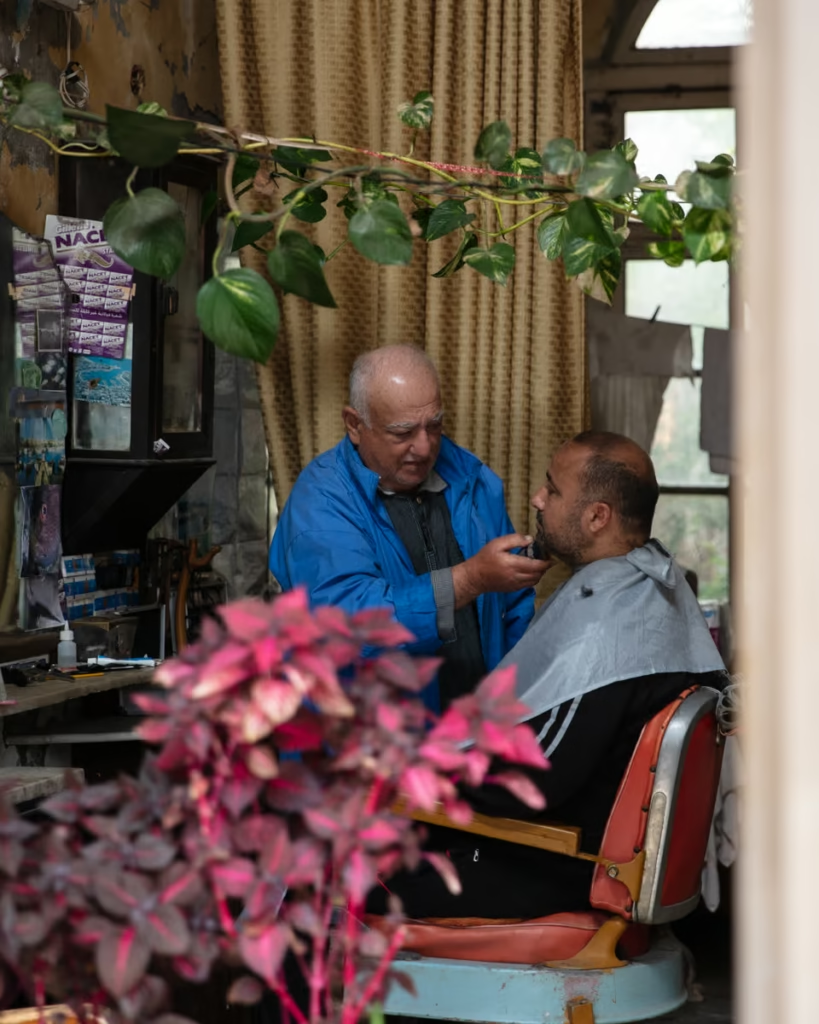
Just off the coast from Tartus, Arwad Island is Syria’s only inhabited island and has a long history stretching back thousands of years.
Known in antiquity as Arados, the island was an important Phoenician settlement and later passed through Roman, Byzantine, Arab, Crusader and Ottoman control. Today, its narrow streets, harbor and stone buildings make it an interesting place to experience a very different side of Syria.
The island is particularly known for its Crusader-era fortress, which dominates the center of the settlement.
Arwad can be reached by boat from Tartus, although transport and access can change depending on local conditions.
Latakia
Latakia is Syria’s largest Mediterranean port and the main city on the country’s northwestern coast. Known in antiquity as Laodicea, the city has ancient Greek and Roman roots, although much of what you’ll see today is modern.
The real appeal of the region is its combination of Mediterranean coastline and nearby mountains. Latakia provides a very different landscape from the inland cities and desert archaeological sites that dominate many Syria itineraries.
Nearby attractions include the ancient site of Ugarit, coastal beaches and the mountains of western Syria.
As with Tartus, the security situation on the Syrian coast should be checked carefully before making plans.
Ugarit
Ugarit, near modern-day Latakia, is one of the most important archaeological sites in Syria for understanding the ancient Near East.
The ancient city flourished during the second millennium BCE as an important port and trading center connecting the Mediterranean with the civilizations of the Near East. Archaeologists uncovered temples, palaces, houses and thousands of clay tablets here, providing an extraordinary glimpse into Bronze Age life.
Ugarit is particularly famous for its cuneiform tablets and alphabetic writing system, which is considered one of the earliest known alphabetic writing systems.
Raqqa
Located on the Euphrates River, Raqqa has a long history that predates the modern conflict by thousands of years. The city became particularly important during the Abbasid period, when it served as the capital of the caliph Harun al-Rashid for part of his reign.
The remains of the medieval city include archaeological sites and sections of its historic walls.
Raqqa was also heavily affected by the Syrian conflict and became internationally notorious after being used as the de facto capital of ISIS. Much of the city suffered extensive destruction during the fighting.
Because of the continuing security concerns in the region, Raqqa should be approached with a local guide.
How Long Do You Need in Syria?
I’d recommend at least 7 days in Syria to see the major highlights without spending the entire trip in transit. If you have 10 days or two weeks, you can add more archaeological sites and spend more time in Damascus and Aleppo.
Keep in mind that itineraries in Syria can change quickly depending on security conditions, border access and which sites are currently accessible.
7-Day Syria Itinerary
Day 1: Damascus
Day 2: Damascus
Day 3: Maaloula & Sednaya
Day 4: Hama & Apamea
Day 5: Aleppo
Day 6: Aleppo & Krak des Chevaliers
Day 7: Return to Damascus
This gives you a good introduction to Syria’s major cities, archaeological sites and Christian heritage without trying to cram the entire country into a week.
10-Day Syria Itinerary
Day 1: Damascus
Day 2: Damascus
Day 3: Maaloula & Sednaya
Day 4: Bosra
Day 5: Palmyra
Day 6: Homs & Krak des Chevaliers
Day 7: Hama & Apamea
Day 8: Aleppo
Day 9: Aleppo
Day 10: Return to Damascus
The extra days allow you to add Bosra and Palmyra, two of Syria’s most significant archaeological destinations.
2 Week Syria Itinerary
With two weeks, you can slow things down and add some of Syria’s less-visited destinations.
Days 1-2: Damascus
Day 3: Maaloula & Sednaya
Day 4: Bosra
Day 5: Palmyra
Day 6: Homs
Day 7: Krak des Chevaliers
Day 8: Hama & Apamea
Days 9-10: Aleppo
Day 11: St. Simeon & the Dead Cities
Day 12: Ugarit
Day 13: Latakia or Tartus
Day 14: Return to Damascus
The two-week itinerary gives you a much better sense of the country’s geographic and cultural diversity, from the ancient cities of the interior to the Mediterranean coast.
Important: The northern and coastal portions of this itinerary should only be considered if current security conditions and local access allow. Syria’s situation can change rapidly, so treat this as a framework rather than a fixed route.
Is it Worth it to Travel to Syria?
Syria is a country where layers of history seem to sit around every corner, from the ancient ruins of Palmyra and Ugarit to the souqs, mosques, monasteries, and medieval castles scattered across the country. Its landscapes are just as varied, stretching from the Mediterranean coast to the deserts of the interior.
Travel here is not straightforward, and conditions can change quickly, so Syria requires considerably more planning and flexibility than most destinations. But for those who are able to visit responsibly and safely, it offers an experience few other places can match. Beyond the famous archaeological sites, it is often the everyday encounters, old cities, and quieter corners that leave the strongest impression.
Have Any Questions About Traveling to Syria?
Ask all of your Syria travel questions in the comments section beklow.
many thanks for this beautiful words of my country ,,, i have the pleasure to welcome you at any time in Syria again & to be your local agent for your all customer ..
all the best to you
Hi Nicki, I’m Abd from Syrents, a local car rental company. I agree that driving in Damascus can feel hectic, especially during rush hour. From our experience, though, conditions have improved a lot since your writing, and traffic can be considerably lighter outside peak hours and in every other city. Self-driving can be a practical option for visitors who are comfortable with local driving conditions and want more flexibility.