
Libya Travel Guide (2026): Everything You Need to Know Before Visiting Libya
Libya Travel Guide: Everything You Need to Know Before Visiting Libya was originally published in 2026
Libya is layered and fractured, rising up in some places and falling apart in others. It’s a country where bullet‑pocked buildings stand beside brand‑new construction. Where you can wander through ancient crumbling mudbrick citadels with no sign of who originally lived there or when they were abandoned. It’s a place where culture runs deep, where people are resilient and unified on some fronts, yet divided across a myriad of lines in others. This is Libya.
Pressed between the Mediterranean and the vast Sahara, Libya carries the weight of civilizations that once shaped the ancient world. Phoenicians came from what is present-day Lebanon and traded along its shores, Greeks carved cities into its verdant hillsides, and Romans built sprawling metropolises that still stand today with a defying permanence. Traveling through Libya, or even imagining it, feels less like travel and more like stepping into a layered timeline.
Along the coast lie Leptis Magna and Sabratha, two of the most spectacular Roman sites anywhere in the Mediterranean. From 1911 to 1951, Libya was an Italian colony, a legacy still visible in Tripoli’s architecture and even in the refined way Libyans drink their cappuccino.
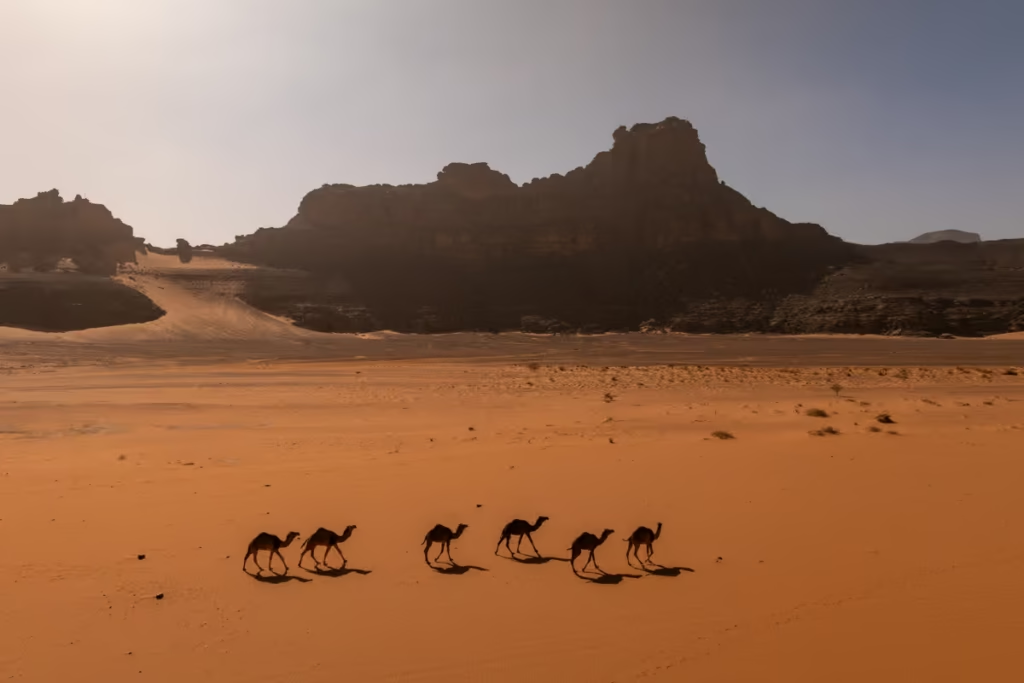
Beyond the capital and coastline, the country opens into an immense, sparsely populated desert. Scattered across this vast expanse are ancient Berber and caravan towns such as Ghadames, sitting more than 600 km from Tripoli.
But Libya today is not just history. It is a country navigating instability, limited accessibility, and complex realities that shape every part of the travel experience. Since 2011, internal conflict has fractured the state and kept most travelers away from what is arguably the most off‑the‑radar destination in the entire Mediterranean.
And yet, with careful planning and solid research, it is possible to visit Libya safely.
This guide, based on over a month spent on the ground in January and February, is the most complete and up‑to‑date Libya travel resource available online. It offers a full, honest, deeply detailed look at what it means to travel through Libya in 2026.
Need Travel Insurance?
Start shopping for travel insurance plans over at IATI Insurance. Readers of the Adventures of Nicole get a 5% discount off your plan.
- What is It Like to Travel in Libya?
- Is It Safe to Travel to Libya?
- Why Visit Libya?
- Libya Visa Guide (Updated for 2026)
- Getting into Libya
- How to Get to Libya
- How to Travel Around Libya
- Money, Costs, & Budgeting in Libya
- Best Time to Visit Libya
- What Foods to Try in Libya: Libyan Cuisine
- Accommodation in Libya
- Best Places to Visit in Libya
- Culture, Etiquette, and Local Customs in Libya
- What to Pack for Libya
- Traveling Libya as a Woman
- Connectivity, Internet & SIM Cards in Libya
- The Reality of Traveling in Libya
What is It Like to Travel in Libya?
I realize that my experience was vastly different from most travelers who visit Libya, owing to the fact that I was there for so long (most people only visit for a week at most).
Libya is massive. Traveling around the country as widely as we did is slow, at times frustrating, and comes with a fair share of surprises— good and bad.
But this wasn’t an ordinary trip through Libya, as it was partially to work with a team to start opening Libya up as a destination with my company, Safar Expeditions, but also filming for a series of documentaries on remote destinations.
This meant heaps of permissions beyond what normal touristic visits require, and lots of arriving to locations and still needing to jump through additional hoops.
This also meant for pure, unadulterated exploring in some areas of the Libyan Sahara. Giulio, having stared at satellite maps for months before this expedition began, landed several sites on our itinerary for places with zero information on them, with not even a clue how to reach them. Something rare in an epoch when it seems as though everything on Earth has been thoroughly mapped out, documented, printed in books, and online.
Libya is a destination for those looking to veer off the beaten path, those who want a true expedition, the explorers who don’t mind trading comfort and familiarity for true adventure.
Is It Safe to Travel to Libya?
Let’s not dance around this.
Most governments currently advise against all travel to Libya due to ongoing risks tied to civil unrest, terrorism, and kidnapping.
That said, I never felt unsafe regarding security in Libya. But as per the requirements to visit Libya, independent travel is not permitted, and all itineraries must be pre-approved. Checkpoints are plentiful, and if there are rumblings of a security threat, regions of the country will be closed off to visitors.
As Libya is not a destination where you can simply book a flight and figure things out on arrival, and safety is detailed by a team, I personally did not find traveling around Libya to be unsettling.
What this means for travelers:
- Independent travel is not possible.
- Movement is often restricted and monitored.
- Security conditions can change quickly and will be closely monitored.
- Checkpoints and permits are part of daily logistics.
Travel here is controlled, structured, and requires preparation and pre-planning.
Why Visit Libya?
Despite everything the nation has been through, Libya holds a kind of magnetic pull that is hard to explain until you start digging into the archeological treasures, ethereal landscapes, and vibrant culture actually here.
What makes Libya unique:
- Some of the most impressive Roman cities outside of Italy and Europe.
- Almost zero tourism.
- Vast desert landscapes that feel completely unclaimed.
- A cultural crossroads shaped by centuries of empires.
Libya just has a rawness here that’s nearly impossible to find elsewhere.
Libya Visa Guide (Updated for 2026)
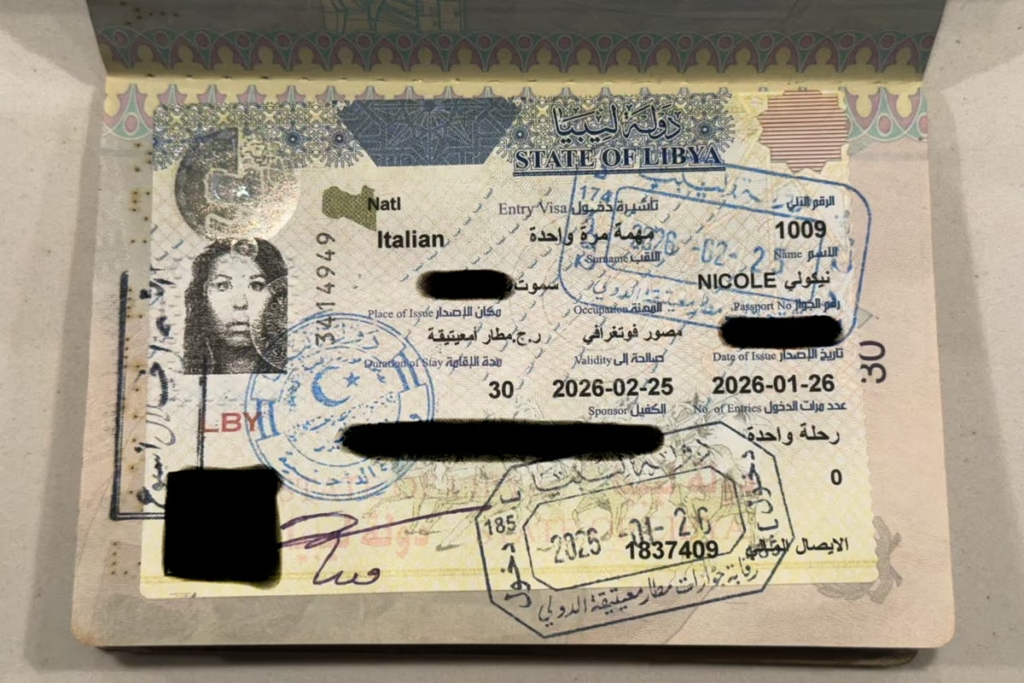
There are three types of visas most tourists will apply for: the e-visa, a visa from an embassy, or the visa on arrival. For years, obtaining a Libyan visa was one of the most difficult and unpredictable processes in the world. Approvals depended on opaque bureaucracy, inconsistent timelines, and a system that often felt designed to fail.
That changed in April 2024, when the government introduced an e‑visa system. For the first time, travelers could apply online and receive a valid visa in roughly a week.
You can apply for the e‑visa here. Just remember that there are a number of hoops to jump through, and you will need approved permissions via an agency before starting the process.
You Must Obtain a Libyan Letter of Invitation (LOI)
Note that no matter which type of Libyan visa you plan to obtain (e-visa, visa, or visa on arrival), you will need to obtain a Libyan letter of invitation (LOI) before you can begin the process. Companies issue LOIs only if you have booked a full tour with them.
How long did the LOI take?
Officially: one week.
In reality: on average anywhere from 3 days to 3 weeks.
In our case: 4 weeks, but we needed a lot more permits beyond the typical.
Libyan bureaucracy has always been unpredictable.
How long was the LOI valid?
Our letter of invitation stated that it was valid one month from the date of issuance. But like everything else, nothing in Libya is consistent, so you can expect this to change.
Libya e‑Visa
How much does the Libyan e‑visa cost?
The fee is 63 USD.
How long does approval take, and how long is it valid?
- Approval typically arrives after 5 working days.
- Once approved, you have 90 days to enter Libya.
What do You Need to Apply for the Libyan e-Visa?
You will need to gather a few things from your tour agency in order to apply for the Libyan e-visa.
- Scan of your passport info page
- Passport-sized photo
- Sponsor’s passport (your tour agency will provide the company representative’s identification)
- Sponsor document (this is your letter of invitation from your tour agency, approved by the Libyan government)
You will need to upload all of the above documents to the e-visa application and fill out the application completely. Usually, you will get a notice of your e-visa approval once the e-visa has been processed. You can also check your e-visa status directly on the website.
Is the e‑Visa Reliable?
Libya is a country where administrative systems change constantly. When the e‑visa first launched, it was notoriously inconsistent with some travelers approved quickly, others waited weeks, and some applications remained pending indefinitely.
In 2024, refusals were more common.
However, as of 2026, approval rates have significantly improved.
Will the e‑visa system remain in place?
There is no guarantee. In Libya, policies shift frequently and without warning. What is certain is that there has never been an easier moment to visit Libya than right now.
Does the e‑visa allow independent travel?
Officially, no. Independent travel is not permitted in Libya.
We heard that a few travelers have attempted to enter without a local sponsor, but after having arrived at Mitiga Airport, it doesn’t appear that it would be possible to pull off. The tourist police are actively working in the airport, and as a foreigner going through the arrival process, it feels like you would immediately be caught. The fear is that if unsponsored travelers continue to slip through, the e‑visa system may be suspended. So, don’t turn up uninvited and potentially mess it up for others, consider following the rules.
Getting the Traditional Libyan Visa or a Libyan Visa on Arrival
While not totally necessary for most tourists to Libya at present, some may opt to obtain a visa from a Libyan embassy. This section will also diverge and cover how to get the Libyan visa on arrival. As the e‑visa system could disappear as quickly as it arrived, too, this is good information to have. In Libya, nothing is permanent.
Just like the e-visa, before applying for the Libyan visa or visa on arrival, the first step is securing an LOI from your chosen tour company.
Getting the Visa at a Libyan Embassy
Once the LOI is approved, you can take it to visit a Libyan embassy in your home country (or a country of your choice, if your home country has no embassy).
The LOI included a 6‑digit reference number, and most Libyan embassies recommended calling ahead with this number before your visit.
Example: Embassy in Rome
Giulio had applied for one of his Libyan visas in Rome, which does accept walk‑ins (hours can vary). It’s best to call in ahead of time to verify when you should go.
Their requirements were:
- Passport valid for at least 6 months
- Two passport photos
- Letter of Invitation
After verifying documents, they will ask you to deposit 60€ into their bank account. After this, your Libyan visa will be issued.
Other embassies:
Requirements were similar worldwide, but processing times vary. Some embassies issue visas the same day; others can take several days. Some required applicants to appear in person; others accepted applications by mail.
The only reliable method was to call your nearest embassy directly.
What if Your Country has No Libyan embassy?
You could apply through any embassy you chose, as long as your local sponsor is informed in advance.
How Long is the Visa Valid?
Until September 2023, visas were valid for 1 month from the date of issuance and could not be extended.
Later, authorities announced plans to extend validity to 3 months, though implementation may vary or change in the future.
Getting a Libyan Visa on Arrival
I opted for the Libyan visa on arrival. This was because we had waited so long for the documents to be issued and would not have had the time to apply, and for me to get my visa in Abu Dhabi, where I was, more or less, stuck at the time.
I will say, the visa on arrival route does come with some risks, but in my case, it did work.
I was flying into Mitiga Airport on Royal Jordanian Airlines and tracked down an email address of a contact at the airline that it sounded like I needed to send a copy of the LOI to. I emailed them and hoped for the best. Eventually, I did get a reply from the Royal Jordanian email stating that they had forwarded my email and document to the appropriate office of theirs at Mitiga Airport.
Fast forward, and at check-in, I was asked to show the LOI (showing it on my phone sufficed). I was issued my boarding pass without question.
On arrival at Mitiga Airport, we were loaded onto buses and brought over to the arrivals terminal. My agent was waiting there for me and handled the rest of the visa on arrival process from there. It took about an hour to clear all the formalities and get the sticker whacked in my passport and stamped officially in to Libya.
Getting into Libya
Getting into Libya is one of the most complicated parts of the journey. That said, since independent travel is not currently possible in Libya, it’s a bit more of a headache for your trip organizer than it is for you as a tourist.
How to Get to Libya
How to Travel to Libya by Air
The main airport in Libya is Mitiga International Airport, which is located 11km from the center of Tripoli.
As of 2026, there are international flights bound from the following cities:
I ended up flying in from Amman on Royal Jordanian, given that I had been in the Gulf awaiting our permits to go through, Giulio flew in directly from Rome on MedSky Airways.
Which airlines fly to Libya?
The following airlines fly to Libya: Afriqiyah Airways, Air Cairo, Berniq Airways, Egypt Air, Libyan Airlines, Libyan Wings, MedSky Airways, Royal Air Maroc, Royal Jordanian, Tunisair, and Turkish Airlines.
How to Travel to Libya by Land
Libya shares a border with 6 countries: Tunisia, Egypt, Algeria, Chad, Niger, and Sudan. That said, it is only possible to cross from Tunisia, Algeria, and Egypt, though border closures due to unrest are not unusual. The borders with Chad, Niger, and Sudan are not possible.
Traveling to Libya from Tunisia
The Ras Ajdir Border Crossing between Tunisia and Libya is open, but closures are common due to militia activity in western Libya. Entering from the Tunisian border will require pre-arrangement with your tour operator, as itineraries are locked.
Traveling to Libya from Algeria
The Ghadames-Debdeb Border Crossing is popular among adventurous overlanders coming into Libya from Algeria. Just like any other border crossing coming into Libya, expect potential closures stemming from any instability in the area. You will need to make advance arragements with your chosen tour operator to enter the country here and to obtain any necessary permits.
Traveling to Libya from Egypt
In theory, yes, entering at the Salloum Border Crossing between Egypt and Libya is possible, but like any of the rest of the country’s borders, it can close at any time. The eastern part of Libya is controlled by a different government that will require many different permits. You will need to discuss this with your tour operator in the planning stages to see if the border looks to be open, and if they have the clearance to even operate in that part of the country.
Traveling to Libya from Chad, Niger, and Sudan
Not possible.
Generally, the south of Libya is pretty lawless with heaps of militia activity and illegal movement of humans and goods. None of these border crossings are open, and much of the time, even traveling in the deep south of Libya is not possible due to militant activity.
How to Travel Around Libya
Arriving in Libya
As mentioned before, independent travel is not allowed in Libya; in fact, it never really has been. Even during Gaddafi’s regime, it wasn’t allowed due to the fear of any foreigner being a potential spy. Therefore, you will be met by a representative from your chosen tour company who issued your invitation letter at your port of entry.
You Will be Met by Your Local Guide at Immigration
The good news is, is that the representative (many times it’s your guide) will handle all the entry formalities for you. This guide will remain with you at all times, along with a police escort. The only exception is Tripoli, as in theory, you can be in the city on your own at the discretion of your guide.
You will be Accompanied by Tourist Police throughout the Entirety of Your Time in Libya
During your time in Libya, you will be accompanied by a tourist police officer. Ours met us as we were getting the visa formalities sorted and remained with us until I was stamped out of Libya and sent to the gate at the airport.
The tourist police officer is in addition to your local guide and driver. Luckily, ours was a total character, loved food, and was an absolute great addition to our crew. Sharing meals, hanging out, cracking jokes. He made sure I had my coffee every morning and even nicknamed me Leila.
The cost of the police official is included in the price of the tour package, as this is an official requirement to visit Libya.
Getting Around Once in Libya
If you’re picturing hopping between cities freely, adjust that expectation now. Travel within Libya at present is pre-arranged with a private driver, guided at all times, and route-specific, with extremely limited ability to deviate from the itinerary.
This isn’t restrictive for the sake of it. It’s simply how travel functions in Libya right now.
Since there isn’t much that needs to be said about getting around in Libya, as all logistics will be handled for you, I’ll keep this section short. However, here are some things to keep in mind if you’re wondering why your itinerary might look so slow.
Despite having the second cheapest petrol in the world (it was running about 0.15 Libyan Dinar per liter when we were there) and enormous oil reserves, Libya suffers petrol shortages, with stations often being bone dry. Especially as we traveled around the Libyan Sahara and the south, it wasn’t unusual to pass kilometers of cars lined up, sometimes having been parked for days, waiting to get gasoline. So, traveling around Libya, you typically will have several extra gas cans in the truck.
Most of the population in Libya lives along the coast, and this is where you’ll see the bulk of traffic in the country. The further south you travel, the more desolate the country becomes.
Your Itinerary is Pre-Approved and Cannot be Changed
Your itinerary must be approved in advance and will require numerous permits. Changes aren’t allowed.
\
Money, Costs, & Budgeting in Libya
Currency
- Libyan Dinar (LYD)
The current exchange rate as of April 2026 is:
- $1 USD = 6.33 LYD
- 1€ = 7.45 LYD
Payment in Libya
- Libya is a cash-based economy.
- Most tour companies will only be able to take payment in cash on arrival.
- ATMs do not work with foreign cards.
- Credit cards are not accepted.
Costs in Libya
While daily expenses such as the cost of food and petrol can be relatively low, organized travel is very expensive in Libya. As mentioned previously, the only way to travel to Libya is on a tour. Tours are almost always all-inclusive, except for personal spending for souvenirs. That said, here are some prices that things you may run into:
- Simple meal in a local restaurant: 20-50 LYD
- Meal in an upscale restaurant serving international cuisine: 40-90 LYD
- Coffee at a cafe: 2-5 LYD
- Souvenirs: Varies depending on what you purchase, but 30-100 LYD for most of the items we purchased
Where to Exchange Money in Libya
Your guide will facilitate money exchanges for you. But an interesting experience is to go to Al Khandaq Road (the pedestrian street along the old moat on the south side of the Libyan National Museum in Tripoli). Here, you will find exchangers with literal wheelbarrows full of Libyan Dinar to exchange.
Best Time to Visit Libya
The ideal months of the year to visit Libya are October-April, with October, November, March, and April being the most pleasant temperature-wise. December-February can be pretty cold along the coast and at nighttime in the desert. We spanned late January through the end of February in Libya, and there were some pretty gnarly storms along the coast.
It’s best to avoid Libya in the summer months, especially June-August, as it can be hellishly hot.
What Foods to Try in Libya: Libyan Cuisine
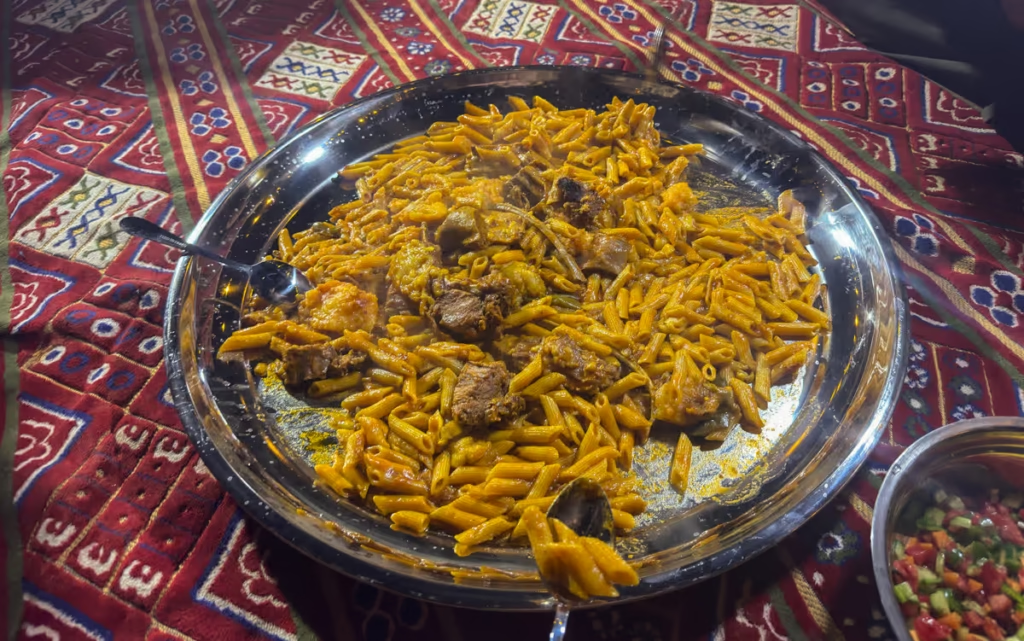
Food in Libya is hearty, comforting, and rooted in tradition, with influences from Berber, Arab, and Mediterranean cuisines woven into nearly every dish. Meals are often simple but filling, built around bread, stews, and shared plates.
As you will be on a tour, it’s important to communicate any food allergies or dietary restrictions ahead of your visit so that they can prepare accordingly. If you will be traveling around in the desert, you can expect simple breakfasts and lunches. Rice and pasta dishes are very common for dinner.
Here are some of the most common Libyan dishes you’ll encounter:
- M’bakbaka: A rich, spiced pasta dish cooked in a flavorful tomato-based broth, often with lamb, and a staple across the country. If you had followed along on my Instagram, I got a bit tired of m’bakbaka as we ate it a majority of nights but truth be told, I do like the sauce.
- Couscous: Steamed semolina grains served with vegetables and meat, typically lamb, and considered a cornerstone of Libyan cuisine.
- Libyan Shakshouka: A heartier, more rustic version of the classic dish, with eggs cooked into a thick tomato and pepper sauce, often with potatoes or meat added.
- M’battan: Fried stuffed potatoes filled with spiced minced meat, crispy on the outside and soft inside. This was one of my favorite Libyan dishes. Homemade was a real treat.
- Libyan Harrira: A warming soup made with lentils, chickpeas, tomatoes, and spices, especially popular during Ramadan. Another treat of Libyan cuisine, as we experienced Ramadan 2026 in Libya.
- Maqruda: A semolina-based dessert filled with dates and lightly fried, then soaked in syrup or honey.
Bread in Libya
Bread is not just part of a Libyan meal; it is a main component of the meal.
- Khobz (flatbread) is served with nearly everything and used to scoop up sauces and stews.
- Tabouna-style breads are baked in traditional ovens and have a slightly smoky flavor.
- Sand bread (Arbood) is one of the most unique, baked directly under hot desert sand and ash, then brushed clean before eating, gritty in theory but quite delicious in reality.
Coffee & Tea Culture
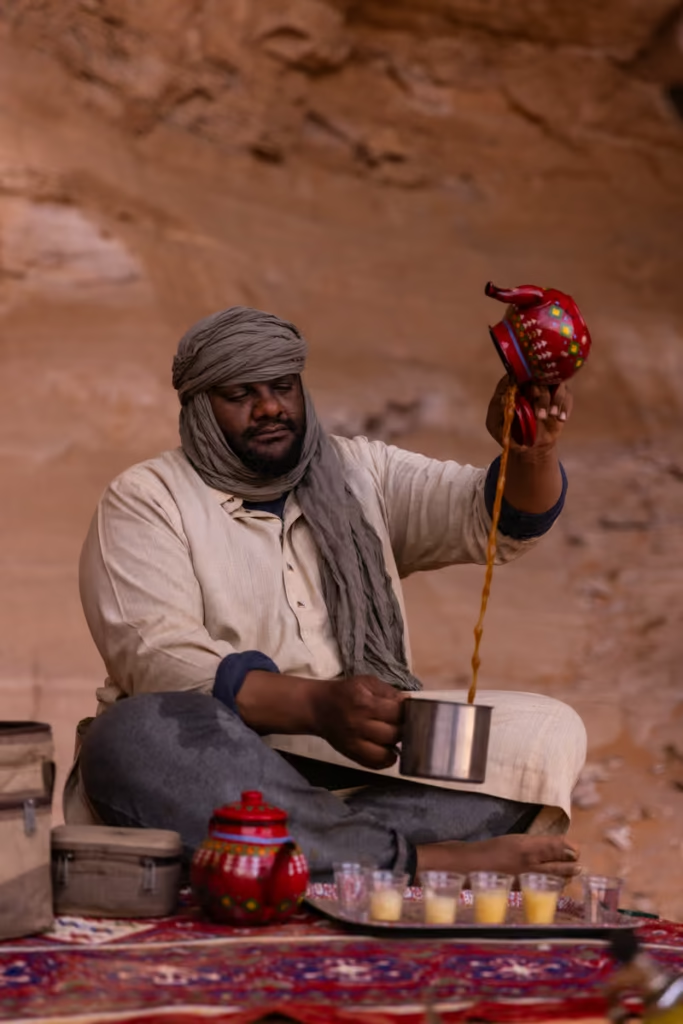
Thanks to Libya’s Italian colonial past, coffee culture here is strong. In cities like Tripoli, you’ll find excellent espresso, cappuccinos, and small local cafés where lingering over coffee is part of daily life.
Then there’s Libyan tea, which is an experience in itself. Strong, dark, a tad bitter, and often served in small glasses with a thick foam layer on top, it’s traditionally poured from a height and heavily sweetened, sometimes with peanuts added for texture. 100% recommend the peanuts, I loved the addition.
Accommodation in Libya
Accommodation in Libya is entirely dependent on your itinerary, but one thing is certain: it will all be arranged for you as part of your tour.
In larger cities like Tripoli and Benghazi, you’ll typically stay in hotels. These range from more upscale options with reliable amenities to simpler, functional accommodations. In Tripoli, especially, there are a handful of well-maintained hotels with decent Wi-Fi, warm showers— a touch of comfort that feels almost indulgent after time in the desert.
Once you leave the cities, everything shifts to desert camping.
In places like Ubari, the Tadrart Akakus, Al Haruj, and Waw an Namus, accommodation means camping. You’ll sleep in tents or sometimes under the open sky, surrounded by dunes, volcanic rock, or complete nothingness. Facilities are basic or nonexistent, but the trade-off is waking up to landscapes that feel completely untouched.
Best Places to Visit in Libya
Western Libya
Tripoli
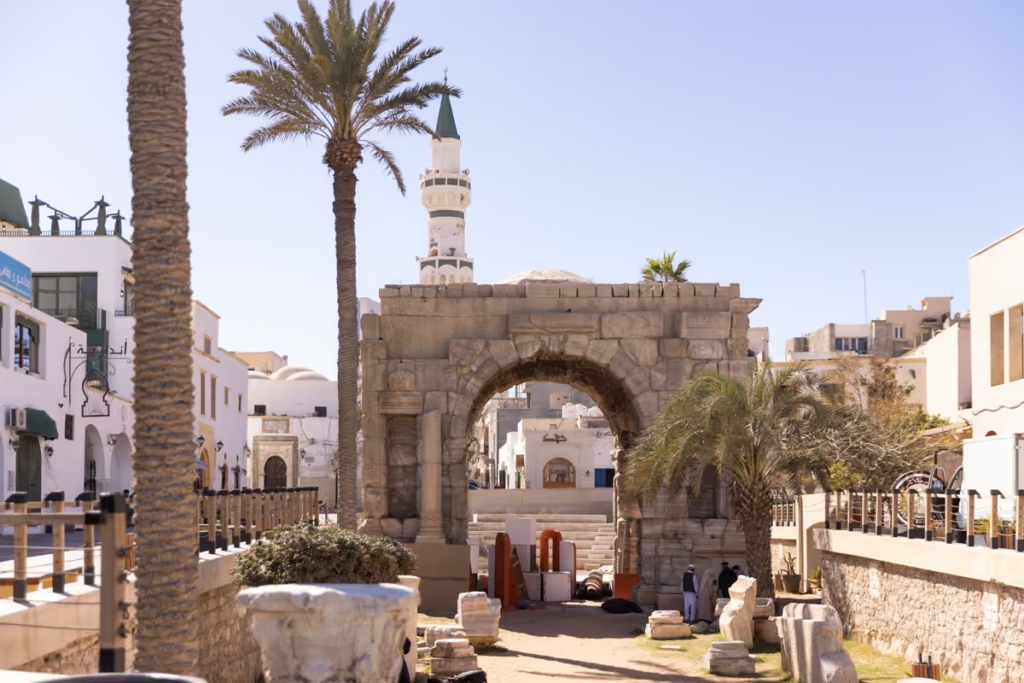
Tripoli has a certain feel of optimism to it. New buildings are going up, restorations of historic sites of the city are underway, lots of bustle and life at every turn of an alley. Maybe it’s that we made a mad dash to the south first, so I didn’t get to actually explore Tripoli until the very end of the trip, but to me, Tripoli felt jovial (or maybe it was the holy month of Ramadan vibes).
At first, Tripoli feels chaotic, with swirling traffic, crumbling facades, and half-finished buildings. But then you step into the medina, and everything slows down. Narrow alleyways twist between centuries-old walls, and the call to prayer echoes overhead.
Start at the Red Castle (Assaraya al-Hamra), a fortress layered with Ottoman, Spanish, and Italian influences, sitting right on Martyrs’ Square. Inside, the Museum of Libya offers context for Libya’s long and complicated history. Nearby, the Tripoli Medina is where you’ll spend most of your time, weaving through souks selling spices, textiles, and gold (I even got my hand chain soldered back together in the gold souk, and the jeweler vehemently refused my payment). The Arch of Marcus Aurelius, tucked quietly among shops and cafes, is a reminder that Rome never really left.
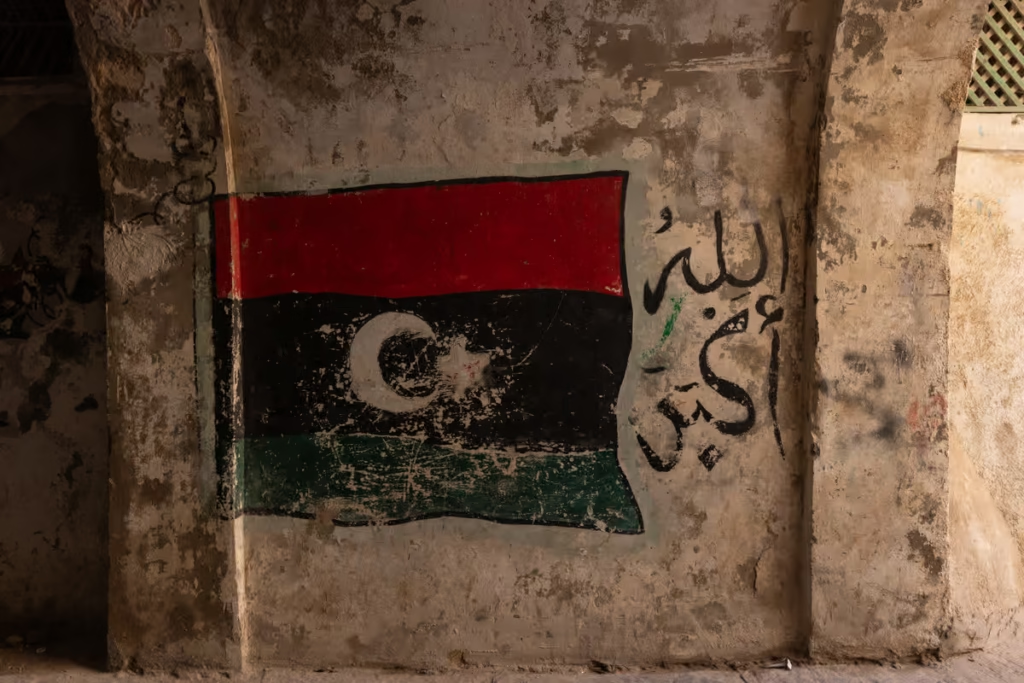
Along the coast, the Corniche gives you a breather from the intensity of the old city. Locals gather here in the evenings, and it’s one of the few places where Tripoli feels almost relaxed.
The other highlight of Tripoli is the cafe scene. Due to Libya’s history with Italy (for better or worse), you have a myriad of choice for lovely cafes serving up excellent Italian espresso, one of our favorites was Shubbak. Another positive is having a variety of food options. After a month of camping in remote parts of the Libyan Sahara and mbakbaka for most of those nights, having something different was welcome. There is good pizza to be had over at a restaurant in the old city called La Cucina Italiano (approved by Giulio).
Read up on the other Tripoli: The Tripoli (Lebanon) Travel Guide
Leptis Magna
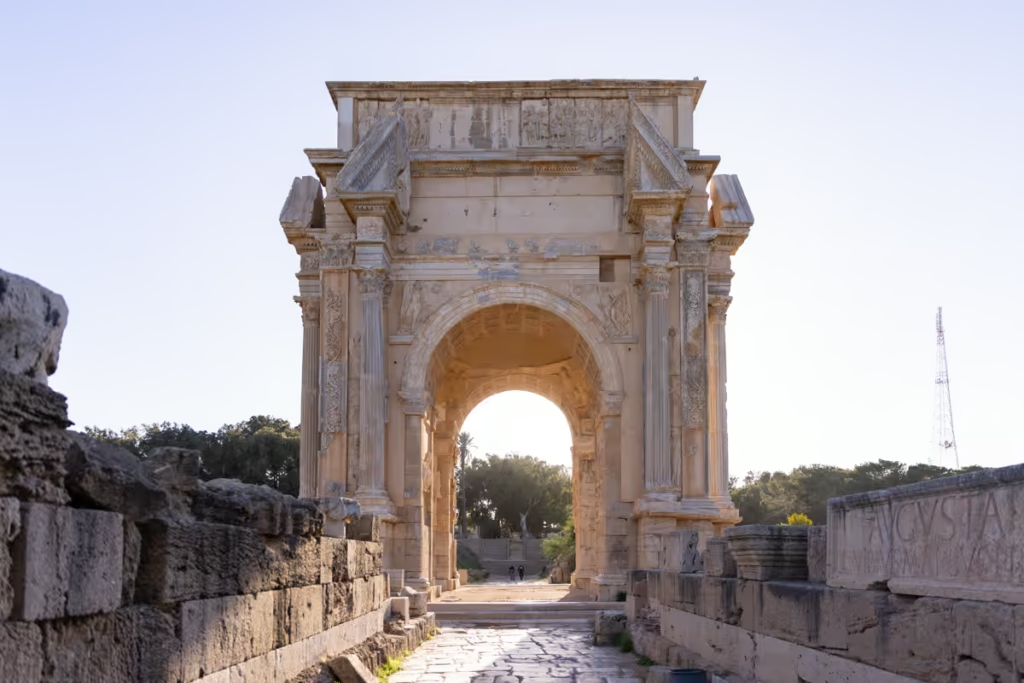
The most famous place that people travel to Libya specifically to see is Leptis Magna.
About two hours east of Tripoli, the ancient Roman city of Leptis Magna unfolds along the Mediterranean. The scale of it alone is jaw-dropping, on par with Roman sites such as Palmyra, Apamea, and Busra in Syria, and Ba’albek in Lebanon.
You walk through the enormous Severan Arch, and suddenly you’re standing in what used to be one of the most important cities of the Roman Empire.
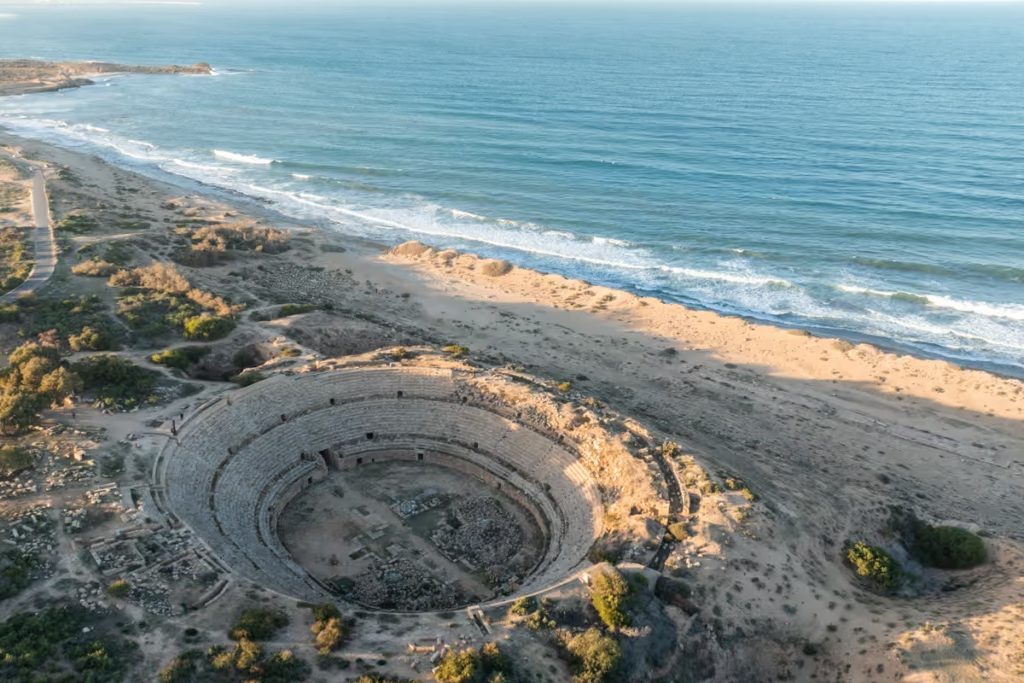
The amphitheater, carved partly into the ground and facing the sea, is one of the most striking structures here. Climb to the top rows, and you’ll see waves crashing in the distance, a backdrop that hasn’t changed in thousands of years. The Basilica of Septimius Severus is equally jaw-dropping, with towering columns and intricate carvings that somehow survived both time and neglect.
Don’t miss the marketplace, where the stone stalls still stand in neat rows, and the Hadrianic Baths, where you can almost picture the daily life that once filled these halls. The scale is what gets you. This isn’t a ruin you glance at. It’s one you get lost in.
Sabratha
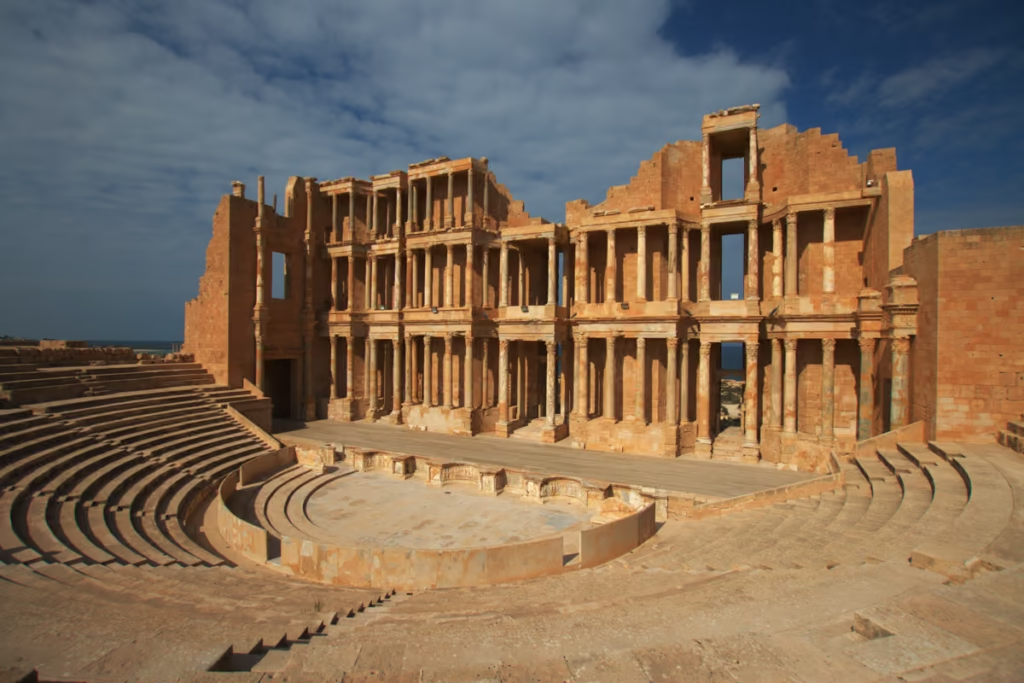
West of Tripoli, Sabratha feels like a film set waiting for actors— because in ancient times, it was.
The highlight is undeniably the Roman theater, a three-tiered masterpiece of columns and arches that faces the Mediterranean. Stand at the top, and the sea stretches out behind the stage, turning every angle into something cinematic.
But Sabratha is more than just the theater. The Temple of Isis, the basilica, and the remains of early Christian churches add layers to the site’s story. It was once a thriving Phoenician trading post before Rome transformed it, and you can still see traces of both identities.
Compared to Leptis Magna, it’s smaller, more compact, but in some ways, that makes it easier to absorb. You’re not going to feel as if you’re racing between ruins here.
Misrata
Misrata sits on Libya’s coast, east of Tripoli, and reflects a more modern, industrial side of the country, shaped heavily by its pivotal role as a rebellion stronghold against the Gaddafi forces in the 2011 revolution. Traces of that history remain visible, especially at the Misrata War Museum, where vehicles, artifacts, and remnants of the conflict are displayed in a raw, unfiltered way. Beyond its wartime legacy, the city is anchored by a busy commercial port, lively local markets, and an ongoing sense of rebuilding and resilience.
Qasr al Hajji
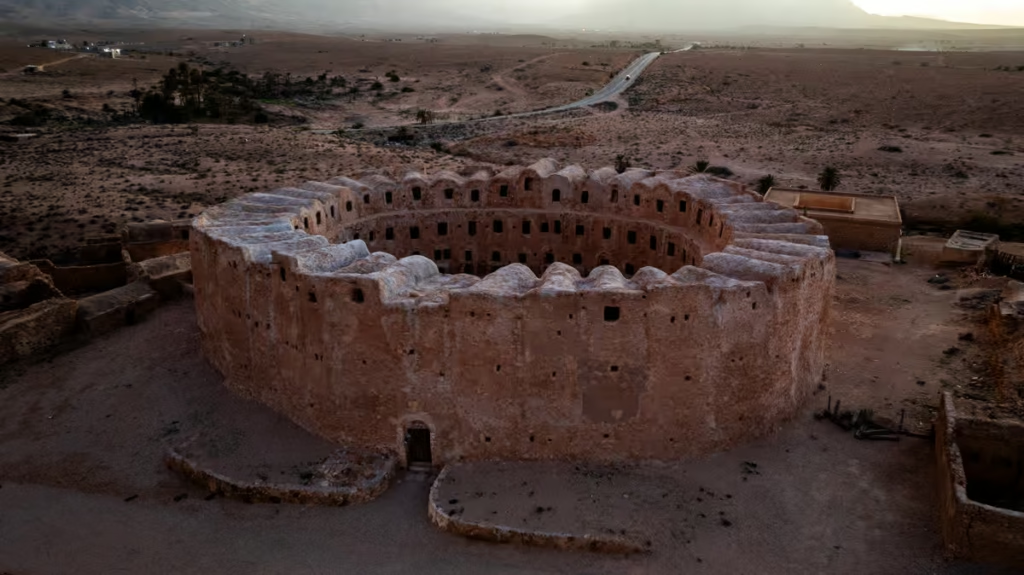
Qasr al‑Hajj is a striking circular fortified granary built in the 13th century by Abdallah Abu Jatla, designed to store crops for families from the surrounding region.
Its original 114 chambers, a number locals link symbolically to the Qur’an’s 114 suras, form a perfect ring around a central courtyard. Additional cellars and split chambers were added over time, but the structure still reflects its original purpose as a communal storage complex endowed as a waqf for Qur’anic teaching.
Qasr Kabaw
Qasr Kabaw rises above the town of Kabaw, a compact hilltop granary built of stone, gypsum, and red mud, with tiered storage rooms arranged around a central courtyard.
Dating back roughly 700–900 years, it once held grain, dates, and oil for local families, each chamber secured with palm‑wood doors and overseen by a guard who controlled access. Its multi‑story layout with stacked rooms, narrow passages, and a single fortified entrance reflects both practical storage needs and the defensive concerns of mountain communities.
Perched on the northern edge of the Nafusa Mountains, Qasr Kabaw also served as a lookout over routes linking Jadu, Nalut, and the road toward Ghadames.
Qasr Nalut
Nalut Castle (Qasr Nalut) crowns a steep hillside in the Nafusa Mountains, its stacked chambers forming one of Libya’s best‑preserved Amazigh fortified granaries.
Like Qasr Kabaw, Nalut was built to store grain, dates, and oil for local families. The qasr contains tiered rows of small storage rooms arranged in a honeycomb pattern, linked by narrow passages that wind through the complex. Its elevated position once protected the community’s harvests and offered a vantage point over the surrounding valleys and caravan routes.
Ghadames
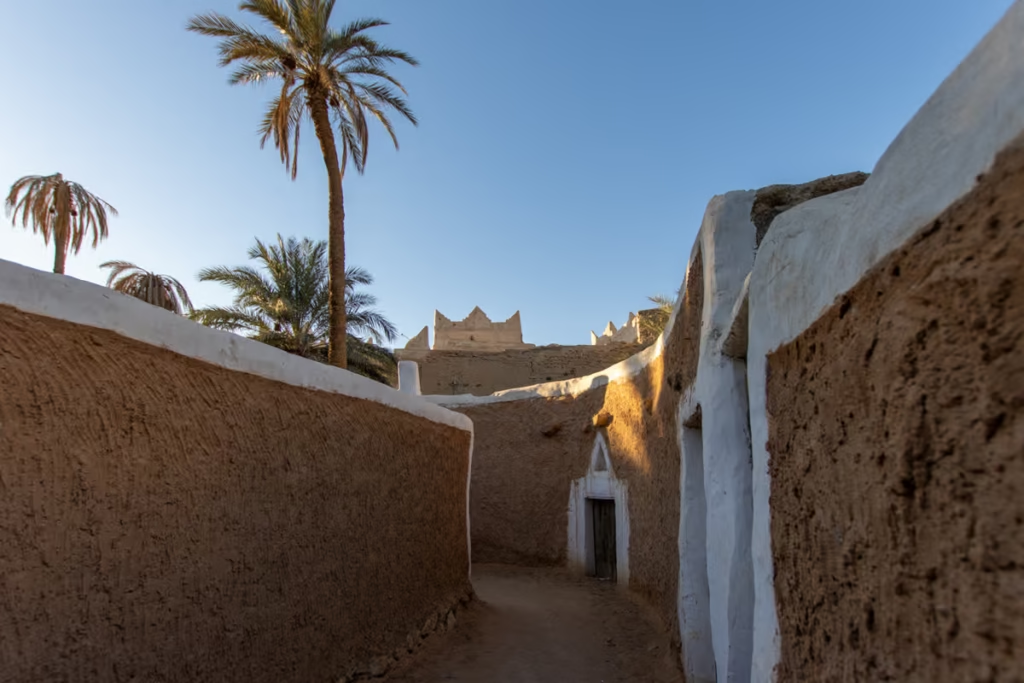
Near the Algerian border, Ghadames is an ancient oasis city, known for its whitewashed, maze‑like old town, ingenious desert architecture, and long history as a key stop on Trans‑Saharan trade routes.
Its UNESCO‑listed core features multi‑level homes, shaded covered passageways, and rooftop terraces that once formed a private world for women, all designed to keep residents cool in extreme Saharan heat. Often called the Pearl of the Desert, Ghadames remains one of the best‑preserved examples of traditional Amazigh culture and pre‑Saharan urban life.
Ghat
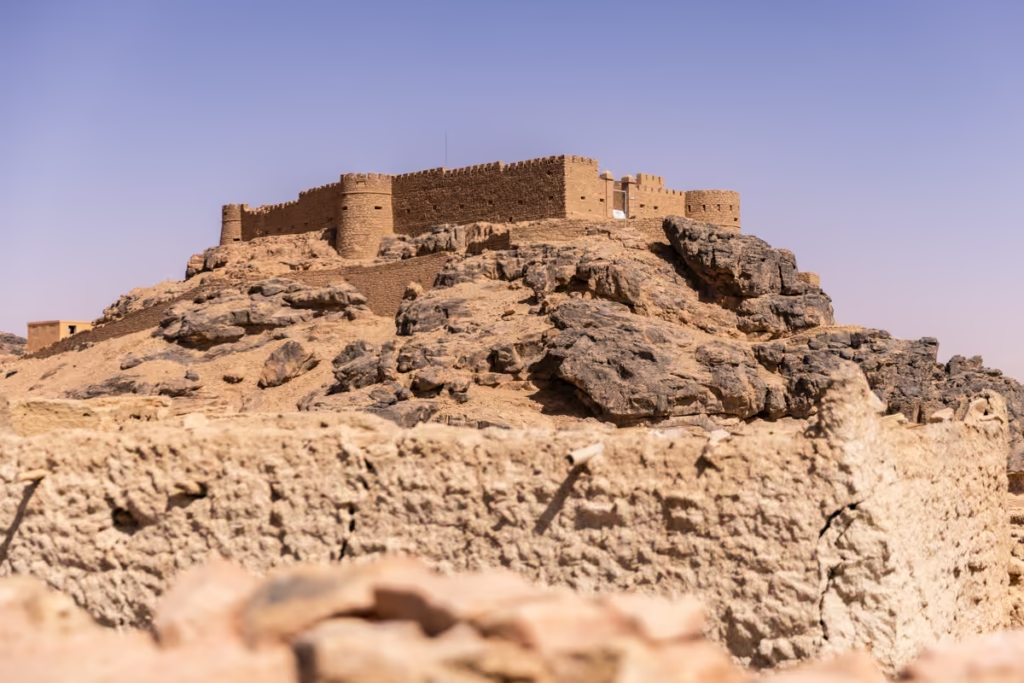
Ghat is a remote Saharan town in southwestern Libya, known for the surrounding dramatic desert landscapes, Tuareg culture, and access to some of the most striking rock art and sandstone formations in the central Sahara. Much like Ghadames, Ghat was once a major stop on Trans‑Saharan caravan routes. The city still reflects its Tuareg roots in its traditional architecture, crafts, and cultural festivals.
The main site to visit in Ghat is the Ghat Fortress and ancient city, perched on a hill overlooking the labyrinthine city. The fortress sits mostly empty and was undergoing some construction while I was there, so it appears that the town is seeing a little bit of a revival. Wandering the maze of alleys leading to the fortress was also a highlight.
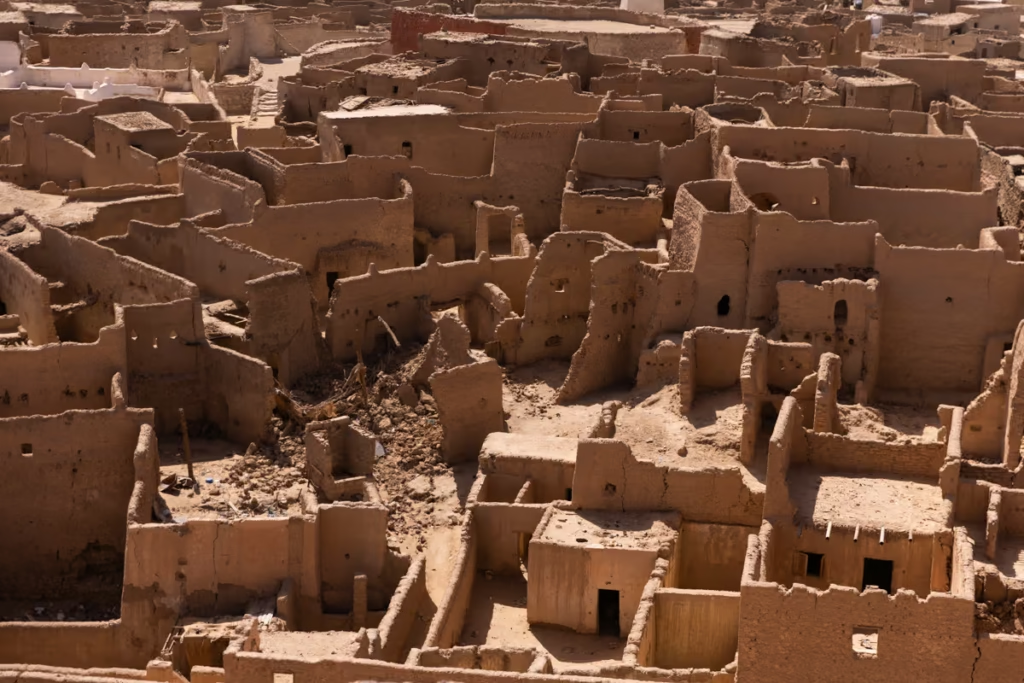
The surrounding Akakus Mountains, a UNESCO World Heritage Site, hold thousands of prehistoric rock paintings and carvings, while the town itself serves as a quiet, windswept base for exploring dunes, canyons, and ancient caravan paths.
We found decent pizza and coffee across the street from the fortress at a restaurant called Calala, which will soon be renting hotel rooms upstairs.
Maghedet
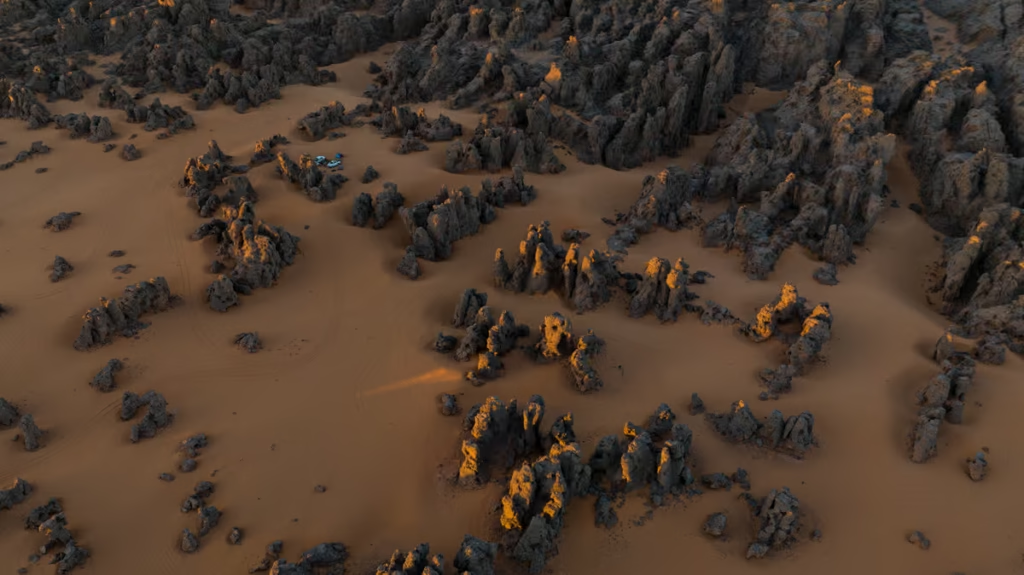
Maghedet lies in the Fezzan region near Awaynat and is famous for its bizarre natural sculptures, monoliths, and labyrinth‑like rock corridors that stretch across the landscape. Its formations resemble towers, arches, and abstract shapes carved by wind and time.
The area is extremely remote, with no settlements, facilities, or marked trails, and is typically reached by 4×4 from Awaynat.
Ubari Lakes & the Sand Sea
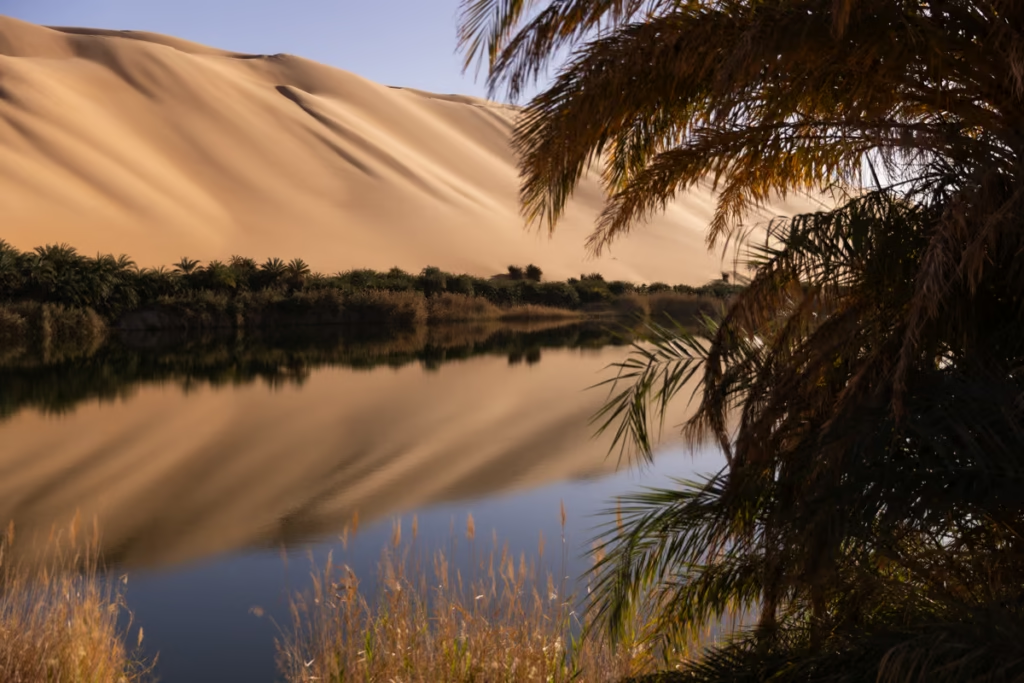
Deep in the southwest of Libya, Ubari acts as a gateway to one of the most surreal desert landscapes in the country.
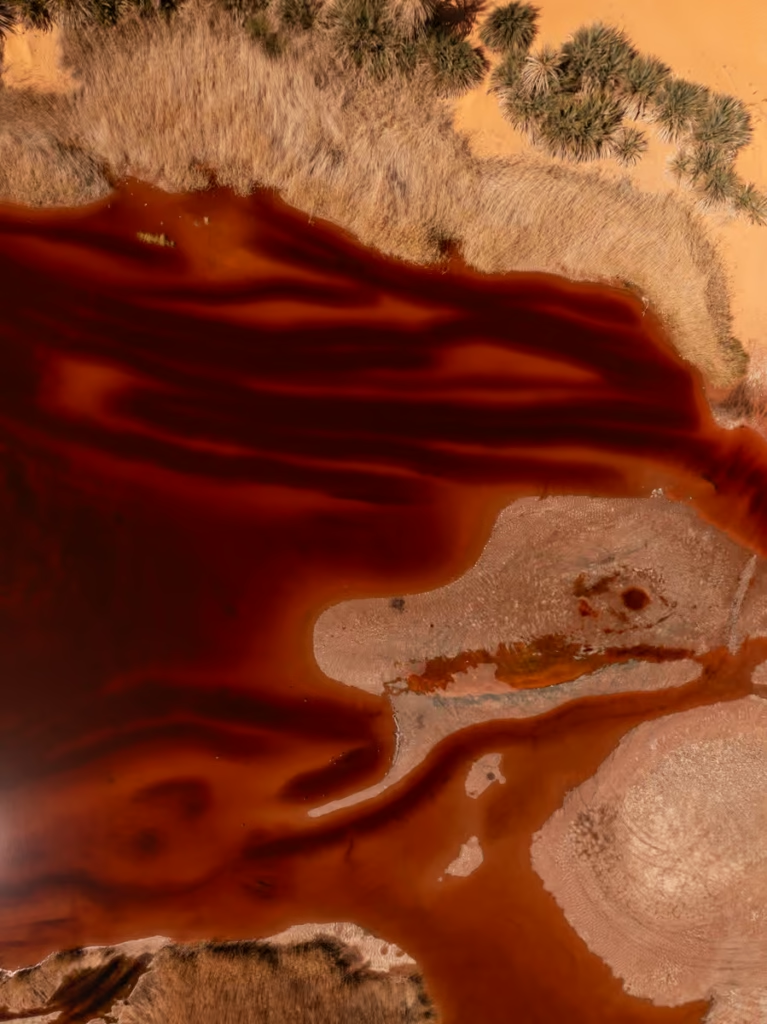
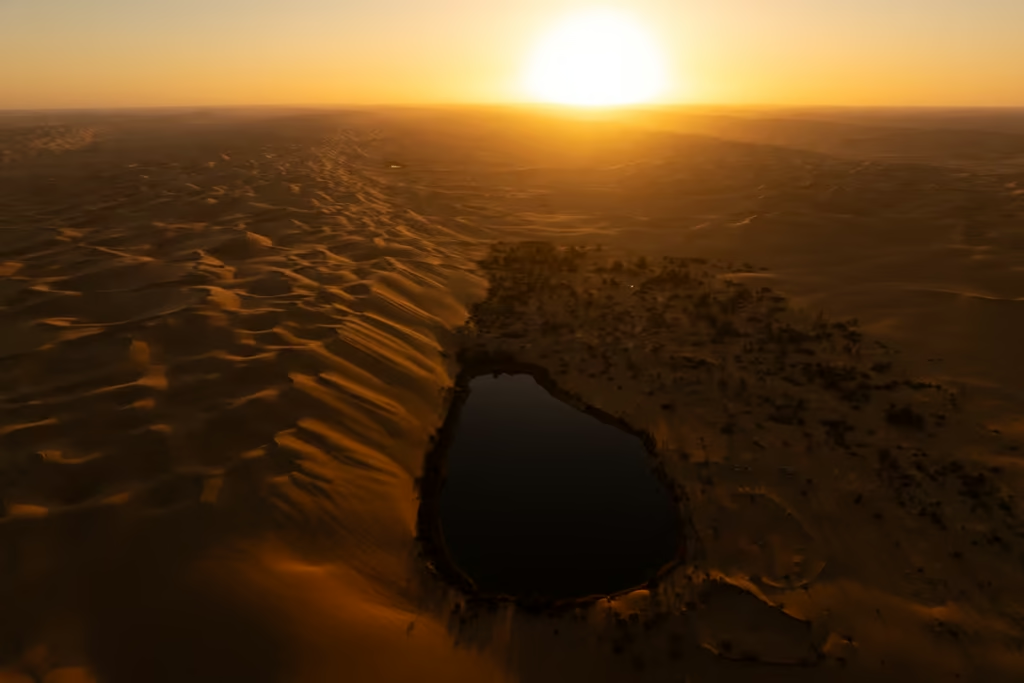
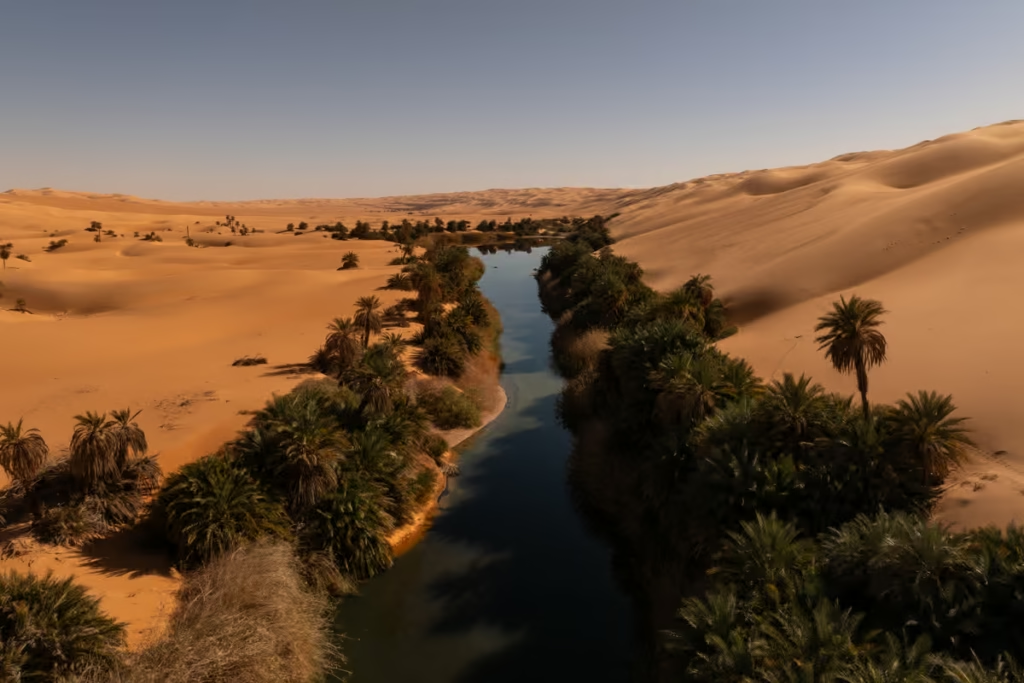
The real draw isn’t the town itself, but the Ubari Sand Sea, where towering dunes stretch endlessly in every direction. Hidden among them are the Ubari Lakes, like Gabroun and Umm al-Maa, shimmering pockets of water that feel almost impossible in such an environment. There is even a red lake out here at Trona Lake.
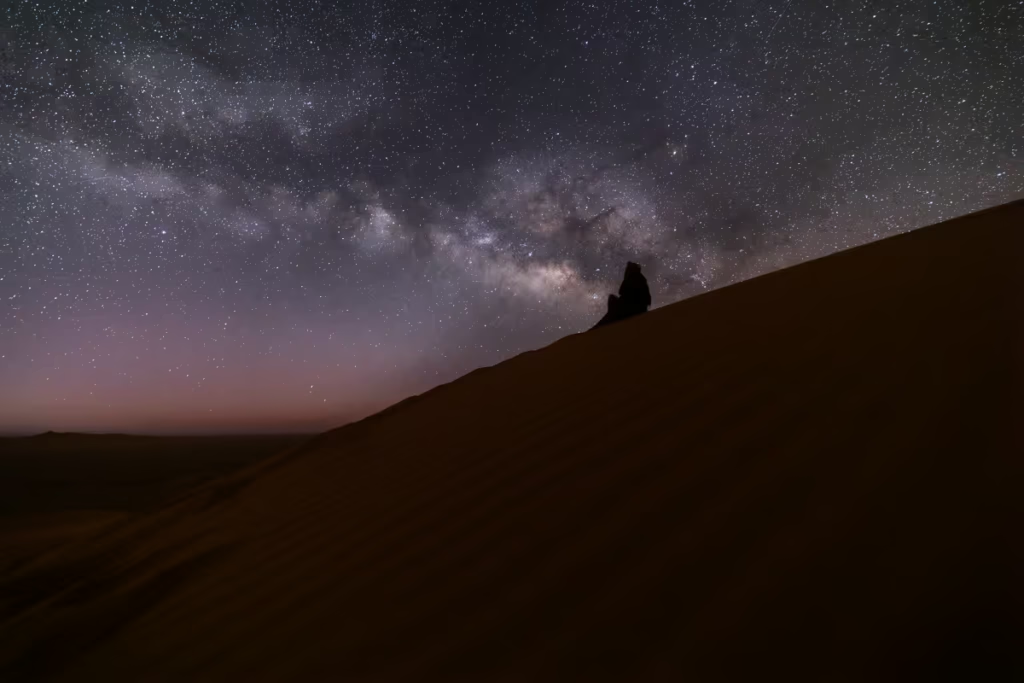
Camping here is also a treat. The silence is complete, the stars feel close enough to touch, and the scale of the desert makes everything else feel small.
Akakus Mountains
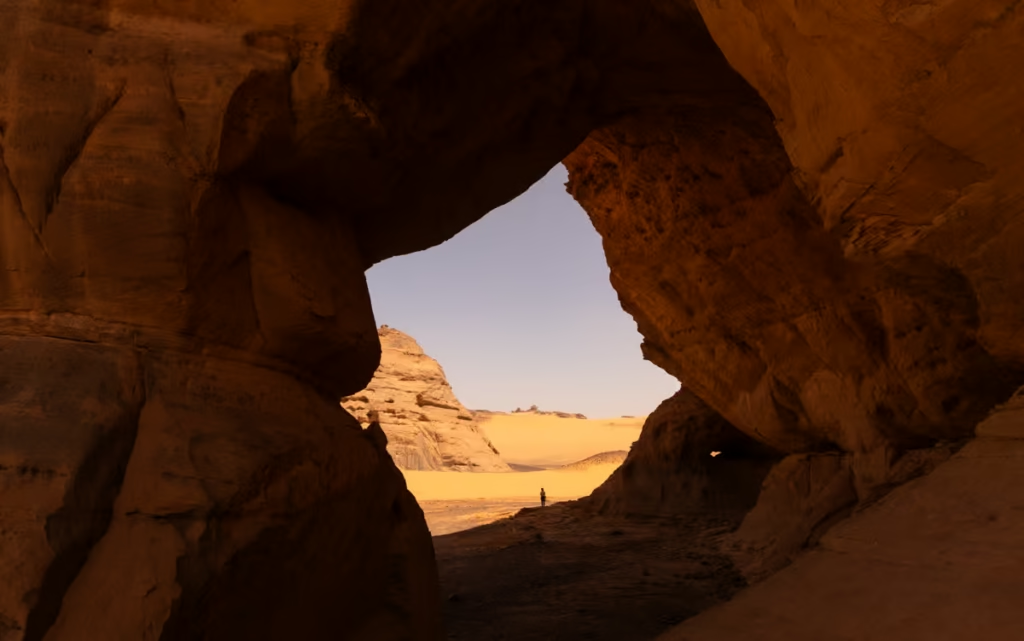
Further southwest, the Tadrart Akakus shifts the desert into something almost sculptural.
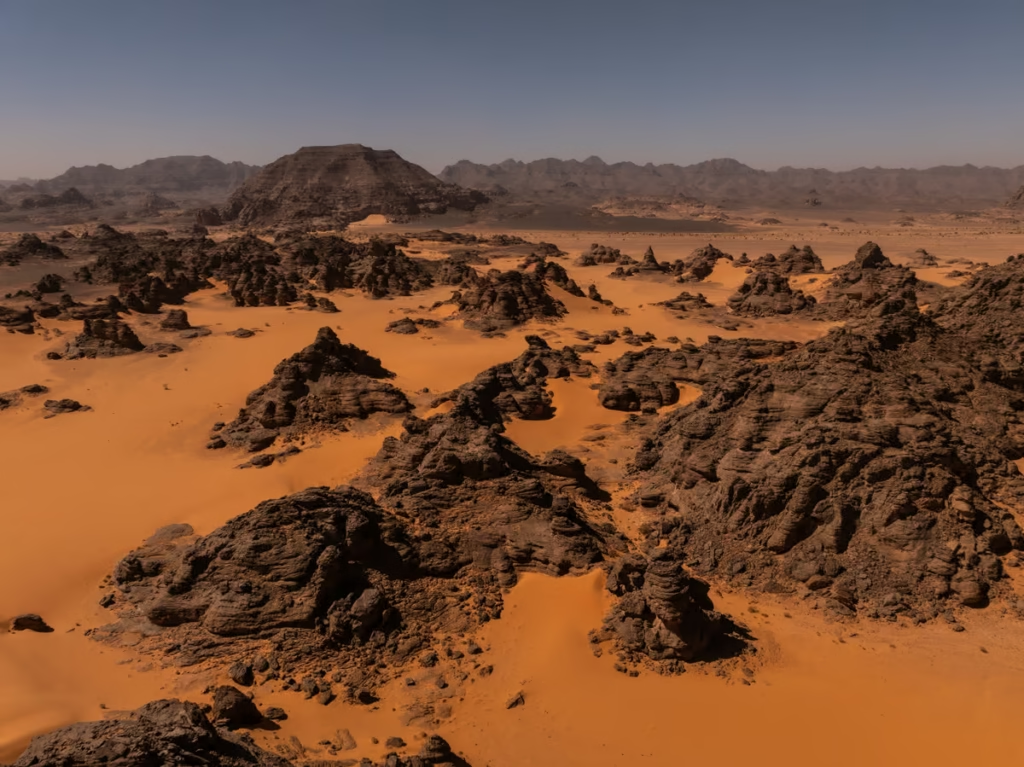
Wind has carved these sandstone formations into arches, pillars, and shapes that don’t quite look natural. It feels like you’re on a different planet. In some ways, it reminded me of Wadi Rum in Jordan, except with zero tourism or infrastructure.
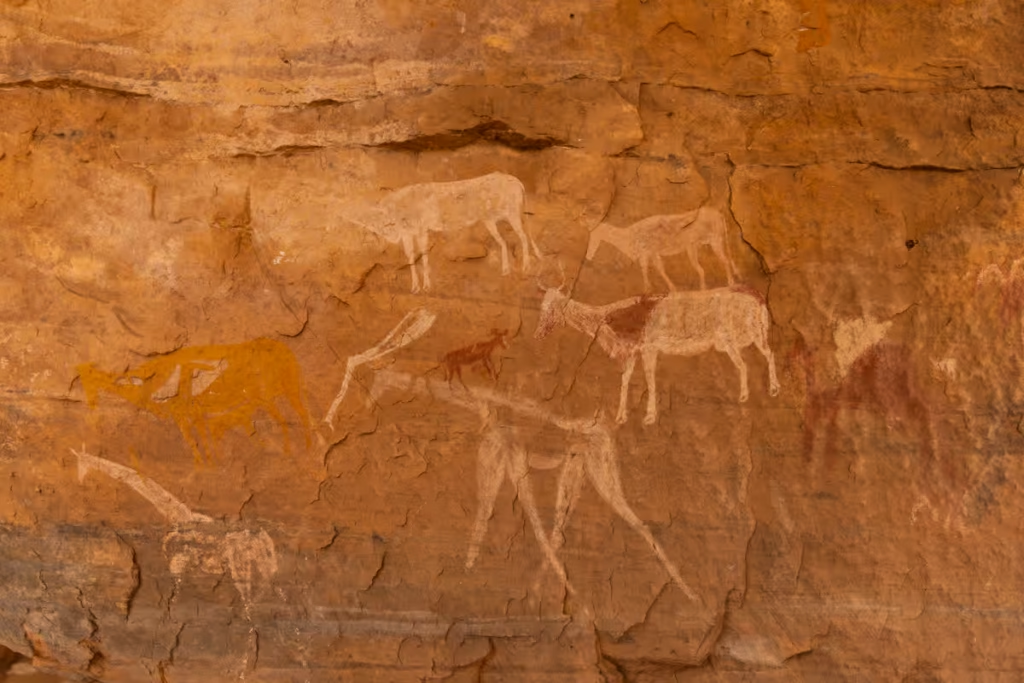
Beyond the beguiling rock formations, one of the things that makes the Akakus truly special is the prehistoric rock art strewn throughout the mountains. Some of it dates back thousands of years, depicting animals and people from a time when this region was far greener.
Wadi Mathendous
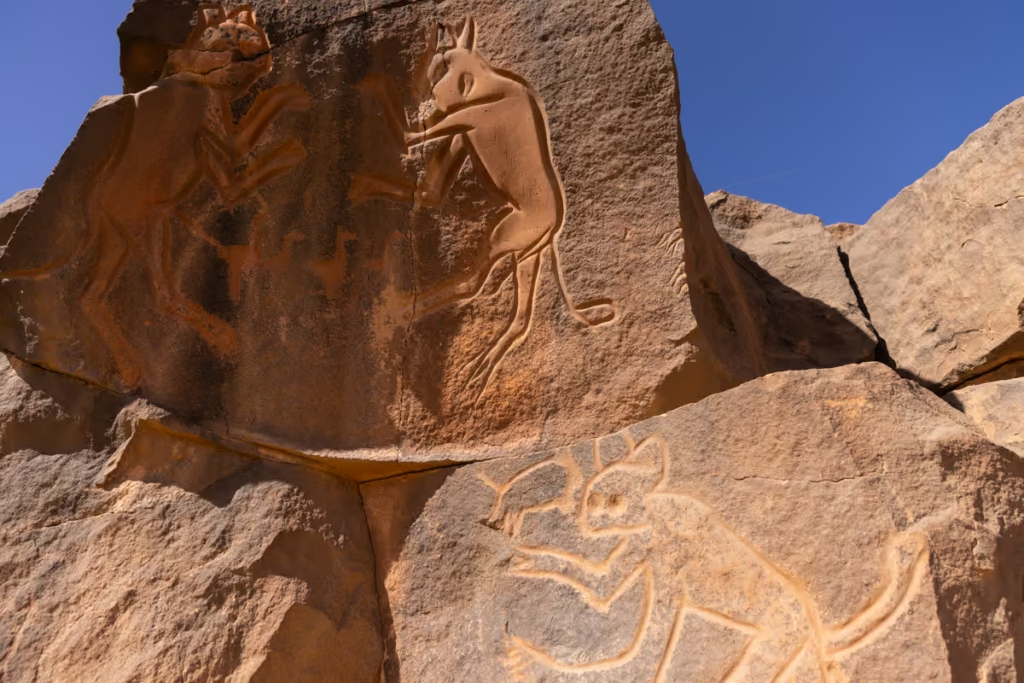
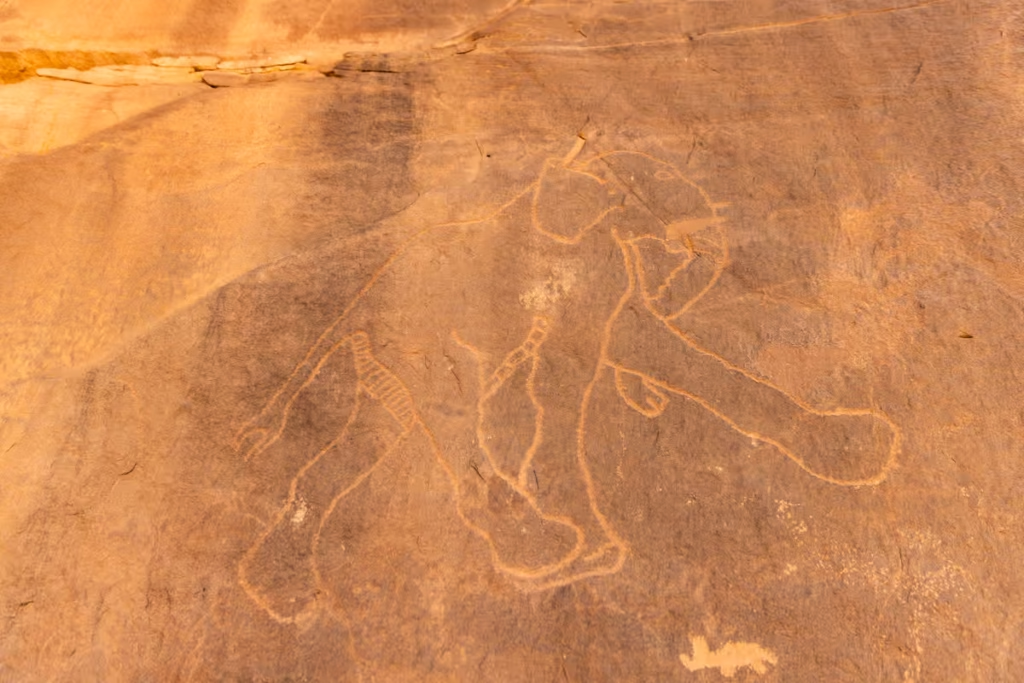
Wadi Mathendous is one of Libya’s most important prehistoric rock‑art sites, a remote canyon in the Mesak Settafet where deep‑cut Neolithic engravings depict elephants, giraffes, crocodiles, and other wildlife from a once-greener Sahara. The petroglyphs, carved roughly 6000–8000 years ago, are executed in bold relief and spread across boulders and cliff faces along the dry wadi. Among the most striking panels is the famous “fighting cats” engraving, a dynamic scene of two large felines rearing toward each other, its purpose still debated.
Reaching the site requires 4×4 travel across black‑stone plains, followed by short walks and scrambles between scattered panels. The isolation is part of its appeal: no barriers, no signage, just wind‑scoured rock and carvings that offer one of the clearest windows into prehistoric life in the central Sahara.
Central Libya
Al Haruj Volcanic Field
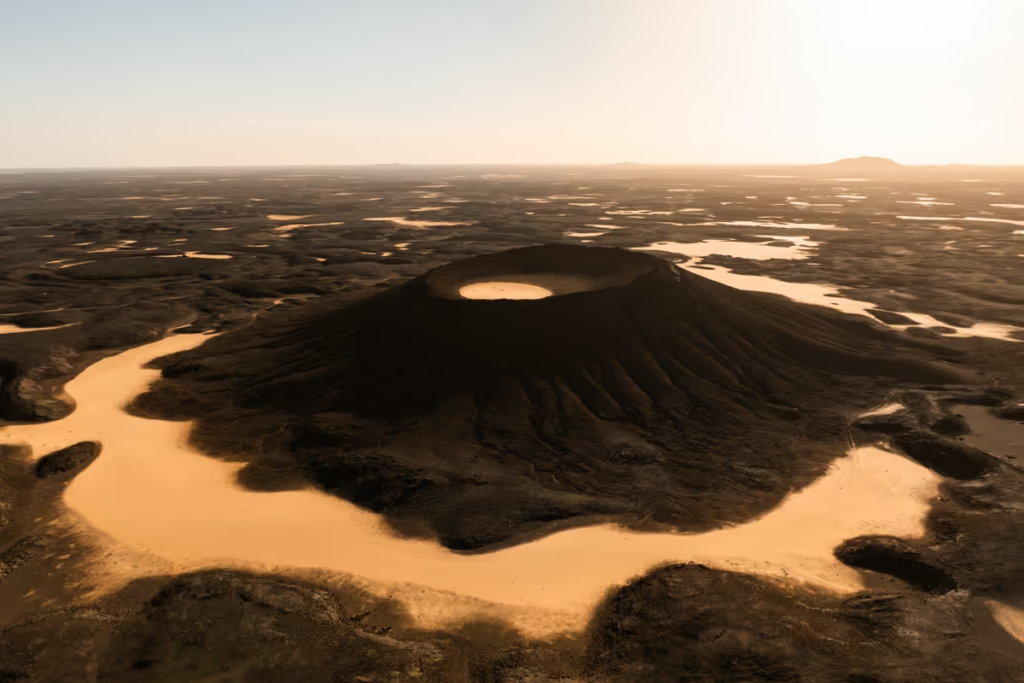
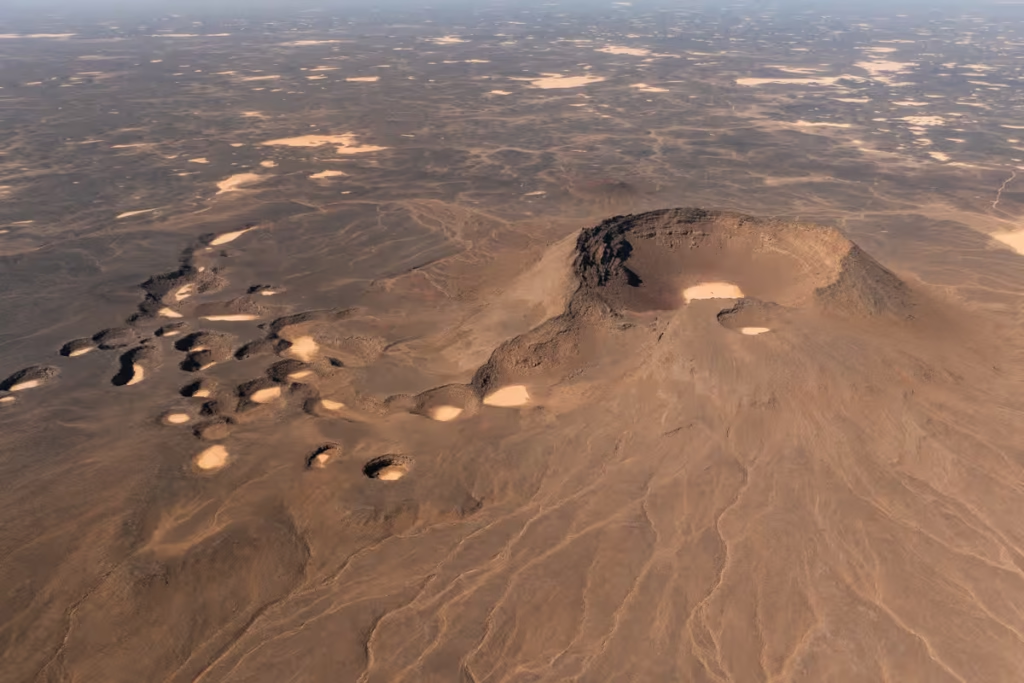
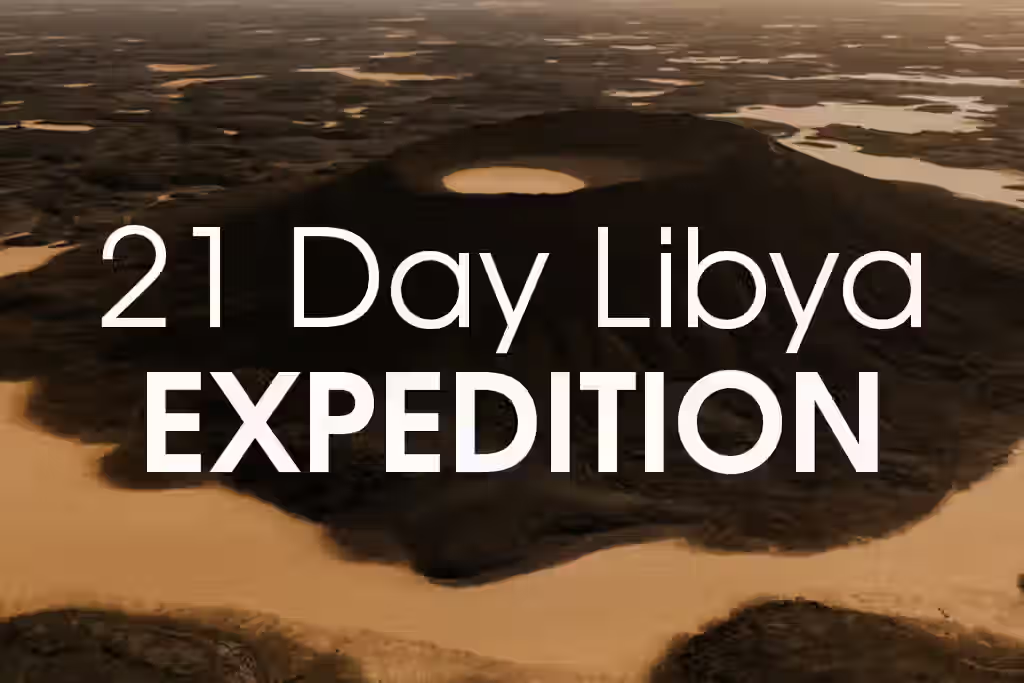
The Al Haruj is one of Libya’s most wild landscapes—an immense volcanic field where sand gives way to endless stretches of black basalt and ancient lava flows.
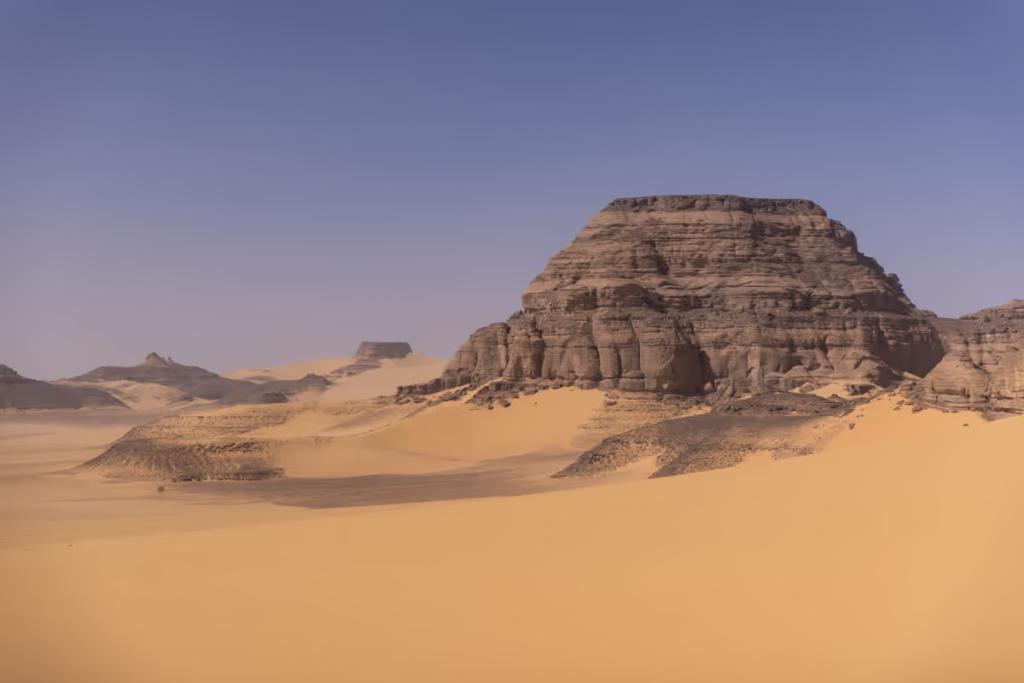
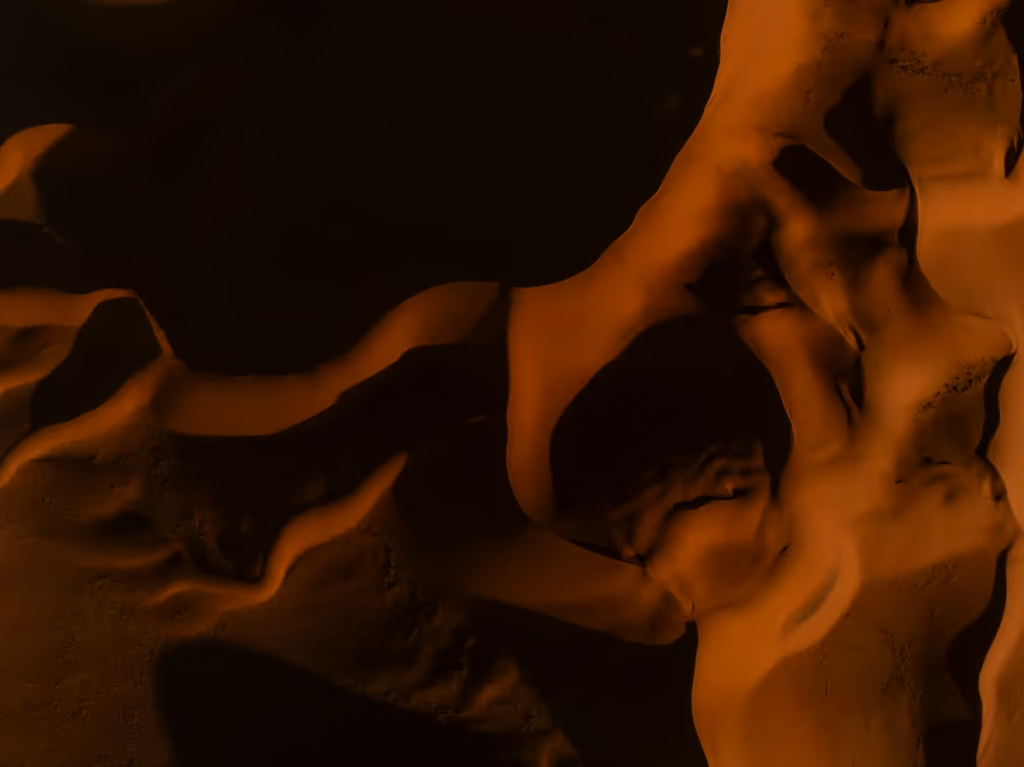
Formed by eruptions that spanned more than six million years, the area contains hundreds of volcanic cones, craters, and lava plains that create a stark, almost lunar atmosphere under the desert sun with undulating oranges and stark shades of black. Some cones still rise sharply from the flats, while others have eroded into jagged, charcoal‑colored ridges.
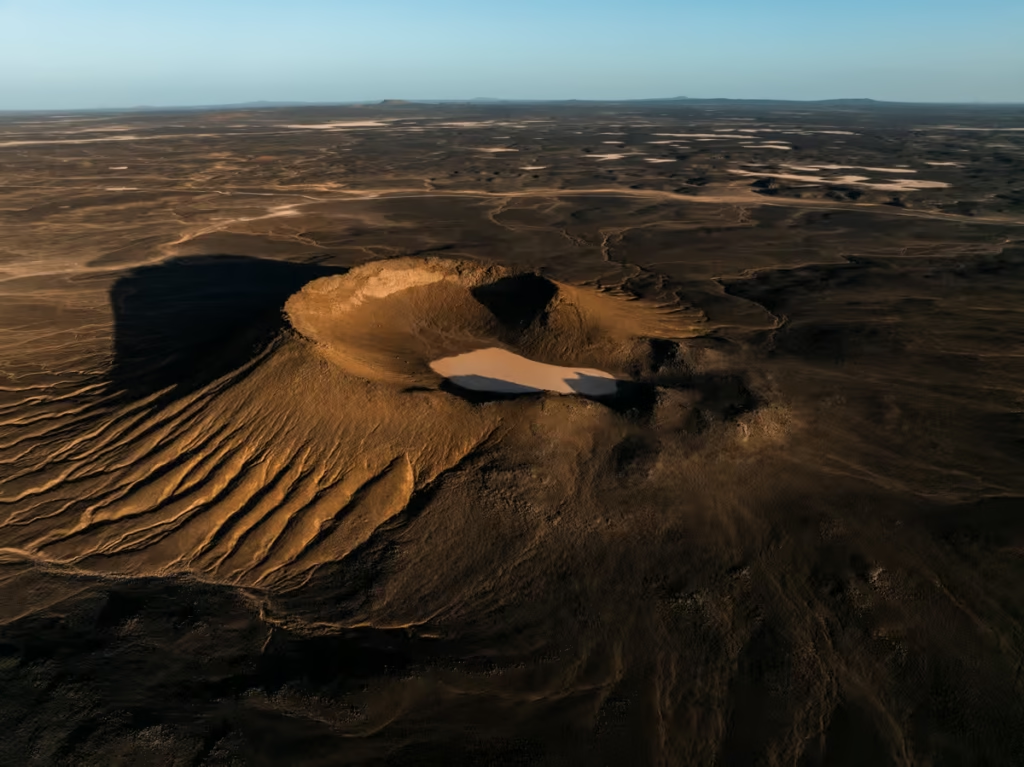
Roughly the size of the nation of Denmark, Al Haruj is the largest volcanic field in North Africa, but it is wildly remote—there’s virtually no infrastructure, signage, or tourism, which only heightens the sense of isolation.
It takes a couple of days of driving from Tripoli to reach Al Haruj, but for travelers interested in geology, volcanology, remote desert environments, or landscapes that feel otherworldly, it’s worth the long journey.
Waw an Namus
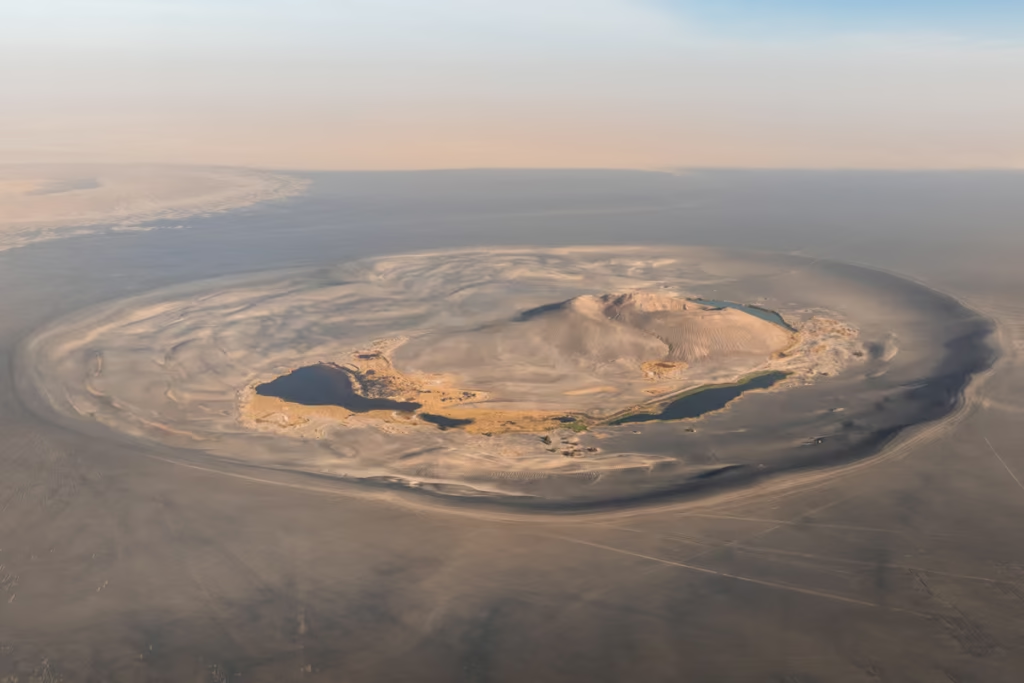
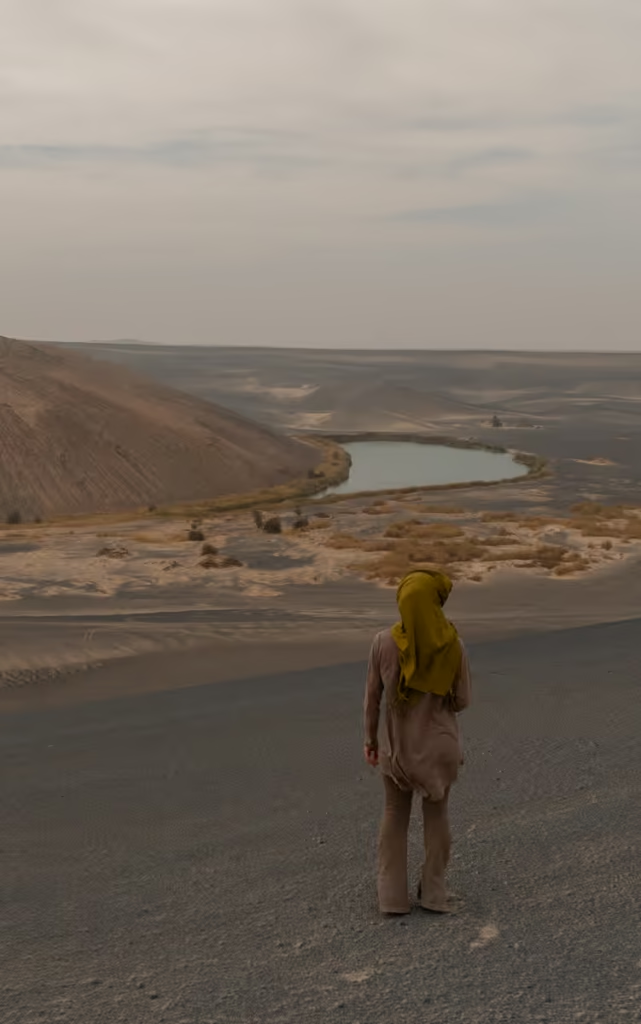
Waw an Namus is a massive volcanic crater in a depression in the Libyan Sahara, its black ash fields sharply contrasting with the surrounding sand.
At the center sits a three‑kilometer‑wide caldera holding three lakes, fed by groundwater and ringed with palms and reeds that support birds, insects, and occasional desert wildlife. The dark outer rim is made of pyroclastic deposits, evidence of relatively recent volcanic activity compared to other features in the region.
The name, often translated as “Oasis of Mosquitoes,” comes from the insects drawn to the lakes—an unusual sight in such an arid environment. Visiting the lakes was tolerable the first day we arrived, as it was quite windy, but going back down to the lakes the next day, when it was much calmer, was absolute torture— we quickly found out how it earned its name as the namus ate us alive.
Reaching Waw an Namus is difficult and requires deep‑desert travel, but the payoff is a surreal landscape with black volcanic slopes, blue lakes surrounded by palm-ringed oases, and golden dunes. Due to the long travel times to reach Waw an Namus from the coast, it’s rarely visited.
Zuweila
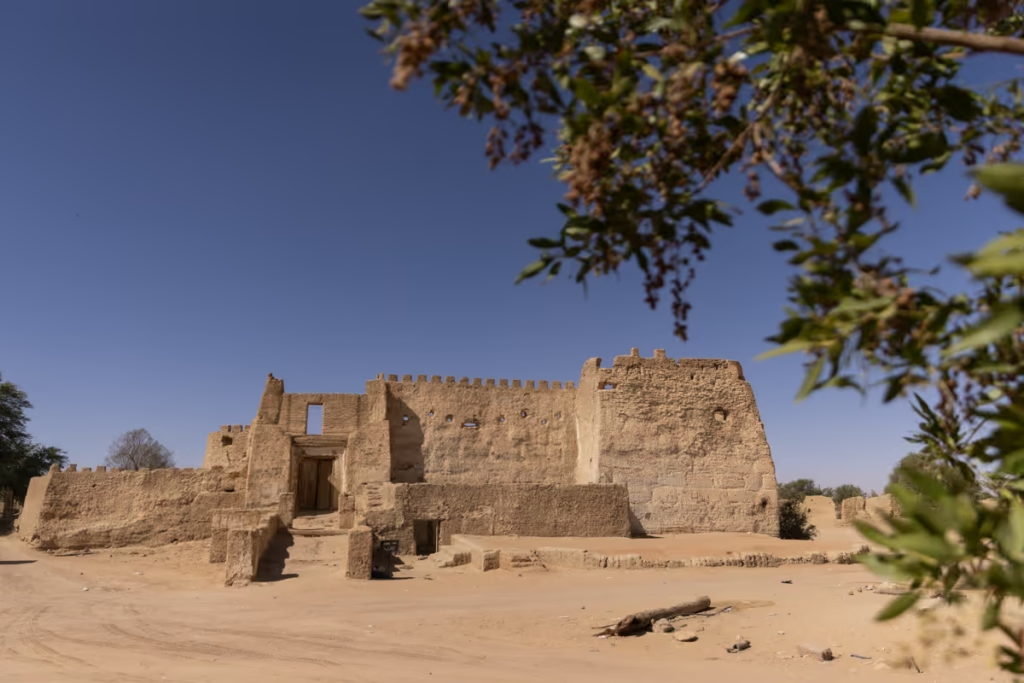
Zuweila small and quiet these days, despite its historical weight as a former stronghold on the Trans‑Saharan trade routes linking Libya to Chad and Niger.
Once an important center for caravans and regional power, the town still preserves mudbrick architecture, narrow lanes, and the Zuweila Castle that hint at its medieval significance. The town also features a Graveyard to the Prophet Mohammed’s Companions, which was unfortunately blown up by ISIS— evidence that Zuweila was also historically tied to the Ibadi community and served as a regional capital during parts of the early Islamic period.
We ended up camping on the land on the outskirts of town, belonging to a local family whom some of our crew knew. The women and girls kidnapped me for the entire afternoon and evening, which ended up being my absolute favorite part of the trip, getting to meet the family from Great-Grandma, down to the newborn granddaughters, and share a traditional Southern Libyan meal with them.
Murzuq
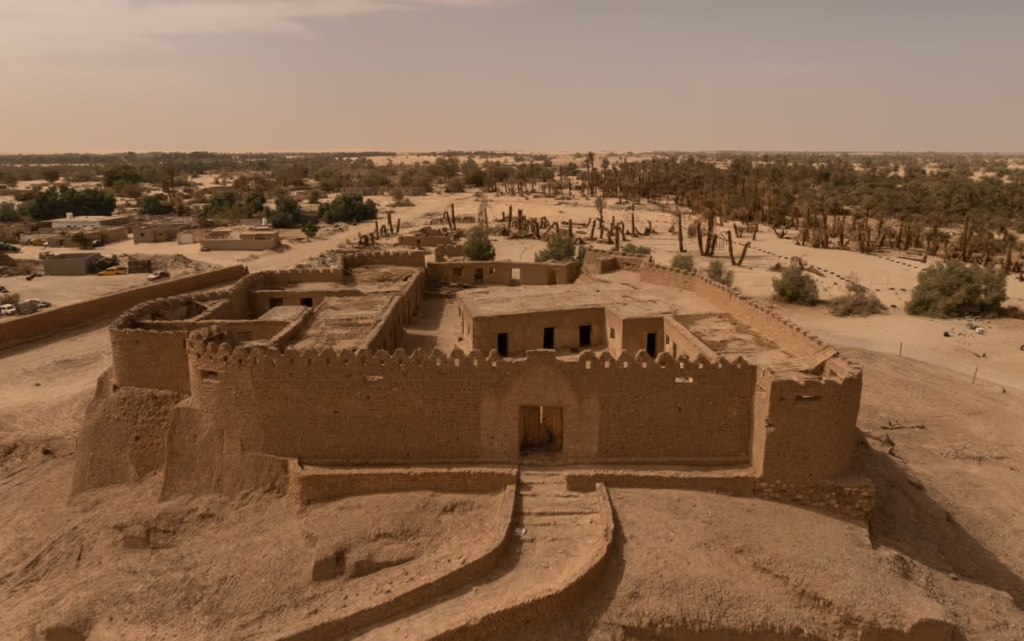
Murzuq sits deep in southwestern Libya at the edge of the Sahara, a remote desert town that once served as a major crossroads for Trans‑Saharan trade and the region’s slave routes.
Its centerpiece, Murzuq Castle, dates back to the 16th century and later became a strategic Ottoman stronghold; even in partial ruin, it still overlooks the town and the surrounding dunes with a presence. The wider Murzuq Basin has long been a staging point for expeditions into the Tadrart Akakus and the Fezzan, making it an essential gateway for travelers heading into Libya’s most dramatic desert landscapes.
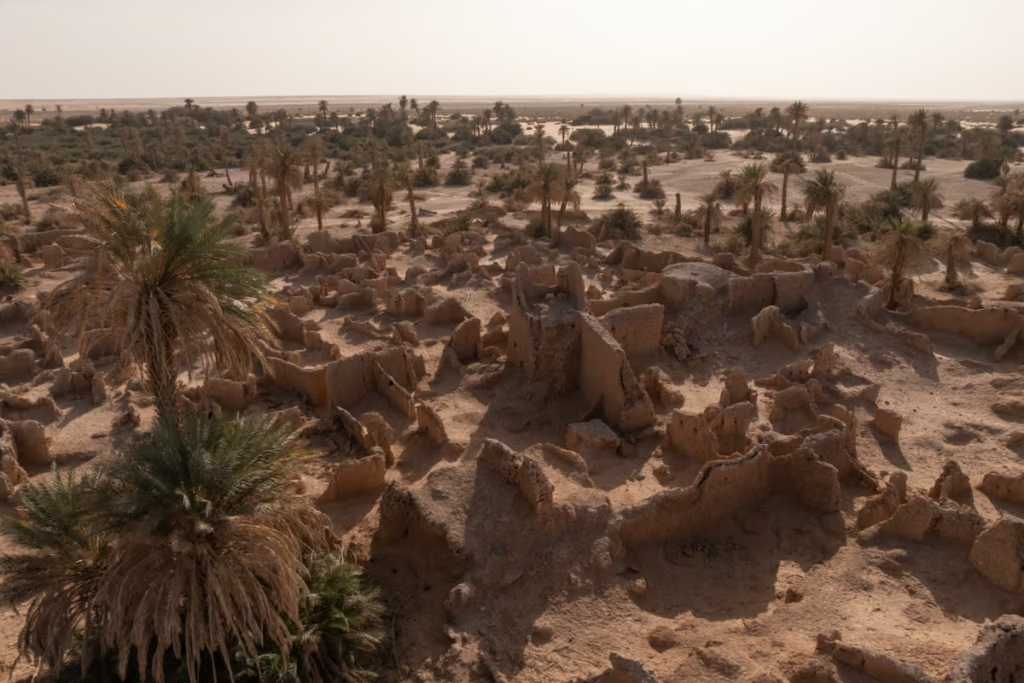
Outside Murzuq, there are remnants of a couple of castles and citadels.
Despite its history, Murzuq today feels profoundly isolated with near-desolate streets, vast horizons, and a sense of remoteness that’s hard to grasp until you’re there.
About 40 kilometers west of Muzuq out in the desert, there are three castle remnants of al Manashi Palace, al Tarajim Palace, and one more.
Eastern Libya
Benghazi
Benghazi is Libya’s second‑largest city and a major economic anchor of the east, shaped by both its Mediterranean setting and its Italian‑era urban core.
From 2014 to 2017, Benghazi became one of the main battlegrounds in the conflict, and entire districts, especially in the historic center, suffered heavy damage or were abandoned. Many neighborhoods are still in various stages of reconstruction, with ruined buildings standing beside newly rebuilt ones. That said, some traces of Benghazi’s past remain with Italian colonial architecture, old administrative buildings, and the Corniche, where cafés and sea views hint at the city’s former cosmopolitan rhythm.
Just outside Benghazi, ancient sites like Tolmeita (Ptolemais) and other Cyrenaican ruins connect the region to its deeper Greek and Roman history, offering some of the most significant archaeological remains in eastern Libya.
Green Mountains (Jebel Akhdar)
The Jebel Akhdar always floors visitors who only have images of the barren dunes of the Libyan Sahara on their mind. Libya, especially along the coast in the east, is quite verdant.
Instead of endless sand, you get rolling hills, forests, and cooler air. It’s one of the few regions where agriculture thrives, and the landscape feels more Mediterranean than Saharan.
Beyond the Greek ruins of Cyrene, the area is dotted with lesser-known ruins like Apollonia, an ancient port city where columns rise right out of the sea, and Ptolemais, another sprawling Greek-Roman site that sees almost no visitors.
Villages here move at a slower pace, and the contrast with the rest of Libya is striking. It’s a reminder that the country isn’t as one-dimensional as it might seem on a map.
Cyrene
Located in the east, Cyrene shifts narratives completely.
This isn’t Rome. This is Greece, transplanted into North Africa.
Built into the hills, Cyrene feels almost like a natural extension of the landscape. The Temple of Zeus, one of the largest Greek temples outside Greece itself, dominates the site with its massive columns. Nearby, the Sanctuary of Apollo cascades down the hillside, blending architecture with terrain in a way that feels intentional and effortless.
There’s also a sprawling necropolis stretching along the road into the city, filled with tombs carved into rock faces.
Culture, Etiquette, and Local Customs in Libya
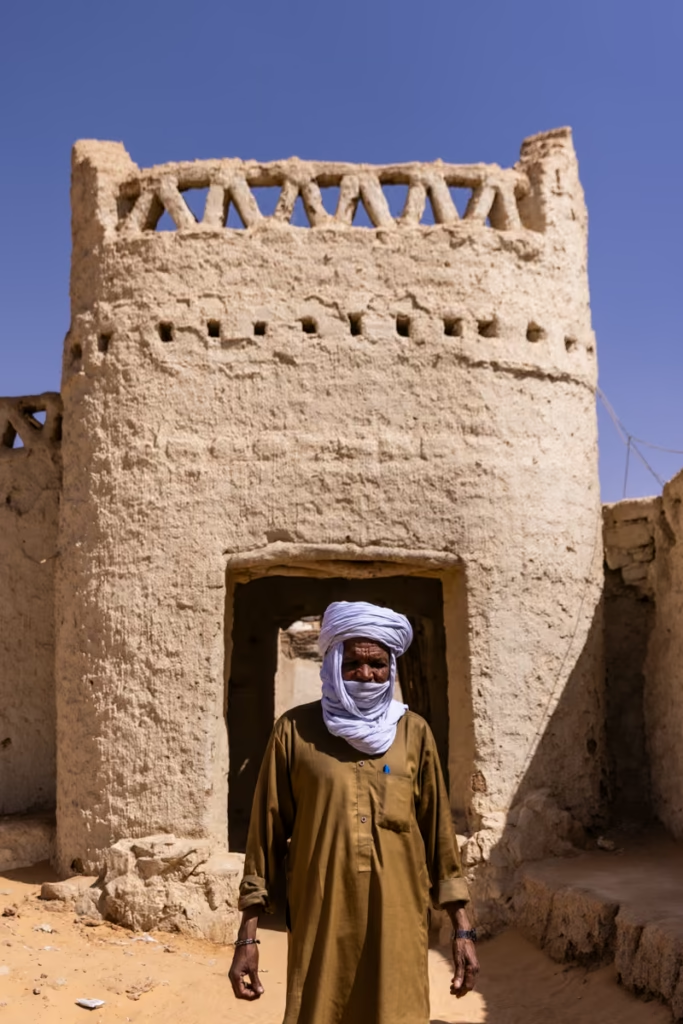
Libya is a conservative, predominantly Muslim country, and cultural awareness matters. Most local women will be fairly covered up, but on occasion, in larger cities, you will see some who opt not to wear a headscarf. I found that in the south, almost all women were wearing a full abaya and niqab when out in public. In Tripoli, headscarves were common, but many women still showed their faces.
- Dressing modestly is key.
- Alcohol is illegal, though people do make moonshine.
- Always ask before photographing people, especially women.
- Respect religious practices, especially during Ramadan. That said, you will be on a tour, and your guides will still prepare breakfasts and lunches for you, but no restaurants will be open.
What to Pack for Libya
Packing for Libya is less about fashion and more about practicality. You’ll be moving between cities and remote desert environments, so versatility is key.
Essentials:
- Lightweight, modest clothing (long sleeves and loose pants)
- Warm layers (desert nights get cold)
- Comfortable walking shoes
- Scarf or buff (for sun, dust, and cultural respect)
- Sunglasses and high SPF sunscreen
- Headlamp or flashlight
- Wet wipes and hand sanitizer
- Power bank and charging cables
- Reusable water bottle
For Female Travelers:
- Loose, non-revealing clothing covering arms and legs
- A headscarf (not always required, but useful in certain areas)
- Long skirts or flowy pants for comfort in the heat
- A lightweight outer layer for added coverage when needed
Traveling Libya as a Woman
Traveling as a woman in Libya comes with its own set of considerations, but it’s important to frame this within the reality of how tourism works here.
You won’t be traveling independently.
You’ll be on a guided tour, accompanied by a local guide, driver, and a tourist police officer. This structure creates a controlled environment where you are rarely, if ever, alone in unfamiliar settings.
That said, experiences can still vary.
During my time in the south, I was groped by a man while exploring a castle. It was a jarring moment, but the situation was handled immediately after I reported what happened. My team intervened, the man was reported to the authorities, and it was dealt with quickly and professionally. It didn’t escalate further, but it’s worth acknowledging that incidents can happen, as they can anywhere.
What stayed with me more, though, were the interactions I had with women.
In Zuweila, I was pulled into a family home by a group of women and girls and spent hours with them, completely immersed in their world. From great-grandma to newborns, we shared food, laughter, and curiosity about each other’s lives. It was one of the most genuine and grounding experiences of the entire trip.
Great-grandma even excitedly said how surprised she was that I shared a meal with her and her family and ate a bit of every one of their dishes. I asked if she’d hosted many other foreign visitors, and she said never had she before, but she was so happy to see someone from half a world a way trying and enjoying their cuisine. The granddaughters even pulled out their henna and refreshed my henna from Yemen I had during the recent tour in Socotra I had led.
What to Expect as a Female Traveler:
- You may attract attention, especially in more remote areas.
- Dressing modestly reduces unwanted attention.
- Interactions with men are generally respectful, especially in the presence of your guide.
- Interactions with women can be incredibly warm and welcoming.
Libya is not a solo female travel destination in the traditional sense, but within the structure of a guided trip, it can be deeply rewarding and eye-opening.
Connectivity, Internet & SIM Cards in Libya
Connectivity in Libya is limited and inconsistent. Expect slow data speeds and patchy mobile coverage, especially once you leave major cities.
Local SIM cards are available, and some higher-end hotels in Tripoli and Benghazi offer decent Wi-Fi, but once you’re in the desert, you’re largely off-grid.
It’s worth downloading Google Translate (Arabic offline) and Organic Maps maps of Libya before arriving, as both will come in handy when connectivity drops.
The Reality of Traveling in Libya
Libya is a destination you consider carefully, balancing its magnetic and extraordinary sites with the realities on the ground.
The rewards are undeniable. Standing alone in Leptis Magna with the Mediterranean in the distance feels almost impossible in today’s world. Watching the sun sink behind the dunes of the Ubari Sand Sea makes everything else feel a million kilometers away.
The challenges of Libya are just as present as the beauty. For now, Libya is a place that demands preparation, patience, and respect for its current circumstances. That complexity is part of what makes it so compelling.
Have Any Questions About Traveling in Libya?
Ask all your Libya travel related questions in the comments section below.
Hi Nicole. I just wanted to thank you for this fabulous Libya Guide. It is without question the most valuable guide for all kinds of practical issues available today. I will be traveliing to Libya on October with 2 groups and I have advised everyone to read your guide with careful attention. I have visited Libya 5 times – both coast and desert – before the revolution and can’t wait to return.
Hi Helen,
Glad to hear you thought it was informative, coming from someone who has spent a lot of time there. Enjoy your upcoming trips back!