Prince of Wales Island Travel Guide
Prince of Wales Island Travel Guide was originally published in 2026
Prince of Wales Island was the highlight of my Southeast Alaska travels this summer.
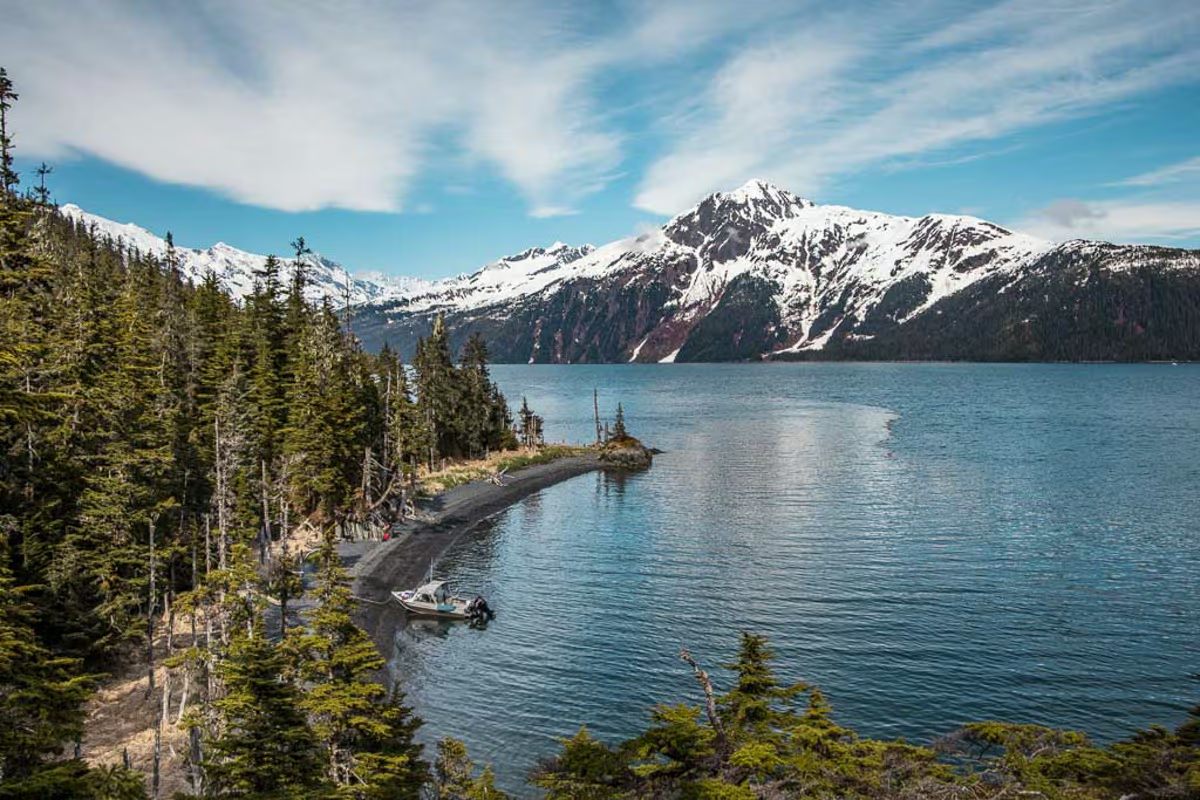
I came expecting an enormous, heavily forested island with a maze of logging roads, small fishing communities, and plenty of rain. I got all of that, but I also found something I wasn’t quite prepared for: an island where you can spend an entire day driving through the Tongass National Forest, stop at a beach with nobody else around, wander into a tiny community for lunch, watch black bears fishing for salmon, and then end the day beside a remote lake or saltwater inlet.
Prince of Wales Island is huge, wild, and surprisingly accessible. In fact, Prince of Wales is the fourth largest island in the United States behind the Big Island, Kodiak, and Puerto Rico.
Prince of Wales Island has one of the most extensive road networks in Southeast Alaska, making it possible to explore independently in a way that isn’t always practical elsewhere in the Inside Passage. The island is also deeply connected to Tlingit and Haida history and culture, with communities, cultural sites, totem poles, historic settlements, and landscapes that tell a much bigger story than the typical Alaska road trip itinerary suggests.
If you’re looking for a Southeast Alaska destination that feels considerably more remote than the cruise-ship circuit but doesn’t require a floatplane or expedition vessel for every adventure, Prince of Wales Island is worth putting on your Alaska itinerary.
- Prince of Wales Island at a Glance
- Where is Prince of Wales Island?
- Why Visit Prince of Wales Island?
- Best Things to Do on Prince of Wales Island
- Prince of Wales Island Towns and Communities
- How to Get to Prince of Wales Island
- How to Get Around Prince of Wales Island
- Camping on Prince of Wales Island
- Prince of Wales Island Weather
- What to Pack for Prince of Wales Island
- When is the Best Time to Visit Prince of Wales Island?
- How Many Days Do You Need on Prince of Wales Island?
- 7 Day Prince of Wales Island itinerary
- Prince of Wales Island Travel Tips
- Is Prince of Wales Island worth visiting?
Prince of Wales Island at a Glance
Location: Southeast Alaska, in the Alexander Archipelago
Nearest major hub: Ketchikan
Size: roughly 2,200 to 2,600 square miles, depending on how the island is defined
Length: about 135 to 140 miles north to south
Main communities: Craig, Klawock, Hydaburg, Thorne Bay, Coffman Cove, Kasaan, Hollis, Naukati, Whale Pass, Point Baker, and Port Protection
Forest: Tongass National Forest
Main access: Inter-Island Ferry Authority from Ketchikan or regional flights
Best for: road trips, wildlife, hiking, fishing, kayaking, camping, cabins, Indigenous culture and getting properly off the beaten path
Prince of Wales Island is commonly called POW by locals. Don’t let the nickname confuse you. We’re talking about an island, not a military acronym with a suspiciously large road network.
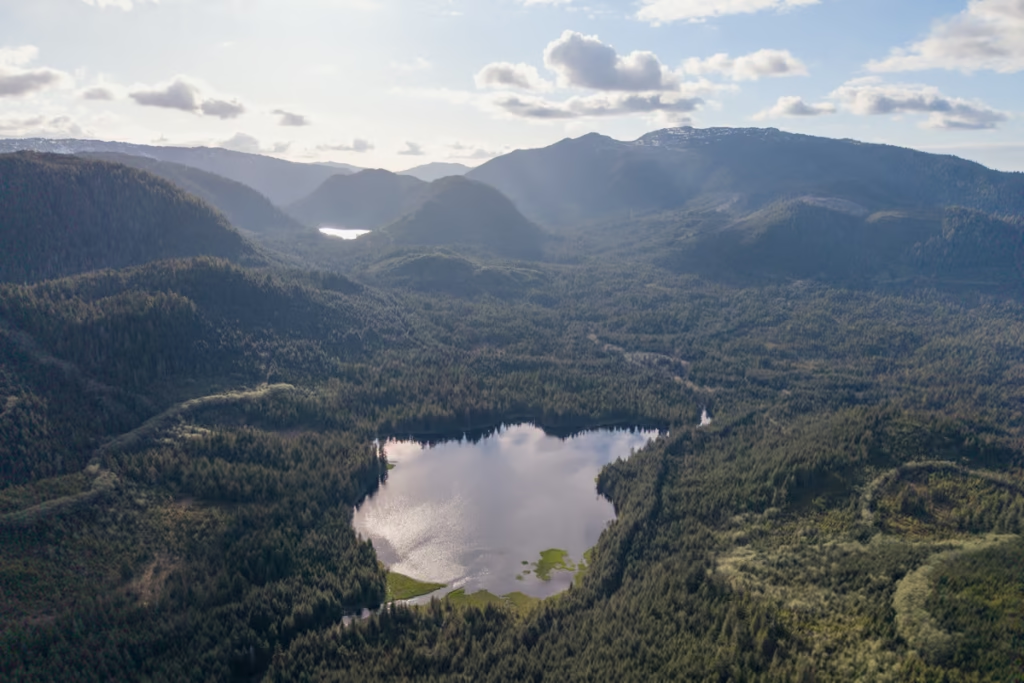
The island is part of the Tongass National Forest, the largest national forest in the United States and one of the world’s great temperate rainforest landscapes. Prince of Wales has roughly 1,000 miles of coastline and an enormous network of paved and gravel roads reaching deep into the forest.
Where is Prince of Wales Island?
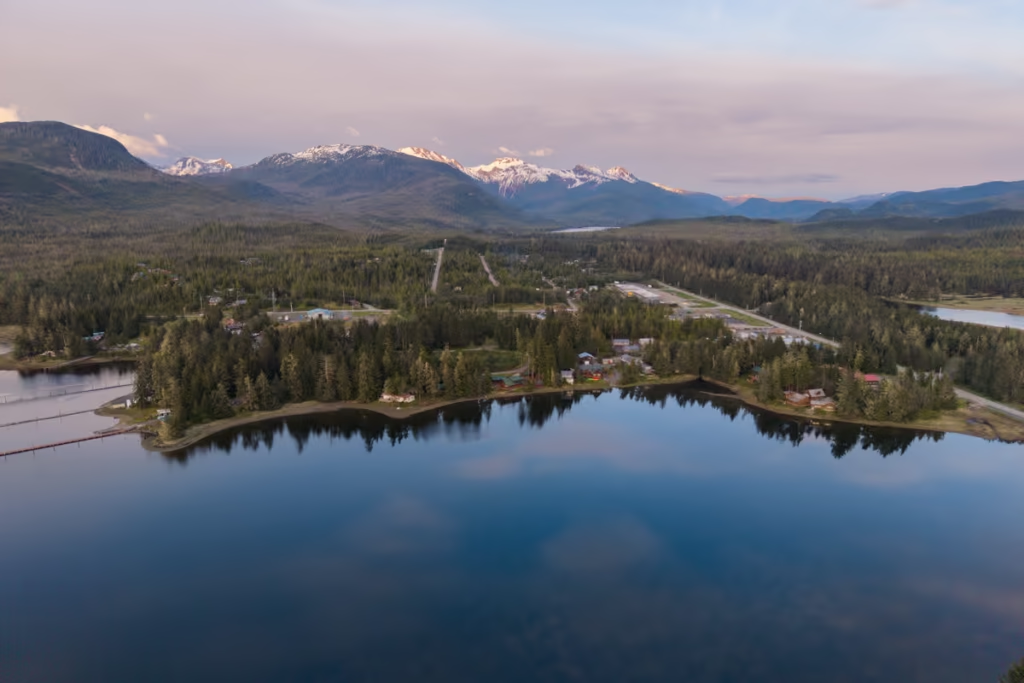
Prince of Wales Island is in Southeast Alaska, across the Inside Passage from the mainland and just southwest of Ketchikan.
The easiest way to visualize it is to look at Ketchikan and then look west. There it is: a massive green island surrounded by smaller islands, channels, coves and passages.
Despite its remote location, Prince of Wales Island isn’t particularly difficult to reach. The Inter-Island Ferry Authority connects Ketchikan with Hollis, while regional and charter flights connect Ketchikan with communities on the island.
The island itself is enormous compared with the size of its population. Small communities are scattered around the coast, while most of the interior is forest, mountains, lakes, rivers, muskeg, and roads built originally for timber access.
That combination is what makes Prince of Wales so interesting for independent travelers.
Why Visit Prince of Wales Island?
If you’ve already visited Ketchikan, Juneau, or Sitka, Prince of Wales Island feels like a different version of Southeast Alaska.
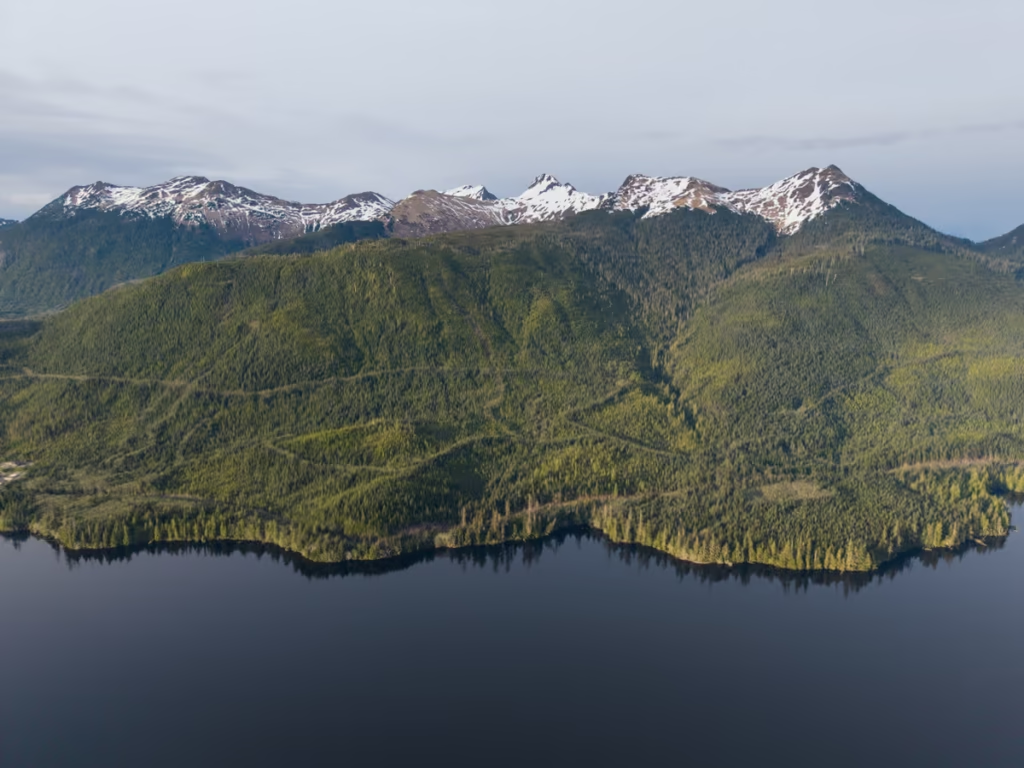
The scenery is familiar in the best possible way: dripping temperate rainforest, Sitka spruce, western hemlock, cedar, moss-covered rocks, salmon streams and mountains disappearing into low clouds.
But the way you experience it is different.
Instead of hopping between excursions or disembarking from a cruise ship, you can spend several days following roads wherever they lead. You can stop at a lake because it looks interesting. You can take a side road to see where it goes. You can hike without encountering another person for hours.
Despite the sprawling nature of the island, Prince of Wales isn’t totally inhabited.
Craig and Klawock are the largest population centers and the main practical base for many visitors, but smaller places such as Kasaan, Hydaburg, Coffman Cove, Thorne Bay, Whale Pass and Naukati each have their own character.
For me, that combination was the magic of Prince of Wales Island. The destination isn’t one attraction. The entire island is the attraction.
Best Things to Do on Prince of Wales Island
There is a ridiculous amount to do on Prince of Wales, so much so that you can’t possibly squeeze it all into a single visit.
The island’s huge road system means you can combine hiking, wildlife watching, cultural sites, beaches, caves, fishing and small-town exploration into one trip.
Here are the experiences I would prioritize.
Take a Prince of Wales Island Road Trip
Prince of Wales has the most extensive road system in the Tongass National Forest, with more than 1,000 miles of roads and roughly 200 miles of paved roads. Many additional roads are gravel logging roads that penetrate far into the forest.
This makes a Prince of Wales Island road trip one of the best ways to experience the island.
You can drive from Hollis, across the island toward Klawock and Craig, then branch off toward communities and recreation areas throughout the island.
The roads are part of the adventure. You’ll drive through enormous stands of rainforest, beside lakes and rivers, past muskeg and mountain slopes, and along stretches of coastline where the only other traffic may be a pickup truck or logging vehicle.
Don’t expect a highway road trip with constant gas stations and services, though.
Fuel is available in communities including Craig, Klawock, Naukati, Thorne Bay, Coffman Cove and Whale Pass, but you need to plan your fuel stops rather than assuming you’ll find one when the tank gets low. The state also recommends carrying a good spare tire and using a sturdy vehicle if you plan to drive the more remote logging roads.
Here are a few of the scenic roads on Prince of Wales.
Klawock-Hollis Highway
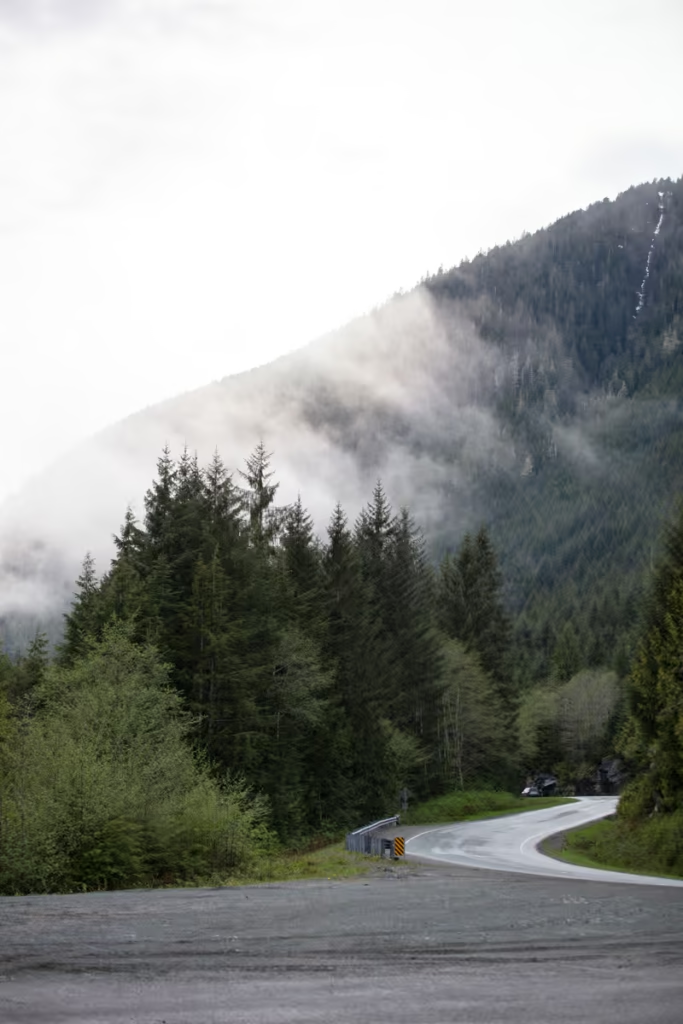
The Klawock-Hollis Highway is the ferry passenger’s welcome to Prince of Wales Island. The highway passes through scenic rainforest and the massive Klawock Lake on the way.
Big Salt Road
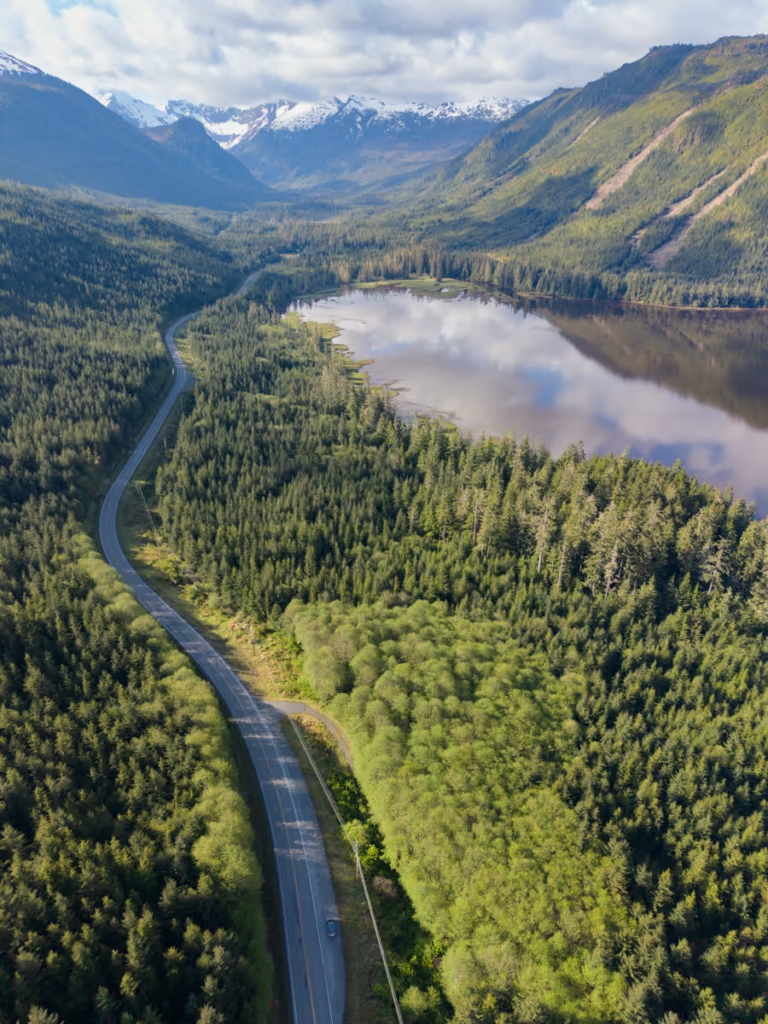
Big Salt Road heads northeast from Klawock, passing scenic views of the bay to the east. Evenutally it meets with Thorne Bay Road next to Control Lake.
Thorne Bay Road
From Control Lake, Thorne Bay connects the small communities of Thorne Bay and Kasaan to the remainder of the Prince of Wales road system. The road cuts through rainforest, passing Balls Lake and Gravelly Creek on the way.
Hydaburg Highway
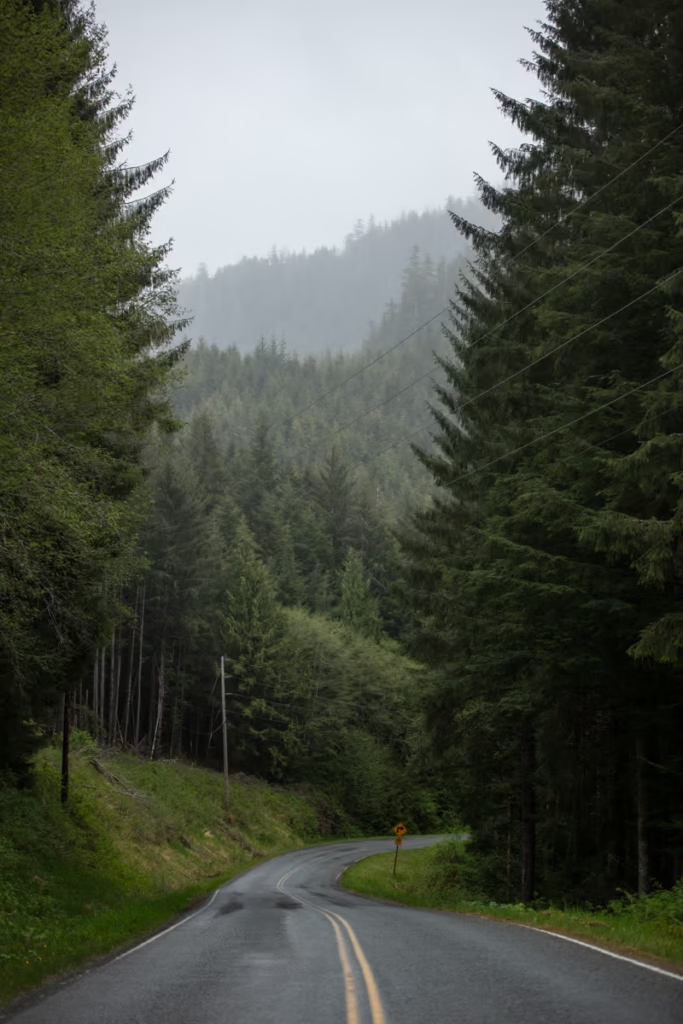
Near Harris River Campground along the Klawock-Hollis Highway, take a turn south onto the Hydaburg Highway. The Hydaburg Highway mainly winds through rainforest but is exceptionally beautiful.
Dog Salmon Road
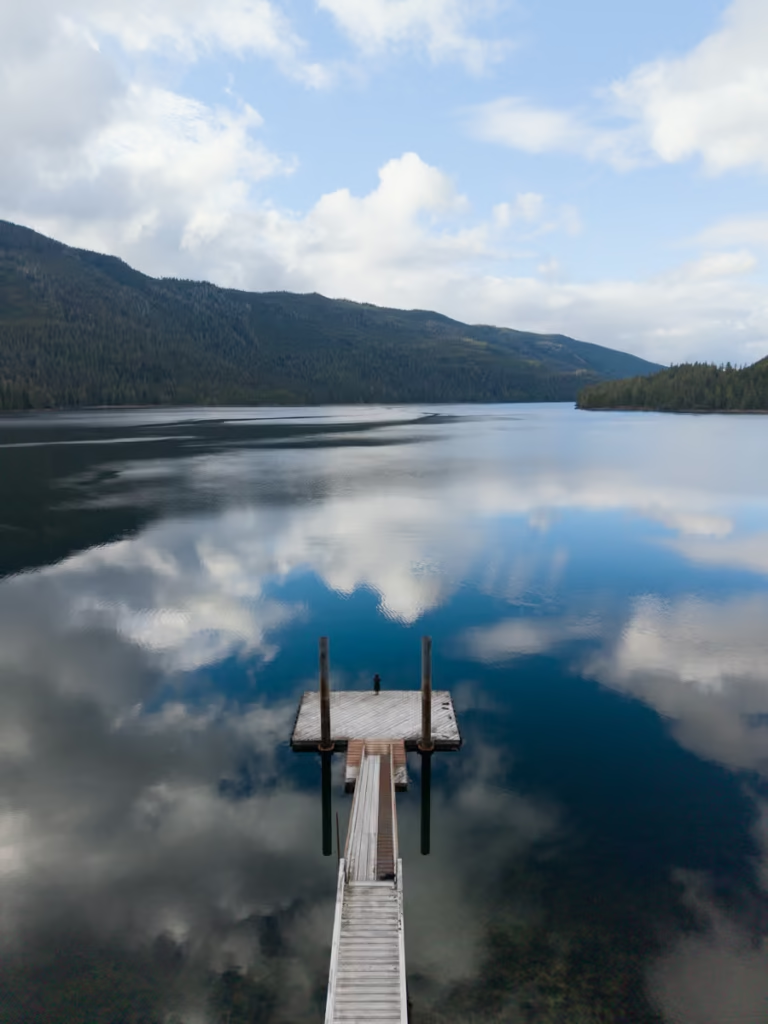
Dog Salmon Road spurs from the Hydaburg Highway, cutting through rainforest to eventually reach Dog Salmon Fish Pass, an excellent place for bear viewing July-September. For a real treat, continue along the road toward the northwest for unreal views of Polk Inlet.
Sandy Beach Road
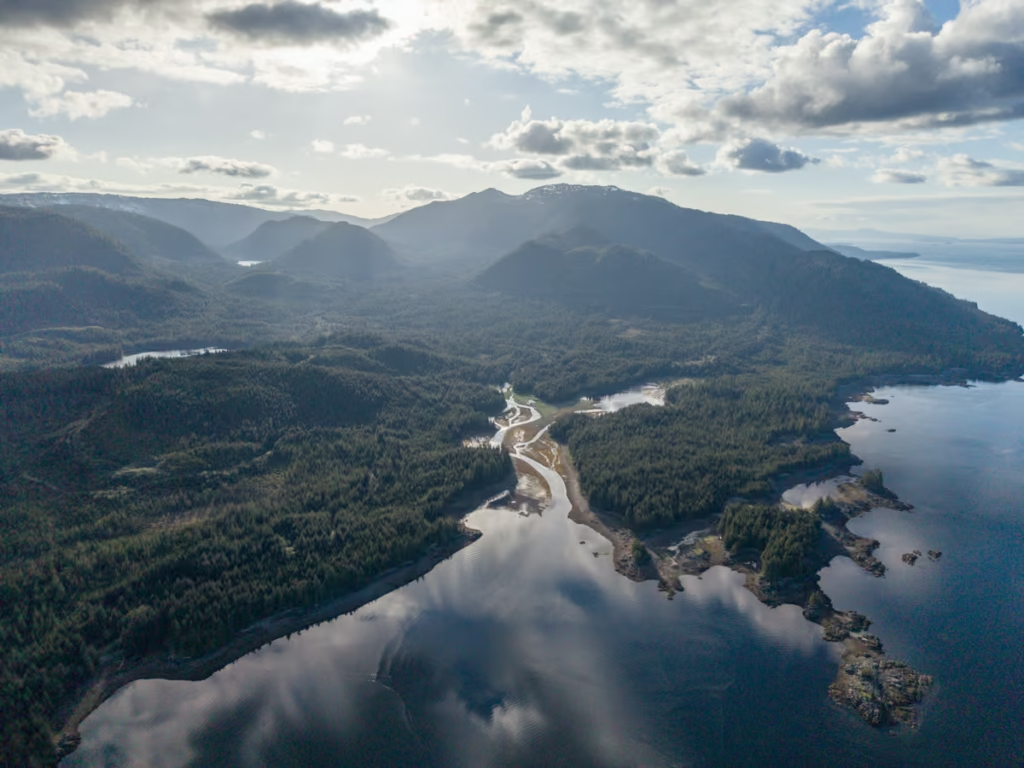
If you’re looking for a particularly scenic drive, put South Beach Road on your list.
The road runs between Coffman Cove and Thorne Bay along Clarence Strait and is roughly 37 miles long. It’s a gravel road, so conditions can affect driving times considerably.
You get forest, coastline, little pullouts, changing weather, and long stretches where it feels like you’ve wandered into the middle of nowhere.
This is the kind of road that makes Prince of Wales Island special, so much so that I did it twice. Luck Lake, Ratz Harbor, Little Ratz Harbor, and Sandy Beach were my favorite stops along the route.
Port Saint Nicholas Road
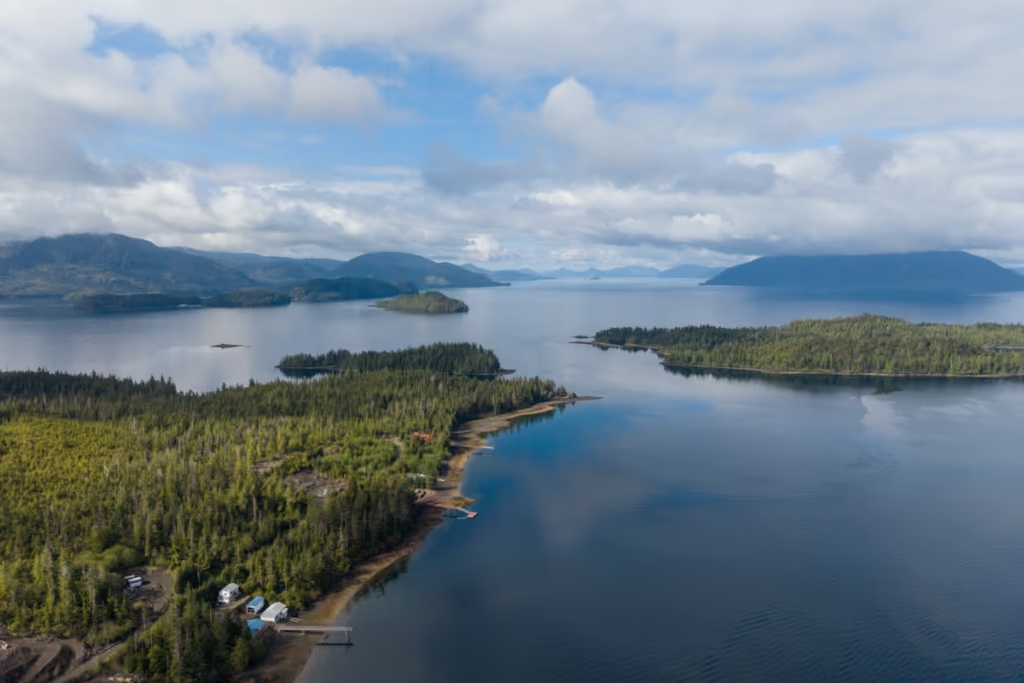
Take a turn to the south from the Craig-Klawock Highway and along a scenic trip toward Port Saint Nicholas. The road kind of just ends at Port Miraballes, but the views of the water and tiny islands that dot the bay are hard to beat.
North Prince of Wales Road
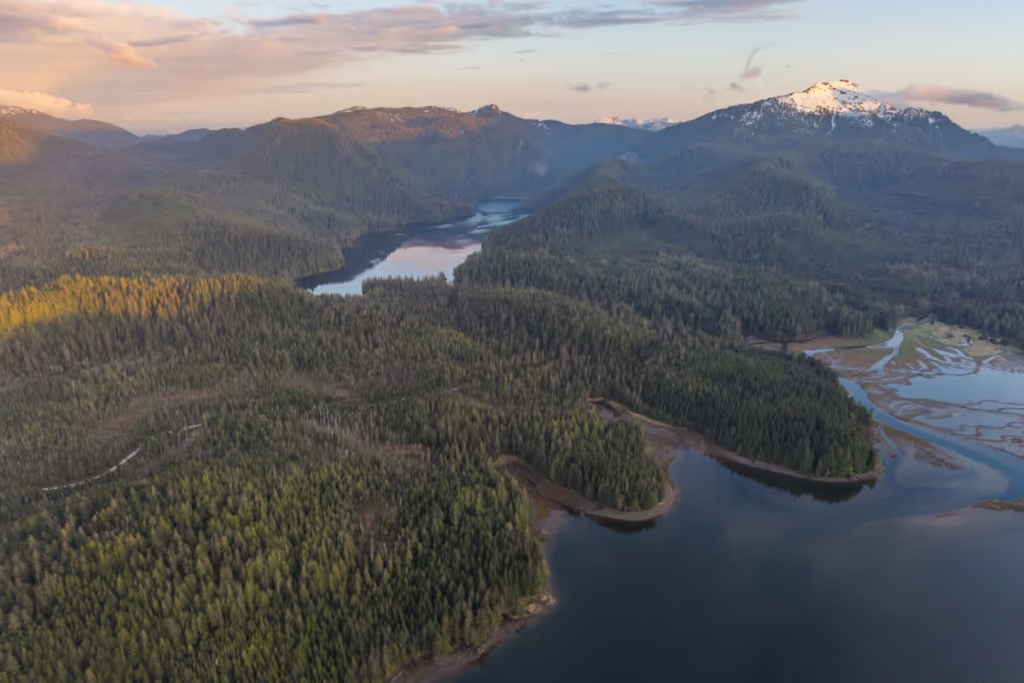
Most don’t make it this far up on Prince of Wales Island, but those who do will be rewarded with access to Red Bay and Red Bay Lake and Memorial Beach.
Do you need a 4WD vehicle on Prince of Wales Island?
Not necessarily.
You can cover the main paved routes in a normal rental car. The Alaska Department of Transportation specifically notes that the main paved and improved gravel network is accessible by standard vehicles, while more remote logging roads are better suited to a four-wheel-drive vehicle or sturdy SUV.
This distinction is important.
Main roads: A regular rental car generally works.
Remote gravel/logging roads: Check conditions and rental restrictions, and use an appropriate vehicle. Many rental companies will not allow their vehicles on the logging roads.
And please read your rental agreement. A vehicle being physically capable of driving a road does not mean your rental company allows you to take it there.
Visit Kasaan and Chief Son-I-Hat’s Whalehouse
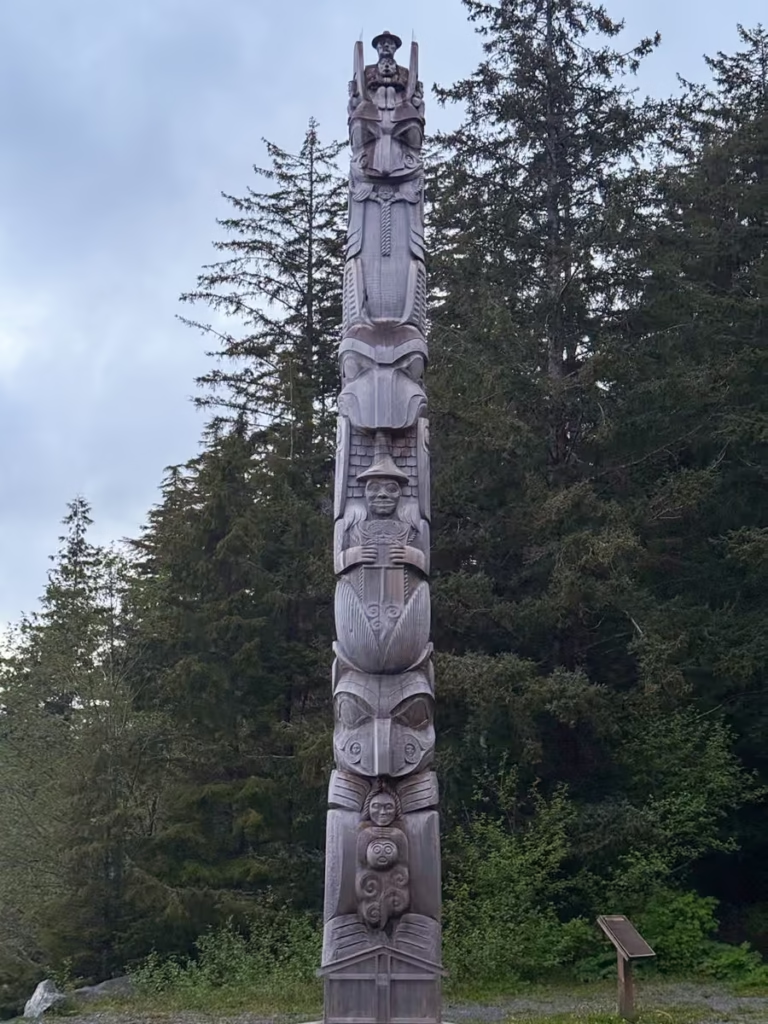
Kasaan is one of the places I would make a point of visiting if you’re interested in the Indigenous history of Prince of Wales Island.
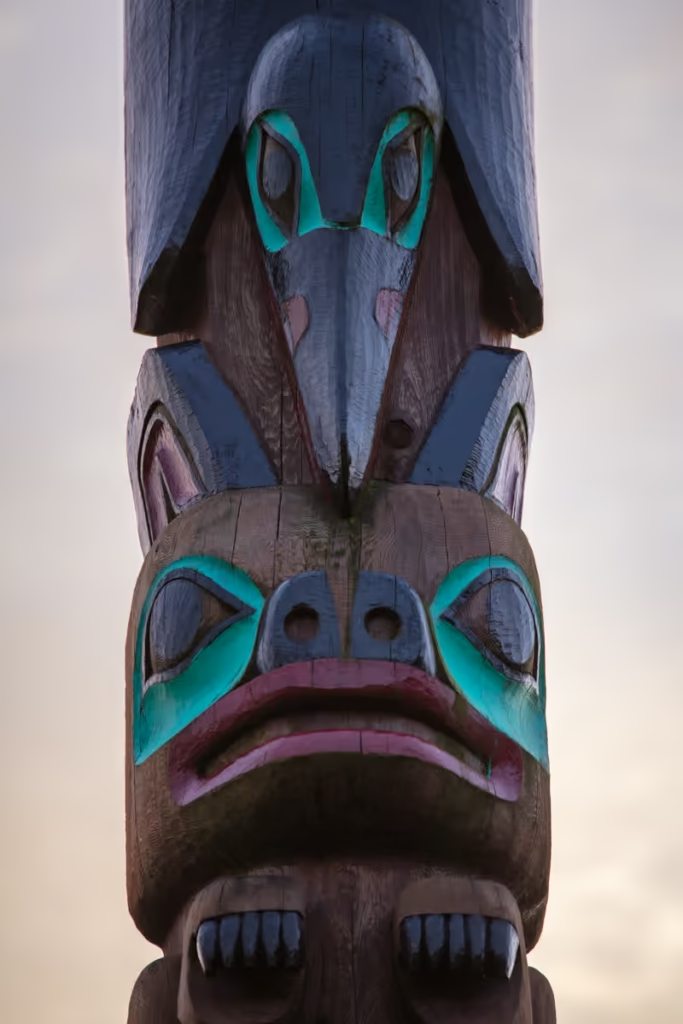
The community has strong Haida connections, and Chief Son-I-Hat’s Náay Í’waan (Whalehouse) is one of the island’s most significant cultural attractions.
The site includes a historic Haida clan house and a collection of monumental totem poles surrounded by rainforest.
Cedar poles rise among enormous trees, moss and ferns, and the rainforest makes the whole site feel deeply connected to the landscape.
A good way to get a deeper understanding of the culture of Kasaan is to take a Náay Í’waan tour with the Organized Village of Kasaan. The tour includes the Kasaan Totem Walk, the carving shed, and the Náay Í’waan.
Prince of Wales Island is not simply wilderness with some villages sprinkled on top. It is a cultural landscape that has been home to Indigenous peoples for thousands of years.
The Kaigani Haida moved into this area during the 18th century, while the broader region is also traditional Tlingit territory. Today, several federally recognized Tribal Governments are located on the island.
Visit Hydaburg’s Totem Park
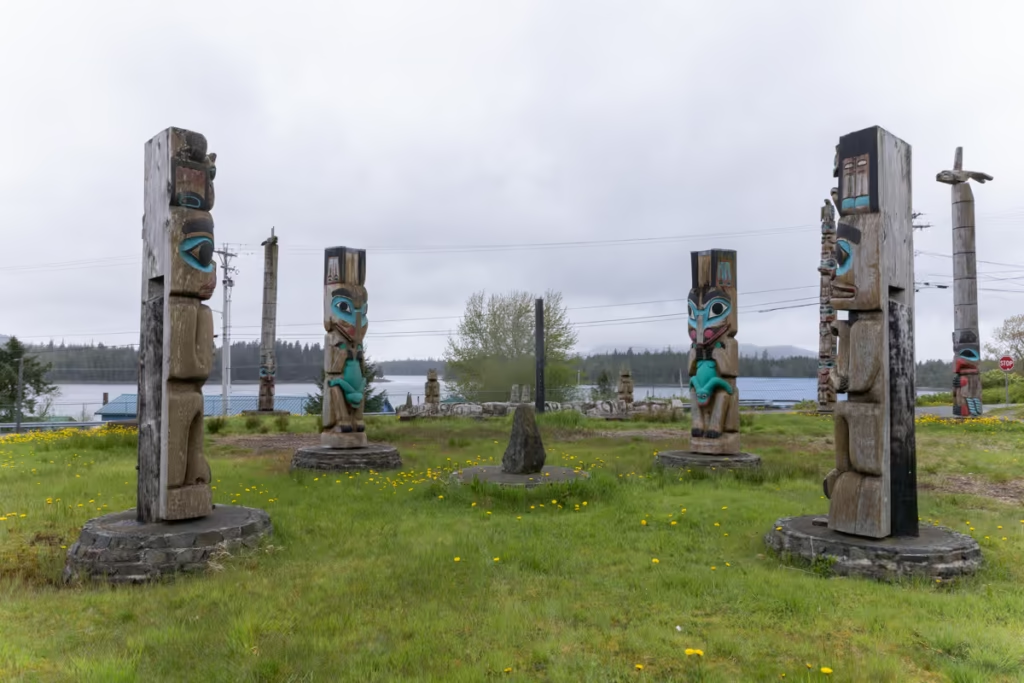
Hydaburg is another important destination for understanding Haida culture on Prince of Wales Island.
It’s located on the southern part of the island and is reached by road from the main island network.
Hydaburg has deep Haida roots, and you’ll see that reflected in the community’s art, cultural traditions, and surroundings.
Don’t miss the Hydaburg Totem Park on your visit. The totem park features a collection of both preserved totems from Haida villages that were abandoned when residents moved to form Hydaburg and recreations of totems. The recreations and preservations were done under the guidance of local Haida master carvers.
Search for Wildlife
If you’re visiting Prince of Wales Island primarily for wildlife, you’re in the right place.
The island supports an impressive variety of terrestrial and marine wildlife, including:
- Black bears
- Sitka black-tailed deer
- Bald eagles
- Humpback whales
- Orcas
- Sea otters
- Harbor seals
- Salmon
- Porpoises
- Numerous seabirds
Black bears on Prince of Wales Island
Black bears are one of the island’s signature wildlife experiences.
During salmon runs, bears may gather around streams and rivers to feed. They’re also regularly seen along roads and beaches.
This is still bear country. Keep your distance, never approach wildlife, and secure food and garbage properly. If you’re camping, treat bear safety as part of the trip.
Go Fishing
Fishing is one of the major reasons people visit Prince of Wales Island.
The surrounding waters support salmon, halibut, lingcod, rockfish and other marine species, while the island’s freshwater systems contain salmon, steelhead, trout and Dolly Varden.
The island has a huge sportfishing industry, ranging from independent anglers to full-service fishing lodges. You can fish both freshwater and saltwater, depending on your itinerary and the season. For visitors without their own boat or fishing equipment, guided trips are widely available.
One thing to remember is that fishing regulations vary by species, location, and season. Check current Alaska Department of Fish and Game regulations before fishing.
Go Kayaking or Canoeing
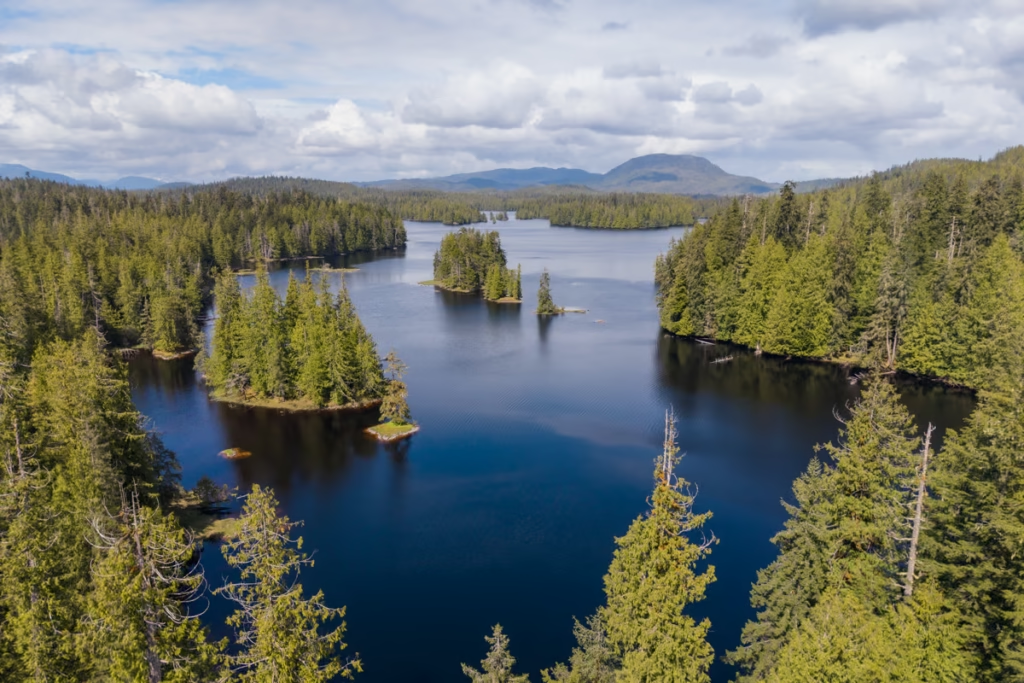
With roughly 1,000 miles of coastline, countless coves and sheltered waterways, Prince of Wales Island is made for paddling.
The coastline is broken up by bays, islands and protected passages, while the interior contains numerous lakes suitable for canoeing.
Some notable paddling areas include:
- Sarkar Lakes Canoe Route
- Honker Divide Canoe/Kayak Route
- Sweetwater Lake
- Big Salt Lake
- Numerous coastal coves and islands
The Sarkar Lakes Canoe Route is particularly interesting because it links several lakes and includes portages through the forest. The route is roughly 15 miles and includes access to a Forest Service cabin.
You don’t necessarily need to book a giant organized excursion. With the right equipment, planning, and weather conditions, you can get out onto the water and explore independently for experienced canoeists and kayakers.
Stay in a Forest Service Cabin
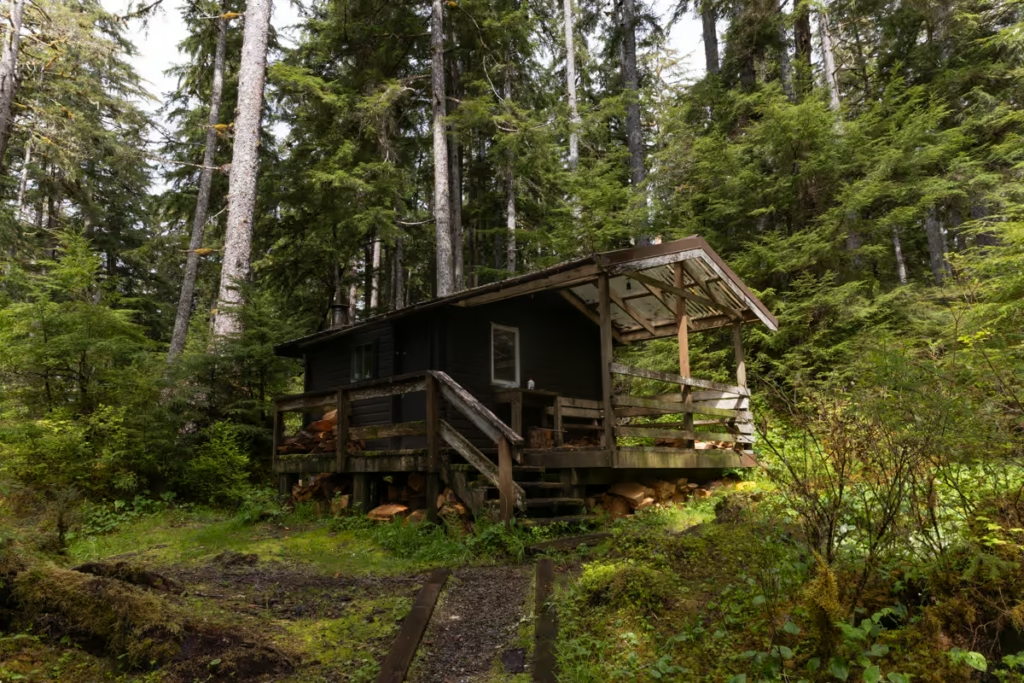
One of my favorite things about Prince of Wales Island is how much backcountry access the road network provides.
The Tongass National Forest maintains public-use cabins around the island, many of them in locations that feel dramatically remote despite being reachable from the road system or with a relatively short paddle or hike. There are at least 20 Forest Service cabins on Prince of Wales Island.
For me, this is one of the best ways to experience Prince of Wales Island because you aren’t simply looking at the rainforest from your car window. You actually get to spend the night inside it.
Cabins are generally rustic, so plan to bring a mat, food, and cooking equipment.
Explore El Capitan Cave
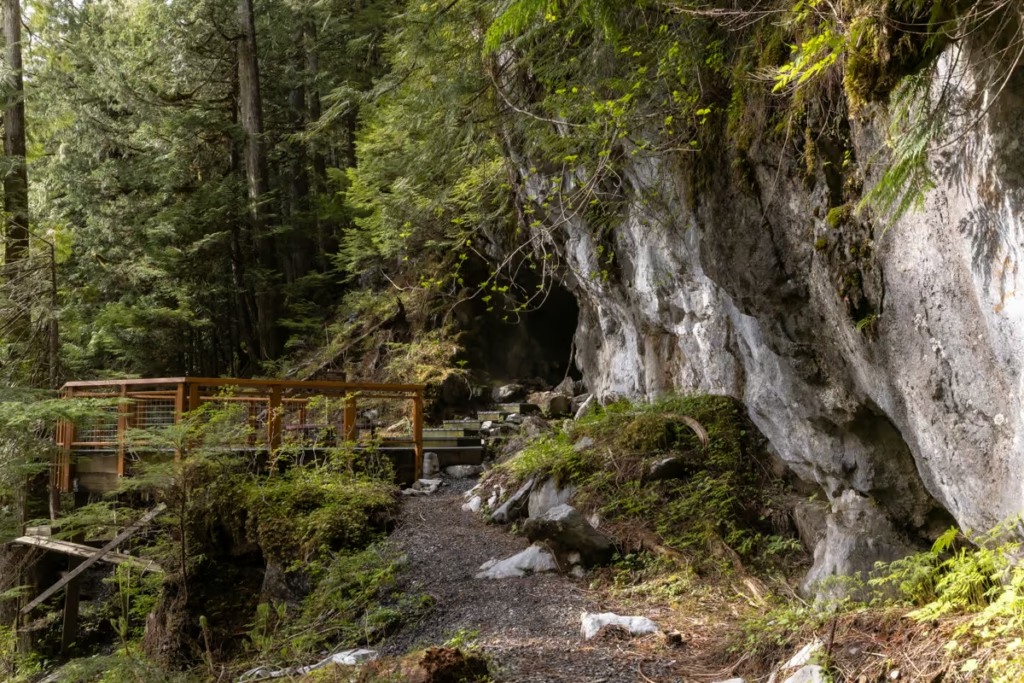
Prince of Wales Island has an extensive karst landscape and one of the largest concentrations of caves in Alaska. The island’s northern end contains hundreds of caves and grottos, with more than 850 documented caves and karst features.
The best-known is El Capitan Cave, located north of Thorne Bay.
It’s one of the island’s most unusual attractions because the experience is completely different from the usual Southeast Alaska itinerary.
The trail begins, climbing a series of steps in the rainforest before reaching the cave entrance. From there you can continue underground into a limestone cave system. Do note that you must be on the free tour by the Thorne Bay Ranger Service to enter El Capitan Cave. Call 907-828-3304 to get dates and times. They are only offered from late May to early September.
I unfortunately was visiting Prince of Wales Island just a little too early in the season and was not able to go inside the cave, but still hiked up to the opening to see what I could.
Look for Salmon at Fish Passes
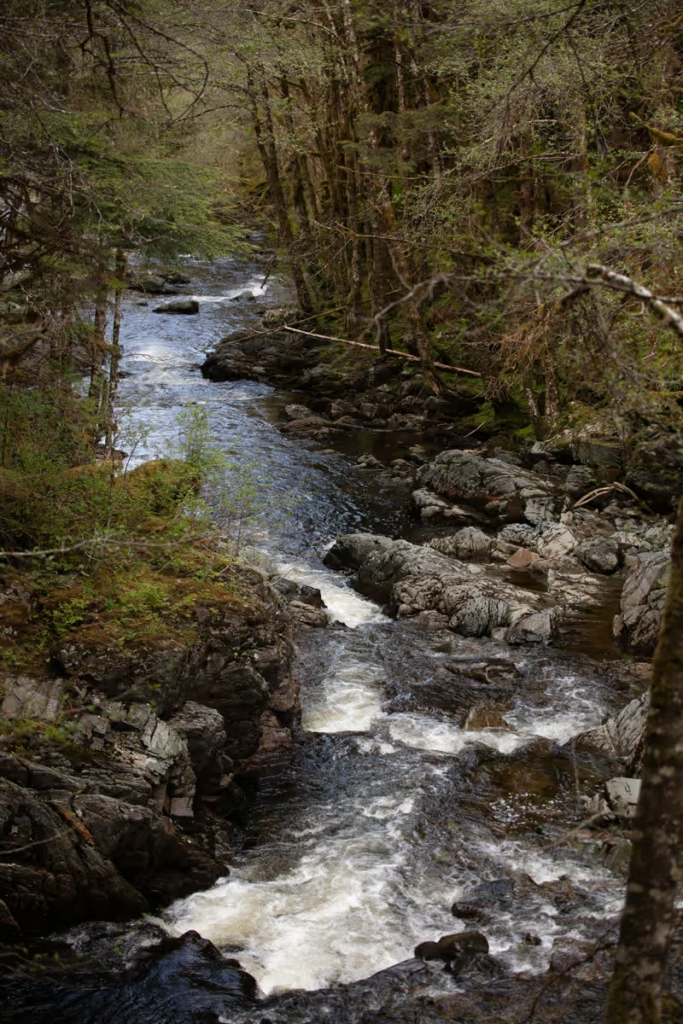
Salmon are one of the fundamental threads connecting Prince of Wales Island’s forests, rivers, wildlife and communities. Two interesting places to look for spawning salmon are Cable Creek Fish Pass and Dog Salmon Fish Pass.
Both have viewing platforms where visitors can watch salmon moving upstream, and bears may appear when the fish are running.
If you’re aim is to see bears here on Prince of Wales, timing matters enormously here. If you arrive at the wrong time of year, you may see a lovely stream. Arrive during a strong salmon run, especially July-September, and suddenly that same stream becomes the center of an entire ecosystem.
Go Hiking on Prince of Wales
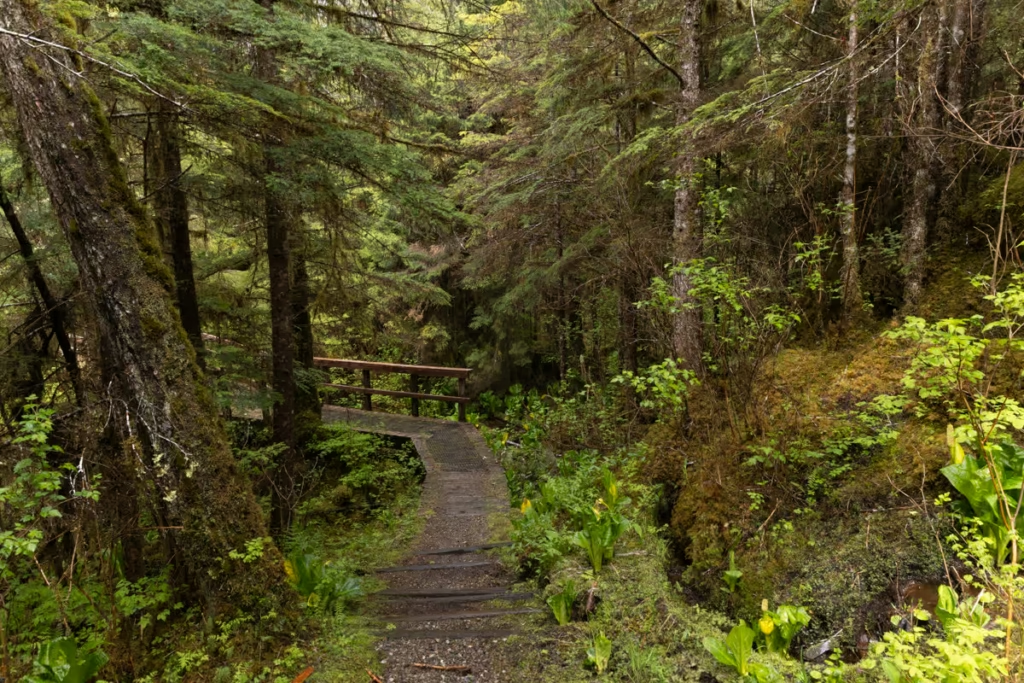
Prince of Wales Island has dozens of established hiking trails, ranging from easy walks to more demanding backcountry routes.
Sunnahae Mountain Trail
One of the better-known challenging hikes near Craig, climbing through rainforest toward higher elevations with broad views over the surrounding islands and waterways.
One Duck Trail
A short but steep hike near Hydaburg with views over the surrounding valleys and mountains. This is a good option if you want a more strenuous hike without committing to an all-day outing.
One Duke Trail
A relatively short hike near Klawock that climbs from the forest toward higher ground. The trail includes a rougher upper section, so conditions can be muddy and uneven.
Swan Song Trail
A short, easy walk near Craig and Klawock through coastal rainforest and tidal habitat. It’s particularly interesting during salmon season, when fish move into the nearby tidal flats.
Beaver Falls Karst Trail
One of the island’s more unusual short walks. Located near El Capitan Cave, this accessible boardwalk trail passes through classic Prince of Wales karst terrain, including sinkholes, pits and underground waterways. Travel Alaska specifically highlights it as an aboveground introduction to the island’s extensive cave landscape.
El Capitan Cave Trail
Technically more of a cave walk than a conventional hike, but it’s absolutely worth including in a Prince of Wales hiking list. The Forest Service leads summer ranger tours along a stairway descending approximately 600 feet into the cave.
Cable Creek Fish Pass Trail
A very short boardwalk-style walk leading to a salmon viewing area. It’s not a hike I’d send someone to specifically for exercise, but it’s an excellent quick stop on a Prince of Wales road trip, particularly when salmon are spawning, and bears may be nearby.
Dog Salmon Fish Pass
Another short walk and wildlife-viewing stop where visitors can watch salmon moving upstream. Like Cable Creek, it’s best treated as a roadside nature stop rather than a substantial hike.
Harris River Trail
Trails around the Harris River provide opportunities for forest walking and exploring the river corridor near the Hollis/Craig road system. The area is also used for birding and wildlife viewing. Harris River Trailhead Site
Chief Son-I-Hat’s Whalehouse Trail
A short forest walk leading to the historic Haida clan house and collection of monumental totem poles at Kasaan. I’d include this in your hiking section because the walk itself is part of the experience, even though the cultural site is the primary attraction. Chief Son-I-Hat’s Whalehouse
Canoe Point Trail
A short but potentially challenging trail at Canoe Point in Trocadero Bay. The trail is boat-access only, making it a particularly good option for travelers who want to combine kayaking or boating with hiking. Canoe Point Picnic Site
Sarkar Lakes area trails
The Sarkar Lakes area is more commonly known for its canoe route, but hiking and backcountry exploration can be combined with the lake system.
Prince of Wales Island Towns and Communities
One of the best parts of visiting Prince of Wales Island is exploring its communities.
They’re small, scattered and very different from one another.
Craig
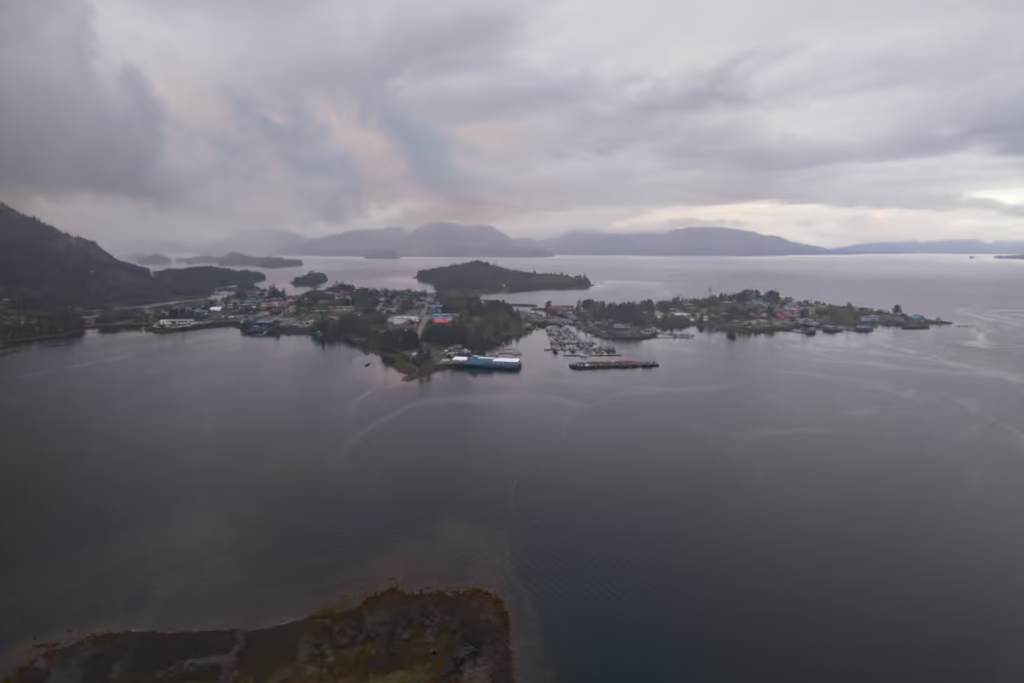
Craig is the largest community on the island and one of the best places to stock up on supplies, fuel, and food.
It also has a strong fishing identity. The harbor is busy with commercial and recreational boats, and the town feels much more like a working Southeast Alaska community than a conventional tourist destination.
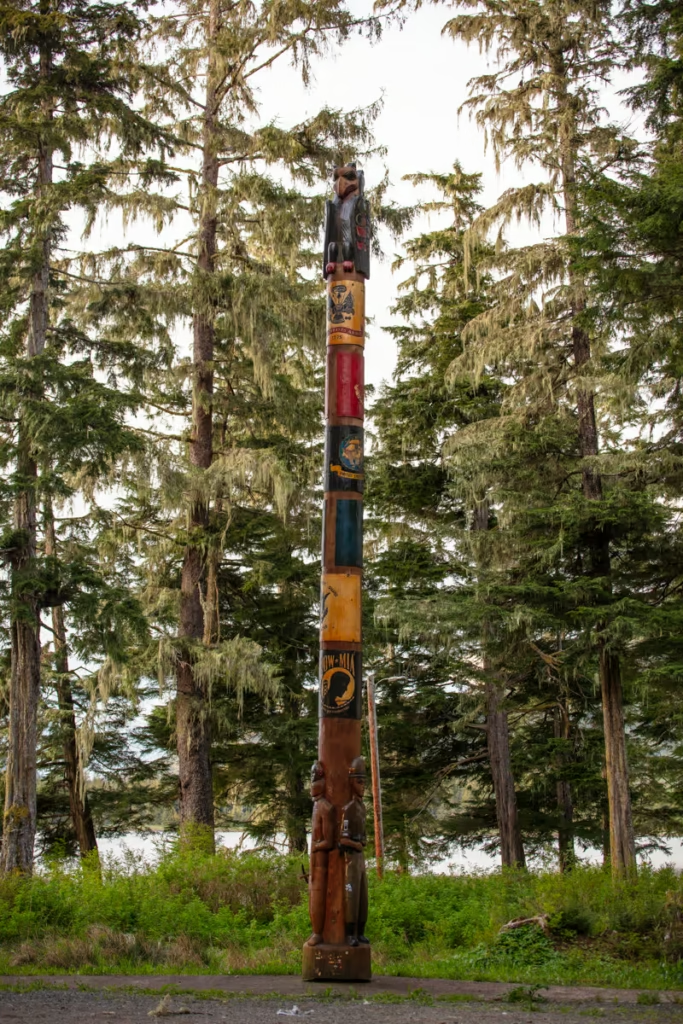
The Healing Heart Totem, a memorial totem, just along the Craig-Klawock Highway is worth a stop.
Walk around the harbor. Look at the boats. Grab food. Talk to locals. Watch the weather roll across the water.
Craig also makes a useful base for exploring the island’s western coastline and nearby marine waters.
Where to Eat in Craig
- Dockside Cafe
- Papa’s Pizza
- Annie Betty’s
Klawock
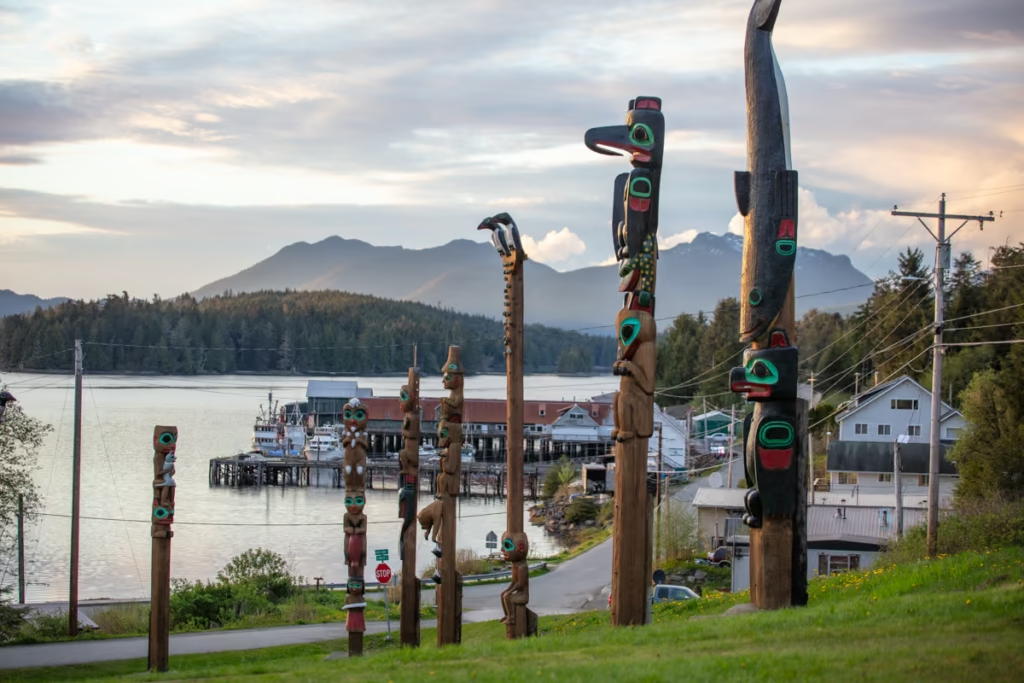
Klawock is another important stop, particularly if you’re interested in Alaska Native culture and history.
The community is home to the Klawock Totem Park, where you can see a collection of 21 carved poles representing Tlingit and Haida artistic traditions. These are replicas of the totem poles that would have been in Tuxekan, the original winter village.
Klawock River is also worth a stroll around, especially in the evening just before sunset.
For those who are flying into Prince of Wales, Klawock is home to the only airport on the island.
Where to Stay in Klawock
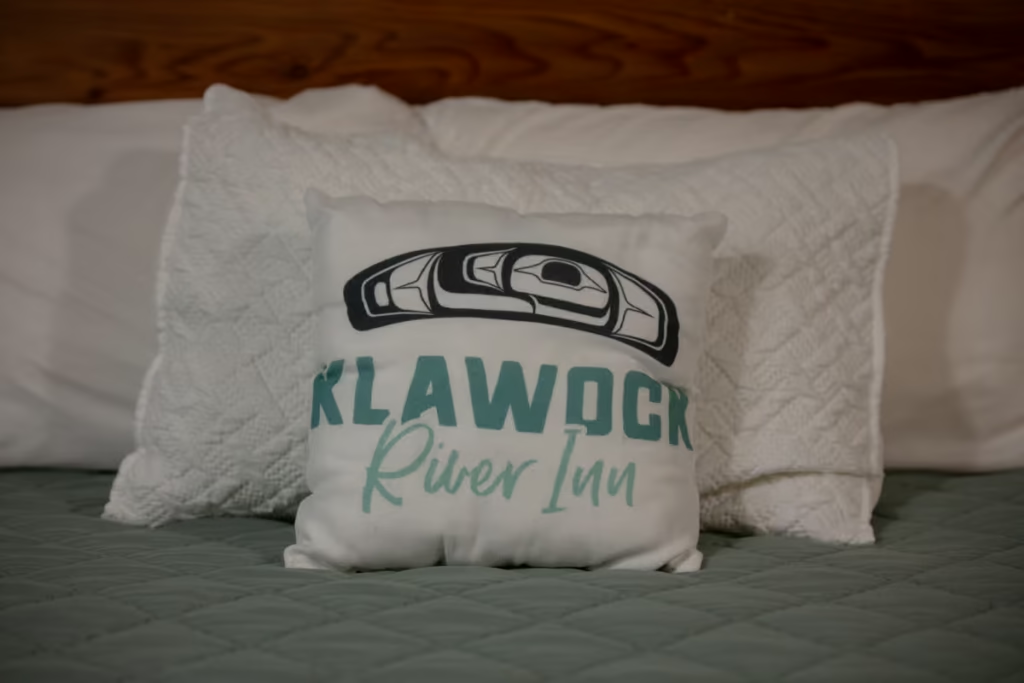
I was hosted by Klawock River Inn on my visit to Prince of Wales to break up a wider road trip of camping across the island. Klawock River Inn is operated by the Klawock Heenya Corporation and can also obtain the Klawock River permit for you, for those who plan to get out on the river. The rooms are spacious and clean, overlooking the Klawock River.
Hollis
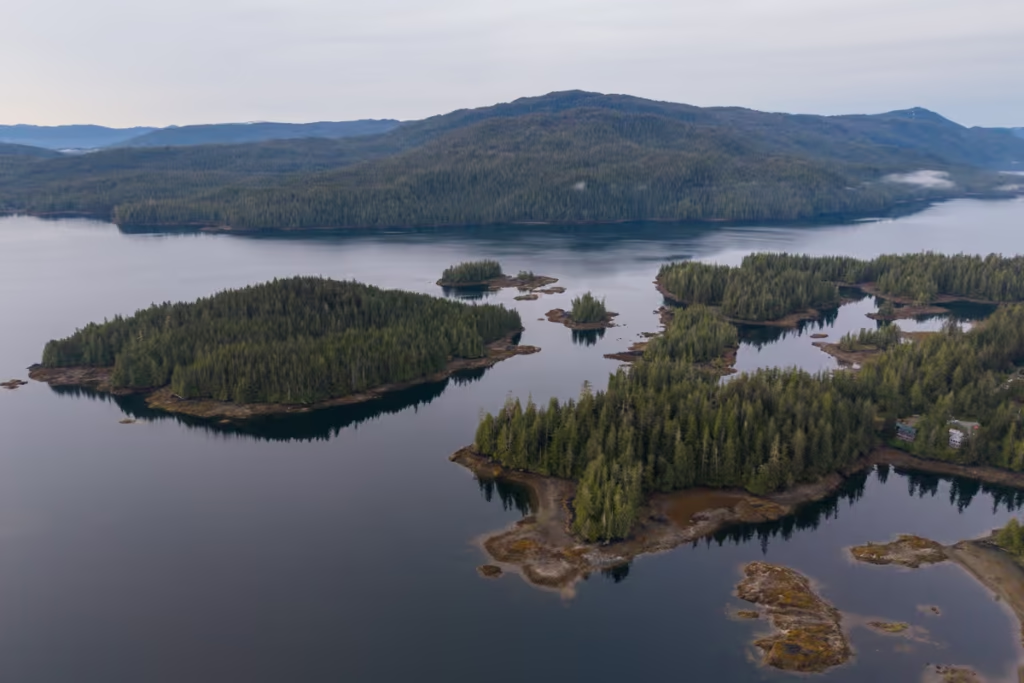
Hollis is a small, almost entirely residential place on the east side of Prince of Wales Island. That said, most visitors will pass through Hollis as it is the location of the Inter-Island Ferry Authority terminal.
Thorne Bay
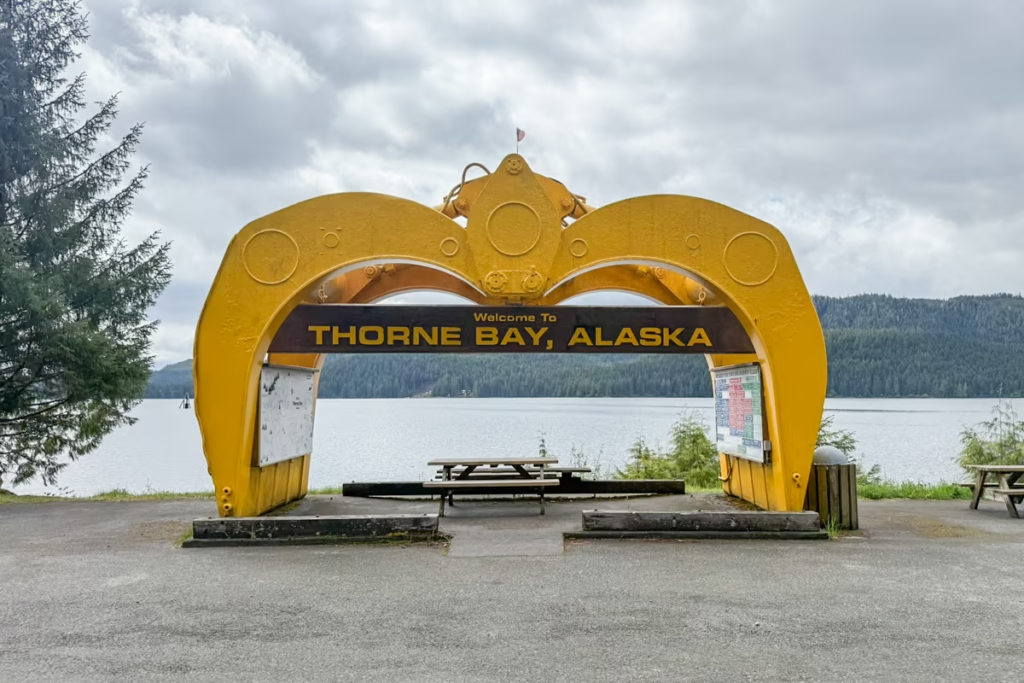
Thorne Bay is a small community on the water toward the east of the island. There isn’t much in terms of things to do that draw in visitors, though you will pass “The Claw”, the world’s largest log-handling grapple as you enter into the village.
Coffman Cove
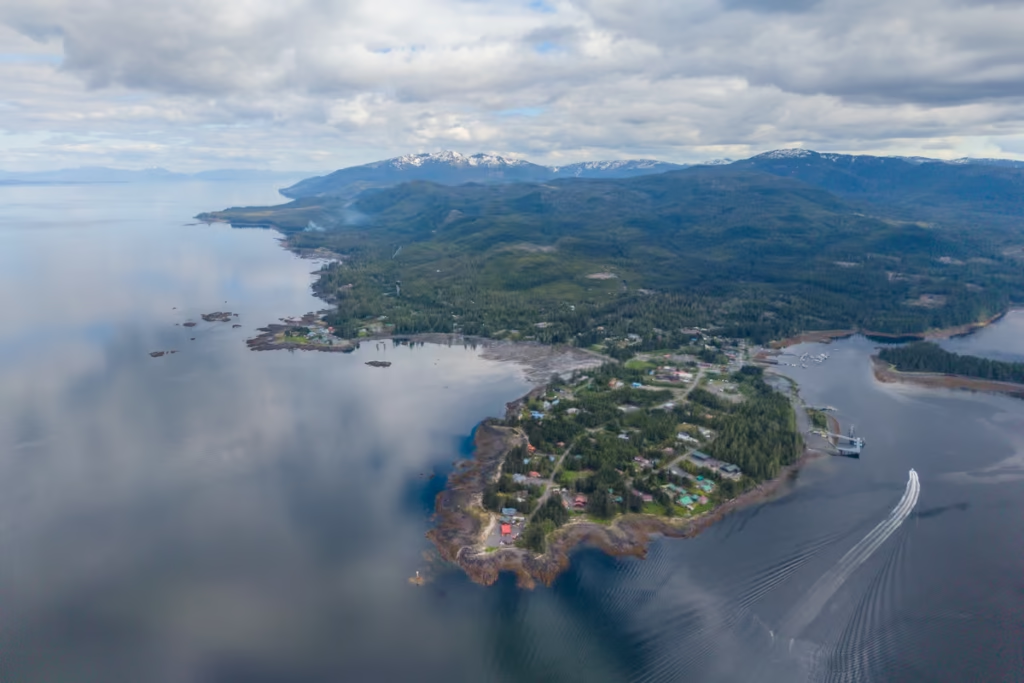
Coffman Cove is a small community on the northeast side of the island. There is a fast food shop called AK-49 that serves burgers, fries, pizza, and milkshakes, and a bar named the Dog House.
Kasaan
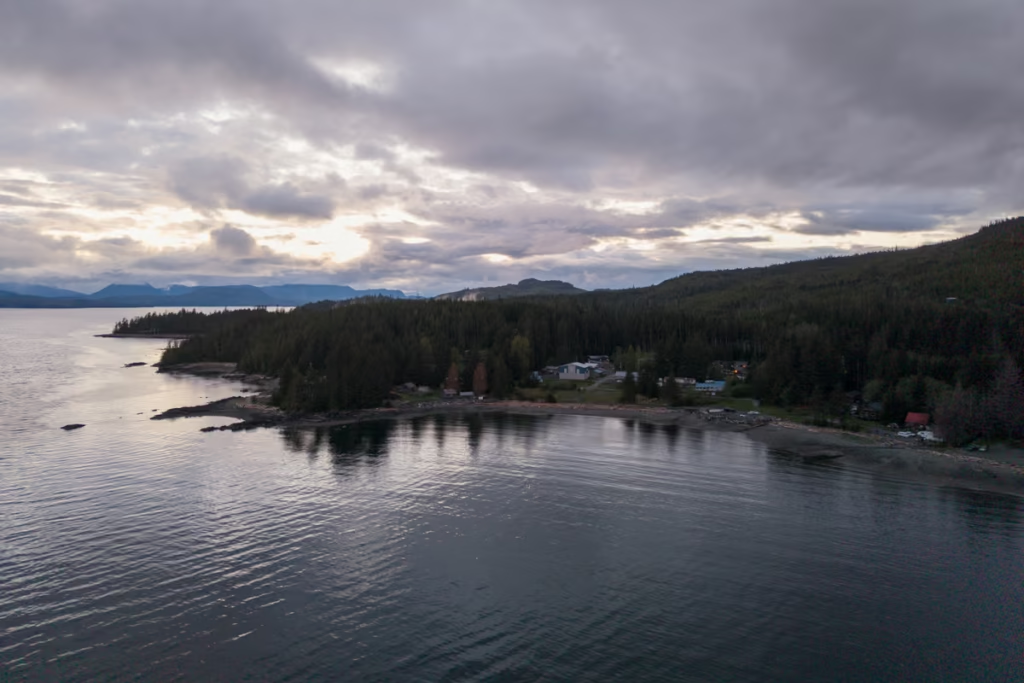
Located on the eastern side of the island, Kasaan is a small community and one of two primary Kaigani Haida villages on Prince of Wales, alongside Hydaburg.
The main reason to make the drive is Chief Son-I-Hat’s Whalehouse, a traditional Haida longhouse surrounded by monumental totem poles and rainforest. The setting is wonderfully atmospheric, with the trail winding through thick forest before reaching the cultural site. The Organized Village of Kasaan operates cultural tourism experiences here, including guided tours of the totem park and traditional longhouse.
Hydaburg
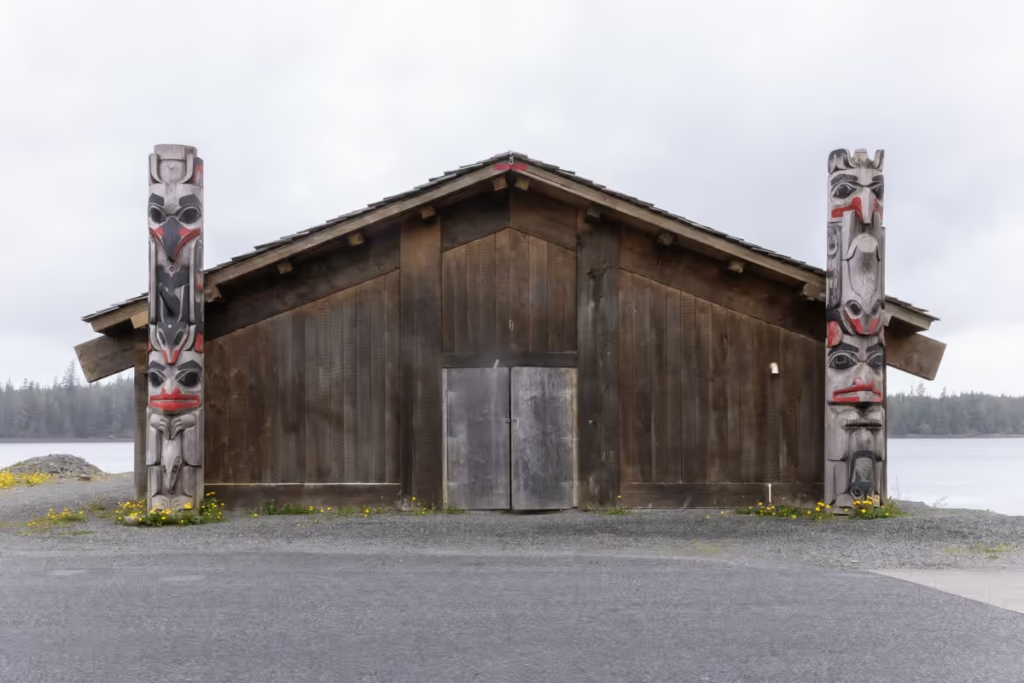
Located on the southern end of Prince of Wales, Hydaburg is one of only two surviving Haida communities in the United States, alongside Kasaan. The community was established in 1912 when several smaller Haida villages, including Howkan, Klinkwan, Koianglas and Sukkwan, consolidated around the new settlement.
The Hydaburg Totem Park is the obvious place to start. The centrally located park contains 21 totem poles and a carved stone figure, making it one of the more interesting cultural stops on the island. Hydaburg Totem Park. The poles are particularly meaningful when you understand that Hydaburg has been working to preserve and revitalize Haida carving traditions rather than simply maintaining a collection of historic objects. The community also has a carving shed where visitors may be able to see contemporary carving and cultural work taking place.
Whale Pass
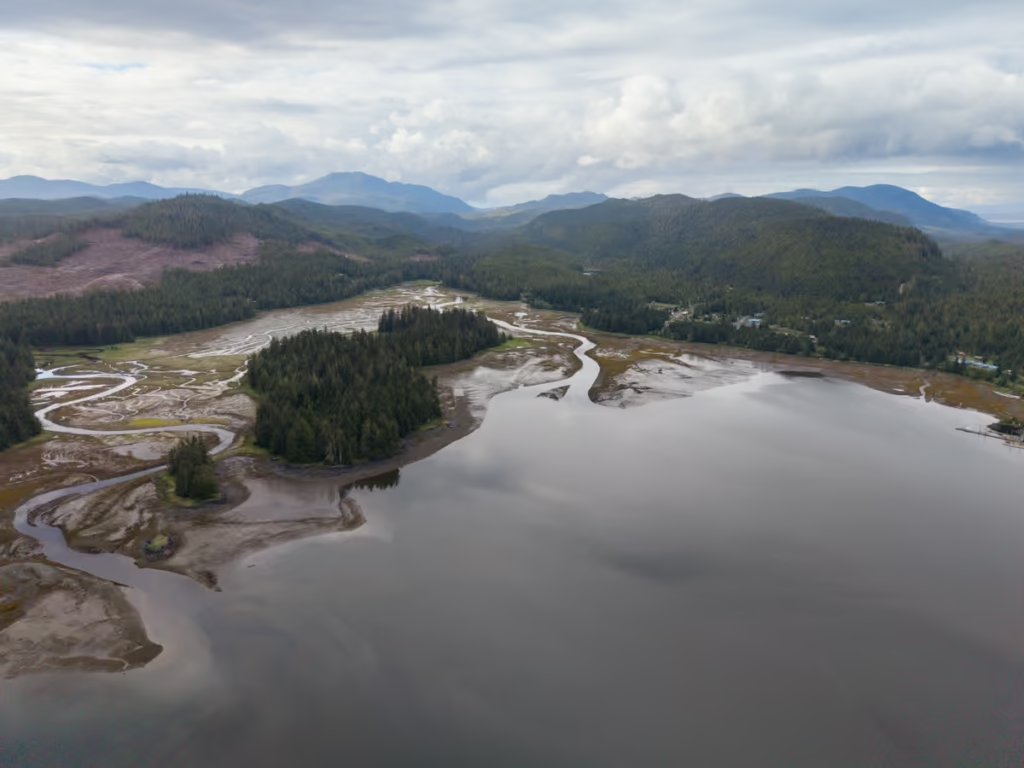
Whale Pass is a tiny scenic coastal community on the northeast end of Prince of Wales Island. Originally, Whale Pass was established as a logging camp, and finally became an incorporated city in 2017. From Whale Pass, you can continue along East Prince of Wales North Road to Exchange Cove.
Naukati
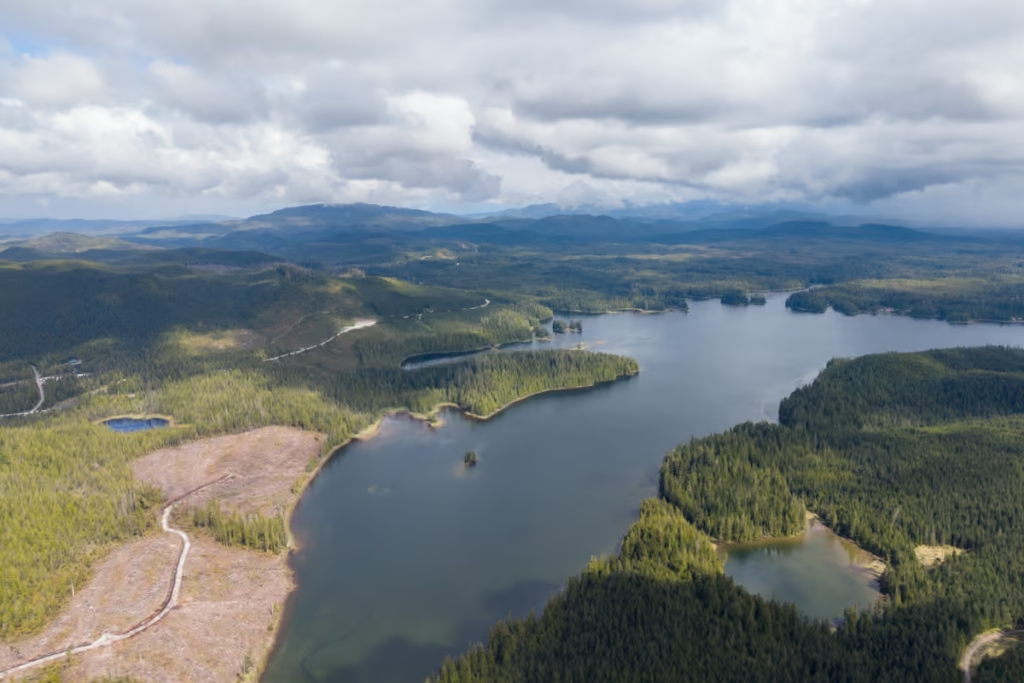
Naukati is another tiny community, located on the northwest coast of Prince of Wales. Naukati is best known for the Naukati Bay Shellfish Nursery, where oyster spat are grown and then supplied to oyster farms around Alaska.
Point Baker
Point Baker sits on the northern tip of Prince of Wales Island in a protected harbor opening onto Sumner Strait. Unlike most communities on the island, Point Baker is not connected to the Prince of Wales road system, so getting here requires a boat or floatplane.
The community was settled in the early 1900s and grew around commercial fishing, which remains at the heart of life here. Today, only around 25 households call Point Baker home, with many residents working as commercial gillnet and troll fishermen. In summer, the harbor takes on a livelier atmosphere as fishing lodges and visiting boaters arrive for the excellent salmon and halibut fishing, as well as opportunities to spot humpback whales.
Point Baker’s 440-foot state float serves as the community’s floating downtown, and it packs an impressive amount into one waterfront hub. You’ll find the floatplane dock, store, community building, post office, and volunteer fire department all here.
How to Get to Prince of Wales Island
There are two primary ways to get to Prince of Wales Island: by ferry from Ketchikan or by flying from Ketchikan or Sitka.
Ferry from Ketchikan to Prince of Wales Island
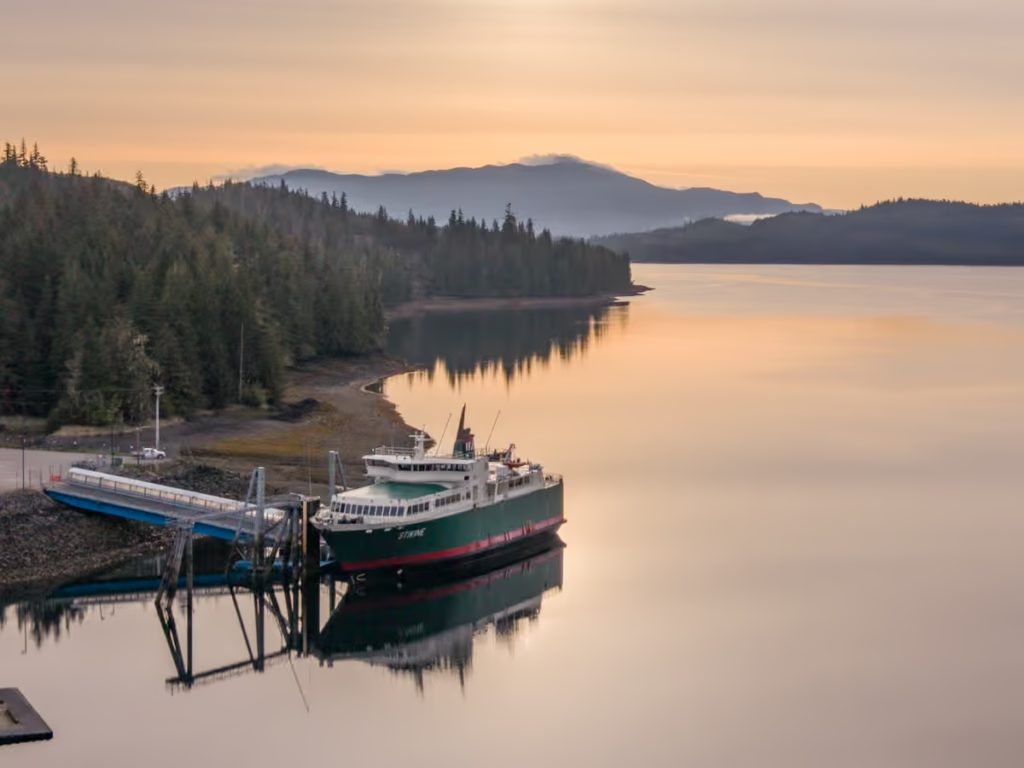
For most independent travelers, the ferry is the most useful option.
The Inter-Island Ferry Authority operates service between Ketchikan and Hollis on the M/V Stikine, allowing you to travel and to bring a vehicle onto the island. The crossing takes roughly three hours.
This is how I chose to get to and from Prince of Wales. It’s a great way to travel to and from Ketchikan. Also, don’t miss out on grabbing a meal while onboard. The Dockside Cafe in Craig staffs the restaurant on the Stikine, and I had been led to this tip by the locals. You won’t be disappointed
Check the current ferry schedule before planning your trip. Schedules can vary seasonally, and you’ll want to coordinate your ferry with your rental car and accommodation.
Can You Take a Rental Car to Prince of Wales Island?
Potentially, but check the rental company’s restrictions before booking a space to bring a vehicle on the ferry. I had rented a car from Kings Car Rental in Ketchikan and brought it to Prince of Wales with me.
Do not that most rental agreements restrict travel on unpaved or remote roads, and those restrictions matter on Prince of Wales Island.
If you’re planning to explore beyond the main paved routes, specifically ask about:
- Gravel roads
- Logging roads
- Ferry transport
- Mileage limits
- Insurance
- Tire damage
Flying to Prince of Wales Island
Flying can save time, particularly if you don’t need a vehicle for your entire trip or plan to rent one on the island.
Klawock Airport provides access to the island, while air taxis and charter operators serve other seaplane bases.
Scheduled and charter air service connects Prince of Wales with Ketchikan and other Southeast Alaska communities.
How to Get Around Prince of Wales Island
The island has one of the largest road systems in Southeast Alaska, with paved highways connecting major communities and a vast network of gravel roads extending into the forest.
Still, distances can be deceptive.
A place that looks close on the map may require a long drive because the road has to wind around mountains, lakes and waterways.
If you are not bringing a car from Ketchikan on the ferry, D.J.’s Alaska Adventure Rentals rents out an array of cars, trucks, and vans.
Camping on Prince of Wales Island
Camping is another excellent way to experience the island.
The Tongass National Forest has campgrounds and extensive opportunities for dispersed camping. There are a number of tiny primitive campgrounds you will find tucked away along logging roads. Most of these have no amenities, not even toilets.
Harris River Campground is an established campground along the Klawock-Hollis Highway. It offers camping, hiking, fishing, boating, and wildlife viewing, although it has no hookups.
Eagles Nest Campground is another established campground at Balls Lake, just off of Thorne Bay Road. The campground offers access to Balls Lake and hiking.
El Capitan Campground is located at the start of the hike to El Capitan Cave and is located on the water along EL Capitan Passage.
Prince of Wales Island Weather
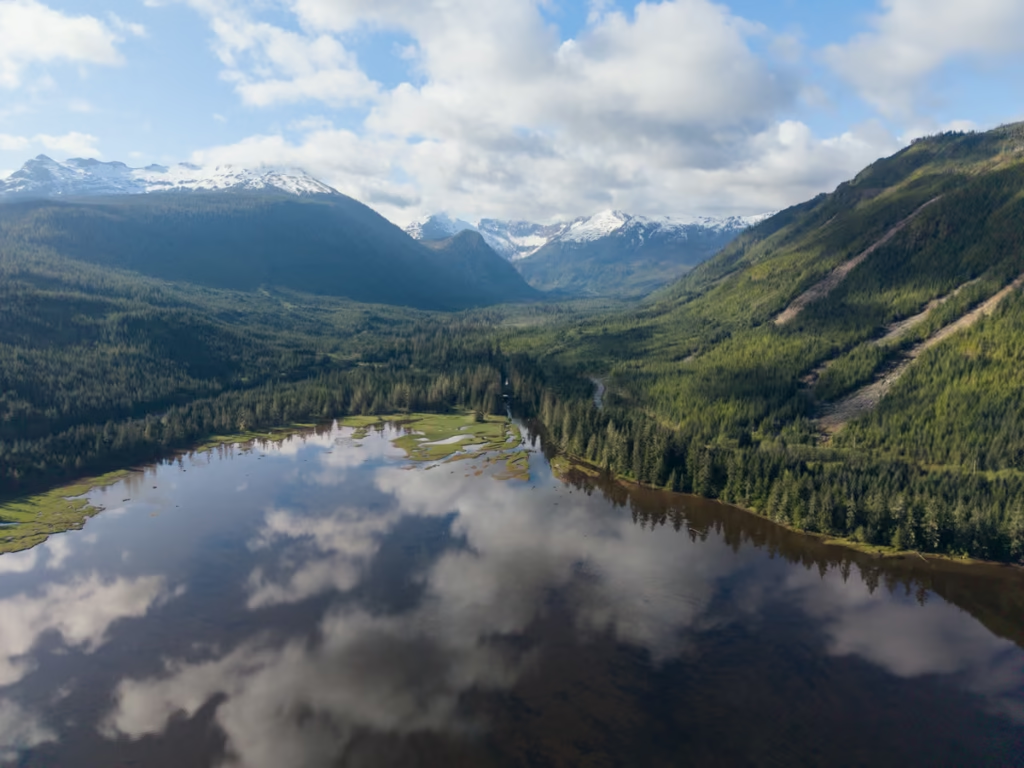
Prince of Wales Island has a cool, wet maritime climate.
Rain is normal and to be expected, though it is drier than Ketchikan. You can get a beautiful sunny morning followed by clouds and rain later in the day, so I would not plan your itinerary around perfect weather. I found that the weather seemed to change almost every hour with bursts of sun and short showers intermingled throughout the day.
What to Pack for Prince of Wales Island
Waterproof rain jacket
Waterproof pants
Waterproof hiking boots
Warm layers
Quick-drying clothing
Extra socks
Insect repellent
Bear spray
Offline maps
Headlamp
Portable power bank
Food and water for remote excursions
When is the Best Time to Visit Prince of Wales Island?
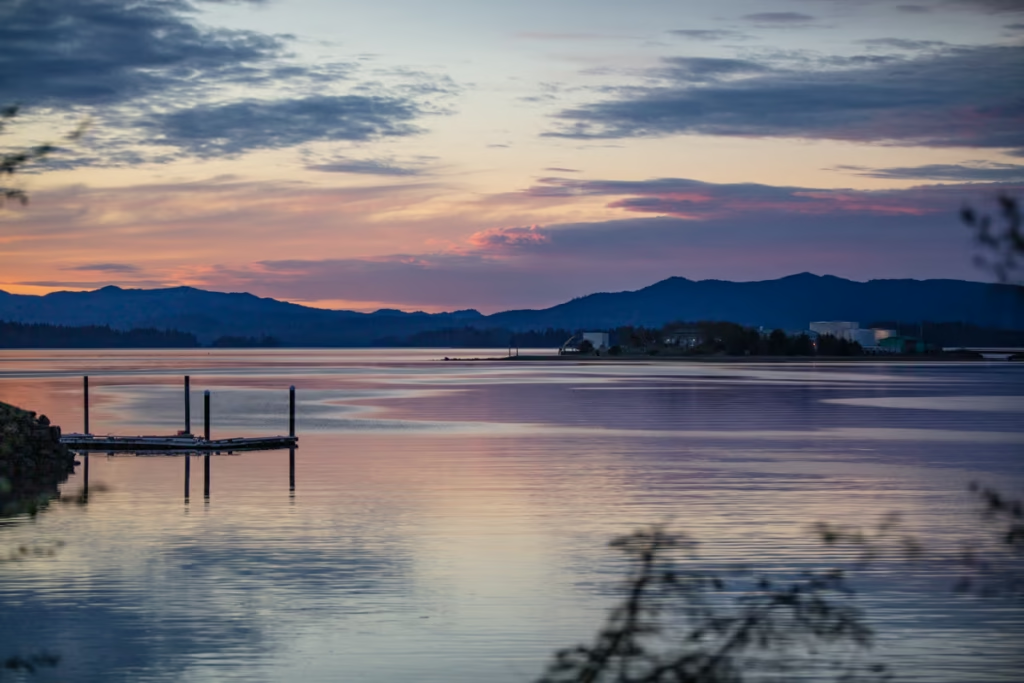
The main visitor season is summer, particularly June through August.
Summer gives you the longest daylight hours and generally the easiest conditions for road trips, hiking, paddling and wildlife viewing.
May: Spring is in full swing. This is the month that bear hunters are out in full force, so make sure to reserve vehicles and accommodation well in advance.
June: Long daylight and generally fewer visitors.
July: Excellent for combining road trips, hiking, fishing and wildlife watching.
August: Salmon runs become particularly important for wildlife viewing, although exact timing varies by species and location.
September: A quieter option with fall colors beginning to appear, but weather becomes increasingly unpredictable, and some seasonal businesses reduce their hours.
How Many Days Do You Need on Prince of Wales Island?
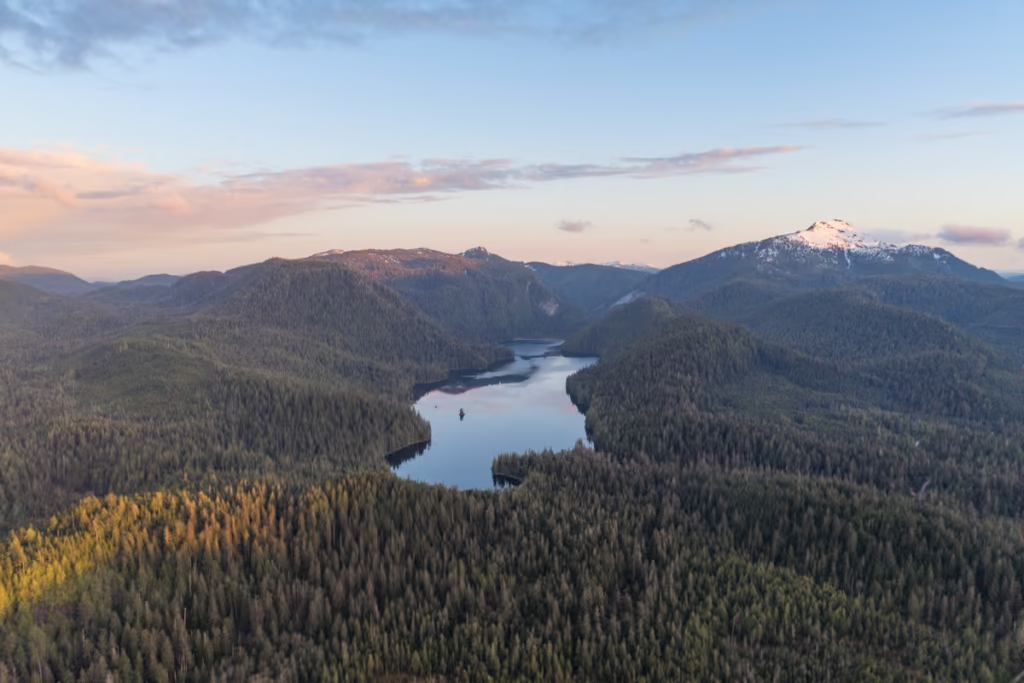
I would spend at least four or five days exploring Prince of Wales, but I personally think a week is the sweet spot.
Three days gives you enough time to get a taste of the island.
Five to seven days gives you room to explore several communities, take side trips, and deal with the inevitable weather disruptions.
A week or longer allows you to really slow down.
7 Day Prince of Wales Island itinerary
Day 1: Ketchikan to Hollis
Take the Inter-Island Ferry from Ketchikan to Hollis.
Pick up your vehicle and drive toward the central or western part of the island.
Spend the night in Klawock.
Day 2: Klawock and Craig
Explore Klawock, including the totem park and hatchery.
Continue to Craig and spend some time around the harbor.
Spend the night in Klawock.
Day 3: Southern Prince of Wales
Drive south toward Hydaburg.
Spend time exploring the community and surrounding scenery.
Return to Klawock for the night.
Day 4: Kasaan and Thorne Bay
Visit Kasaan and Chief Son-I-Hat’s Whalehouse.
Continue north toward Thorne Bay.
Spend the night at Eagles Nest Campground or at a lodge near Kasaan or Thorne Bay.
Day 5: Coffman Cove and Sandy Beach Road
Depart from Thorne Bay toward Coffman Cove on Sandy Beach Road.
The drive is very scenic, so plan to make numerous stops en route, including Sandy Beach, Little Ratz Bay, Rats Bay, and Luck Lake.
Plan to camp near Coffman Cove or stay at the lodge in the area.
Day 6: Northern Prince of Wales
Head toward Whale Pass or Naukati.
Spend the day exploring northern roads, lakes and recreation areas.
Plan to head back toward Harris River Campground for the night so that you don’t have a long trip to the ferry terminal in the morning.
Day 7: Return Toward Hollis
Work your way back toward Hollis to catch the ferry to Ketchikan that departs in the morning.
Leave plenty of buffer time.
Prince of Wales Island Travel Tips
Fill up your gas tank whenever you can: Don’t wait until you’re nearly empty. Fuel isn’t available everywhere, and some communities are a long way apart.
Download offline maps: Cell service is extremely limited across the island. Have your route available offline before heading to Prince of Wales. I have a Visibly phone plane (through Verizon) and had no service except for at Sandy Beach.
Check road conditions: Logging roads can change quickly due to weather, maintenance, and timber operations.
Carry a spare tire: Flats aren’t unheard of, espeically if you’ll be driving the logging roads.
Bring cash: Cards are widely used, but remote Alaska is not the place to assume every tiny business or service accepts them.
Don’t underestimate distances: The island is huge. A route that looks short on a map can take considerably longer than expected.
Expect wildlife: Slow down on the roads and watch the shoulders, particularly around streams and forested areas. Deer are prolific here, so do take caution, especially at night.
Make reservations early: Summer accommodation, rental vehicles, ferry space and fishing trips can fill up.
Is Prince of Wales Island worth visiting?
Personally, I thought Prince of Wales was the best part of my journey through Southeast Alaska. It has a sense of freedom that the remainder of the cruise ship-oriented region is missing.
Elsewhere in Southeast Alaska, geography can make independent travel complicated. Mountains, glaciers, waterways and islands force you to rely on boats and planes. Prince of Wales Island is different. You can get off the ferry, get into a vehicle and simply start driving.
It’s the kind of place that rewards curiosity.
After traveling extensively around Southeast Alaska this summer, Prince of Wales Island ended up being the highlight of the region for me. Not because it has one spectacular landmark that you can tick off a list, but because the island offers something increasingly rare: room to wander.
You can spend a day chasing wildlife, another exploring Alaska Native culture, another bouncing along gravel roads through the Tongass, and another sitting beside a remote lake wondering how a place this wild can still be reachable by car. If you’re planning a trip to Alaska and want to go beyond the usual Southeast Alaska itinerary, put Prince of Wales Island on the map.
Have Any Questions About Visiting Prince of Wales Island?
Ask in the comments section below.
Posts from Alaska

Denali Highway Alaska Road Trip Guide
Eklutna Lake Hike: Twin Peaks Trail
Girdwood Travel Guide
Prince of Wales Island Travel Guide
Seward Highway Road Trip Guide

Two Days in Anchorage: The Perfect Anchorage Itinerary
Golden Circle Route: Yukon & Alaska Road Trip
K’esugi Ridge Hike, Alaska

Between Beaches: An Alaskan Winter Getaway
Kenai Fjords National Park Travel Guide

Free Places to Ski & Snowboard Near Anchorage
The Best Hostels in Anchorage, Alaska
A Quick Guide to Hope, Alaska
Shrine of St. Therese in Juneau, Alaska
Wrangell St. Elias Road Trip
Kenai Fjords Tour with Major Marine Tours
Homer Travel Guide
Rabbit Lake Hike in Anchorage, Alaska
Williwaw Lakes Hike in Anchorage, Alaska
Virgin Creek Falls in Girdwood, Alaska
How Much Does it Cost to Travel Alaska? Budget Guide 2026
Fairbanks Travel Guide: 13 Best Things to Do
A Guide to Hiking to Flute Glacier

Anchorage’s Best Hotels
A Day Hike into ANWR
Best Things to do in Alaska
Kayakers Cove, a Perfect Escape from Seward, Alaska
Biking to Knik Glacier in the Winter
Reed Lakes Hike, Hatcher Pass
Seward Travel Guide
Juneau Travel Guide
10 Reasons Visit Alaska
Denali National Park Travel Guide
What to Pack for Alaska
Alaska Travel Guide
How to Get a Denali Road Lottery Permit
Eagle & Symphony Lakes Hike

Ultimate Alaska Road Trip Itinerary
Macdonald Spit Alaska
How to Get to Mendenhall Ice Caves

Silverbow Inn: One of the Best Places to Stay in Juneau
Dalton Highway
10 Day Alaska Itinerary
Gates of the Arctic National Park Alaska
Hiking to Exit Glacier

Mint-Bomber Traverse Hike

Free Things to Do in Anchorage

Best Places to See the Northern Lights in Alaska
Anchorage Travel Guide