Hiking to Exit Glacier: Alaska’s Accessible Ice Giant
Updated November 2026, Hiking to Exit Glacier: Alaska’s Accessible Ice Giant was originally published in April 2026
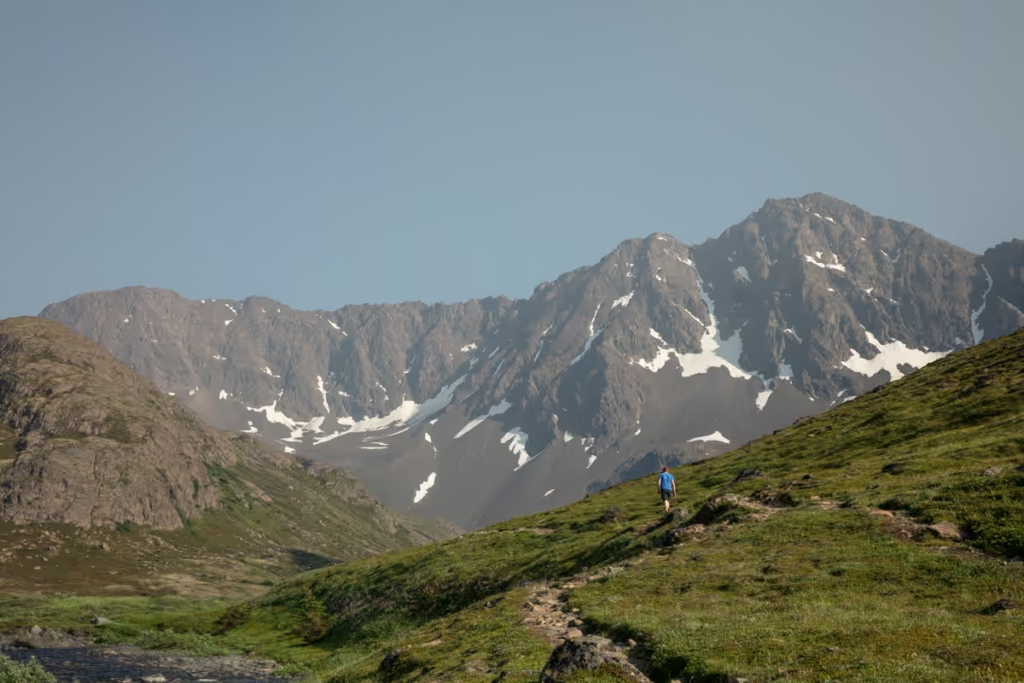
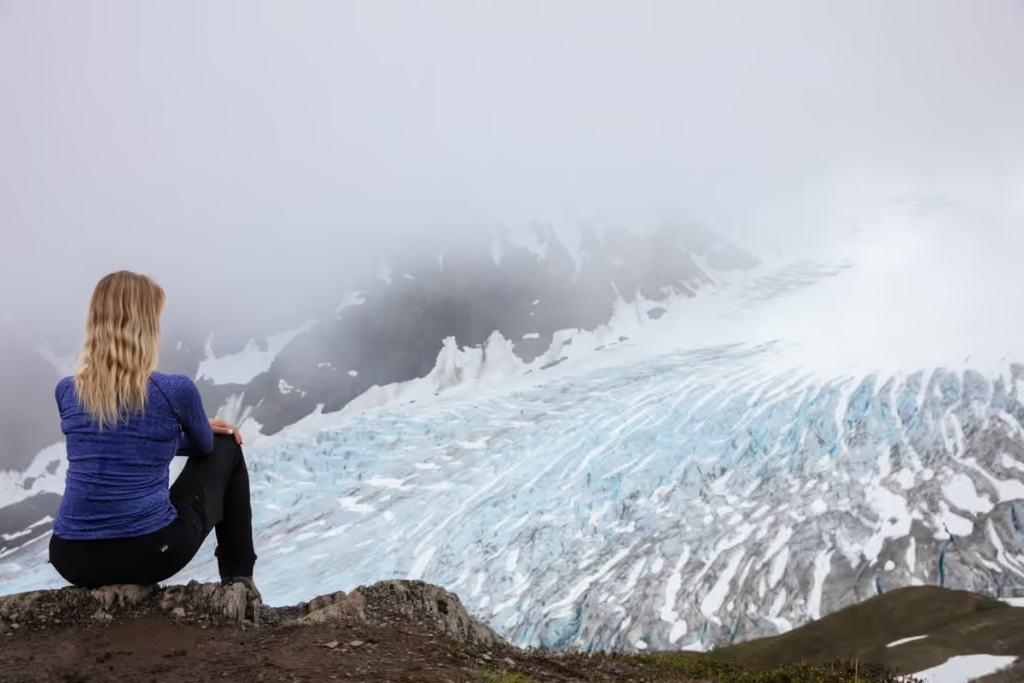
Located just outside Seward on Alaska’s Kenai Peninsula, Exit Glacier is one of the most accessible glaciers in Alaska and the only part of Kenai Fjords National Park that visitors can reach by road. Here, you can walk through a landscape shaped by ice, see how dramatically the glacier has retreated, and enjoy some of the best hiking in the park.
Exit Glacier is a popular stop for anyone exploring Seward, taking on the journey down the Seward Highway, and the checking out the Kenai Peninsula, with everything from short, relatively easy walks to the challenging Harding Icefield Trail. You don’t need a helicopter, boat tour, or backcountry expedition to experience this impressive corner of Alaska.
This guide covers everything you need to know about visiting Exit Glacier, including how to get there from Anchorage and Seward, the best Exit Glacier hikes, trail distances and difficulty levels, where to stay nearby, and practical tips for planning your visit.
Need Travel Insurance and Evacuation Services?
Start shopping for travel insurance plans over at IATI Insurance. Readers of the Adventures of Nicole get a 5% discount off your plan.
The Adventures of Nicole partners with Global Rescue to offer the world’s leading medical evacuation and security advisory services. To travel with peace of mind, explore their evacuation coverage.
Why you Should Visit Exit Glacier
Exit Glacier is one of the most accessible glaciers in Alaska, but its appeal goes beyond simply being able to see a glacier without booking an expensive flightseeing tour.
The glacier flows down from the Harding Icefield, a massive icefield covering approximately 700 square miles of the Kenai Mountains. As it descends into the valley, it has carved out a landscape of rocky moraine, meltwater channels, and newly established forests.
The name Exit Glacier dates to 1968, when a mountaineering party that successfully crossed the Harding Icefield descended the glacier toward Seward. An earlier crossing had apparently taken place around 1940, but the 1968 expedition was the first documented mountaineering party to complete the traverse.
The Kenai Peninsula is the traditional homeland of the Dena’ina people, while the wider coastal region has deep connections to Sugpiaq communities. Indigenous peoples have long relied on the region’s lands and waters for subsistence, travel, and cultural practices.
One of the most striking things about visiting Exit Glacier is seeing just how much it has retreated. Along the trails, interpretive signs mark where the glacier’s terminus stood in previous years. As you walk through the valley, you’ll pass landscapes that were covered in ice within relatively recent memory.
These markers make Exit Glacier an especially accessible place to understand the effects of a warming climate. Rather than reading about glacial retreat in a textbook, you can see the changing landscape firsthand.
Between the glacier views, the surrounding mountains, and the hiking opportunities, Exit Glacier is well worth adding to a Kenai Peninsula road trip.
When to Visit Exit Glacier
The best time to visit Exit Glacier is generally between late May and early September, when the road is accessible by car and the hiking trails are most accessible.
However, conditions vary considerably throughout the summer, particularly on the Harding Icefield Trail.
Late May and June: The Exit Glacier Road generally opens to vehicles around mid-May, depending on snow conditions. The lower trails may be accessible, but snow can linger on the upper sections of the Harding Icefield Trail into late June or early July. This is also a quieter time to visit compared with the peak summer months.
July and August: These are the busiest months to visit Exit Glacier. The weather is generally milder, the Nature Center is open, and most hiking trails are accessible. However, the Harding Icefield Trail can still have snow at higher elevations. Parking can also become limited during the middle of the day.
September: Early September can be an excellent time to visit, with fewer visitors, changing autumn colors, and cooler hiking conditions. The Exit Glacier Nature Center typically closes after Labor Day, so don’t expect the same visitor services available during summer.
October through April: The Exit Glacier Road is generally closed to regular vehicle traffic during winter and much of spring. Visitors may still be able to access the area by skiing, snowshoeing, dog sledding, or other permitted winter transportation methods, depending on conditions and restrictions. Winter access requires additional planning.
My recommendation: July and August are the easiest months for a first visit, especially if you want to hike the Harding Icefield Trail. If you’re more interested in the lower glacier viewpoints and avoiding crowds, late May, June, or early September can be excellent alternatives.
Exit Glacier Visitor Tips

- No entrance fee: There is no entrance fee to visit the Exit Glacier area of Kenai Fjords National Park.
- Ranger programs: Free ranger-led programs and walks are offered during the summer. Check with the Exit Glacier Nature Center for the current schedule.
- Limited parking: The parking lot can fill up, particularly during the middle of the day. Arrive early or consider taking a shuttle from Seward.
- Bring layers: Even during summer, temperatures can drop considerably near the glacier and at higher elevations on the Harding Icefield Trail.
- Carry water: Potable water is available at the restroom building during summer, but bring your own bottle. Facilities and water availability are limited outside the main visitor season.
- Watch for wildlife: Black bears, mountain goats, hoary marmots, and a variety of birds inhabit the area. Keep your distance and follow wildlife safety guidelines.
- Stay on designated trails: Glacial terrain is constantly changing, and outburst floods, unstable ground, and rapidly changing water levels can create dangerous conditions. Never cross closure barriers or approach the glacier beyond designated viewpoints.
- No cell service: There is no cell phone service or public Wi-Fi at Exit Glacier. Download maps and arrange transportation before leaving Seward.
- Leave pets behind: Dogs and other pets are not permitted on the hiking trails within Kenai Fjords National Park, although leashed pets are allowed in the parking lot and along the road.
Where to Stay Near Exit Glacier
In Seward (Best Base Camp)
Seward is the best base for visiting Exit Glacier, with accommodation ranging from budget hostels and campgrounds to waterfront hotels and lodges. Most visitors stay in town and drive or take a shuttle to the glacier
- Nauti Otter Inn & Yurt Village – Clean, located a little over a mile outside of downtown Seward, with budget-friendly dorm beds.
- Harbor 360 Hotel – Located right on the water in the small boat harbor
- Exit Glacier Lodge – Closest accommodation to the glacier (5 miles away), rustic with modern comforts
Camping Near Exit Glacier
- Exit Glacier Campground – Free, walk-in sites only (first come, first served), no reservations. There are 12 tent sites with fire rings and pit toilets. Located right near the Exit Glacier Nature Center, and a short walk to the trailheads.
- Seward KOA – Perfect for vanlifers and RVs. Has all the amenities, plus showers, Wi-Fi, and laundry.
How to Get to Exit Glacier

Exit Glacier is located approximately 12 miles from downtown Seward in Kenai Fjords National Park on Alaska’s Kenai Peninsula. The easiest way to reach it is by car, although shuttles, taxis, and bicycles are also options during the summer.
From Anchorage to Exit Glacier
- Distance: Approximately 130 miles.
- Drive time: Around 2.5 to 3 hours.
From Anchorage, follow the Seward Highway (AK-1) south toward Seward. This is one of Alaska’s most scenic drives, following Turnagain Arm before passing through the Kenai Mountains and along the shores of Kenai Lake.
Just before reaching Seward, turn onto Herman Leirer Road, also known as Exit Glacier Road, at approximately mile 3 of the Seward Highway. Follow the road for another 8.4 miles until you reach the Exit Glacier parking area and Nature Center.
The drive itself is worth taking slowly. There are plenty of opportunities to stop for photographs along Turnagain Arm, particularly if the tide is out and you spot beluga whales in the inlet.
From Seward to Exit Glacier
- Distance: Approximately 12 miles from Seward’s small boat harbor.
- Drive time: Around 20 minutes.
From downtown Seward, head north on the Seward Highway. Turn onto Herman Leirer Road and follow it for approximately 8.4 miles to the Exit Glacier parking area.
The road is paved and suitable for regular passenger vehicles during the summer when open.
Getting to Exit Glacier Without a Car
If you’re visiting Seward without a rental car, you still have a few options for reaching Exit Glacier.
Shuttle: Exit Glacier Shuttle and Adventure 60 North offer transportation between Seward and Exit Glacier. Seasonal schedules vary, so arrange your transportation in advance.
Taxi: Local taxi companies can provide transportation to and from Exit Glacier. This is a convenient alternative if the shuttle schedule doesn’t fit your plans.
Bicycle: You can also cycle from Seward to Exit Glacier. The route follows Herman Leirer Road for approximately 8.4 miles after leaving the Seward Highway. It’s a scenic ride, but be prepared for changing weather, traffic, and wildlife along the road.
Important: There is no cell phone service at Exit Glacier, so don’t assume you’ll be able to call a taxi or shuttle once you arrive. Confirm your return transportation and pickup time before leaving Seward.
Visiting Exit Glacier in Winter
Exit Glacier is open year-round, but the road is generally closed to regular vehicle traffic from late October through mid-May because of snow.
During winter, visitors may be able to reach the area by skiing, snowshoeing, dog sledding, or other permitted winter transportation. Conditions can be challenging, and access restrictions may change, so check the National Park Service’s current road and trail conditions before setting out.
Exit Glacier Hikes

Hiking is one of the best ways to experience Exit Glacier. There are several trails starting near the Exit Glacier Nature Center, ranging from an easy, wheelchair-accessible loop to the strenuous Harding Icefield Trail.
Whether you have 30 minutes or an entire day, there’s an Exit Glacier hike to suit your plans.
Glacier View Loop (Easy)
- Distance: 1 mile round trip
- Elevation gain: Minimal
- Time: ~30 minutes
The Glacier View Loop is the easiest way to see Exit Glacier and is a good option for families, casual hikers, and visitors with limited time.
The partially paved and partially compacted gravel trail winds through a forest of cottonwood trees before reaching a panoramic viewpoint overlooking Exit Glacier. The trail is wheelchair accessible and provides an excellent view of the glacier flowing down from the Harding Icefield.
It’s a good option if you’re visiting Exit Glacier as a quick stop on a Kenai Peninsula road trip.
Edge of the Glacier Trail (Moderate)
- Distance: 1.5–2 miles round trip
- Elevation gain: ~250 feet
- Time: ~1 hour
This is the one most people come for, as you’ll get up close (as close as the rangers allow) to the face of Exit Glacier. You’ll hike through the forest and out into the rocky glacial moraine, with incredible views of ice, meltwater, and those famous retreat markers.
Harding Icefield Trail (Difficult)
- Distance: 8.2 miles round trip
- Elevation gain: ~3,500 feet
- Time: 6–8 hours
The Harding Icefield Trail is the big one. This challenging day hike climbs approximately 3,500 feet over 4.1 miles, taking you from the forested valley floor to a spectacular viewpoint overlooking the Harding Icefield.
The trail begins near the Exit Glacier Nature Center and climbs steadily through cottonwood and alder forest before opening into alpine meadows. As you gain elevation, the views become increasingly impressive, with Exit Glacier below and the surrounding peaks rising above the valley.
Two particularly good stopping points along the route are Marmot Meadows, approximately 1.4 miles from the trailhead, and Top of the Cliffs, around 2.4 miles in. Both offer excellent views and make worthwhile turnaround points if you don’t want to complete the entire strenuous hike.
Those who continue to the upper viewpoint are rewarded with an enormous expanse of ice and snow. The Harding Icefield covers approximately 700 square miles and feeds dozens of glaciers, including Exit Glacier.
This is a strenuous hike that requires proper preparation. Snow can linger on the upper trail into July, and conditions can change quickly. Bring sturdy hiking boots, trekking poles, rain gear, warm layers, sunscreen, and plenty of water.
Black bears and mountain goats are occasionally spotted along the trail, while hoary marmots are common in the alpine environment. Carry bear spray and know how to use it, and remember to stay on the established trail to protect the fragile alpine vegetation.
You don’t necessarily need to reach the top to enjoy the Harding Icefield Trail. Even hiking to Marmot Meadows or Top of the Cliffs offers spectacular views and a worthwhile taste of the landscape.
Pro tip: Bring layers. Weather changes fast, and even in July, you might run into snow above the tree line. Bears are common, so carry bear spray and know how to use it.
Why Exit Glacier is Worth the Visit

Exit Glacier is one of the easiest places to experience Alaska’s glacial landscapes without booking a flightseeing tour or committing to a multi-day backcountry adventure.
Whether you spend half an hour walking the Glacier View Loop, tackle the Glacier Overlook Trail, or dedicate an entire day to hiking the Harding Icefield Trail, there’s something here for almost every type of visitor.
What makes Exit Glacier particularly interesting is how accessible it is. You can drive from Seward, park near the Nature Center, and be standing in a landscape shaped by thousands of years of glacial movement within minutes.
It’s also a place that puts the effects of climate change into perspective. Seeing the markers showing where the glacier once stood is a sobering reminder of just how quickly these landscapes are changing.
If you’re exploring the Kenai Peninsula, I’d absolutely make time for Exit Glacier. It’s one of the highlights of Kenai Fjords National Park and a worthwhile addition to any Alaska road trip.
Have Any Questions About Visiting Exit Glacier?
Ask in the comments section below? Taken on any of the hikes around Exit Glacier and Harding Icefield? Let us know your experience in the comments.
Posts from Alaska
Spencer Glacier: A Complete Guide to the Whistle Stop Train
Best Road Trips in the World
Mint-Bomber Traverse Hike
Reed Lakes Hike, Hatcher Pass
Alaska Highway Road Trip: Alcan Guide

Denali Highway Alaska Road Trip Guide
Eklutna Lake Hike: Twin Peaks Trail
Girdwood Travel Guide
Prince of Wales Island Travel Guide
Seward Highway Road Trip Guide
Two Days in Anchorage: The Perfect Anchorage Itinerary
Golden Circle Route: Yukon & Alaska Road Trip
K’esugi Ridge Hike, Alaska

Between Beaches: An Alaskan Winter Getaway
Kenai Fjords National Park Travel Guide

Free Places to Ski & Snowboard Near Anchorage

The Best Hostels in Anchorage, Alaska
A Quick Guide to Hope, Alaska
Shrine of St. Therese in Juneau, Alaska
Wrangell St. Elias Road Trip
Kenai Fjords Tour with Major Marine Tours
Homer Travel Guide
Rabbit Lake Hike in Anchorage, Alaska
Williwaw Lakes Hike in Anchorage, Alaska
Virgin Creek Falls in Girdwood, Alaska
How Much Does it Cost to Travel Alaska? Budget Guide 2026
Fairbanks Travel Guide: 13 Best Things to Do
A Guide to Hiking to Flute Glacier

Anchorage’s Best Hotels
A Day Hike into ANWR
Best Things to do in Alaska
Kayakers Cove, a Perfect Escape from Seward, Alaska
Biking to Knik Glacier in the Winter
Seward Travel Guide
Juneau Travel Guide
10 Reasons Visit Alaska
Denali National Park Travel Guide
What to Pack for Alaska
Alaska Travel Guide
How to Get a Denali Road Lottery Permit
Eagle & Symphony Lakes Hike
Ultimate Alaska Road Trip Itinerary

Macdonald Spit Alaska
How to Get to Mendenhall Ice Caves

Silverbow Inn: One of the Best Places to Stay in Juneau
Dalton Highway
10 Day Alaska Itinerary
Gates of the Arctic National Park Alaska
Exit Glacier: Hikes & Tips