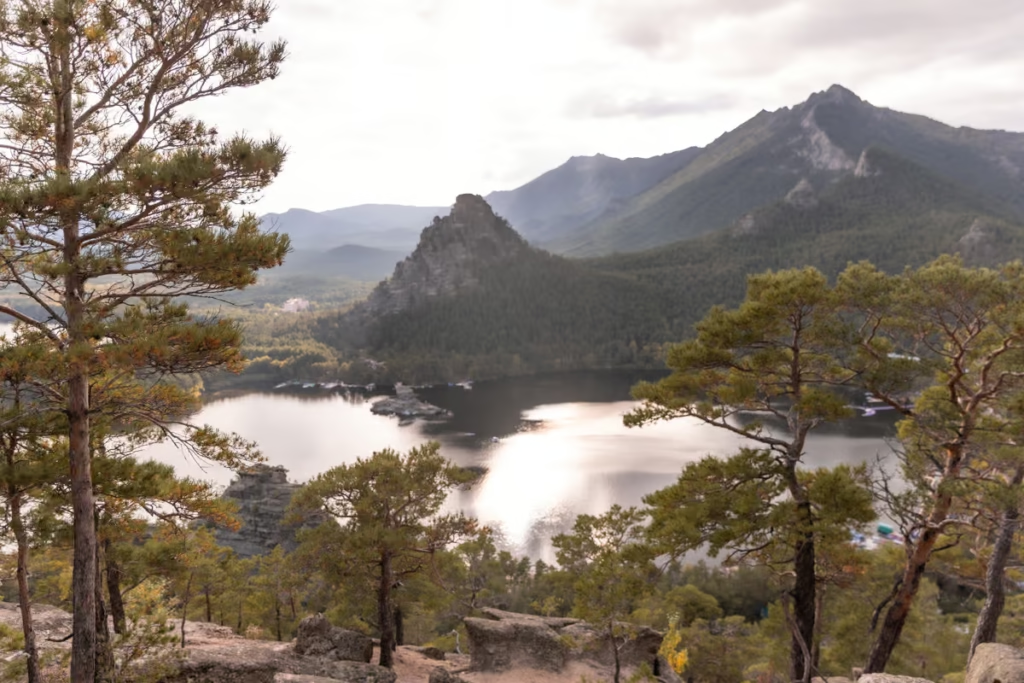
This publication is made possible by the support of the American People through the United States Agency for International Development (USAID) Competitiveness, Trade, and Jobs Activity in Central Asia. The contents of this publication are the sole responsibility of Nicole from The Adventures of Nicole and do not necessarily reflect the views of USAID or the United States Government.
31 Local Central Asia Foods & Drinks to Try on Your First Trip
Updated November 2026, 31 Local Central Asia Foods & Drinks to Try on Your First Trip originally appeared on Valerie & Valise back in 2019
Central Asia might be better known for its Silk Road cities, mountain landscapes, and endless stretches of steppe, but the region also has a surprisingly diverse food culture. From steaming bowls of lagman and enormous plates of Uzbek plov to fermented mare’s milk and freshly baked bread, traditional Central Asian food is an experience in itself.
Central Asian cuisine reflects centuries of trade, migration, and cultural exchange. The five countries of Kazakhstan, Kyrgyzstan, Tajikistan, Turkmenistan, and Uzbekistan share some culinary traditions, but each has its own specialties, ingredients, and regional variations. Nomadic pastoral traditions have shaped the meat and dairy-heavy cuisines of Kazakhstan and Kyrgyzstan, while Uzbekistan and Tajikistan are particularly well known for their rice dishes, breads, and vegetable-based preparations.
During my travels through Central Asia, I’ve had the opportunity to try everything from making manty in Karakol to eating brightly colored green noodles in Khiva and sampling yak milk ice cream in Murghab. Some dishes became instant favorites, while others took a little more getting used to.
If you’re planning a trip to the region, here are 31 traditional Central Asian foods and drinks worth looking out for, including local snacks, main dishes, desserts, and some rather unusual beverages.
Need Travel Insurance and Evacuation Services?
Start shopping for travel insurance plans over at IATI Insurance. Readers of the Adventures of Nicole get a 5% discount off your plan.
The Adventures of Nicole partners with Global Rescue to offer the world’s leading medical evacuation and security advisory services. To travel with peace of mind, explore their evacuation coverage.
Small Dishes & Snacks to Try in Central Asia
1. Baursak

Baursak was one of the first Central Asian foods I had on my trip to Kazakhstan, and I pretty much ate a whole meal’s worth during that very first lunch. It’s is a fried dough that was usually buttery, light, and served hot. Baursak can vary in size and shape and you’ll find it in restaurants and in local home dinners. Just don’t be surprised if you get addicted to it too!
2. Non
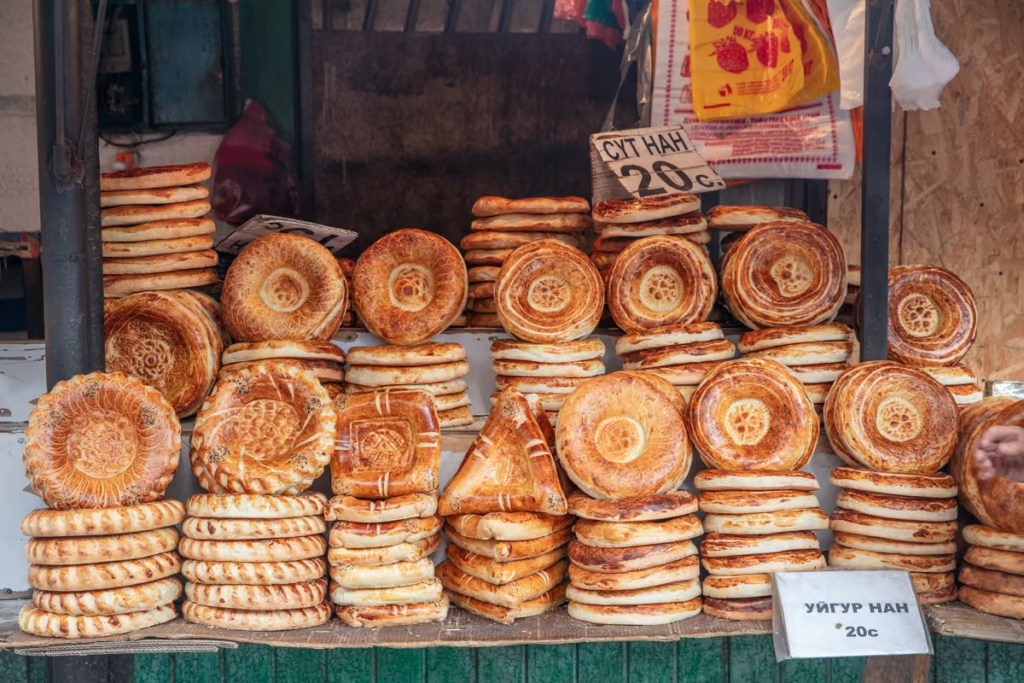
Non is Central Asia’s answer to flatbread; that’s why the name seems similar to what you’ll find further south in India (Naan). It’s a leavened flatbread and in Central Asia you’ll find it in a variety of shapes.
At the Osh Bazaar in Bishkek, I saw Non circles, squares, and even triangles! You might find beautiful braided patterns or pressed shapes in the dough and it’s a common staple at most meals.
3. Kurut

Not to be confused with Cobain or Russell, Central Asian kurut is a popular snack food you can find at all of the local markets and bazaars – and often served in small dishes at meals even in local guesthouses.
Kururt is pressed and dried sour cream, so it’s not ideal for you dairy-free travelers. It’s usually salty but I tried a few different kinds that included sweet and spiced options.
4. Fresh Fruit

One of the most surprising foods I found in Central Asia was all the fresh fruit. While Kazakhstan is arid and high in elevation, Kyrgyzstan and other Central Asian countries like Uzbekistan are lower and more fertile. There are tons of growing areas throughout these countries and as such you can find some amazing fresh fruits to snack on in between adventures.
When I was visiting during August 2019, it was melon season. We passed melon vendors along the roads with pickup beds overflowing with watermelon and other sweet melons. By chance, I just happened to bring my watermelon swimsuit so I was able to be totally consistent while enjoying the sweet fruit on a hot day.
Other seasonal fruit to try in Central Asia include mulberries, cherries, apples, apricots, pomegranates, khorma (persimmons), grapes, and plums.
5. Dried Fruit & Nuts

Unsurprisingly after that last one, you’ll also find plenty of dried fruits and nuts in Central Asia. In the bazaars, you’ll find delicious dried pit fruit and every kind of nut you can imagine. I recommend a mix of dried apricots and cashews* for trail mix if you’re tackling Kolsai Lakes or a similar hike.
*Yes, I know cashews are terrible for the environment. I try to temper this by consuming in moderation.
6. Manty

While I’ve never written a foodie post that included dumplings, I should confess now: dumplings are one of my top five favorite foods of all time. I am also completely dumpling-neutral. It doesn’t matter where, what’s in ’em, or what shape it takes – I love all dumplings equally, without prejudice.
So imagine my delight in learning that Central Asia has their own type of dumpling! They’re called manty and they almost always have the same basic ingredients: beef, beef fat, and onion, wrapped in a fresh dough and tucked all tight with a skillful pinching pattern.
I was excited to take am manty-making class in the town of Karakol. Our instructor made us cube beef, chop fat and onion, and attempt to pack our own manty. Mine were hideous, but they still tasted delicious.
7. Oromo
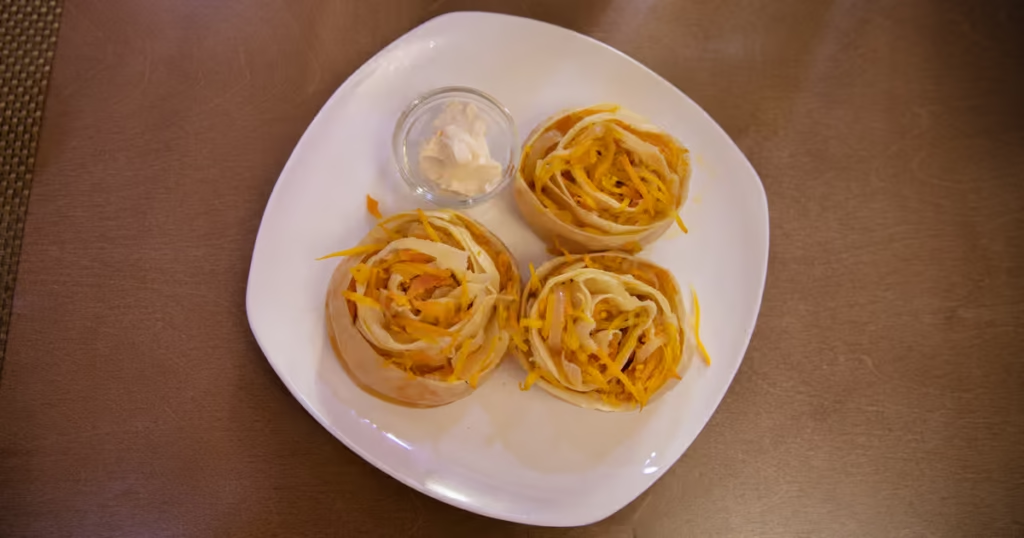
On a foodie tour in Karakol*, I had a chance to try oromo, a popular food among Kyrgyz and Kazakh people. It’s technically a steamed pie which is sliced into disks – but as you can see above it is sometimes wrapped into flat disks. The traditional oromo ingredients are cabbage and carrots.
Karakol was a surprisingly great foodie spot, as a mixing place for a variety of different cultures. If you love food and city-hopping Karakol should be high on your list if you’re planning a Central Asia itinerary.
8. Sambusa / Samsa

Samsa in the Turkic-speaking nations of Central Asia (Kazakhstan, Kyrgyzstan, and Uzbekistan) and sambusa in Tajikistan, these delicious little triangular treats can be found just about everywhere. A samsa or sambusa will typically be a meat and onion stuffed dough pocket similar to an Indian samosa- the only difference is that samsa/sambusa are baked and not fried.
9. Achichuk

Achihuck is probably one of the most commonly served Central Asia dishes you’ll run into- and it’s painfully simple. Achihuck is just a simple salad of tomatoes, cucumbers, and onions topped with dill and typically drizzled in vinegar.
10. Funchoza
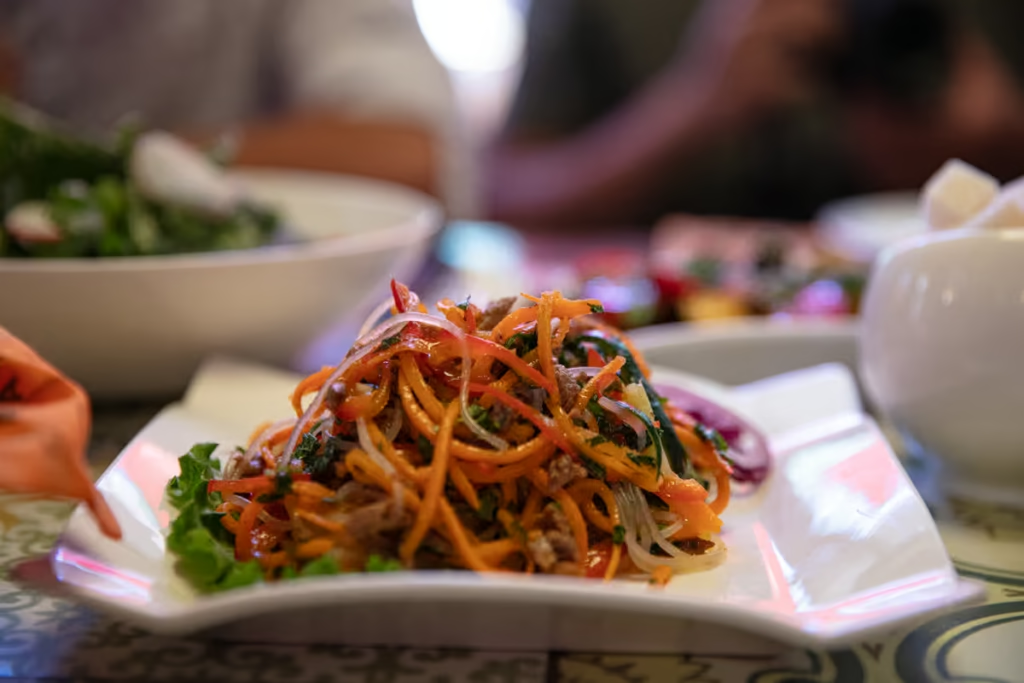
Eaten throughout Central Asia and Russia, funchoza is a dish with origins in many different places. Partially influenced by the Uyghur, Koreans, and Central Asians is a delicious salad-type concoction.
A good funchoza will typically consist of glass noodles, julienned carrots, strips of beef, bell pepper, and green onion. Of course, the funchoza must be doused in vinegar and oil to be complete.
11. Guzlama

Guzlama is the Uzbek answer to the Afghan bulani. It’s a piece of dough typically stuffed with meat and onions before being deep-fried to golden perfection. If you’re lucky you may find a version stuffed with potato.
Entrees to Try in Central Asia
12. Borscht

Let’s be real: you can’t visit Central Asia and not notice the influence of the Soviet Union. This extends to the food culture, especially in the big cities like Almaty and Bishkek.
During my first few days in Almaty, I had a delicious Russian meal, including borscht. It’s possible to find borscht elsewhere in the world, but in case you’re not familiar with it: borscht is a sour beetroot soup, which is what gives the dish its distinctive color. It’s perfect for the cooler months f you’re visiting in the shoulder season.
13. Ashlan Fu

I’ve buried it in the middle of my list, but Ashlan Fu is my absolute favorite food that I discovered in Central Asia. I had it three times in three days!
Ashlan Fu is a traditional hot or cold soup brought to the region by the Dungan people from China. As the Dungan people primarily settled in the region around Karakol, that’s the place to find it. You can find tons of small shops selling it in the market, unsurprisingly called Ashlan-fu Alley! In other cities in Kyrgyzstan, you’ll even find Ashlan Fu restaurants that claim to do it in Karakol style.
I also had a chance to make Ashlan Fu myself. It’s a vinegar-based soup with different types of noodles, spices, and egg or meat. It’s sometimes served with a potato dough bread. And yes, it’s utterly delicious.
14. Lagman
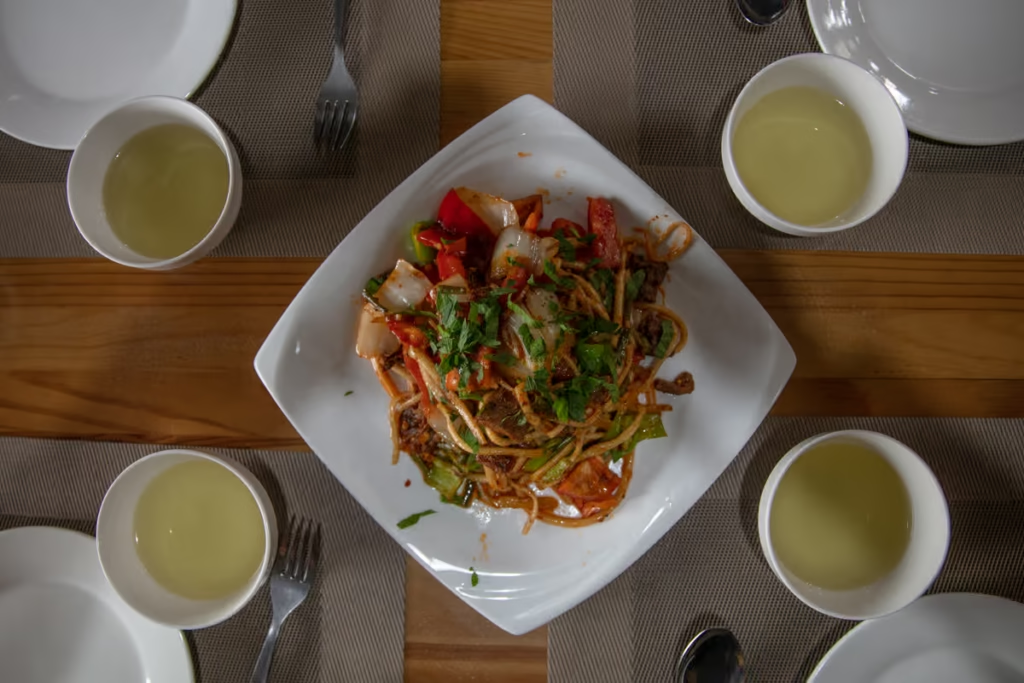
Looking for noodles, because, ya know, you’re in Asia? Lagman is the dish you should seek out. These are thick, long noodles with a variety of toppings and ingredients. In Almaty, I had a meat version; in Karakol, I tried a vegetarian one with fresh peppers.
This is a pretty common dish, and the great part is that it’s very neutral – if you’re looking for a comfort food with familiar flavors, Lagman is a good choice because it feels familiar despite being on the other side of the world.
15. Azu
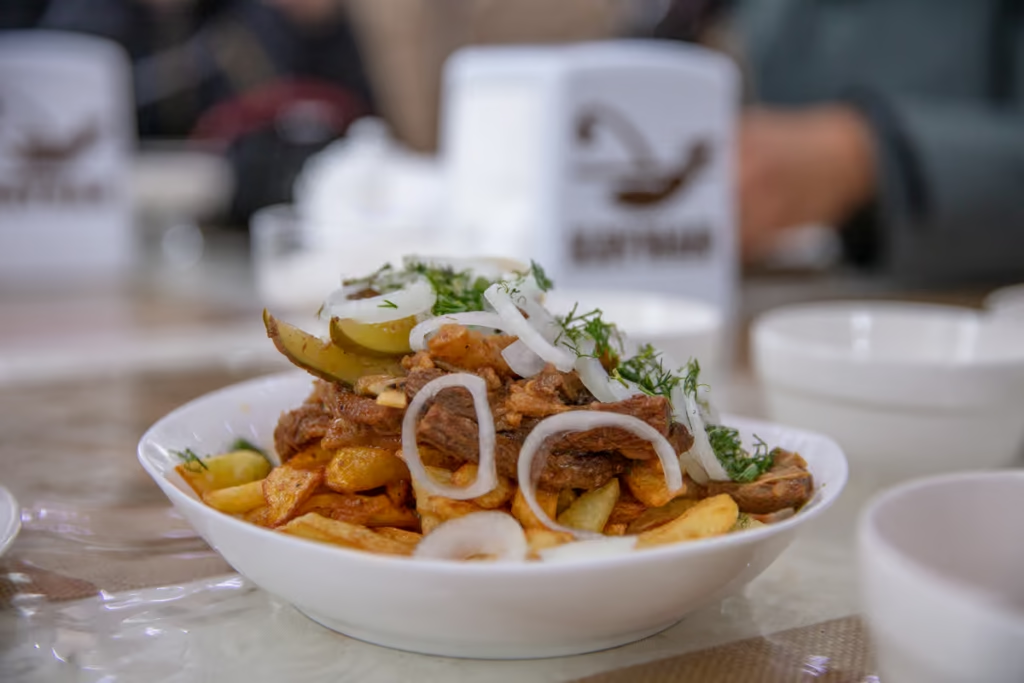
Poutine, is that you? Okay, not quite… but it’s probably about as close as you’ll find in Central Asa! Azu is a Tartar dish, spread through the Soviet Union by the Turkic-speaking people on the Russian territory, the Tartars. Azu is a meat stew atop fried potatoes, topped with pickles and onions, and I had the chance to try it as part of my Karakol food crawl tour. (Yes, I highly recommend that tour if you love to try new dishes.)
16. Plov

Like Lagman, it’s zero surprise to find a rice dish in Asia – but I was actually surprised how little rice I found in most of the Central Asian dishes I tried. The main one was plov, which you might know by its more common name: pilaf.
Plov is a popular dish in Uzbekistan, but you can find it throughout the region after being disseminated by the Soviet Union during that era. As you can see, it’s a heavy rice dish with meat and veggies; the Uzbek version is made with lamb, though it’s also made with beef and horse.
17. Beshbarmak

After crossing from Kazakhstan to Kyrgyzstan, I began hearing about Beshbarmak – our guide said it was basically the equivalent of a national dish. It’s usually meat (mutton) served over noodles with a few slices of Qazi (horsemeat and fat sausage).
I found it a little bit rich for my stomach but I can see why it’s a favorite: it’s hearty and flavorful and a very distinctive food to try in Central Asia.
18. Shashlik

I’m not gonna lie: I’m still a little bit confused what shashlik is, because every time we saw sheep or horses – and especially when said sheep or horses were clogging up the roadway (a common experience) – we all yelled shashlik!
Actually, shashlik is Central Asia’s take on kabob: skewered or grilled meat from any number of animals (including sheep or horse). When I tried it, it was a variety of different grilled meats including chicken and beef too, served with grilled onions on flat bread.
19. Shivit Oshi

Shivit oshi is a dish that hails from Khiva, Uzbekistan, and is an all-time personal favorite Central Asian food. What makes it so unique? It’s bright green noodles.
What makes the noodles so green? When the noodles are being formed, a good amount of dill is added to the batter, giving them their beautiful grass-green color.
Typically shivit oshi is served with a scoop of potato, onion, beef, and carrot stew, and a dollop of smetana (sour cream).
20. Kurutob
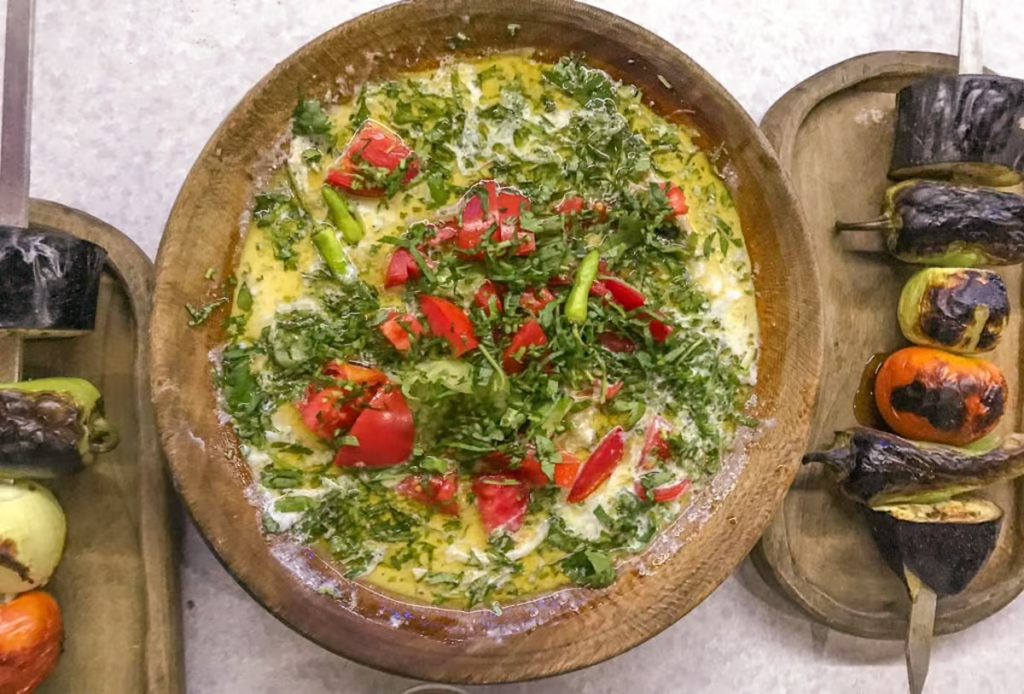
If Tajikistan has a national dish- it should be kurutob, although most Tajiks will say osh (plov) is.
Kurutob consists of a crispy fatir bread that is doused in a watered-down cheese made of kurut mixed with water. Next, it’s topped with sauteed onions, garlic, and beef, chopped tomatoes and cucumbers, and finally garnished with dill, parsley, cilantro, and a spicy green chili.
21. Javari
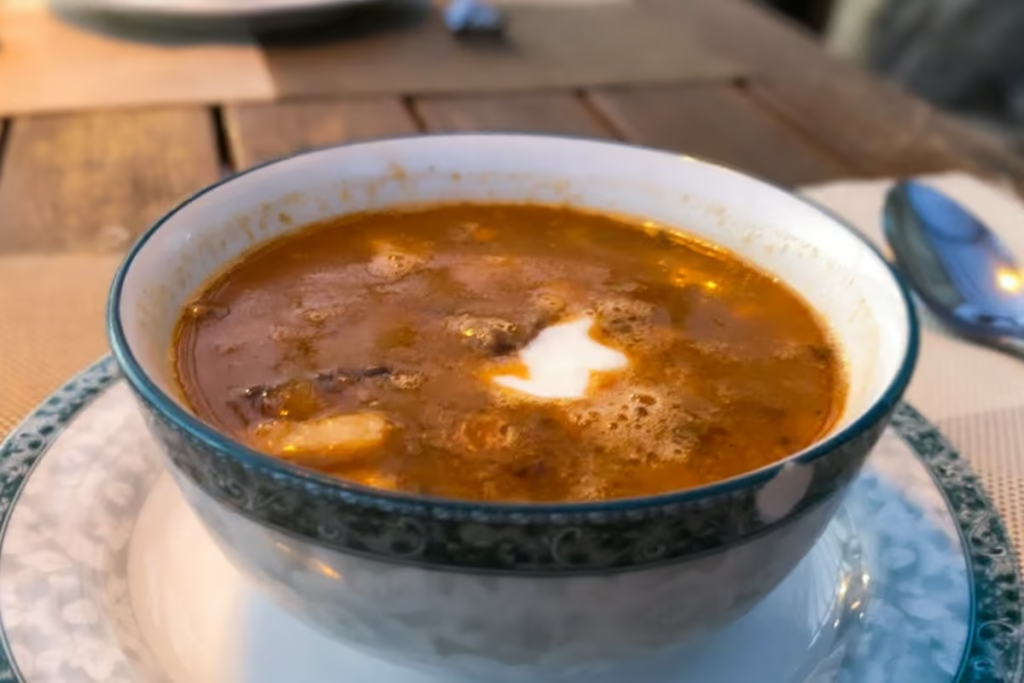
Javari is a delicious soup that is hyper-regional to the city of Khujand, Tajikistan, specifically (though you can find a bowl of it at the Foreli in Dushanbe if you’re not going up to the Tajik Fergana Valley!). Javari features a locally grown pulse called javari and is typically mixed in a broth along with potato, carrots, beef, and mung beans.
22. Dimlama
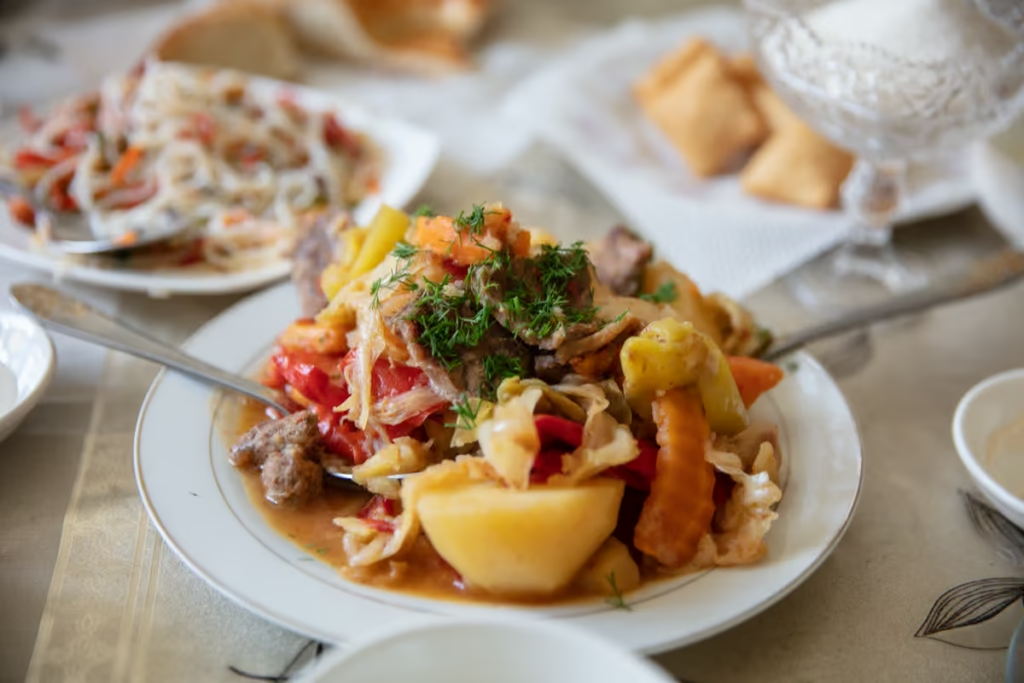
Dimlama is another popular dish found throughout the Central Asian region. It’s essentially a layered stew of meat, onion, potato, cabbage, and sometimes other veggies, that is spiced with garlic and usually topped with dill and/or other herbs.
Dimlama is most commonly served up in the spring, summer, and early fall when vegetables are most bountiful.
23. Shorbo

Shorbo is a ubiquitous Central Asian dish that you find in just about any corner of the region. It’s a simple soup consisting of a chunk of carrot, potato, onion, and meat (typically mutton or beef), stewed up in mutton or beef-based broth.
24. Chuchvara

Chuchvara are a dumpling similar to a manti- only smaller (think Russian pelmeni-sized). They are commonly served up in a brothy soup, but you can also find the delectable little chuchvara fried.
Drinks to Try in Central Asia
25. Tea

It’s funny: I drank tea at almost every single meal in Central Asia – and I didn’t take a single picture of any tea during the whole 14 days trip! Tea is such a ubiquitous part of daily life in countries like Kazakhstan and Kyrgyzstan that it almost passes unnoticed.
Offered as ‘chai’ by every guest, at every restaurant, say yes to tea when it’s offered. It’s just part of immersing yourself in the culture!
26. Camel’s Milk
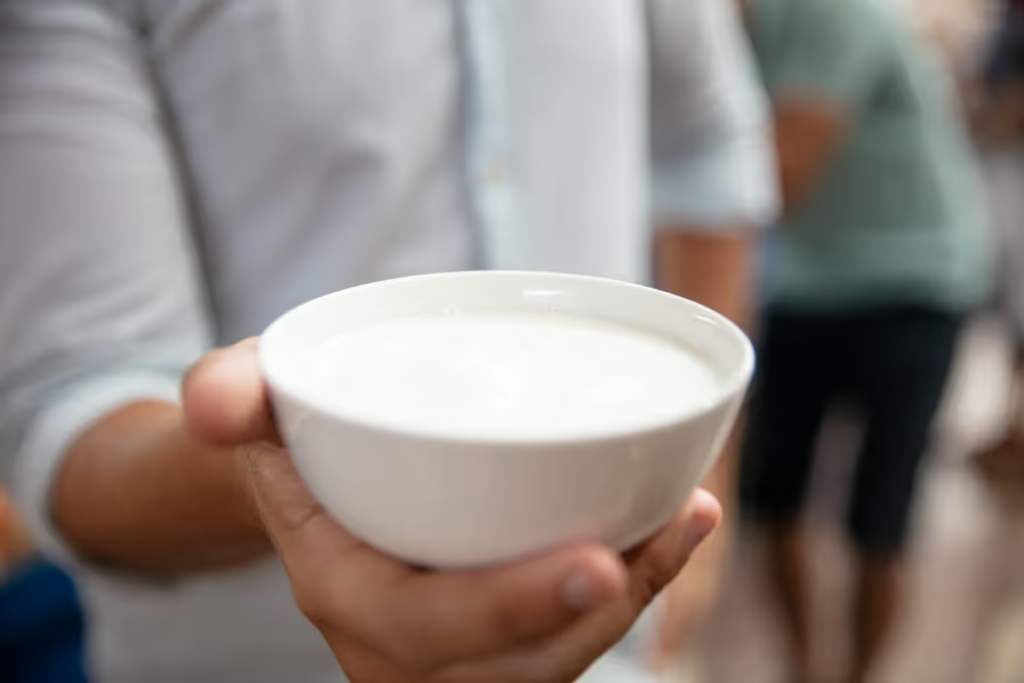
After my trip to Jordan in 2016, I became a huge fan of camels. So I was wildly excited to see Bactrian Camels one day while we were driving through Kazakhstan. Most Bactrian Camels in Kazakhstan are domesticated, and camel’s milk is a common drink available – but you’re warned now that it’s an acquired taste!
I tried camel’s milk at the Green Bazaar in Almaty, where vendors also sell kurut and other dairy products. It tasted to me like kefir, a fermented yogurt drink you can find here in the States.
27. Kymyz (Fermented Horse’s Milk)
I saved the most ‘out there’ Central Asia food and drink for last – not because I don’t encourage you to try it. Kymyz is fermented horse’s milk… which I’ll be honest is a pretty wild idea if you think about it. We don’t really drink fermented milk here in North America – nor do we drink horse’s milk. But that’s purely culture; in a place like Kyrgyzstan or other Central Asian countries, horses are a critical part of life. Every part of the horse is put to use.
Shortly after crossing from Kazakhstan to Kyrgyzstan, my group stopped to meet a local horse farmer and try her kymyz. To me, it tasted like bacon and ranch-flavored milk. Yep, that’s odd – but it wasn’t as off-putting as I would have expected. If you’ve come all the way to Central Asia, you have to give it a try!
28. Tarkhun (Tarragon Tea)

Tarkhun got its start in the Caucasus country of Georgia, created by a pharmacist named Mitrofan Lagidze in the city of Kutaisi in 1887. Lagidze eventually landed on adding a syrup made of tarragon to locally bottled mineral water- and that’s where tarkhun was born. As with many of the other dishes and delights on this list, tarkhun made its journey to Central Asia during the Soviet era.
You can easily find tarkhun on many magazin (shop) shelves, though be warned that sometimes it’s called tarragon tea or tarragon lemonade.
Desserts to Try in Central Asia
29. Chak-Chak
Originating from Tatarstan, chak-chak made its way to Central Asia during the Soviet era and became a permanent fixture. Chak-chak is essentially little fried strips of dough that are glued together with a honey syrup that is drizzled over the dough- so think like a Tatar version of a rice crispy treat!
30. Yak Milk Ice Cream

I found out that a woman in the Murghab Bazaar in Murghab, Tajikistan, sold yak milk ice cream out of a trailer on the backside of the bazaar, and I knew it was a must-try Central Asian food. The verdict? delicious!
31. Halva

Halva is a sweet with its origins in the Middle East, but as with many other dishes you’ve read about in this post, it came to Central Asia and became a dessert of its own.
The two most common versions of halva you’ll find in Central Asia are one made of ground sunflower seeds mixed with honey, and a version made of honey, flour, and cocoa that is topped with nuts.
What to Know About Eating in Central Asia
Eating in Central Asia is about more than simply ordering something from a restaurant menu. Food is an important part of hospitality, family life, and social gatherings throughout the region.
Here are a few things worth knowing before your trip:
- Meat is a major part of the diet. Lamb, beef, and horse meat are common ingredients in traditional Central Asian cuisine. Many dishes are built around meat, noodles, rice, and dairy products.
- Vegetarians have options, but planning helps. Look for vegetable samsa, salads, meat-free lagman, fresh bread, fruit, and vegetable-based dishes. However, soups and rice dishes that appear vegetarian may still be prepared using meat broth or animal fat.
- Tea is part of everyday life. You’ll regularly be offered chai at restaurants, guesthouses, and family homes. Accepting a cup is a simple way to participate in local hospitality.
- Bazaars are excellent places to try local food. You’ll find freshly baked bread, samsa, dried fruit, nuts, seasonal produce, and traditional sweets. Some markets also have dedicated food stalls where you can sample regional dishes.
- Regional specialties are worth seeking out. Karakol is particularly good for ashlyan fu, Khiva for shivit oshi, and Tajikistan for kurutob. Don’t assume every dish is equally common throughout the region.
Final Thoughts on Central Asian Food
Central Asian food was one of my favorite surprises during my travels through the region. From the incredible plov centers of Uzbekistan to the little ashlyan fu shops tucked away in Karakol and the unexpected discovery of yak milk ice cream in Murghab, there’s so much more to the region’s food culture than most people realize.
Some dishes became instant favorites, while others were a little more challenging to get used to. But that’s part of the fun of traveling somewhere new, isn’t it?
If you’re planning a trip to Kazakhstan, Kyrgyzstan, Tajikistan, Uzbekistan, or Turkmenistan, make sure you leave some room in your itinerary to explore the local food. Visit the bazaars, accept that extra cup of chai, and don’t be afraid to order something you’ve never heard of before.
And if you’ve already traveled through Central Asia, I’d love to know: What’s your favorite traditional Central Asian food or drink?

Valerie Stimac
Valerie is a travel blogger from Alaska who is currently based in the Midwest. Check out her writing on Valerie & Valise.
Posts from Central Asia
Ishkashim Border Crossing
Uzbekistan Travel Guide: Everything to Know

Best Road Trips in the World
Bukhara Travel Guide: 19 Best Things to Do
Tajik Wakhan Valley: Complete Travel Guide
East Kazakhstan Travel Guide: 15 Best Things to Do
Tashkent Travel Guide: 18 Best Things to Do
Central Asian Food: 31 Dishes & Drinks to Try
Aralsk-7: Visiting the Soviet Bioweapons Lab
Kyrgyzstan Travel Guide: Plan Your Trip
Women’s Travel in Afghanistan
Bartang Valley Travel Guide
Lake Sarez Travel Guide: Trek & Permits
Yagnob Valley Trekking & Travel Guide
17 Best Things to Do in Tajikistan
Kyrgyzstan SIM Card & eSIM Guide
Uzbekistan-Afghanistan Border Crossing at Hairatan
Kazakhstan Travel Guide: Things to Know
Tajikistan Visa Guide: E-Visa, Fees & GBAO
Turkmenistan-Kazakhstan Border Crossing
Khujand Travel Guide: 11 Best Things to Do
Aktau Travel Guide: Things to Do
Karakalpakstan Travel Guide

Madiyan Hot Springs, Tajikistan
Murghab Travel Guide
Hisor Fortress, Tajikistan: How to Visit
Karakol Travel Guide: Top Things to Do
Uzbek Fergana Valley Travel Guide
Istaravshan Travel Guide: 10 Things to Do
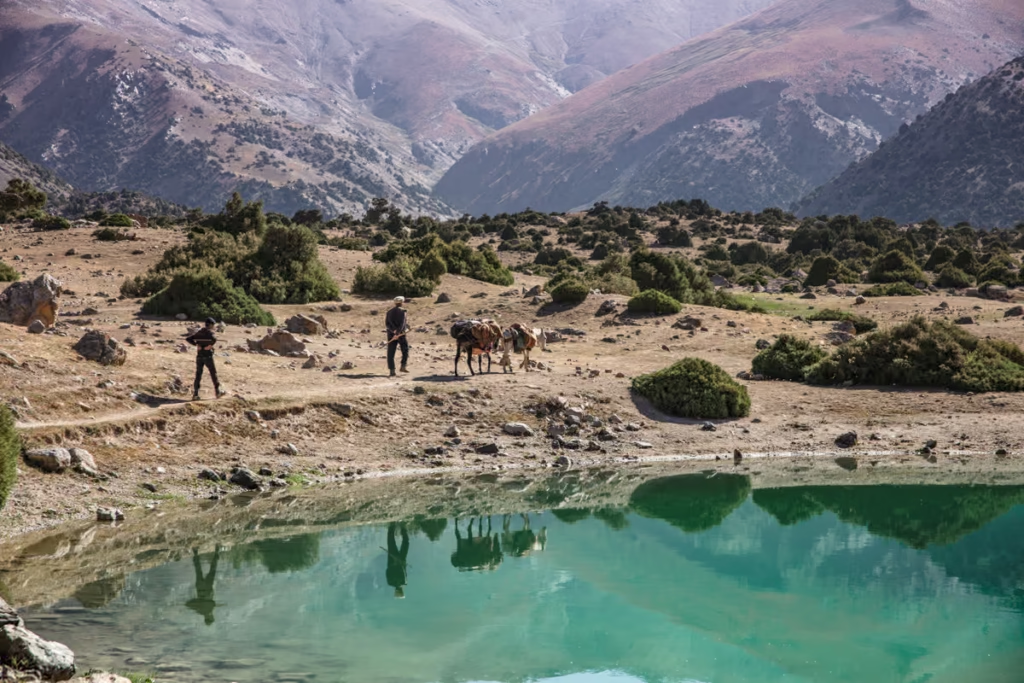
Tajikistan Itinerary: 1-4 Weeks
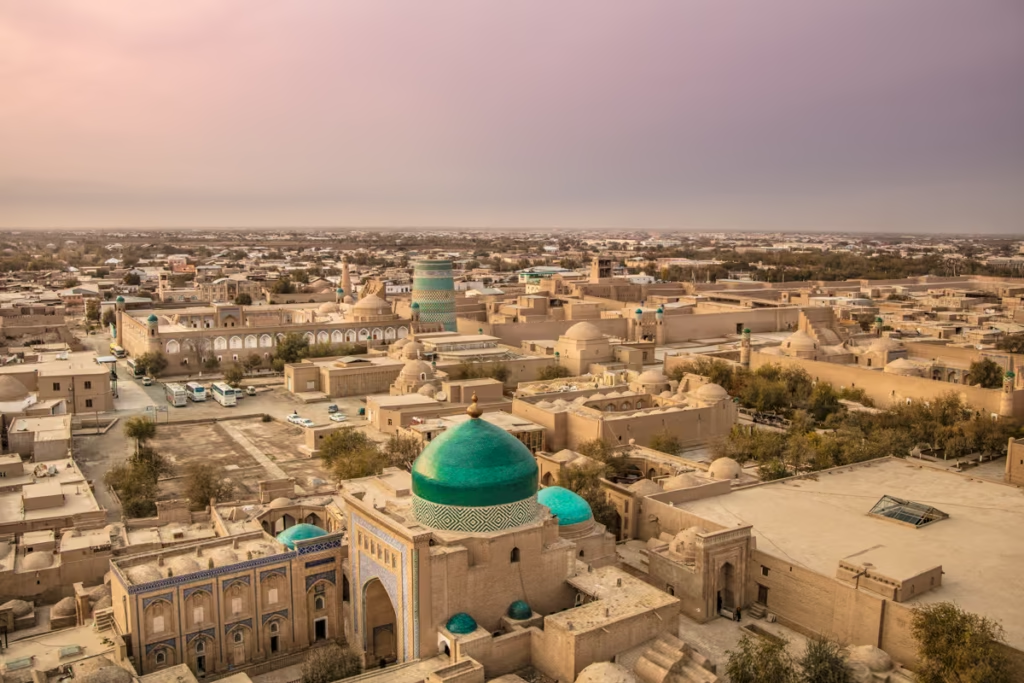
Two Week Uzbekistan Itinerary: 14 Days
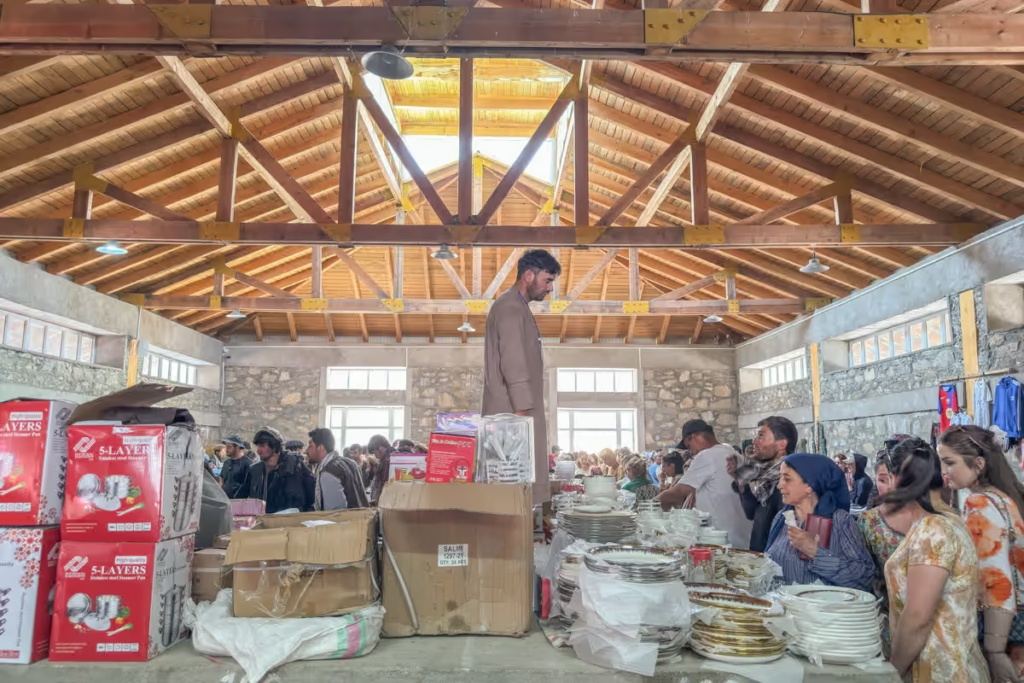
Afghan Bazaar Khorog | Tem Market
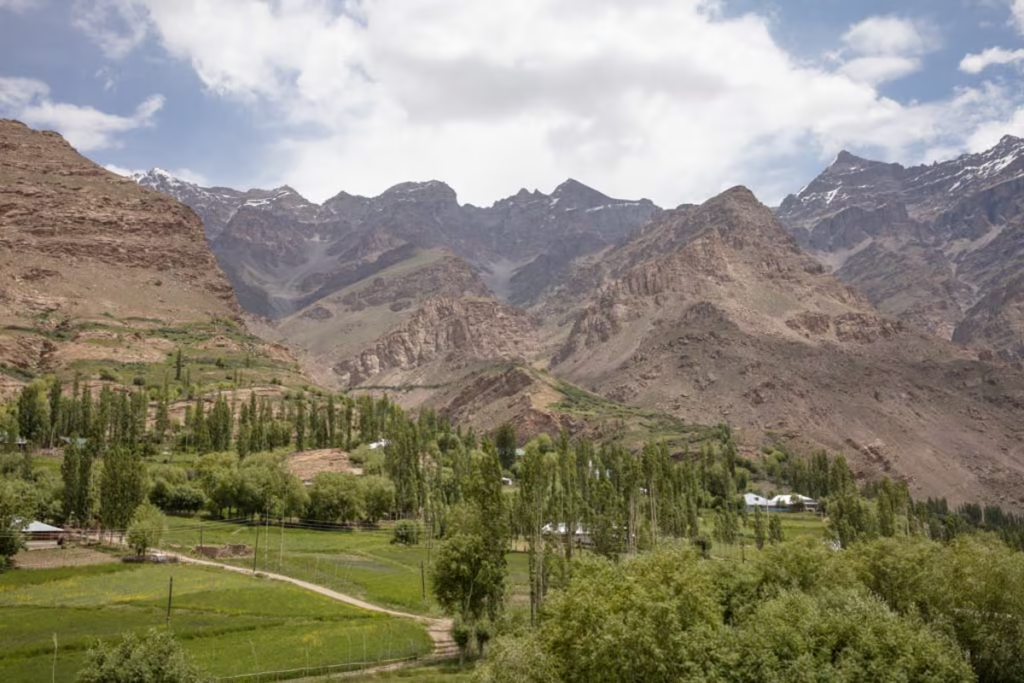
Shokhdara Valley Travel Guide, Tajikistan
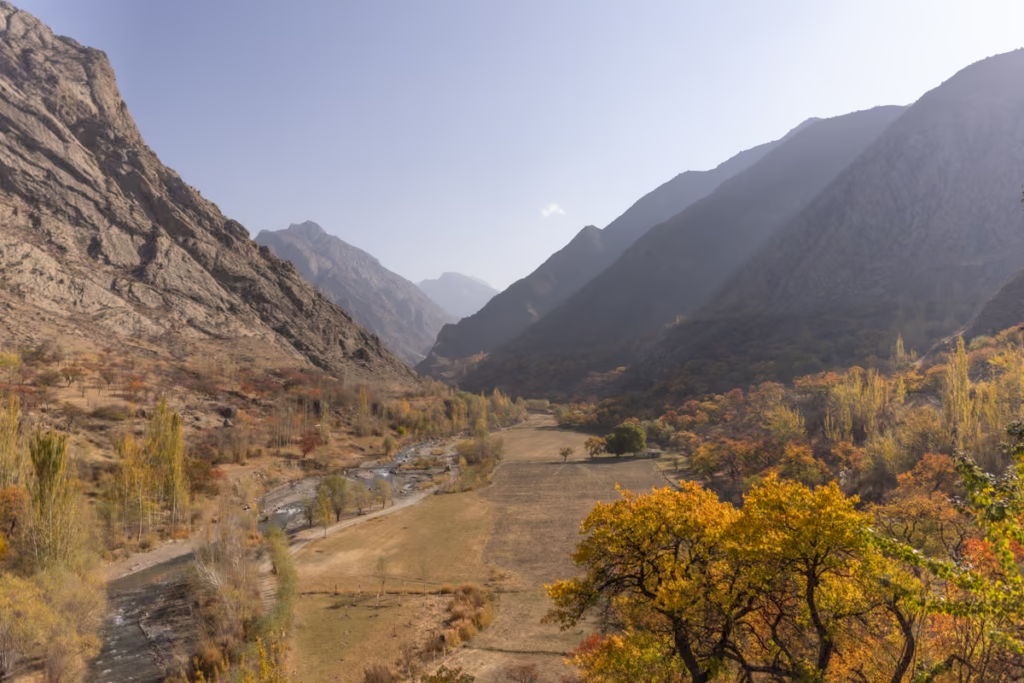
Vorukh: A Guide to Tajikistan’s Enclave
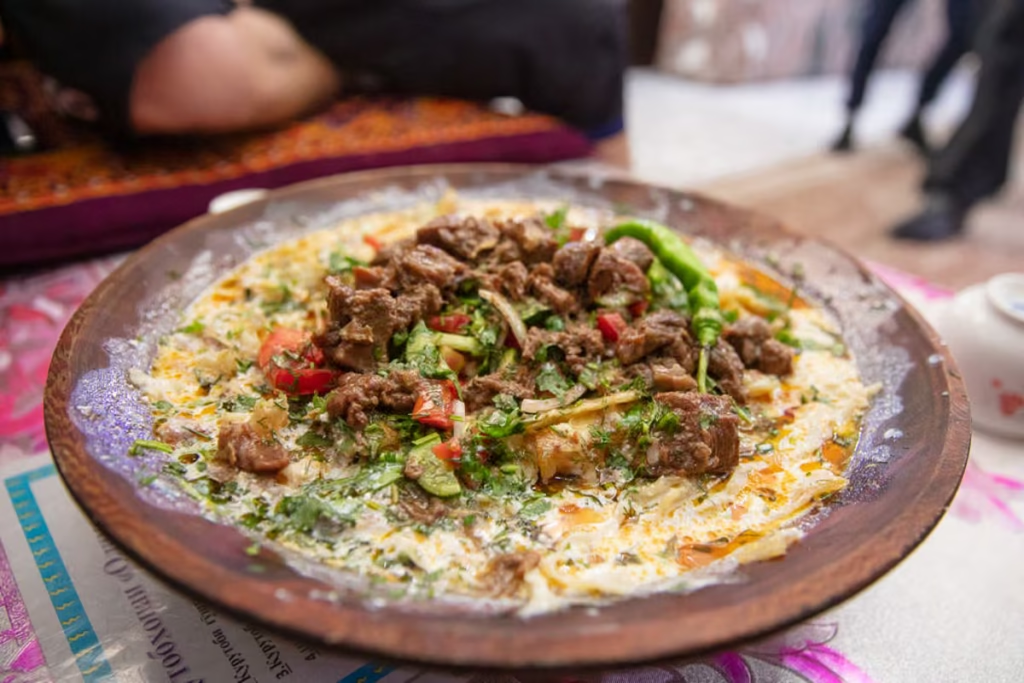
Tajik Food: 20+ Traditional Dishes
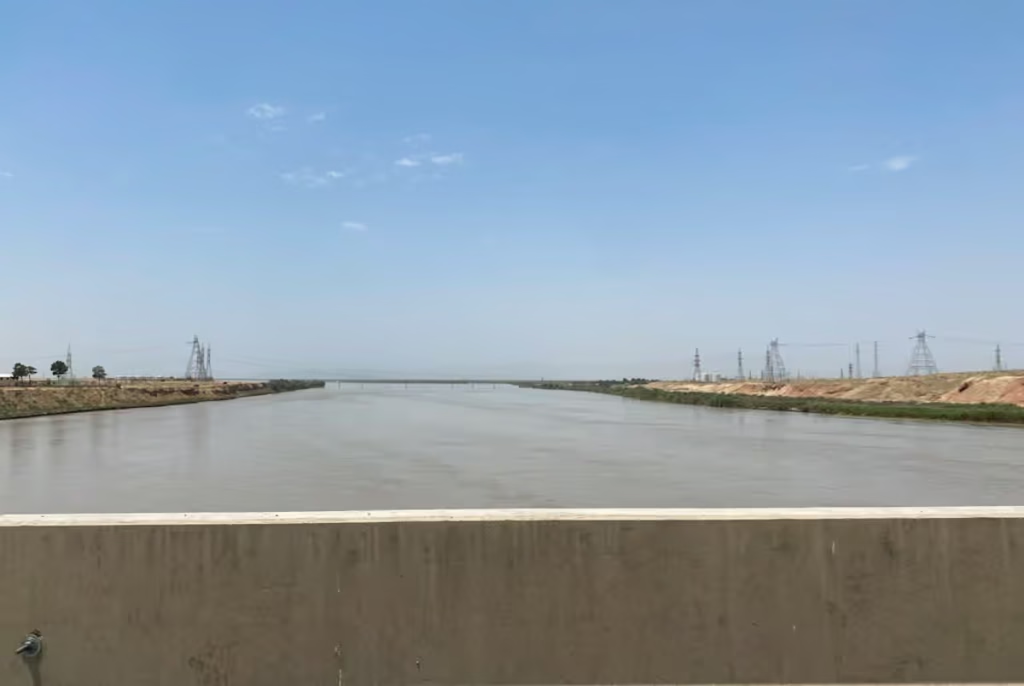
Shir Khan Bandar Border Crossing Guide
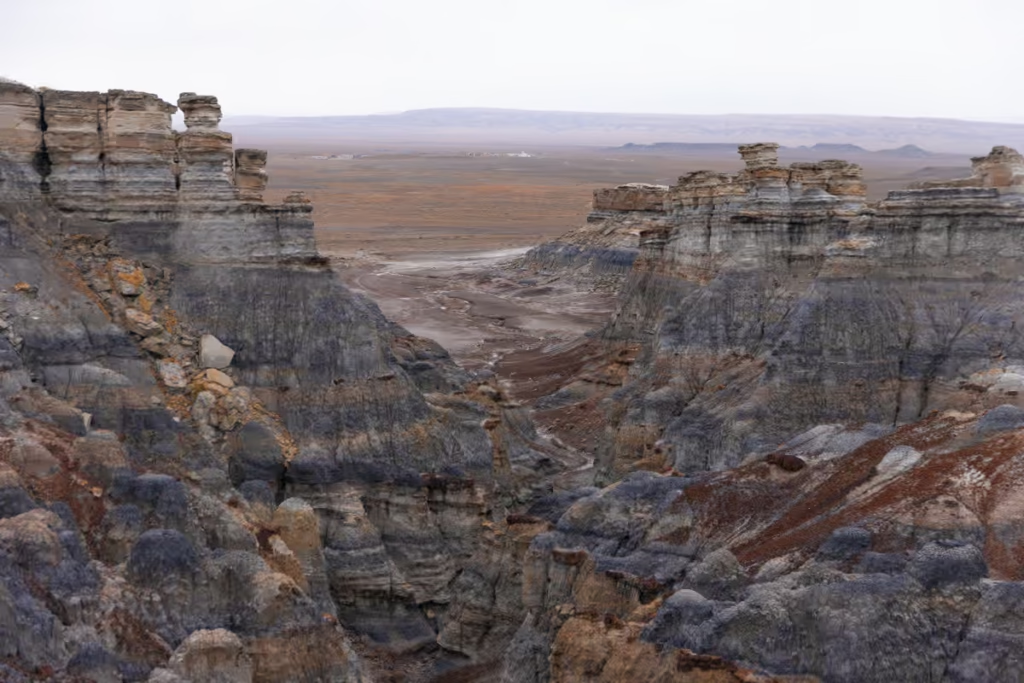
Mangystau Travel Guide, Kazakhstan
Qolma Pass: Tajikistan to China Guide
GBAO Permit: How to Get One
Lakes Loop, Tajikistan Hiking Guide
Pik Engles Hike: Tajikistan Trek Guide
Pamir Highway Guide: M41 Route
Tajikistan Border Crossings Guide
3 Days in Almaty Itinerary, Kazakhstan
Tajikistan Uzbekistan Itinerary: 2 Weeks
Solo Female Travel in Tajikistan
Chimtarga Pass Trek Guide | Tajikistan
Turkestan: A Complete Travel Guide
Jeti Oguz Travel Guide, Kyrgyzstan