Travel Karakalpakstan: The Stan Within A Stan
Updated October 2026, Travel Karakalpakstan: The Stan Within A Stan was originally written November 2017
Karakalpakstan is the vast autonomous republic occupying much of northwestern Uzbekistan, stretching across the deserts around the lower Amu Darya and the southern Aral Sea. It is a very different side of Uzbekistan from the blue-tiled monuments of Samarkand, Bukhara, and Khiva.
This is a region of desert fortresses, Soviet history, Karakalpak culture, strange landscapes and the remnants of the Aral Sea. Traveling Karakalpakstan isn’t always easy, but that’s part of what makes it interesting. The region is remote, distances are long and many of its best sights require a vehicle or organized tour.
Most travelers use Nukus as their base, visiting the Savitsky Museum, Mizdarkhan Necropolis and nearby archaeological sites before heading farther afield toward Moynaq, the Aral Sea, Ustyurt Plateau and the ancient Khorezm fortresses.
I’ve traveled through Karakalpakstan several times, including trips into some of its most remote corners. This guide covers where to go, things to do, how to get around, where to stay and what you need to know before traveling to Karakalpakstan.
Start here: The Uzbekistan Travel Guide
Need Travel Insurance and Evacuation Services?
Start shopping for travel insurance plans over at IATI Insurance. Readers of the Adventures of Nicole get a 5% discount off your plan.
The Adventures of Nicole partners with Global Rescue to offer the world’s leading medical evacuation and security advisory services. To travel with peace of mind, explore their evacuation coverage.
- Karakalpakstan Travel at a Glance
- Best Time to Visit Karakalpakstan
- How Many Days Do You Need in Karakalpakstan?
- Things to Do in Karakalpakstan
- How to Get to Karakalpakstan
- How to Get Around Karakalpakstan
- Where to Stay in Karakapakstan
- Karakalpakstan Itinerary
- Karakalpakstan Guidebooks
- Planning a Trip to Karakalpakstan?
Karakalpakstan Travel at a Glance
Best base: Nukus
Main attractions: Savitsky Museum, Mizdarkhan Necropolis, Khorezm fortresses, Moynaq Ship Graveyard, Aral Sea, Ustyurt Plateau
How long: 3–5 days for the highlights, longer for remote areas
Best time to visit: Spring and autumn
Main transport: Trains, flights, shared taxis, private vehicles and organized 4WD tours
Currency: Uzbek som (UZS)
Main gateway: Nukus
Planning a trip around Uzbekistan? Karakalpakstan works particularly well as an extension to a Khiva itinerary, although travelers with more time can continue overland toward the Aral Sea or Kazakhstan.
Best Time to Visit Karakalpakstan
The best times to travel in Karakalpakstan are generally spring and autumn, when temperatures are more manageable for long drives through the desert.
Summer can be brutally hot, particularly when you’re spending hours outside at archaeological sites or traveling toward the Aral Sea. Winter brings much colder conditions and can make remote travel less predictable.
For an itinerary combining Nukus, the Khorezm fortresses, Moynaq and the Aral Sea, I’d personally aim for April to May or September to October.
How Many Days Do You Need in Karakalpakstan?
I’d allow at least three days for Karakalpakstan, although four or five days gives you considerably more breathing room.
3-4 days: Nukus, Savitsky Museum, Mizdarkhan, Chilpik Qala and the Khorezm fortresses. Take a day trip to Moynaq to see the Ship Graveyard.
5+ days: Add a longer Aral Sea/Ustyurt excursion with Sudochie Lakes, Urga, Barsa-Kelmes and other remote sites.
If you’re planning to travel deep into the Ustyurt or South Aral Sea region, don’t try to cram everything into a couple of days. Distances are enormous and road conditions can make journeys much slower than they look on a map.
Things to Do in Karakalpakstan
Karakalpakstan’s biggest draw is the sheer variety of things to see across a surprisingly remote part of Uzbekistan. You can spend one day wandering the museums and bazaars of Nukus, the next exploring ancient Khorezm fortresses in the desert, and another standing beside the rusting ships of the Aral Sea.
Here are the best places to visit in Karakalpakstan, starting with the easiest to reach from Nukus and moving into the more remote corners of the region.
Want to include Karakalpakstan on your larger Uzbekistan trip? Read: The Perfect 2 Week Uzbekistan Itinerary
Nukus
Nukus is the capital of Karakalpakstan and the main base for exploring the region. At first glance, the Soviet-planned city can feel a little stark, especially if you’ve just arrived from the ornate Silk Road cities of central Uzbekistan. Give it some time, though, and Nukus starts to make sense as the cultural heart of Karakalpakstan.
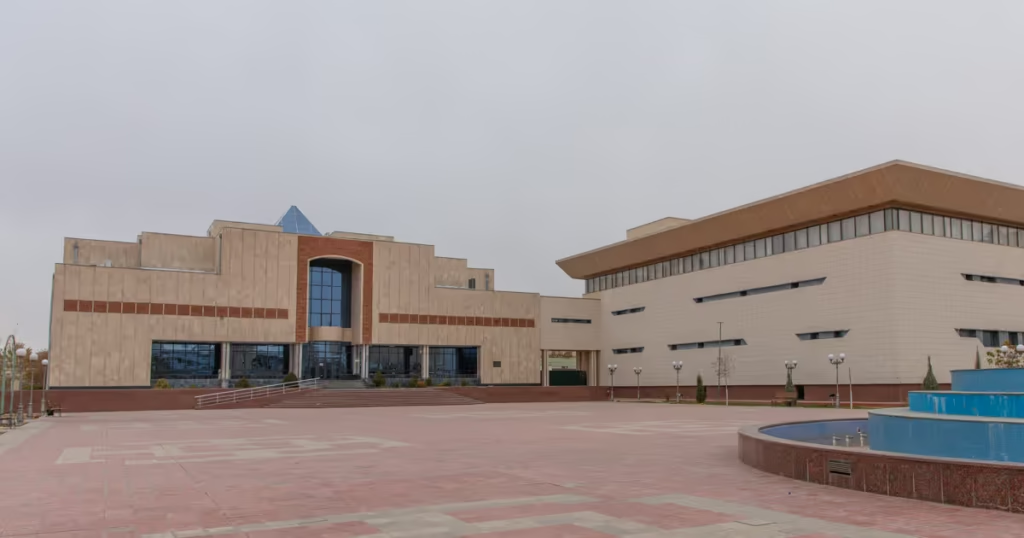
The highlight of any visit to Nukus is undoubtedly the Savitsky State Museum of Karakalpakstan that houses over 40,000 pieces, manny of which were Russian and Central Asian avant-garde pieces banned by Joseph Stalin. The Savitsky Museum also features ethnographic and archaeological finds from around the Karakalpakstan region. Igor Savitsky created the secret museum in the deserts of Karakalpakstan, hiding the forbidden artwork from the watchful eye of the KGB.
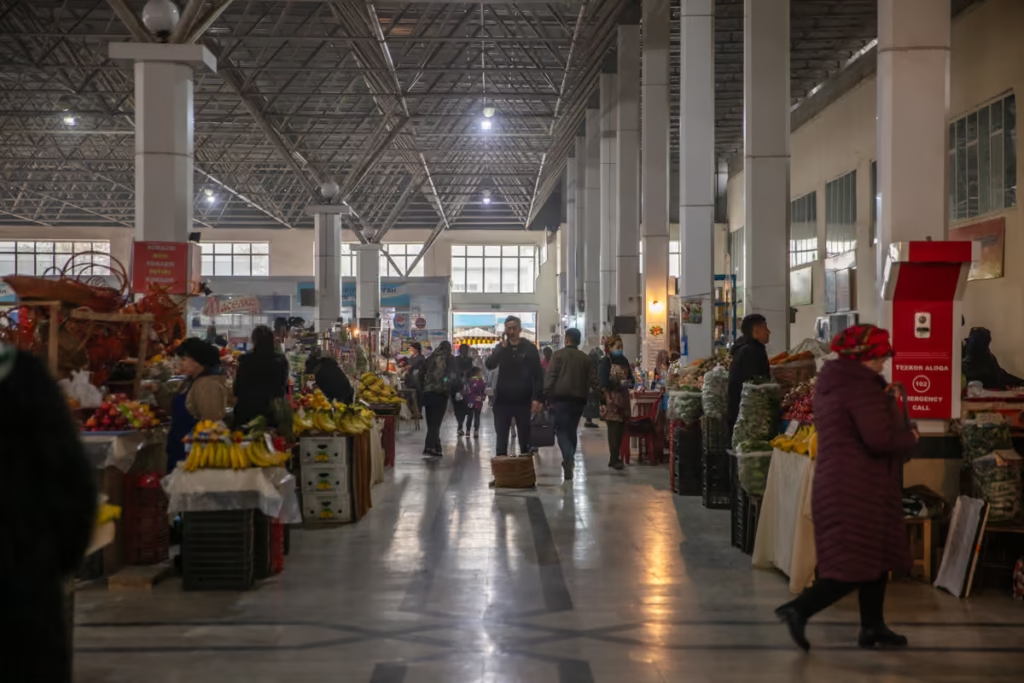
Other things worth checking out on your stay in Nukus include the Amet & Ayimkhan Shamuratovs House Museum attached to the Jipek Joli Inn, the Nukus Bazaar, the Mosque of Imam Ishan Mohammed, and the Karakalpak State Academic Theatre of Berdakh. Just outside Nukus, the Midzarkhan Necropolis and the Dakhma of Chilpik Qala are must-sees.
Nukus also boasts a surprising number of good restaurants too- giving an ample break from the many plates of plov you’ve likely eaten en route. My favorite of the lot would have to Sofram Turkish Restaurant, followed by the Premier Lounge, Cinnamon Cafe, and Restaurant Neo.
Nukus is also the practical jumping-off point for trips to Mizdarkhan, the Khorezm fortresses, Moynaq and the Aral Sea.
Mizdarkhan Necropolis
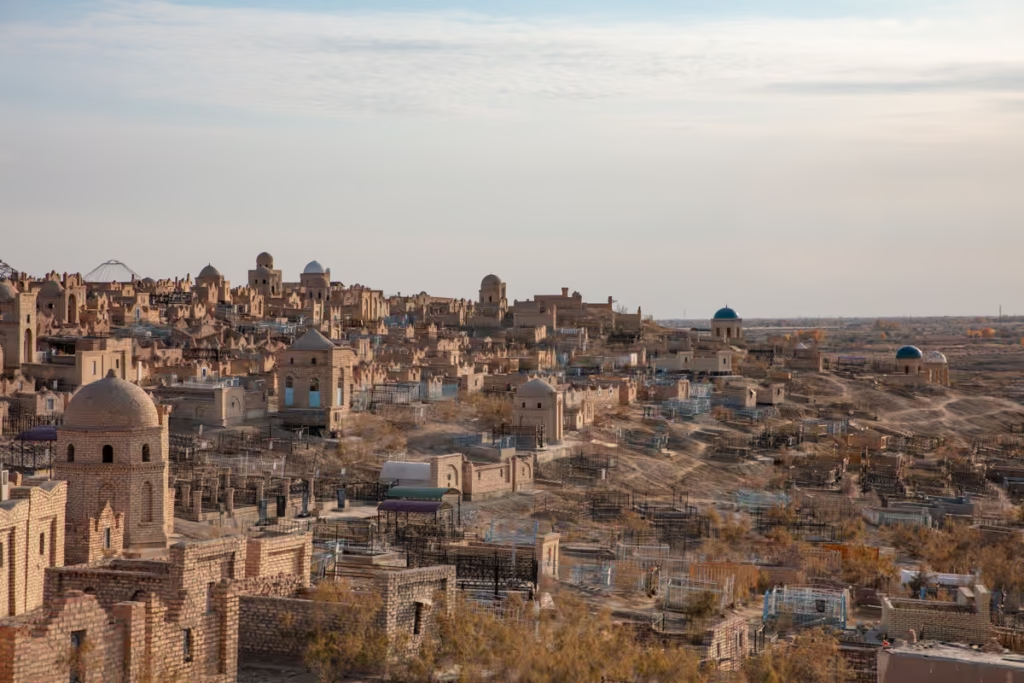
Mizdarkhan makes for a perfect side trip from Nukus being located a mere 15 kilometers from the city. At its zenith, Mizdarkhan was the second-largest city in Khorezm, which suffered a similar bloody fate to Konye-Urgench at the hands of none other than Genghis Khan.
The Mizdarkhan Necropolis Complex consists of countless mausoleums and graves, the most notable including the Mausoleum of Mazlumkhan Suu, the Mausoleum of Shaman Nabi, the Jumart Kasaab, and the Tomb of Caliph Yejereb that features the unusual Apocalypse Clocks steeped in legend.
It’s believed that the world will end when the last brick of the tomb falls- to counter the apocalypse, visitors build small pyramids around the tomb consisting of seven stacked bricks to buy more time.
Gyaur Qala
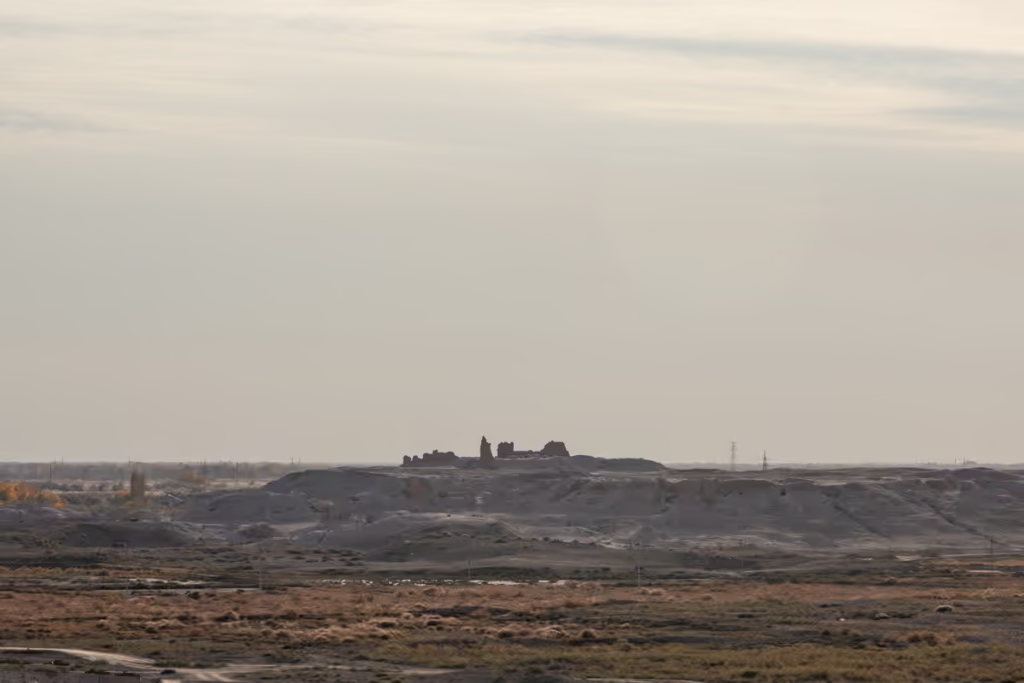
About one kilometer west of Mizdarkhan you’ll find the remaining walls of Gyaur Qala, a 12th-century fortress. Because Gyaur Qala is so close to Mizdarkhan, the two sites are easy to combine on the same trip from Nukus.
Remains of the 10 meter high outer walls of the fortress remain that would have protected two castles built within its boundaries.
Chilpik Qala
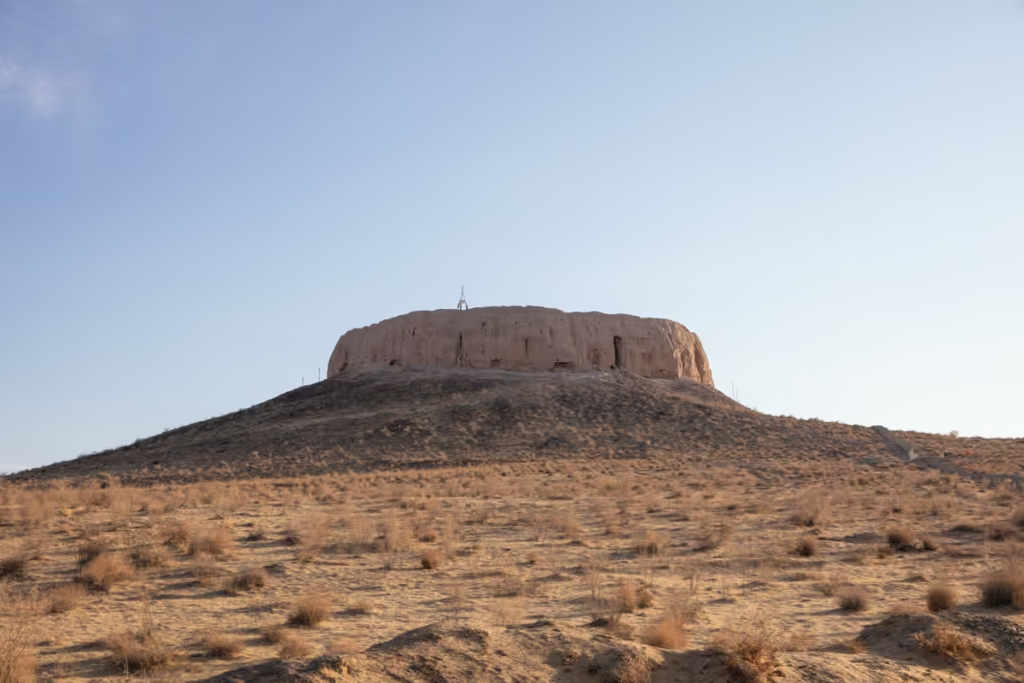
Chilpik Qala is one of the most unusual ancient sites in Karakalpakstan. Located about 50 kilometers east of Nukus, the circular fortress-like structure is an ancient dakhma, or Tower of Silence, associated with Zoroastrian funerary practices, similar to the Towers of Silence in Yazd, Iran.
Its position on a rise above the surrounding desert makes it particularly striking, and it is an easy stop when traveling between Nukus and Khiva.
Desert Castles of Ancient Khorezm
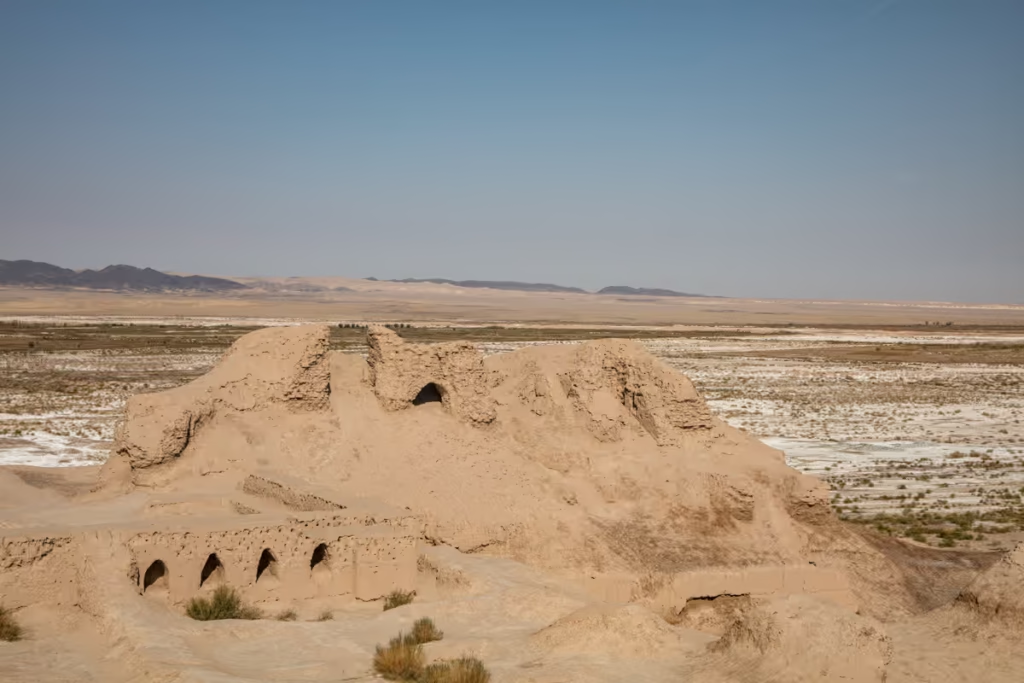
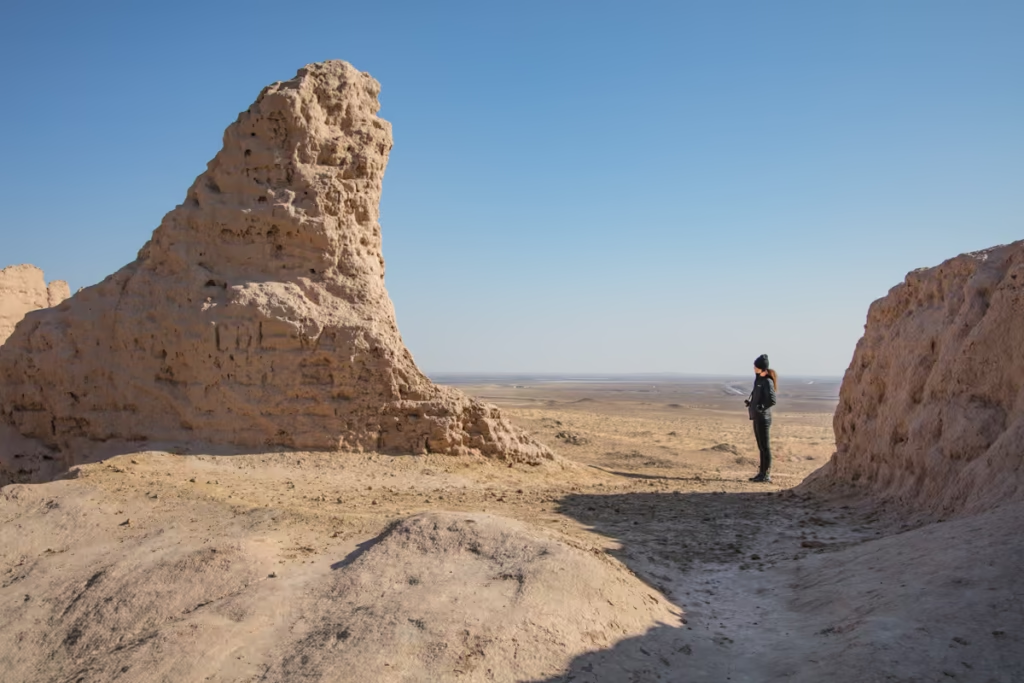
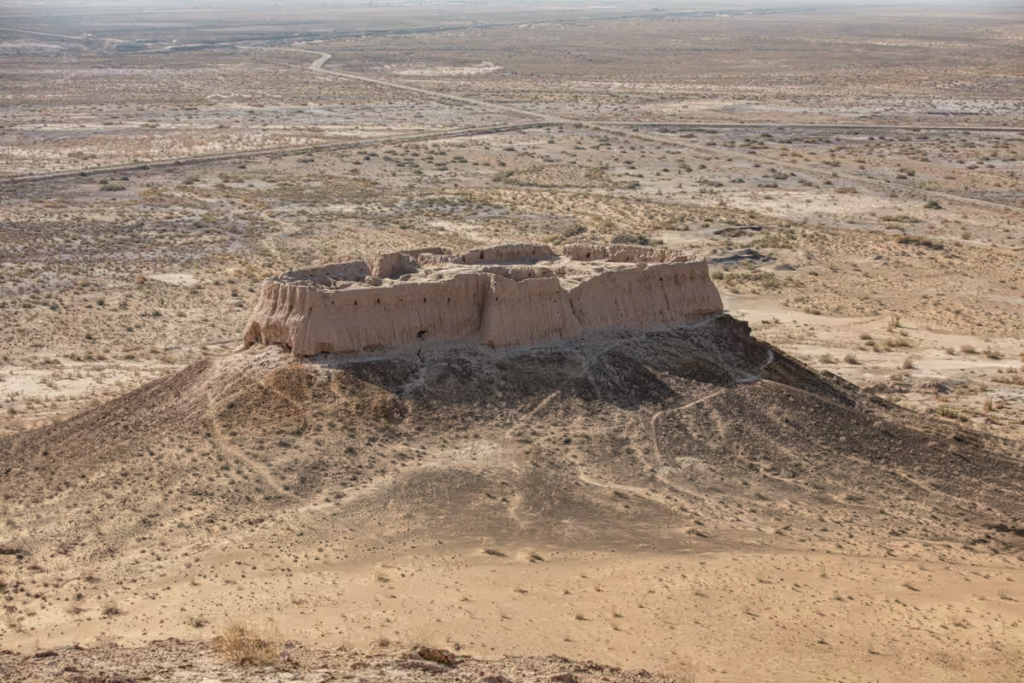
The ancient Khorezm fortresses are among the best things to see in Karakalpakstan. Scattered across the desert between Khiva and Nukus, these mud-brick ruins were once fortified settlements and defensive strongholds of ancient Khorezm.
The best known include Toprak Qala, Ayaz Qala, Kyzyl Qala, Koy Krylgan Qala, Guldursun Qala, Dumon Qala, Ankha Qala, Kurgashin Qala and Janbas Qala.
Built between 4 BC and 7 AD to protect Khorezm from raids. You’ll likely have these desert castles scattered along the Amu Darya completely to yourself, as they see nowhere near the traffic that Uzbekistan’s well-known Silk Road cities see.
These castles are important fortifications along the Silk Road and ancient Khorezm played a huge part in the culture and history of the development of trade.
I’ve visited several of these sites and, for me, the combination of archaeology and complete isolation is what makes the Khorezm fortresses so memorable.
Plan your own visit to the ancient Khorezm Fortresses scattered around Karaklpakstan
Moynaq
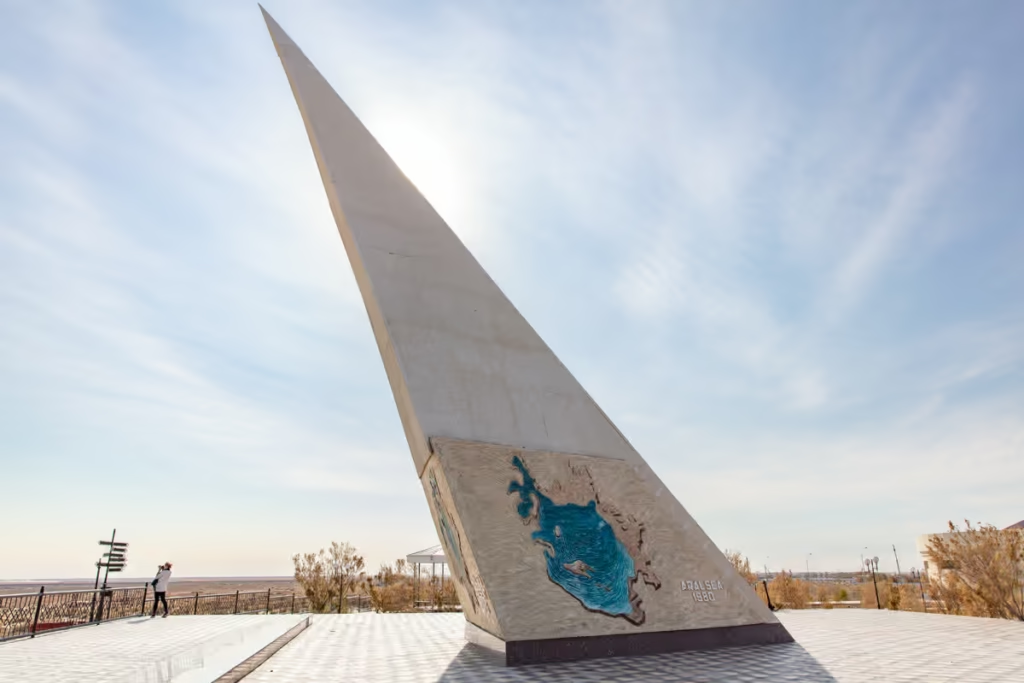
Moynaq is the most famous place to visit in Karakalpakstan for seeing the remains of the Aral Sea disaster. Once a thriving fishing port on the southern shore of the Aral Sea, the city is now nearly a ghost town, famous for its rusting ships stranded far from the water.
The Moynaq Ship Graveyard is the obvious attraction, but don’t stop there. The nearby Aral Sea Museum provides useful context about the region’s fishing industry and the environmental changes that transformed the landscape.
Aral Sea
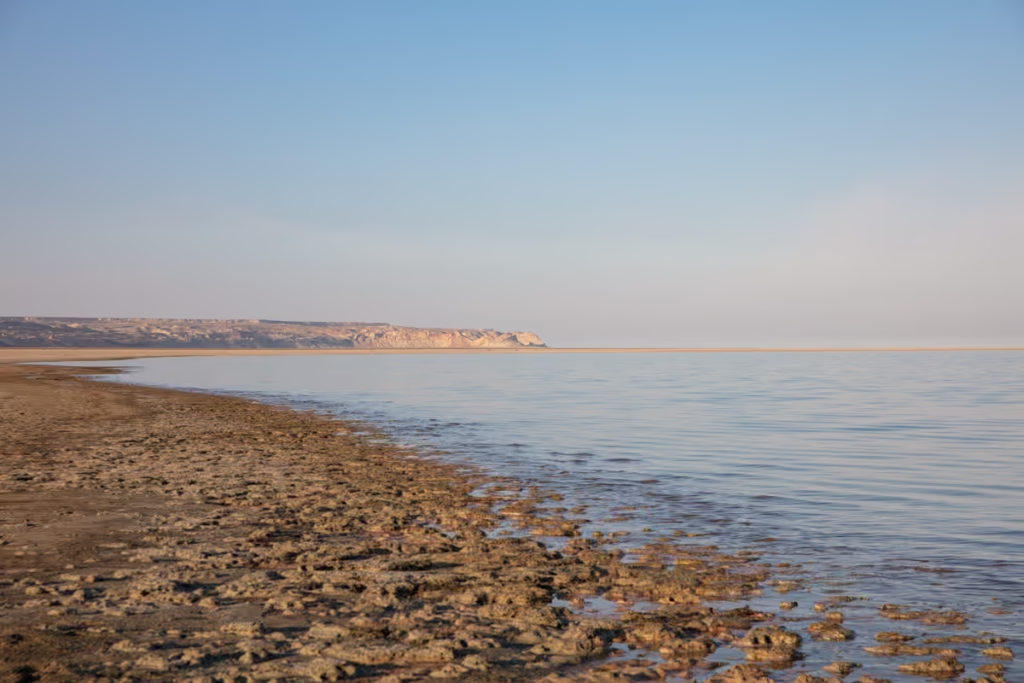
The Aral Sea is the defining landscape of Karakalpakstan. Once one of the world’s largest inland lakes, the Aral Sea shrank dramatically after Soviet irrigation projects diverted the rivers that fed it.
Poor diversion efforts by the Soviets have turned this once prosperous sea, actually one of the largest, yet shallow and unstable lakes in the world, into one of the worst environmental disasters in history. 90% of the lake is gone, leaving the basin to desertification and covered in toxic chemicals from weapons testing.
The environmental disaster reshaped entire communities, most famously Moynaq, once a fishing port on the sea and now located far from the retreating shoreline.
Reaching the remaining water of the South Aral Sea is a very different experience from visiting the ship graveyard at Moynaq. The journey is long and remote, and most independent travelers will find it considerably easier to arrange a 4WD tour from Nukus.
Islambek Travel offers tours to the Aral Sea, including the Uzbek Ustyurt Plateau, Kurgancha Qala, Moynaq, Sudochie Lakes, and Barsa Kelmes Salt Flat.
Ustyurt Plateau
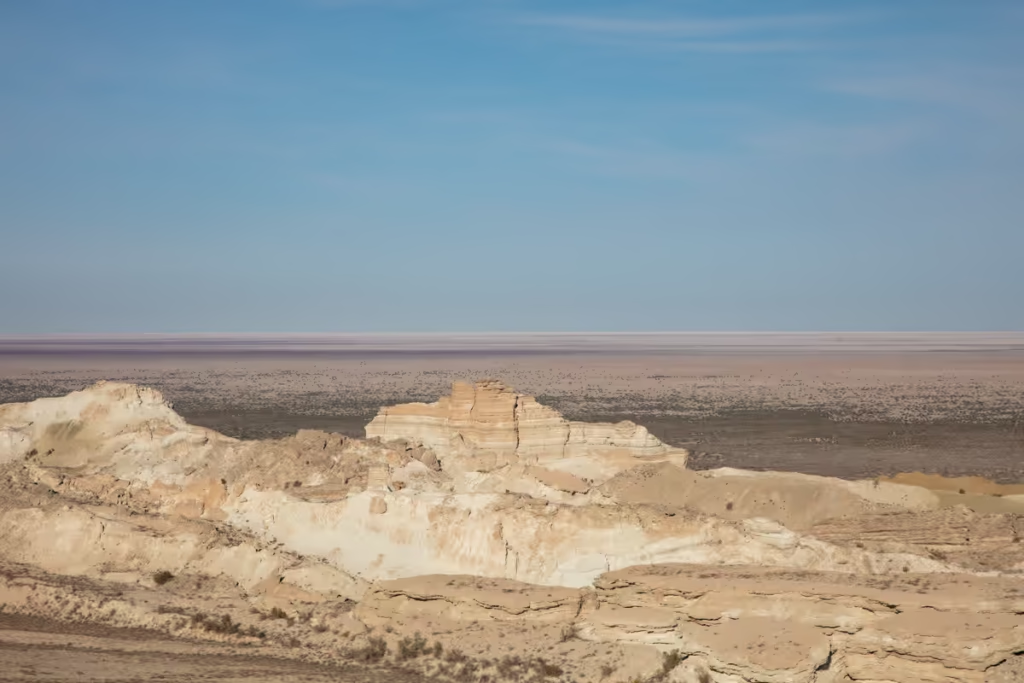
The Ustyurt Plateau stretches across the remote western reaches of Karakalpakstan and continues across the border into Kazakhstan’s Mangystau Region and over the Turkmen Border into Yangikala Canyon, all of which formed the floor of the ancient Tethys Sea. The enormous Ustyurt Plateau is characterized by cliffs, desert, salt flats and stark geological formations.
Getting here is part of the adventure. Many of the most interesting places are far from paved roads and settlements, making a 4WD and an experienced local driver particularly important.
Kurgancha Qala
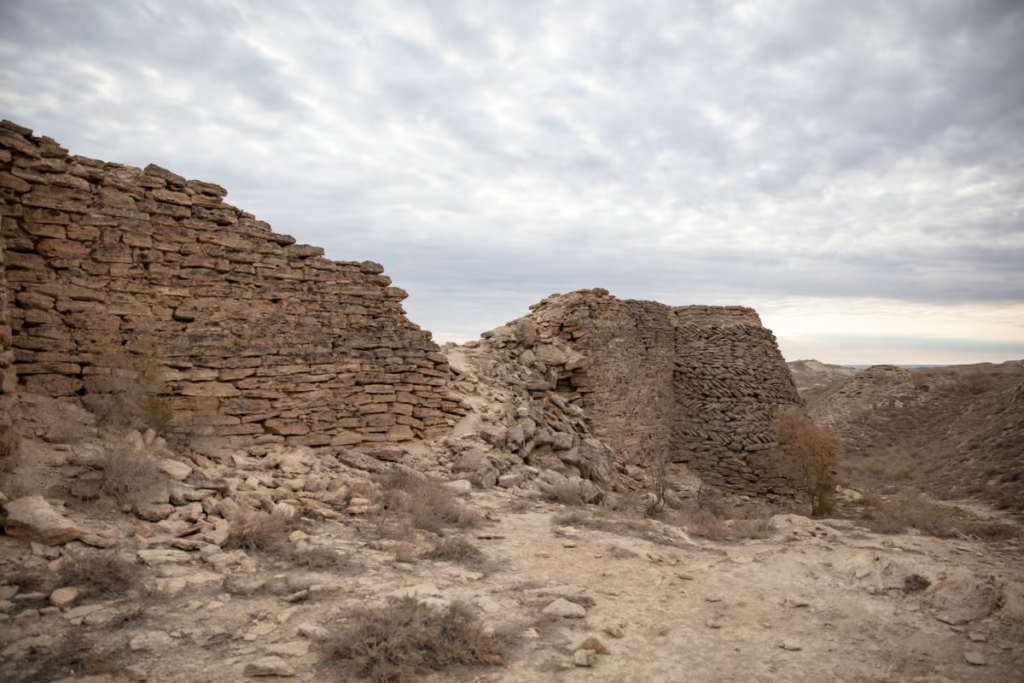
Kurgancha Qala is an ancient caravanserai on the Ustyurt Plateau, overlooking the Aral Sea region. Dating to around the 12th century, it once served travelers moving along the ancient routes through Khorezm.
Travelers, making the journey along the ancient Silk Road would have stopped here before continuing toward the Fergana Valley or further destinations.
Sudochie Lakes & Urga Village
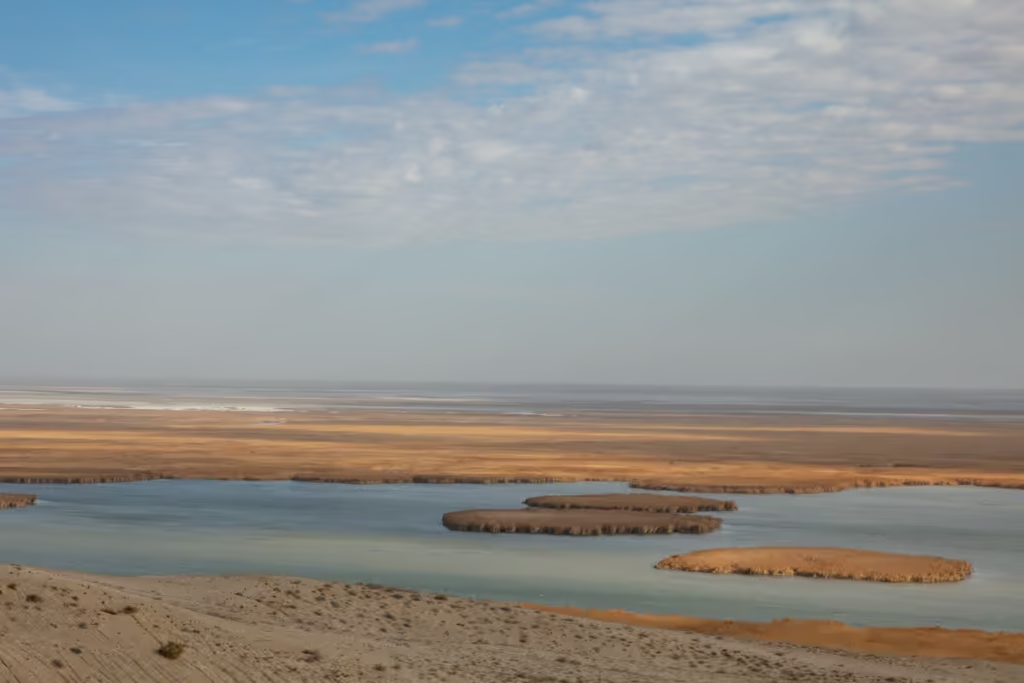
The Sudochie Lakes form part of the Amu Darya Delta, with the Ustyurt Plateau marking their western edge. Once considerably larger, the lakes have shrunk dramatically as the wider Aral Sea ecosystem changed.
What caught my attention were the strange circular islands scattered across the remaining water. To me, the landscape looked like Super Mario meets Western Alaska, which is a very specific comparison but honestly the best one I’ve got.
Despite the fact that the lakes have been largely depleted of their water, the wetlands remain important for birdlife, home to 218 different bird species, including flamingos.
Nearby Urga village, is worth a visit to explore.Urga was once a bustling fishing port with a fish plant, an orthodox church, and a scattering of homes and businesses. Now it sits in ruin, though a couple of the buildings are still in use by the odd fisherman who returns here to go try to net a catch.
Barsa-Kelmes Salt Flat
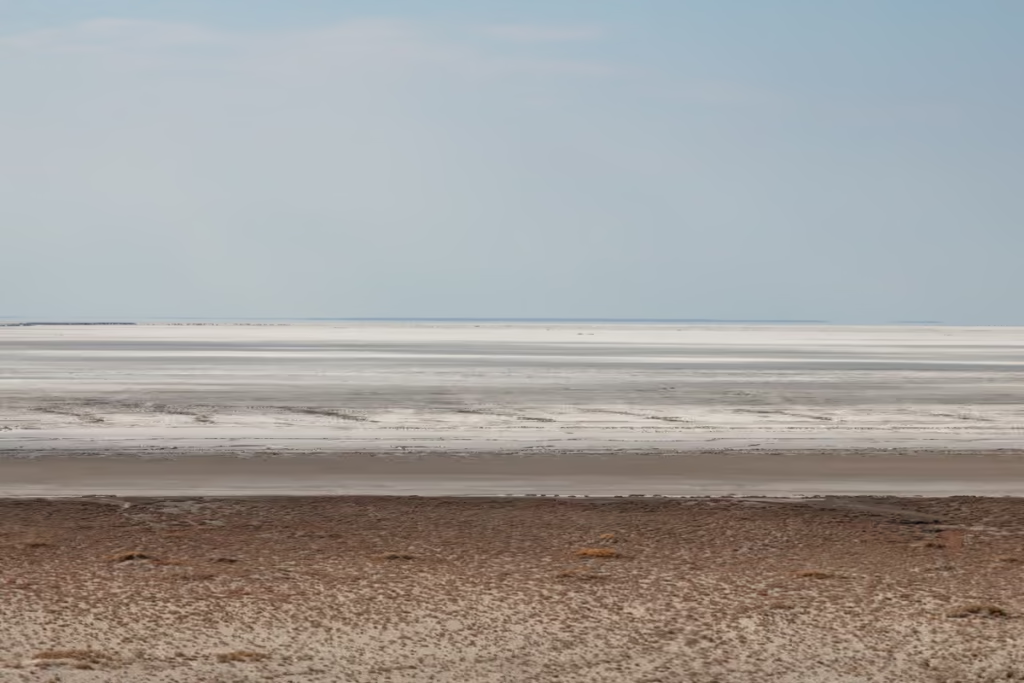
Barsa-Kelmes is a vast salt flat on the route through the remote Aral Sea region. The landscape can resemble a smaller Central Asian version of Bolivia’s Salar de Uyuni, although the two are very different in scale and environment.
Be careful if venturing onto the salt flat. Areas that appear solid can conceal soft mud, and getting a vehicle stuck in this remote landscape is not something you want to add to your itinerary.
Aralsk-7 Lab, Vozrozhdeniya Island & Kantubek Ghost Town
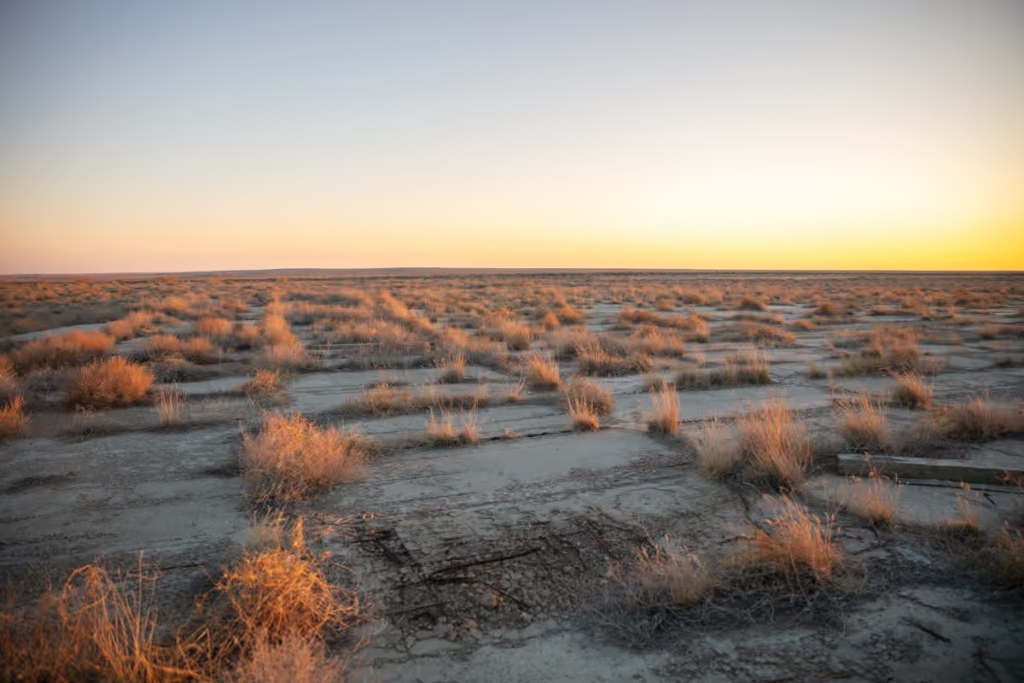
Aralsk-7 was a secret biological weapons testing facility located on Vozrozhdeniya Island in the Aral Sea. The likes of anthrax, smallpox, the plague, tularemia, and other viruses and diseases were experimented with here during the Cold War. To cut to the chase- I’ll save you the misery of venturing all the way out to the remote outpost near the Kazakh border- it’s gone, completely demolished.
A friend of mine had rented a 4WD for his greater Central Asia trip, and near the top of his list was to visit the former facilities on Vozrozhdeniya Island, so since we wound up in Nukus at the same time, I decided to join him. Much to our dismay, we rolled up to the town of Kantubek, where the scientists and workers at Aralsk-7 lived, to find that the place had been completely demolished- every last building bulldozed, save an outhouse that was clearly a newer construction (likely for the workers brought out to raze the place).
Ultimately, Kantubek would have made for an interesting attraction for the odd tourist that made it out here wanting to see and learn more about what went on out here- but the government ministry put in charge of it clearly f****d that one up.
After getting in touch with a couple of people who know Uzbekistan inside out, I discovered that Kantubek and Aralsk-7 were completely demolished sometime in 2020. Despite this being considered a ‘dark tourism’ site, I do believe it’s important to leave these places standing as a reminder to future generations of things that we may not want to repeat.
For those still determined to visit, it takes about 6-7 hours to reach the site of Kantubek from Nukus, along dirt roads- though there isn’t really anything left to see here, unfortunately.
Read about our visit to the now-demolished Aralsk 7 and Vozrozhdeniya Island
South Ustyurt National Park
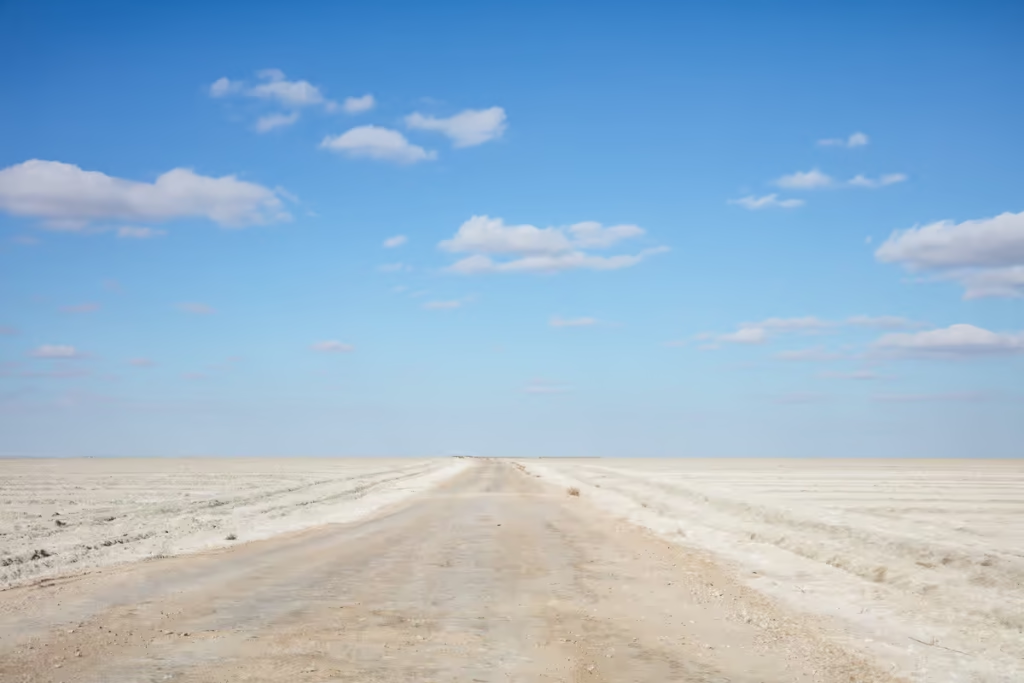
On November 11, 2020, a national decree was signed in Uzbekistan to establish the South Ustyurt National Park. The park encompasses 1.42 million hectares of land including the areas around the remaining Aral Sea and Vozrozhdeniya Island. The national park is home to over 700 species of plant, 300 animal species including the endangered Saiga antelope, and is an epic stargazing destination.
South Ustyurt National Park is still in its early phases, so watching the park develop will be interesting to see. The only real indications I had seen of the national park being established were some random signs with pictures of desert plants and Saiga antelope a few hours drive toward Kantubek in the literal middle of nowhere.
Don’t miss the Silk Road cities! Check out my guides to Samarkand, Bukhara, and Khiva
Karakum & Kyzylkum Deserts
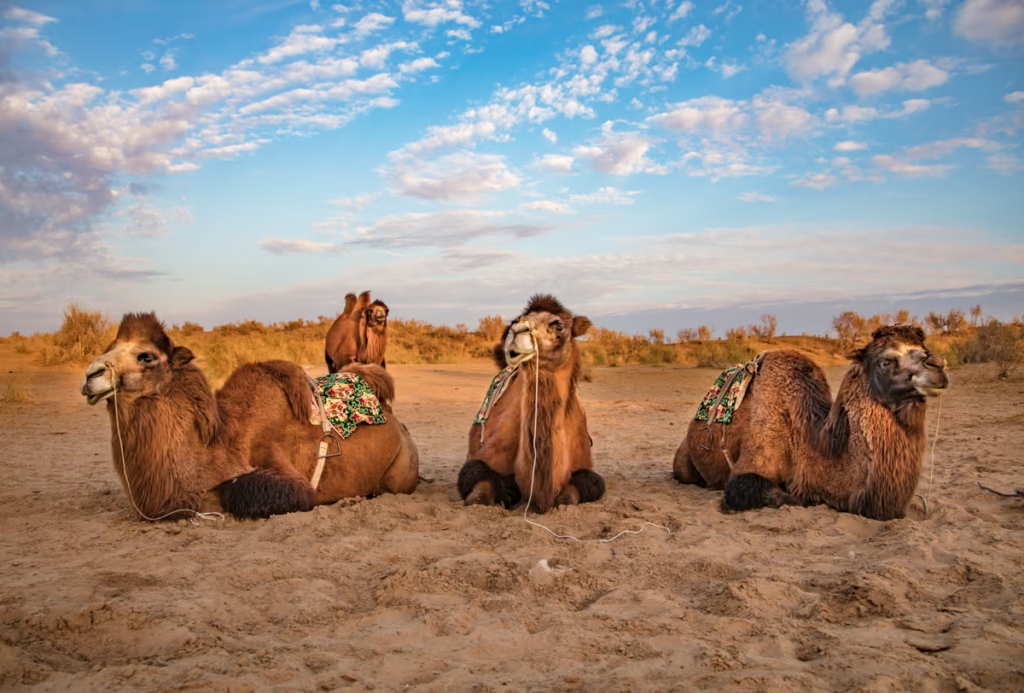
Karakum means black sand in the Turkic language, while Kyzylkum means red sand. Both deserts are sparsely populated and see little rainfall.
The Karakum continues into Turkmenistan and makes up 70% of the country. The Karakum Desert sits southwest of the Kyzylkum.
Yurtmaking in Aul Topi & Chimbay
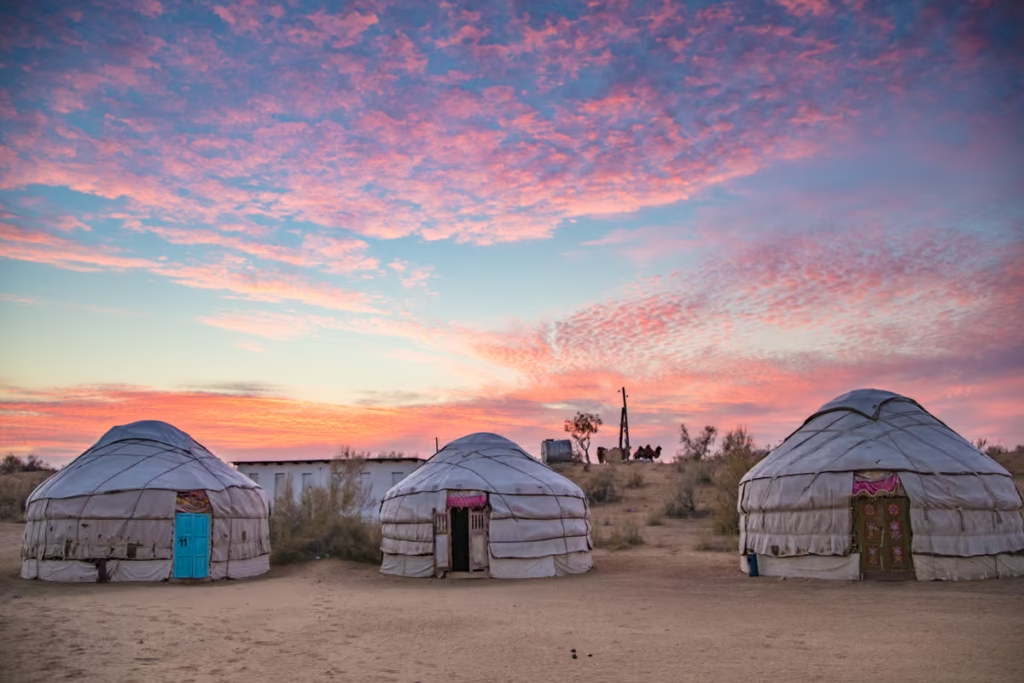
Meet the people that settled the Lower Amu Darya and southern shores of the Aral Sea. The Karakalpaks are incredibly warm and welcoming. If you do decide to explore out into rural Karakapakstan far enough you can still find families that still put up the traditional summer yurts.
In the areas of Chimbay and Aul Topi, it’s possible to set up day and overnight trips from Nukus to visit local Karakapak families and learn a bit more about the construction of the traditional Karakalpak yurt.
Off to Turkmenistan next? Check out Turkmenistan in photos
How to Get to Karakalpakstan
The easiest way to travel to Karakalpakstan is usually to make Nukus your entry point. You can reach Nukus by plane or train from other parts of Uzbekistan, while travelers coming overland through Uzbekistan will arrive from Khiva or Urgench, or over the border from Turkmenistan or from Mangystau Region in Kazakhstan.
Most travelers visiting Karakalpakstan will base themselves in Nukus before taking day trips or multi-day excursions farther into the region.
Flying to Nukus
Nukus Airport (NCU) is the main airport serving Karakalpakstan. Uzbekistan Airways currently operates flights to Nukus, including domestic services to Tashkent. There is also connection to Moscow-Domodedovo.
Train to Nukus
Nukus is connected to Uzbekistan’s rail network, making train travel another option from cities including Tashkent and Samarkand. Check the current schedule, and book in advance. Journey times, departures and train types change. The train is a much more comfortable option than taking a shared taxi and is my preference.
Khiva or Urgench to Nukus by Shared Taxi
Shared taxis connect Urgench and Khiva with Nukus and are a practical option if you’re already traveling through western Uzbekistan. Prices fluctuate, but expect prices of 100,000-150,000 UZS per seat.
How to Get Around Karakalpakstan
Getting around Karakalpakstan is the biggest logistical challenge of traveling here. The distances between attractions are enormous, public transport becomes sparse outside Nukus, and many of the most interesting places are reached via rough desert roads.
For Nukus and nearby sights, taxis are practical. For Moynaq, the Aral Sea, Ustyurt Plateau and more remote archaeological sites, you’ll generally have an easier time with a private vehicle, 4WD and local driver, or organized tour.
Getting From Nukus to Moynaq
Moynaq is roughly a three-hour drive from Nukus each way, depending on road conditions. A taxi or private vehicle can work if you’re traveling independently, but sharing the cost with other travelers makes a dedicated trip considerably more affordable.
Getting Around Remote Karakalpakstan
For the remote Aral Sea and Ustyurt areas, I strongly recommend using a local driver or tour operator who knows the roads.
Where to Stay in Karakapakstan
Nukus
Options are very limited. I personally stayed at the Jipek Joli Inn (Booking.com | Hotels.com). The other option is the Hotel Jipek Joli (Booking.com | Hotels.com).
Moynaq
In Moynaq the only hotel option is Hotel Oybek (I haven’t stayed here, so can’t report anything on it). Apparently, there are homestays in Moynaq, but I have heard that they are not allowed to let foreigners stay.
Ayaz
In Ayaz, near Ayaz-Qala Fortress (between Urgench and Nukus) there is a yurt camp. The cost is $30 USD per person per night and includes breakfast, lunch, and dinner. You can arrange camel rides from here as well.
Everywhere Else
It would be a good idea to bring a tent as you may very well be camping outside of any settlement. If you do go on a tour to the Aral Sea they will likely provide a tent for you.
Karakalpakstan Itinerary
3-Day Karakalpakstan Itinerary
Day 1: Nukus + Savitsky Museum + Nukus Bazaar
Day 2: Mizdarkhan + Gyaur Qala + Chilpik Qala + Khorezm fortress area
Day 3: Moynaq + Ship Graveyard
4-Day Karakalpakstan Itinerary
Day 1: Nukus
Day 2: Mizdarkhan + Gyaur Qala + Chilpik Qala
Day 3: Khorezm fortresses
Day 4: Moynaq + Ship Graveyard
5-Day Karakalpakstan Itinerary
Day 1: Nukus
Day 2: Mizdarkhan + Chilpik Qala + Khorezm fortresses
Day 3: Moynaq
Day 4: Aral Sea / Sudochie Lakes / Urga
Day 5: Return to Nukus
Karakalpakstan Guidebooks
I definitely recommend the Bradt Guides Uzbekistan as it is the most informative guide in print. Lonely Planet’s Central Asia has some information on Karakalpakstan in it and is handy on the road, especially for those on multi-‘stan itineraries.
Planning a Trip to Karakalpakstan?
Karakalpakstan is a region where the journey is as memorable as the destination. The desert fortresses, Soviet history, Karakalpak culture and disappearing Aral Sea tell a much bigger story than any one attraction could.
It isn’t the easiest corner of Uzbekistan to travel through, but if you’re willing to deal with long drives, rough roads and a little logistical chaos, you’ll see a side of the country that most visitors never reach.
Have Any Karakalpakstan Travel Questions?
Ask your Karakalpakstan travel-related questions in the comments section below.
Posts from Uzbekistan
Two Week Uzbekistan Itinerary: 14 Days
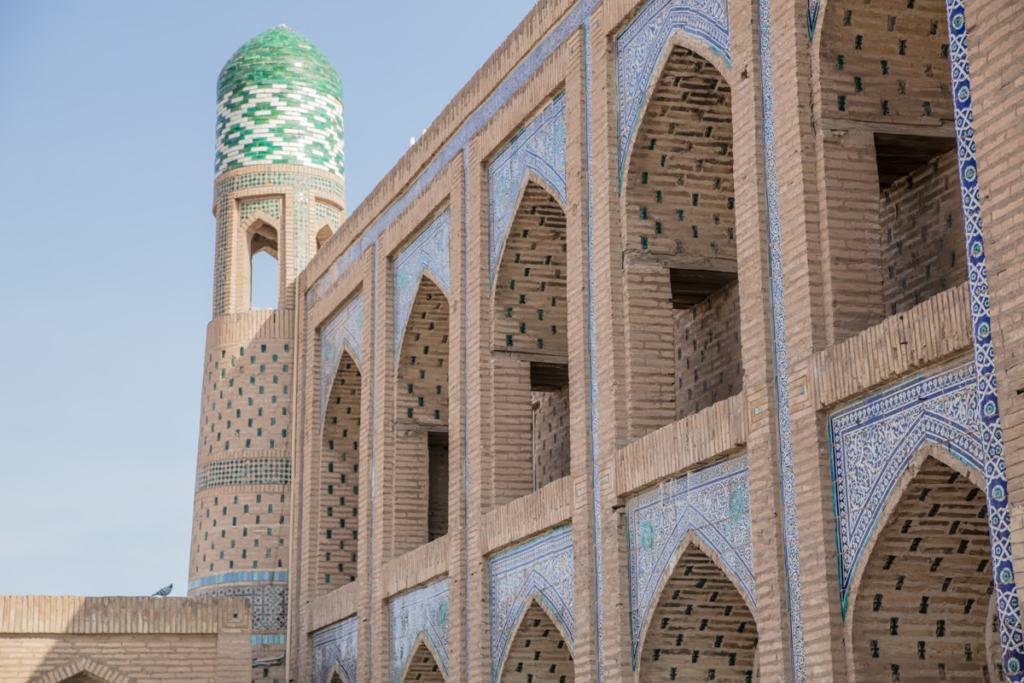
Tajikistan Uzbekistan Itinerary: 2 Weeks
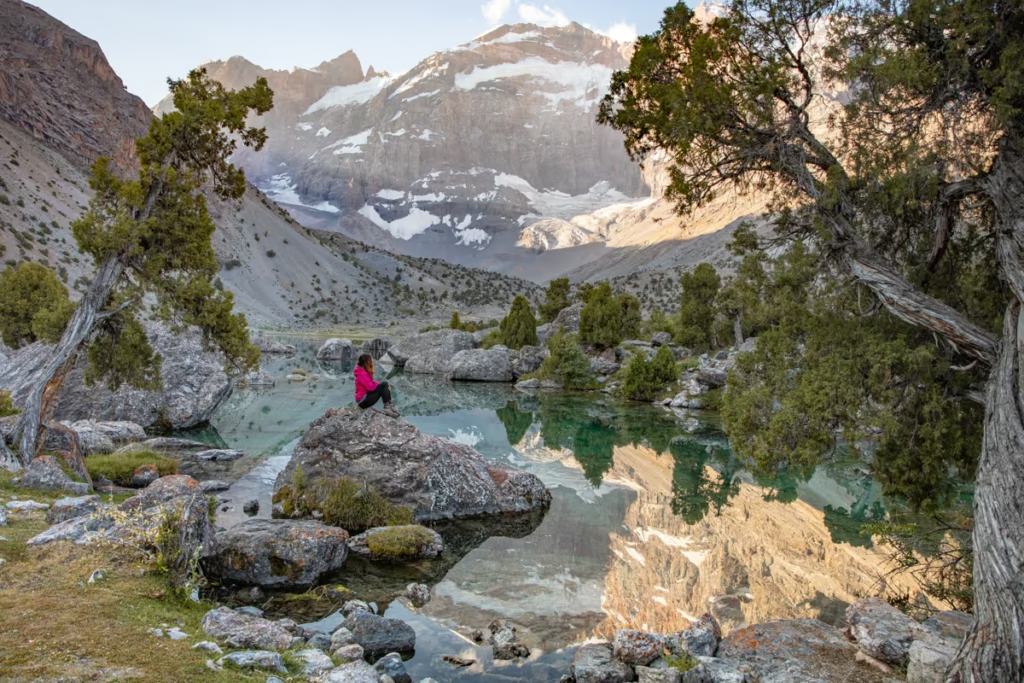
Solo Female Travel in Central Asia
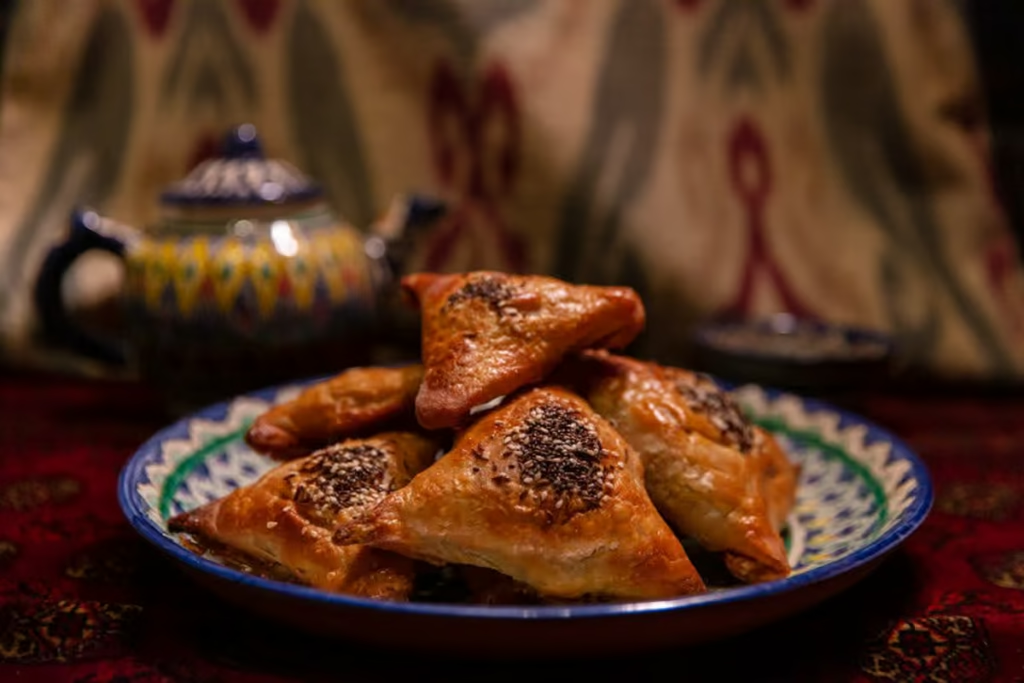
Uzbek Food: 33 Dishes to Try
Kazakhstan-Uzbekistan Border Crossing
Solar Furnace Uzbekistan: Visit Guide
Panjakent-Samarkand Border Crossing Guide
Nukus Travel Guide: Things to Do
Central Asia Travel Guide

Oybek Border Crossing: Tashkent to Khujand
Best Restuarants in Tashkent
10 Essentials to Pack for Central Asia
A Guide to the World Nomad Games
Visiting the Aral Sea Disaster, Uzbekistan
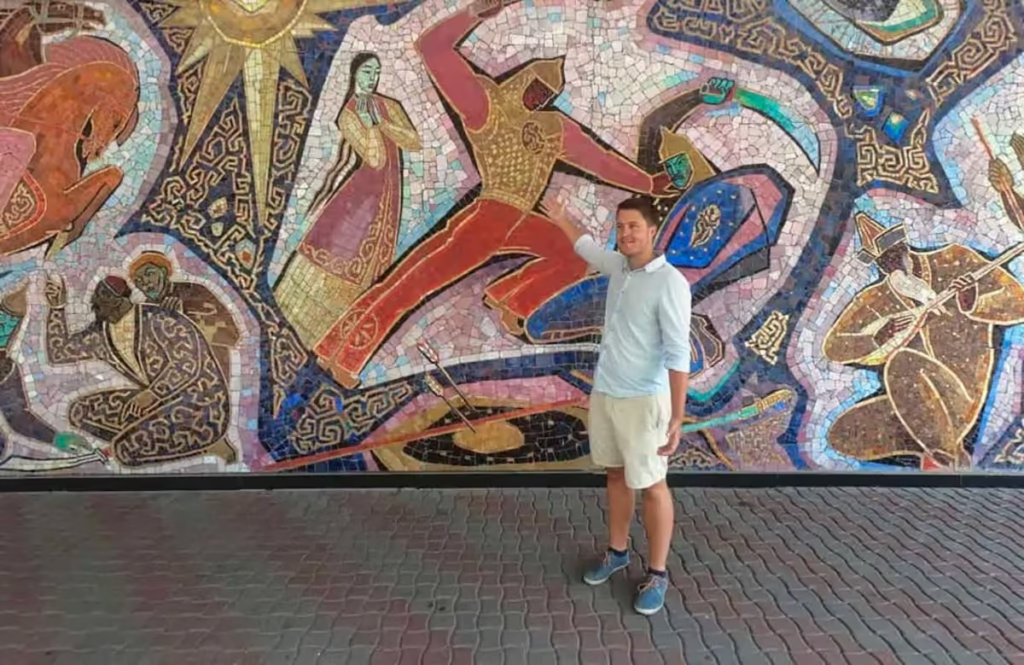
Central Asia Travel Tips
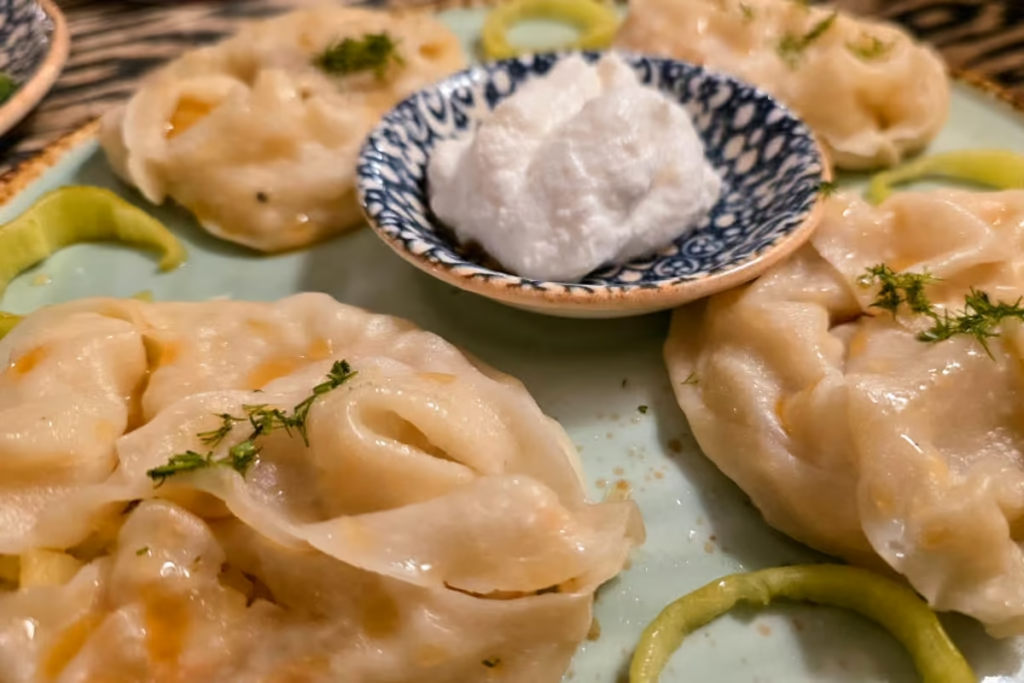
Vegetarian in Central Asia
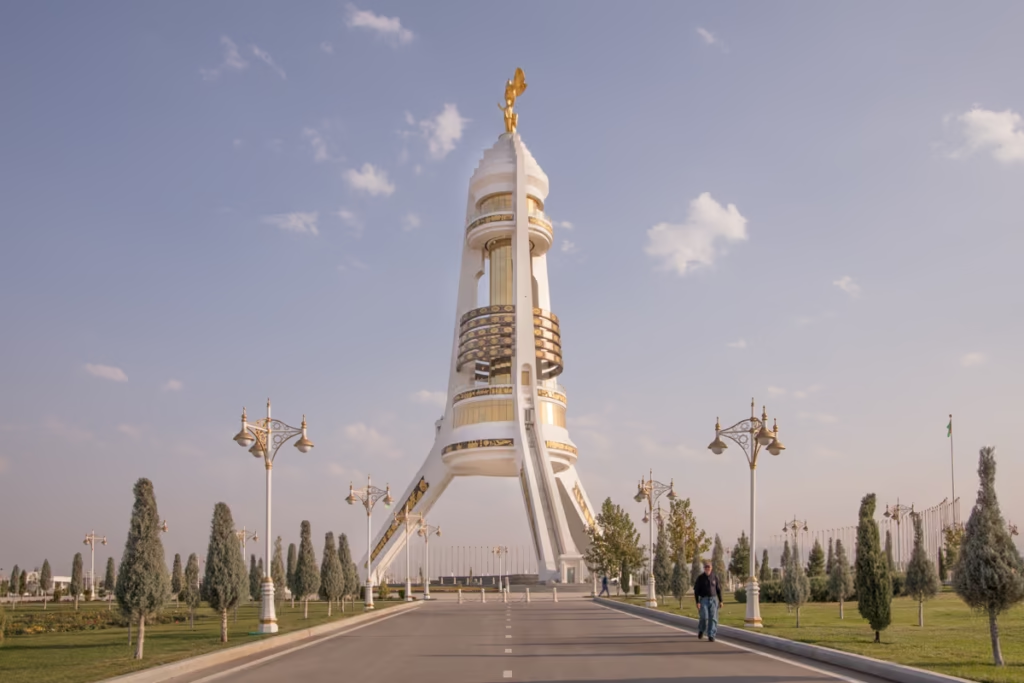
Central Asia Visas Guide
Visiting the Soviet Bioweapons Lab of Aralsk 7
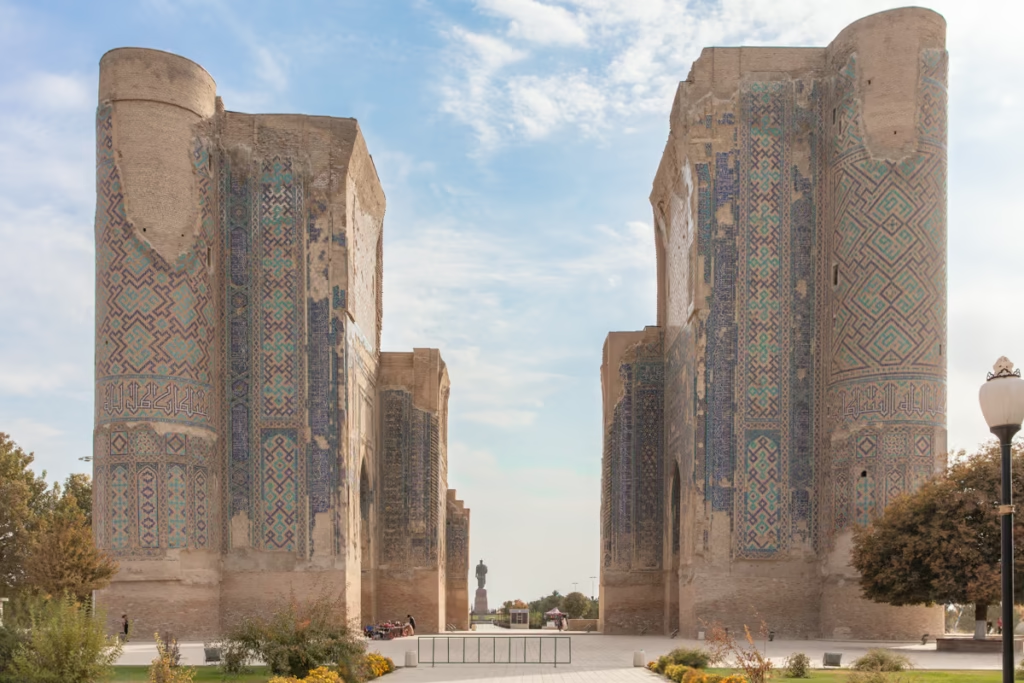
Shahrisabz Travel Guide
Khiva Travel Guide
Bukhara Travel Guide
Exploring the Frontier Town of Termez, Uzbekistan
Things to Do in Uzbekistan
Karakalpakstan Travel Guide
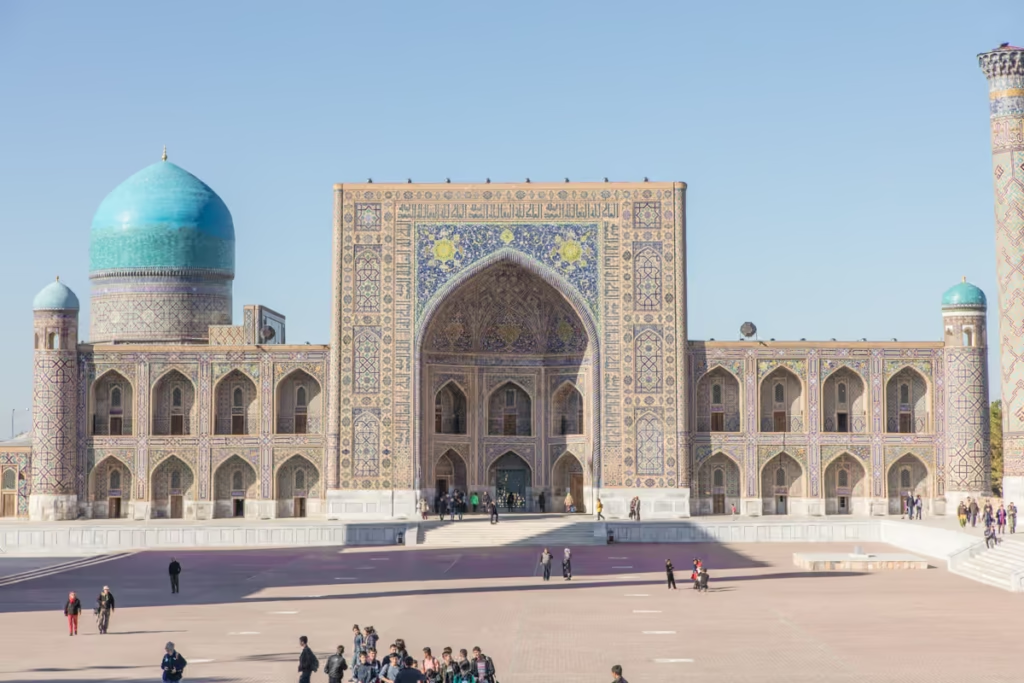
Samarkand Travel Guide
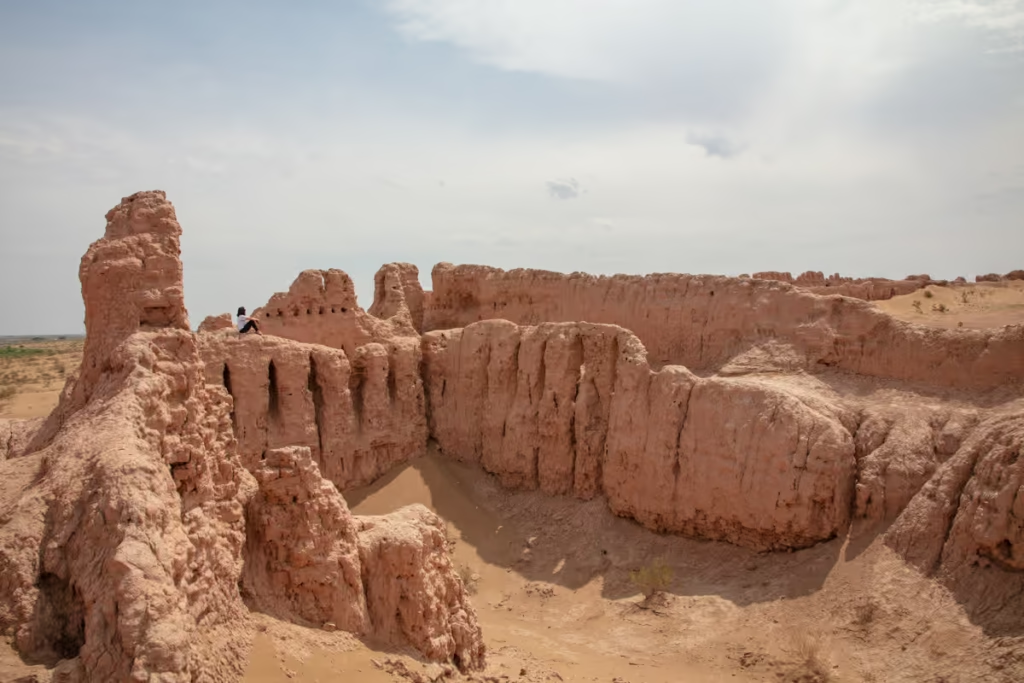
Khorezm Fortresses, Uzbekistan
The Best SIM Cards & eSIMs for Uzbekistan
Uzbekistan Travel Guide
Solo Female Travel in Uzbekistan
Central Asia Food & Drink
Uzbekistan-Afghanistan Border Crossing at Hairatan
Off the Beaten Path Asia
Uzbek Fergana Valley Travel Guide
Tashkent Travel Guide