Bukhara Travel Guide + 19 Things to do in Bukhara, Uzbekistan
Updated November 2026, Bukhara Travel Guide was originally written in December 2019
Bukhara is one of the most fascinating destinations along Uzbekistan’s historic Silk Road. Rising from the edge of the Kyzylkum Desert, this ancient city is filled with towering minarets, turquoise-domed madrasas, covered bazaars, and winding alleyways that have witnessed centuries of trade, scholarship, and conquest.
With more than 2,000 years of history, Bukhara was once one of Central Asia’s most important centers of commerce and Islamic learning. Its historic center was designated a UNESCO World Heritage Site in 1993, recognizing its remarkably preserved medieval architecture and traditional urban layout.
Today, more than 140 protected historic monuments can be found throughout the city, from the enormous Ark Fortress to the intricate brickwork of the Ismail Samani Mausoleum.
While many travelers rush between Samarkand and Khiva, Bukhara deserves at least two full days of exploration. It’s a city best experienced on foot, wandering between ancient monuments, browsing traditional trading domes, and stopping for tea in one of its many courtyards.
In this Bukhara travel guide, I’ll cover the best things to do in Bukhara, where to stay, what to eat, how to get there, and the best day trips to take around the surrounding region.
Need Travel Insurance and Evacuation Services?
Start shopping for travel insurance plans over at IATI Insurance. Readers of the Adventures of Nicole get a 5% discount off your plan.
The Adventures of Nicole partners with Global Rescue to offer the world’s leading medical evacuation and security advisory services. To travel with peace of mind, explore their evacuation coverage.
Bukhara Travel: Quick Information
| Detail | Information |
|---|---|
| Country | Uzbekistan |
| Region | Bukhara Region |
| Best time to visit | April-May, September-October |
| Recommended stay | 2-3 days |
| Nearest airport | Bukhara International Airport |
| Main attractions | Po-i-Kalyan, Ark Fortress, Lyabi-Hauz |
| Currency | Uzbekistani som (UZS) |
| Language | Uzbek |
| Getting around | Walking and taxis |
| UNESCO status | World Heritage Site since 1993 |
| Nearest major destinations | Samarkand and Khiva |
How to Get to Bukhara, Uzbekistan

By Air
Bukhara International Airport (BHK) is located a short drive from the historic center and receives domestic and international flights.
For most international visitors, the easiest option is to fly into Tashkent and continue to Bukhara by train. However, direct flights to Bukhara may be available depending on your departure city and travel dates.
Domestic services connect Bukhara with Tashkent, while international connections and seasonal routes should be checked directly with the airlines.
Compare flight options before deciding whether to fly into Bukhara or begin your Uzbekistan trip in Tashkent
By Shared Taxi
Shared taxis are a common way to travel between cities in Uzbekistan, particularly where train services are limited or inconvenient.
Vehicles generally depart once all seats have been filled, although you can sometimes pay for the remaining seats if you want to leave sooner.
Shared taxis operate between Bukhara and other regional destinations, including Samarkand, Tashkent, Khiva, Qarshi, Andijon, Fergana City, Kokand, Nukus, Termez, and Urgench, and other towns throughout Uzbekistan.
For longer journeys, compare the cost and travel time with the train before committing to a shared taxi. I particularly recommend checking your options if you’re traveling from Khiva or Tashkent, as these are substantial overland journeys.
By Train
Traveling by train is one of the easiest ways to get to Bukhara, and the city is well connected to Uzbekistan’s other major destinations.
The Afrosiyob is Uzbekistan’s high-speed train, connecting Bukhara with Tashkent and Samarkand. The journey from Tashkent takes approximately four hours, while the journey from Samarkand is considerably shorter.
Slower conventional trains, including Sharq services on some routes, are also available.
Bukhara’s railway station is located outside the historic center, so you’ll need to arrange a taxi for the final leg of the journey.
I recommend booking train tickets in advance, particularly during the spring and autumn tourist seasons when Afrosiyob services can sell out.
You can check schedules and purchase tickets through the official Uzbekistan Railways website
There are international trains to and from Uzbekistan as well connecting to Moscow, Ufa, Novosibirsk, Samara, Chelyabinsk, Saratov & Volgograd, Russia; Atyrau, Aktau, Shymkent & Almaty, Kazakhstan; Bishkek & Balykchy, Kyrgyzstan. Visit the Uzbek Railways website to see schedules.
Where to Stay in Bukhara: Best Hotels

Budget
Without a doubt, my favorite place to stay in Bukhara is the Hotel Okhun, conveniently located just a few minutes’ walk from Labi Hauz. Hotel Okhun is an old caravanserai that has been restored with beautiful rooms for a steal of a price. They serve up an excellent breakfast which you can eat right in the courtyard of the caravanserai.
They also have dorm beds for budget travelers, but to be honest the single and double rooms are so well priced they’re worth the few UZS more to stay in. Make your reservation on Booking.com.
Midrange
If you’re looking for something with fewer backpacker vibes, the Usman Heritage Hotel is a great pick for visitors to Bukhara, located just a few meters east of the Kulkadesh Madrasa and Labi Hauz. The rooms are beautifully designed with traditional motifs. Compare prices on Booking.com and Hotels.com.
Splurge
The Lyabi House Hotel is easily a favorite accommodation in Bukhara, sat right along Labi Hauz. The interior is perfectly decorated with traditional artwork and styles and the restaurant serves up some of the best Uzbek food you’ll find in the city. Check out rates on Booking.com and Agoda.com.
Looking to get off the beaten path and explore Uzbekistan’s south? Don’t miss Qarshi and Termez
Bukhara Tours
Travel to Bukhara and beyond: read the Uzbekistan Travel Guide
Grab your copy of Bradt’s Uzbekistan too to help you plan your visit
19 Best Things to Do in Bukhara, Uzbekistan
Bukhara is one of the best places in Uzbekistan to experience the country’s historic Silk Road architecture and cultural heritage. Its old city is packed with ancient mosques, monumental madrasas, mausoleums, covered bazaars, and traditional courtyard buildings.
Most of Bukhara’s main attractions are concentrated within the historic center, making it easy to explore on foot. You can spend hours wandering between the monuments, browsing the old trading domes, and stopping for tea in one of the traditional courtyards.
Here are 19 of the best things to do in Bukhara, including its most famous historical landmarks and a few lesser-known places worth seeking out.
Labi Hauz

Labi Hauz is one of the most atmospheric places in Bukhara. Its name translates roughly to “by the pond,” referring to the large rectangular reservoir at the center of the historic square.
The pond is surrounded by leafy trees, traditional teahouses, restaurants, and some of Bukhara’s most recognizable historic buildings, including Nadir Divan-Begi Madrasa and Khanaka.
Historically, reservoirs like this played an important role in supplying water to the city. Today, Labi Hauz is a popular gathering place where locals and visitors come to eat, drink tea, and enjoy the surrounding architecture.
I recommend visiting both during the day and after sunset, when the surrounding buildings are illuminated and the square takes on a completely different vibe.
Nadir Divan Begi Madrasa & Khanaka

Nadir Divan-Begi Madrasa is one of the most distinctive buildings surrounding Lyabi-Hauz. Its elaborate facade features two mythical birds carrying what appear to be lambs or deer, alongside a sun motif.
The building was originally intended to function as a caravanserai, but according to the popular story, it was presented as a madrasa during its inauguration after the khan unexpectedly declared it an Islamic school. It subsequently served as a madrasa.
The nearby Nadir Divan-Begi Khanaka was built as a gathering and retreat space for Sufi practitioners. Khanakas were important institutions throughout Central Asia, providing places for spiritual instruction, prayer, and accommodation for traveling Sufis.
The surrounding square is free to explore, although access to individual buildings and their interiors may involve separate admission arrangements.
Going to Samarkand too? Check out the Samarkand Travel Guide for ideas
Kulkeldesh Madrasa
Kulkedash Madrasa is one of the historic buildings overlooking Labi Hauz.
Constructed in the 16th century, it was among the largest madrasas in Central Asia at the time. The building is notable for its traditional Islamic architectural design, with a central courtyard surrounded by student rooms and teaching spaces.
The madrasa hosts cultural performances periodically, including puppet shows.
Entrance to Kulkadesh Madrasa is free, except for during a puppet show in which prices are 40,000 UZS.
Po i Kalon Complex
The Po i Kalyan Complex is arguably the most impressive architectural ensemble in Bukhara and one of the city’s defining landmarks.
The complex consists of three major structures: Kalon Minaret, Kalon Mosque, and Mir i Arab Madrasa. Together, they form one of the most recognizable scenes in Uzbekistan.
The name Po i Kalyan translates roughly to “foot of the Great One,” referring to the imposing minaret that dominates the complex.
Allow some time to explore the individual buildings, admire the intricate brickwork, and photograph the ensemble from different angles. The square is particularly impressive in the late afternoon when the sunlight catches the facades.
Kalon Minaret

Standing approximately 45 meters tall, the Kalon Minaret is one of Bukhara’s most recognizable landmarks.
Built in 1127 during the Karakhanid period, the minaret is an extraordinary example of medieval Central Asian brick architecture. Its decorative bands of baked brick create intricate geometric patterns that remain remarkably detailed after centuries of exposure to the elements.
According to the famous story, Genghis Khan was so impressed by the minaret that he spared it when his forces razed much of Bukhara in 1220.
The minaret is also sometimes referred to as the “Tower of Death”, owing to stories of executions carried out by throwing condemned prisoners from its summit.
Kalon Mosque

Located directly beside the Kalon Minaret, Kalon Mosque is one of the largest historic mosques in Central Asia.
The present structure dates primarily to the 16th century, when it was rebuilt during the Shaybanid period after the earlier mosque was destroyed during the Mongol invasion.
Its enormous courtyard is surrounded by arched galleries and topped with blue domes. The scale is impressive, particularly when you consider that the mosque could accommodate thousands of worshippers.
The mosque is an important part of Bukhara’s historic center and is worth visiting for its architecture alone.
Entrance to the Kalon Mosque is 25,000 UZS.
Starting in the capital? Read the Tashkent Travel Guide
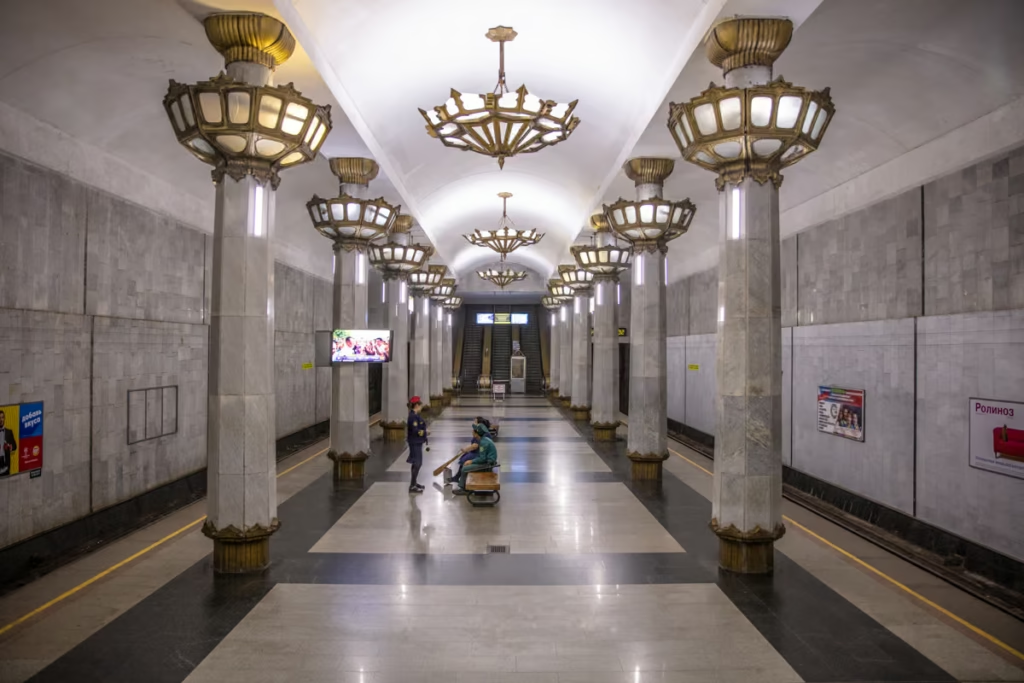
… and don’t miss out on the elaborate Tashkent Metro Stations!
Mir i Arab Madrasa

Facing Kalon Mosque is Mir i Arab Madrasa, one of the most recognizable buildings in Bukhara.
The madrasa was constructed during the 16th century and is associated with Sheikh Abdullah Yamani, known as Mir i Arab, a religious scholar from Yemen who became influential in the region.
Unlike many historic madrasas in Bukhara, Mir i Arab remains an active religious educational institution. Visitors generally cannot explore the interior, but you can admire the entrance and glimpse the interior through the latticework.
The twin turquoise domes and elaborate tiled facade make this one of the best places in Bukhara for architectural photography.
Chor Minor

Chor Minor is one of the most unusual buildings in Bukhara. Its name translates to “Four Minarets,” referring to the four small towers topped with blue domes that sit above the structure.
Built in 1807, Chor Minor originally served as the entrance gate to a madrasa complex commissioned by a wealthy Turkmen merchant.
Each tower features slightly different decorative elements, giving the building its distinctive appearance.
Today, Chor Minor is tucked away among the narrow residential lanes northeast of Labi Hauz. The surrounding neighborhood is worth exploring, particularly if you want to see a little more of everyday life beyond Bukhara’s main tourist streets.
There is a fee of 15,000 UZS to climb to the rooftop for views of the surrounding neighborhood.
The Covered Bazaars


Bukhara was an important trading center along the Silk Road, and its historic covered bazaars offer a glimpse into the city’s commercial past.
The old trading domes were strategically positioned at important intersections in the city, where merchants could sell their goods beneath large vaulted roofs.
There are four principal historic trading domes worth visiting:
- Toqi Sarrofon: Historically associated with money changers and financial transactions.
- Toqi Telpak Furushon: Traditionally associated with the sale of headwear.
- Toqi Zargaron: The jewelers’ trading dome, where merchants sold gold and silver jewelry.
- Tim Abdulla Khan: A historic textile trading building, particularly associated with fabrics.
Today, the domes are filled with shops selling souvenirs, textiles, ceramics, carpets, and other handicrafts. While much of the merchandise is aimed at visitors, the buildings themselves are worth seeing for their architecture and history.
Going to Khiva too? Start planning with the Khiva Travel Guide
Abdul Aziz Khan Madrasa

Directly across from Ulugbek Madrasa stands Abdul Aziz Khan Madrasa, one of the most elaborately decorated Islamic schools in Bukhara.
Built in 1652, the madrasa is particularly notable for its intricate tilework, colorful geometric patterns, and detailed decorative elements. It was constructed in honor of Abdul Aziz Khan’s defeat of the Mughal army over in Balkh (in modern-day Afghanistan).
Unlike some of Bukhara’s more heavily restored monuments, parts of the building retain a weathered appearance that makes it interesting to explore.
The former student rooms now house souvenir shops, and you can see the remains of the original decorative architecture throughout the building.
Entrance to Abdul Aziz Khan Madrasa is 20,000 UZS and includes Ulugbek Madrasa.
Ulugbek Madrasa

Built in 1417 under the Timurid ruler and astronomer Ulugbek, Ulugbek Madrasa is one of the oldest surviving madrasas in Central Asia.
Ulugbek was the grandson of Timur and is particularly remembered for his contributions to astronomy and mathematics. He established several important educational institutions throughout the Timurid Empire, including madrasas in Samarkand and Bukhara.
The Bukhara madrasa is comparatively modest in size but historically significant, representing the importance of education and scholarship during the Timurid period.
Today, some of its former student rooms house small shops. The building is particularly interesting when viewed alongside the more elaborate Abdul Aziz Khan Madrasa directly opposite.
As mentioned before, entrance to Ulugbek Madrasa is 20,000 UZS and also includes entrance to Abdul Aziz Khan Madrasa.
Relax at a Hammam
After spending hours walking through Bukhara’s old city, a visit to a traditional hammam can be a welcome break.
Hammam Bozori Kord is one of the historic bathhouses associated with the city’s traditional bathing culture. These bathhouses played an important role in urban life throughout Central Asia, providing places to wash, socialize, and relax.
Traditional hammam experiences generally involve time in heated rooms, followed by washing and sometimes a body scrub or massage.
If you want to experience a historic bathhouse in Bukhara, contact the hammam in advance to confirm availability and services, which usually start around 120,000 UZS.
The Ark Fortress

The Ark Fortress is one of the most important historical landmarks in Bukhara and was once the residence of the city’s emirs.
Built on an artificial mound, the enormous fortress served as a fortified royal city within the larger settlement. It housed the emir’s palace, government offices, a mosque, and other important institutions.
The Ark has been associated with Bukhara’s rulers for centuries, although much of the present structure dates to later rebuilding. It suffered extensive damage during the 1920 Red Army assault.
Today, the fortress contains several museums covering Bukhara’s history, culture, and former ruling dynasties.
Allow at least an hour to explore the complex. The elevated position also offers some great views across the surrounding old city.
Imam al Bukhari Memorial

Located just outside the Ark this small museum is worth a visit, even if to only appreciate the unique exterior architecture. Entrance to Imam al Bukhara Memorial is 20,000 UZS.
Ismoil Somoni Mausoleum

The Ismoil Somoni Mausoleum is one of the most important architectural monuments in Bukhara and one of the finest surviving examples of early Islamic architecture in Central Asia.
Built during the 10th century, the mausoleum is associated with Ismoil Somoni, the ruler who helped establish the Samanid dynasty as a major power in Central Asia.
Its design is particularly remarkable for its intricate brickwork. Rather than relying on colorful glazed tiles, the builders used different arrangements of baked bricks to create elaborate geometric patterns that change appearance depending on the light.
The mausoleum is also significant because it survived the Mongol invasions, reportedly because it was buried beneath sediment and eventually forgotten.
You will find a vast number of monuments to Ismoil Somoni in neighboring Tajikistan.
The perfect combo of history & nature: The two week Uzbekistan & Tajikistan itinerary
Chashma Ayub Mausoleum

Chashma Ayub, also known as the Mausoleum of Job’s Spring, is one of Bukhara’s more unusual historic monuments.
According to local legend, the Prophet Job (Ayub) struck the ground with his staff, causing a spring to emerge. The water source became associated with healing and has remained an important part of the site’s history.
The structure features a distinctive conical dome and architectural elements dating to different periods, including the Karakhanid era.
Inside, you’ll find a small museum dedicated to Bukhara’s traditional water management systems, an interesting subject given the city’s location on the edge of the Kyzylkum Desert.
Entrance to Ayub Chashma is 20,000 UZS.
History Of Carpet Weaving Museum

Housed inside the historic Magoki Attori Mosque, the History of Carpet Weaving Museum explores the textile traditions of Uzbekistan and neighboring Central Asian countries.
The collection includes over 100 carpets and weaving examples from different ethnic groups, including Uzbeks, Tajiks, Turkmen, Kazakhs, and Kyrgyz.
Carpet weaving has long been an important part of Central Asian cultural heritage, with different regions developing their own distinctive patterns, materials, and techniques.
It costs 10,000 UZS to enter the museum and an additional 10,000 UZS if you want to take photos.
Photography Gallery of Shavkat Boltaev
For a different perspective on Bukhara, stop by the photography gallery of local photographer Shavkat Boltaev.
His black-and-white photographs document the people, architecture, and everyday life of Bukhara, offering a glimpse of the city beyond its famous monuments and tourist attractions.
I particularly like that the photographs capture a side of Bukhara that can be easy to overlook when spending most of your time around the historic squares and souvenir shops.
Bolo Hauz Mosque

Located directly across from the Ark Fortress, Bolo Hauz Mosque is one of the most beautiful mosques in Bukhara.
Built in the early 18th century, the mosque is particularly famous for its elegant wooden columns supporting the entrance porch. The columns are intricately carved and reflected in the water of the adjoining hauz, creating one of the city’s most photogenic scenes.
Bolo Hauz Mosque once served as the main place of worship for the emir and his court, making its location opposite the Ark significant.
Even if you don’t go inside, the exterior and its beautifully decorated columns are well worth seeing.
Minorasi Majmuasi Observation tower
For a different perspective of Bukhara, head up to the city’s observation tower for panoramic views across the old town.
From above, you can appreciate the density of Bukhara’s historic architecture, with its blue domes, minarets, courtyard buildings, and winding streets stretching toward the desert.
One of the nice things about this viewpoint is that it offers a chance to see how the historic center fits together, rather than experiencing its monuments individually from street level.
Yes, there is an elevator, so you don’t have to climb a mountain of stairs to enjoy the view. Entrance costs 40,000 UZS.
Looking for more ideas? Check out 30 Best Things To Do In Uzbekistan
Traditional Bukharan Food: What to Eat

Bukhara has a distinctive culinary tradition shaped by its position along the historic Silk Road and its connections with neighboring Persian-speaking and Turkic communities.
While you’ll find plenty of restaurants serving familiar Uzbek dishes around the old city, traditional Bukharan specialties are worth seeking out if you want to try something a little different.
Some local dishes to look for include:
- Bichak: Small baked pastries traditionally filled with pumpkin, greens, or other savory ingredients. They’re similar to samsa but generally smaller.
- Non-toqi: A traditional Bukharan flatbread with a distinctive preparation and shape, often served alongside meals.
- Bakhsh: A regional variation of plov traditionally made with rice, meat, and a generous amount of cilantro. Its green color distinguishes it from many other varieties of Uzbek plov.
You can read more about the city’s culinary traditions in this article in Moment Magazine highlighting Bukharan Cuisine.
As for where to eat in Bukhara, one of my personal favorites is Silk Road Tea and Coffee. Stop in for spiced coffee, chai, and a selection of Uzbek sweets and confections.
For coffee with a view, head to the upper terrace of Ulugbek Cafe, which overlooks Ulugbek and Abdul Aziz Khan Madrasas. It’s a particularly nice place to take a break from sightseeing.
You’ll also find plenty of restaurants around Labi-Hauz serving Uzbek and wider Central Asian cuisine. This is a convenient area to grab dinner after a day exploring the old city.
Best Day Trips From Bukhara
Bukhara has plenty to keep you occupied for several days, but there are also a few worthwhile excursions in the surrounding region.
From traditional pottery workshops to desert landscapes and ancient caravanserais, these day trips offer a different perspective on the Bukhara region and the wider Kyzylkum Desert.
Gijduvan

Gijduvan is a small town north of Bukhara best known for its traditional ceramics and distinctive pottery traditions.
The town is home to the Narzullaev family, whose pottery techniques have been passed down through generations. Their workshop and museum offer visitors the chance to learn about the techniques, patterns, and decorative styles associated with Gijduvan ceramics.
The pottery is particularly recognizable for its intricate geometric designs and warm colors.
A visit to Gijduvan makes an interesting excursion from Bukhara, especially if you’re interested in traditional crafts and want to experience a smaller Uzbek town outside the main tourist circuit.
Aydarkul
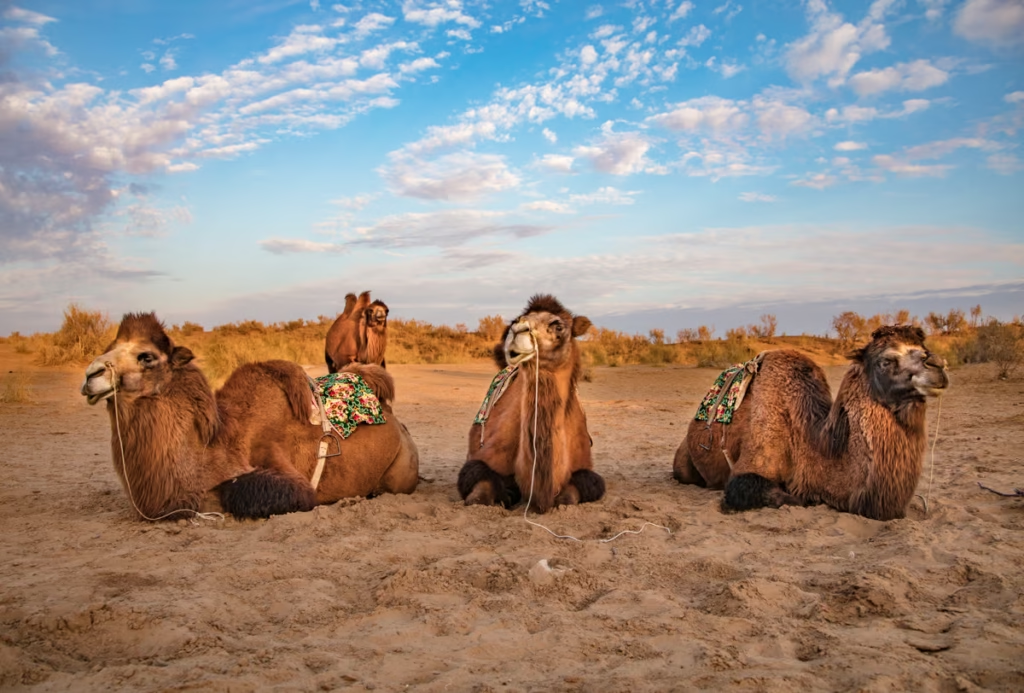
Aydarkul Lake is a large artificial lake situated on the edge of the Kyzylkum Desert, surrounded by open desert landscapes and remote settlements.
The contrast between the dry desert terrain and the expansive blue lake makes it one of the more unusual landscapes in Uzbekistan.
If you want to escape the historic streets of Bukhara for a night, consider arranging a trip to a nearby yurt camp. Spending the evening in a traditional-style yurt beneath the desert sky is a memorable experience.
I particularly recommend looking into Kyzylkum Yurt Camp if you want to combine a visit to the lake with an overnight desert stay.
Keep in mind that Aydarkul is a substantial drive from Bukhara, so it’s better approached as an overnight excursion or a longer organized trip rather than a quick afternoon outing.
Nurata


Located between the Nuratau Mountains and the Kyzylkum Desert, Nurata is a worthwhile stop for anyone interested in the history and landscapes of central Uzbekistan.
The town is best known for the Chashma Complex, a religious site centered around a sacred spring. The complex includes a mosque, a pond, and several other historic structures.
You can also visit the remains of Nur Fortress, traditionally associated with Alexander the Great, although the precise historical origins of the fortress are debated.
Nurata is often combined with a visit to Aydarkul Lake or a stay at one of the nearby yurt camps.
Rabat Malik Caravanserai

Rabat Malik Caravanserai is an impressive remnant of the medieval Silk Road located near Navoi, between Samarkand and Bukhara.
Built during the 11th century under the Karakhanid dynasty, the caravanserai served as a roadside stopping point for merchants and travelers crossing this section of Central Asia.
Although much of the original structure has disappeared, its monumental entrance portal remains particularly impressive.
The site is worth considering if you’re traveling between Bukhara and Samarkand by road, as it makes an interesting historical stop along the way.
How Many Days to Spend in Bukhara?
I recommend spending at least two full days in Bukhara to explore the historic center without feeling rushed.
You can see many of the main attractions in a single day, but two days will give you enough time to visit the museums, explore the covered bazaars, enjoy traditional Uzbek food, and wander through some of the quieter residential streets.
If you have three days, consider adding an excursion to Gijduvan, Nurata, or the Kyzylkum Desert.
1 Day in Bukhara
If you’re short on time, prioritize Bukhara’s most important historical attractions:
- Labi Hauz
- Nadir Divan-Begi Madrasa
- Covered Bazaars
- Po i Kalyan Complex
- Kalon Minaret
- Kalon Mosque
- Mir i Arab Madrasa
- Ark Fortress
- Bolo Hauz Mosque
2 Days in Bukhara
With two days, you can explore the main attractions at a more relaxed pace.
Day 1: Focus on the historic center, including Labi Hauz, the surrounding madrasas, the covered bazaars, and the Po i Kalyan Complex.
Day 2: Visit the Ark Fortress, Bolo Hauz Mosque, Ismail Samani Mausoleum, Chashma Ayub, the carpet museum, and Chor Minor. Leave some time for a traditional hammam and exploring the city’s residential lanes.
3 Days in Bukhara
If you have three days, use the additional time to explore outside the historic center.
Visit Gijduvan for its traditional pottery workshops, or arrange an excursion toward Nurata and Aydarkul Lake for a taste of the Kyzylkum Desert.
Have any Questions about Bukhara Travel or Things to Do in Bukhara?
Ask your Bukhara travel questions in the comments section below.
Posts from Uzbekistan
Uzbekistan Travel Guide: Everything to Know
Bukhara Travel Guide: 19 Best Things to Do
Tashkent Travel Guide: 18 Best Things to Do
Central Asian Food: 31 Dishes & Drinks to Try
Aralsk-7: Visiting the Soviet Bioweapons Lab
Uzbekistan-Afghanistan Border Crossing at Hairatan
Karakalpakstan Travel Guide
Uzbek Fergana Valley Travel Guide
Two Week Uzbekistan Itinerary: 14 Days
Tajikistan Uzbekistan Itinerary: 2 Weeks
Solo Female Travel in Central Asia
Uzbek Food: 33 Dishes to Try
Kazakhstan-Uzbekistan Border Crossing
Solar Furnace Uzbekistan: Visit Guide
Panjakent-Samarkand Border Crossing Guide
Nukus Travel Guide: Things to Do
Central Asia Travel Guide

Oybek Border Crossing: Tashkent to Khujand
Best Restuarants in Tashkent
10 Essentials to Pack for Central Asia
A Guide to the World Nomad Games
Visiting the Aral Sea Disaster, Uzbekistan
Central Asia Travel Tips
Vegetarian in Central Asia
Central Asia Visas Guide
Shahrisabz Travel Guide
Khiva Travel Guide
Termez Travel Guide
Things to Do in Uzbekistan
Samarkand Travel Guide: 14 Best Things to Do
Khorezm Fortresses, Uzbekistan
The Best SIM Cards & eSIMs for Uzbekistan
Solo Female Travel in Uzbekistan
Off the Beaten Path Asia