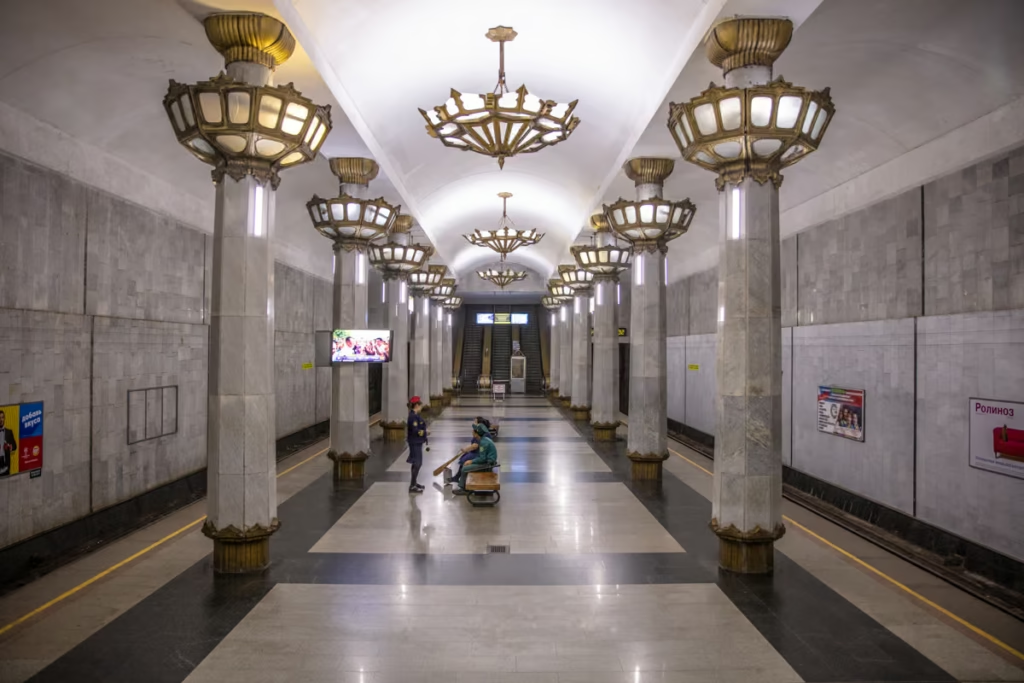
Exploring the Frontier Town of Termez, Uzbekistan
Updated November 2026, Exploring the Frontier Town of Termez, Uzbekistan was originally published in September 2021
With a history stretching back more than 2,500 years, Termez is one of the most historically fascinating destinations in Uzbekistan. Located in the country’s far south along the Amu Darya River, directly across from Afghanistan, Termez has spent centuries at the crossroads of empires, religions, and Silk Road trade routes.
Unlike the famous Silk Road cities of Samarkand, Bukhara, and Khiva, Termez is best known for its remarkable archaeological heritage. Ancient Buddhist monasteries, Greco-Bactrian ruins, Islamic mausoleums, and centuries-old fortresses tell the story of a region where Buddhism, Zoroastrianism, and Islam all left their mark.
I spent a couple of days exploring Termez before crossing the Friendship Bridge into Afghanistan at the Hairatan Border Crossing. Between wandering through the ruins of ancient Buddhist monasteries, visiting one of Uzbekistan’s best archaeological museums, and exploring the impressive Kampyr Tepe fortress, I quickly realized that Termez deserved more attention than it gets.
Getting to Termez takes a little more effort than visiting Uzbekistan’s better-known destinations, but if you’re interested in history, archaeology, and getting off the usual tourist trail, it’s absolutely worth adding to your itinerary.
In this Termez travel guide, I’ll cover the best things to do in Termez and the surrounding area, how to visit the archaeological sites, where to eat and stay, and how to get to and around this fascinating southern Uzbek city
Start planning your Uzbek adventure with the Uzbekistan travel guide
Pick up a copy of Bradt’s Uzbekistan Guidebook too
Need Travel Insurance and Evacuation Services?
Start shopping for travel insurance plans over at IATI Insurance. Readers of the Adventures of Nicole get a 5% discount off your plan.
The Adventures of Nicole partners with Global Rescue to offer the world’s leading medical evacuation and security advisory services. To travel with peace of mind, explore their evacuation coverage.
How to Visit the Historical Sites Around Termez

Many of the best things to do in Termez are scattered outside the modern city center, making transportation one of the biggest considerations when planning your visit. While you can reach some attractions using marshrutkas (shared minibuses) and shared taxis, getting between the more remote archaeological sites can be time-consuming.
If you’re only spending a day or two in Termez, I recommend hiring a private driver for a half-day or full-day sightseeing trip. This allows you to visit several of the ancient Buddhist sites, fortresses, and mausoleums without spending half your day figuring out transport or negotiating with taxi drivers.
During my first visit to Termez, I arranged a driver through the Asson Hotel, where I was staying. We spent several hours visiting Kirkkiz Fortress, Sultan Saodat Complex, Kokildor Khanaka, Fayaz Tepe, Kara Tepe, Zurmala Tower, and Old Termez, including the Al Hakim al-Termezi Mausoleum.
At the time of my visit, I paid approximately $20 USD for the trip to the main historic sites around Termez (Kirkkiz Fortress, Sultan Saodat and Kokildor Khanaka, Fayez Tepe and Kara Tepe, Zurmala Tower, and Old Termez/Al Hakim al Termezi), with an additional $10 to continue out to Kampyr Tepe, about 30 kilometers from Termez. These are historical prices from my visit, not current quotations, so expect to negotiate a new rate.
If you prefer independent travel, it’s possible to reach some of the attractions by public transport, although you’ll likely need to combine marshrutkas with walking and occasional taxis. I’d particularly recommend arranging transport in advance for Kampyr Tepe and the archaeological sites near the Afghan border.
Looking for ideas? Check out the two week Uzbekistan itinerary
Things to Do in Termez (and Around)
Termez is home to some of the most important archaeological sites in southern Uzbekistan, with attractions spanning more than two millennia of history. From ancient Buddhist monasteries dating to the Kushan Empire to Islamic mausoleums and medieval fortresses, there’s plenty to explore both in the city and the surrounding Surkhandarya Region.
Most of Termez’s major attractions can be visited in one or two days, although I’d recommend allowing additional time if you want to explore the more distant archaeological sites. Here are the best things to do in Termez and the surrounding area.
Termez Archaeological Museum

One of the first places I’d recommend visiting in Termez is the Termez Archaeological Museum. If you’re interested in understanding the history of southern Uzbekistan, this museum is an excellent introduction to the region’s extraordinary past.
The collection covers thousands of years of history, with artifacts from the Bronze Age, the Greco-Bactrian period, the Kushan Empire, and the Islamic era. Some of the most interesting exhibits include ancient Buddhist sculptures and relics, ceramics, archaeological finds from nearby monasteries, and displays exploring the influence of Alexander the Great and the Hellenistic world on Bactria.
I particularly enjoyed the museum’s extensive collection of Buddhist artifacts from the 3rd and 4th centuries AD. These exhibits provide valuable context for visiting nearby sites such as Fayaz Tepe, Kara Tepe, and Kampyr Tepe.
I’d recommend visiting the museum before heading out to the archaeological sites, as it makes the history behind the ruins considerably easier to understand.
Entrance: 25,000 UZS, 5,000 UZS additional for cameras
Old Termez & Al Hakim al Termezi Mausoleum

Located approximately 6 kilometers northwest of modern Termez, the Al Hakim al-Termezi Mausoleum is one of the most important Islamic pilgrimage sites in southern Uzbekistan.
Al-Hakim al-Termezi was an influential 9th-century Islamic scholar, Sufi mystic, and writer who died in Termez in 859 AD. The mausoleum and surrounding religious complex developed over several centuries, with some of its earliest structures dating to the 10th century and significant additions made during the Timurid period under Shah Rukh in the 15th century.
The complex is particularly striking for its white marble, intricate blue and gold decorative details, and peaceful courtyard. It’s an active religious site, so remember to dress respectfully, covering your shoulders and knees.
One of the more unusual features is the Chillkhona, a network of underground chambers where pilgrims come to pray. Head down the stairs and you’ll immediately notice the temperature drop, which is particularly welcome during Termez’s scorching summer months.
The surrounding grounds also include a small archaeological museum, the Termez Ota Museum, displaying artifacts excavated from Old Termez and the surrounding area.
You can reach the complex by marshrutka #15, 12, or 305 from Yubileynyi Bazaar.
Entrance: 15,000 UZS, inclusing all sites on the complex
Mausoleum of Al Hakim al Termezi


Al Hakim was a famous Sufi saint and writer who died in Termez in 859 AD. Some of the buildings found in the complex date back to the 10th century, however much of the construction happened under the reign of Shah Rukh in the 15th century.
The mausoleum is quite impressive with beautiful white marble walls featuring blue and gold details. This is the holiest site in Termez, so make sure to dress respectfully (knees and shoulder covered at minimum) as many visitors are there to pay religious respects.
Outside, make sure to follow the signs to the Chillkhona. It’s a cave system where locals and pilgrims go to pray, plus its about 20 degrees cooler down inside which will be a welcomed break from the heat.
The grounds feature a beautiful garden with blooming trees as well as the Archeological Museum of Termez Ota which is an offshoot of the larger archeological museum in modern Termez, featuring artifacts that have been excavated at the site of nearby Old Termez. The Archeological Museum of Termez Ota does charge a 15,000 UZS fee for entry.
Old Termez

Just a short walk from the Al Hakim al-Termezi Mausoleum are the archaeological remains of Old Termez, the ancient settlement that once stood at the crossroads of important trade routes along the Amu Darya.
Termez has been inhabited for more than 2,500 years, although the settlement’s location and political importance shifted throughout its long history. Old Termez grew into an important regional center, with residential neighborhoods, bazaars, caravanserais, religious buildings, and an extensive irrigation system supporting the surrounding population.
The city experienced considerable destruction during the Mongol invasions in the 13th century, and much of its former grandeur has disappeared. Today, the archaeological remains offer a glimpse into the scale and historical importance of this once-thriving Silk Road settlement.
While there isn’t an enormous amount of standing architecture left to explore, I think Old Termez is worth visiting alongside the mausoleum, particularly if you’re interested in understanding how this ancient city developed.
Sultan Saodat Complex
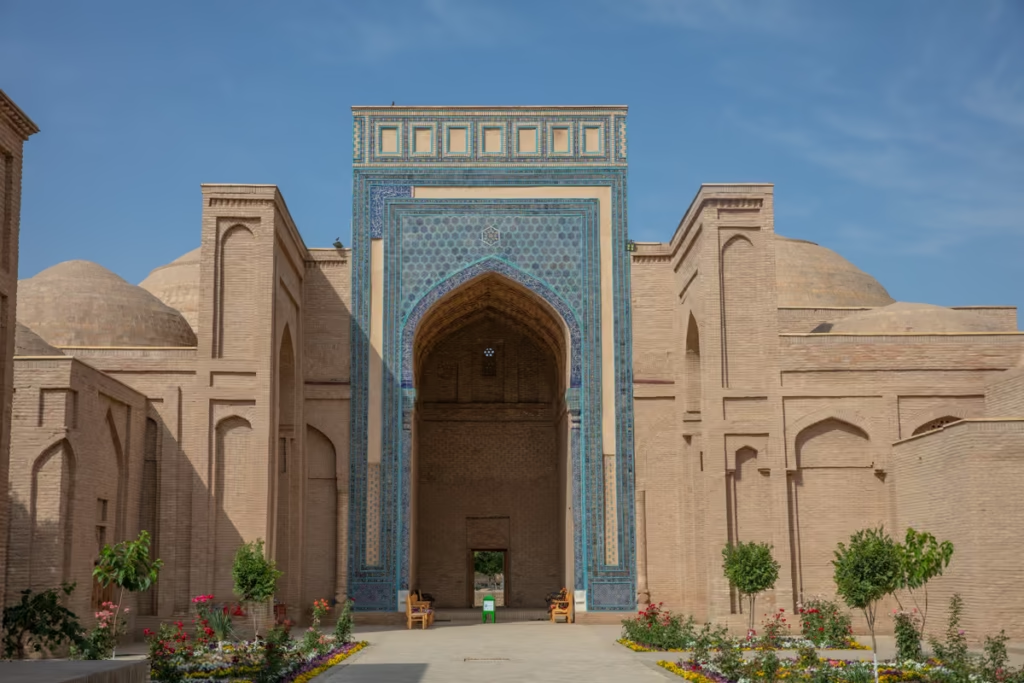
The Sultan Saodat Complex is one of the most impressive historical attractions in Termez. This sprawling religious and funerary complex served as the necropolis of the Termez Sayyids, a prominent family claiming descent from Ali, the son-in-law and cousin of the Prophet Muhammad.
Construction began around the 11th century and continued over several centuries, eventually creating an ensemble of mausoleums, mosques, and khanakas arranged around a series of courtyards.
Architecturally, Sultan Saodat shares some similarities with the famous Shah-i-Zinda necropolis in Samarkand, although its decoration is generally more restrained. Its impressive brickwork, domed chambers, and carefully arranged buildings make it one of the most photogenic places to visit in Termez.
One of the most interesting aspects of the complex is the mixture of architectural influences found throughout its history. Some decorative motifs have been associated with earlier regional traditions, reflecting the many cultures that shaped southern Uzbekistan.
The complex underwent extensive restoration in 2002, helping preserve its distinctive brick architecture.
Sultan Saodat can be reached by public transport, including marshrutka #265 followed by a walk, although I’d recommend combining it with Kokildor Khanaka on a private sightseeing trip.
Kokildor Khanaka

A short walk west of Sultan Saodat is Kokildor Khanaka, another interesting example of Termez’s Islamic architectural heritage.
Dating to the 16th century, during the reign of Abdullah Khan II of Bukhara, the khanaka served as a gathering place and resting accommodation for Sufi travelers and religious figures. Khanakas were important institutions throughout the Islamic world, providing space for prayer, religious instruction, meditation, and hospitality.
The building has an imposing exterior with architectural features reminiscent of mosques and madrasas found elsewhere in Central Asia and neighboring Afghanistan.
Kokildor Khanaka is an easy addition to a visit to Sultan Saodat and is well worth stopping at while exploring Termez’s historic sites.
Kirkkiz Fortress

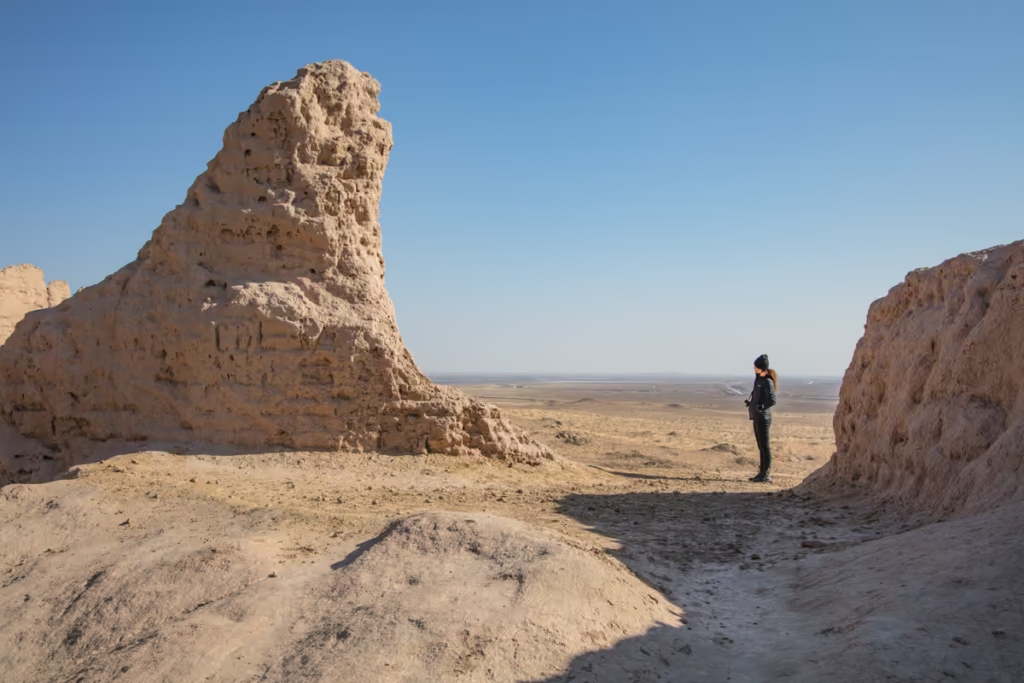
Kirkkiz Fortress, also known as the Forty Girls Fortress, is one of the most intriguing historical sites around Termez. Located just outside the modern city near the airport, this unusual brick structure is generally dated to the medieval period, although its exact original purpose remains debated.
Archaeologists have proposed several theories about the building, including that it may have served as a caravanserai, a fortified residence, or a Samanid-era summer palace.
The name Kirkkiz translates to Forty Girls, and local legends attempt to explain the origins of the name. One popular story tells of 40 young women, led by a princess named Gulom, who defended the fortress against invading nomads after their husbands were killed.
Wandering through Kirkkiz was one of my favorite parts of exploring Termez. The remains are surprisingly extensive, with an estimated 50 rooms spread across two levels. Although much of the structure has deteriorated, you can still get a sense of how substantial the original building must have been.
If you’re interested in the lesser-known historical sites of Uzbekistan, Kirkkiz is worth including in your Termez sightseeing itinerary.
Get way off the beaten path and check out the lost Khorezm Fortresses and the mysterious Karakalpak Republic
Zurmala Tower: An Ancient Buddhist Stupa
The Zurmala Tower is one of the most unusual historical landmarks around Termez and an important surviving example of the region’s Buddhist heritage.
What remains today is the central core of an enormous Buddhist stupa, believed to date to the 1st or 2nd century AD. Constructed from mud bricks, the tower is thought to have originally formed part of a much larger religious monument associated with the spread of Buddhism during the Kushan period.
The Zurmala Stupa is particularly interesting because it is among the oldest surviving Buddhist structures in Uzbekistan. Although much of the original monument has disappeared, the remaining tower gives an idea of the scale of Buddhist architecture that once flourished throughout ancient Bactria.
The tower stands outside the modern city, and reaching it can involve a little walking over uneven ground. Depending on where your driver drops you off, expect to walk approximately 200 meters or more to get a closer look.
Wear comfortable shoes, bring water, and avoid visiting during the hottest part of the day if you’re traveling in summer.
Fayez Tepe: An Ancient Buddhist Monastery

One of the most fascinating things to do in Termez is visit Fayaz Tepe, an ancient Buddhist monastery complex dating back to the Kushan period.
The site was established around the 1st century AD and expanded considerably during the 3rd century. At its height, Fayaz Tepe was an important Buddhist religious center, featuring a monastery, temple, courtyards, monks’ quarters, and a large stupa.
The complex was eventually abandoned and gradually buried beneath the surrounding landscape. It was rediscovered in 1968 after a local shepherd came across archaeological remains, prompting Soviet archaeologists to begin excavations.
Today, you can wander through the excavated remains of the monastery and get a sense of how the complex would have functioned. Look out for the remains of the monks’ living quarters, kitchens, bathing facilities, and religious spaces.
The original Buddhist artwork and many of the artifacts discovered at Fayaz Tepe have been removed for preservation and are now held in museums, including the Termez Archaeological Museum.
One of the most interesting features is the large protective dome covering the original stupa. When I visited, a local man living nearby had the keys and offered to show visitors inside. This may depend on who is around on the day, so don’t count on it being available every time.
There is also an information board near the entrance explaining the history of Fayaz Tepe and neighboring Kara Tepe. I’d recommend reading it before exploring the ruins.
Exploring southern Uzbekistan? Don’t miss nearby Qarshi
Kara Tepe: Buddhist Cave Monasteries Near Afghanistan

Another fascinating Buddhist archaeological site near Termez is Kara Tepe, an ancient monastery complex built into the sandstone hills overlooking the Amu Darya River.
Dating primarily to the 2nd century AD, Kara Tepe developed into an important Buddhist religious center during the Kushan period. Unlike Fayaz Tepe, which is characterized by its excavated courtyards and monastery buildings, Kara Tepe features a combination of cave sanctuaries, underground chambers, and structures built directly into the hillside.
The complex was particularly active during the 3rd and 4th centuries, although it gradually declined and was largely abandoned by the end of the 4th century.
Kara Tepe is one of the more unusual places to visit around Termez, but there is an important practical consideration: its proximity to the Afghan border means access can be restricted.
When I visited in May 2021, I was able to explore Kara Tepe without arranging a special permit. However, access requirements have varied over the years, so enquire locally.
I’d recommend checking with the Termez Archaeological Museum or arranging a local guide before heading out. Also, be particularly careful about photography near the international border and follow any instructions from local authorities.
Kick off your trip to Uzbekistan in the capital with the Tashkent Travel Guide
Kampyr Tepe: Ancient Alexandria on the Oxus

Kampyr Tepe was #1 of all the things to do in Termez, for me anyway. It’s a bit of a distance at 30 kilometers from Termez, but in my opinion, it was well worth the journey.
Kampyr Tepe was a once booming Macedonian city of Bactria that sat right on the banks of the Amu Darya founded by Alexander the Great in the 4th century BC, hence the nickname of Alexandria on the Oxus. The city flourished for about 400 years before the Amu Darya’s course changed and flooded Kampyr Tepe, forcing its residents to move elsewhere.

The citadel sits on a hill giving sweeping views of the Amu Darya and across the border into Afghanistan. Featuring over 100 rooms, countless ceramic pieces, sculptures, and even Bactrian manuscripts have been recovered here.
Buddhist stupas, Zoroastrian temples, and Hellenistic monasteries have all been unearthed at Kampyr Tepe leading researchers to believe that the three religions coexisted together here peacefully under the Kushan Empire.

The day I visited there was a crew of archeologists and researchers excavating a portion of Kampyr Tepe that excitedly showed me their work and invited me for chai.
Jarkurgan Minaret
Located approximately 38 kilometers northeast of Termez, just off od the main route from Termex to Denau, the Jarkurgan Minaret is one of the most distinctive examples of medieval Islamic architecture in southern Uzbekistan.
Built in 1108-1109 by architect Ali ibn Muhammad Serakhsi, the minaret is particularly notable for its unusual exterior brickwork, featuring an intricate herringbone pattern that makes it stand out from many other minarets in Central Asia.
The structure originally formed part of a larger mosque complex, although only the lower section of the minaret survives today.
Unfortunately, I ran out of time and didn’t manage to visit Jarkurgan Minaret during my trip to Termez. However, it’s an interesting addition to an itinerary for anyone with extra time in the Surkhandarya Region.
You can arrange a taxi or private driver from Termez to visit the minaret, potentially combining it with other attractions in the surrounding countryside.
Don’t miss the Silk Road cities of Samarkand, Bukhara, and Khiva
Hairatan Friendship Bridge
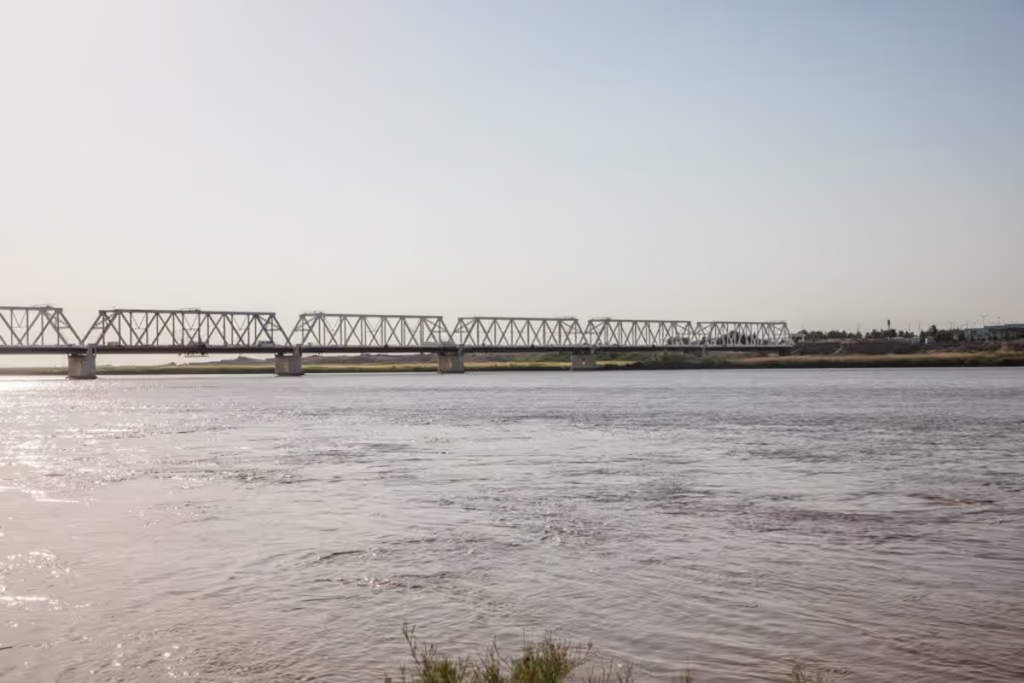
Ironically named, the Friendship Bridge serves as the Hairatan Border Crossing between Uzbekistan and Afghanistan. The bridge was constructed in 1982 following the 1979 Soviet Invasion of Afghanistan as a means to get supplies to their troops in northern Afghanistan.
Best Restaurants in Termez

Termez isn’t particularly well known for its restaurant scene, and you’ll find considerably fewer dining options here than in Uzbekistan’s larger tourist cities. However, there are still some good places to try traditional Uzbek food, particularly if you’re craving shashlik, fresh bread, and a hearty meal after a day exploring archaeological sites.
Here are a couple of places I tried during my stay in Termez:
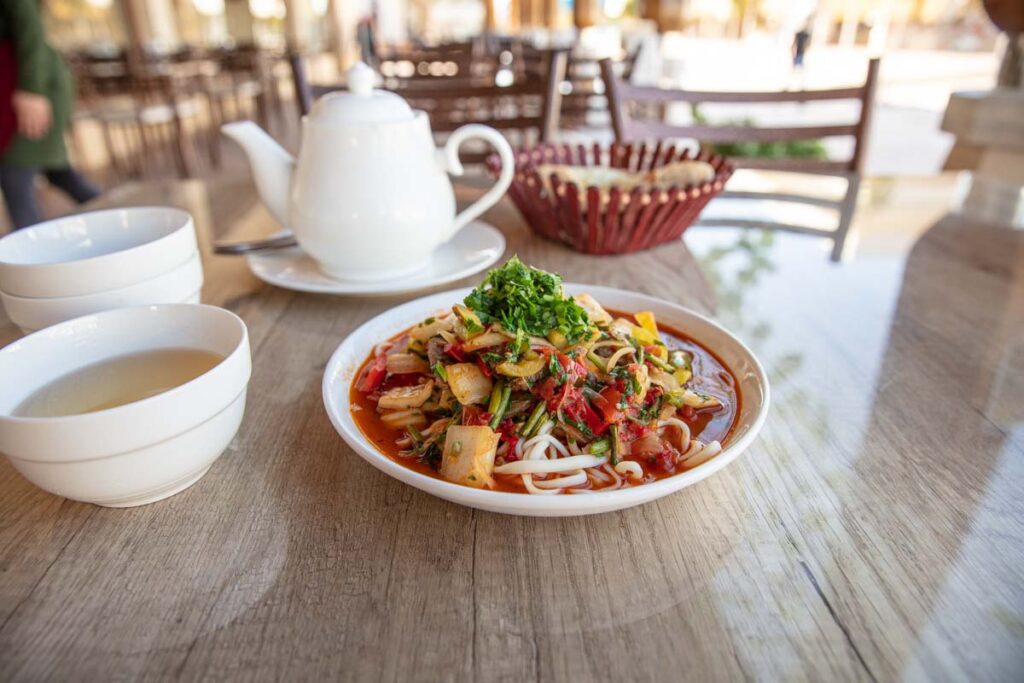
Azizbek Restaurant: The place to go if you want to have some Uzbek food in Termez. My favorite of the handful of eateries I tried out on my stay in Termez. The shashlik was excellent (farsh is my favorite!), the bread soft, and the Baltica perfectly chilled, plus the outdoor seating is hard to beat. You may struggle if you don’t know any Uzbek or Russian, but if that’s the case it’s still worth the challenge.
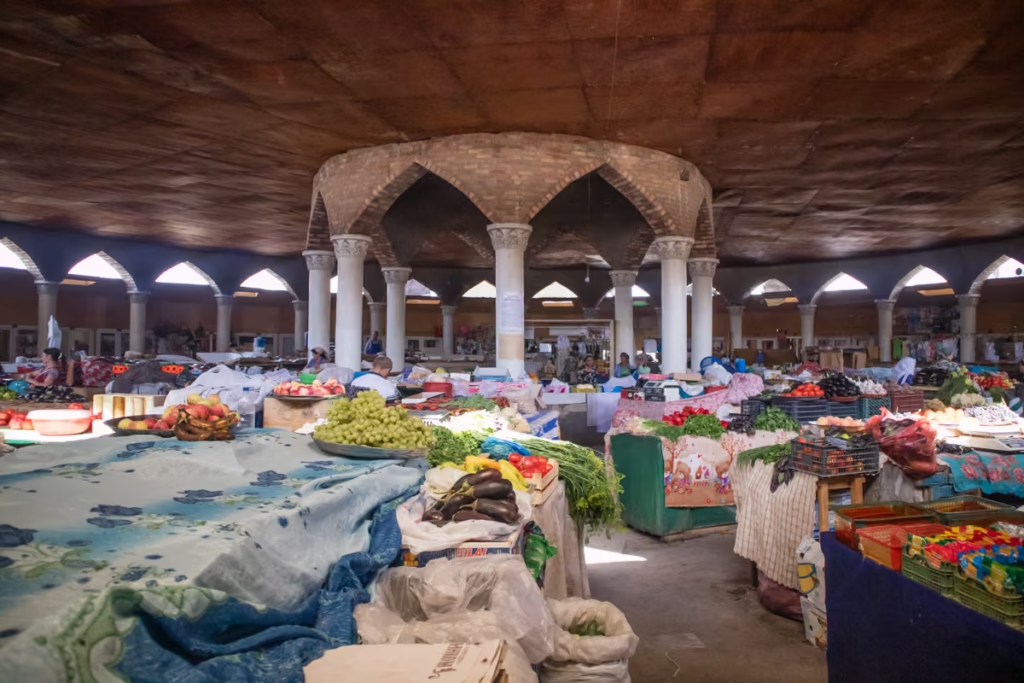
Fast food shops on Hakim at Termezi Ko’chasi: Several small western-style fast food shops slinging up pizza, burgers, and sandwiches, as well as the ubiquitous chaikhana line Hakim at Termezi Street as you walk southwest from the Hotel Asson toward the Yubileynyi Bazaar- all of which offer street-side seating.
Where to Stay in Termez

There aren’t as many accommodation options in Termez as you’ll find in Uzbekistan’s main tourist cities, but there are a few decent hotels and guesthouses to choose from.
I recommend staying somewhere near the city center, particularly if you’re planning to explore the Termez Archaeological Museum, restaurants, and Yubileynyi Bazaar. If you’re arranging a private driver to visit the archaeological sites, most central hotels should be convenient starting points.
- Budget: Clean and new, City Hostel is a good budget option with spacious shared dorm rooms and comfy beds. Centrally located.
- Midrange: The Asson Hotel is located conveniently next to the Termez Archeological Museum. Rooms are simple, and beds are comfortable (not the usual rock-hard mattresses you find everywhere in Central Asia!). They have a pool, but it was unfortunately being renovated at time visit.
How to get to Termez


Termez is located in the far south of Uzbekistan, close to the Afghan border, and getting there requires a little more planning than visiting the country’s main Silk Road cities.
Fortunately, Termez has an airport, railway station, and long-distance bus station, so you have several options depending on your budget and travel schedule.
The most convenient option is flying from Tashkent, while the overnight train is a good alternative if you prefer traveling overland.
By road: The Termez Main Bus Station is west of the city, where you can find marshrutkas and shared taxis plying the routes to Samarkand, Shahrisabz, Qarshi, Denau, Tashkent, and other destinations. To get to the city center from the bus station grab marshrutka #2, 7, or 8.
By train: The Termez Train Station is easily reached as it’s located on the northern end of town (take marshrutka #4 from Yubileynyi Bazaar). It’s possible to get to Qarshi, Denau, and Tashkent (among other destinations) from Termez. You can book your Uzbek Railways ticket online, or download the app and do it from your phone (App Store | Google Play).
By plane: Several flights per week connect Termez and Tashkent on Uzbekistan Airways. You can also shop for the best deals on Skyscanner. Marshrutka #11 runs the route between the airport and the Yubileynyi Bazaar, though getting a taxi is easy enough.
Crossing the Hairatan Border Between Uzbekistan and Afghanistan
In May 2021, I returned to Afghanistan and crossed the border at Hairatan to get to Mazar e Sharif. At the time the border crossing procedures were a breeze and took less than 30 minutes on both sides.
Note that since the summer of 2025, it is possible to obtain your Afghan visa on the border if arriving from the Hairatan-Termez border crossing. This border crossing is always re-opening, closing, or closing to foreigners, etc., so always enquire locally just before you visit to find out the status.
Is Termez Worth Visiting?
Termez is one of the most underrated historical destinations in Uzbekistan, particularly if you’re interested in archaeology, ancient civilizations, and the history of the Silk Road.
While it doesn’t have the grand tiled madrasas and bustling tourist bazaars of Samarkand or Bukhara, Termez offers something quite different. Here, you can explore ancient Buddhist monasteries, Hellenistic archaeological sites, medieval Islamic mausoleums, and fortresses that have largely escaped the attention of international tourism.
I particularly enjoyed visiting Kampyr Tepe, Fayaz Tepe, and Kara Tepe, which offer a fascinating glimpse into the Buddhist and Greco-Bactrian history of southern Uzbekistan. The opportunity to explore these sites with very few other visitors around made the experience even more memorable.
I’d recommend spending at least two days in Termez to see the main archaeological attractions without rushing. If you have additional time, you can explore more of the surrounding Surkhandarya Region.
Termez might take a little more effort to reach than Uzbekistan’s better-known destinations, but for travelers willing to venture south, it’s well worth the journey.
Have any questions about any of the things to do in Termez?
Ask in the comments section below.
Posts from Uzbekistan
Uzbekistan Travel Guide: Everything to Know
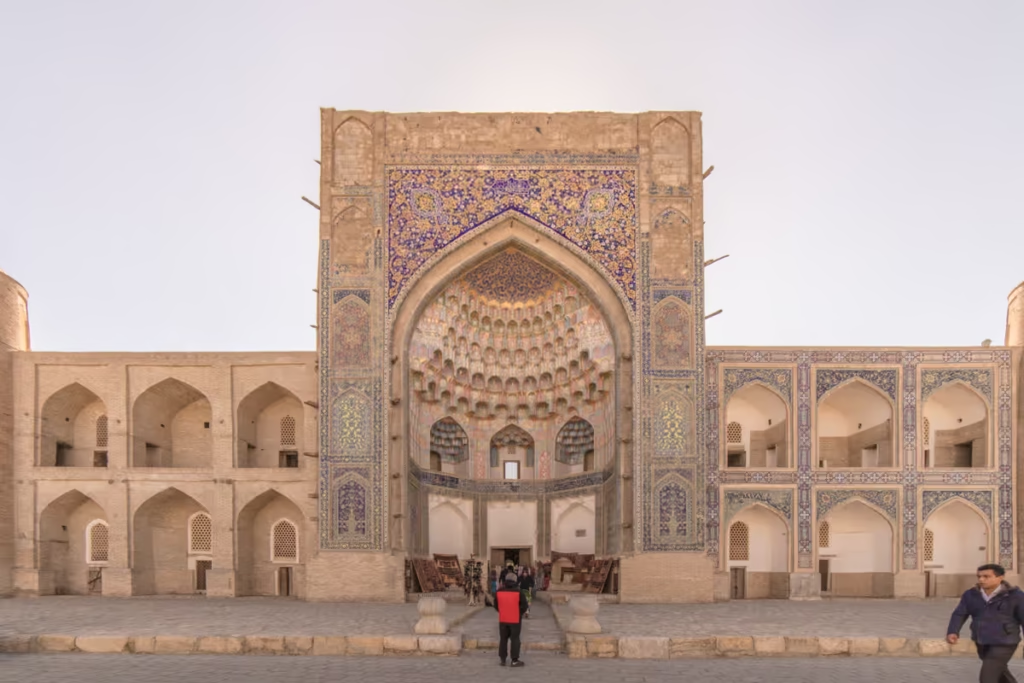
Bukhara Travel Guide: 19 Best Things to Do
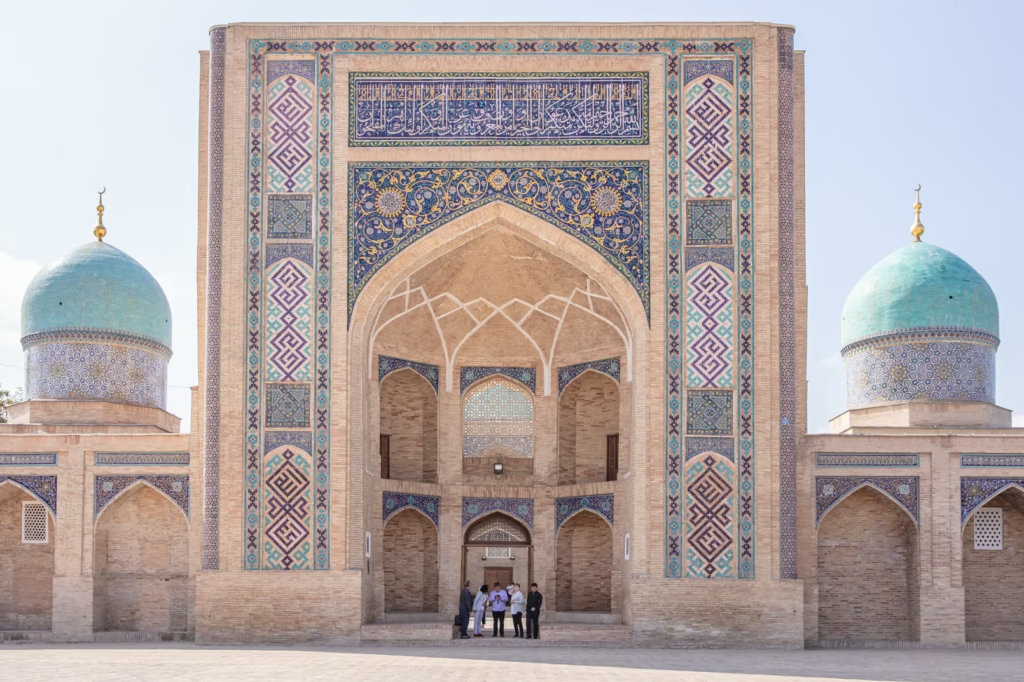
Tashkent Travel Guide: 18 Best Things to Do
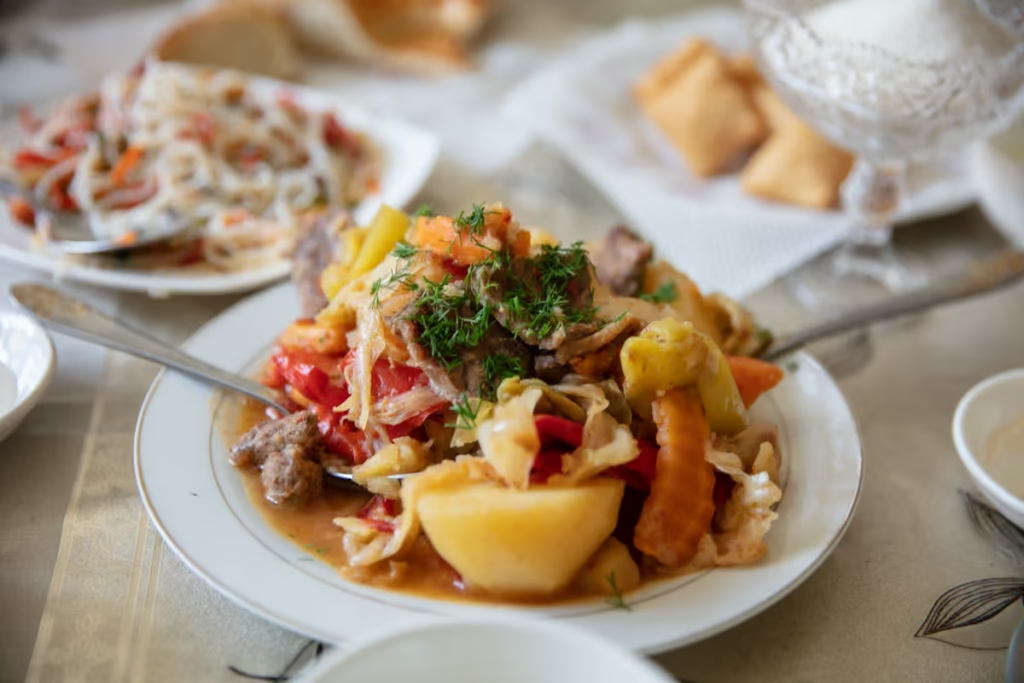
Central Asian Food: 31 Dishes & Drinks to Try
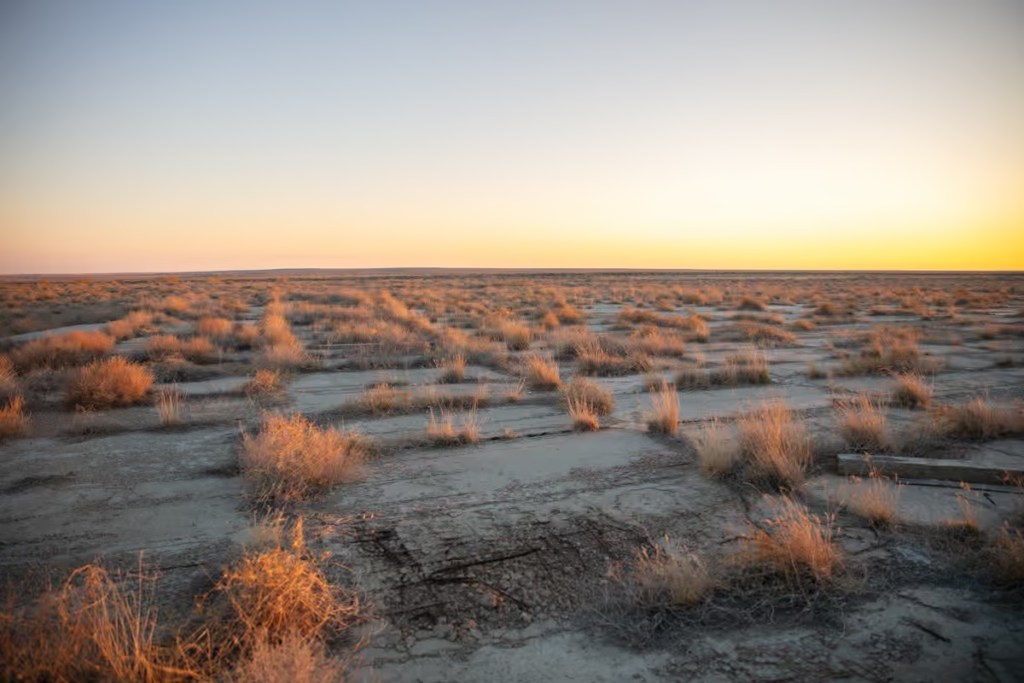
Aralsk-7: Visiting the Soviet Bioweapons Lab
Uzbekistan-Afghanistan Border Crossing at Hairatan
Karakalpakstan Travel Guide
Uzbek Fergana Valley Travel Guide
Two Week Uzbekistan Itinerary: 14 Days
Tajikistan Uzbekistan Itinerary: 2 Weeks
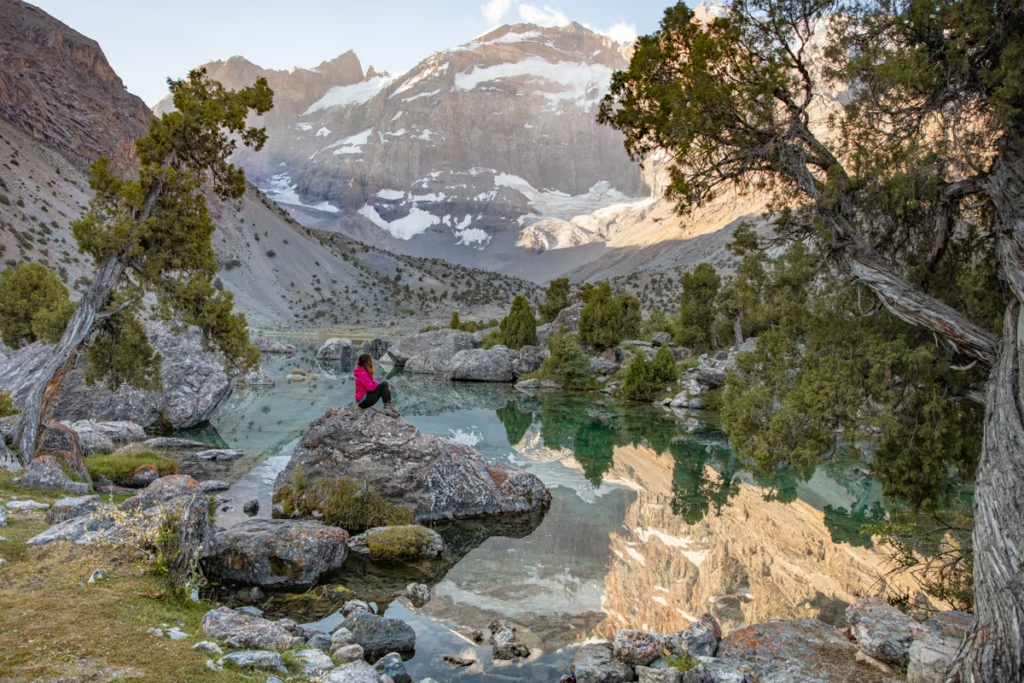
Solo Female Travel in Central Asia
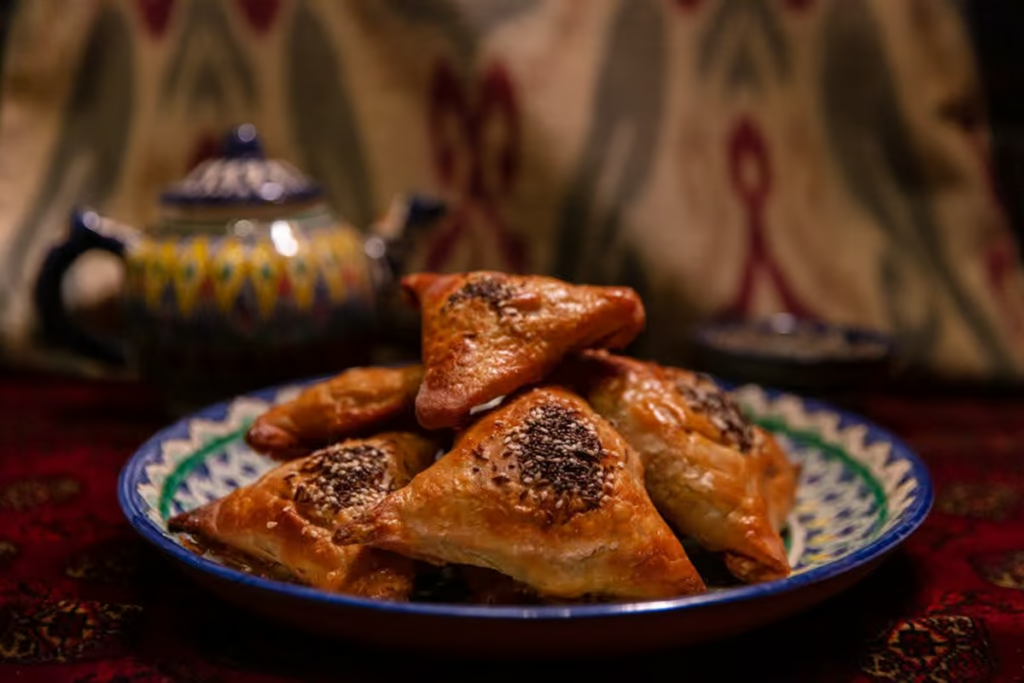
Uzbek Food: 33 Dishes to Try
Kazakhstan-Uzbekistan Border Crossing
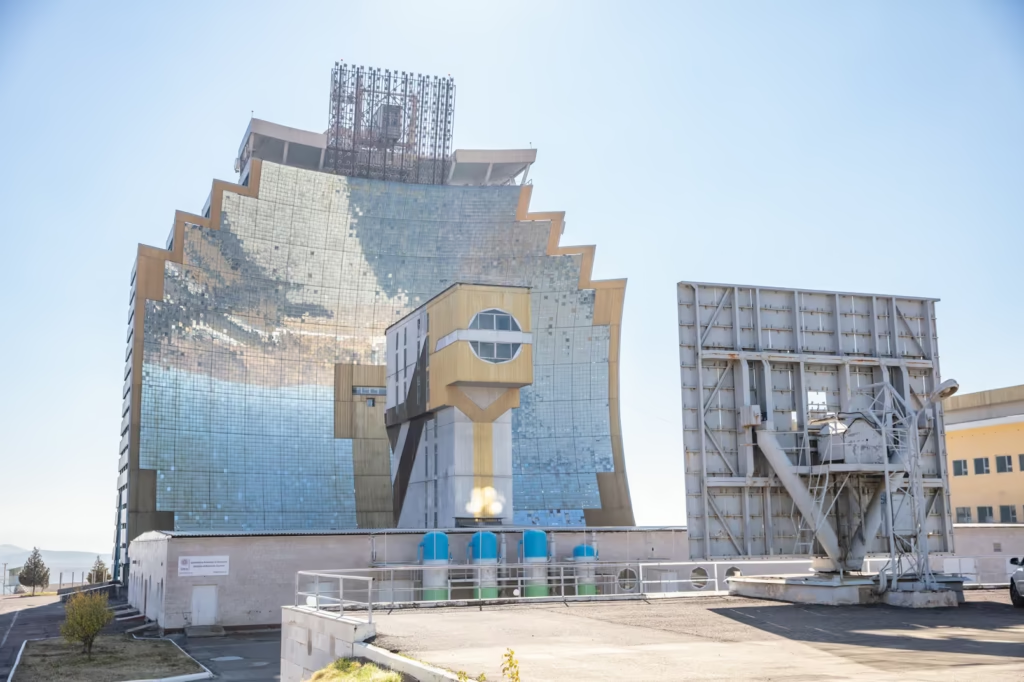
Solar Furnace Uzbekistan: Visit Guide
Panjakent-Samarkand Border Crossing Guide
Nukus Travel Guide: Things to Do
Central Asia Travel Guide

Oybek Border Crossing: Tashkent to Khujand
Best Restuarants in Tashkent
10 Essentials to Pack for Central Asia
A Guide to the World Nomad Games
Visiting the Aral Sea Disaster, Uzbekistan
Central Asia Travel Tips

Vegetarian in Central Asia
Central Asia Visas Guide
Shahrisabz Travel Guide
Khiva Travel Guide
Termez Travel Guide
Things to Do in Uzbekistan
Samarkand Travel Guide: 14 Best Things to Do
Khorezm Fortresses, Uzbekistan
The Best SIM Cards & eSIMs for Uzbekistan
Solo Female Travel in Uzbekistan
Off the Beaten Path Asia