A Guide to the World Nomad Games
Updated November 2026, A Guide to the World Nomad Games was originally published in December 2024
The World Nomad Games, often nicknamed the “Nomad Olympics,” are an international celebration of traditional sports, culture, and heritage from nomadic peoples around the world. Held every two years, the games bring together athletes from dozens of countries to compete in sports that have been practiced across Central Asia and beyond for centuries.
Forget your usual Olympic sports. At the World Nomad Games, you’ll find horseback wrestling, kok boru, traditional archery, eagle hunting, mas-wrestling, and plenty of competitions you probably won’t have encountered before.
First launched in Kyrgyzstan in 2014, the World Nomad Games have since grown into a major international sporting and cultural event. Beyond the competitions, visitors can experience traditional music, food, crafts, demonstrations, and the wider cultural heritage of nomadic communities.
I’ve attended two editions of the games: the 2018 World Nomad Games in Cholpon-Ata, Kyrgyzstan, and the 2024 edition in Astana, Kazakhstan. Having experienced both, I wanted to put together this World Nomad Games guide to explain the history of the event, the sports you’ll see, and what to expect when attending. The 2026 edition as held back in Kyrgyzstan, and the 2028 World Nomad Games will be held in Kazan, Republic of Tatarstan, Russia.
Need Travel Insurance and Evacuation Services?
Start shopping for travel insurance plans over at IATI Insurance. Readers of the Adventures of Nicole get a 5% discount off your plan.
The Adventures of Nicole partners with Global Rescue to offer the world’s leading medical evacuation and security advisory services. To travel with peace of mind, explore their evacuation coverage.
What are the World Nomad Games
The World Nomad Games are an international sporting and cultural event celebrating the traditional sports, heritage, and way of life of nomadic peoples. Often referred to as the Nomad Olympics, the games bring together athletes from around the world to compete in traditional sports that have historical roots in Central Asia, the Turkic world, and other nomadic cultures.
Unlike the modern Olympic Games, the World Nomad Games focus heavily on traditional competitions associated with horseback riding, wrestling, archery, hunting with birds of prey, strength, and intellectual games.
Some of the most recognizable sports include kok boru, a horseback competition played with a goat carcass, horseback archery, Er Enish (horseback wrestling), mas-wrestling, and kusbegilik (traditional hunting with birds of prey).
The first World Nomad Games were held in 2014 in Cholpon-Ata, Kyrgyzstan. The event was established to preserve, promote, and celebrate the cultural traditions of nomadic peoples while encouraging international cooperation and cultural exchange.
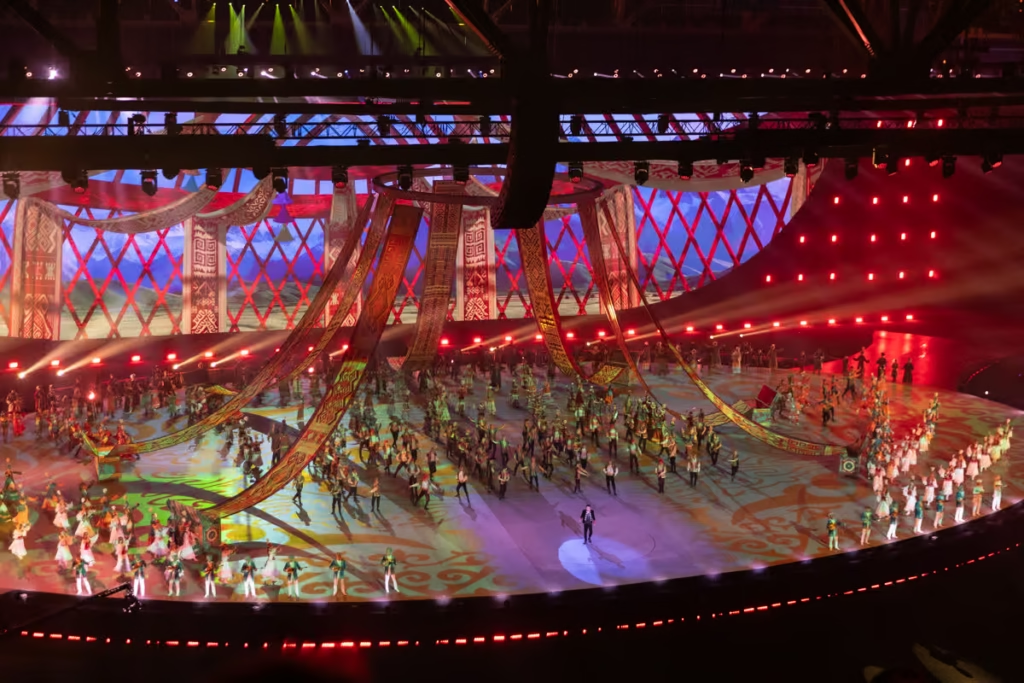
Today, the World Nomad Games have grown beyond a sporting competition. Alongside the athletic events, visitors can experience traditional music, dance, handicrafts, cuisine, cultural performances, and demonstrations of nomadic life.
Where & When is the Next World Nomad Games?
The World Nomad Games are generally held every two years. The event began in Kyrgyzstan in 2014 and has since expanded to include host countries outside Central Asia.
The sixth World Nomad Games took place from August 31 to September 6, 2026, returning to Kyrgyzstan. The opening ceremony was held in Bishkek, while the main sporting and cultural program took place in the Issyk-Kul region, including Cholpon-Ata.
The next World Nomad Games will be held in 2028 in Kazan, the capital of Russia’s Republic of Tatarstan. This will be the first time Russia hosts the event. Exact dates, venues, and the sporting program are yet to be announced.
Here is a look at the history of the World Nomad Games and their host locations:
| Year | Host location | Country |
|---|---|---|
| 2014 | Cholpon-Ata | Kyrgyzstan |
| 2016 | Cholpon-Ata | Kyrgyzstan |
| 2018 | Cholpon-Ata | Kyrgyzstan |
| 2022 | Iznik | Türkiye |
| 2024 | Astana | Kazakhstan |
| 2026 | Bishkek & Cholpon-Ata | Kyrgyzstan |
| 2028 | Kazan (planned) | Russia |
The 2020 edition was postponed, which is why the fourth games took place in Türkiye in 2022 rather than 2020.
You can check the official World Nomad Games website for announcements about the next edition, including dates, venues, tickets, and the competition schedule.
How to Get Tickets for the World Nomad Games
Tickets for the World Nomad Games are generally announced closer to each edition, with sales information published through the official World Nomad Games website and the relevant host country’s ticketing platforms.
If you’re planning to attend the next World Nomad Games in Kazan, Russia, in 2028, keep an eye on the official World Nomad Games website for announcements about ticket sales, competition venues, and the event schedule.
Sports Played at the World Nomad Games
The World Nomad Games feature a wide range of traditional sports inspired by the historical lifestyles and cultural traditions of nomadic peoples. From horseback competitions and traditional wrestling to eagle hunting and ancient strategy games, the sporting program offers a fascinating look at athletic traditions from across the world.
The exact sports program varies between editions, but competitions generally include horseback sports, wrestling, strength competitions, traditional archery, hunting with birds of prey, and intellectual games.
Below are some of the most interesting sports you may encounter at the World Nomad Games.
Horse Sports
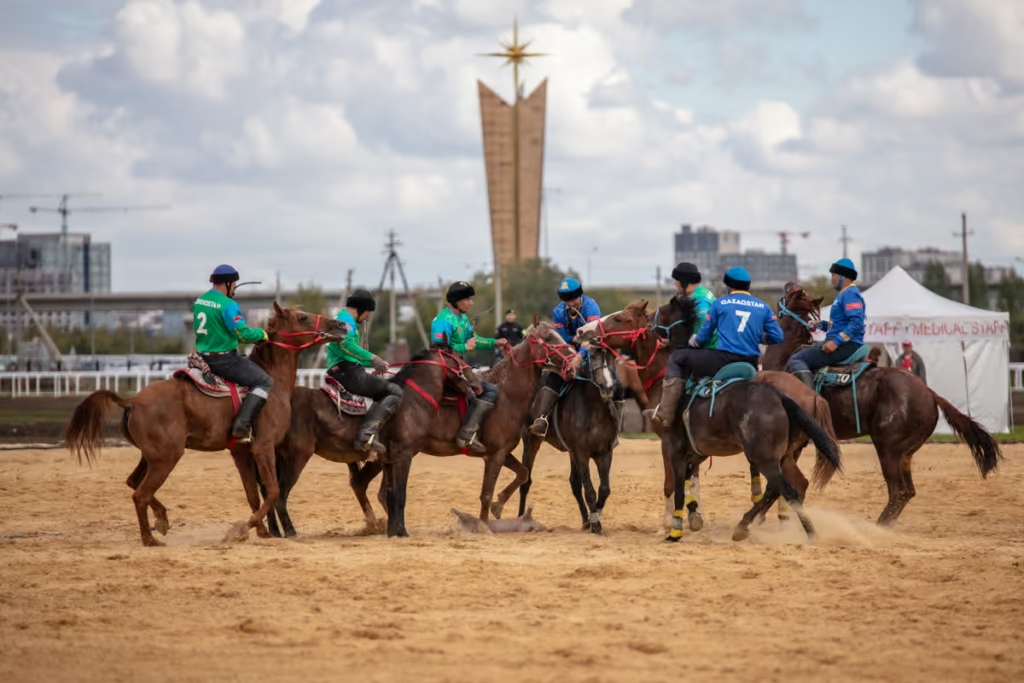
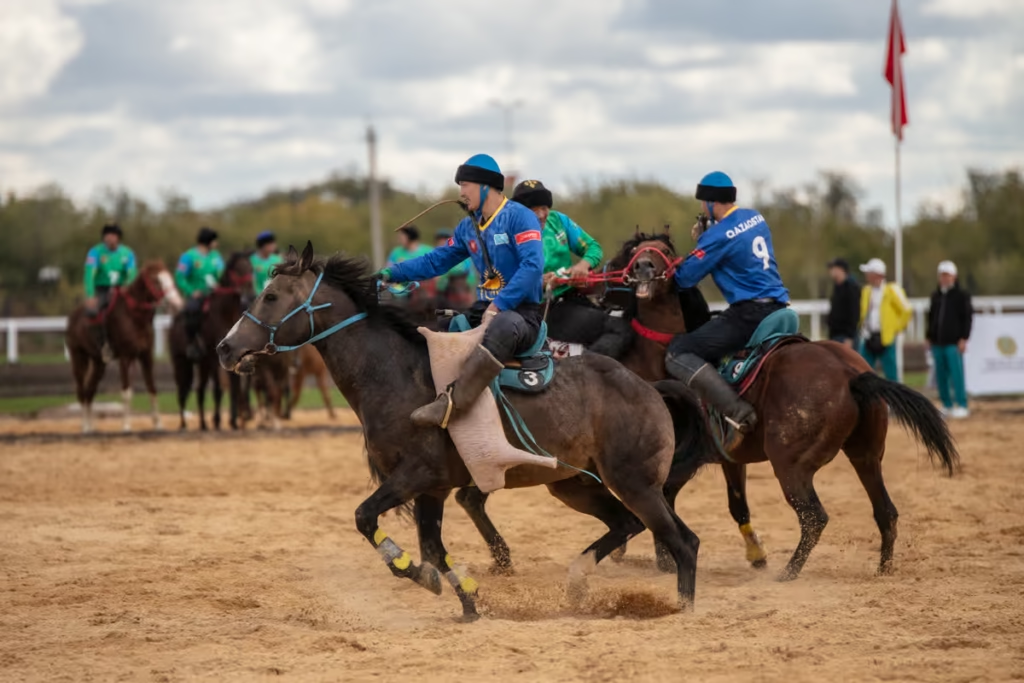
Kok Boru / Kok Par / Buzkashi: Known as Kok Boru in Kyrgyzstan, Kok Par in Kazakhstan, and Buzkashi in Tajikistan and Afghanistan, is the pinnacle competition of the World Nomad Games (albeit, the three sports do have slightly different rules despite looking quite similar to spectators).
Similar to polo, two teams on horseback compete to place a goat carcass in the opposing team’s taikazan (goal circle).
Horseback Wrestling: Horseback wrestling, also known as Er Enish in Kyrgyzstan and Audaryspak in Kazakhstan, is a traditional nomadic sport where two riders compete to unseat each other from horseback.
The wrestlers, while riding their horses, use strength, balance, and technique to grab, push, or pull their opponent off their horse.
The goal is to throw the other rider to the ground, and the one who stays on their horse wins.
Horseback Archery: Combining precise marksmanship with expert horsemanship, archers shoot arrows at a target on horseback at full gallop.
Horseback Archery is a traditional sport practiced historically throughout Central Asia and Europe for training in hunting and warfare.
Baige: An endurance sport, Baige is a traditional long-distance horse race popular in Central Asia. Baige at World Nomad Games takes place on an 18 kilometer course.
Tenge Ilu: Demonstrating riding skills and dexterity, riders will lean off the side of their galloping horse without losing balance while the rider picks up coins from the ground.
Games of Strength
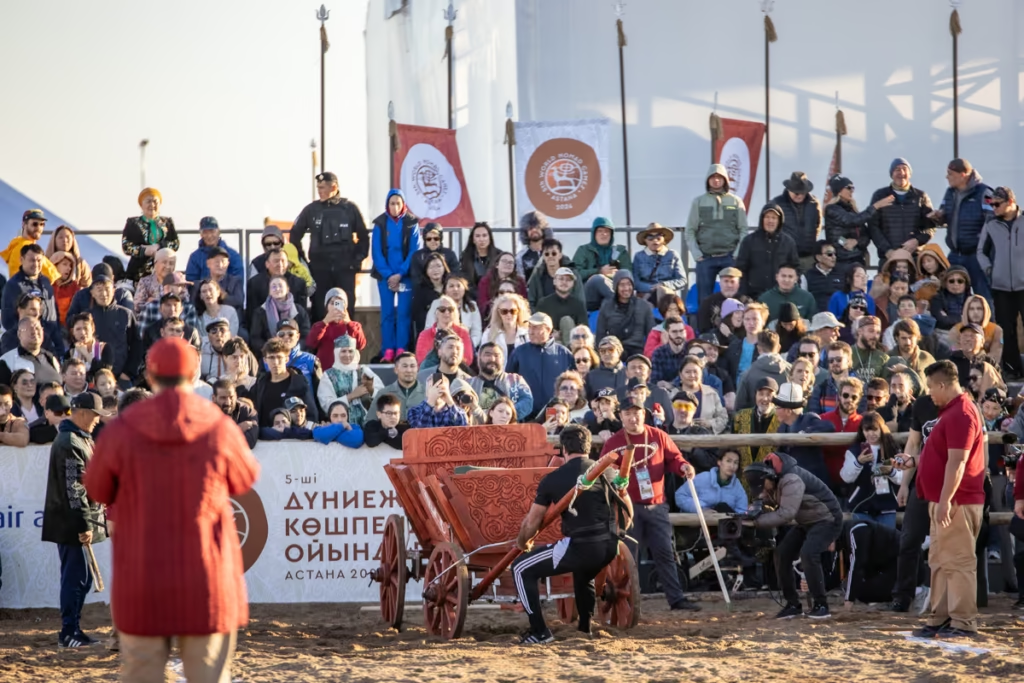
Kurash: The aim of the game of Kurash is from a standing position to throw your opponent to the ground without using leg holds. Only throws and sweeps are allowed.
Mas-Wrestling: In Mas-Wrestling, opponents sit on opposite sides, facing each other, gripping a stick. To win, the mas-wrestler must pull the stick from their opponent’s hands or pull them to their side with the stick.
The name mas-wrestling originates from Yakutia but the sport is popular throughout the Arctic. I grew up playing mas-wrestling in Alaska as it was part of the Native Youth Olympics where we called it the stick pull.
Tug of War: A sport many grew up playing regardless of location. In Tug of War, two teams pull on a rope, trying to drag the other team across a line.
Qazaq Kuresi: Another form of wrestling, Qazaq Kuresi is a traditional wrestling form that originates from Kazakhstan. The wrestling must be conducted while standing and throws can only be done by grabbing belts, clothing, arms, or their opponent’s torso.
Strong Nomad: In the Strong Nomad competition, competitors must display feats of strength in five disciplines. These five disciplines are:
- Carrying a 100 kilogram stone 10 meters
- Sqats using a 100 kilogram bag
- Squats while carrying a 130 kilogram log over the shoulders
- Throwing a 10 kilogram javelin toward a target placed 10 meters from the competitor
- Pulling a 200 kilogram Arba (cart) 10 meters
Alysh: A traditional belt wrestling sport that originates from Kyrgyzstan.
In Alysh, fighters attempt to grab their opponent’s belt and throw them onto their back.
Koresh: Popular throughout the Turkic-speaking world, Koresh is another form of belt wrestling in which competitors try to toss each other to the ground while holding onto their opponent’s belt.
Ashyrtmaly Aba Gureshi: Ashyrtmaly Aba Gureshi is a Turkish style of belt wrestling, Similar to Koresh.
Games of Skill
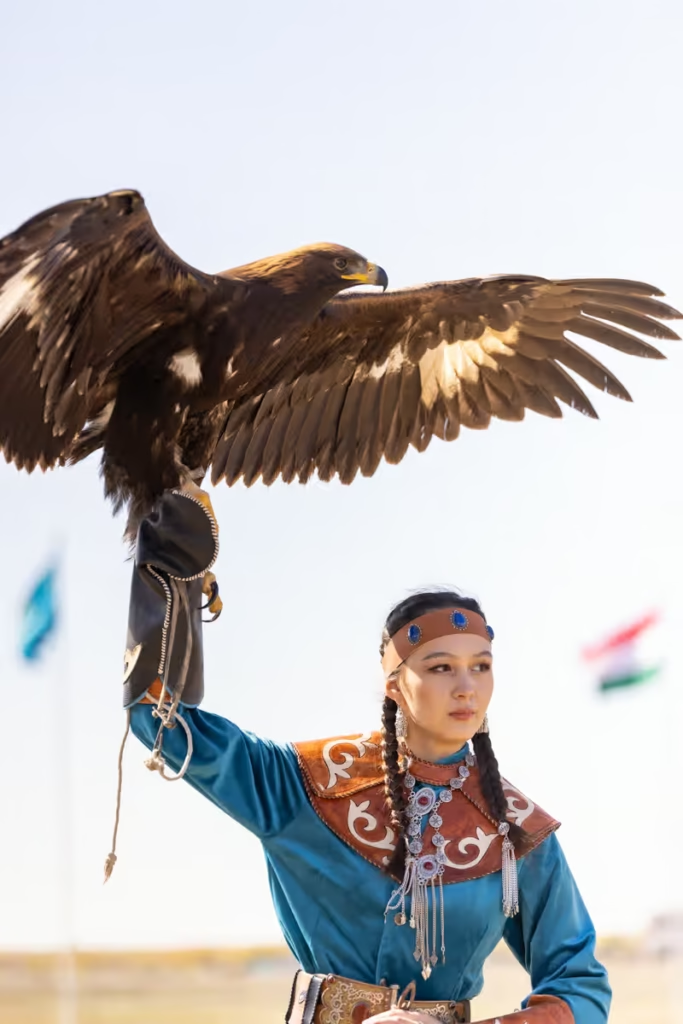
Kusbegilik: Kusbegilik encompasses various sports using birds of prey. The three Kusbegilik sports played at the World Nomad Games include:
- Burkit: hunting with a golden eagle
- Karshyga: hunting with a hawk
- Itelgi: hunting with a falcon
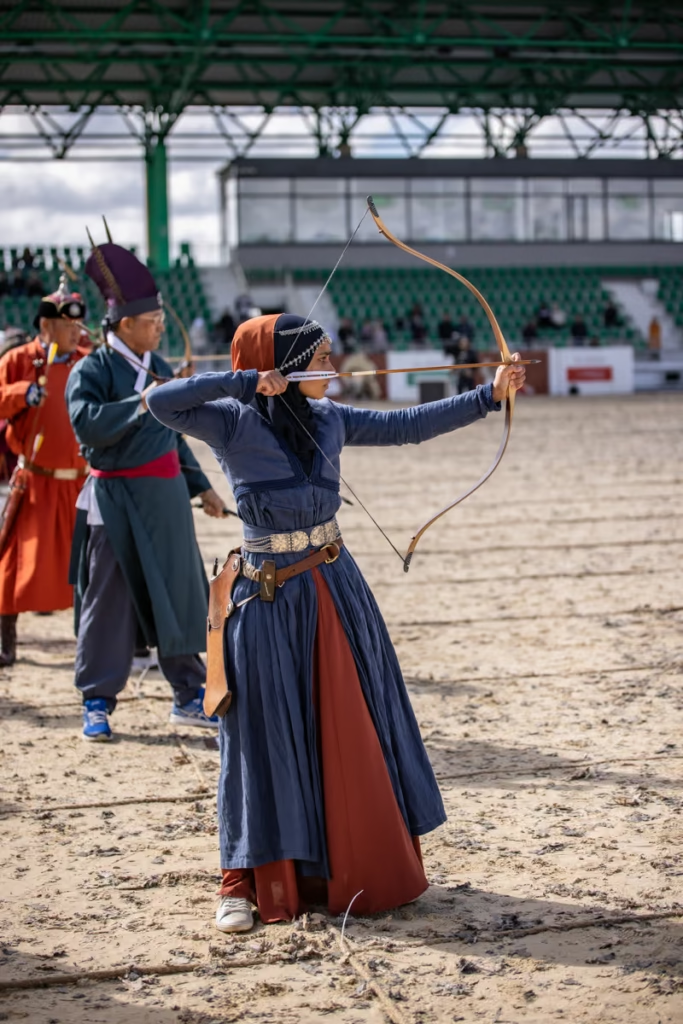
Traditional Archery: Several competitions of traditional archery take place at the World Nomad Games. Participants use conventional bows to shoot targets at various distances.
Ordo: Taking place in a 12 meter circle, Ordo is a strategic game in which players try to knock over sheep vertebrae using a small stone.
A team game played on a circular field where participants try to knock over pieces arranged in the center using a throwing stone.
Asyk Atu: A traditional game played throughout Central Asia that involves tossing asyks (knucklebones of sheep) at the asyks of their opponent with the intent to knock them out of the circle.
Games of Strategy
Togyzkumalak (Toguz Korgool): In the traditional Central Asian board game of Togyzkumalak (also known as Toguz Korgool), players attempt to gather the most pebbles by moving them between kazan (holes) on a board.
Mangala: A game of strategy, Mangala is an ancient Turkish board game played on a wooden board with pits in which players use small stones (or other small objects) as pieces. The Mangala players aim to collect as many of these pieces as possible.
Oware: Originating from West Africa, Oware is a board game with six holes in two rows in which players move small stones around in hopes of collecting more stones than their opponent.
What Else Happens at the World Nomad Games?
The World Nomad Games are about much more than sporting competitions. Alongside the athletic events, the games feature cultural festivals celebrating the traditions and heritage of nomadic peoples.
Depending on the host country and edition, visitors may encounter traditional music and dance performances, demonstrations of handicrafts, traditional cuisine, yurt displays, and exhibitions showcasing nomadic lifestyles.
The Ethno-aul ‘cultural village‘ is often one of the most interesting places to explore between competitions. Here, visitors can learn about traditional clothing, crafts, music, food, and the construction of traditional dwellings.
There are also cultural performances and demonstrations that provide insight into the history and traditions of the participating countries.
If you’re attending the World Nomad Games, I’d recommend leaving enough time to explore the cultural program rather than spending the entire visit watching sporting events.
Where Have the World Nomad Games Been Held?
Kyrgyzstan hosted the first three editions of the World Nomad Games in Cholpon-Ata, on the northern shore of Issyk-Kul Lake. The country hosted the sixth edition in 2026, with the opening ceremony in Bishkek and the main program in the Issyk-Kul region.
Kyrgyzstan is a fitting home for the games, given its strong nomadic traditions and the importance of horses, traditional wrestling, eagle hunting, and other cultural practices.
Türkiye (2022)
The fourth edition was held in Iznik, Türkiye, in 2022. This was the first time the games were hosted outside Kyrgyzstan and brought together delegations from more than 100 countries.
Kazakhstan (2024)
The fifth edition took place in Astana, Kazakhstan, from September 8 to 13, 2024. It was the first edition held in a major metropolitan city rather than a smaller lakeside destination.
I attended the 2024 edition in Astana, which was an interesting contrast to the 2018 games in Cholpon-Ata.
Russia (2028)
The seventh World Nomad Games are expected to take place in Kazan, in Russia’s Republic of Tatarstan, in 2028. This will be the first time Russia hosts the event.
Kazan is an interesting choice given Tatarstan’s Turkic heritage and its historical connections to the wider Eurasian steppe. Dates and venues have not yet been announced.
How to Attend the World Nomad Games
Attending the World Nomad Games is a great opportunity to experience traditional Central Asian sports and culture firsthand. However, planning your trip requires a little research, particularly because the host country and competition venues change between editions.
If you’re planning to attend the 2028 World Nomad Games in Kazan, Russia, here are a few things to consider:
- Follow official announcements: Keep an eye on the official World Nomad Games website for confirmed dates, competition venues, ticket sales, and the event schedule.
- Book accommodation early: Once the dates are announced, I’d recommend arranging accommodation well in advance. Major international events can put pressure on local accommodation availability.
- Research transportation: Competition venues may be spread across multiple locations. Check how to get between the main sporting venues, cultural events, and your accommodation before arriving.
- Allow time for cultural events: Don’t limit your visit to the sporting competitions. Traditional performances, food, crafts, and cultural demonstrations are an important part of the World Nomad Games experience.
- Learn about the sports beforehand: Some competitions have rules that aren’t immediately obvious to spectators. Knowing a little about kok boru, Er Enish, and traditional wrestling will make watching the games much more enjoyable.
My Experience Attending the World Nomad Games
I’ve been fortunate enough to attend two editions of the World Nomad Games: the 2018 games in Cholpon-Ata, Kyrgyzstan, and the 2024 games in Astana, Kazakhstan.
The two experiences were quite different. In 2018, the games took place in Cholpon-Ata, a small town on the northern shore of Issyk-Kul Lake, surrounded by mountains and traditional Kyrgyz landscapes. The setting felt particularly appropriate for an event celebrating nomadic heritage.
By 2024, the games had moved to Kazakhstan’s modern capital, Astana. Hosting the event in a major city gave the games a different atmosphere, with large sporting venues and an international crowd.
What I particularly enjoy about the World Nomad Games is the variety. One minute you’re watching an intense kok boru match with riders fighting for control of the ulak, and the next you’re watching an eagle hunter demonstrate the relationship between a hunter and their bird of prey.
The games are also a great introduction to Central Asian culture for anyone unfamiliar with the region. Even if you’re not particularly interested in sports, there’s plenty to appreciate in the traditional music, clothing, food, crafts, and cultural performances.
I’d love to attend another edition, particularly now that the games are heading to Kazan in 2028.
Is It Worth Attending the World Nomad Games?
The World Nomad Games are unlike most international sporting events. Rather than focusing on mainstream sports, they celebrate traditional competitions and cultural practices that have been passed down through generations of nomadic communities.
Having attended the 2018 games in Kyrgyzstan and the 2024 edition in Kazakhstan, I can say they’re a particularly interesting way to experience Central Asian culture. From the intensity of kok boru to the skill involved in traditional eagle hunting, there’s always something happening that you probably won’t see anywhere else.
The next edition in 2028 will bring the games to Kazan, Russia, offering another opportunity to experience this unusual international sporting and cultural festival.
Whether you’re interested in traditional sports, Central Asian history, or simply looking for something different to experience while traveling, the World Nomad Games are well worth adding to your itinerary.
Have any questions about the World Nomad Games?
Ask in the comments section below.
Posts from Central Asia
Qala i khumb Travel Guide
Best Places to Stay in Dushanbe
Eastern Pamir Travel Guide
How to Get to Burana Tower & Tokmok Animal Market
Shahrisabz Travel Guide: 7 Best Things to Do
Soviet Osh: Architecture & Mosaics
World Nomad Games: Complete Guide

8 Unique & Cheap Summer Destinations for 2027
Qarshi Travel Guide: 8 Best Things to Do
20 Off the Beaten Path Destinations in Asia
Bozzhyra, Kazakhstan: Complete Travel Guide
Tashkent Metro: A Complete Guide
Samarkand Travel Guide: 14 Best Things to Do
Khorog Travel Guide: Things to Do & Tips
Zorkul Travel Guide
Termez Travel Guide
10 Reasons To Visit Tajikistan

Vegetarian in Central Asia
Ishkashim Border Crossing
Uzbekistan Travel Guide: Everything to Know
Best Road Trips in the World
Bukhara Travel Guide: 19 Best Things to Do
Tajik Wakhan Valley: Complete Travel Guide
East Kazakhstan Travel Guide: 15 Best Things to Do
Tashkent Travel Guide: 18 Best Things to Do
Central Asian Food: 31 Dishes & Drinks to Try
Aralsk-7: Visiting the Soviet Bioweapons Lab
Kyrgyzstan Travel Guide: Plan Your Trip
Women’s Travel in Afghanistan
Bartang Valley Travel Guide
Lake Sarez Travel Guide: Trek & Permits
Yagnob Valley Trekking & Travel Guide
17 Best Things to Do in Tajikistan
Kyrgyzstan SIM Card & eSIM Guide
Uzbekistan-Afghanistan Border Crossing at Hairatan
Kazakhstan Travel Guide: Things to Know
Tajikistan Visa Guide: E-Visa, Fees & GBAO
Turkmenistan-Kazakhstan Border Crossing
Khujand Travel Guide: 11 Best Things to Do
Aktau Travel Guide: Things to Do
Karakalpakstan Travel Guide

Madiyan Hot Springs, Tajikistan
Murghab Travel Guide
Hisor Fortress, Tajikistan: How to Visit
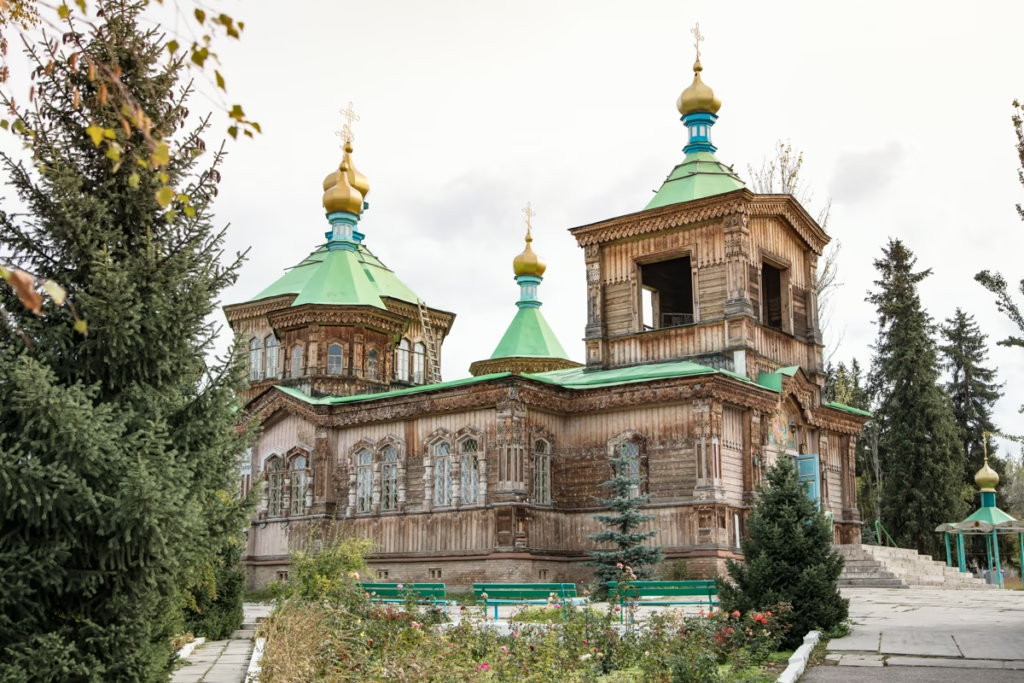
Karakol Travel Guide: Top Things to Do
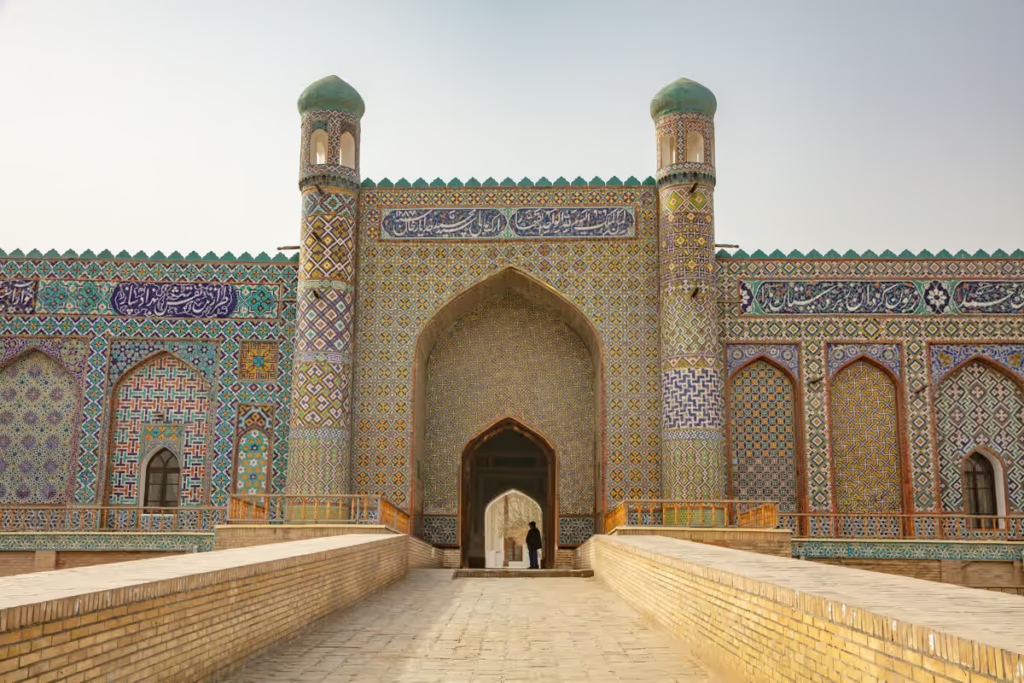
Uzbek Fergana Valley Travel Guide
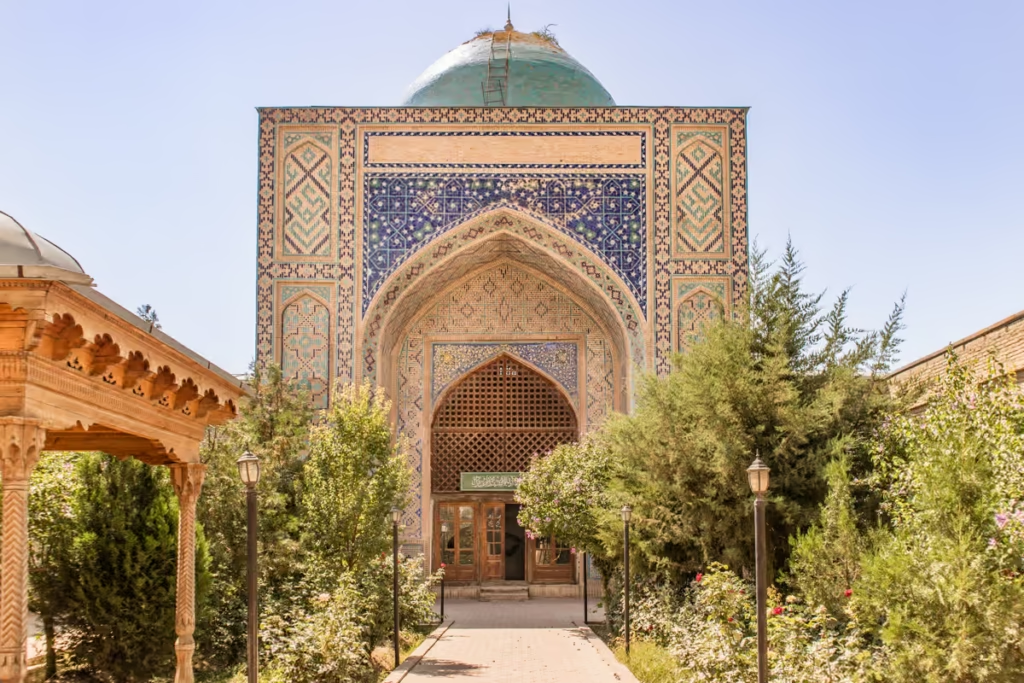
Istaravshan Travel Guide: 10 Things to Do
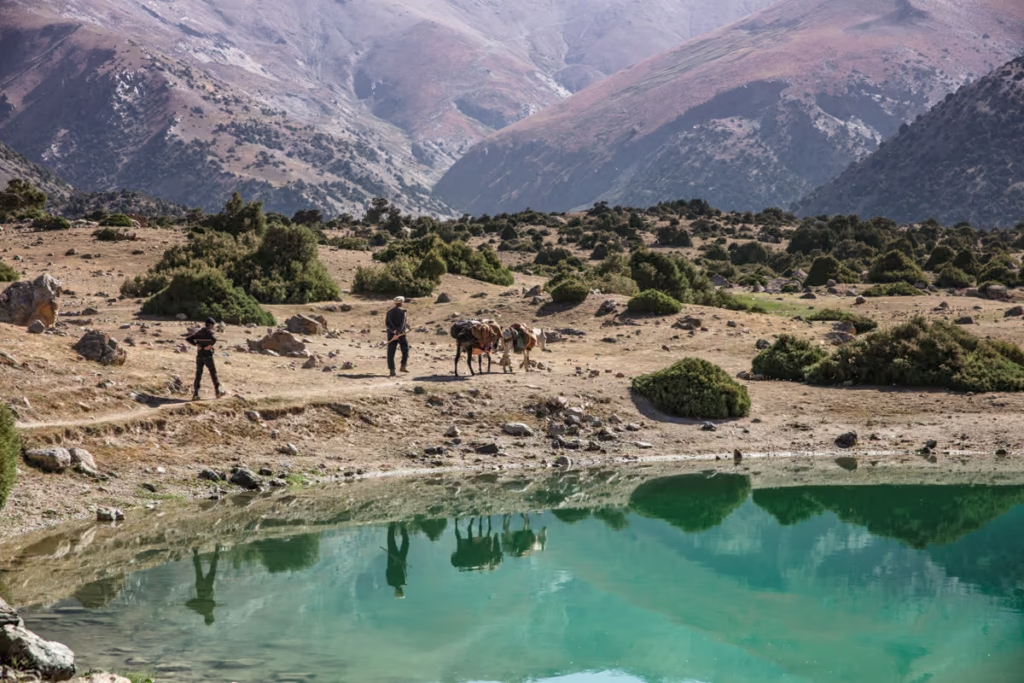
Tajikistan Itinerary: 1-4 Weeks
Two Week Uzbekistan Itinerary: 14 Days