Turkestan: A Complete Travel Guide
Turkestan: A Complete Travel Guide was originally published in October 2026
On a dreary November day, I boarded a marshrutka from nearby Shymkent and headed south toward Turkestan, Kazakhstan, one of the country’s most historically important cities.
Turkestan was a major stop along the Silk Road and became one of Central Asia’s most important centers of Islamic and Sufi culture. Today, the city is best known for the enormous Mausoleum of Khoja Ahmed Yasawi, a UNESCO World Heritage Site and one of the finest surviving examples of Timurid architecture.
But there is more to Turkestan than one spectacular mausoleum. Around the historic core you’ll find underground mosques, medieval monuments, old city walls, museums, bazaars, and a decidedly modern side of the city that has emerged as Kazakhstan invests heavily in tourism.
If you’re planning a trip to Turkestan, this guide covers the best things to do in Turkestan, how to get there from Shymkent, where to stay, where to eat, the best time to visit, and practical tips for exploring the city.
Need Travel Insurance and Evacuation Services?
Start shopping for travel insurance plans over at IATI Insurance. Readers of the Adventures of Nicole get a 5% discount off your plan.
The Adventures of Nicole partners with Global Rescue to offer the world’s leading medical evacuation and security advisory services. To travel with peace of mind, explore their evacuation coverage.
- Turkestan Travel Tips
- Best Time to Visit Turkestan
- How Many Days Do You Need in Turkestan?
- Why Visit Turkestan?
- Where to Stay in Turkestan
- How to Get to Turkestan from Shymkent
- Best Things to Do in Turkestan, Kazakhstan
- Where to Eat in Turkestan
- One Day in Turkestan Itinerary
- Best Day Trips from Turkestan
- Why You Should Visit Turkestan
Turkestan Travel Tips
- Currency: Kazakhstan uses the tenge (KZT). Cards are widely accepted at hotels, restaurants, and larger attractions, but carry cash for markets, smaller shops, and local transport.
- Language: Kazakh and Russian are the main languages you’ll encounter. English is less widely spoken, particularly outside hotels and tourist attractions.
- Dress: Turkestan is an important Islamic pilgrimage destination, so dress respectfully when visiting mosques and religious sites. Cover shoulders and knees and follow any signs or instructions at individual monuments.
- Summer heat: Turkestan can get seriously hot, with summer temperatures regularly climbing above 35°C. Plan outdoor sightseeing for the morning or evening during the hottest months.
- Winter: November through March can be cold and windy. I visited in November and found the gray weather gave the city a completely different atmosphere from the sun-soaked images you usually see online.
- Internet: Wi-Fi is common in hotels and restaurants. A local SIM or eSIM is useful if you’re traveling around Kazakhstan.
- Mosques and pilgrimage sites: Be prepared for a more conservative atmosphere around the Yasawi complex than you might encounter in Almaty or Astana.
- Cash: Cards are increasingly accepted, but keep some cash for bazaars and marshrutkas.
- Entry Fees: Entry to the entire Azret Complex in Turkestan is 1000₸ for locals, 1500₸ for citizens of neighboring nations, and 2000₸ for foreigners. See the pricelist and info here.
Best Time to Visit Turkestan
The best time to visit Turkestan is spring and autumn, particularly April-May and September-October, when temperatures are much more comfortable for walking around the city’s historic sites.
Turkestan has a dry, semi-arid climate, and summer can be brutally hot. July is the hottest month, with average highs around 34-36°C, making midday sightseeing considerably less fun than it sounds on paper.
Spring brings mild weather and greener landscapes, while September and October offer cooler temperatures and comfortable conditions for exploring the archaeological sites around Turkestan.
Summer: Hot and very sunny. Visit the major monuments early in the morning or later in the afternoon.
Autumn: One of my favorite times to visit. September and October bring much more comfortable sightseeing conditions.
Winter: Cold, windy, and quieter. If you don’t mind the chill, you’ll have fewer tourists and a very different view of Turkestan.
Spring: A good combination of comfortable temperatures and fewer crowds.
How Many Days Do You Need in Turkestan?
You can see the highlights of Turkestan in one day, although I’d recommend staying one night if your schedule allows.
A one-day Turkestan itinerary gives you enough time to visit the Mausoleum of Khoja Ahmed Yasawi, explore the surrounding historic monuments, visit the underground mosque, see the museum, and wander through the modern Karavan Saray complex.
With two days in Turkestan, you can explore at a slower pace and add nearby historical sites such as the ancient city of Sauran.
I’d personally recommend one night in Turkestan if you’re traveling through southern Kazakhstan. The city feels noticeably different after the day-trippers leave.
Why Visit Turkestan?
Turkestan is one of the best places in Kazakhstan to experience the country’s Silk Road history and Islamic heritage.
The city’s main attraction is the Mausoleum of Khoja Ahmed Yasawi, built under Timur between 1389 and 1405. The unfinished Timurid monument is now a UNESCO World Heritage Site and is considered one of the largest and best-preserved surviving buildings of its period.
But the reason I think Turkestan deserves a place on a Kazakhstan itinerary is the combination of old and new. One minute you’re standing beneath centuries-old turquoise domes, and the next you’re walking through a massive new tourist complex complete with canals, restaurants, shops, and entertainment.
Turkestan is also an easy addition to a southern Kazakhstan itinerary. You can travel from Almaty to Shymkent and Turkestan, continue onward toward Uzbekistan, or use Turkestan as a base for exploring other historic sites in the region.
Where to Stay in Turkestan
Most accommodation in Turkestan is concentrated around the city center and newer tourist developments. Staying near the historic center makes it easy to visit the Yasawi Mausoleum early in the morning before the main crowds arrive.
- Hotel Edem: Clean, central, budget-friendly with AC for those summer scorchers.
- Rixos Turkestan: For a comfortable splurge with a pool, spa, and excellent breakfast.
- Hotel Khanaka: Simple rooms but steps from the mausoleum, perfect for sunrise wanderers.
- Yassi Hostel: If you’re on a tight backpacker budget, this hostel offers capsule dorm beds with a communal vibe.
How to Get to Turkestan from Shymkent
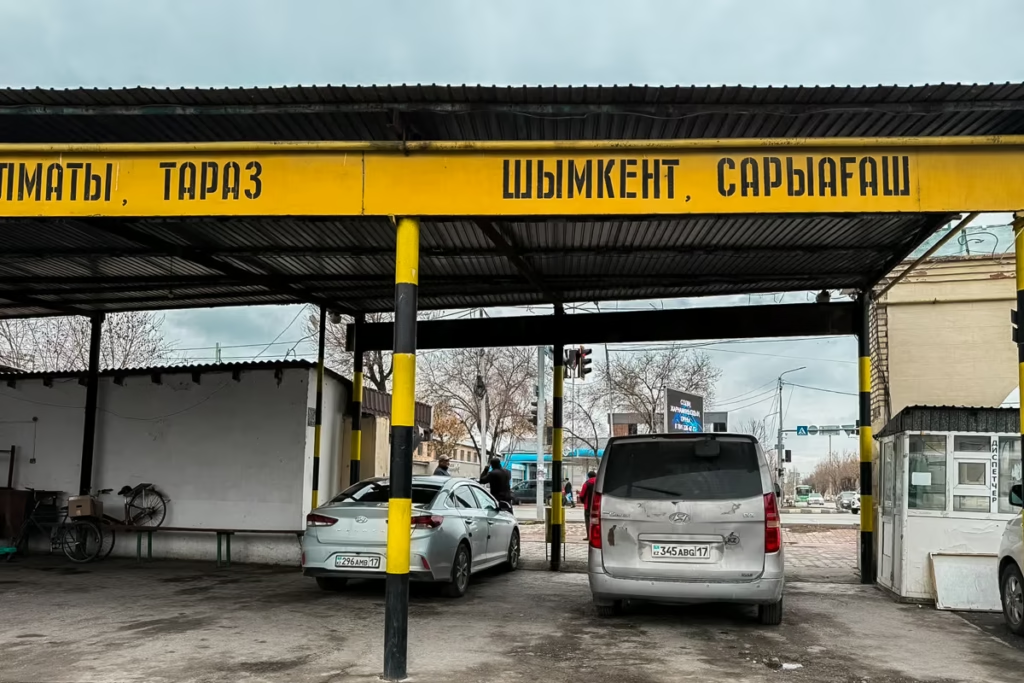
Shymkent is the easiest starting point for traveling to Turkestan by public transport, with the two cities roughly 170 km apart.
Marshrutka from Shymkent to Turkestan
Head to Samal Bus Station in Shymkent and look for marshrutkas heading to Turkestan. Services generally depart once they fill up rather than following a strict timetable.
Expect the journey to take around 2.5 hours, depending on traffic.
This is the option I’d recommend if you’re traveling Kazakhstan overland and want the local experience. It isn’t glamorous, but that’s kind of the point. You’re sharing the ride with locals and watching the landscape transition into the broad, dry steppe.
Cost: Approximately 1,500-2,000 KZT.
Journey time: Around 2.5 hours.
Departure: Samal Bus Station, Shymkent.
Train from Shymkent to Turkestan
You can also travel from Shymkent to Turkestan by train. Check current departures and fares through Kazakhstan’s national railway system before traveling, as schedules change. The train takes 3-4 hours.
You can buy tickets at the station or online at railways.kz. There are multiple daily departures, and it’s comfy with epic steppe views that make you feel like you’re in your own slow-travel movie.
The train is a more comfortable option if you’re carrying larger bags or simply don’t fancy waiting for a marshrutka to fill.
Getting to Turkestan from Almaty or Astana
If you’re coming from Almaty or Astana, flying or taking a long-distance train is generally more practical than routing through Shymkent by road. Turkestan is best treated as part of a wider southern Kazakhstan itinerary rather than a quick hop from the country’s northern cities.
Best Things to Do in Turkestan, Kazakhstan
Most of the best things to do in Turkestan are clustered around the historic center, meaning you can see many of the city’s major sights on foot. Give yourself at least half a day for the Yasawi Mausoleum and surrounding Azret Sultan complex, then use the rest of your time to explore the city’s museums, mosques, bazaar, and newer attractions.
The Mausoleum of Khoja Ahmed Yasawi
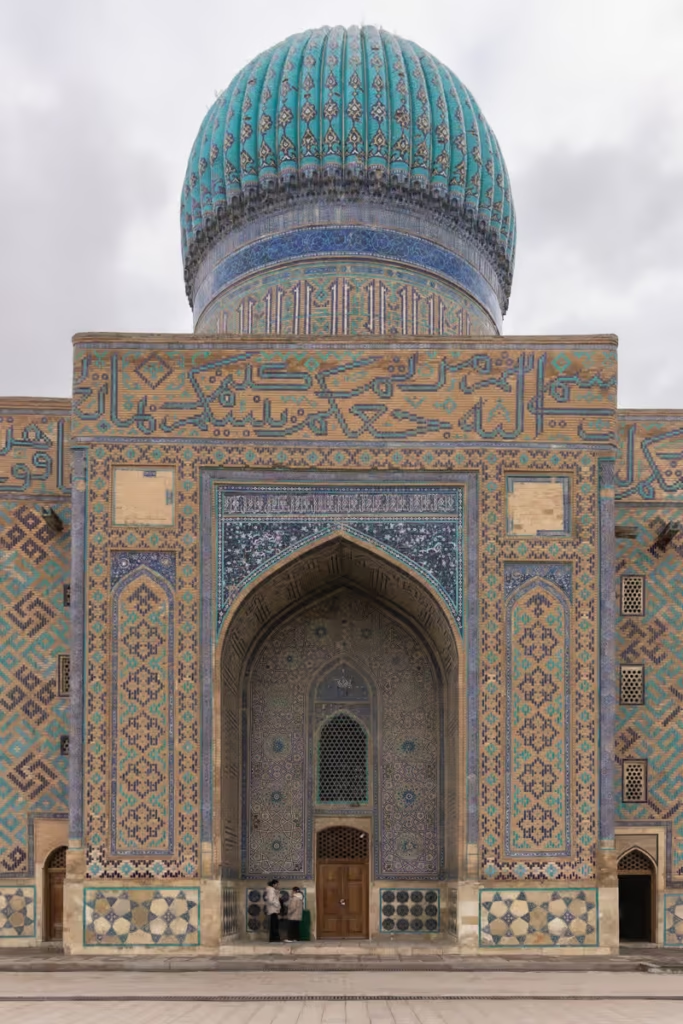
The Mausoleum of Khoja Ahmed Yasawi is the undisputed highlight of Turkestan and the first place I would visit in the city.
Built between 1389 and 1405 on the orders of Timur, the mausoleum was constructed over the tomb of Khoja Ahmed Yasawi, a 12th-century Sufi master whose teachings had an enormous influence across Central Asia. Construction stopped after Timur’s death in 1405, leaving parts of the enormous complex unfinished.
Today, the mausoleum is one of the most important Islamic and historical monuments in Kazakhstan. It was inscribed on the UNESCO World Heritage List in 2003 and is considered one of the finest surviving examples of Timurid architecture.
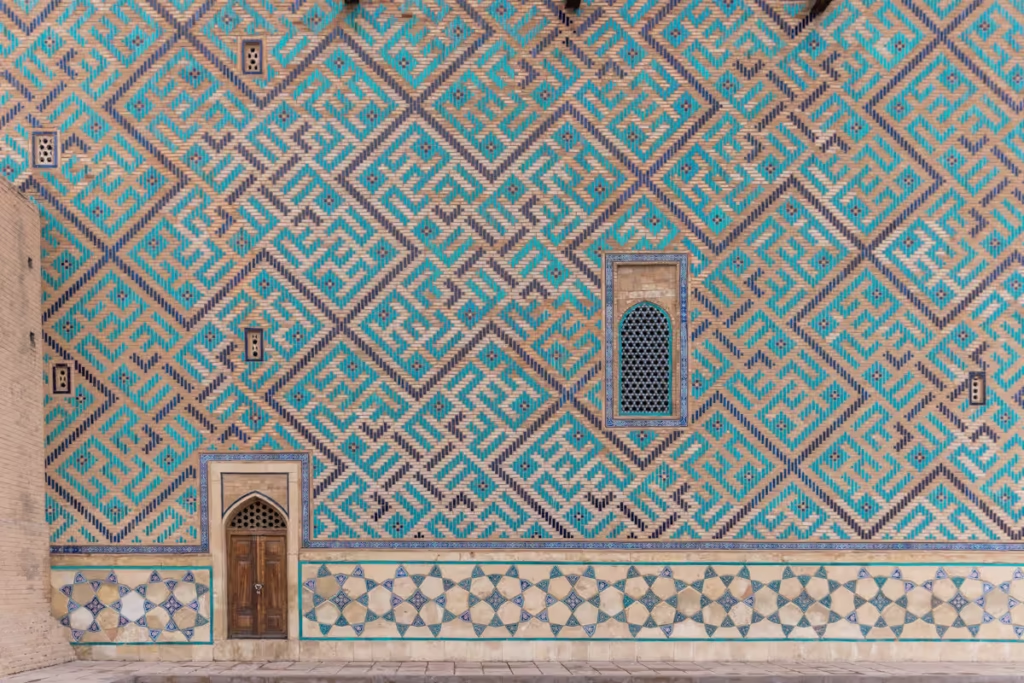
The architecture is seriously impressive. The complex contains 35 rooms, intricate glazed tilework, enormous domes, vaulted spaces, inscriptions, and the massive central Kazandyk hall. UNESCO notes that architectural solutions developed here later influenced major Timurid buildings in Samarkand.
Allow: 1-2 hours
Don’t miss: The massive central dome, tilework, mausoleum interior, and surrounding historic complex.
The Mausoleum of Rabia Sultan Begum
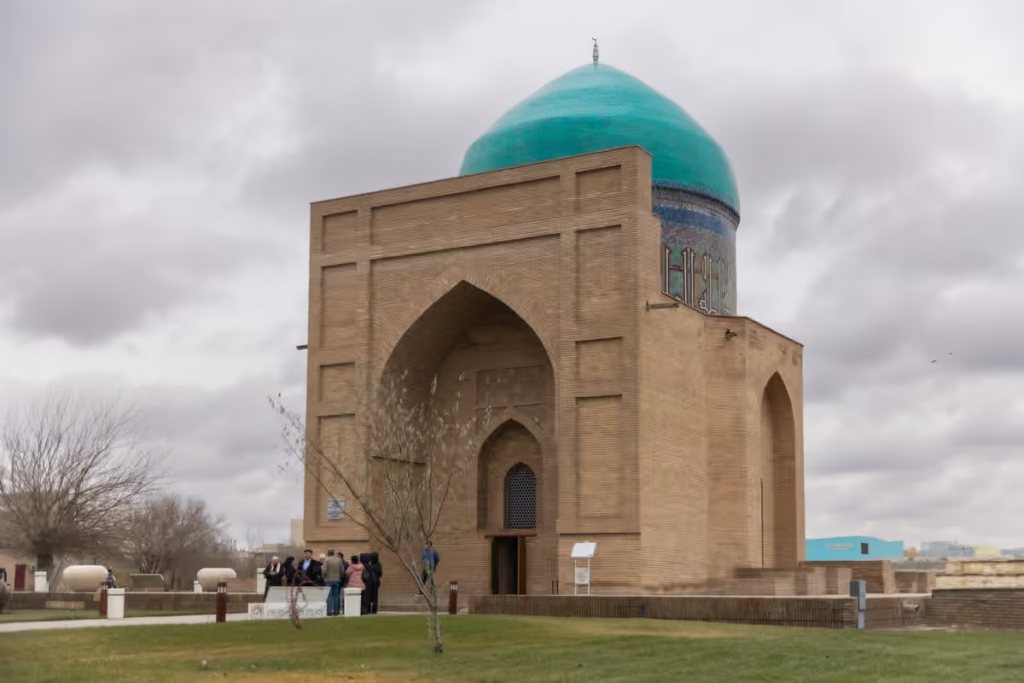
Just southeast of the Yasawi Mausoleum stands the Mausoleum of Rabia Sultan Begim, another important monument in Turkestan’s historic center.
Rabia Sultan Begim was a Timurid princess and the daughter of astronomer Ulugh Beg and his fourth wife of Abulkhair Khan. The mausoleum dates to the late 15th century, although the original structure was later lost and reconstructed.
Originally built in the late 15th century, the structure fell into disrepair and was demolished in 1896, later reconstructed in the 1980s to emulate its original octagonal‑dome form. Today, it comprises five interconnected rooms with a turquoise dome crowning its brick façade.
The turquoise-domed brick monument is much smaller and less imposing than the Yasawi Mausoleum, but it’s easy to visit while exploring the surrounding historic complex.
Hilvet Underground Mosque
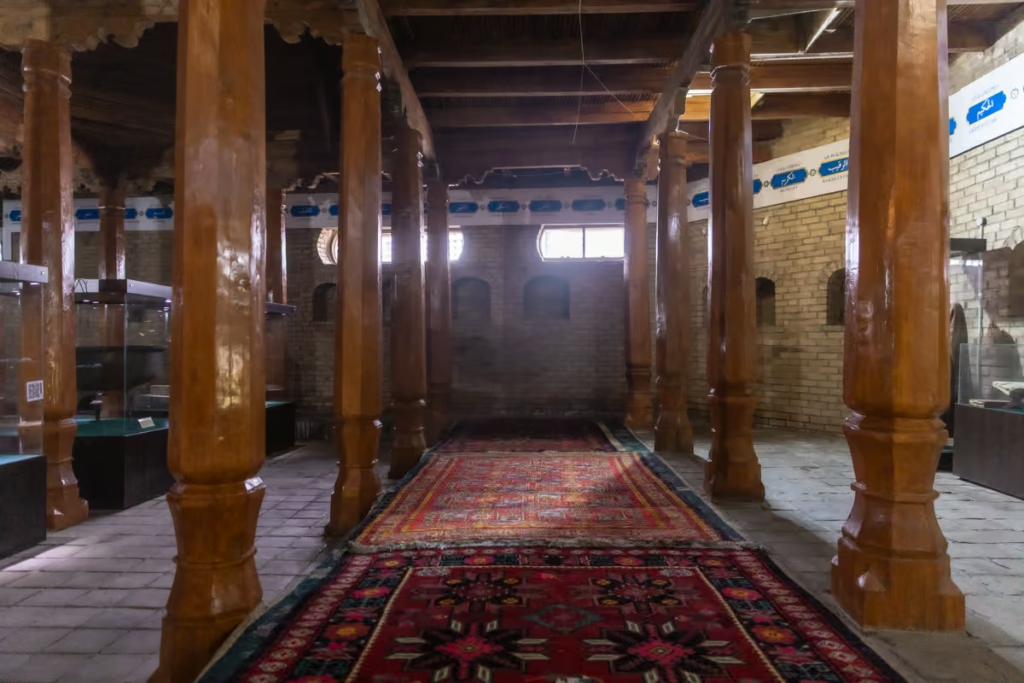
Located close to the Mausoleum of Khoja Ahmed Yasawi, the semi-subterranean complex is closely associated with the Sufi tradition of Khoja Ahmed Yasawi. According to tradition, Yasawi withdrew underground at the age of 63 and spent his later years in seclusion and prayer.
Built between the 12th and 15th centuries, this mosque contains around 18 rooms and seven doors, including prayer spaces, ritual chambers, and simple living quarters. Legend holds that Yasawi withdrew here at age 63, spending his remaining years in seclusion.
Restored in the late Soviet era, the mosque now functions as both a museum and a quiet worship site, packed with wooden columns, small skylights, models illustrating its original layout, and relics like a copper cauldron from the 12th–15th century.
Today the complex functions as a museum and religious site. Its underground rooms, wooden columns, low ceilings, and small openings feel completely different from the monumental architecture of the Yasawi Mausoleum.
Joma Mosque of Turkestan
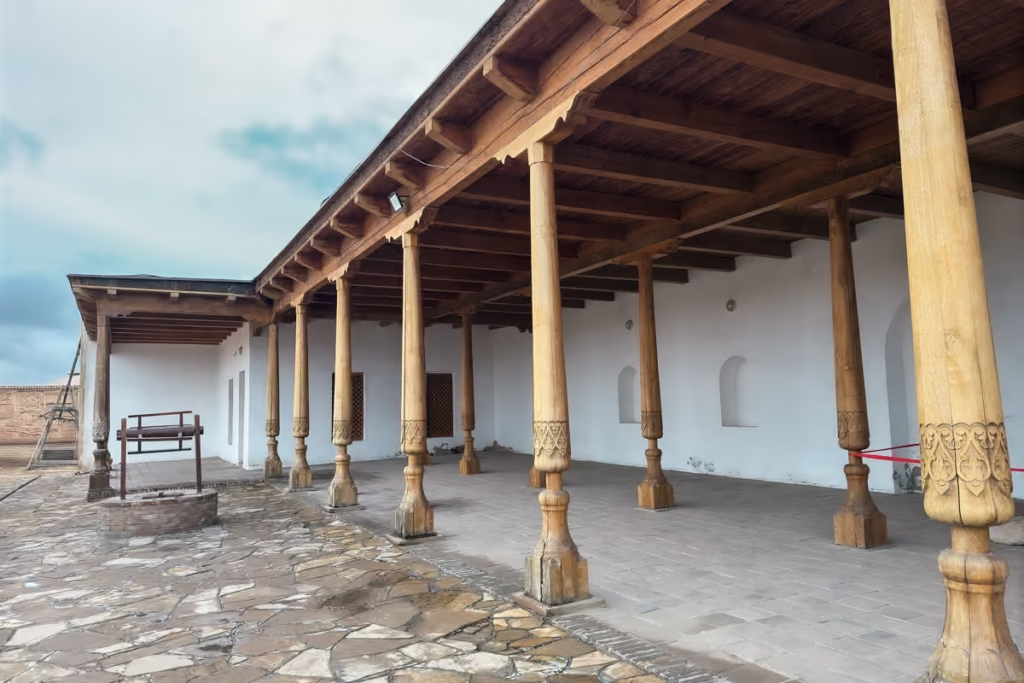
The Joma Mosque, also known as the Friday Mosque, is another historic religious site within Turkestan’s old center.
The mosque has a much quieter atmosphere than the monumental Yasawi Mausoleum, making it an interesting stop for travelers interested in the city’s religious history and historic architecture.
While not as grand as its neighboring architectural monstrosities, the Joma Mosque is a beautiful example of traditional Kazakh architecture, featuring wooden columns, whitewashed walls, and a modest central dome that gives it an understated spiritual charm.
The Azret Sultan Museum currently lists the monument as dating from the 12th-19th centuries, reflecting the site’s long history and subsequent development.
Joma Mosque is still actively used by locals for Friday prayers, making it a great place to quietly observe contemporary Islamic life in Kazakhstan.
The Hammam
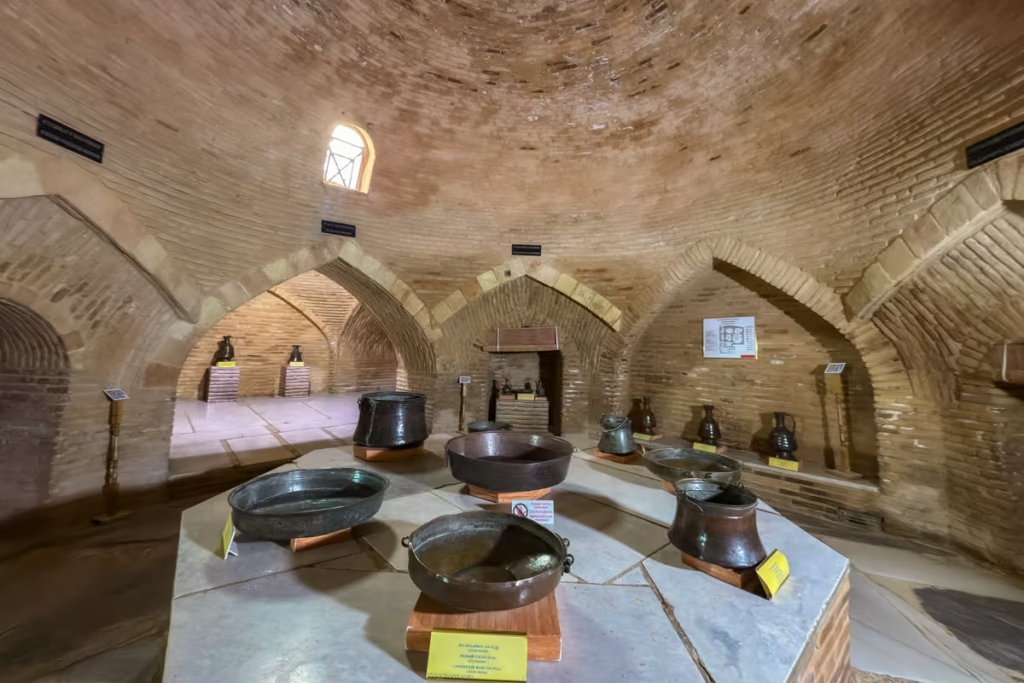
The historic Hammam in Turkestan offers a glimpse into everyday life in the medieval city. Located beside the Yasawi Mausoleum, the bathhouse was used for bathing and ritual purification during the Timurid era.
Its domed rooms were connected by a system of underground heating channels that circulated hot air beneath the floors. Today the restored hammam forms part of the Azret Sultan museum complex and can be visited as part of a walk around the historic center.
The hammam was carefully restored in recent decades and now operates as part of the Azret Sultan Museum complex. While you can’t actually bathe there anymore, the interior is open to visitors.
Wander the Ancient City Walls
Turkestan’s ancient city walls are easy to overlook when the enormous Yasawi Mausoleum is stealing the show, but they’re worth exploring if you’re interested in the city’s Silk Road history.
The walls formed part of the fortified medieval settlement of Yasi, protecting the city’s religious, political, and commercial center.
These mud-brick defenses were originally built in the 5th century and later reinforced through the medieval period, serving to protect the city’s spiritual and commercial core from nomadic raids and political upheaval.
Much of what you see today has been reconstructed, but the surviving and restored sections help illustrate the scale of historic Turkestan.
The Mosque of Khoja Ahmed Yasawi
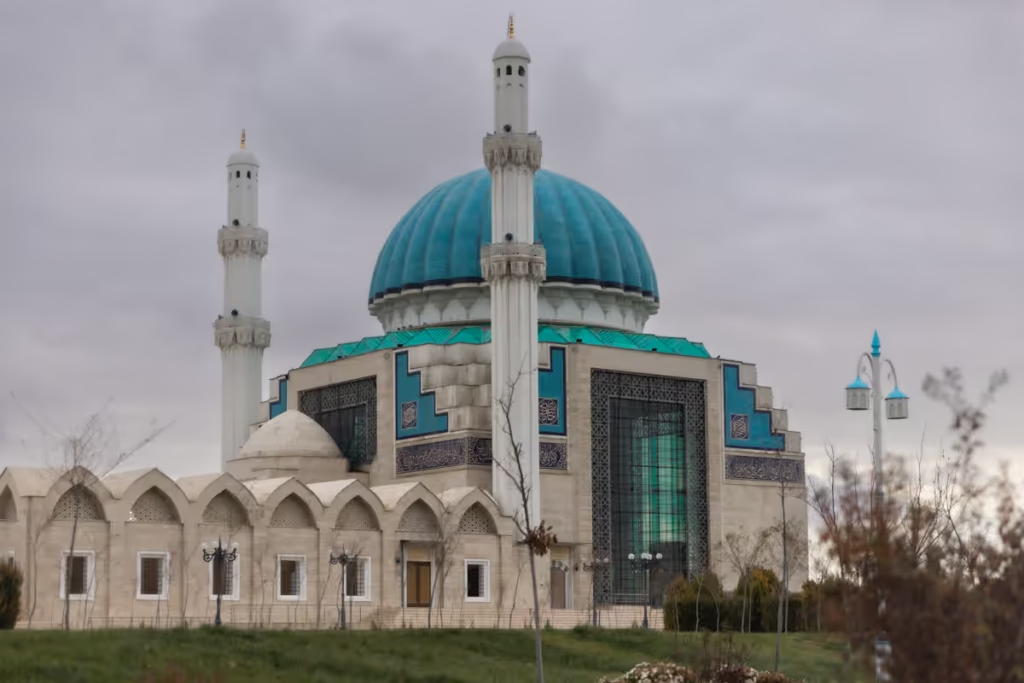
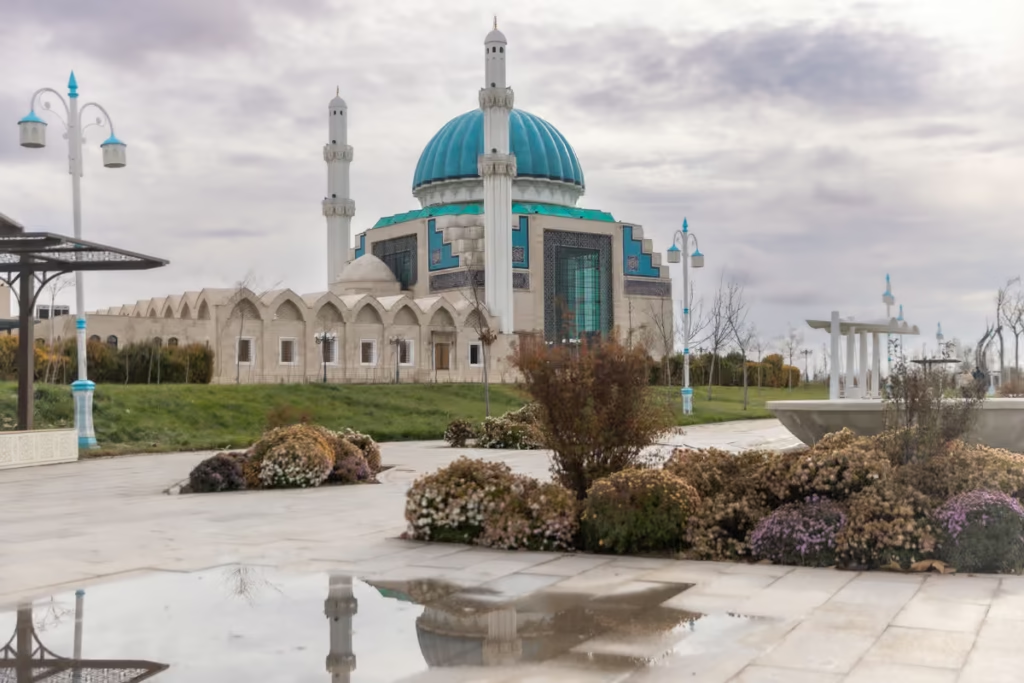
Don’t confuse this with the historic Mausoleum of Khoja Ahmed Yasawi, this mosque is a beautiful modern piece of architecture.
A short stroll from the main complex, you will find the beautiful turquoise-domed Mosque of Khoja Ahmed Yasawi. It is quite different from the other architecture you see in Turkestan, as to me it looks like a modern art-deco take on classical Timurid style.
Azret Sultan Museum
The Azret Sultan Museum is the best place to dig deeper into Turkestan’s history after visiting the Yasawi Mausoleum.
The museum complex preserves and interprets archaeological sites, religious monuments, artifacts, and the history of medieval Yasi and Turkestan. The collection helps connect the city’s architecture with the wider history of the Silk Road, Sufism, the Timurid period, and Kazakh culture.
The museum is particularly worthwhile if you’re the sort of traveler who wants context rather than simply taking photos of another enormous blue dome. And, honestly, Turkestan has enough enormous blue domes to make that distinction useful.
The official museum currently lists the Yasawi Mausoleum, Hilvet Underground Mosque, Hammam, Juma Mosque, and other historical monuments among its protected sites.
Karavan Saray Complex
Karavan Saray Turkistan is Turkestan’s modern answer to its ancient caravanserai heritage.
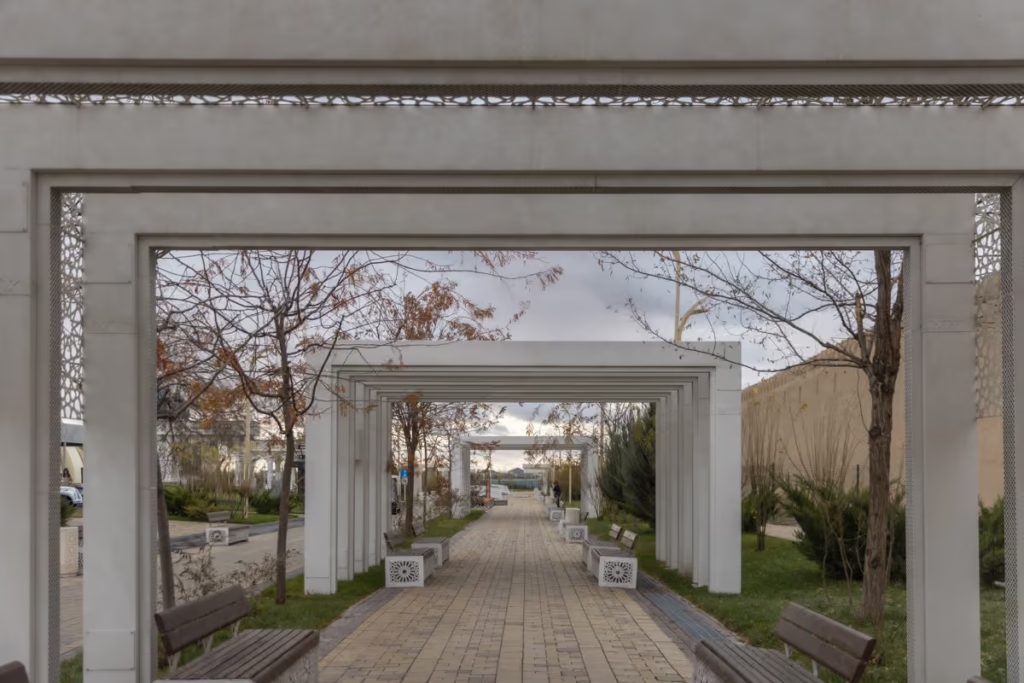
The enormous tourist complex sits near the historic center and combines hotels, restaurants, shops, entertainment, performances, and canals with a deliberately theatrical Central Asian aesthetic. The official complex advertises attractions including the Altyn Samuryk flying theater, water performances, fountain shows, shopping, restaurants, and spa facilities.
I’ll admit it is very different from the atmospheric ruins and religious monuments around the Yasawi Mausoleum. It feels more like a purpose-built tourist development than an authentic medieval caravanserai.
Turkestan Bazaar
Check out the Turkestan Bazaar for fresh fruits, spices, locally made bread, and a glimpse into daily life. It’s substantially smaller than the bazaar of Shymkent and a bit slower-paced. The Turkestan Bazaar is also a great spot to sample local Kazakh street food.
Where to Eat in Turkestan
Turkestan isn’t Kazakhstan’s biggest culinary destination, but you’ll find plenty of places serving Kazakh and Central Asian staples. For the best local experience, look beyond hotel restaurants and try a traditional cafe or the bazaar.
- Edem Restaurant: Attached to the Edem Hotel, Edem Restaurant is central and known for reliably decent plov, laghman, and shashlik.
- Cafe Baiterek: Known for fast service and solid Kazakh classics like beshbarmak.
- Turkestan Bazaar: If you’re looking for cheap eats on the go, you’ll find the usual grab-and-go Kazakh staples here, such as manti and samsa.
One Day in Turkestan Itinerary
Morning
Start at the Mausoleum of Khoja Ahmed Yasawi before the hottest part of the day. Give yourself at least an hour to explore the monument and surrounding complex.
Late morning
Visit the Hilvet Underground Mosque, Hammam, Rabia Sultan Begim Mausoleum, and other historic sites around the Azret Sultan complex.
Lunch
Stop at a local restaurant for plov, laghman, beshbarmak, or shashlik.
Afternoon
Visit the Azret Sultan Museum, then wander through the historic city walls and surrounding streets.
Late afternoon
Head to Turkestan Bazaar for snacks and a look at everyday life.
Evening
Finish at Karavan Saray Turkistan, where the city’s ancient Silk Road identity meets its shiny new tourism industry.
Best Day Trips from Turkestan
Sauran Ancient City
The ruins of Sauran are one of the most worthwhile additions to a Turkestan itinerary. The ancient fortified city was an important settlement along the Silk Road and is located roughly 40 km from Turkestan.
The enormous empty landscape around the ruins makes a striking contrast to the restored monuments in central Turkestan.
Otrar Ancient City
The archaeological site of Otrar is another important Silk Road site within reach of Turkestan. Otrar was one of the major cities of medieval Central Asia and is particularly significant for its connection to the history of the Mongol invasion and the wider Silk Road network.
Why You Should Visit Turkestan
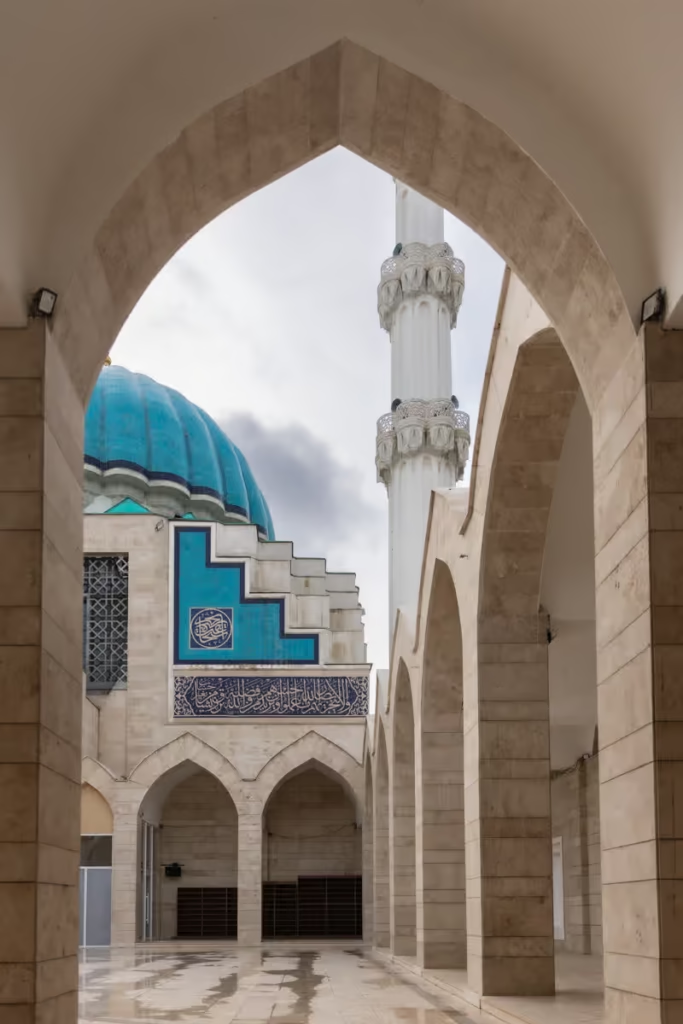
Turkestan blends spiritual heritage with Silk Road romance in a beautiful way. It’s a place where the call to prayer echoes over ancient domes, and elders sip tea under shady trees, telling stories of their heyday.
If you’re looking to continue your Silk Road travels beyond Uzbekistan’s famed Silk Road cities of Samarkand or Bukhara, and on into Kazakhstan, Turkestan deserves a place on your itinerary.
Have Any Questions About Turkestan?
Ask in the comments section below. Been to Turkestan before? Let us know your favorite sites.
Posts from Kazakhstan
Mangystau Travel Guide, Kazakhstan
3 Days in Almaty Itinerary, Kazakhstan
Turkestan: A Complete Travel Guide
Burabay National Park Guide, Kazakhstan
Solo Female Travel in Central Asia
Issyk Lake Kazakhstan: How to Visit
Astana Travel Guide: Things to Do, Where to Stay & More
Kazakhstan-Uzbekistan Border Crossing
Central Asia Travel Guide
Kaindy & Kolsai Lakes Guide, Kazakhstan
Shymkent Travel Guide: Things to Do & Places to Visit
Big Almaty Lake: How to Visit from Almaty
Charyn Canyon Travel Guide
Kazakhstan SIM Card & eSIM Guide
Kazakhstan & Kyrgyzstan Itinerary
Almaty Metro: Stations, Map & Travel Guide
Karkara Border Crossing Between Kazakhstan & Kyrgyzstan
On the Travel Radar for 2026: Kazakhstan, the Great Steppe
10 Essentials to Pack for Central Asia
A Guide to the World Nomad Games
Central Asia Travel Tips
Vegetarian in Central Asia
Central Asia Visas Guide
8 Unique & Cheap Places To Travel In Summer 2026
Turkmenistan-Kazakhstan Border Crossing
Aktau Travel Guide: Things to Do
Kazakhstan in Photos
Bozzhyra Kazakhstan
Kazakhstan Travel Guide: Things to Know
Central Asia Food & Drink
Off the Beaten Path Asia
Things to do in Almaty