Uzbekistan Travel Guide
Updated November 2026, The Uzbekistan Travel Guide was originally written in June 2018
Uzbekistan is one of the most fascinating countries to visit in Central Asia. From the grand Silk Road cities of Samarkand, Bukhara, and Khiva to the remote desert landscapes of Karakalpakstan and the artisan scene of the Fergana Valley, there is far more to the country than its famous turquoise domes and intricate Islamic architecture.
I’ve traveled extensively throughout Uzbekistan, exploring its historic cities, remote villages, ancient fortresses, and lesser-visited regions. While most visitors stick to the classic Silk Road route, there are plenty of places worth venturing further afield to experience a different side of the country.
This Uzbekistan travel guide covers everything you need to plan your trip, including the best places to visit, things to do, transportation, accommodation, travel costs, safety, and practical tips. Whether you’re visiting for a week or planning a longer Central Asian adventure, here’s what you need to know about traveling in Uzbekistan.
Need Travel Insurance and Evacuation Services?
Start shopping for travel insurance plans over at IATI Insurance. Readers of the Adventures of Nicole get a 5% discount off your plan.
The Adventures of Nicole partners with Global Rescue to offer the world’s leading medical evacuation and security advisory services. To travel with peace of mind, explore their evacuation coverage.
- Uzbekistan Practical Information
- Uzbek Food
- Accommodations in Uzbekistan
- Best Places to Visit in Uzbekistan
- Trekking in Uzbekistan
- Uzbekistan Tours
- Uzbek Festivals
- Uzbekistan Travel Budget
- What to Pack for Uzbekistan
- Internet, SIM Cards and Mobile Data in Uzbekistan
- Uzebekistan Travel Safety
- Ready to Travel Uzbekistan?
Uzbekistan Practical Information

Money in Uzbekistan
The official currency of Uzbekistan is the Uzbek Som (UZS). Cash is still useful when traveling around the country, particularly in smaller towns, rural areas, bazaars, and when paying for shared taxis or local transport.
Uzbekistan underwent a major currency reform in September 2017, when the government unified the official and unofficial exchange rates. Before then, travelers often relied on the black market to exchange foreign currency. Those days are largely over, and you can now exchange money through banks and authorized exchange offices.
ATMs are available in Tashkent and the major tourist cities of Samarkand, Bukhara, and Khiva, although availability becomes less reliable in smaller towns and rural areas. I recommend carrying some cash when traveling outside the main tourist circuit.
The Uzbek Som has undergone several currency changes over the years, including the introduction of larger banknotes. When I first visited Uzbekistan in 2016, the largest banknote was only 5,000 UZS. My bag was constantly stuffed with cash, and I could barely fit anything else inside, despite carrying the equivalent of roughly $40!
For current exchange rates, check XE.
Language in Uzbekistan
The official language of Uzbekistan is Uzbek, a Turkic language closely related to Uyghur, Kazakh, and Kyrgyz.
Russian is also widely spoken, particularly among older generations who grew up during the Soviet period. Younger Uzbeks are generally less likely to speak Russian fluently, although it remains useful in cities and when traveling around the country.
Tajik, a Persian-rooted language, is widely spoken in parts of Uzbekistan, particularly in Samarkand and Bukhara, which were historically Tajik areas. Tajik is also spoken in parts of the Uzbek Fergana Valley.
In the autonomous Republic of Karakalpakstan, Karakalpak is widely spoken. It is a Turkic language closely related to Kazakh.
English is increasingly understood in the tourism industry, especially in Tashkent, Samarkand, Bukhara, and Khiva, but you’ll find it less commonly spoken outside the main tourist destinations.
Religion in Uzbekistan
Islam is the predominant religion in Uzbekistan, with the majority of the population identifying as Muslim. Most Uzbek Muslims follow Sunni Islam, particularly the Hanafi school of jurisprudence.
Uzbekistan also has a longstanding religious history that predates Islam. Buddhism, Zoroastrianism, and other religious traditions once flourished in different parts of the region, particularly around ancient Silk Road trading centers.
Today, you’ll find magnificent mosques, madrasas, mausoleums, and Islamic architectural complexes throughout the country. There are also Eastern Orthodox Christian communities, particularly among ethnic Russians and other communities with roots in the former Soviet Union.
Religion is an important part of Uzbekistan’s cultural identity, although everyday practices and levels of observance vary.
What to Wear in Uzbekistan

Uzbekistan is a predominantly Muslim country, but it is generally quite relaxed when it comes to clothing. You don’t need to dress particularly conservatively in everyday situations, especially in Tashkent and the main tourist cities.
That said, I recommend dressing respectfully when visiting religious sites. Women may need to cover their heads when entering certain mosques, and both men and women should avoid particularly revealing clothing. Carrying a lightweight scarf is useful.
Uzbekistan experiences four distinct seasons, with very hot summers and cold winters. Summer temperatures can exceed 40°C in some parts of the country, while winter temperatures can fall below -10°C.
Pack according to the season, and remember that the desert regions can experience significant temperature differences between daytime and nighttime.
How Long to Visit Uzbekistan
I recommend spending at least 10 days traveling around Uzbekistan if you want to experience the main Silk Road cities without feeling too rushed.
A week is enough to visit Tashkent, Samarkand, Bukhara, and perhaps Khiva, but you’ll be moving fairly quickly. With two weeks, you can explore these destinations at a more comfortable pace and add a few interesting stops along the way.
If you have three weeks or longer, you can venture further into the Fergana Valley, explore the ancient Khorezm fortresses, visit Karakalpakstan, or head south toward Termez and Boysun.
Uzbekistan is also easy to combine with neighboring Tajikistan, Kyrgyzstan, and/or Kazakhstan if you’re planning a longer Central Asia trip.
Start Planning: 2 Weeks in Uzbekistan, a Backpacker’s Itinerary
Best Time to Visit Uzbekistan

The best time to visit Uzbekistan is during spring (April and May) and autumn (September and October), when temperatures are generally comfortable for sightseeing and traveling around the country.
Spring (April–May): Spring is one of the best seasons for visiting Uzbekistan. Temperatures are pleasant, landscapes are greener, and wildflowers bloom in some of the country’s mountain regions. It is an especially good time for exploring Samarkand, Bukhara, and Khiva without the intense summer heat.
Summer (June–August): Summers can be brutally hot, particularly in the desert regions and southern Uzbekistan. Temperatures regularly climb above 40°C, making long days of sightseeing uncomfortable. If you visit during summer, plan outdoor activities for the early morning and evening.
Autumn (September–October): Autumn is another excellent time to visit. Temperatures become more comfortable, markets fill with seasonal produce, and the weather is generally favorable for exploring the country’s historic cities and rural regions.
Winter (November–March): Winters can be cold, particularly in northern and eastern Uzbekistan. However, winter is an interesting time to visit the Silk Road cities, which can look particularly atmospheric with a dusting of snow. You’ll also encounter fewer tourists.
For trekking in the Chimgan and Nurata Mountains, spring and autumn are generally the most comfortable seasons.
Getting Around in Uzbekistan

Getting around Uzbekistan is relatively straightforward, particularly between the country’s major tourist destinations. Trains connect many of the most popular cities, while shared taxis, marshrutkas, and private drivers make it possible to reach smaller towns and places outside the main railway network.
Trains in Uzbekistan
Traveling by train is one of the easiest ways to get between Uzbekistan’s main tourist cities.
The country operates several types of passenger trains, including the modern Afrosiyob high-speed trains and the older Sharq services.
Afrosiyob trains connect major destinations including Tashkent, Samarkand, and Bukhara, making them particularly convenient for travelers following the classic Silk Road route.
Other services connect destinations such as Khiva, through Urgench, and other regional cities.
You can check schedules and purchase tickets through Uzbekistan Railways and its official booking services. Tickets can sell out, particularly during popular travel periods, so I recommend booking ahead.
Shared taxis in Uzbekistan
Shared taxis are another common way to travel between cities and towns.
Most major destinations have designated taxi stands where drivers wait until their vehicles fill up before departing. Ask your accommodation where to find the correct stand, as there may be different departure points depending on your destination.
Always agree on the price before getting into a vehicle.
Taxis within cities
Taxis are an inexpensive and convenient way to get around Uzbekistan’s cities. Yandex Go operates in several major urban areas and can make getting around much easier, particularly if you don’t speak Russian or Uzbek.
Traditional street taxis are also common. If you hail one, agree on the fare before starting your journey.
Marshrutkas and buses
Marshrutkas and local buses operate throughout Uzbekistan and are particularly useful for shorter journeys within cities and between nearby towns.
They are generally inexpensive, although routes and schedules can be confusing for first-time visitors.
Hitchhiking in Uzbekistan
You can hitchhike in Uzbekistan, although it isn’t necessarily free. Since many private vehicle owners also work as informal taxi drivers, drivers may expect payment for giving you a ride.
One exception is during the Mongol Rally, when rally participants sometimes pick up hitchhikers traveling along the route.
I’ve met quite a few people hitchhiking their way through Central Asia during the rally, and it’s one of the more interesting ways to experience the region.
Getting to Uzbekistan
Uzbekistan is well connected to international destinations, with Tashkent serving as the country’s primary international aviation hub.
International flights also operate through several regional airports, including:
- Tashkent International Airport (TAS)
- Samarkand International Airport (SKD)
- Bukhara International Airport (BHK)
- Fergana International Airport (FEG)
- Navoi International Airport (NVI)
- Urgench International Airport (UGC)
- Qarshi International Airport (KSQ)
Tashkent is generally the easiest point of entry for international travelers, although flying directly into Samarkand, Bukhara, or Urgench can be convenient depending on your itinerary.
Uzbekistan is also a popular destination for overland travelers exploring Central Asia. The country shares land borders with Kazakhstan, Kyrgyzstan, Tajikistan, Turkmenistan, and Afghanistan.
There are several international border crossings, although operating hours, entry requirements, and accessibility can change. Always check the current status before planning an overland crossing.
Border Crossings Into Uzbekistan
| Border | Main crossings |
|---|---|
| Uzbekistan–Kazakhstan | Tashkent–Shymkent |
| Uzbekistan–Kyrgyzstan | Andijan–Osh |
| Uzbekistan–Tajikistan | Samarkand–Panjakent |
| Tashkent–Khujand | |
| Denau–Dushanbe | |
| Termez–Shahrtuz | |
| Uzbekistan–Turkmenistan | Urgench–Dashoguz |
| Nukus–Konye Urgench | |
| Uzbekistan–Afghanistan | Termez–Hairatan |
Entering Uzbekistan: Drugs, Porn, Photos & Drones
Uzbekistan’s customs regulations and border procedures have changed considerably over the years. Travelers who visited before 2018 may remember particularly thorough luggage inspections, with officials examining everything from books and medication to electronic devices.
When I first visited Uzbekistan in 2016, crossing the Dostyk border between Osh and Andijan took approximately six hours. Officers went through bags item by item, asking what practically everything was.
By comparison, when I crossed from Panjakent into Samarkand, Tashkent to Khujand, Denau to Dushanbe, and Shahrtuz to Termes, the entire process took only a few minutes. Nobody searched my luggage, and the experience was considerably more relaxed.
That said, don’t assume that customs inspections are a thing of the past.
The one crossing you can expect thorough searches at always (if it’s even open at the time of your visit) is the Termez-Hairatan crossing with Afghanistan.
Medications: If you’re bringing prescription medication, keep it in its original packaging and carry a copy of your prescription or a doctor’s letter. Check whether your particular medication is permitted before traveling, especially if it contains controlled substances.
Books and printed material: Religious, political, and other sensitive publications may attract additional scrutiny. Avoid assuming that every publication is automatically permitted.
Electronic devices and photographs: Border officials can inspect electronic devices. Be particularly careful about photographs of military installations, border infrastructure, government buildings, and other sensitive locations. Photographing certain installations can cause problems.
On one of my earlier visits, officers inspected my phone. They seemed rather enthusiastic about scrolling through my photographs, although they mostly found memes, pictures of my parrot, and random snapshots from my Central Asia travels. Disappointing, apparently.
My advice is to exercise common sense, avoid carrying prohibited material, and check the latest customs regulations before departure.
Drones: Uzbekistan has particularly restrictive regulations regarding the importation and use of unmanned aerial vehicles. Drones are strictly prohibited in Uzbekistan and the protocol is to destroy on site. There is a permit for those in the media that can be obtained through Uzbek embassies. This needs to be arranged at least one month prior to your arrival and you’ll want to carry the authorization with you while traveling.
Uzbekistan Visas

Uzbekistan has significantly simplified its visa policies over the past decade, making it easier for international travelers to visit the country.
Citizens of more than 90 countries currently benefit from visa-free entry, while nationals of other countries may qualify for an electronic visa (eVisa).
The length of permitted visa-free stays varies by nationality, so always check the current regulations before booking your trip.
Visa-Free Entry to Uzbekistan
Citizens of many countries can visit Uzbekistan without obtaining a visa in advance.
For example, citizens of the EU can visit Uzbekistan visa-free. United States became eligible for visa-free visits of up to 30 days beginning January 1, 2026.
Other nationalities have different permitted stays, with some eligible for 30, 60, or 90 days, depending on their nationality and applicable agreements.
You can check the current visa-free country list through the official Uzbekistan Ministry of Foreign Affairs website.
Uzbekistan eVisa
If your nationality isn’t eligible for visa-free entry, you may be able to apply for an electronic visa.
The eVisa system allows eligible travelers to apply online without visiting an Uzbek embassy or consulate.
The standard tourist eVisa has historically been issued for a single entry and a stay of up to 30 days, although visa types and eligibility should always be confirmed through the official portal.
Apply through the official Uzbekistan eVisa website.
Uzbek Food

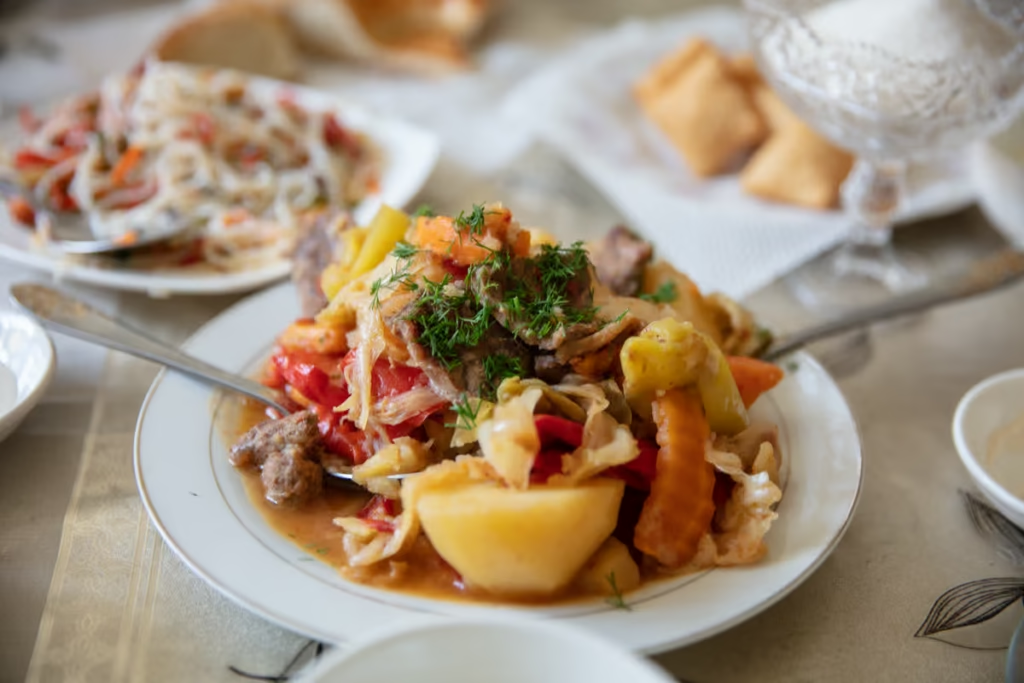
Uzbek food is hearty, filling, and heavily influenced by the country’s position along the ancient Silk Road. Like much of Central Asia, Uzbek cuisine revolves around meat, rice, noodles, bread, and seasonal vegetables.
Food is an important part of Uzbek culture, and you’ll find traditional dishes served everywhere from family-run restaurants and roadside chaikhanas to bustling bazaars.
Some of the most common Uzbek foods you’ll encounter include:
- Non: Traditional round Uzbek bread, baked in a tandoor oven. Different regions have their own distinctive designs and styles.
- Plov: Uzbekistan’s national dish, made with rice, carrots, onions, and meat, usually lamb or beef. Regional variations can be quite different.
- Lagman: Hand-pulled noodles served with meat and vegetables in a savory broth or stir-fried preparation.
- Manti: Large steamed dumplings typically filled with minced meat and onions.
- Shashlik: Skewered and grilled meat, commonly lamb or beef.
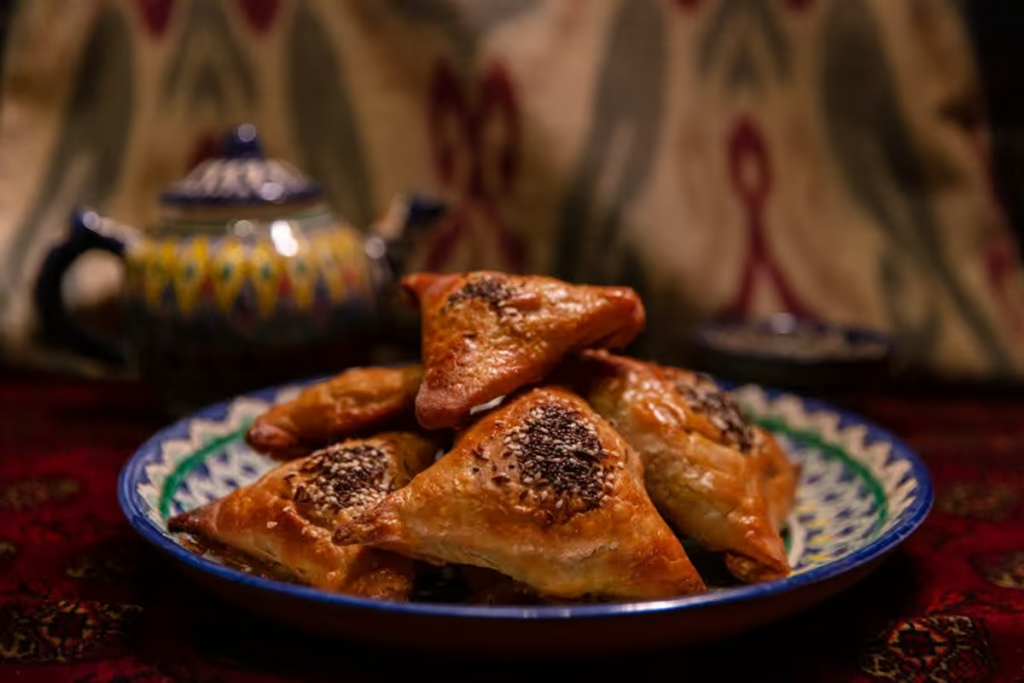
- Samsa: Flaky pastry traditionally filled with meat and onions, often baked in a tandoor.
- Shorbo: A hearty soup commonly made with meat, potatoes, carrots, and other vegetables.
- Shivit Oshi: A distinctive green dill noodle dish associated with Khiva, usually served with meat and a vegetable sauce.
In the larger cities, you’ll also find plenty of international restaurants serving Korean, Georgian food, Italian, and other cuisines. Tashkent restaurants in particular has a surprisingly diverse food scene.
For more information about Uzbek cuisine, check out my guide to Uzbek food.
Accommodations in Uzbekistan
Accommodation in Uzbekistan ranges from budget hostels and family-run guesthouses to boutique hotels, international hotel chains, and traditional yurt camps.
In Tashkent, Samarkand, Bukhara, and Khiva, you’ll find plenty of accommodation options for different budgets. Smaller towns generally have fewer choices, although family-run guesthouses are common in many rural destinations.
One thing to be aware of when traveling in Uzbekistan is the foreign visitor registration requirement.
Foreign visitors generally need to have their place of stay registered. Hotels, hostels, and registered guesthouses normally handle this automatically through an electronic registration system.
If you’re staying with private individuals, your host is responsible for arranging the appropriate registration.
Keep your accommodation confirmations and registration records throughout your trip. Although the process has become more streamlined, and you won’t always be asked for slips, it’s still worth having proof of where you’ve stayed.
Best Places to Visit in Uzbekistan
Uzbekistan is a relatively large country, and there is considerably more to explore than its famous Silk Road cities.
Most first-time visitors concentrate on Tashkent, Samarkand, Bukhara, and Khiva, which are relatively straightforward to connect by train and other public transport. However, venture beyond this well-established tourist route and you’ll find a much different side of Uzbekistan.
From traditional silk-producing towns in the Fergana Valley to ancient desert fortresses in Karakalpakstan, mountain villages in the south, and the remnants of the Aral Sea, Uzbekistan has an impressive variety of places to visit.
I’ve divided the following destinations by region to help you plan your Uzbekistan itinerary.
Need Help Planning? Read The Perfect Two Week Uzbekistan & Tajikistan Itinerary
Central Uzbekistan
The classic Uzbekistan travel route covers the country’s most famous Silk Road destinations, including Tashkent, Samarkand, Bukhara, and Khiva.
These cities contain some of Central Asia’s most impressive Islamic architecture, historic trading centers, and cultural landmarks. They are also the easiest places to visit independently, thanks to relatively good transport connections and a wide range of accommodation options.
Tashkent
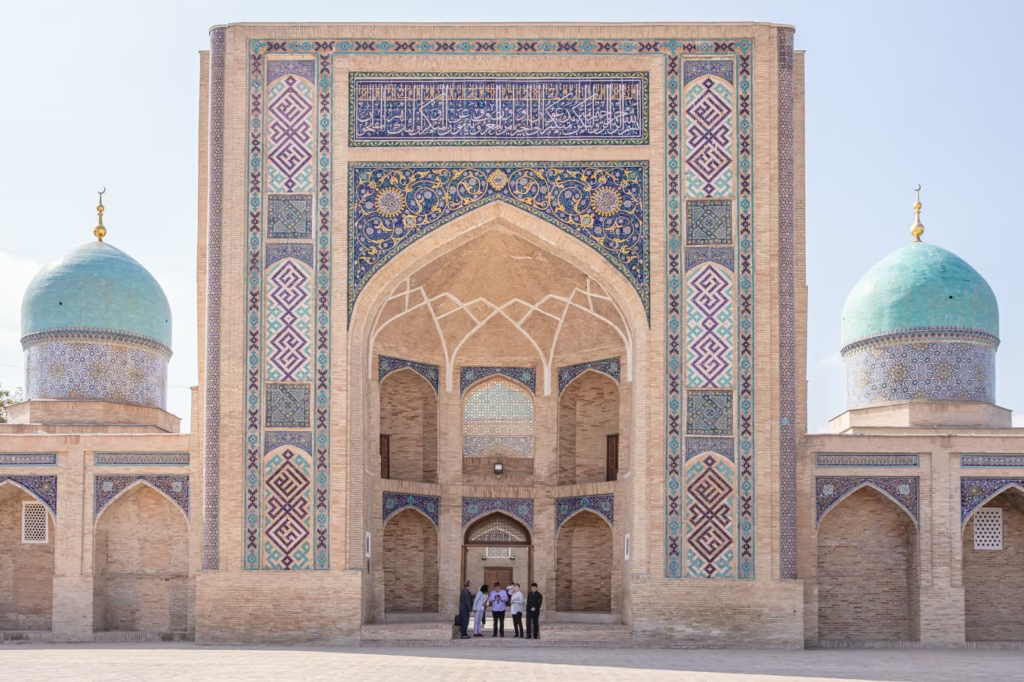
Tashkent is the capital and largest city of Uzbekistan, as well as the largest city in Central Asia. Although much of the city has a modern appearance, its history stretches back approximately 2,000 years.
Much of old Tashkent was destroyed by the devastating 1966 earthquake, followed by extensive Soviet-era reconstruction. This explains the city’s mixture of Soviet architecture, modern developments, and surviving historical neighborhoods.
Some of the best things to see in Tashkent include the Hazrati Imam Complex, Sheikhantaur Mausoleum Complex, Chorsu Bazaar, and the city’s impressive collection of museums.
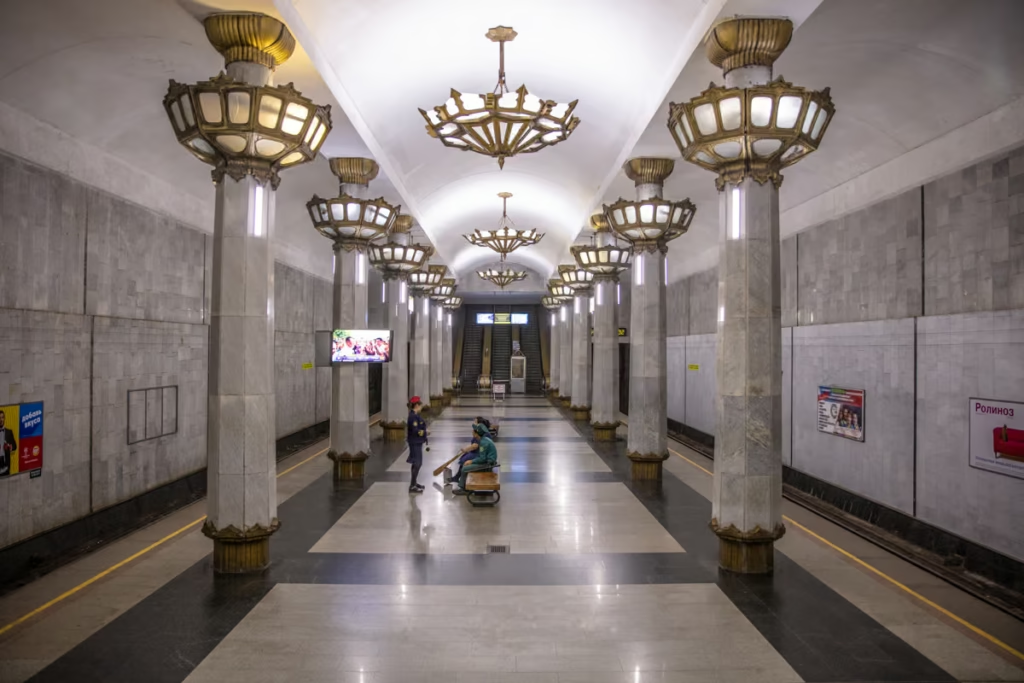
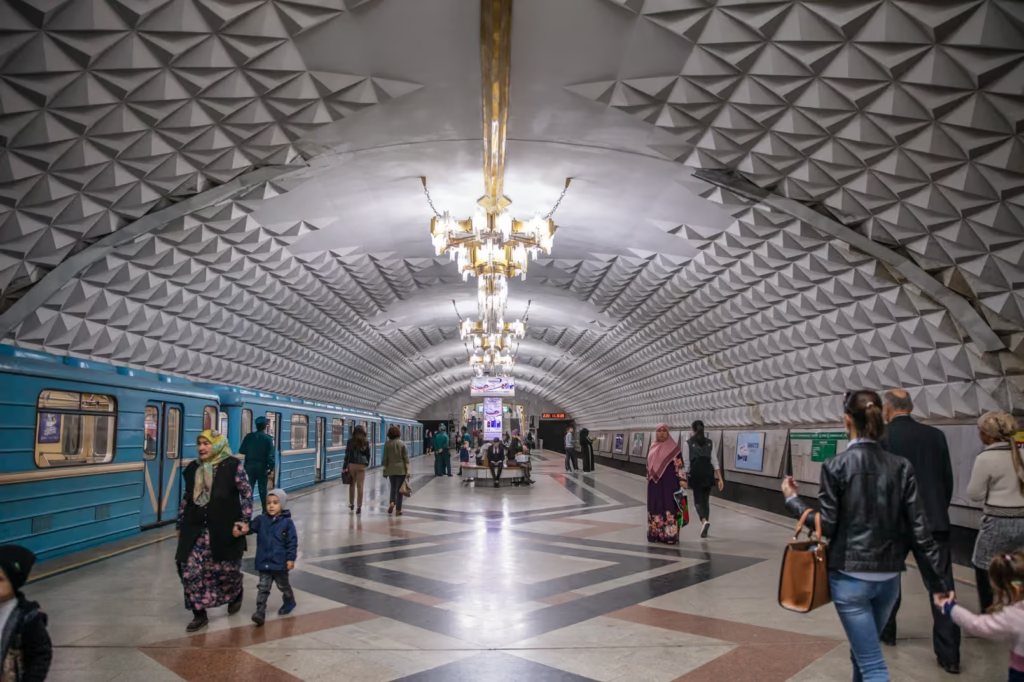
The Tashkent Metro is also worth exploring in its own right. Its ornate stations feature elaborate mosaics, chandeliers, marble columns, and Soviet-era artwork.
Tashkent also has one of the most diverse restaurant scenes in Uzbekistan. If you need a break from plov and lagman, you’ll find Korean, Georgian, Italian, and plenty of other international cuisines. Read up more on where to eat in Tashkent in my Tashkent Restaurant Guide.
From personal experience, I recommend staying at the Eco Art Hotel, located about a 15-minute walk from Novza Metro Station. If you’re looking for something super cheap try Topchan Hostel, which are both highly recommended.
Shop Tashkent accommodations here.
Parkent

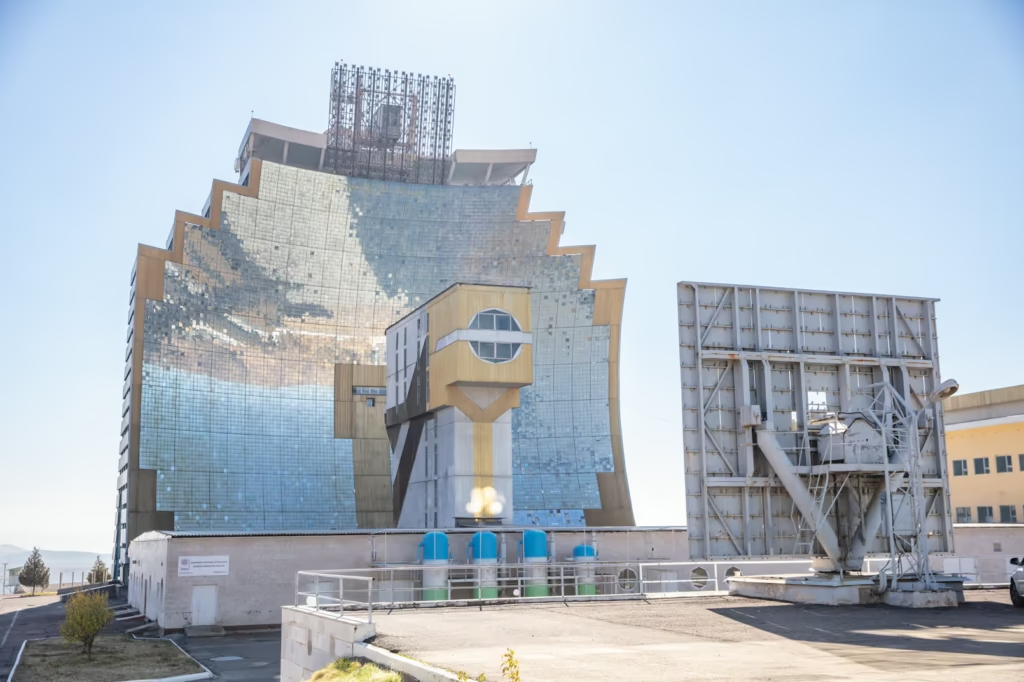
Parkent is a small town east of Tashkent that is best known for the fascinating Solar Furnace located in the hills just outside town.
Built in 1981, the Solar Furnace, also known as the Physics of the Sun or Heliocomplex, uses an enormous field of mirrors to concentrate sunlight onto a central receiver. The resulting temperatures can reach approximately 3,000°C.
The facility was originally developed for scientific research and remains one of the most unusual places you can visit near Tashkent.
During my visit, we simply showed up and were given a tour by one of the scientists working at the facility. We explored the museum, took the elevator up to the viewing decks, wandered around the hillside covered in reflecting mirrors, and even watched a demonstration of pinecones being burned using concentrated sunlight.
It’s a pretty wild place, especially when you consider that it’s tucked away in the hills outside a relatively small Uzbek town.
At the time of my visit, admission and the tour cost 100,000 UZS. Confirm current access arrangements and pricing before visiting, as these can change.
To reach the Solar Furnace, you can take a marshrutka from Tashkent to Parkent and arrange a taxi for the remaining 7 km. Alternatively, booking a Yandex ride directly from Tashkent is considerably easier, particularly if you’re traveling with someone else.
Read about my visit to the Solar Furnace and how you can visit it too
Samarkand

Samarkand is arguably the most famous destination in Uzbekistan and one of the most historically important cities along the ancient Silk Road.
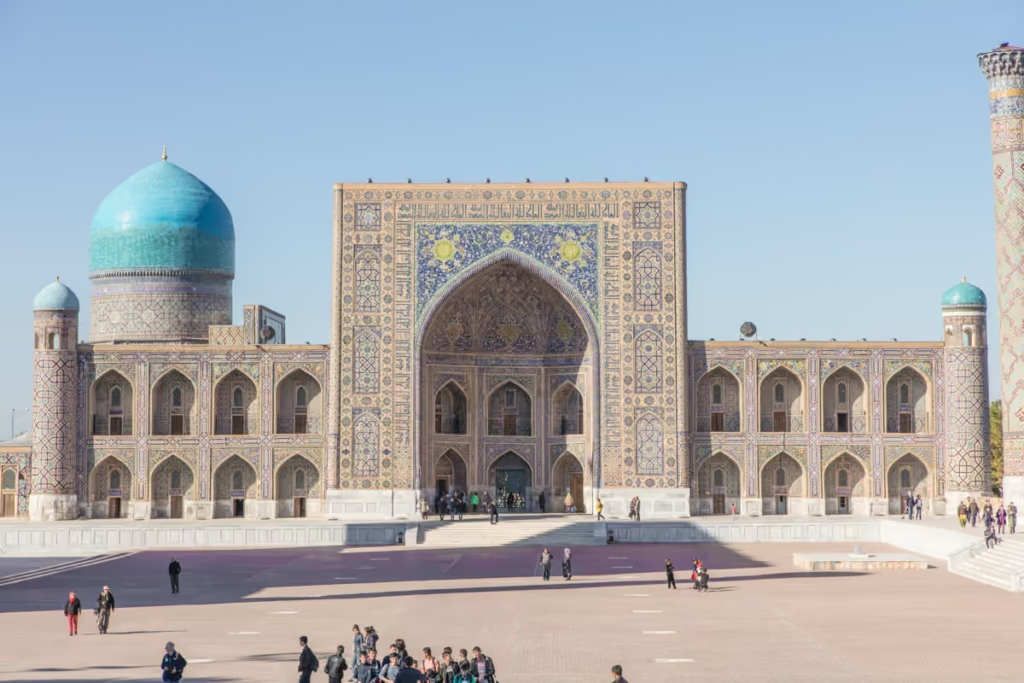
The city flourished under the rule of Amir Timur, who made it the capital of his vast empire in the 14th century. Its magnificent Islamic architecture, elaborate mosaics, and monumental madrasas are among the most recognizable sights in Central Asia.
There is so much to see in Samarkand that you could easily spend several days exploring its historical sites.
Some of the highlights include:
- Registan Square: The city’s iconic central square, surrounded by the magnificent Ulugbek, Sher-Dor, and Tilla-Kari madrasas.
- Gur-e-Amir Mausoleum: The elaborate resting place of Amir Timur and several members of the Timurid dynasty.
- Shah-i-Zinda: A stunning avenue of mausoleums covered in intricate blue tilework.
- Bibi-Khanym Mosque: Once among the largest mosques in the Islamic world.
- Ulugbek Observatory: The remains of an important 15th-century astronomical observatory.
- Afrosiab: The archaeological remains of ancient Samarkand, with an accompanying museum.
I’ve stayed at Samarkand Center Hotel, which I highly recommend, and I’ve splurged and stayed at the East Star Hotel in Samarkand, but there is an array of accommodations to fit most budgets. Amir Hostel comes highly rated among backpackers.
Check out other Samarkand accommodations here.
Want a guided tour of Samarkand? Check out this one-day Samarkand tour as well as this Samarkand wine tasting tour.
Start Planning: The Samarkand City Guide
Shahrisabz
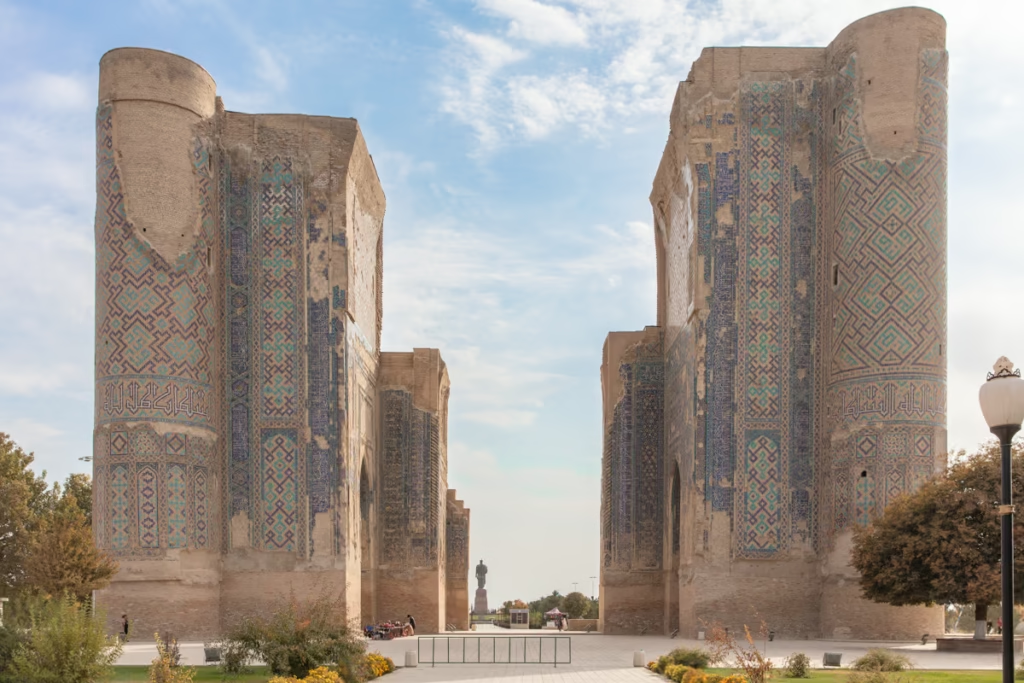
Shahrisabz is the birthplace of Amir Timur and an interesting day trip from Samarkand.
Although it doesn’t have the same concentration of major Silk Road attractions as Samarkand or Bukhara, Shahrisabz is much quieter and offers an interesting look at the history of the Timurid dynasty.
The main attraction is the Ak-Saray Palace, an enormous palace complex commissioned by Amir Timur in the late 14th century. Although much of the original structure has disappeared, the remaining monumental entrance gives an idea of just how grand the palace once was.
Other attractions include the Dorut Tilovat Complex, Dorus Saodat Complex, and Kok Gumbaz Mosque.
Shahrisabz can be visited as a day trip from Samarkand, although those wanting more time to explore can spend the night.
For those opting to spend the night, check out Shahrisabz accommodations here.
Rabat Malik Caravanserai

Rabat Malik Caravanserai is a fascinating remnant of the ancient Silk Road located along the M37 highway between Samarkand and Bukhara.
The caravanserai was commissioned by the Karakhanid ruler Shams al-Mulk Nasr, who ruled Samarkand between 1068 and 1080.
Caravanserais were essential stopping points for merchants, travelers, and their animals moving along the Silk Road. They provided shelter, security, and somewhere to rest during long journeys across Central Asia.
Today, the remains of Rabat Malik offer a glimpse into the infrastructure that once supported trade across the region.
Bukhara

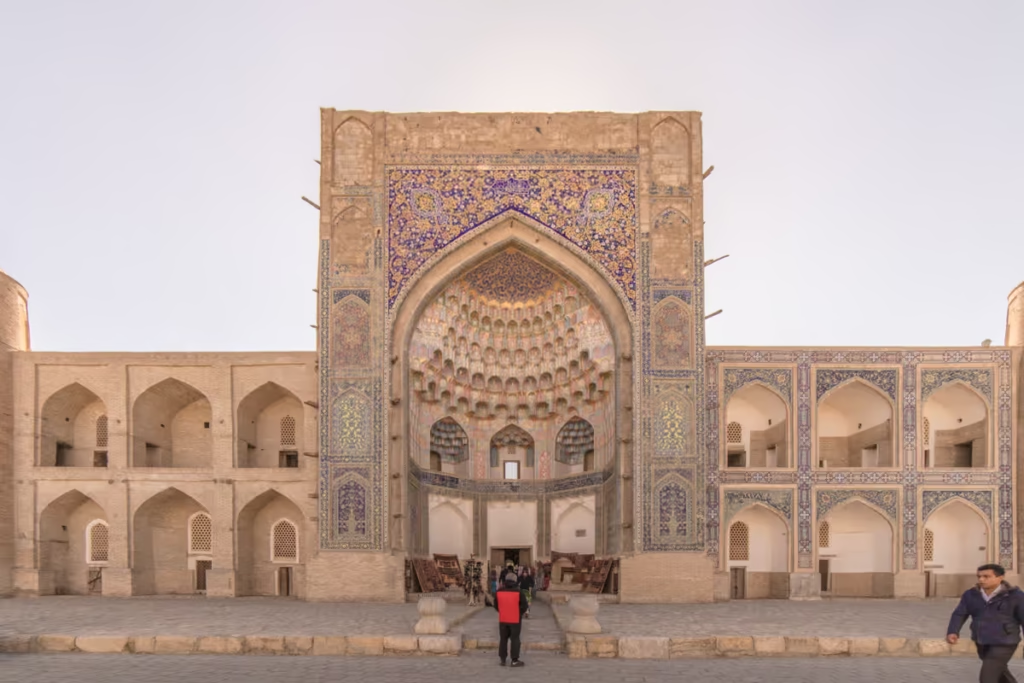
Bukhara was one of the most important trading centers along the ancient Silk Road and remains one of the best-preserved historic cities in Uzbekistan.
You could easily spend two or three days exploring its old town, which is filled with mosques, madrasas, trading domes, and historic caravanserais.
Some of the main attractions include the Ark Citadel, Labi Hauz Complex, Poi i Kalyan Complex and Kalyan Minaret, Ismoil Somoni Mausoleum, and Chor-Bakr Necropolis.
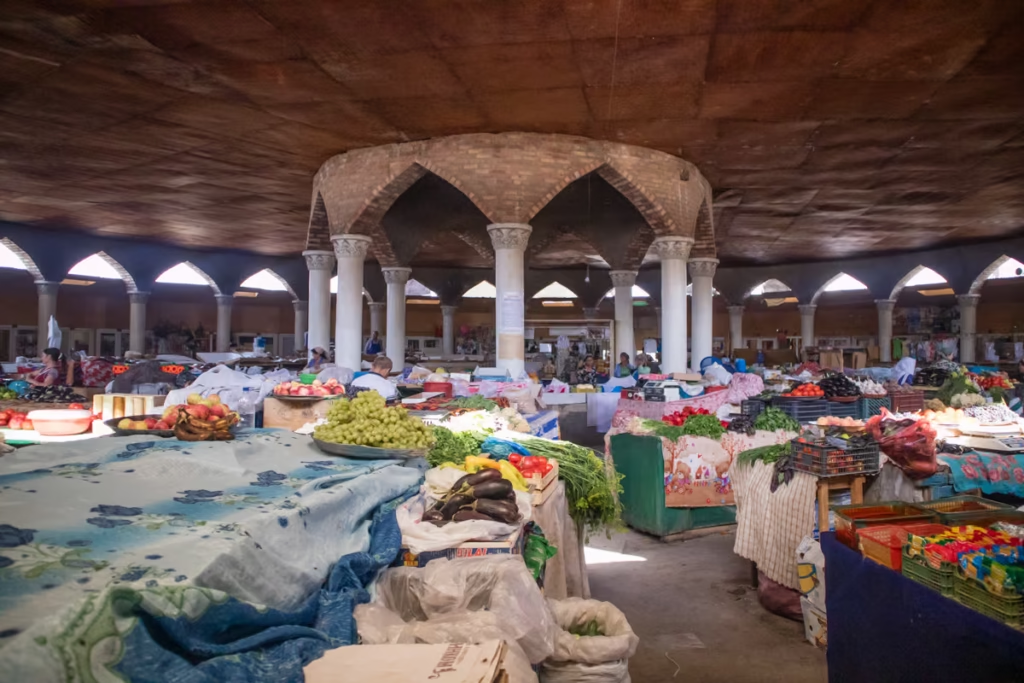
Don’t forget to wander through Bukhara’s historic bazaars and covered trading domes, where merchants have traded goods for centuries.
The Samani Bukhara is a great hotel right in the heart of Bukhara, from personal experience. Shop Bukhara accommodations here.
Plan your visit to Bukhara: The Bukhara Travel Guide
Gijdovan

Gijduvan is a small town just outside Bukhara, best known for its traditional ceramic workshops.
Uzbekistan has a long history of pottery and ceramic production, and Gijduvan is particularly famous for its distinctive hand-painted ceramics.
The main attraction is the Gijduvan Ceramic Museum and workshop run by the Narzullaev family, where visitors can learn about traditional Uzbek pottery techniques and watch artisans at work.
It’s an interesting stop for anyone interested in traditional crafts, and makes a convenient addition to a journey between Samarkand and Bukhara.
Nurata

Nurata sits at the edge of the Kyzylkum Desert, beneath the Nurata Mountains, and is an interesting stop for travelers heading toward Aydar Lake.
The town is best known for the remains of Nur Fortress and the Chashma Complex, an important religious site built around a natural spring.
Nurata also serves as a jumping-off point for exploring the surrounding mountains, traditional villages, and desert landscapes.
Shop Nurata accommodations here.
Aydar Kul

Aydar Lake, also known as Aydarkul, is a large lake in the Kyzylkum Desert that offers a completely different experience from Uzbekistan’s historic cities.
The lake formed following water releases from the Syr Darya River system into the Arnasay depression after the Chardara Reservoir overflowed in the late 1960s.
Today, Aydarkul is a popular stop for travelers looking to experience Uzbekistan’s desert landscapes.
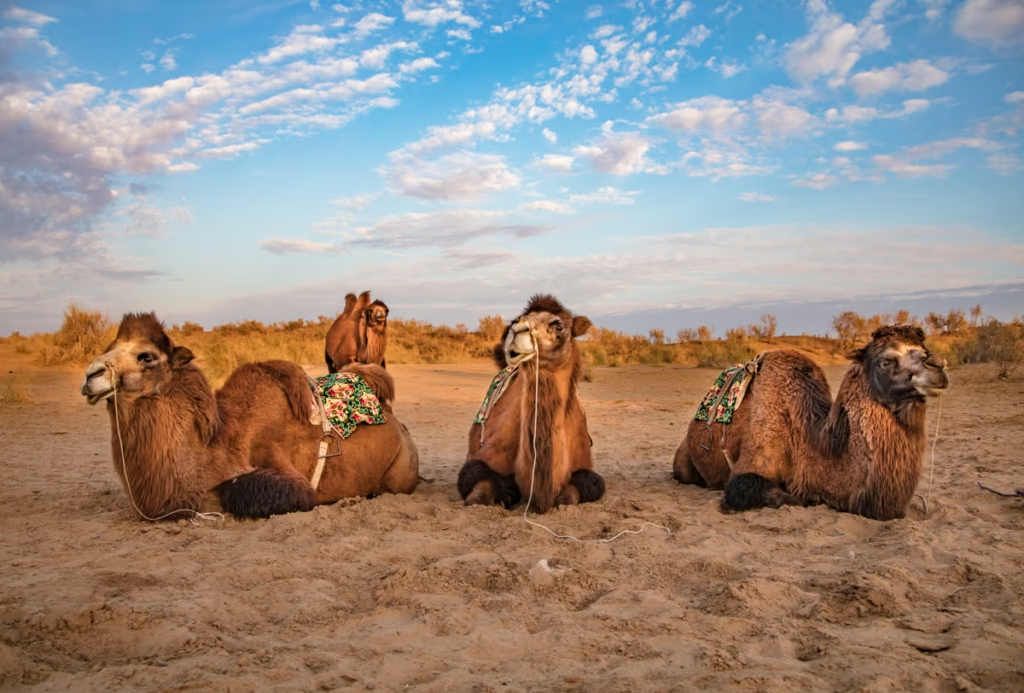
One of the best ways to experience the area is to stay at a traditional yurt camp, such as Aydar Yurt Camp, near the lake. You can spend the night beneath the stars, enjoy traditional food, and take a camel ride through the surrounding desert.
Khiva

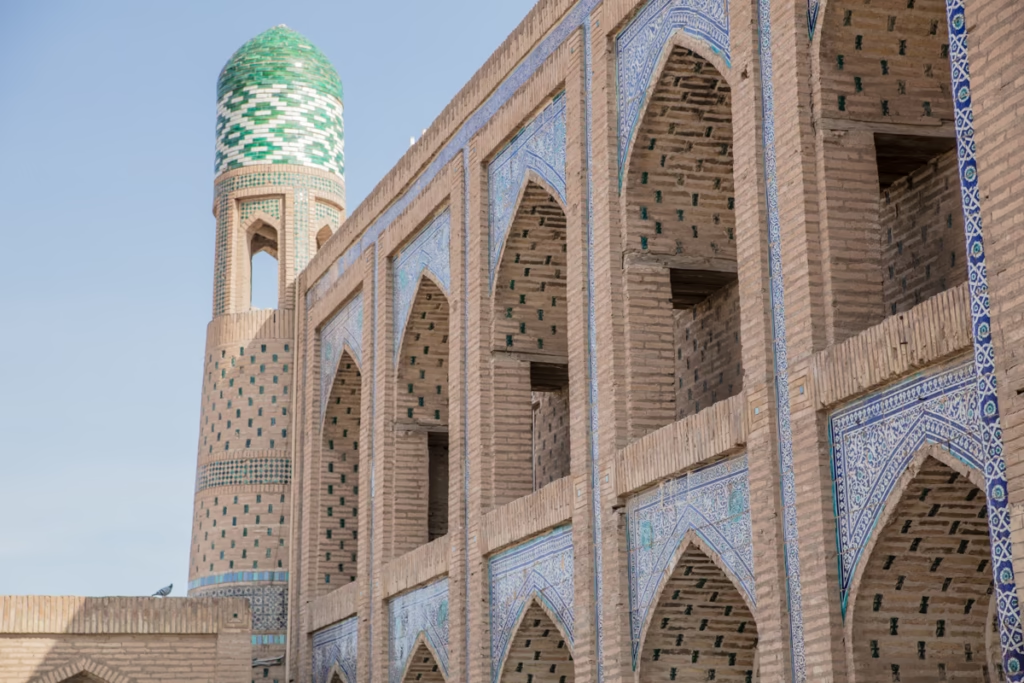
Khiva was the historic capital of Khorezm and later the Khanate of Khiva. It is also my personal favorite among Uzbekistan’s famous Silk Road cities.
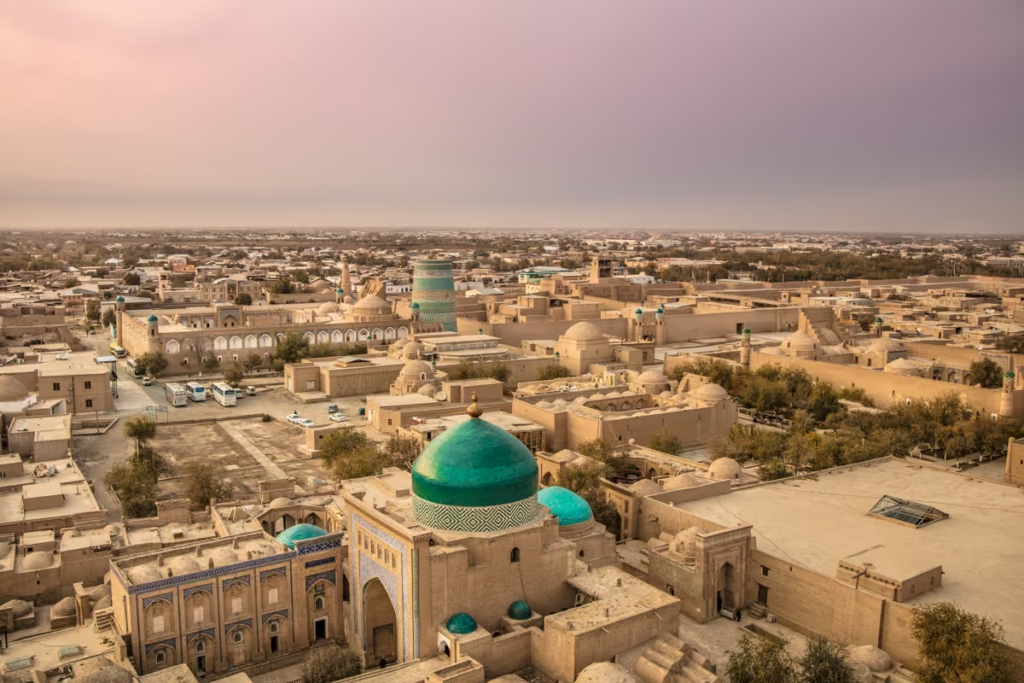
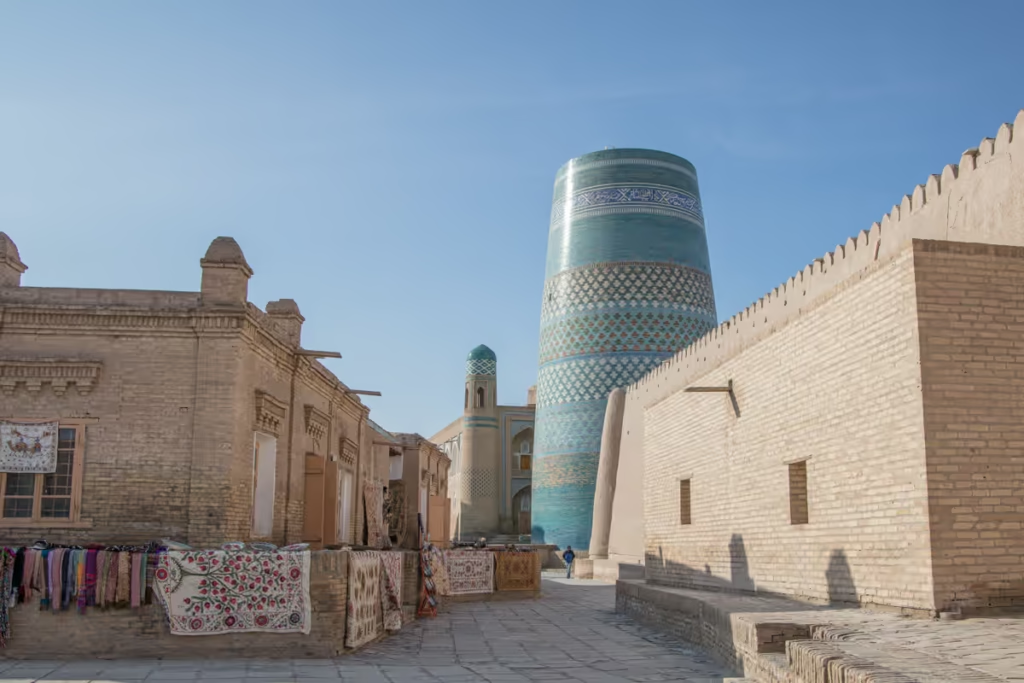
The old walled city of Ichan Kala was the first UNESCO World Heritage Site in Uzbekistan and is one of the most atmospheric historical centers in Central Asia.
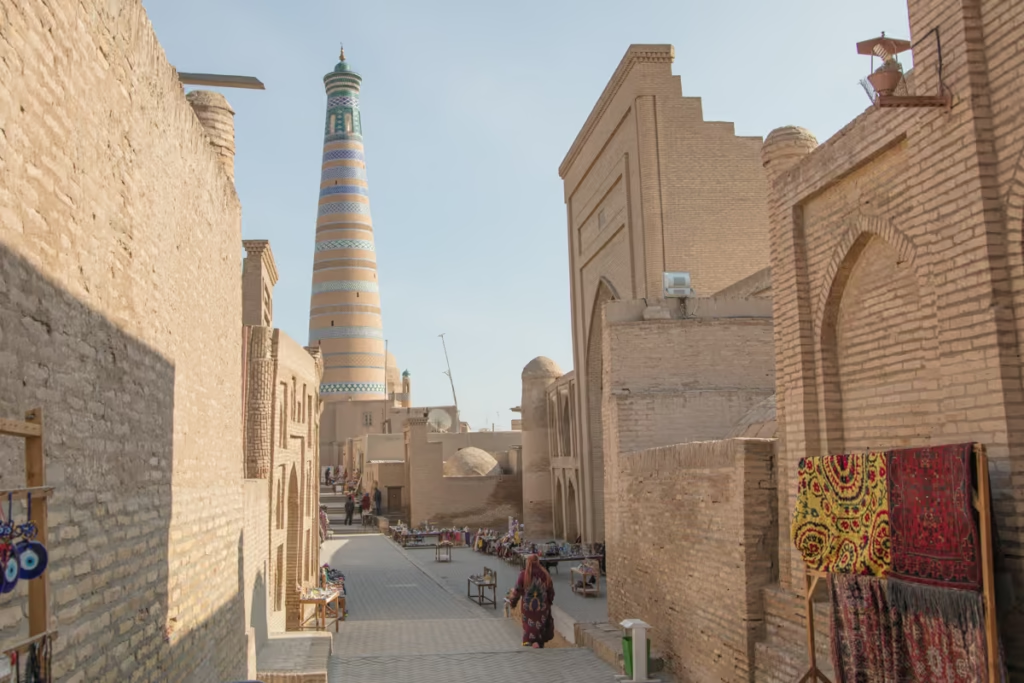
Walking through its narrow streets feels like stepping into another era, with enormous mud-brick walls, ornate minarets, historic mosques, and elaborate madrasas surrounding you.
There is a remarkable number of historical sites packed into Itchan Kala. Some of the most important include:
- Ichan Kala’s city walls and gates
- Kuhna Ark
- Kalta Minor Minaret
- Muhammad Rahim Khan Madrasa
- Joma Mosque
- Pahlavan Mahmud Mausoleum
- Islam Khoja Minaret and Madrasa
- Shirgazi Khan Madrasa
- Muhammad Amin Khan Madrasa
- Ak Mosque
- Bogbonli Mosque
- Said Alauddin Mausoleum
- Kutlug Murad Inak Madrasa
- Anush Khan Bathhouse
- Tash Hauli Palace
- Alla Kuli Khan Madrasa
There’s also Dichan Kala, the outer area beyond the famous inner city walls, which is often overlooked by visitors.
I opted to splurge on a stay at Hayat Inn during my visit, although I wouldn’t necessarily rush to recommend it. There are plenty of other accommodation options in and around Itchan Kala.
I opted to splurge for the Hayat Inn, but it was nothing to write home over as on subsequent visits I stayed at excellent homestays in Khiva. Check out other Khiva accommodations here.
Going to Khiva? Read the Khiva Travel Guide to make the most of your time there
The Uzbek Fergana Valley
The Uzbek Fergana Valley is one of the most culturally diverse regions of Central Asia, shared between Uzbekistan, Kyrgyzstan, and Tajikistan.
The valley has historically been an important agricultural, trading, and cultural center, with Uzbek, Tajik, and Kyrgyz communities living throughout the region.
Its complicated borders were drawn during the Soviet period, and tensions and occasional security incidents have occurred in some border areas. However, the main towns of the Uzbek Fergana Valley offer an interesting look at a part of Uzbekistan that receives considerably fewer international visitors than Samarkand or Bukhara.
The region is particularly known for its silk production, ceramics, traditional crafts, and Islamic architecture.
Plan your visit with the Uzbek Fergana Valley Travel Guide
Margilan

Margilan is often referred to as Uzbekistan’s Silk Capital and has been an important center of silk production for centuries.
The city sits along the historic Silk Road and remains famous for its traditional silk weaving, particularly the production of colorful ikat fabrics.
A visit to the Yodgorlik Silk Factory is practically essential. Here, you can learn how silk is produced, from processing silkworm cocoons to dyeing threads and weaving the finished fabric.
Other attractions worth visiting include Chakar and Toron Bazaar Mosques, Khodja Maggiz Mausoleum, Said Ahmad Khoja Madrasa, and Pir Siddiq Complex.
For those opting to spend the night in Margilan, shop accommodations here.
Fergana City
Fergana City is the main transportation and accommodation hub of the Uzbek Fergana Valley.
Unlike some of the region’s older towns, Fergana has a relatively modern layout and serves as a convenient base for exploring Margilan, Rishtan, Kokand, and other nearby destinations.
There isn’t a huge number of major tourist attractions in the city itself, but it is a useful place to organize transport and explore the surrounding valley.
Shop Fergana City hotels and guesthouses here.
Kokand

Kokand is one of the most historically significant cities in the Fergana Valley and was once the capital of the powerful Khanate of Kokand.
For travelers crossing into Uzbekistan from northern Tajikistan, Kokand is often one of the first major Uzbek cities encountered.
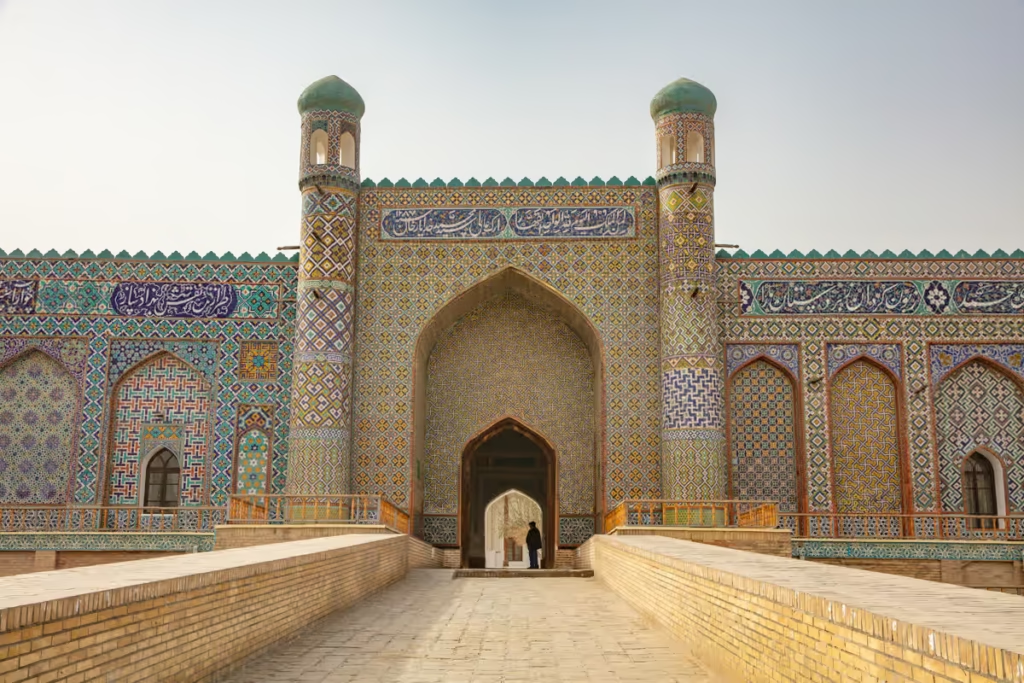
The city’s historical wealth is particularly evident in the impressive Khudayar Khan Palace, which is one of the most elaborate examples of traditional architecture in the Fergana Valley.
Other worthwhile stops include Joma Mosque and the surrounding historic center.
Compared with many towns in Tajikistan’s Fergana Valley, Kokand has a distinctly different architectural character and a much more substantial collection of historic monuments.
Andijan
Andijan is an important commercial city in eastern Uzbekistan and is often the first major Uzbek city encountered by travelers crossing the border from Osh in Kyrgyzstan.
The city has relatively few major tourist attractions compared with Samarkand or Bukhara, although there are several mosques and historical sites worth visiting.
Andijan is also historically significant as the birthplace of Babur, the founder of the Mughal Empire in India.
For travelers overlanding between Uzbekistan and Kyrgyzstan, Andijan is an important transportation hub.
Namangan

Namangan is one of the largest cities in the Uzbek Fergana Valley and an important center of Islamic culture.
Although it doesn’t receive many international visitors, it has several interesting religious and architectural sites.
Make sure to visit the Khoja Amin Mausoleum, Mullah Kyrgyz Madrasa, and Ota Valikhon Tur Mosque.
Namangan is also a good place to experience everyday life in the Fergana Valley away from the better-known tourist destinations.
Karakalpakstan and the Aral Sea
Karakalpakstan is an autonomous republic within Uzbekistan that occupies much of the country’s northwestern territory.
It’s one of the least-visited regions of Uzbekistan, despite having some of the country’s most fascinating historical and environmental attractions.
The region is home to the ancient Khorezm desert fortresses, the remarkable Savitsky Museum in Nukus, and the remnants of the Aral Sea, one of the world’s most notorious environmental disasters.
Karakalpakstan is also culturally distinct from much of the rest of Uzbekistan, with its own language, traditions, and historical identity.
For adventurous travelers willing to venture beyond the classic Silk Road route, it’s one of the most interesting regions to explore.
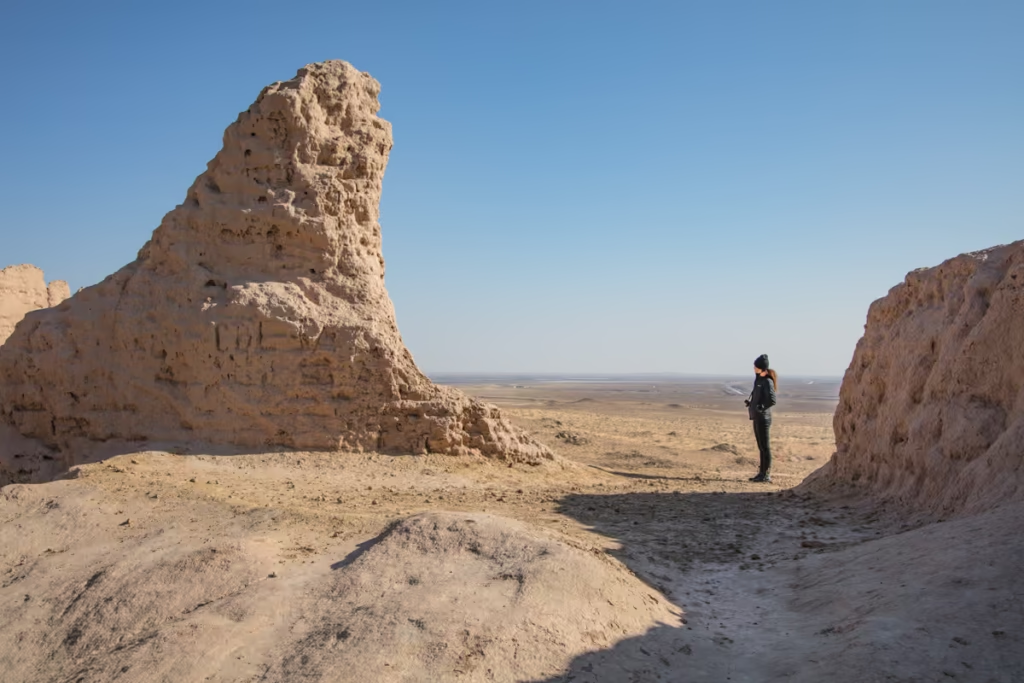
Ancient Qala Castles of Khorezm

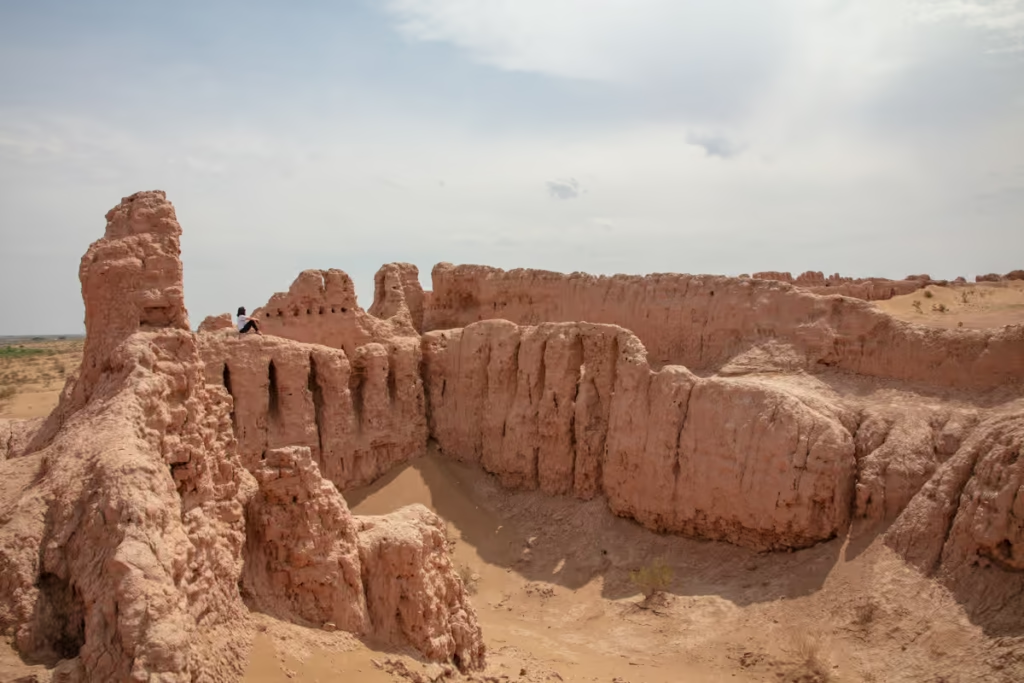
Scattered throughout the Kyzylkum Desert are the remains of ancient Khorezm fortresses, known locally as qalas.
These enormous mud-brick structures were built to protect settlements and important centers of ancient Khorezm, a civilization that flourished around the Amu Darya River.
Many of the fortresses date back more than 2,000 years and offer an incredible glimpse into the region’s pre-Islamic history.
Some of the best-known sites include Toprak Qala, Ayaz Qala, Koy-Kirilgan Qala, Big Guldursun, Pil Qala, Anka Qala, Kurgashin Qala, and Janbas Qala.
Several of these sites form part of the UNESCO-listed Ancient Monuments of Khorezm.
Exploring the desert fortresses is one of the most interesting things to do in Karakalpakstan, particularly if you’re interested in archaeology and ancient Silk Road history.
If you want to make a trip out to visit some or all of the Khorezm Castles, I recommend contacting either Aral Sea Discovery or Islambek Travel to set up a tour for you. Prices are per car, so if splitting amongst a group, their tours are a great deal.
Nukus
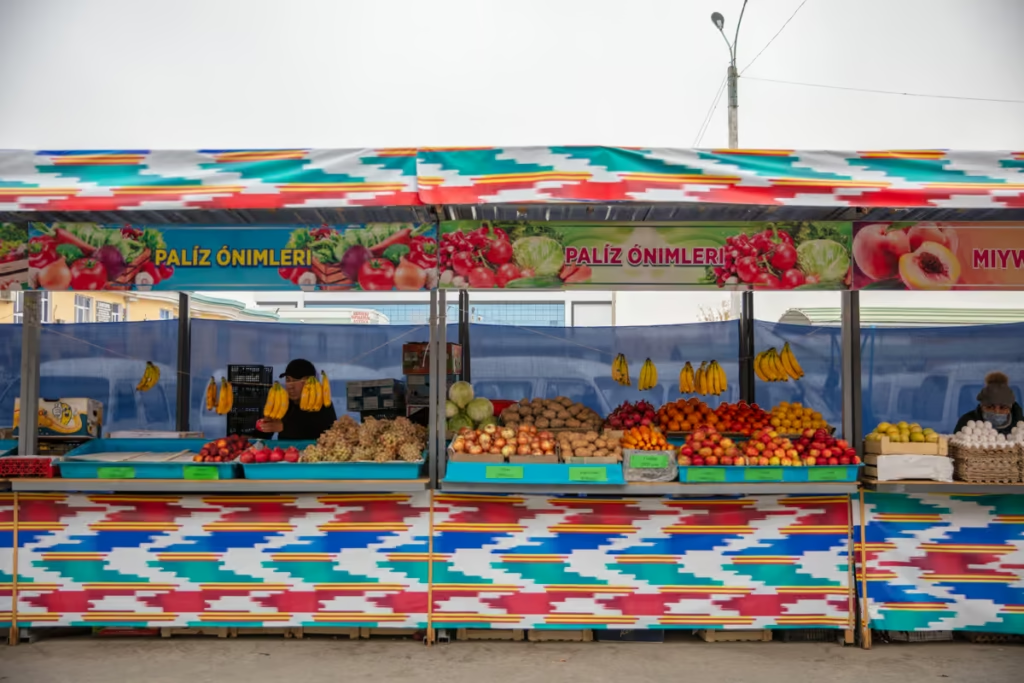
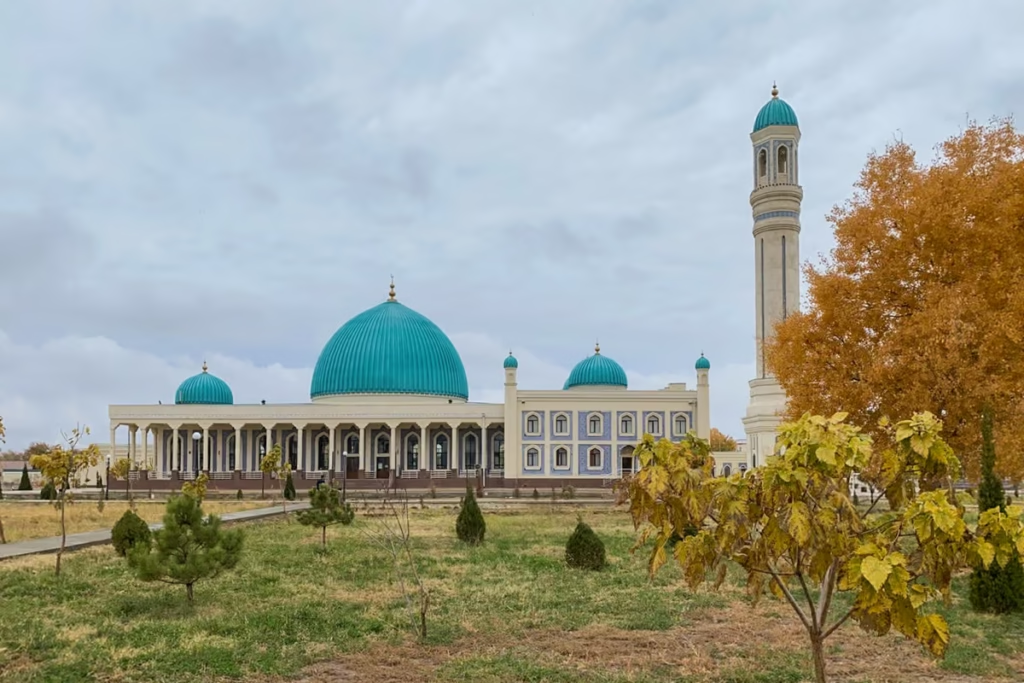
Nukus is the capital of Karakalpakstan and serves as the main gateway for exploring the region.
Lonely Planet once described Nukus as desolate and hopeless, but I found a city with friendly locals, a lively bazaar, and a distinctly Soviet atmosphere.
The main attraction is the Savitsky Museum, officially known as the State Museum of Art of the Republic of Karakalpakstan.
The museum houses one of the world’s most important collections of Russian and Soviet avant-garde artwork, much of which was preserved by Igor Savitsky during a period when such artistic movements were suppressed in the Soviet Union.
It’s a surprisingly impressive collection considering how far Nukus is from the country’s main tourist circuit.
The city’s Soviet-era apartment blocks and broad streets also make it an interesting place to wander around.
The best option for accommodations in Nukus is the Hotel Jipek Joli (note that there is a different hotel in Nukus called Jipek Joli Inn). You can shop other options here.
Moynaq

Moynaq has a more desolate and hopeless feeling to it than Nukus in my opinion. A stark reminder of the environmental catastrophe that befell the Aral Sea.
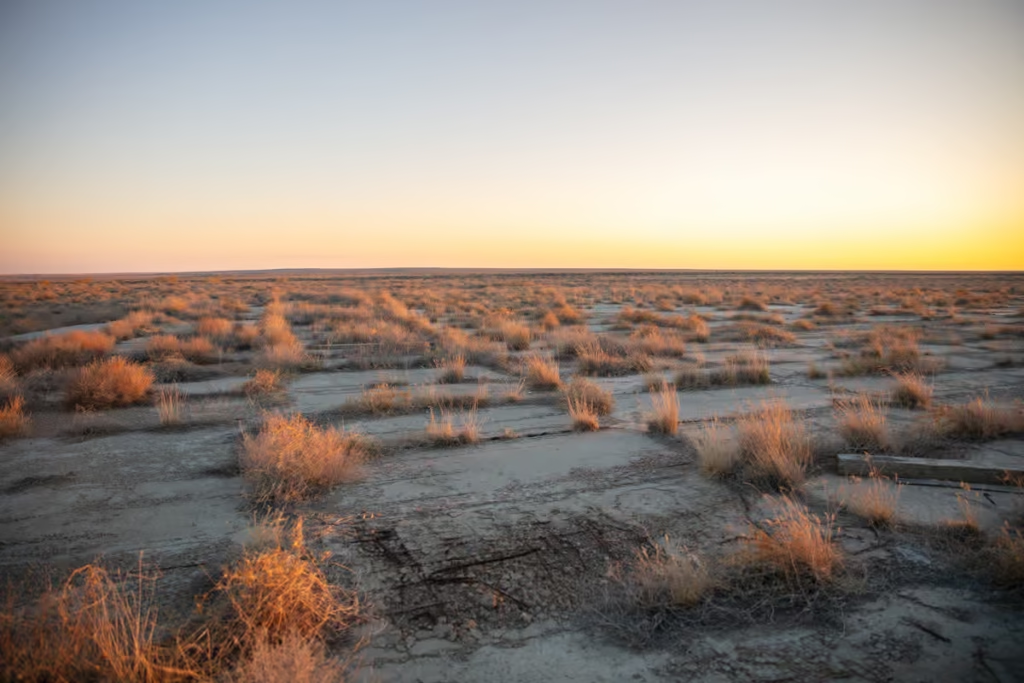
Once a busy fishing port on the southern shores of the Aral Sea, Moynaq is now surrounded by an enormous expanse of desert.
The receding water left the town approximately 100 km from the present shoreline in some directions, although the exact distance depends on the water level and which part of the remaining sea you’re visiting.
Most travelers come to Moynaq to see the famous Moynaq ship graveyard, where rusting fishing vessels sit stranded on what was once the seabed.
Moynaq is also a common starting point for longer desert excursions to the remaining southern Aral Sea shoreline.
Aral Sea

The Aral Sea was once one of the largest lakes in the world. It was always a bit doomed, but decades of Soviet irrigation projects didn’t help and, in fact, exacerbated the problem.
Beginning in the 1960s, enormous quantities of water from the Amu Darya and Syr Darya rivers were diverted to irrigate cotton and other crops.
The result was one of the world’s worst human-caused environmental disasters. The sea shrank dramatically, fishing communities collapsed, and exposed seabed became a source of salt and contaminated dust.
More than 90% of the Aral Sea’s original volume has disappeared.
Today, the former seabed is largely desert, while the remaining water is divided into separate bodies. The northern portion in Kazakhstan has experienced some recovery following the construction of the Kok-Aral Dam, while the southern portion in Uzbekistan has largely disappeared.
The basin is continuing to desertify and is now covered in toxic chemicals due to weapons testing in the area. You can visit the shores of the new Aral Sea by tour.
You can still visit parts of the southern Aral Sea by arranging an overland expedition from Nukus or Moynaq. These trips typically involve driving across remote desert terrain, camping, and visiting abandoned settlements and former fishing communities.
Further afield is the former Soviet biological weapons testing facility on Vozrozhdeniya Island, known as Aralsk-7.
A friend and I visited in 2021 in our own vehicle. By then, the ghost town of Aralsk-7 and the nearby village of Kantubek had recently been demolished, leaving surprisingly little of the former settlement behind.
This is an extremely remote area, and access is not something to arrange casually. You should also be aware that the region has a complicated environmental and military history.
Southeastern Uzbekistan
Southeastern Uzbekistan is one of the least-visited parts of the country, despite having a fascinating combination of archaeological sites, mountain landscapes, traditional villages, and ancient history.
The region includes the historic city of Termez, the mountain town of Boysun, and several lesser-known destinations that rarely feature on standard Uzbekistan itineraries.
For adventurous travelers, one of the biggest draws is the Dark Star Cave in the Boysuntov Mountains.
Denau
Denau is an important town in southern Uzbekistan and is often visited by travelers crossing between Tajikistan and Uzbekistan on the route connecting Dushanbe and Termez.
It doesn’t receive many international tourists, but there are several interesting places to explore if you find yourself spending a day here.
Visit the Said Attalik Madrasa and the busy bazaar next to it, the ruins of Beg Denau Fortress, and the town’s arboretum.
Denau can also serve as a base for exploring nearby archaeological sites, including Kalchayan and Dalverzin Tepe, as well as Sangardak Falls.
The surrounding Hissar Mountains are another potential attraction, although exploring them independently can be complicated. Some areas near the Tajik border are restricted, and you should confirm access and accommodation registration requirements before arranging a trek.
Boysun
Boysun is a traditional mountain town in southern Uzbekistan and the jumping-off point for exploring the Boysuntov Mountains.
The biggest draw for adventurous visitors is Dark Star Cave, one of the region’s most interesting caving destinations. Nearby Teshik-Tash and Festivalnaya caves are also worth investigating.
The town itself is worth exploring, particularly for its traditional homes decorated with colorful suzani textiles.
Boysun has a particularly strong cultural identity, and the region is known for its traditional music, crafts, and folklore. UNESCO has recognized Boysun’s cultural traditions as an important part of the region’s intangible cultural heritage.
Katta Langar
Katta Langar is a small mountain settlement surrounded by green hills and one of the most interesting lesser-visited destinations in southern Uzbekistan.
The main attraction is the historic Katta Langar Mausoleum, a beautiful religious monument dating back approximately 500 years.
The village offers an opportunity to experience a quieter side of Uzbekistan, away from the tour groups and crowds of the major Silk Road cities.
Termez

Termez is one of the oldest continuously inhabited cities in Uzbekistan, with a history stretching back more than 2,500 years.
Located near the Amu Darya River and the Afghan border, Termez was an important settlement along ancient trade routes connecting Central Asia with Afghanistan, India, and the wider Buddhist world.
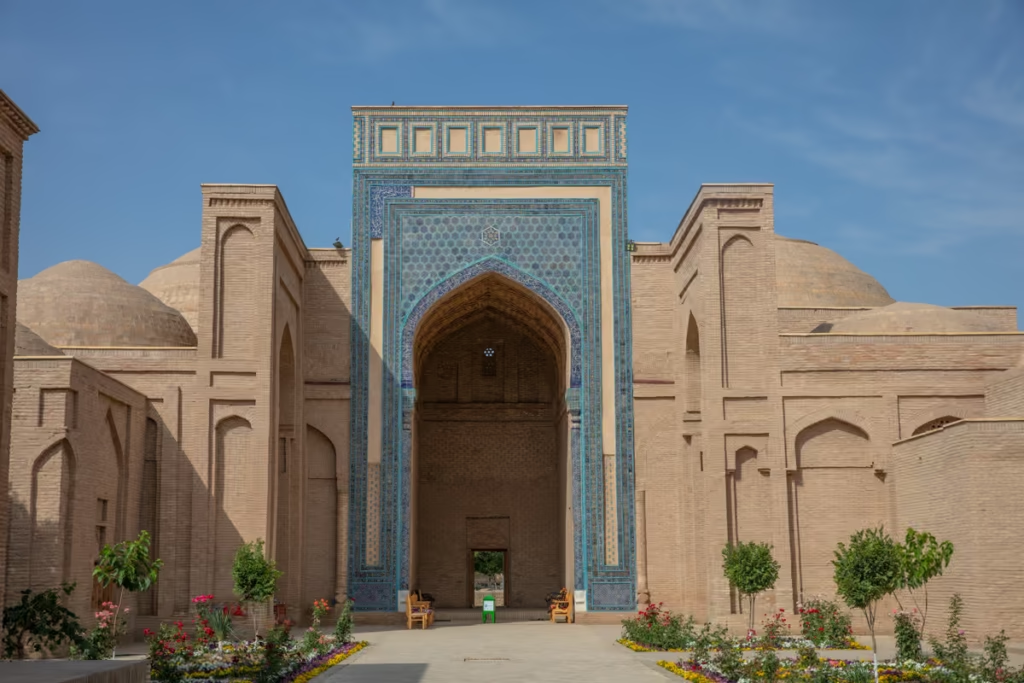
Today, it’s one of the most interesting archaeological destinations in Uzbekistan, particularly for travelers interested in ancient history and Sufi Islamic heritage.
Some of the main attractions include:
- Khanaka Mausoleum Kokildor-Ota
- Al-Hakim at-Termezi Mausoleum
- Sultan Saodat Complex
- Jarkurgan Minaret
- Kirk-Kiz Fortress
- Fayaz Tepe Buddhist Monastery
- Kara Tepe Buddhist Archaeological Site
- Zurmala Buddhist Stupa
The Buddhist archaeological sites are particularly interesting because they highlight the region’s historical importance as a center of Buddhist culture long before the arrival of Islam.
Termez also has a handful of hotels and restaurants, making it a convenient base for exploring the surrounding area.
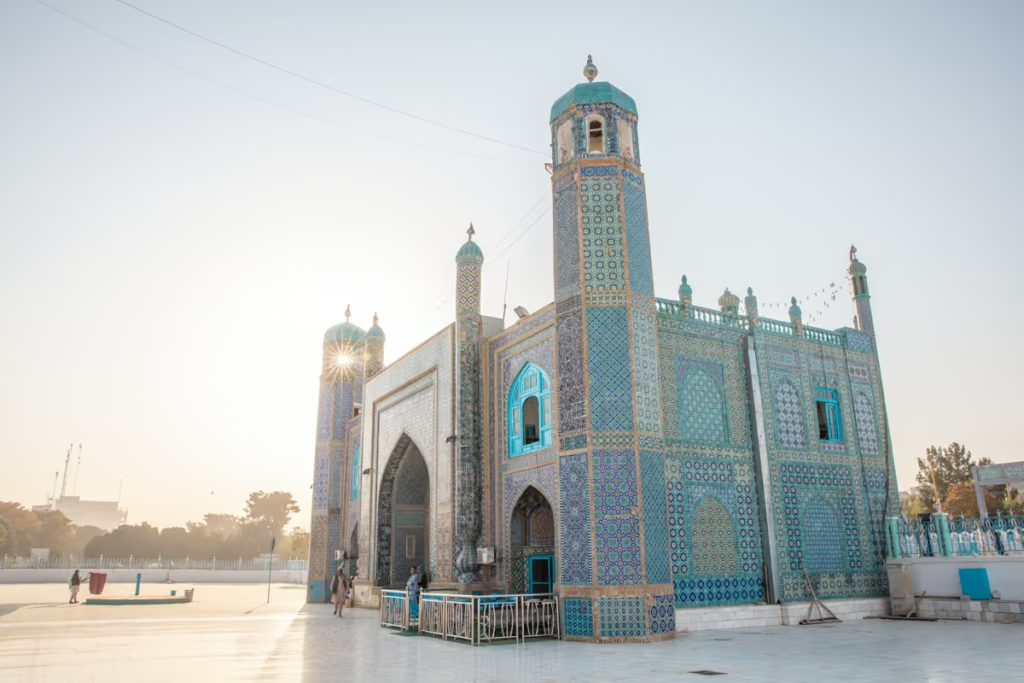
Many who come to Termez are stopping en route to Mazar e Sharif in Afghanistan.
Shop Termez accommodations here.
Qarshi

Qarshi is a historic city in southern Uzbekistan with a long and complicated past.
The city was originally known as Nakhshab during the Sogdian period, later becoming Nasaf following the Arab conquest. It eventually developed into an important city within the Emirate of Bukhara.
Although Qarshi receives relatively few international visitors, it has a collection of historic mosques, madrasas, and architectural monuments worth exploring.
Some of the main sites include:
- The Great Patriotic War Monument
- Bekmir/Rabiya Madrasa
- Khodja Abdul Aziz Madrasa
- Khodja Kurban Madrasa
- Kurgancha Mosque
- Chakar Mosque
- Sharafbai Madrasa
- Kok Gumbez Mosque
- Namazgokh Mosque
- Historic public baths
- Kashkadarya Bridge
Check out Qarshi accommodations here.
Trekking in Uzbekistan
Uzbekistan might be best known for its desert landscapes and Silk Road cities, but there are actually some excellent opportunities for hiking and trekking in the country’s mountain regions.
From the forested slopes of the Chimgan Mountains to traditional villages in the Nurata range, there are several places where you can escape the cities and explore Uzbekistan on foot.
Some routes are relatively easy day hikes, while others involve multi-day treks and overnight stays in village homestays or mountain camps.
Chimgan
The Chimgan Mountains are one of the most accessible hiking destinations in Uzbekistan, located within a few hours of Tashkent.
The area is known for its rocky peaks, forested slopes, and open mountain meadows that become covered in wildflowers during spring and summer.
There are several hiking routes around Chimgan, ranging from relatively easy walks to more demanding ascents, including the climb to Greater Chimgan Peak, which reaches approximately 3,309 meters.
In winter, Chimgan is also a popular destination for skiing and other snow sports.
Community Based Tourism (CBT) operators offer guided hikes connecting Chimgan with nearby Beldersay and other parts of the Western Tien Shan.
Beldersay
Beldersay is another popular mountain destination near Tashkent, located close to Chimgan.
The area is known for its steep slopes, pine forests, and mountain scenery. In winter, it’s a popular skiing destination, while summer brings opportunities for hiking and exploring the surrounding valleys.
Some of the main attractions include Beldersay Gorge, Marble Waterfall, and ancient petroglyphs depicting hunters and ibex.
Home to the alleged longest ski lift in Central Asia, Beldersay is a bit steeper and closer to Tashkent than Chimgan.
CBT operators offer guided hikes linking Beldersay with Chimgan and other nearby mountain areas.
Hayat
Hayat is a small mountain village in the Nurata Mountains and a great place to experience rural life in Uzbekistan.
The village is particularly known for its community-based tourism initiatives, which allow visitors to stay in local homestays and explore the surrounding mountains with local guides.
One of the biggest attractions is the chance to spot Severtzov’s wild sheep, a rare and endangered species that inhabits the surrounding mountain slopes.
Multi-day hiking routes can be arranged through local CBT operators, connecting Hayat with other mountain villages and offering a glimpse into traditional life in rural Uzbekistan.
Aydar Kul
Aydarkul is a great place to combine desert hiking with a stay at one of the traditional yurt camps along its shores.
The surrounding Kyzylkum Desert offers opportunities for walking, camel trekking, and exploring the landscape around the lake.
Aydar Yurt Camp can arrange guided hikes and camel treks, making it a convenient base for exploring the area.
Uzbekistan Tours
Uzbekistan is one of the most frequently visited countries in Central Asia, and there are plenty of local tour operators offering guided trips around the country.
Joining an organized tour can be particularly useful if you’re short on time, want to visit more remote destinations, or prefer having transportation and accommodation arranged in advance.
Local operators offer everything from guided city tours in Samarkand and Bukhara to multi-day expeditions through Karakalpakstan, the Fergana Valley, and southern Uzbekistan.
Several international companies also operate tours in Uzbekistan.
Intrepid Travel offers trips covering the country’s major Silk Road destinations, as well as longer itineraries connecting multiple Central Asian countries.
GAdventures also offers Uzbekistan-only trips and longer overland itineraries that include destinations such as Tajikistan, Kyrgyzstan, and Kazakhstan.
For travelers interested in exploring Uzbekistan beyond the main tourist circuit, I’d also recommend looking into locally operated tours. They can be particularly useful for visiting places where public transportation is limited.
Uzbek Festivals
Uzbekistan has a rich calendar of cultural celebrations, traditional festivals, music events, and national holidays throughout the year.
Some events are celebrated across the country, while others are tied to particular cities, regions, and cultural traditions.
If you’re planning your trip around a specific event, check the latest dates before booking, as some festivals take place irregularly or have changing schedules.
Chimgan Extreme– A winter sporting even held in Chimgan each year in late February.
Nowruz– Persian New Year. Held on March 21 each year. Festivals including food, dances, and performances will be held all over the country. Families will usually celebrate at home as well.
Bukhara Silk & Spice Festival– Held in late May in Bukhara. The festival includes national games, traditional food, Uzbek fashion design, and folk performances.
Chimgan Echo Festival– A music festival held in the Chimgan area in early June each year celebrating singers and songwriters.
Sharq Taronalari– Held in late August every other year (odd years) in Samarkand’s Registan Square. Sharq Taronalari means Music of the Orient and celebrates traditional music from all over the world.
Independence Day– September 1. Cultural events, concerts and festivals take place throughout Uzbekistan.
Stihia Music Festival– The first one was held on September 14, 2018 and another was held in May 2021 and is probably the biggest event in Moynaq since the 1960s. This electronic rave took place in Moynaq’s Ship Graveyard. Future dates are TBA, but you can check the event website here.
Bazar-Art– An art exhibition held in November in Tashkent. Dates are TBD for 2026.
Uzbekistan Travel Budget
Uzbekistan is generally affordable compared with many European destinations, although it can be slightly more expensive than some neighboring Central Asian countries, particularly if you’re traveling independently and visiting several cities.
Accommodation, transport, and food can all be relatively inexpensive, especially if you’re comfortable using public transportation, staying in hostels, and eating at local restaurants.
The following are rough daily budget categories to help you plan your Uzbekistan trip. Actual costs will depend on your accommodation choices, transportation, activities, and the current exchange rate.
Budget Travel: 300,000 UZS Per Day
Traveling on approximately 300,000 UZS per day means keeping things relatively simple.
- Staying in hostel dormitories or inexpensive guesthouses.
- Traveling by marshrutka, local buses, and trains.
- Eating at local restaurants and bazaars.
- Exploring cities independently rather than booking guided tours.
- Limiting private transport and organized excursions.
Mid-Range Travel: 500,000 UZS Per Day
With approximately 500,000 UZS per day, you can enjoy a more comfortable trip.
- Staying in decent double rooms or boutique guesthouses.
- Using a combination of public and private transportation.
- Eating at restaurants rather than exclusively at local eateries.
- Taking occasional guided tours and excursions.
- Having more flexibility with your itinerary.
Comfortable and Luxury Travel: 1,000,000 UZS+ Per Day
Traveling on 1,000,000 UZS or more per day allows for a considerably more comfortable experience.
- Having greater flexibility with transportation and activities.
- Staying in upscale hotels and boutique accommodation.
- Hiring private drivers between destinations.
- Dining at higher-end and international restaurants.
- Taking private guided tours and organized excursions.
What to Pack for Uzbekistan
You’ll want to pack relatively light when traveling around Uzbekistan. The country is famous for its handicrafts, including beautiful ceramics, colorful silk fabrics, carpets, and traditional textiles. Trust me, you’ll probably want to bring a few things home.
Your packing list will also depend heavily on the season. Summer can be extremely hot, while winter can bring freezing temperatures, particularly in northern and eastern Uzbekistan.
Here are some items I recommend bringing when traveling around the country.
- An external battery pack can be a great help on long marshrutka or bus trips.
- I use the Osprey Ariel 65L backpack and recommend Osprey’s products because of their guarantee.
- A good pair of hiking boots if you plan to do any trekking. My personal favorite is the La Sportiva Trango GTX hiking boot.
- I personally use the Katadyn water filter. Tap water in the entire country is unsafe for drinking and natural water sources can be contaminated. Using a water purification system can also help cut down on plastic usage.
- A headlamp will come in handy at yurt camps or if going on a mountain trek to stay at village homestays.
- Don’t forget the sunscreen! The Uzbek sun can be harsh.
- The best guidebook to Uzbekistan, in my opinion, is Bradt’s Uzbekistan. Lonely Planet’s Central Asia Guidebook latest edition is not of much use (aside from appearing like a top 10 reasons to visit ‘x-country’ blog post, but their phrasebook can come in handy if you’re planning a larger Central Asia trip covering multiple countries.
Internet, SIM Cards and Mobile Data in Uzbekistan
Internet access is widely available throughout Uzbekistan, particularly in hotels, hostels, guesthouses, and restaurants in the larger cities.
Most accommodation providers offer Wi-Fi, although connection speeds and reliability can vary, especially outside the main tourist destinations.
If you’re planning to travel around Uzbekistan independently, I recommend getting a local SIM card or arranging an eSIM before arriving.
SIM Cards in Uzbekistan
The largest mobile operators in Uzbekistan include Ucell and Beeline, both of which offer prepaid mobile packages.
Foreign visitors can purchase local SIM cards, although registration requirements apply.
You can also investigate international eSIM providers if your phone supports eSIM technology. These can be convenient if you want mobile data as soon as you arrive, although they may be more expensive than local SIM packages.
Internet Restrictions in Uzbekistan
Some websites and online services may be blocked or restricted in Uzbekistan, including certain news publications and other websites.
If you rely on particular online services while traveling, I recommend checking accessibility before departure.
A VPN can be useful for maintaining access to services when traveling internationally.
Mobile Phone IMEI Registration in Uzbekistan
One thing returning visitors to Uzbekistan should be aware of is the country’s IMEI registration system.
When I visited Uzbekistan in May 2021 and returned again in October and November of the same year, I purchased a new local SIM card only to find that my phone wouldn’t work.
When I tried to register the SIM, a message appeared stating that my phone’s IMEI number was blocked.
At the time, I had to visit an Uzbek post office, fill out a document with my personal information, and provide copies of my passport and entry stamp before my phone started working again.
The rules have since changed.
Uzbekistan now operates the UZIMEI system, which requires foreign visitors using local SIM cards to register their mobile devices under the applicable non-resident procedure.
Current procedures also involve customs declarations for imported mobile devices. Devices should be declared at the relevant customs checkpoint, with additional steps potentially required if the declaration wasn’t completed on arrival.
My recommendation is to check the official UZIMEI website before your trip and make sure your phone is eligible for registration.
Stay online across Uzbekistan
Rent a UZWifi mobile pocket router
Uzebekistan Travel Safety
Uzbekistan is generally a safe and manageable destination for independent travelers, and the main tourist cities are relatively straightforward to explore.
I’ve traveled extensively throughout Uzbekistan, including destinations far beyond the typical tourist route, and have generally had positive experiences with locals.
Like anywhere, however, there are some things to be aware of before visiting.
Border areas: Exercise additional caution around Uzbekistan’s international borders, particularly those with Afghanistan, Tajikistan, and Kyrgyzstan. Some areas have security restrictions, military installations, and a history of landmines. Do not wander off established roads or enter restricted areas without permission.
The Fergana Valley: The Fergana Valley has a complicated history involving borders, ethnic communities, and occasional political tensions. Most visitors traveling between the main towns have no reason to encounter problems, but check current travel advisories before heading toward sensitive border areas.
Petty crime: Pickpocketing and occasional purse or wallet snatching are unusal but can happen, particularly in crowded bazaars, public transport, and busy tourist areas. Keep valuables secure and remain aware of your surroundings.
Solo female travel: Uzbekistan is generally a safe destination for solo female travelers. As elsewhere, use normal precautions, be mindful of your surroundings, and take care when accepting offers from strangers. For more information, read my Solo Female Travel in Uzbekistan guide.
Scams: Be cautious of strangers approaching you with unsolicited offers to show you nightlife venues or take you somewhere for entertainment. Some of these approaches can be associated with overpriced establishments or other scams.
Police identification checks: Carry your passport and an accessible copy of your passport information page. It’s not common but police may ask to see identification, and having a copy readily available can make things easier.
Photography restrictions: Avoid photographing military installations, border infrastructure, and other sensitive government facilities. Restrictions can be enforced, particularly in areas near international borders.
Ready to Travel Uzbekistan?
Uzbekistan is a country that deserves more than a quick trip between Samarkand, Bukhara, and Khiva.
While its famous Silk Road cities are spectacular, some of my favorite experiences have come from exploring the lesser-visited regions, wandering through traditional bazaars, visiting ancient desert fortresses, and venturing into places that rarely appear on standard Uzbekistan itineraries.
Whether you’re planning your first trip to Uzbekistan or returning to explore somewhere new, I hope this guide helps you put together an unforgettable journey.
Ready to Travel Uzbekistan?
Need anything you couldn’t find in the Uzbekistan travel guide? Ask in the questions below!
Posts from Uzbekistan
Uzbekistan Travel Guide: Everything to Know
Bukhara Travel Guide: 19 Best Things to Do
Tashkent Travel Guide: 18 Best Things to Do
Central Asian Food: 31 Dishes & Drinks to Try
Aralsk-7: Visiting the Soviet Bioweapons Lab
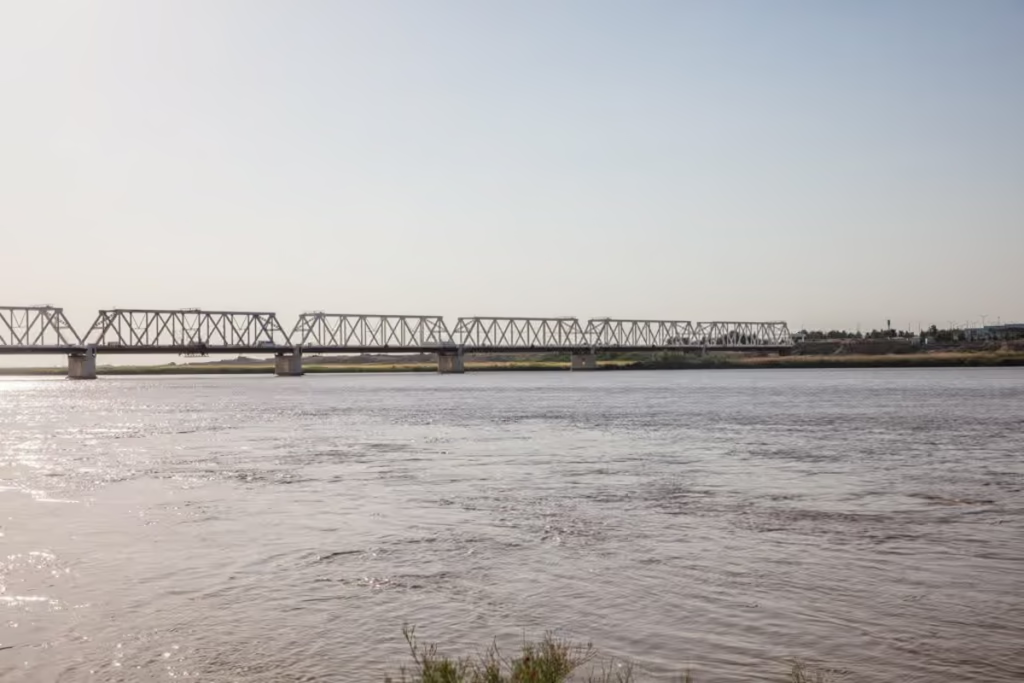
Uzbekistan-Afghanistan Border Crossing at Hairatan
Karakalpakstan Travel Guide
Uzbek Fergana Valley Travel Guide
Two Week Uzbekistan Itinerary: 14 Days
Tajikistan Uzbekistan Itinerary: 2 Weeks
Solo Female Travel in Central Asia
Uzbek Food: 33 Dishes to Try
Kazakhstan-Uzbekistan Border Crossing
Solar Furnace Uzbekistan: Visit Guide
Panjakent-Samarkand Border Crossing Guide
Nukus Travel Guide: Things to Do
Central Asia Travel Guide

Oybek Border Crossing: Tashkent to Khujand
Best Restuarants in Tashkent
10 Essentials to Pack for Central Asia
A Guide to the World Nomad Games
Visiting the Aral Sea Disaster, Uzbekistan
Central Asia Travel Tips

Vegetarian in Central Asia
Central Asia Visas Guide
Shahrisabz Travel Guide
Khiva Travel Guide
Termez Travel Guide
Things to Do in Uzbekistan
Samarkand Travel Guide: 14 Best Things to Do
Khorezm Fortresses, Uzbekistan
The Best SIM Cards & eSIMs for Uzbekistan
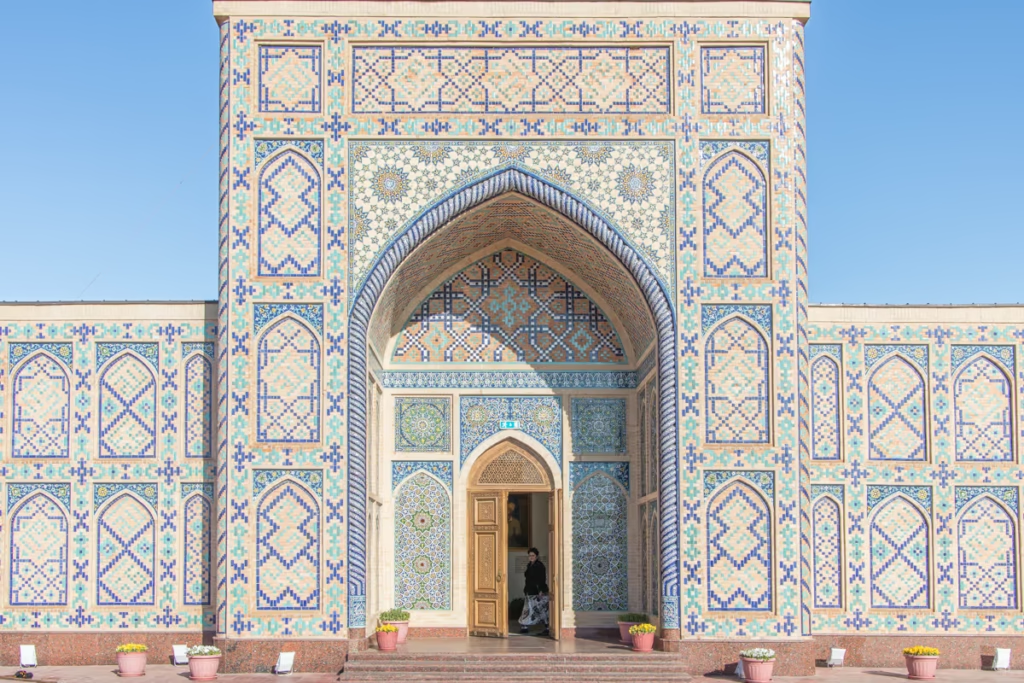
Solo Female Travel in Uzbekistan
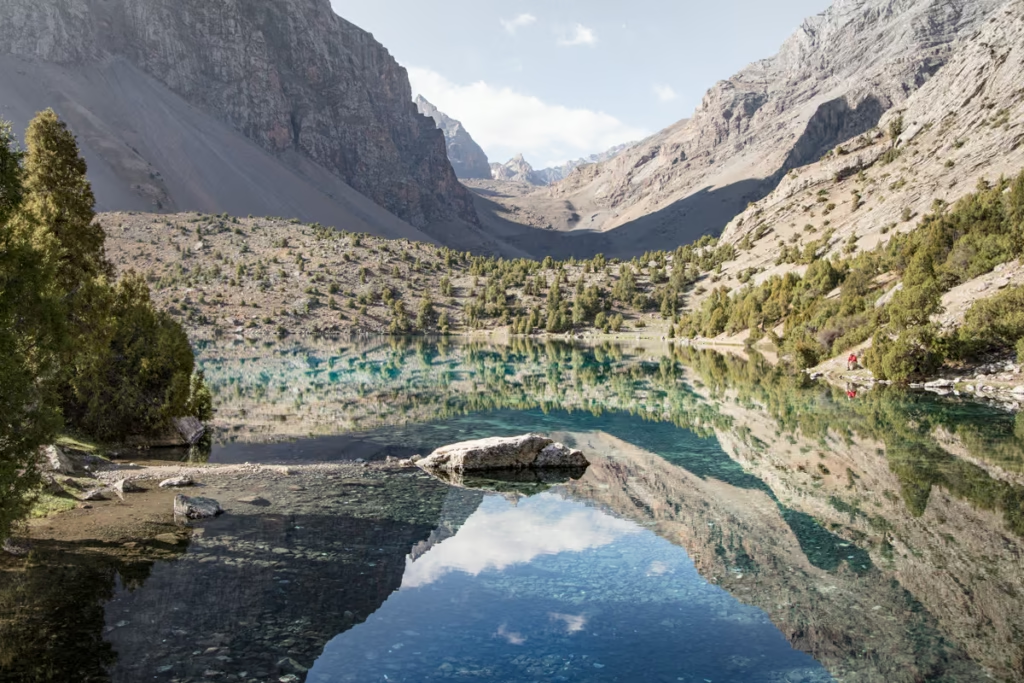
Off the Beaten Path Asia