Khujand Travel Guide: 11 Things to do in Khujand
Updated October 2026, Khujand Travel Guide: 11 Things to do in Khujand was originally written in December 2017
Khujand is one of the oldest cities in Central Asia and the historic heart of northern Tajikistan. Sitting on the Syr Darya River in the Tajik Fergana Valley, the city has a distinctly different feel from Dushanbe, with a lively bazaar, Islamic architecture, Soviet mosaics, an ancient fortress and plenty of reminders of its long Silk Road history.
Khujand is also an easy place to explore on foot, and most of the main sights can be visited in one or two days. Beyond the city, there are unusual day trips ranging from the former uranium-mining town of Istiklol to the Akhkon Salt Flats and the village of Ashti Bolo.
I’ve spent considerable time traveling through northern Tajikistan, including returning to Khujand in 2025 and 2026, and this guide covers the best things to do in Khujand, how to get there, where to stay, where to eat, and the best places to visit around the city.
Start here: The Ultimate Tajikistan Travel Guide
Need Travel Insurance and Evacuation Services?
Start shopping for travel insurance plans over at IATI Insurance. Readers of the Adventures of Nicole get a 5% discount off your plan.
The Adventures of Nicole partners with Global Rescue to offer the world’s leading medical evacuation and security advisory services. To travel with peace of mind, explore their evacuation coverage.
A Quick History of Khujand
Khujand has been an important settlement for more than 2,500 years and developed into a major center along the Silk Road. The city is traditionally associated with Alexander the Great’s eastern campaigns and later became an important Sogdian and Islamic cultural center. With its longstanding hhistory, Khujand is one of the country’s major historical and cultural destinations.
During the Soviet period, Khujand was renamed Leninabad. The name reverted to Khujand in 1991. The city was comparatively removed from much of the fighting during the Tajik Civil War of the 1990s, and today its streets preserve a particularly interesting mix of Persianate, Islamic and Soviet-era history.
How Many Days Do You Need in Khujand?
Plan to spend 1–2 days in Khujand. One full day is enough to see the city’s major sights, including Panjshanbe Bazaar, the Sheikh Muslihiddin complex, Masjidi Jami Mosque, Khujand Fortress, the city’s Soviet mosaics and the Kamoli Khujandi Park area.
With two days in Khujand, you can explore more slowly, visit some of the city’s smaller museums and monumental art, and maybe squeeze in a half-day trip outside the center. If you have three days or more, Khujand makes a useful base for exploring northern Tajikistan.
I’d personally recommend two nights if your itinerary allows it. Khujand isn’t a city where you need to race from attraction to attraction. Some of its best moments come from wandering the streets, eating at the bazaar and watching everyday life along the Syr Darya.
Best Time to Visit Khujand
The best time to visit Khujand is spring and fall, when temperatures are generally comfortable for walking around the city and exploring nearby sights. April to May and September to October are particularly pleasant.
Summer can be sitfling hot in the Fergana Valley, while winters are cold, gray, and feature a whipping bitter wind. I personally like fall, when the weather is crisp and the city is still lively without the intense summer heat. If you’re planning day trips into the surrounding mountains, check conditions separately as temperatures can be considerably cooler at higher elevations.
How to Travel to Khujand
Khujand is in northern Tajikistan’s Fergana Valley and is geographically much closer to Uzbekistan and Kyrgyzstan than it is to Dushanbe. That makes it an important gateway for overland travel through Central Asia.
You can reach Khujand by plane or overland transport. Shared taxis and marshrutkas connect the city with Dushanbe, Panjakent, Istaravshan, Isfara and border crossings toward Uzbekistan and Kyrgyzstan
By Plane
Khujand International Airport is located about 15–20 km from the city center near the town of Buston, (formerly Chkalovsk). Flights connect Khujand with Dushanbe and a number of destinations in Russia, although schedules are subject to change. Check the current timetable before planning around a specific flight.
By Minibus/Shared Taxi
From Khujand to Dushanbe
Shared taxis and minibuses to Dushanbe depart from Pakhtakor Bus Station. Journey times vary depending on road conditions and stops, so allow most of a day rather than planning a tight connection.
From Khujand to Panjakent
Transport to Panjakent also departs from Pakhtakor Bus Station. This is useful if you’re continuing toward the Haft Kul, Fann Mountains or the Panjakent-Samarkand border.
From Khujand to Uzbekistan
For Uzbekistan, Abreshim Bus Station is useful for transport toward the Oybek border crossing and onwards to Tashkent. Khujand is also well positioned for reaching the Uzbek Fergana Valley via the Beshariq Border Crossing that connects Konibodom to Kokand.
From Khujand to Kyrgyzstan
Isfara Avtostanitsa has transport toward Isfara, where you can continue toward the Kyrgyzstan border crossing to Batken and onwards to Osh.
Where to Sleep in Khujand
Most visitors should stay around central Khujand, particularly near the Citadel, Kamoli Khujandi Park and Panjshanbe Bazaar. This puts many of the city’s main attractions within walking distance and makes it easier to explore without constantly arranging taxis
Budget
Qalai Khujand Hostel
| Booking.com |
Midrange
Golden Apartments
| Booking.com |
Splurge
Khujand Grand Hotel
| Booking.com | Hotels.com |
Things to do in Khujand
Panjshanbe Bazaar
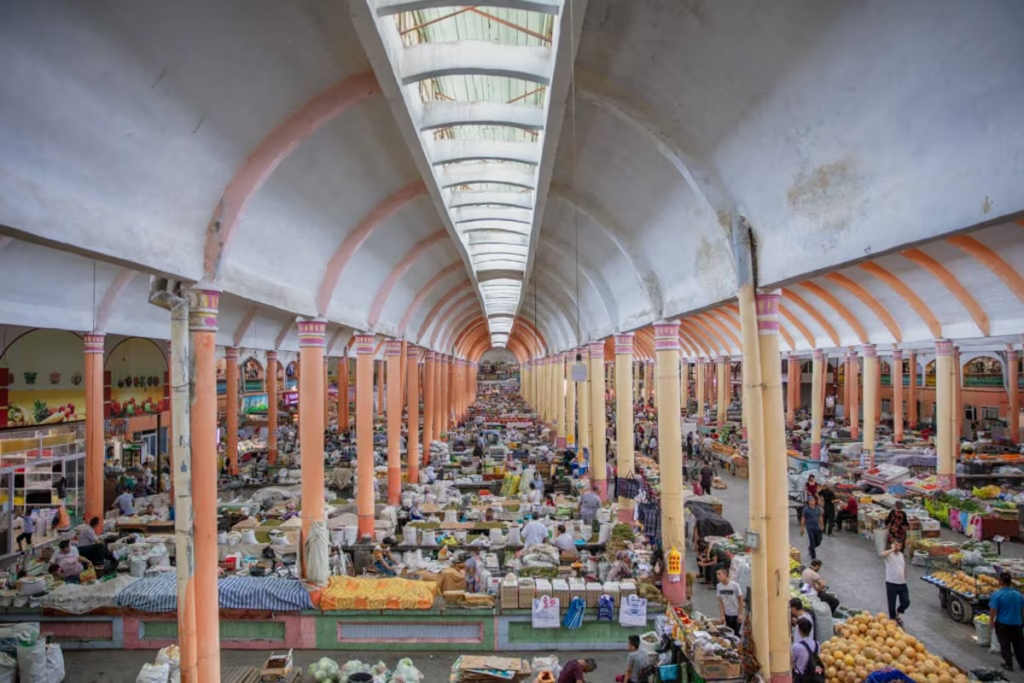
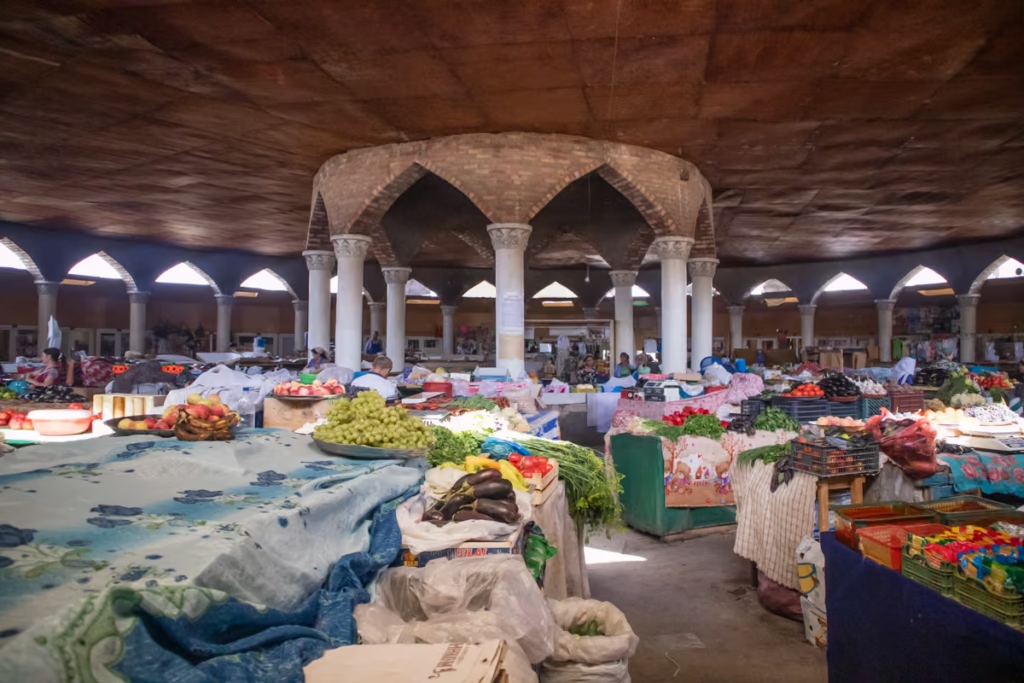
Panjshanbe Bazaar is the best place in town to pick up, well, anything. The famed bazaar is decorated in a retro 70s pink and lime green with massive archway entrances in a grand Soviet-era-meets-Arabian-Nights style, what a welcome.
Panjshanbe Bazaar is one of the first places I’d visit in Khujand, myself. The sprawling market sits beside the Sheikh Muslihiddin complex and is where you get the strongest dose of everyday Khujand.
Panjshanbe means “Thursday” in Tajik, although the bazaar operates beyond Thursdays. Thursday has traditionally been its busiest day, so if your schedule happens to line up, that’s when I’d go.
Inside you’ll find mountains of dried fruit, nuts, spices, bread, produce, sweets and other staples of Tajik and Central Asian cuisine. The building itself is worth seeing too, with its colorful Soviet-era façade and enormous decorative entrances.
If you’re wondering what to do in Khujand, don’t skip the bazaar. Even if shopping isn’t your thing, wandering through the market is one of the easiest ways to get a feel for the city
Masjid i Jami Mosque & Madrasa
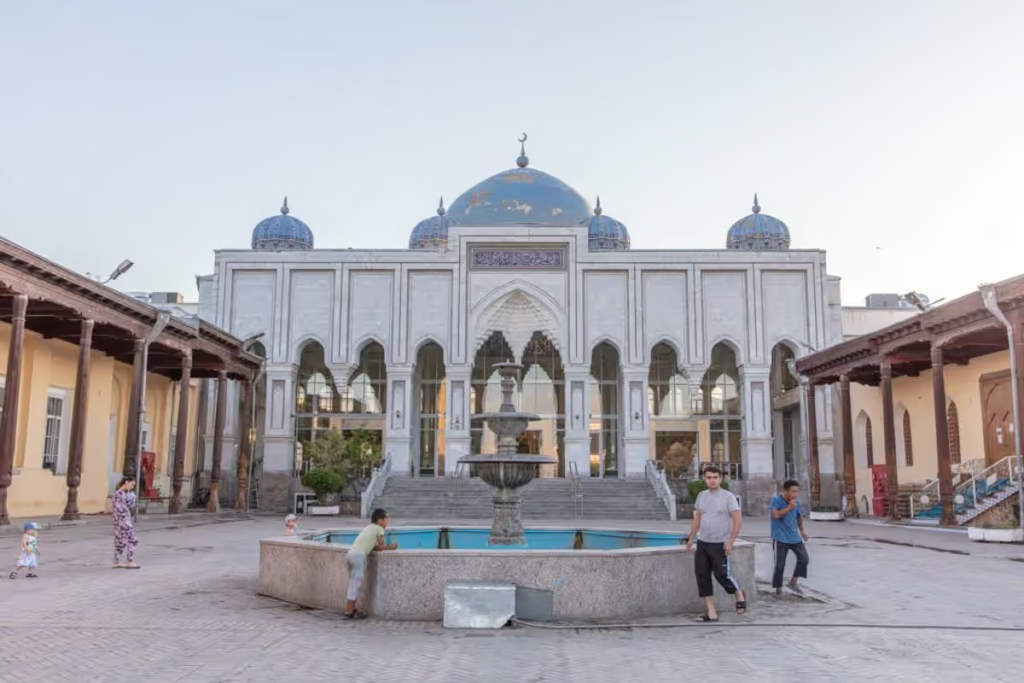
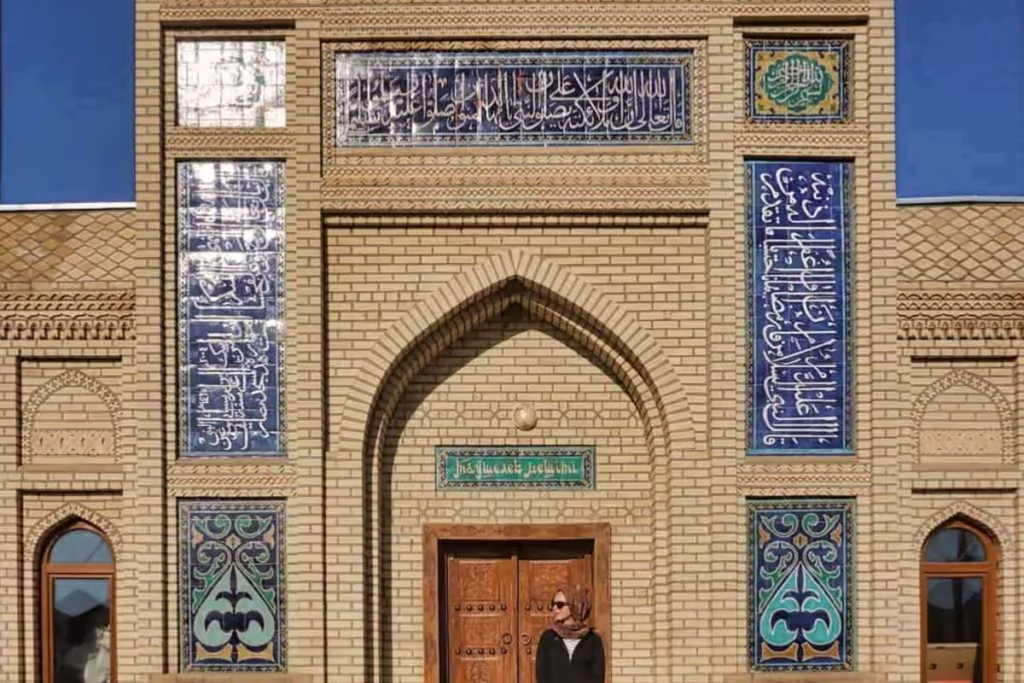
Masjidi Jami, also known as the Friday Mosque, stands beside the Sheikh Muslihiddin complex and Panjshanbe Bazaar. The present mosque and madrasa date to the 16th–17th centuries and are among Khujand’s most important historic Islamic buildings. Masjidi Jami and the nextdoor Sheikh Muslihiddin Mausoleum are two of the city’s principal historic monuments.
Sheikh Musil ad Din Mausoleum
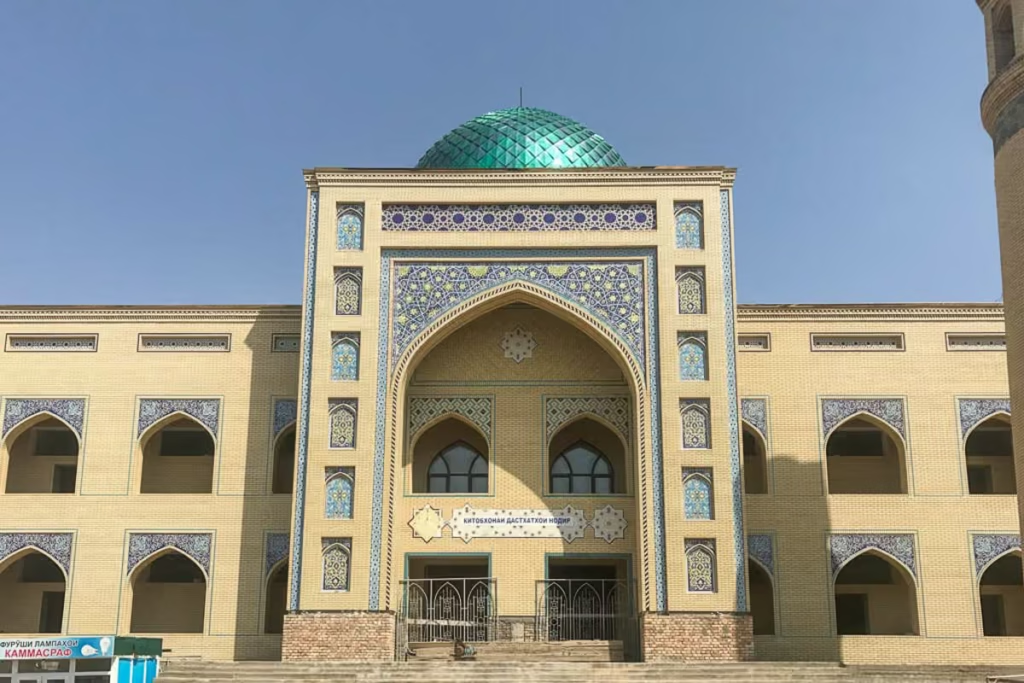
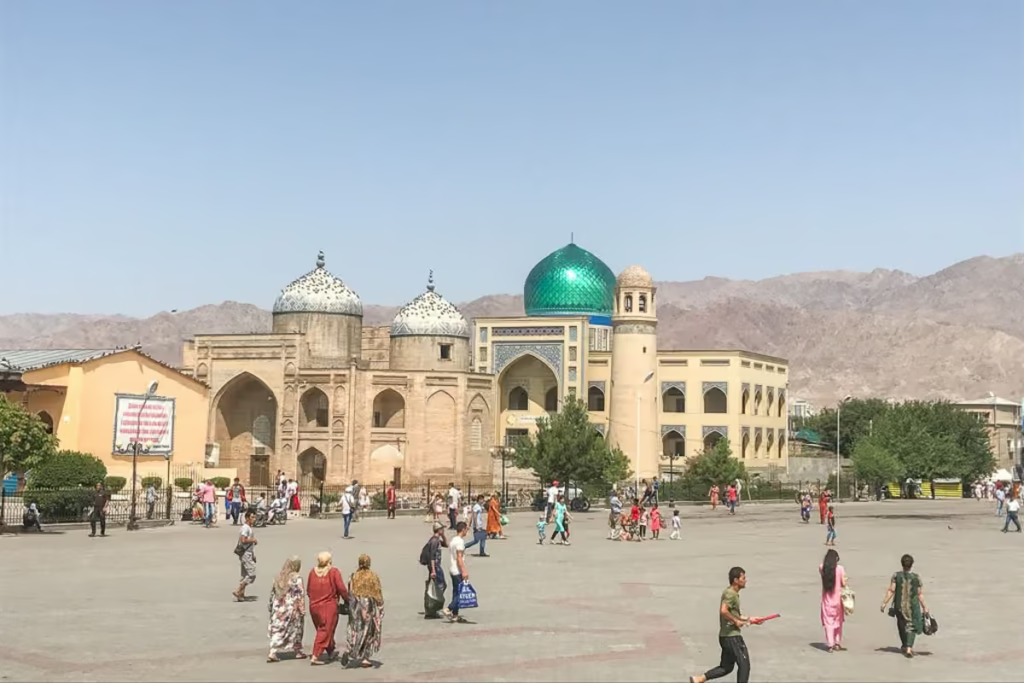
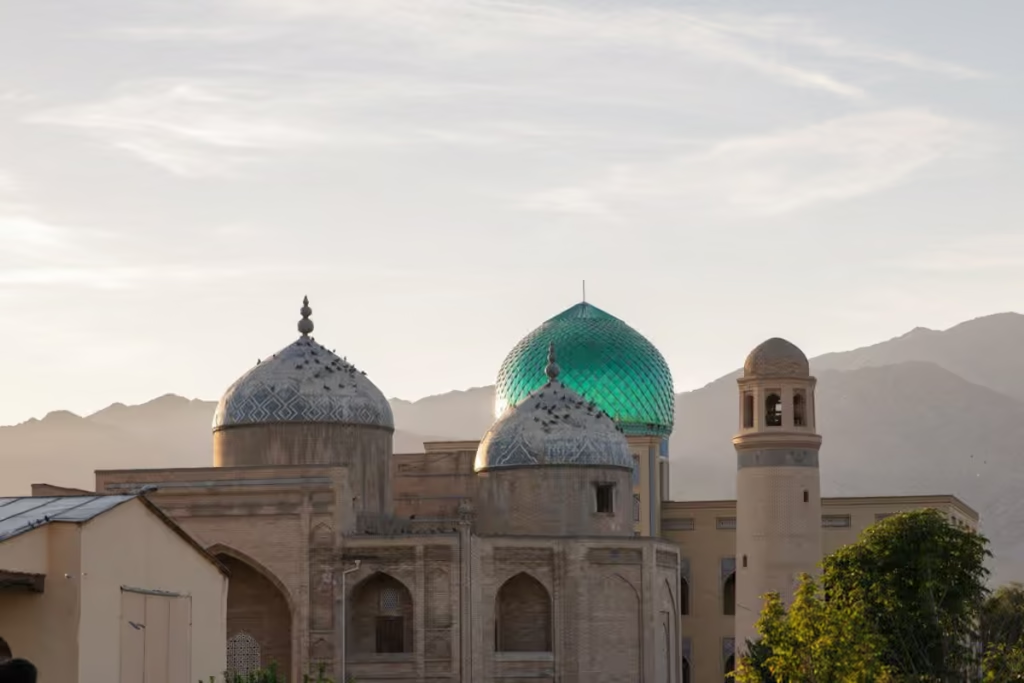
You can’t really miss the enormous turquoise dome beside Panjshanbe Bazaar– Sheikh Muslihiddin Mausoleum is one of the most recognizable landmarks in Khujand. The complex is dedicated to Sheikh Muslihiddin, a 12th-century poet and religious figure associated with the city.
The current complex reflects several periods of rebuilding. The original mausoleum was destroyed during the Mongol invasions and later reconstructed, with additional structures added over subsequent centuries.
I particularly like wandering around the grounds rather than simply checking the mausoleum off a sightseeing list. Locals gather here, children play, and the complex feels like part of the living city rather than an isolated historical monument.
Going to the Fergana Valley city of Istaravshan too? Read the Istaravshan Travel Guide to plan your visit
Soviet Mosaics, Murals & Monumental Art
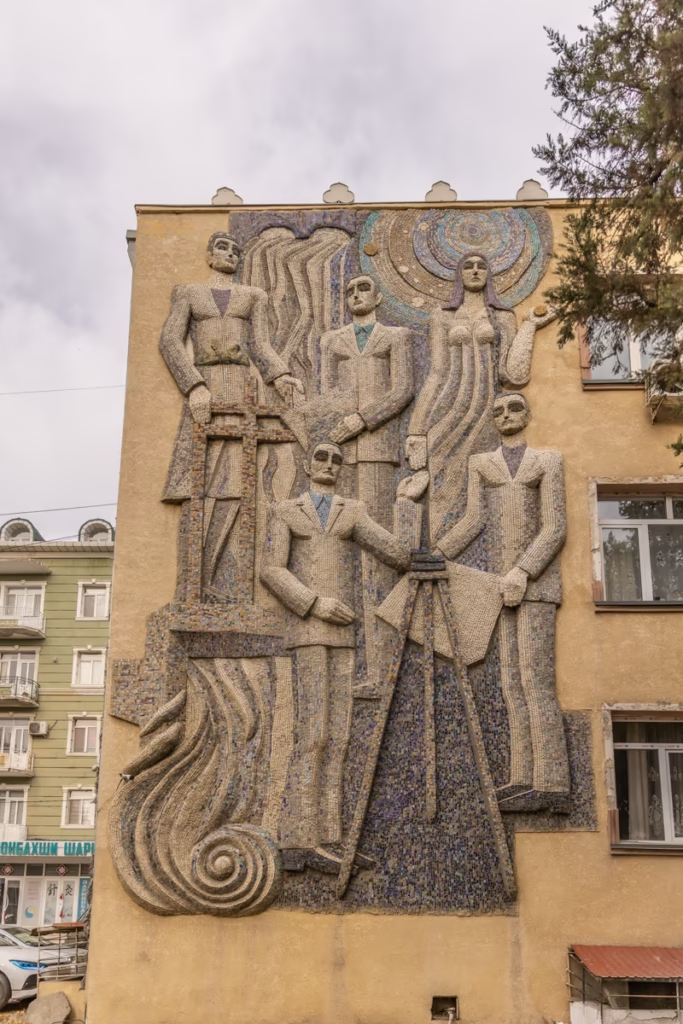
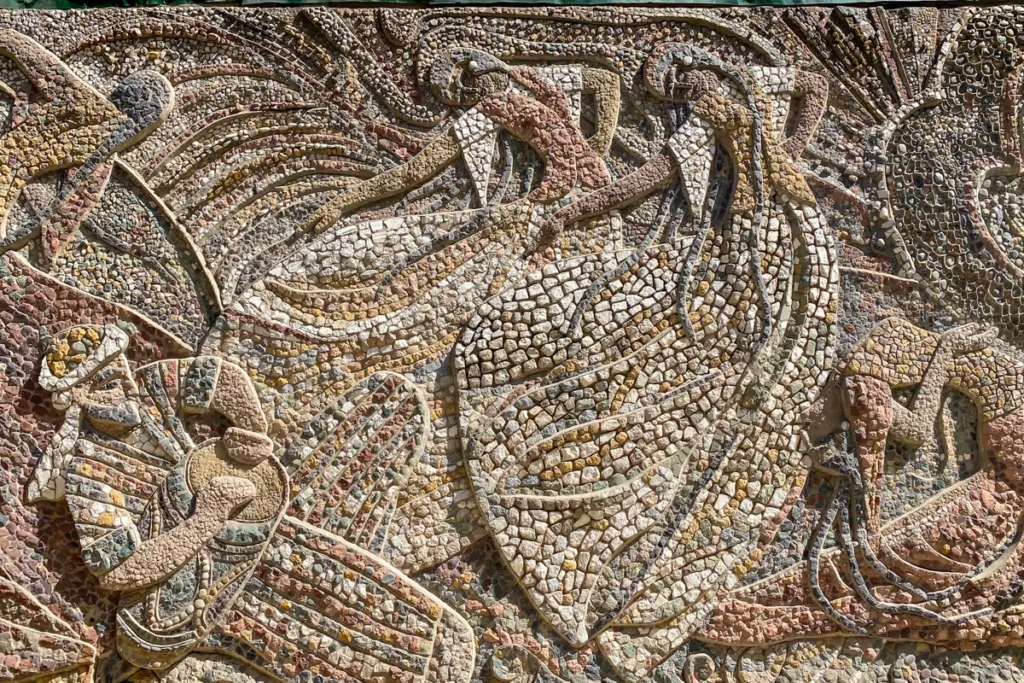
One of my favorite things to do in Khujand is hunt for Soviet mosaics, murals and monumental art.
Khujand still has a surprisingly good collection of Soviet-era public art scattered around the city. Unlike a conventional museum, there’s no single building where you can see it all. You have to wander, look up, and occasionally wonder why the most interesting artwork in town is attached to an otherwise completely unremarkable government building.
The collection includes mosaics depicting workers, agriculture, education, music and other themes that were central to Soviet public art. Some pieces are tucked into courtyards or side streets, so this is one attraction where simply walking around pays off.
Khujand is just starting to see the (in my opinion, devastating) development that has gone on in Dushanbe that has destroyed several of the Dushanbe Mosaics. So, there ar e still heaps of beautiful mosaics, murals, and monumental art around the city to see.
Khujand College of Art
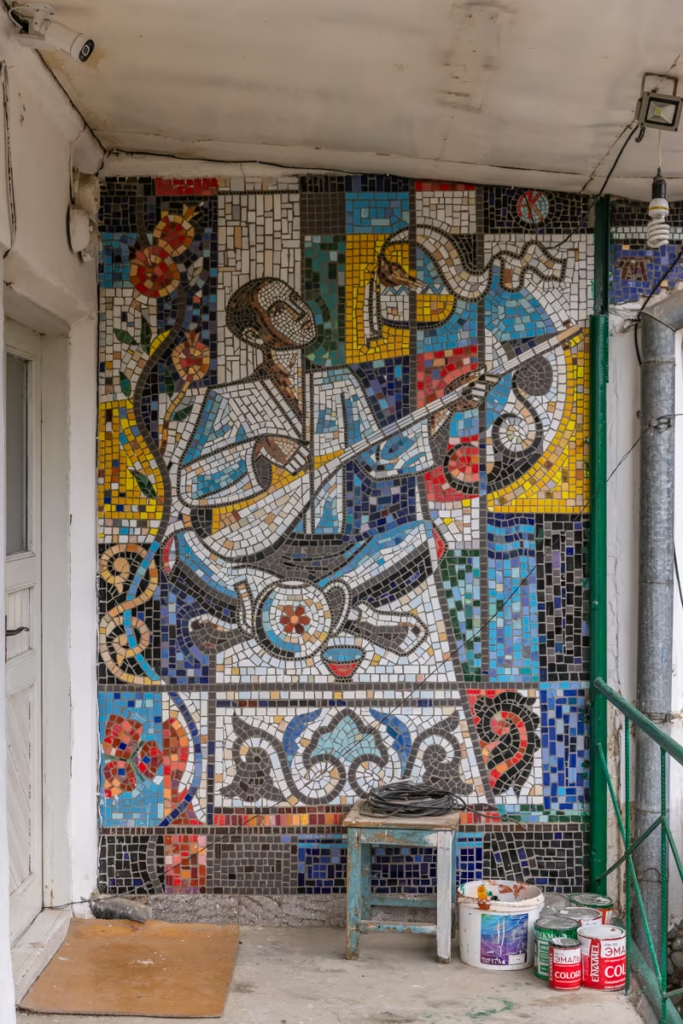
I stumbled across the Khujand College of Art while wandering around the city on a cold, rainy November afternoon. The exterior walls immediately caught my attention, with several mosaics and artworks visible around the courtyard.
I popped into the entrance office and asked if I could have a look inside. The man there said yes, called a staff member, and a woman came down to show me around.
She was genuinely excited to have a visitor, explaining that foreign travelers don’t exactly form a stampede through the college. She gave me a full tour of the property, including the mosaics and other artwork created by students and staff.
If you want to visit, go in the morning when the college is most active. Access is informal, so be respectful and understand that you may not always be able to enter.
Citadel & Kamoli Khujandi Park
Khujand Fortress is one of the most important historical sites in the city. The origins of the settlement here stretch back more than 2,500 years, while the fortress itself has been repeatedly destroyed and rebuilt over the centuries. Tajikistan’s tourism authority identifies the fortress as one of Khujand’s principal historic attractions
I returned to Khujand in 2025 and was surprised by how much the citadel had been rebuilt. If you’ve seen older photos of the site, don’t expect everything to look exactly the same.
If you stay at Qalai Khujand Hostel, you get to sleep inside the citadel too. You will need to tell the guards at the entrance this, as you would otherwise need to pay an entry fee to enter the citadel grounds.
Historical Museum of Sughd
Located inside the southeastern corner of Khujand Fortress, the Historical Museum of Sughd is the place to go if you want a broader look at the history of northern Tajikistan. The exhibits cover the Sughd Region from ancient times through the medieval period and into the Soviet era, with archaeological finds, historical artifacts, traditional clothing, coins, weapons, and displays on local culture.
Some of the oldest material relates to the ancient civilizations that flourished around the Fergana Valley and Syr Darya, including the periods associated with Alexander the Great and the Sogdians.
The museum isn’t enormous, but it’s worth visiting while exploring the fortress since it helps put the ruins and reconstructed buildings around you into context. Allow around 30–60 minutes for a visit.
Archaeological Museum
The small Archaeological Museum occupies part of the restored Khujand Fortress and focuses specifically on the city’s ancient past.
Inside you’ll find archaeological discoveries from Khujand and the surrounding Sughd Region, including pottery, tools, coins and other artifacts that illustrate the area’s long history as a crossroads between Central Asia and the wider Silk Road.
One of the more interesting parts is seeing old plans and information about the original fortress and settlement. After walking around the heavily reconstructed citadel, the archaeological exhibits offer a useful reminder that Khujand’s history goes much deeper than the buildings you see today.
It’s a small museum, so you won’t need much time here, but I’d combine it with the Historical Museum of Sughd and the other sights inside Khujand Fortress rather than making a separate trip.
Kamoli Khujandi House Museum
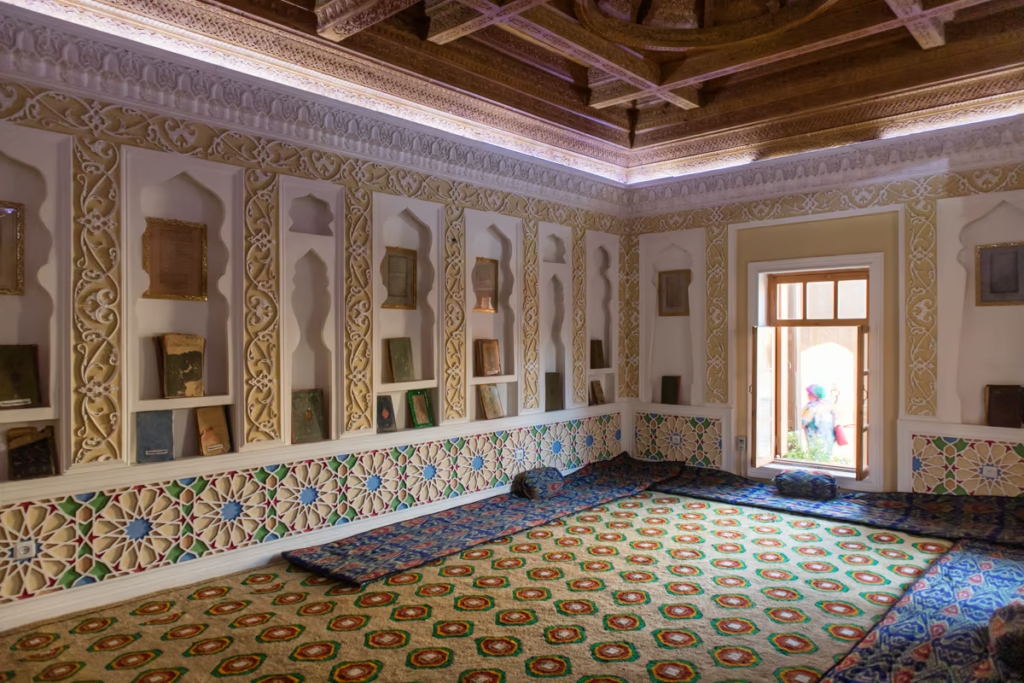
Just outside the western side of Khujand Fortress is the Kamoli Khujandi House Museum, dedicated to one of the city’s most famous sons.
Kamoli Khujandi was a celebrated 14th-century Persian poet born in Khujand. He later moved to Tabriz, in present-day Iran, where he spent much of his later life and eventually died. His poetry earned him a reputation as one of the major romantic poets of the period.
The museum recreates what a prosperous home in the region might have looked like during his era, with traditional architectural details, rooms and household furnishings.
Even if you’re not particularly interested in Persian poetry, it’s worth stopping in to get a feel for how wealthy households in Khujand were traditionally arranged. It also adds some cultural context to the city’s Persian literary heritage, which can otherwise be easy to overlook when you’re busy ticking off fortresses and Soviet mosaics.
Kamoli Khujandi Mausoleum
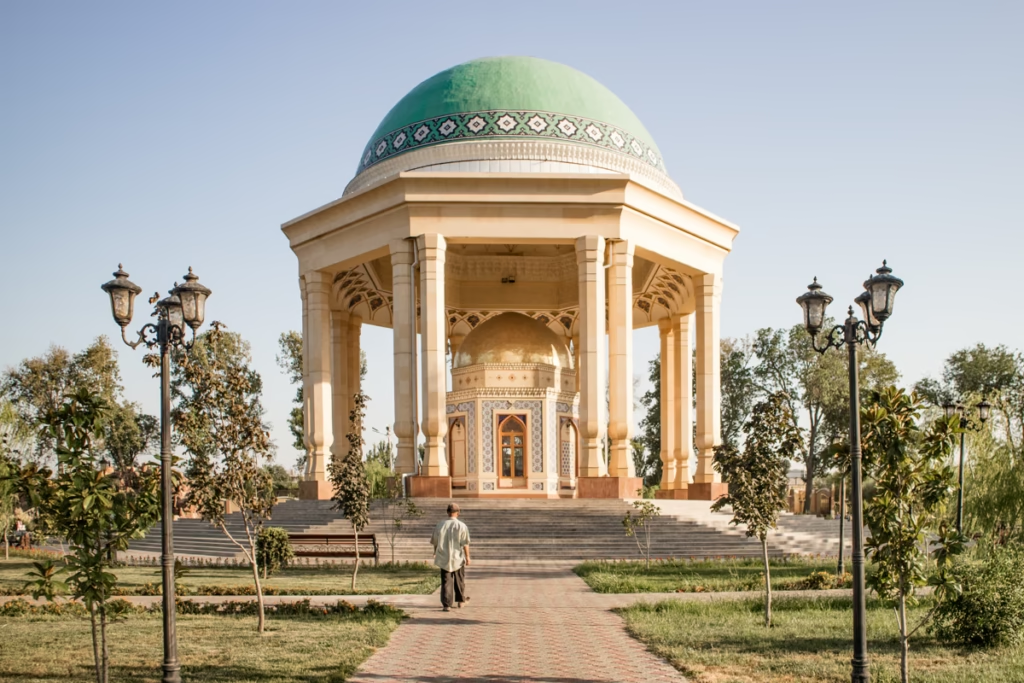
Inside Kamoli Khujandi Park, just north of the Khujand Fortress, you’ll find the mausoleum and monument dedicated to Kamoli Khujandi.
The mausoleum has an ornate exterior with intricate decorative work, making it worth getting close enough to appreciate the details rather than simply photographing it from across the park. A statue of the poet stands nearby.
The park itself is a pleasant place to wander after exploring the fortress, particularly if you need a break from Khujand’s busy streets. Locals gather here throughout the day, and the area around the mausoleum feels much more like a living public space than a formal historical monument.
Zeravshan Tourism Development Association
If you have questions about traveling in the northwest of Tajikistan, including the Tajik Fergana Valley, Fann Mountains, Yagnob Valley, and Zeravshan Valley this is the place to go. Located inside Kamoli Khujandi Park next to the Citadel.
Kamoli Khujandi Theatre
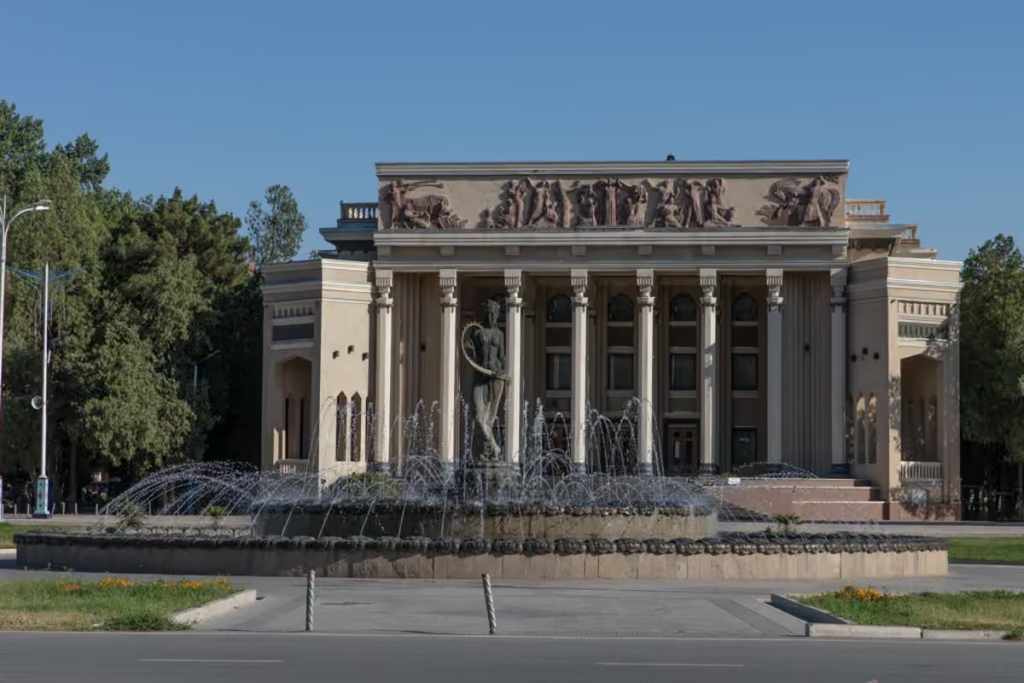
Just south of the citadel sits the Kamoli Khujandi Theatre, inside are countless photos of various shows that have taken place at the theatre.
I was shown around the theatre by a local who starred in many shows here. The day I was there a small craft bazaar was taking place inside.
Ismoil Somoni Park
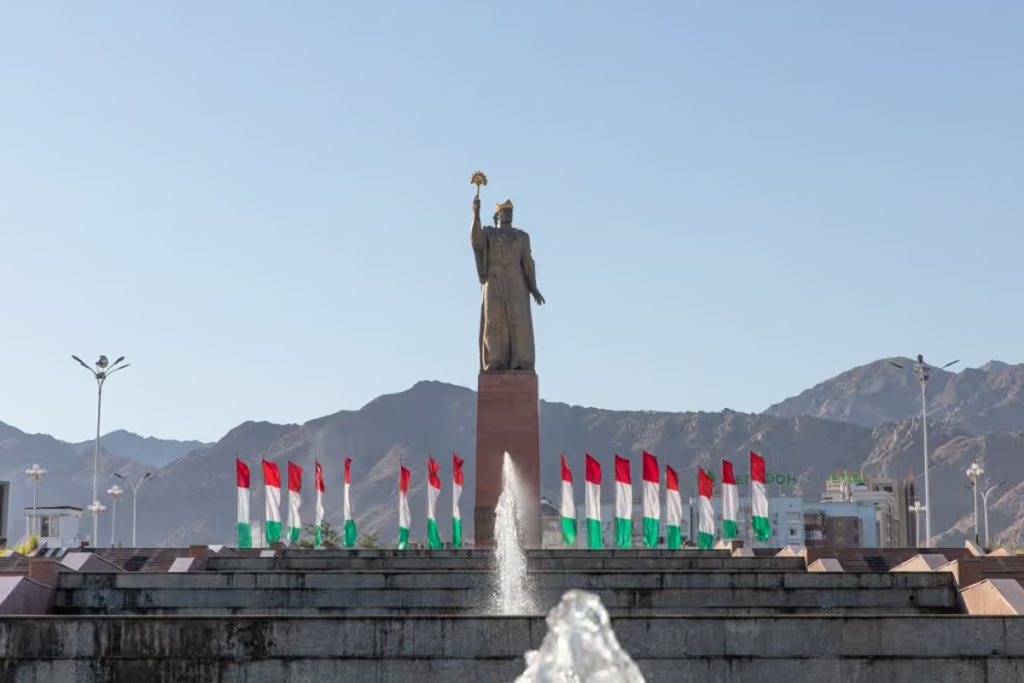
On the opposite side of the Syr Darya River from the Citadel is Ismoil Somoni Park, dedicated to the Samanid ruler himself. One of the most interesting attractions of the park is the mosaic work depicting Tajik scenes.
Largest Lenin Statue in Central Asia & Victory Park
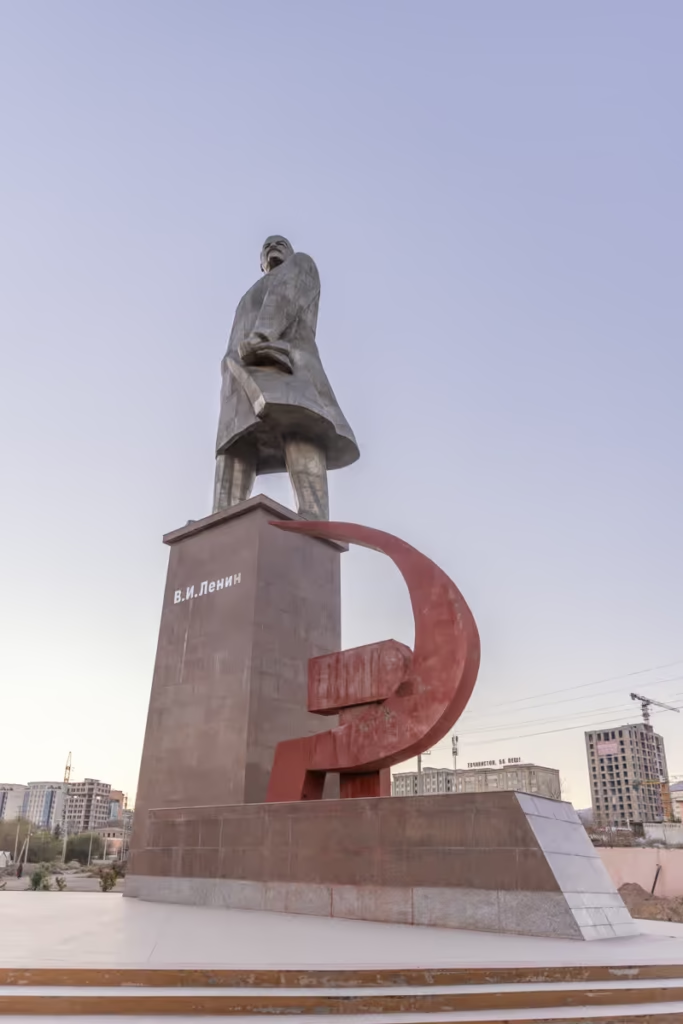
One of Khujand’s well-known attractions is the enormous Lenin statue standing in Victory Park across the Syr Darya.
The monument originally stood in the center of Khujand when the city was still called Leninabad. It was removed from its central location in 2011 and relocated to Victory Park. Contemporary reporting described it as the largest Lenin monument in Central Asia.
Today, the statue stands well away from the central tourist area and out in the microdistricts, making it feel even more surreal. It’s worth combining with a walk along the river or a trip across the city’s cable car if it’s operating
Ride the Khujand Cable Car
If it’s operating during your visit, take the cable car across the Syr Darya. The ride gives you a completely different perspective of Khujand, particularly the river and city parks.
It also makes getting across the river more fun than simply jumping in a taxi. The cable car has not always operated consistently, though, so treat it as a bonus rather than something to build your entire itinerary around.
WWII Monument & Eternal Flame
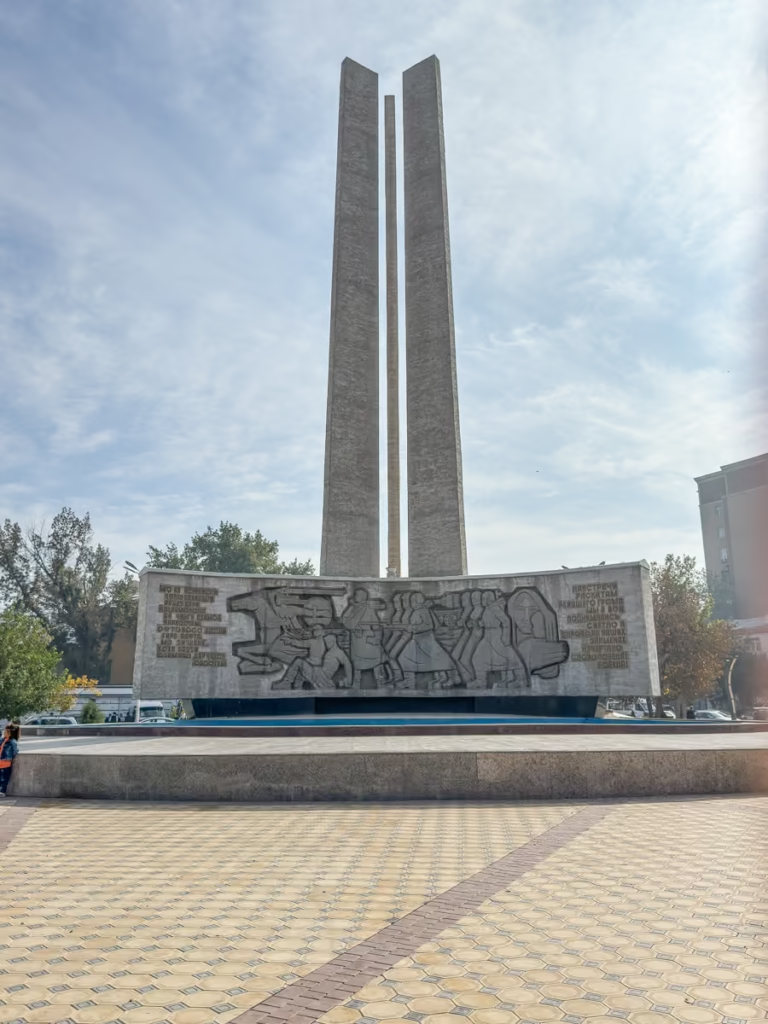
It wouldn’t be a post-Soviet city if there wasn’t a WWII Memorial & Eternal Flame. The Memorial is near Panjshanbe Bazaar. Nearly 300,000 Tajiks fought for the Soviet Union during WWII.
Off to Dushanbe before or after Khujand? Check out my Dushanbe Travel Guide for more
Where to Eat in Khujand
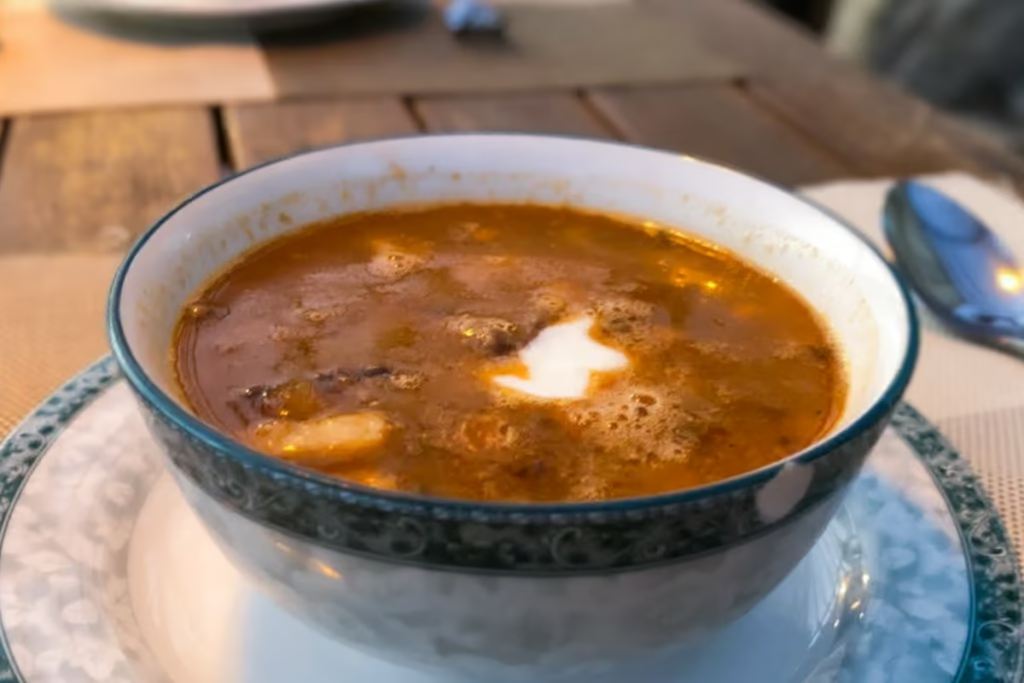
Khujand’s food scene is a reflection of its location in the Fergana Valley, with Tajik, Uzbek and broader Central Asian influences. Don’t leave without trying local dishes at least once, particularly if you spot foods you haven’t encountered elsewhere in Tajikistan.
Zaytun: Located on the north side of the Syr Darya River. Zaytun serves up a good variety of Tajik and Central Asian dishes. If there’s one dish I’d seek out specifically in Khujand, it’s javari, a soup made from a locally grown pulse called javari together with mung beans, carrots, onions and beef. It’s one of those dishes that makes traveling beyond the standard tourist circuit worthwhile because you’re eating something strongly tied to the local region.
Golden Fish: Featuring an array of international dishes, Golden Fish is a great place for taking larger groups. They also have excellent outdoor seating.
Cafe Ravshan: A Khujand favorite that’s been around since the late 90s serving up the usual Tajik and Central Asian fare. Conveniently located near Kamoli Khujandi Park and the Citadel.
Best Day Trips from Khujand
Istiklol (formerly Taboshar)
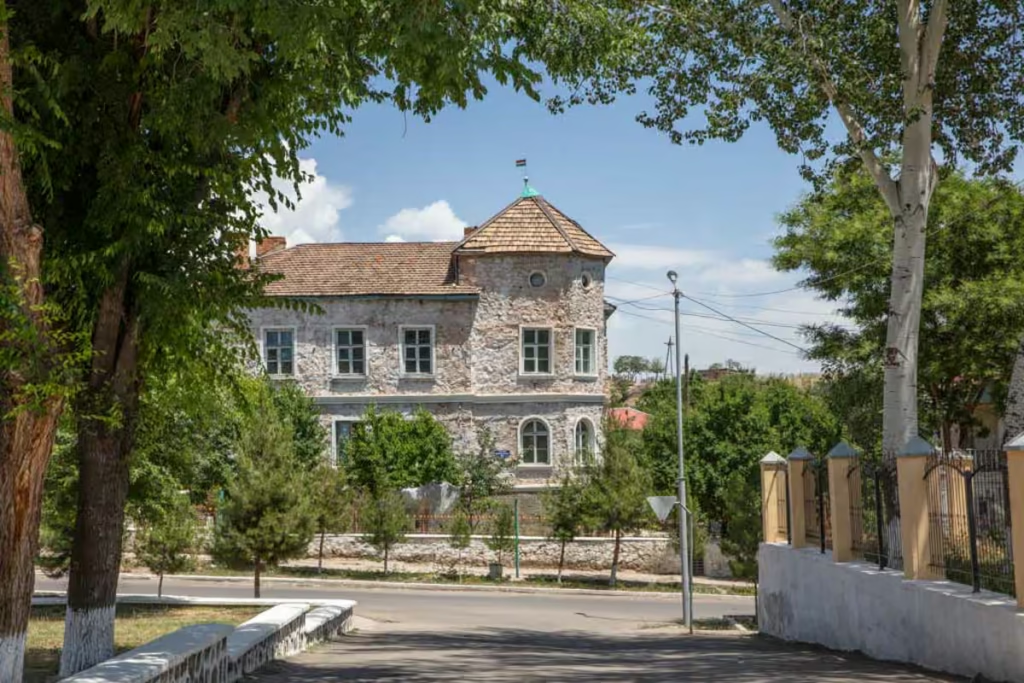
Located just a short 40 minute drive to the north, the small town of Istiklol (formerly Taboshar) makes for an unusual half-day trip from Khujand.
In the 1930s, Taboshar was the largest uranium mining site in all of the Soviet Union, inhabited mostly by ethnic Germans who had been brought there, though the mine ceased operations in the early 1990s.
These Germans were mostly prisoners of war (WWII) or German-Russians who were sent to build the town and work the uranium mines.
Although most of the Germans that once inhabited Taboshar no longer live here (the population was 20,000 at its zenith and is now only 10,000), their architectural legacy lives on through a series of German-style stone houses found around the town.
A short walk (or drive) from the eerily quiet town of Istiklol will bring you to the ruins of the defunct Taboshar Uranium Mine, complete with a radioactive reservoir, open uranium pits, and even old machinery.
It’s definitely an interesting sight to behold, especially for those that have never visited a uranium mine.
Surely it’s not the safest place to visit for an extended period given the radioactivity and all, but a short visit for a look at the reservoir and mining operation is probably okay (I still haven’t grown a second head since my visit).
To get to Istiklol, head to the Abreshim Bus Station and ask for the Istiklol (locals seem to call it Taboshar still) shared taxi.
The shared taxi should cost around 25 TJS per seat and will drop you off at the main square along Prospekt Istiklol on the southern side of town (this is also where you’ll find return shared taxis).
If you are on a time crunch and don’t want to wait around for a shared taxi to fill up on the way there or back you can easily hire a taxi from Khujand for a return trip to Istiklol. Plan to pay about 150-200 TJS for the car, including waiting time.
Plan your visit to the former uranium mines of Taboshar
Akhkon (Buloq) Salt Falt
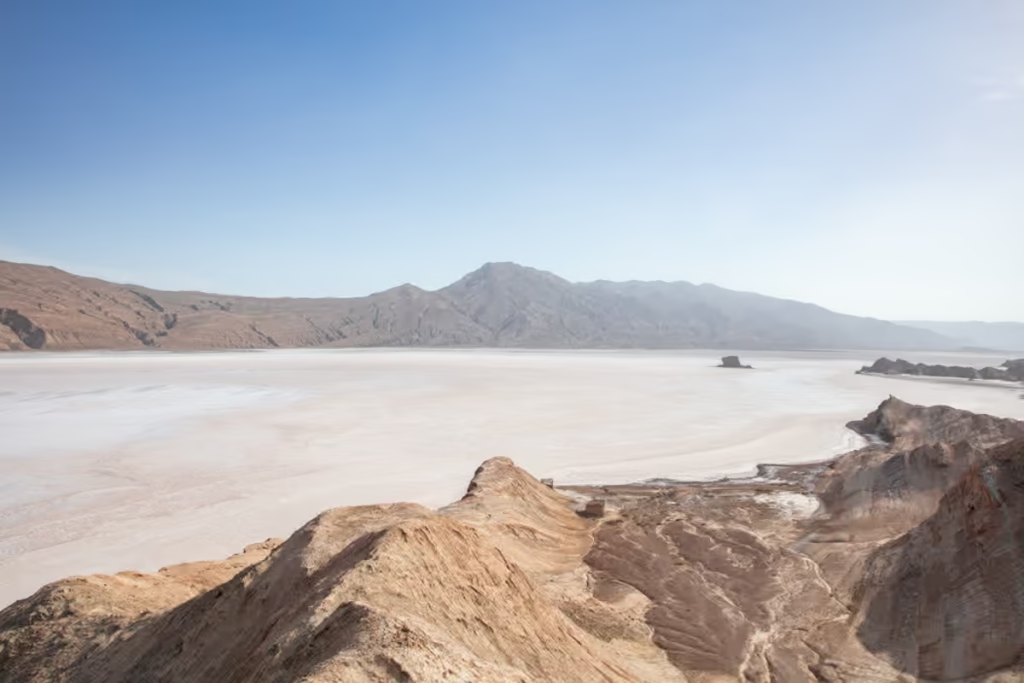
Did you know just a couple of hours outside of Khujand, there’s a decent-sized salt flat? Well, neither did I, that is, until a local friend let me in on the secret. Think like a baby Salar de Uyuni without the crowds and with a healing mud bath.
The Akhkon Namak Koni (Akhkon Salt Mine) is located about a 90 minute drive to the northeast of Khujand, making a unique day trip from the city.
Similar to the much more famed Salar de Uyuni of Bolivia, Bonneville Salt Flats of Utah, and the Etosha Pan of Namibia, the Akhkon Salt Flat was once a saline lake that evaporated long ago, leaving behind a blindingly white field of salt.
An unusual feature of the Akhkon Salt Flats is the healing black mud below the salted crust surface that attracts locals from all around the Sughd Province.
It’s believed that the mud can cure a number of ailments, many of which afflict the skin. For mud treatments, there’s a men’s and a women’s side, both are located on the northeast edge of the salt flat, conveniently separated by a narrow spine of mountains.
To get to the Akhkon Salt Flats you can look for an Asht or Buloq bound shared taxi or marshrutka from the Abreshim Bus Station and hop off at the turn-off for Akhkon (you can’t miss the giant sign with ‘Ахкон’ written on it), and walk the remainder of the way in.
Alternatively, you can easily hire a car from Khujand to bring you there and back. On summer and early fall weekends, you can probably hitch a ride from the city as it’s a common location to go relax.
Learn how you can visit the Asht Salt Flat yourself
Ashti Bolo
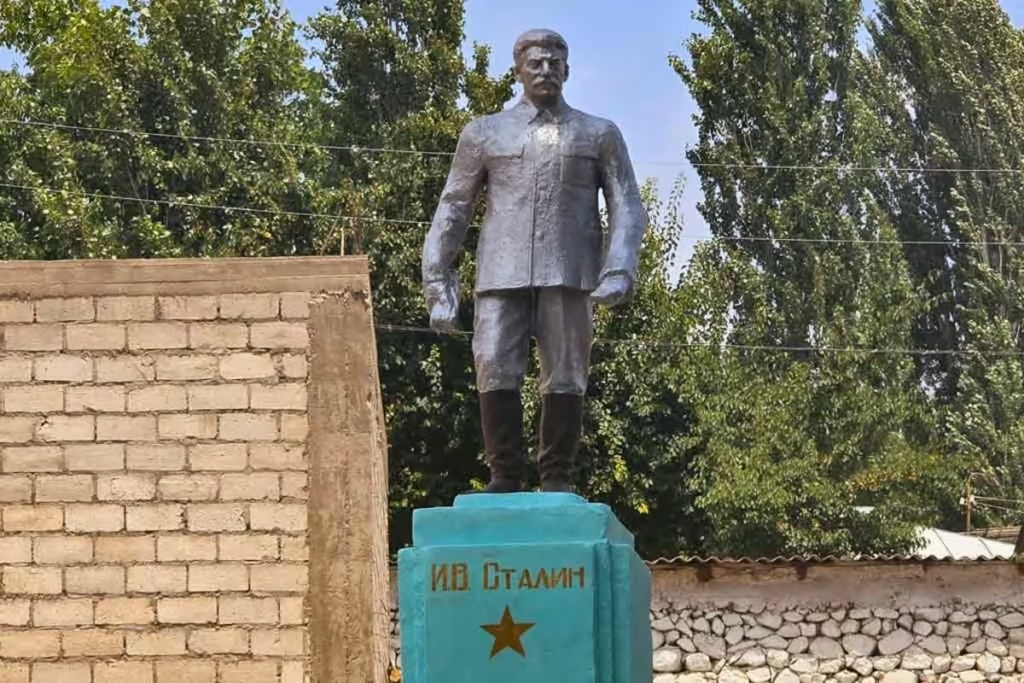
Ashti Bolo is a small village not too far from the above-mentioned Salt Flat. The main attraction here is to gawk at an old Soviet relic hidden in the courtyard of a kindergarten- a Stalin statue.
Read more about Bekah’s adventure to Ashti Bolo in the post, The Definitive Guide to Ashti Bolo.
Arbob Cultural Palace
About 6 km from central Khujand, the Arbob Cultural Palace is one of the most unusual places to visit near the city.
Built in the 1950s, the palace was associated with the Soviet collective-farm system and was modeled after Peterhof near St. Petersburg. The complex includes a grand palace, gardens, fountains, cultural spaces and a museum.
Arbob also has an important place in Tajikistan’s modern history. The palace hosted the 16th Session of the Supreme Council in 1992, a major political gathering during the country’s early independence and civil-war period.
Allow around 1–2 hours for the visit. You can combine Arbob with your Khujand sightseeing. Marshrutkas do connect the city center to Arbob as well.
Khujand Safety & Health
In general Khujand and the whole of Tajikistan is a safe country to visit. Apply common sense that you would anywhere else. Here are a few things to be mindful of:
- The most likely thing to put a damper on your travel in Khujand and Tajikistan is food poisoning. Try to eat in places where there are lots of other people. Also, try to stick to hot and fresh food if you can. At worst, pack Imodium and a broad-spectrum antibiotic to help get you through a bout with food poisoning or a bug.
- Walking around at night should be fine (I’ve done it plenty of times and alone). However, it is advisable to avoid nightclubs as a solo female to avoid any harassment.
- Tap water is generally not safe to drink.
- Petty theft does happen, but it isn’t the norm. Be aware that pickpockets could operate in busy places like bazaars.
- Law enforcement can be corrupt. I have not personally been asked for even so much as a bribe or even threatened by police, border patrol, checkpoint officers or so on. At most I’ve had them hassle me a bit for a missing stamp on my e-visa (never experienced this before), and be flirty with me at GBAO checkpoints and other border points. It is best to carry a passport copy around with you so in the event you are asked by law enforcement for ID while walking around you can hand that over rather than your physical passport. If the police ask to see your ID demand to see theirs first to make sure it’s not a scam.
- In the event of an emergency or you are a victim of crime, it is recommended to contact your embassy before contacting the police.
- Get a travel insurance plan just in case you do get sick or injured. While Khujand has some of the better healthcare options in the country, Tajikistan is not well equipped for serious illnesses or injuries. For more serious ailments you’ll likely need to leave the country and possibly the Central Asia region for treatment.
Visiting Uzbekistan too? Plan your trip with my two week Uzbekistan & Tajikistan itinerary
Have Any Questions About this Khujand Travel Guide or Any of the Things to Do in Khujand Mentioned Above?
Ask your Khujand travel questions in the comments section below. I recommend getting a copy of Bradt Tajikistan to help you plan your visit to Khujand and beyond.
Posts from Tajikistan
Istaravshan Travel Guide: 10 Things to Do
Tajikistan Itinerary: 1-4 Weeks
Afghan Bazaar Khorog | Tem Market
Shokhdara Valley Travel Guide, Tajikistan
Vorukh: A Guide to Tajikistan’s Enclave
Shir Khan Bandar Border Crossing Guide
Tajik Food: 20+ Traditional Dishes
Qolma Pass: Tajikistan to China Guide
GBAO Permit: How to Get One
Lakes Loop, Tajikistan Hiking Guide
Pik Engles Hike: Tajikistan Trek Guide
Tajikistan Border Crossings Guide
Pamir Highway Guide: M41 Route
Tajikistan Uzbekistan Itinerary: 2 Weeks
Solo Female Travel in Tajikistan
Chimtarga Pass Trek Guide | Tajikistan
Best Hikes in Tajikistan
Dushanbe Day Trips
Solo Female Travel in Central Asia
Jizeu, Tajikistan: Trek & Travel Guide
Tajikistan Travel Guide: Plan Your Trip
Dushanbe Travel Guide & Things to Do
Dushanbe Mosaics: Soviet-Era Art in Tajikistan
2 Week Tajikistan Itinerary
3 Week Tajikistan Itinerary
4 Week Tajikistan Itinerary
10 Day Tajikistan Itinerary
1 Week Tajikistan Itinerary
Panjakent Travel Guide: Things to Do

OVIR Registration in Tajikistan: Dushanbe Guide
Panjakent-Samarkand Border Crossing Guide
Fann Mountains Trekking Guide
Central Asia Travel Guide
Tajikistan SIM & eSIM Guide
Shurab, Tajikistan: An Almost Forgotten City

Isfara-Batken Border Crossing Guide

Oybek Border Crossing: Tashkent to Khujand
Best Restuarants in Dushanbe | Where to Eat
Isfara Travel Guide, Tajikistan
Pamir Highway Itinerary: 10 Days from Dushanbe to Osh
Haft Kul: A Guide to the Seven Lakes of Tajikistan
Tajikistan Letter of Invitation (LOI)
Jarty Gumbez, Tajikistan: A Complete Travel Guide
How to Use Payment Terminals in Tajikistan
Shor Bulog Observatory, Tajikistan
Visiting Zorkul, Tajikistan
Visiting the Sary Khosar Nature Reserve
A Guide to Rasht Valley, Tajikistan
Soviet Architecture in Khorog