Dushanbe Mosaics: A Colorful Walk Through Soviet Tajikistan
The Mosaics of Dushanbe: Dushanbe Mosaics: A Colorful Walk Through Soviet Tajikistan was originally published in September 2026
Dushanbe is changing fast. New apartment towers, government buildings, and grand avenues have transformed Tajikistan’s capital over the past decade, but tucked between the newer construction are remnants of an older Dushanbe: enormous Soviet-era mosaics covering apartment blocks, factories, theaters, schools, and public buildings.
I first noticed the mosaics of Dushanbe on my first trip to Tajikistan over a decade ago. I had arrived in the capital with little more than an interest in its Soviet architecture, but colorful walls made from stone, glass, and tile kept catching my eye. The more I looked, the more I realized that Dushanbe was filled with them.
These aren’t simply Soviet propaganda murals. Many of the city’s mosaics combine Soviet monumental art with distinctly Tajik subjects, including Persian literature, Shashmaqom music, Zoroastrian symbolism, agriculture, traditional dress, mountains, science, and everyday life. Academic research into Dushanbe’s mosaic tradition describes these works as a distinctive form of public art that reveals both the ideology of the Soviet period and the cultural identity of Tajikistan.
Unfortunately, many of Dushanbe’s Soviet mosaics are disappearing. Buildings have been demolished or dramatically altered as the city modernizes, taking their mosaics with them. Others remain tucked behind trees, construction sites, apartment blocks, and institutional walls.
So I put together this guide to the mosaics of Dushanbe, including where to find them, who created them, what they depict, and which ones have already disappeared.
Think of it as a giant outdoor art gallery, except the gallery is spread across an entire city and some of the exhibits are being bulldozed.
Need Travel Insurance and Evacuation Services?
Start shopping for travel insurance plans over at IATI Insurance. Readers of the Adventures of Nicole get a 5% discount off your plan.
The Adventures of Nicole partners with Global Rescue to offer the world’s leading medical evacuation and security advisory services. To travel with peace of mind, explore their evacuation coverage.
Dushanbe Mosaics at a Glance
What they are: Monumental Soviet-era mosaics, murals, bas-reliefs, and other public artworks found across Dushanbe.
When most were created: Primarily the 1960s through 1980s.
What they depict: Tajik culture, literature, music, agriculture, science, industry, mythology, traditional life, and Soviet ideals.
Best known mosaics: Shashmaqom, the Old Printing House, Exploration of Outer Space, Tajik Film Studio, Guldasta, and the Rudaki Park mosaic.
Best way to see them: On foot for central Dushanbe, with taxis or a car for mosaics farther from the center.
Map: See my Dushanbe mosaics map below.
Important: Many Dushanbe mosaics have been demolished, altered, or are threatened by redevelopment.
What Are the Dushanbe Mosaics? A Stroll Through History in Tile Form
Dushanbe’s mosaics are largely products of the Soviet period, particularly the 1960s, 1970s, and 1980s, when monumental art became an important part of the urban landscape across the USSR. In Tajikistan, however, artists did more than reproduce generic Soviet imagery.
Local artists incorporated Tajik history, Persian literary traditions, music, agriculture, mythology, traditional clothing, mountains, and everyday life into monumental compositions. The result is a fascinating blend of Soviet monumental art and Tajik cultural identity.
Look closely and you’ll find recurring themes throughout Dushanbe’s Soviet mosaics: Rudaki and Avicenna, Shashmaqom musicians, cotton harvests, scientists, workers, children, mountains, traditional celebrations, and imagery connected to Zoroastrian and Persian traditions.
The mosaics also vary enormously in technique. Some use colorful glass or smalti, while others were constructed from natural stone collected from the mountains of Tajikistan. The famous Shashmaqom mosaic, for example, was created from natural stone by Asror Aminjanov, who became known as a major figure in Tajik stone mosaic.
Why Are There So Many Soviet Mosaics in Dushanbe?
Mosaics became an important part of Soviet monumental art from the middle of the 20th century onward. Public buildings offered enormous blank surfaces where artists could create ambitious works intended to be seen by thousands of people every day.
Dushanbe embraced the form particularly strongly during the 1970s and 1980s. Local monumental artists, many of whom trained in Soviet art institutions, developed a visual language that combined Socialist Realism with Tajik cultural references.
That distinction matters. Looking at a Soviet mosaic in Dushanbe isn’t necessarily the same as looking at a straightforward piece of Soviet propaganda.
Some works celebrate labor, agriculture, science, and industrial development in unmistakably Soviet fashion. Others incorporate Persian literature, Tajik traditions, music, mythology, local landscapes, and symbols that reach much further back than the Soviet period.
Researchers studying the mosaics of Dushanbe have specifically noted this tension between official Soviet ideology and the artists’ own interpretations of Tajik identity.
Where to Find Dushanbe Mosaics
Dushanbe’s mosaics aren’t concentrated in one single neighborhood. They are scattered throughout the city, from the center to residential districts and industrial areas.
I’ve organized the mosaics below by area so you can combine several into a walking route rather than zigzagging across the entire city.
Tip: Dushanbe is changing quickly, and several mosaics documented in this guide have already been demolished, altered, or threatened by redevelopment. I try to update this every time I am in Dushanbe and after hearing updates from friends in the city, but sometimes these demolitions happen in silence with little to no warning.
Mosaics, Murals and Other Monumental Art
Not every work included in this guide is technically a mosaic. Dushanbe’s Soviet-era buildings also feature murals, bas-reliefs, stained glass, and other forms of monumental decorative art.
I’ve included some of these alongside the mosaics because they form part of the same artistic landscape and are often found on the same buildings and routes.
Dushanbe Mosaics Map
I’ve mapped the Dushanbe mosaics I’ve visited and documented so you can see where they are located and build your own self-guided mosaic tour of the city.
The map includes surviving mosaics as well as several demolished or threatened works. The city’s rapid redevelopment means locations and conditions can change.
My first major face-punch of color happened at the old printing house, which back then housed the original Bella Pizza location. I rounded a leafy corner, and there it was, a swirling mosaic celebrating unity, folklore, and the arts. Its scale made me stop in my tracks, but the details kept me there, scanning every face and pattern. That moment set the tone for the rest of my scavenger hunt.
Down the street, near the city’s cultural institutions, more mosaics pop up like unexpected old friends. Some celebrate literature and science, others the pastoral rhythms of Tajik life. A wander behind the Opera and Ballet Theatre reveals a quieter scene: delicately mosaiced panels of a woman and the sun hidden behind overgrown trees at the Tajik Air Office. Then on the outer edges of Dushanbe, the mosaics get grittier, sometimes faded, sometimes half-hidden behind trees or construction projects. These are my favorites because they feel like secret survivors.
Sadly, many mosaics around the city have been lost as Dushanbe has modernized. Construction booms have demolished buildings without fully documenting what stood on their walls. Rarely were panels removed to be stored until a later date; others were destroyed entirely. When you see one still intact today, especially in older neighborhoods, it feels a bit like safeguarding a memory that could disappear at any time. Every photo feels like an act of preservation in a battle against public artwork culturicide.
A Personal Wandering Through Color
The best part of hunting mosaics in Dushanbe is the wandering itself. Your route becomes a game of creative navigation. You walk two kilometers out of your way because someone swears there’s a portrait of an astronomer made entirely of midnight blue tile. You chase a rumor about a mural that depicts Avicenna surrounded by the cosmos, only to find workers repainting the wall. You stand under a cracked mosaic of mountains glowing in reds and golds at sunset, imagining the artist who stood here decades ago fitting each tile by hand.
These moments gave the city depth for me. Dushanbe is modern and evolving quickly, but the mosaics tie it back to eras of collective creativity, cultural expression, and big artistic ambition. You start to understand Tajikistan beyond landscapes and markets. You see it through stories frozen in stone and glass.
Central Dushanbe Mosaics
Shashmaqom
Status: Demolished (Allegedly Stored)
Asror Aminjanov, 1976
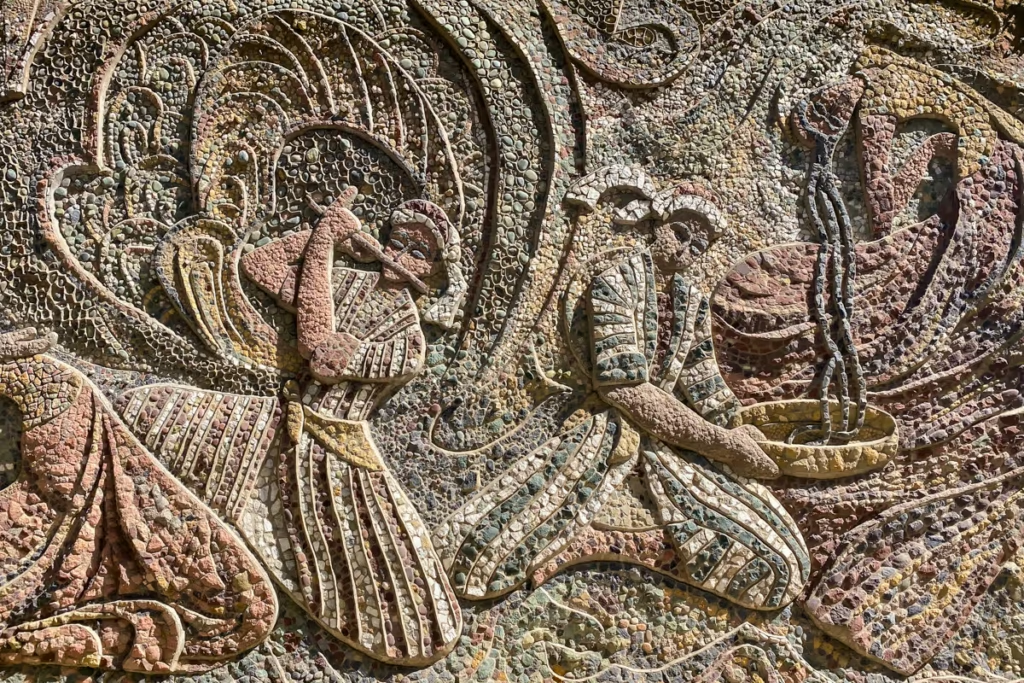
The Shashmaqom mosaic, created by Tajik artist Asror Aminjanov in 1976, was one of Dushanbe’s most important examples of monumental stone mosaic.
Named after the classical Central Asian musical tradition of Shashmaqom, the work depicts musicians and instruments using natural stone collected from the mountains of Tajikistan. Aminjanov became known as one of the major figures in Tajik stone mosaic, and the 1970s are considered a high point for mosaic art in Tajikistan.
The former Safina TV building was slated for redevelopment, putting the mosaic’s future in question. In 2024, however, Dushanbe authorities ordered that the historic mosaic be preserved. An international team of specialists subsequently began assessing how it could be carefully transferred and restored.
This is worth keeping an eye on because the story of the Shashmaqom mosaic is now part of the larger story of preserving Dushanbe’s Soviet-era mosaics.
Tajik Air Office
Status: Soon to be demolished
Asror Aminjanov, 1976
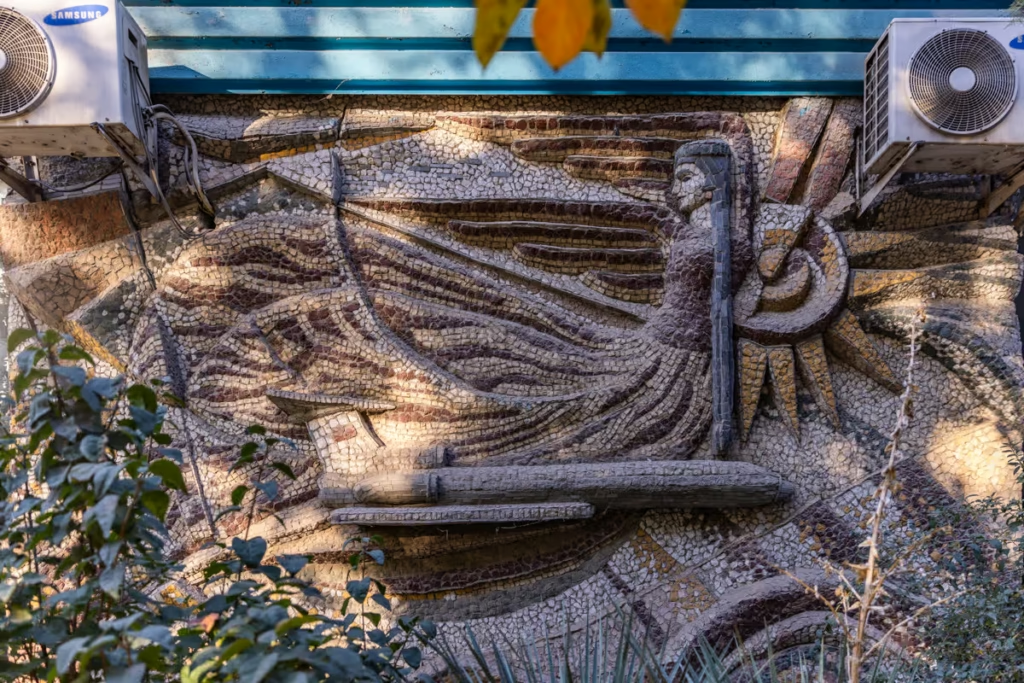
Tajik Air resumed service in 2024 after suspending all flights in 2019, albeit only servicing domestically (including the famed Dushanbe-Khorog route).
That said, its main office on Lohuti Street is gasping its last breaths as the building is in the process of demolition, including this beautiful mosaic by Asror Aminjanov depicting a Tajik woman and sun floating about an old Tajik Air jet.
Puppet Theatre
Status: Surviving
Sangov Yusufchan, 1985
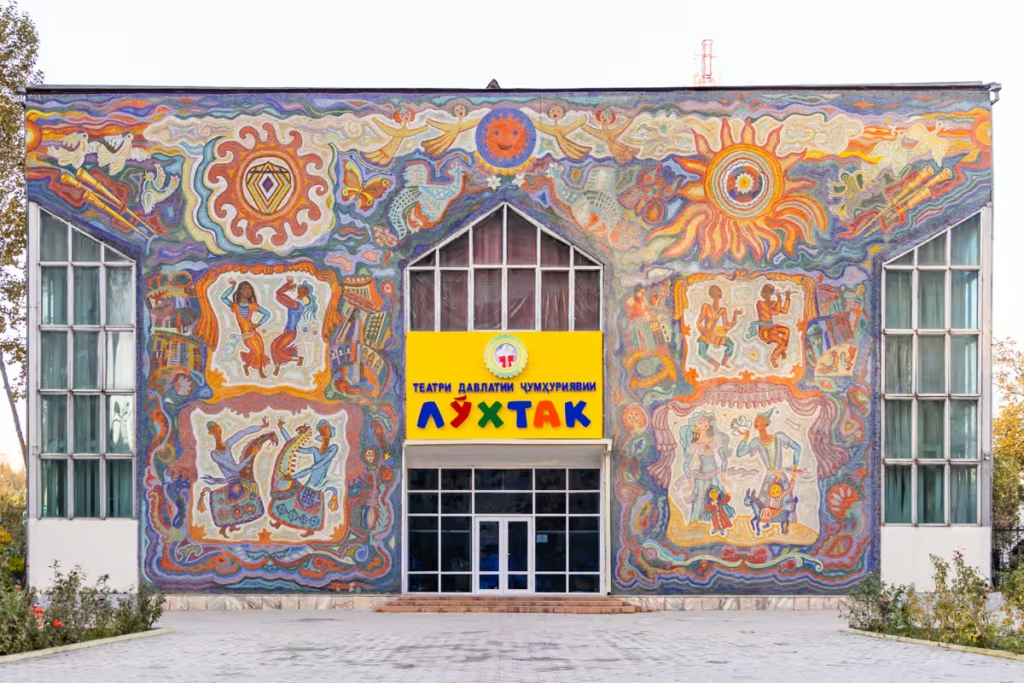
The Dushanbe Puppet Theatre is a city landmark, and its mosaic façade feels like something pulled straight from a storybook. The exterior is decorated with a playful palette, dreamlike scenes that mirror the magic that happens onstage inside, with brightly colored tiles arranged into characters, animals, and folkloric motifs that Tajik children have grown up with for generations.
Created during the Soviet era, the mosaic celebrates the imagination and whimsy of traditional puppet arts while subtly weaving in elements of Tajik folklore and mythology.
Tajik Film Studio
Status: Surviving
Asror Aminjanov, 1970-72
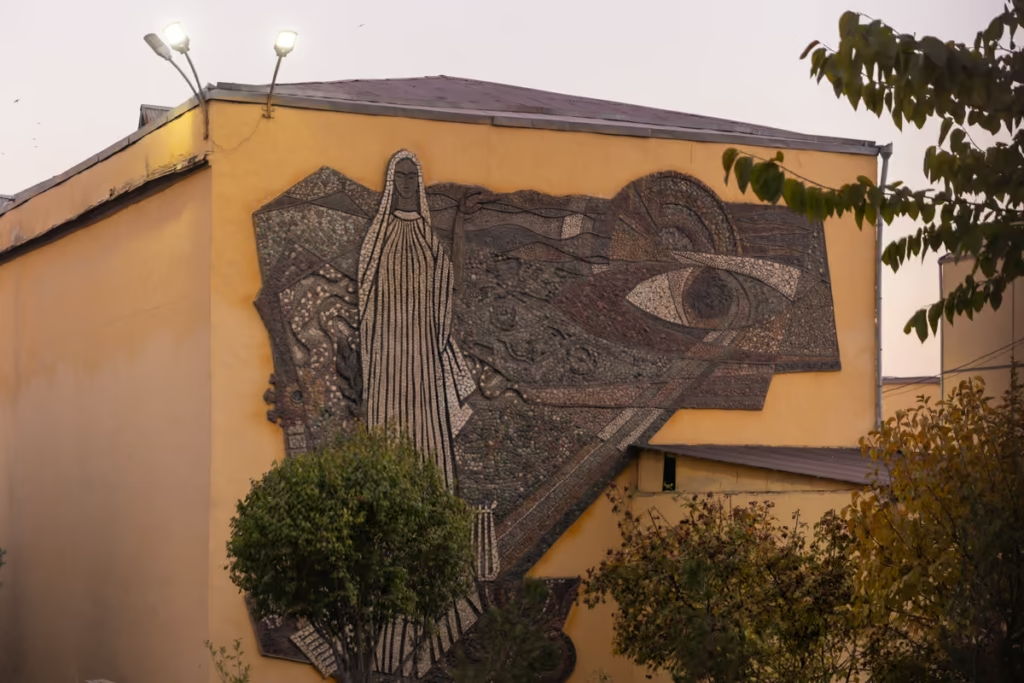
The mosaic on the Tajik Film Studio building is one of Dushanbe’s most striking tributes to the republic’s artistic ambition.
The mosaic itself features a veiled woman and an eye, created during a period when monumental public art flourished across the Soviet Union.
Goddess Themis
Status: Surviving
Sangov Yusufchan, 1987
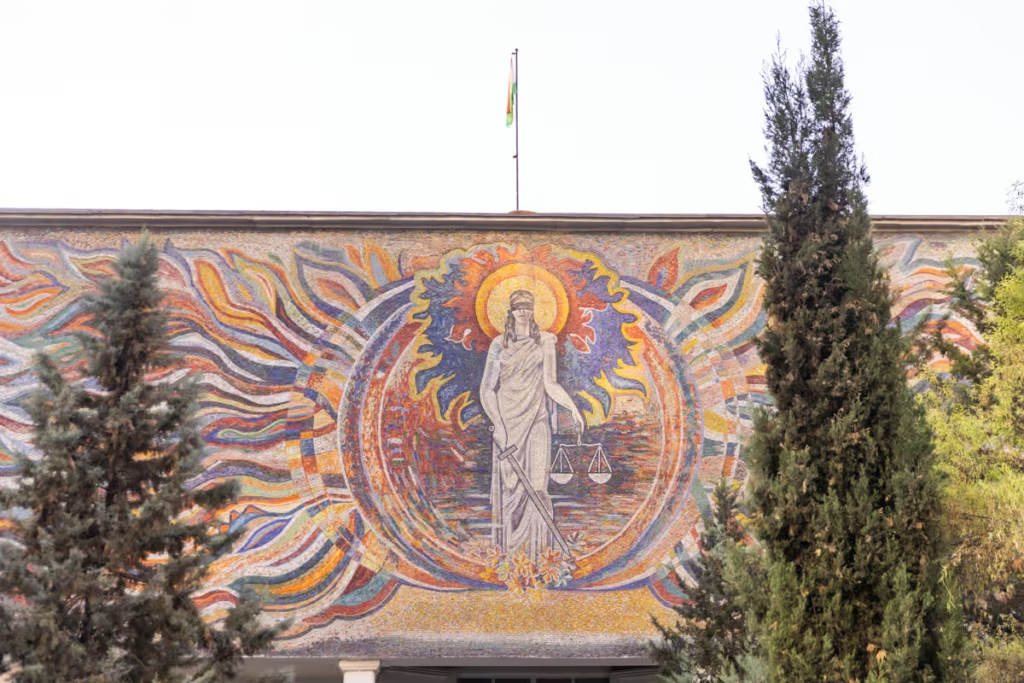
Perched above the Constitutional Court of the Republic of Tajikistan, the mosaic of Goddess Themis feels like a quiet guardian of justice watching over the city. Themis, a powerful figure in Greek mythology, is known as the goddess of divine law, fair custom, oracles, and the embodiment of justice.
Blindfolded and balancing a set of scales in one hand and a sword in the other, her figure is rendered in rich blues that gleam softly in the sun. The image blends classical symbolism with the unmistakable geometric flair of Soviet era design.
Dushanbe Tobacco Factory
Status: Building in demolition process
Safarov Rakhim, 1987
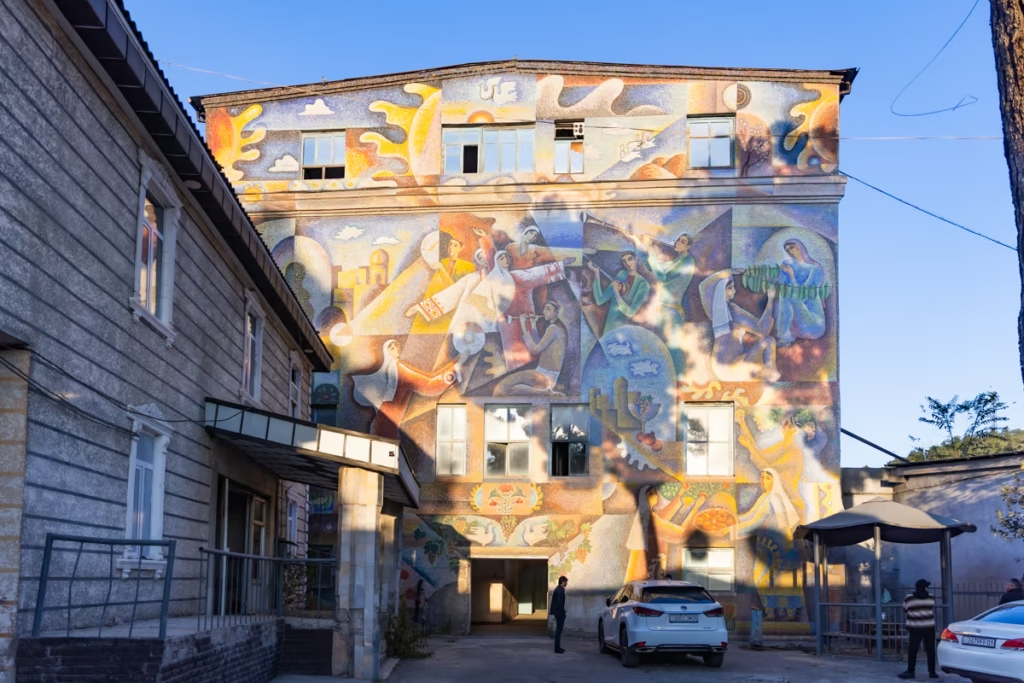
The old Dushanbe Tobacco Factory once stood as one of the city’s industrial powerhouses, and its mosaic work reflects scenes of its proud cultural identity. The façade features scenes of Mehrgan (Мехреган), the Persian holiday with roots in Zoroastrianism, celebrating Mithra, the deity of friendship, trust, and love.
The holiday also marks the time of harvest, as can be seen depicted in the mosaic with people collecting fruit, paired with images of celebration, music, and dancing, as Mehrgan marks a major season of weddings in Tajikistan.
Guliston Hotel
Status: Surviving
Rakhimov Abrurakhmon, 1981-83
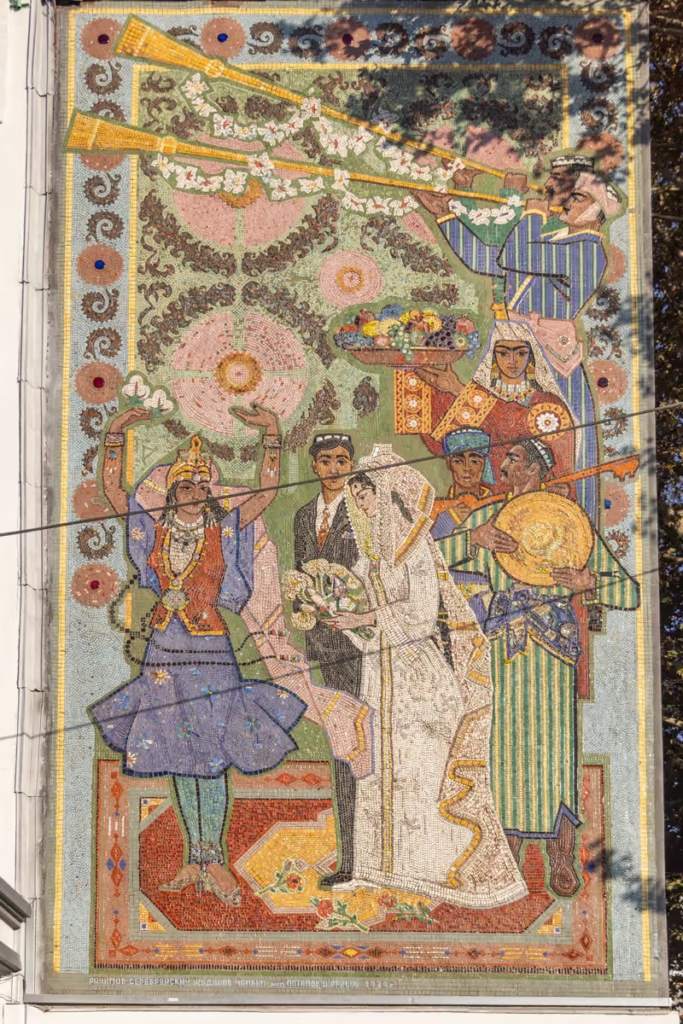
Likely the most architecturally interesting of Dushanbe’s accommodations, the Guliston Hotel is clad in beautiful mosaic work. The outer sides of the building running along Bukhoro, Pulodi, and Tehran Streets show off lovely tile work, interrupted by cultural images. Continue toward the backside of the Guliston Hotel from Tehran and be rewarded with a mosaic named свадьбаn (wedding) on many maps.
Rudaki Monument
Status: Surviving
Sabzali Sharipov, 2007
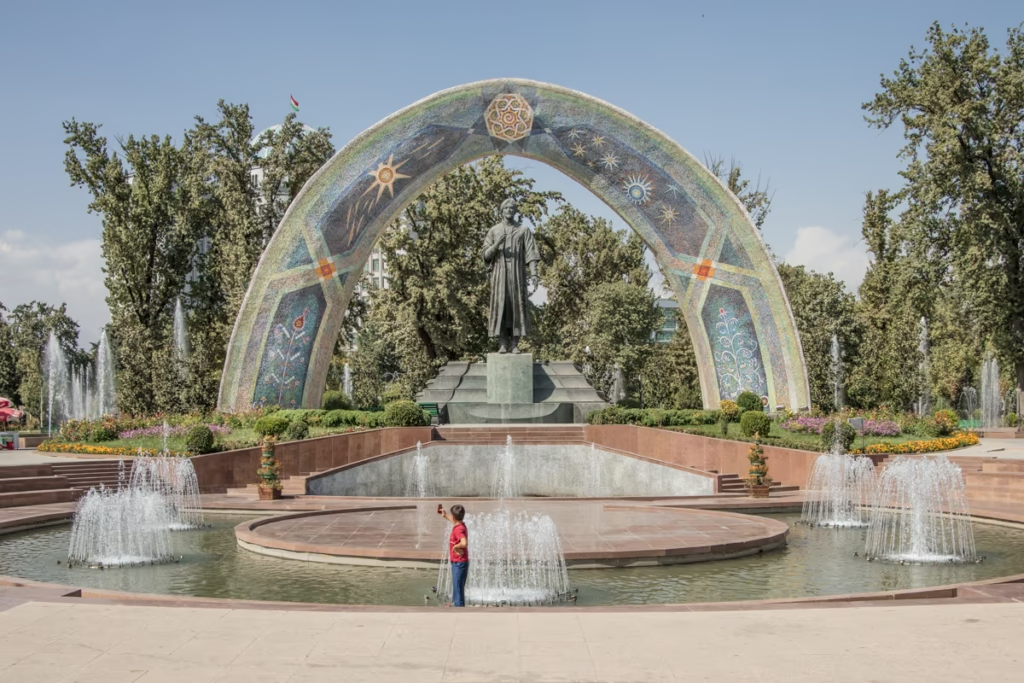
A newer addition to Dushanbe’s mosaic works, the Rudaki Monument sits smack in the middle of Rudaki Park. The monument’s centerpiece is a statue of Tajikistan’s father of literature, and forming a giant arch overtop of him is a mosaicked masterpiece bursting in a kaleidoscope of jewel-toned colors.
Old Printing House
Status: Surviving
Murivat Beknazarov, 1979
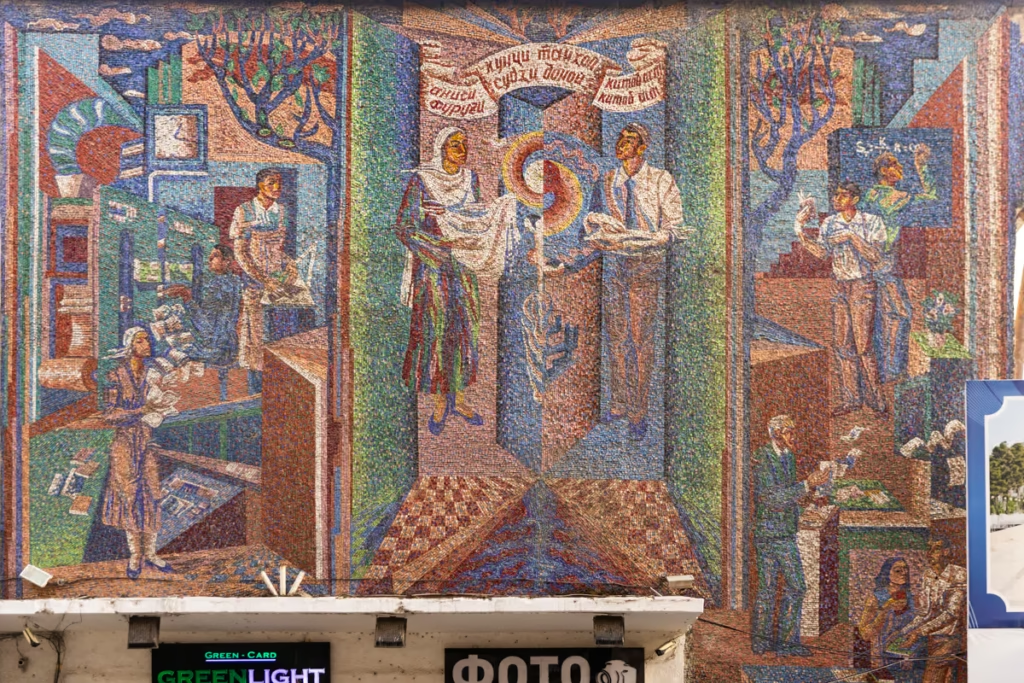
Once the location of Dushanbe’s Printing House, and later Bella Pizza’s original home, this colorful mosaic depicts traditional and modern people at work with lines from a poem about knowledge, belonging to the Persian poet Abdurakhman Jomi, unfurling above them.
St. Nicholas Orthodox Cathedral
Status: Surviving
TBD, 1943; renovations 2005-2011
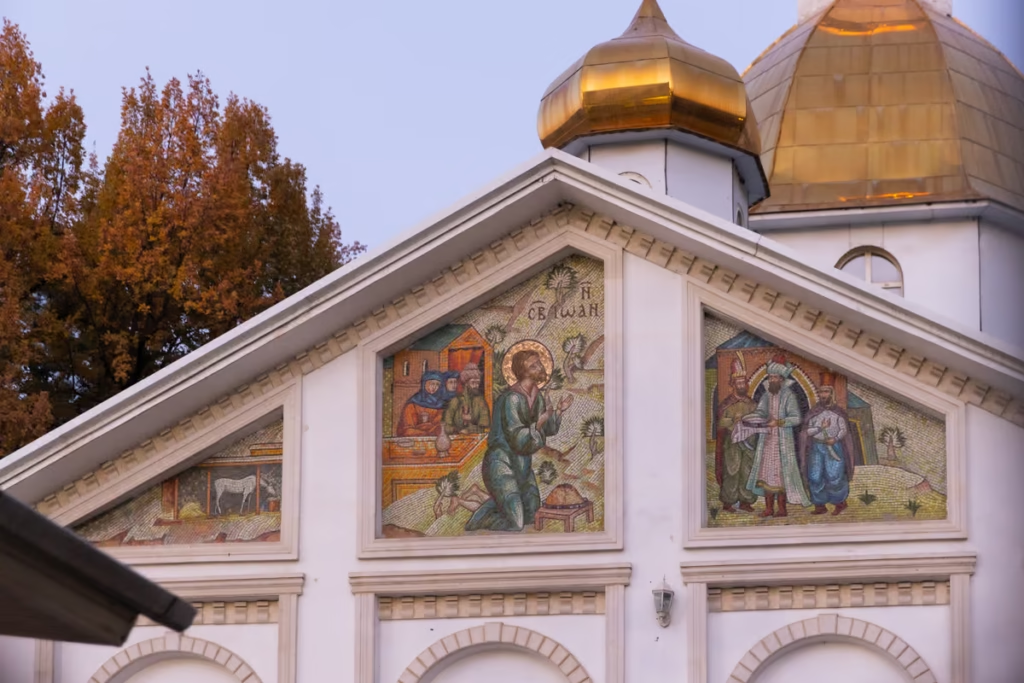
Constructed in 1943 during a strange window of time when tensions between the USSR and the Patriarchal Church softened. Following the collapse of the Soviet Union and the subsequent Tajik Civil War, the majority of Dushanbe’s orthodox population fled the country, and the cathedral fell into ruins until 2005-2011 when major renovations took place.
The cathedral features mosaics in traditional Orthodox style, with tiles that feature saints and religious motifs rendered in soft, glowing colors.
Upper Cable Car Station
Status: Surviving
Engineer: V. Lajava, 1980
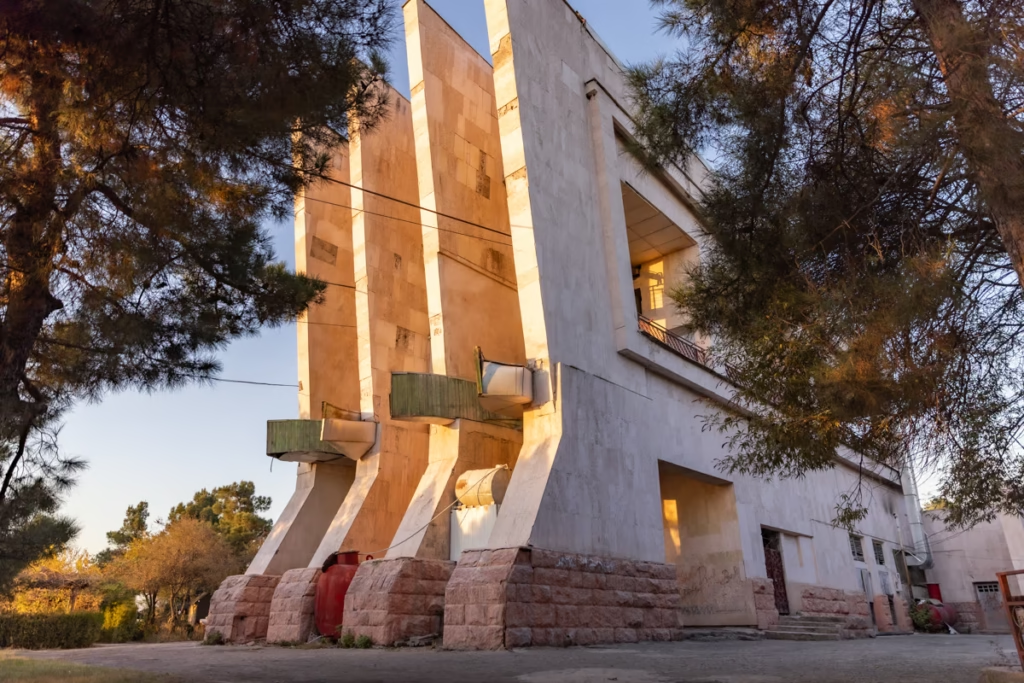
Dushanbe’s cable car has been out of service for eons, but the upper cable car station building is still sitting atop the hill overlooking the city from Victory Park. For the longest time, the upper station had a functioning cafe in it, but these days it’s just sat, decaying.
It’s still a worthwhile venture to make the journey up to Victory Park to peep at the old upper cable car station and to soak in sunset views over the monstrosity that once was just home to a dusty Monday bazaar, hence the city’s name.
Lohuti Theatre
Status: Soon to be Demolished
TBD, 1929
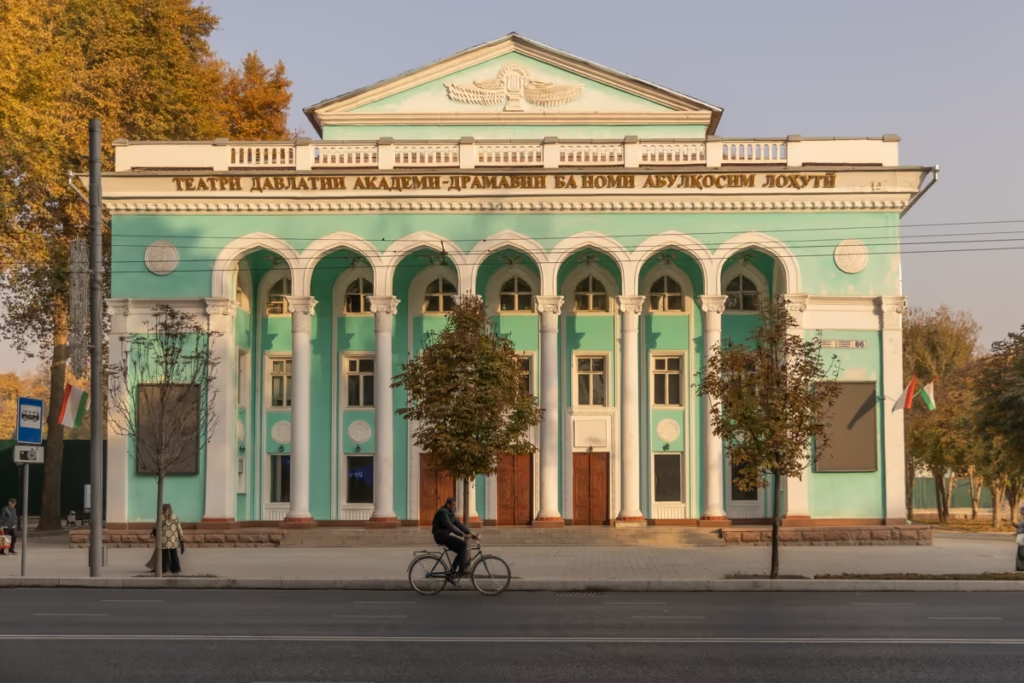
Named after Kermanshah-born poet and political activist Abulqosim Ahmadzoda Lohuti, the A. Lohuti Tajik Academic Drama Theater opened in October 1929. In 1933, the theater was named after Lohuti, who was also the author of the Anthem of the Tajik Soviet Socialist Republic.
Lohuti Theatre is soon to be torn down in the demolition craze of Dushanbe, a long-standing landmark of the city. Read about the order to demolish both Lohuti Theatre and Chaikhana Rohat in 2024, with local government officials claiming ”non-compliance” as the reasoning, which is vague, at best.
Chaikhana Rohat
Status: Demolished
Abdurakhmanov I.A.; Designers- Stefan Anisimov, Konstantin Terletsky, and Daniil Gendlin;Tajik painter- Mirzorahmat Alimov, 1958
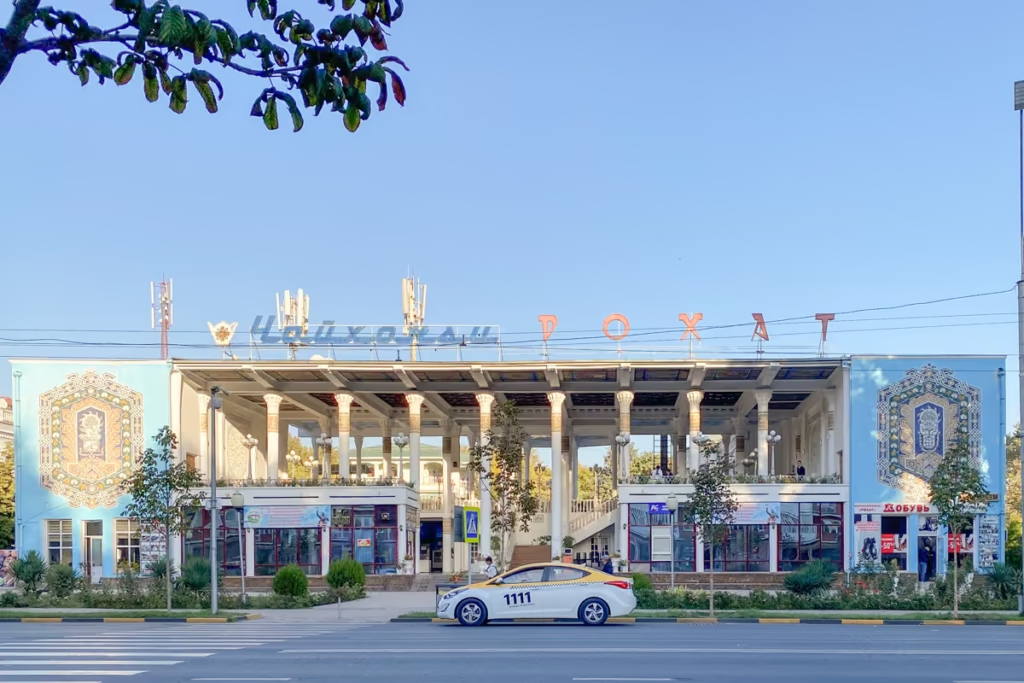
Chaikhana Rohat was a Dushanbe institution, among the oldest of Tajikistan’s surviving teahouses. Rohat, unfortunately, met her demise in March 2025, razed to the ground where she once stood. This, coming even after many years of public outcry to not destroy the historic building, but there seems to be nothing that will stop the ruling powers from erasing everything that made Dushanbe unique to make space for the same hideous, characterless copy/paste high-rise that is the new Dushanbe.
Chaikhana Rohat opened its doors in 1958, and over the years has hosted numerous dignitaries, visiting politicians, artists, tourists, and locals alike. It was a great meeting place that served up consistently good Central Asian fare at an affordable cost.
Land of Tajikistan (Airport Station)
Status: Demolished
Gurdzhiev L.I., Khanin N., 1988-90
Demolished in the summer of 201, this colorful mosaic featured a woman in a red dress and the familiar sprigs of cotton as the centerpiece and depicted workers, both traditional and modern.
West Dushanbe Mosaics
Thermal Power Engineers of Tajikistan
Status: Surviving
Khushbakhtov, Habibullayev, Cherednichenko, 1970
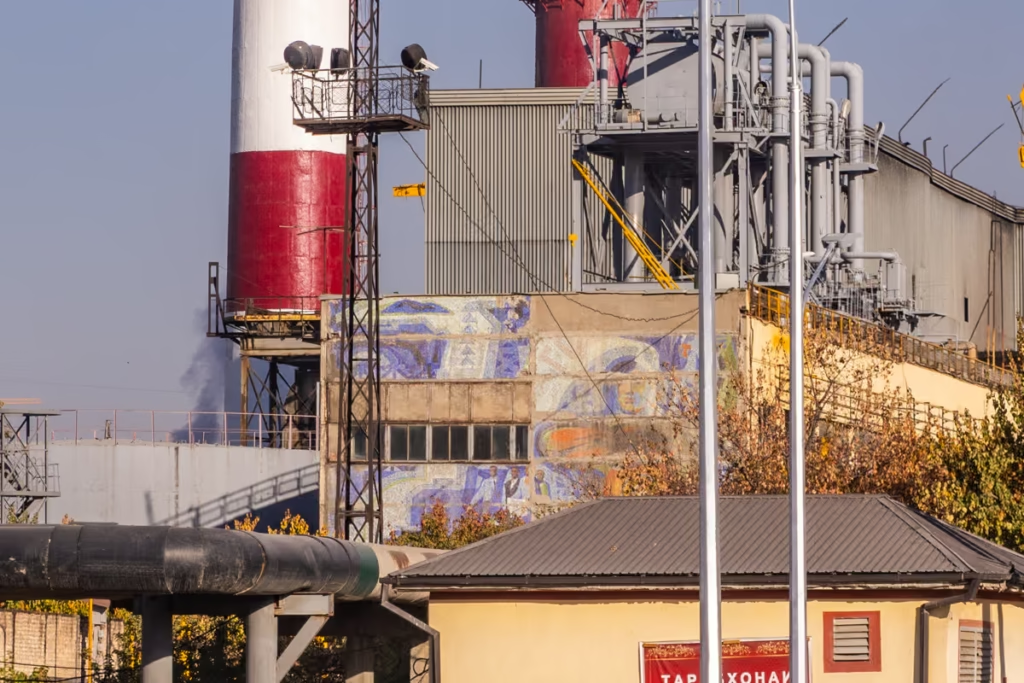
Dedicated to the thermal power engineers of Tajikistan, this mosaic showcases images of thermal workers and scientists on the job. It is located on a thermal power plant west of the city center.
Exploration of Outer Space
Status: Soon to be Demolished (allegedly will be preserved)
Rakhnaev, Ilyaev, and Grigorov, 1988
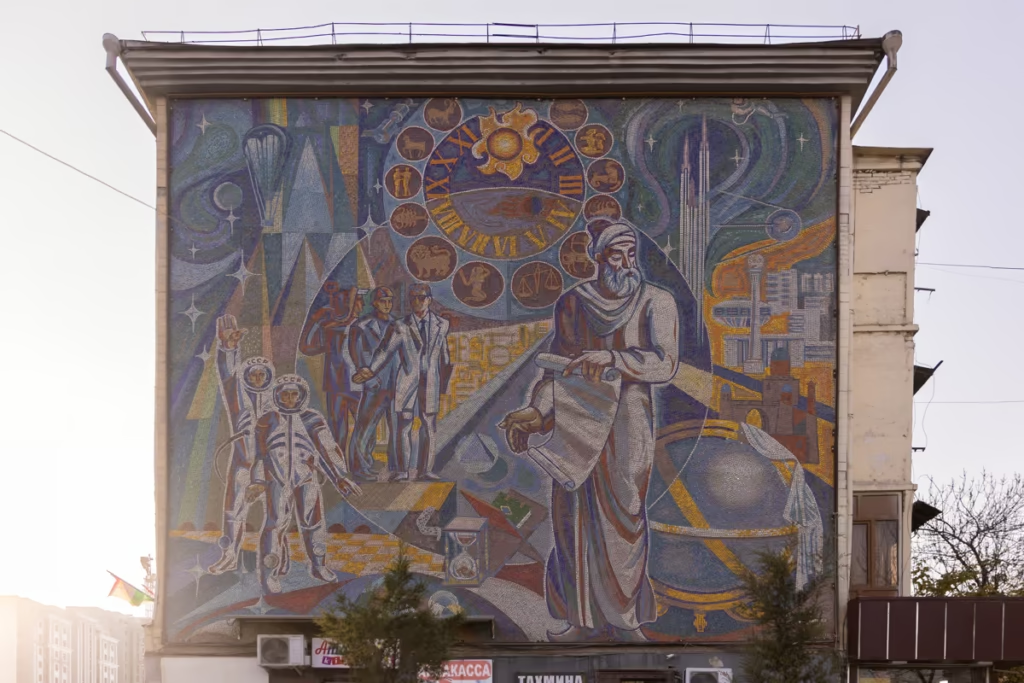
Philosopher and physician of the Islamic Golden Age, Ibn Sino (aka Avicenna), is the main focal point of this famous Dushanbe mosaic, which also depicts cosmonauts, scientists, a rocket launch, and time- all topics Ibn Sino’s work has influenced.
Just after the new year in January 2026, news hit that the Exploration of Outer Space is to be demolished. Dushanbe’s culturicide on public art continues…
Three Generations
Status: Surviving
Nikolai Sadukov & Yakob Begimov, 1979
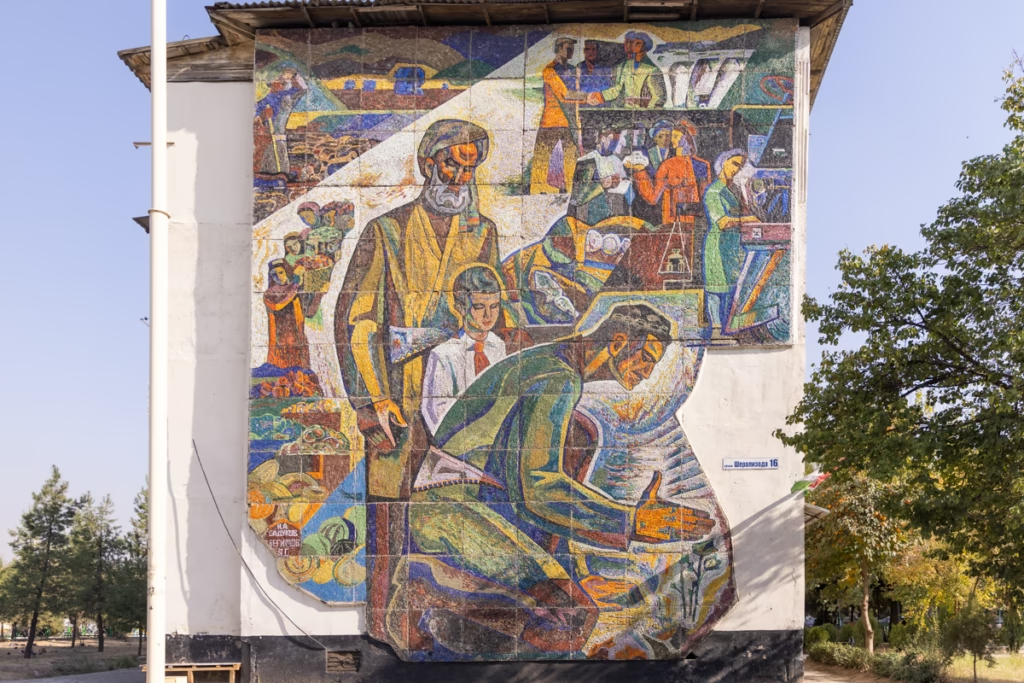
This mosaic is about intergenerational connection, with a grandfather, father, and son each representing the traditions of the past (grandfather), present (the father at work tending to a plant), and the future (represented by the son dressed in his school uniform).
Tajikistan is still a largely traditional society, though life in the big cities, such as Dushanbe, is changing rapidly.
Celebrating Labor
Status: Surviving
Nikolai Sadukov & Yakob Begimov, 1979
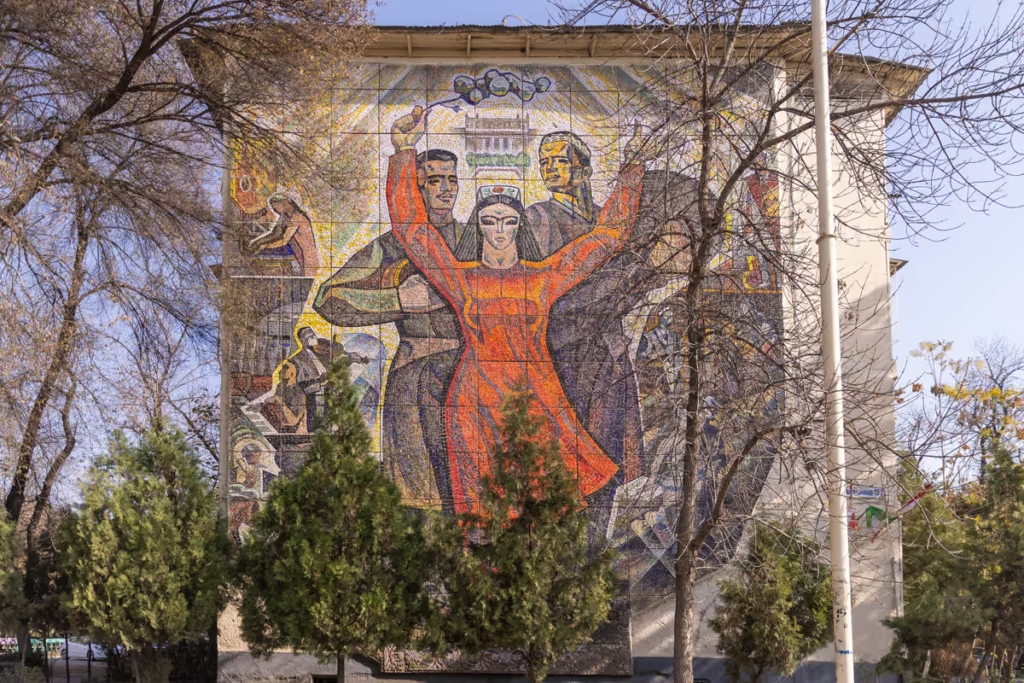
This mosaic on the building just adjacent to Three Generations is a celebration of labor with a woman in a red dress holding a sprig of cotton at the center, along with two men. In the time of the USSR, cotton was the Tajik SSR’s economy.
In the background, artists, both musicians and filmmakers, are hard at work. Showcasing Tajikistan’s industry with the arts.
Tajikistan Textile Factory
Status: Surviving
Salokhiddin Aloviddinov or Sangov Yusufchan, 1984 or 1985
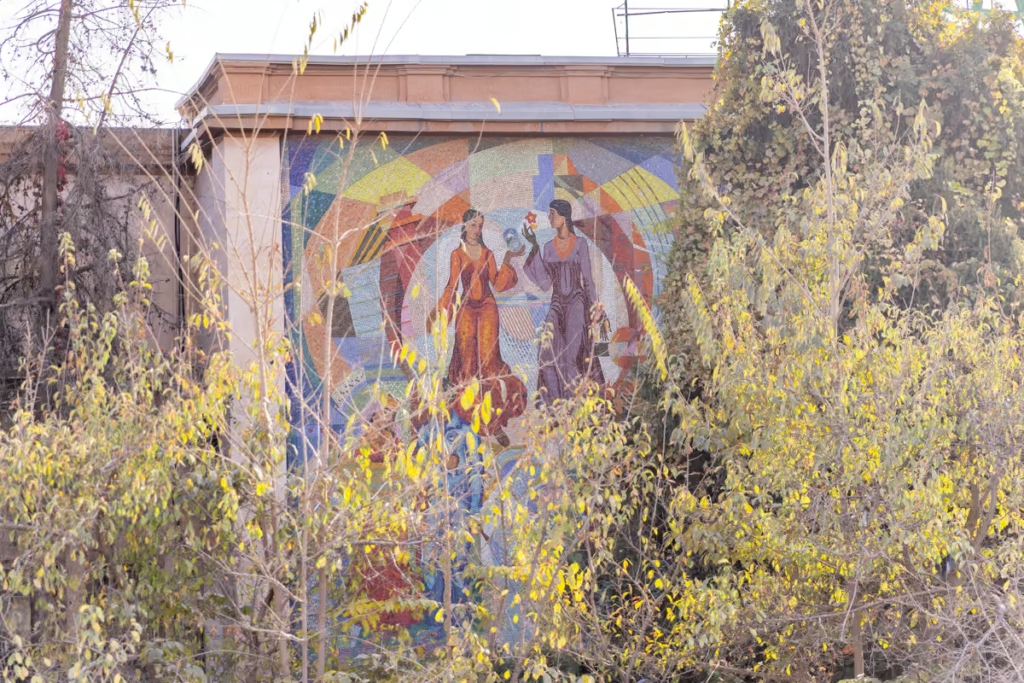
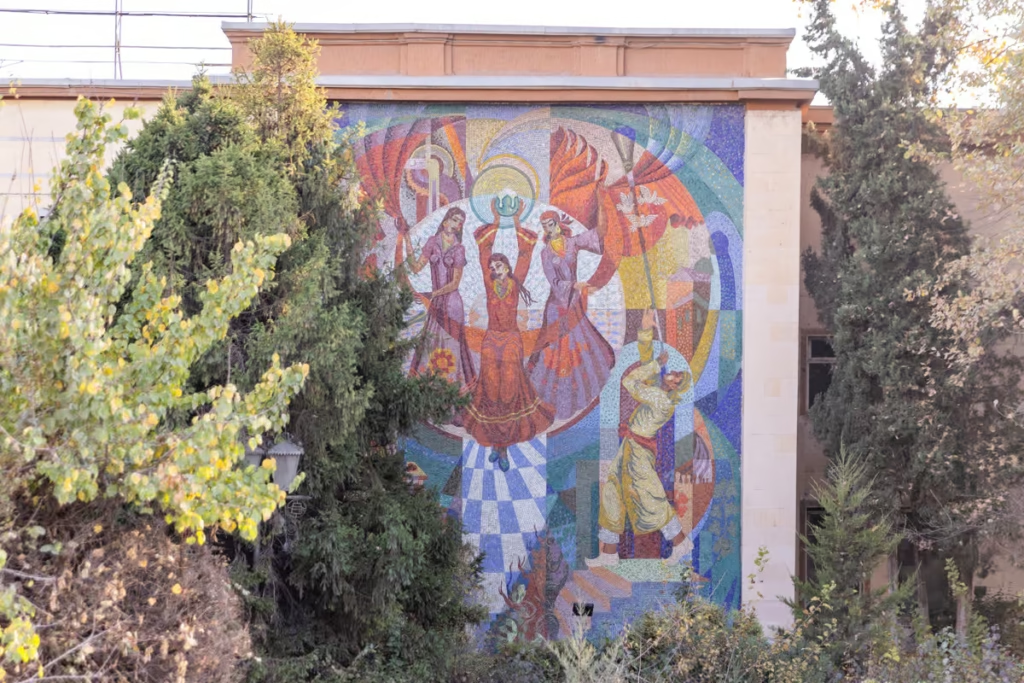
The Tajikistan Textile Factory features two large, colorful mosaics. One shows three women dancing, one holding a boll of cotton over her head, to the song a karnay, a long traditional trumpet played in Tajikistan and across much of what was known back then as the greater Russian-Turkestan area. After all, cotton was the centerpiece of Tajikistan’s textile industry.
The second mosaic features two women in conversation at the focal point and a couple down off to the corner, the man appearing in a work uniform, all set in front of a rainbowy, psychedelic background.
Administrative building of the Dushanbe Fat Processing Plant
Status: Surviving
TBD, TBD
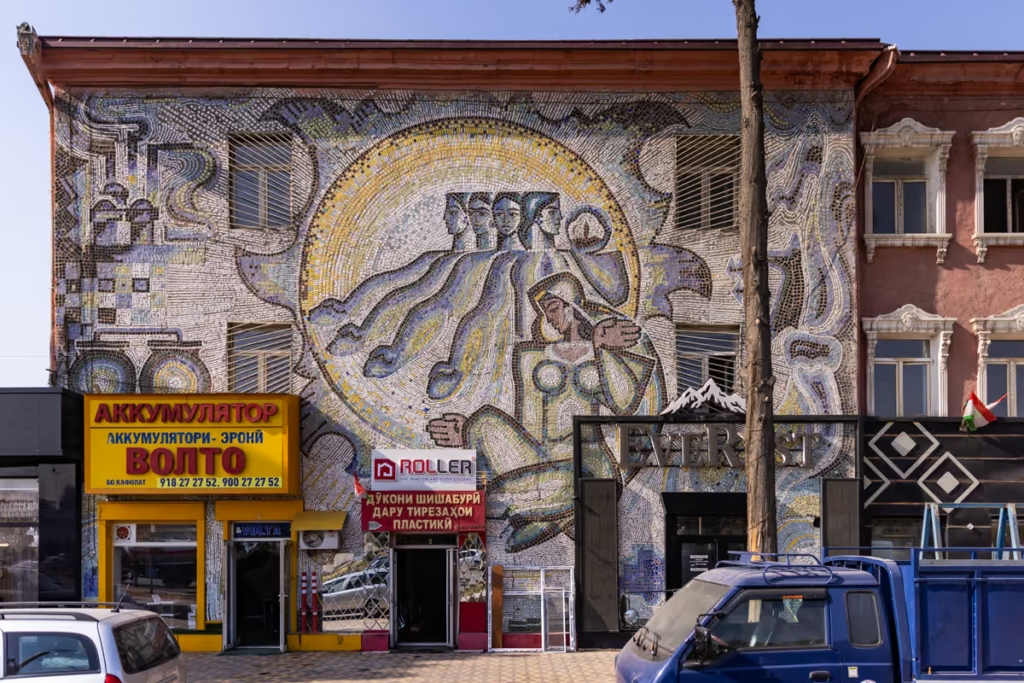
Marked on some maps as the administrative building for the Dushanbe Oil and Fat Processing Plant, this mosaic features a more muted palette than some of its cousins nearby. The mosaic’s centerpiece is that of a veiled woman adorned with jewelry. Behind her are four women, one of which holding up the glorious cotton boll, the driver of the Soviet Tajikistan’s economy, all in front of a blaring sun.
I’m not sure the exact story behind the mosaic, but it reminds me of the story of the Yagnobi people who were forcefully moved to Zafarobod and other areas in the Fergana Valley, and a scattering of locations in the Khatlon Region in the 1950s-1970s to tend the cotton fields. Many of the Yagnobis did not survive the extreme searing summers of Khatlon and Fergana.
Dushanbe Sweets Factory
Status: Surviving
Komil Yodgorov and Zokir Sobirov, TBD
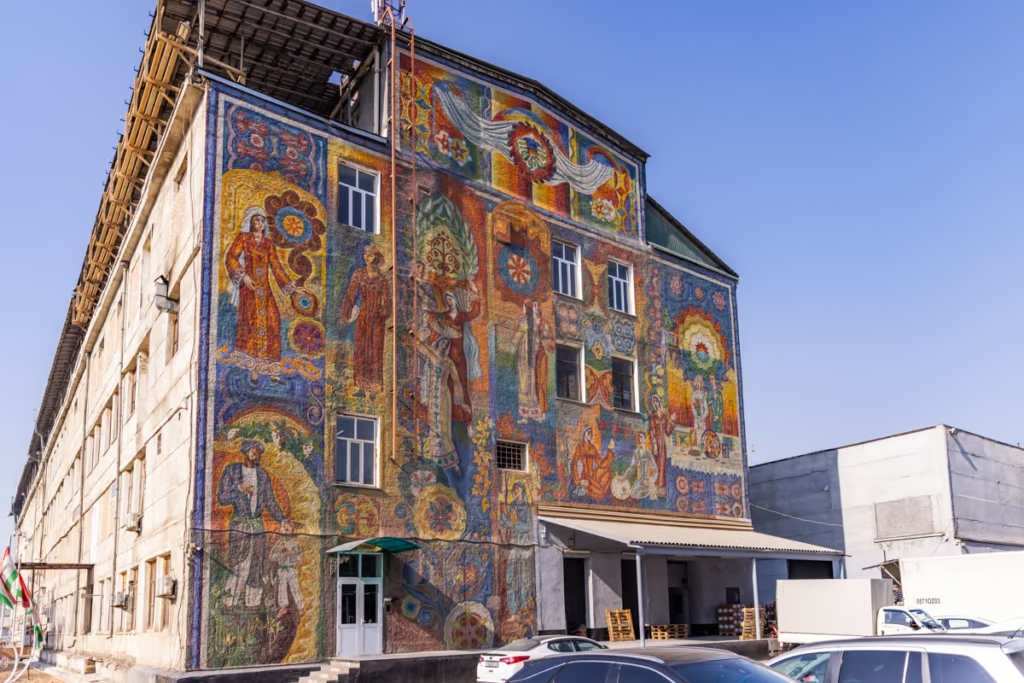
The mosaic on the Dushanbe Sweets Factory is a giant colorful storybook of scenes of Mehrgon, Zoroastrian symbolism, and Tajik culture. With women harvesting pomegranates from a tree (a symbol of fertility, and for the Zoroastrians, the immortality of the soul and perfection of nature), a father and son in conversation, a couple at their wedding stood over a table heaving with harvest, women dancing, and musicians filling the air with song.
Khrushchevka Bas-Reliefs
Status: Surviving
TBD, 1970
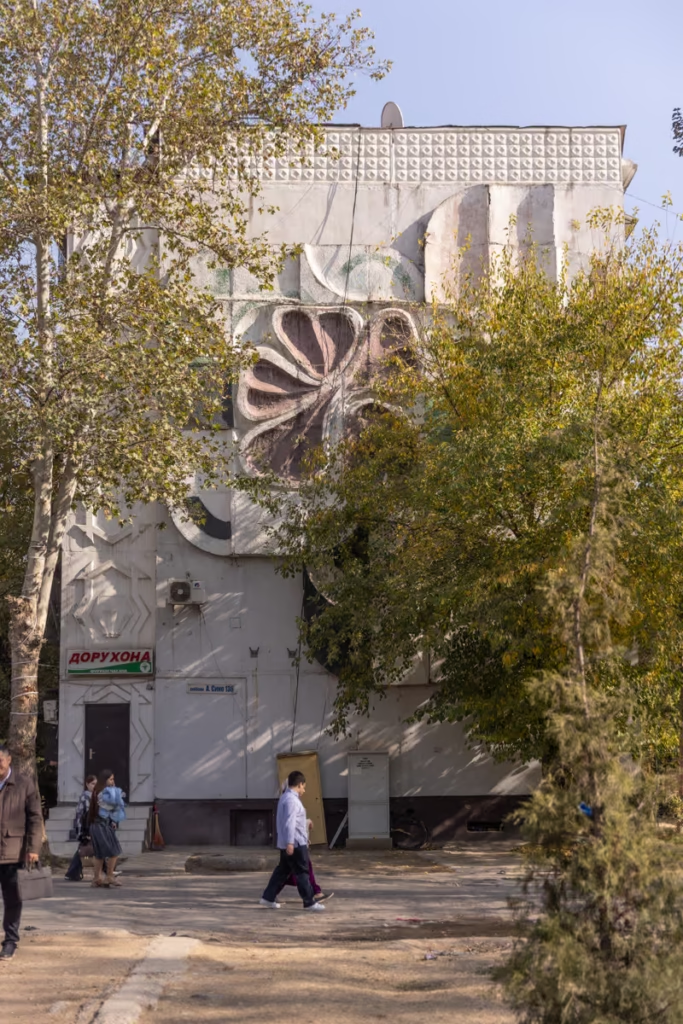
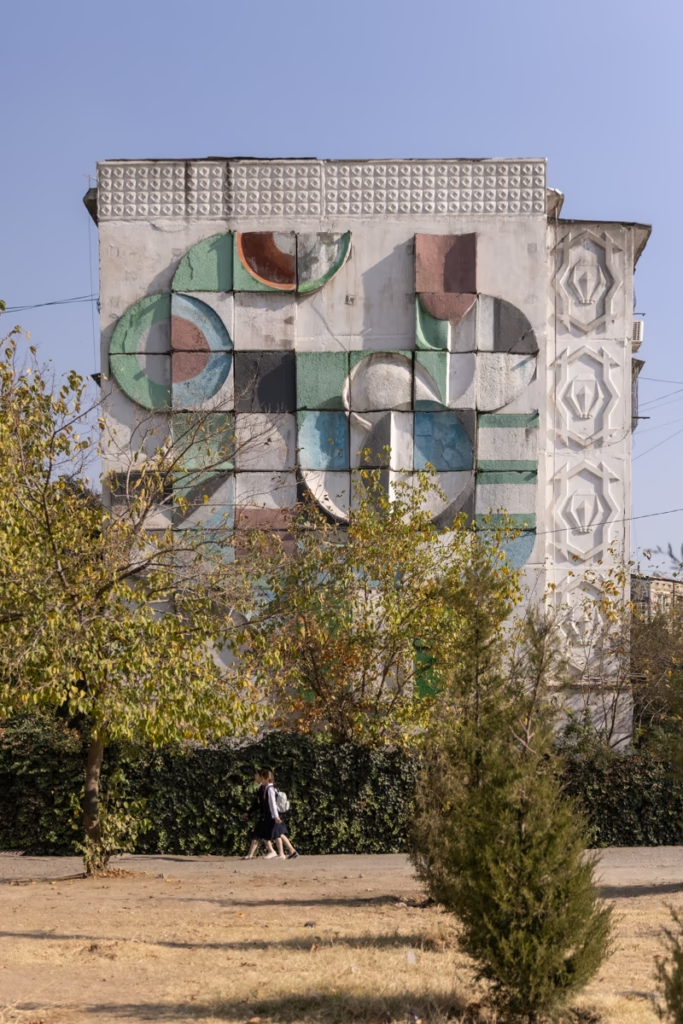
While not a mosaic, bas-reliefs were a common adornment for public buildings during the Soviet era. These two side-by-side Khrushchevka apartment blocks on Ismoil Somoni Avenue feature giant bas reliefs. One with a geometric pattern, the other a flower.
Peace & Love
Status: Surviving
N. Prosmushkin, 1971
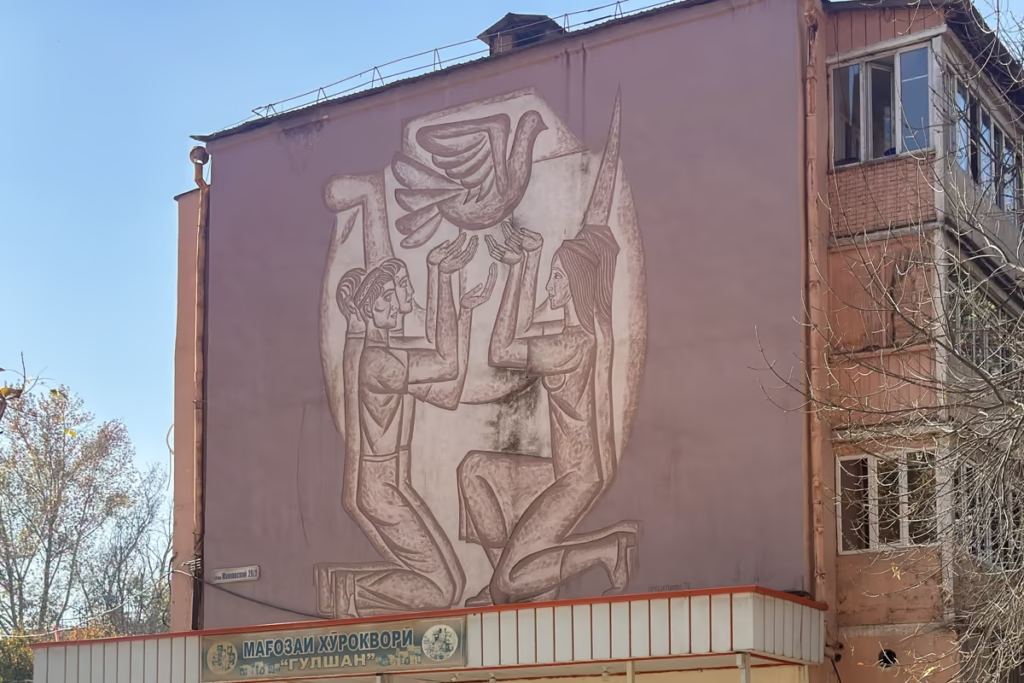
Peace and Love illustrates a scene of both men and women kneeling to lift a dove. All in front of a subtle sickle in the background.
Tajikistan Mural, Asia Express Terminal
Status: Surviving
TBD, TBD



Step inside the Asia Express Bus Terminal and be met with a long mural that spans the width of the building, portraying scenes from the Sughd region.
Starting on the left, you’ll see imagery of the M34 route cutting through the Fann Mountains, with the famed Tunnel of Terror (Anzob Tunnel) in view.
Over to the right, delineates the city of Ayni with trucks carrying bounty down from the mines. Continuing across, note people tending to fields, overlooking the mountains, and a modern city further over.
Finally, the people tending the fields give way to a processional of trekkers climbing into nature, reminiscent of Dukdon Pass in the Fann Mountains.
Kinotheatre Tajikistan
Status: Demolished
Khabibulloev Zukhur, 1982 or 84
Unfortunately, Kinotheatre Tajikistan, one of the largest mosaics in the country, met its demise. The mosaic represented a happy and abundant life.
State Circus of Tajikistan
Status: Surviving
G. Aizhovich, T. Volvak, and E. Erzovskii, 1976
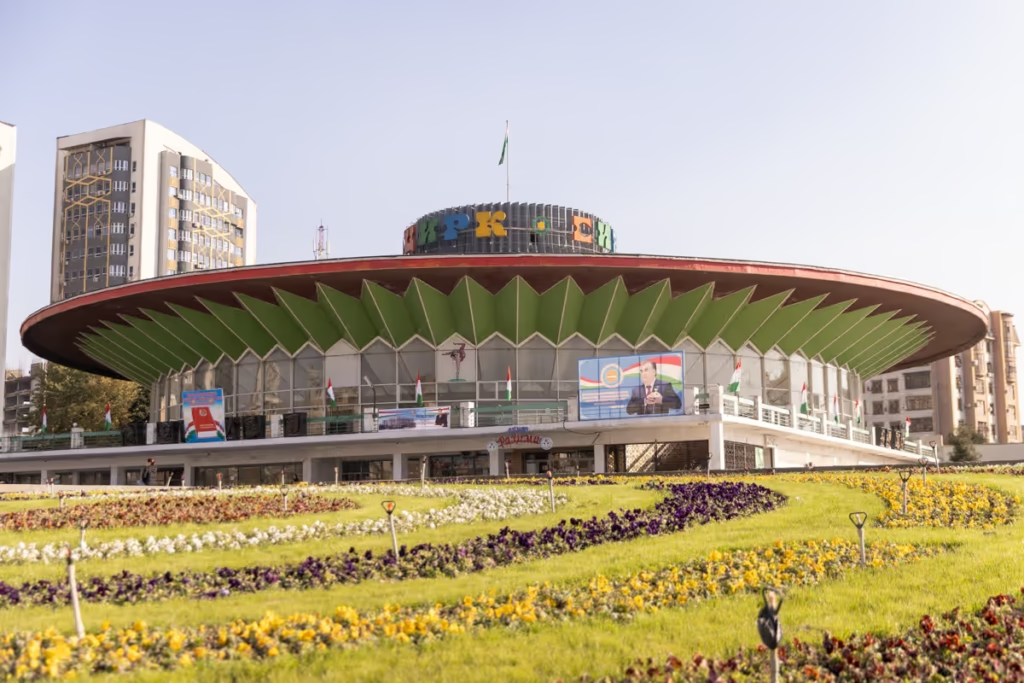
While not a mosaic, the State Circus of Tajikistan is one of the remaining pieces of Soviet modernist architecture in Dushanbe.
The circus is still active to this day. Tickets are sold at the circus, and you can go there to see which shows are on rotation for the following week. Tickets run around 100 TJS per person.
Northwest Dushanbe Mosaics
Dushanbe Maternity Ward No. 3 Reception Hall
Status: Surviving
Sangov Yusufchan, 1988
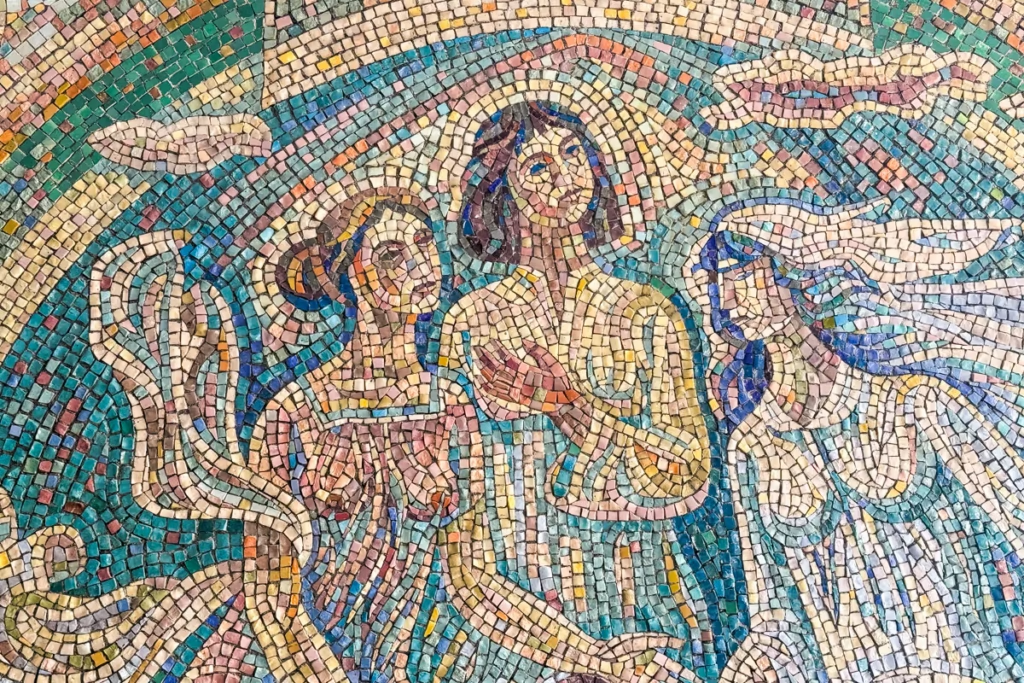
Inside this maternity ward is a delicate mosaic celebrating new life with a doctor performing a cesarean and a nurse holding a newborn. Soft colors, flowing shapes, and nurturing imagery create a gentle, reassuring atmosphere. It stands out as one of the city’s most intimate pieces of monumental art.
Palace of Culture, Ispechak – Dehkanch
Status: Surviving
Murivat Beknazarov, 1970
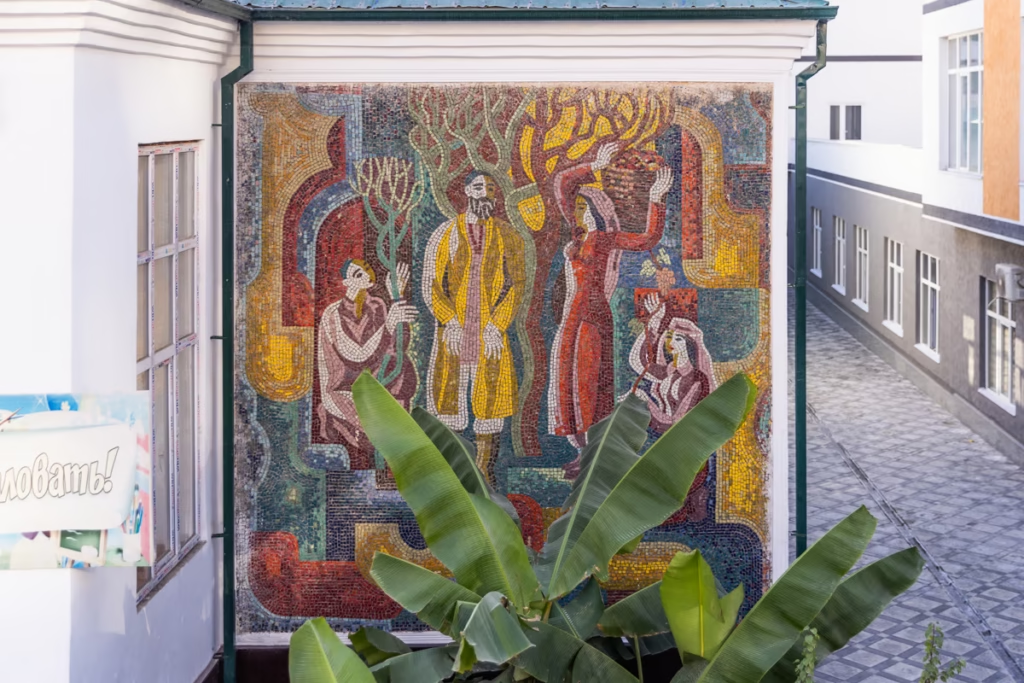
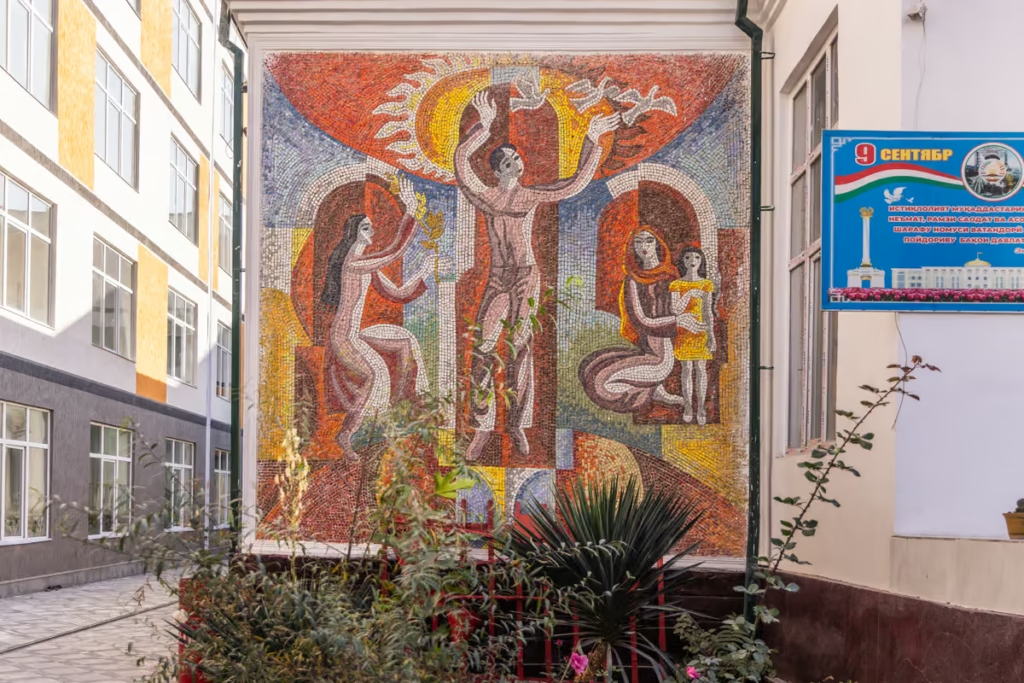
These days, the building houses the Ispechak-Dehkanch Palace of Culture, but this was the former community center of the Pobeda Collective Farm. These colorful mosaics describe scenes that would have taken place on the collective farm, with one of the mosaics featuring women and men in traditional dress harvesting fruit from a tree, while the other shows a man releasing doves at the center.
School No. 81
Status: Surviving
Gurdjiev L.I., 1974
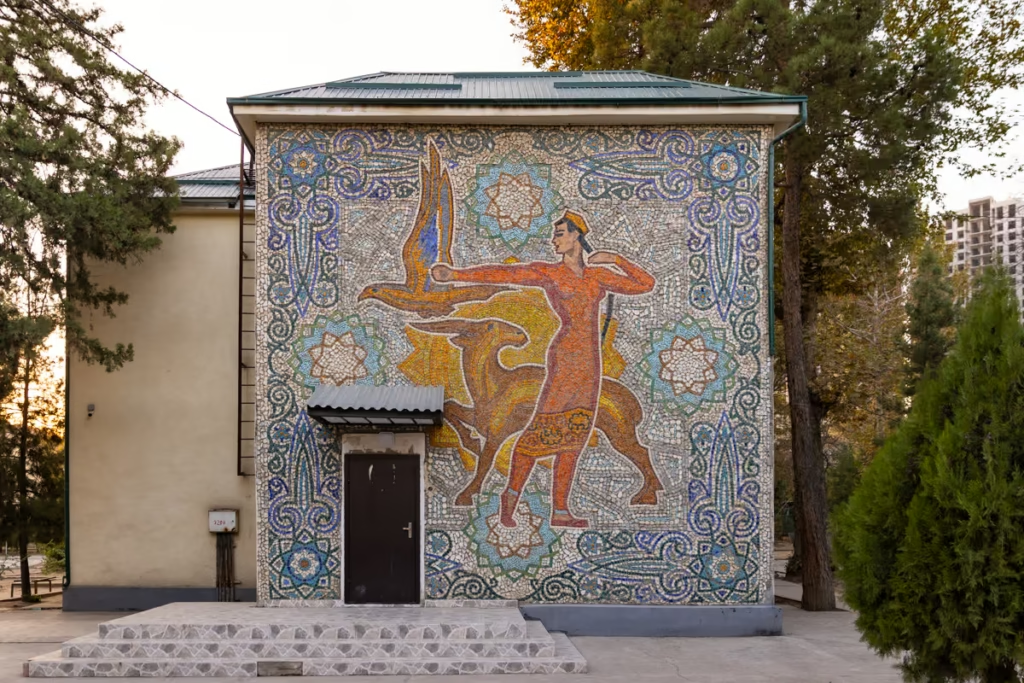
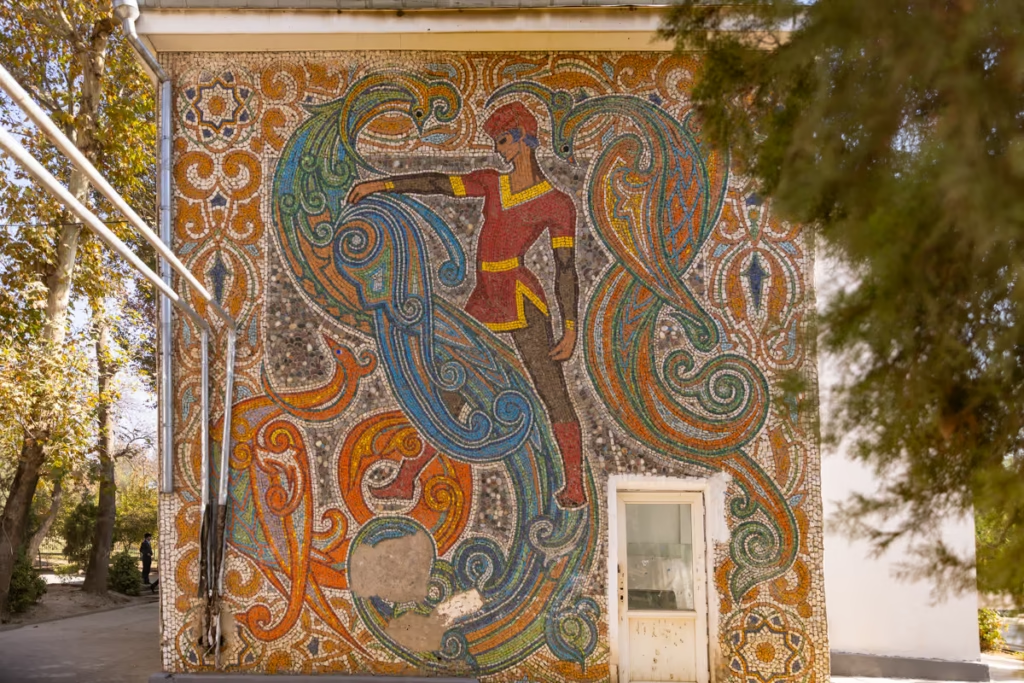
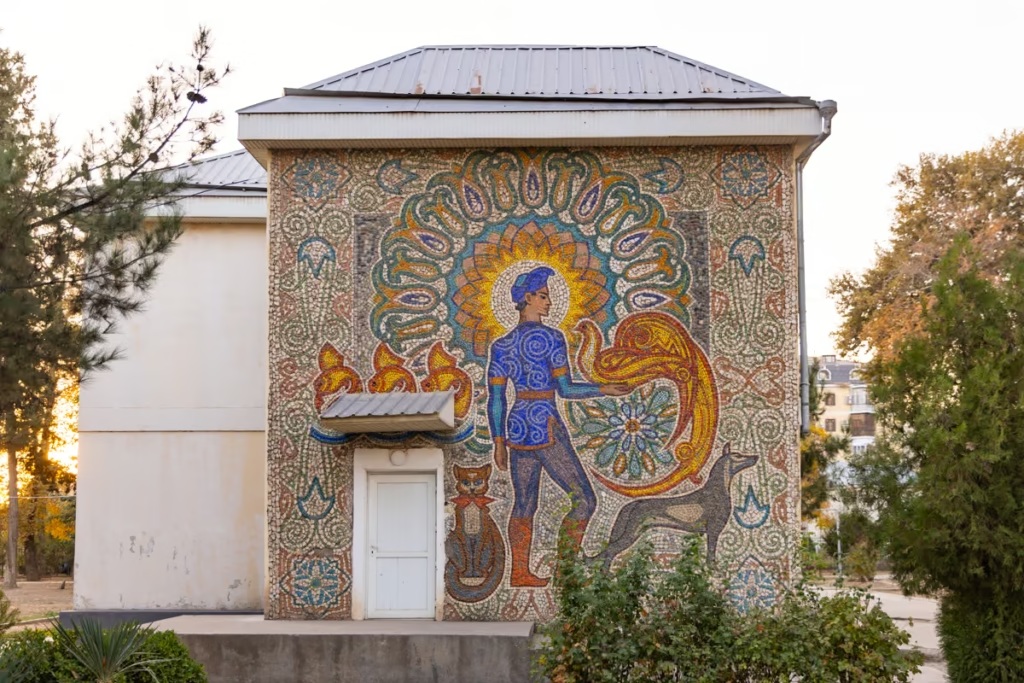
School No. 81 has not one, but three mosaics adorning a trio of buildings on the school grounds. The first one you will pass from the entrance is that of a young woman with arms extended as if she’s aiming a bow. A golden eagle flies above her as a deer poses behind her.
The second is a young man holding a peacock on his arm, accompanied by both a dog and a cat, all standing in front of a Zoroastrian take on the sun.
The third shows another young man with three peacocks twirling around him.
Kindergarten Anisa
Status: Surviving
TBD, TBD
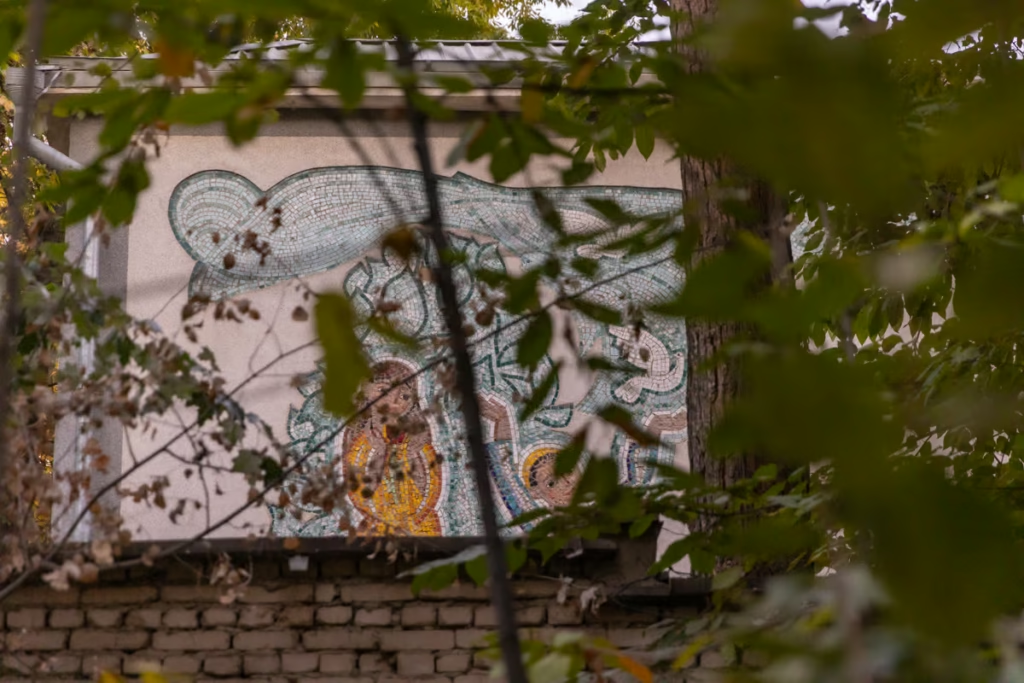
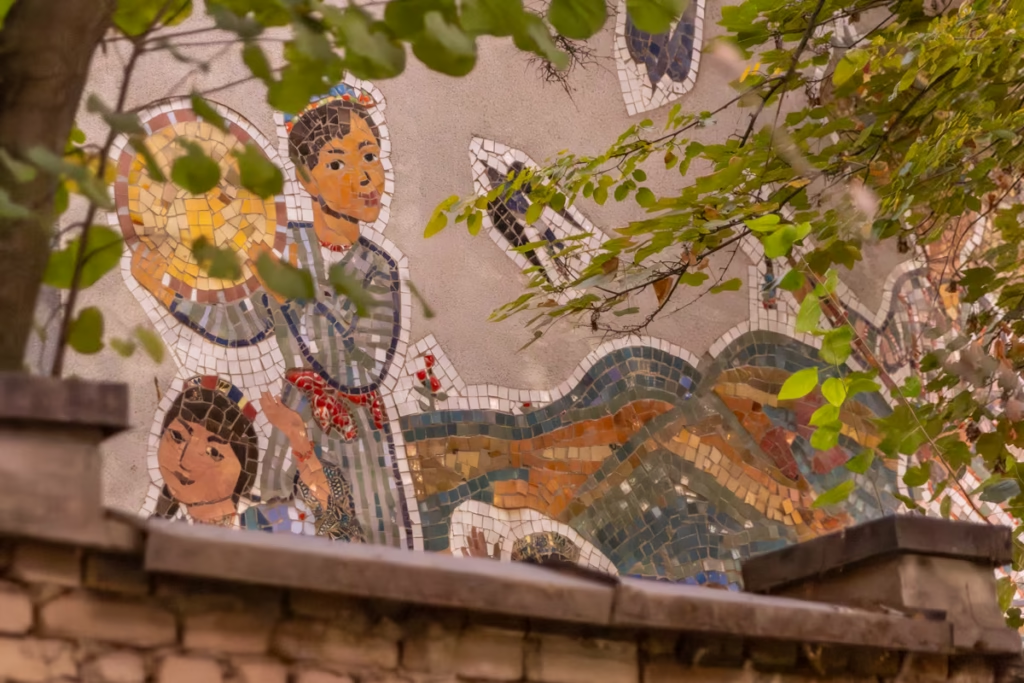
Kindergarten Anisa features two mosaics showing children partaking in scenes of Tajik life, at least from what we could see from behind the high walls around the school. I assume the gates are open during the week, but we were passing by on the weekend.
Yak Taxi Call Center
Status: Surviving
TBD, TBD
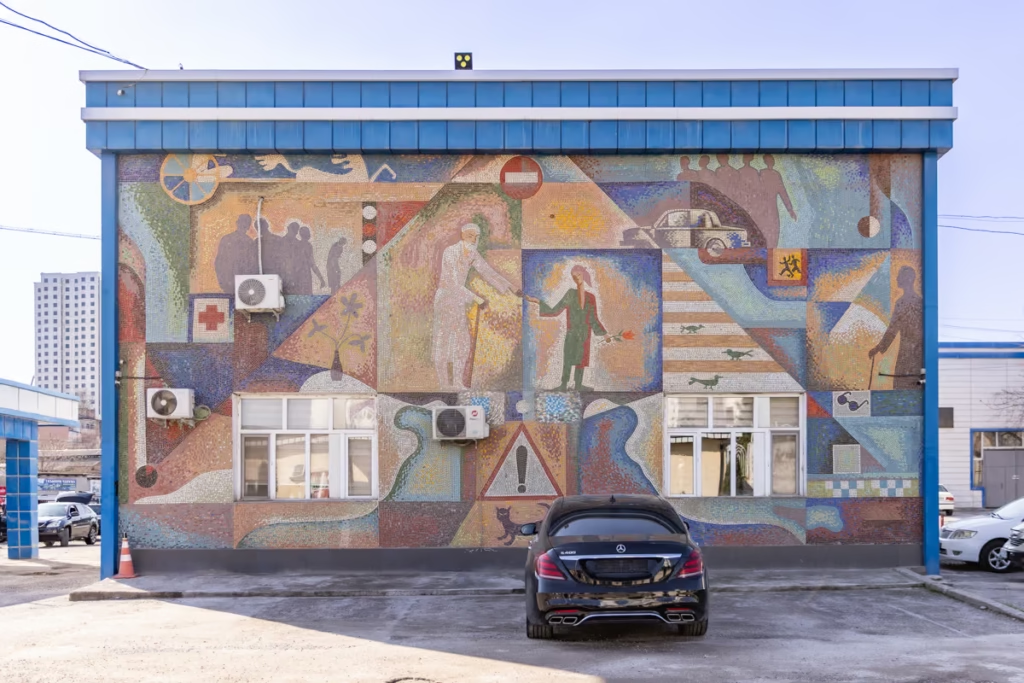
The old Yak Taxi Call Center, not far from the massive gleaming white new mosque is adorned with a mosaic that features depictions that I can only guess bear some caution to hazards that may be found on the road around Dushanbe.
Borbad Hall
Status: Surviving
Sergo Sutyagin, 1984
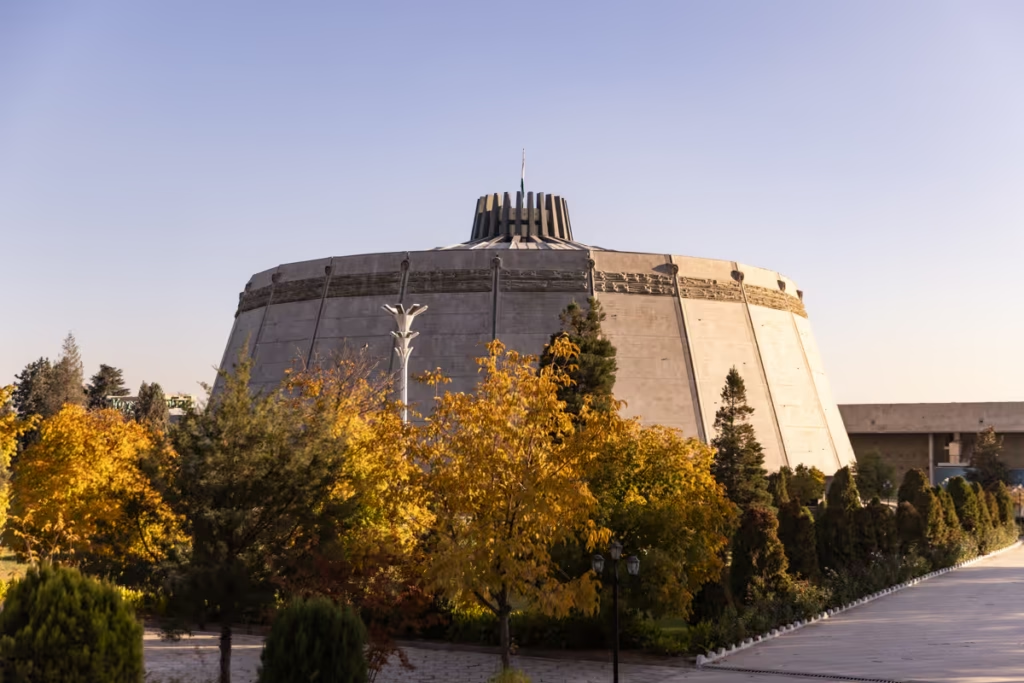
Borbad Hall is another great Soviet modernist architectural piece in Tajikistan. Borbad serves as a concert and exhibition hall for Dushanbe.
The structure houses numerous bas-reliefs throughout the complex, some of which depict life in Tajikistan, while others are abstract pieces.
North Dushanbe Mosaics
Guldasta
Status: Surviving
Rakhimov Abrurakhmon, 1976-77 (or 82-83)
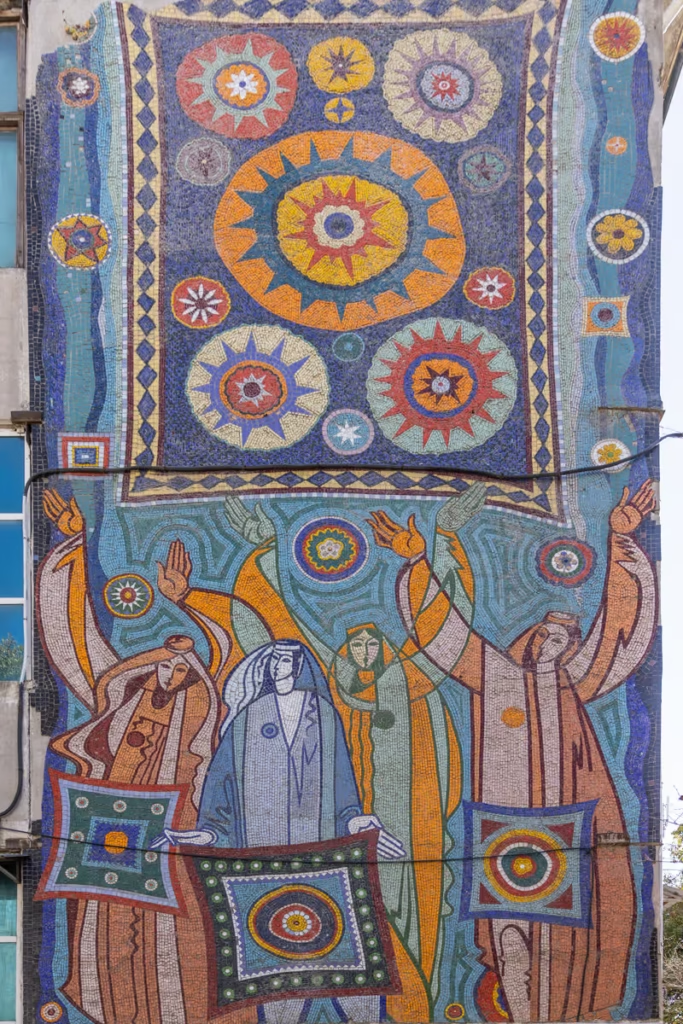
The Guldasta building is one of Dushanbe’s most colorful mosaics. The entire outer wall that faces out to Gagarin Street is covered in tiles in a beautiful blue traditional motif and features four different panels showing Tajik dance, celebration, and Shashmaqom.
My favorite is the mosaic inside the complex (proceed through the gate), which shows women in traditional dress dancing while holding pillows covered in traditional Suzani designs. Above is a beautiful carpet.
The Success of the Corporation (Tajik Goods Union)
Status: Surviving
Kamil Yodgorov, 1982-84
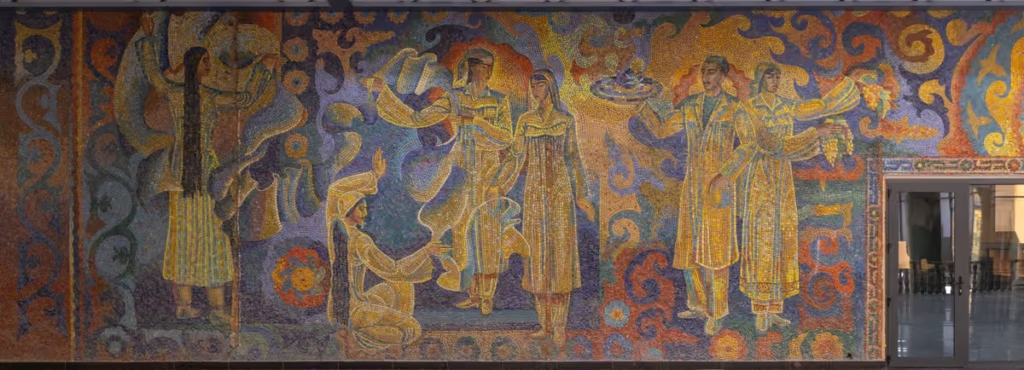
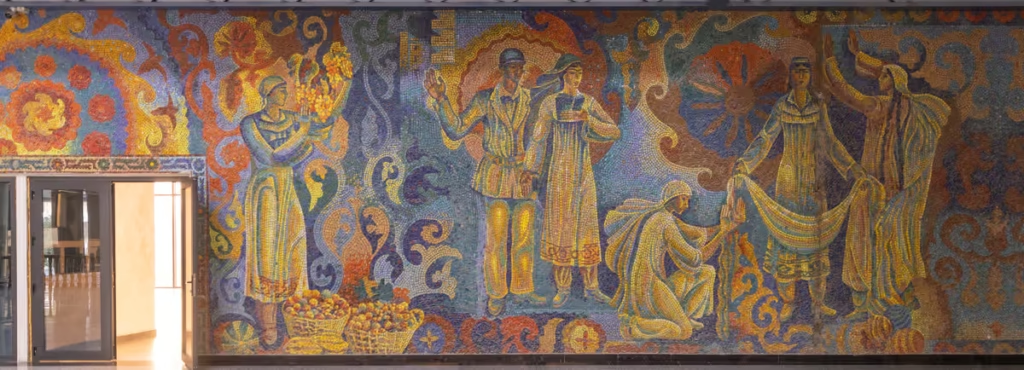
Inside the covered courtyard within the Tajikmatlubot building, this mosaic showcases agricultural and industrial achievements, filled with proud workers, harvest scenes, and symbolic imagery tied to productivity. It is a classic piece of Soviet optimism, created to inspire confidence in collective progress.
The outer walls of the building used to be quite a cool Soviet modernist piece, but unfortunately underwent a design change in 2024, which resulted in, in my opinion, a characterless exterior.
Pedagogical University Mosaic
Status: Demolished
Khanin Nikolai, 1975
The grand mosaic that used to sit in front of the Tajik Pedagogical University was destroyed in 2017. Its loss was significant, removing one of the city’s strongest artistic statements about learning and national development. Local administration claimed it was demolished because it projected out too close to Rudaki Avenue; however, upon inspection of the images of the mosaic, it shows a wide berth between the building and the avenue, with pedestrians walking in front of the building.
It showcased interesting geometric forms that look like a golden flower unfurling images of life scenes within its extending petals.
South Dushanbe Mosaics
Construction Scene Mosaic
Status: Surviving
TBD, TBD
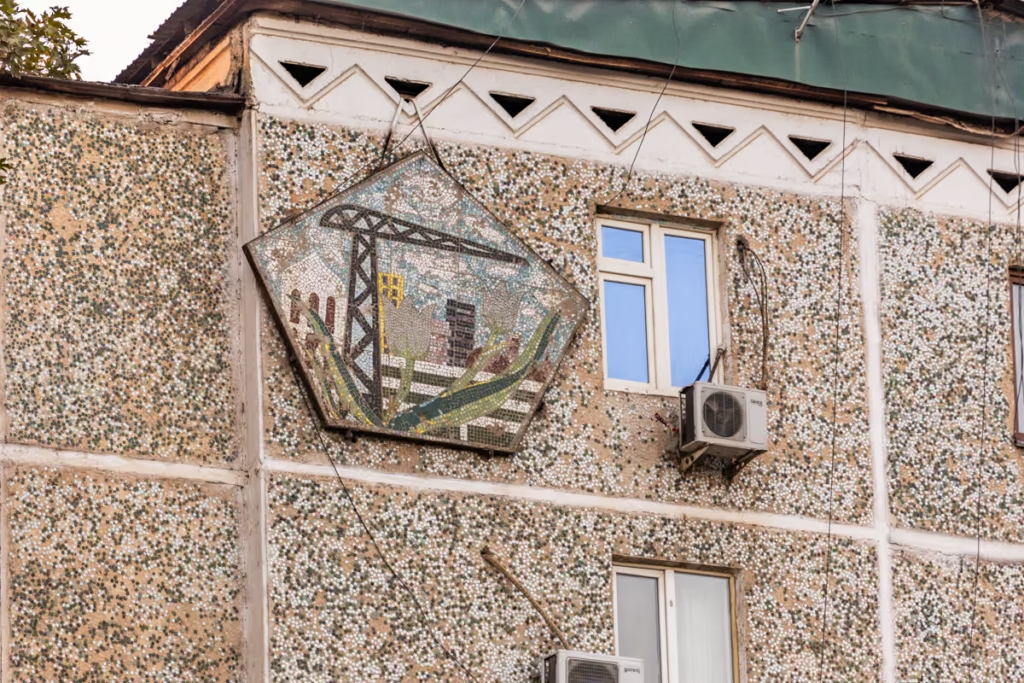
This small mosaic shows a crane over buildings and a tulip within the bounds of a pentagon, hung high on a khrushchevka near Sakhovat Bazaar.
Spring
Status: Surviving
TBD, 1980
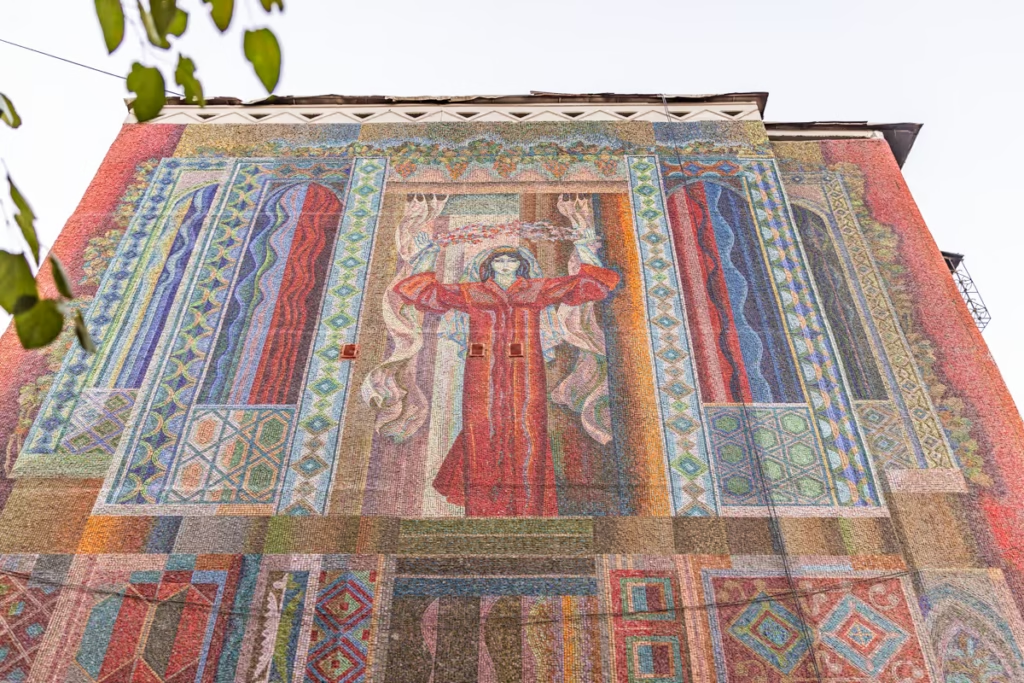
On an apartment building across Firdausi Avenue from Sakhovat Bazaar is a large mosaic of a woman in a red dress appearing to open the windows and curtains of her home while holding a sprig of small red flowers over her head.
City Gate Housing
Status: Surviving
TBD, 1970
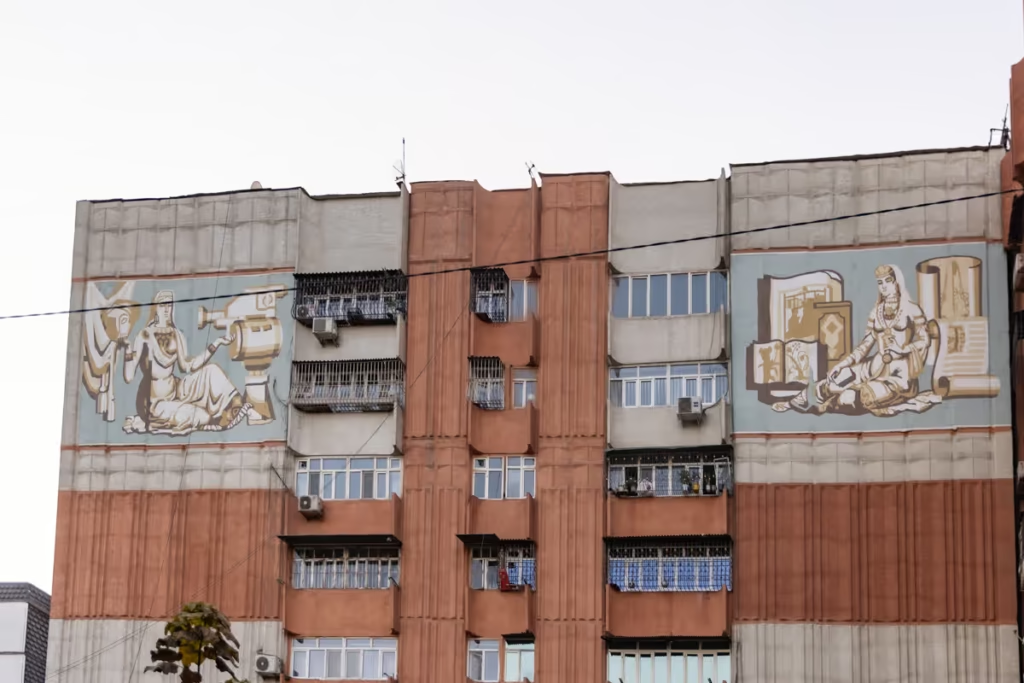
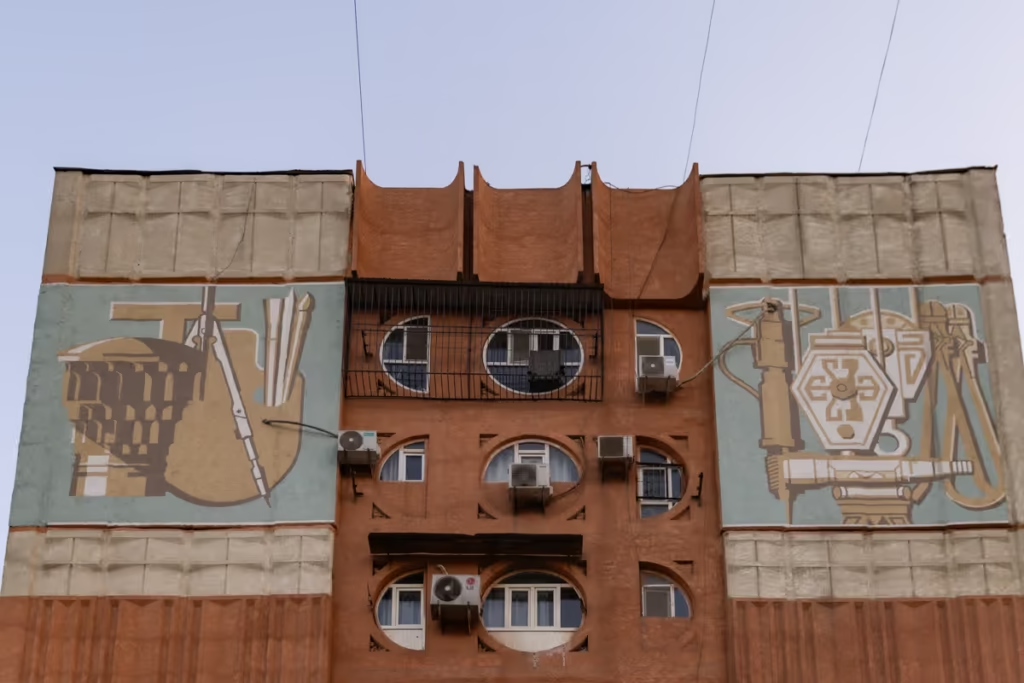
City Gate Housing is a monstrous apartment block featuring several murals that include images of Tajik film, screenwriting, and the arts.
School #74
Status: Surviving
TBD, TBD
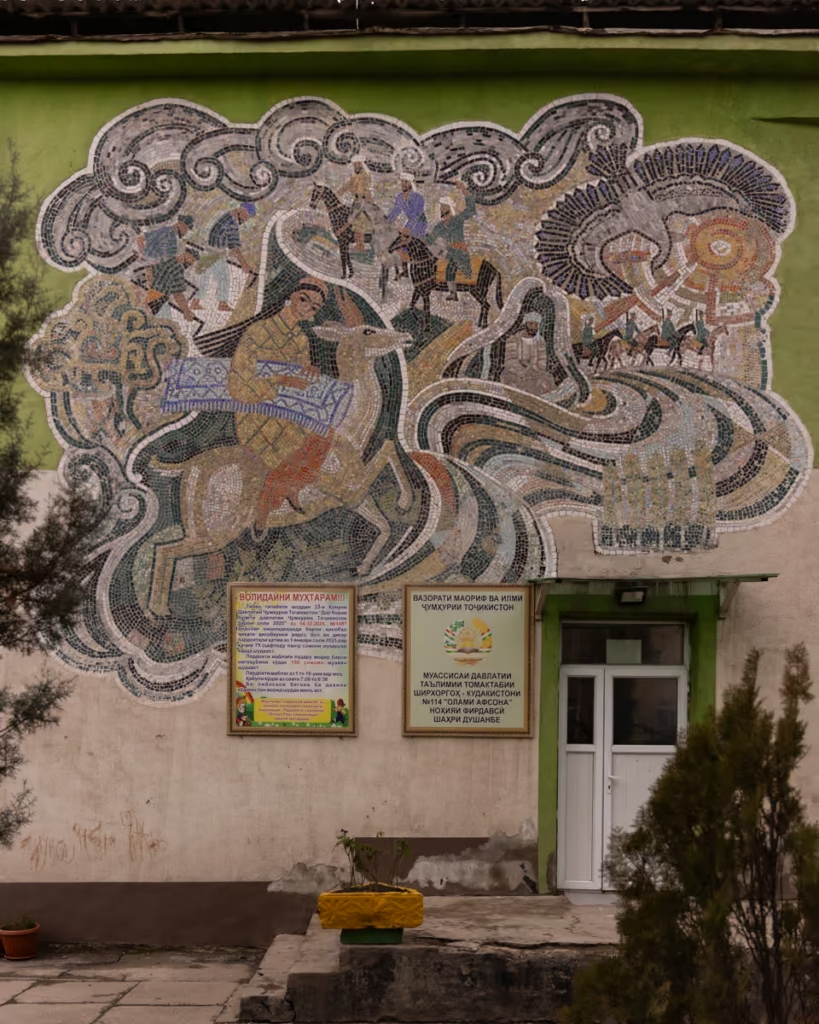
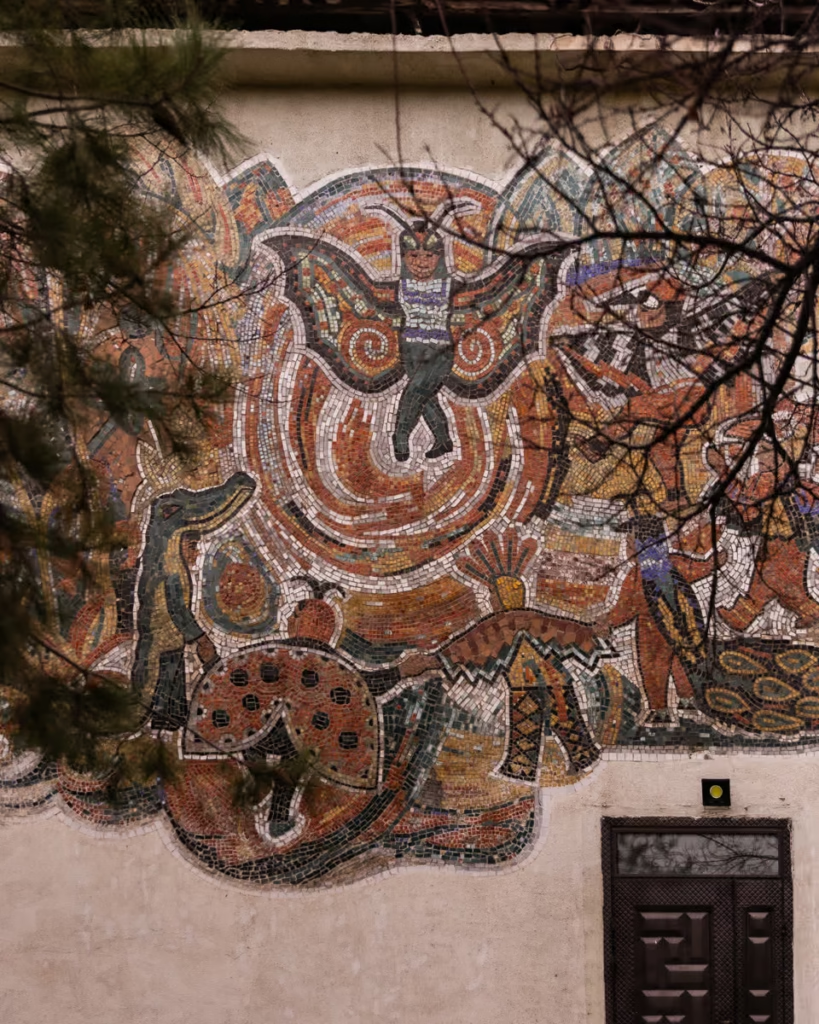
School #74 features several mosaics adorning different buildings as well as bas relief work.
East Dushanbe Mosaics
CTO Zhiguli
Status: Surviving
TBD, TBD
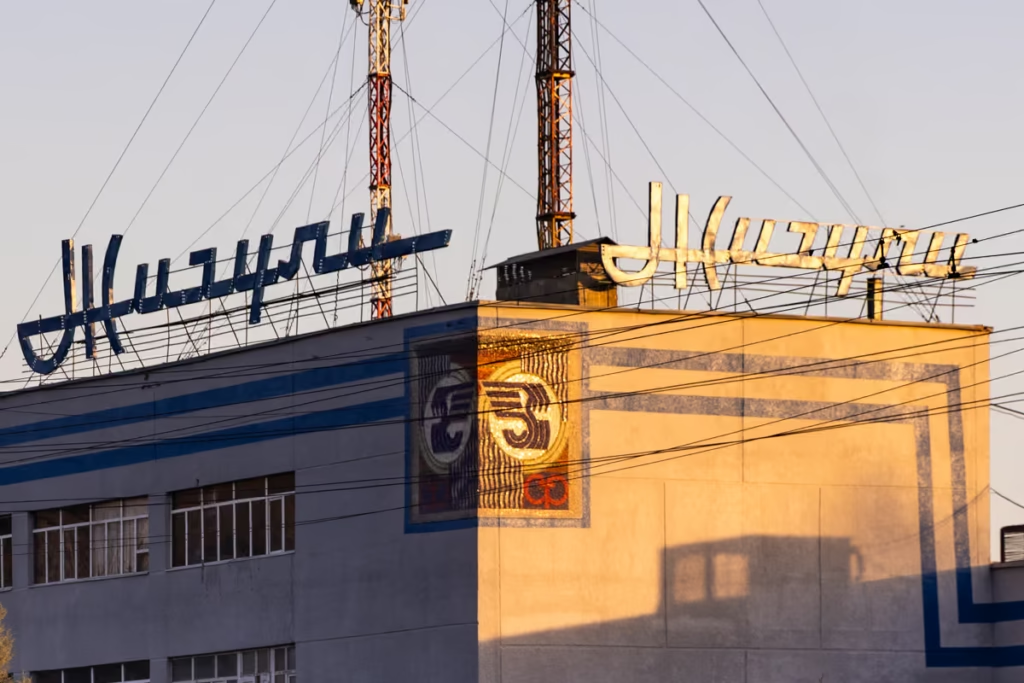
A few kilometers before the taxi stand for cars bound for the Rasht (Karotegin) Valley, and across the road is a building with a large sign atop ‘CTO Zhiguli’ and a small mosaic high up on the corner of the building. It’s unclear if the name is just the name of the auto maintenance shop marked on the maps or if it used to be a Zhiguli dealership. Zhiguli was a brand that was largely sold under the Lada brand on the export market.
The Best Dushanbe Mosaics to See
If you don’t have time to hunt down every mosaic in the city, I’d prioritize these:
- Old Printing House Mosaic
- Exploration of Outer Space
- Dushanbe Sweets Factory
- Guliston Hotel
- Dushanbe Maternity Ward #3
- Celebrating Labor Mosaic & Three Generations
- Tajik Textile Factory Mosaics
- Guldasta
- Dushanbe Tobacco Factory Mosaic
- Puppet Theatre Mosaic
Dushanbe Mosaics That Have Been Demolished
Sadly, finding Dushanbe’s mosaics is becoming something of a race against redevelopment.
Several important mosaics documented in older photographs have already disappeared, either because their buildings were demolished or because façades were substantially altered.
Chaikhana Rohat
The historic Chaikhana Rohat was demolished in March 2025 despite years of public opposition. The building was an icon of Dushanbe for decades, making its loss particularly significant for anyone interested in Dushanbe’s Soviet-era public art.
Pedagogical University Mosaic
The large mosaic formerly located at the Tajik Pedagogical University was destroyed in 2017. Its demolition was officially attributed to the building projecting too close to Rudaki Avenue, although the explanation has been disputed.
Kinotheatre Tajikistan
One of the country’s largest mosaics, Kinotheatre Tajikistan’s monumental artwork represented an idealized vision of happy and abundant life. The cinema and its mosaic have since disappeared.
Land of Tajikistan Mosaic
The mosaic formerly associated with the airport station depicted a woman in red, cotton, and workers representing both traditional and modern Tajikistan.
Why Dushanbe’s Mosaics Matter
Dushanbe’s mosaics are more than decorative Soviet-era façades. They are visual records of a complicated period in Tajikistan’s history. They represent identity, pride, and resilience. They connect pre-Soviet culture with Soviet-era aesthetics and modern Tajik heritage. They offer glimpses into how artists saw themselves within their communities, drawing inspiration from mountain landscapes, mythology, agriculture, science, and the diverse peoples of Tajikistan.
The works reflect Soviet ideals about labor, science, education, agriculture, and collective life, but they also contain distinctly Tajik and Persian cultural references. Artists incorporated traditional clothing, music, literature, mythology, mountains, agriculture, and local ideas of identity into monumental public art. Researchers have described Dushanbe’s mosaics as an important source for understanding both the visual culture of Soviet Tajikistan and the ways artists interpreted official ideology through local cultural traditions.
That makes them particularly interesting today. Dushanbe is undergoing rapid redevelopment, and many Soviet-era buildings and artworks have disappeared or are threatened. Recent reporting has documented the continuing loss of mosaics and other Soviet-era architectural heritage in the capital.
For travelers, the mosaics offer another way to understand Dushanbe beyond its grand monuments and manicured central avenues. They reveal an older, more complicated city, one where Tajik, Persian, Soviet, and modern identities overlap.
Exploring the Mosaics of Dushanbe
Exploring Dushanbe through its mosaics completely changed the way I experienced the city. What began as a hunt for colorful Soviet-era artwork became a way of understanding Tajikistan’s history, culture, and identity from a completely different angle.
The best part is that you don’t need to be an architecture nerd to enjoy them. You just need to look up.
A woman harvesting cotton might suddenly appear above a residential street. Avicenna might be staring down from a crumbling wall. A school might have a trio of enormous mosaics hidden behind its gates. And somewhere between them, you’ll probably find another work that isn’t even on the map yet.
That is what makes exploring the mosaics of Dushanbe so rewarding. They’re scattered throughout the city, often imperfect, sometimes fading, and increasingly threatened by redevelopment.
If you’re visiting Dushanbe, give yourself a morning to wander beyond the obvious sights. Look past the new construction and into the older neighborhoods. You might find some of the most fascinating pieces of Tajikistan’s visual history hiding in plain sight.
And take photos. In a city changing as quickly as Dushanbe, today’s mosaic may not still be there on your next visit.
Have Any Questions About the Mosaics of Dushanbe?
Have questions about any of these monumental works around Dushanbe? Been to Dushanbe and have any to add? Let us know in the comments section below.
Posts from Tajikistan
Hisor Fortress, Tajikistan: How to Visit
Istaravshan Travel Guide: 10 Things to Do
Tajikistan Itinerary: 1-4 Weeks
Afghan Bazaar Khorog | Tem Market
Shokhdara Valley Travel Guide, Tajikistan
Vorukh: A Guide to Tajikistan’s Enclave
Shir Khan Bandar Border Crossing Guide
Tajik Food: 20+ Traditional Dishes
Qolma Pass: Tajikistan to China Guide
GBAO Permit: How to Get One
Lakes Loop, Tajikistan Hiking Guide
Pik Engles Hike: Tajikistan Trek Guide
Tajikistan Border Crossings Guide
Pamir Highway Guide: M41 Route
Tajikistan Uzbekistan Itinerary: 2 Weeks
Solo Female Travel in Tajikistan
Chimtarga Pass Trek Guide | Tajikistan
Best Hikes in Tajikistan
Dushanbe Day Trips
Solo Female Travel in Central Asia
Jizeu, Tajikistan: Trek & Travel Guide
Tajikistan Travel Guide: Plan Your Trip
Dushanbe Travel Guide & Things to Do
Dushanbe Mosaics: Soviet-Era Art in Tajikistan
2 Week Tajikistan Itinerary
3 Week Tajikistan Itinerary
4 Week Tajikistan Itinerary
10 Day Tajikistan Itinerary
1 Week Tajikistan Itinerary
Panjakent Travel Guide: Things to Do

OVIR Registration in Tajikistan: Dushanbe Guide
Panjakent-Samarkand Border Crossing Guide
Fann Mountains Trekking Guide
Central Asia Travel Guide
Tajikistan SIM & eSIM Guide
Shurab, Tajikistan: An Almost Forgotten City

Isfara-Batken Border Crossing Guide

Oybek Border Crossing: Tashkent to Khujand
Best Restuarants in Dushanbe | Where to Eat
Isfara Travel Guide, Tajikistan
Pamir Highway Itinerary: 10 Days from Dushanbe to Osh
Haft Kul: A Guide to the Seven Lakes of Tajikistan
Tajikistan Letter of Invitation (LOI)
Jarty Gumbez, Tajikistan: A Complete Travel Guide
How to Use Payment Terminals in Tajikistan
Shor Bulog Observatory, Tajikistan
Visiting Zorkul, Tajikistan
Visiting the Sary Khosar Nature Reserve
A Guide to Rasht Valley, Tajikistan