Fann Mountains Guide: Trekking in Tajikistan
Updated September 2026, Fann Mountains Guide: Trekking in Tajikistan was originally written in December 2016
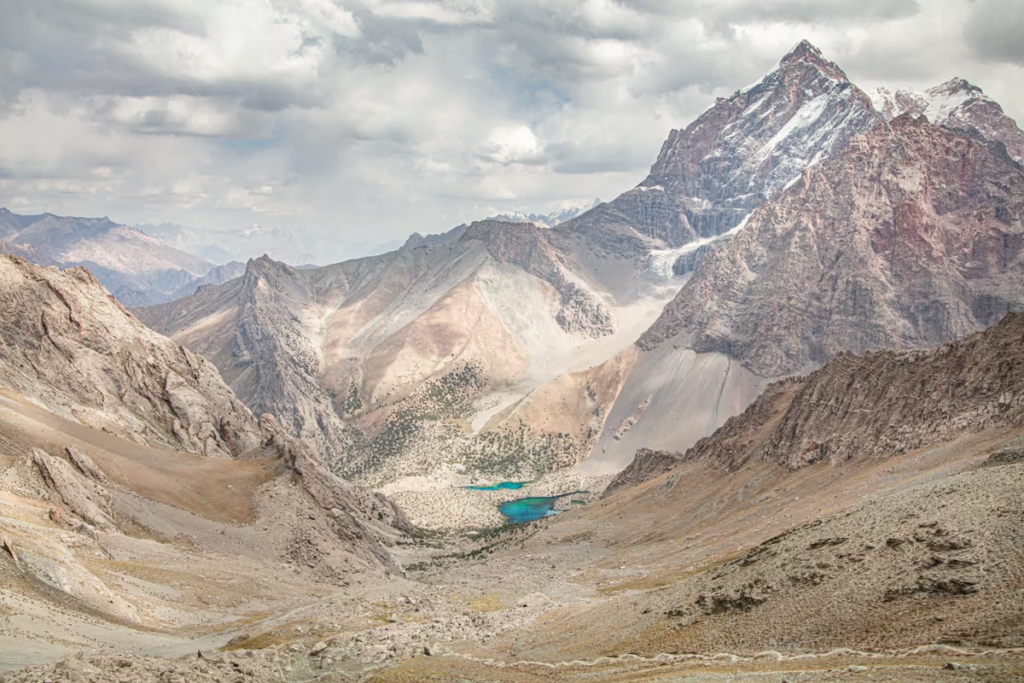
The Fann Mountains are one of Tajikistan’s best trekking destinations, with jagged 5,000-meter peaks, brilliant alpine lakes, remote valleys and some of the country’s best mountain scenery. In Tajikistan’s Fann Mountains you’ll find yourself surrounded by sky-scraping jagged mountains, crystal clear lakes of azure, and the warm heart & legendary hospitality of the local people. Although- This is a remote stretch of Earth where you could go days without seeing another soul and that’s as much of its charm as is the stark sceneries.
And this is where this blog comes in to help. When I visited this area for the first time in 2016 there was almost zero information on it. So after my first trip and several updates after a few trips back I finally decided to share the info I gathered over time here. Now this guide has been updated with over a decade of inforamtion spread over yearly visits back.
But don’t fret, you don’t have to be a hardcore mountaineer to enjoy this beautiful area. There are short and long treks around that will give most anyone a great experience in the Fanns. Of course, there are treks that will keep even the experienced trekkers on their toes.
*This is a somewhat remote area of Tajikistan and with any trekking destination, or you know, just life, in general, there are assumed risks. This area is prone, but not limited to earthquakes, extreme weather conditions, landslides, political upheaval, and bone-crushing roads. Much of the trekking in Tajikistan, in general, is wild and remote.
There are little to no facilities and services outside of cities. Be prepared, have enough layers and proper gear, food, and water. The likelihood of being rescued in the event of a life-threatening injury or disaster is slim. You’re going at your own risk and remember that there is never any shame in hiring a guide.
Looking for more trekking ideas in Tajikistan? Check out the 10 best treks in Tajikistan
Need Travel Insurance and Evacuation Services?
Start shopping for travel insurance plans over at IATI Insurance. Readers of the Adventures of Nicole get a 5% discount off your plan.
The Adventures of Nicole partners with Global Rescue to offer the world’s leading medical evacuation and security advisory services. To travel with peace of mind, explore their evacuation coverage.
Fann Mountains at a Glance
Location: Sughd Province, northwestern Tajikistan
Highest peak: Chimtarga, 5,489 m
Best trekking season: Late June to mid-September
Main gateway: Panjakent
Best known for: Alpine lakes, high passes and multi-day treks
Popular areas: Haft Kul, Kulikalon, Alovaddin, Iskanderkul
Trekking difficulty: Easy day hikes to challenging high-altitude traverses
- Fann Mountains at a Glance
- How to Get to the Fann Mountains
- How Many Days Do You Need in the Fann Mountains?
- Best Places to Visit in the Fann Mountains
- Where to Stay in the Fann Mountains
- Tours & Guides for the Fann Mountains
- Packing List for the Fann Mountains
- Best Time to Visit the Fann Mountains
- Best Fann Mountains Treks
- Haft Kul Area
- Haft Kul to the Lakes Area
- The Lakes to Haft Kul Area
- Haft Kul to Iskanderkul
- The Lakes Area to Iskanderkul
- Combining Chimtarga Pass & the Lakes
- Practical Info & Safety in the Fann Mountains
- Fann Mountains FAQ
- Why the Fann Mountains Belong on Your Tajikistan Itinerary
How to Get to the Fann Mountains
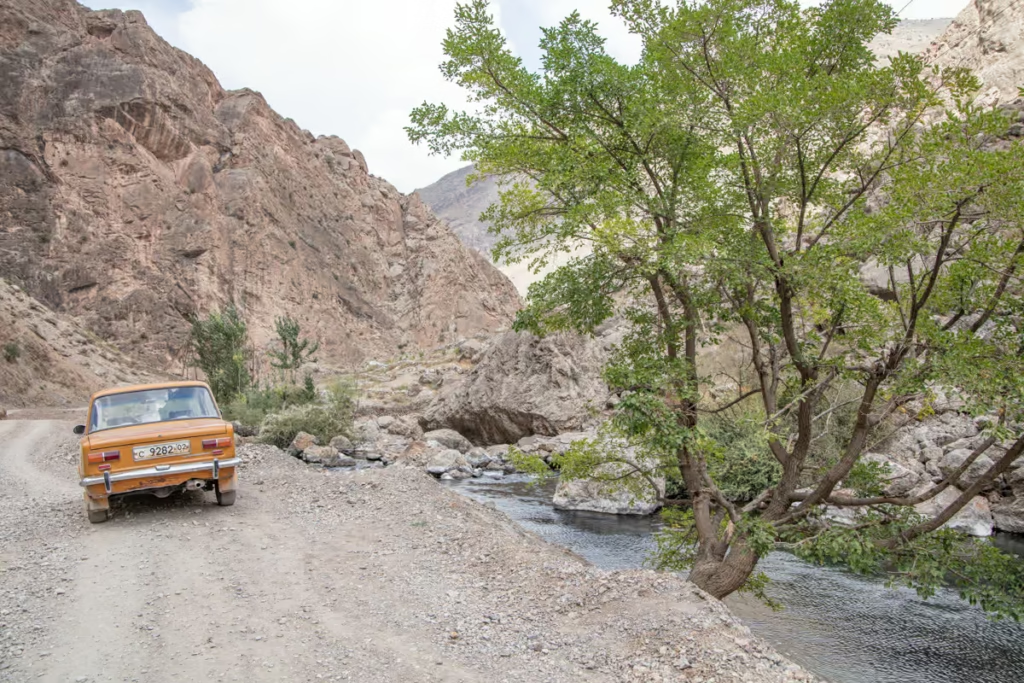
The Fann Mountains are part of the Western Pamir-Alay Mountain System, located in Tajikistan’s Sughd Province. The Fanns are bound by the Zeravshan range to the North, the Gissar range to the South, The Haft-Kul (Seven Lakes) to the West of the Archamaidon River, and the Fann Darya River to the East. This whole swath of land is situated in the northwest of Tajikistan. Cities & towns near and around the Fanns include Panjakent, Ayni, Shing, Sarvoda, and Sarytag.
Panjakent is the main jumping-off point into the Fann Mountains and is connected to Artuch Alplager, the Haft Kul, and Mogiyon by shared taxis. Most travelers will arrive here from Dushanbe, Khujand, or Samarkand in Uzbekistan.
Want to visit both Uzbekistan & Tajikistan? Check out my two week Uzbekistan + Tajikistan itinerary
If coming from Dushanbe you will have the great thrill of driving through the 5 km long famed Anzob tunnel. If arriving from Khujand or other cities in the Tajik Fergana Valley be ready for a winding cliff-side road with amazing views.
Another popular option is to combine the Fann Mountains with a trip to Uzbekistan’s Silk Road cities of Samarkand & Bukhara. In fact, the city of Penjikent sits only 73 kilometers from Samarkand. With the re-opening of the Panjakent border in 2018, you can combine the two places with ease.
The town of Sarvoda (sometimes marked as Zeravshan- 1 on maps) is typically where those traveling by shared transport to Vertical Alovaddin Base Camp and to Sarytag will need to go. This is an estimated price list of transportation.
Contact ZTDA for the most up-to-date information on these costs.
Please note that Artuch, the Haft Kul, Sarytag, Zimtut, and Mogiyon Village are the only places serviced by (typically) shared taxis or minibusses on most days. Vertical Alovaddin is not and you should arrange a car beforehand.
Shared Taxis, Marshutkas & Private Cars to the Fann Mountains
Gasoline prices in Tajikistan can be a little bit of a rollrollercoasterercoaster. Here are prices for shared taxis and marshrutka as of summer 2026.
| Route | Shared taxi | Marshrutka |
|---|---|---|
| Dushanbe → Panjakent | 170 TJS | 90 TJS |
| Khujand → Panjakent | 170 TJS | 120 TJS |
| Panjakent → Artuch | 85 TJS | 70 TJS |
| Panjakent → Haft Kul | 80 TJS | 35 TJS |
| Dushanbe → Sarvoda | 70 TJS | |
| Sarvoda → Alovaddin | 70 TJS | |
| Sarvoda → Iskanderkul | 70 TJS | |
| Samarkand → Panjakent | 60,000 UZS + 15 TJS |
Private Car Hire for the Fann Mountains
Private car hire can be done in a couple of different ways. The cheapest will be to head to a shared taxi stand and find a driver and buy all the seats. If it’s a smaller car the price will be 4x the normal price of a single seat, whereas larger vehicles like a Landcruiser will be about 6x the price of a single seat.
More expensive will be to book a car and driver through a tour agency, costing you about $0.70-0.90 USD per kilometer. This option will almost certainly yield a better quality vehicle than most of the shared taxis. For reference, I’ve listed some common routes and their distances below.
- Dushanbe-Panjakent: 230 km
- Dushanbe-Sarytag: 138 km
- Dushanbe-Alovaddin: 138 km
- Dushanbe-Nofin (Haft Kul): 266 km
- Panjakent-Artuch: 67 km
- Panjakent-Haft Kul: 52 km
- Panjakent-Alovaddin: 150 km
- Sarvoda-Alovaddin: 29 km
- Sarvoda-Iskanderkul 39 km
- Khujand-Panjakent: 258 km
How Many Days Do You Need in the Fann Mountains?
2-3 days: Haft Kul or Kulikalon/Alovaddin
4-5 days: Lakes Loop + Chukurak
6-8 days: Haft Kul → Lakes
8-12+ days: Chimtarga and longer traverses
Best Places to Visit in the Fann Mountains
The Fann Mountains are packed with alpine lakes, high mountain passes and remote valleys, but you don’t need to tackle a two-week expedition to experience the best of them. Several distinct areas make up the region, from easily accessible lakes and homestay villages to high-altitude trekking routes that require camping and a good pair of legs.
If you’re short on time, Haft Kul, Kulikalon and Alovaddin (the Lakes Loop), or Iskanderkul are the places I’d prioritize. If you have more time and experience, routes through Chimtarga and Bolshoi Allo let you venture deeper into the mountains.
Haft Kul, or Seven Lakes
The Haft Kul, or Seven Lakes, stretches through a narrow valley in the western Fann Mountains and is one of the easiest places to experience the region. The seven lakes run roughly 15 kilometers through the Shing Valley, with the road reaching all seven of them these days.
Each lake has its own color and character, while the valley is dotted with small villages, shepherds and family-run homestays. You can visit Haft Kul as a day trip from Panjakent, spend a couple of days hiking between the lakes, or use it as the starting point for longer treks into the heart of the Fanns.
Best for: Short trips, day hikes, homestays and experiencing mountain culture without committing to a serious trek.
Don’t miss: Marguzor Lake and Hazorchashma, the seventh lake.
Kulikalon Lakes
If there’s one landscape that made me fall hard for the Fann Mountains, it’s the Kulikalon Bowl. Several brilliant blue and turquoise lakes sit in a broad alpine meadow beneath the jagged walls of the surrounding peaks, with juniper forests adding a splash of green to an otherwise rugged landscape.
The lakes are reached on foot from Artuch Alplager, making Kulikalon one of the most accessible high-altitude trekking areas in the Fanns. The hike to the lakes can be done as a day trip for strong hikers, but camping beside the water is where the experience really gets good.
Kulikalon also serves as one of the main hubs for longer Fann Mountains treks, including the classic route connecting Kulikalon with Alovaddin and the more challenging crossings toward Chimtarga and Iskanderkul.
Best for: First-time trekkers, alpine scenery, camping and multi-day routes.
Don’t miss: Sunrise around Kulikalon, Bibijonat and Dushakha Lakes.
Alovaddin Lakes
The Alovaddin Lakes sit in a spectacular valley surrounded by steep mountain walls and are another essential stop in the Fann Mountains. The main lake is easily reached from Vertical Alovaddin, the former Russian climbing camp, making it possible to visit even if you don’t have time for a multi-day trek.
For trekkers, Alovaddin is usually paired with Kulikalon as part of the popular Lakes Loop. The route crosses either Lauden or Alovaddin Pass, with the latter reaching 3,860 meters. You can also use Alovaddin as a base for a day hike to Mutnyi Lake before tackling more demanding routes toward Chimtarga.
Best for: Alpine lakes, short hikes and the classic Fann Mountains Lakes Loop.
Don’t miss: Camping on the southern shore for sunrise over the lake.
Iskanderkul
At the southeastern edge of the Fann Mountains, Iskanderkul is one of Tajikistan’s most famous mountain lakes. Its name is tied to Alexander the Great, and local legends connect the lake to his campaigns through Central Asia. Beyond the history, the lake itself is reason enough to visit, with steep mountains rising around its broad blue waters.
Unlike other parts of the Fanns, you don’t need to commit to a multi-day trek to enjoy Iskanderkul. The lake can be reached by road, with guesthouses and other basic accommodations nearby. For trekkers, however, Sarytag and Iskanderkul are important endpoints for several longer routes crossing the Fanns.
Best for: Travelers short on time, lakeside stays, day hikes and combining the Fann Mountains with a longer trekking route.
Don’t miss: The waterfall near the lake and the village of Sarytag.
Chimtarga & Bolshoi Allo
For experienced trekkers, the mountains around Chimtarga Pass and Bolshoi Allo are where the Fanns really turn up the difficulty. Chimtarga Pass reaches 4,740 meters, while nearby Chimtarga Peak rises to 5,489 meters, the highest point in the Fann Mountains.
Getting here means leaving the relatively straightforward lake routes behind and heading into high, rugged terrain. One of the classic challenging routes connects the Kulikalon and Alovaddin Lakes with Mutnyi Lake, Chimtarga Pass and the striking Bolshoi Allo Lakes before descending toward the Archamaidan Valley.
This isn’t the place to wing it if you’re inexperienced with high-altitude trekking. The route involves significant elevation, remote terrain and steep scree, and you’ll need to carry your own gear across Chimtarga Pass because pack animals cannot cross it.
Best for: Experienced trekkers, high-altitude routes and the Fann Mountains at their wildest.
Don’t miss: Bolshoi Allo and the views from Chimtarga Pass.
Which Fann Mountains Area Should You Visit?
If you’re trying to decide where to go, here’s my quick take:
| Area | Best for | Time needed |
|---|---|---|
| Haft Kul | Lakes, villages & homestays | 1-3 days |
| Kulikalon | Alpine scenery & camping | 1-3 days |
| Alovaddin | Lakes & classic trekking | 1-3 days |
| Iskanderkul | Easy access & day hikes | 1-2 days |
| Chimtarga & Bolshoi Allo | Challenging high-altitude trekking | 4+ days |
If you only have a few days: I’d choose Haft Kul or the Kulikalon-Alovaddin Lakes Loop.
If you have 4-7 days: Combine Haft Kul with the central lakes.
If you’re an experienced trekker with more time: Add Chimtarga and Bolshoi Allo or continue toward Iskanderkul.
Where to Stay in the Fann Mountains
Camping in the Fann Mountains
Plan to camp if trekking in the Fann Mountains, especially outside the Haft Kul area. This is going to give you the most freedom in terms of where you visit in Fann Mountains as villages can be quite scattered.
Homestays in the Fann Mountains
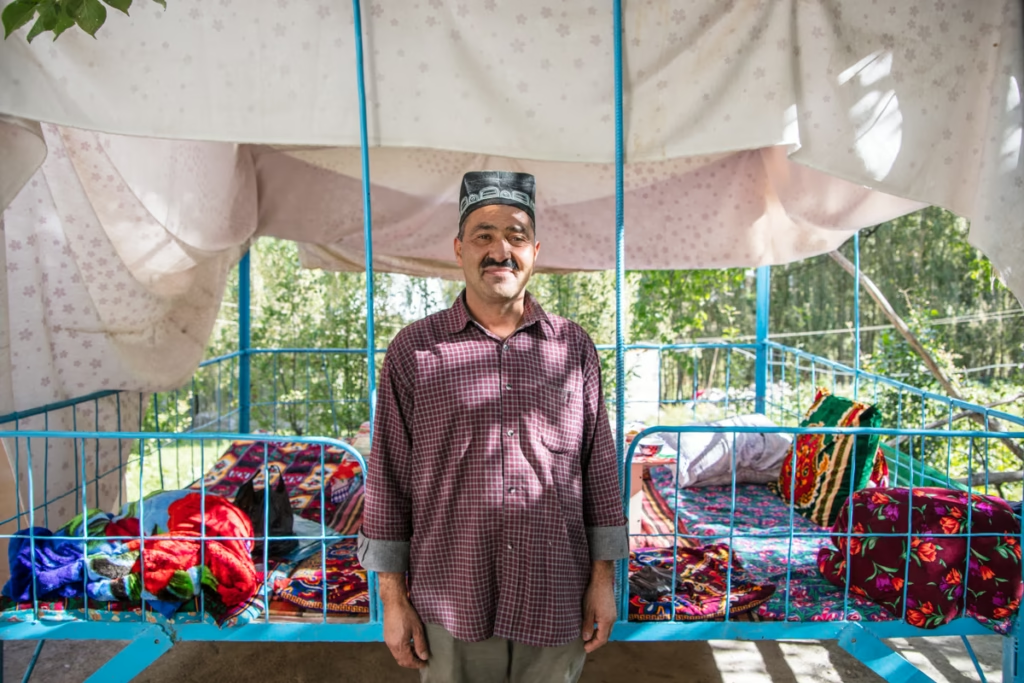
In general, most accommodation in the Fann Mountains area will be in basic homestays. Community-Based Tourism (CBT) is fairly common throughout Tajikistan and greater Central Asia.
Many families that live in the area will likely offer to take you in and subsequently show you legendary Tajik hospitality. Typically they will refuse payment, but do try to hide some Somoni in the home or try giving to the eldest child.
Contact ZTDA to arrange a homestay if you are planning ahead.
Recommended Homestays in the Fanns Mountains
- Haft Kul: Najmidden Homestay (near Nofin Lake, ran by the friendly Jumaboy and family)
- Haft Kul: Rogich Homestay (for those doing the Mogiyon to Haft Kul trek)
- Sarytag: Dilovar’s Homestay (In the heart of Sarytag, Dilovar speaks excellent English)
- Iskanderkul: Shezok Guesthouse (right on the lakeshore)
- Yakkakhona: Hazratsho Homestay (nearby to Artuch, Hazratsho speaks English and can help arrange cars and pack animals for trekking)
Accommodations in cities and towns outside the Fanns I recommend from personal experience:
- Dushanbe: Hello Hostel Super clean with a friendly and helpful staff. Tucked away in a quiet neighborhood in Dushanbe. Green House Hostel is another popular option nearby.
- Khujand: Qalai Khujand Hostel Qalai Khujand Hostel sits inside the walls of the Khujand Citadel, staff is very helpful. Armon Apartment Hotel also comes recommended by other travelers.
- Panjakent: Hotel Umariyon Clean and located smack near the middle of Panjakent. The staff speaks Tajik and Russian only but are still helpful and friendly nonetheless. Another great option is Salom Hostel, with a friendly and helpful owner named Safar.
- Samarkand (Uzbekistan): Highly recommended accommodations in Samarkand are Amir Hostel, Samarkand Travel Inn, and Orient Star Hotel.
Tours & Guides for the Fann Mountains
It is possible to arrange guides in the area and even join tours. Contact ZTDA for information on guides and guided treks.
Several tour operators can arrange organized tours and treks in the Fann Mountains, as well as in the Zaravshan, Yagnob Valleys, and more!
- Safar Expeditions My own company that specializes in off the beaten path travel, particularily Tajikistan and the greater Central Asia Region and the Middle East.
- Paramount Journey Offers some of the best itineraries around Tajikistan and their staff are extremely knowledgeable.
- You can also contact ZTDA to arrange guides and tours.
- Shop for tours in Tajikistan as well as the greater Central Asia region at Indy Guide.
Packing List for the Fann Mountains
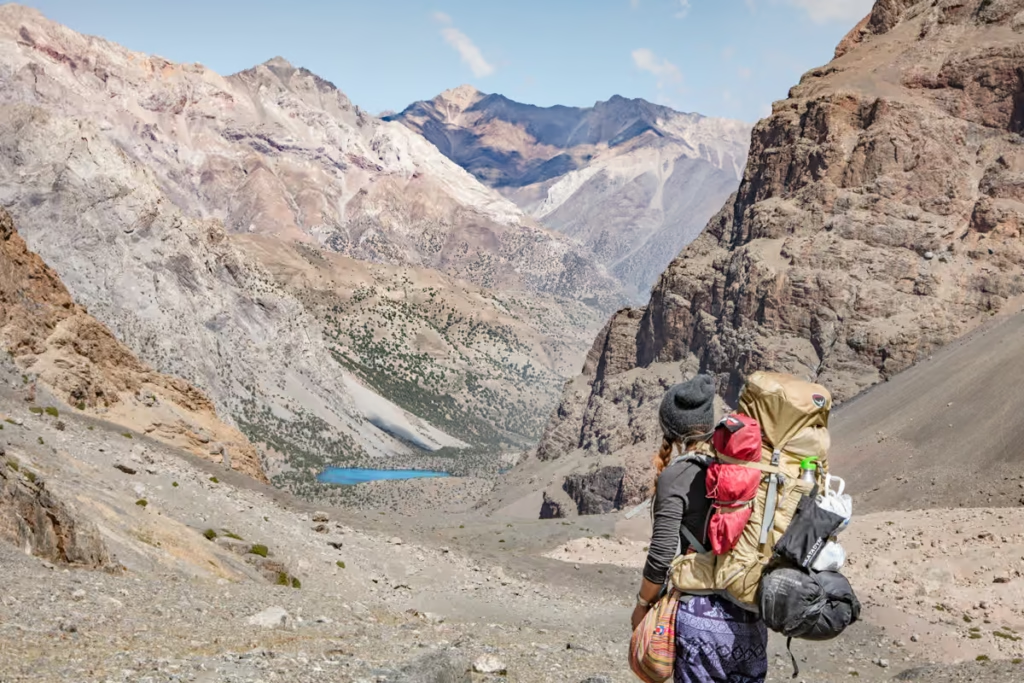
Clothing
- Warm outer shell jacket x1
- Down jacket x1
- Fleece x1
- Long sleeve base layer top x2
- Short sleeve shirts x2
- Trekking pants x1
- Leggings x2
- Trekking socks x2
- Warm socks x1
- Sports bra x2
- Mittons x1
- Warm hat x1
- Sunglasses x1
- Microfiber towel x1
Recommended Gear
- Inreach Explorer
- Backpack (I personally recommend the Osprey Ariel 65 and an attaching daypack)
- Hiking boots (My favorite are the La Sportiva Trango Tech GTX)
- Waterproof sandals
- Katadyn water purifier
- Fann Mountains Map
- Sleeping mat
- 3-season tent
- Hydration Pack
- Sleeping bag cold rated to -5ºC/20ºF
- Campstove and Cooking set
- Silicone squeeze tubes (for cooking with sauces, olive oil, etc.)
- Propane/butane canister (available for purchase at Greenhouse Hostel in Dushanbe)
- Trekking poles
- Headlamp
- Trekking in Tajikistan by Jan Bakker (Written by a friend and includes the Fann Mountains, Yagnob Valley, and Pamir)
Toiletries
- Sunscreen
- Biodegradable shampoo bar
- Biodegradable soap
- Toothbrush
- Biodegradable wipes
- Toilet Paper
- First Aid Kit
- Hand sanitizer
Electronics
- Camera/lenses and necessary accessories
- Battery Bank
- Solar Panel
- Phone and charging cables
Maps
- Fann Mountains Map by EWP (can be ordered direct from EWP as well)
- Southern Tajikistan Map by Gecko Maps
Guide Books
- Trekking in Tajikistan by Jan Bakker & Christine Oriol. You’ll find detailed descriptions of these hikes as well as those in the Pamirs in this book.
- Tajikistan and the High Pamirs by Robert Middleton & Hue Thomas. This is a huge book, but it has so much good info on Tajikistan from history, great-game stories, travel information, and more.
- Bradt Tajikistan by Sophie Ibbotson & Max Lovell-Hoare. The most comprehensive guide to Tajikistan in print.
- Central Asia by Lonely Planet. Though I will say, their newest redesign is almost functionally useless and serves little more than a ‘X reasons to visit Tajikistan’. blog post.
- The Central Asia Phrasebook by Lonely Planet I found this to be a handy item for Tajik, Russian and Kyrgyz phrases, not so much for the Wakhi phrase section.
Food
- Dehydrated meals (you’ll need to stock up before leaving home)
- Trail mix
- Jerky
- Dried fruit and nuts (easily purchased at a bazaar)
- Peanut butter
- Spice packets
- Olive oil for cooking
- Hot sauce (bring from home to jazz up bland food)
- Instant mashed potatoes (so unhealthy, but I love them after a long trekking day)
- Fresh veggies, noodles, bread, rice, and more can be purchased at a bazaar prior to setting out for your trek)
Best Time to Visit the Fann Mountains
The best time to visit the Fann Mountains for trekking is late June through mid-September, when most trails are accessible and the higher mountain passes have generally shed their winter snow. For the classic multi-day routes over passes such as Chimtarga and Kaznok, July and August are your best bet.
That said, the ideal month depends on what you want to do. Lower-altitude areas such as Haft Kul can be visited earlier in the season, while the highest routes have a much shorter window. Snow can linger on high passes into June, particularly after a heavy winter, while early snowfall can return to the mountains by late September or October.
June
June is the beginning of the trekking season, but conditions can be hit or miss. Lower valleys and lakes may be accessible, green and relatively quiet, while snow can still cover passes above 3,500 meters. Snowmelt can also make rivers and streams higher, which can complicate crossings and access to some trailheads.
If you’re planning a trip in June, I’d favor lower-altitude routes such as Haft Kul unless you’ve confirmed current conditions for the higher passes.
July & August
July and August are the prime months for trekking in the Fann Mountains. Snow has generally receded from the major passes, days are long and warm, and the classic multi-day routes are at their most accessible. This is the window I’d choose for challenging treks involving Chimtarga Pass, Kaznok Pass and other routes above 4,000 meters.
Don’t mistake summer for guaranteed sunshine, though. Afternoon rain and thunderstorms can occur, particularly in the mountains, and temperatures drop considerably after sunset at higher elevations.
September
Early to mid-September is another excellent time to visit, particularly if you prefer cooler temperatures and fewer trekkers. The days are shorter and nights are colder than in midsummer, but conditions can remain very good for trekking, and September’s lower crowds make it an appealing time for photography and quieter trails.
I’d be more cautious about planning a high-pass trek toward the end of September, however. Weather can change quickly at altitude, and an early snowfall can make passes difficult or impossible to cross.
October through May
Outside the main trekking season, the Fann Mountains become a very different proposition. Snow and ice can make higher trails and passes inaccessible, while shorter daylight hours and cold nights make multi-day camping considerably less pleasant.
One area that is generally accessible through winter is the Haft Kul which can be stunning when dusted with snow. Alovaddin, if the road allows can also be quite beautiful in the early winter around November.
Winter trekking and mountaineering are possible for experienced adventurers with the appropriate equipment and skills, but this isn’t the season I’d recommend for a typical Fann Mountains trekking trip.
So, When Should You Go to the Fann Mountains?
For the easiest conditions and widest choice of trekking routes, plan your trip for July or August. If you’re happy with cooler weather and want fewer people on the trails, late June or early September can be excellent.
| Month | Conditions | Best for |
|---|---|---|
| June | Snow may remain on high passes | Lower-altitude hikes |
| July | Warm, long days, generally accessible passes | All types of trekking |
| August | Warm, long days, generally accessible passes | All types of trekking |
| September | Cooler, quieter, possible early snow late in month | Trekking and photography |
| October-May | Snow, cold and limited high-altitude access | Experienced winter travelers |
My pick: July to early September gives you the best combination of accessible trails, comfortable conditions and flexibility. If your itinerary includes a high pass such as Chimtarga, I’d stick as close to the middle of that window as possible and check current conditions before setting out
Best Fann Mountains Treks
The Kulikalon & Alovaddin Lakes Area
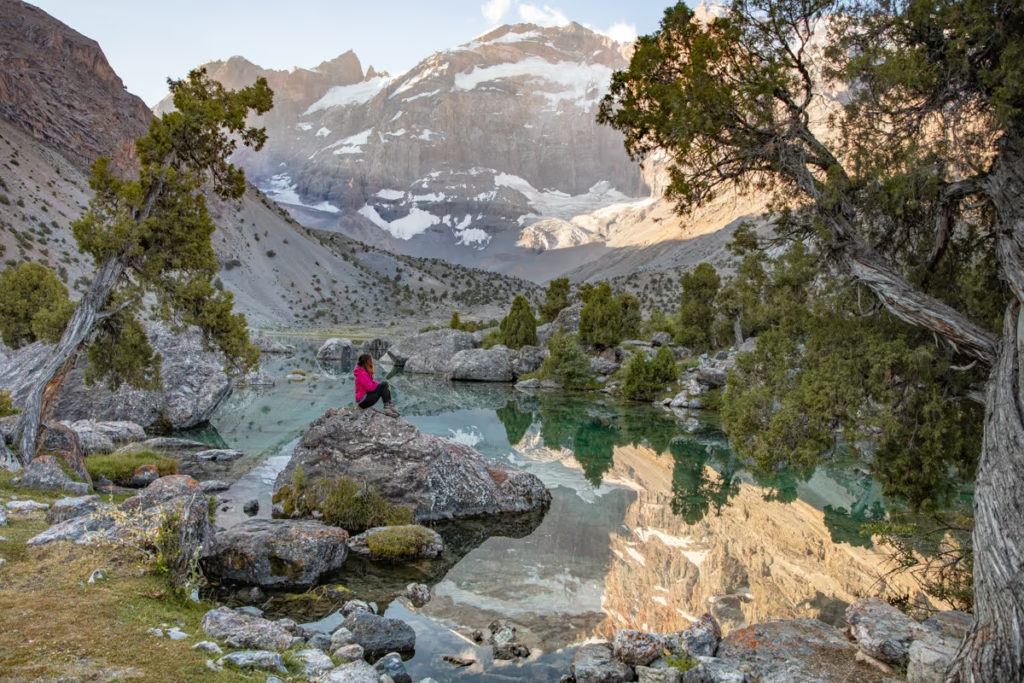
This stunning area will take you through semi-arid mountains, juniper forests and will find you waking up next to Carib-blue lakes. Alovaddin and Kulikalon Lakes are easily a highlight of most Fann Mountains treks. The “Lakes Loop” is one of the most popular treks in the Fanns.
Both the Kulikalon Lakes area, as well as the Alovaddin Lakes area, are only accessible on foot. If you want to see the beauty of the Fanns and are short on time this is your best option. The Lakes area can be visited as a one way through the trek, or combined to form the popular “Lakes Loop”.
*Note that as of 2019 there is a park ranger who will collect a camping fee from you if he runs across you in the Lakes Loop area (Artuch, Kulikalon Bowl, Lake Alovaddin). We were charged 19 TJS per night (don’t expect to get 1 TJS in change if you pay with a 20 TJS note).
The Lakes Loop
Artuch Alplager ➤ Kulikalon Lakes ➤ Alovaddin Pass ➤ Alovaddin Lakes ➤ Lauden Pass ➤ Artuch Alplager
| Difficulty | Duration | Highest Elevation | Start | Finish | Camping |
|---|---|---|---|---|---|
| Moderate | 3-4 days | 3,860 m | Artuch Alplager | Artuch Alplager | Yes |
The Lakes Loop is an easy favorite in the Fann Mountains as it dazzles with some of the country’s most beautiful lakes, doesn’t require much backtracking, and is easy to get to and from with public transport.
From Artuch you will trek down to Kulikalon Lake about 5 km. The shoreside of Kulikalon is a great place to camp, other good options to set up camp is near the shores of Bibijonat Lake or Kulisiyekh Lake just a little west in the same meadow. There is a nearby settlement of friendly herders on the far side of Kulikalon, they will likely invite you for a meal, or at least bread and tea if they are around.
The next segment of the trek will take you from Kulikalon over 3,630 meter Lauden Pass. From Lauden Pass, you’ll follow the Pasruddaria River then the Chapdara River to Alovaddin Lakes.
Once over the pass you can set up camp and spend the afternoon relaxing at beautiful Alovaddin Lakes. It is possible to grab a warm meal and a beer at the makeshift restaurant tent at the north end of the main lake.
In the morning head for 3,860 meter Alovaddin Pass back toward Kulikalon. The Pass is a little higher and steeper than Lauden to get over and offers stunning views of both lakes from the top.
Once back to Kulikalon you can make the 5 km trek back to Artuch, or alternatively set up camp next to Dushakha Lakes or Bibijonat Lakes and take a 4th day/3rd night out of the trek. This trek can easily be done in reverse.
For those wanting to tack on an extra day from Alovaddin, you can make a day hike to Mutnyi Lake and back to Alovaddin Lakes.
You will need to camp at Kulikalon (you can set up camp near Bibijonat or Dushakha as well). There are homestays in Artuch and Alovaddin, though I recommend camping at the south shore of Alovaddin for epic sunrise views.
For those looking for an alternative route, start from Zimtut Village, head up over Zurmech Pass (3,260 meter) to arrive at the Chukurak Lakes, and then to Artuch to start the journey to Kulikalon.
Looking for more details on the Lakes Loop Trek? Read The Lakes Loop Trekking Guide
The Lakes One Way
Artuch Alplager ➤ Kulikalon Lakes ➤ Alovaddin Pass or Lauden Pass ➤ Alovaddin Lakes ➤ Vertical Alovaddin
| Difficulty | Duration | Highest Elevation | Start | Finish | Camping |
|---|---|---|---|---|---|
| Moderate | 2-3 days | 3,860 m | Artuch Alplager | Vertical Alovaddin | Yes |
If you want to trek the Lakes Loop, but are short on time and would prefer to trim a day off the itinerary it is possible to do the trek as a one-way through-hike. Reversing this itinerary is no problem.
You will need to camp at Kulikalon (you can set up around Dushakha or Bibijonat Lakes as well). There are homestays available in Artuch and Alovaddin, though I do recommend camping on the south side of Lake Alovaddin. Please note that there is no public transport to/from Vertical Alovaddin.
Kulikalon Lakes From Artuch
Artuch Alplager ➤ Kulikalon Lakes ➤ Artuch Alplager
| Difficulty | Duration | Highest Elevation | Start | Finish | Camping |
|---|---|---|---|---|---|
| Easy | 1-2 days | 2,800 m | Artuch Alplager | Artuch Alplager | Yes |
This short trek will take you about 5km from Artuch Alplager to the Kulikalon bowl where there are the lake systems of Kulikalon, Bibijonat, and Dushakha.
You can set up camp in any of these three areas of the bowl. Camping along Kulikalon Lakes has gorgeous sunrise views. Bibijonat has nice grassy shores to set up on with epic views of Mirali, or camp next to Dushakha at the foot of Mirali Peak.
Local shepherds do pass through the bowl and they even have a settlement on the far shore of Kulikalon, so don’t be surprised if they welcome you with bread, almonds, and chai.
For those really short on time, you can make a day trip here returning to Artuch in the evening.
Alovaddin Lakes From Vertical Alovaddin Camp
Vertical Alovaddin ➤ Alovaddin Lakes ➤ Vertical Alovaddin
| Difficulty | Duration | Highest Elevation | Start | Finish | Camping |
|---|---|---|---|---|---|
| Easy | 1 day | 2,800 m | Vertical Alovaddin | Vertical Alovaddin | Yes |
This is a short and sweet trek to the lake from Vertical Alovaddin, the old Russian climbing camp. From the camp, the trail makes a gentle ascent past small lakes and finally up to the main Alovaddin Lake.
In 2017 a couple of pop-up chaikhanas have opened up on the north shore of the lake for those wanting to grab a warm meal and a beer.
The best place to set up camp in on the southern shore of the lake- and set your alarm early to catch the sunrise. You can easily visit Lake Alovaddin as a day trip if you’re not keen on spending the night.
Lakes Loop Via Chukurak Lakes
Artuch Alplager ➤ Kulikalon Lakes ➤ Lauden Pass ➤ Alovaddin Lakes ➤ Alovaddin Pass ➤ Kulikalon Lakes ➤ Govkhona (Chukurak) Pass ➤ Chukurak Lakes ➤ Artuch
| Difficulty | Duration | Highest Elevation | Start | Finish | Camping |
|---|---|---|---|---|---|
| Moderate | 4 days | 3,860 m | Artuch Alplager | Artuch Alplager | Yes |
This is a fun alternative to the standard Lakes Loop Circuit. You essentially take the same route as the traditional hike (from Artuch to Kulikalon to Alovaddin and back to Kulikalon), but after Kulikalon you’ll ascend up 3,180 meter Govkhona (also called Chukurak Pass).
Upon descent, you’ll arrive at the beautiful Chukurak Lakes, a great place to set up camp for a night before making the brief trek back to Artuch Alplager. Alternatively, you can end in Zimtut by trekking over Guitan Pass. This trek can easily be done in reverse.
Haft Kul Area
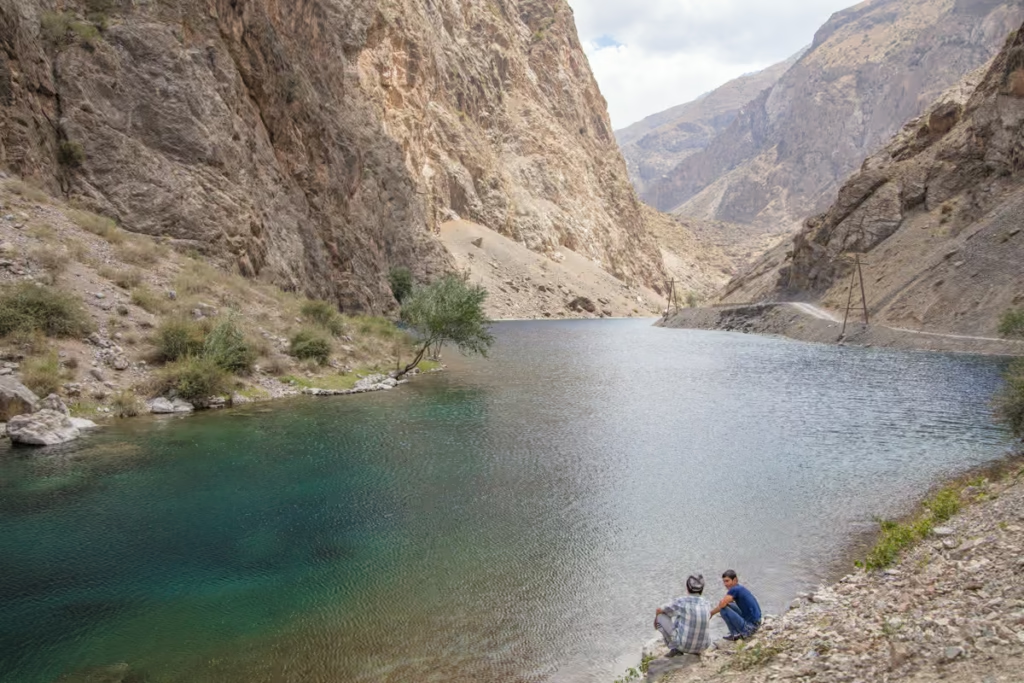
The Haft Kul is set in a narrow, craggy mountain valley. The old legend says an old man went missing in the valley. His seven daughters came to search for him but were unable to find him and began to cry along the narrow valley.
The valley filled with tears and drown them. Each of the seven lakes represents one of the man’s daughters.
In reality, it’s a narrow, earthquake-prone valley with the Shing River running through it. Researchers believe that earthquakes over the years created rockslides that dammed off the Shing River resulting in the Haft Kul.
Haft Kul means seven lakes in Tajik. The lakes stretch roughly 15km from lake one down to lake seven.
Their names from north to south are Mijgon, Soya, Gusbor, Nofin, Khurdak, Marguzor, and Hazorchazma. Each lake has a unique and different color to it.
The Haft Kul offers a variety of trekking options from day trips from Panjakent to hike between the glimmering lakes to multi-day treks. There are a few homestays along the valley where you could do short treks lake to lake staying at homestays. Perched just above Marguzor Lake (the 6th lake) sits Kiogli village to the east and Soimarguzor Village just above the lake on the west shore.
If you’re really short on time or not wanting to trek there is a road connecting 6 of 7 the lakes making a day trip to the lake possible.
For more detailed information on the Haft Kul area, read my Haft Kul Trekking Guide
The Haft Kul
Mijgon (Lake #1) ➤ Soya ➤ Gusbor ➤ Nofin ➤ Khurdak ➤ Marguzor ➤ Hazorchazma (Lake #7) ➤ Homestay ➤ Mijgon
| Difficulty | Duration | Highest Elevation | Start | Finish | Camping |
|---|---|---|---|---|---|
| Easy | 1-2 days | 2,630 m | Mijgon Lake (#1) | Mijgon Lake (#1) | Yes, limited |
Welcome to the Haft Kul, also called the Seven Pearls of Shing and Marguzor Lakes. This area is easily reached from Panjakent. 6 of the 7 lakes are reachable by road, so you can trek the dirt path or drive it. The 7th lake- Hazorchazma is about 30 minutes on foot beyond Marguzor (#6).
Most will take two days to explore the valley, but others may opt to spend several days slowly making their way from lake to lake. This area is not ideal for camping, but if you’re determined the shores of Hazorchazma are grassy making it the only place worth setting up camp.
There is a turbaza at the north end of Marguzor, Namjmidden Homestay near Nofin (I personally recommend staying there), as well as homestays in the village of Padrud.
For those short on time, it’s possible to visit on a day trip from Panjakent.
Mogiyon Village To Haft Kul
Mogiyon ➤ Rogich ➤ Komichura Pass ➤ Soimarguzor Village ➤ Marguzor Lake (#6) ➤ Hazorchazma Lake (#7) ➤ Nofin ➤ Padrud Village
| Difficulty | Duration | Highest Elevation | Start | Finish | Camping |
|---|---|---|---|---|---|
| Moderate | 2-3 days | 3,327 m | Mogiyon | Padrud | Optional |
This is so unknown it’s almost a secret. This route is rarely visited by foreigners and it’s hard to understand why not after having completed it in 2017.
From Panjakent grab a shared taxi in the morning bound for Mogiyon and brace yourself- after the road splits from the Haft Kul road it gets windy and narrow with steep drops on either side into an unforgiving valley. Once in Mogiyon, you’ll follow a shepherd’s trail that follows the Subashi River through narrow canyons and across rickety bridges.
Eventually, you’ll arrive at the village of Rogich where you can sleep at a homestay or set up camp just outside the village (though don’t be surprised if friendly locals invite you in).
The next morning make your way up 3,050 meter Komichura Pass following shepherd trails that will lead you down to Soimarguzor Village with gorgeous views of Marguzor Lake. Once down to Marguzor you can make the short detour to Hazorchasma or continue to Marguzor, Najmidden Homestay, or Padrud for the night.
You can do this trek without camping equipment if you want to stay at homestays both nights. It is advisable to contact ZTDA prior to your trek set up homestays. This trek can easily be done in reverse.
Haft Kul to the Lakes Area
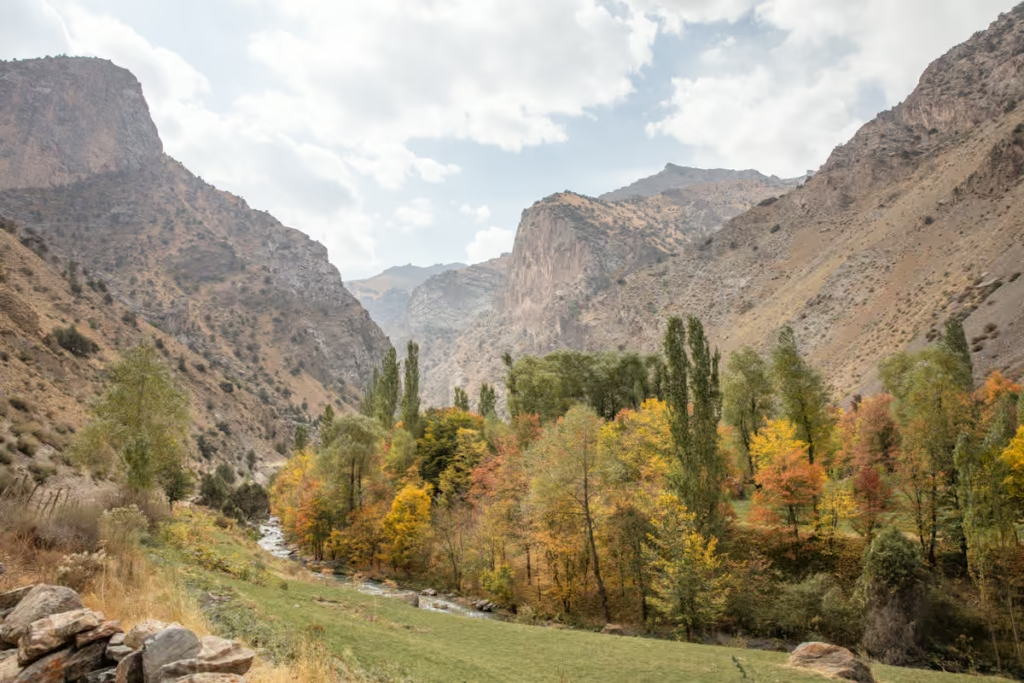
The Haft Kul and the Lakes Area are two of the Fann Mountain’s most gorgeous destinations and this trek combines the tow areas. These trekking options are great for those that are just arriving at higher altitudes as the Haft Kul does sit lower in altitude than the lakes making acclimatization easier.
Haft Kul to the Lakes
Marguzor Lake (#6) ➤ Kiogli Village ➤ Tavasang Pass ➤ Sarymat & Archamaidan River Confluence ➤ Zimtut Village ➤ Guitan Pass ➤ Chukurak Lakes ➤ Kulikalon ➤ Alovaddin or Lauden Pass ➤Alovaddin Lakes ➤ Vertical Alovaddin
| Difficulty | Duration | Highest Elevation | Start | Finish | Camping |
|---|---|---|---|---|---|
| Moderate | 5 days | 3,860 m | Marguzor (#6) | Alovaddin | Yes |
This trek combines the beauty of two of the best and easiest to access places in the Fann Mountains to visit. Start from Marguzor Lake in the Haft Kul towards the village of Kiogli before making it up and over 3,300 meter Tavasang Pass. At the bottom of the pass near the shore of the Sarymat River, there is a great spot to set up camp for the night.
The next two days are pretty mellow, but long following the Sarymat beyond its confluence with the Archamaidan River and finally into Zimtut Village where you can camp nearby or sleep in a homestay for the night.
The next day you’ll continue up and over 2,600 meter Guitan Pass and descend down to Chukurak Lakes to set up camp for the night.
The following morning you’ll head up and over 3,180 Govkhona Pass into the Kulikalon Bowl where you’ll camp for the night.
Your final day will take you up and over either Alovaddin or Lauden Pass to end at Alovaddin Lake. This trek can be done in reverse however it is recommended to go from Haft Kul to the Lakes if you haven’t yet adjusted to the altitudes in Tajikistan.
As an alternative, you can head east from the Archamaidan River along a shepherd trail about 2 kilometers north of Gazza Village. From here you’ll go over 3,260 Zurmech Pass to arrive at Chukurak Lakes.
Highlights of the Fann Mountains From Haft Kul to the Lakes
Marguzor Lake (#6) ➤ Kiogli Village ➤ Tavasang Pass ➤ Sarymat & Archamaidan River Confluence ➤ Zimtut Village ➤ Guitan Pass ➤ Chukurak Lakes ➤ Kulikalon ➤ Alovaddin or Lauden Pass ➤Alovaddin Lakes ➤ Mutnyi Lake ➤ Foot Of Chimtarga Pass ➤ Chimtarga Pass ➤ Bolshoi Allo ➤ Maloye Allo ➤ Zimtut Village
| Difficulty | Duration | Highest Elevation | Start | Finish | Camping |
|---|---|---|---|---|---|
| Difficult | 8-10 days | 4,740 m | Marguzor (#6) | Zimtut | Required |
This is a big trek that will take you from the Haft Kul to Zimtut and Chukurak Lakes and onto Kulikalon and Alovaddin Lakes. The trek continues to pass the murky Mutnyi Lake before taking on the massive 4,740 meter Chimtarga Pass. Take a much-needed rest day exploring the area around Bolshoi Allo Lake before you descend down the Zindon Valley to meet the Archamaidan River once again and turn back north to end the trek at Zimtut.
You will definitely need camping gear on this trip and make sure you bring plenty of food with you. Due to how high Chimtarga Pass is it would be wise to take a rest day at Alovaddin the day before your trek to Mutnyi and make the following day a short one camping below Chimtarga Pass.
In 2016 I took on Chimtarga Pass (and backward from most at that- which I don’t recommend). In 2019, I returned and went over Chimtarga Pass in the usual direction (Mutnyi to Bolshoi Allo and it went much better).
Another tidbit worth being aware of– pack animals cannot go over Chimtarga Pass, so you’ll need to plan to carry your own gear over it.
The Lakes to Haft Kul Area
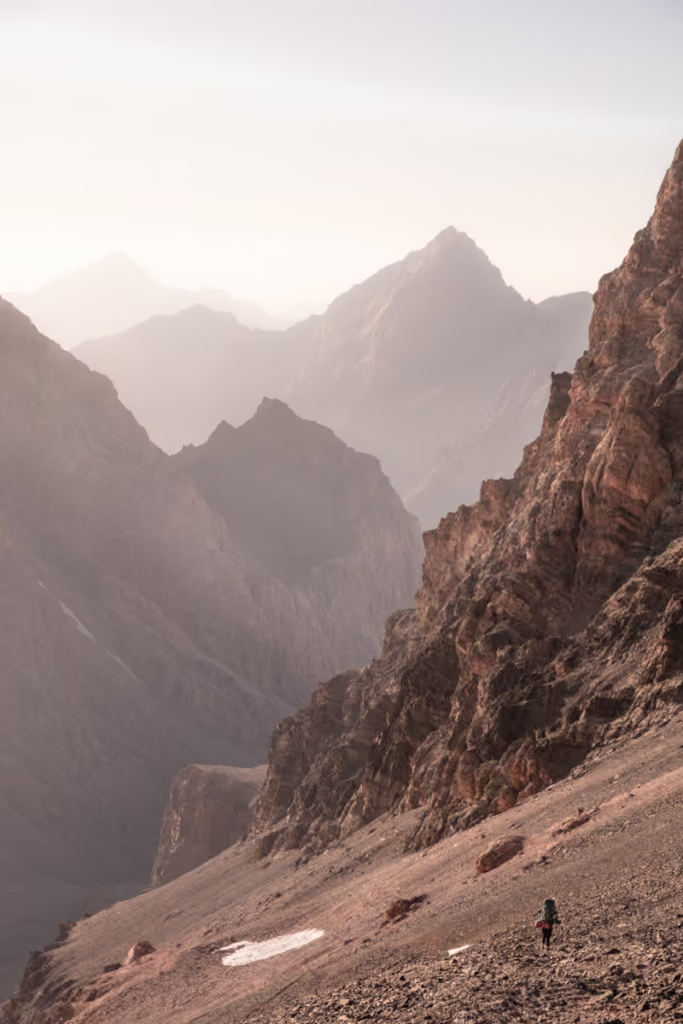
Combining the two famous Fann Mountains alpine lake areas from the previous section, however thanks to steep scree conditions on the Bolshoi Allo side of Chimtarga Pass it is recommended to take on these treks in this direction.
Kulikalon to Haft Kul Via Chimtarga Pass
Artuch Alplager ➤ Kulikalon Lakes ➤ Alovaddin or Laudden Pass ➤ Alovaddin Lakes ➤ Mutnyi Lake ➤ Foot Of Chimtarga Pass ➤ Chimtarga Pass ➤ Bolshoi Allo ➤ Maloye Allo ➤Sarymat & Archamaidan River Confluence ➤ Tavasang Pass ➤ Kiogli Village ➤ Marguzor (Lake #6)
| Difficulty | Duration | Highest Elevation | Start | Finish | Camping |
|---|---|---|---|---|---|
| Difficult | 8-9 days | 4,740 m | Artuch Alplager | Marguzor (#6) | Required |
Much like the treks covered in the previous section, this one will take you from Artuch Alplager to the Haft Kul via Chimtarga Pass. It is best to only attempt this trek if you’ve already adjusted well to higher altitudes in Tajikistan. It is smart to take at least 4 days making it to camp at the foot of Chimtarga Pass to help prevent altitude sickness getting over the pass.
I don’t recommend doing this trek in reverse due to the steep scree conditions on the Bolshoi Allo side of Chimtarga Pass. I unwittingly did the trek this way in 2016 and it was a challenge, to say the least. After returning in 2019 and doing it in the opposite direction I can attest to it being much easier in the direction laid out in this section.
Read more about beautiful Bolshoi Allo here
Alovaddin to Haft Kul Via Chimtarga Pass
Vertical Alovaddin ➤ Alovaddin Lakes ➤ Mutnyi Lake ➤ Foot Of Chimtarga Pass ➤ Chimtarga Pass ➤ Bolshoi Allo ➤ Maloye Allo ➤ Sarymat & Archamaidan Confluence ➤ Tavasang Pass ➤ Kiogli Village ➤ Marguzor (Lake #6)
| Difficulty | Duration | Highest Elevation | Start | Finish | Camping |
|---|---|---|---|---|---|
| Difficult | 7-8 days | 4,740 m | Vertical Alovaddin | Marguzor (#6) | Required |
This is the same trek as from Kulikalon, just a day less trekking. I do recommend spending at least an extra day at Alovaddin or Mutnyi if you’re not yet acclimatized to the altitudes.
Haft Kul to Iskanderkul
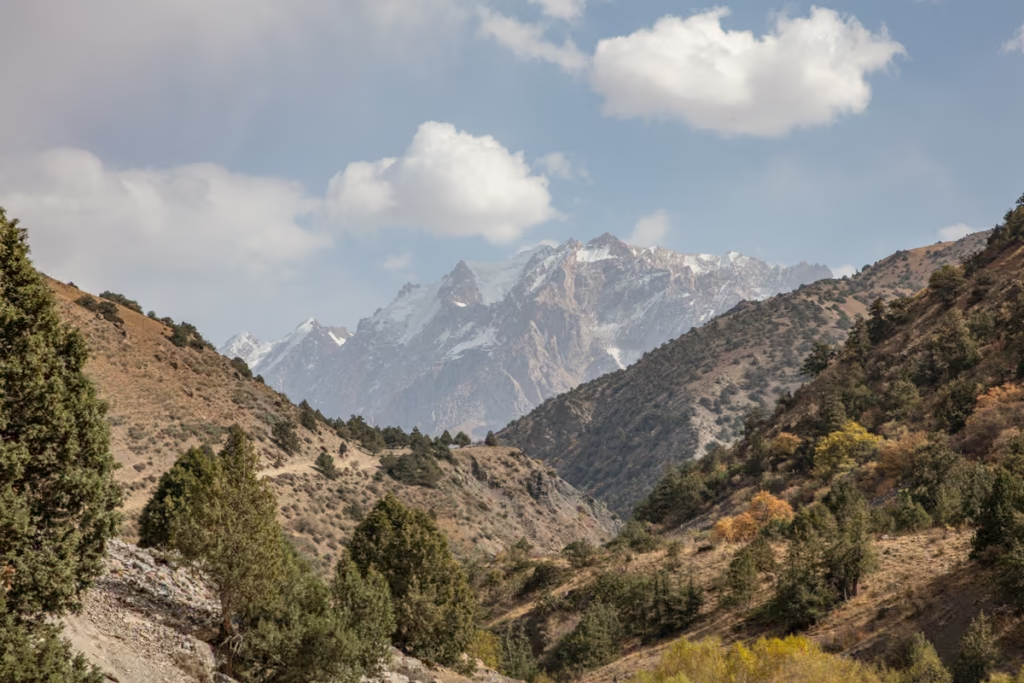
Iskanderkul is the most well known of the Fann Mountains lakes. The massive lake sits in the southeast corner of the Fanns. These are more cultural treks that pass through high summer pastures and little mountain villages where you’re guaranteed to experience Tajik mountain hospitality.
Read the Iskanderkul & Sarytag Travel Guide to plan your time at the end (or beginning) of your Haft Kul-Iskanderkul trek
West-East Traverse From Haft Kul Via Dukdon Pass
Marguzor (Lake #6) ➤ Kiogli Village ➤ Tavasang Pass ➤ Munora Pass Or Sarymat/Archamaidan Confluence ➤ Foot Of Dukdon Pass ➤ Dukdon Pass ➤ Sarytag/Iskanderkul
| Difficulty | Duration | Highest Elevation | Start | Finish | Camping |
|---|---|---|---|---|---|
| Difficult | 4-5 days | 3,810 m | Marguzor (#6) | Sarytag | Yes |
This is a somewhat long, and in some areas challenging trek that connects the Haft Kul to Sarytag/Iskanderkul.
From the village of Kiogli mentioned above in the Haft Kul trek, continue up Tavasang Pass and then proceed down the pass and cross the Abusafedsol River. After crossing the river you have two options: Either take 3,520 meter Munora Pass slightly toward the northeast and eventually link up to the Dukdon Pass that will lead you to Iskanderkul.
Alternatively, veer to the northeast and trek along the Sarymat River to its confluence with the Archamaidan and follow the Archmaidan back to the southeast to finally link up with 3,810 meter Dukdon Pass.
Once down Dukdon Pass follow the Akhbashir (which turns into) Karakul (which eventually turns into the) Sarytag River and on down to Sarytag Village and Iskanfderkul.
This trek can be done in reverse. Plan to camp outside of the Haft Kul and Sarytag, however, you may be invited in by shepherds along the journey.
West-East Traverse From Haft Kul Via Sarymat Pass
Marguzor (Lake #6) ➤ Kiogli Village ➤ Tavasang Pass ➤ Foot Of Sarymat Pass ➤ Sarymat Pass ➤ Sarytag/Iskanderkul
| Difficulty | Duration | Highest Elevation | Start | Finish | Camping |
|---|---|---|---|---|---|
| Difficult | 405 days | 4,160 m | Marguzor (#6) | Sarytag | Yes |
This trek starts out the same as the previously covered trek. After a night of camping at the Sarymat River banks, you’ll continue east-southeast and eventually tackle the aggressively steep 4,160 meter Sarymat Pass.
After descending out of the Sarymat plan to split the remainder of the trek into two days before you arrive at Sarytag Village and Iskanderkul.
The Lakes Area to Iskanderkul
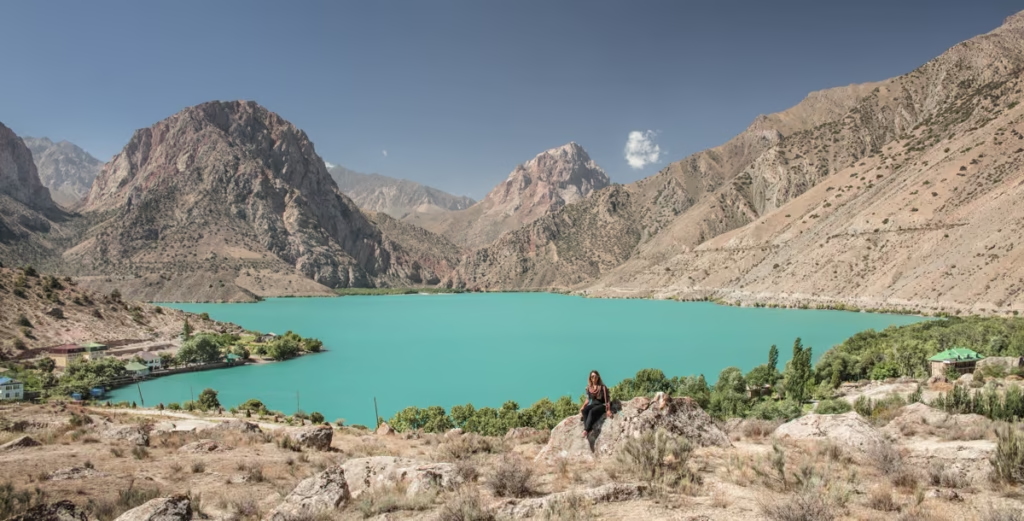
These North-South Traverse treks combine the beauty of the Lakes Area and Iskanderkul.
North-South Traverse: Artuch to Iskanderkul Via Kaznok Pass
Artuch Alplager ➤ Kulikalon Lakes ➤ Alovaddin or Lauden Pass ➤ Alovaddin Lakes ➤ Mutnyi Lake ➤ Kaznok Pass ➤ Sarytag/Iskanderkul
| Difficulty | Duration | Highest Elevation | Start | Finish | Camping |
|---|---|---|---|---|---|
| Difficult | 4-5 days | 4,040 m | Artuch Alplager | Iskanderkul | Required |
This trek will start out as many others in this post going from Artuch to Kulikalon, Alovaddin onto Mutnyi.
From Mutinyi you’ll ascend up into 4,040 meter Kaznok Pass and descend down into Sarytag Village. Some reports claim that crampons are necessary to cross the Kaznok. From my experience, I found that it was possible without, though at least a set of cleats is useful.
Take care heading up the Kaznok as there are other trails that lead up to passes that you cannot get down without proper climbing gear, so do pay attention to your GPS.
This trek can be shortened by starting from Vertical Alovaddin rather than Artuch, saving you 13-20 kilometers and shaving a day off your travel time.
North-South Traverse: Artuch to Iskanderkul Via Chimtarga & Dukdon Passes
Artuch Alplager ➤ Kulikalon lakes ➤ Alovaddin or Lauden Pass ➤ Alovaddin Lakes ➤ Mutnyi Lake ➤ Chimtarga Pass ➤ Bolshoi Allo ➤ Maloye Allo ➤ Sarymat/Archamaidan River Confluence ➤ Dukdon Pass ➤ Sarytag/Iskanderkul
| Difficulty | Duration | Highest Elevation | Start | Finish | Camping |
|---|---|---|---|---|---|
| Difficult | 8-9 days | 4,740 m | Artuch Alplager | Iskanderkul | Required |
Making a backward ‘s’, this trek takes a turn once to Mutnyi Lake. This trek is a stunner, but it’s a long one. I completed this exact through-hike in fall 2019.
Rather than continuing due south to cross Kaznok Pass, you’ll instead head west to cross Chimtarga Pass and down to Bolshoi Allo. From here continue down the Zindon Valley until meeting up with the Archmaidan River and following it to the southeast to cross Dukdon Pass and continue on to Sarytag and Iskanderkul.
North-South Traverse: Alovaddin to Iskanderkul Via Guitan & Dukdon Passes
Vertical Alovaddin ➤ Alovaddin Lakes➤ Alovaddin or Lauden Pass ➤ Kulikalon Lakes ➤ Chukurak Lakes ➤Guitan Pass ➤ Zimtut ➤ Sarymat/Archamaidan River Confluence ➤ Dukdon Pass ➤ Sarytag/Iskanderkul
| Difficulty | Duration | Highest Elevation | Start | Finish | Camping |
|---|---|---|---|---|---|
| Difficult | 6-7 days | 3,810 m | Vertical Alovaddin | Iskanderkul | Yes |
This trek connects beauty and culture departing from Alovaddin Lake to Kulikalon and continuing over Govkhona Pass to Chukurak Lakes nestled perfectly between mountains before taking on Guitan Pass to Zimtut Village.
From Zimtut meander along the Archamaidan River for a mellow stretch of the trek before heading up into Dukdon Pass, a place where you’ll definitely experience the culture of the area. Once up and past the Dukdon it’s a straightforward descent down to Iskanderkul and the village of Sarytag.
Combining Chimtarga Pass & the Lakes
Pair challenge with beauty. Chimtarga Pass is rugged and challenging but damn, those views from the top are worth it. The Lakes Loop sweetens the deal and getting to visit Bolshoi Allo is the cherry on top (or the side since Chimtarga Pass is the top, but now we’re getting too literal).
Chimtarga-Lakes Circuit
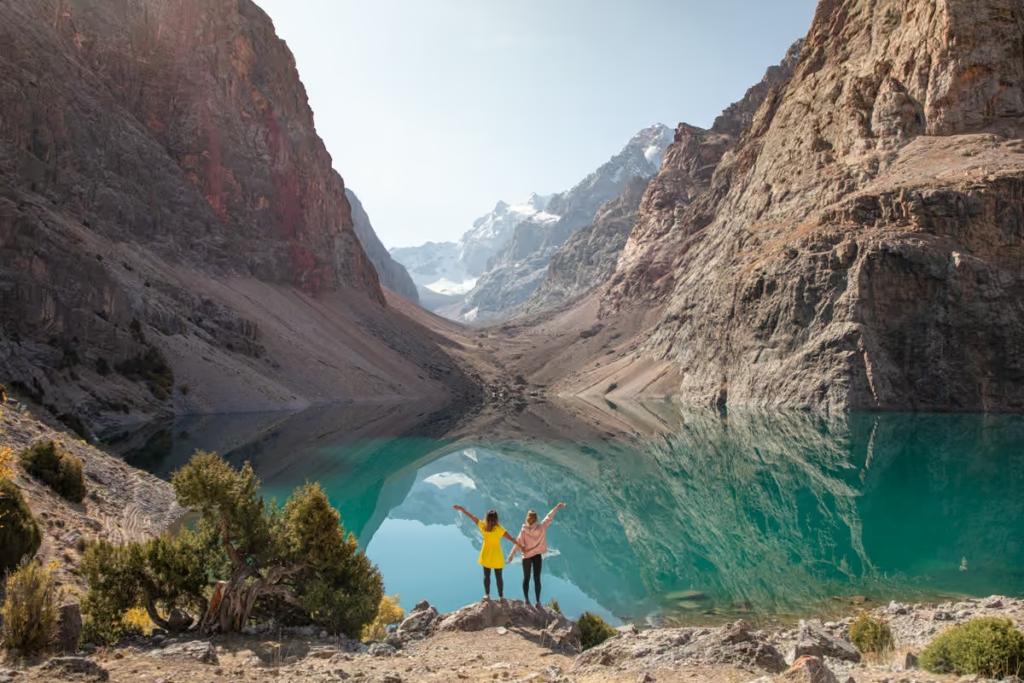
Artuch Alplager ➤ Kulikalon Lakes ➤ Alovaddin or Lauden Pass ➤ Alovaddin Lakes ➤ Mutnyi Lake ➤ Chimtarga Pass ➤Bolshoi Allo ➤ Maloye Allo ➤ Zimtut ➤ Guitan Pass ➤ Chukurak Lakes ➤ Artuch Alplager
| Difficulty | Duration | Highest Elevation | Start | Finish | Camping |
|---|---|---|---|---|---|
| Difficult | 8-9 days | 4,740 m | Artuch Alplager | Artuch Alplager | Required |
This trek combines the lakes loop with Chimtarga Pass and Bolshoi Allo Lake. Alternatively, you can opt to end the trek in Zimtut rather than looping back to Artuch.
Up for a challenge? Read about crossing Chimtarga Pass
Practical Info & Safety in the Fann Mountains
Practical Info & Other Things Worth Noting
- The best time for trekking is late June through mid-September when the weather is clearest, high passes the least snowy, and temperatures the most pleasant.
- Tajik and Russian are both widely spoken in the Fann Mountains as well as the rest of Tajikistan. Learn a few phrases (bonus points for Tajik).
- Special gear and equipment are not necessary for most of the popular treks in the Fann Mountains. For those wanting to summit some of these high altitude peaks, mountaineering and climbing gear will be necessary.
- Make sure that you do have your passport with you (and a paper copy of your visa if you have the e-visa!). There is a checkpoint near the village of Shing before the start of the Haft Kul and documents will be checked. Note that this is the only checkpoint like this in the Fann Mountains area.
- As of 2019, there is a park ranger that will charge you 19 TJS per night for camping if he comes across you. He usually is only in the Lakes Loop Area (Artuch, Kulikalon Bowl, and Lake Alovaddin). Since I hadn’t run across him in prior years I did ask to see his documents to make sure he was legit and he presented his ID cards.
- Solo female travelers may run into overly-friendly male locals, guides, etc. Usually more of an annoyance than anything else, but worth being aware of. A firm ‘no’ usually will halt the behavior.
- You can arrange porters from ZTDA, or hire them in Yakkakhona, Artuch, Alovaddin, Zimtut, Sarytag, Kiogli, and Mogiyon. Most porters will expect $20-25 USD per day.
- If you are unsure about your skill level, hire an experienced guide.
- The Fann Mountains are pretty remote in some areas. Take proper precautions.
- You cannot fly in propane/butane tanks for cooking. You can pick one up in Dushanbe at Green House Hostel, sometimes you can get one in Khujand although it’s not always possible. If arriving from Kyrgyzstan it’s best to purchase one before leaving Osh.
- Most Tajiks living in this part of the country follow Sunni Islam, so dress in the Fann Mountains can be a little more conservative than the rest of Tajikistan. Typically women will wear long sleeves and full-length loose-fitting trousers or skirts. Men typically wear t-shirts or long sleeve button-downs with trousers.
- Wine and cognac are locally made just outside Panjakent, definitely worth a try especially after a long successful trek.
- Locally handcrafted beadwork can be purchased in the Haft Kul from homestays.
Safety in the Fanns
- The Fann Mountains, as well as the vast majority of Tajikistan, is prone to earthquakes. Being caught in a landslide in the mountains with your route being cut off is a possibility.
- Temperatures can range drastically from day to night even in summer. Temperatures can dip below freezing at altitudes over 3,000 meters in the dead of summer.
- There are snow leopards, Marco Polo sheep, bears, and wolves living in Tajikistan’s mountains. Although you’d be highly unlikely to cross any of them, they are something to be aware of.
- Take time to acclimatize to the altitudes here in the Fanns. Altitude sickness can be dangerous and even deadly. Read up on acclimatization here.
Pass, Peak & Lake Elevations in the Fann Mountains
| Pass | Elevation |
|---|---|
| Alovaddin Pass | 3,860 m |
| Lauden Pass | 3,630 m |
| Dukdon Pass | 3,810 m |
| Chimtarga Pass | 4,740 m |
| Tavasang Pass | 3,300 m |
| Kaznok Pass | 4,040 m |
| Govkhona Pass | 3,180 m |
| Guitan Pass | 2,600 m |
| Zurmech Pass | 3,260 m |
| Komichura Pass | 3,050 m |
| Sarymat Pass | 4,160 m |
| Munora Pass | 3,520 m |
| Lake | Elevation |
|---|---|
| Kulikalon Lake | 2,850 m |
| Alovaddin Lake | 2,800 m |
| Mutnyi Lake | 3,510 m |
| Bolshoi Allo | 3,180 m |
| Iskanderkul | 2,200 m |
| Haft Kul | 1,700-2,400 m |
| Peak | Elevation |
|---|---|
| Gora Chimtarga | 5,489 m |
| Gora Energia | 5,120 m |
| Gora Mirali | 5,120 m |
| Pik Moskva | 5,046 m |
| Gora Chapdara | 5,050 m |
Fann Mountains FAQ
Where are the Fann Mountains?
The Fann Mountains are in northwestern Tajikistan, primarily in Sughd Region between the Zeravshan and Gissar ranges. The mountains sit roughly between Panjakent, Ayni, and Dushanbe, with popular trekking areas including the Haft Kul, Kulikalon Lakes, Alovaddin Lakes, and Iskanderkul. Their proximity to Panjakent makes them one of the more accessible mountain destinations in Tajikistan.
How do you get to the Fann Mountains?
Most travelers reach the Fann Mountains from Panjakent or Dushanbe. Panjakent is the most convenient base for the Haft Kul and western Fann Mountains, while Dushanbe provides access to eastern trailheads and Iskanderkul. Shared taxis are the most common way to reach mountain villages, though some remote trailheads require arranging a private vehicle or 4WD.
When is the best time to visit the Fann Mountains?
The best time for trekking in the Fann Mountains is generally July through September, when most high passes are accessible and snow has receded. July and August offer the warmest conditions, while September brings cooler temperatures and fewer trekkers. Higher passes such as Chimtarga and Sarymat can retain snow into early summer, so always check current trail conditions.
How many days do you need in the Fann Mountains?
Plan on at least 3-4 days to experience one of the classic routes, such as the Lakes Loop. With a week, you can explore more of the Fann Mountains or combine the Haft Kul with the Kulikalon and Alovaddin Lakes. Serious trekkers can spend a week or more tackling the longer traverses and high passes.
What is the best Fann Mountains trek?
For a first trek, I’d choose the Lakes Loop. It packs several of the Fann Mountains’ signature landscapes into a manageable 3-4 day route, linking Kulikalon and Alovaddin Lakes over two high passes. If you’re looking for something more challenging, routes crossing Chimtarga Pass and visiting Bolshoi Allo offer a much wilder experience.
Can you trek the Fann Mountains independently?
Yes. Independent trekking is possible in many parts of the Fann Mountains, particularly on established routes such as the Lakes Loop and Haft Kul. You’ll need to be comfortable with navigation, carrying your own supplies, and changing plans when trail conditions don’t cooperate. Remote routes can be considerably more demanding, and reliable GPS tracks are strongly recommended.
Do you need a guide?
You don’t necessarily need a guide for the more established Fann Mountains routes, but a local guide is worthwhile for remote or technically challenging treks. Routes crossing Chimtarga, Kaznok, or Sarymat Passes involve difficult terrain, high elevations, and route-finding. A guide can also arrange homestays, transportation, and pack animals, making logistics considerably easier.
Is trekking in the Fann Mountains difficult?
It depends heavily on the route. Short hikes to Kulikalon or Alovaddin Lakes are relatively accessible, while multi-day traverses over Chimtarga, Kaznok, and Sarymat Passes are strenuous and can involve steep scree, snow, and significant elevation gain. Altitude is another major consideration, with several routes reaching above 4,000 meters.
Can you camp in the Fann Mountains?
Yes, wild camping is widely possible in the Fann Mountains, and many multi-day trekking routes require it. Lakeside meadows and river valleys provide plenty of potential campsites, although conditions vary by route. Some popular areas also have homestays or seasonal food stalls, so you can combine camping with local accommodation rather than carrying everything for the entire trek.
What is the highest peak in the Fann Mountains?
Chimtarga Peak, at approximately 5,489 meters, is the highest peak in the Fann Mountains. The nearby Chimtarga Pass reaches approximately 4,740 meters and is one of the region’s most challenging trekking crossings. Reaching the summit of Chimtarga is a serious mountaineering objective rather than a standard trekking excursion.
Are the Fann Mountains part of the Pamirs?
No. The Fann Mountains are generally considered part of the western Pamir-Alay mountain system, rather than the Pamir Mountains proper. Geographically, they sit in the Pamir-Alay between the Zeravshan and Gissar ranges. This distinction can get a little fuzzy in travel writing, where “Pamirs” is sometimes used broadly to describe Tajikistan’s mountain regions.
Why the Fann Mountains Belong on Your Tajikistan Itinerary
The Fann Mountains are the kind of place that makes you wonder why more people haven’t heard of them. In a relatively compact corner of Tajikistan, turquoise alpine lakes, enormous granite walls, high mountain passes, shepherd settlements, and valleys that seem to disappear into the horizon all come together.
What I love most is the variety. You can spend a few relatively relaxed days walking between the lakes of Kulikalon and Alovaddin, or spend more than a week carrying your tent over some of Tajikistan’s highest and roughest passes. There are routes for different levels of experience, and plenty of opportunities to step away from the better-trodden tourist circuit.
The logistics can be messy, the roads can be rough, and the mountains have a habit of reminding you who’s actually in charge. The Fann Mountains still feel like a place where you’re traveling through a living mountain landscape rather than simply checking viewpoints off an itinerary.
If you’re willing to put in a little extra effort, this is one of the most rewarding corners of Tajikistan to explore. Start with the Lakes Loop or Haft Kul if you’re new to the region, then work your way toward the bigger traverses if you find yourself, like me, becoming slightly obsessed with seeing what lies over the next pass.
Have any Questions About Trekking in the Fann Mountains?
Ask your Fann Mountains questions in the comments below!
Posts from Tajikistan
Afghan Bazaar Khorog | Tem Market
Shokhdara Valley Travel Guide, Tajikistan
Vorukh: A Guide to Tajikistan’s Enclave
Shir Khan Bandar Border Crossing Guide
Tajik Food: 20+ Traditional Dishes
Qolma Pass: Tajikistan to China Guide
GBAO Permit: How to Get One
Lakes Loop, Tajikistan Hiking Guide
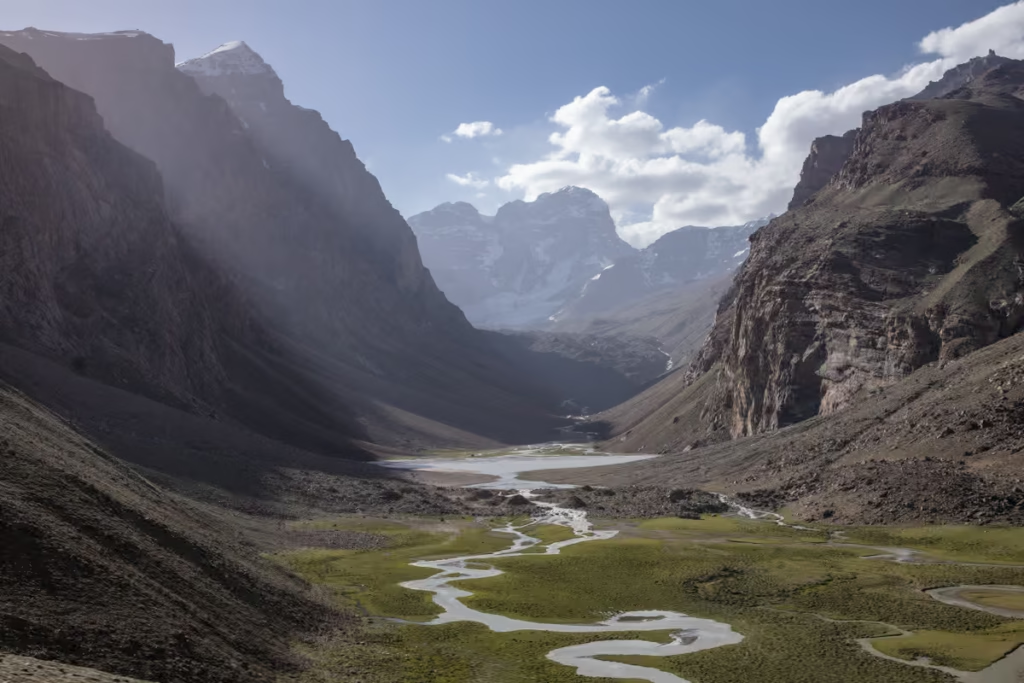
Pik Engles Hike: Tajikistan Trek Guide
Tajikistan Border Crossings Guide
Pamir Highway Guide: M41 Route
Tajikistan Uzbekistan Itinerary: 2 Weeks
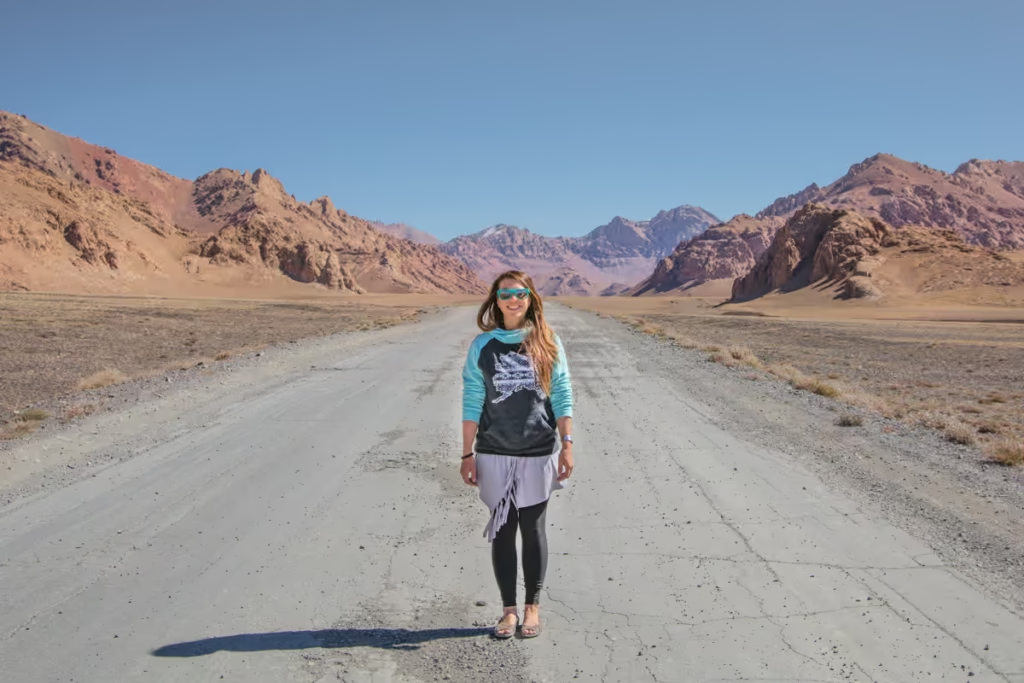
Solo Female Travel in Tajikistan
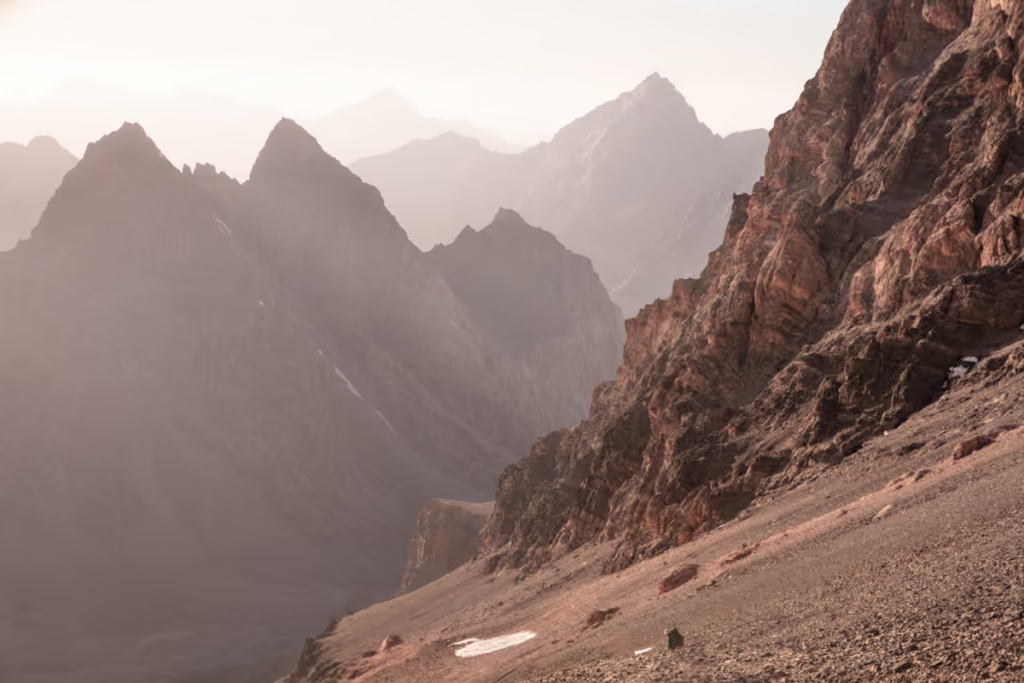
Chimtarga Pass Trek Guide | Tajikistan
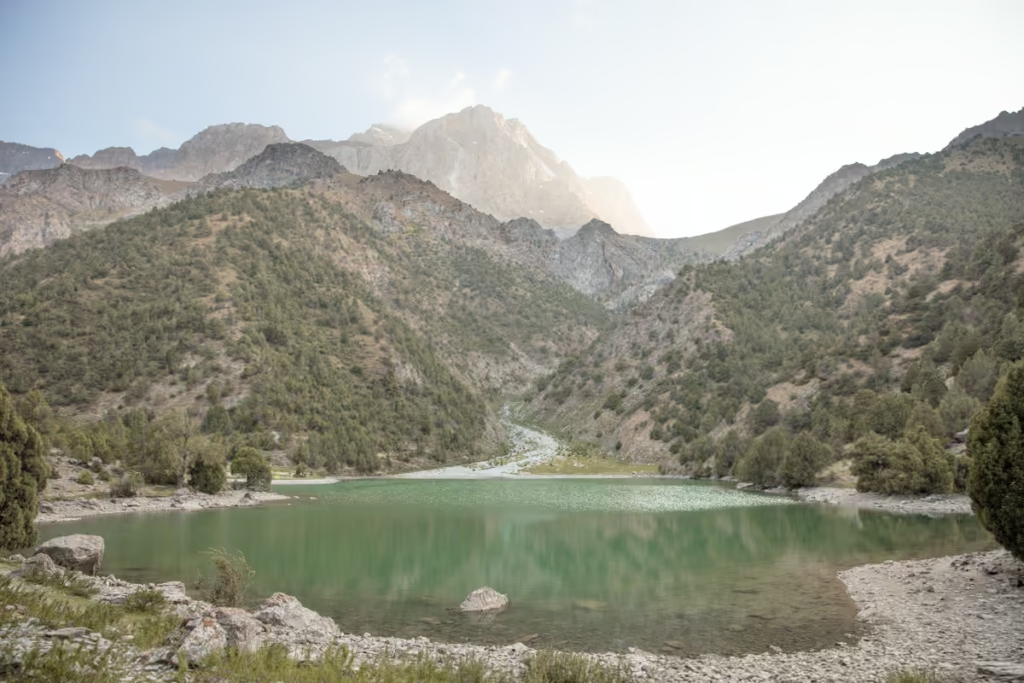
Best Hikes in Tajikistan
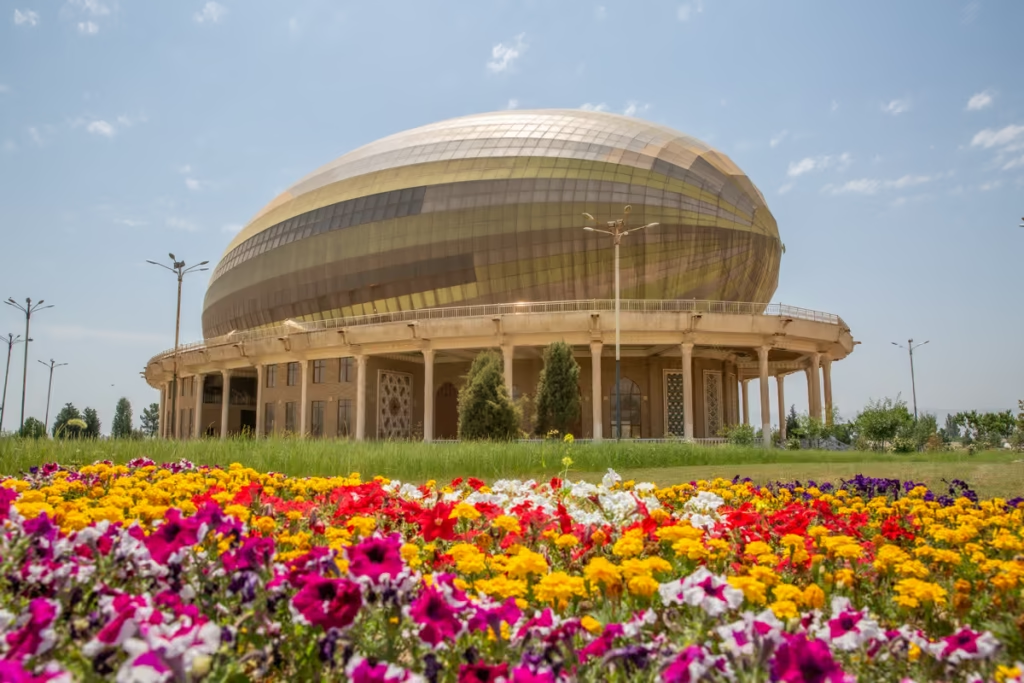
Dushanbe Day Trips
Solo Female Travel in Central Asia
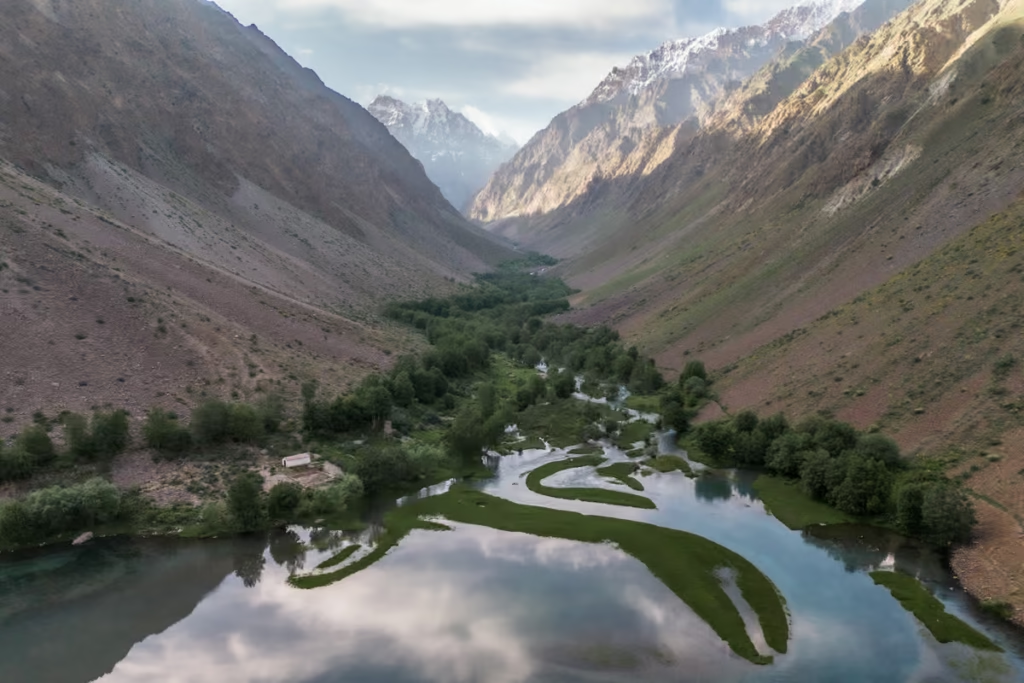
Jizeu, Tajikistan: Trek & Travel Guide
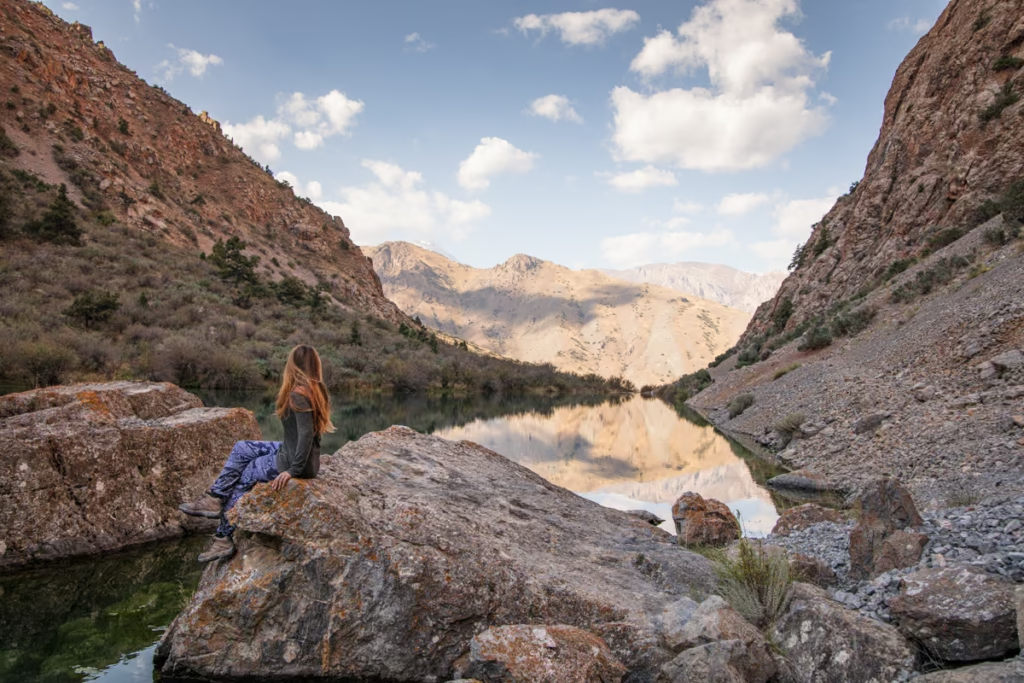
Tajikistan Travel Guide: Plan Your Trip
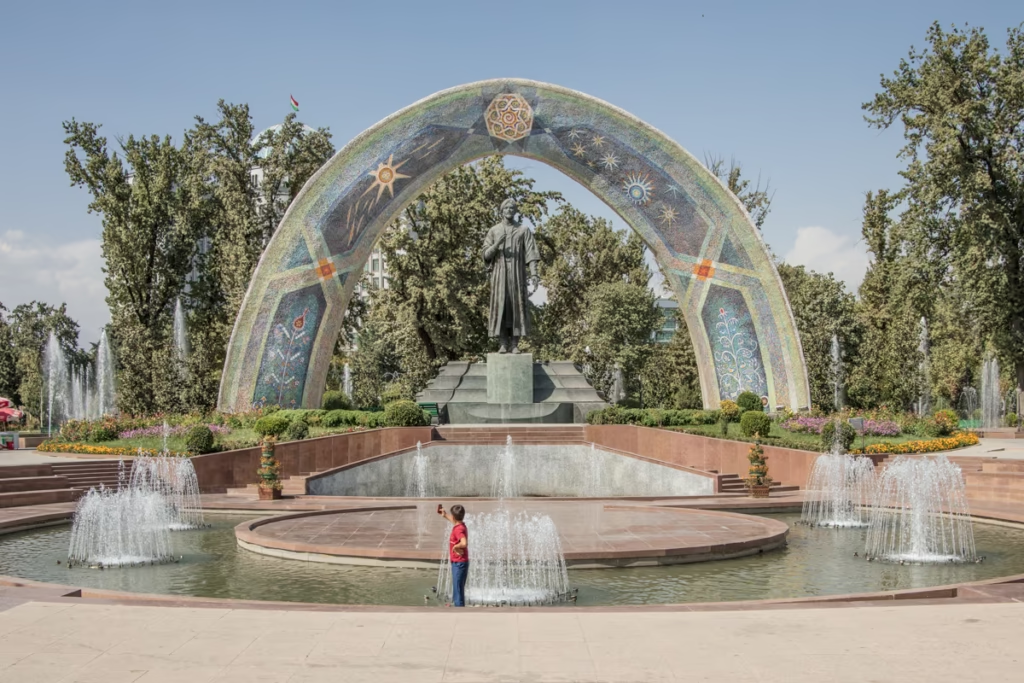
Dushanbe Travel Guide & Things to Do
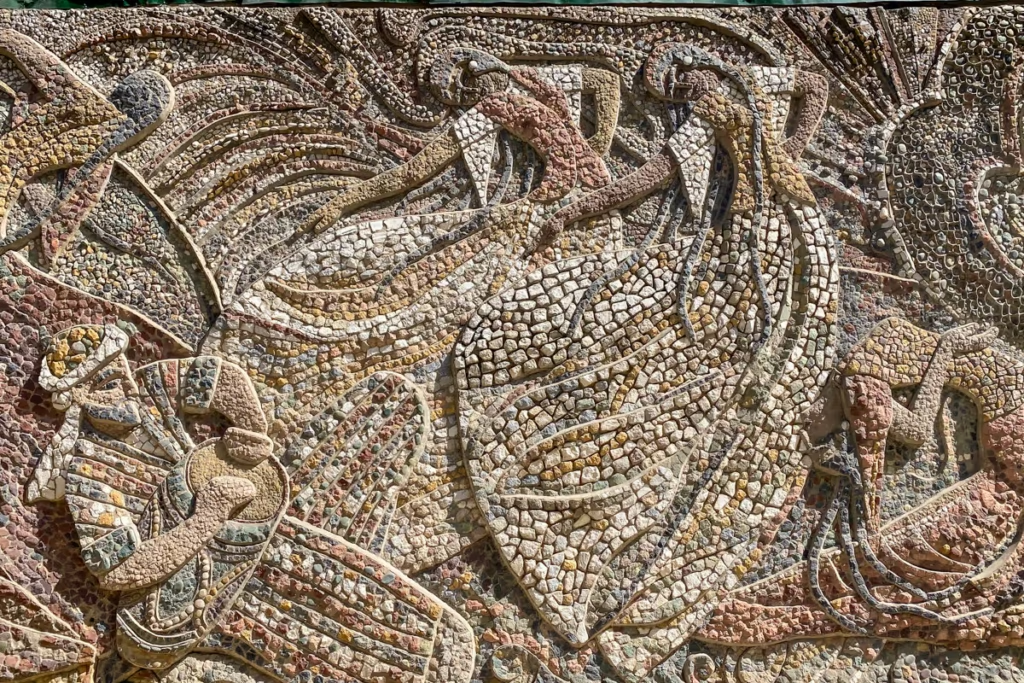
Dushanbe Mosaics: Soviet-Era Art in Tajikistan
2 Week Tajikistan Itinerary
3 Week Tajikistan Itinerary
4 Week Tajikistan Itinerary
10 Day Tajikistan Itinerary
1 Week Tajikistan Itinerary
Panjakent Travel Guide: Things to Do

OVIR Registration in Tajikistan: Dushanbe Guide
Panjakent-Samarkand Border Crossing Guide
Fann Mountains Trekking Guide
Central Asia Travel Guide
Tajikistan SIM & eSIM Guide
Shurab, Tajikistan: An Almost Forgotten City

Isfara-Batken Border Crossing Guide

Oybek Border Crossing: Tashkent to Khujand
Best Restuarants in Dushanbe | Where to Eat
Isfara Travel Guide, Tajikistan
Pamir Highway Itinerary: 10 Days from Dushanbe to Osh
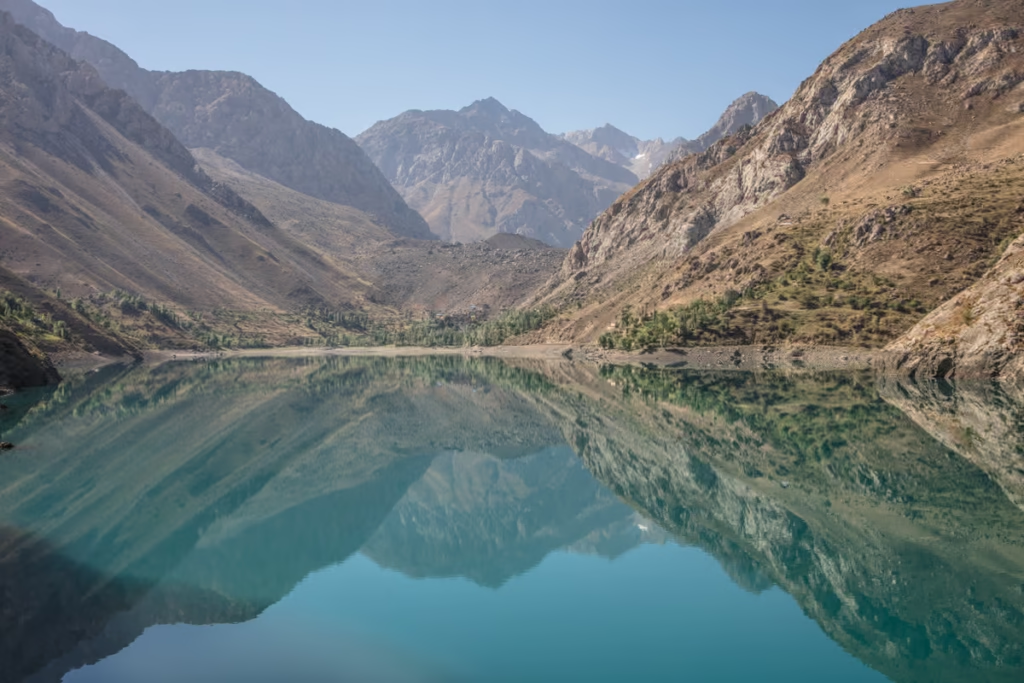
Haft Kul: A Guide to the Seven Lakes of Tajikistan
Tajikistan Letter of Invitation (LOI)
Jarty Gumbez, Tajikistan: A Complete Travel Guide
How to Use Payment Terminals in Tajikistan
Shor Bulog Observatory, Tajikistan
Visiting Zorkul, Tajikistan
Visiting the Sary Khosar Nature Reserve
A Guide to Rasht Valley, Tajikistan
Soviet Architecture in Khorog
10 Essentials to Pack for Central Asia
The Gardan i Kaftar Hike in Tajikistan’s Rasht Valley