
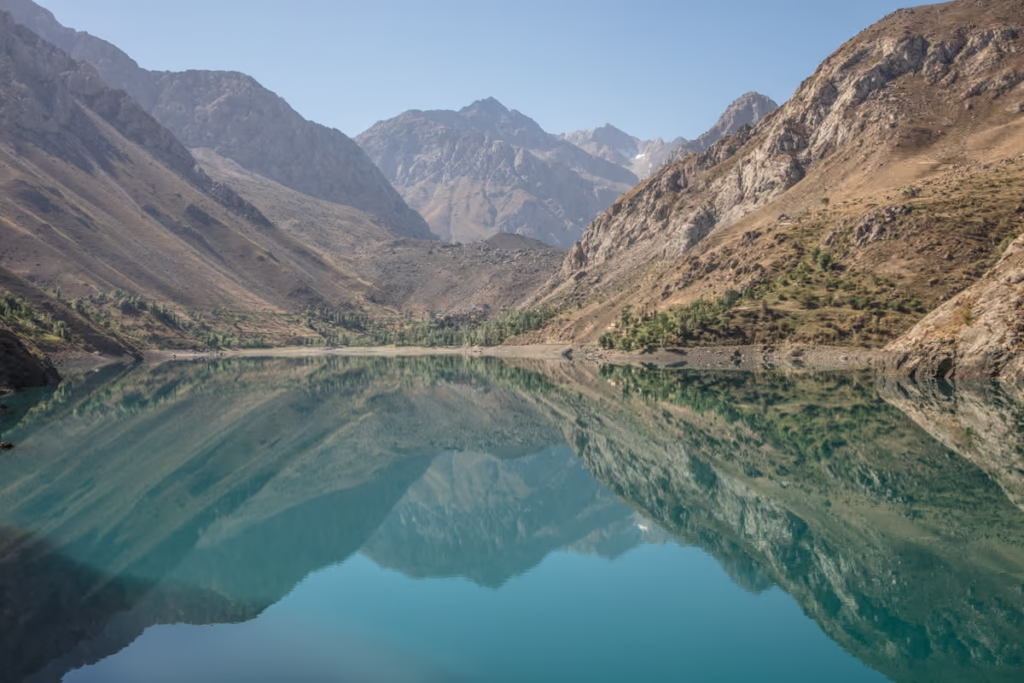
Haft Kul: A Guide to the Seven Lakes of Tajikistan
Updated September 2026, Haft Kul: A Guide to the Seven Lakes of Tajikistan was originally written in May 2018
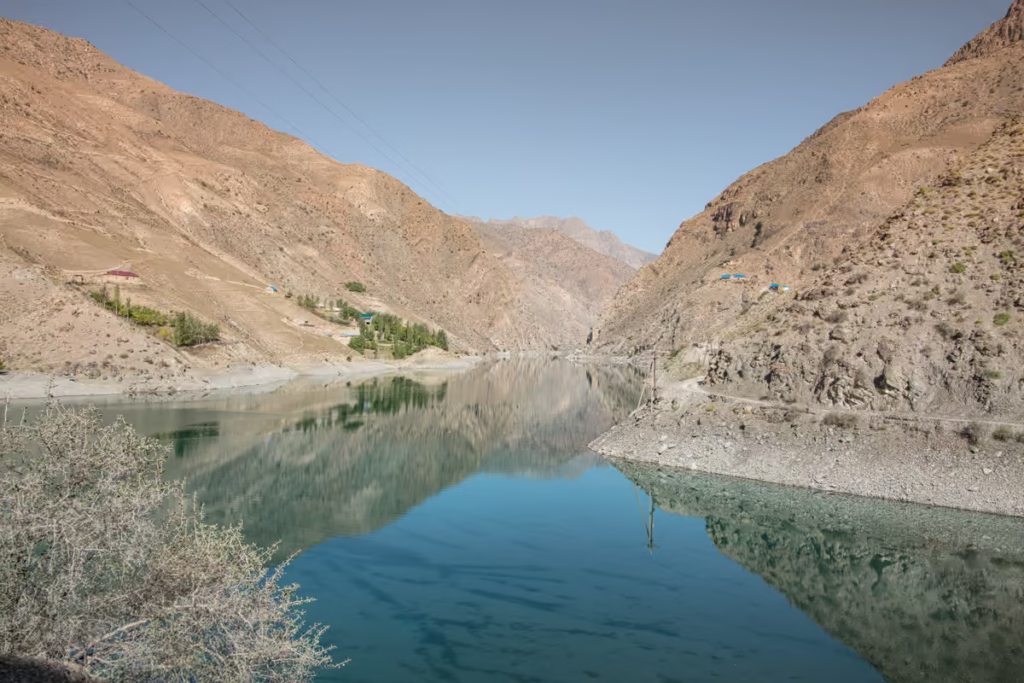
Tajikistan’s Haft Kul, or Seven Lakes, is a chain of seven mountain lakes tucked into the Shing River gorge in the Fann Mountains of northwestern Tajikistan. Located near Panjakent, the lakes range from turquoise to deep blue and sit between roughly 1,600 and 2,400 meters above sea level.
Despite their remote-looking setting, the Seven Lakes of Tajikistan are surprisingly easy to visit. A rough mountain road runs through the valley, meaning you can visit Haft Kul by vehicle without doing a multi-day trek. If you prefer to hike, you can walk the roughly 14 to 15 kilometers between the first and seventh lakes, or combine the route with longer treks through the Fann Mountains.
In this guide, I’ll cover how to get to Haft Kul, the seven lakes in order, the best time to visit, hiking routes, where to stay, camping, tours, and everything else you need to know for visiting the Seven Lakes in Tajikistan.
The Haft Kul is also known as the Marguzor Lakes or the Seven Beauties of Shing.
Wanna learn more about the Fann Mountains? Check out my Fann Mountains Trekking & Travel Guide
Need Travel Insurance and Evacuation Services?
Start shopping for travel insurance plans over at IATI Insurance. Readers of the Adventures of Nicole get a 5% discount off your plan.
The Adventures of Nicole partners with Global Rescue to offer the world’s leading medical evacuation and security advisory services. To travel with peace of mind, explore their evacuation coverage.
- Haft Kul at a Glance
- The Legend & Formation of Haft Kul
- Where Is Haft Kul in Tajikistan?
- Best Time to Visit the Haft Kul
- Hiking the Seven Lakes of Tajikistan
- Mogiyon to Haft Kul Trek
- Alternative Routes from the Haft Kul
- How to Get to the Haft Kul
- Accommodations & Camping at the Seven Lakes, Tajikistan
- Tours & Guides in the Haft Kul
- Haft Kul Packing List
- Can You Visit Haft Kul Without Hiking?
- Practical Info for the Haft Kul
- Safety at the Seven Lakes
Haft Kul at a Glance
| Also known as | Seven Lakes, Seven Lakes of Tajikistan, Marguzor Lakes |
| Location | Fann Mountains, Sughd Region, Tajikistan |
| Nearest city | Panjakent |
| River valley | Shing River |
| Number of lakes | 7 |
| Elevation | Approximately 1,600–2,400 m |
| Distance between first and seventh lakes | About 14–15 km |
| Can you drive to the lakes? | Yes |
| Can you hike between the lakes? | Yes |
| Best time to visit | May–November |
The Legend & Formation of Haft Kul
The Legend of the Seven Lakes
Local folklore offers a tragic explanation for the Seven Lakes. According to one version of the legend, an old man disappeared and his seven daughters began crying after he failed to return. Their tears eventually formed seven lakes, with each lake representing one of the daughters that drown in the lakefuls of tears.
There are several versions of the story. Another local legend tells of a blacksmith and his seven daughters, with the lakes appearing after a tragic series of events involving the youngest daughter. Whatever version you hear, the story has become an important part of the folklore surrounding Haft Kul.
How Were the Seven Lakes Formed?
The Seven Lakes lie in the narrow Shing River gorge of the Fann Mountains. Most of the lakes are natural dammed lakes, formed when rockfalls and landslides blocked the valley and interrupted the flow of the river. Hazorchashma, the seventh and highest lake, is different from the others and is fed by springs and streams.
Where Is Haft Kul in Tajikistan?
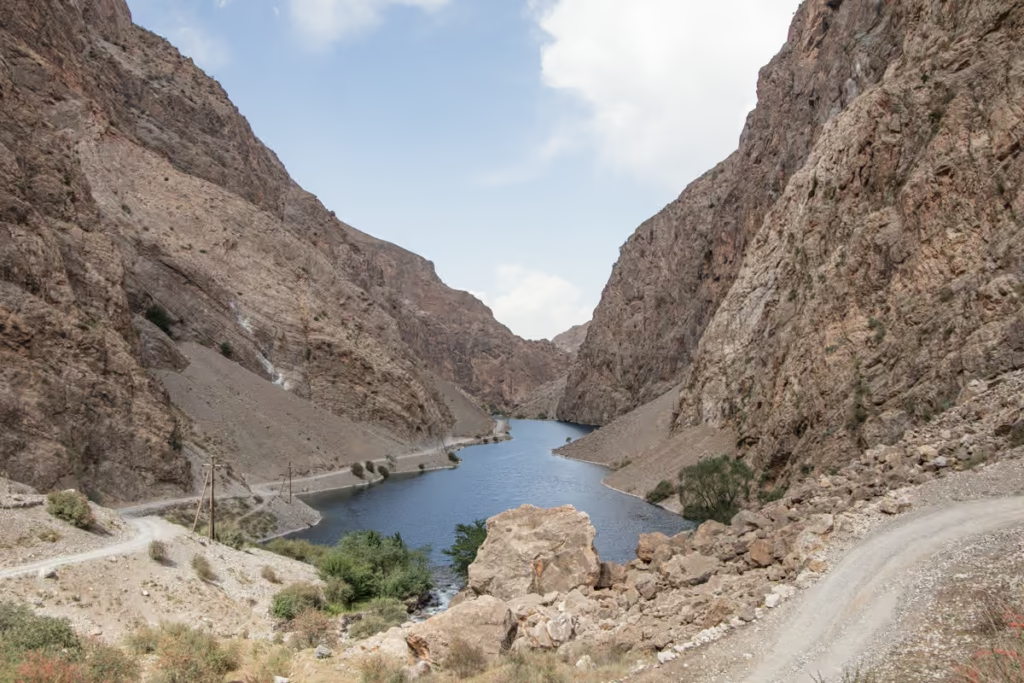
Haft Kul is located in the Fann Mountains of northwestern Tajikistan, in the Sughd Region near Panjakent. The seven lakes stretch along the Shing River gorge, with the valley running south from the village of Shing toward the highest lake, Hazorchashma.
Panjakent is the main jumping-off point for visiting the Seven Lakes. From Panjakent, the road follows the Shing Valley before reaching the first lake, Mijgon. The entire route continues through the seven lakes, with villages and homestays scattered throughout the valley.
Haft Kul is also commonly called the Seven Lakes, Marguzor Lakes, or Seven Beauties of Shing. If you’re searching for any of those names, you’re looking for the same group of lakes.
Pick up copies of the Bradt Tajikistan guidebook and the Trekking in Tajikistan book to kickstart your planning
Best Time to Visit the Haft Kul
The best time to visit Haft Kul is generally May through November, with June through August offering the warmest conditions for hiking and spending time around the lakes.
Summer is also when the mountain roads and trekking routes are generally easiest to access, although conditions can change quickly after heavy rain or other bad weather. The Seven Lakes sit at considerably lower elevations than some of the higher Fann Mountains trekking routes, so Haft Kul can have a longer practical hiking season than high mountain passes.
If you’re planning to combine the Seven Lakes with higher-elevation treks over passes such as Tavasang or Komichura, I’d aim for the middle of the summer season rather than simply choosing your dates based on conditions around the lakes.
October and November can be quite cold in the Haft Kul but offer the opportunity to see the lakes dusted in snow.
Planning to visit Uzbekistan before or after your Haft Kul trip? Check out the Samarkand travel guide
Make the perfect trip with my two week Uzbekistan & Tajikistan itinerary
Hiking the Seven Lakes of Tajikistan
You don’t have to trek Haft Kul to enjoy it. A road runs through the Seven Lakes valley, allowing travelers to visit the lakes by vehicle, while hikers can walk between them along the same general route.
If you have limited time, visiting by vehicle is the easiest option. If you have two days and want to experience the valley on foot, hiking between the lakes makes for a straightforward trek without the technical terrain or complicated route-finding found on some of the higher Fann Mountains routes.
If you are traveling with a Tajik e-visa, carry a printed copy as well as your passport.
Haft Kul Starting Point
This trek can be started realistically anywhere between the first and sixth lakes as they are connected by a rough dirt road. Most will either be started from Mijgon or further north at the village of Shing just before reaching the first lake.
There is a checkpoint near Shing along the road where you will have to show your passport and e-visa to continue further along the road, so make sure to have them both on you.
An alternative hike that begins from the village of Mogiyon that connects to the Haft Kul can be done and I will explain a little later.
Panjakent is the nearest city to the Haft Kul, so most will spend a night there before heading to the lakes. Panjakent is easily reached from both Dushanbe and Khujand, as well as Samarkand in Uzbekistan.
Note that you do not have to trek in the Haft Kul, six of the seven lakes can easily be reached by road, making this an easy day trip from Panjakent.
How Long Is the Haft Kul Hike?
Hiking from Mijgon, the first lake, to Hazorchashma, the seventh lake, is roughly 14–15 km one way, depending on the exact route and starting point. The return journey is roughly 30 km. The lakes climb from around 1,600 meters at Mijgon to approximately 2,400 meters at Hazorchashma.
Because a road follows the valley, you don’t need to commit to the entire distance. You can walk part of the route and arrange a vehicle for the rest.ime at higher altitudes yet on your trip in Tajikistan the Haft Kul is a great place to start.
Haft Kul Route: The Seven Lakes in Order
| # | Lake | Approx. elevation |
|---|---|---|
| 1 | Mijgon (Nezhigon) | 1,600–1,640 m |
| 2 | Soya | 1,700 m |
| 3 | Gushor (Khushyor) | 1,770 m |
| 4 | Nofin | 1,820 m |
| 5 | Khurdak | 1,870 m |
| 6 | Marguzor | 2,140 m |
| 7 | Hazorchashma | 2,400 m |
Haft Kul Route
The route is easy to follow because you are essentially following the valley road rather than navigating a complex mountain trail. Starting from Mijgon, you’ll pass Soya, Gushor, Nofin, Khurdak, and Marguzor before reaching Hazorchashma, the seventh and highest lake.
Marguzor is the largest of the Seven Lakes, while Hazorchashma sits at the highest elevation and marks the end of the valley road.
Want more trekking ideas? Check out the 10 best treks in Tajikistan
The Seven Lakes of Tajikistan
1. Mijgon Lake
Mijgon, also spelled Nezhigon or Nezhegon, is the first and lowest of the Seven Lakes. It sits at roughly 1,600–1,640 meters and is known for water that can appear turquoise, blue, or even purple depending on the light and conditions.
2. Soya Lake
Soya, meaning “shadow” in Tajik, is the second lake. It sits between steep mountainsides that leave much of the lake in shade, and its water can change appearance with the weather and time of day.
3. Gushor Lake
Gushor, also spelled Khushyor, is the third lake and sits at roughly 1,770 meters. The road climbs above the lake, giving you good views back toward the valley as you continue toward Nofin.
4. Nofin Lake
Nofin is the fourth lake and one of the best places to base yourself if you’re spending a night in Haft Kul. Several villages and homestays are located along this part of the valley, making it a practical overnight stop.
5. Khurdak Lake
Khurdak is the smallest of the seven lakes. Its name is associated with “small” or “little,” and the lake sits at roughly 1,870 meters near Padrud.
6. Marguzor Lake
Marguzor is the sixth lake and the largest of the Seven Lakes. At around 2,140 meters, it is one of the most impressive stretches of the route, with a broad expanse of blue water surrounded by steep Fann Mountain slopes.
7. Hazorchashma Lake
Hazorchashma, meaning “thousand springs,” is the seventh and highest of the Seven Lakes at around 2,400 meters. Unlike the lower dammed lakes, Hazorchashma is fed by numerous springs and streams. The road ends here, making it the natural endpoint for the Haft Kul journey.
Mogiyon to Haft Kul Trek
If you’re looking for a more adventurous way to reach the Seven Lakes, you can hike from Mogiyon to Haft Kul rather than simply driving into the Shing Valley. This route adds a mountain pass and remote villages to the journey, making it considerably more of a trek than the straightforward walk between the lakes.
Mogiyon to The Seven Lakes Starting Point
To start this trek you’ll need to head to the village of Mogiyon, just slightly west from the Haft Kul. You’ll need to get a shared taxi here from Panjakent (shared taxis depart in a small lot just a street south from the bazaar in the mornings). Alternatively, you could start this trek from the Seven Lakes as well.
Mogiyon to Haft Kul Length & Elevation
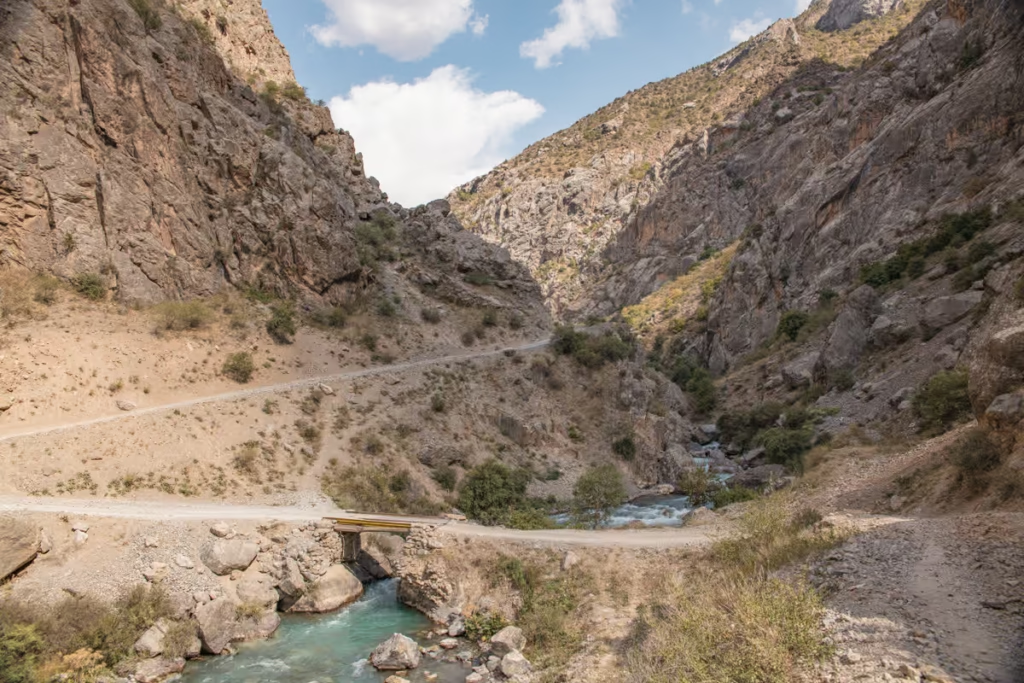
The entire trek between Mogiyon and Padrud Village in the middle of the Haft Kul is 38 kilometers. The route drops to around 1,600 meters in the Haft Kul valley before climbing to approximately 3,050 meters at Komichura Pass.
Mogiyon to The Seven Lakes Route
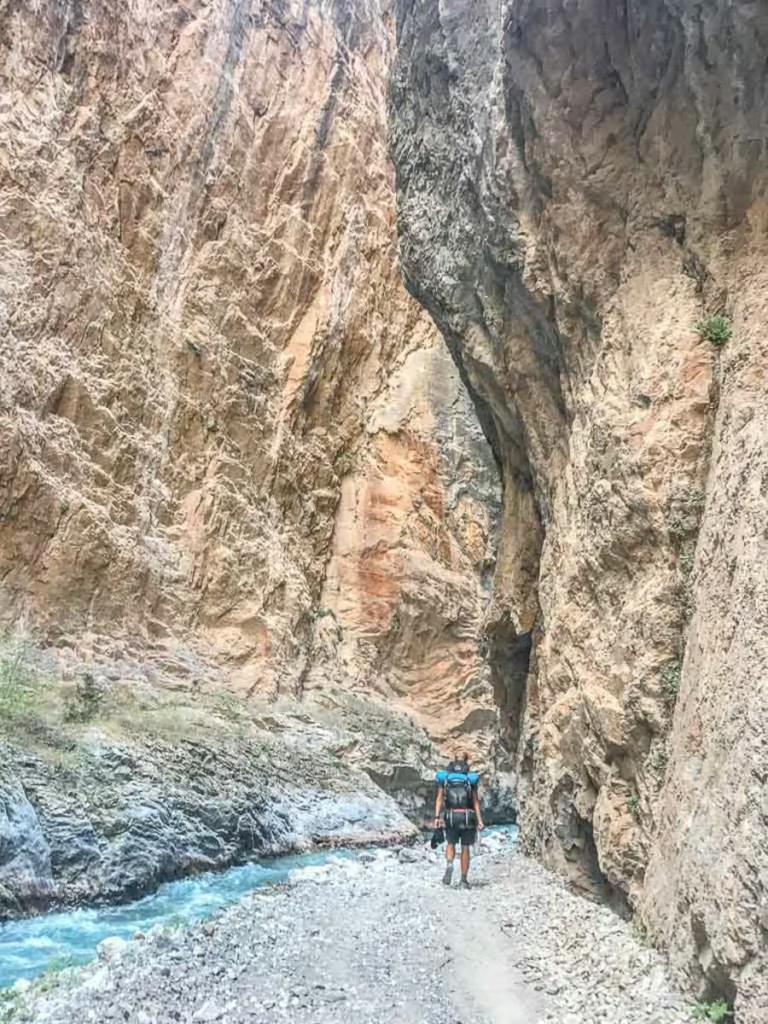
This trek is a little more involved than simply walking along the seven lakes, but it’s still straightforward nonetheless.
Once dropped off in Mogiyon you’ll follow the path that meanders along the river bending southeast and winding through narrow canyons before heading straight south to arrive at the village of Rogich. You can pitch your tent just outside of town or stay in a family-run homestay in the village.
The following morning you’ll start the trek up, heading east into Komichura Pass. After reaching the top of the pass you’ll descend down into a village named Soimarguzor that overlooks the 6th lake of Marguzor.
Once down into the Haft Kul Valley you can make the short trek to Hazorchazma (if planning to camp this is really the most optimal spot as there is some grass to pitch a tent on), or continue to trek along the Haft Kul road north to either Marguzor, Nofin or Padrud to sleep in a homestay for the evening.
Alternative Routes from the Haft Kul
It is possible to tie in trekking the Seven Lakes with other treks in the Fann Mountains.
From the Village of Kiogli, above the eastern shore of Marguzor Lake, you can continue along the trail to cross over Tavasang Pass to either head northeast toward Bolshoi Allo, The Lakes Loop, or Artuch. Head southeast from Tavasang Pass to connect to Dukdon Pass and continue onto Iskanderkul Lake and Sarytag. These treks can easily be done in reverse to end at the Haft Kul.
How to Get to the Haft Kul
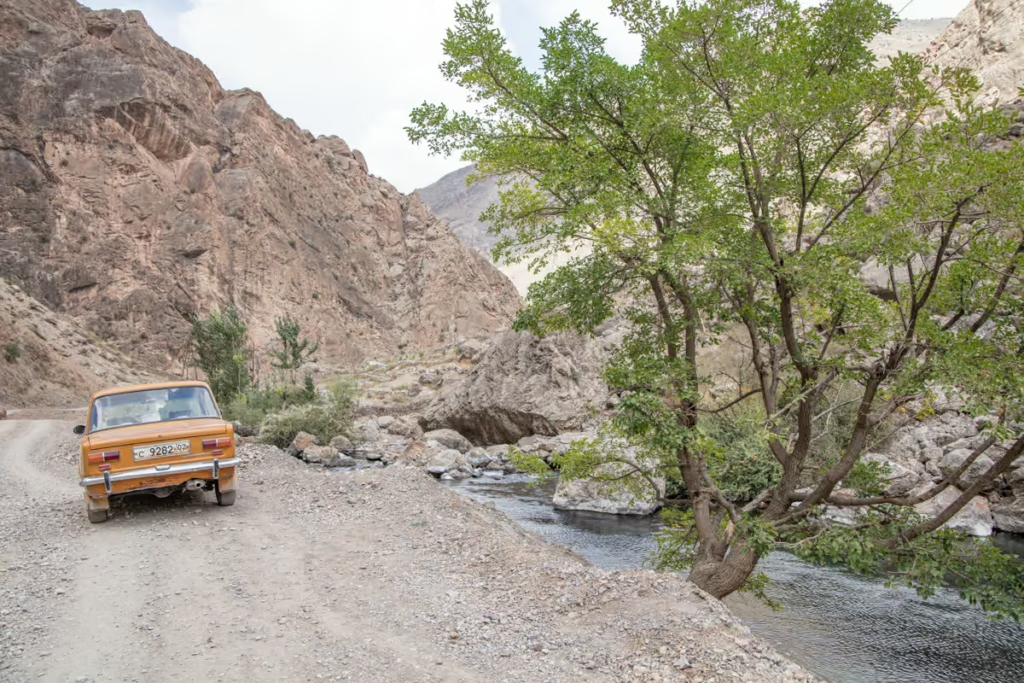
The easiest way to visit Haft Kul is from Panjakent. From the city, the route follows the Shing Valley toward the Seven Lakes, passing through Shing before reaching Mijgon, the first lake.
Panjakent is easily reached from Dushanbe, Khujand, and the newly reopened Samarkand-Panjakent border post with Uzbekistan.
You can travel to Haft Kul by shared taxi, private vehicle, local minibus, or organized tour. The road into the valley is rough in places, so don’t expect a normal city taxi to be cruising all the way to Hazorchashma.
Getting Mogiyon is also pretty simple. You’ll need to go to a small lot on the corner just a street south of the Panjakent Bazaar in the morning to grab a shared taxi to the village.
An important thing to note: There is a post near the village of Shing where your passport and visa will be checked (if you have an e-visa they will want to see your paper visa as well along with the passport). Make sure you have these with you.
Shared Taxi
| Route | Shared taxi |
|---|---|
| Dushanbe → Panjakent | 170 TJS |
| Khujand → Panjakent | 170 TJS |
| Panjakent → Haft Kul | 80 TJS |
| Panjakent → Mogiyon | 70 TJS |
Marshrutka/Minibus
| Route | Marshrutka | Marshrutka |
|---|---|---|
| Dushanbe → Panjakent | 90 TJS | 90 TJS |
| Khujand → Panjakent | 120 TJS | 120 TJS |
| Panjakent → Artuch | 70 TJS | 70 TJS |
| Panjakent → Haft Kul | 35 TJS | 35 TJS |
Private Car Hire
- Dushanbe-Panjakent: $200/1888 TJS
- Khujand-Panjakent: $220/2077 TJS
- Panjakent-Haft Kul $30/283 TJS
- Dushanbe-Haft Kul: $210/1982 TJS
Accommodations & Camping at the Seven Lakes, Tajikistan
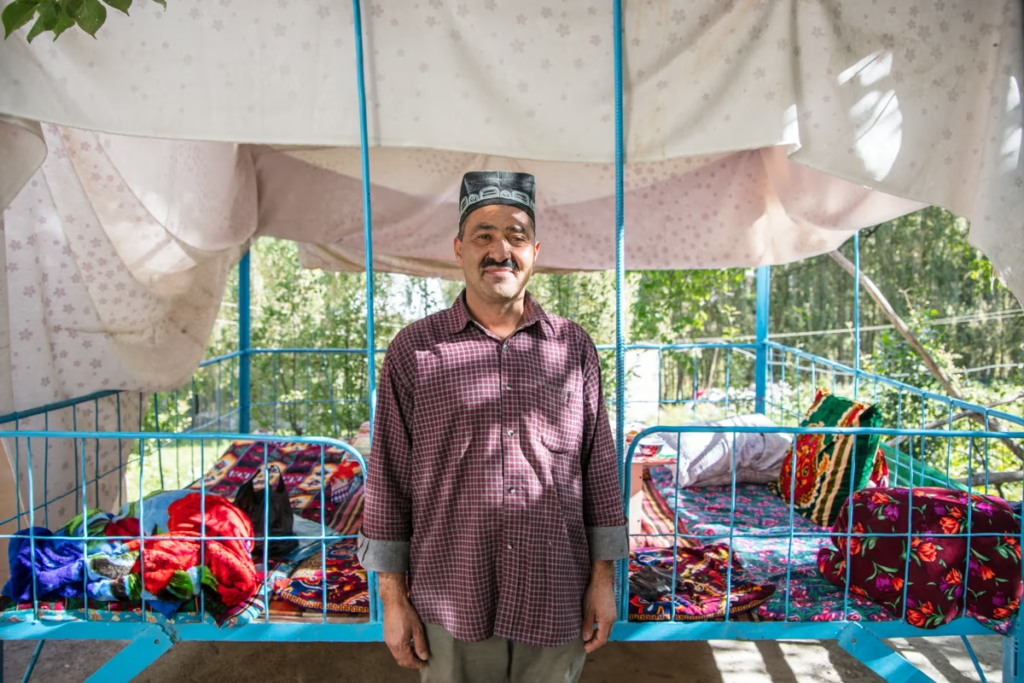
You don’t need to return to Panjakent every night when visiting the Seven Lakes. Several villages in the valley have basic family-run homestays, making it possible to spend the night beside the lakes and break the route into a more relaxed itinerary.
Nofin and Padrud are two of the most practical areas for finding accommodation, while homestays are also available elsewhere in the valley.
There is a network of homestays all over Tajikistan. The homestay in the Haft Kul I have stayed at was Najmidden Homestay, near Nofin Lake and Padrud.
Najmaddin Homestay and is run by the friendly Jumaboy and family. At the northern shore of Marguzor, there is the Marguzor Turbaza. To arrange homestays, contact ZTDA. There are also homestays available at Marguzor Lake and Padrud Village along the Seven Lakes.
For those taking on the alternate Mogiyon to Haft Kul trek, there is a homestay in the village of Mogiyon as well as one in the village of Rogich.
Many families that live in the area will likely offer to take you in and show you some legendary Tajik hospitality. Typically they will refuse payment, but do try to hide some Somoni in the home or try giving to the eldest child.
Camping at Haft Kul
Camping is possible around Haft Kul, although suitable flat ground can be limited in the narrow valley. Hazorchashma, the seventh lake, has grassy areas where you can pitch a tent, making it one of the better options if you want to camp at the end of the route.
If you’re not carrying camping equipment, staying in a local homestay is considerably easier and gives you the chance to experience family life in the valley.
In nearby towns and cities, here are a few accommodations I personally recommend:
Dushanbe
Budget
Hello Hostel Dushanbe
| Booking.com | Agoda.com |
Greenhouse Hostel
| Booking.com | Hotels.com |
Midrange
Atlas Hotel
| Booking.com |
Atlas B&B Hotel
| Booking.com | Agoda.com |
Splurge
Hilton Dushanbe Hotel
| Booking.com | Hotels.com |
Dushanbe Serena Hotel
| Booking.com | Hotels.com |
Hyatt Regency Dushanbe
| Booking.com | Hotels.com |
Panjakent
Budget
Salom Hostel
| +992 92 780 7716 |
Midrange
Umariyon Hotel
| Booking.com |
Khujand
Budget
Qalai Khujand Hostel
| Booking.com |
Midrange
Golden Apartments
| Booking.com |
Splurge
Khujand Grand Hotel
| Booking.com | Hotels.com |
Samarkand
Budget
Amir Hostel
| Booking.com | Agoda.com |
Midrange
Hotel Caravan Serail
| Booking.com | Agoda.com |
Splurge
East Star Hotel
| Booking.com |
Tours & Guides in the Haft Kul
For a longer Fann Mountains trek, I would strongly consider hiring a local guide, particularly if you’re crossing high mountain passes or traveling away from the main Haft Kul road and don’t have much experience.
You don’t necessarily need a guide to visit the Seven Lakes. The road makes the main route straightforward, and independent travelers can arrange transport from Panjakent and explore the lakes on their own.
A Haft Kul tour is useful if you’re short on time, traveling from Samarkand, or don’t want to negotiate local transport yourself. A private vehicle also gives you more flexibility to stop at each lake and reach Hazorchashma.
Paramount Journey also does tours into the Fanns and Haft Kul. They offer some of the best itineraries around Tajikistan and their staff are extremely knowledgeable.
Haft Kul Packing List
- Inreach Explorer+– GPS & SOS beacon, great for remote hiking in Tajikistan, Pakistan, and Afghanistan.
- Solar charger– Keep those electronics charged in remote areas.
- Backpack– I recommend the Osprey Ariel 65L backpack for women.
- Daypack– My personal favorite is the Osprey Daylite Plus.
- Hydration Pack— Have water available without having to reach for a water bottle.
- 3 Season tent– I use the MSR NX Hubba-Hubba 1 man tent and love it.
- Sleeping bag– Useful for trekkers & cyclists. I use a Nemo sleeping bag cold rated to 20ºF/-7ºC.
- Hiking Boots– My personal favorite is the La Sportiva Trango Tech hiking boot.
- Lightweight cooking camp set– Prepare your own meals on the go.
- Trekking Poles– Great for steep slopes.
- Mosquito Repellant– Recommended in the summertime.
Can You Visit Haft Kul Without Hiking?
Absolutely. You do not need to trek the Seven Lakes to visit Haft Kul. A rough road runs through the valley and reaches the lakes, allowing travelers to visit by car or 4WD.
This makes Haft Kul one of the easier places to experience the Fann Mountains if you don’t have time for a multi-day trek. You can arrange transport from Panjakent, stop at the lakes along the way, and return to the city the same day.
If you have more time, spending a night in a local homestay and walking part of the valley is a much better way to experience the area.
Practical Info for the Haft Kul
- No special gear or equipment is necessary for trekking in the Seven Lakes area.
- Make sure that you do have your passport with you (and a paper copy of your visa if you have the e-visa!). They will be checked at the post near Shing.
- If planning to trek beyond the Haft Kul up to Tavasang Pass and beyond it is possible to arrange donkeys and a donkeyman to porter gear from Jumaboy in Nofin Lake, or from the village of Kiogli. Most porters will expect $20-25 USD per day.
- If you are unsure about your skill level, hire an experienced guide.
- The Haft Kul isn’t the most remote part of the Fann Mountains, but it is still fairly remote. Take proper precautions.
- You cannot fly in propane/butane tanks for cooking. You can pick one up in Dushanbe at Green House Hostel, sometimes you can get one in Khujand although it’s not always possible. If arriving from Kyrgyzstan it’s best to purchase one before leaving Osh.
- Dress in the Fann Mountains is a little more conservative than the rest of Tajikistan. Typically women will wear long sleeves and full-length loose-fitting trousers. Men tend to wear slacks and t-shirts or longsleeves.
- Wine and cognac are made locally just outside of Panjakent.
- Intricately beaded crafts are possible to purchase in the Haft Kul, including coin purses, necklaces, keychains, and more.
- The ZTDA office in Khujand sells locally made crafts from around northwestern Tajikistan. Works by women in the Haft Kul and Fann mountains can be purchased there as well.
Safety at the Seven Lakes
- The Haft Kul, as well as the vast majority of Tajikistan, is prone to earthquakes. Being caught in a landslide in the mountains, buried or your route being cut off is a possibility.
- Temperatures can range drastically day to night out here in summer. The Seven Lakes are at lower elevations so it tends to stay comfortably warm in the summer, but if planning to trek beyond Tavasang Pass plan for near or below-freezing nighttime temps at altitudes over 3,000 meters.
- There are snow leopards, Marco Polo sheep, and wolves living in Tajikistan’s mountains. Although you’ll be highly unlikely to cross any of them, they are something to be aware of.
- The Haft Kul is one of the lower in elevations treks you can do in Tajikistan. With that said you should still take time to acclimatize to the altitudes out here. Altitude sickness can be dangerous and even deadly. Read up on acclimatization here.
Have More Questions About Trekking in the Haft Kul?
Ask all your Haft Kul questions in the comments section below!
Posts from Tajikistan
Shokhdara Valley Travel Guide, Tajikistan
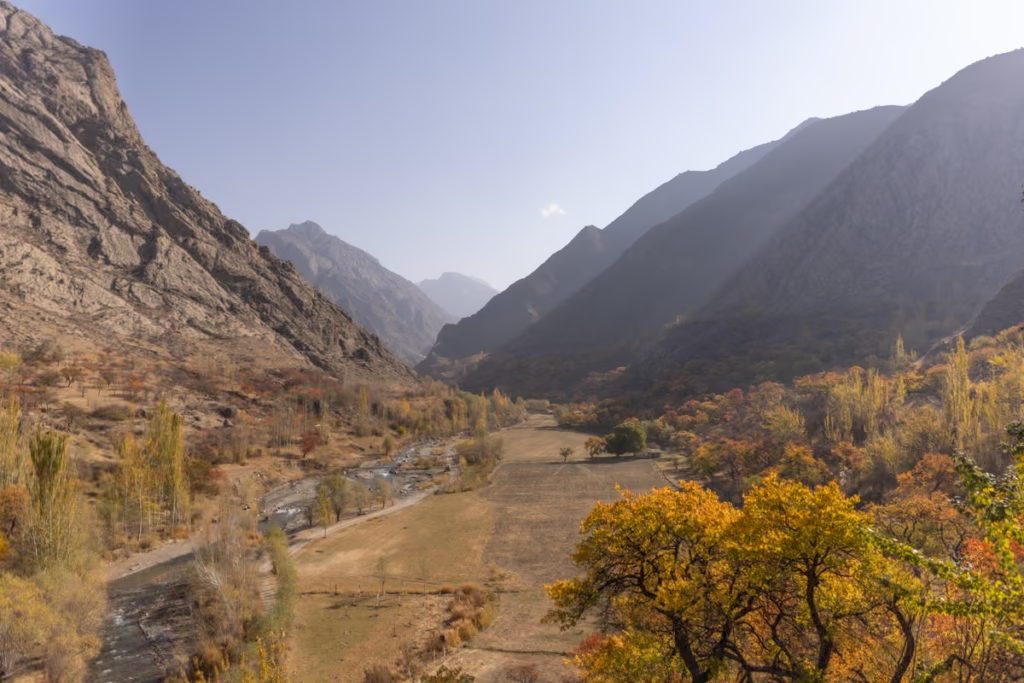
Vorukh: A Guide to Tajikistan’s Enclave
Shir Khan Bandar Border Crossing Guide
Tajik Food: 20+ Traditional Dishes
Qolma Pass: Tajikistan to China Guide
GBAO Permit: How to Get One
Lakes Loop, Tajikistan Hiking Guide
Pik Engles Hike: Tajikistan Trek Guide
Tajikistan Border Crossings Guide
Pamir Highway Guide: M41 Route
Tajikistan Uzbekistan Itinerary: 2 Weeks
Solo Female Travel in Tajikistan
Chimtarga Pass Trek Guide | Tajikistan
Best Hikes in Tajikistan
Dushanbe Day Trips
Solo Female Travel in Central Asia
Jizeu, Tajikistan: Trek & Travel Guide
Tajikistan Travel Guide: Plan Your Trip
Dushanbe Travel Guide & Things to Do
Dushanbe Mosaics: Soviet-Era Art in Tajikistan
2 Week Tajikistan Itinerary
3 Week Tajikistan Itinerary
4 Week Tajikistan Itinerary
10 Day Tajikistan Itinerary
1 Week Tajikistan Itinerary
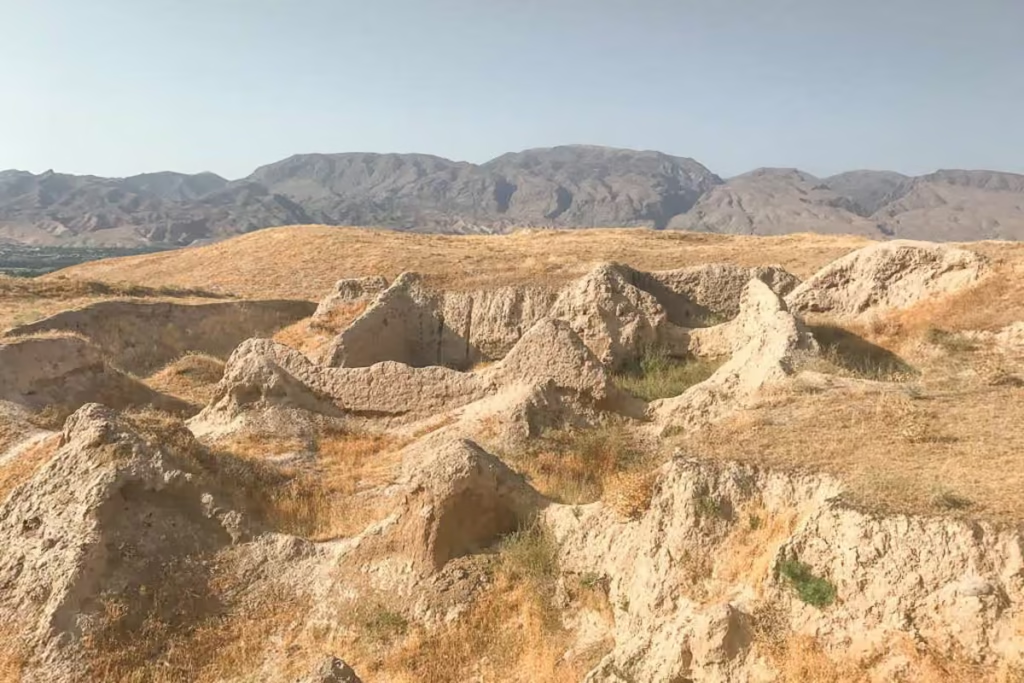
Panjakent Travel Guide: Things to Do

OVIR Registration in Tajikistan: Dushanbe Guide
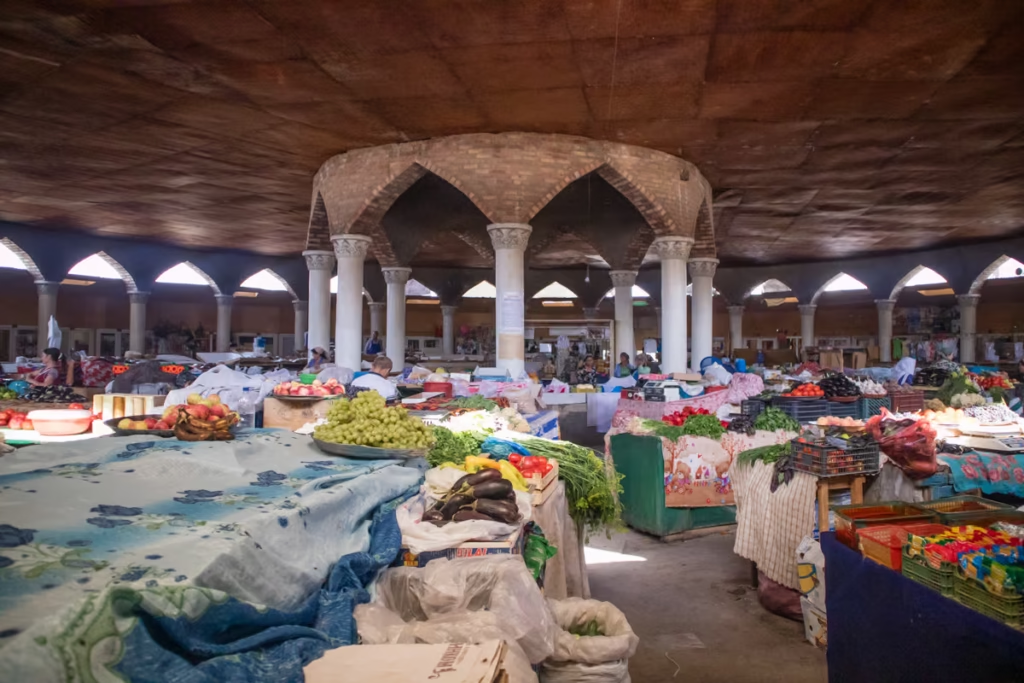
Panjakent-Samarkand Border Crossing Guide
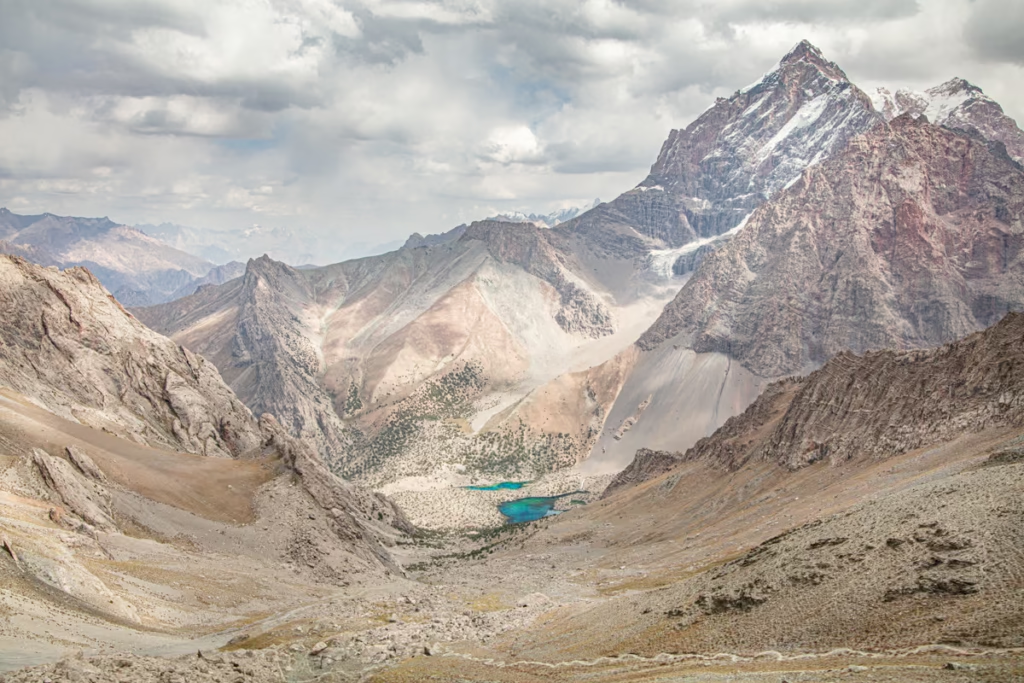
Fann Mountains Trekking Guide
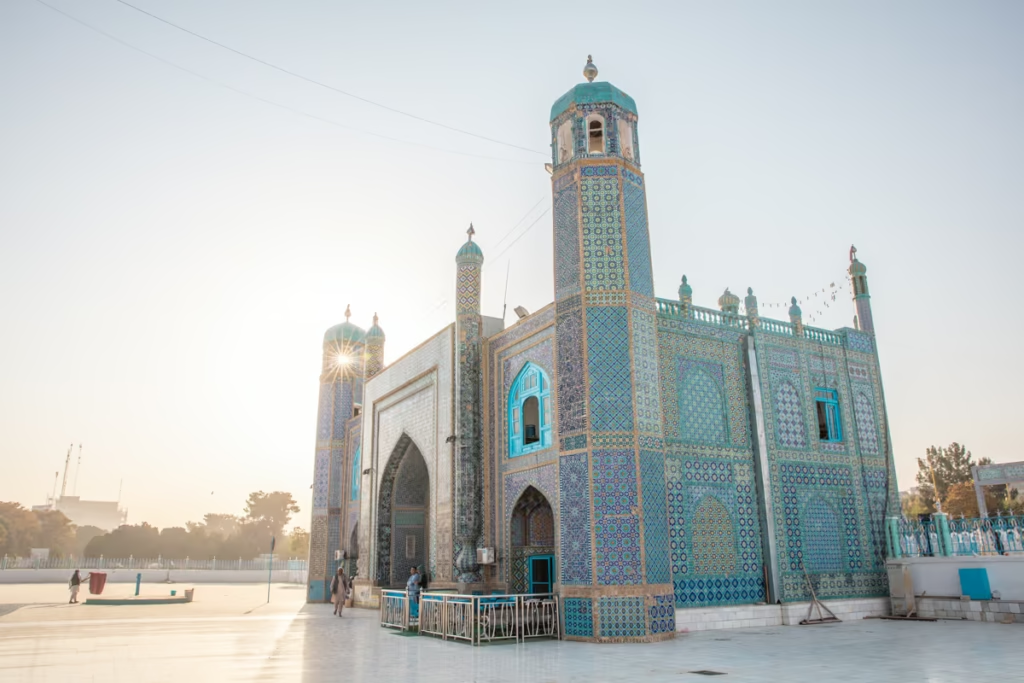
Central Asia Travel Guide
Tajikistan SIM & eSIM Guide
Shurab, Tajikistan: An Almost Forgotten City

Isfara-Batken Border Crossing Guide

Oybek Border Crossing: Tashkent to Khujand
Best Restuarants in Dushanbe | Where to Eat
Isfara Travel Guide, Tajikistan
Pamir Highway Itinerary: 10 Days from Dushanbe to Osh
Haft Kul: A Guide to the Seven Lakes of Tajikistan
Tajikistan Letter of Invitation (LOI)
Jarty Gumbez, Tajikistan: A Complete Travel Guide
How to Use Payment Terminals in Tajikistan
Shor Bulog Observatory, Tajikistan
Visiting Zorkul, Tajikistan
Visiting the Sary Khosar Nature Reserve
A Guide to Rasht Valley, Tajikistan
Soviet Architecture in Khorog
10 Essentials to Pack for Central Asia
The Gardan i Kaftar Hike in Tajikistan’s Rasht Valley
Stalin Statue in Asht, Tajikistan
nice information and good article thank you