This publication is made possible by the support of the American People through the United States Agency for International Development (USAID) Competitiveness, Trade, and Jobs Activity in Central Asia. The contents of this publication are the sole responsibility of Nicole from The Adventures of Nicole and do not necessarily reflect the views of USAID or the United States Government.
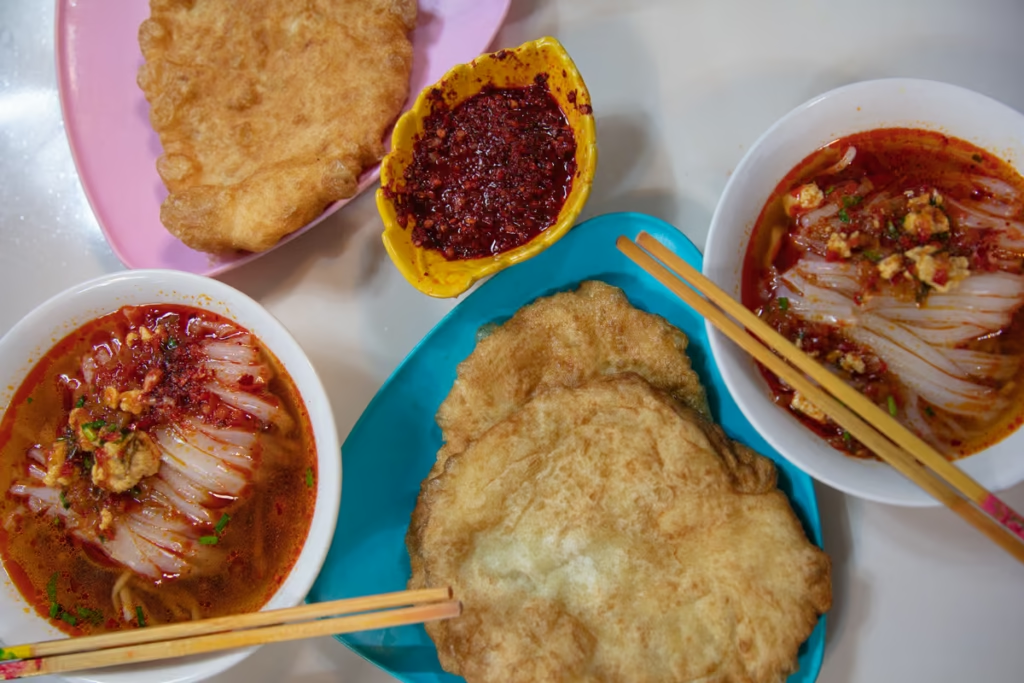
Karakol Restaurants & Best Food to Try
Updated September 2026, Karakol Restaurants & Best Food to Try was originally written in October 2019
Karakol is one of the best places to eat in Kyrgyzstan. This small city near Issyk-Kul is known for its diverse food scene, with Kyrgyz, Dungan, Uyghur, Tatar, Russian, and other Central Asian influences showing up on menus across town.
After multiple trips to Central Asia, I’ve found Karakol restaurants to be some of my favorite places to eat in the region. From bowls of spicy Dungan ashlan-fu and handmade lagman to Kyrgyz dumplings, Tatar dishes, and meals served in local homes, there’s a lot more to Karakol food than the usual Central Asian staples.
In this guide, I’ll cover the best restaurants in Karakol, the best local dishes and foods to try, where to find them, and a few food experiences worth adding to your trip.
Need Travel Insurance and Evacuation Services?
Start shopping for travel insurance plans over at IATI Insurance. Readers of the Adventures of Nicole get a 5% discount off your plan.
The Adventures of Nicole partners with Global Rescue to offer the world’s leading medical evacuation and security advisory services. To travel with peace of mind, explore their evacuation coverage.
What Food Is Karakol Known For?
Karakol is best known for ashlan fu, a spicy Dungan cold noodle soup that has become one of the city’s signature dishes. But Karakol’s food scene goes well beyond ashlan-fu. Because the city has long been home to Kyrgyz, Dungan, Uyghur, Tatar, Russian, and other communities, you can find a wide variety of Central Asian dishes here.
Some of the best foods to try in Karakol include ashlan fu, lagman, oromo, manti, mompar, ganfan, azu, and kumis. For an especially memorable introduction to local cuisine, consider eating a meal with a Dungan family in nearby Yrdyk.
Why Does Karakol Have Such a Diverse Food Scene?
Okay, I’m going to use one of the typical cliche Central Asian statements here: Karakol is at a crossroads. A new crossroads that is, Karakol doesn’t have the immensely long history of the well-known Silk Road cities. But hear me out…
A Brief History of Karakol’s Food Culture
Karakol was founded in 1869 as a military outpost by the Russians. Following the foundation, many came to the area to explore the peaks and valleys nearby, but the big migration wave didn’t hit Karakol until the late 1870s.
The first group to settle near Karakol (mostly in the village of Yrdyk) came in 1878 as a result of the Dungan Revolt over in Xinjiang.
In 1881 The Treaty of Saint Petersburg was signed, ordering the withdrawal of Russian troops from Western China during the Russian Conquest of Turkestan. Under this order, Russia was required to return a large chunk of land back to China, but the Dungan (Hui) and Uyghur people were given the choice to select if they’d like to live on the Russian or Chinese side of the border. Many chose to move to the Russian side (present-day Kazakhstan and Kyrgyzstan).
These migrations left Karakol with a remarkably diverse food culture. Today, Dungan, Uyghur, Kyrgyz, Tatar, Russian, and other culinary traditions can be found side by side in the city’s restaurants, bazaars, and family homes.
So without further ado, here are the best dishes and where to get them in Karakol (sorry, I know I’ve been dragging on as those food bloggers do on recipe posts!).
Don’t forget to pick up a copy of Bradt Kyrgyzstan to help you plan you own trip
Best Food to Try in Karakol
Ashlan-Fu: Karakol’s Signature Dish
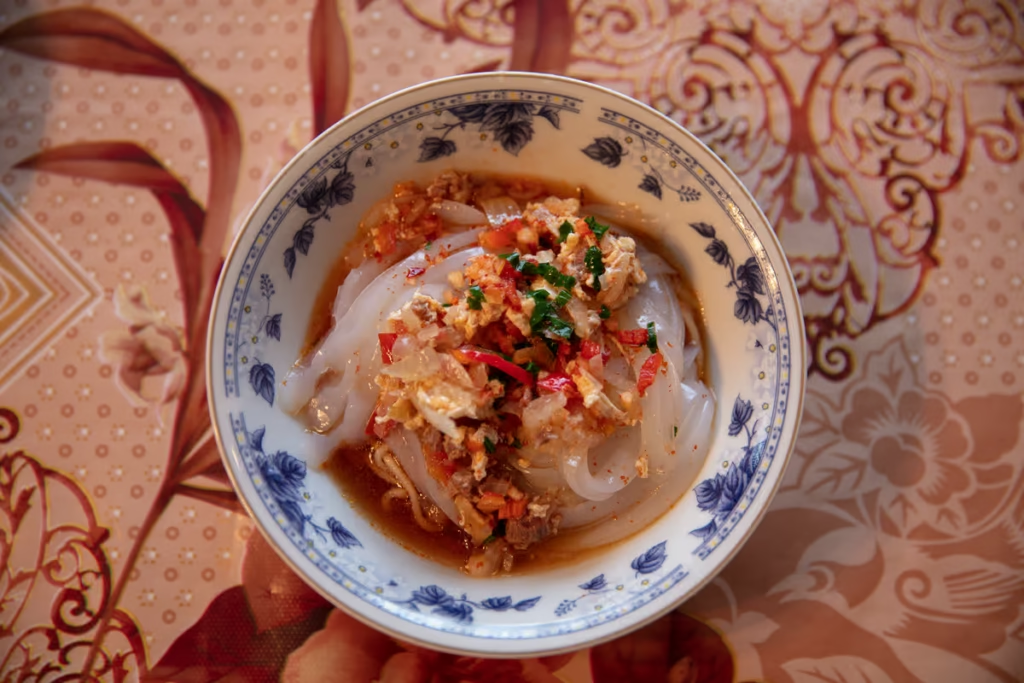
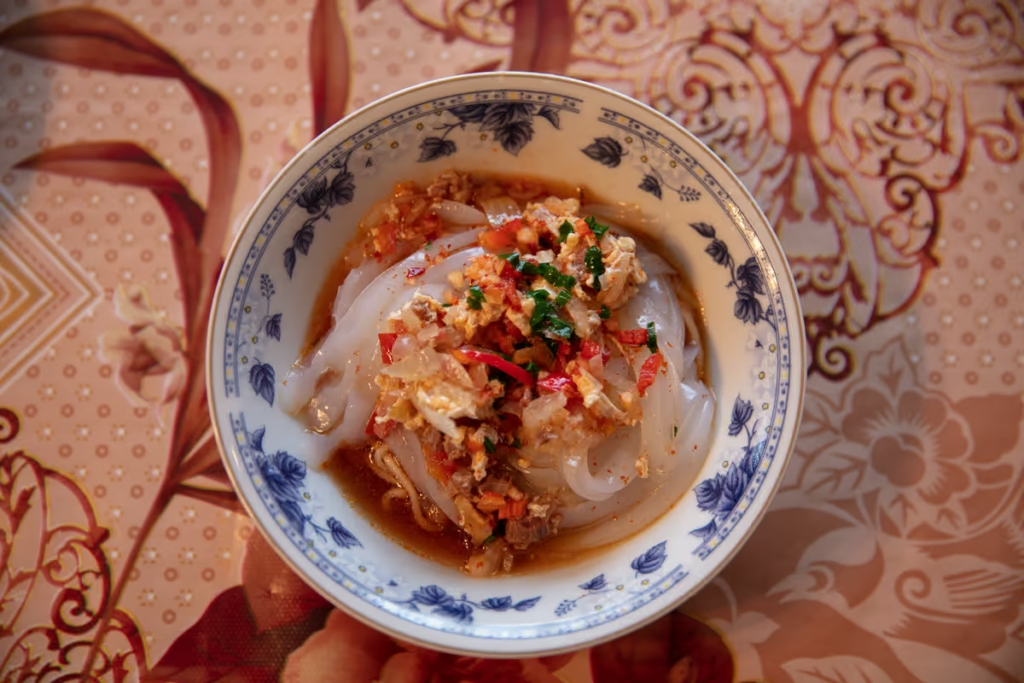
Ashlan fu is the food most closely associated with Karakol, and it’s the first thing I recommend trying when you arrive. This spicy Dungan cold noodle soup (though you can at times find it served up warm) is among my all-time favorite dishes.
I first gained an appreciation of cold soups when I traveled through Ukraine several years ago slurping up bowl after bowl of Russian okroshka in the hot summer heat, but sorry my Slavic friends, ashlan-fu blows your cold okroshka out of the bowl.
A typical bowl of ashlan-fu consists of starch noodles, wheat, and egg noodles, peppers, garlic, vinegar, carrots, tomato, onion, chilis, egg, and meat (but don’t worry vegetariankas! It’s easy to request a bowl of ashlan-fu with nyet meeyasa).
Don’t forget to grab a Piroshki to pair up with your spicy bowl of ashlan-fu, a delicious fry bread filled with potato.
Ashlan-fu has gained an appreciation by those that may have had a little too much to drink the night before as the perfect hangover cure.
Where to grab a bowl of ashlan-fu: Ashlan-fu alley at Bogu (small) Bazaar. The most renowned Karakol restaurant for the best is Ashlan-fu Saida. You can also try ashlan fu, as well as try your hand at making your own by booking a Dungan family meal.
Wanna get out beyong Karakol? Head to gorgeous Jeti Oguz
Oromo
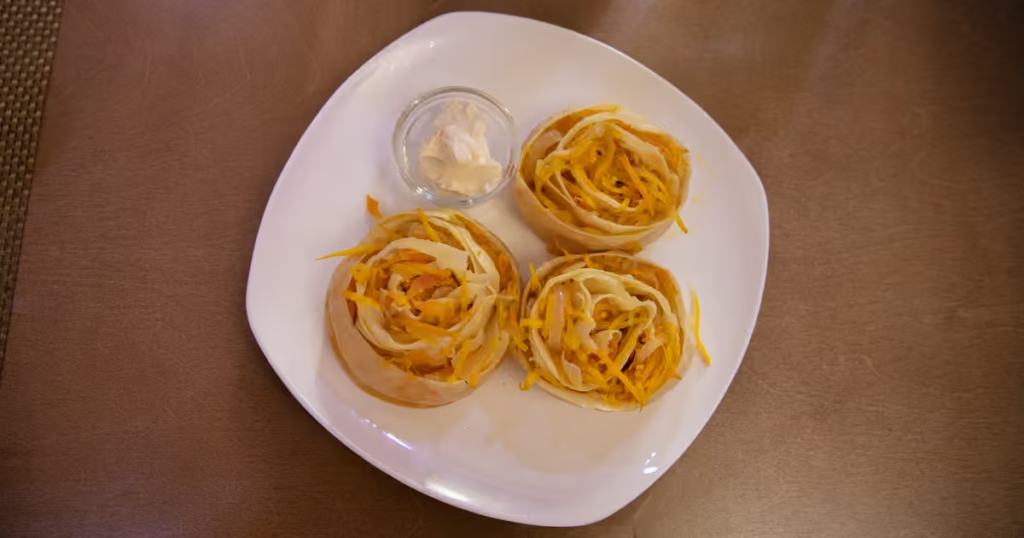
Oromo is a traditional Kyrgyz (and Kazakh) type of steamed dumpling. Dungans and Uyghurs introduced dumplings into Kyrgyzstan as they made their way from China, but Oromo has a uniquely Kyrgyz twist.
Commonly you’ll find Oromo filled with carrots and onions as well as onions and minced meat and almost always are served up with a plop of sour cream on top. Another popular version is filled with potatoes and in fall you can find them stuffed with pumpkin.
The word Oromo translates out to ‘wrapped’. It is typically prepared by rolling the dough around the filling to create a long wrap, which is then cooked and sliced into thin pieces.
Where to grab a plate of oromo: You can easily find them sold around Bogu Bazaar.
Lagman
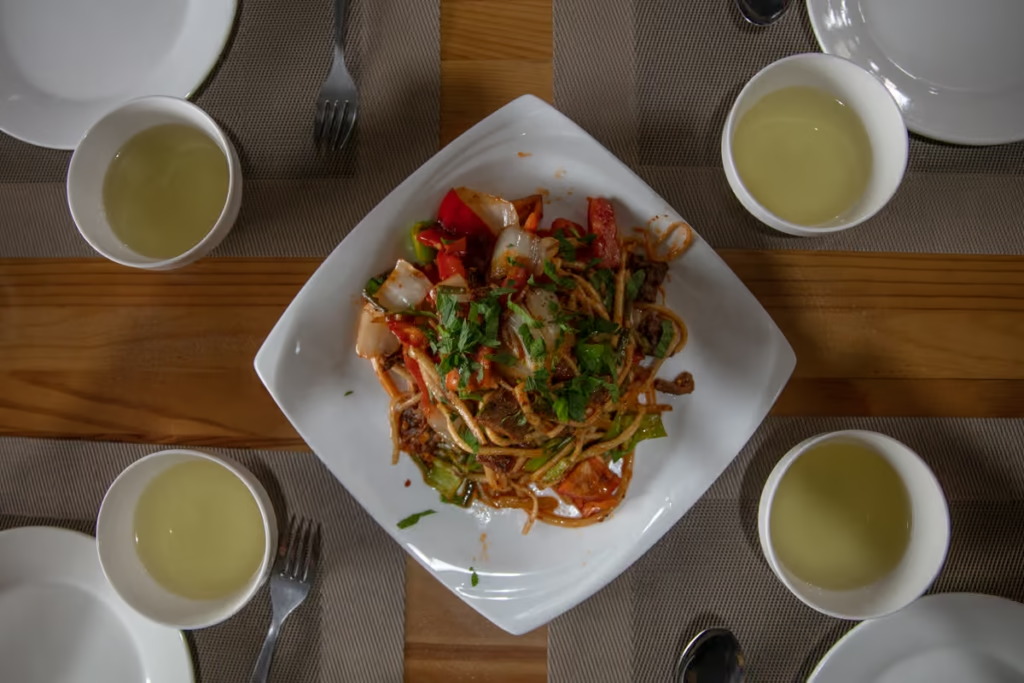
Oh lagman, how would I ever get through Central Asia without you? If I had to round up the handful of dishes that are served up in every nook and cranny of Central Asia and select my favorite, lagman would be it.
Lagman arrived in Central Asia with the migration waves of Dungans and Uyghurs that made their way west from China.
Lagman can be soupy, or it can be served up drier or even fried. The one common denominator is the stretch-noodles that form the backbone of the dish.
The literal meaning of the word lagman is ‘stretch noodles’. These long and thick, handmade stretch noodles are believed to be good luck and bring a long life. Lagman stretch noodles can typically be found topped with bell pepper, meat, onion, tomato, garlic, and cilantro, though lagman ingredients can vary widely with preference, available ingredients, and the chef.
Where to get your lagman fix: Several cafes around Karakol make great lagman, with Dastorkon serving up a flawless Bozu Lagman. You can also take a class to learn how to make lagman. Contact Destination Karakol for details.
Mompar
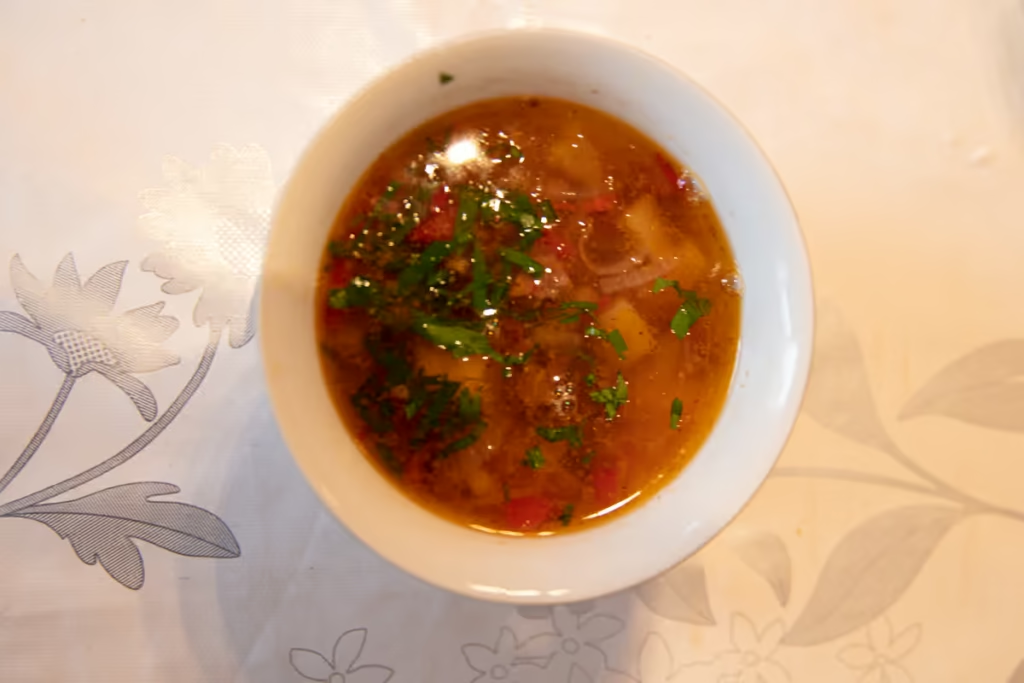
Mompar is another dish brought to Kyrgyzstan and other parts of Central Asia thanks to the Uyghurs. Mompar is a hot soup typically consisting of meat, red pepper, potato, cilantro, and square dough noodles. It’s the perfect dish to warm you up if you’ve been out exploring the mountains nearby that Karakol has become so famous for.
Where to warm up with a bowl of mompar: Home cooked mompar is always a treat, so if you’re staying at a locally ran homestay you’ll more than likely slurp some up there. If not, Dastorkon serves up a mean mompar.
Don’t worry there’s more to Karakol than food: The Karakol Travel Guide + 13 Things To Do In Karakol
Manti
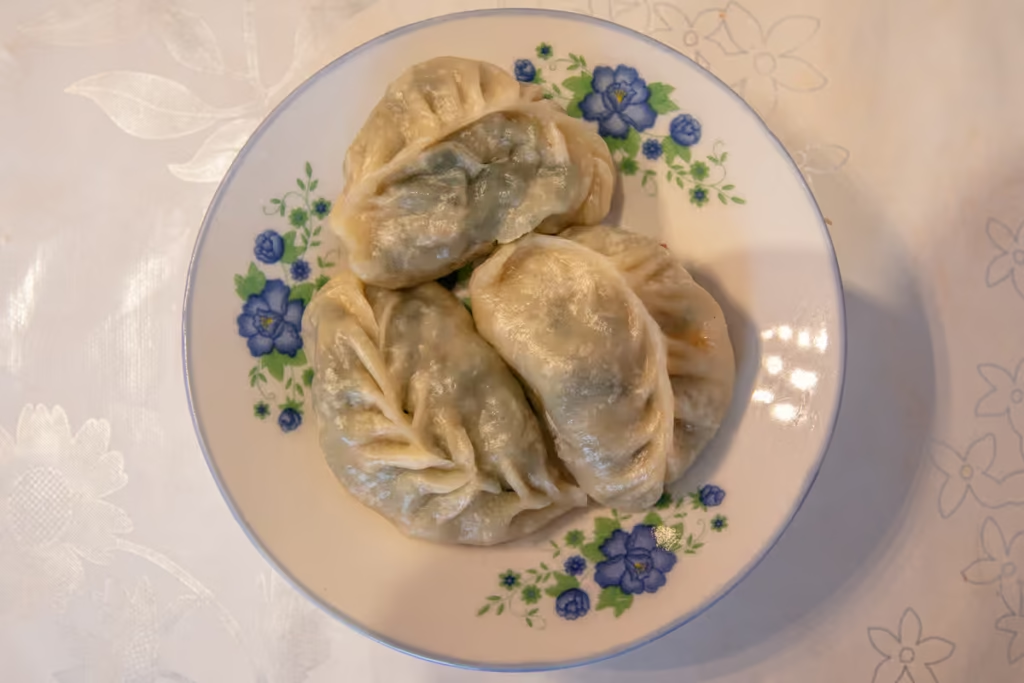
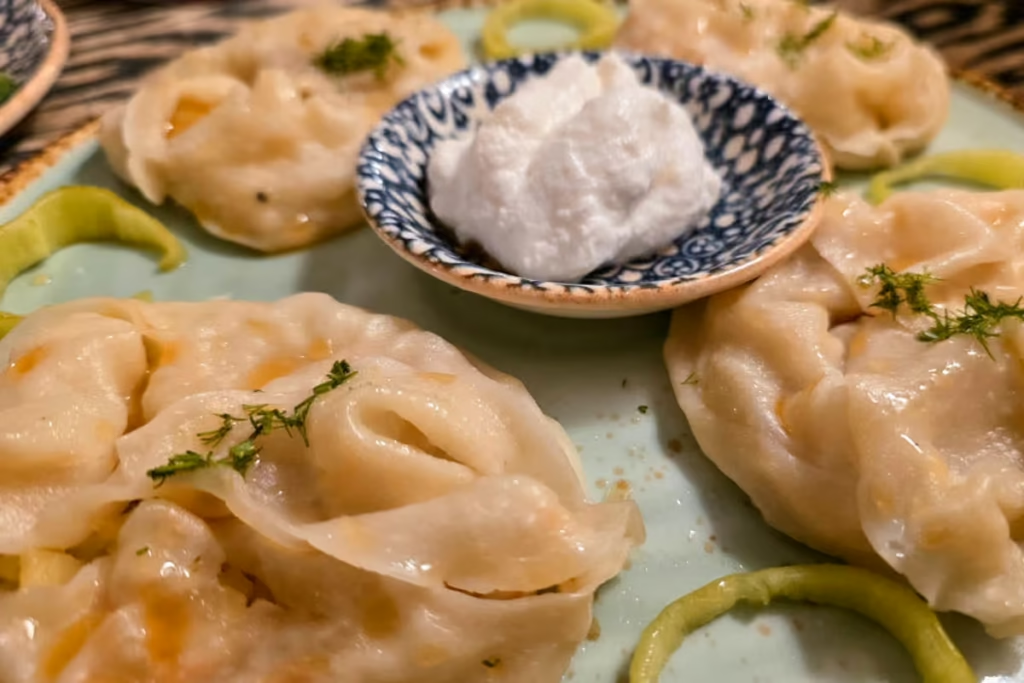
Manti are one of the most widespread dishes throughout Central Asia and beyond. Who created them first seems to be unclear, but the dish is pretty traditional among Turkic people. So past the history book and onto the table: manti is a dumpling.
They are most often served up steamed and stuffed with minced meat, animal fat and chopped onion. Vegetarians can rejoice in meat-free manti, most typically found with potato or pumpkin.
Where to get your manti on: Just about anywhere! Manti is served up at nearly every restaurant in town as well as at Bogu Bazaar.
Funchoza
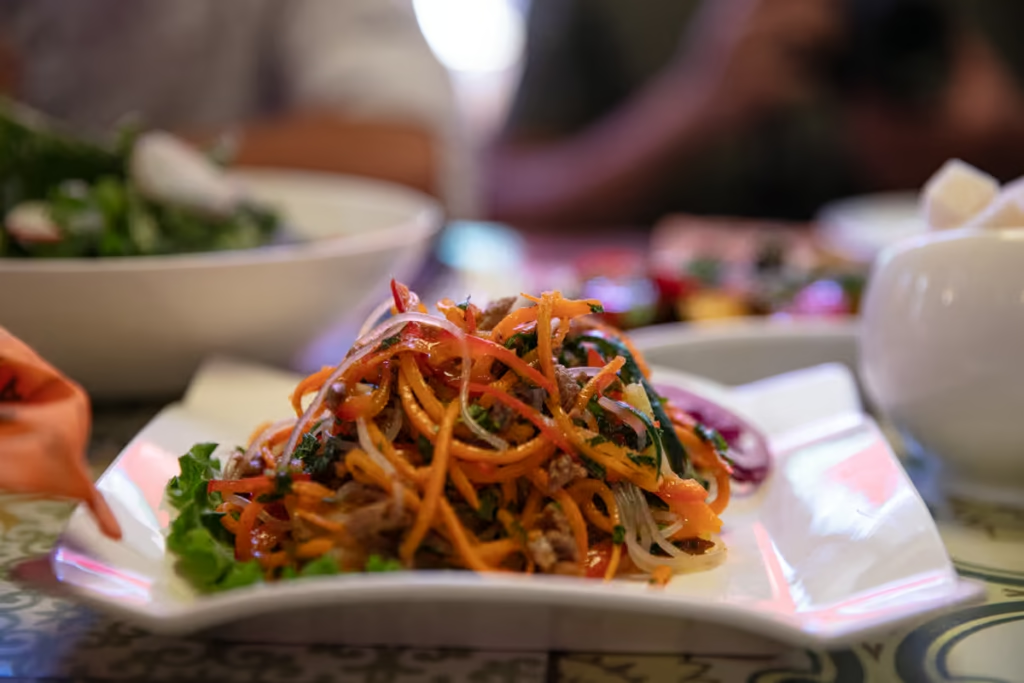
Funchoza is another personal favorite to grab in a restaurant or on the go in a bazaar when I’m back in Central Asia.
So where did funchoza come from? I was told Korea when I was in Central Asia, I’ve read some sources claiming the Koreans, others saying Uyghur. Either way, I’m not here to debate it, just to make you drool over it.
Funchoza is a salad of julienned carrots and glass noodles drizzled in vinegar and oil and typically includes bell pepper and cilantro, though veggies in Funchoza can vary. Strips of grilled beef are a pretty common topping as well, but getting a vegetarian option without the meat is a pretty easily fulfilled request.
Where to get some funchoza: Most bazaars seem to have an aisle of merchants that will fill a container (or a bag) with funchoza for you. Funchoza is also a popular appetizer brought out at homestay meals and at restaurants.
Start planning: the Kyrgyzstan Travel Guide
Ganfan
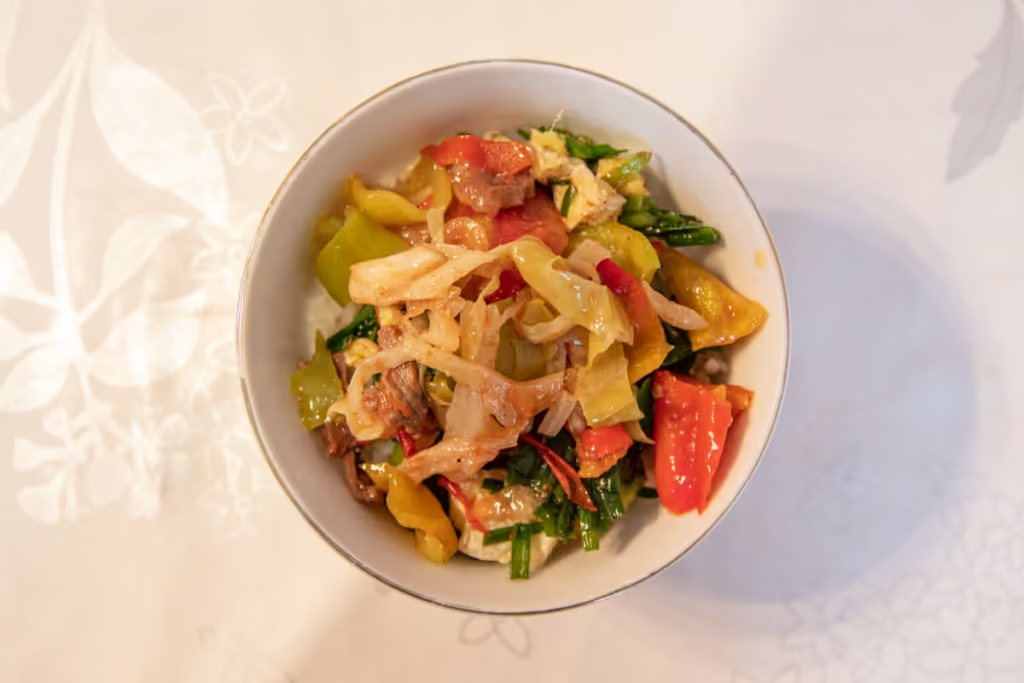
Ganfan is a family of dishes that all have Dungan and Uyghur origins that all involve steamed rice, and tastier in my opinion than the ubiquitous plov served up all throughout Central Asia.
The most common variations of Ganfan you’ll find are Jutse Tse, Latse Tse, and Swan Tse. Jutse Tse is steamed rice topped with egg and chive. Latse Tse includes fried peppers and meat served atop steamed rice. Finally, Swan Tse is the version with steamed rice with cabbage and meat.
Many compare Ganfan as the rice version of lagman.
Where to test out the ganfan family of dishes: The best Ganfans I’ve tasted have been served up at Dungan family homes. Click here to book a Dungan family meal in nearby Yrdyk when you visit Karakol.
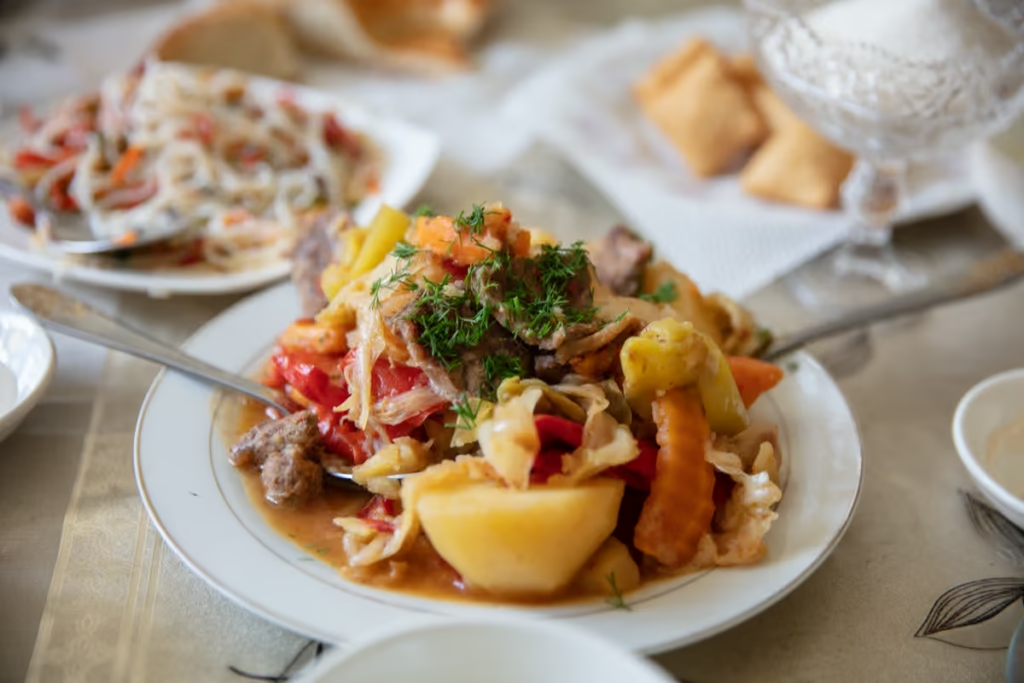
Azu
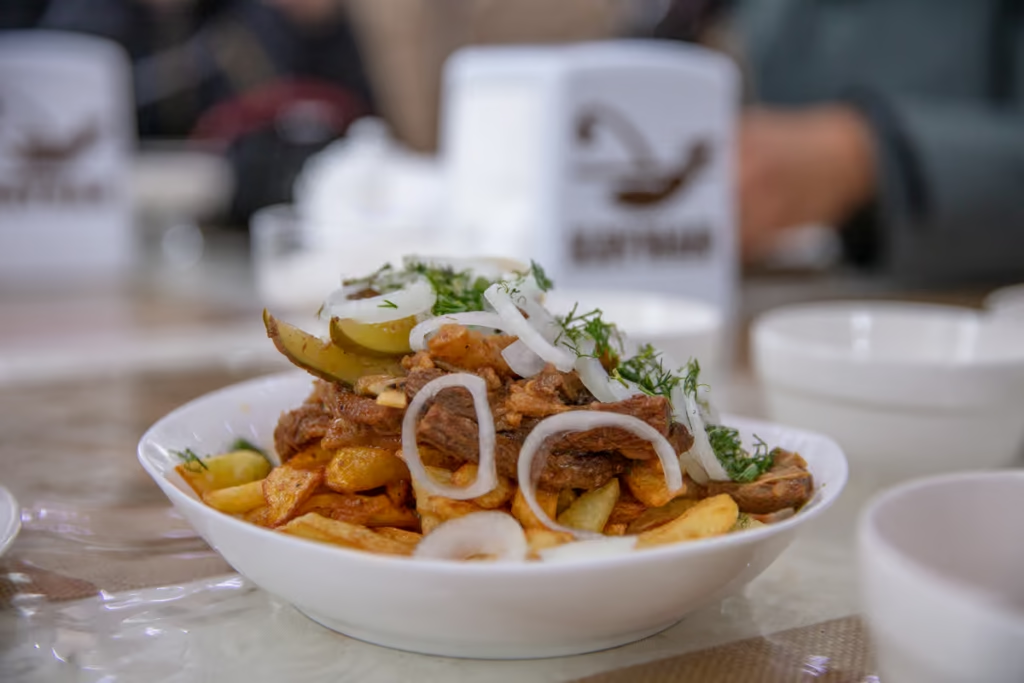
Azu is a dish that many compare to poutine, but guess what, we’re not in Canada anymore!
Azu hails from Tatarstan, a region along the Volga River in Russia and home to the Tatar people. In Tatar, azu translates out to ‘food’, though some argue that azu is actually Persian, in which azu means meat.
Azu has evolved over time, first, it was a dish that consisted just of meat. Russian influence in Tatarstan brought the addition of potato, dill, and pickle to azu. Tatar dishes such as azu can be found served up throughout Russia as well as many ex-Soviet and Eastern European countries.
Where to try out a delicious azu: Kaynar Restaurant used to be the place to go but has since closed 🙁
Kumis
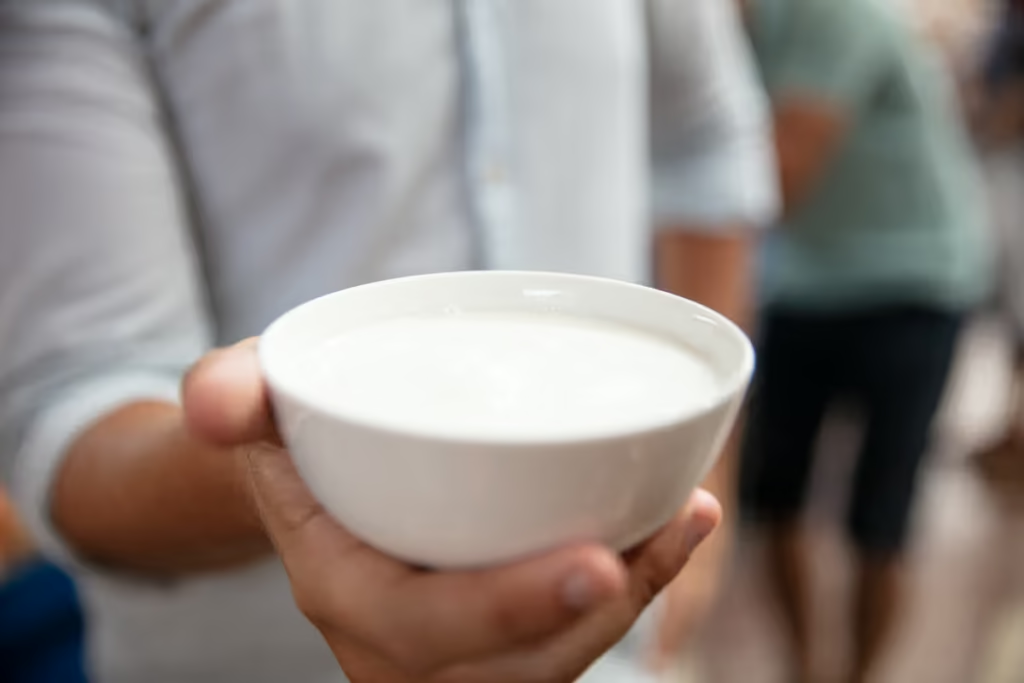
It wouldn’t be Kyrgyzstan if we didn’t bring up Kumis. Similar to kefir, kumis is a fermented dairy product, though quite different from any kefir you’ve likely ever drunk before.
Kumis is fermented mare’s milk and an important member of the cuisine for the Kyrgyz and Kazakh as well as Mongols, Kalmyks, Bashkirs, and Yakuts. It is fermented over the course of a span of hours up to a few days in which mare’s milk is put into a container and churned occasionally. This process results in a mildly alcoholic, slightly carbonated milky concoction.
Many a traveler will try kumis and most will say they don’t care for it. I am among the few that actually do (however I do actually like fermented milk). The best way I can describe the taste is like bacon and sour cream mixed together but with a fizz to it.
Where to say nazdroviya and throw back a glass of kumis: pick up a bottle of Kumis from Bogu bazaar among other places around Karakol. Look out for signs that say ‘кымыз‘ on it, you’ll find it sold there.
Headed to Kazakhstan too? Check out the two week Kazakhstan & Kyrgyzstan itinerary
Karakol Food Tour
Want to try several of the foods mentioned in this Karakol food guide without figuring out where to go yourself? A local Karakol food tour is an easy way to sample several specialties.
For 600 KGS per person, you can set up a Karakol foodie tour with Destination Karakol, including all food and a guide. On your tour of the best Karakol restaurants, you’ll try ashlan-fu, Oromo, lagman, azu, and desserts.
You can also set up a Dungan family meal with destination Karakol, where you can try ashlan-fu, ganfan, mompar, manti, and more. A minimum of 4 people are needed to book and must be booked at least 1 day in advance. The price is 1400 KGS per person and includes all food, a local guide, and transport from Karakol to Yrdyk and back.
Best Restaurants in Karakol
| Restaurant / Food Spot | Best For |
|---|---|
| Dastorkon | Traditional Kyrgyz and Central Asian food |
| Kaynar | Tatar and Uyghur dishes |
| Ashlan Fu Saida or Ashlan Fu Alley at Bogu Bazaar | Ashlan-fu |
| Dungan Family Meal in Yrdyk | Dungan food and a local cultural experience in Yrdyk |
| Lighthouse Coffee & Tea | Coffee and Western-style food |
| Karakolka Live Trout | Local trout |
Posts From Kyrgyzstan
Pamir Highway Guide: M41 Route
Jeti Oguz Travel Guide, Kyrgyzstan
Solo Female Travel in Central Asia
How to Get to Sary Chelek, Kyrgyzstan
Kyrgyzstan Photos: 34 Epic Travel Photos
Osh Kyrgyzstan: 6 Things to Do
Central Asia Travel Guide
Ala Archa from Bishkek: Bus & Guide

Isfara-Batken Border Crossing Guide
Kyrgyzstan Border Zone Permit: $40 Service
Karakol Restaurants & Best Food to Try
Kazakhstan & Kyrgyzstan Itinerary
Karkara Border Crossing Between Kazakhstan & Kyrgyzstan
Things to Do in Bishkek: Attractions & Day Trips
How to Obtain a Kyrgyz Letter of Invitation: Fast $40 Service
Trekking to Lake Izyumrudnoe
10 Essentials to Pack for Central Asia
A Guide to the World Nomad Games
Central Asia Travel Tips
Vegetarian in Central Asia
Central Asia Visas Guide
Karakol Travel Guide: Top Things to Do
Kyrgyzstan SIM Card & eSIM Guide
Exploring Soviet Osh
How to Get to Burana Tower & Tokmok Animal Market
Kyrgyzstan Travel Guide: Plan Your Trip
Central Asia Food & Drink