Visiting the Now Demolished Secret Soviet Bioweapons Lab of Aralsk 7 on Vozrozhdeniya Island
Updated September 2025, Visiting the Now Demolished Secret Soviet Bioweapons Lab of Aralsk 7 on Vozrozhdeniya Island was originally published in December 2021
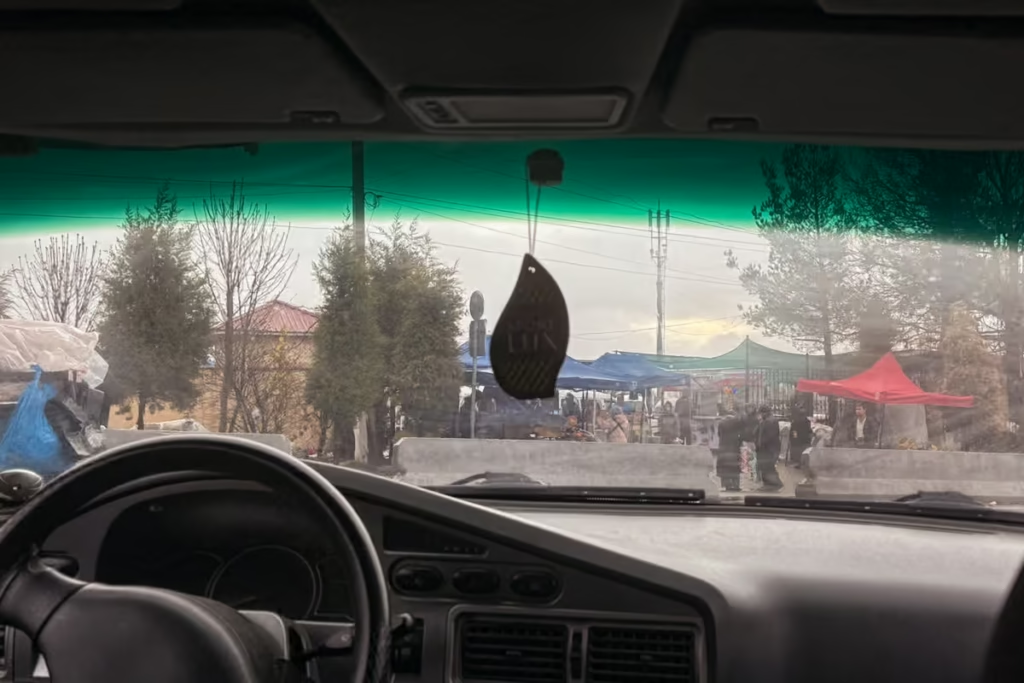
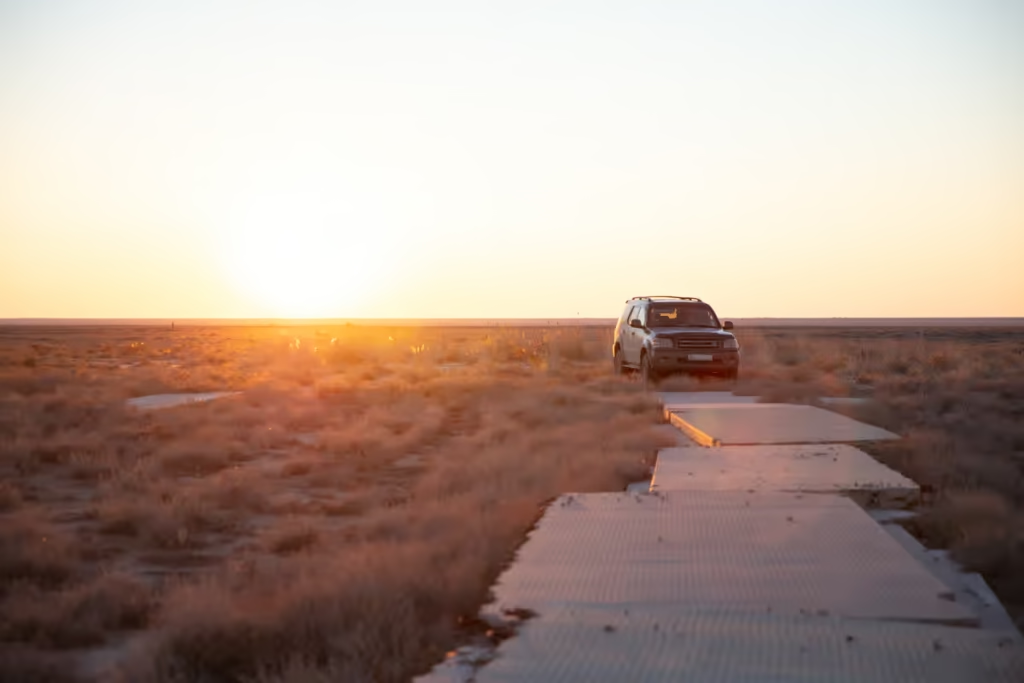
Gauging by the title, you can imagine our confusion as we trundled past a wood-and-wire gate to the former Soviet top-secret bioweapons experimenting site formerly known as Aralsk 7. There was absolutely nothing on the horizon aside from the plethora of scrubby desert plants.
We had finally arrived at the sites of Aralsk 7 and the ghost town of Kantubek, the once-town of about 1,500 scientists working on various bioweapons tests on the remote Vozrojdeniya Island in the Aral Sea, after driving for 6 or so hours from Nukus.
Much to our disappointment, we still wandered around Kantubek and its former Barkhan Airport staring at the barren landscape that used to be dotted with the remains of a ghost town.
However, if you want to see what the facilities of Aralsk 7 and Kantubek looked like before demolition, check out this article in OZY written by journalist Nikita Makarenko (unfortunately OZY went under and the article is no longer accessible).
Wanna explore the Karakalpakstan region? Check out the Karakalpakstan travel guide
Need Travel Insurance and Evacuation Services?
Start shopping for travel insurance plans over at IATI Insurance. Readers of the Adventures of Nicole get a 5% discount off your plan.
The Adventures of Nicole partners with Global Rescue to offer the world’s leading medical evacuation and security advisory services. To travel with peace of mind, explore their evacuation coverage.
Stay online across Uzbekistan
Rent a UZWifi mobile pocket router
So What Exactly Was Aralsk 7?

The product of Stalinist-era paranoia and a bioweapons arms race, a top-secret Soviet bioweapons lab was established in 1948, located on the newly(ish) formed Vozrozhdeniya Island, smack in the middle of the Aral Sea.
Vozrozhdeniya was chosen as the location of the lab owing to its remoteness, as well as its position not being too close to the Soviet Union’s international borders. The laboratory began experimenting with anthrax, bubonic plague, smallpox, tularemia, and brucellosis.
It wasn’t until 1954 that the facilities were expanded and named Aralsk 7, which would become the Soviet Union’s main laboratory and testing site for the Microbiological Warfare Group. Scientists sent here were tasked with testing and experimenting with fatal diseases as well as inventing new ones.
Aralsk 7 remained shrouded in secrecy until the 1990s when Soviet defectors who once worked in the laboratories began to speak up about what went on out on lonely Vozrozhdeniya Island.
Start here: the Uzbekistan travel guide
The Ghost Town of Kantubek
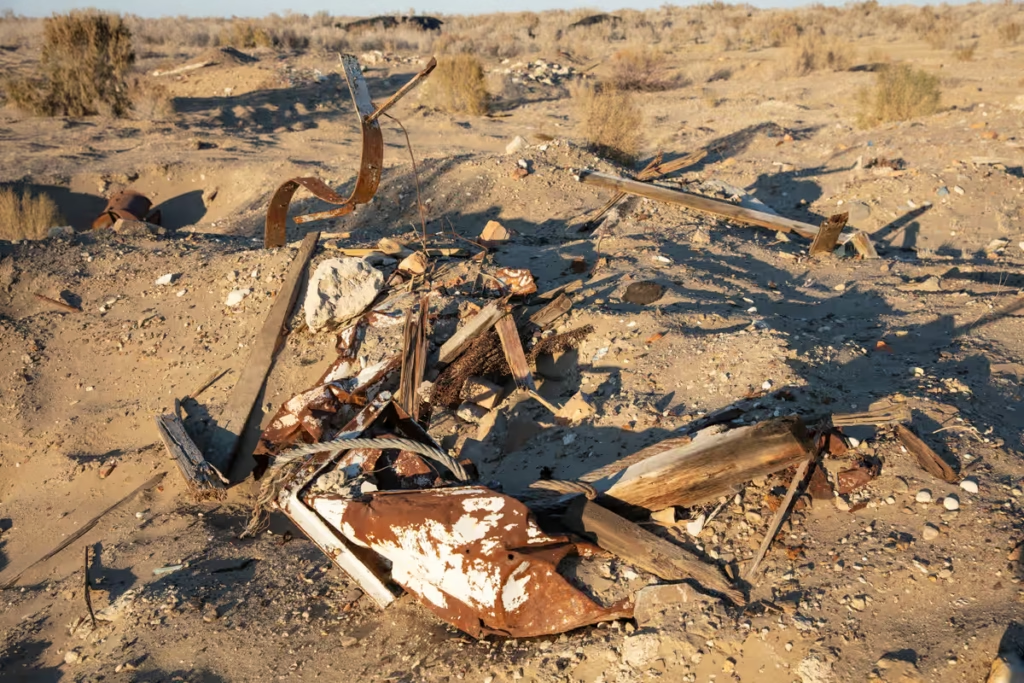

Following the collapse of the Soviet Union, Kantubek was abandoned in 1992, but at its zenith, it was a full-fledged town with a population of around 1,500.
For years, Kantubek sat in ruins, decaying a little more with each season of unrelenting elements.
Kantubek once featured a school, cinema, laundromat, bakery, canteen, school, stadium, grocery store, and more to serve the workers at Aralsk-7.
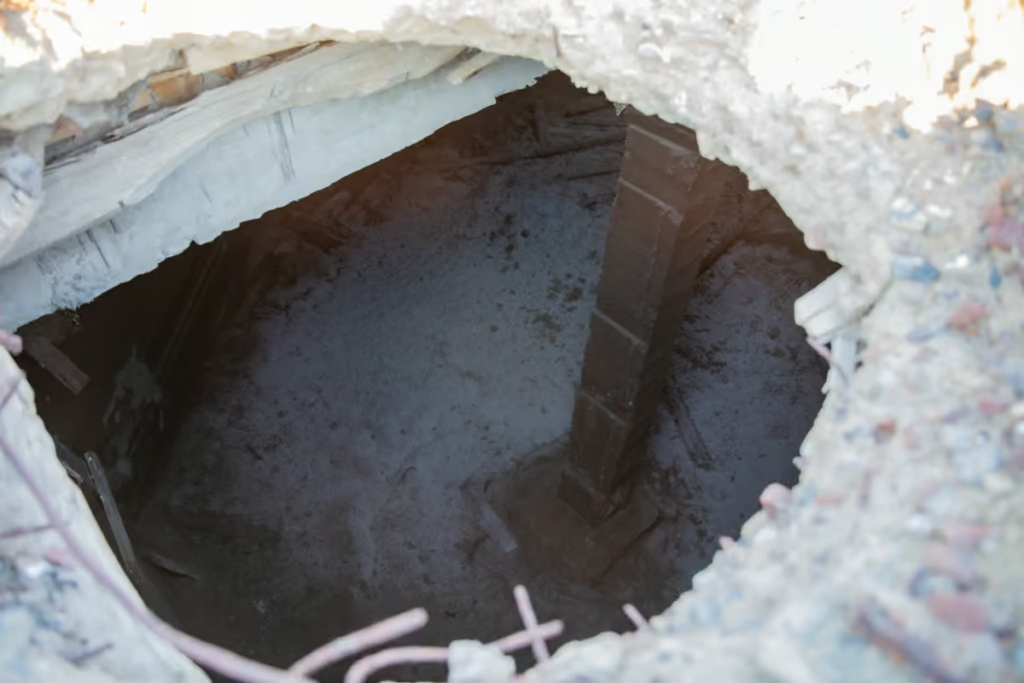
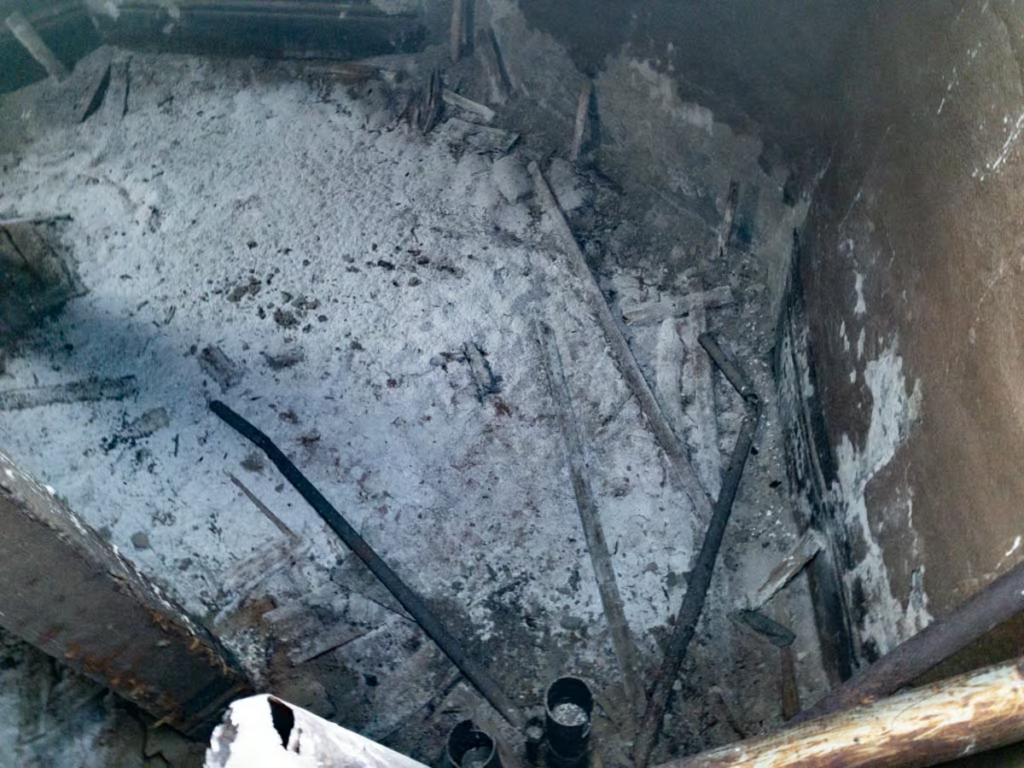
Now all that remains following the total destruction of Kantubek and Aralsk 7 are little more than shattered floor tiles, random wires and cables, and broken cement blocks strewn in the sands of the Aralkum.
Remote Vozrozhdeniya Island
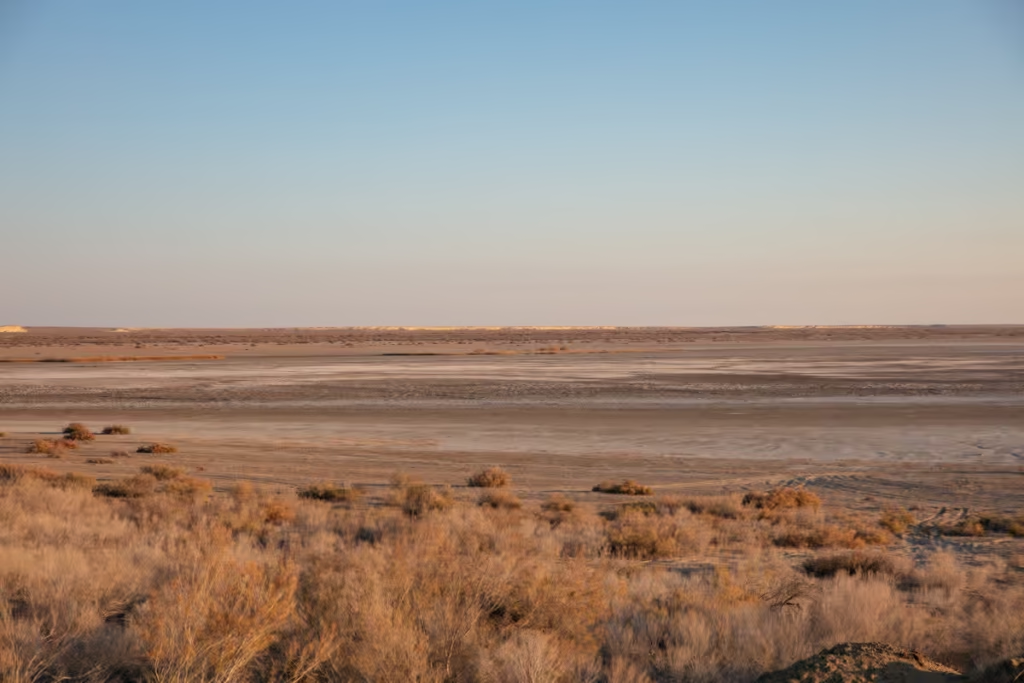
The Tsar Islands were “discovered” by the Russians (surely it had been known of among locals long before) on a marine expedition of the Aral Sea led by naval officer A.I. Butakov that took place in 1848 and 1849.
Tsar Islands consisted of three islands, Nicholas I Island, Konstantin Island, and Naslednik Island. It wasn’t until the 1920s during the Soviet era that Nicholas I was renamed Vozrozhdeniya, which loosely translates to rebirth/renaissance when eyes shifted to the island as a prospective site of a biological weapons production and testing lab.
Vozrozhdeniya ticked all the boxes for the Soviets- relatively far from the Soviet Union’s then-borders and a large island located a few kilometers offshore.
Ivan Mikhailovich Velikanov led the Red Army’s first expedition to Vozrozhdeniya Island to conduct biological weapons (specifically open-air testing of Francisella tularensis) testing in 1936. After arriving, a makeshift village was set up.
The expedition was successful, and thus Velikanov began planning a second expedition to the island in 1937- but he never made it. He was arrested by paranoid Soviet security forces and later executed. The second expedition did take place though, this time led by Tularemia expert Leonid Moiseevich Khatanever.
Testing on Vozrozhdeniya was halted in late 1937 and for the next 11 years, nobody seems to know what happened out there or why things were halted in the first place. In 1948 the bioweapons lab was officially created and in 1954 Aralsk-7 was officially born.
Barkhan Airfield
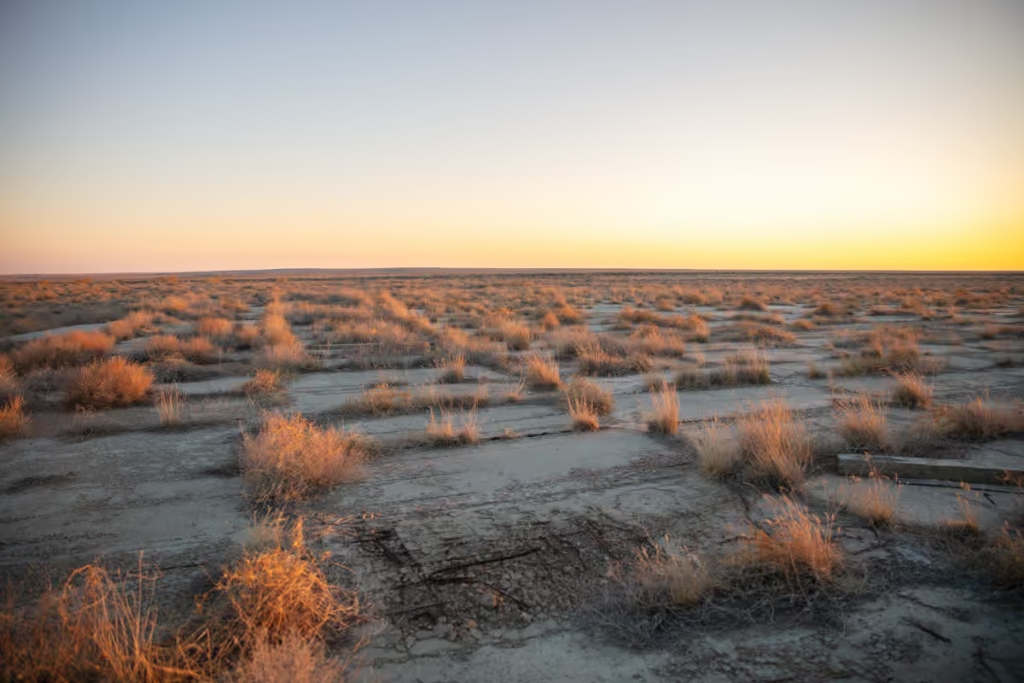
Barkhan Airfield was constructed just west of Kantubek to serve the scientists and workers at Aralsk 7. It was a distinctive airstrip, which from above looks like a starburst.
Barkhan was the only airfield in the Soviet Union to feature four runways, making it unique. The reason the Barkhan Airfield featured the starburst pattern four runways was due to the frequently changing weather on Vozrozhdeniya Island. A constant wind always blows across the island, giving airplanes the ability to land on any one of the runways as weather and wind direction saw fit.
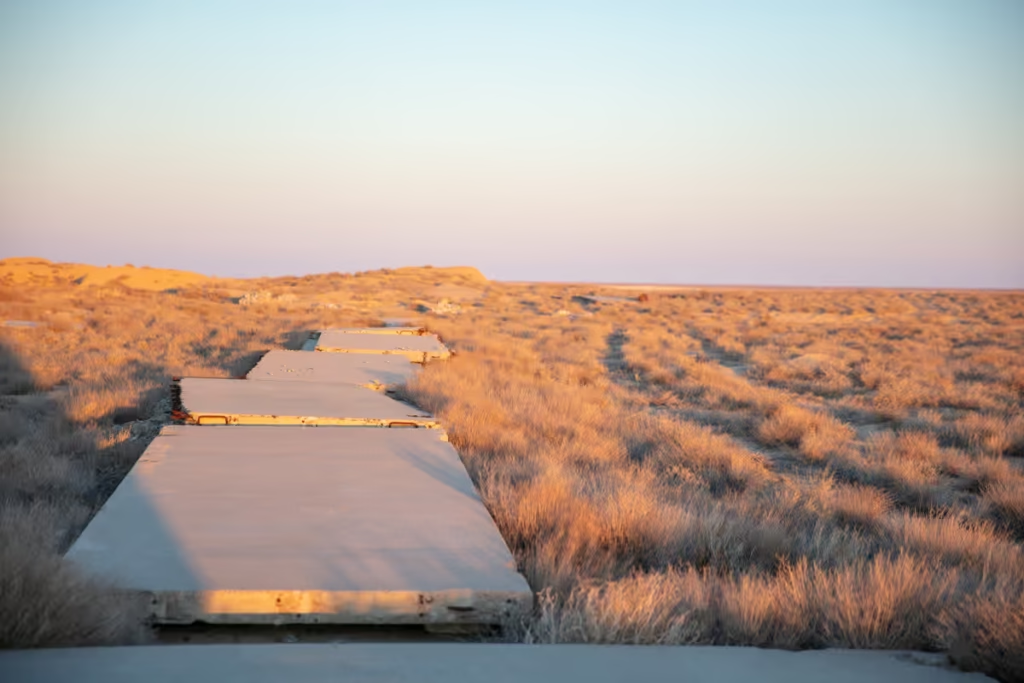
The runways of the Barkhan Airfield are one of the few remnants of Kantubek and Aralsk 7 remaining, though the airport buildings and air traffic control booth were demolished on our visit.
Planning a trip to Uzbekistan? Pick up a copy of the Bradt Uzbekistan Guidebook before you leave home
Incidents at Aralsk 7
Smallpox Incident
In 1971 the variola virus (smallpox) was accidentally released on Vozrozhdeniya Island infecting a 24 year old researcher on the vessel Lev Berg, which at the time was only 15 kilometers from the island’s shore.
Ultimately she ended up infecting others in Aralsk, Kazakhstan on her return home, infecting 10, three of which died.
Death and Bubonic Plague on the Aral Sea
In 1972 two fishermen were reported missing on the Aral Sea by family members after they failed to return home.
Their boat was later discovered drifting on the sea. Both men were found dead with doctors diagnosing that they had been infected with the plague.
50,000 Saiga Instantly Dead
Within a 60 minute timeframe in May 1988, 50,000 Saiga antelope that were grazing on a nearby steppe mysteriously dropped dead, though it’s unanimously suspected that some type of biological leak or release infected the animals.
Netting Dead Catches
From the 1950s through the 1990s there were several accounts by local fishers from around the Ara Sea catching whole nets of dead fish.
Mishandled Bioweapons
An unmarked grave was discovered in the past decade near the laboratory complex at Aralsk 7. Soon after, Russian defectors revealed that the grave contained the remains of a female scientist who died due to an infection contracted on Vozrozhdeniya as she was handling bioweapons. As expected, her death and the incident were never recorded.
Of course, these are just a few examples of incidents that took place on Vozrozhdeniya Island, though many many more are suspected and it’s not expected that Russian authorities will ever release information on all the events that took place. The Soviets kept such a tight seal over the happenings on the island that the first revealed of these incidents was never uncovered until 2002, 10 years after Vozrozhdeniya was evacuated.
Kantubek Graveyard
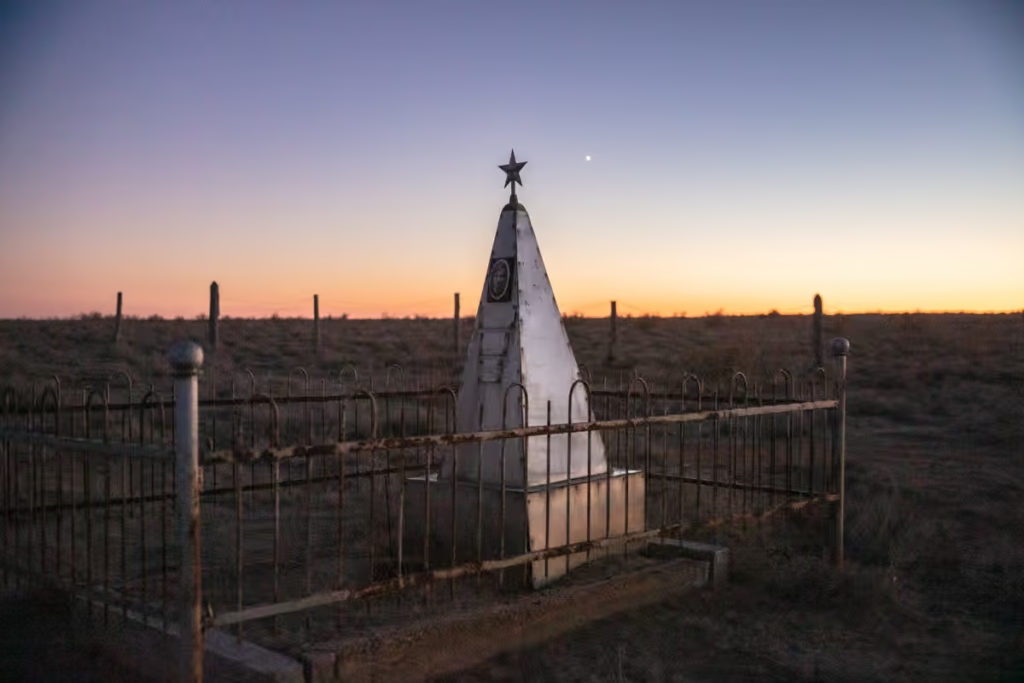
As we started to drive away from Kantubek, we noticed some type of building up on a hill to our right as we passed south of the biochemical training grounds, so naturally, we hiked up to the top of the mound to check it out.
It was nearly pitch black as the sun had dipped below the horizon. We quickly discovered that it was a grave, topped with a star. We tried to read what the placard on the grave said- we could make out that her name was Maria.
Wanna visit another bizarre destination in Uzbekistan? Check out the Solar Furnace just outside Tashkent
The New South Ustyurt National Park

Upon our return to Kungrad, I contacted Sophie Ibbotson who has served as the Uzbekistan Tourism Ambassador to the UK to ask if she had any details on the destruction of the facilities at Kantubek and Aralsk 7. As we chatted about it, she did inform me that the Uzbek government had designated the Aral Sea region as the South Ustyurt National Park in November 2020.
The South Ustyurt National Park was created to help preserve the unique biodiversity of the Ustyurt Plateau and Aralkum Desert, including the endangered Saiga antelope. The Saiga Conservation Alliance has already begun receiving funding for a joint conservation and tourism project to start rehabilitating desert fauna (evidence of this was apparent as we trundled the dirt road to Vozrozhdeniya Island) as well as the Saiga population.
Another venture part of the South Ustyurt National Park is the epic dark skies experienced on Vozrozhdeniya. Given its remote location, there is little light pollution in the vast area, making it a great potential addition to the IDA Dark Sky Reserve.
What Does the Future Hold for Vozrozhdeniya Island Now?
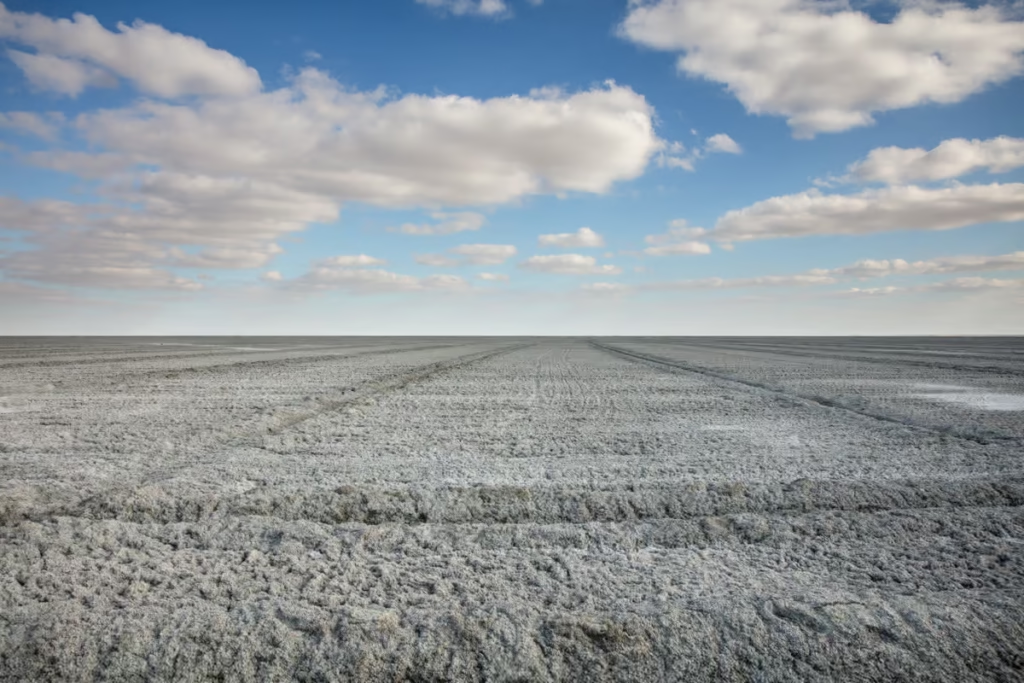
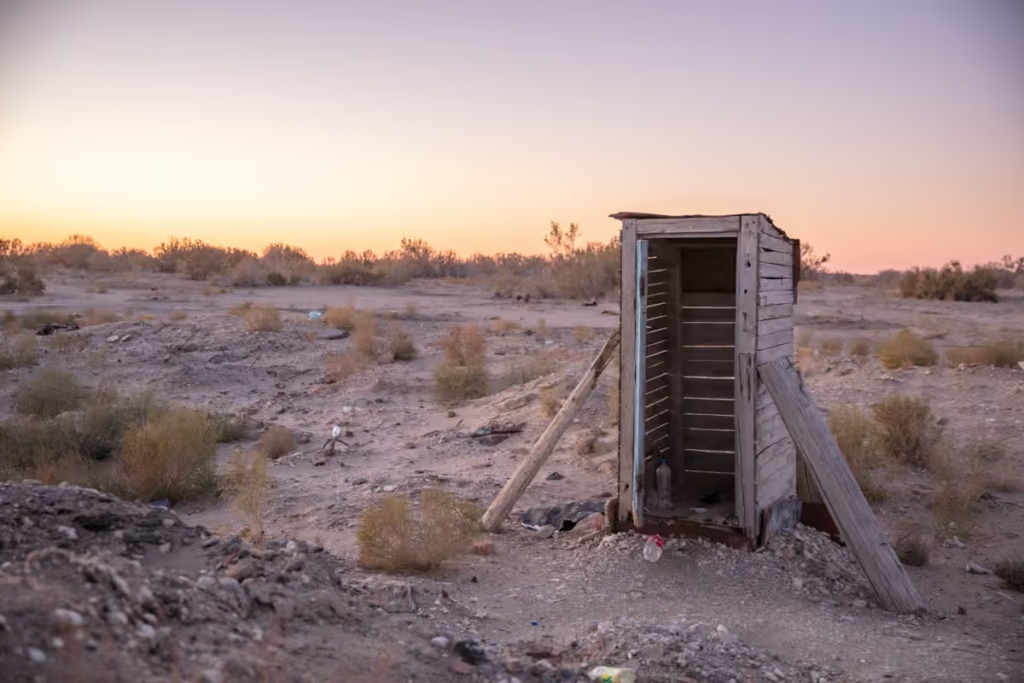
It seems uncertain what all will happen on Vozrozhdeniya Island now that it’s been declared as part of the South Ustyurt National Park, aside from the desert flora and fauna and Saiga conservation that are already underway.
Have any questions about visiting the former site of Aralsk-7 and the former town of Kantubek on Vozrozhdeniya Island?
Ask in the comments sections below.
Posts from Uzbekistan
Exploring the Frontier Town of Termez, Uzbekistan
Things to Do in Uzbekistan
Karakalpakstan Travel Guide
Samarkand Travel Guide
Solo Female Travel in Central Asia
Khorezm Fortresses, Uzbekistan
Bukhara Travel Guide
The Best SIM Cards & eSIMs for Uzbekistan
Uzbekistan Travel Guide
Solo Female Travel in Uzbekistan

Central Asia Food & Drink
Uzbekistan-Afghanistan Border Crossing
Off the Beaten Path Asia
Uzbek Fergana Valley
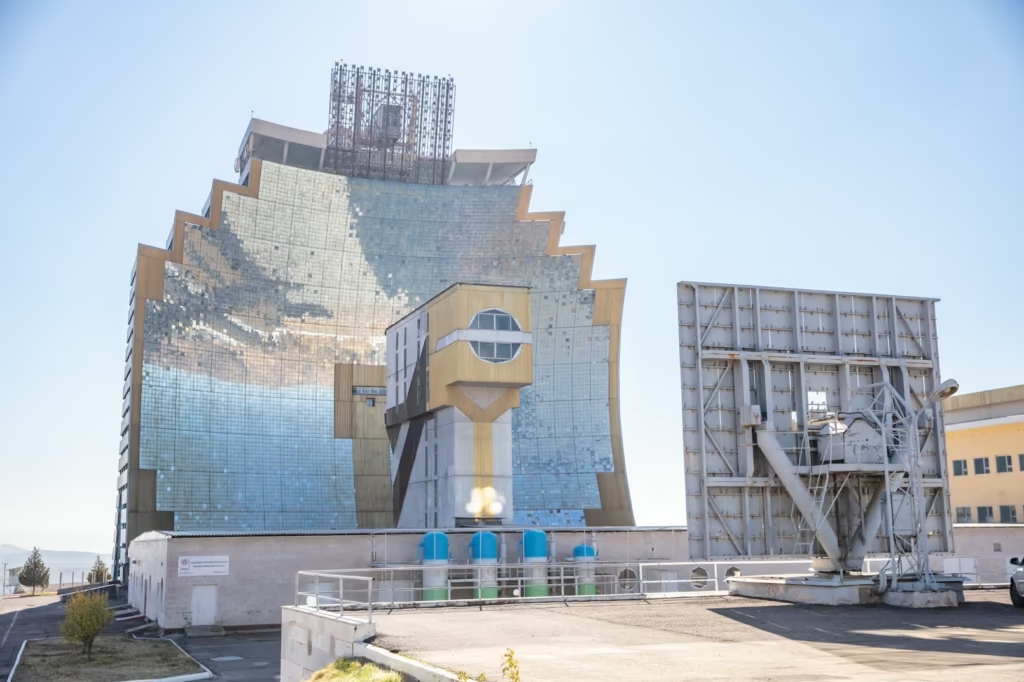
Solar Furnace in Parkent, Uzbekistan
Beginner’s Guide to Central Asia Travel

Uzbek Food: Must Try Dishes
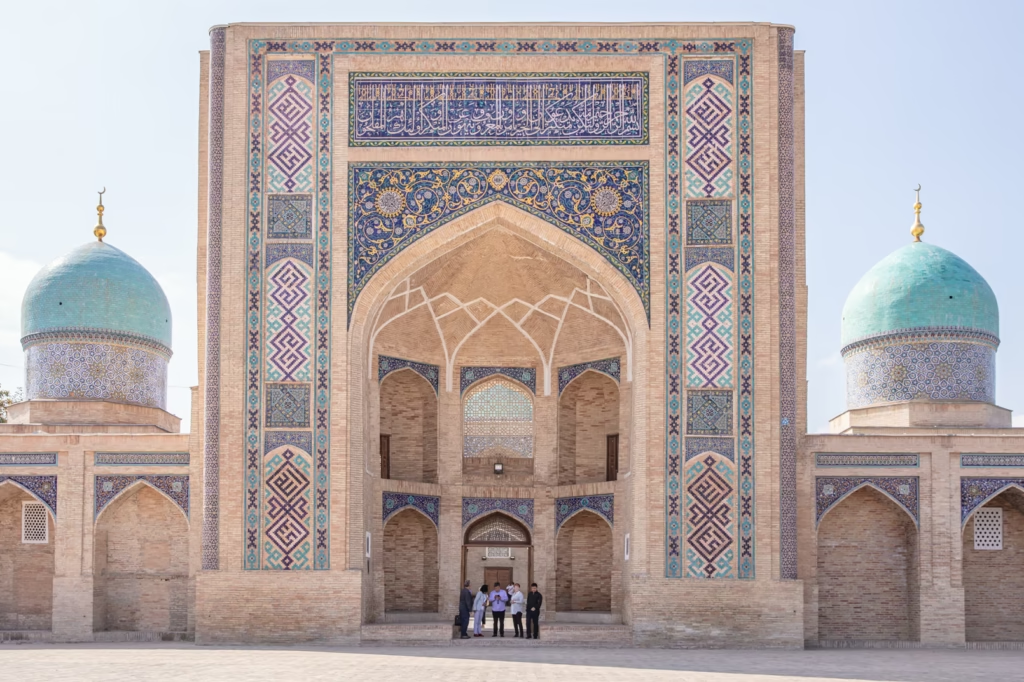
Tashkent Travel Guide
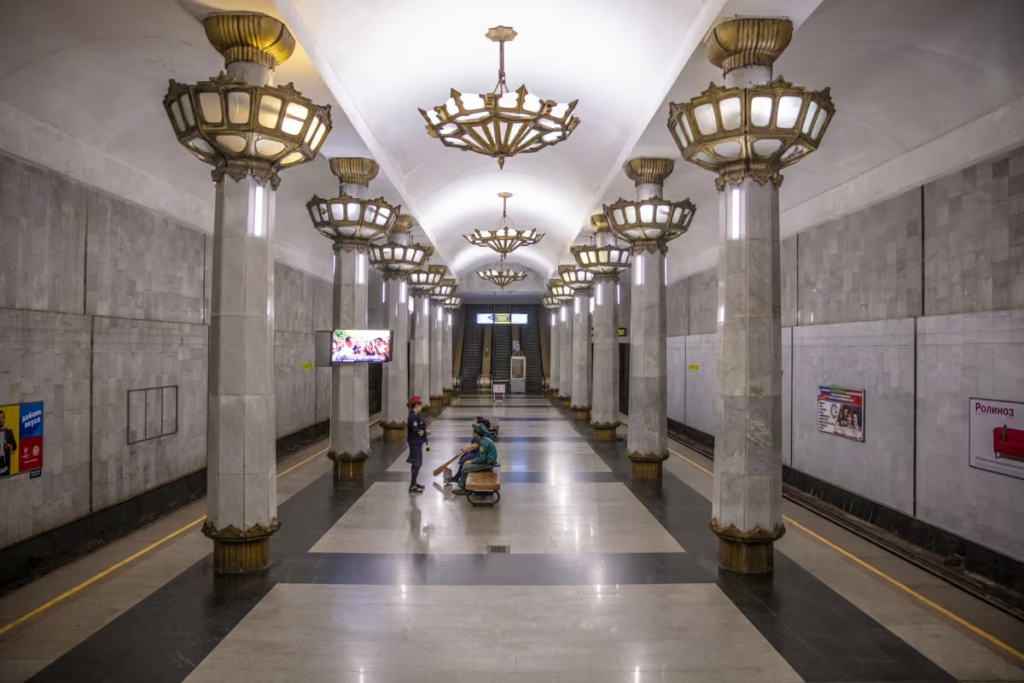
Tashkent Metro: Uzbekistan Underground
Panjakent-Samarkand Border Crossing
Two Week Uzbekistan Itinerary
Two Week Tajikistan & Uzbekistan Itinerary

Best Restuarants in Tashkent
10 Essentials to Pack for Central Asia
Central Asia Travel Tips
A Guide to the World Nomad Games

Vegetarian Central Asia
Visiting the Soviet Bioweapons Lab of Aralsk 7
Central Asia Visas Guide
Shahrisabz Travel Guide
Visiting the Aral Sea Disaster, Uzbekistan
Khiva Travel Guide