Nukus Travel Guide: Things to Do in Nukus, Uzbekistan
Nukus Travel Guide: Things to Do in Nukus, Uzbekistan was originally published in 2026
At first glance, Nukus can feel like an odd place to put on your Uzbekistan itinerary.
It sits way out in the country’s northwest, surrounded by the deserts and dry landscapes of Karakalpakstan. The famous cities of Samarkand, Bukhara, and Khiva are hundreds of kilometers away, and Nukus doesn’t have the monumental Islamic architecture that draws visitors to those places.
Hidden in this remote corner of Uzbekistan is the Savitsky Museum, home to one of the world’s most important collections of Russian avant-garde art, along with an enormous collection of Karakalpak folk art, archaeology and decorative arts. The museum alone is enough reason for art lovers to make the journey.
But Nukus is more than a museum stop.
The city is the capital of the Republic of Karakalpakstan, a large autonomous republic within Uzbekistan with its own distinct history, language, traditions and cultural identity. Beyond Nukus are ancient archaeological sites, Khorezm desert fortresses, the Amu Darya delta and, further north, the former fishing town of Moynaq and the dried bed of the Aral Sea.
If you are traveling through western Uzbekistan, Nukus makes a fascinating base for exploring this very different side of the country.
Need Travel Insurance and Evacuation Services?
Start shopping for travel insurance plans over at IATI Insurance. Readers of the Adventures of Nicole get a 5% discount off your plan.
The Adventures of Nicole partners with Global Rescue to offer the world’s leading medical evacuation and security advisory services. To travel with peace of mind, explore their evacuation coverage.
- Is Nukus worth visiting?
- Best Time to Visit Nukus
- Where to Stay in Nukus
- Best Things to Do in Nukus
- Things to Do Near Nukus
- Explore the Khorezm Desert Fortresses
- Experience Traditional Karakalpak Arts and Crafts
- How Many Days Do You Need in Nukus?
- Where to Eat in Nukus
- How to Get to Nukus
- Getting Around Nukus
- Is Nukus Safe for Travelers?
- Nukus Travel Tips
- Why Nukus Should Land on Your Uzbekistan Itinerary
Is Nukus worth visiting?
Yes, especially if you are interested in Karakalpak culture, Soviet history, art, archaeology, or the Aral Sea.
Nukus isn’t a city where you need a packed three-day sightseeing schedule. You can see the main attractions in the city in a day, but I would allow two or three days if you want to visit places outside Nukus as well.
The biggest reason to come is the Savitsky Museum, but the city also gives you an opportunity to experience Karakalpakstan itself rather than simply passing through on your way to Moynaq.
Nukus is also a useful base for trips to Mizdakhan Necropolis, Chilpik Dakhma, the Khorezm desert fortresses and Moynaq.
Best Time to Visit Nukus
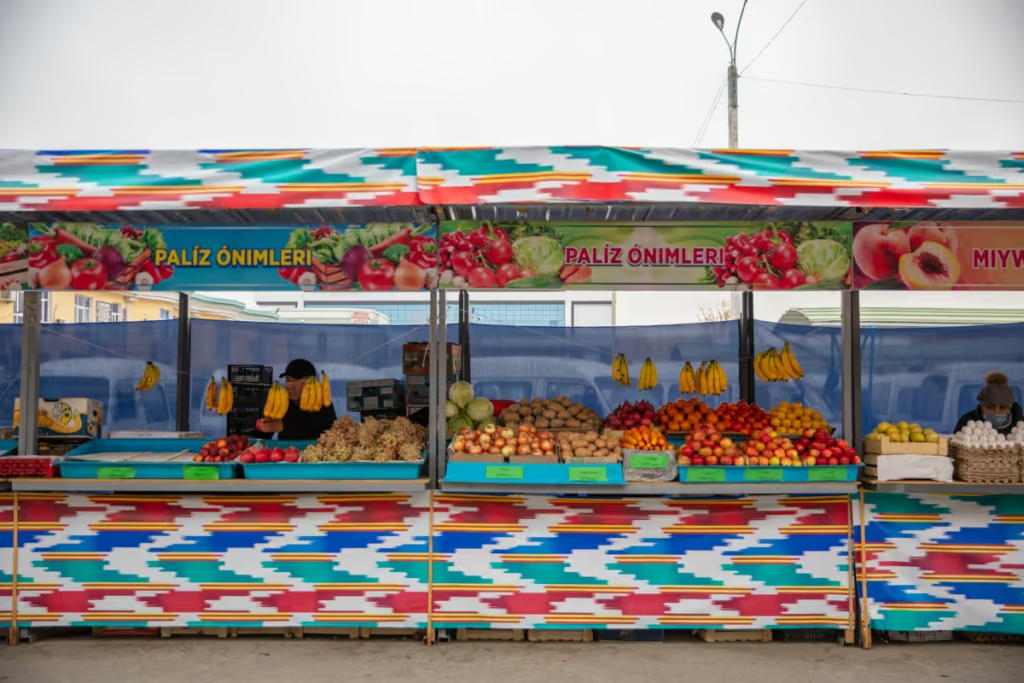
The best times for Nukus travel are generally spring and autumn.
April to May: Spring brings more comfortable temperatures and is a good time for exploring outdoors.
September to October: Autumn is another excellent period, particularly if you’re combining Nukus with Moynaq and the desert.
Summer: Summer can be brutally hot. Karakalpakstan has an extreme continental climate, with very hot summers and cold winters.
Winter: Winter can be cold, windy, and surprisingly harsh. This isn’t necessarily a bad time to visit if you are primarily interested in museums, but you’ll want proper winter clothing for excursions into the desert.
Where to Stay in Nukus
Nukus has considerably more accommodation than it once did, including hotels, guesthouses and hostels.
Jipek Joli Inn
Jipek Joli Inn is one of the better-known places to stay in Nukus and is particularly useful for independent travelers.
The hotel has experience arranging trips around Karakalpakstan, which can be helpful if you’re trying to organize a driver for Moynaq or the surrounding archaeological sites.
There is also Jipek Joli Hotel, a sister property that is another option.
Besqala Guesthouse
For budget travelers, Besqala Guesthouse is another popular option.
A guesthouse or hostel can be particularly useful in Nukus because you may find other travelers looking to split the cost of a private vehicle to Moynaq or the surrounding sights.
Best Things to Do in Nukus
Visit the Savitsky Museum
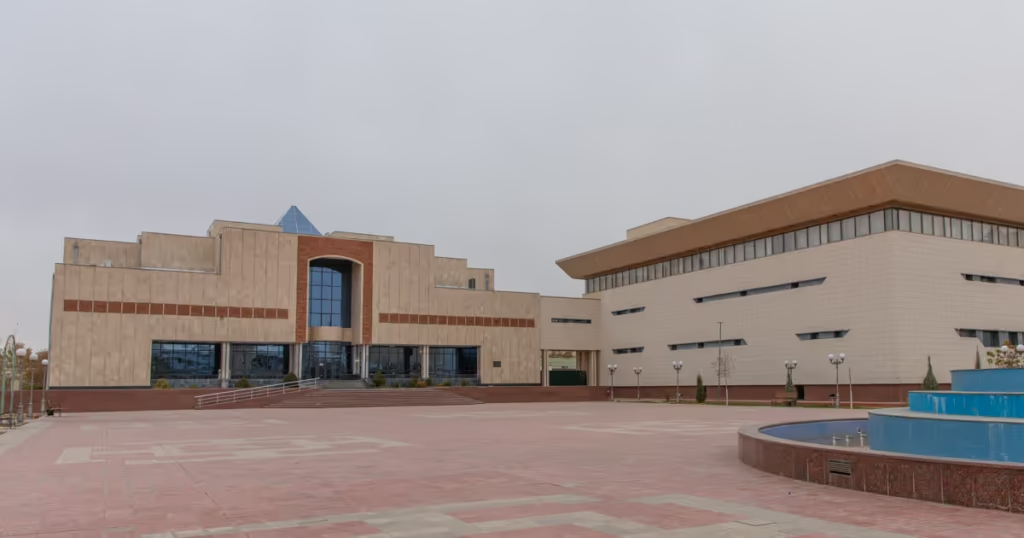
The Savitsky Museum is Nukus’s main attraction, but its collection is far more interesting once you know how it survived. Igor Savitsky arrived in Karakalpakstan in the 1950s and began collecting local art and archaeological objects. He later turned his attention to Russian avant-garde artists whose work had been banned or suppressed under Stalin. Soviet authorities promoted Socialist Realism as the approved artistic style, while experimental and nonconformist art was censored, hidden or destroyed. Some of the artists Savitsky collected had been imprisoned, exiled or otherwise persecuted.
Savitsky quietly sought out these paintings, often buying them from artists’ families and bringing them back to remote Nukus. The collection was effectively a secret archive of art the Soviet government did not want people to see, and Savitsky had to be careful about what he displayed. One famous example is Vladimir Lysenko’s The Bull, which was ordered removed after being interpreted as anti-Soviet. Museum staff renamed it Fascism Advances and put it back on display.
Today, the museum holds more than 100,000 works and objects, including one of the world’s most important collections of Russian avant-garde art alongside Karakalpak art and archaeology. The remarkable part isn’t just seeing the paintings, but knowing that many survived because Savitsky managed to preserve them in one of the most remote corners of the Soviet Union.
How long should you spend at the Savitsky Museum?
Give yourself at least 2 to 3 hours to walk the galleries of the Savitsky Museum.
If you actually enjoy art and want to read the background information, you could easily spend longer.
Explore Nukus Bazaar
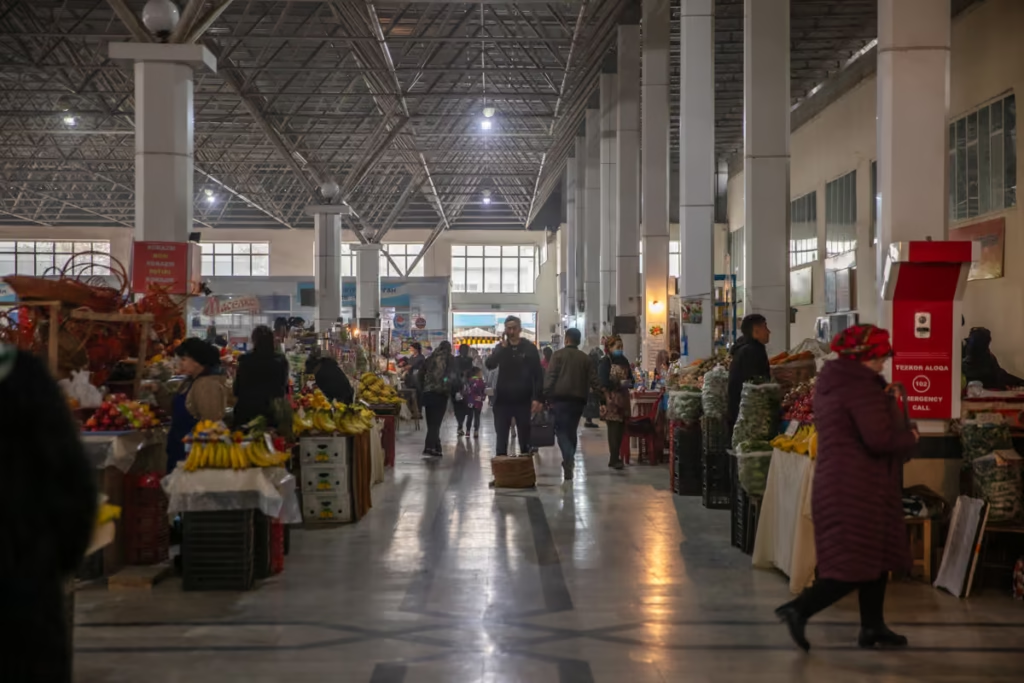
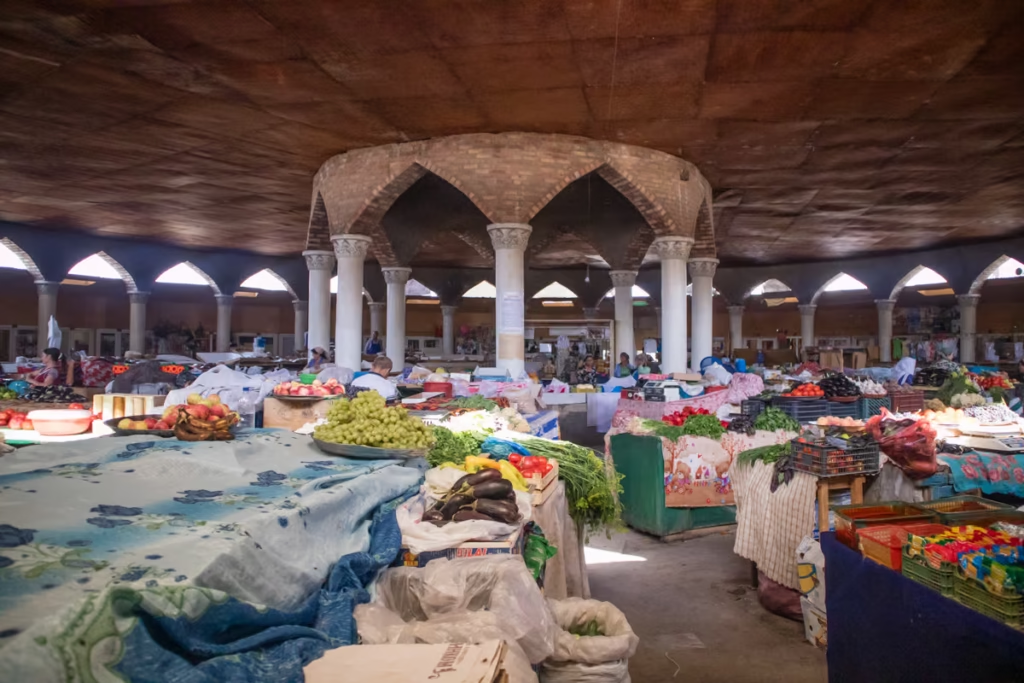
For a glimpse of everyday life in Nukus, head to the bazaar.
You’ll find stalls selling fruit and vegetables, bread, dairy products, meat, clothing and household goods, along with plenty of local snacks.
It’s also a good place to start trying Karakalpak and food.
Look for qurut, dried fermented dairy balls that are common throughout Central Asia, as well as samsa, bread and other regional foods.
Karakalpak cuisine shares similarities with neighboring Kazakh and Uzbek food, but you will also find dishes and food traditions that reflect the region’s nomadic and fishing heritage.
Learn About Karakalpak Culture
One of the biggest reasons to visit Nukus is to learn about the Karakalpak people.
Karakalpaks are a Turkic-speaking people whose history is closely connected with the Aral Sea region, the Amu Darya, and the surrounding steppe. Karakalpak and Uzbek are official languages in Karakalpakstan, while Russian is also widely spoken.
You will notice that Nukus feels culturally different from the better-known tourist cities of Uzbekistan.
There is less of the classic Silk Road architecture and more evidence of the region’s nomadic, steppe and river-delta heritage.
The Savitsky Museum is one place to learn about traditional Karakalpak art, but there are several other museums and cultural institutions worth visiting.
Berdakh National Museum & Musical Theatre
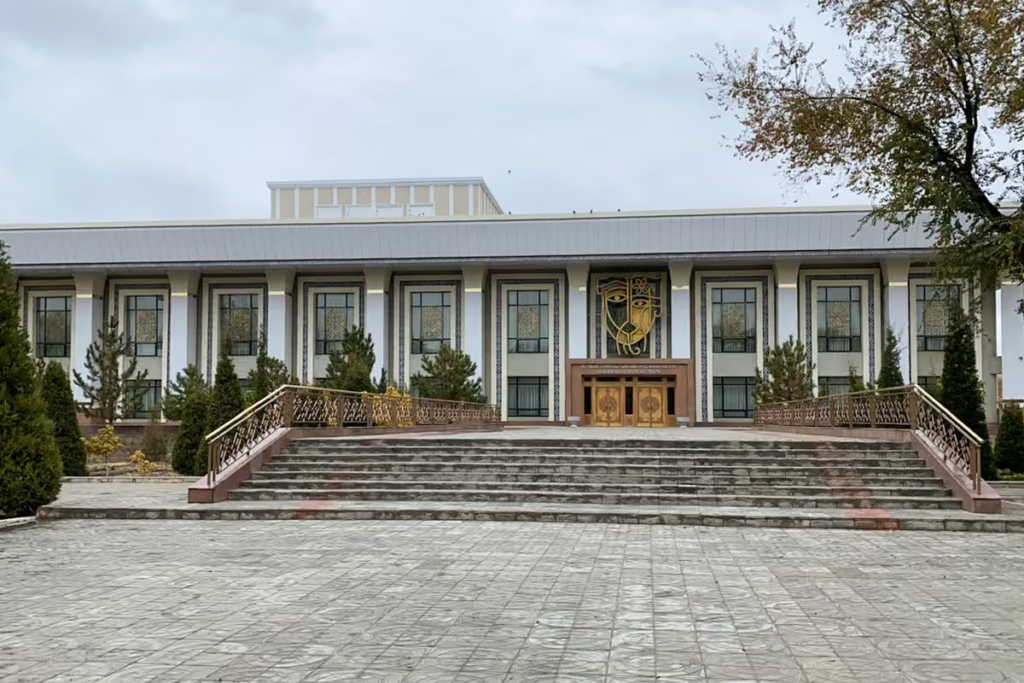
The Berdakh National Museum is dedicated to Karakalpak literature and ethnography.
It is named after Berdakh, a famous Karakalpak poet, philosopher and historian. The museum’s collections include manuscripts in Arabic, Persian and Turkic languages, along with traditional jewelry, clothing, household objects and archaeological discoveries.
State Museum of History and Culture of the Republic of Karakalpakstan
The State Museum of History and Culture of the Republic of Karakalpakstan is a good place to dig deeper into the region’s history beyond the Savitsky Museum. Its collections cover ancient Khorezm, archaeology, Karakalpak ethnography, traditional clothing, jewelry, weapons, and everyday life, tracing the region’s story from antiquity through the modern era. It is particularly useful for understanding the distinct culture of Karakalpakstan and the civilizations that developed around the Amu Darya and Aral Sea.
Visit the House Museum of Amet and Ayimkhan Shamuratov
For something much smaller and more personal, visit the House Museum of Amet and Ayimkhan Shamuratov.
The museum is dedicated to Amet Shamuratov, a Karakalpak writer, poet and playwright, and his wife Ayimkhan Shamuratova, a famous actress and singer who was among the first women in Karakalpakstan to appear on the theatrical stage.
The collection includes their photographs, manuscripts, books, clothing, personal possessions and other objects connected to Karakalpak cultural life.
You can also hear recordings of Ayimkhan Shamuratova’s singing.
Walk Around Central Nukus
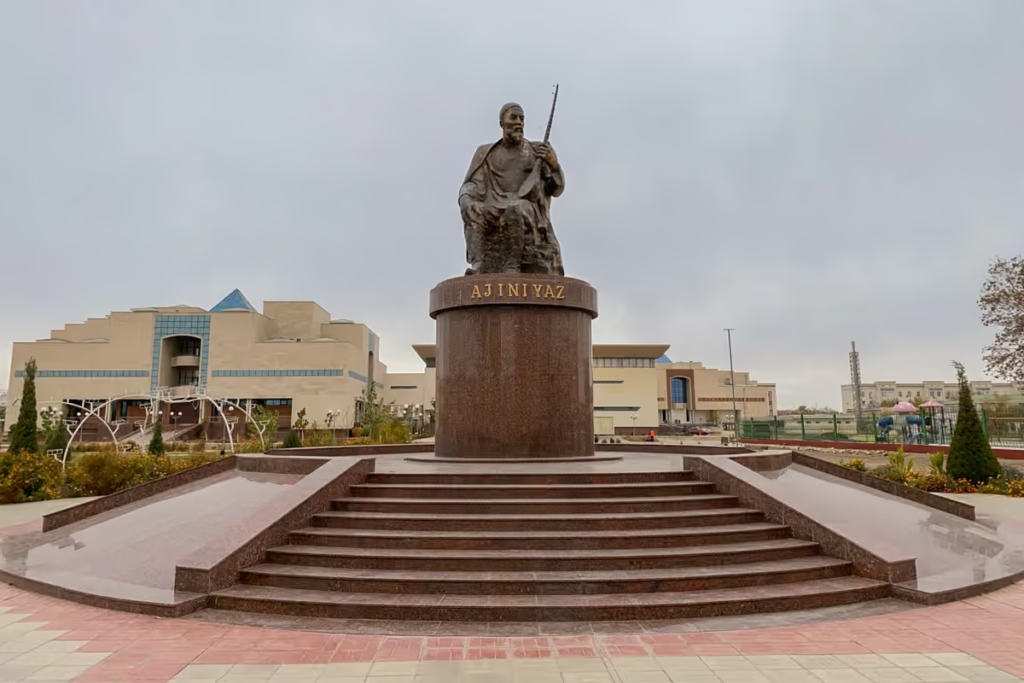
Nukus is worth exploring on foot, particularly around the central areas.
The city has broad streets, large public spaces, and a mixture of Soviet-era buildings and newer construction.
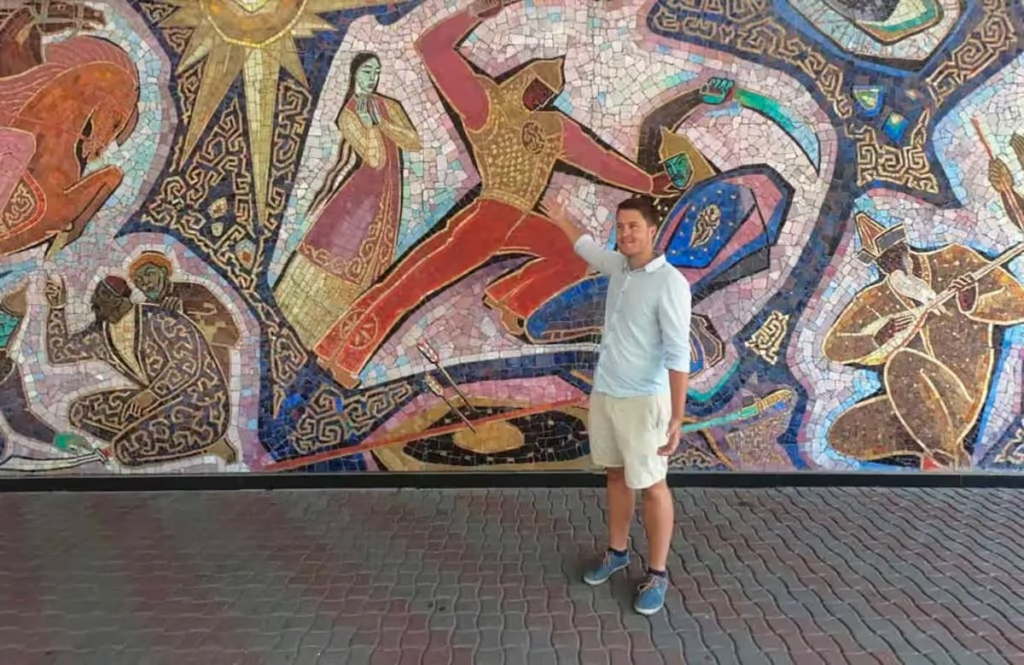
Some of the older architecture has disappeared during redevelopment, but you can still find Soviet mosaics and other remnants if you keep your eyes open.
Some of the best areas to start your wanderings are Doslyk Avenue, the Main Square, and Amir Timur City Park.
Don’t expect a compact old town like Khiva.
Nukus is a modern administrative city, and its scale can feel slightly strange when you’re walking around. Wide roads, large buildings and relatively light traffic give parts of the city an almost oversized feeling.
Things to Do Near Nukus
One of the biggest mistakes you could make when planning Nukus travel is treating the city as an isolated destination.
Nukus is really the gateway to Karakalpakstan.
Some of the region’s most interesting archaeological and historical sites are within driving distance.
Visit Mizdakhan Necropolis
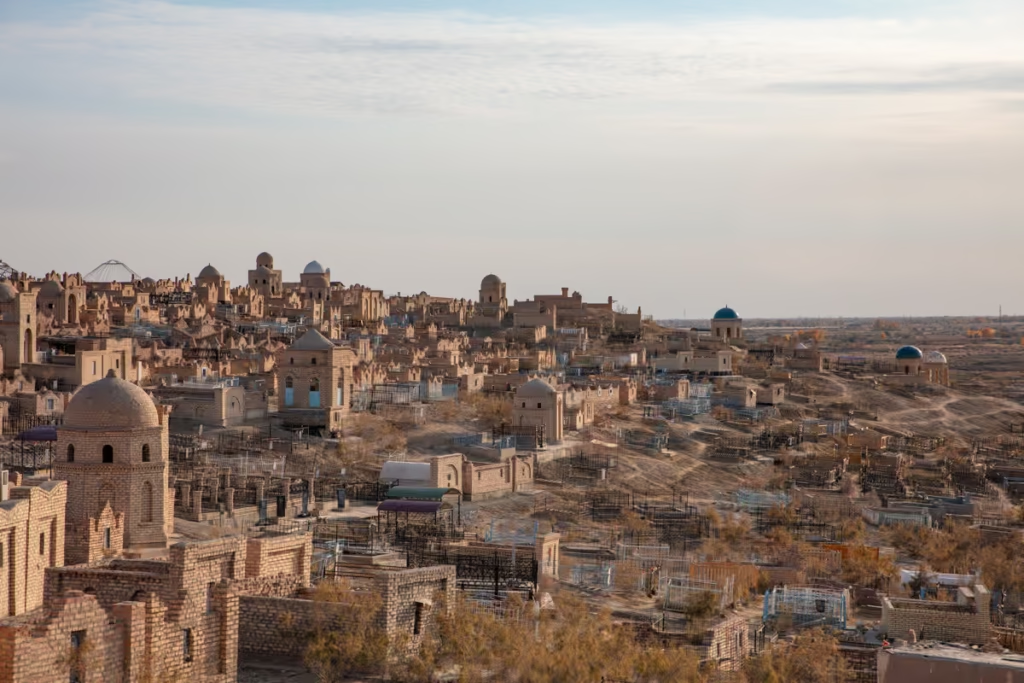
Mizdakhan Necropolis is one of the most fascinating places to visit near Nukus. Located near Khodjeyli, roughly 40 minutes from Nukus, the enormous archaeological complex contains burial sites and ruins dating back thousands of years. Some of the oldest burials date back around 2,400 years.
Mizdakhan was originally an ancient settlement dating to the 4th to 3rd centuries BC, and the area later developed into an important religious and burial complex.
There are weathered brick mausoleums, ruined walls, graves scattered across the hills, and views across the surrounding desert. One of the most famous structures is the Mausoleum of Mazlum Khan Sulu.
Mizdakhan is still considered a sacred site, so treat it as an active religious place rather than simply an archaeological ruin.
How to visit Mizdakhan from Nukus
The easiest way is by taxi or private driver.
You can combine Mizdakhan with other sights in the area, including Gyaur Kala and Khodjeyli, rather than making the journey solely for the necropolis.
See Chilpik Dakhma
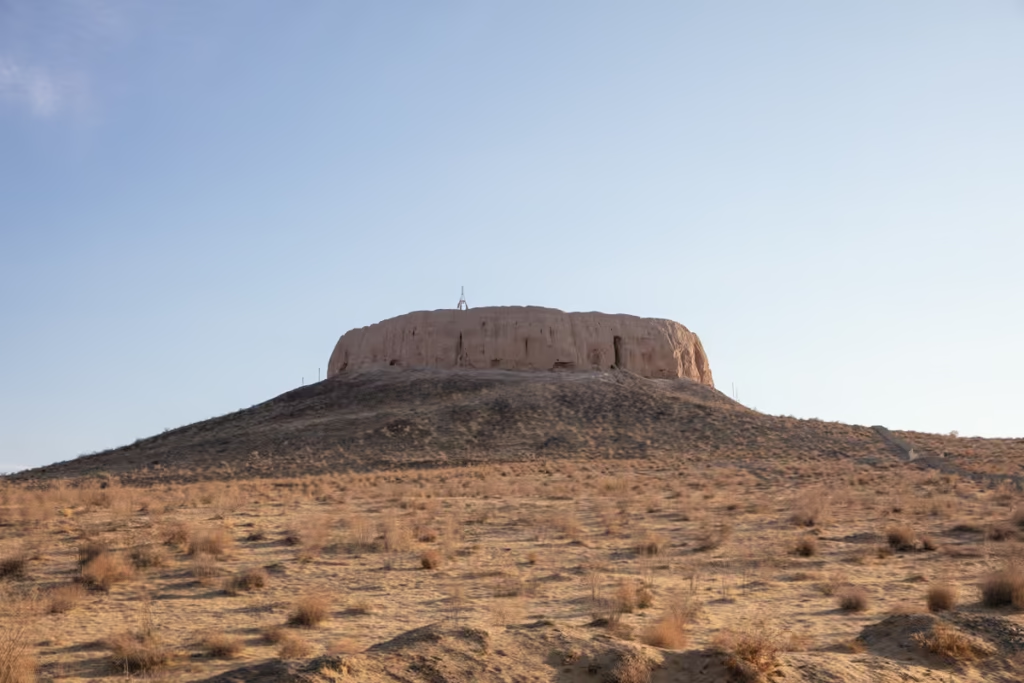
Another worthwhile excursion from Nukus is Chilpik Dakhma, a striking circular tower rising from a hill above the Amu Darya.
Much like the Towers of Silence in Yazd, Iran, Chilpik was associated with Zoroastrian funerary practices.
Bodies were placed at the site so that the flesh could decompose, and birds could pick the bones clean, after which the bones were collected and placed in ossuaries.
The tower sits dramatically above the surrounding flat desert, and climbing up gives you a completely different perspective on the Amu Darya region.
Take a Trip to Moynaq and the Aral Sea
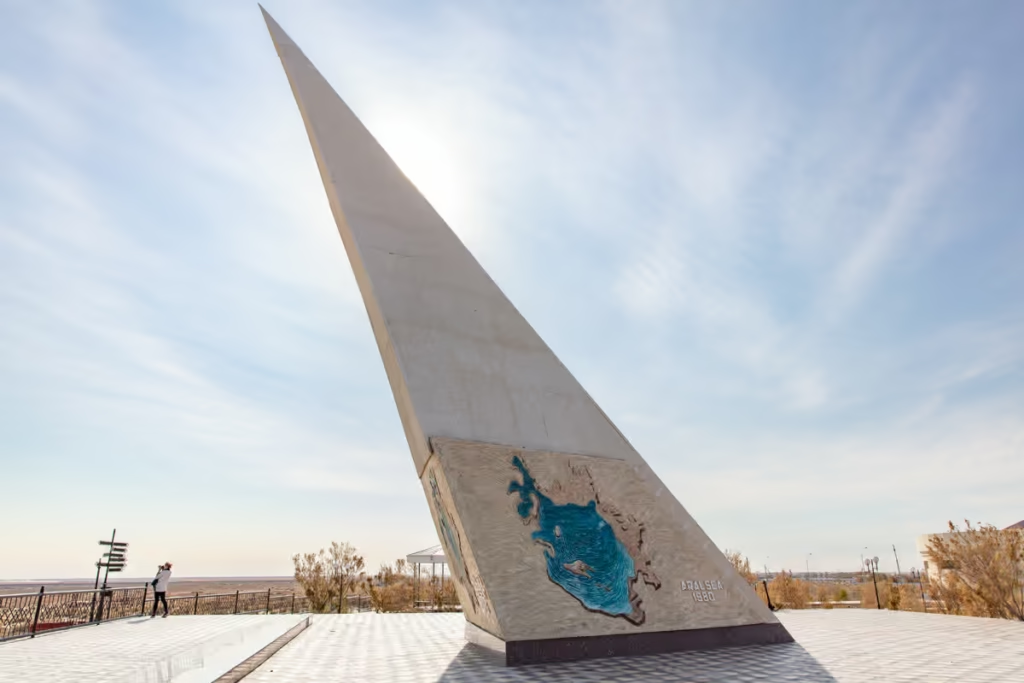
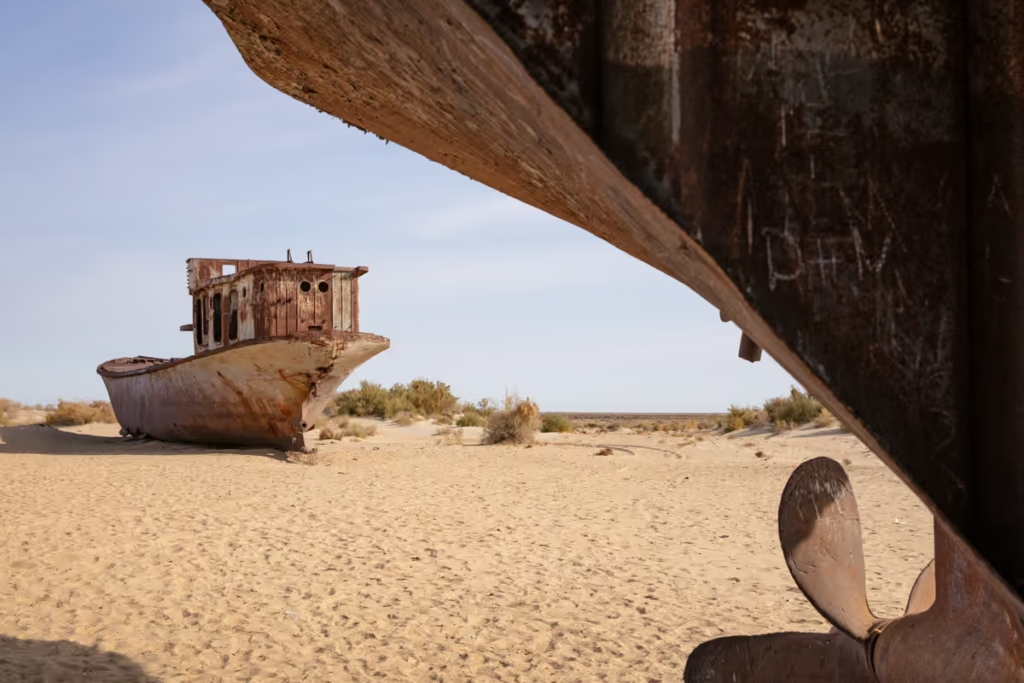
For many travelers, Moynaq is the reason they come to Nukus in the first place.
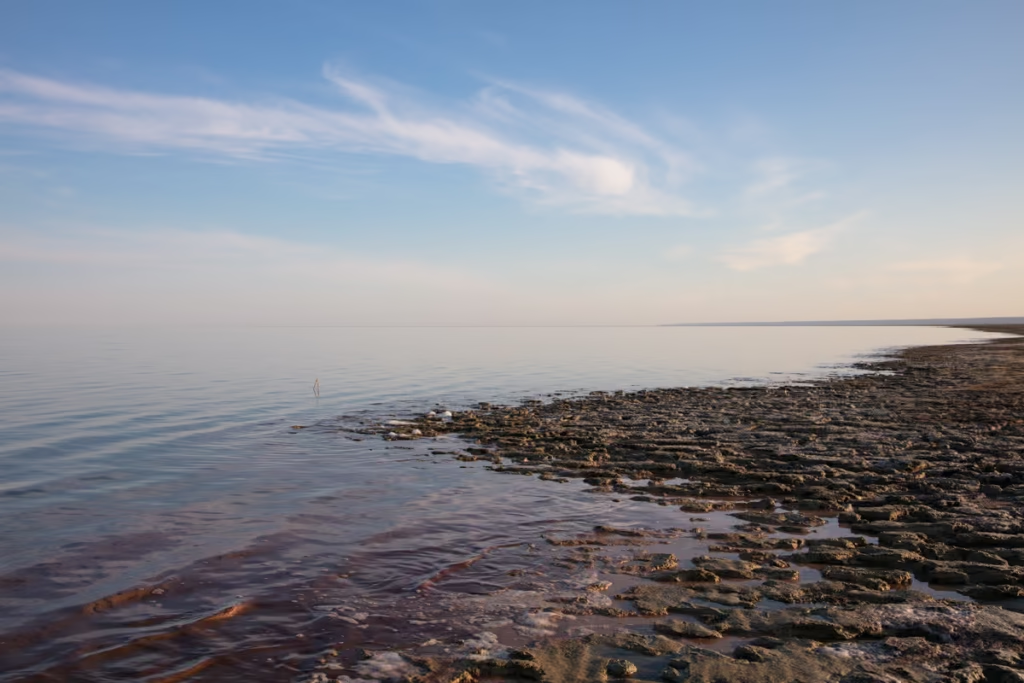
Once a major fishing port on the Aral Sea, Moynaq is now roughly 200 km north of Nukus and sits beside the enormous dry landscape left behind by the retreating sea. The main attraction is the Moynaq Ship Graveyard contains the rusting remains of fishing vessels that once operated on the Aral Sea.
Seeing the ships sitting in sand instead of water is surreal. The disappearance of the sea devastated communities throughout the region, particularly those whose livelihoods depended on fishing.
Moynaq Aral Sea History Museum
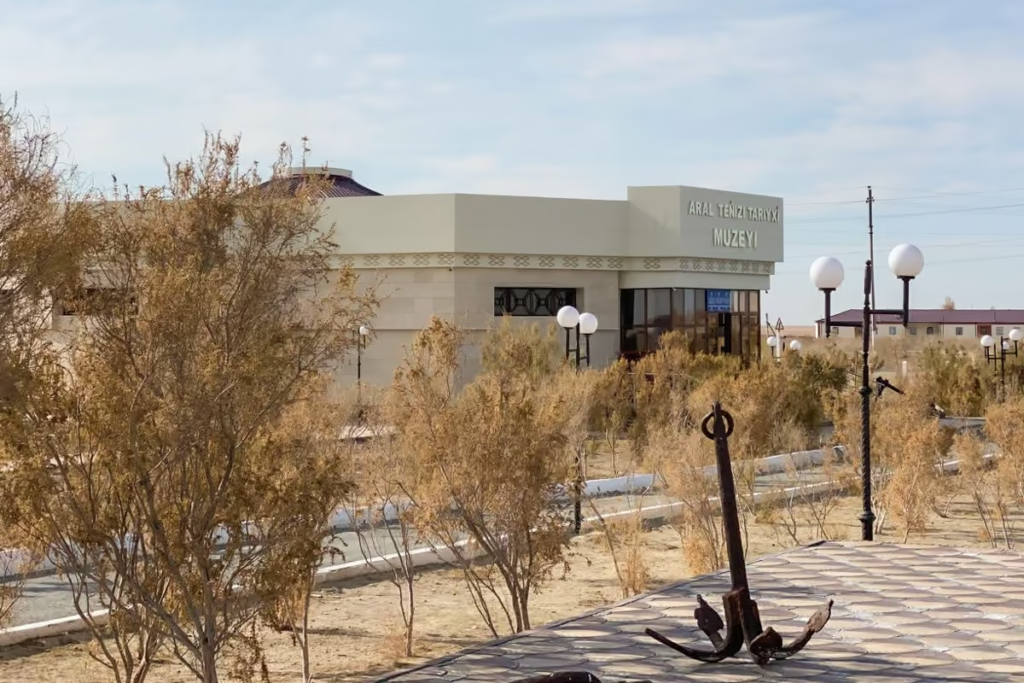
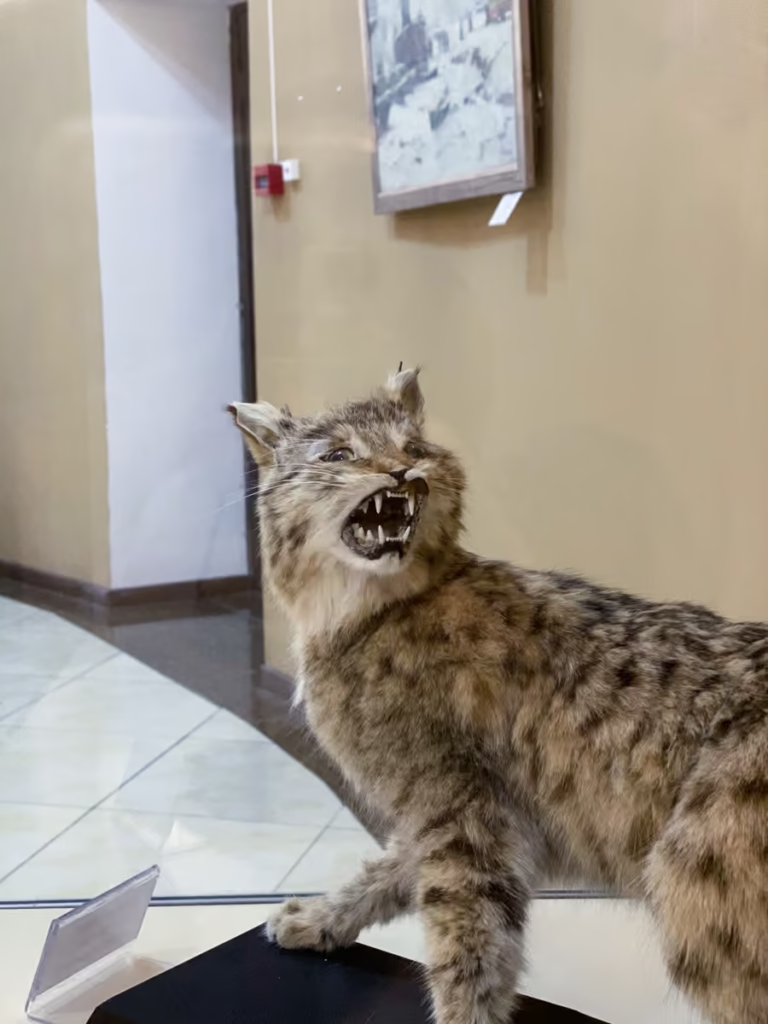
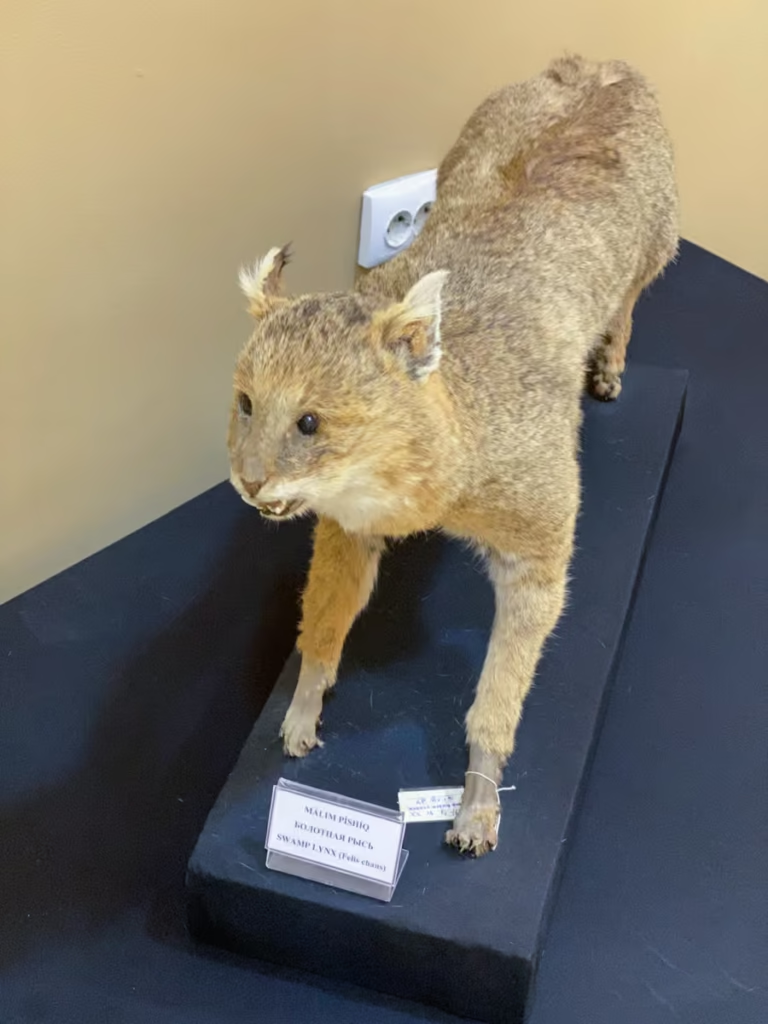
Moynaq’s Aral Sea History Museum and monuments are worth a visit. The museum features exhibits about the drying of the Aral Sea, cultural artifacts, artwork, and even some excellently questionable taxidermy (my favorite). Jokes aside about the taxidermy, the museum does help put the environmental disaster into context.
How to Get to Moynaq from Nukus
Moynaq is approximately 200 km from Nukus, and the journey takes several hours by road.
A private car is the easiest option for a day trip, although you can also travel independently by marshrutka between Nukus Bazaar and Moynaq.
If you want to explore further into the Aralkum and reach remaining portions of the Aral Sea, you will need considerably more time and an appropriate vehicle.
Explore the Khorezm Desert Fortresses
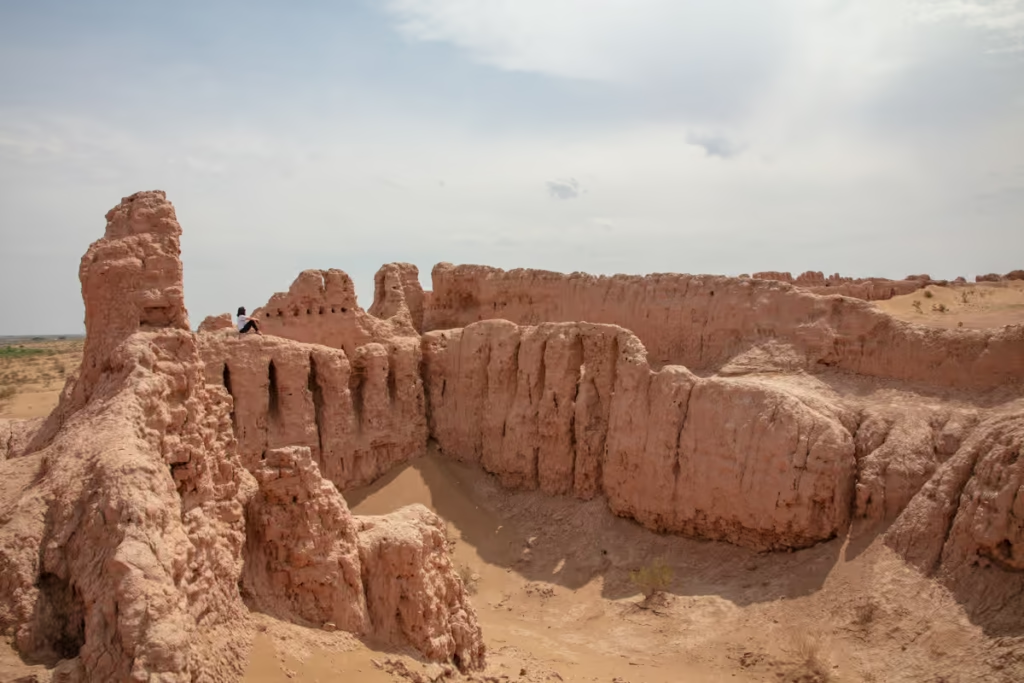
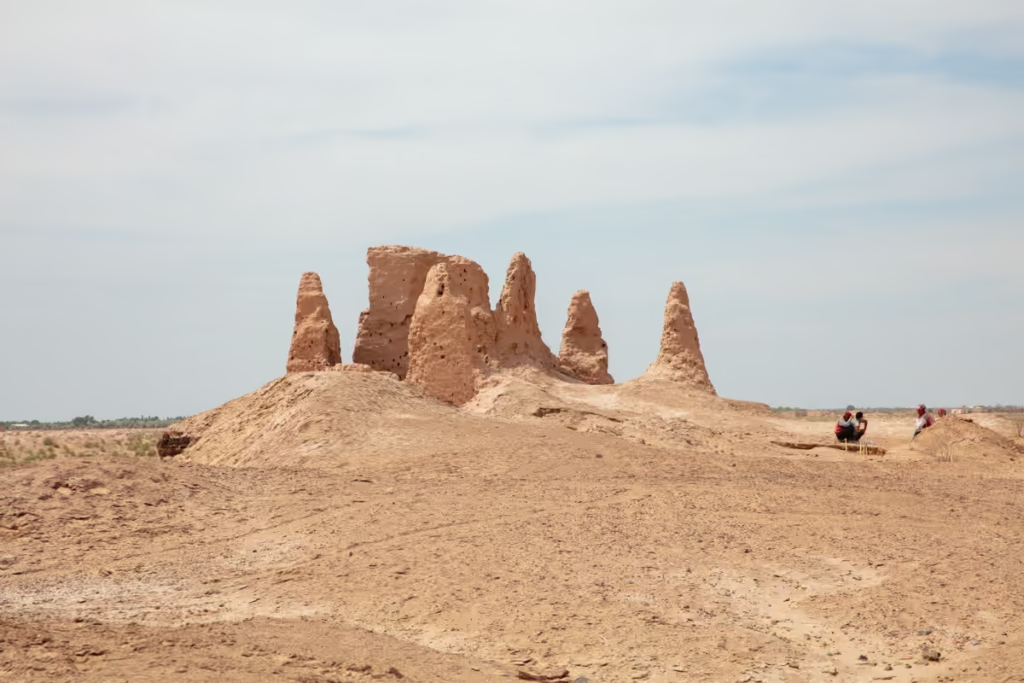
If you have more time, Nukus can also serve as a base for visiting the ancient Khorezm desert fortresses.
The wider region contains numerous archaeological fortresses scattered across the desert, including famous sites such as Toprak Kala, Ayaz Kala, and Kyzyl Kala.
These are particularly worthwhile if you enjoy archaeology and ancient Central Asian history.
You can combine several fortresses into a longer day trip, although the logistics become much easier with a private driver.
The Ellikkala Museum near Buston also contains archaeological and ethnographic material connected with Ancient Khorezm and the surrounding region.
Experience Traditional Karakalpak Arts and Crafts
Nukus is also a good place to seek out traditional crafts.
The Karakalpakstan Academy of Arts includes an exhibition hall and a Crafts Development Centre, where traditional practices such as carpet weaving, embroidery and yurt decoration are being preserved and taught.
If you are interested in buying souvenirs, I’d look for something made locally rather than generic Uzbekistan merchandise.
Karakalpak textiles, embroidery, jewelry, and traditional decorative objects make much more meaningful souvenirs than another mass-produced magnet.
How Many Days Do You Need in Nukus?
I recommend 2 to 3 days in Nukus and the surrounding area.
One day in Nukus
Focus on:
- Savitsky Museum
- Nukus Bazaar
- Central Nukus
- One smaller museum
Two days in Nukus
Add:
- Mizdakhan Necropolis
- Karakalpak cultural sites
- More time at the Savitsky Museum
Three days in Nukus
Add a full-day trip to:
- Moynaq
- Aral Sea region
- Ship Graveyard
If you are planning a broader Karakalpakstan trip, 3 to 5 days gives you considerably more flexibility for visiting archaeological sites and desert fortresses, cultural experiences, and even an Aral Sea and Ustyurt Plateau tour.
Where to Eat in Nukus


Nukus is a good place to try both Uzbek and Karakalpak food.
Look for:
- Beshbarmak, meat served with noodles
- Plov, rice cooked with meat, carrots and spices
- Lagman, hand-pulled noodles with meat and vegetables
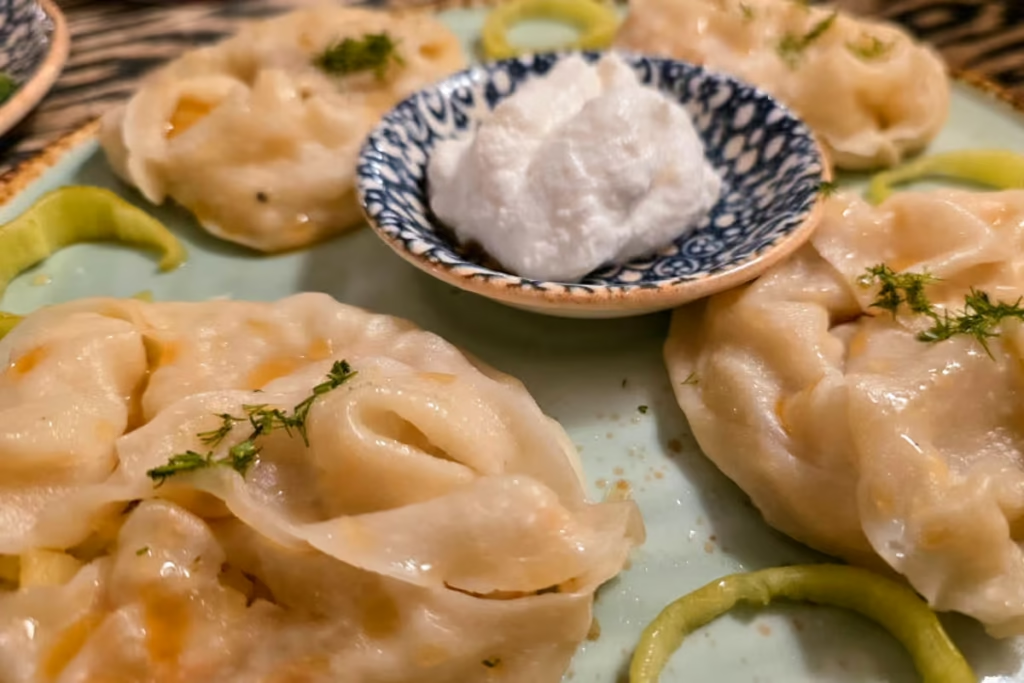
- Manti, steamed dumplings
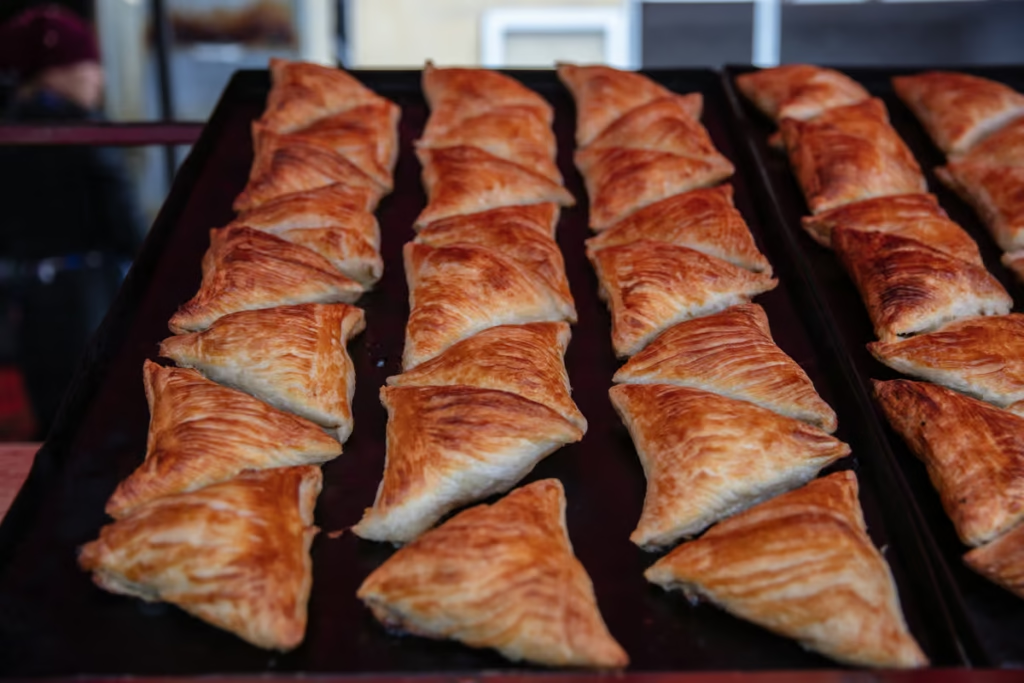
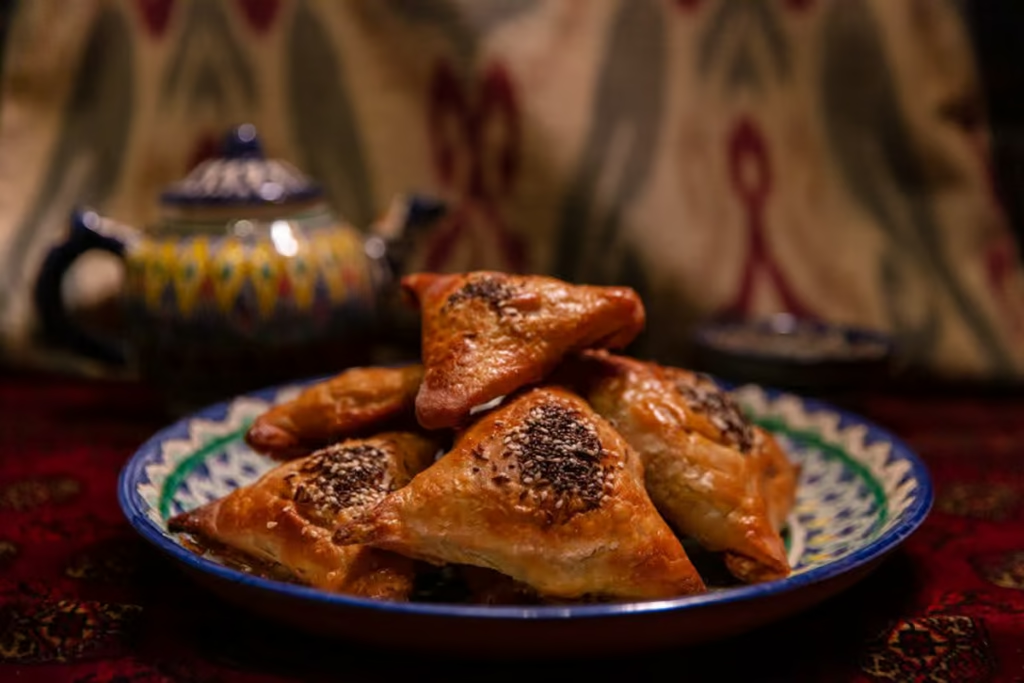
- Samsa, baked or tandoor-cooked filled pastries
- Qurut, dried fermented dairy balls
- Shubat, fermented camel milk
- Kymyz, fermented mare’s milk
If you’re looking for a break from Uzbek and Central Asia cuisine, here are a few restaurants to try in Nukus:
- Sofram Restoran: Excellent Turkish food; the saj is a must-try.
- Cinnamon Coffee & Pastry: A great casual restaurant with good coffee, pizza, and salads.
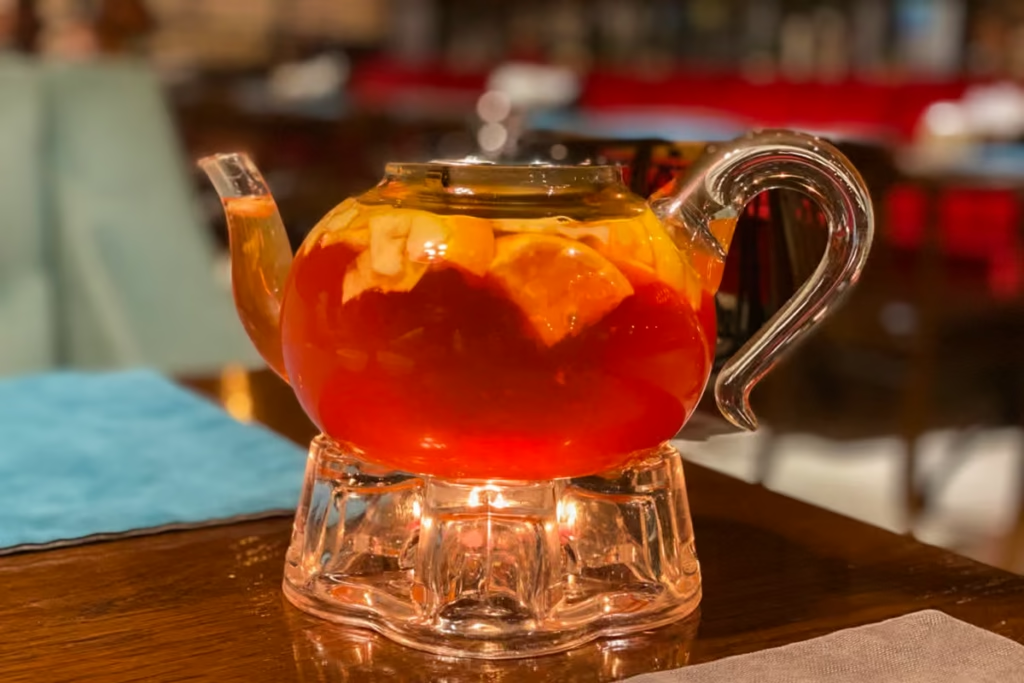
- Premier Lounge: Offers a wide menu with pizza, sushi, burgers, and Central Asian dishes. Their teas are worth the stop alone.
How to Get to Nukus
Nukus is remote, but getting there is easier than its location on the map might suggest.
How to Get to Nukus by plane
Nukus International Airport has domestic connections, including flights to Tashkent.
Flight schedules change, so check current availability before building your itinerary around a particular departure.
Flying is by far the easiest option if you are short on time.
Traveling to Nukus by Train
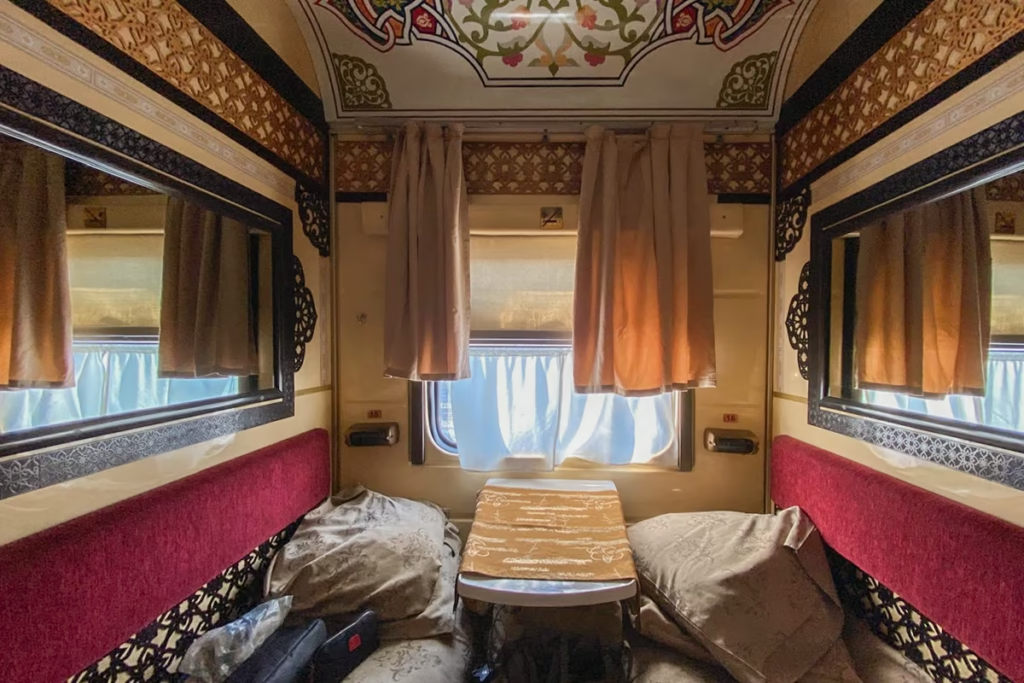
The train is a much more interesting option if you have time.
Nukus is connected to the Uzbek rail network, with services linking the city to destinations including Tashkent and other cities along the main western route. An overnight train can turn what looks like a painfully long journey on a map into a surprisingly manageable travel day.
I splashed out for a luxury compartment on the train back from Karakalpakstan from Kungrad (a little further west from Nukus) to Samarkand. I had a blast meeting locals who invited me to throw back shots of vodka and snack on dried fish with them, before I returned to my compartment to sleep.
By Marshrutka
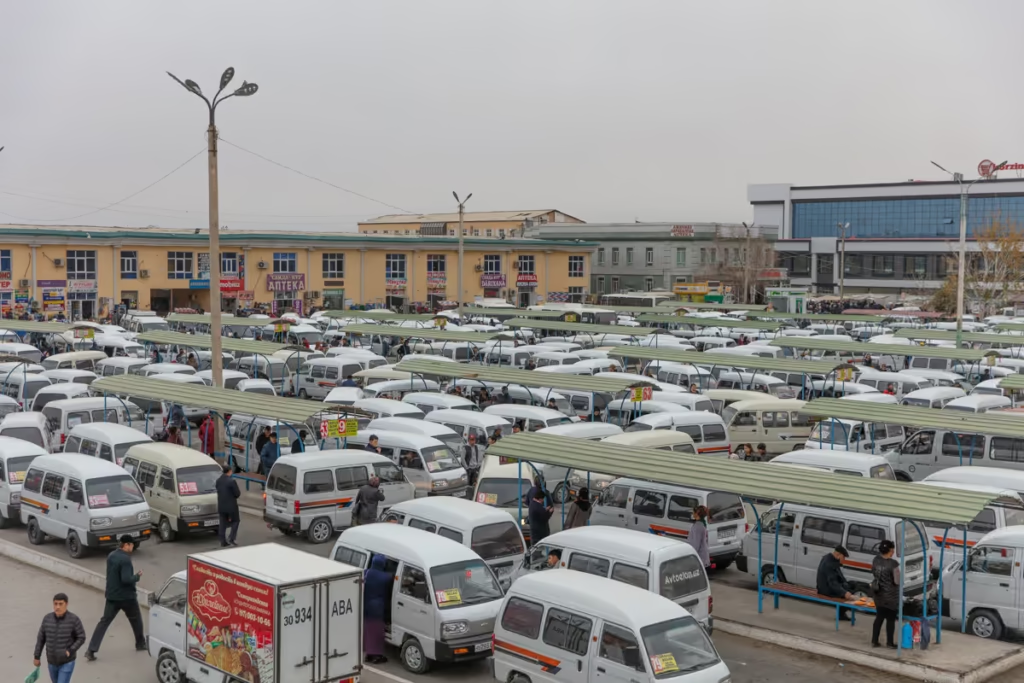
Marshrutkas connect Nukus to Urgench and cities further east in Uzbekistan, though they are significantly less comfortable than taking the train. I would only opt for the marshrutka or a shared taxi if the train is fully booked.
Getting Around Nukus
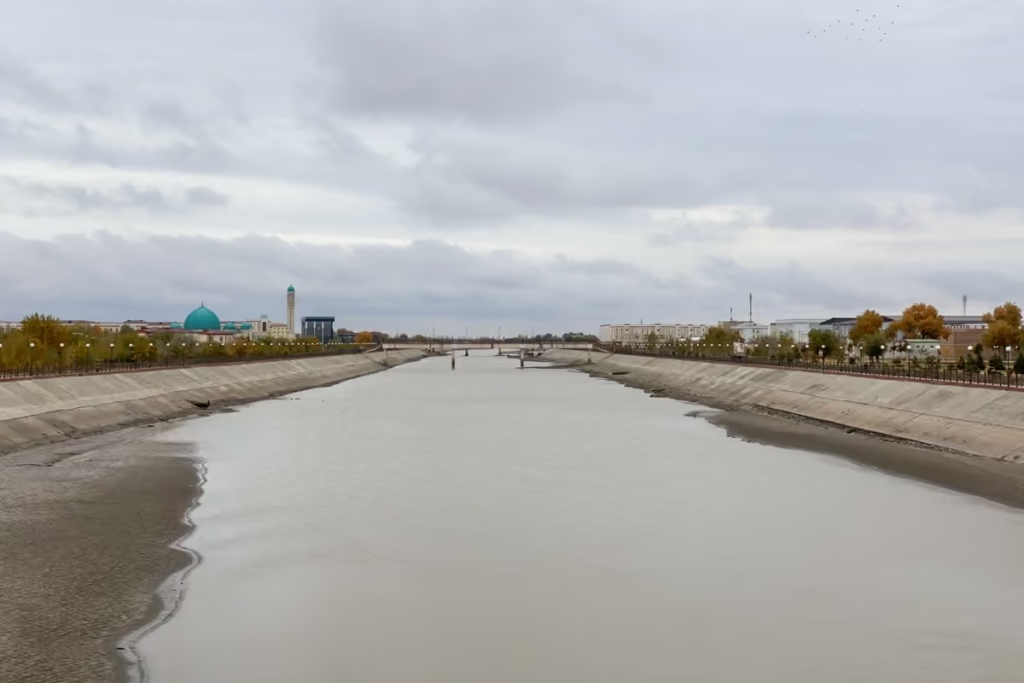
Central Nukus is relatively easy to explore on foot.
For attractions outside the city, you’ll probably want a taxi, private driver or organized excursion.
Public transport is useful for getting around locally, but if you’re trying to combine several archaeological sites in one day, a private car saves a lot of logistical headaches.
For Moynaq, traveling independently is possible, but a private vehicle becomes much more useful if you want to continue beyond the town into the Aral Sea region.
Is Nukus Safe for Travelers?
Nukus is generally a straightforward place for independent travelers, but the same basic precautions you’d use elsewhere in Uzbekistan apply.
The bigger issue isn’t crime. It’s the environment.
Summer heat, long distances, limited services outside the cities and remote desert roads all require some planning.
If you’re heading toward the Aral Sea or remote archaeological sites, carry enough water, make sure your driver understands where you’re going, and don’t assume that a destination that looks close on a map will be a quick trip.
Nukus Travel Tips
Carry cash: Cards are increasingly useful in Uzbekistan, but cash is still worth having, particularly for taxis, markets and smaller businesses.
Start early for outdoor excursions: If you’re visiting Mizdakhan, Chilpik or other desert sites in warmer months, mornings are much more comfortable.
Don’t rush the Savitsky Museum: The museum is the main reason many people come to Nukus. Give it several hours rather than trying to squeeze it between other activities.
Learn a few words of Uzbek or Karakalpak: Even basic greetings can make interactions much easier. Russian is also widely understood.
Why Nukus Should Land on Your Uzbekistan Itinerary
Nukus isn’t Uzbekistan’s easiest destination. It is far from the country’s classic tourist circuit, the landscape is relentlessly flat and dry, and you won’t find the monumental architecture that makes cities like Samarkand and Khiva instantly photogenic.
The Savitsky Museum is genuinely extraordinary, but the museum is only the beginning. Once you start looking beyond it, Nukus opens the door to Karakalpakstan’s ancient archaeology, distinctive culture, desert landscapes and the complicated history of the Aral Sea.
For me, that’s the appeal of traveling this far west. You aren’t simply ticking another Uzbek city off a list. You’re entering a region that feels culturally and geographically distinct from the rest of the country.
And after you’ve spent a few hours wandering through Nukus, eating qurut at the bazaar and staring at avant-garde paintings that somehow survived Soviet censorship in one of the most remote corners of Central Asia, the long journey suddenly seems worth it.
Nukus is not just a stop on the way to the Aral Sea. It’s the place where you start understanding Karakalpakstan.
Have Any Questions About Nukus?
Ask in the comments section below.
Posts from Uzbekistan
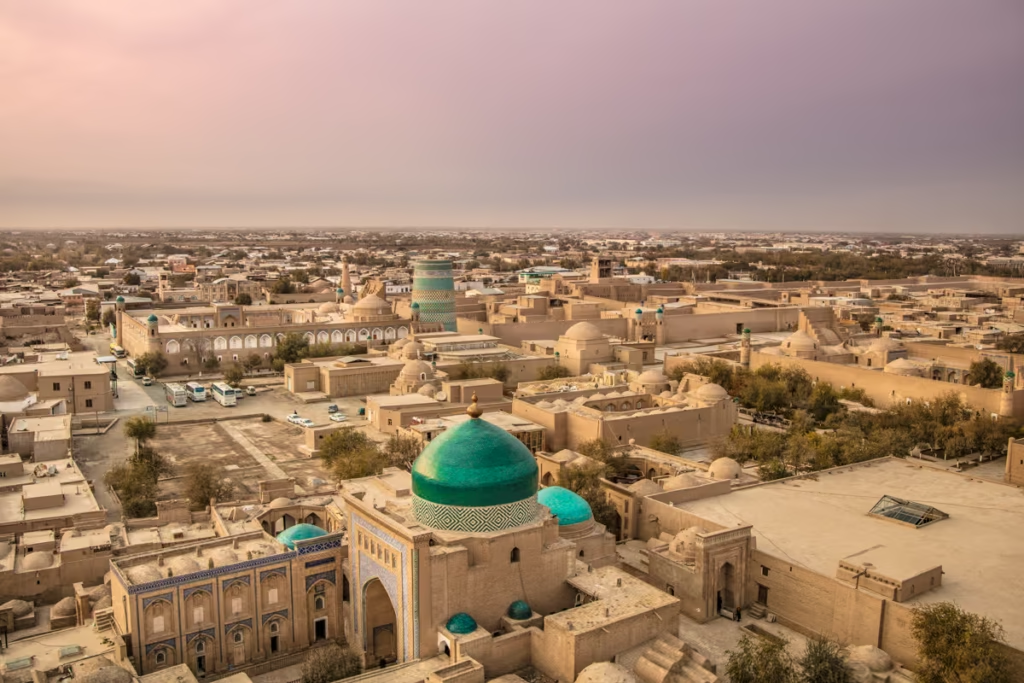
Two Week Uzbekistan Itinerary: 14 Days
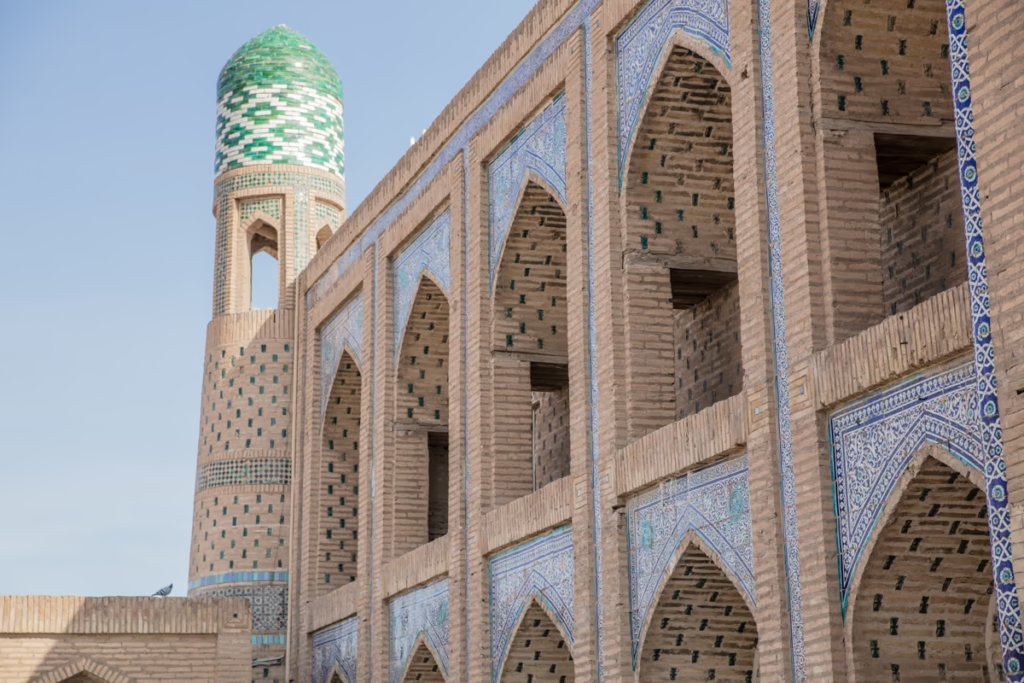
Tajikistan Uzbekistan Itinerary: 2 Weeks
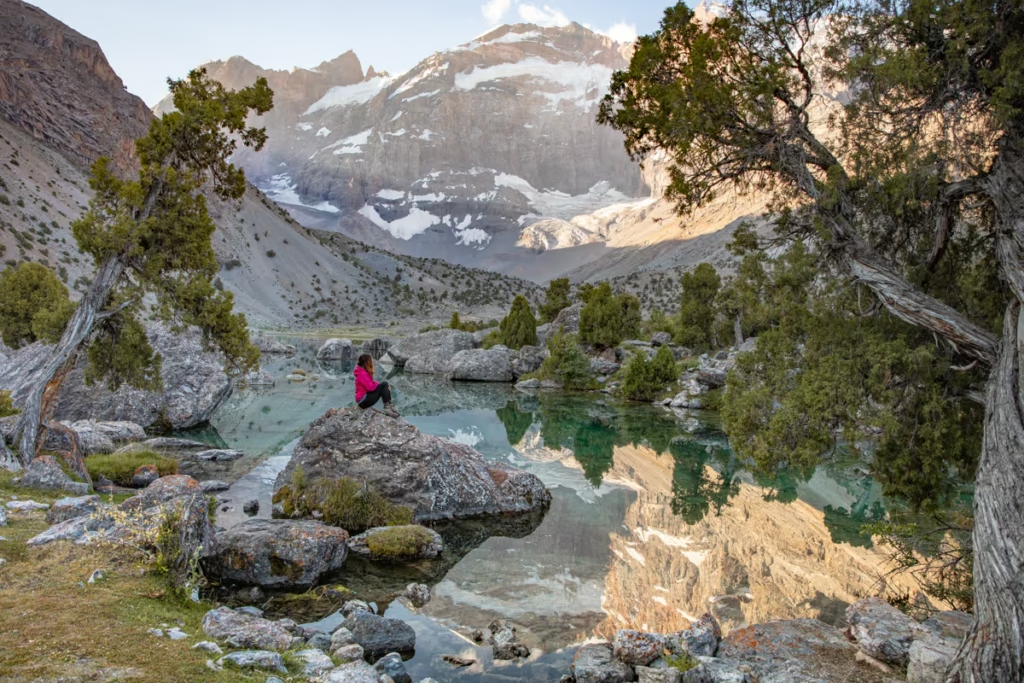
Solo Female Travel in Central Asia
Uzbek Food: 33 Dishes to Try
Kazakhstan-Uzbekistan Border Crossing
Solar Furnace Uzbekistan: Visit Guide
Panjakent-Samarkand Border Crossing Guide
Nukus Travel Guide: Things to Do
Central Asia Travel Guide

Oybek Border Crossing: Tashkent to Khujand
Best Restuarants in Tashkent
10 Essentials to Pack for Central Asia
A Guide to the World Nomad Games
Visiting the Aral Sea Disaster, Uzbekistan
Central Asia Travel Tips
Vegetarian in Central Asia
Central Asia Visas Guide
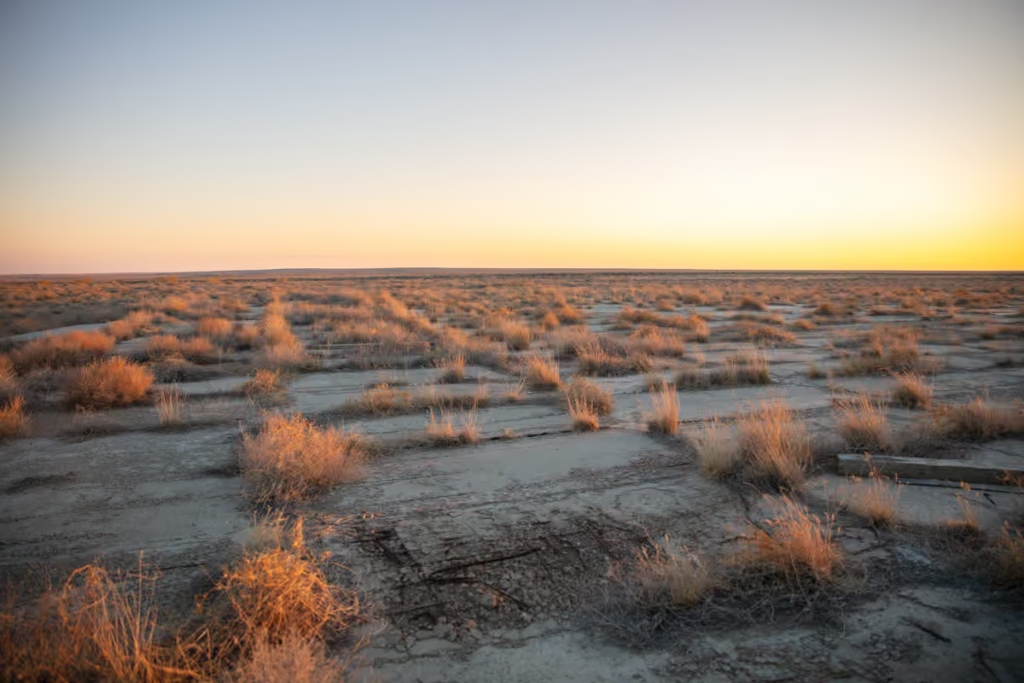
Visiting the Soviet Bioweapons Lab of Aralsk 7
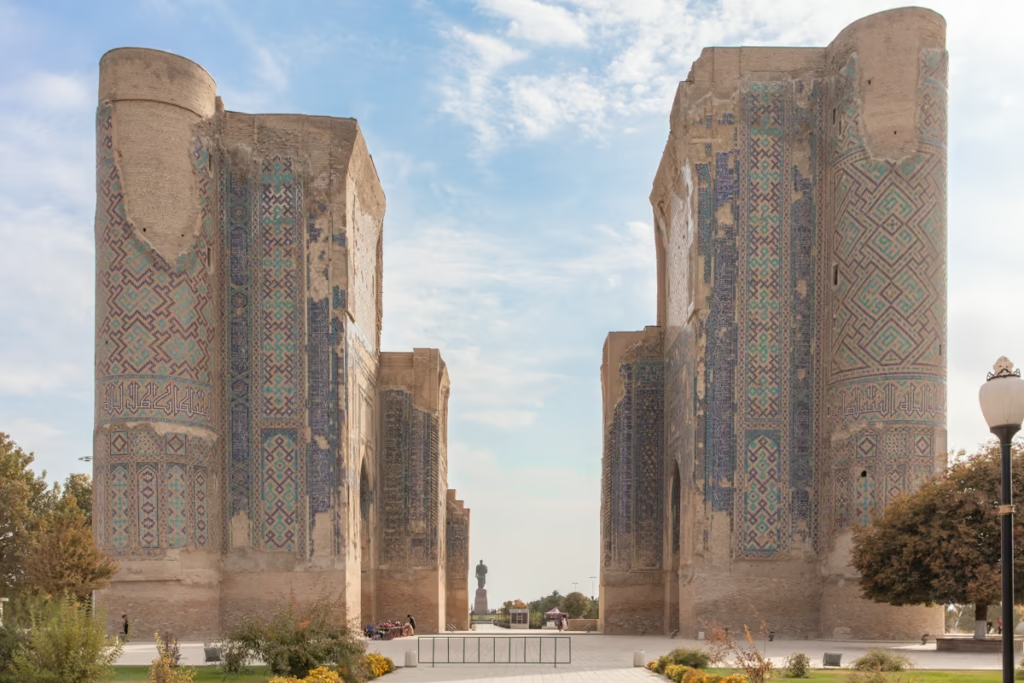
Shahrisabz Travel Guide
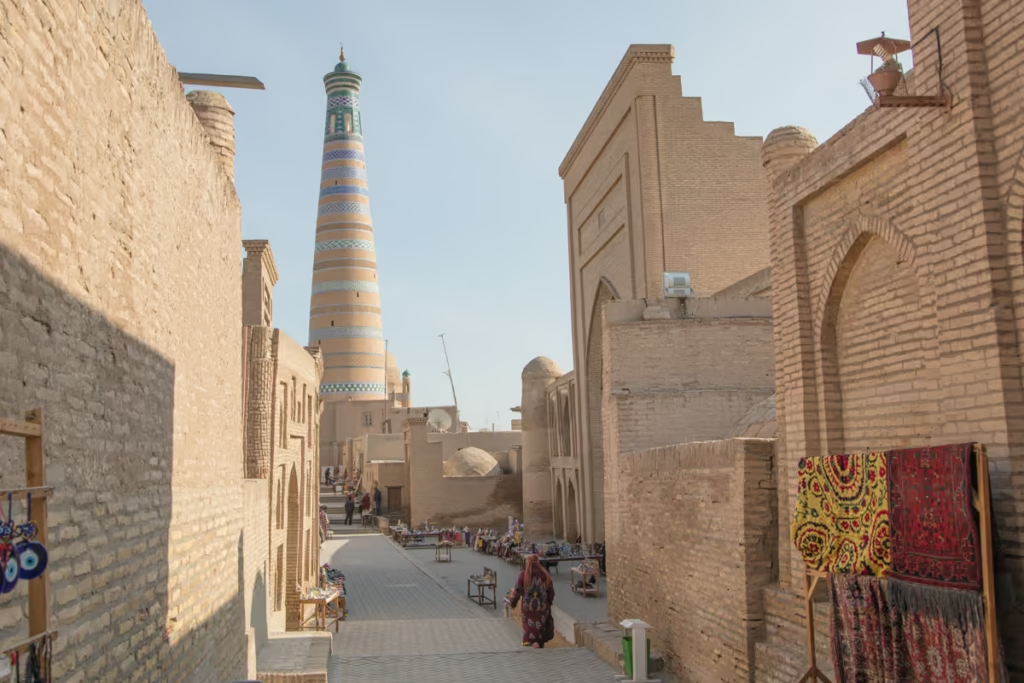
Khiva Travel Guide
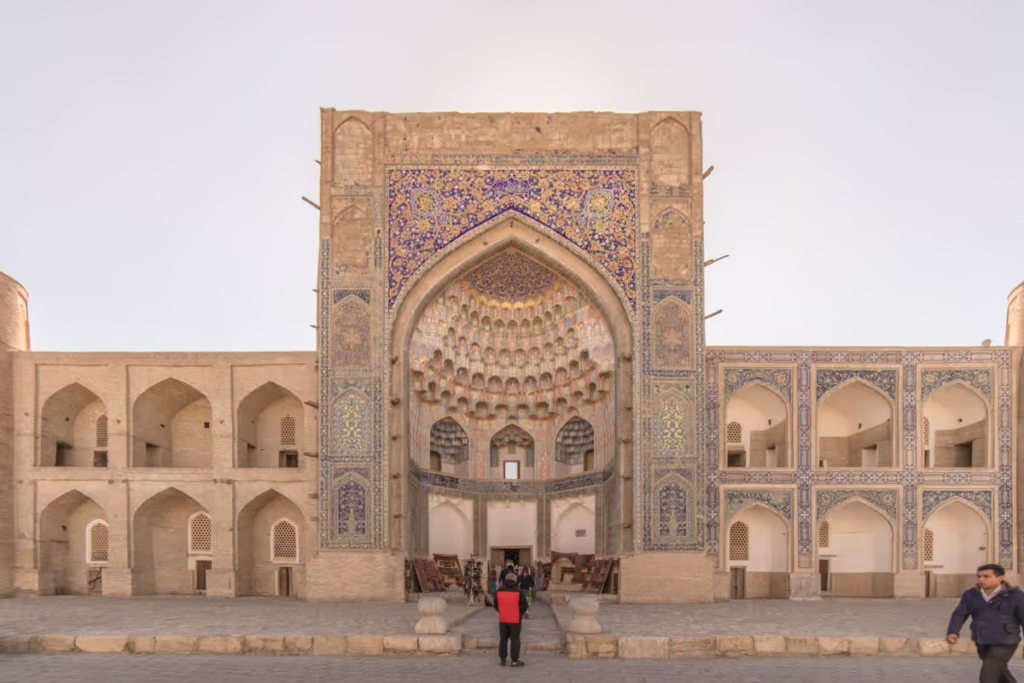
Bukhara Travel Guide
Exploring the Frontier Town of Termez, Uzbekistan
Things to Do in Uzbekistan
Karakalpakstan Travel Guide
Samarkand Travel Guide
Khorezm Fortresses, Uzbekistan
The Best SIM Cards & eSIMs for Uzbekistan
Uzbekistan Travel Guide
Solo Female Travel in Uzbekistan
Central Asia Food & Drink
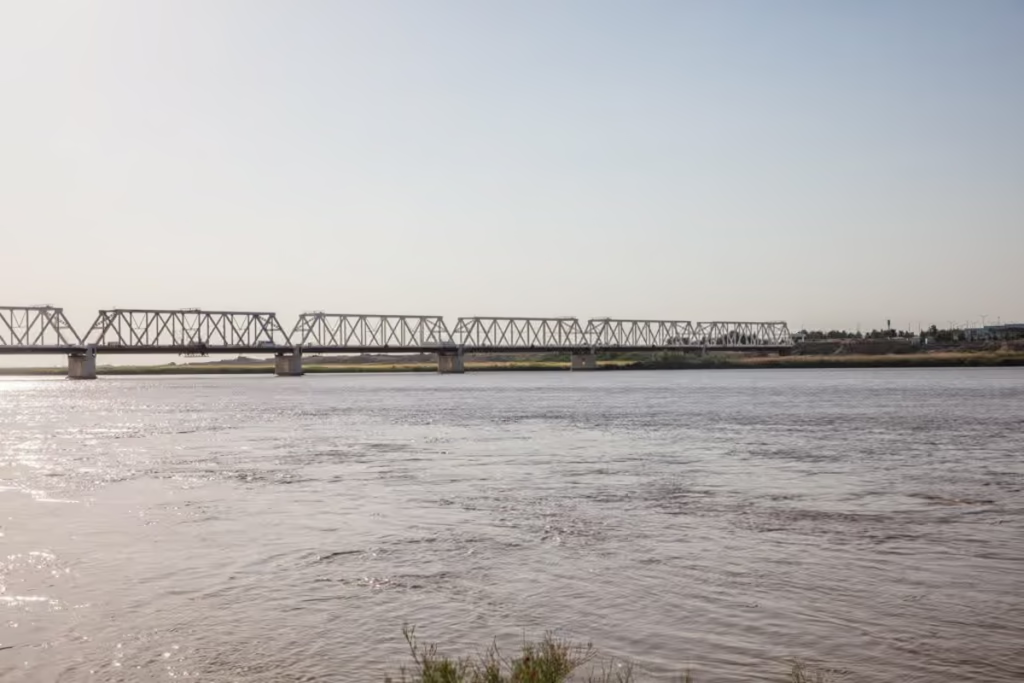
Uzbekistan-Afghanistan Border Crossing at Hairatan
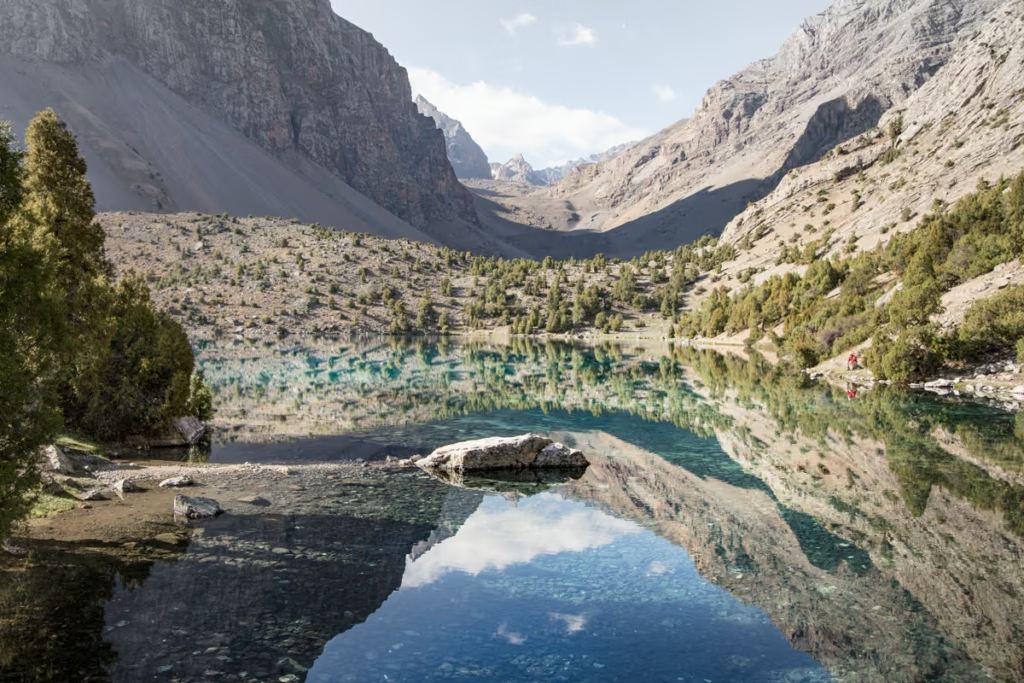
Off the Beaten Path Asia
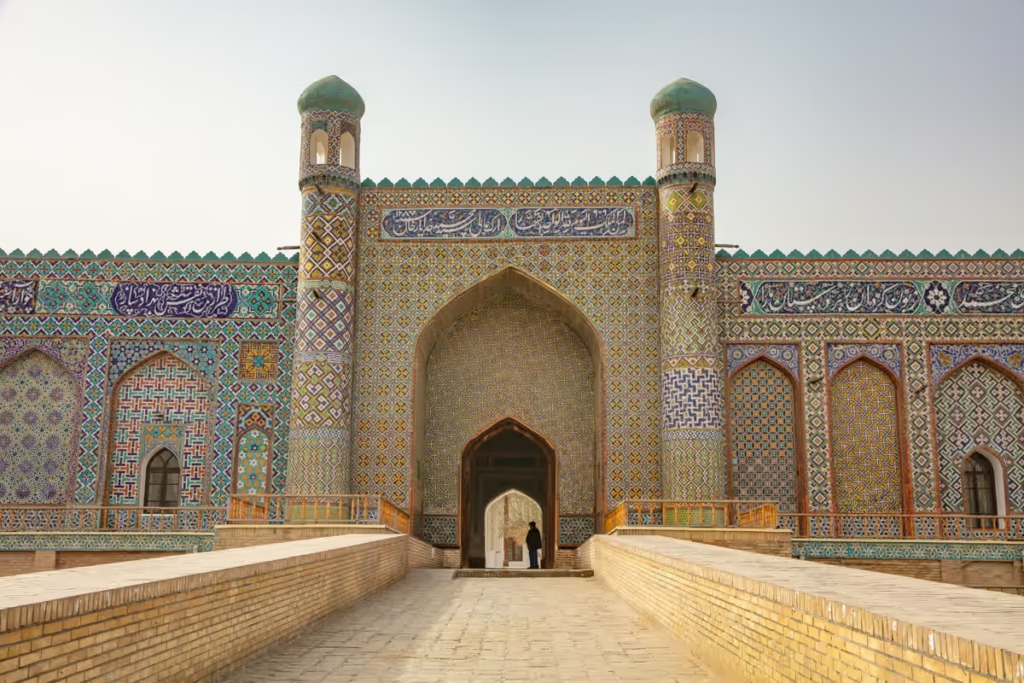
Uzbek Fergana Valley Travel Guide
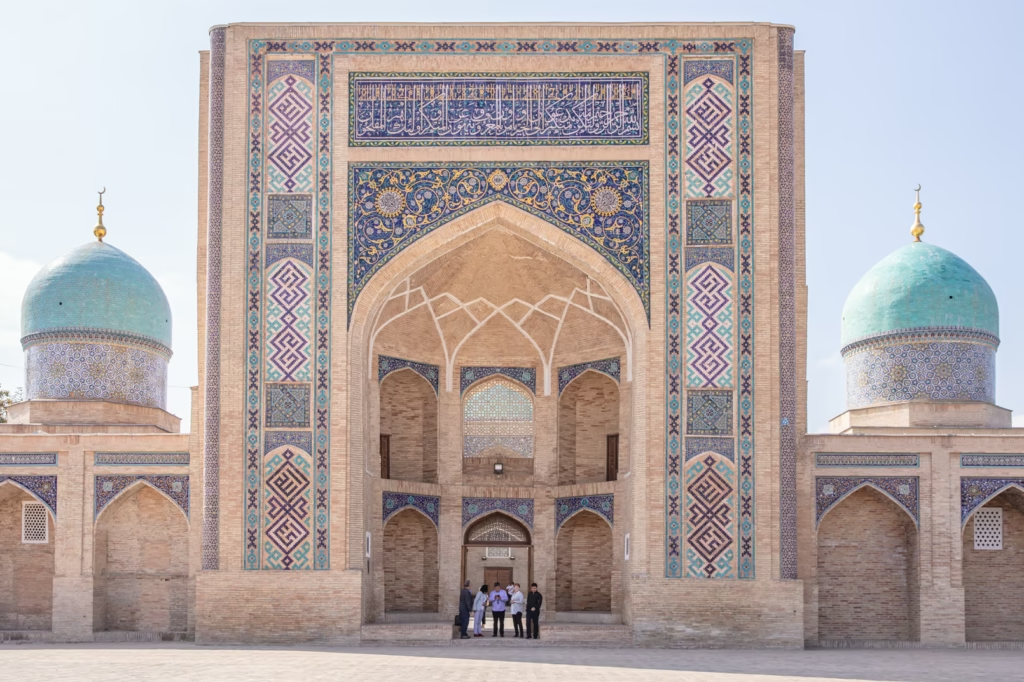
Tashkent Travel Guide