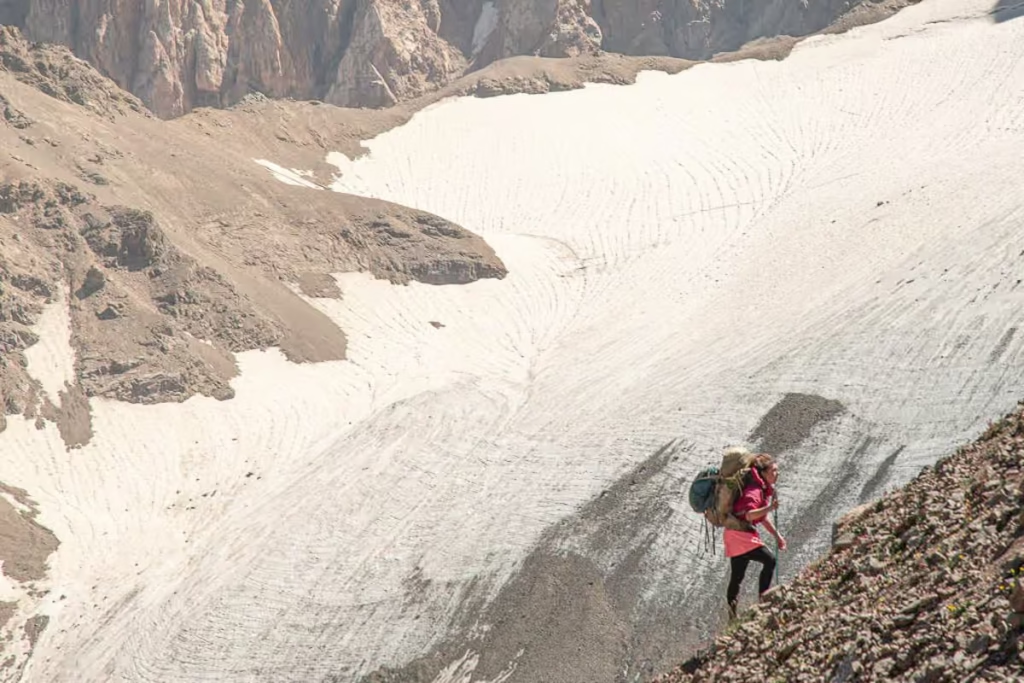
Khatlon Travel Guide
Khatlon Travel Guide was originally published in 2026
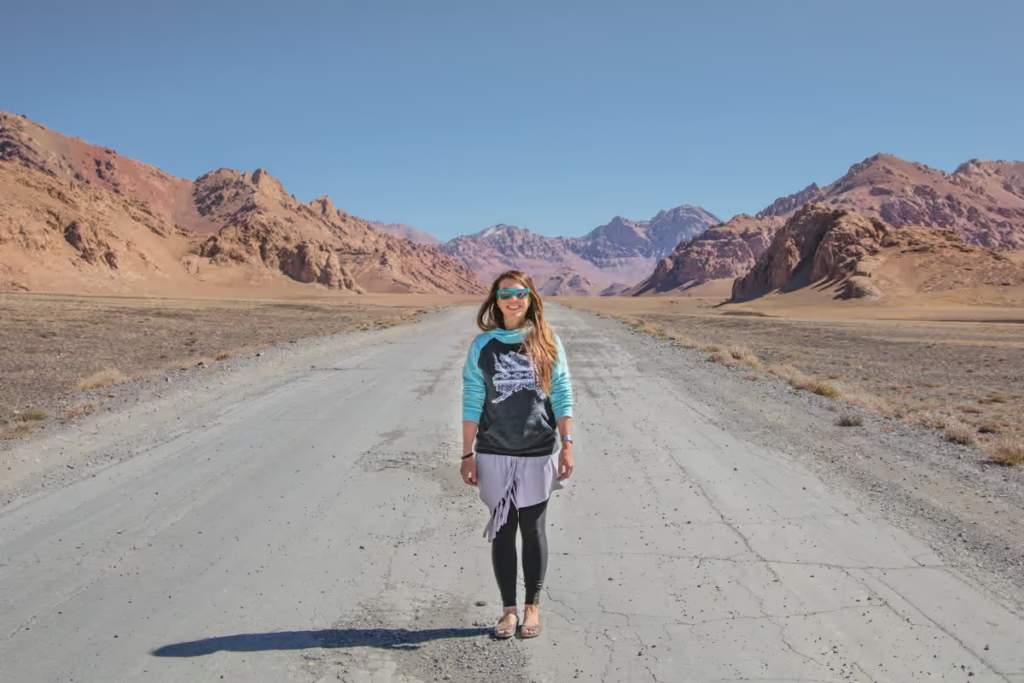
Where dusty red plains meet green river valleys, old mausoleums sit beside Soviet Khrushchevka, and the mountains quietly promise bigger adventures, this is Khatlon. An oft-skipped-over corner of Tajikistan.
It’s understandable why few make it out to explore Khatlon. Diabolically hot in the summer, tourism infrastructure in its early days, and not much information out there on it.
That said, it’s entirely possible to travel around Khatlon; it’ll just take a bit of patience. Here’s a friendly, practical guide to the Khatlon Region of Tajikistan, written like I’m handing you my travel notebook after a long day on sunburnt roads and a glass of chai.
Need Travel Insurance and Evacuation Services?
Start shopping for travel insurance plans over at IATI Insurance. Readers of the Adventures of Nicole get a 5% discount off your plan.
The Adventures of Nicole partners with Global Rescue to offer the world’s leading medical evacuation and security advisory services. To travel with peace of mind, explore their evacuation coverage.
What to Know About Khatlon
Khatlon is Tajikistan’s southern fold of landscape and history. Think wide, baked plains around the Vakhsh River, verdant irrigation canals, ancient mausoleums and fortresses that feel like clues to a deeper past, and towns that serve as practical bases for exploration further afield.
Khatlon’s main cities of Bokhtar (formerly Qurgonteppa), Kulob, and Shahrituz are far less polished than Dushanbe, but that is the point. You come here for real places, warm people, and landscapes that change from cotton fields to raw mountain edges within a few hours of driving.
Practical note up front: Khatlon is mostly dry and hot in summer, pleasantly cool in spring and autumn. Also, be aware that the Khatlon Region depends heavily on hydroelectricity. In recent seasons, the Nurek reservoir has experienced low water levels, which have at times led to power rationing. Keep that in mind when planning long stays or sensitive work that needs reliable electricity.
The Towns, Ruins & Springs Of Khatlon Region
Below, I walk you through the map of Khatlon. Read it as a loose route you could follow, or pick the places that spark your curiosity.
Nurek
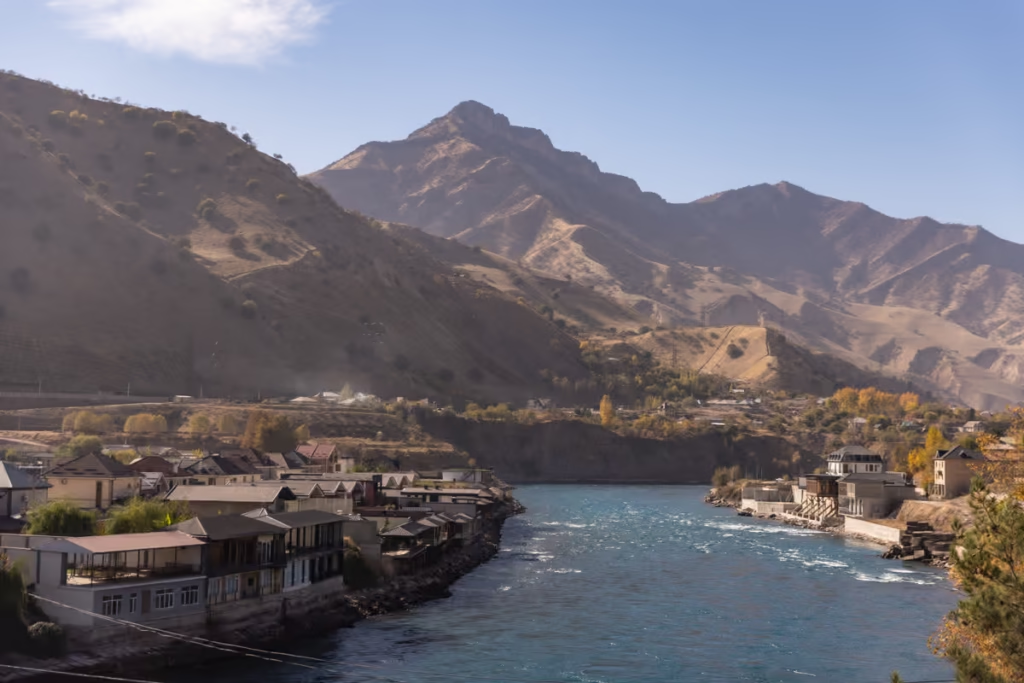
Why go to Nurek: Nurek town sits beside one of the most dramatic pieces of modern engineering in Central Asia, the Nurek Dam. The dam is among the world’s tallest earth-fill dams at 310 meters, and the reservoir and gorge are ethereally cinematic. It is also central to Tajikistan’s electricity system. Nurek also is a popular weekend escape from the Dushanbe heat in the summer time.
What to do in Nurek: Walk viewpoints above the gorge, chat with locals, and combine the visit with a Vakhsh Valley drive. If you are into industrial heritage, seeing the scale of the dam in person is worth it. Though on my visit in November 2025, they would not let me into the dam at all (you were able to bribe your way in for 150 TJS before). My main objective was to see the mosaic inside it. Most Dushanbe locals and expats tend to make a weekend trip to Nurek to stay in one of the resorts, but you can easily visit as a day trip.
How to get to Nurek: Nurek is easy to get to from Dushanbe and only takes an hour to reach. Shared taxis depart just off of Nazarshoev Street near the Dushanbe Train Station for 30 TJS per seat. To return to Dushanbe, shared taxis depart opposite the Nurek Bus Station.
Where to stay in Nurek: Aqua Club, Puli Sangin, or Labi Darya.
Danghara
Why go to Danghara: A working agricultural town with great importance to modern Tajik politics and regional life. It’s a good first stop for seeing the eastern parts of Khatlon— fields of cotton and wheat, roadside teahouses, and markets that hum.
What to see in Danghara: Walk the bazaar, sample fresh bread and green tea at the Danghara Bazaar, see the extravagant Rahmon Museum dedicated to the president inside the lavish Danghara Palace of Culture, and use it as a cheap, no-frills stop while moving toward Kulob or the Vakhsh Valley.
How to get to Danghara: Shared taxis depart Dushanbe’s taxi stand east of the city (shared taxis to the Rasht Valley and Kulob depart here as well) to Danghara. A seat will cost 50 TJS.
Where to stay in Danghara: Spa Hayot or Hotel Nakhsh.
Kulob
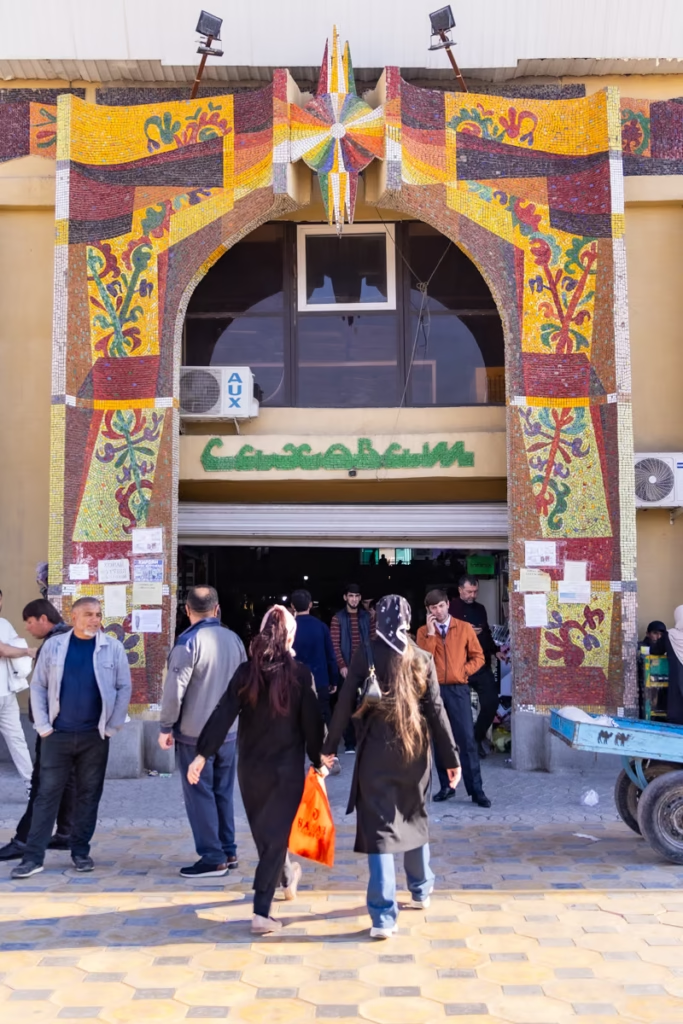
Why go to Kulob: To be fair, there isn’t much to see in Kulob; however, it is one of Khatlon’s main cities and a proper regional hub. It has a compact city centre, museums, and nearby ruins. It also makes a practical base for day trips into nearby valleys.
What to do in Kulob: The Kulob local lore museum, parks, three mosaics (one of which is a portrait of Lenin), the Kulob Bazaar, and the surrounding natural features like Sari Khosor valley and salt formations. Recently, a Disney-esque looking Kalai Kulob was erected, as well as a 4 million dollar fake Paris, complete with a replica of the Eiffel Tower and Louvre.
The main attraction for most visitors to Kulob is the Mausoleum of Hamadani, the Sufi mystic born in Hamadan, Iran, in the 14th century, who is largely credited with the spread of Islam across Kashmir.
How to get to Kulob: Shared taxis depart in front of a fuel station, oppposite the taxi stand east of Dushanbe (same one for Rasht Valley and Danghara) to Kulob. A seat will cost 50 TJS.
Getting Around in Kulob: Kulob isn’t that big, but there are marshrutkas that connect the main stops in town.
Where to Stay in Kulob: There isn’t a lot of choice for accommodation in Kulob, but for the love of god, do not stay at the Kulob-Pamir Hotel. The stolovnaya downstairs is a popular lunch and dinner stop for the shared taxis to and from the Pamir, so I figured the rooms upstairs were decent- WRONG. It was the filthiest room I’ve had the pleasure of staying in, and I’ve gotten fleas from a chaikhana in Afghanistan. The bathroom was filled with hair, the sink came with someone’s chewed gum stuck to it, looking like they were saving it for later, and I don’t know that the sheets had been washed in a long while.
Despite my bitching, it didn’t look like much else was open as I was there far past the season most people would be travelling in Tajikistan, so I decided to suck it up and stay there.
A note for women travelling alone: Khatlon was one of the more challenging regions of Tajikistan to travel around by myself, and I have been to just about every cranny of the country at this rate. I was harassed and followed by men throughout the region. Kulob was the worst of the lot, which featured a guy who followed me about 4 kilometres on foot across town (if he wants to stalk people, he’s gonna have to learn a thing or two about camoflauging better) and a guy who relentlessly demanded I get in his car (despite me being literally walking into the parking lot of the good ol’ Kulob-Pamir where I was staying) who after I told him no several times, then mimed a blow job. I picked up a rock, and that got rid of him rather quickly.
Hulbuk Fortress
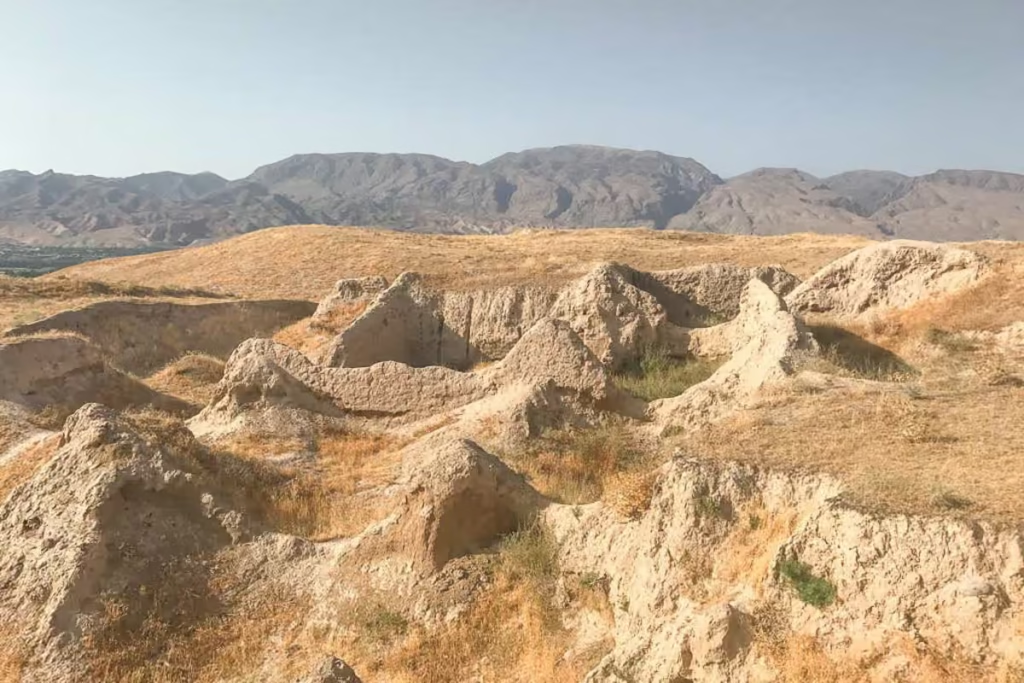
Why go: Hulbuk is a medieval fortress complex that served as the political and cultural centre of the Huttal (Khatlon) region between the 9th and 12th centuries. Known for its intricate architecture, carved stucco, and role as a major seat of local rulers along the southern Silk Route.
Khatlon’s deep history as a crossroads on pre-modern trade routes makes Hulbuk a significant archaeological site. That said, its restorations are similar to those of Hisor, a little too Disney, and there has been criticism that it was not restored in the traditional method. Alas, another victim of Tajikistan’s distorted revisionist history.
What to do in Hulbuk: Walk the earthworks, imagine caravans, and climb for views over the surrounding fields. Photography is great at golden hour. Expect basic site infrastructure; bring water and sun protection.
Hulbuk also has a museum with artefacts and further information on the complex. Entry to the museum is 20 TJS per person.
How to get to Hulbuk: Hulbuk is a short drive from Kulob, for which you can charter a car for; local tour operators can arrange transport if you prefer not to handle the logistics.
Baljuvon
Why go to Baljuvon: Baljuvon isn’t so much of a destination as it is a jumping-off point for visiting Sary Khosar Valley. That said, there is a more recently restored Miri Baljuvon Fortress on a hill in town, which I didn’t visit myself but appears to be about the only thing to do in town (if you’re killing time waiting for the ‘Machina Kalon’ to go up Sary Khosar Valley, this could be a worthwhile side quest).
How to get to Baljuvon: From Dushanbe, shared taxis depart from a lot to the southwest of the intersection of Karaboev Avenue and Jomi Avenue for 50 TJS per seat. From Qurgonteppa, you can find shared taxis departing near the bazaar at the intersection of Loginov and Mirzokodirova Streets. I’ve never come to Baljuvon from Danghara or Kulob, but would imagine it’s possible to find shared cars from either.
Sary Khosar Valley
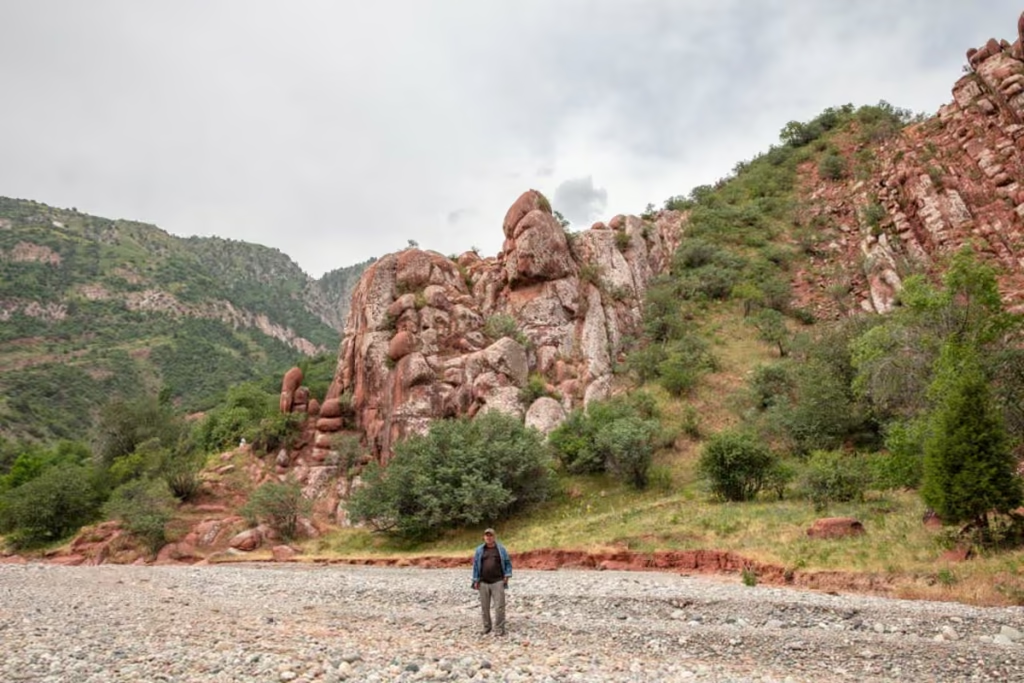
Why go: Sary Khosor Valley is wild and isolated, gorgeous for anyone into remote driving and landscape photography. This area is particularly nice in the spring and early summer.
What to do in Sary Khosar: 4×4 expeditions into the valley, hiking among scattered rock formations and visiting cultural and natural sites scattered along the valley. Bring fuel, water and a driver who knows the tracks.
How to get to Sary Khosar: Getting to Sary Khosar is an adventure in itself. First, you’ll need to reach Baljuvon and get to the taxi stand at the turn-off to the valley. From here, an old Gaz-66 (that everyone calls “Machina Kalon”- literally big car) departs each afternoon for 20 TJS per person. If you don’t feel like waiting, there are sometimes old UAZ jeeps waiting to go up the valley (more expensive). If you get stuck waiting for a bit while the machina kalon is repaired, there is a chaikhana around the corner to grab a bite to eat at.
Where to stay in Sary Khosar Valley: The valley is a scattering of little villages, and as such, there isn’t much in the way of formal accommodations. It’s more than likely someone will offer you to stay at their house. The one formal hotel I came across is at Mullkoni Falls, complete with a massive poster of the president on the side of it.
Khovaling
Khovaling is a town located on the main road beyond Baljuvon. There isn;t really much there that would picque the interest of most tourists, however, it does make a good jump-off point for Childukhtaron for those who will be combining the visit with Sary Khosar Valley.
Muminobod
Like Khovaling, there isn’t much to note in Muminobod. It’s more of a place people will pass through from Kulob to reach Childukhtaron. Shared taxis depart Kulob Terminal for Muminobod for 30 TJS.
Childukhtaron
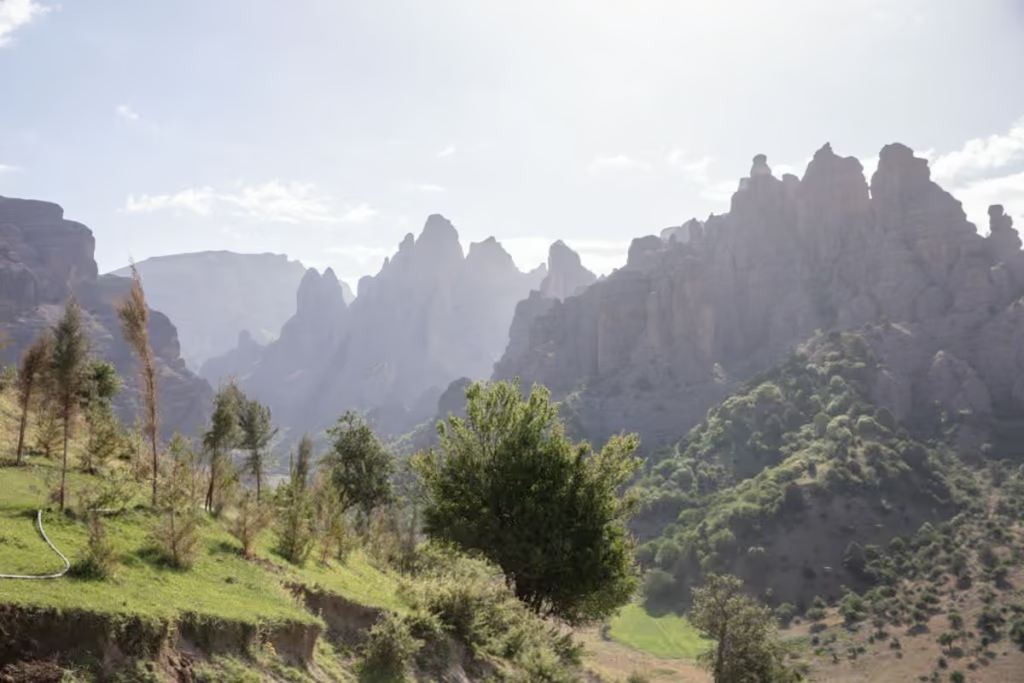
Why go to Childukhtaron: This is a stunning valley with jagged spires and a good place for short hikes and picnics to explore an area steeped in legend. There is a scattering of hotels in the area, too, as Childukhtaron is a popular destination for local tourists.
What to do in Childukhtaron: Day hikes, river walks, and photo stops. Locals may have picnic areas or basic teahouses during the warmer months.
How to get to Childukhtaron: Getting to Childukhtaron without hiring a private driver is a bit of a mission, but possible. First, grab a shared taxi from Dushanbe to Kulob. From the main Kulob Terminal, find a shared taxi to Muminobod (30 TJS). Once to Muminobod, you can find cars to Childukhtaron as it is a popular local destination. Myself, I came from Sary Khosar Valley, and from Baljuvon found a ride to Khovaling and from Khovaling another to Childukhtaron and to Khovaling.
Yakhsu Valley
I haven’t been to Yakhsu myself, but wanted to mention it here as it had been recommended to me when I was planning my trip to Sary Khosar and Childukhtaron. It’s a wild valley that gives you the potential to connect Khovaling up to Tavildara. I am unaware of any shared transport reaching any of the villages along the Yakhsu Valley, though it may be possible, and I would ask in Khovaling. Otherwise, I would plan the journey only if I had my own vehicle or could find a 4×4 driver locally who knows the area.
Dashtijum Nature Reserve
Located on the southern slopes of the Darvaz Range in the Shamsiddin Shokhin district, the Dashtijum State Nature Reserve covers nearly 20,000 hectares of rugged, forested mountains about 40 km from Kulob. It was established to protect the last viable Central Asian population of the screw-horned goat (markhor).
The reserve’s terrain ranges from wooded hills to steep rocky ridges, with diverse flora, fauna and dramatic landscapes.
In order to visit Dashtijum, you will need a permit. Most agencies can arrange this for you, as you will likely visit with a guide and driver anyway. (I still have yet to get here myself).
Qurgonteppa / Bokhtar
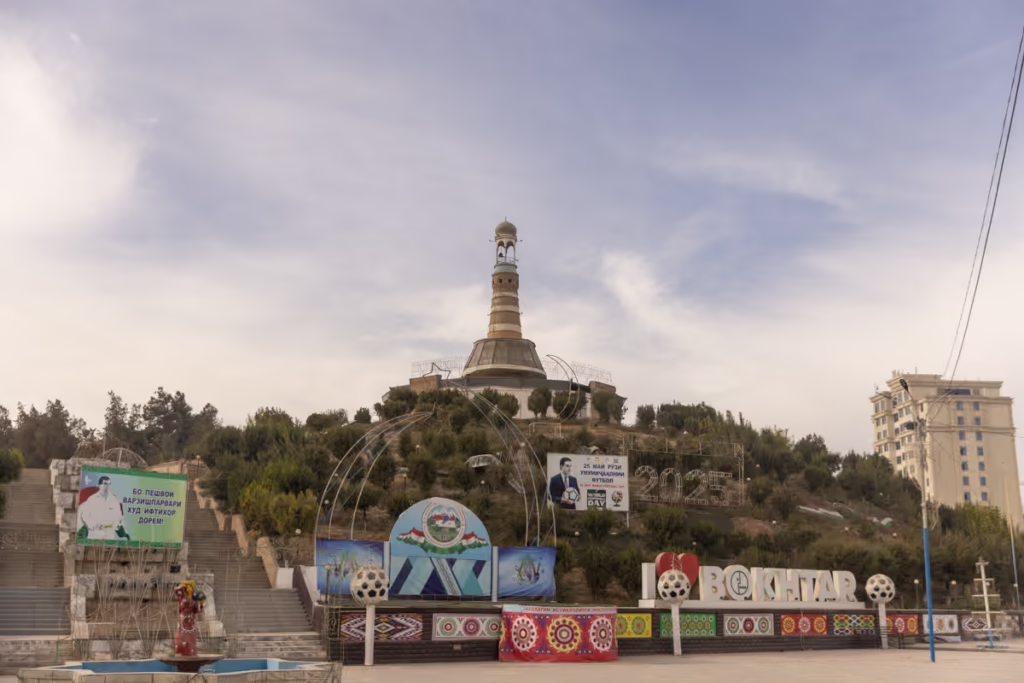
Why go to Qurgonteppa: Bokhtar, formerly Qurgonteppa (many people still use the old name or simply call it Qurgon), is Khatlon’s administrative and commercial centre. It is your main logistical hub for travel in Khatlon’s west. It is also Khatlon’s capital and Tajikistan’s third-largest city.
What to see in Qurgonteppa: Visit the busy Qurgonteppa Bazaar, learn about the city and surrounding areas at the Khalton Museum of Local Lore and at the Bibi Khanym Museum of History and Regional Studies of Bokhtar, or wander the streets keeping an eye out for the small handful of mosaics still around. The city also functions as a good base for day trips to nearby natural and historical sites and surrounding valleys.
How to get to Qurgonteppa: Shared taxis depart from the southwest corner of the intersection of Karaboev Avenue and Firdausi Street in Dushanbe’s 64th Microdistrict for 50 TJS per seat. If you’re coming from Kulob, you will find shared taxis departing the main Kulob Terminal for 50 TJS per seat.
To depart Qurgonteppa, shared taxis leave for most destinations from the main bus terminal on the west side of the city, but many depart from locations around the bazaar too, including Dushanbe.
Where to stay in Qurgonteppa: I ended up staying at Hotel Samo after someone I knew stayed there a couple of weeks before my visit. Her experience was wildly different from mine, which included some kind of ‘security’ guy (he was dressed in military fatigues, and I’m not entirely sure why he was there, cause I can’t imagine the place needing any form of security) busting down my door in the middle of the night (and then me subsequently having to then barricade myself in there). Nancy had a woman who was staffing the place when she stayed, so experiences seem to vary widely, I guess. The Ramz Hotel is another common option.
Levakant / Sarband
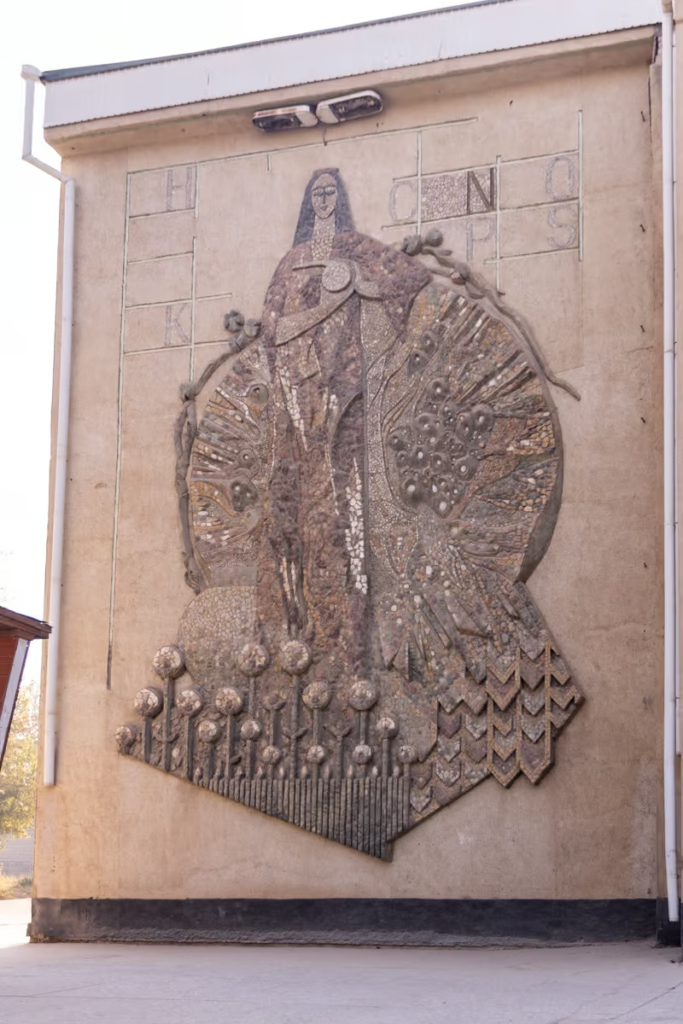
Why go to Levakent: A small city just east of Bokhtar in the Vakhsh Valley, Levakant (formerly Sarband, and before that Kalininabad), makes for a good jumping-off point for a couple of hikes into the foothills of Mount Khojamaston. It also sits close to important irrigation infrastructure on the Vakhsh River.
What to do in Levakent: Not a tourist hotspot per se, so go for a chill alternative to busier Bokhtar. My main objective while in Levakent was to photograph the mosaic on the Sarband Cultural Center.
How to get to Levakent: Bus #4/117 departs from the main bazaar on Norinov Street (about halfway between its intersections with Bobajon Gafurov Street and Loginov Street) for 3 TJS and takes about 30 minutes to reach the Levakent Bus Stop on Borbad Street.
Where to stay in Levakent: The only option appears to be the Hotel Firuz in Levakent; otherwise, plan to stay in Qurgonteppa.
Ajina Teppa
Ajina Teppa is one of Tajikistan’s most important Buddhist archaeological sites, a 7th–8th century monastic complex that once stood along a branch of the Silk Road near Qurgonteppa. Excavations revealed a sprawling two-courtyard monastery decorated with frescoes and clay sculptures, including the famous 13-meter-long reclining Buddha, now preserved in the Museum of Antiquities in Dushanbe.
To get to Ajina Teppa, hire a car from Qurgonteppa, plan for this to cost about 60 TJS.
Tigrovaya Balka Nature Reserve
Named after the Caspian tiger that once roamed the region before going extinct roughly 70 years ago, Tigrovaya Balka protects a rare wetland ecosystem where the Vakhsh River flows through tugay forests and reedbeds. Today, jackals, lynx, hyenas, wild boar, Bukhara deer and a wide variety of birdlife still live here. WWF recognises it as one of Central Asia’s most important ecological zones, and BirdLife International lists it as a key Important Bird Area.
Visitors need a permit to enter Tigrovaya Balka, and these days it seems to only be issued for researchers. Best to have a local agency in Tajikistan make arrangements for a visit for you, as you will also need them to set up transport.
Shahrtuz
Why go to Shahrtuz: Shahrtuz is the jumping-off point for exploring sites in the extreme southwest of Tajikistan. It’s not necessarily a destination in of itself, but makes a great base. If you have time to spare, a good stop is the Oyanda Soz English School. The kids love to ask questions, and the staff members are all very friendly and can help make suggestions for things to do in the area.
How to get to Shahrtuz: Getting to Shahrtuz from Dushanbe can be done by grabbing a shared taxi from a lot near the northwest corner of the intersection of Kasimova Street and Karaboev Avenue. I came to Shahrtuz from Qurgonteppa, where shared taxis depart the main bus terminal to the west of the city for 50 TJS per seat. Getting out of Shahrtuz, you’ll find transport all cloistered around the bazaar, including shared taxis heading to the border with Uzbekistan for 60 TJS per seat, for those headed to Termez (15,000 UZS to continue from the border to Termez once over).
Where to stay in Shahrtuz: The best hotel in Shahrtuz is Chorbed (not to be confused with at least 4 other hotels and restaurants also named Chorbed). Turn south from Stalin Avenue (on Google Maps)/Ismoil Somoni Avenue (Maps.me) at Khisrav Street to reach the hotel. It’s also attached to a good stolovnaya of the same name.
44 Springs (Chiluchor Chashma)
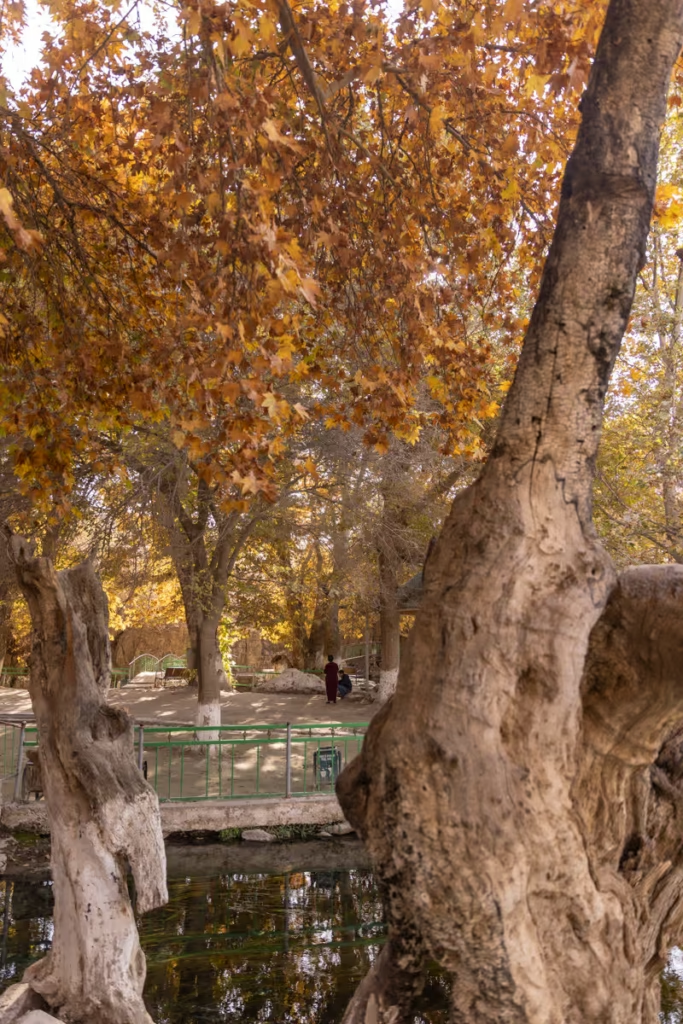
This oasis of 44 springs is a cool, leafy counterpoint to the arid surroundings. Locals come here for relaxation and reputed healing waters. It’s an easy side trip from Shahrtuz and lovely when the weather is hot.
You will find shared taxis departing from Shahrtuz Bazaar to 44 Springs rather frequently for 15 TJS, as this is a pilgrimage site. There are also marshrutkas that ply the route.
Khoja Mashad
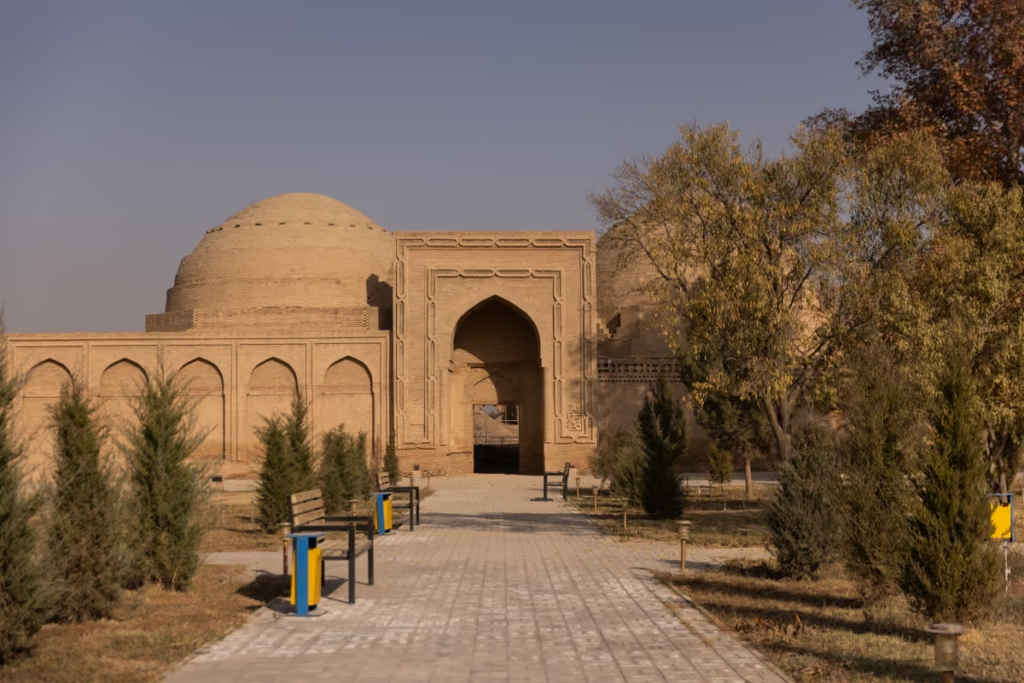
A remarkable surviving example of pre-Mongol madrasa and mausoleum architecture in Tajikistan, though it was largely in ruin until rather recently when restoration efforts began. The double-domed mausoleum is small but historically significant.
As Khoja Mashad is another important pilgrimage site, you will find frequent shared taxis from Sharhtuz for 10 TJS.
Utapur Fortress
Sitting about 10 km southwest of Shahrituz, the 15th-century Utapur Fortress stands out among Tajikistan’s surviving strongholds thanks to its unique water canal, once fed by the springs of Chiluchor Chashma. Unlike many regional fortresses, it escaped destruction during the Red Army campaigns and remains in a fairly good state of preservation. I didn’t get to visit Utapur myself, but Nancy, who had a much better night at the Hotel Samo in Qurgonteppa, said it was the highlight of Shahrtuz.
Shared taxis leave Shahrtuz for Utapur for 10 TJS per seat.
Qabodiyon
Named in honor of the legendary king Kaboti Shahnour from Firdousi’s Shahnameh, Qabodiyon once held a fortress that, like many others in the region, was destroyed by the Red Army in 1921. Some structural traces remain, and the local museum displays the few surviving pieces, while major finds from the site are held in the Hermitage Museum in St. Petersburg.
Qabodiyon is also believed to be the birthplace of the famed Persian travel writer Nasir Khusraw.
Qabodiyon is just to the north of Shahrtuz and can be reached by shared taxi for 10 TJS, or just hop off on your way to Shahrtuz if coming from Dushanbe or Qurgon.
Takhti Sangin
Roughly 40 km from Shahrtuz, near the meeting point of the Vakhsh and Amu Darya rivers, Takhti Sangin is one of Tajikistan’s most important archaeological sites, home to the ancient Temple of the Oxus. Founded in the 6th century BC at the end of the Achaemenid period, the settlement revolved around a fortified citadel and a monumental temple with a columned hall, thick 5-meter walls and Classical-style architectural details. Inside, worshippers made offerings of coins, metalwork, ivory, glassware and weapons, leaving behind nearly 5,000 artefacts that reveal strong Hellenistic influence.
The site is also closely associated with the famous Oxus Treasure, a hoard of exquisite gold and silver objects thought to have been collected and stored at the temple. Though the treasure’s exact findspot is debated, many scholars believe it came from the riverbanks near Takht-i Kuwad. Much of the hoard was purchased and reunited by British archaeologists in the late 19th century and now forms one of the British Museum’s most prized ancient Persian collections. Tajikistan received high-quality replicas in 2013, which are on display in the National Museum in Dushanbe.
A permit and escort is required to visit Takhti Sangin, so best to have a local agency in Tajikistan make the arrangements for you.
Practical Travel Tips for Khatlon
- Getting there and around: Dushanbe is the usual arrival point in Tajikistan. From Dushanbe, you can take shared cars or hire private transport to Bokhtar, Kulob, Danghara or the Vakhsh Valley. Roads range from paved highways to rough rural roads; a driver with local experience is gold for side trips.
- Best time to visit: April–June and September–October for pleasant weather. Summers are extremely hot; winters can be chilly in higher valleys.
- Safety and permits: Khatlon is generally safe for travellers, but check local news before you go. Some border-adjacent areas require care and local advice, especially near Afghanistan. Bring your passport and any necessary permits with you. Solo female travellers can expect to attract a lot of unwanted male attention, regardless of dress, and to be followed and harassed.
- Money and services: Cash is king. ATMs can be intermittent outside major towns. Mobile data and electricity can be patchy in smaller places. Plan accordingly.
- Food and drink: You can expect to find mostly Tajik cuisine: plov, non, soups, and shashlik. In smaller towns, expect home-style cooking or the odd stolovnaya.
- Accommodation: Larger towns like Bokhtar and Kulob have basic hotels; smaller places will be homestays or simple guesthouses.
- Local customs: Dress modestly in villages and at religious sites. Tea culture is central. If invited to a home, say yes to tea and be ready to share stories.
Why You Should Visit Khatlon
Khatlon is not polished, and despite my many a grievance about unruly men pestering me, I still thought it was an interesting part of Tajikistan to explore, and I did meet heaps of wonderful and welcoming locals.
Khatlon will give you dusty roads, big skies, surprising ruins, and people who offer chai and a warm welcome. An alternative to the usual itineraries in the high Pamir and the Fann Mountains Range.
Have Any Questions About Visiting Khatlon Region?
Ask your questions about Khatlon in the comments section below.
Posts from Tajikistan
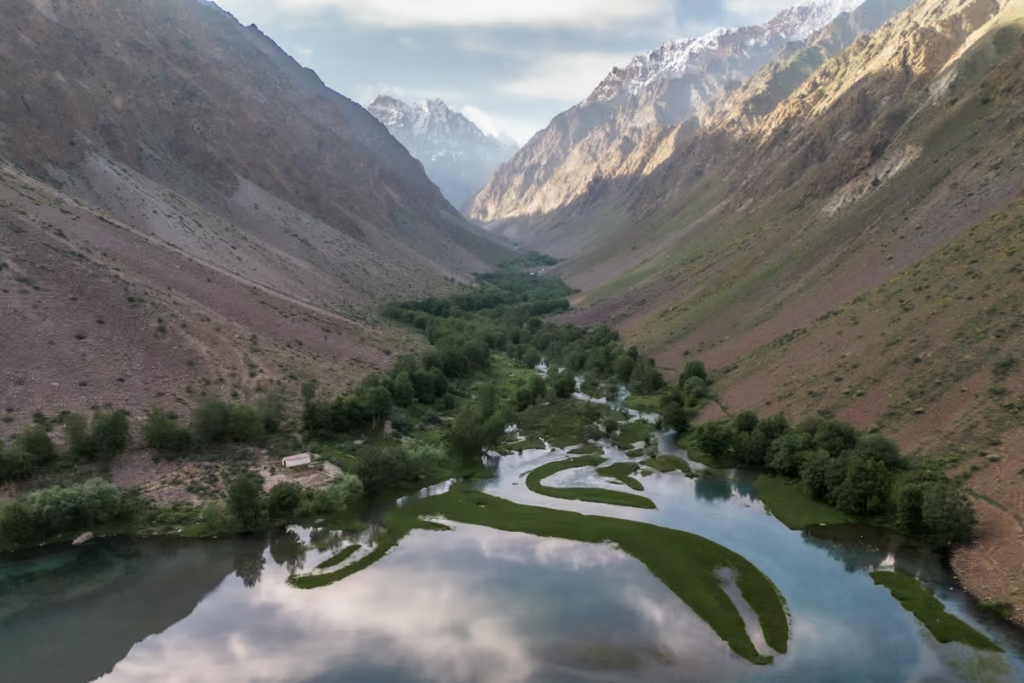
Jizeu Trek in Tajikistan’s Pamir
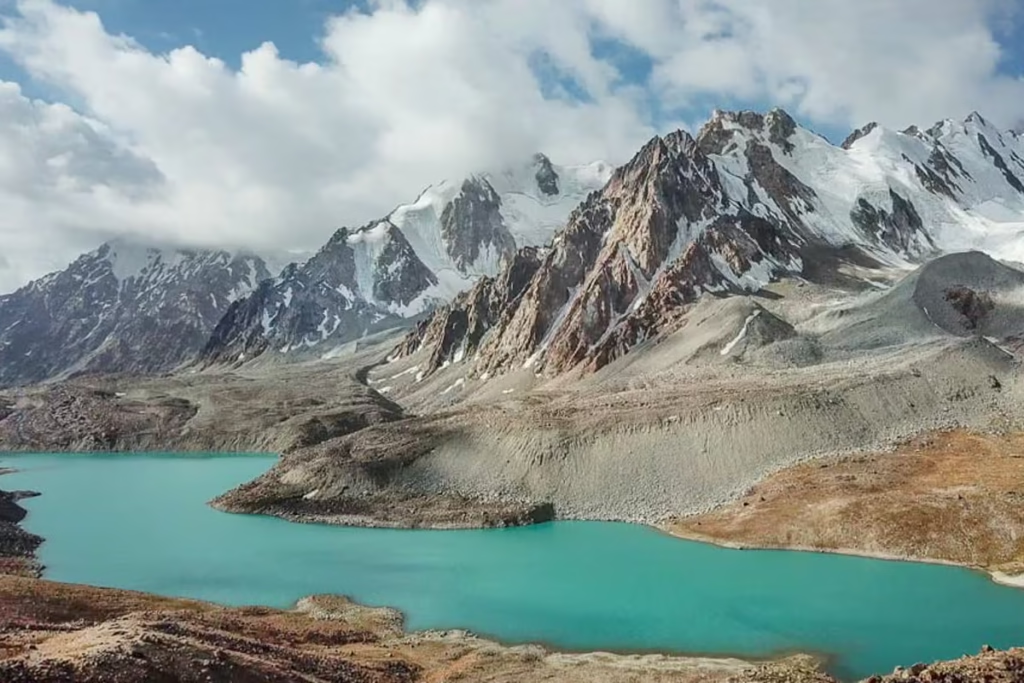
10 Reasons to Visit the Pamirs
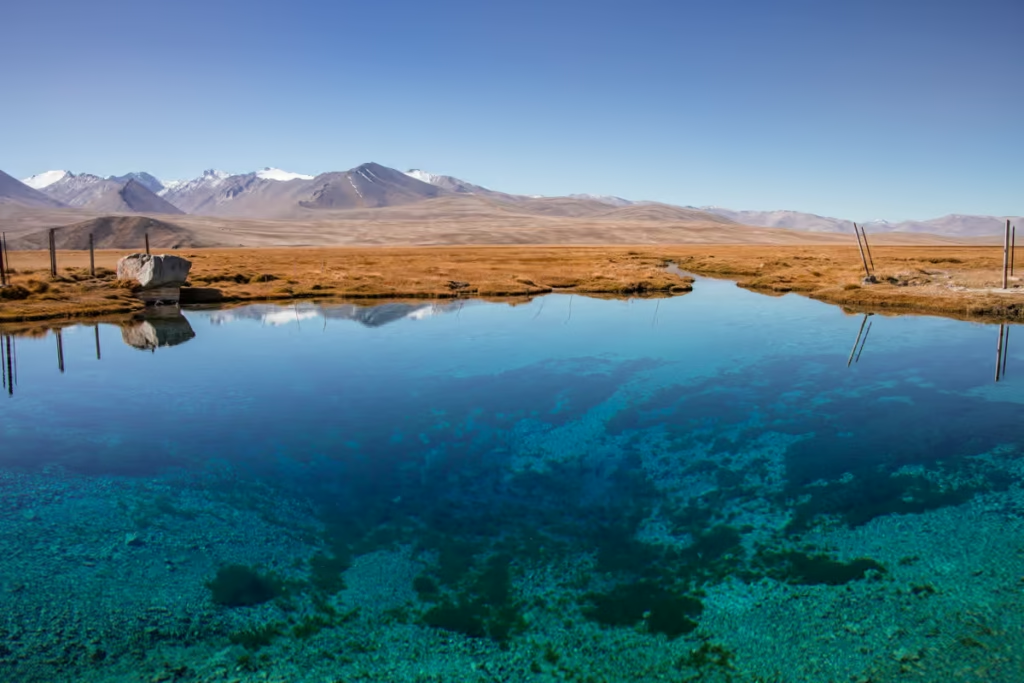
Tajikistan In Photos
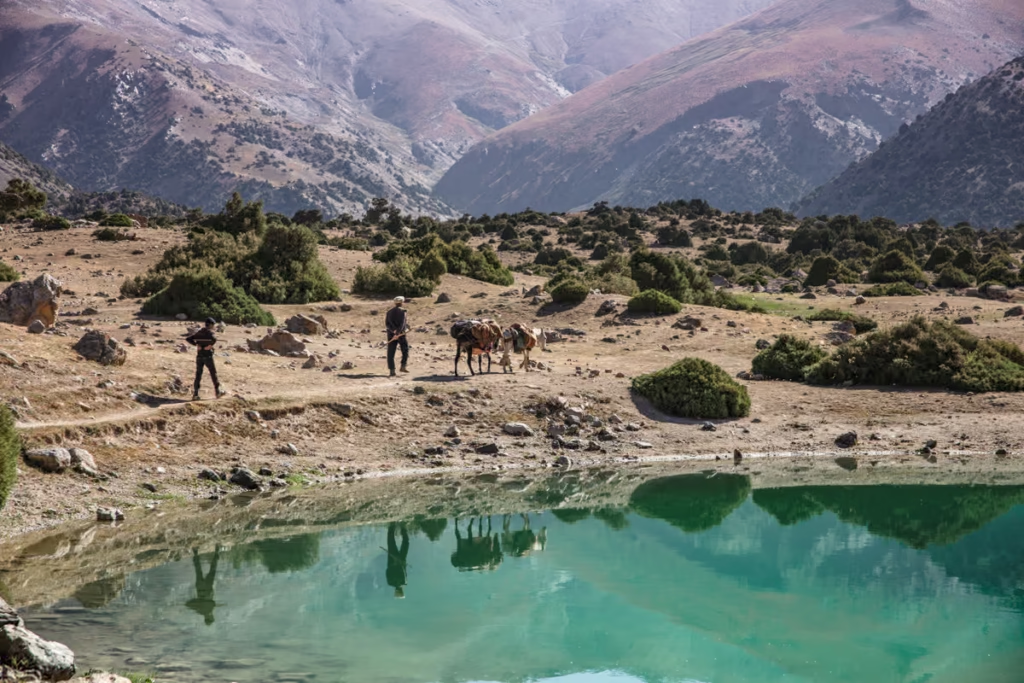
Tajikistan Itinerary for 1-4 Weeks
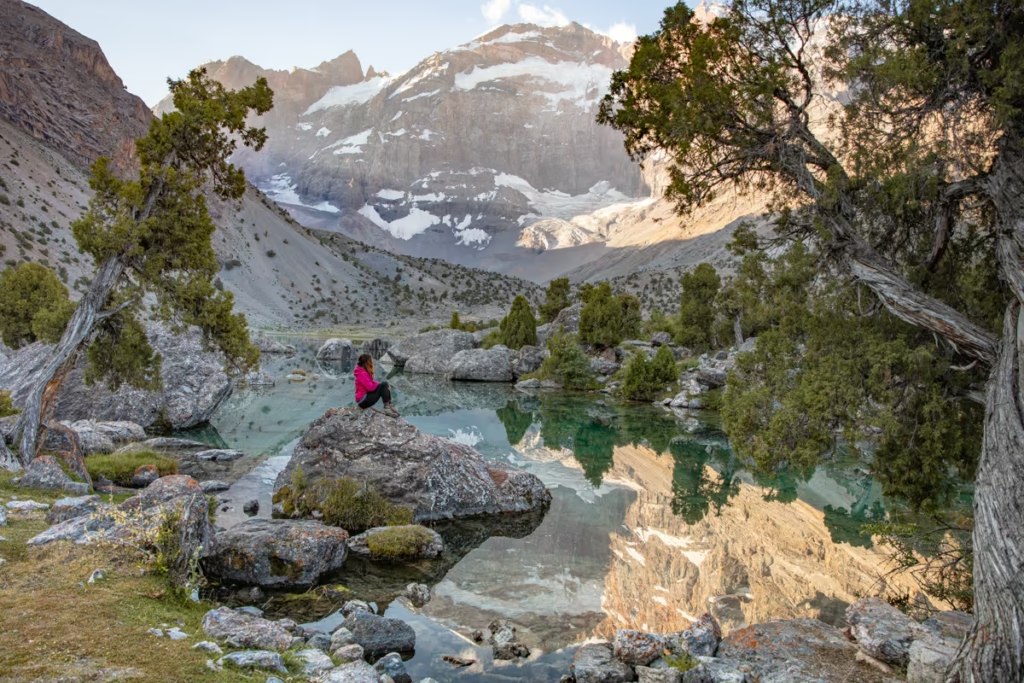
Solo Female Travel in Central Asia
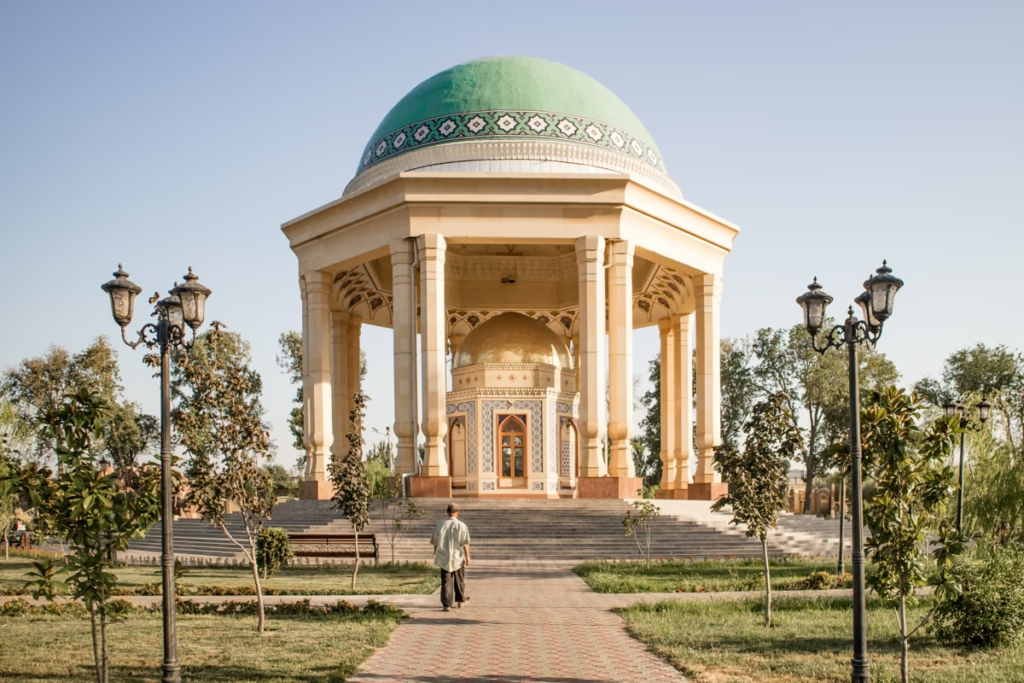
Khujand Travel Guide
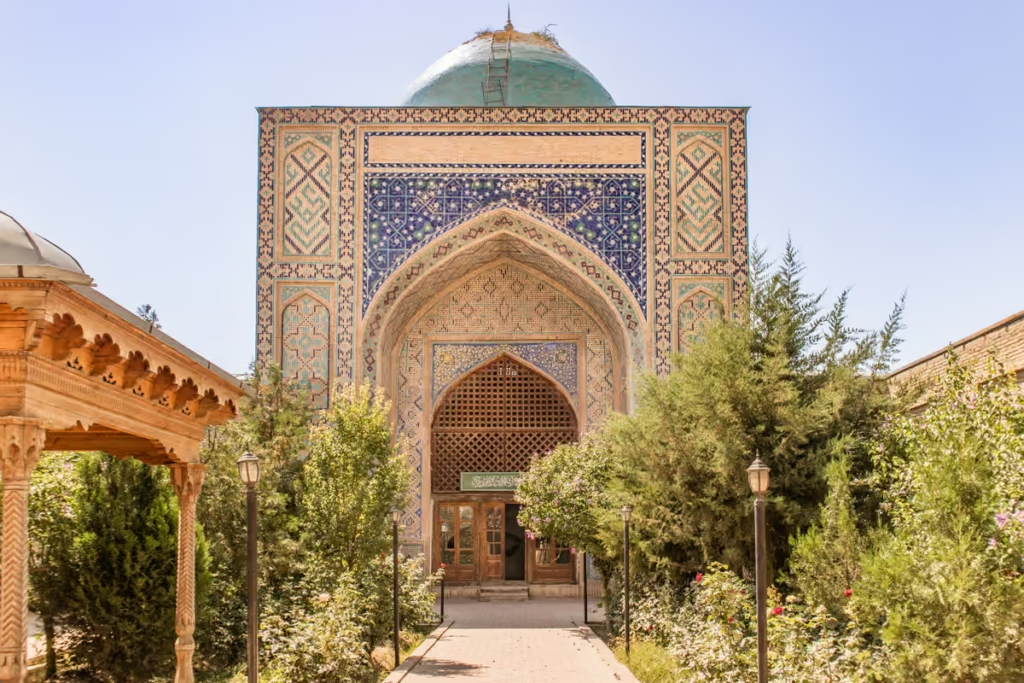
Istaravshan Travel Guide
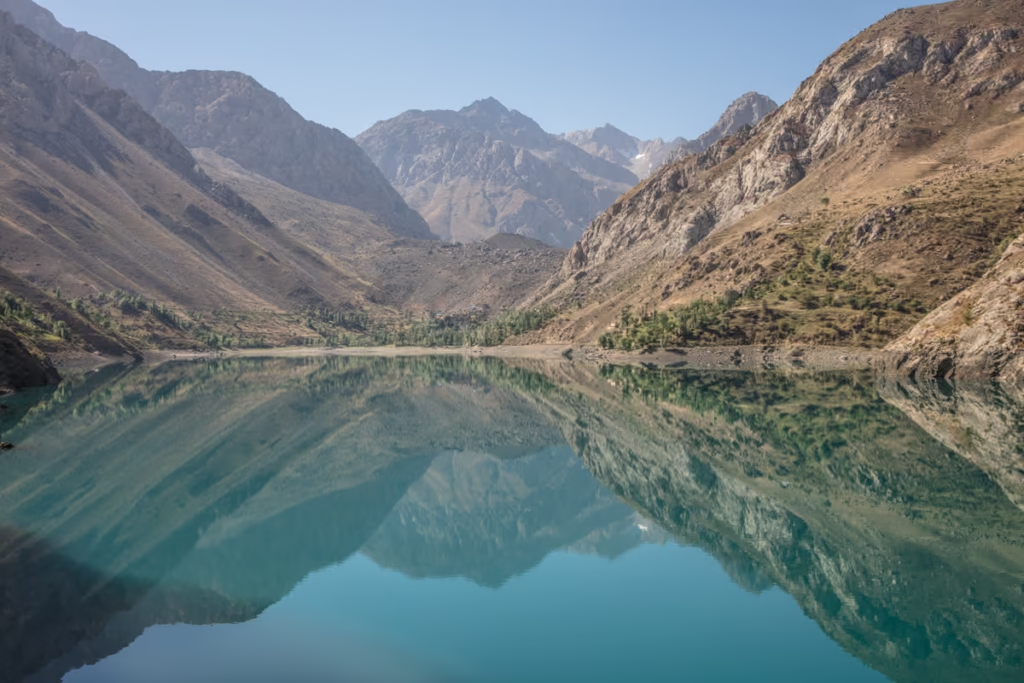
Haft Kul: Tajikistan’s 7 Lakes

Registering with Tajikistan OVIR in Dushanbe
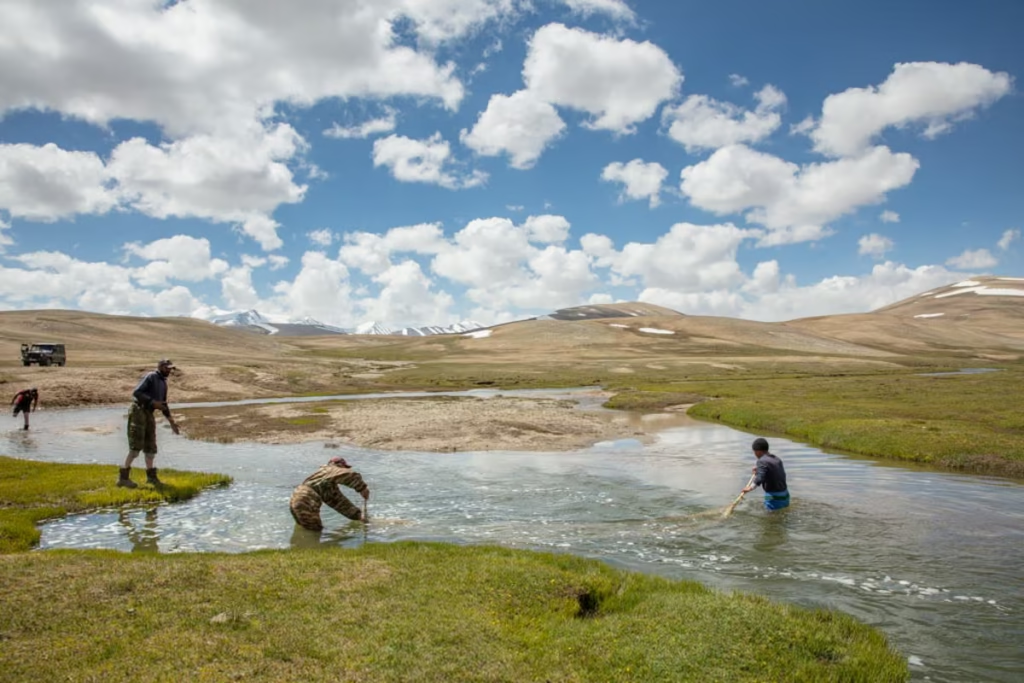
Trekking to Turumtaikul Lake
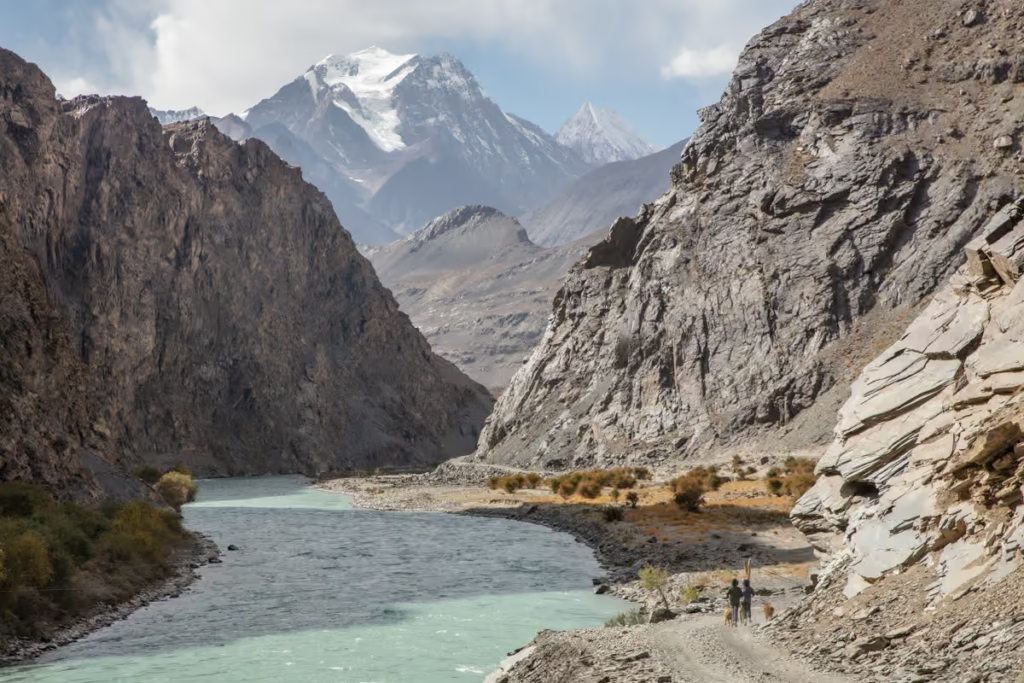
Bartang Valley, Tajikistan
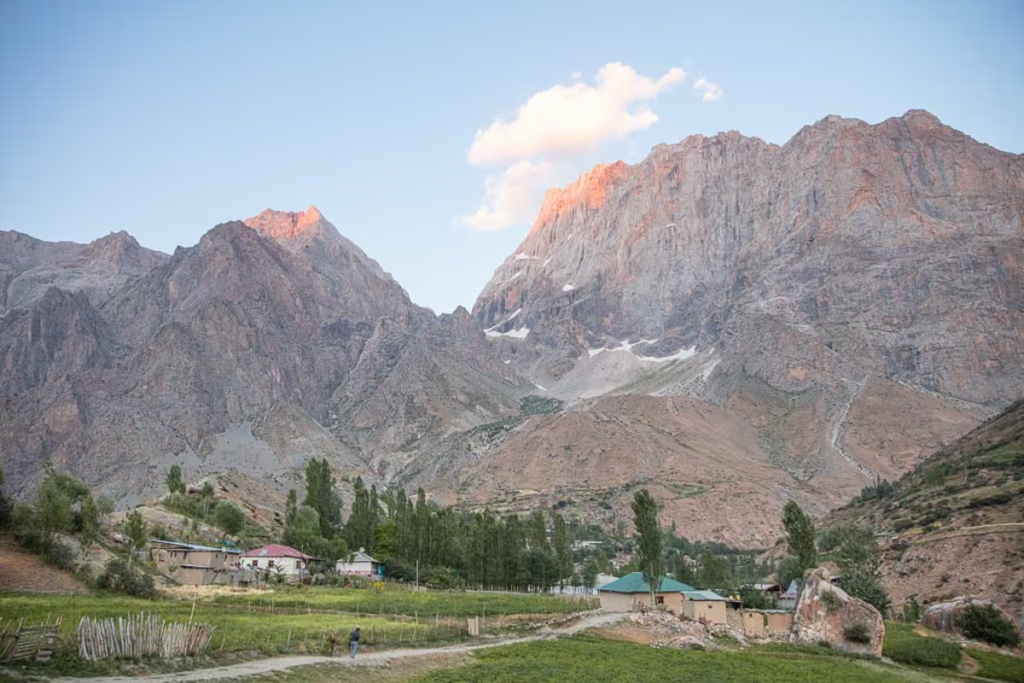
Yagnob Valley Trekking Travel Guide
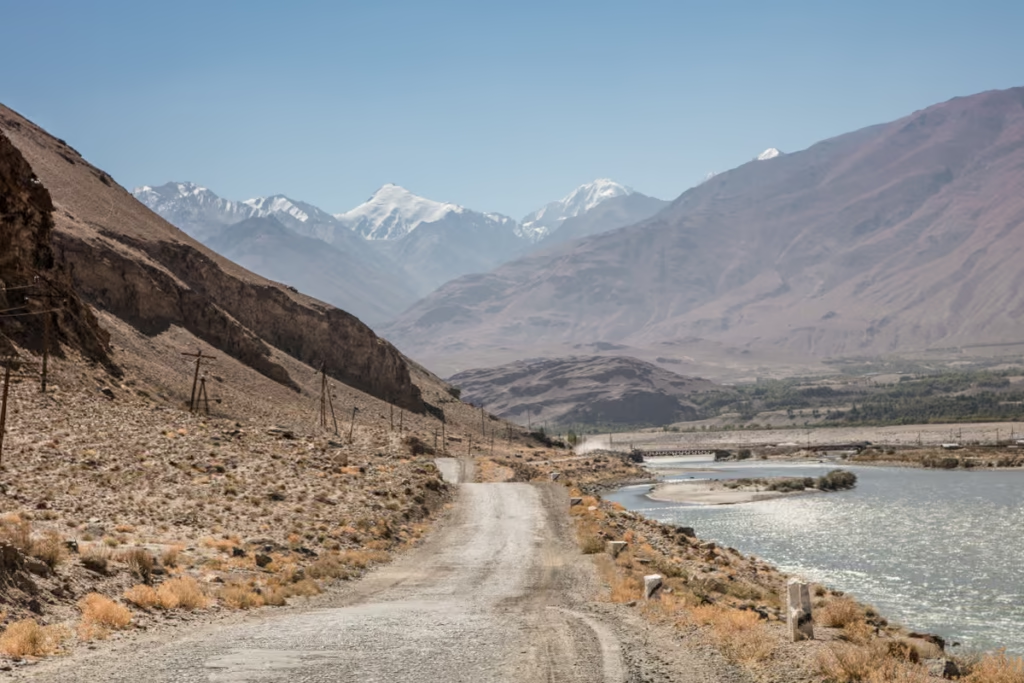
Ishkashim Border Crossing
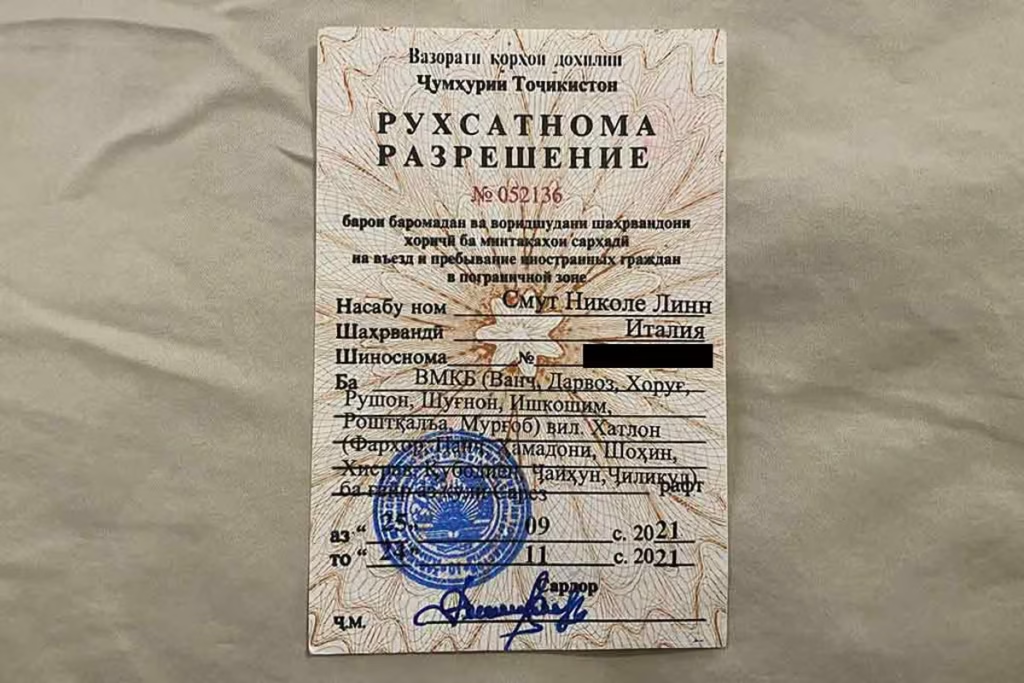
How to get a GBAO Permit
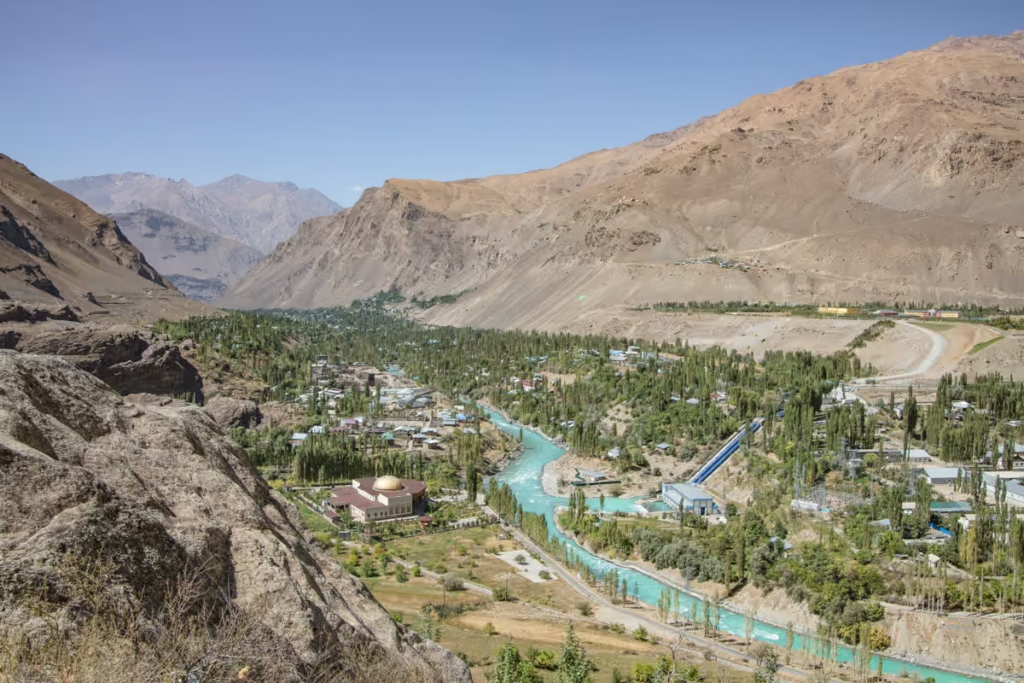
Khorog Travel Guide
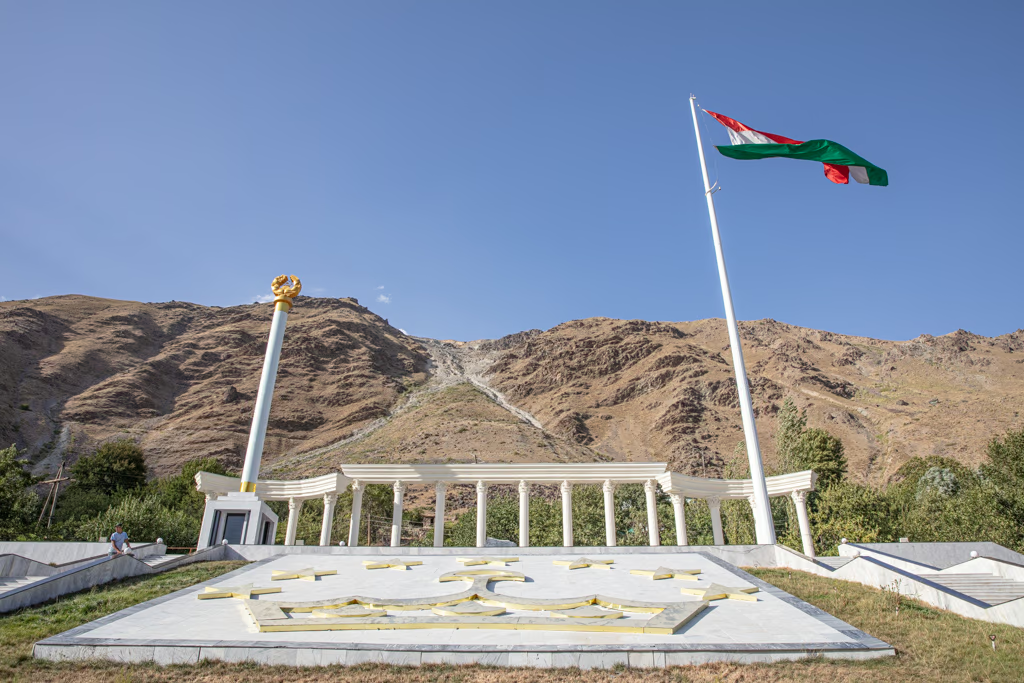
Tajikistan Letter of Invitation (LOI)
Must-Try Tajik Food
Best Road Trips in the World
Central Asia Food & Drink
10 Reasons To Visit Tajikistan
Qolma Pass Border Crossing
Tajikistan Travel Guide
Off the Beaten Path Asia
Pamir Highway Travel Guide
Things To Do Tajikistan
Shor Bulog Observatory, Tajikistan
Dushanbe Guide
Best Hikes in Tajikistan
Solo Female Travel Tajikistan
Beginners Guide To Central Asia Travel
Panjakent Travel Guide
Pamir Highway Itinerary
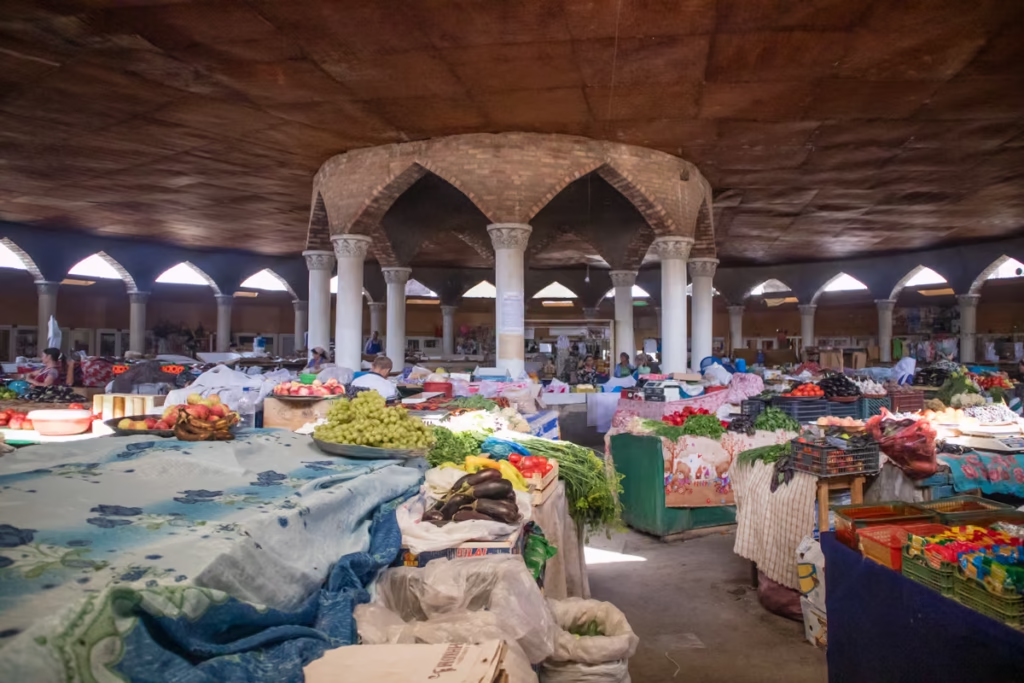
Panjakent-Samarkand Border Crossing
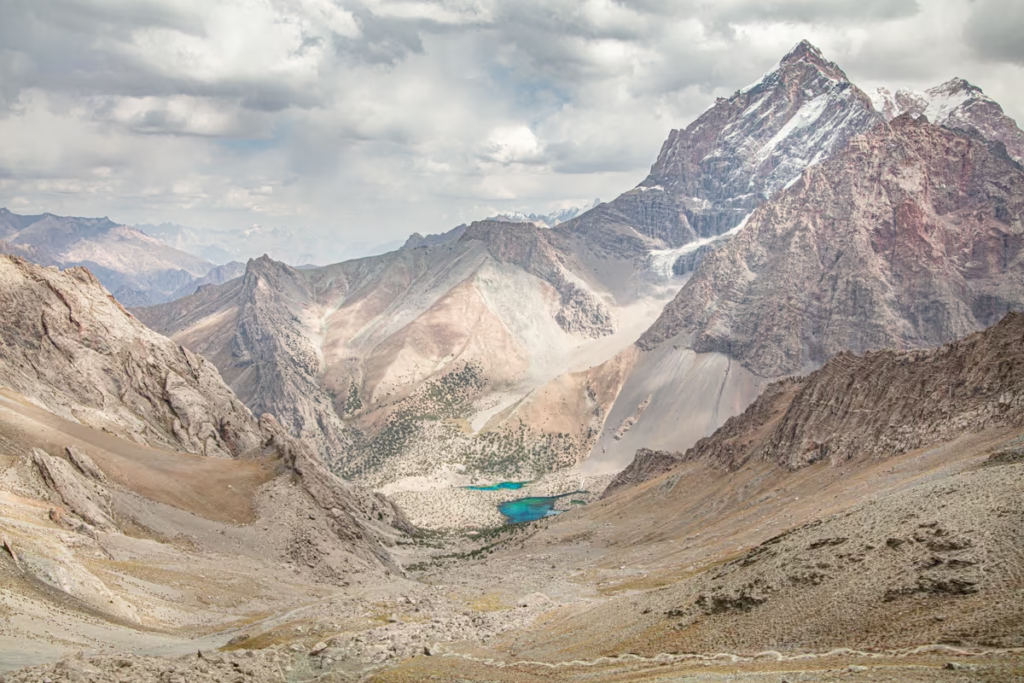
Fann Mountains Trekking Guide
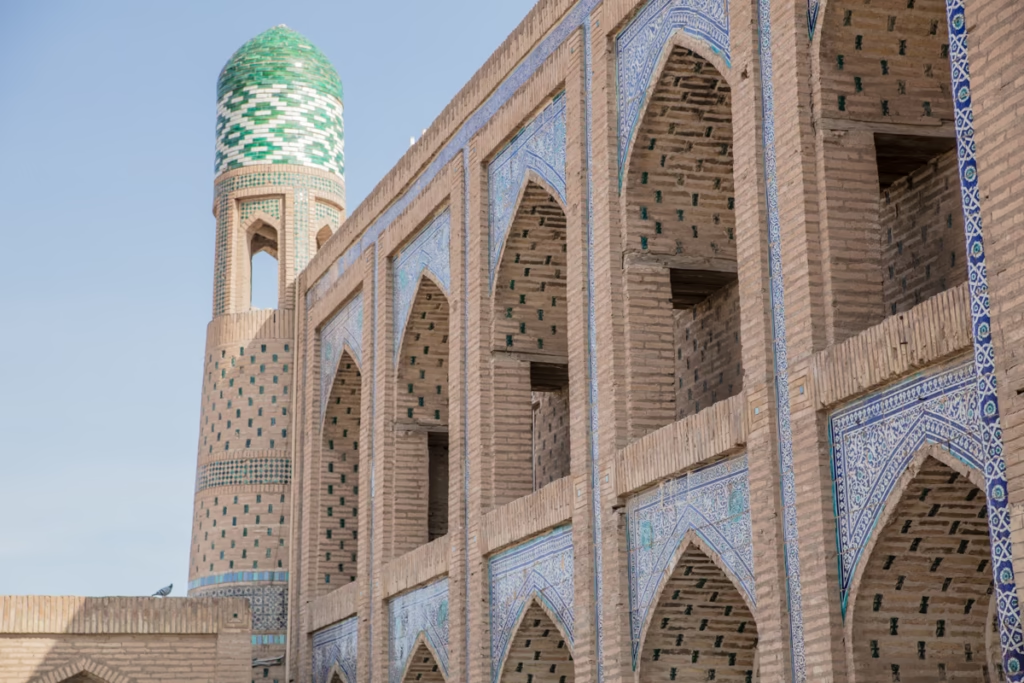
Two Week Tajikistan & Uzbekistan Itinerary
Best Restuarants in Dushanbe

How to Register Your Phone with IMEI.tj
Khatlon Travel Guide
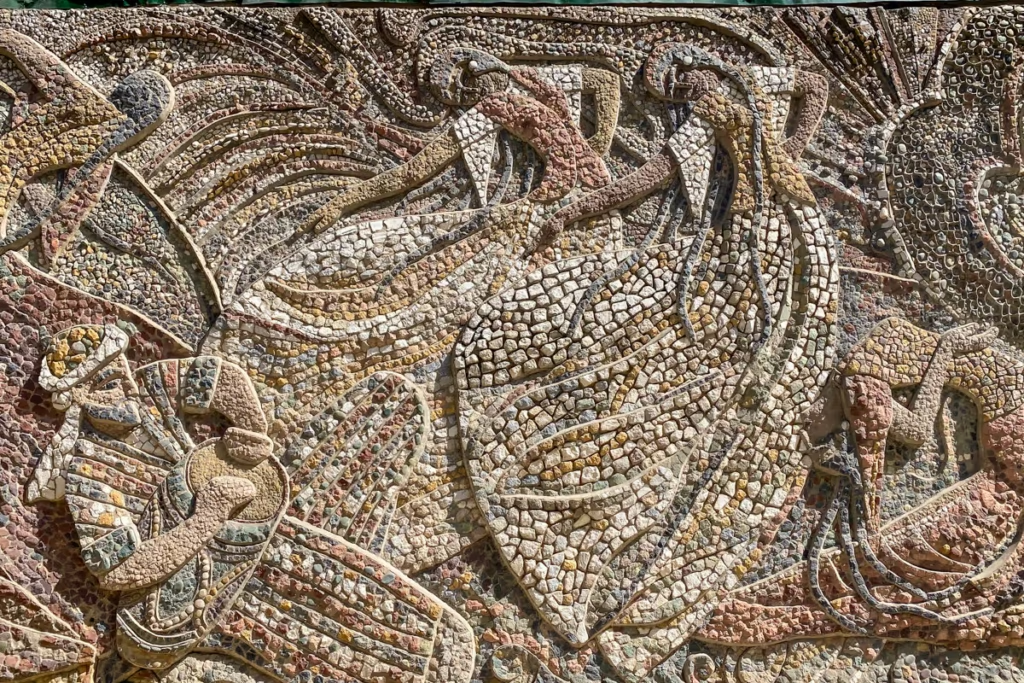
The Mosaics of Dushanbe
Best Places to Stay in Dushanbe
How to Use Payment Terminals in Tajikistan
Soviet Architecture in Khorog
Vorukh: Visiting the Tajik Enclave
The Denau-Dushanbe Border Crossing
Shaimak Travel Guide Tajikistan
Tajikistan SIM & eSIM Guide
Visiting Zorkul, Tajikistan
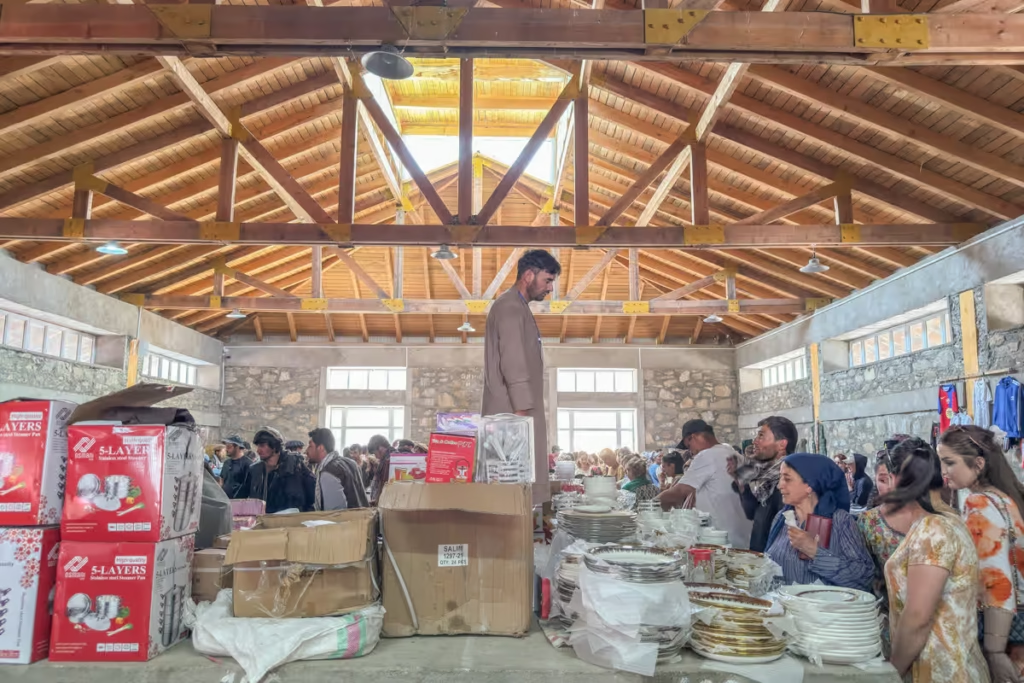
Afghan Bazaar in Khorog, Tajikistan
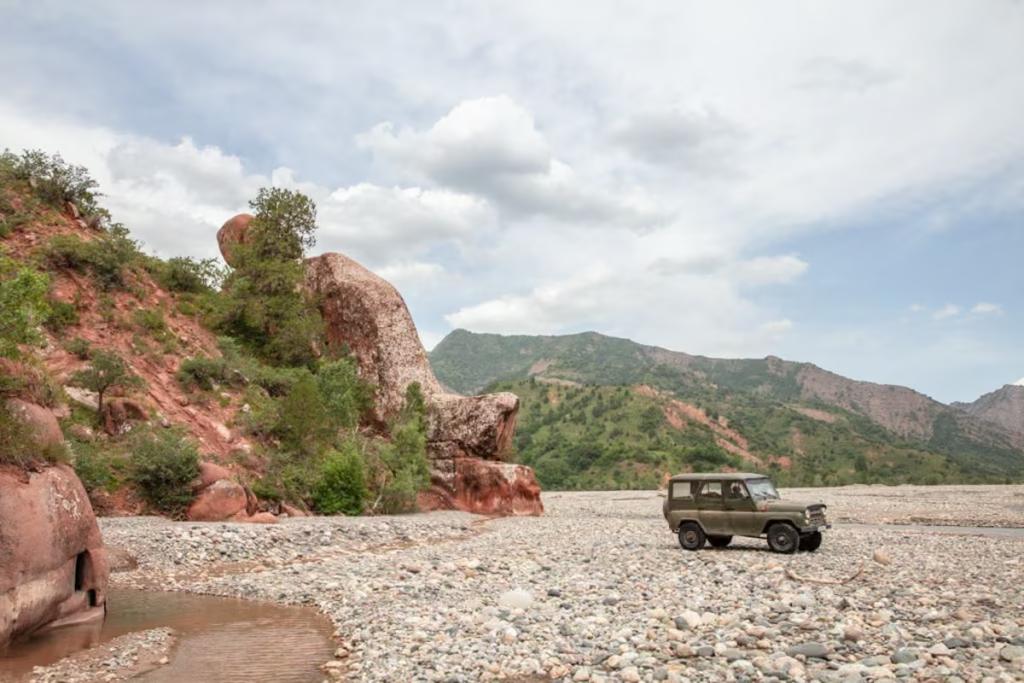
Visiting the Sary Khosar Nature Reserve