
Khorog Travel Guide + 8 Things to do in Khorog
Updated November 2026, Khorog Travel Guide + 8 Things to do in Khorog was written in January 2020
Khorog is the largest town in the Pamirs and the capital of Tajikistan’s Gorno-Badakhshan Autonomous Oblast (GBAO). Sitting in a narrow mountain valley near the Afghan border, it’s an important stop for anyone travelling the Pamir Highway, exploring the Wakhan Valley, or venturing deeper into the remote mountain valleys of eastern Tajikistan.
I’ve spent a lot of time in Khorog over the years, probably more than any sane non-resident would. It’s one of my favorite places to stop between trekking adventures in the Pamirs, and while it isn’t exactly overflowing with tourist attractions, there’s enough to keep you occupied for a couple of days. It’s also compact enough to explore mostly on foot, although getting up to the botanical garden is another story.
For travellers arriving from Dushanbe, Khorog is a welcome place to rest after the long drive along the Panj River. Those coming from Murghab and the Pamir Plateau will find it a good place to stock up on supplies, enjoy a few creature comforts, and prepare for the journey west.
Whether you’re planning a short stopover or using Khorog as a base to explore the surrounding valleys, this Khorog travel guide covers the best things to do, where to stay, restaurants worth visiting, how to get there, and onward transport throughout the Pamirs.
Note that there is extensive construction still ongoing on the Pamir Highway in 2026. The roadwork is happening between Qala i Khumb and Khorog and is causing major delays, so it’s advisable to plan ahead and ask locally when transport should depart, so as to not get stuck in road closures.
Taking on the Pamir Highway? Learn everything you need to know in the Pamir Highway Guide
and plan the perfect itinerary with my 10 day Pamir Highway itinerary
Need Travel Insurance and Evacuation Services?
Start shopping for travel insurance plans over at IATI Insurance. Readers of the Adventures of Nicole get a 5% discount off your plan.
The Adventures of Nicole partners with Global Rescue to offer the world’s leading medical evacuation and security advisory services. To travel with peace of mind, explore their evacuation coverage.
Start here: The Ultimate Tajikistan Travel Guide
Get your copy of Bradt Tajikistan to help you plan your visit
Things to Do in Khorog
Khorog isn’t a city with a long list of major tourist attractions, but there are several worthwhile places to visit while you’re here. From leafy parks and local bazaars to regional museums and hillside viewpoints, these are the best things to do in Khorog, Tajikistan.
Central Park

Khorog Central Park is one of the nicest places to spend a relaxed afternoon in town. Set alongside the river, the park offers welcome shade from the summer sun, with plenty of trees, walking paths, and places to sit and watch everyday life unfold.
During the summer months, you’ll also find a small carnival and swimming pool, making it a popular gathering place for local families.
The park is also home to the PECTA office (Pamir Eco-Cultural Tourism Association) and Chor Bagh Restaurant, making it a convenient starting point for arranging excursions or simply enjoying a meal overlooking the river.
Every July, Khorog Central Park traditionally hosts the Roof of the World Festival, which celebrates the music, dance, food, handicrafts, and cultural traditions of the Pamirs and neighbouring regions. Performers and participants have historically come from Tajikistan, Kyrgyzstan, Uzbekistan, Western China, Afghanistan, and Pakistan.
Khorog Central Park hosts many events and festivals throughout the year too, including several Nowruz festivities held throughout the holiday in March.
PECTA Office
The PECTA office is one of the most useful places to visit in Khorog, particularly if you’re planning to explore beyond the town.
Located inside Central Park, PECTA can help travellers arrange onward transport, find drivers, connect with other travellers to share the cost of a vehicle, and organize activities throughout the Pamirs.
If you’re travelling independently and haven’t arranged your entire Pamir Highway itinerary in advance, I’d recommend stopping here to ask about available drivers and current road conditions. The staff can also point you toward local guides and other tourism services in the region.
Khorog Bazaar

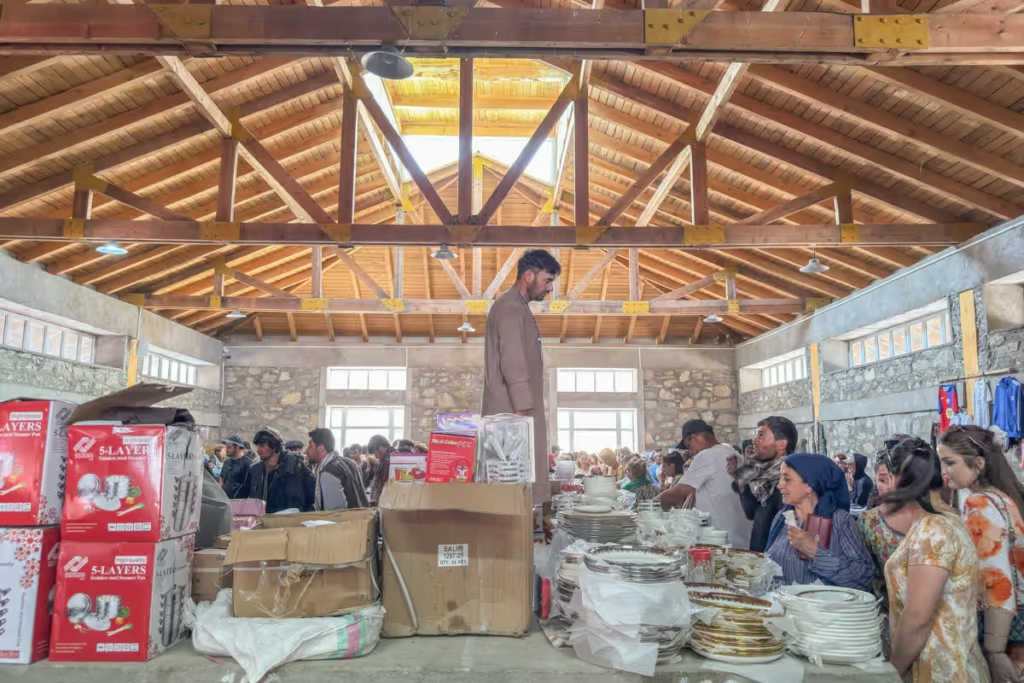
A visit to Old Khorog Bazaar is worthwhile even if you aren’t planning to buy much. It’s one of the best places in town to get a glimpse of everyday life in the Pamirs, browse local handicrafts, and pick up supplies before heading into the more remote mountain valleys.
If you’re continuing east toward Murghab on the Pamir Highway, I’d recommend stocking up in Khorog. Shops and bazaars further along the route have a much smaller selection, and prices can be higher.
One thing worth knowing is that parts of the bazaar have relocated. Much of the fresh produce section is now found at the newer bazaar, approximately 1 km west of the old bazaar in the town center.
Take a hike: The 10 best treks in Tajiksitan
Pamir Museum

The Khorog Regional Museum, also known as the Pamir Museum, is worth visiting if you’re interested in learning more about the history and cultures of the Pamirs.
The museum houses a collection of regional artifacts and exhibits covering the history, archaeology, and cultural traditions of Gorno-Badakhshan. Unfortunately, the collection has historically been only partially displayed, as the museum’s relocation to a former theatre building in 2015 was intended to be temporary. Limited space and storage conditions have meant that much of the collection has remained out of public view.
Most of the exhibits are labeled in Russian, so I’d recommend using Google Translate’s camera function if you can’t read Russian. The curator can offer explanations, if she is available.
Entrance to the Khorog Regional Museum is 20 TJS.
Hike Above Khorog for Aerial Views
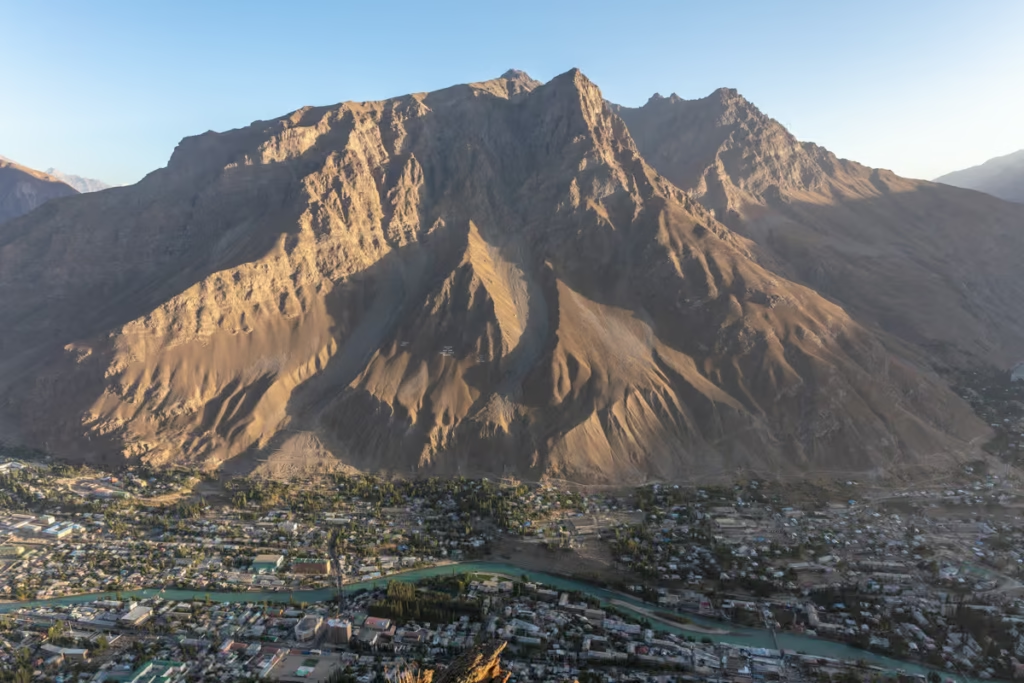
If you’re looking for a short hike in Khorog, or simply want to see the town from above, there’s a great trail that climbs into the hills north of the city.
Starting from the town center, head approximately 200 metres east of the main traffic light and walk north along Boghen Road toward the Khufaq neighborhood. You’ll soon pass a cemetery, where a trail winds uphill into the surrounding hills.
The climb offers increasingly good views over Khorog, the river valley, and the mountains beyond. It’s a nice warm-up hike before heading into the higher elevations of the Pamirs, particularly if you’ve just arrived after a long drive from Dushanbe.
You can retrace your steps back into town or continue along the ridgeline toward Khorog Airport. If you choose the latter, you can catch a marshrutka back into the center from near the airport.
I’d recommend taking water, sun protection, and offline maps, as this isn’t necessarily a formally maintained tourist trail.
Khorog Botanical Garden
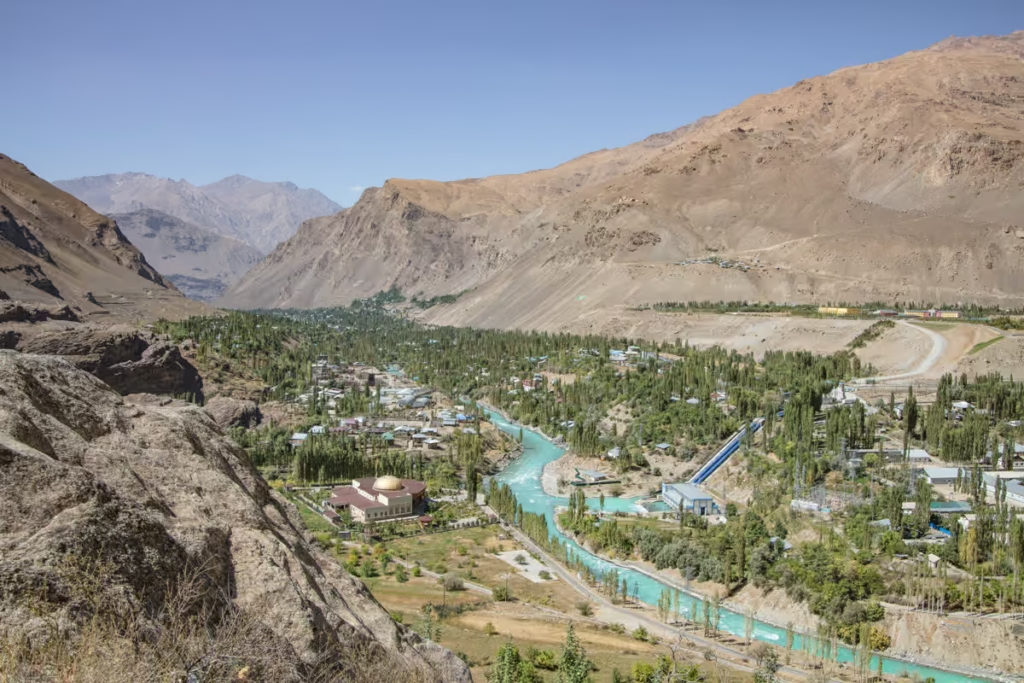
Perched above the town, the Khorog Botanical Garden is the second-highest botanical garden in the world and a popular attraction in Khorog. It offers panoramic views across the valley and an opportunity to see plants adapted to the harsh conditions of the Pamir Mountains.
The garden has historically been somewhat neglected, so don’t arrive expecting beautifully manicured grounds. The main attraction is arguably the setting itself, with sweeping views over Khorog and the surrounding mountains.
Getting there requires a bit of effort. The garden is located well uphill from the town centre, so you can either take marshrutka #3 to the lower entrance and walk approximately another 30 minutes, or arrange a taxi directly to the entrance.
Entrance to the botanical garden is 10 TJS. It is quite a haul out of town, so I’d recommend either taking Marshrutka #3 (2.5 TJS) to the lower gate and walking 30 minutes more to arrive, or grabbing a taxi in town for about 12 TJS to take you all the way to the entrance.
Ismaili Jamoatkhona & Center

The Ismaili Center in Khorog is an impressive architectural landmark on the western edge of Central Park. It serves as an important community and religious space for the Ismaili population of Gorno-Badakhshan, as well as hosting wider community activities.
The building is particularly interesting for its architectural design, which incorporates elements inspired by the region’s cultural traditions.
Although the center was previously accessible to visitors through organised tours, access to the Jamoatkhona has since become restricted. As of my latest visit, it was still no longer possible for foreign visitors to enter the religious facilities, which are now reserved for local practitioners.
Even if you cannot go inside, the building is worth seeing from the outside while exploring Central Park.
Unfortunately, it’s no longer possible to visit the Jamoatkhona. It has been shut down (mostly) by the government and only local practitioners are allowed in to use the mosque.
Tem (Afghan) Border Market

Historically, one of the more unusual things to do near Khorog was visit the Afghan border market at Tem, near the Tem-Demogan Tajikistan-Afghanistan border crossing at the Panj River.
The market traditionally takes place on Saturdays, when Afghan merchants are permitted to cross the bridge and sell goods on the Tajik side. Visitors can browse food, clothing, handicrafts, and other products while getting a fascinating glimpse of cross-border trade between the two countries.
However, there have been significant restrictions on visiting the market. The market has also been subject to frequent closures, so even before the latest restrictions, it was never something you could reliably plan around.
The Afghan Border Market is located about 3 km north of the Khorog Airport. Marshrutka #4 will get you here for 2.5 TJS, or grab a taxi from town for about 10 TJS.
Update November 2026: In August 2025, Tajik authorities stopped allowing foreign visitors to enter the bazaar. During subsequent visits, ID checks were being conducted at the entrance. The same restrictions were reported at the Ishkashim border market. This still holds true in 2026. I’d recommend going to the PECTA office the day prior to ask if this is still the case at the time of your visit as this could change at any moment.
Looking for the best short hike in the Pamirs? Check out the Jizeu Trekking Guide
Soviet Architecture in Khorog
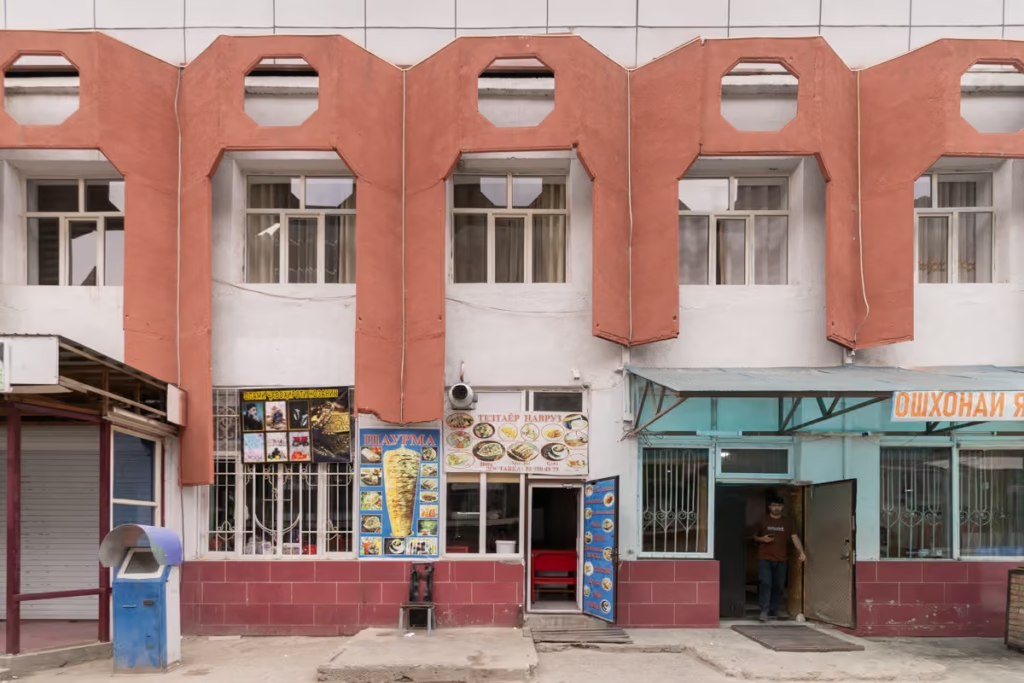
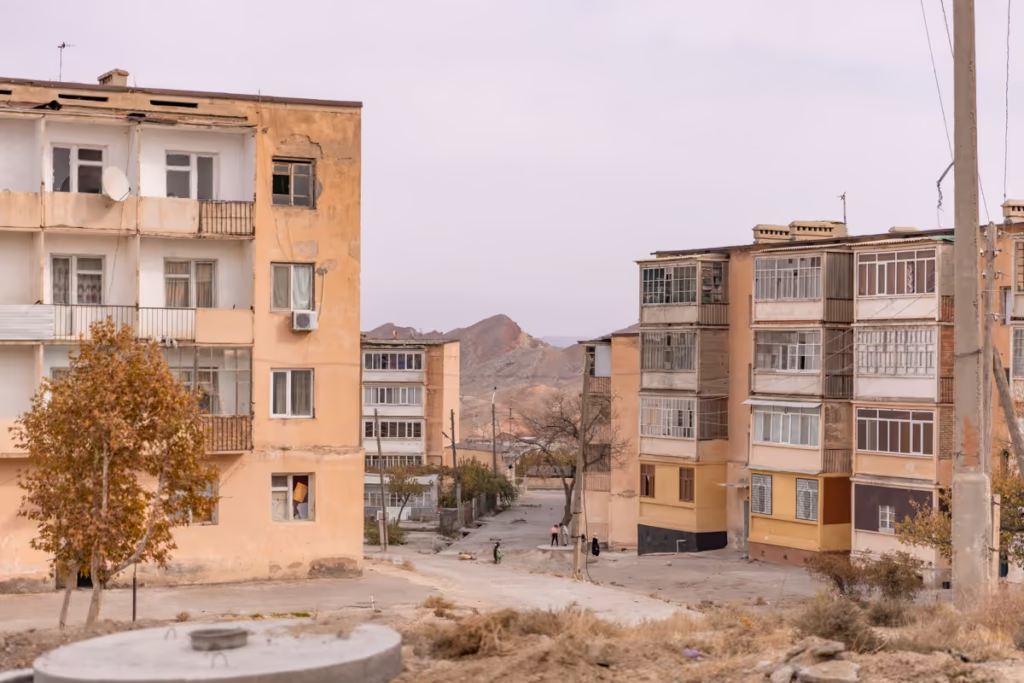
Khorog might look like a sleepy mountain town wedged between the Pamir peaks and the Gunt River, but its streets tell a different story. Just take a look at the main road, still named Lenin Street, for starters. Soviet-era architecture is scattered throughout the town, from blocky concrete institutions and low-rise apartment buildings to public buildings and cultural centres built when Moscow had big plans for this remote frontier capital.
Before the Soviet arrival, Khorog was a small settlement where life revolved around traditional Pamiri homes and seasonal trade with Afghanistan. That changed in the 1920s and 1930s, when Soviet planners set about transforming it into the administrative and cultural centre of Gorno-Badakhshan. Schools, universities, housing blocks, cultural halls, and other public institutions appeared, alongside infrastructure such as roads and hydroelectric power. The buildings that remain offer a glimpse into how dramatically Soviet rule reshaped life in the Pamirs.
Take a walk along Lenin Street and through the older parts of town, keeping an eye out for the functionalist designs and monumental public buildings that have survived. Unfortunately, Khorog’s Soviet architecture is disappearing quickly as older buildings are demolished to make way for modern high-rises. If you’re interested in Soviet history or architecture, it’s worth taking a wander around before more of this chapter of Khorog’s history disappears.
How to Get to Khorog
Khorog is connected to Dushanbe by the Pamir Highway and serves as the main transport hub for much of Gorno-Badakhshan. You can reach Khorog from Dushanbe, Murghab, Ishkashim, and other destinations throughout the Pamirs, although public transport is generally limited to shared taxis and marshrutkas.
Most journeys involve long drives through mountainous terrain, so allow plenty of time and be prepared for changing road conditions.
From Dushanbe to Khorog
The most common way to travel from Dushanbe to Khorog is by shared 4WD taxi. Vehicles typically depart from the Badakhshanskaya shared taxi terminal in Dushanbe, around the area behind the Hilton (formerly Sheraton) Hotel.
A seat in a shared 4WD generally costs around 400-450 TJS, although prices vary depending on the season and demand. It’s best to arrive early in the morning, as vehicles generally depart once all seats have been filled.
The journey from Dushanbe to Khorog takes approximately 12 hours, depending on road conditions, stops, and the vehicle. Though, I have had the journey go awry and personally endured a 20-hour journey, so don’t underestimate this drive.
Those who have chartered a 4×4 for the Pamir Highway and if you have the time, I recommend breaking up the journey with an overnight stop in Qala i Khumb. The scenery between Qala i Khumb and Khorog is particularly beautiful, following the Panj River along the Afghan border. Splitting the drive also means you won’t spend the entire journey exhausted in the back of a 4WD.
If you decide to break up the journey and are attempting to use shared taxis, head to the eastern end of Qala i Khumb in the morning, where you can usually find shared taxis waiting for passengers heading toward Khorog. These days, transport departing Qala i Khumb is thin, so you may be waiting a while.
For the return journey from Khorog to Dushanbe, shared taxis depart from the terminal near Khorog Airport, approximately 4 km west of the town centre. Marshrutkas #1 and #3 can take you toward the taxi terminal, or you can arrange a local taxi by calling Raksh taxi by dialing 3333.
Do note that the Tajik Air flight from Dushanbe to Khorog has resumed. Because the plane flies through the mountains, rather than over them, the weather has to be perfectly clear and calm, so cancellations are very common.
From Murghab to Khorog
If you’re travelling from Murghab to Khorog, shared taxis can usually be found at the bazaar in Murghab. Vehicles typically leave in the morning once they have enough passengers, so I’d recommend asking around the day before you intend to travel.
A seat in a shared 4WD should cost around 250 TJS, although fares can change and should be confirmed locally.
The drive from Murghab to Khorog takes approximately eight hours, usually with a stop in Alichur for lunch. It’s a beautiful journey, descending from the high Pamir Plateau into the greener valleys surrounding Khorog.
Some travellers choose to break up the journey with an overnight stay in Alichur. It’s a tiny settlement scattered along the highway, and while there isn’t much in the way of traditional sightseeing, I’ve always had a soft spot for the place. The local children I’ve encountered have been particularly friendly and always up for a bit of interaction.
Getting onward transport from Alichur can be tricky, however. If you decide to stop overnight, be prepared for the possibility of waiting a day or two for another shared vehicle. Hitchhiking along the highway is another possibility, although never something I’d rely on when planning a tight itinerary.
If you’re planning to include the Wakhan Valley on your journey from Murghab to Khorog, I’d strongly recommend arranging a private 4WD and driver in advance. This gives you much more flexibility to visit the various villages, fortresses, hot springs, and viewpoints along the way. It also will prevent you from getting marooned in Langar as there is no public transport between Langar and Bulunkul or Alichur and attempting to hitchhike it may leave you stranded for days.
If you are continuing to Murghab after Khorog, you’ll need to head to the new Murghab taxi stand in Bidurd, to the east of Khorog. There is a sprinter van that provides transport to the taxi stand in Bidurd. It departs from the bus stop in front of the Amonat Bank, just to the west of the old bazaar. The fare is 6 TJS for the van.
From the Tajik Wakhan Valley to Khorog
If you’re travelling through the Tajik Wakhan Valley, Khorog is the natural place to head next, whether you’re continuing along the Pamir Highway or returning to Dushanbe.
The easiest place to arrange shared transport is Ishkashim, the main town in the Wakhan Valley. Shared taxis from Ishkashim to Khorog traditionally cost around 70 TJS per seat and take approximately three hours. Most departures leave before 10 am, so arrive early.
Finding transport directly from Langar is more difficult, as shared vehicles are less frequent and may only depart when enough passengers have gathered.
If you’re travelling independently, I’d recommend asking your guesthouse about onward transport the evening before you intend to leave.
Those departing Khorog to the Tajik Wakhan will find shared taxis departing the main lot at the new Khorog Bazaar. It’s best to go in the morning before 10 am. Several cars will go each day to Ishkashim. Finding transport to locations further beyond in the Wakhan directly from Khorog can be a little tricky.
In the planning stages? Check out my 1-4 Week Tajikistan Itinerary
Where to Stay in Khorog
Khorog has a decent selection of accommodation for a relatively small mountain town, ranging from backpacker hostels and family-run guesthouses to more comfortable midrange hotels.
Most of the accommodation options are concentrated around the town centre, making it easy to walk to Central Park, the bazaar, and many of Khorog’s restaurants.
Here are some of my recommended places to stay in Khorog.
Budget
My go-to for Khorog is Welcome Inn, ran by the amazing Zhandiya who also started her own travel company called Unique Pamir. Zhandiya is a wealth of knowledge on the Pamirs (she literally knows everything and everyone!). A dorm bed including dinner and breakfast is 200 TJS per night for the centrally located hostel smack between the bazaar and central park. Contact Zhandiya at +992 937035393 or [email protected].
For those looking for the cheapest spot in town, the Pamir Lodge offers up dorm-style accommodation for $7 USD/night, they’ll even let you pitch your tent in the yard for cheaper. It can be a bit grungy, but it is a good place to meet other backpackers.
Another good and central spot for backpackers is the Lal Hotel Dorm (book a bed on Booking.com. It’s attached to the present Lal Cafe and is located just a few steps away from the Central Park.
Midrange
Sparkly clean rooms and lovely staff will welcome you at Hotel Kivekas, located about 500 meters east of the Central Park. They offer spacious doubles that overlook the river, and the breakfast here is excellent. Grab a room on Booking.com.
Another great midrange option is the LAL Hotel with traditionally decorated rooms with en suite showers and toilets. Attached to the Lal cafe and hostel mentioned above. Reserve a room on Booking.com.
Splurge
The Serena Inn, located a little west of town is Khorog’s most luxurious option for those looking for something upscale while they rest in Khorog. Check rates on Booking.com and Hotels.com.
Plan your onward adventure and go explore the little-visited Shokhdara Valley as a Pamir Highway side trip
Where to Eat in Khorog
While Khorog isn’t exactly a culinary capital, you’ll find a surprisingly decent selection of restaurants and cafes for such a remote mountain town. There are traditional Tajik and Pamiri dishes, Central Asian favourites, Indian food, pizza, coffee shops, and a few international options.
After spending days eating simple meals along the Pamir Highway, you’ll probably appreciate having some variety again. These are some of my favourite restaurants and cafes in Khorog.
I ♥ Kurutob

Located down near the new bazaar. Nigina, who trained in making qurutob in Khujand, makes one of the most delicious ones in all of Tajikistan. Her tabaka (fried, spatchcocked chicken) with veg is also to die for. These are large shared dishes and range from 100-150 TJS but will feed 2-4 people in most cases.
Cafe Luni

Located right on Lenin Street not too far from the Central Park, Cafe Luni whips up some pretty good coffees and serves up lovely pastries, cakes, and other treats.
I’m a big fan of the sambusa they usually have on hand also (usually chicken or potato) which makes for the perfect lunch or afternoon snack.
Joy Cafe

A newer addition to the Khorog restaurant scene, Joy Cafe is a trendy cafe that is located inside Khorog City Park. The pizzas are decent, and they serve up a scattering of western dishes.
Silk Road Cafe
Located near Lal Hotel and Delhi Darbar, Silk Road serves up Central Asian cuisine. Get there before mid-afternoon for some of the favorites there, such as the plov. They make one hefty batch, and once it’s done for the day, it’s finished.
World Cuisine
World Cuisine is a newer addition to Khorog and offers up a smattering of dishes from an array of countries around the world. The Sicilian pizza is pretty decent and came recommended by a couple of local friends. Located on Lenin Street upstairs from Tcell and just across from Welcome Inn.
Delhi Darbar

If you’ve been kicking around the Pamirs for a bit and are looking for a bit of spice (you know you missed it), the food at Delhi Darbar will be a welcomed change. Expect to pay about 30 TJS for a curry. Located on Azizbek Street.
Lal Cafe

Lal Cafe makes a pretty decent pizza, considering you’re not only in Tajikistan but the Pamirs. Expect to pay 30-60 TJS for a pizza, depending on toppings. Lal Cafe is attached to Lal Hotel on Azizbek Street.
Parinen
Parinen, which is located near the new bazaar features a lovely courtyard with outdoor dining as well as indoor seating. The shashlik here is excellent.
Chor Bagh

Located in the Khorog Center Park, where you can sit perched above the river. It’s the perfect spot to have a beer in the evening. Dishes range from traditional Tajik, Central Asian, international, and more. Costs range from about 20-60 TJS.
Off To Mughab Next? Check out the Murghab Travel Guide
How Many Days Do You Need in Khorog?
I’d recommend spending at least two nights in Khorog if you’re travelling through the Pamirs.
One full day gives you enough time to explore the main attractions in town, visit Central Park, browse the bazaar, and check out the Pamir Museum. You can also hike above the town or head up to the botanical garden if you have extra time.
However, Khorog is also a useful place to catch your breath between longer journeys. If you’re travelling the Pamir Highway, arranging onward transport, or planning side trips into the surrounding valleys, allowing three or more nights can be worthwhile.
Personally, I’ve spent considerably longer in Khorog on various trips, partly because it’s a convenient base for exploring the surrounding mountains and partly because sometimes you just need a break from bouncing around in the back of a Land Cruiser.
Best Time to Visit Khorog
The best time to visit Khorog is generally between June and September, when temperatures are warmer and travel conditions throughout the Pamirs are usually more favorable.
Summer is particularly pleasant in Khorog. The town is greener than the surrounding high-altitude landscapes, outdoor cafes and parks are lively, and it’s easier to arrange onward transport to more remote destinations.
July is also when the Roof of the World Festival traditionally takes place, making it an interesting time to visit if you’re interested in Pamiri music, food, and cultural traditions.
Spring and autumn can also be good times to visit, although road conditions can be less predictable in the spring months. Winter brings colder temperatures, snow, and more difficult travel conditions throughout the surrounding mountains. That said, I spent a winter in Khorog and found it to be easy enough to get to Dushanbe or Murghab when needed.
If you’re planning a longer Pamir Highway journey, I’d recommend travelling during the main summer season when more roads and mountain passes are accessible.
Getting Around Khorog
One of the nice things about visiting Khorog is that the town center is relatively compact and easy to explore on foot.
Most of the main attractions, including Central Park, the bazaar, the Ismaili Center, restaurants, and several guesthouses, are within walking distance of one another.
For places farther out, such as the botanical garden and Khorog Airport, local marshrutkas and taxis are available.
Marshrutka routes and fares can change, so ask your guesthouse which vehicle to take before setting off. If you’re unsure, a local taxi is generally the easiest option.
Money and ATMs in Khorog
Khorog is one of the most important places to withdraw or exchange money before continuing deeper into the Pamirs.
The town has a limited selection of ATMs and banking facilities, and cash becomes increasingly important once you leave for smaller villages and remote valleys.
I’d recommend carrying enough Tajik somoni to cover accommodation, meals, transport, and any unexpected expenses for the next leg of your journey. Don’t assume you’ll find a working ATM in Murghab or the smaller settlements along the Pamir Highway.
This is particularly important if you’re planning to travel independently and rely on shared taxis, guesthouses, and local homestays.
Getting Out of Khorog
Khorog is the main transport hub for travellers exploring Gorno-Badakhshan and the wider Pamirs. From here, you can find shared taxis and marshrutkas heading toward Dushanbe, Murghab, the Wakhan Valley, Bartang Valley, and Shokhdara Valley.
Most shared vehicles depart once they have filled their seats, rather than following a fixed timetable. If you’re heading somewhere particularly remote, you may need to wait a day or two for enough passengers to gather. Always ask locally about departure locations and prices, as these can change.
Khorog to Dushanbe
Shared 4WD taxis heading from Khorog to Dushanbe generally depart in the morning from the terminal located just west of town, near Khorog Airport.
Expect to pay approximately 400-450 TJS for a seat, although prices vary depending on the season and demand.
The journey takes about 12 hours, depending on road conditions and stops.
Khorog to Murghab and the Gunt Valley
If you’re heading east toward Murghab or other destinations along the Gunt Valley, you’ll need to get to the shared taxi stand in Bidurd, about 30 minutes east of Khorog. A sprinter van departs the bus stop in front of Amonat Bank, just west of the Old Khorog Bazaar fo5 6 TJS per person. Do note that it stops in the lot across the street to drop in coming passengers off, so it’s possible to hop on there too.
From Bidurd, vehicles typically depart in the morning, although some destinations have less frequent services. Head to the taxi stand early and ask around for drivers heading in your direction.
A seat from Khorog to Murghab should cost 250 TJS. For shorter journeys along the Gunt Valley, fares vary depending on your destination.
If you’re planning the Bachor Mountain Lakes Trek, ask your driver about getting dropped at Shazud. From there, you’ll need to arrange a 4WD to take you farther into the valley toward Bachor.
When I last made this journey, I paid approximately 50 TJS to reach Shazud and negotiated 120 TJS for the onward 4WD to Bachor.
Khorog to the Tajik Wakhan Valley
Shared taxis heading into the Tajik Wakhan Valley generally depart from the new bazaar.
Vehicles head toward Ishkashim, Langar, and other villages along the Wakhan Valley, although departures depend on demand.
A shared taxi to Ishkashim should cost cost approximately 70 TJS and takes around three hours. The journey to Langar takes roughly seven hours and will cost around 200 TJS.
If you’re planning to explore the Wakhan Valley, I’d recommend allowing extra time rather than relying on a strict transport schedule. Some destinations have fewer daily departures, and finding a vehicle for the entire valley can take a little patience.
Khorog to the Bartang Valley
The Bartang Valley is one of the most rewarding side trips from Khorog for travellers interested in remote villages, trekking, and traditional Pamiri life.
Shared vehicles heading toward the Bartang Valley can generally be found at the new bazaar lot. Ask around for drivers heading toward Rushan or further into the Bartang.
Getting to Rushan is usually relatively straightforward, and marshrutkas have historically cost as little as 30 TJS.
However, transport becomes considerably less frequent the farther you travel into the valley. If you’re heading toward destinations such as Savnob, Pasor, or further up the Bartang, you may need to wait several days for enough passengers.
I’d recommend arranging a driver in advance if you’re working with a limited amount of time for your itinerary.
Khorog to Shokhdara Valley
The Shokhdara Valley is one of the lesser-visited corners of the Pamirs and makes an excellent side trip from Khorog for those wanting to get away from the more established Pamir Highway route.
Shared marshrutkas generally connect Khorog with Roshtqala, with seats costing around 30 TJS.
Vehicles travelling farther into the valley, toward places such as Jawshanguz, are less frequent and may not depart every day.
The departure point for Shokdara Valley destinations is the lot at the new bazaar.
Khorog to the Afghan Wakhan
If you’re planning to explore the Afghan Wakhan, you’ll need to arrange transport toward Ishkashim.
Shared taxis heading toward Ishkashim depart from the same lot at the new bazaar as vehicles travelling into the Tajik Wakhan and Shokhdara Valley. The border crossing is actually located 3 km before Ishkashim, so let the driver know you want to be dropped off there.
Note that as of 2026, the only crossing open to foreigners between Tajikistan and Afghanistan is Panji Poyan-Shirkhan Bandar, just south of Dushanbe.
Why Visit Khorog?
Khorog might not have the grand monuments or big city feel of Dushanbe, but it’s an important part of any journey through the Pamirs. Between its leafy parks, mountain viewpoints, local bazaars, and excellent access to some of Tajikistan’s most remote valleys, there’s more to this little mountain town than first meets the eye.
For me, Khorog has always been one of those places that’s easy to return to, whether I’m stopping for a few days between trekking adventures or using it as a base to explore another corner of Gorno-Badakhshan. If you’re travelling the Pamir Highway, don’t simply treat it as a place to refuel and move on. Give yourself a little time to experience it.
Have Any Questions About Visiting Khorog or About Any of the Things to Do in Khorog Mentioned Above?
Ask your Khorog travel questions in the comments section below.
Posts from Tajikistan
Ishkashim Border Crossing
Best Road Trips in the World
Tajik Wakhan Valley: Complete Travel Guide
Central Asian Food: 31 Dishes & Drinks to Try
Bartang Valley Travel Guide
Lake Sarez Travel Guide: Trek & Permits
Yagnob Valley Trekking & Travel Guide
17 Best Things to Do in Tajikistan
Tajikistan Visa Guide: E-Visa, Fees & GBAO
Khujand Travel Guide: 11 Best Things to Do
Murghab Travel Guide

Madiyan Hot Springs, Tajikistan
Hisor Fortress, Tajikistan: How to Visit
Istaravshan Travel Guide: 10 Things to Do
Tajikistan Itinerary: 1-4 Weeks
Afghan Bazaar Khorog | Tem Market
Shokhdara Valley Travel Guide, Tajikistan
Vorukh: A Guide to Tajikistan’s Enclave
Shir Khan Bandar Border Crossing Guide
Tajik Food: 20+ Traditional Dishes
Qolma Pass: Tajikistan to China Guide
GBAO Permit: How to Get One
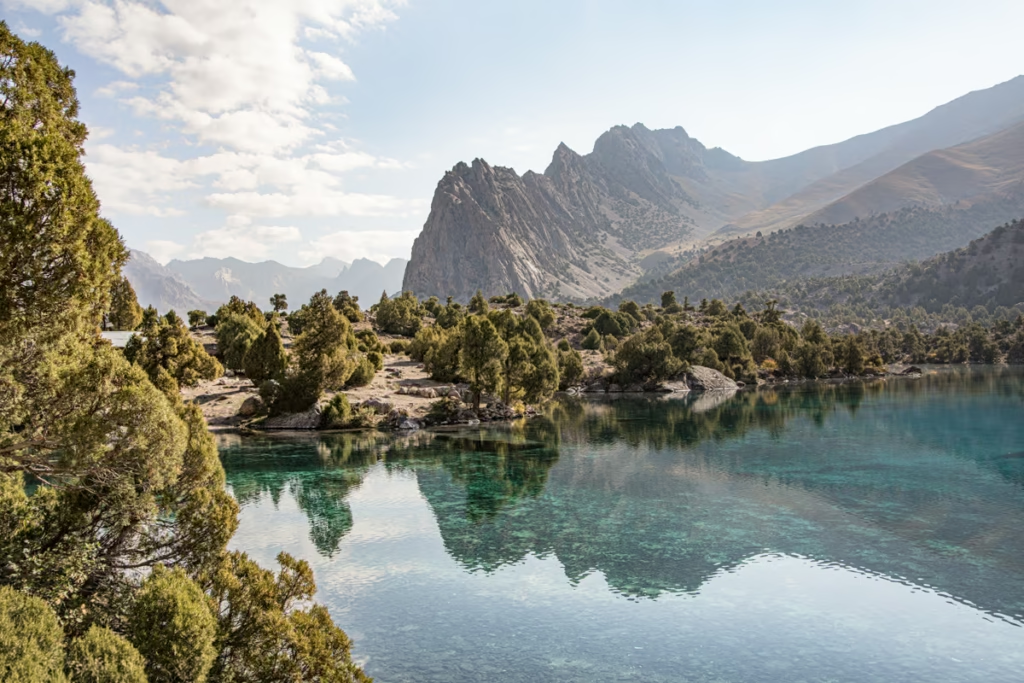
Lakes Loop, Tajikistan Hiking Guide
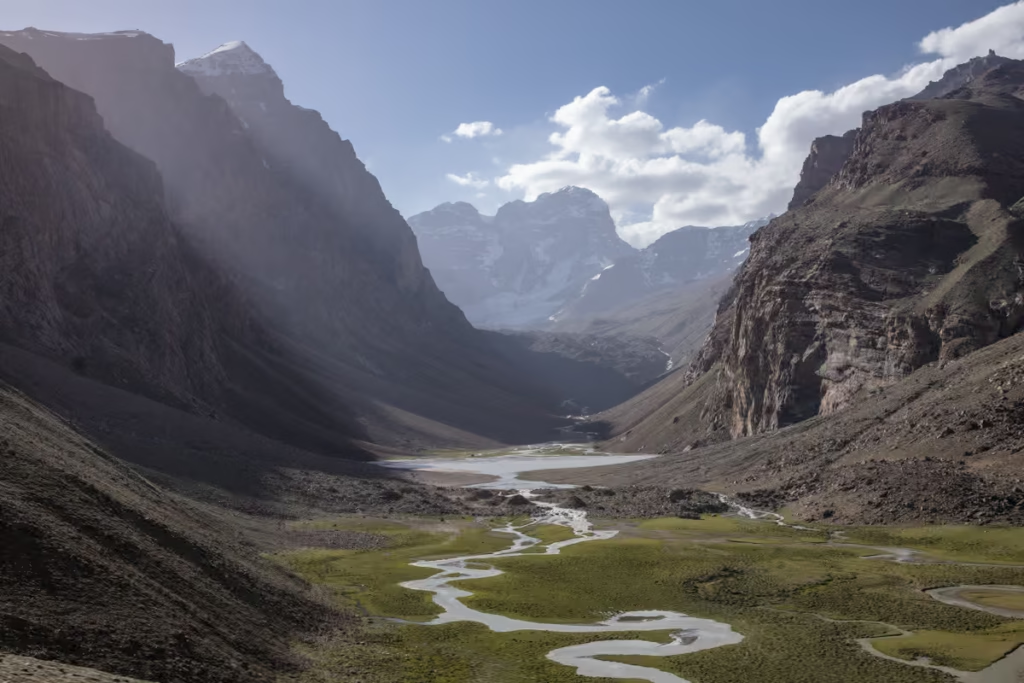
Pik Engles Hike: Tajikistan Trek Guide
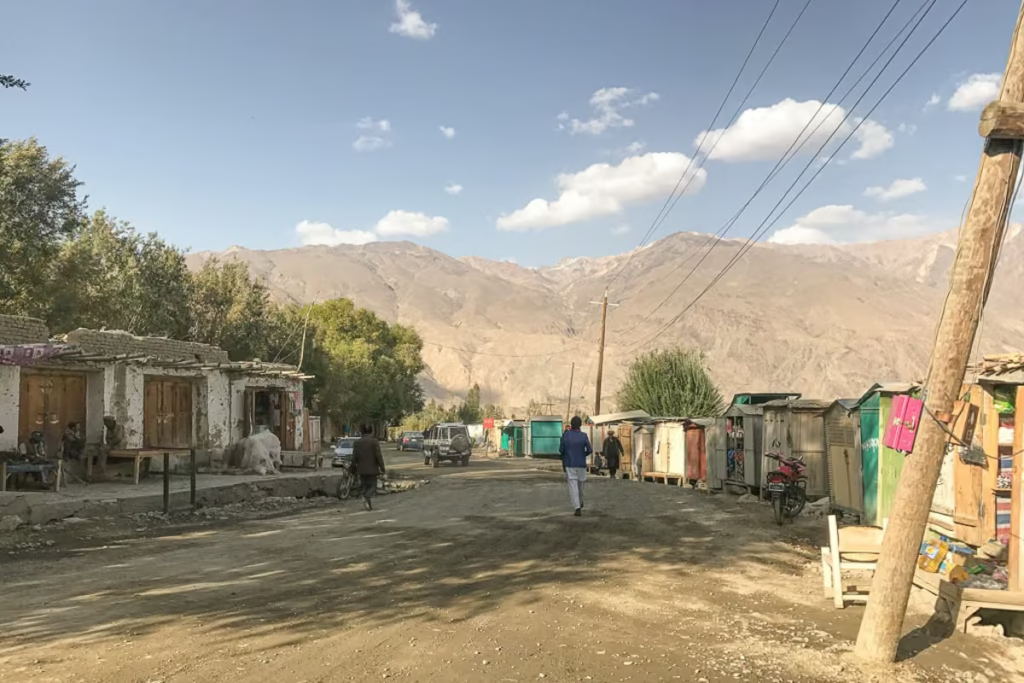
Tajikistan Border Crossings Guide
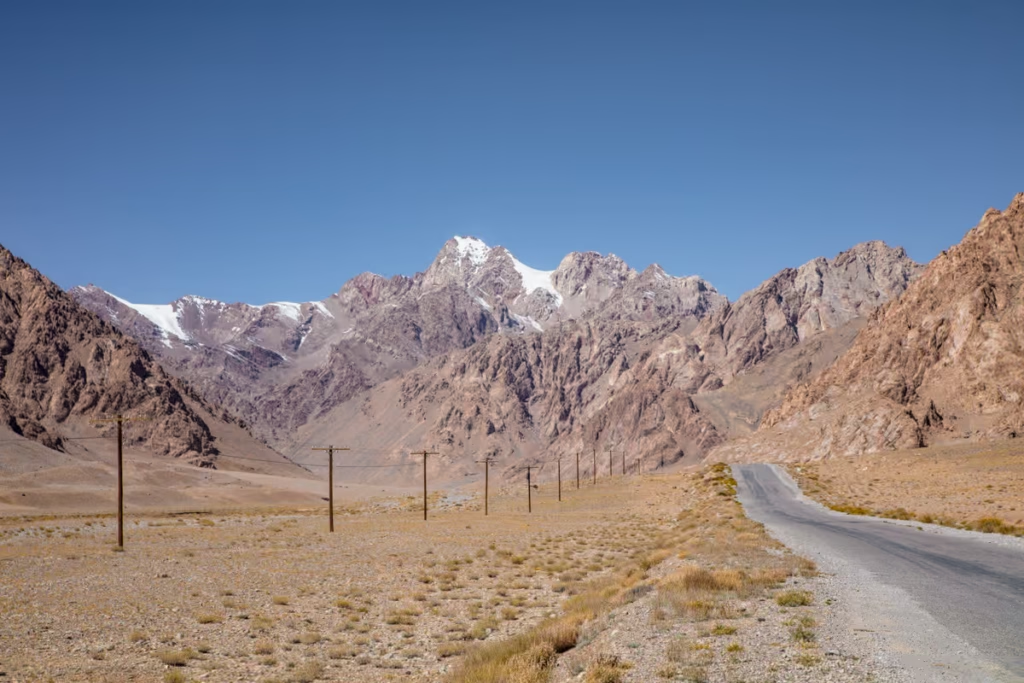
Pamir Highway Guide: M41 Route
Tajikistan Uzbekistan Itinerary: 2 Weeks
Solo Female Travel in Tajikistan
Chimtarga Pass Trek Guide | Tajikistan
Best Hikes in Tajikistan
Dushanbe Day Trips
Solo Female Travel in Central Asia
Jizeu, Tajikistan: Trek & Travel Guide
Tajikistan Travel Guide: Plan Your Trip
Dushanbe Travel Guide & Things to Do
Dushanbe Mosaics: Soviet-Era Art in Tajikistan
2 Week Tajikistan Itinerary
3 Week Tajikistan Itinerary
4 Week Tajikistan Itinerary
10 Day Tajikistan Itinerary
1 Week Tajikistan Itinerary
Panjakent Travel Guide: Things to Do

OVIR Registration in Tajikistan: Dushanbe Guide
Panjakent-Samarkand Border Crossing Guide
Fann Mountains Trekking Guide
Central Asia Travel Guide
Tajikistan SIM & eSIM Guide
Shurab, Tajikistan: An Almost Forgotten City

Isfara-Batken Border Crossing Guide
