Uzbek Fergana Valley Travel Guide
Updated October 2026, Uzbek Fergana Valley Travel Guide was originally published in March 2022
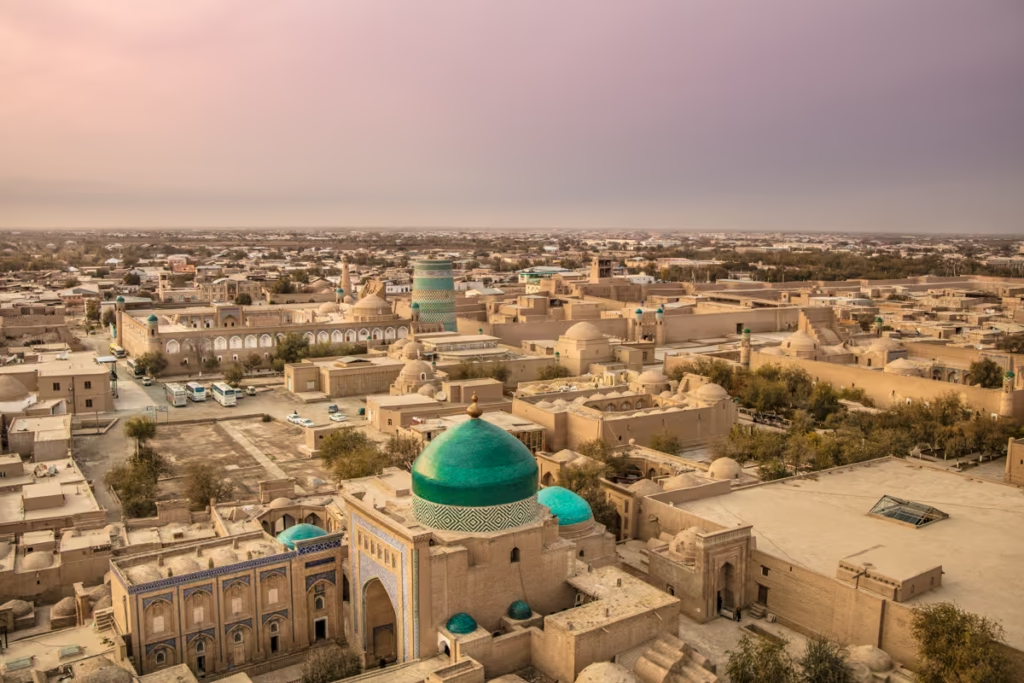
The Fergana Valley stretches across Uzbekistan, Kyrgyzstan, and Tajikistan, but this guide focuses specifically on the Uzbek Fergana Valley. The Uzbek portion is home to historic cities, bustling bazaars, traditional silk production, famous ceramics, mosques, madrasas, and some of the most interesting everyday cultural experiences in eastern Uzbekistan.
I’ve traveled through the Uzbek Fergana Valley multiple times, visiting Fergana City, Margilan, Kokand, Rishtan, Namangan, and Andijan. This guide covers the best places to visit in the Uzbek Fergana Valley, things to do, how to get there, how to get around, where to stay, border crossings, safety, and other practical travel information.
The Uzbek Fergana Valley feels quite different from Uzbekistan’s better-known Silk Road cities of Samarkand, Bukhara, and Khiva. Instead of spending your days moving from one monumental sight to another, travel here is more about wandering through bazaars, visiting working craft workshops, eating your way through local markets, and getting a glimpse of everyday life in one of Central Asia’s most historically important regions.
The valley’s history is complicated, too. Modern borders divide the wider Fergana Valley between three countries, leaving behind an unusual patchwork of borders and enclaves. Understanding that geography makes traveling through the region much more interesting, especially if you’re crossing between Uzbekistan, Tajikistan, and Kyrgyzstan.
Start here: Pick up a copy of Bradt’s Uzbekistan Guidebook and start planning
Need Travel Insurance and Evacuation Services?
Start shopping for travel insurance plans over at IATI Insurance. Readers of the Adventures of Nicole get a 5% discount off your plan.
The Adventures of Nicole partners with Global Rescue to offer the world’s leading medical evacuation and security advisory services. To travel with peace of mind, explore their evacuation coverage.
- Uzbek Fergana Valley at a Glance
- Best Things to Do in the Uzbek Fergana Valley
- History of the Fergana Valley
- Is the Uzbek Fergana Valley Safe?
- Best Time to Visit the Uzbek Fergana Valley
- How to Get to the Uzbek Fergana Valley
- How Many Days Do You Need in the Uzbek Fergana Valley?
- Where to Stay in the Uzbek Fergana Valley
- Best Places to Visit in the Uzbek Fergana Valley
- Fergana City
- Take Your Time in the Fergana Valley
Uzbek Fergana Valley at a Glance
| Trip length | 3 days for the main highlights |
| Region | Fergana Valley, Uzbekistan |
| Best for | Silk, ceramics, bazaars, history, culture |
| Main cities | Fergana City, Margilan, Kokand, Namangan, Andijan |
| Best base | Fergana City |
| Best for history | Kokand |
| Best for silk | Margilan |
| Best for ceramics | Rishtan |
| Best for bazaars | Margilan, Namangan, Andijan |
| Main access from Tashkent | Train or shared taxi |
| Border connections | Tajikistan and Kyrgyzstan |
Best Things to Do in the Uzbek Fergana Valley
The best things to do in the Uzbek Fergana Valley revolve around its historic cities, traditional crafts, bazaars, and everyday culture. While the region doesn’t have the monumental concentration of Samarkand or Bukhara, that’s part of the appeal. This is a place to slow down and explore.
- Visit the Yodgorlik Silk Factory in Margilan
- Shop for traditional fabrics at Kumtepa Bazaar
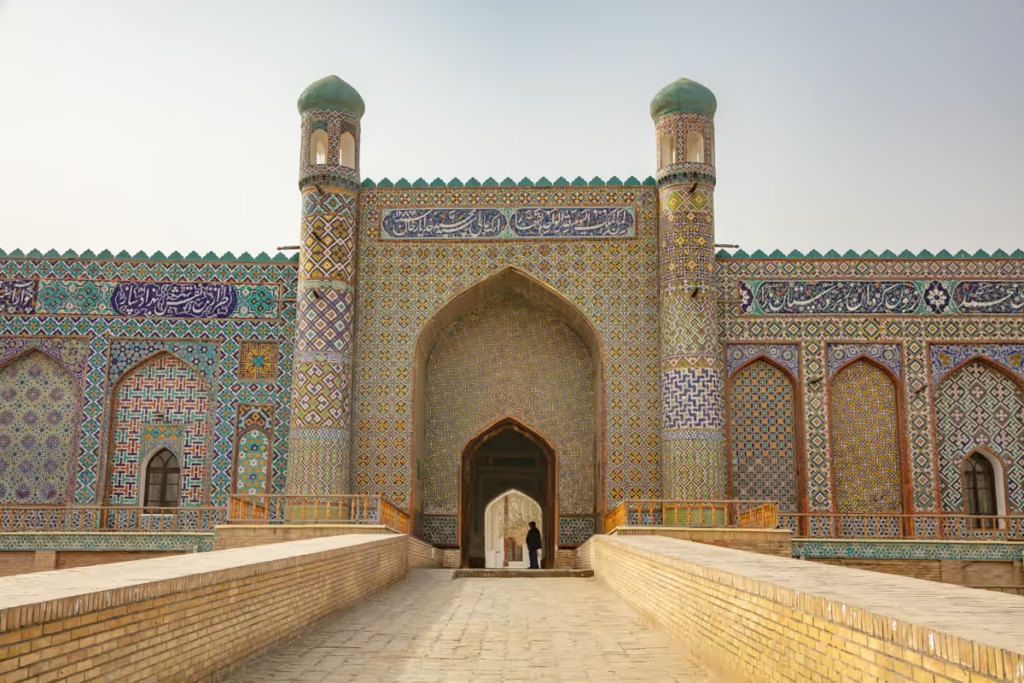
- Explore Khudayar Khan Palace in Kokand
- Visit Kokand’s historic mosques, madrasas, and mausoleums
- See traditional pottery being made in Rishtan
- Visit Alisher Nazirov’s Ceramic Workshop
- Explore the mosques and bazaars of Namangan
- Visit the ancient ruins of Aksikent
- Wander through Jahan Bazaar in Andijan
- Learn about Babur at the Babur Museum
- Explore Fergana City’s markets and parks
- Travel between the cities by shared taxi and local transport
History of the Fergana Valley
The Fergana Valley has been inhabited for thousands of years, thanks in large part to its fertile landscape between the Tien Shan and Pamir-Alay mountain systems. Its location made it an important agricultural region and crossroads for trade across Central Asia.
As the Silk Road developed, cities throughout the valley became important stops for merchants traveling between East and West. Over the centuries, powerful states and empires rose and fell here, while cities such as Kokand, Margilan, and Namangan developed into important centers of trade, religion, craftsmanship, and culture.
The history of the modern Fergana Valley became particularly complicated during the Soviet period, when administrative borders divided the valley among the Uzbek, Kyrgyz, and Tajik Soviet republics. Those borders remained after independence in 1991, creating the unusual patchwork of international borders and enclaves that travelers encounter today. Some of the most prominent events were the 2005 Andijan Massacre, the 2010 Southern Kyrgyzstan Riots, and the 2021 Tajik-Kyrgyz Vorukh Conflict.
These events and conflicts have led to strained, delicate, and often tense relations between the three nations as well as between the ethnic groups that inhabit the Fergana Valley Region. In addition, the Uzbek Fergana Valley has been plagued by the radical Salafist-jihadi Islamic Movement of Uzbekistan, which was founded and funded by extreme Wahhabis from Saudi Arabia. Though the group is still active, they have been largely suppressed.
The wider valley has experienced sporadic periods of political tension and violence in the past 20 years, including conflicts and unrest in parts of Uzbekistan, Kyrgyzstan, and Tajikistan. The most recent flare up was the battle between Tajikistan and Kyrgyzstan over Vorukh, which has since subsided. That history is important to understand, but it shouldn’t obscure what travelers experience today in the main Uzbek cities, where daily life revolves around markets, mosques, restaurants, workshops, and family life.
Plan the best Uzbekistan trip: A Two Week Uzbekistan Itinerary
Is the Uzbek Fergana Valley Safe?
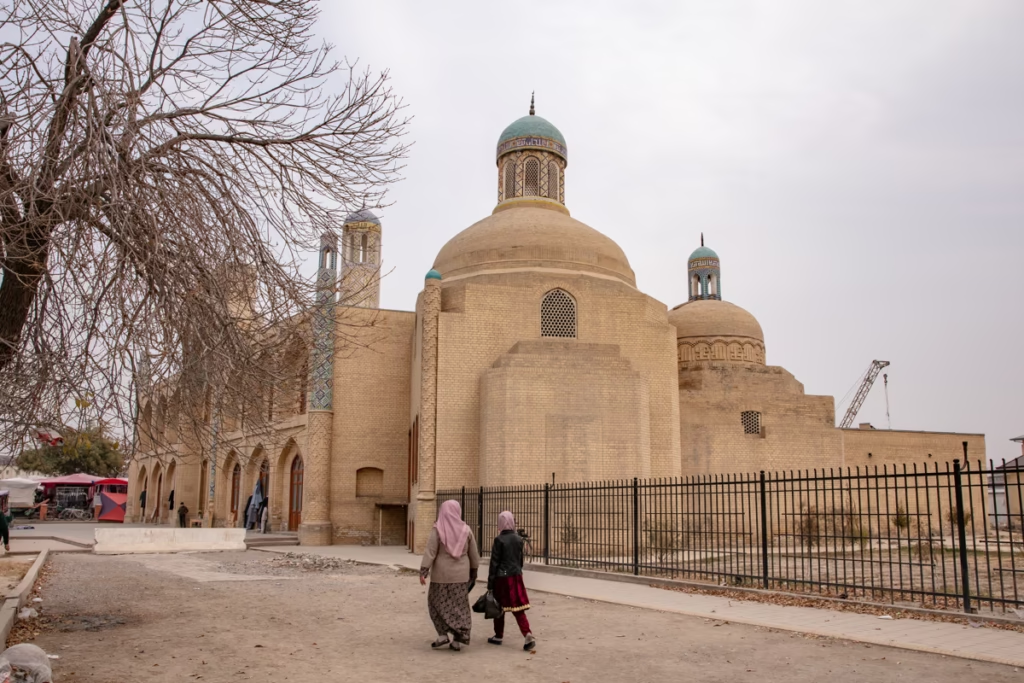
The Uzbek Fergana Valley is generally safe for travelers, particularly when visiting the main cities of Fergana, Margilan, Kokand, Namangan, and Andijan.
The main thing I recommend paying attention to is current information around the international borders with Tajikistan and Kyrgyzstan. Border crossings can have their own rules, operating conditions, and occasional changes, so check current information before setting out if your itinerary involves crossing into a neighboring country.
For general travel around the Uzbek Fergana Valley, use the same common-sense precautions you’d use elsewhere in Uzbekistan and stay aware of your surroundings in crowded bazaars and transport hubs.
I also recommend checking current travel advisories before your trip, particularly if you’re planning to travel close to an international border. A decent news agency to check is Eurasianet.
Going as a solo lady? Check out my Solo Female Travel in Uzbekistan Guide
Best Time to Visit the Uzbek Fergana Valley
Spring and autumn are generally the most comfortable times to visit the Uzbek Fergana Valley, particularly if you plan to spend a lot of time walking through cities and markets. Summer can be unbearably hot, while winter brings colder temperatures and wind.
How to Get to the Uzbek Fergana Valley
Tashkent to the Uzbek Fergana Valley by Train
Trains connect Tashkent with several cities in the Uzbek Fergana Valley, including Fergana, Margilan, and Andijan. This is one of the easiest and most comfortable ways to reach the valley, although schedules and fares vary by service. Check current schedules at Uzbekistan Railways and download their app. Book ahead when possible, particularly around weekends and holidays.
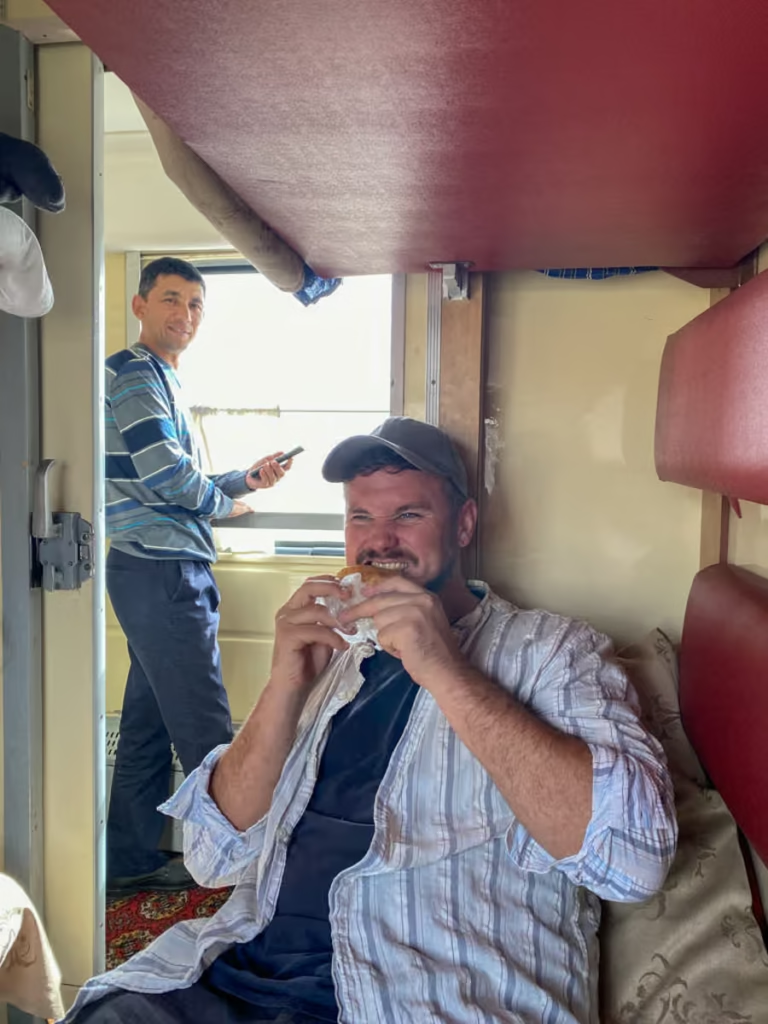
For trains from Tashkent expect to pay anywhere between 79,000 and 204,000 UZS ($7-20 USD), depending on class, for a one-way ticket to destinations within the Fergana Valley.
Tashkent to the Uzbek Fergana Valley by Shared Taxi
Shared taxis are another practical way to travel from Tashkent to the Uzbek Fergana Valley. Cars heading toward the valley can be found around Kuyluk Bazaar, with drivers generally departing once the car is full. I paid around 70,000 UZS for a seat on one trip, though fares can change. The road crosses the Kamchik Pass, the main mountain route between Tashkent and the valley.
Tajikistan to the Uzbek Fergana Valley

The Uzbek Fergana Valley borders Tajikistan, making it easy to combine the region with northern Tajikistan over the Beshariq-Konibodum Border Crossing, helping connect to the Tajik Fergana cities of, Konibodum and Isfara, as well as the Oybek Border Crossing which connects Tashkent with Khujand, and Istaravshan.
If you’re coming from Tajikistan’s Fergana Valley cities of Khujand and Istaravshan, you will need to get on a marshrutka from Khujand to Konibodum (10 TJS), then another marshrutka to the border (3 TJS) or taxi (25 TJS), and walk across and do border formalities. Once you are in Uzbekistan, catch a minibus from the border to Beshariq (4,000 UZS), and another minibus from Beshariq to Kokand (8,000 UZS).
Kyrgyzstan to the Uzbek Fergana Valley
The Kyrgyz and Uzbek Fergana Valleys are closely related, making it particularly convenient to combine eastern Uzbekistan with Osh and southern Kyrgyzstan. Andijan is close to the Kyrgyz border, and several crossings connect southern Kyrgyzstan with the Uzbek valley.
The most common, coming from Osh will cross at the Dostyk border post. From Osh, you can take marshrutka #107 or #113 (10 KGS) from across the street from the Old Bus Station (note that there is a #107 that goes to the airport too- so check when boarding that it’s going to Dostyk, not the airport). After completing border crossing formalities, hop in a shared taxi bound for Andijan for 15,000 UZS per seat or charter the whole car for 60,000 UZS.
How Many Days Do You Need in the Uzbek Fergana Valley?
Three days is enough to see the main highlights of the Uzbek Fergana Valley, although I’d recommend longer if you’re particularly interested in traditional crafts, bazaars, food, or exploring smaller towns.
For a first visit, I’d prioritize Kokand, Margilan, Rishtan, and Fergana City. Namangan and Andijan are worth adding if you have more time or if they fit naturally into your route to or from Kyrgyzstan.
A simple three-day route could look like:
Day 1: Kokand
Day 2: Margilan and Fergana City
Day 3: Rishtan and Namangan
If you’re entering the Uzbek Fergana Valley from Tajikistan or Kyrgyzstan, I’d build the itinerary around your border crossing rather than trying to cram every city into a short visit.
Where to Stay in the Uzbek Fergana Valley
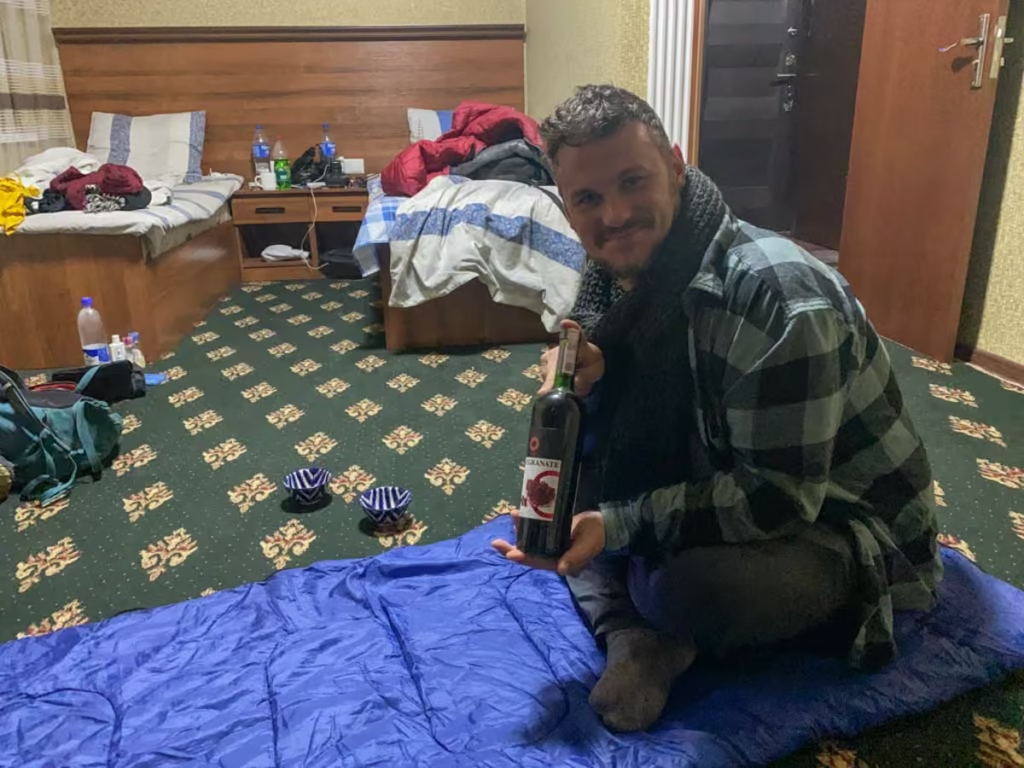
Fergana City is the easiest base for exploring the Uzbek Fergana Valley, particularly for independent travelers. It has a good selection of accommodation and restaurants and convenient transport connections with Margilan, Rishtan, Kokand, and Namangan.
You can also stay directly in Kokand, Margilan, Namangan, or Andijan if you want to spend more time in a particular city.
I’ve included accommodation recommendations under each destination below.
Best Places to Visit in the Uzbek Fergana Valley
The best places to visit in the Uzbek Fergana Valley range from historic Kokand to silk-producing Margilan and pottery-making Rishtan. Fergana City makes the most convenient base, while Namangan and Andijan offer a different look at everyday life in the valley.
The Uzbek portion of the valley is relatively compact, so you can visit several of the main highlights in a few days. I recommend slowing down where possible, though. Some of my favorite experiences here have been less about ticking off monuments and more about wandering through bazaars, visiting workshops, and chatting with locals.
Fergana City
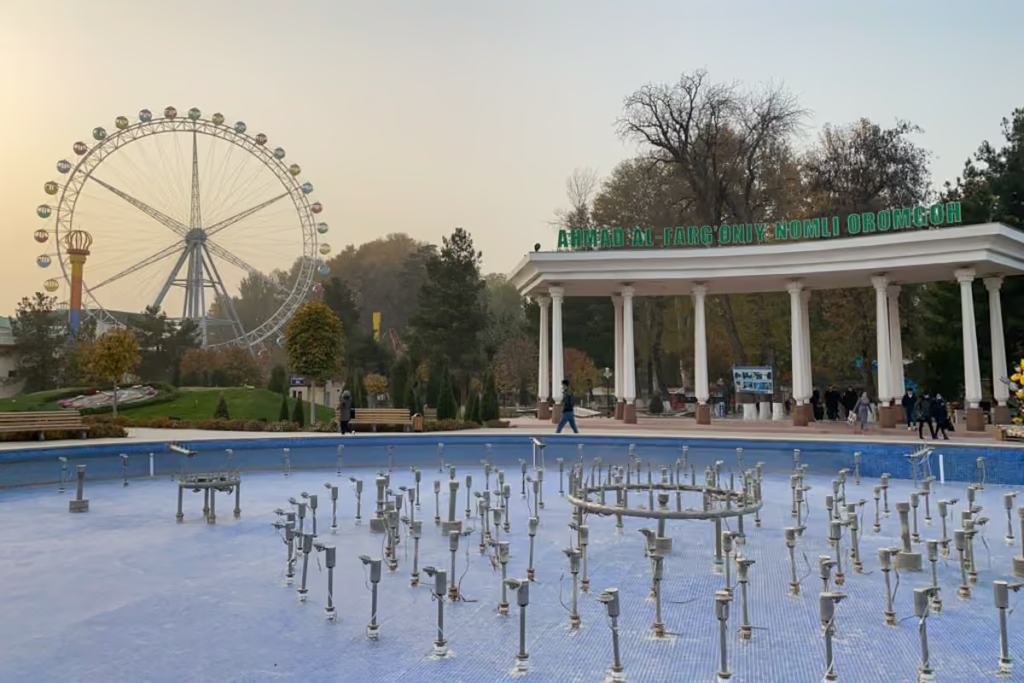
Fergana City is one of the main transport hubs of the Uzbek Fergana Valley and one of the easiest places to base yourself while exploring the region. The city itself doesn’t have the concentration of historic monuments found in Kokand, but it has leafy streets, parks, restaurants, markets, and convenient connections to the surrounding cities.
I’ve traveled through the Uzbek Fergana Valley three times now, and I’ve stayed in Fergana City on each visit. The combination of accommodation, restaurants, and transport connections makes it a practical base.
The city of Fergana was founded in 1876 so it is still a fairly new city compared to its neighbors. Originally named Novi Margilan (New Margilan), the city is located only 15 kilometers south of the original Margilan. It wasn’t until the 1920s that Fergana City gained its current name. The city is home to a large Russian and Korean population.
Things to do in Fergana City: Central Park, Fergana Bazaar
Where to Stay in Fergana City: Status Guesthouse, Valentina’s Guesthouse, Voyage Hotel, Taj Mahal Hotel
Best Restaurants in Fergana City: Traktir Ostrov Sokrovish, Book Cafe, Ansor
How to get to Fergana City: If you’ve arrived by train from Tashkent, you will get off at the Margilan Train Station where you can grab a shared taxi from the parking lot to Fergana City for about 10,000 UZS per seat.
Margilan
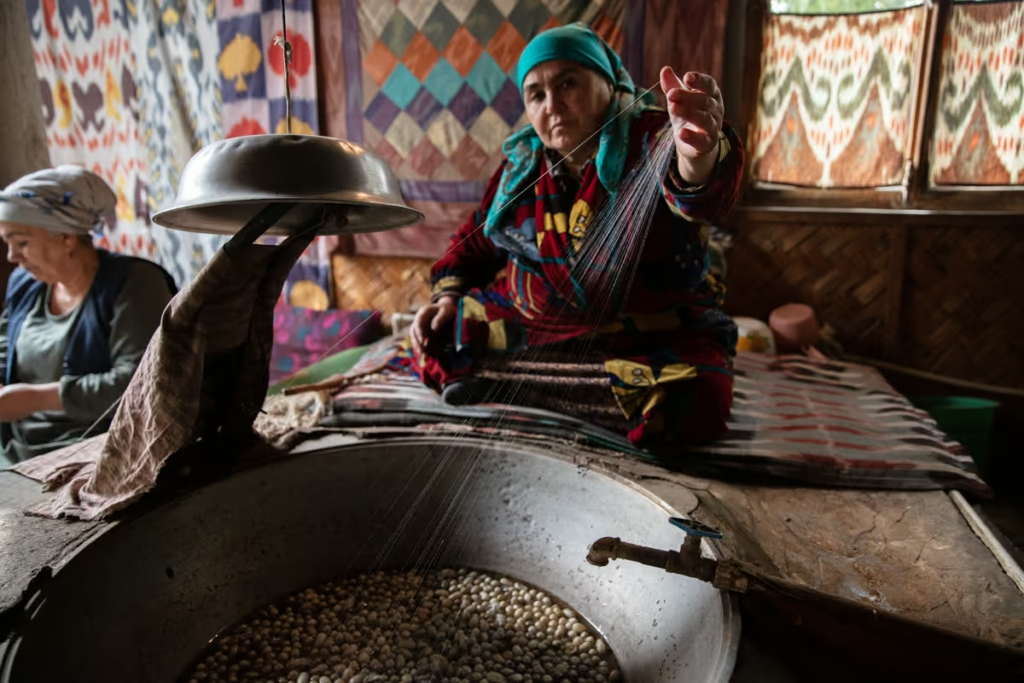
Margilan is the silk capital of the Uzbek Fergana Valley and one of the best places in Uzbekistan to see traditional silk production. Silk-making has been part of the city’s identity for centuries, and local workshops continue to produce traditional fabrics.
If you’ve admired colorful Uzbek ikat fabrics in shops around the country and wondered where they’re actually made, Margilan is the place to come see the process.
Yodgorlik Silk Factory

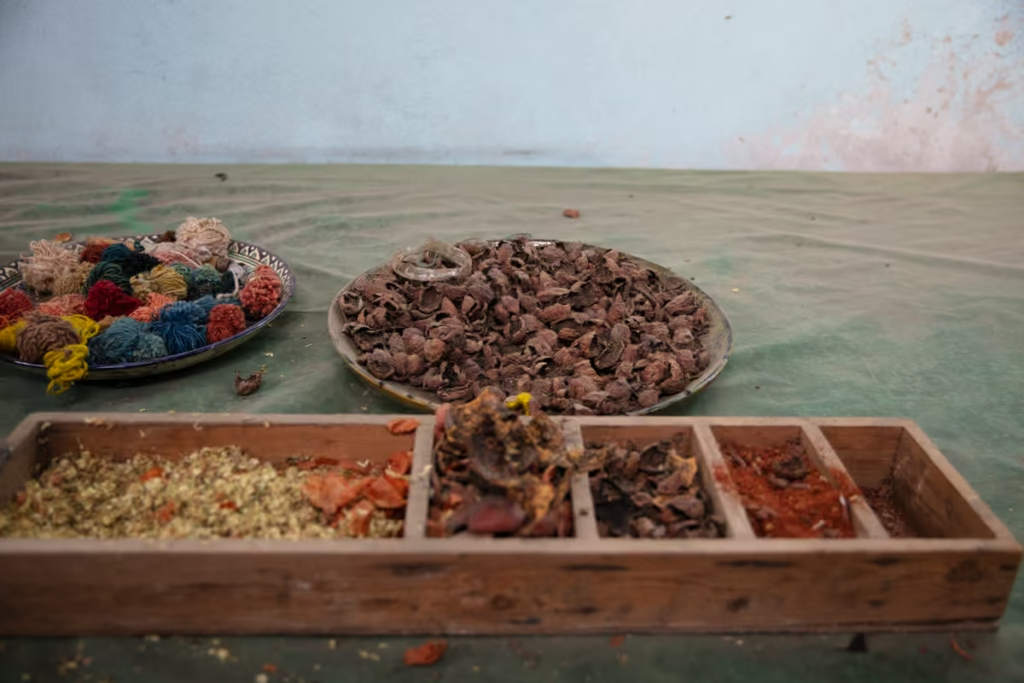
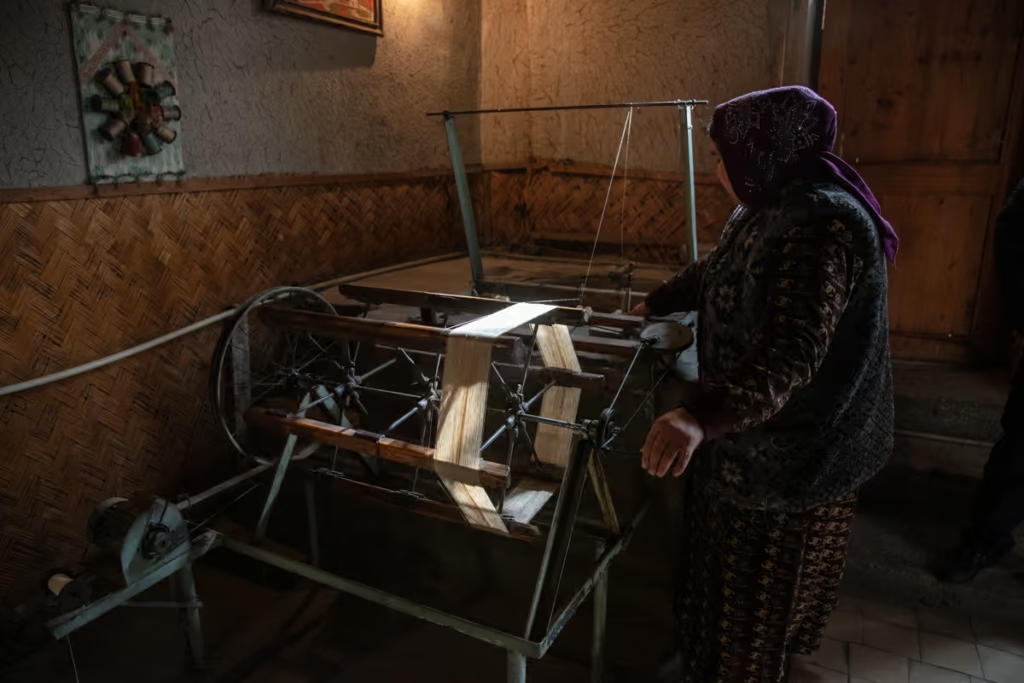
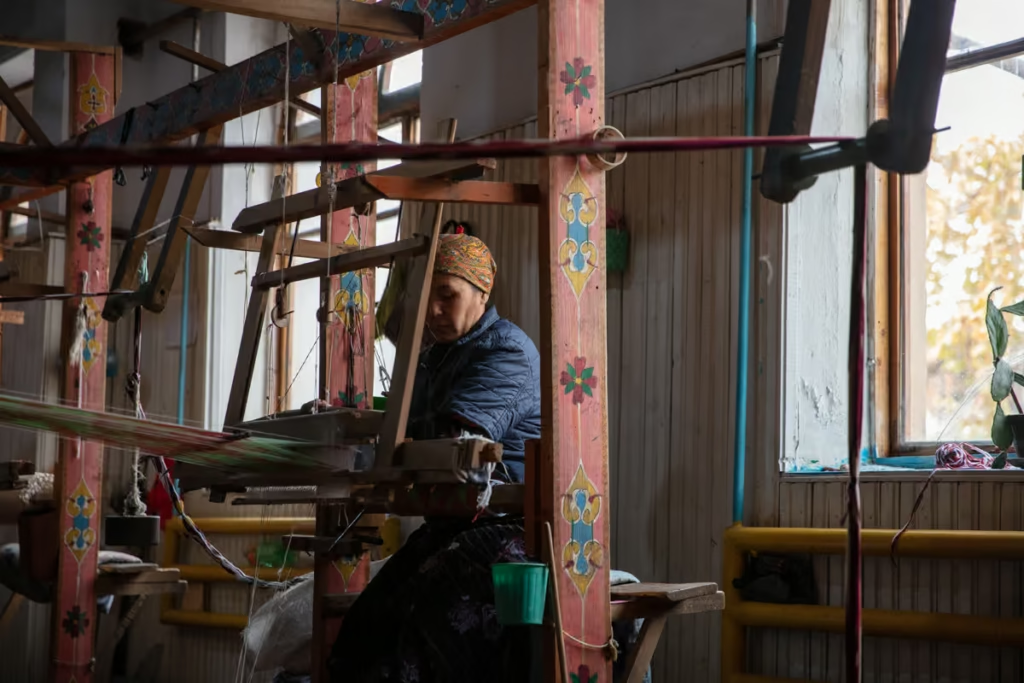
Head over to the Yodgorlik Silk Factory shop and you’ll be greeted and offered a tour of the silk factory which is the main reason to visit. You will then get to see silk production techniques from the harvesting of the silk from the cocoons to the dying and weaving of the silk fabric. Tours are available in Russian, Uzbek, English, and German and will cost 10,000 UZS per person.
Once you’re done seeing the production of silks, head on back to the shop where you can purchase silk fabric, scarves, garments, and more that are made right here at Yodgorlik.
Kumtepa Bazaar
Sitting 5 km west of Margilan’s center, Kumtepa Bazaar is the best place to go if you want a more authentic shopping experience. It’s best visited on Thursday and Sunday morning when the bazaar is at its busiest. If you don’t want to head outside of Margilan though, the bazaar right in the city center is a fun stroll, gazing at mountains of dried fruits, nuts, and produce.
Khonakhah Mosque
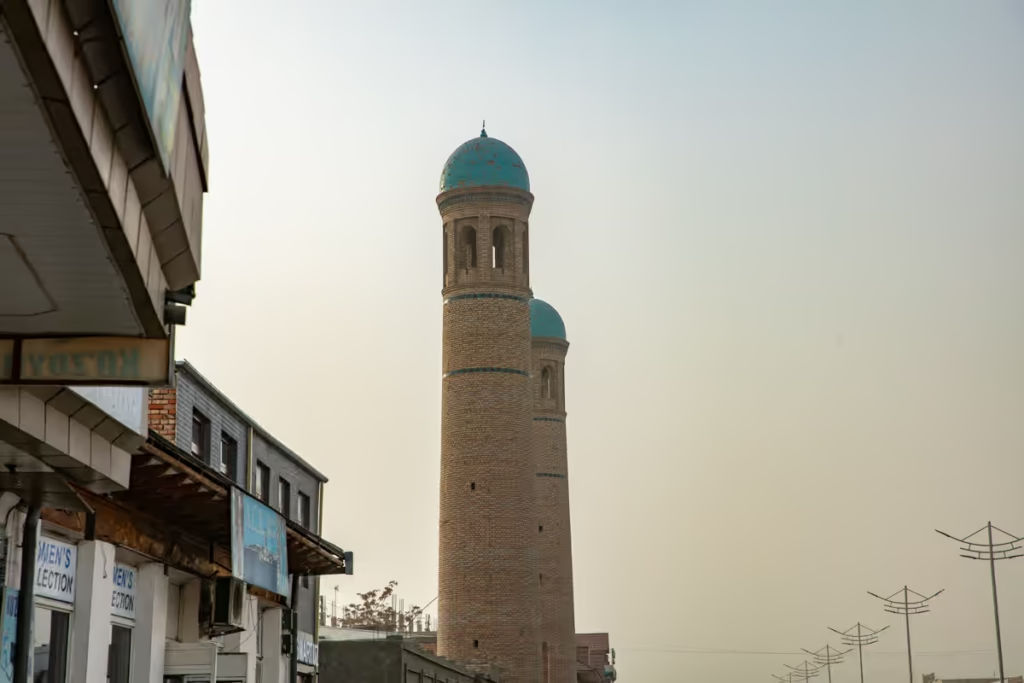
Just east of the main intersection at the center of Margilan off of B Margilani Ko’chasi you’ll see the towering 26-meter minarets of the Khonakhah Masjid ling before you reach the mosque itself. Khonakhah Mosque is known for its impressive wood carvings, many of which date back to the 16th century- though it’s worth mentioning that on my (re)visit in November 2021, the mosque is fully under construction.
Said Ahmad Haji Madrasa & Margilan Crafts Development Center
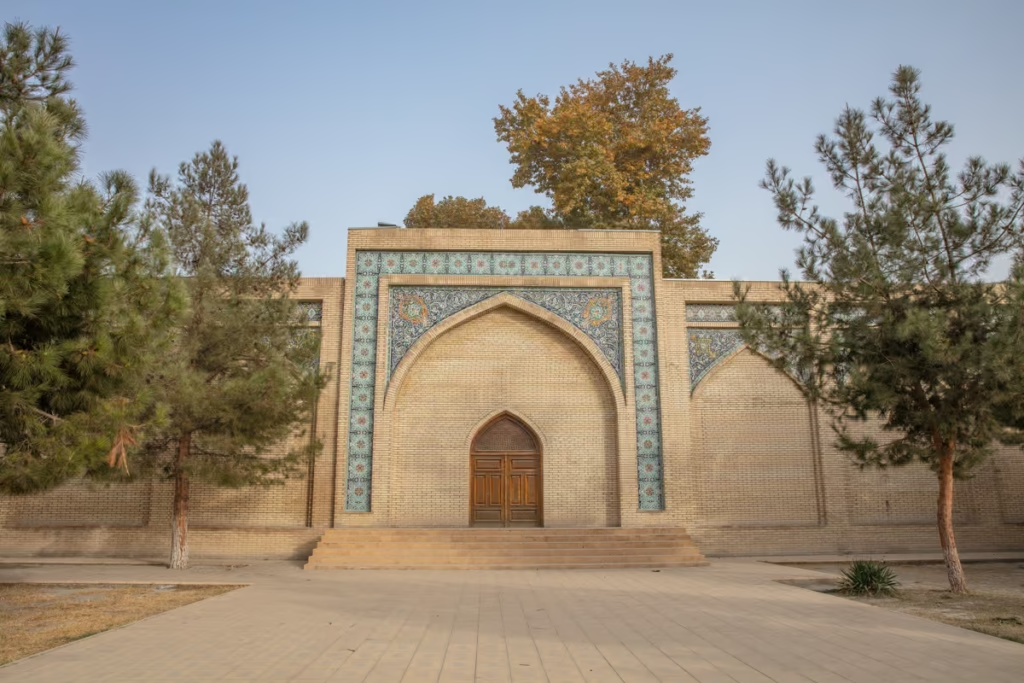
To the south of the Khonakhah Mosque on Said Ahmad Khodjaev Street is the Said Ahmad Haji Madrasa, founded by Said Ahmad Khodjaev in the 19th century. Said Ahmad Khodjaev fled Margilan for Afghanistan and later Saudi Arabia during the Bolshevik Revolution fearing retaliation as he was an advisor and philanthropist to the tsar’s administration.
The structure was used as a jail for a stint of time under the USSR but was converted back into a madrasa in the 1990s and currently houses the Margilan Crafts Development Center.
Where to Stay in Margilan: Ikat House, Adras House
Best Restaurants in Margilan: Eden Fast Food
How to get to Margilan: As mentioned previously, Margilan does have a train station at the southern end of town. Shared taxis ply the route between Margilan and Fergana City for 10,000 UZS per sear.
Kokand
Kokand is one of the best places to visit in the Uzbek Fergana Valley if you’re interested in history and architecture. The city was the capital of the Kokand Khanate and contains some of the region’s most impressive surviving palaces, mosques, madrasas, and mausoleums.
Historically, Kokand stood at the crossroads of major trade routes through Central Asia, helping it grow into an important political and commercial center.
Khudayar Khan’s Palace
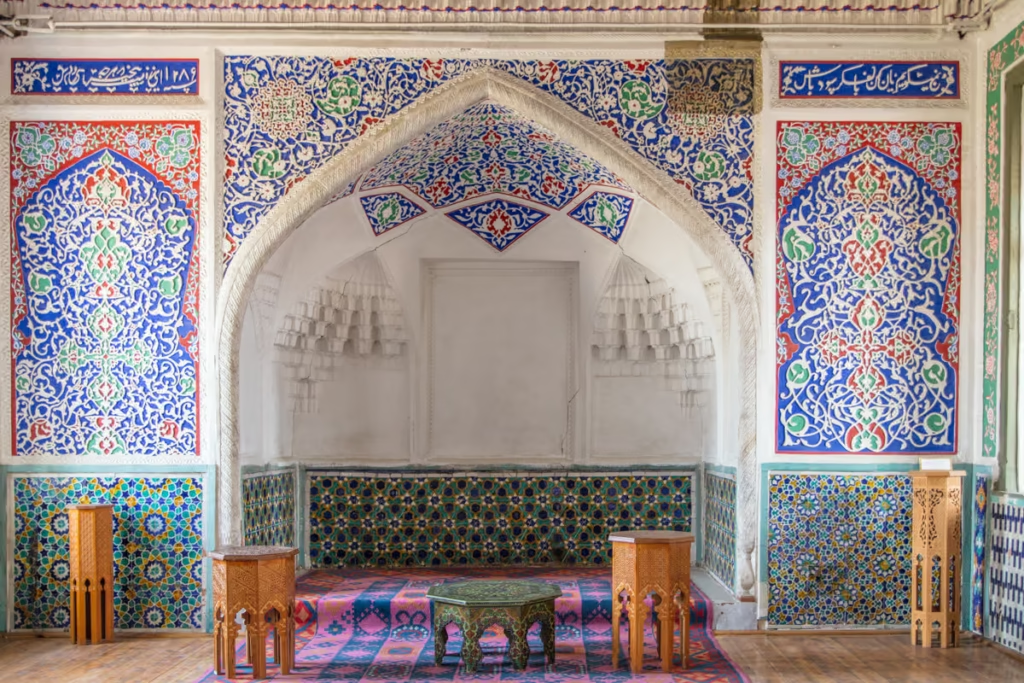
Khudayar Khan’s Palace is the most opulent building in Kokand and the once royal residence. The exterior walls are covered in spectacular tiled patterns and inside the palace once housed 114 rooms and seven courtyards (only 9 of which rooms remain). The palace was commissioned under architect Mir Ubaydullo.
Khudayar Khan was the final ruler of the Kokand Khanate who reigned off and on between 1845 and 1875. In the 1850s the Russian Empire made great advances in Central Asia, finally gaining control of the greater Central Asia region.
Within the Khudayar Khan Palace, you can visit the History Department to check out relics and artifacts, and the Art Department to see locally made pieces and even includes a few ceramic works by Alisher Nazirov of Rishtan.
Entry to the Khudayar Khan Palace is 15,000 UZS for foreign visitors.
Joma Mosque
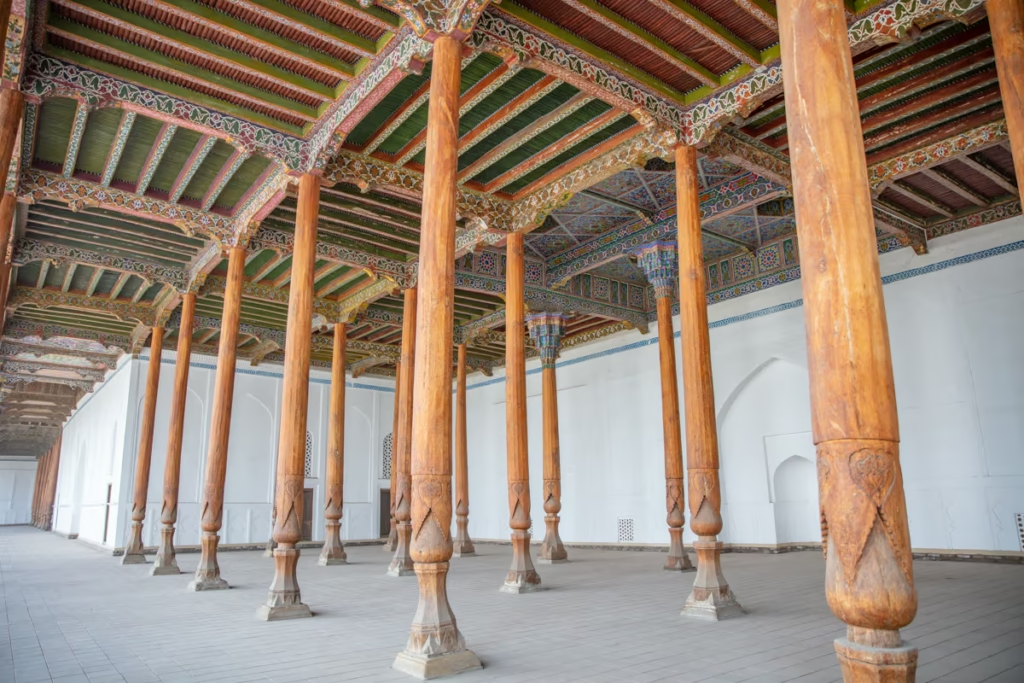
Built in 1812 by Umar Khan, Joma Mosque is Kokand’s grandest. The courtyard is centered around a nicely tiled 23-meter high minaret that is possible to go inside of- just find the museum caretaker who has the key to unlock the lower door.
Joma Mosque houses the small Applied Art Museum, which features some Rishtan ceramic pieces, wooden car ings, skull caps, looms, and jewelry.
Entry to the Applied Art Museum and Mosque is 15,000 UZS for foreigners.
Narbutabey Mosque and Madrasa
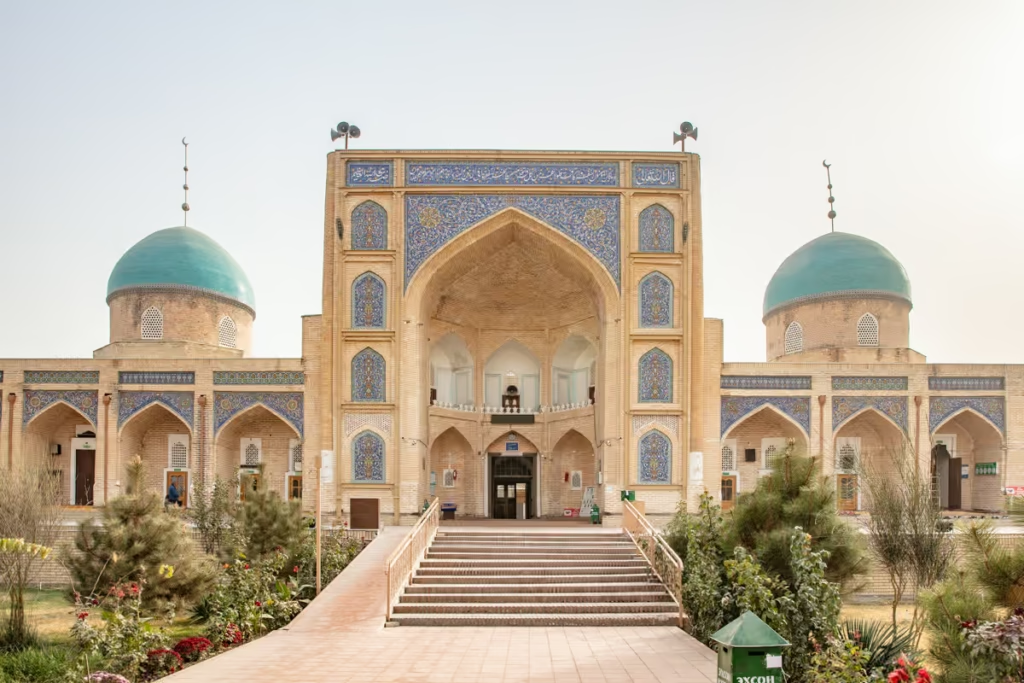
The Narbutabey Madrasa and its adjacent mosque were completed in 1799, finally re-opened again following their shut down by the Bolsheviks, opened once again following independence, and Karmimov’s shutdown of the facilities in 2008. You’ll likely be approached by a man named Mohammed when you arrive at the mosque and madrasa grounds who will tour you around (donations are welcome and recommended).
The Narbutabey Madrasa features a courtyard surrounded by khudjras (studying cells), a darshana (classroom), and a mosque where 80 students practice and study.
Modar i Khan Mausoleum
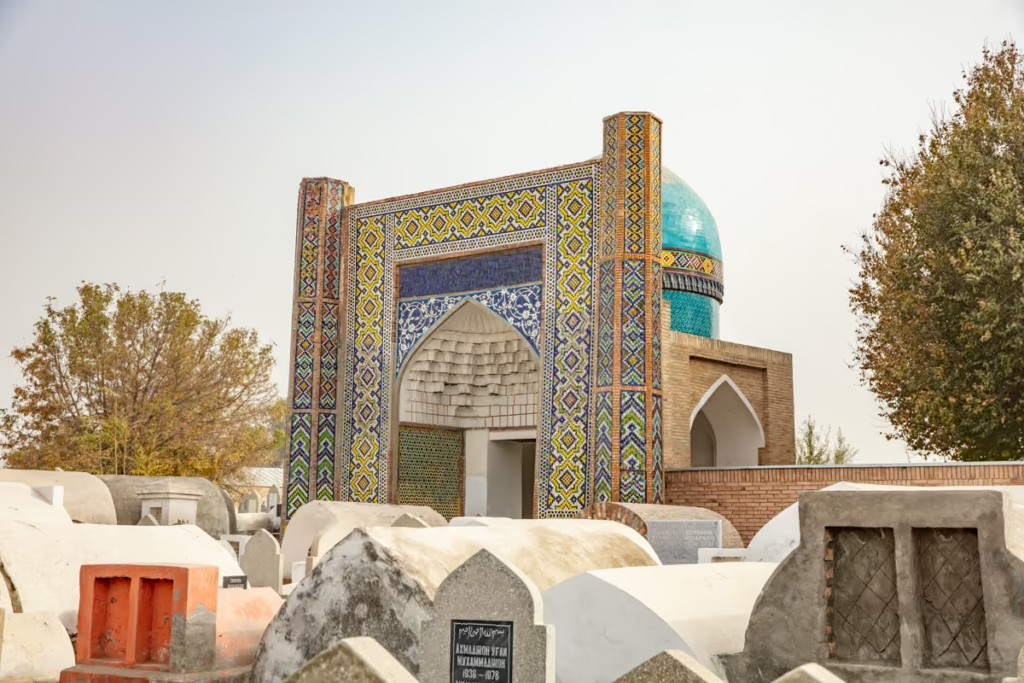
A short jaunt to the east of Narbutabey Madrasa, you’ll reach a graveyard and eventually the Modar i Khan Mausoleum. The blue-domed mausoleum was completed in 1825 for Umar Khan’s mother.
Dakhma i Shokhon
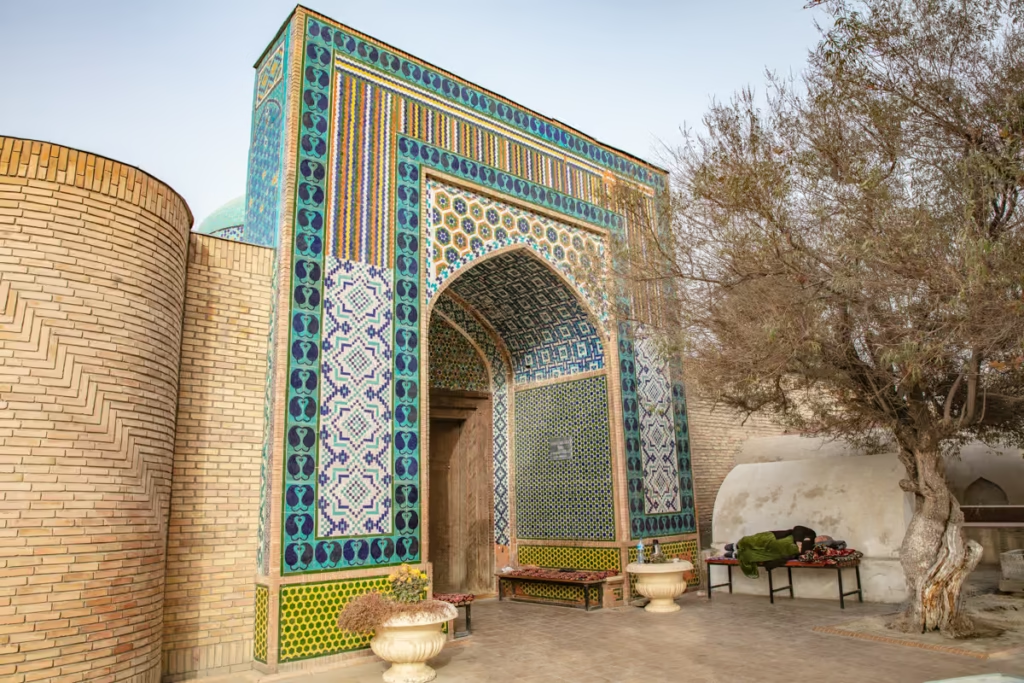
Continuing southeast of Modar i Khan Mausoleum, is the Dakhma i Shokhon housing the tomb of Umar Khan. The Dakhma i Shokhon was completed in the 1830s. The tomb features a wooden portal with the poetry of Umar Khan’s wife- Nodira Begum carved into it.
Tablet of Nodira
East of the Dakhma i Shokhon is the tomb of Nodira Begum, the wife of Umar Begum and beloved Uzbek and Tajik poet. She had originally been buried behind the Dakhma i Shokhon, but her remains were eventually moved to this location and placed underneath a white stone tablet.
Kamal Kazi Madrasa
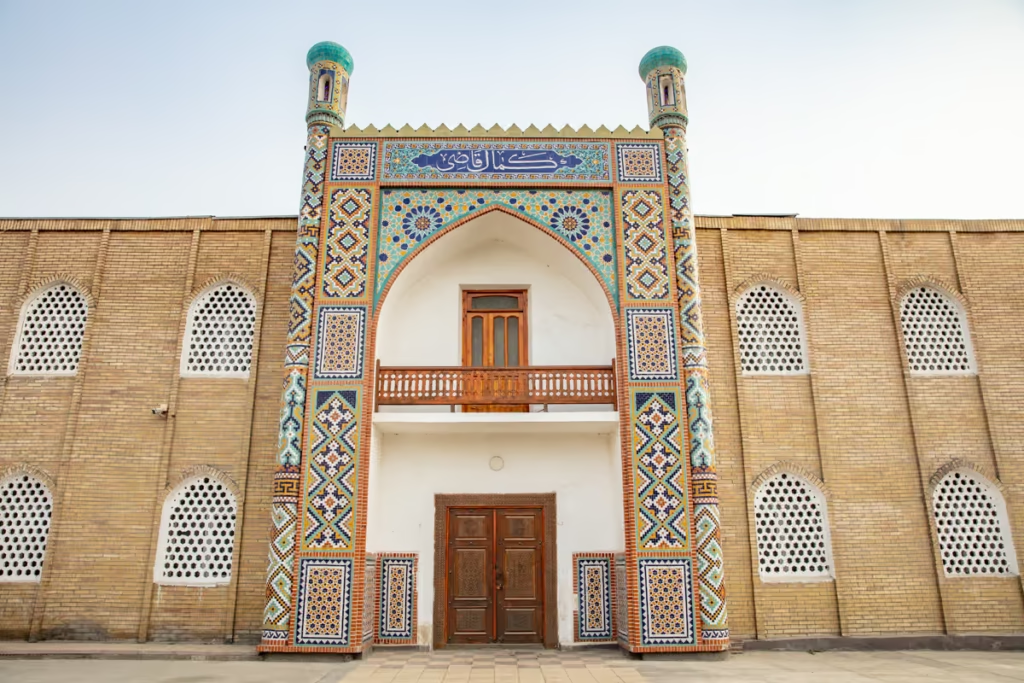
A short distance west of the Joma Mosque on Hamzi Ko’chasi is the Kamal Kazi Madrasa (also known as the Amin Beg Madrasa) The Islamic school was built in the 1830s for Amin Beg, the son of Madali Khan. Kamal Kazi was the architect who restored the beautiful tile work that adorns the facade, hence the name. The Kamal Kazi Madrasa now houses the Diydor Shirin Chaikhana.
Sahib Mian Hazrat Madrasa
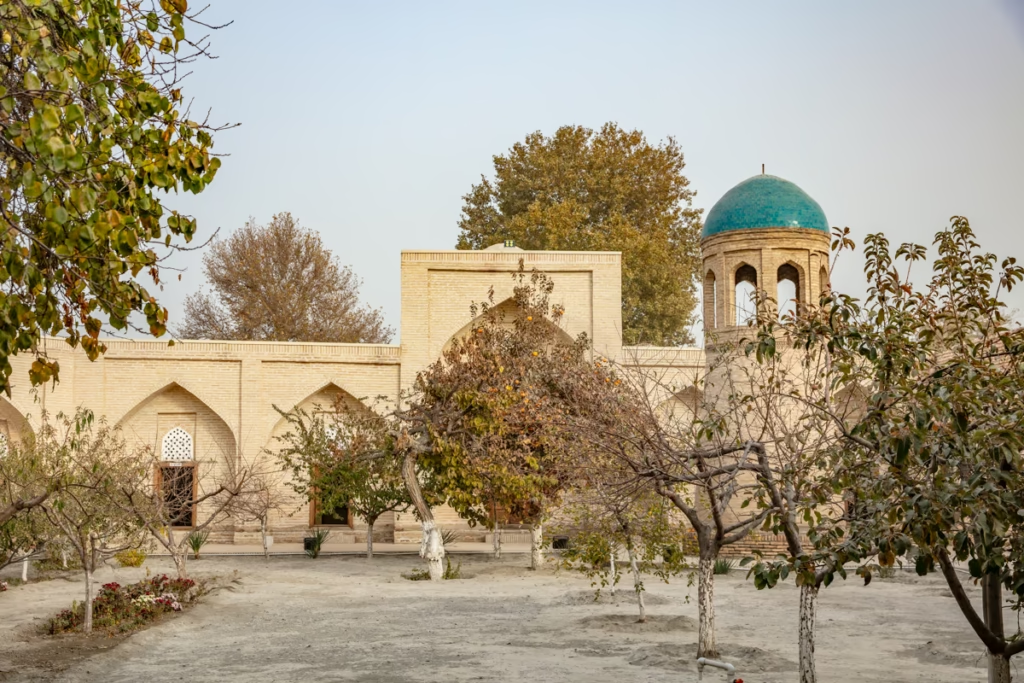
The Sahib Mian Hazrat Madrasa houses a small museum dedicated to Uzbek poet Mohammed Amin Mukimi who lived from 1850 to 1903.
Entry to the Sahib Mian Hazrat Madrasa Museum is 5,000 UZS for foreigners.
Museum of the Great Scholars (Khamza Museum)
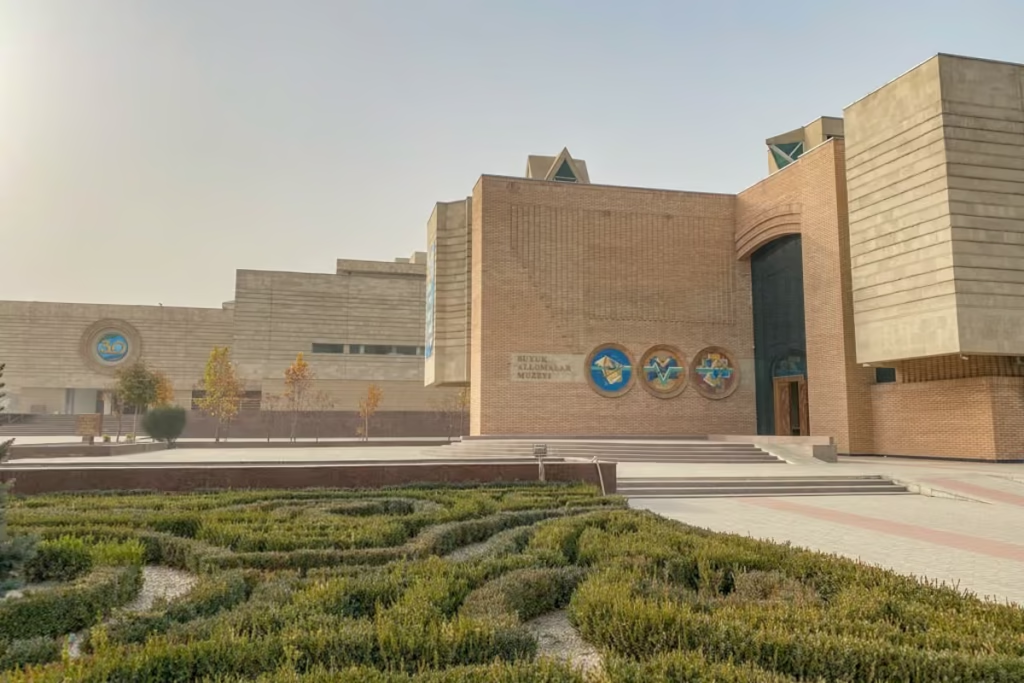
The Museum of Great Scholars, also known as the Khamza Museum houses exhibits about the life and history in Kokand and tells the story of Khakim Khakimzade Niyazi, better known by the name of Khamza, who was a Soviet-era poet and dramatist. It sits just next door to the Khamza Musical and Drama Theatre.
Where to Stay in Kokand: Dangara Hotel, Silk Road Kokand Hotel
Best Restaurants in Kokand: Diydor Shirin Chaikhana, Jahan Chaikhana, Kapriz Cafe
How to get to Kokand: The Kokand Train Station sits about 2 km south of the city center for those coming from Tashkent directly to Kokand. If traveling by shared taxi from Fergana City or other destinations in the Fergana Valley, you will be dropped off at the Dekhon Bazaar, plan to pay about 15,000 UZS for a seat from Fergana City. As mentioned previously minibusses go between the Beshariq/Konibodum Tajik border crossing and Kokand.
Rishtan: Ceramics Capital of the Uzbek Fergana Valley
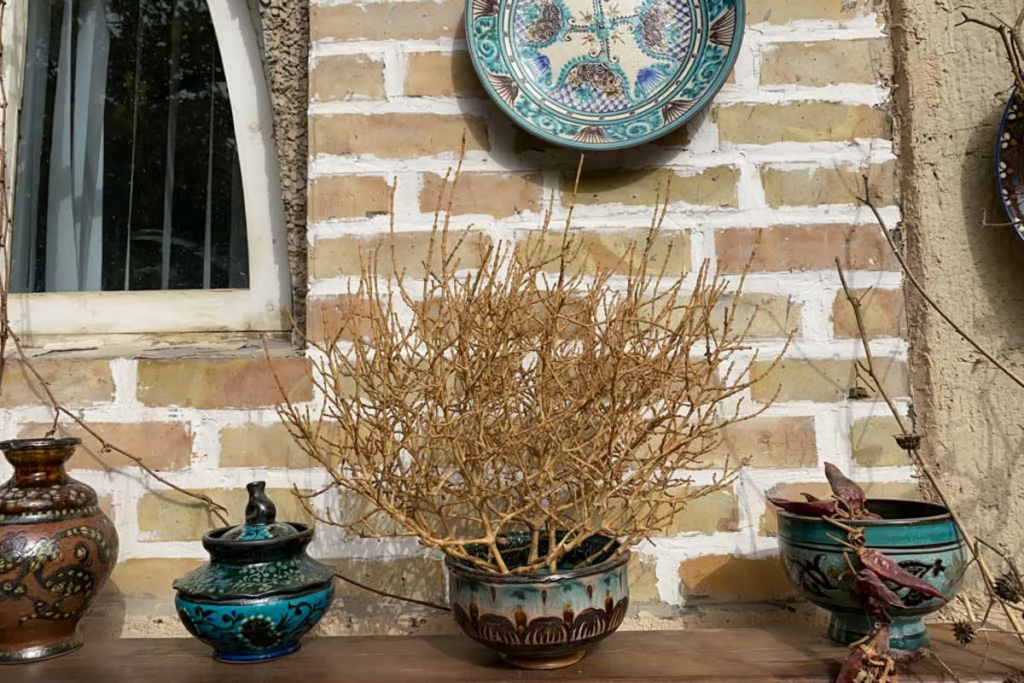
Rishtan is famous throughout Uzbekistan for its traditional ceramics, particularly its distinctive blue and turquoise glazes. Pottery has been produced here for centuries, and the town remains one of Central Asia’s most important centers for ceramics. In fact, majority of the ceramic works you’ll find for sale in shops throughout Uzbekistan are made here in Rishtan.
In the foothills surrounding Rishtan, the plant known as ishkar is found, which is the element responsible for the vibrant blue glaze Rishtan pottery is famous for. Ishkar became renowned around Central Asia- the ishkar glazed pottery techniques ended up making it to the famed ceramics city of Istalif in Afghanistan. The ishkar plant is burned, and the glaze is created from its ashes.
Rishtan isn’t a destination where I’d recommend spending several days unless you’re particularly interested in pottery. Instead, it’s an excellent stop between Kokand and Fergana City, especially if you arrange visits to local workshops.
Alisher Nazirov’s Ceramic Workshop
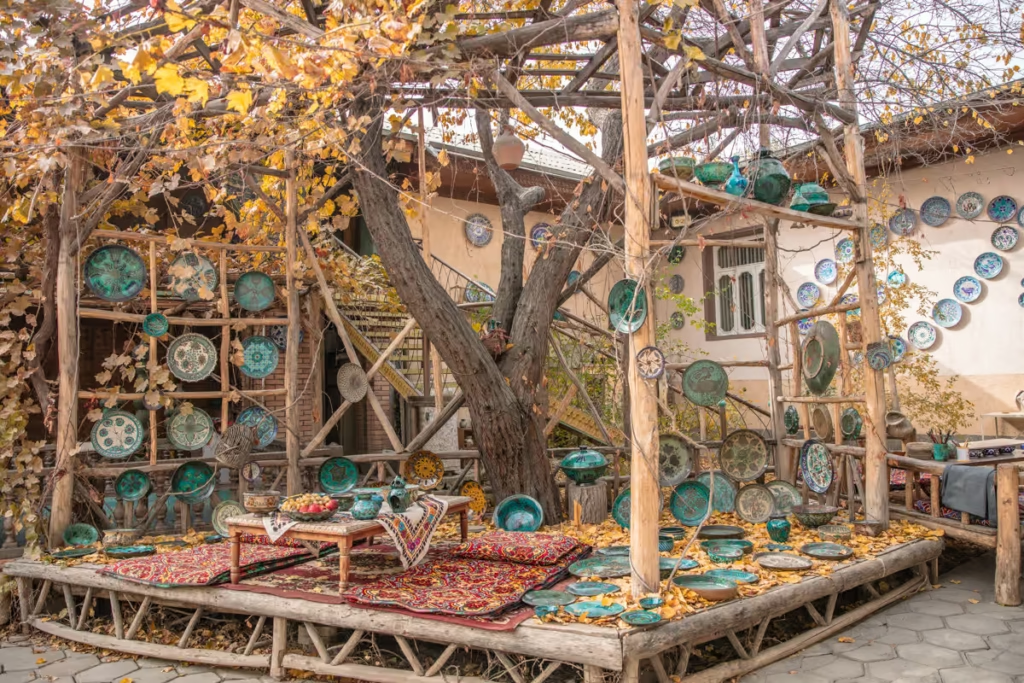
The workshop of famed ceramics artist Alisher Nazirov is open to the public and well worth a visit to see his works, purchase ceramic pieces, and even watch some of his apprentices at work. Nazirov began making pottery at the age of 12, mastering his craft in just a few years.
We popped into the ceramics workshop unannounced and were greeted by apprentices studying under Nazirov who toured us around and even demonstrated their ceramics skills. You can call ahead too if you’d like to arrange a visit in advance at +998734523343.
Rishtan Ceramic Museum
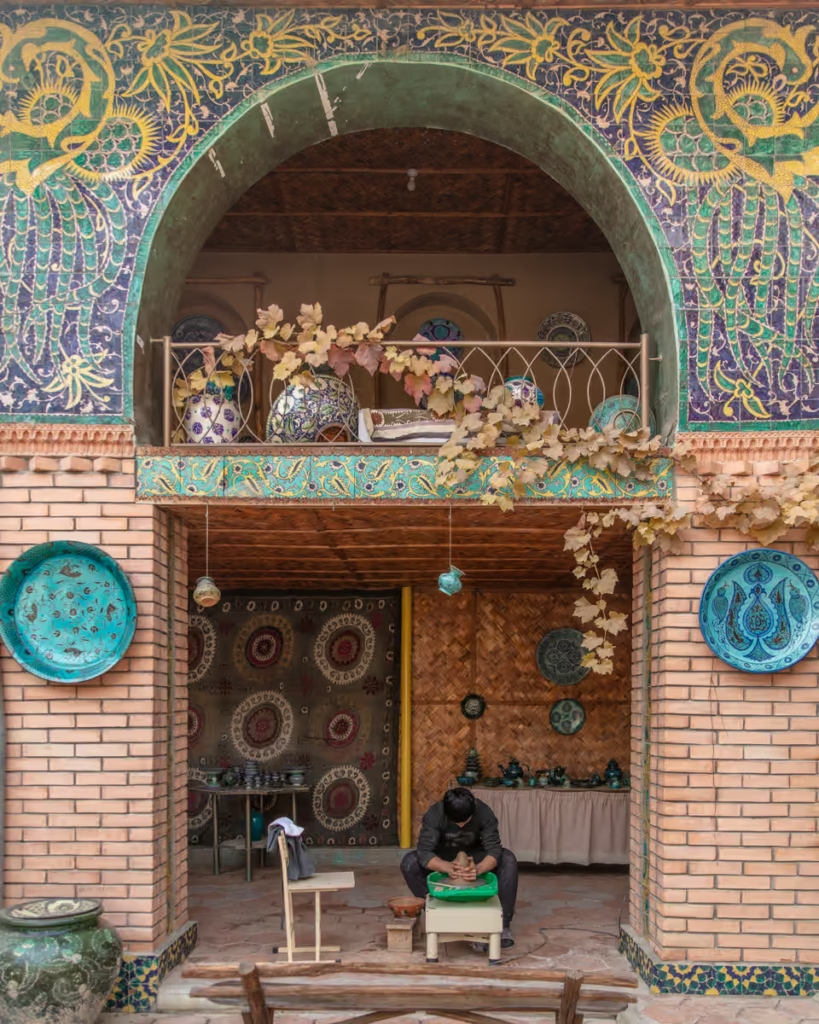
The Rishtan Ceramic Museum is run by art director Rustam Usmanov, who operates the museum out of his home. He offers tours free of charge, but if you call in advance you can arrange for a lunch or dinner at the museum for about 25,000 UZS per person at +998734521585.
How to get to Rishtan: Rishtan is best visited as a brief stop for those going between Fergana City and Kokand as it’s located about halfway between the two cities. A shared taxi to/from Rishtan from either city will cost roughly 7,000 UZS.
Namangan
Namangan is one of the largest cities in the Uzbek Fergana Valley and an important religious and cultural center. The city has historic mosques and madrasas, bustling bazaars, museums, parks, and a strong connection to the religious and literary history of the region.
Becoming the Fergana Valley’s religious center in the 17th century following the abandonment of the ancient city of Aksikent, Namangan does feel more conservative than other destinations in Uzbekistan (though not conservative like Afghanistan or Yemen might). At its zenith, Namangan was home to over 600 mosques, though many were shut during the years under the Soviet Union. Still, the Soviets were never able to fully quash the religiousness of the population in the city.
Namangan feels more conservative than Uzbekistan’s major tourist cities, but I found that this made visiting feel different from the more heavily touristed destinations along the country’s classic Silk Road route.
Mullah Kyrgyz Madrasa
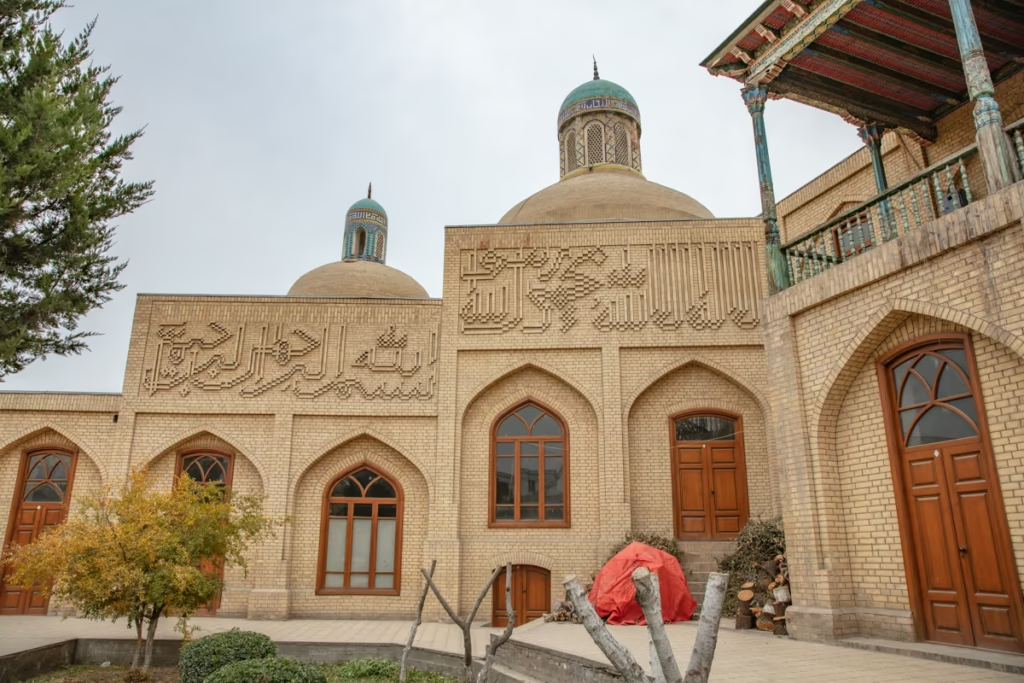
Mullah Kyrgyz Madrasa is perched to the east of Chorsu Bazaar on Uychi Ko’chasi. The original mosque dates back to 1910, conceived by architect Usto Kyrgyz, but much of the madrasa has been covered with this bizarre fake brick that looks like the bricks were drawn on with black bubble paint (you’ll see this among several of the Fergana Valley mosques and madrasas). With that said the mosque is still worth visiting to appreciate the still existing original woodwork and tilework.
Khoja Amin Mosque & Khojamni Kabri Mausoleum
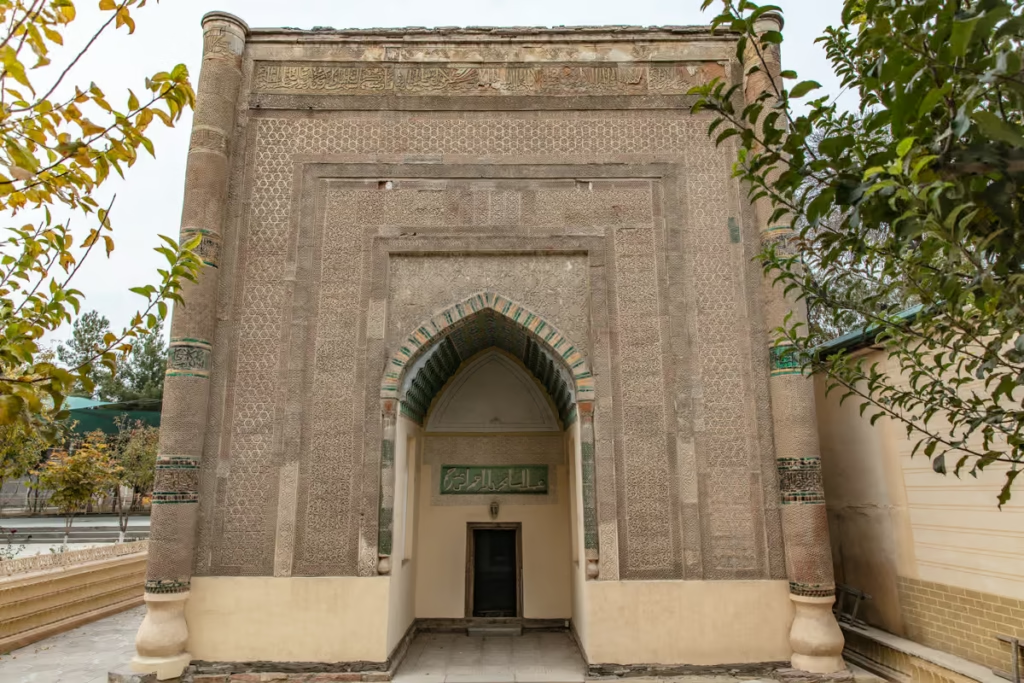
A short stroll to the south of Mullah Kyrgyz Mosque you will reach the (much more fascinating in my opinion) Khoja Amin Mosque and Khojamni Kabri Mausoleum that were both designed by architect Usto Mohammed Ibrahim in the 1720s.
We happened to show up outside the mosque where a local man started chatting with us. Soon two young men approached realizing that we were visitors and were beyond excited to practice their English skills with us (being two native speakers). The boys explained that the mosque was open to men only, so I gave my friend Dan the go-ahead to enter with them, but the boys insisted I see the two sites and spoke with the caretaker, who was intrigued by two tourists turning up in Namangan and excitedly gave us the grand tour.
The Khoja Amin Mosque has intricately painted ceilings inside which were worth the effort to go inside, but the real gem was the Khojamni Kabri Mausoleum with a beautifully decorated facade and a grand interior. Khojamni Kabri Mausoleum’s exterior is decorated with a unique tiling method that was briefly popular in the 12th century.
Ota Valikhon Tur Mosque
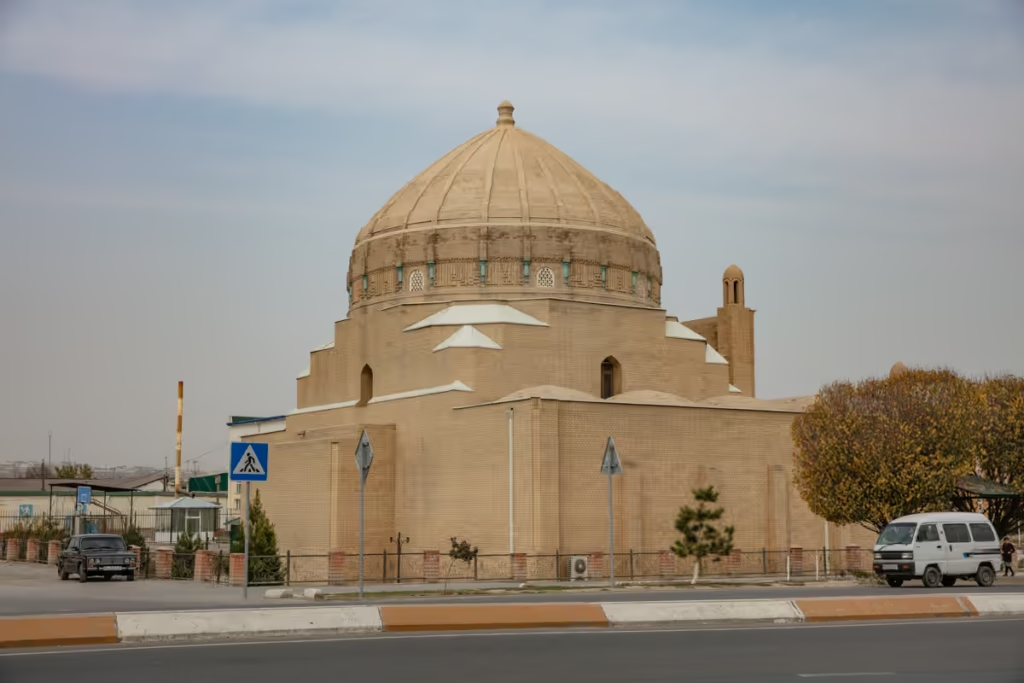
Back up on Uychi Ko’chasi about 1 km east of the Chorsu Bazaar is the Ota Valikhon Tur Mosque. The mosque was where Wahabbism first gained a foothold in the 1990s and began spreading across the Uzbek Fergana Valley. Money began funneling in from Saudi Arabia to fund the mosque turning into an extreme Wahabbi madrasa, but the movement was quelled and the madrasa and mosque shut by the Uzbek government.
The architecture of Ota Valikhon Tur Mosque is unique, featuring a ribbed dome with Arabic calligraphy adorning the edge of the cupola in brick, interrupted by turquoise accents.
Ota Valikhon Tur Mosque is no longer used as a mosque and now houses an art gallery belonging to the Namangan Artists’ Union and featuring works of local artists. We, unfortunately, didn’t get to visit as it was closed the day we visited.
Chorsu Bazaar
Chorsu Bazaar is the buzzing center of Namangan, located next door to Mullah Kyrgyz Mosque. If you came to Namangan by shared taxi, you’ll arrive just across the street, so you’ll almost inevitably find yourself strolling past sellers along the street.
Namangan Local Lore & History Museum
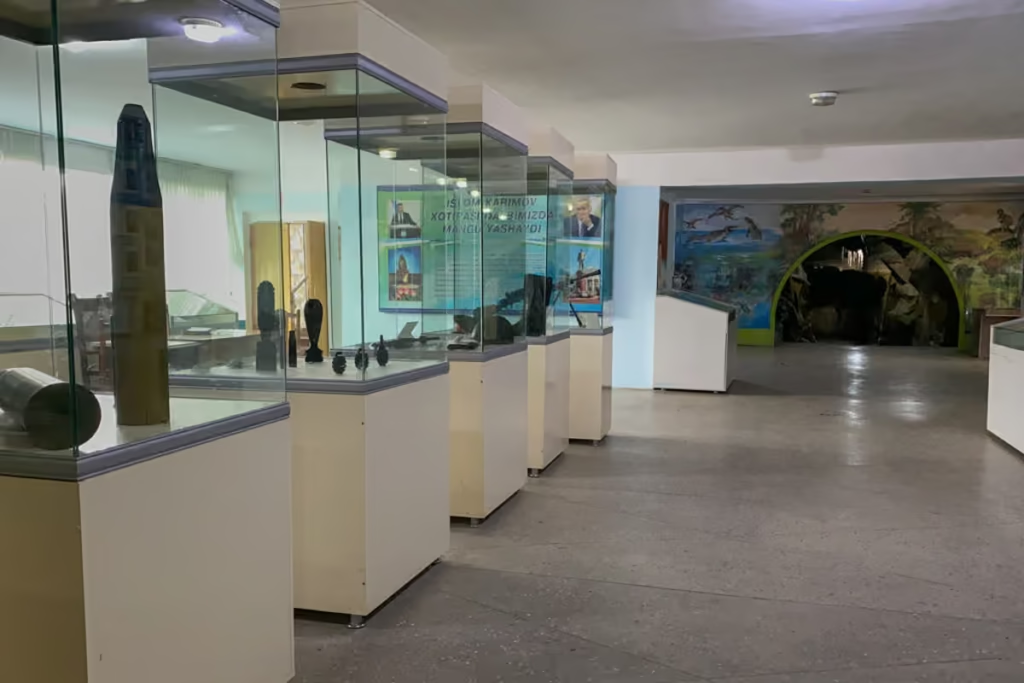
The boys we met over at Khoja Amin Mosque, continued with us back toward the Chorsu Bazaar and pointed out the Namangan Local Lore and History Museum, and talked us into checking it out. The museum houses artifacts from the Namangan Region, nearby Aksikent, and other destinations in the Fergana Valley. It also explains the turbulent history of the city and even has a section dedicated to local wildlife (and subsequently, bad taxidermy).
Entry to the Namangan Local Lore and History Museum is 10,000 UZS for foreigners.
Nodir Begum Library
Just across Namangani Ko’chasi from the Local Lore and History Museum, you will find a giant library dedicated to female poetess Nodira Begum. Nodira lived from 1792-1842 and was the wife of Umar Khan of Kokand. Upon his death, his 12 year old son Madali Khan was named his successor, though Nodira took charge as the de facto ruler.
Under Nordira, the Fergana Valley became an artistic oasis and her Uzbek and Tajik poetry grew popular in the region.
The Nodira Begum Library is 10,000 UZS to enter.
Navoi Theatre
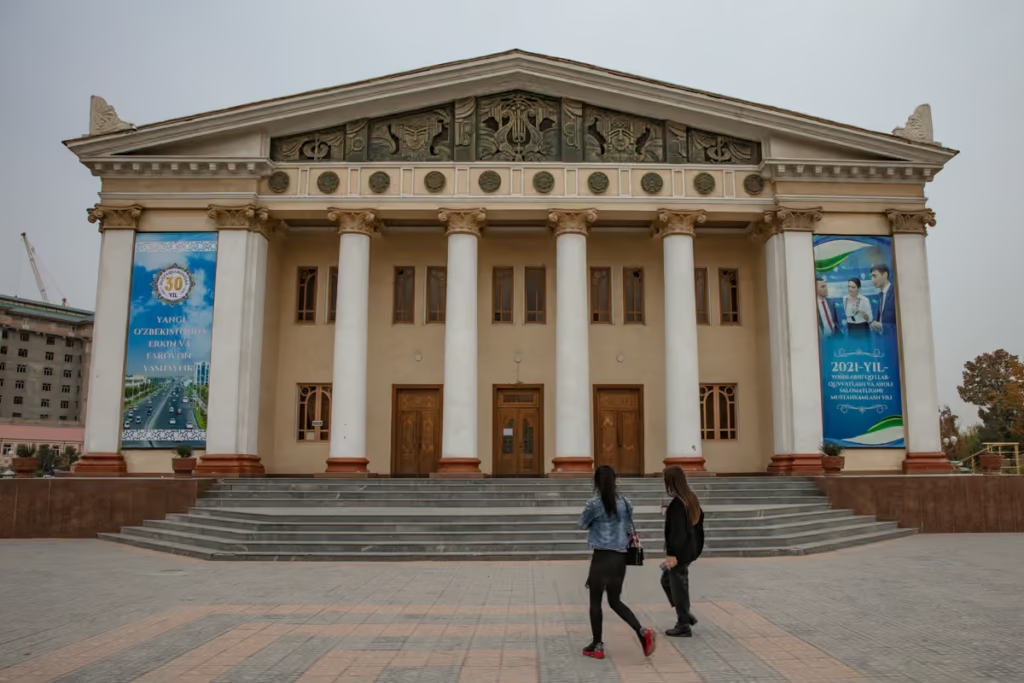
Located near Babur Park and Chorsu Bazaar, you’ll surely pass by Navoi Theatre. It mostly puts on local shows, so maybe worth catching a play at if you’ll be staying a bit longer in Namangan.
Babur Park
Babur Park originally was established as the governor’s private gardens in the late 1800s, though these days it’s completely open to the public. It’s a great place to head to hang out for part of the afternoon to people-watch while sipping chai or to meet locals.
Where to Stay in Namangan: Buyuk Ipek Yoli, Shedevr Plaza, Orzu Hotel
Best Restaurants in Namangan: Sharshara
How to get to Namangan: Shared taxis depart when full between Fergana City and Namangan, and will drop you off at the lot across the street from Chorsu Bazaar. A seat will cost 25,000 UZS each way.
Around Namangan
Aksikent
Aksikent is an ancient fortified city about 22 km southwest of Namangan and one of the more interesting archaeological sites in the Uzbek Fergana Valley.
Established over 2,300 years ago, the bygone citadel consisted of three parts, the citadel center, shahristan (the city), and the rabad (meaning suburbs) and included a bathhouse, palace, zindon (prison), watchtowers, bazaar domes, caravanserais, and a mosque.
Aksikent would see many marauders pass through and attacks over the years, eventually being completely demolished in the 17th century by an earthquake, forcing the inhabitants to move to the current location of Namangan City.
How to get to Aksikent: Go to the shared taxi lot across the street from the Chorsu Bazaar in Namangan and negotiate a car to take you to Aksikent, wait, and take you back to Namangan.
Chust
Chust is famous for traditional Uzbek knives and doppa (tubeteika or skullcap), making it an interesting craft-focused day trip from Namangan.
The National Knife Factory is worth a visit in Chust to see artisans at work and learn more about the knife-making process. Grab a marshrutka from Namangan along Navoi Ko’chasi to reach Chust.
How to get to Chust: Minibus #245 that runs down Navoi and Do’stlik Ko’chasi goes to Chust. The ride takes about 45 minutes and should cost around 4,000 UZS.
Andijan
Andijan is the largest city in the eastern part of the Uzbek Fergana Valley and an important transport hub near the Kyrgyz border. It isn’t as monument-heavy as Kokand, but its bazaars, mosques, museums, and connection to Babur make it worthwhile if you’re traveling through eastern Uzbekistan.
I only briefly visited Andijan during a trip across the border from Osh, Kyrgyzstan, so I’d treat this section as a more limited overview than my guides to Kokand, Margilan, or Namangan.
The Joma Mosque is the main attraction aside from those wanting to see the site of the fateful Andijan Massacre in which 1,500 peaceful protesters were gunned down by government forces.
Joma Mosque and Madrasa
Joma Mosque is the only building that survived the devastating 1902 earthquake the rattled Andijan to its core. The mosque is worth a visit to appreciate its vaulted ceilings and attractive facade.
Inside the mosque, you will also find the Regional Studies Museum, which you can visit for 10,000 UZS.
Jahan Bazaar
The Jahan Bazaar is the largest in the Uzbek Fergana Valley and is busiest on Sundays and Thursdays. Don’t miss the blacksmith’s bazaar in the back.
Yangi Bazaar
Yangi Bazaar is located just south of the Andijan Train Station and is a good place to head if you’re hungry. Shared taxi departing for the Kyrgyz border can be found outside.
Babur Museum
Dedicated to the founder of the Mughal Empire, Babur, the museum displays his poetry and his autobiography- the Baburnama.
Cost: 10,000 UZS
Where to Stay in Andijan: Sheykh Hotel, Andijan Hotel, Bogishamol
Best Restaurants in Andijan: Bosco, Gumbaz Parhez Taomlari, La Veranda Restaurant
How to get to Andijan: Shared taxis connect Andijan with Fergana City (40,000 UZS) and Namangan (30,000 UZS) and depart when full. As mentioned previously, minibusses ply the route between Andijan and the Kyrgyz border crossing at Dostyk. Andijan also has a train station from which it’s possible to connect with other destinations in Uzbekistan.
Take Your Time in the Fergana Valley
The Uzbek Fergana Valley is easy to overlook when planning a trip through Uzbekistan, but that is exactly what makes it worth adding to your itinerary. Between its historic cities, colorful bazaars, craft traditions, and everyday scenes of Uzbek life, the valley offers a different side of the country from the more heavily visited Silk Road cities. Give yourself a few days to wander beyond the headline sights, eat your way through the markets, and see where the road takes you. The Fergana Valley rewards curiosity and slow travel.
Have Any Questions About Visiting the Uzbek Fergana Valley?
Ask in the comments section below.
Posts from Uzbekistan
Tajikistan Uzbekistan Itinerary: 2 Weeks
Solo Female Travel in Central Asia
Uzbek Food: 33 Dishes to Try
Kazakhstan-Uzbekistan Border Crossing
Solar Furnace Uzbekistan: Visit Guide
Panjakent-Samarkand Border Crossing Guide
Nukus Travel Guide: Things to Do
Central Asia Travel Guide

Oybek Border Crossing: Tashkent to Khujand
Best Restuarants in Tashkent
10 Essentials to Pack for Central Asia
A Guide to the World Nomad Games
Visiting the Aral Sea Disaster, Uzbekistan
Central Asia Travel Tips
Vegetarian in Central Asia
Central Asia Visas Guide
Visiting the Soviet Bioweapons Lab of Aralsk 7
Shahrisabz Travel Guide
Khiva Travel Guide
Bukhara Travel Guide
Exploring the Frontier Town of Termez, Uzbekistan
Things to Do in Uzbekistan
Karakalpakstan Travel Guide
Samarkand Travel Guide
Khorezm Fortresses, Uzbekistan
The Best SIM Cards & eSIMs for Uzbekistan
Uzbekistan Travel Guide
Solo Female Travel in Uzbekistan
Central Asia Food & Drink
Uzbekistan-Afghanistan Border Crossing at Hairatan
Off the Beaten Path Asia
Uzbek Fergana Valley Travel Guide
Tashkent Travel Guide
Tashkent Metro: Uzbekistan Underground