Isfara Travel Guide: Things to Do & More
Isfara Travel Guide: Things to Do & More was originally published in 2026
Tucked into the eastern edge of the Fergana Valley in northern Tajikistan, Isfara sits among orchards, mountains, and some of the most complicated borders in Central Asia. Despite this, Isfara is a city that most travelers completely skip.
The city is particularly interesting if you enjoy places where history and everyday life overlap. You can wander past Soviet mosaics, visit a 16th-century madrasa, eat Isfara-style plov at a local chaikhana, and then be on a road toward mountain villages or a Tajik enclave within about an hour.
Isfara has been associated with fruit-growing and agriculture for centuries. Babur famously praised the area’s orchards and almonds, while historical sources describe Isfara as an important settlement in the Fergana Valley.
For me, that mix is what makes a visit to Isfara worthwhile. It is not a city where you tick off 15 famous monuments in an afternoon. Instead, Isfara works as a base for exploring the surrounding villages, borderlands and mountain landscapes of northeastern Sughd.
Need Travel Insurance and Evacuation Services?
Start shopping for travel insurance plans over at IATI Insurance. Readers of the Adventures of Nicole get a 5% discount off your plan.
The Adventures of Nicole partners with Global Rescue to offer the world’s leading medical evacuation and security advisory services. To travel with peace of mind, explore their evacuation coverage.
- Isfara Travel at a Glance
- Where Is Isfara?
- A Brief History of Isfara
- Things to Do in Isfara
- Isfara Day Trips
- Isfara to Kyrgyzstan: Guliston-Kyzyl Bel Border Crossing
- Getting Around Isfara
- How to Get to and From Isfara
- Where to Stay in Isfara
- Best Time to Visit Isfara
- Is Isfara Worth Visiting?
- Suggested Isfara Itineraries
- Practical Tips for Isfara Travel
- Why I Loved Isfara
Isfara Travel at a Glance
| Country | Tajikistan |
| Region | Sughd |
| Location | Eastern Fergana Valley |
| Nearest major city | Khujand |
| Nearby international border | Kyrgyzstan |
| Main nearby destinations | Chorkuh, Vorukh, Shurab, Zumrad, Konibodom |
| Best for | History, Soviet architecture, mosaics, road trips and local culture |
| Languages | Tajik and Russian |
| Transport | Marshrutkas, shared taxis and private drivers |
| Best time to visit | Spring through autumn |
Where Is Isfara?
Isfara is in northeastern Tajikistan’s Sughd Region, close to both the Kyrgyzstan and Uzbekistan borders. The city lies along the Isfara River at the foot of the Turkestan Range and is surrounded by the mountains and agricultural landscapes of the Fergana Valley.
Its location is part of what makes traveling to Isfara so interesting. This is not simply a city surrounded by Tajikistan. The wider area has an unusually complicated patchwork of international borders, enclaves and roads that cross close to Kyrgyz territory.
Historically, those borders were far less significant. During the Soviet period, the internal boundaries between the Tajik, Uzbek and Kyrgyz SSRs did little to interrupt local movement. After the Soviet Union collapsed, those administrative lines became international borders, dramatically changing how people in the region traveled and traded.
A Brief History of Isfara
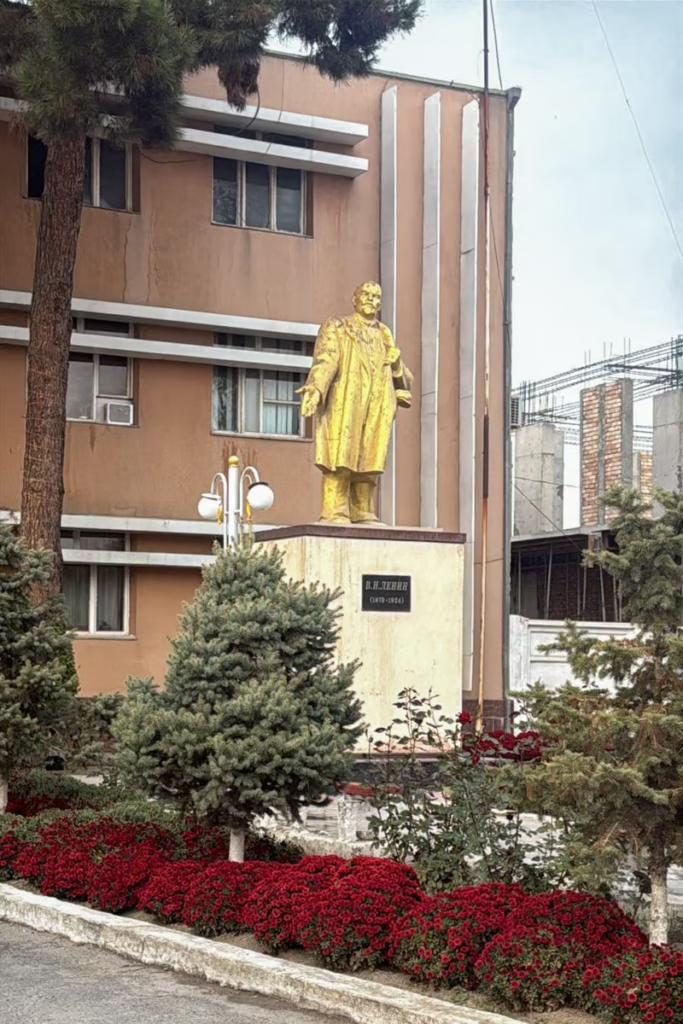
Isfara has a much older history than its relatively quiet modern appearance suggests.
The area was already an important settlement by the medieval period, and the city was mentioned by Babur in the Baburnama. Babur praised Isfara’s gardens and particularly its almonds, a reputation that the region has retained. Historical sources also identify Isfara as a Persian-speaking part of the Fergana Valley.
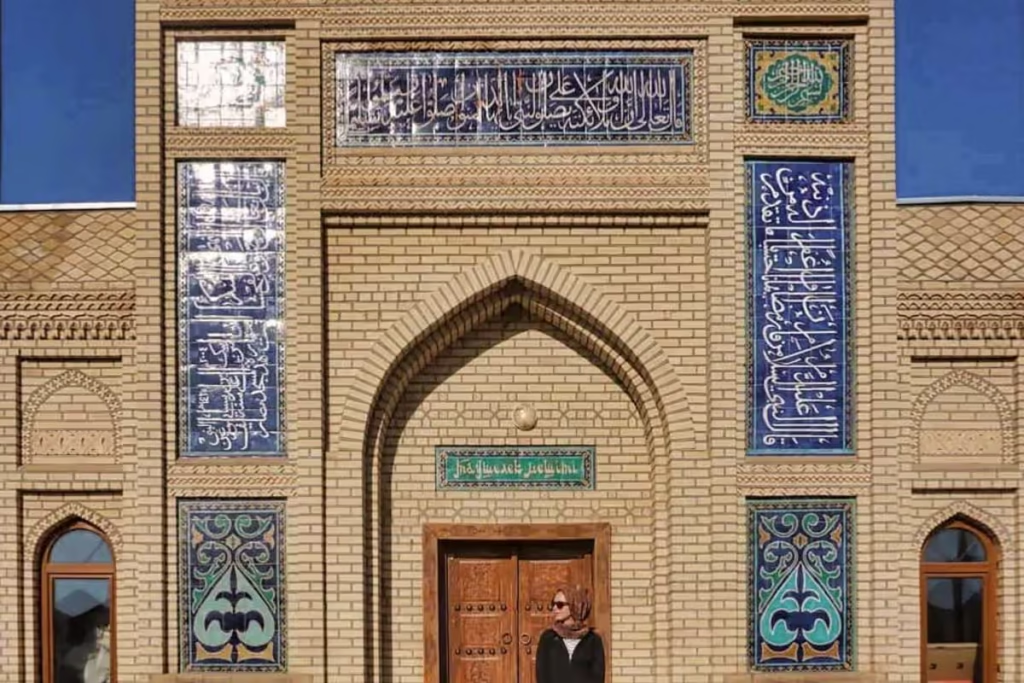
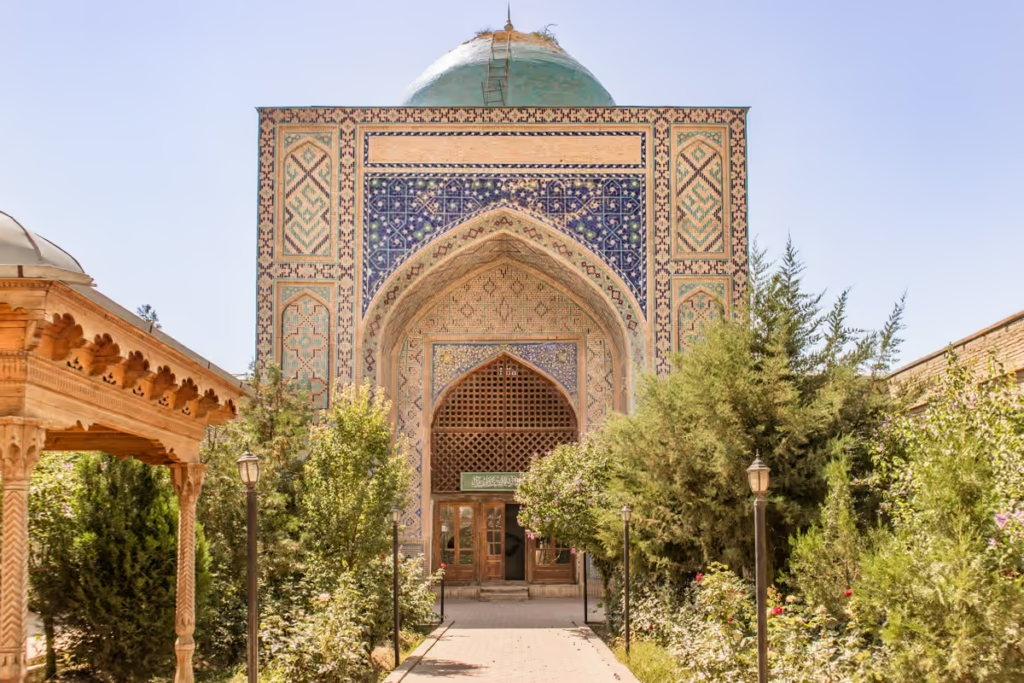
The city became particularly important during the 16th century, when several mosques and madrasas were constructed. One of the most significant surviving monuments is the Abdullakhon Madrasa, built in the late 16th century under the Shaybanid ruler Abdullah Khan II. The complex includes a madrasa, mosque and 22.5-meter minaret.
Later, Isfara came under the influence of the Khanate of Kokand before becoming part of the Russian Empire and eventually the Soviet Union. The city and surrounding villages continued to develop as an agricultural and industrial center.
Things to Do in Isfara
There are not endless conventional tourist attractions in Isfara, which is exactly why I would give yourself at least a full day here. The best experiences are spread between historic buildings, local neighborhoods, and the surrounding countryside.
Isfara’s Giant Apricot Monument
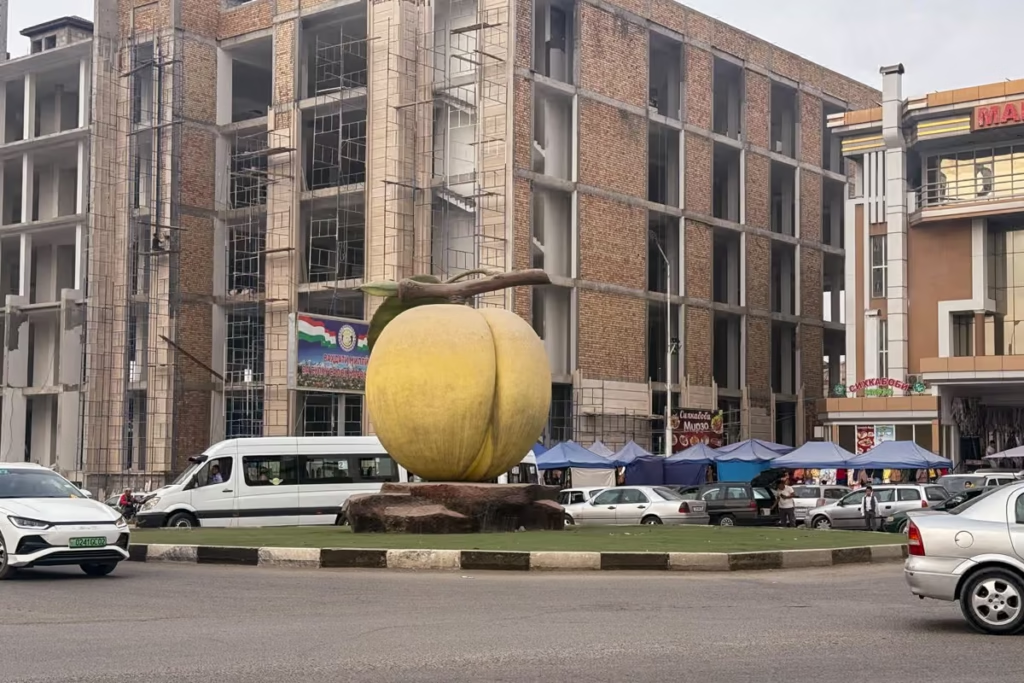
Smack in the middle of Isfara is a monument impossible to miss— a giant apricot in the most prominent roundabout in the middle of town. It looks uncannily like the peach emoji 🍑.
It’s no surprise that this giant apricot sits front and center in Isfara, given that Isfara’s most well-known export is its prized apricots.
See the Isfara Mosaics
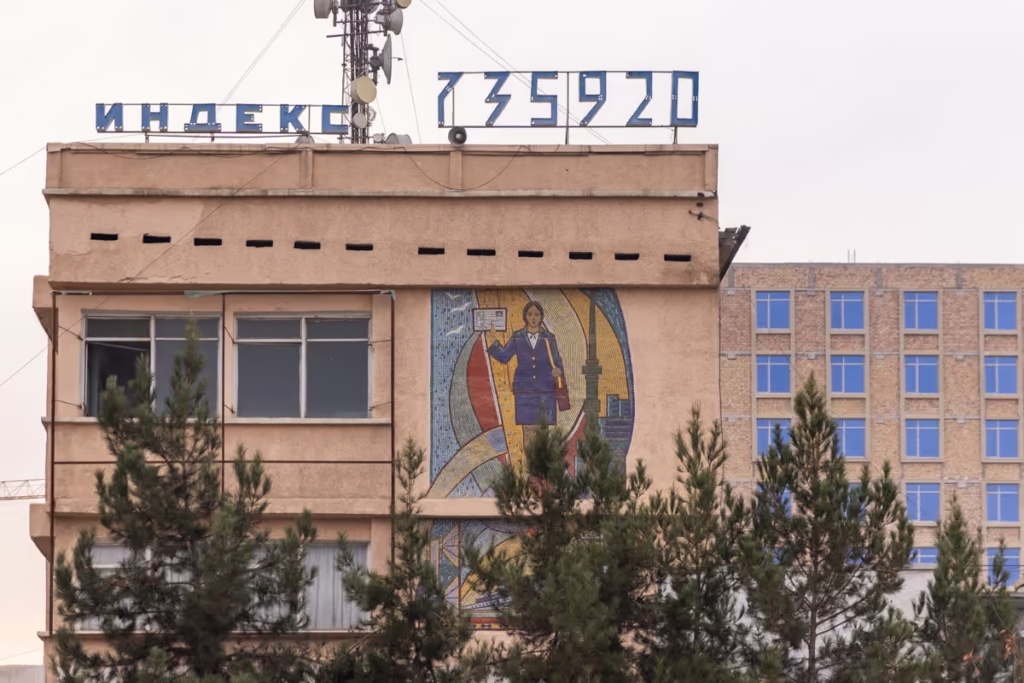
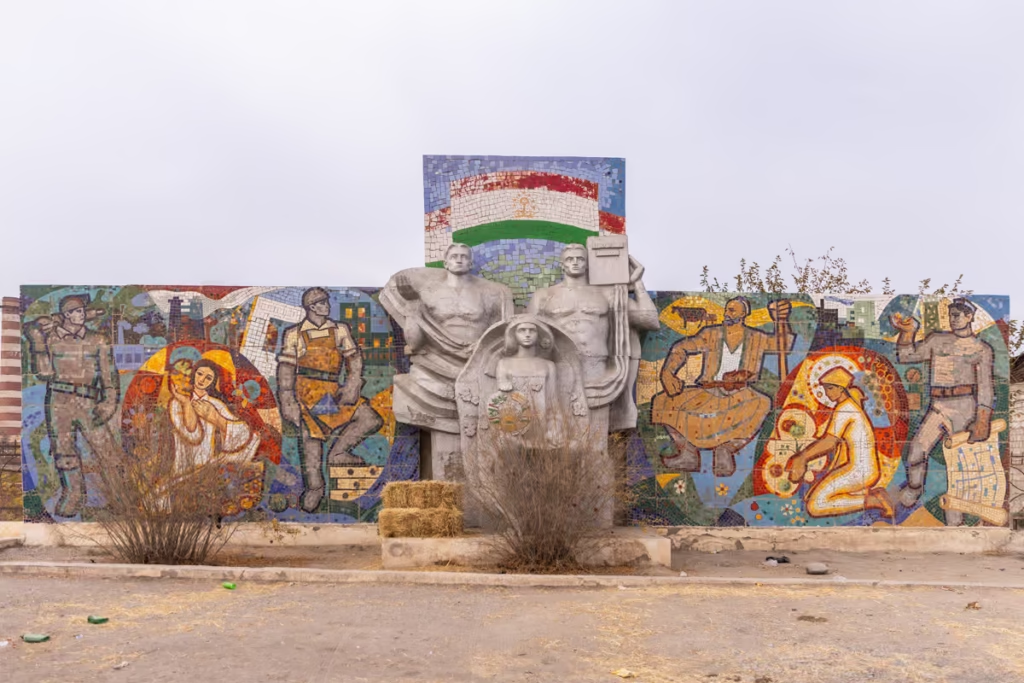
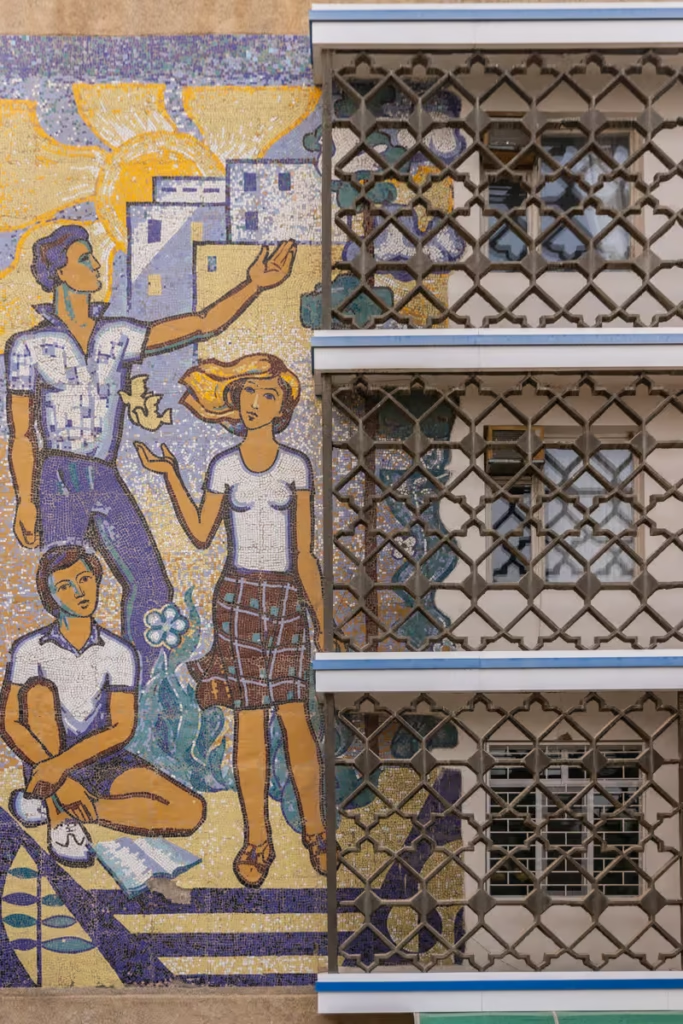
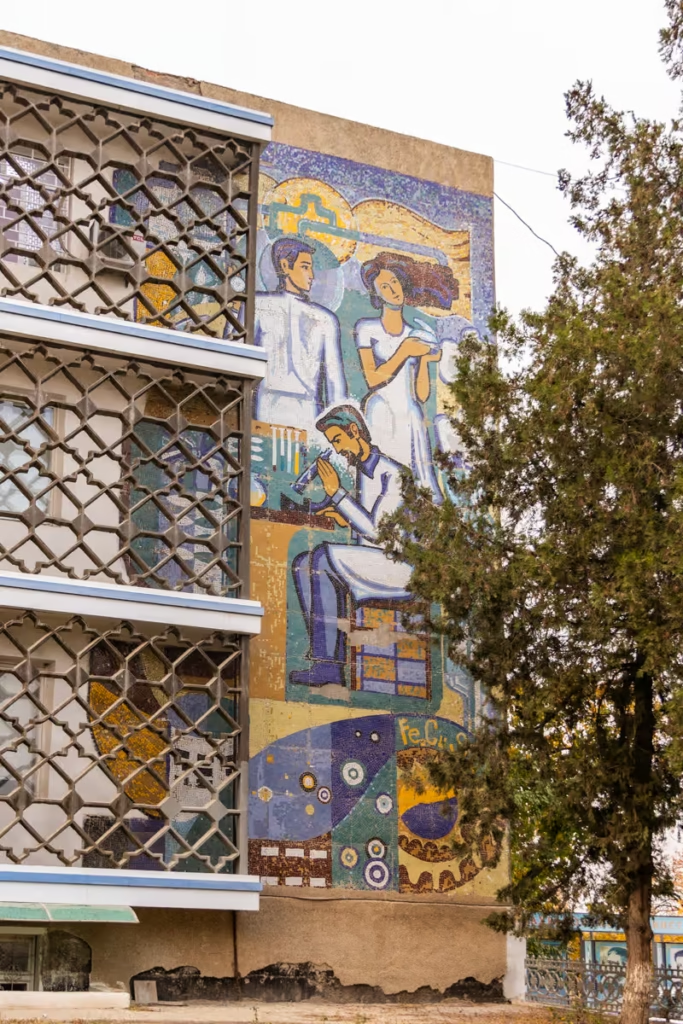
One of my favorite reasons to wander around Isfara is its collection of Soviet mosaics.
Like many cities across Tajikistan, such as the mosaic collections in Dushanbe, Panjakent, or Khujand, Isfara picked up a collection of colorful monumental mosaics during the Soviet period. They depict everything from labor and education to agriculture, industry, and the idealized Soviet citizen.
The mosaics are easy to overlook if you are rushing through town, so I recommend simply walking or taking a slow drive around the central neighborhoods and keeping your eyes on the walls of public buildings.
This is one of those situations where Google Maps is useful, but your own eyes are better. Some of the most interesting Soviet-era artwork is simply sitting there beside ordinary streets with absolutely no fanfare.
Note: Some of the Isfara mosaics are found in the Navobod District. You can walk there, or you can grab marshrutka #9 that runs from Navgilem District to Isfara Bazaar and to Navobod District.
Eat Isfara Plov
Isfara has a reputation for its local plov, and eating at a chaikhana is one of the easiest ways to experience the city as locals do.
Choykhonai Vokhuri is particularly associated with Isfara-style plov, while Tea House Lola is another popular local option for traditional food.
Don’t expect a touristy dining experience. This is the sort of meal where you sit down, order what is available, and see what appears on the table.
Shop at the Isfara Bazaar
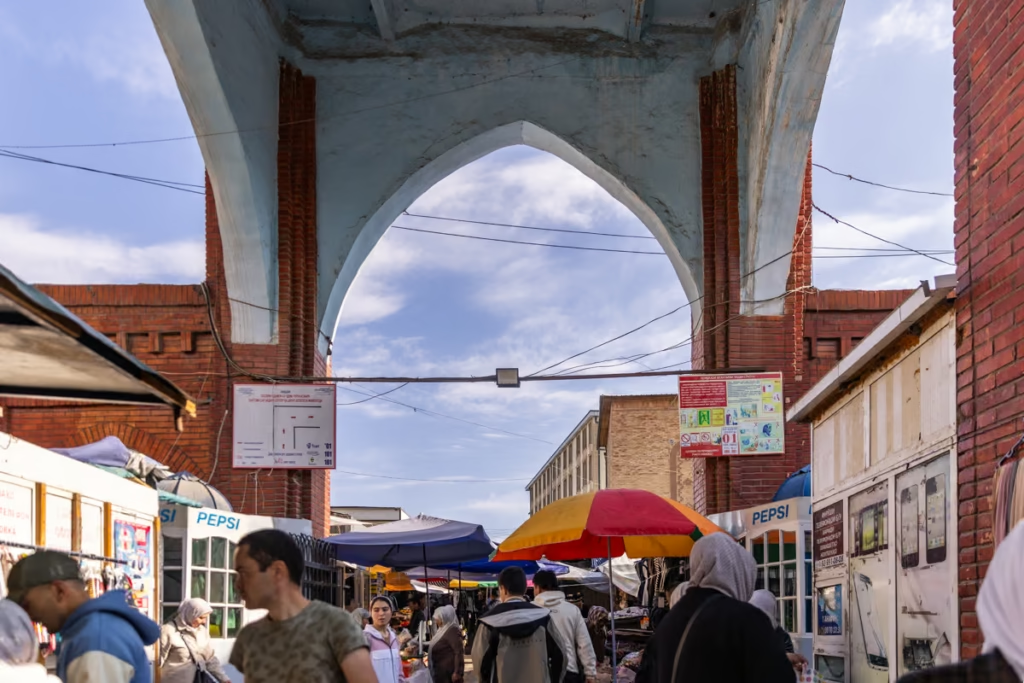
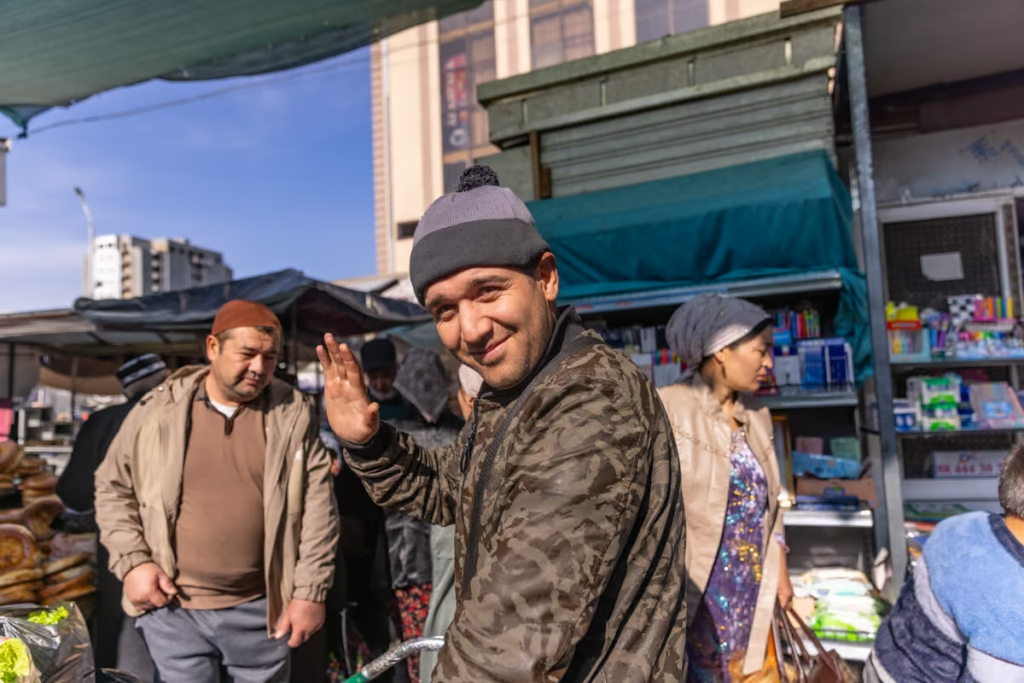
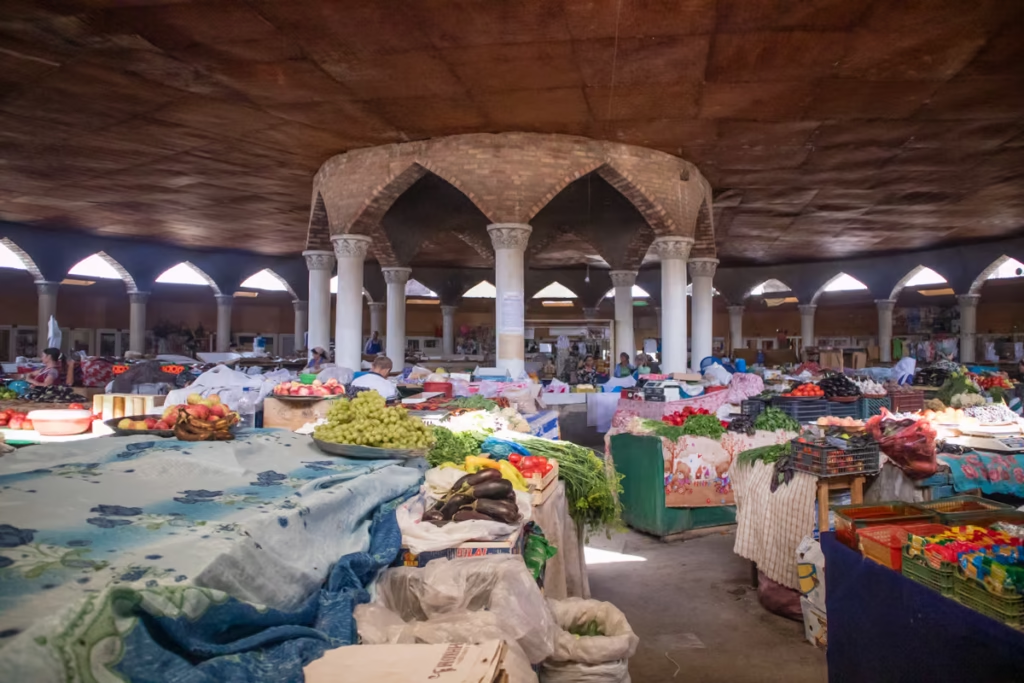
Isfara’s Bazaar is the bustling center of the small Fergana Valley city. With wares that come across the border from the Kyrgyz city of Osh, over the Uzbek border, and from as far-flung as China, you can find just about anything you may need here to stock up for onward travels through Tajikistan.
Visit the Historical and Ethnographic Museum
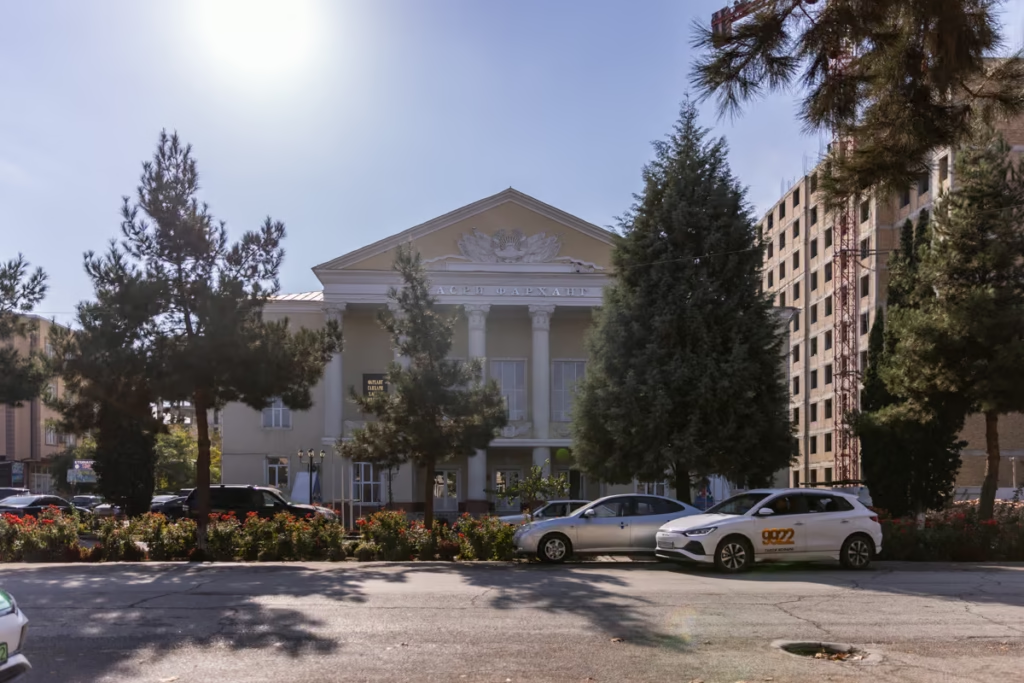
For a little more context, stop at Isfara’s Historical and Ethnographic Museum.
It is a relatively small local museum, but that is part of the appeal. Rather than feeling like a major national institution, it provides a more intimate look at the history and culture of Isfara and the surrounding area.
If you are interested in understanding the city beyond its modern streets, it is worth adding to your Isfara travel itinerary.
Wander Around Central Isfara
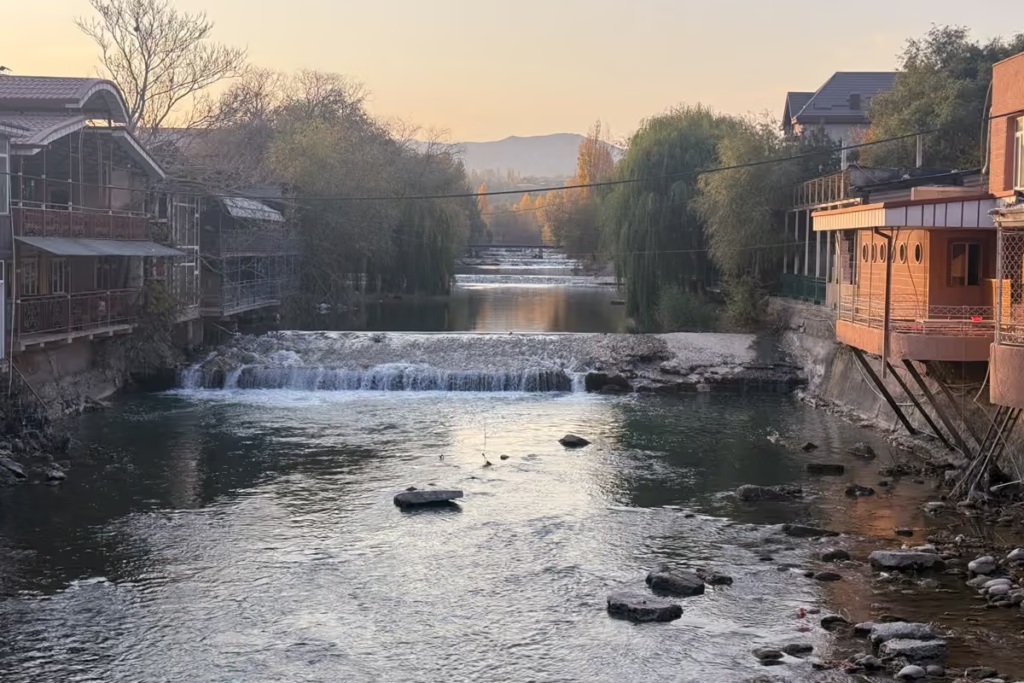
Give yourself time to simply walkaround Isfara.
Isfara’s center has the usual combination of Soviet-era buildings, newer construction, shops, mosques, tea houses, and busy streets that make wandering through smaller Tajik cities so rewarding.
You will probably get a few curious looks too. Foreign tourists are still unusual here, and Isfara feels much more like a working regional city than a destination designed around tourism, and that is precisely what I loved about it.
Visit the Abdullakhon Madrasa in Navgilem
Just beyond the disused train station in Isfara, toward the Kyrgyz border crossing, is the Navgilem district of Isfara. The Abdullakhon Madrasa is one of Isfara’s most important historical monuments.
The brick complex dates to the late 16th century and was built during the reign of Abdullah Khan II. It includes a madrasa, mosque and minaret, and the building was restored in 1999.
It is worth visiting even if you are not particularly interested in Islamic architecture because it gives you a sense of how significant Isfara was during the period when the Fergana Valley was divided between competing Central Asian powers.
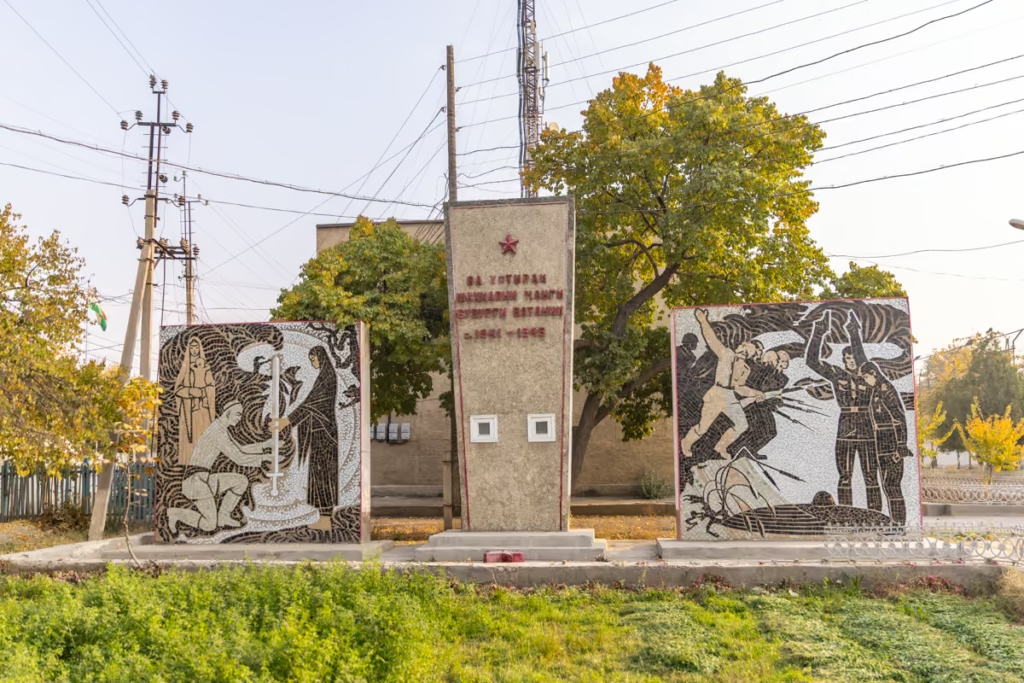
Near the Abdullakhon Madrasa in Navgilem, you will also find a mosaic and monument to the Great Patriotic War (WWII).
How to get to Navgilem from Isfara: Navgilem is close enough to Isfara; you could walk if you were really determined. However, you can take marshrutka #9 from the bazaar area to Navgilem District for 2 TJS.
Isfara Day Trips
The biggest reason I recommend spending more than a few hours in Isfara is the surrounding area.
Several fascinating destinations are within driving distance, and you can string them together into a full-day road trip. Some can be reached by marshrutka, but having a private vehicle makes it much easier to stop for photographs and combine several places.
Isfara to Zumrad
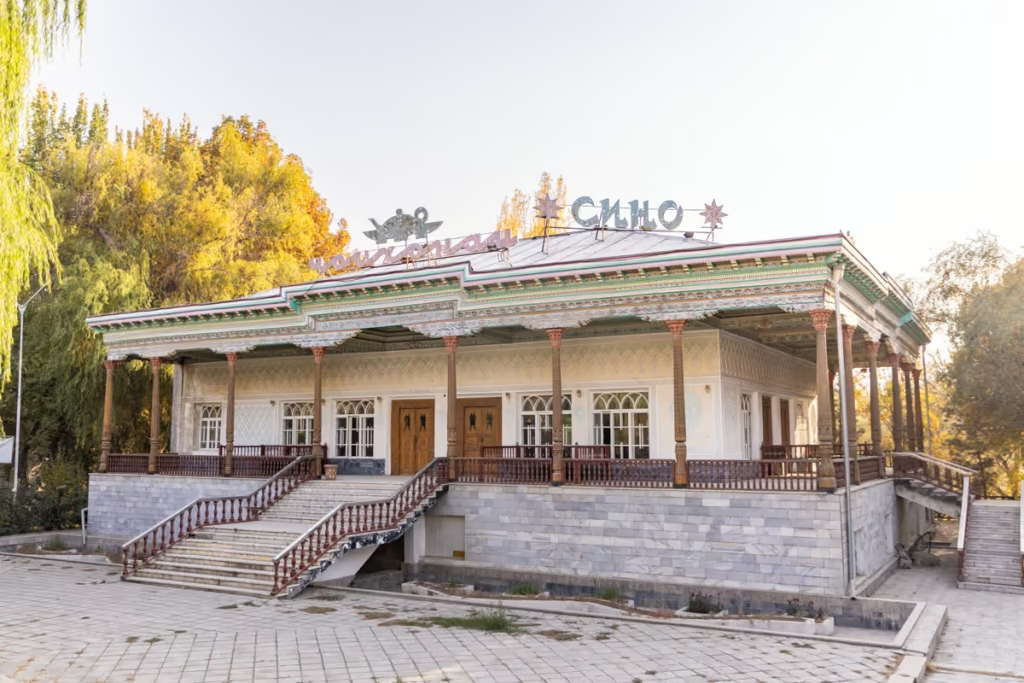
Zumrad is one of the easiest additions to an Isfara itinerary.
The Sanatoriy Zumrad is a long-established health resort located outside the city in a greener foothill setting.
The contrast is fun. Isfara itself can feel dusty and urban, while the road toward Zumrad becomes noticeably greener.
Don’t miss the great mosaics and bas-relief on the Sanatorium, and make sure to go over on the grounds to visit the famous Chaikhana Sino, which is depicted on the 50 Somoni banknote.
Zumrad makes a good stop on a wider Isfara, Chorkuh, and Vorukh road trip.
How to get to Zumrad from Isfara: You can catch the marshrutka to Zumrad near the bazaar or flag it down along the way. Marshrutka #2, 3, and 220 all stop at the entrance to Zumrad. A seat will cost 2 TJS.
Isfara to Chorkuh
Chorkuh is another easy side trip and one of the most worthwhile.
Chorkuh is known for the Hazrati Shoh religious complex, including a historic wooden mausoleum and mosque. The site is particularly unusual because of its elaborately carved wooden construction and its great age. Chorkuh’s Hazrati Shoh mausoleum is generally dated to the medieval period, with some elements attributed to the 8th to 10th centuries.
How to get to Chorkuh from Isfara: You can reach Chorkuh on the Vorukh-bound marshrutka #222 for about 5 TJS per seat. The ride takes about 30 minutes.
Isfara to Vorukh
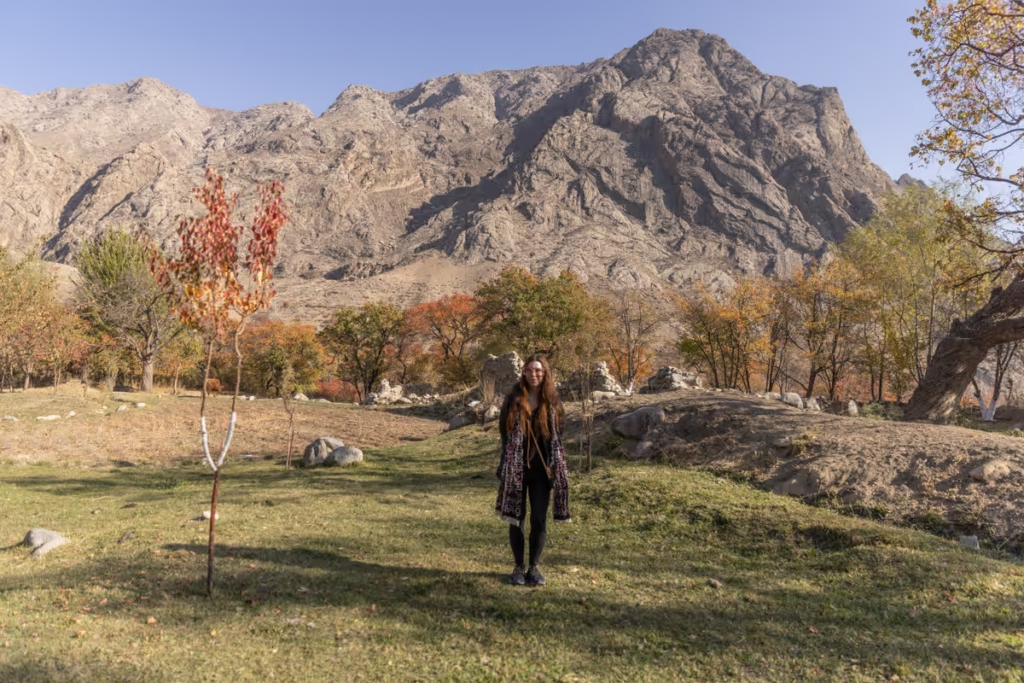
Vorukh is a Tajik enclave surrounded by Kyrgyzstan, and reaching it from Isfara involves one of the strangest little road journeys in Central Asia. Vorukh is an intersting destination in the Fergana Valley, owing to its recent turbulent history, as well as picturesque mountain valleys.
I have a more detailed guide on visiting Vorukh from Isfara if you want the full transport breakdown.
How to get to Vorukh from Isfara: The road from Isfara passes through several villages before reaching Khoja Alo. From there, the road briefly crosses approximately 3.5 km of Kyrgyz territory before entering the Tajik enclave of Vorukh. On my own journey, I took marshrutka #220 from Isfara, leaving around 08:00 and reaching Vorukh around 09:20. The fare was 11 TJS. The marshrutka makes stops through places including Zumrad, Chorbogh, Surkh and Chorkuh before reaching the border area.
Important: Vorukh and the surrounding border area have a complicated security history. Conditions can change, so don’t rely blindly on old info when planning this journey. It’s always best to ask locally in Isfara what the situation is before you.
Isfara to Shurab
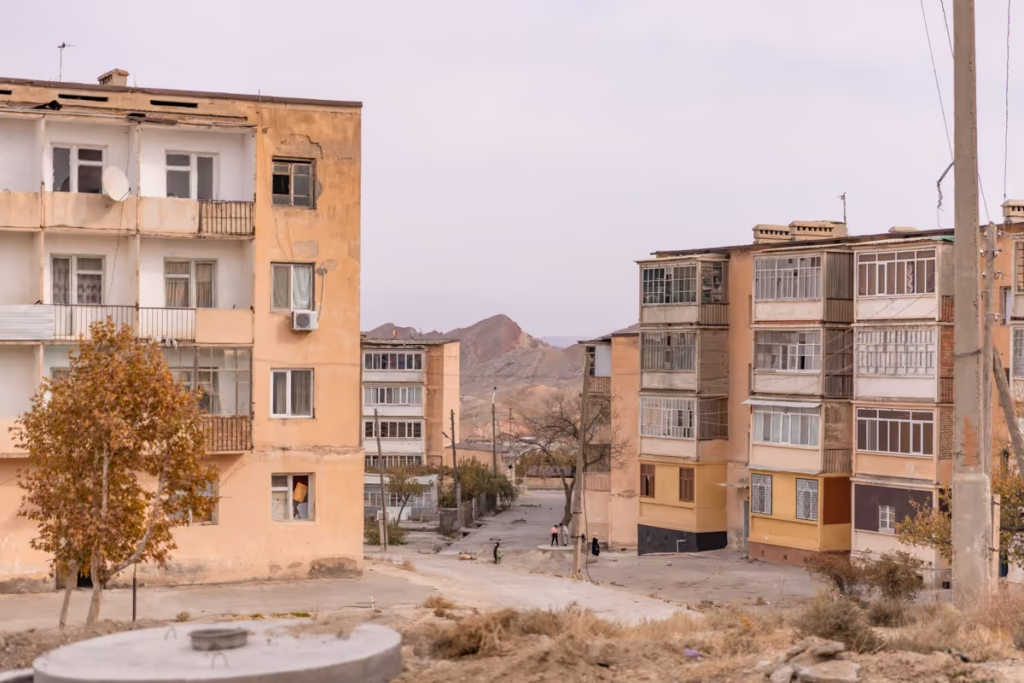
Shurab is another interesting destination for travelers interested in Soviet history and abandoned or declining industrial towns.
The settlement developed around coal mining and Soviet industry, giving it a very different atmosphere from the agricultural villages around Isfara. At its zenith, Shurab was a booming coal town. It nearly went bust overnight at the fall of the USSR.
It’s a bit defunct these days and mostly abandoned, but that is exactly what lured me to pay a visit. That all said, Shurab is seeing a bit of a new wave of hope.
Tajikistan’s President Emomali Rahmon commissioned the reconstruction of No. 8 coal mine with modernized mining infrastructure and production lines. The workforce needed for the coal mine here at Shurab is expected to grow.
How to get to Shurab from Isfara: Marshrutka #222 leaves from the lot at the Isfara Bazaar to Shurab. It’s a short ride, taking 15-20 minutes to reach the middle of Shurab. A seat will cost you 4 TJS. To return to Isfara, look for marshrutka #222 headed back north along the main road and flag it down.
Isfara to Konibodom

Konibodom is another useful stop and an important transport hub.
The city sits west of Isfara near the Uzbekistan border and is known for its orchards, particularly almonds. It is also useful for travelers crossing between Tajikistan and Uzbekistan via the Fergana Valley.
There isn’t much to see in terms of sights in Konibodum, per se, but if you enjoy hunting for Soviet-era mosaics, Konibodum is home to a small handful of them.
How to get to Shurab from Konibodum: Marshrutka #372 to Konibodum departs from the lot at the Isfara Bazaar throughout the day. The trip takes about one hour and costs 10 TJS per seat.
Isfara to Kyrgyzstan: Guliston-Kyzyl Bel Border Crossing

One of the most useful things to know about Isfara is that you can cross from Tajikistan into Kyrgyzstan nearby.
The Guliston-Kyzyl Bel border crossing connects the Isfara area with the Batken region of Kyrgyzstan.
On the Kyrgyz side, the crossing is at Kyzyl Bel, just outside Batken. It lies on the main road between Batken and Isfara and is the obvious border crossing to use if you are traveling between the two cities.
Always check the current status before traveling, particularly if you are planning to cross specifically as a foreign tourist. Border operating hours and rules can change with little to no notice, and the wider Isfara-Batken area remains politically sensitive.
How to Cross the Border to Kyrgyzstan from Isfara to Batken: A marshrutka departs from the main street through the Isfara Bazaar to the border crossing for 3 TJS. Once over the border, it’s possible to try and find a shared taxi from the border or walk about 500 meters into the village of Kyzyl Bel and hop on the marshrutka to Batken for 30 KGS. Once to Batken, walk over to the lot for Batken Bazaar and look for marshrutka #537 that goes to the Osh New Bus Station for 500 KGS per seat.
Getting Around Isfara
You do not need a car to visit Isfara itself. Walking covers much of the central area, while marshrutkas and taxis are the practical options for getting farther afield.
How to Get to and From Isfara
How to Get From Isfara to Khujand
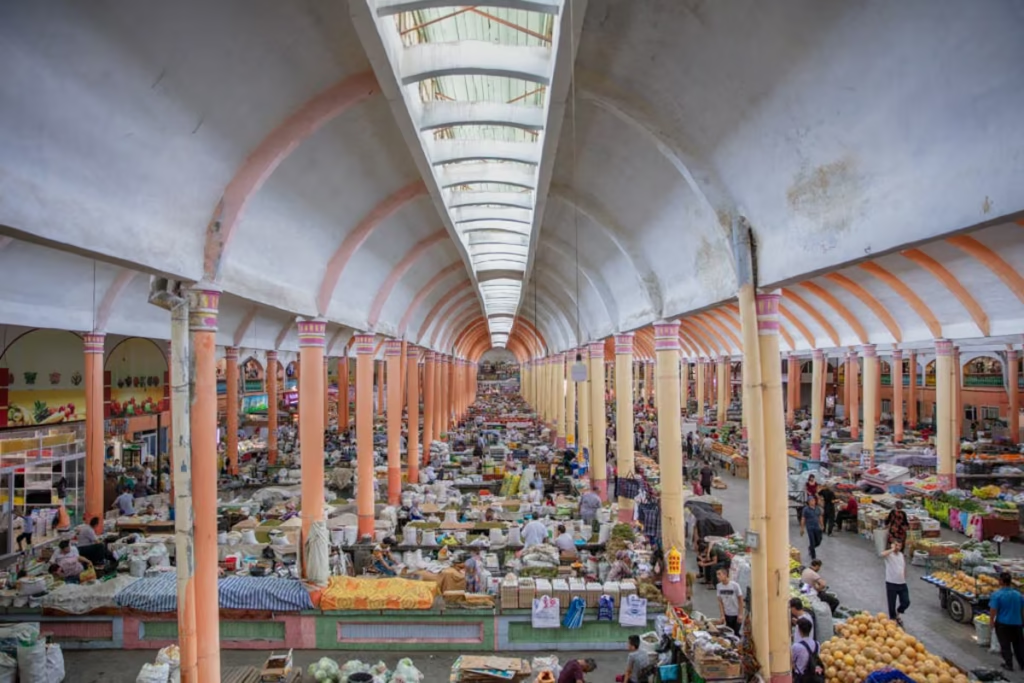
Khujand is the main transport hub for northern Tajikistan and the easiest starting point for most travelers visiting Isfara.
Marshrutkas and shared taxis operate between Isfara and Khujand. Look for marshrutka #301, and a seat will cost 25 TJS for the two hour journey. The marshrutka will arrive at Isfara Station in Khujand on the south side of the city.
How to Get From Isfara to Konibodom
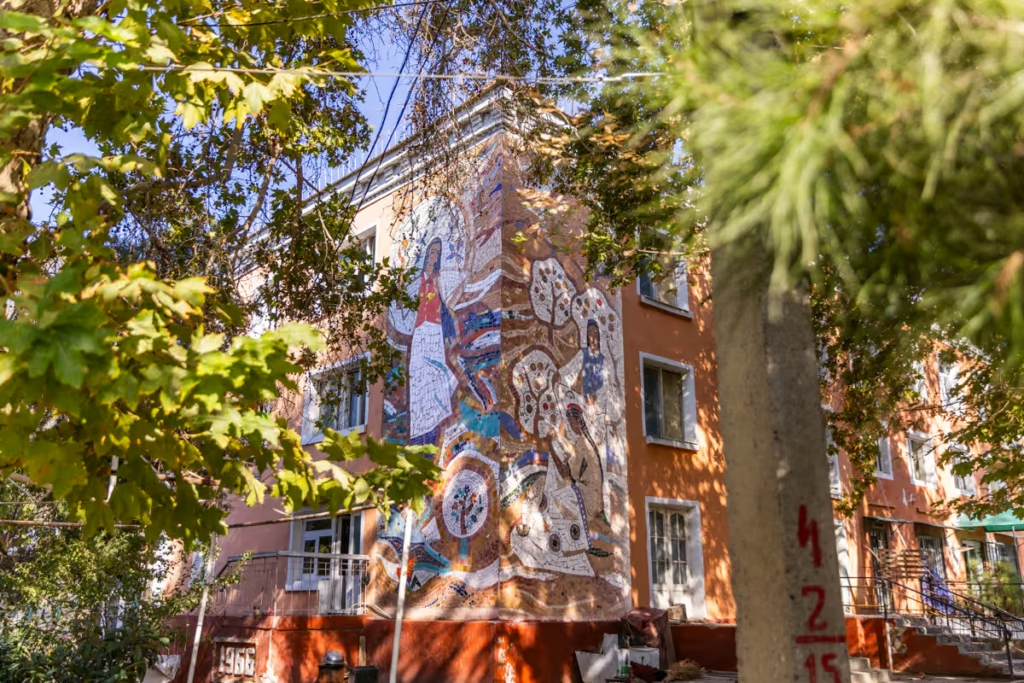
Konibodom is close enough to make this an easy day trip from Isfara.
Marshrutkas and shared taxis connect the two cities, and Konibodom is particularly useful if you are traveling onward toward Uzbekistan.
If you are coming from Uzbekistan, the Kokand-Konibodom border crossing is another practical way into this part of Tajikistan. From Konibodom, continue by marshrutka or shared taxi toward Isfara.
Marshrutka #372 connects Konibodum and Isfara. It takes about one hour to reach Konibodum and costs 10 TJS per seat.
How to Get From Isfara to Vorukh
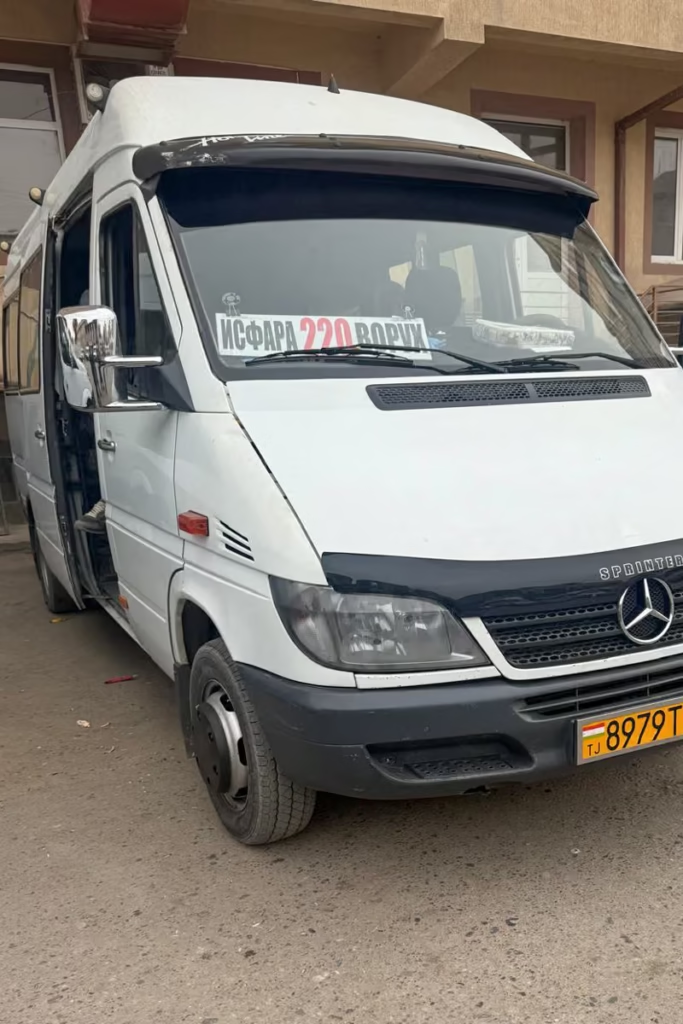
For Vorukh, head to the Isfara bus station and look for marshrutka #220.
The journey takes around 80 minutes and costs 11 TJS per seat.
How to Get From Isfara to Shurab
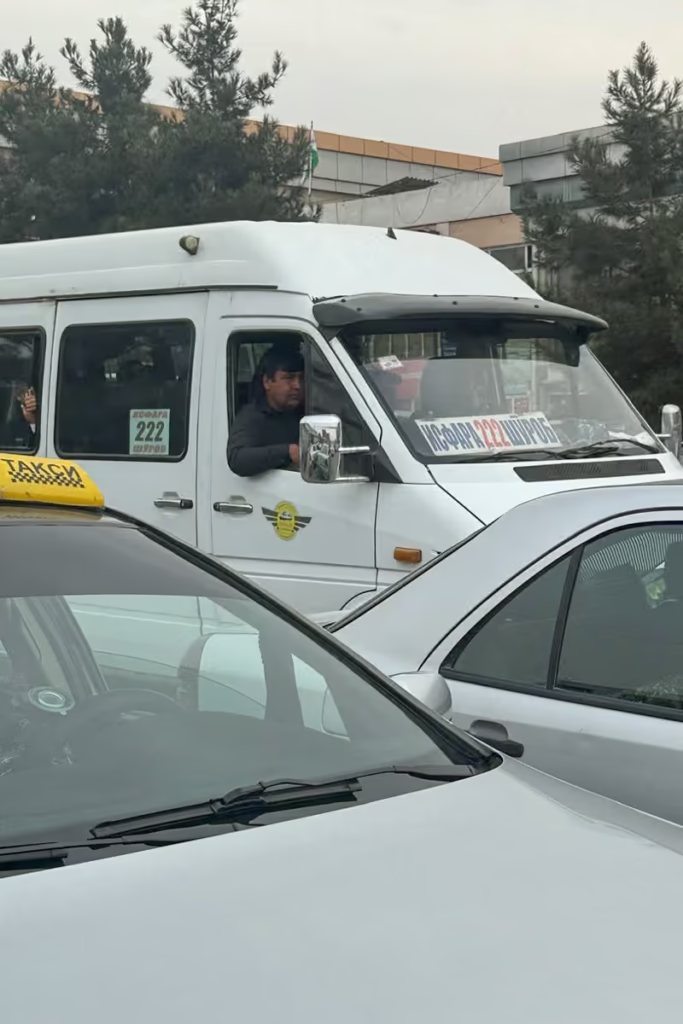
Shurab is generally reached using local marshrutkas or shared taxis.
It’s a quick trip to Shurab from central Isfara and costs 4 TJS per seat.
Where to Stay in Isfara
Isfara has a limited selection of accommodation compared with Khujand, so I would keep expectations realistic.
Hotel Isfara is one of the city’s established local hotel options. The rooms are spacious and if you opt to splurge on the 150 TJS lux room, you won’t be disappointed. If you’re sticking to as low a budget as possible, they have 50 TJS dorm beds too.
Hotel Shirin is another central option, just across the street from Hotel Isfara.
If you are only making a quick Isfara trip from Khujand, staying in Khujand is also perfectly reasonable. But I think spending a night in Isfara makes sense if you want to explore Vorukh or the surrounding villages without turning the day into a race against the clock.
Best Time to Visit Isfara
Spring and autumn are probably the nicest seasons for an Isfara travel itinerary.
Spring brings green orchards and pleasant temperatures, while autumn is especially appealing if you are interested in the region’s fruit-growing culture.
Summer can be hot and dusty, although the nearby mountain villages provide some relief. Winters are cold, and snow or poor road conditions can make trips into the mountains more complicated.
If your main goal is an Isfara road trip, I would prioritize April to June or September to October.
Is Isfara Worth Visiting?
Yes, especially if you have already seen the better-known cities of Tajikistan and want to go somewhere that feels distinctly different.
Isfara does not have the monumental attractions of Samarkand or the dramatic mountain scenery of the Pamir Highway, but it makes up for it with its fascinating surroundings.
What makes Isfara, Tajikistan interesting is the combination of things packed into a relatively small corner of the Fergana Valley: centuries-old Islamic architecture, Soviet mosaics, orchards, Tajik villages, health resorts, industrial towns and one of the strangest international borders in Central Asia— I’m talking about Vorukh here especially.
If you are interested in borders, enclaves and the wonderfully messy geography of Central Asia, Isfara is practically catnip.
More importantly, it is a place where you can still travel without feeling like the entire experience has been packaged for visitors. Sit down for plov, wander through the streets, look for mosaics, and play a round of marshrutka roulette to see where you end up.
Suggested Isfara Itineraries
One day in Isfara
Morning
- Explore central Isfara
- See the Isfara mosaics
- Visit Abdullakhon Madrasa
- Visit the Historical and Ethnographic Museum
Afternoon
- Lunch at a local chaikhana
- Drive to Chorkuh
- Visit Hazrati Shoh
- Stop at Zumrad on the return
Two days in Isfara
- Make a day trip to Vorukh
Three days in Isfara
- Make a half-day trip to Shurab
Practical Tips for Isfara Travel
- Carry cash in Tajik somoni for marshrutkas, taxis, and small restaurants.
- Ask locally about marshrutka departure points as these can change with Tajikistan’s rapid construction throughout the country.
- For Vorukh and other border-area trips, carry your passport.
- Check the Tajik-Kyrgyz border status immediately before traveling.
- Avoid photographing military installations, checkpoints or border infrastructure.
- A few words of Tajik or Russian will make independent travel considerably easier.
- If visiting mosques or mausoleums, dress appropriately and ask before photographing inside.
- Allow extra time for road trips, as shared transport leaves when full, not on a schedule.
- Consider hiring a driver if you want to combine several villages and sights in one day.
Why I Loved Isfara
Isfara is one of the more rewarding detours in northern Tajikistan for travelers willing to venture beyond the standard Khujand itinerary.
The city itself has enough history and architecture for a worthwhile stop, but the real appeal is what lies beyond its streets. Chorkuh, Zumrad, Shurab and Vorukh turn an ordinary city visit into a proper exploration of the Fergana Valley’s complicated history and geography.
For me, the best thing about traveling to Isfara is that it does not feel like a conventional tourist destination. You are seeing a living city shaped by Persianate culture, Soviet history, agriculture, and some extremely complicated borders.
If you are already traveling through northern Tajikistan, I would make the detour for Isfara again.
Have Any Questions About Isfara?
Ask in the comments section below.
Posts from Tajikistan
Istaravshan Travel Guide: 10 Things to Do
Tajikistan Itinerary: 1-4 Weeks
Afghan Bazaar Khorog | Tem Market
Shokhdara Valley Travel Guide, Tajikistan
Vorukh: A Guide to Tajikistan’s Enclave
Shir Khan Bandar Border Crossing Guide
Tajik Food: 20+ Traditional Dishes
Qolma Pass: Tajikistan to China Guide
GBAO Permit: How to Get One
Lakes Loop, Tajikistan Hiking Guide
Pik Engles Hike: Tajikistan Trek Guide
Tajikistan Border Crossings Guide
Pamir Highway Guide: M41 Route
Tajikistan Uzbekistan Itinerary: 2 Weeks
Solo Female Travel in Tajikistan
Chimtarga Pass Trek Guide | Tajikistan
Best Hikes in Tajikistan
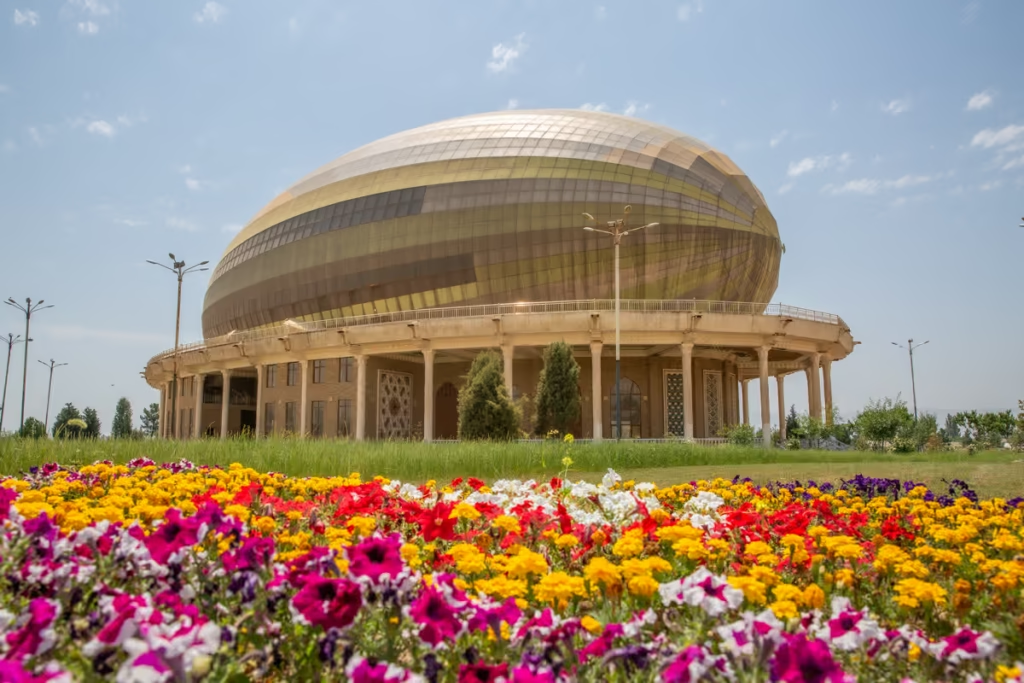
Dushanbe Day Trips
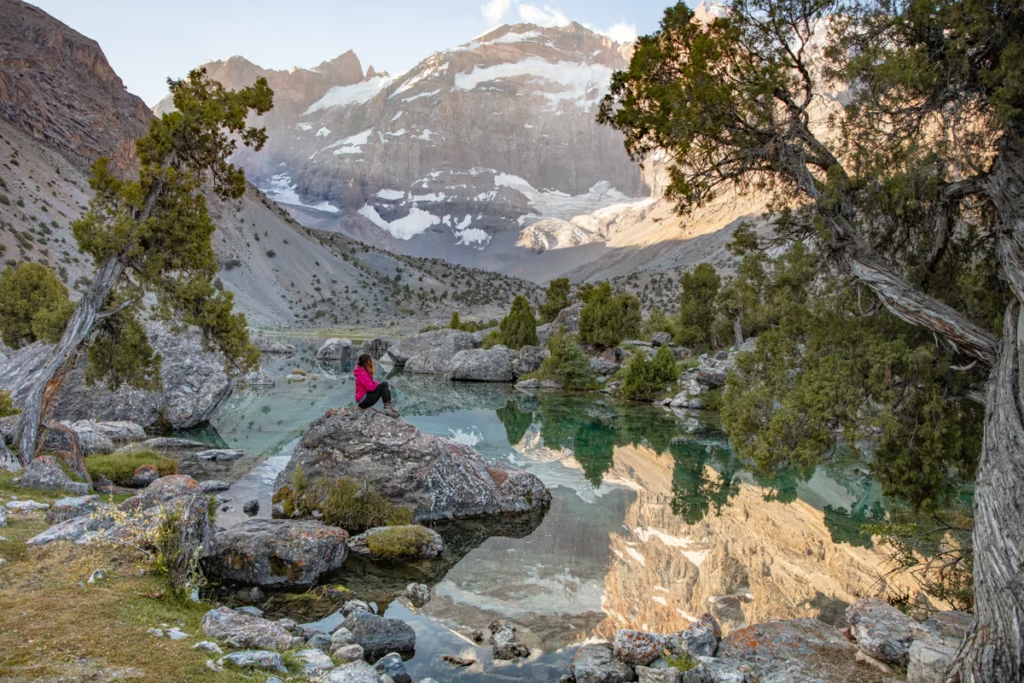
Solo Female Travel in Central Asia
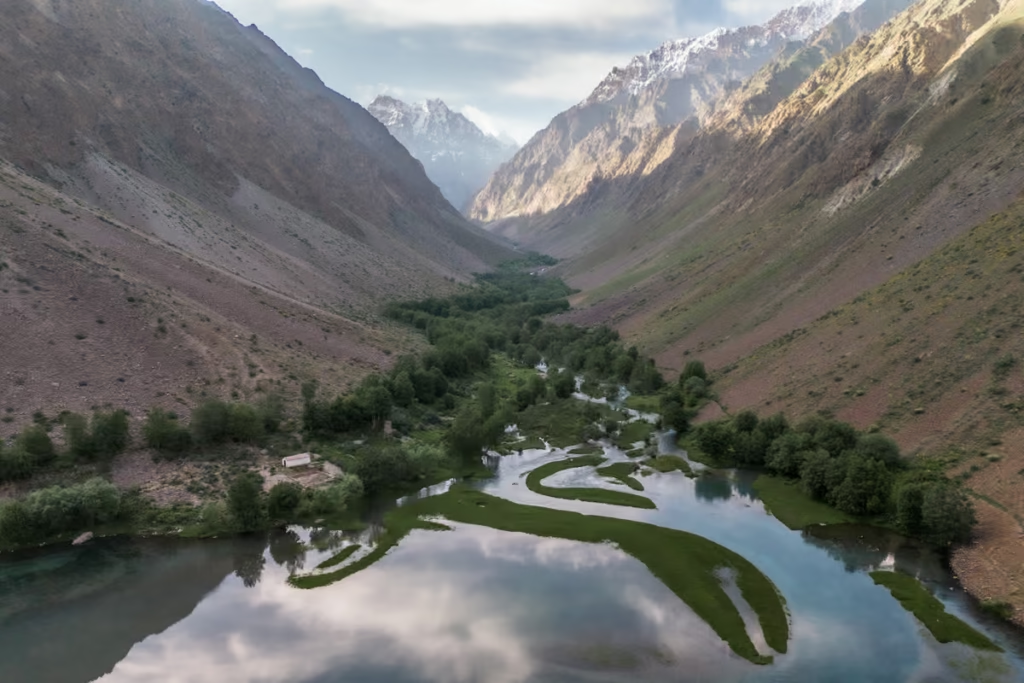
Jizeu, Tajikistan: Trek & Travel Guide
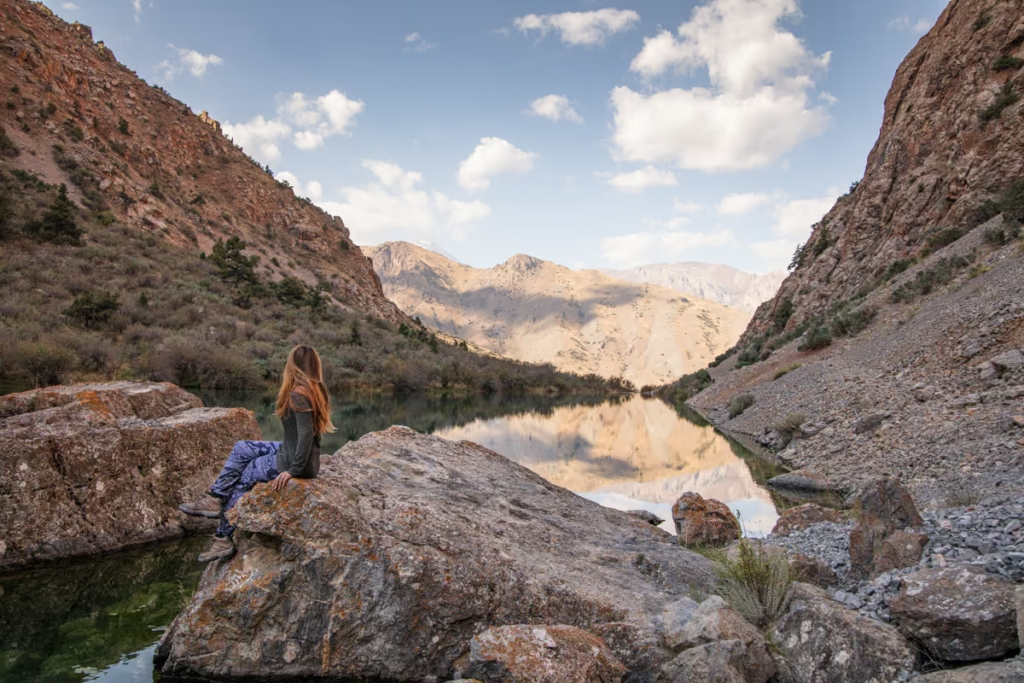
Tajikistan Travel Guide: Plan Your Trip
Dushanbe Travel Guide & Things to Do
Dushanbe Mosaics: Soviet-Era Art in Tajikistan
2 Week Tajikistan Itinerary
3 Week Tajikistan Itinerary
4 Week Tajikistan Itinerary
10 Day Tajikistan Itinerary
1 Week Tajikistan Itinerary
Panjakent Travel Guide: Things to Do

OVIR Registration in Tajikistan: Dushanbe Guide
Panjakent-Samarkand Border Crossing Guide
Fann Mountains Trekking Guide
Central Asia Travel Guide
Tajikistan SIM & eSIM Guide
Shurab, Tajikistan: An Almost Forgotten City
Isfara-Batken Border Crossing Guide

Oybek Border Crossing: Tashkent to Khujand
Best Restuarants in Dushanbe | Where to Eat
Isfara Travel Guide, Tajikistan
Pamir Highway Itinerary: 10 Days from Dushanbe to Osh
Haft Kul: A Guide to the Seven Lakes of Tajikistan
Tajikistan Letter of Invitation (LOI)
Jarty Gumbez, Tajikistan: A Complete Travel Guide
How to Use Payment Terminals in Tajikistan
Shor Bulog Observatory, Tajikistan
Visiting Zorkul, Tajikistan
Visiting the Sary Khosar Nature Reserve
A Guide to Rasht Valley, Tajikistan
Soviet Architecture in Khorog