A 10 Day Pamir Highway Itinerary Including The Wakhan Valley
Updated January 2026, A 10 Day Pamir Highway Itinerary including the Wakhan Valley was originally published in October 2020.
I’ve traveled the Pamir Highway now several times over the last few years (well, except 2020), on various trips exploring every pocket of Tajikistan I could into each visa I’ve received.
If you’ve read some of my other blog posts about Tajikistan, you’ll know that this is a place near and dear to me that brings me back year after year with a brand new laundry list of places I want to explore.
That all said, I realize that not everyone has the luxury of flexible work back home that will allow them to leave for months at a time as I do. So based on my travels in Tajikistan and along the Pamir Highway, I’ve created an epic 10 day Pamir Highway itinerary, including the Tajik Wakhan Valley for those on a faster-paced schedule than I.
If you are just starting to plan your Pamir Highway adventure, I recommend you grab a copy of Bradt Tajikistan, and if you plan to take any hikes, Jan Bakker’s Trekking in Tajikistan. For the Kyrgyzstan stretch, get a copy of Bradt’s Kyrgyzstan guidebook.
Note that there is extensive construction still ongoing on the Pamir Highway in 2026. The roadwork is happening between Qala i Khumb and Khorog and is causing major delays, so it’s advisable to plan ahead and ask locally when transport should depart, so as to not get stuck in road closures.
Need Travel Insurance and Evacuation Services?
Start shopping for travel insurance plans over at IATI Insurance. Readers of the Adventures of Nicole get a 5% discount off your plan.
The Adventures of Nicole partners with Global Rescue to offer the world’s leading medical evacuation and security advisory services. To travel with peace of mind, explore their evacuation coverage.
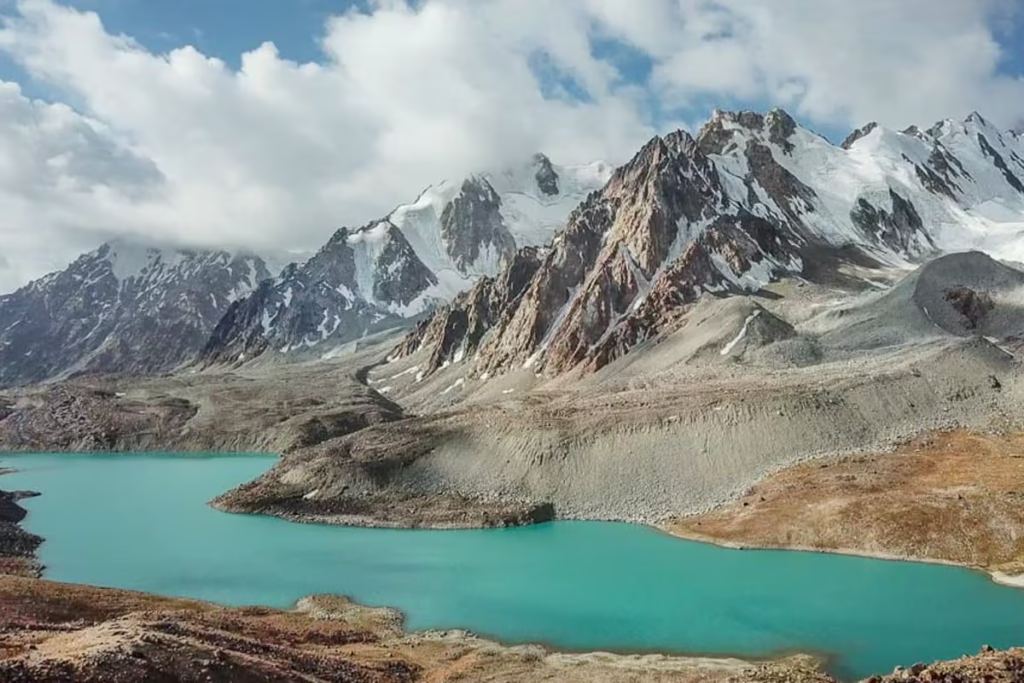
10 Day Pamir Highway Itinerary
Day 1: Dushanbe to Qala i Khumb
Distance: 370 kilometers
Drive time: 9-10 hours
Dushanbe
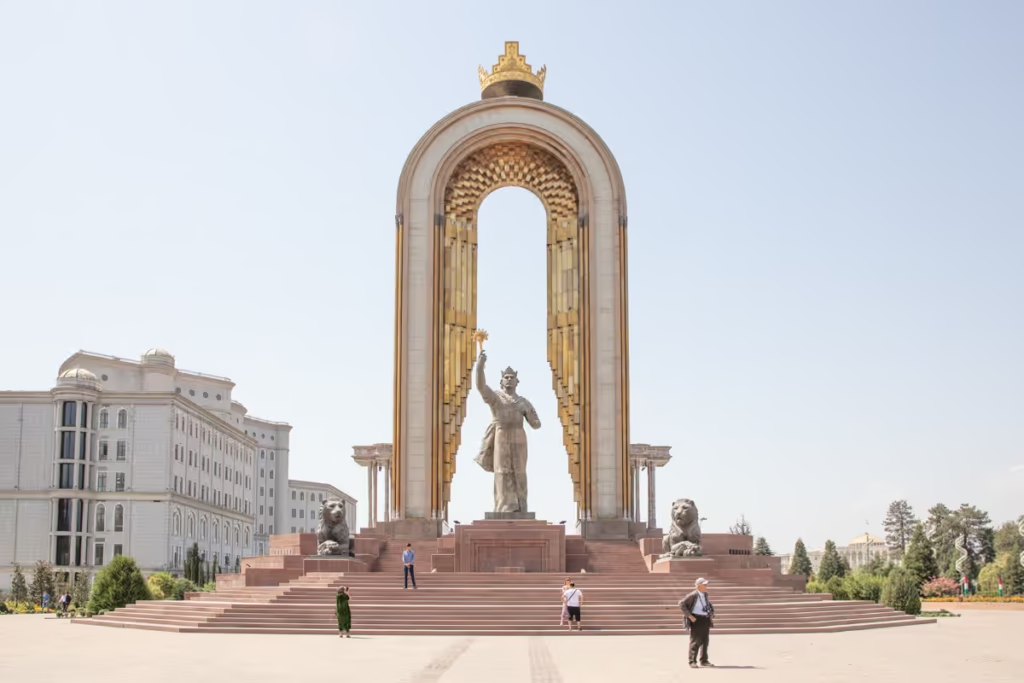
Kick off your Pamir Highway itinerary from the Tajik capital of Dushanbe. I’d recommend giving yourself a couple of days in Dushanbe to catch up on sleep (I know many of you will have had long journeys to get here), and time to check out what the city has to offer.
Looking for more ideas on what to do in Dushanbe? Check out my Dushanbe Travel Guide for ideas and info, select the best places to eat with the Dushanbe Restaurants Guide, and if you’re spending a little more time in the city, use my post on Dushanbe Mosaics to plan an artsy walk before they all disappear.
Where to Stay in Dushanbe
Budget
Hello Hostel Dushanbe
| Booking.com | Agoda.com |
Greenhouse Hostel
| Booking.com | Hotels.com |
Midrange
Atlas Hotel
| Booking.com |
Atlas B&B Hotel
| Booking.com | Agoda.com |
Splurge
Hilton Dushanbe Hotel
| Booking.com | Hotels.com |
Dushanbe Serena Hotel
| Booking.com | Hotels.com |
Hyatt Regency Dushanbe
| Booking.com | Hotels.com |
Get an early start from Dushanbe because today is a long driving day. If you’re planning to do this itinerary using shared taxis (cheaper, though don’t expect many stops aside from a lunch stop), you’ll need to go to the Badakhshanskaya Avtostansiya on Nazarshoev Street (behind the Hilton Hotel).
Most shared taxis depart between 5 am and 9 am. If you’ve arranged a 4WD hire, your driver will likely want to start early, so plan to leave before 8 am.
Nurek
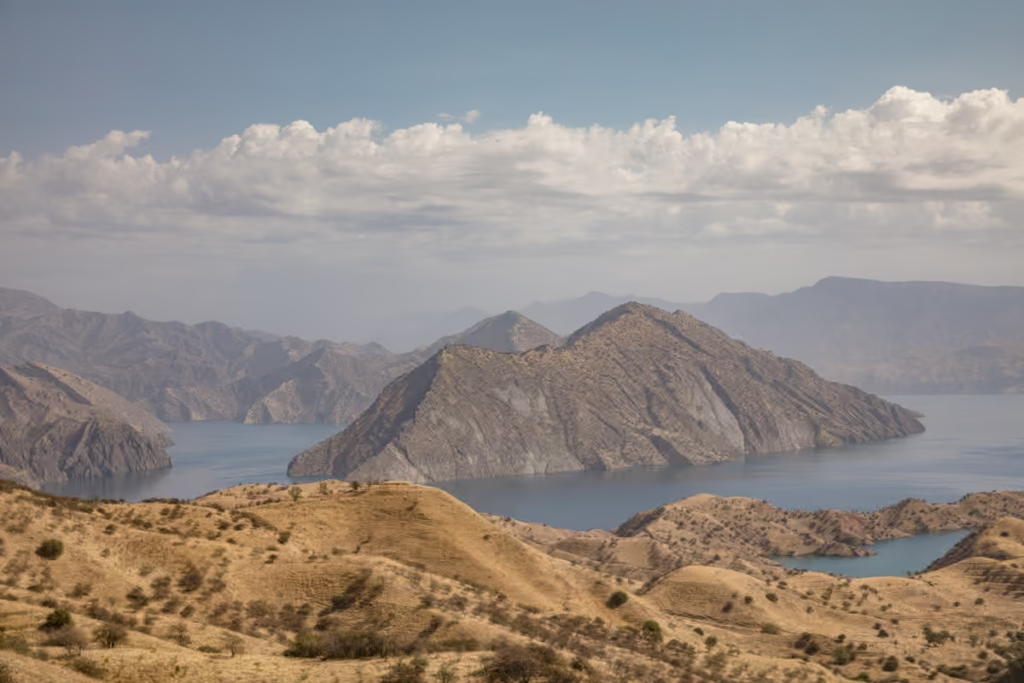
This first leg of the Pamir Highway itinerary is one of the lesser-exciting ones. You’ll first head east out of the city, passing by numerous small suburb-like villages before reaching the massive Nurek Reservoir.
Nurek is worth a quick stop to stretch your legs and to take in the views of the man-made lake. In fall, Nurek is surrounded by hills coated in baked golden hues, but in earlier with summer verdant greens.
Kulob
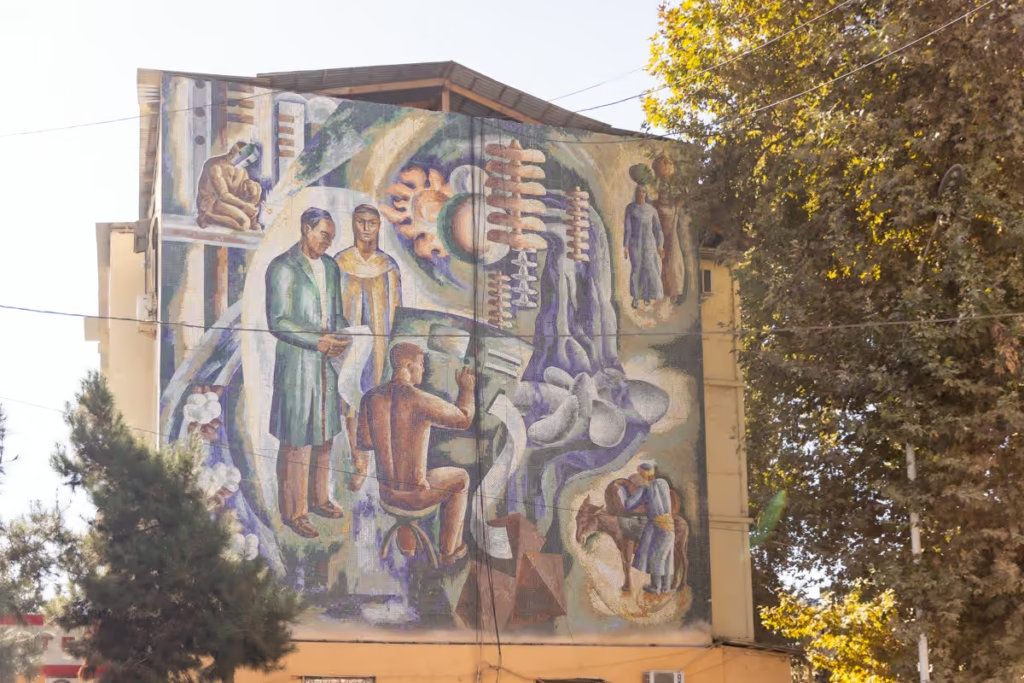
From Nurek the road bends southward, passing through Danghara (the hometown of the 7-time president Emomoli Rahmon), before heading to the east again to reach the city of Kulob.
Kulob is a common stopping point for most drivers to break for lunch.
If you’ve hired your own transport, nearby Hulbuk is worthy of a stop to visit the Hulbuk Fortress and the Mir Sayid Ali Hamadani Shrine.
Have more time? Why not check out nearby Sary Khosar Valley and the spires of Childukhtaron
Shurubod Pass
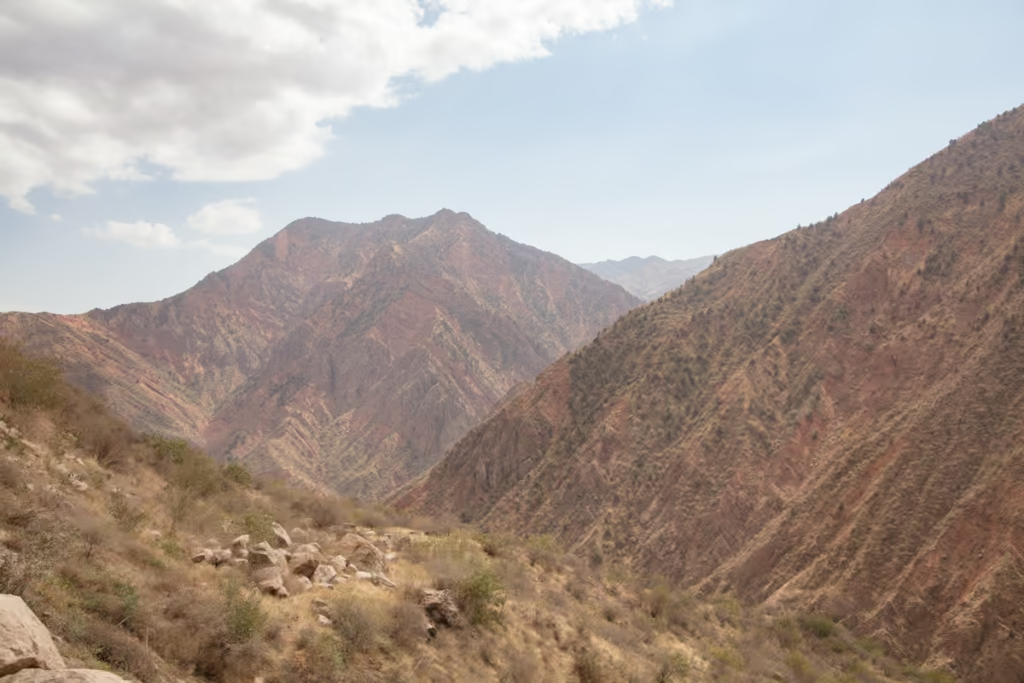
Continuing from Kulob you’ll pass sceneries of rolling hills as you make way for Shurubod Pass.
At the top of Shurubod Pass, you’ll reach your first GBAO checkpoint of many. At these checkpoints, you’ll need to present your passport and GBAO permit. Some drivers will go in and handle this for you, others will have you enter yourself (if you want to apply for a GBAO permit in advance, we can arrange this for you).
If you go inside the checkpoint you’ll likely have to fill out some info on a sheet. Don’t be surprised if the officers manning the checkpoint offer you chai or fruit.
Continuing down from Shurubod, you’ll drive past colorful mountains that finally give way to the Panj River, the natural border between Tajikistan and Afghanistan, giving you views into the neighboring country. This stretch of the drive is quite scenic all the way to Qala i Khumb.
Qala i Khumb
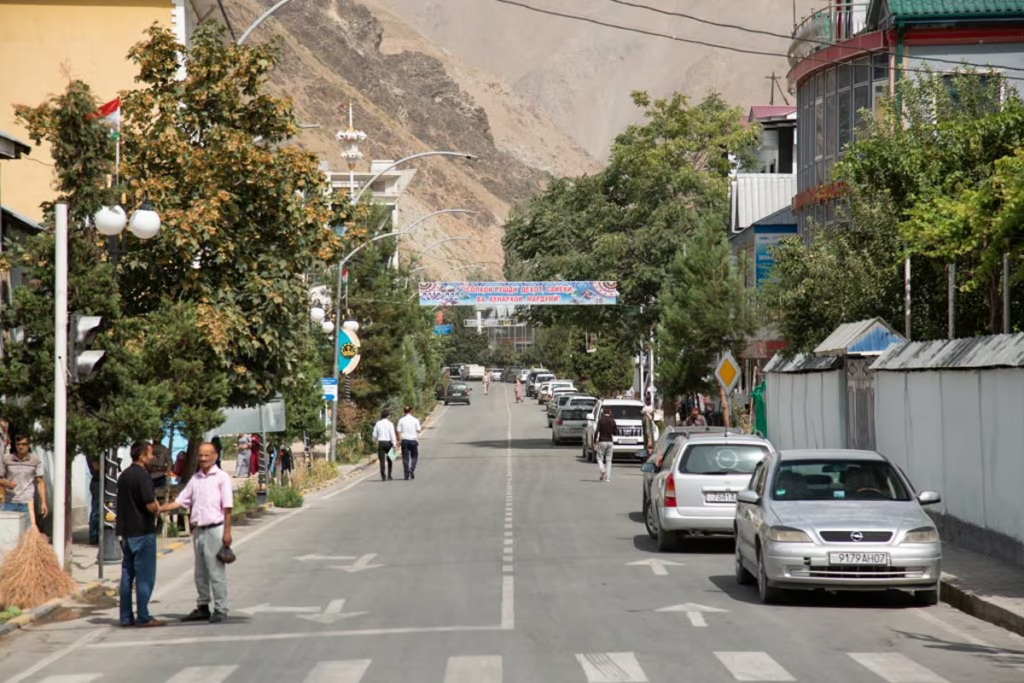
You’ll likely arrive in Qala i Khumb in the late afternoon. It’s a small town, but a wander down the main road is worth the walk, plus the kids around town are quite friendly.
Several families rent out guesthouse rooms to visitors, but if you want something upscale, you could try the Karon Palace Hotel ( booking.com | hotels.com ).
Day 2: Qala i Khumb to Bartang Valley, Hike to Jizeu
Distance: 200 kilometers
Drive time: 4 hours
Today, you’ll want to get an early start to take on the roughly 4 or so hour drive to Rushan at the mouth of the Bartang Valley. There are countless adventures to be had in the Bartang Valley (one of my favorite parts of Tajikistan), but for those on a quicker itinerary of the country, a quick overnight trip to Jizeu is in order.
At Rushan you’ll leave the Pamir Highway, taking a turn to the northeast to begin a short 27 kilometer jaunt up the Bartang Highway. Eventually, you’ll arrive at a cable bridge that crosses the Bartang River, this is the start of the trek to Jizeu.
Jizeu Hike
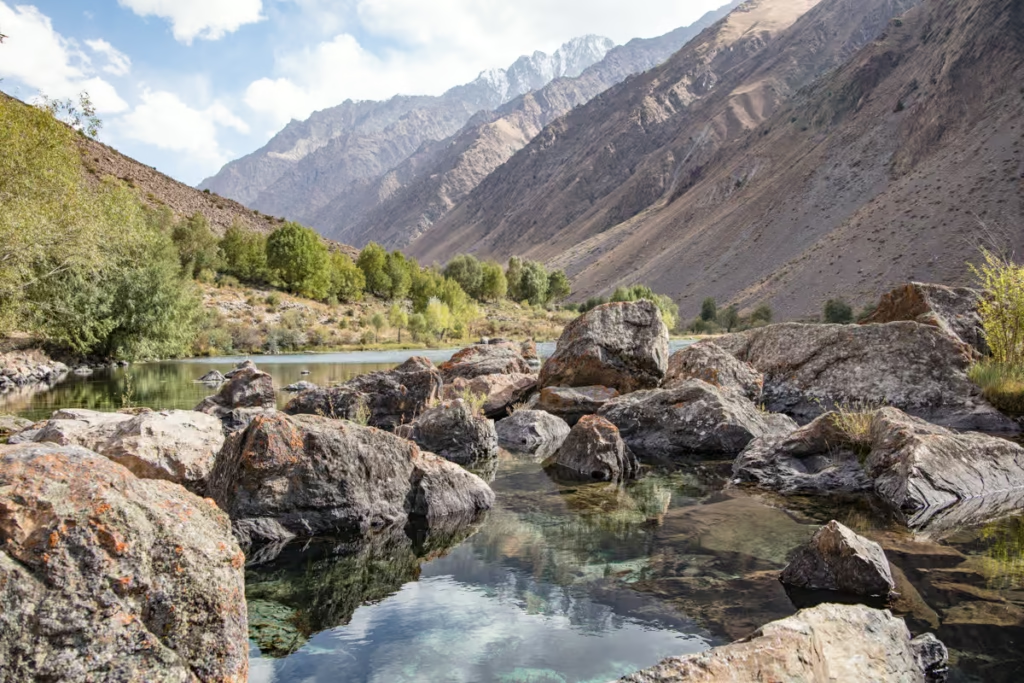
From the bridge, it’s a roughly 5.5 kilometer hike (11 kilometers return) to the beautiful little village of Jizeu. The bridge is at about 2,000 meters elevation and you’ll gain about 500 meters as you trek to the village. It only takes about two hours to reach Jizeu from the bridge, so you could opt to make this into a day trip, but I would recommend spending a night up here.
There are 14 homes around upper and lower Jizeu, 7 of which operate as homestays. I stayed at Homestay Lola, which I can 100% recommend, but surely any of the 7 are wonderful. You can expect a night’s stay with meals to cost about 200 TJS per person.
Read my guide to the Jizeu Trek for more details on the hike.
If you’re planning to do the Pamir Highway by shared transport, I would recommend hiring a 4WD from either Rushan or Khorog to take you to and pick you up from Jizeu as shared transport along the Bartang Highway is scarce.
Day 3: Jizeu to Khorog
Distance: 95 kilometers
Drive time: 3 hours
Enjoy sunrise reflections around the beautiful pools of Jizeu before a quick breakfast prior to setting off back down to the bridge. Plan for it to take you about 1.5 hours to return.
Once reunited with your driver, you’ll have a short, roughly three hour drive out to Khorog.
Khorog
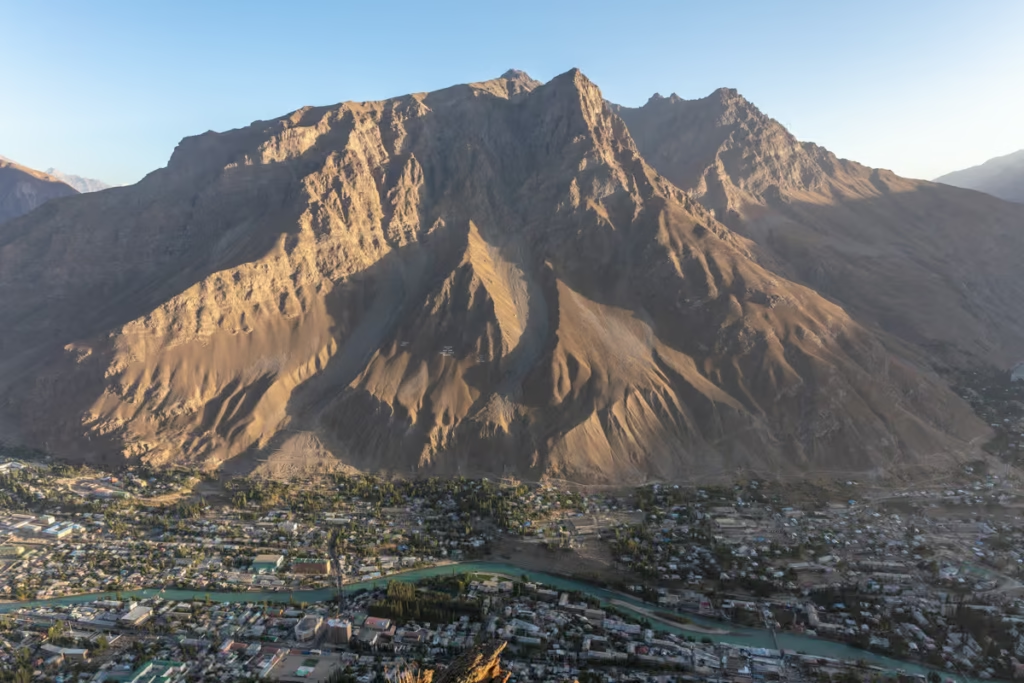
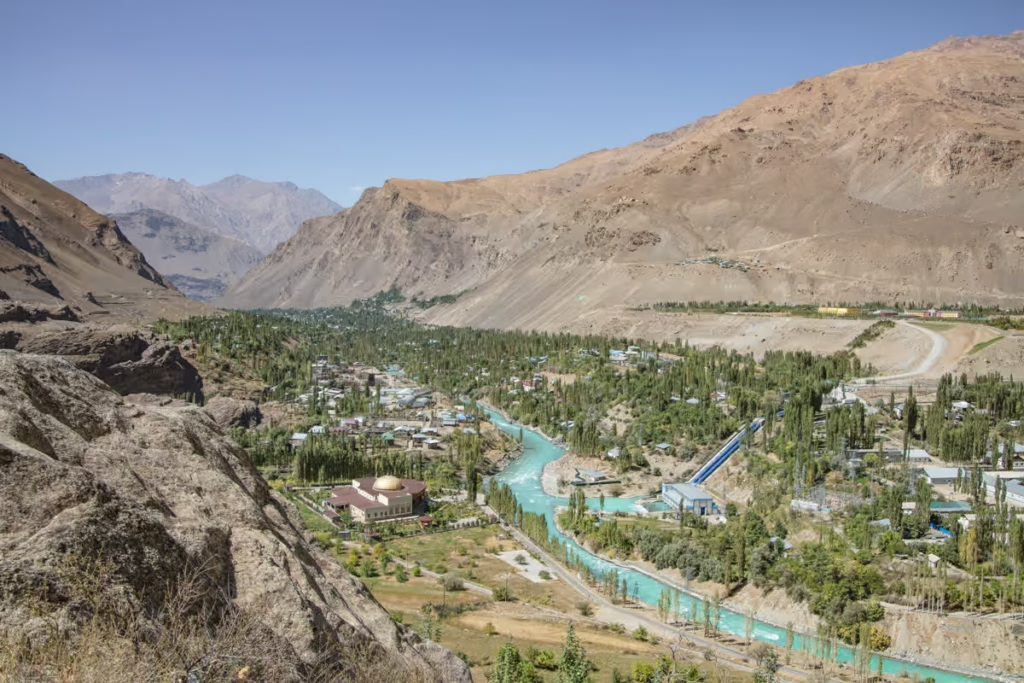
Khorog is the largest city in the GBAO, home to roughly 30,000 people.
Spend the remainder of today exploring the city. A few things not to miss include the Khorog Botanical Garden, which will give you sweeping views over the city and the Gunt River, shopping at the Khorog Bazaar, and relaxing in the shaded Khorog Central Park.
Of course, there are plenty of other things to do in Khorog (I’ve spent a lot of time in Khorog resting between different adventures in the Pamirs over the years).
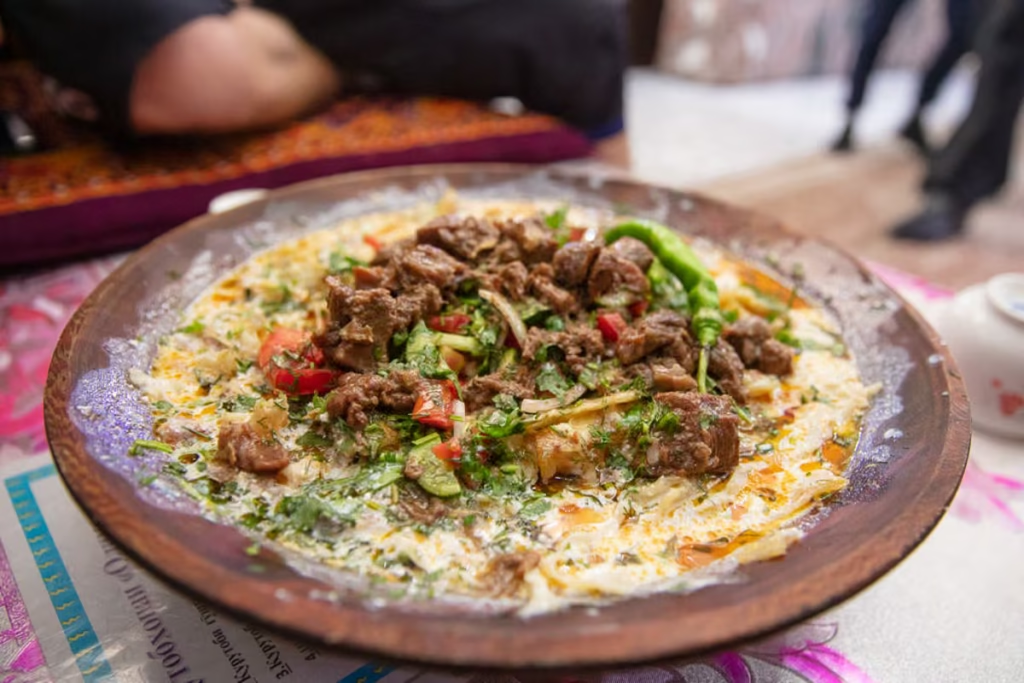
For lunch, I recommend heading over to Nan Melaan and grabbing either a bowl of kurutob (the Tajik national dish), or osh (known as plov in the remainder of Central Asia- a fried rice dish). If you want something lighter like coffee and snacks Cafe Luni is a great option (I love sitting down with a cappuccino and a sambusa there).
For dinner, if you’re looking for something international, head over to Dehli Darbar for delicious Indian food or try out World Cuisine which serves up a number of dishes from around the world.
Where To Stay In Khorog
Budget
Welcome Inn
|+992 93 703 5393 |
Lal Hotel Dorm
| Booking.com |
Midrange
LAL Hotel
| Booking.com |
Splurge
Serena Inn
| Booking.com | Hotels.com |
Day 4: Khorog to Ishkashim
Distance: 110 kilometers
Drive time: 3 hours
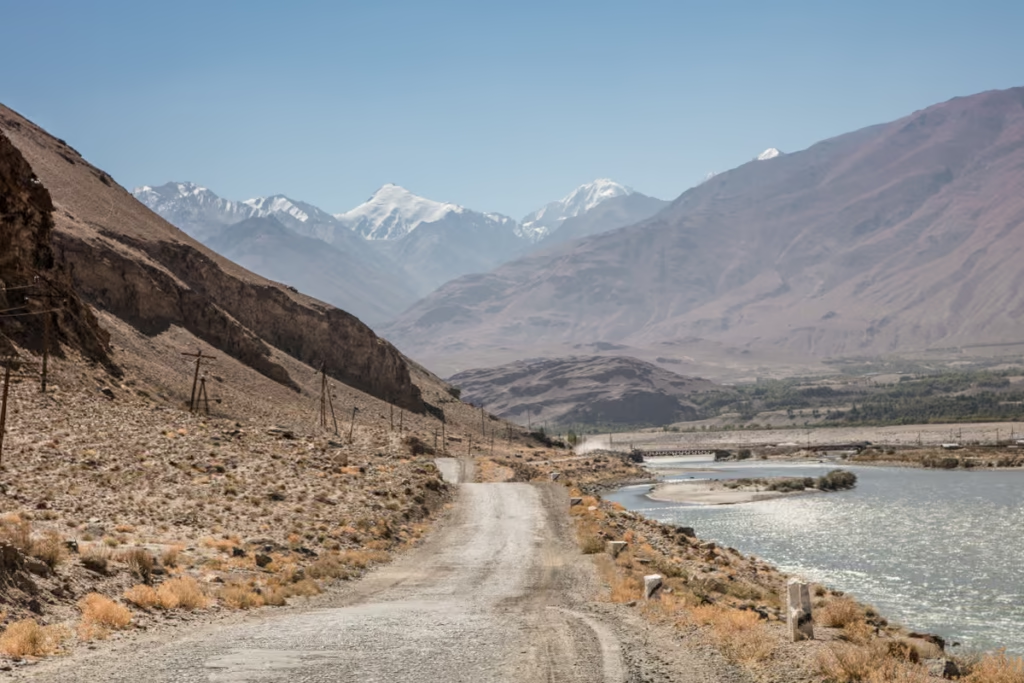
Today you’ll be bound for the Tajik Wakhan Valley. The Wakhan is a culturally fascinating area of Tajikistan and Afghanistan and over into Pakistan that straddles both sides of the Panj and Pamir Rivers.
Some of you may be tempted to change your plans (if you have allotted more time) to cross the border at Ishkashim and head over to explore the Afghan Wakhan.
On the way to Ishakshim, make a stop for a soak in Garm Chashma, a well-known hot spring en route. There are also several spots to meander off from the main road along the way for stunning views from above.
Since today is a shorter day you could opt to go further into the Wakhan to spend the night at one of the many villages along the way, or opt to spend a bit more time in Khorog before taking off toward the Wakhan.
If staying the night in Ishkashim, I recommend Hanis Guesthouse from my own experience.
For those that want to visit the Afghan Wakhan, check out my blog post about the Ishkashim Border Crossing for more info
For all other Tajikistan border crossings with neighboring countries, read my post on Tajik border crossings
Day 5: Ishkashim to Langar
Distance: 150 kilometers
Drive time: 4-5 hours
This is your day to explore the Wakhan Valley, and quite honestly you could spend a few days digging a little deeper into this area, but it’s more than possible to hit all the highlights in a single day.
Namadgut
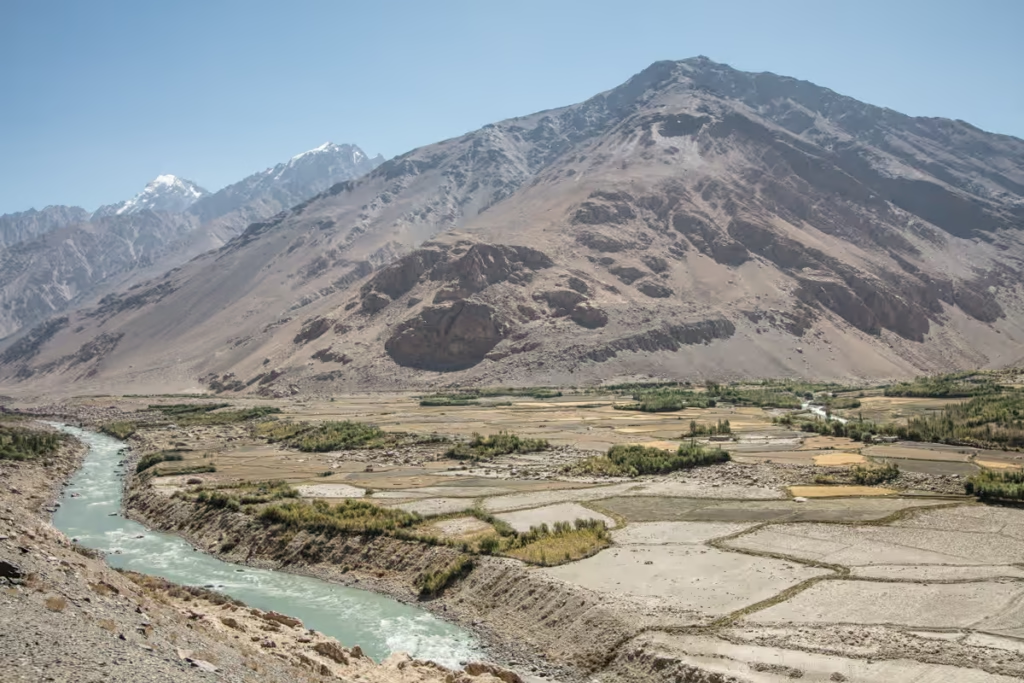
Namadgut is home to Qaaqa Fortress, believed to have been constructed under the Kushan Empire in roughly 2 BC. The fortress ruins are free to visit, but you can typically find young lads who will give you a tour for a small fee. There is also a small museum in Namadgut, entrance is 10 TJS per person.
Yamchun
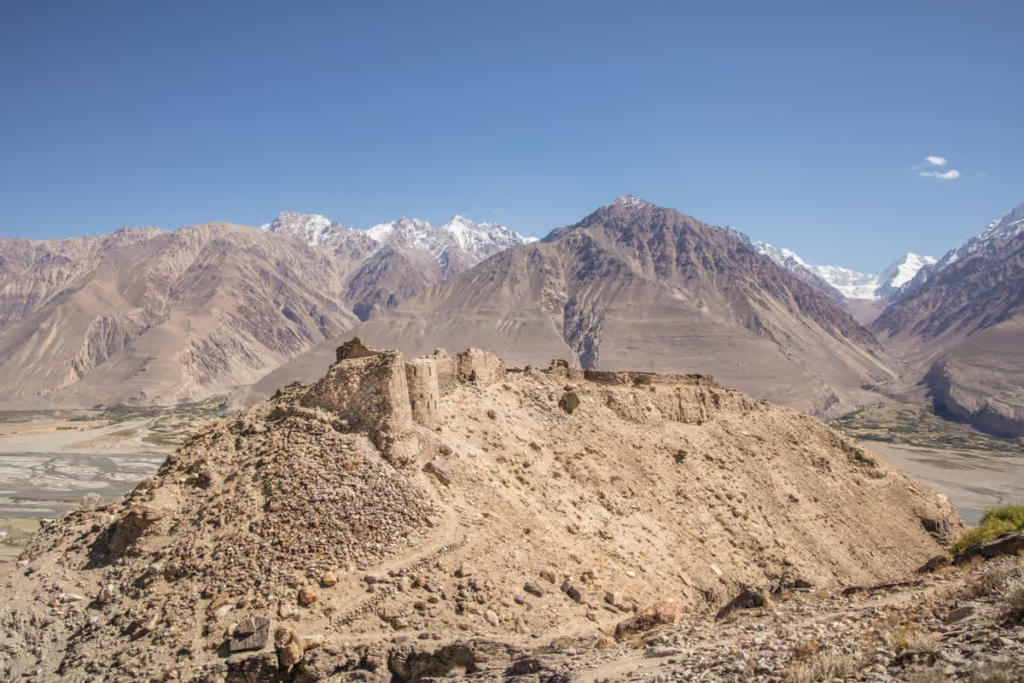
Yamchun is home to two of the Tajik Wakhan’s most well-known sites, Yamchun Fortress and Bibi Fatima Hot Spring that both sit on a mountainside. Yamchun is a Kushan Fortress from the 12th century, though it’s widely believed that parts of the construction date back to the 3rd to 1st century BC.
About a kilometer beyond Yamchun you’ll arrive at Bibi Fatima, a hot spring popular with Tajik woman because it’s believed to boost fertility.
Langar
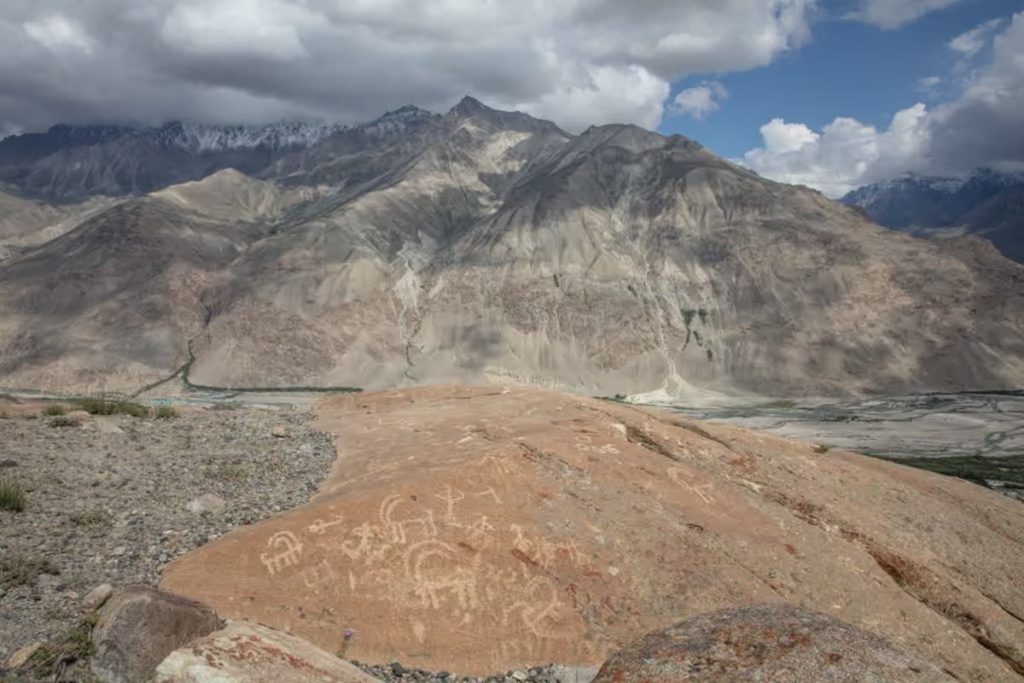
Langar is largely what many consider to be the last village of the Tajik Wakhan Valley (or first, if you’ll be starting from Osh). Don’t miss the Mazar i Shoh Kambari Oftab, the Jamoat Khona, and the petroglyphs. It’s also possible to trek into the Pik Engles Meadows, starting between Langar and Hissor.
Please note that I have only included the top attractions of the Wakhan Valley in this post. For a more thorough itinerary with more information on various sites to visit, please read my Tajik Wakhan Valley Guide.
Day 6: Langar to Alichur
Distance: 125 kilometers
Drive time: 6 hours
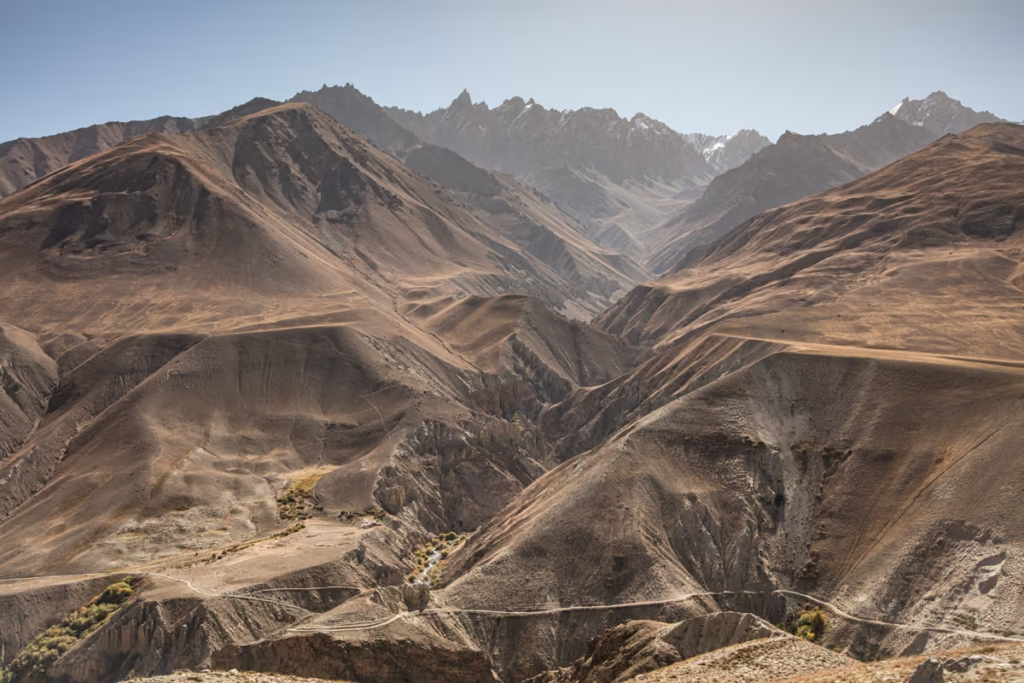
Despite the short distance to cover today, this is a long haul between Langar and Alichur thanks to the arduous Khargush Pass you’ll be crawling over.
From Langar, the road switchbacks up to the village of Ratm where you can take in your last aerial views of the Wakhan before splitting off to follow the Pamir River that slices through the valley that separates the Wakhan Range to the south from the Southern Alichur Range to the north.
The terrain becomes arider as you continue along the valley, which is largely inhabited by ethnic Kyrgyz families.
Eventually, the road takes a turn north to head up into the lunar-like Khargush Pass, descending down to meet the Pamir Highway near Sassykul.
From here it’s worth making a side trip again off the Pamir Highway to visit Bulunkul and Yashilkul, two large lakes in the Pamir, before making the short drive back down to the Pamir Highway to Alichur for the night.
Make sure to roam around Alichur too, it’s merely a scattering of homes along the highway, but there are a mosque and a school.
I’ve found that the kids in Alichur, like many other parts of the Pamir, are very friendly and will be genuinely curious about any visitor, so don’t be surprised if the kids end up joining you on your self-guided tour of the town.
A number of families operate homestays in Alichur, just look for signs outside that say ‘столовая’ or ‘homestay’.
I’ve stayed at Rahima Doronshoeva Homestay (+992 908482612 or +992 931065658) in the past and can recommend it. It’s pretty rustic and simple, meals are provided and they even have a shower (though it’s more of just a tank of water heated by fire that you can splash over yourself).
If you opt to stay outside Alichur but make a stop there, there is a decent cafe in town that’s popular with all the truckers that pass through where you can usually get a decent plov or shorbo.
Day 7: Alichur to Jarty Gumbez
Distance: 150 kilometers
Drive time: 6 hours
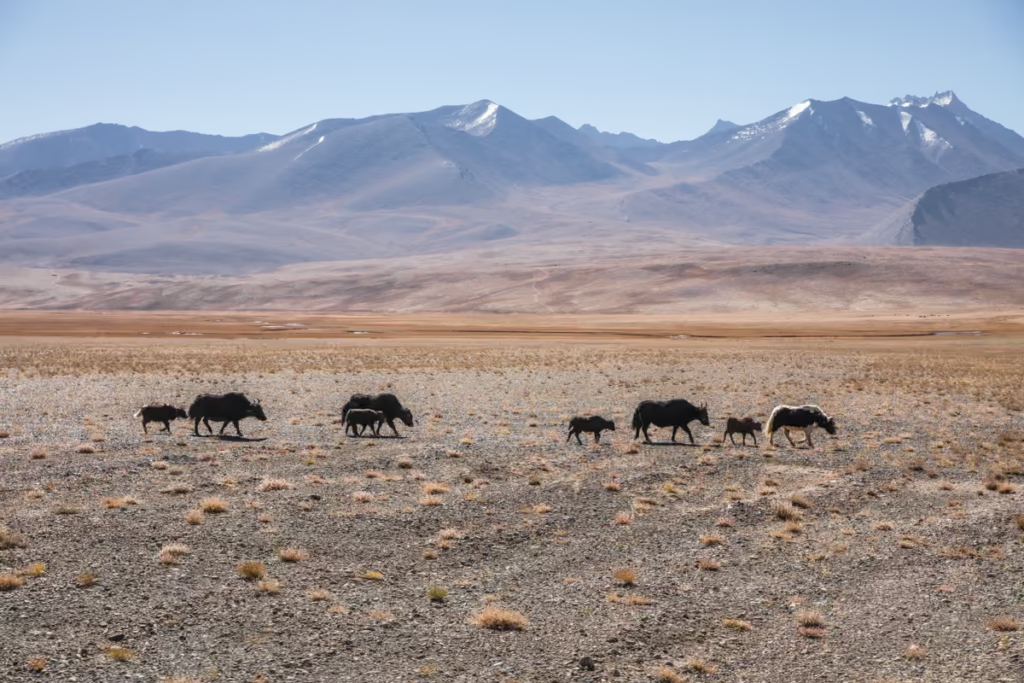
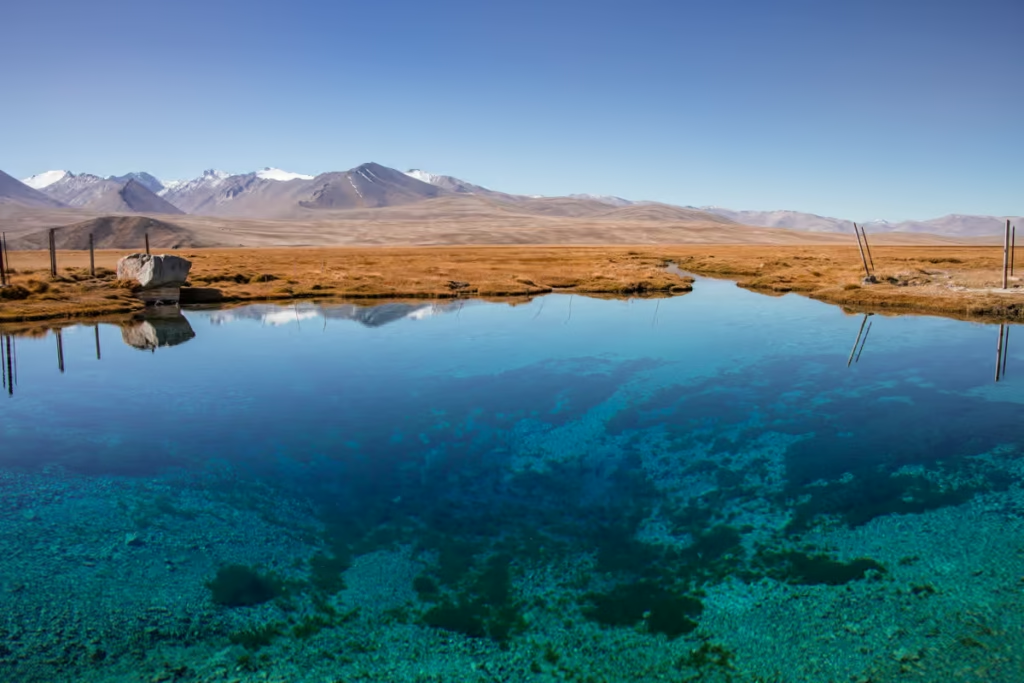
In the morning you’ll set off on the Pamir Highway eastward. Make sure and stop off at Ak Balyk, just a few kilometers out of Alichur to snap a few photos of the beautiful sacred Ak Balyk Spring.
Eventually, where the Pamir Highway takes a bend north, you’ll exit the road, following a set of jeep tracks toward Jarty Gumbez. About 10 kilometers off the road along the jeep tracks, you can make the short 10 minute hike up to a cave to see the Shakhty Pertoglyphs.
Veering a few kilometers to the east from the tracks near this point can take you to visit the Shorbulak Observatory.
Continuing along the main tracks southward you’ll eventually reach Jarty Gumbez, a popular Marco Polo sheep hunting camp and hot spring.
The family who runs the hunting camp is incredibly welcoming. A night in one of their rooms at the camp will cost about $35 US including all meals. In the late afternoon, I recommend continuing a bit south in the car along tracks toward the Afghan border near Bendersky Pass, keeping an eye out for Marco Polo sheep and ibex.
Day 8: Jarty Gumbez to Shaimak
Distance: 250 kilometers
Drive time: 10 hours
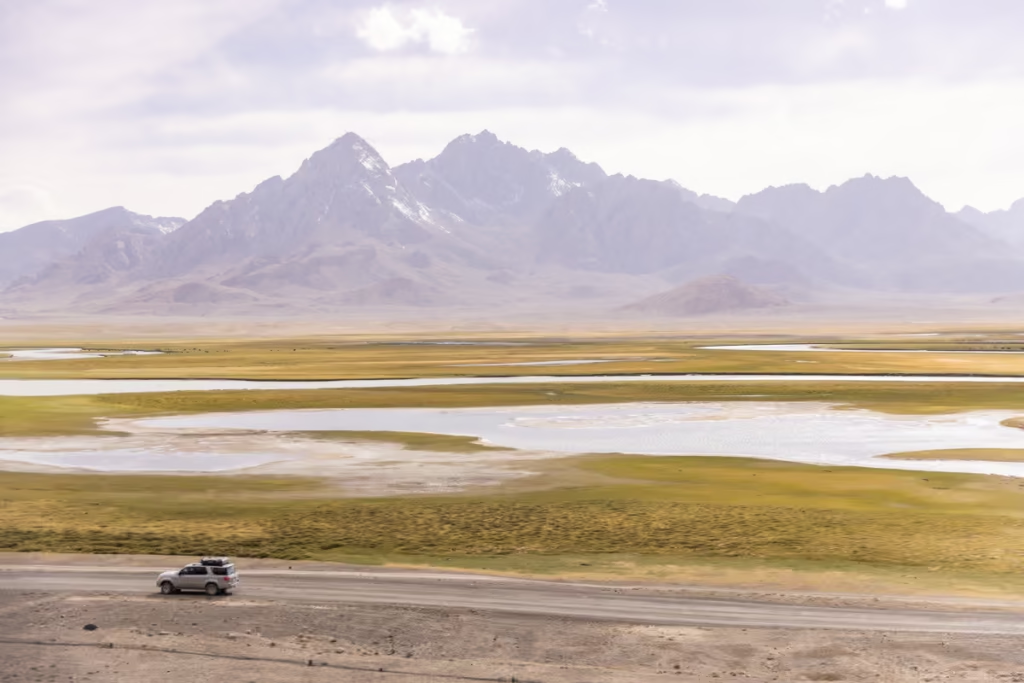
In the morning leave Jarty Gumbez headed north, following the Ystyk River. The river eventually bends to the northeast, so continue to follow its course to reach the dusty village of Cheshtebe.
Cheshtebe is incredibly remote, often windy, and quite barren, and home to a handful of kind families who will likely invite you in for a cup of chai.
You’ll spend the remainder of today bumping along tracks to reach Shaimak, passing family yurts en route to Shaimak. Shaimak will be your final stopping point for the night, a fascinating place with an end-of-the-world vibe to it.
Shaimak was a strategic point during the Great Game when the Russian Empire and British were vying for power in South and Central Asia in the 19th century.
Day 9: Shaimak to Karakul
Distance: 230 kilometers
Drive time: 7 hours
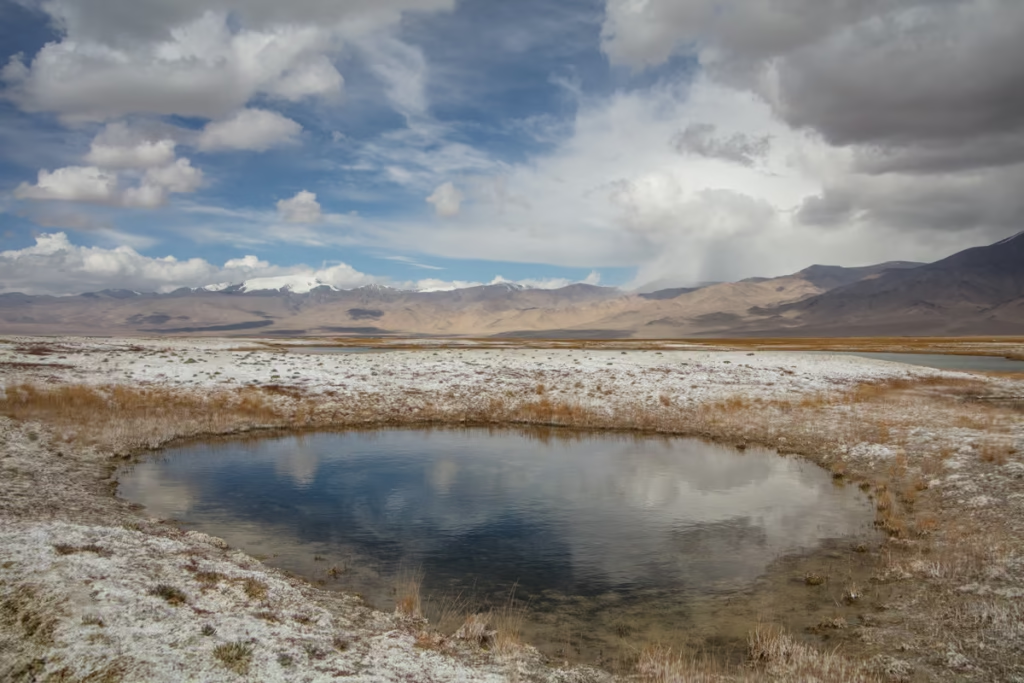
Today is another long drive day, following the Ak Suu Valley north to Murghab. En-route make sure to stop in the village of Toktymush and at the tombs of Kanya Kurgan.
Don’t be surprised if you run into Tajik officers, most likely between Tokymush and Kanya Kurgan who will tell you that the road to Shaimak is closed and may try to extort a bribe (usually about the equivalent of $10 USD).
Murghab will be a good breaking point for lunch. There’s not a lot to Murghab, it’s more or less a large scattering of white-washed, blue-trimmed buildings set in one of the most inhospitable places on earth- life at 3,600 meters isn’t easy.
It’s high, dry, and incredibly arid. Before you leave, make a stop to visit the Murghab Bazaar, most of which is housed in various shipping containers. For those that have an extra day, they want to allot to the Eastern Pamir, check out doing the Gumbezkul Pass trek from Pshart Valley and to Madiyan Valley with the possibility of continuing on the Madiyan Valley Hot Springs.
North from Murghab, you’ll pass Pshart Valley which offers some great trekking opportunities if you have a day or two to spare.
From here the Pamir Highway climbs upward topping out on Ak Baital Pass at a whopping 4,655 meters. Keep your eyes peeled for Marco Polo sheep and Ibex on the mountainsides as you climb up into and descend from the pass to Karakul.
Use your last bit of daylight here to explore the massive Karakul Lake and the twilight zone-esque village at its shores. Several families operate homestays in Karakul, I’ve stayed at Tildakhan Homestay (+992 906554831) in the past and recommend a night there.
If you end up tacking some extra time on to your itinerary and spend it around Karakul, check out the South Aral Peak hike.
Day 10: Karakul to Osh
Distance: 283 kilometers
Drive time: 10 hours
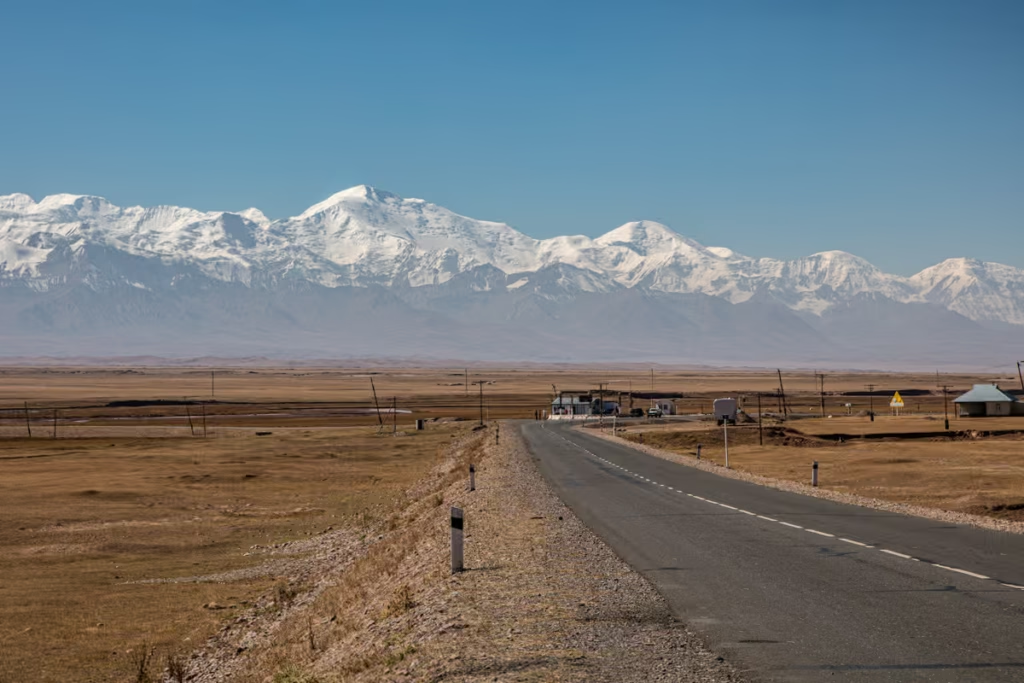
This is the final stretch of the Pamir Highway itinerary guys, though this is a long day that can be easily be split into two, or more if you’d like to take some time to explore the area around Sary Tash.
From Karakul, you’ll begin gaining elevation again as you approach Kyzyl Art Pass, the border crossing into Kyrgyzstan. Definitely make a few stops as you climb upward for stunning morning views of the Pamir Mountains and Karakul in the morning sun.
In my experience, the border crossing procedures here at Kyzyl Art have always been quick and painless, though on occasion I’ve heard stories of travelers facing bribery.
Once through, you’ll drive through a long 60 kilometer stretch of no-man’s-land between Tajikistan and Kyrgyzstan with spectacular views of colorful mountains and tumbling glaciers on either side of the road.
At the bottom of the pass, you’ll reach Bordobo, the Kyrgyz side of the border. In my experience, the Kyrgyz side has always been fast and easy.
Beyond Bordobo you’ll reach the town of Sary Mogul where you can pop into a cafe to grab some snacks. The cafe usually will take Tajik Somoni as payment and give you change back in Kyrgyz Som, sometimes if they have enough for it, they can exchange some money for you.
Some of you may opt to stay in Sary Tash or nearby Sary Mogul for the night and continue to Osh in the morning.
Heading north from Sary Tash the drive has always felt long and hot as you’ve descended quite a bit down from the crazy elevations 4,655 Ak Baital and 4,335 Kyzyl Art Pass along the Tajik Pamir Highway. You’ll cross one more pass, Taldyk Pass that feels low in comparison at a measly 3,615 meters.
Arriving in Osh has always felt bizarre to me coming from the Pamir. It’s hot, frenetic, and flat in comparison, but yet a welcome change.
Surely you’ll have a bit of time here in Osh prior to heading off onto other Central Asian adventures or catching your flight back home. If you do have a bit of time to explore, check out my quick travel guide to Osh for ideas.
Where To Sleep In Osh
Budget
Navi Hostel
| Booking.com |
Midrange
Silk Way Boutique Hotel
| Booking.com | Hotels.com |
Splurge
Jannat Resort Osh
| Booking.com | Agoda.com |
Wanna Fast Track the Pamir Highway?
I wouldn’t recommend it because there’s just so much to see, but for those that want to take on the Pamir Highway as fast as possible and tick it off the list, it’s possible to complete in as little as three days from Dushanbe to Osh.
You can grab a shared taxi departing Dushanbe in the early morning to Khorog (a drive that you can expect to take between 12-20 hours).
The next day you can find a shared taxi departing the car lot next to the Khorog Bazaar for Murghab, taking about 8 hours in total.
Finally from Murghab (I’d advise going to the bazaar in the afternoon on arrival and finding a driver to Osh), you can grab a shared taxi to Osh which will take about 12 hours.
Important Info for the Pamir Highway
- If you didn’t apply for the GBAO permit on your visa or e-visa, or you came to Tajikistan with a visa on arrival/visa-free, it’s possible to get a GBAO permit by applying through an agent or at the OVIR office in Dushanbe or Khujand. We can get your GBAO permit in advance for $25, including the permit fee.
- If you came to Tajikistan visa-free please note that you need to register with OVIR if you plan to stay in the country for more than 10 days. The cost to register is 210 TJS and it must be done within the first 10 days after entering the country. This does not apply to those who enter with an e-visa, visa on arrival, or a traditional visa.
- Several locations, especially once you reach the Eastern Pamir are at high elevations (Alichur, Khargush Pass, Murghab, Jarty Gumbez, Shaimak, Ak Baital Pass, Karakul, Kyzyl Art Pass). Care should be taken to acclimatize, but know that some people can’t handle the altitude gains in this itinerary. Signs of altitude sickness include headache, dizziness, loss of appetite, and tiredness. For some travelers, you may need to head to lower elevations at night time especially.
- There generally are not any ATMs in the Pamirs. I know for a fact that Qala i Khumb and Khorog have ATMs that take foreign cards, Ishkashim has an ATM but I am unsure if it accepts foreign cards. Allegedly in Murghab they are to get an ATM at one of the two banks there, but as of my last visit there still is no ATM there. Stocking up on cash in Osh, Dushanbe, Qala i Khumb, or Khorog is advisable.
Pamir Highway Itinerary Budget
$200+ per day
Via private 4×4 hire (solo traveler)
$75 per day
Via 4×4 hire shared amongst 4 passengers
$40 per day
Via shared taxis
Have any questions about this 10 day Pamir Highway itinerary?
Ask in the comments section below.
Posts from Tajikistan & Kyrgyzstan
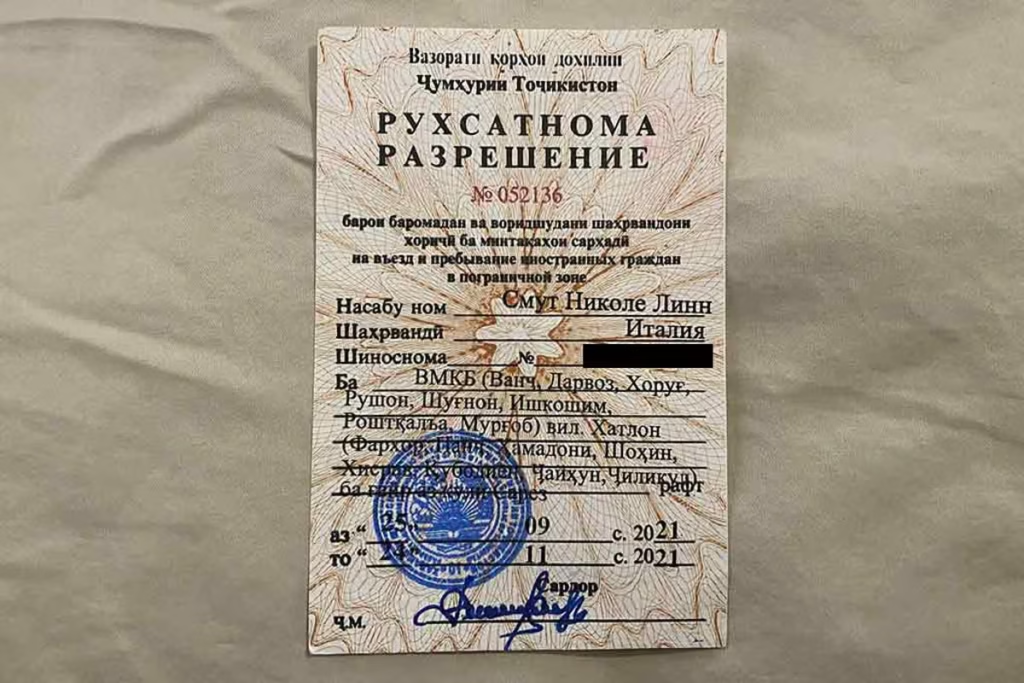
How to Get a GBAO Permit
12 Day Fann Mountains Trekking Expedition, Tajikistan
12 Day Pamir Highway Expedition
Iskanderkul & Sarytag Travel Guide
Kyzyl Art Border Crossing
Things to do in Osh, Kyrgyzstan
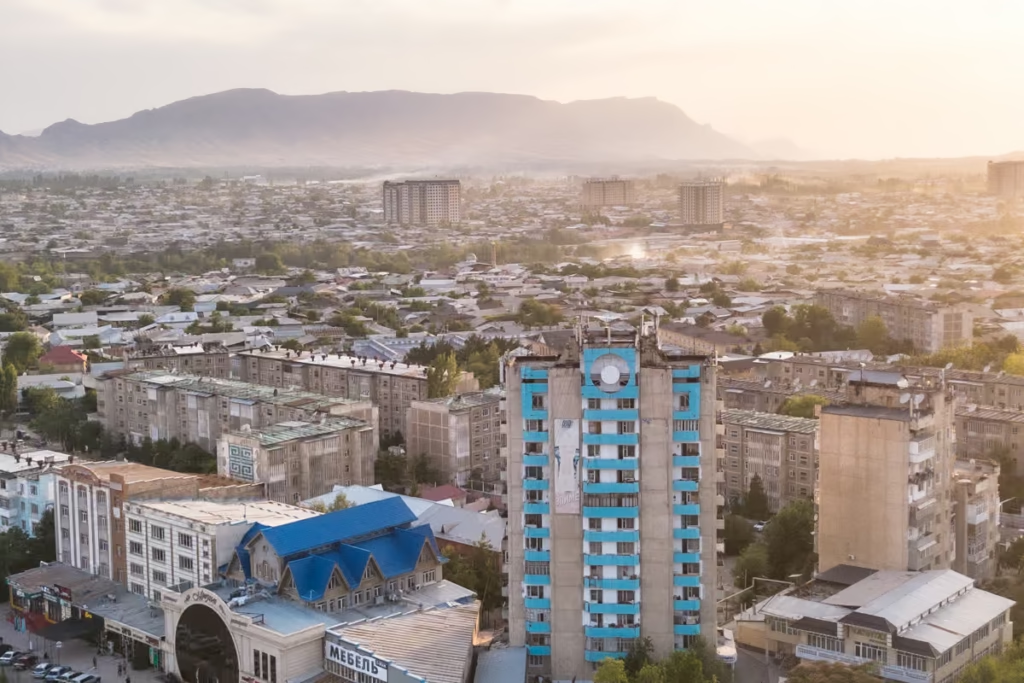
Exploring Soviet Osh
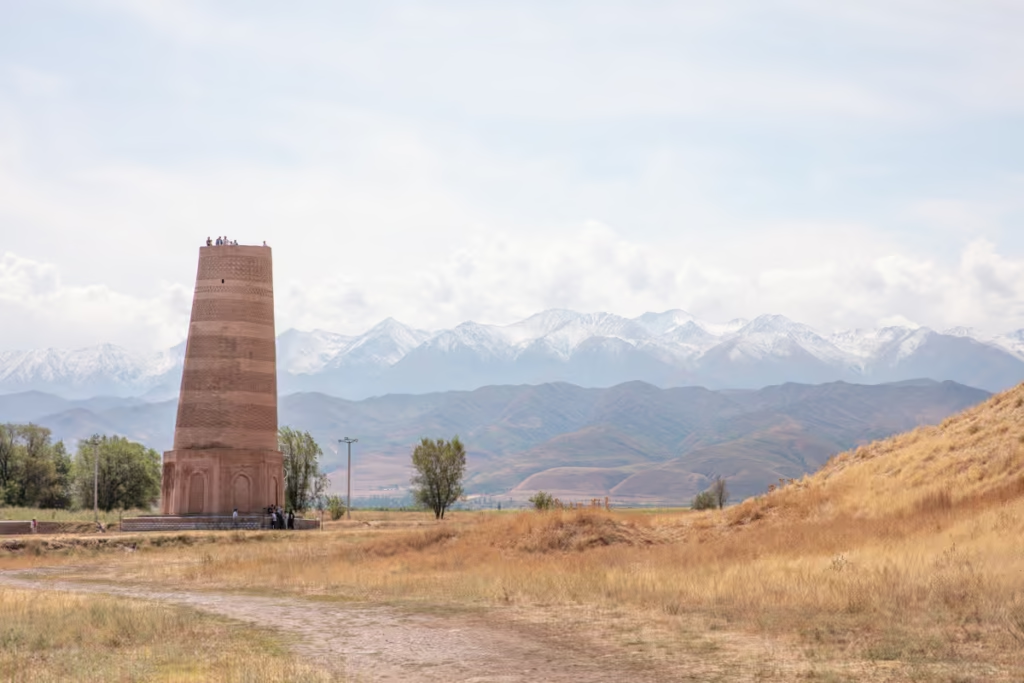
How to Get to Burana Tower & Tokmok Animal Market
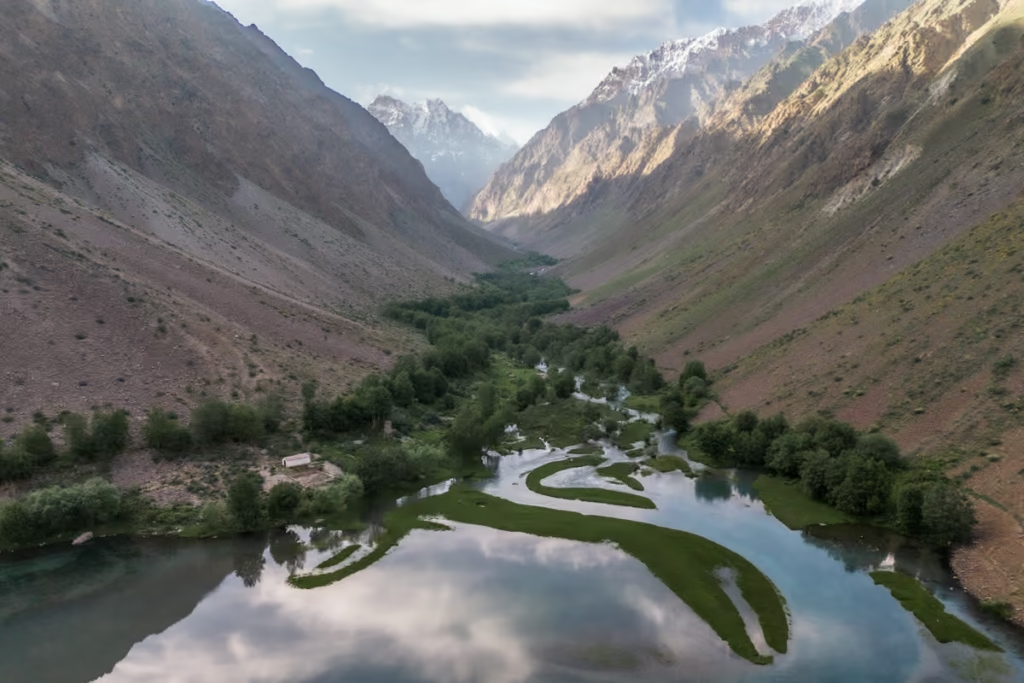
Jizeu Trek in Tajikistan’s Pamir
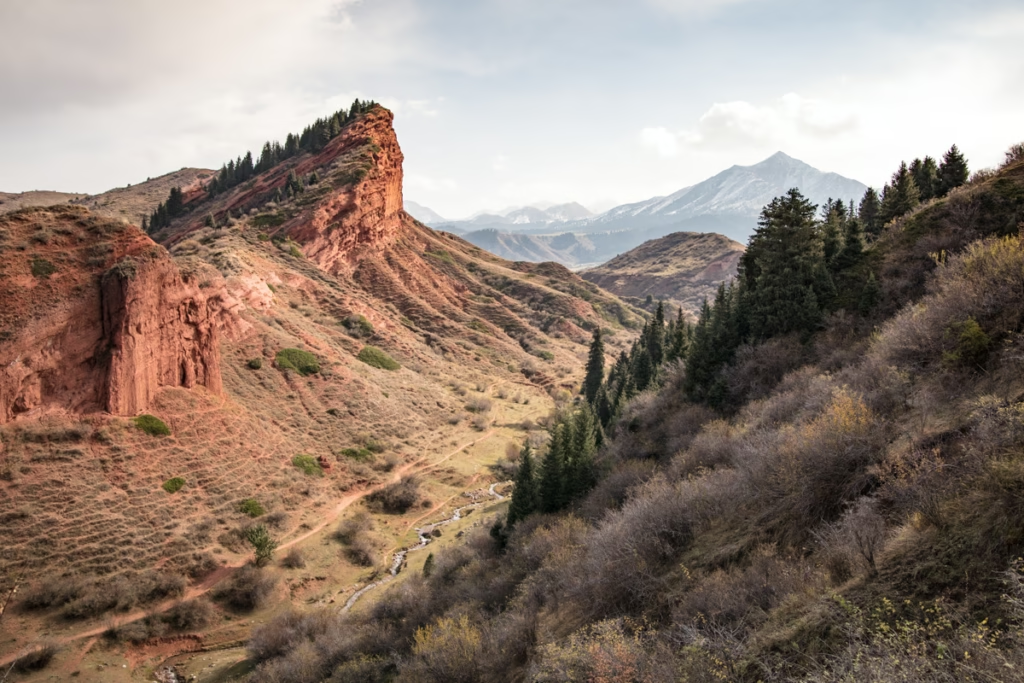
Visiting Jeti Oguz, Kyrgyzstan
10 Reasons to Visit the Pamirs
Tajikistan In Photos
Tajikistan Itinerary for 1-4 Weeks
How to Get to Sary Chelek Kyrgyzstan
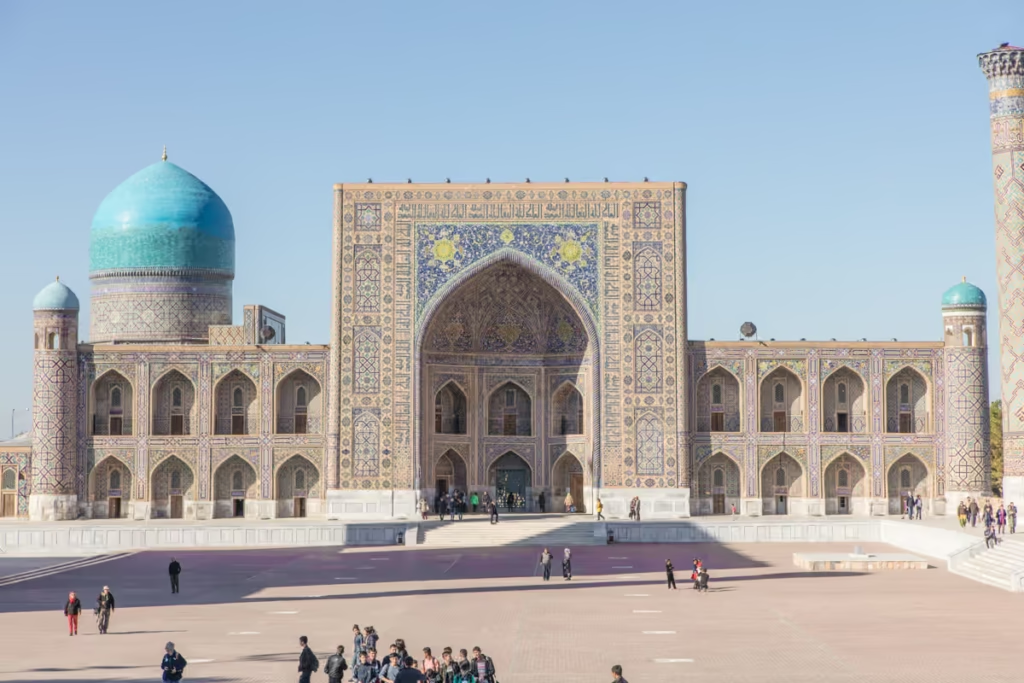
Samarkand Travel Guide
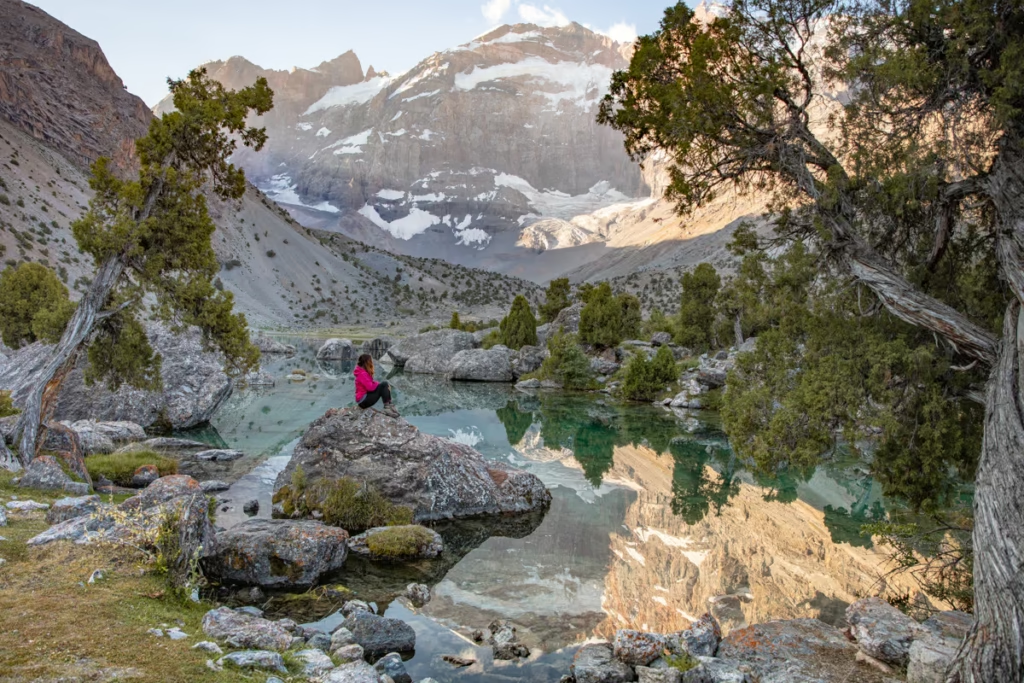
Solo Female Travel in Central Asia
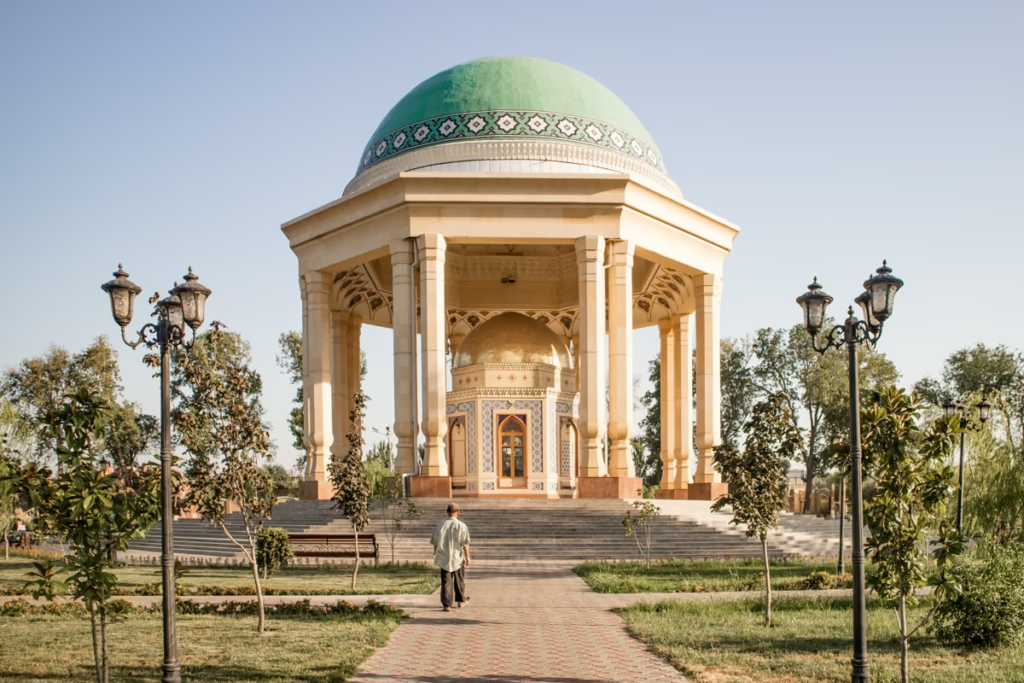
Khujand Travel Guide
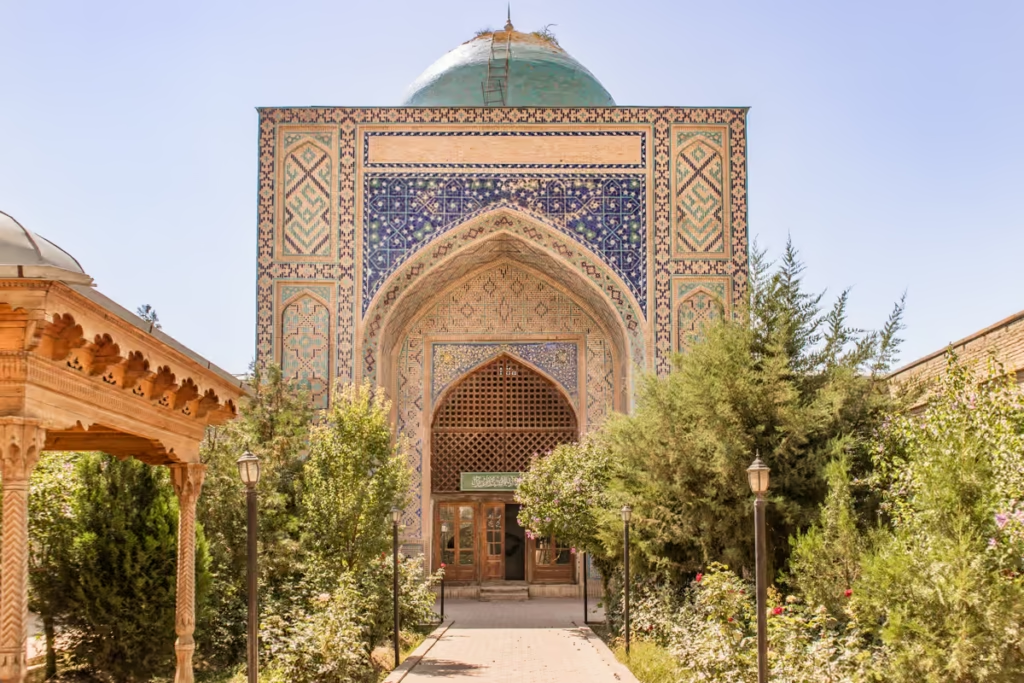
Istaravshan Travel Guide
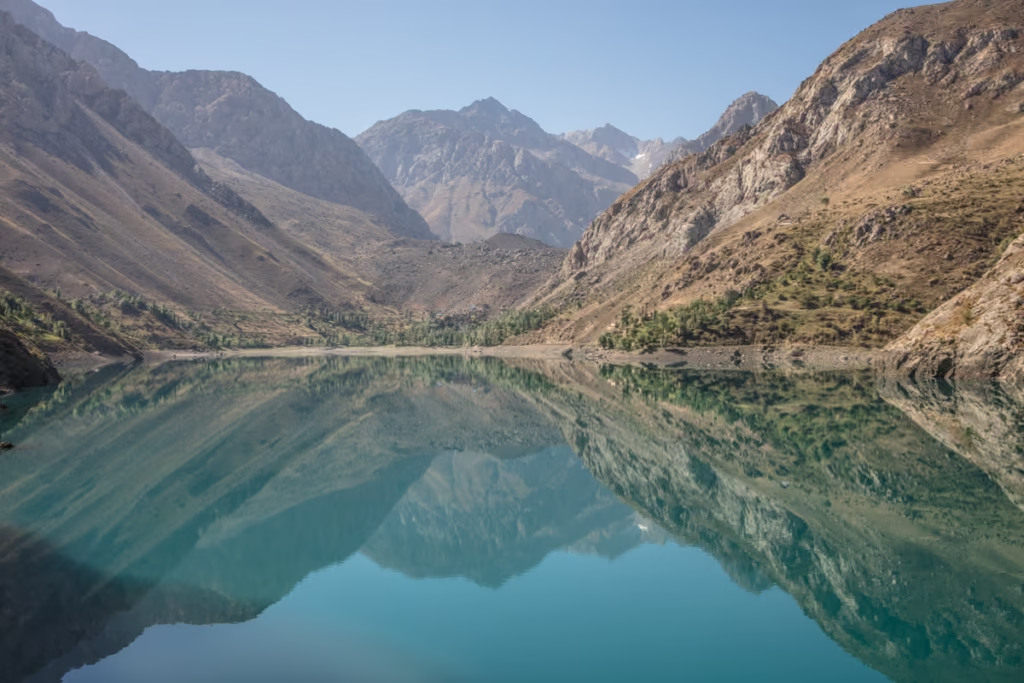
Haft Kul: Tajikistan’s 7 Lakes

Registering with Tajikistan OVIR in Dushanbe
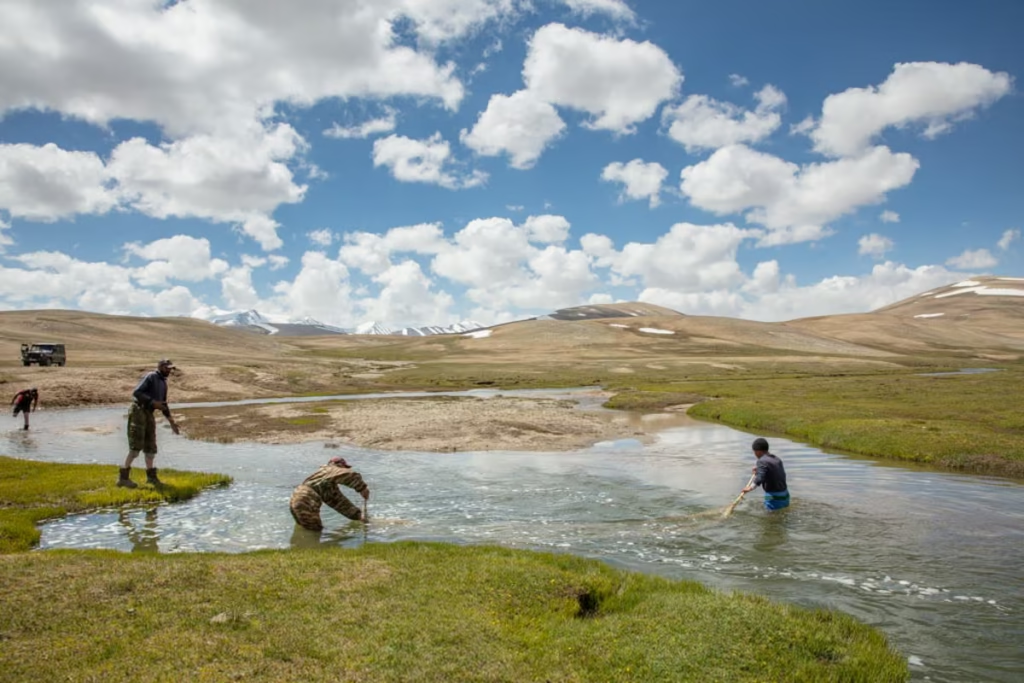
Trekking to Turumtaikul Lake
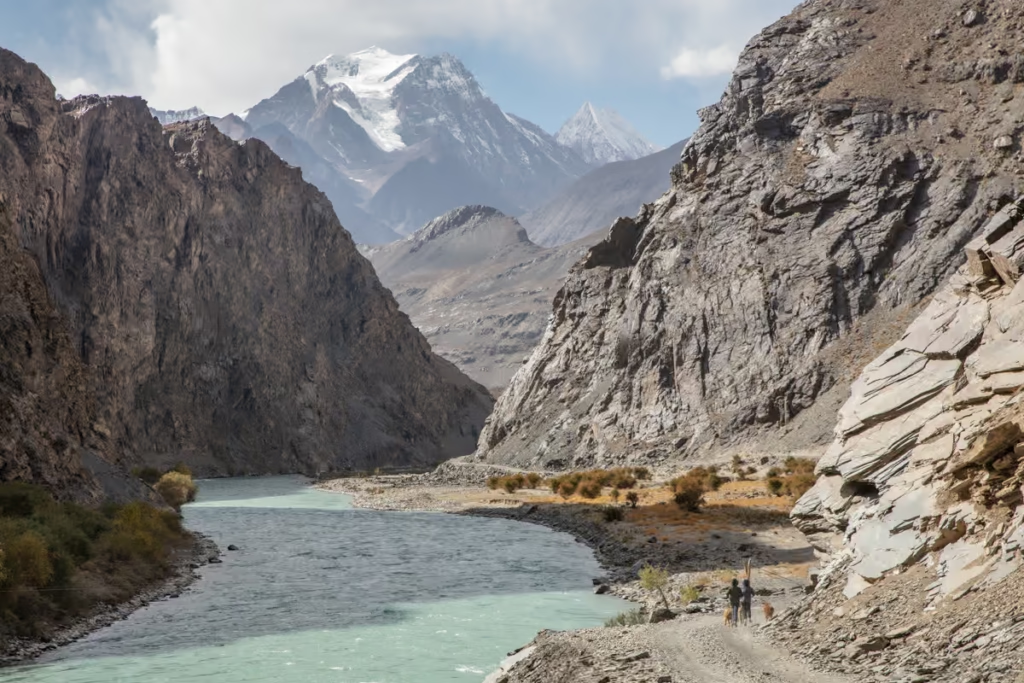
Bartang Valley, Tajikistan
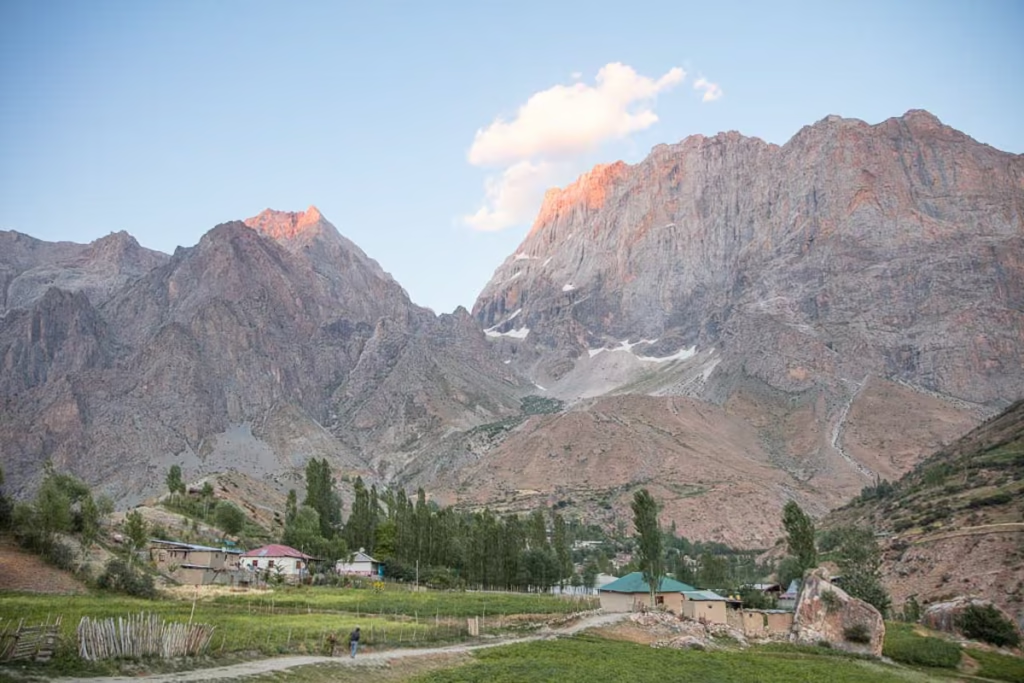
Yagnob Valley Trekking Travel Guide
Ishkashim Border Crossing
Khorog Travel Guide
Tajikistan Letter of Invitation (LOI)
Must-Try Tajik Food
Central Asia Food & Drink
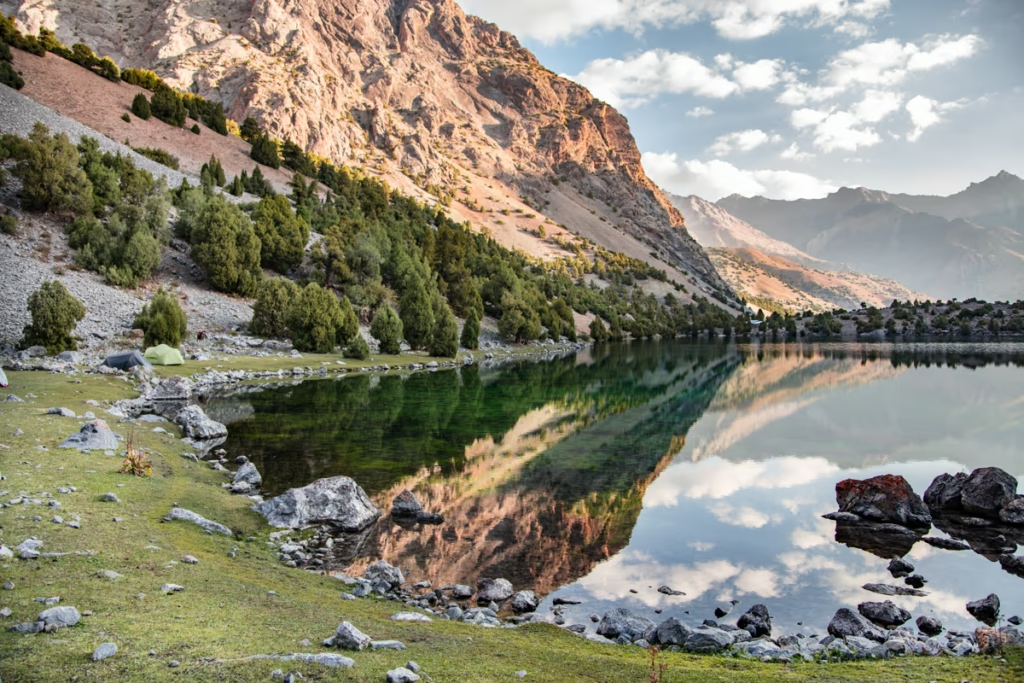
10 Reasons To Visit Tajikistan
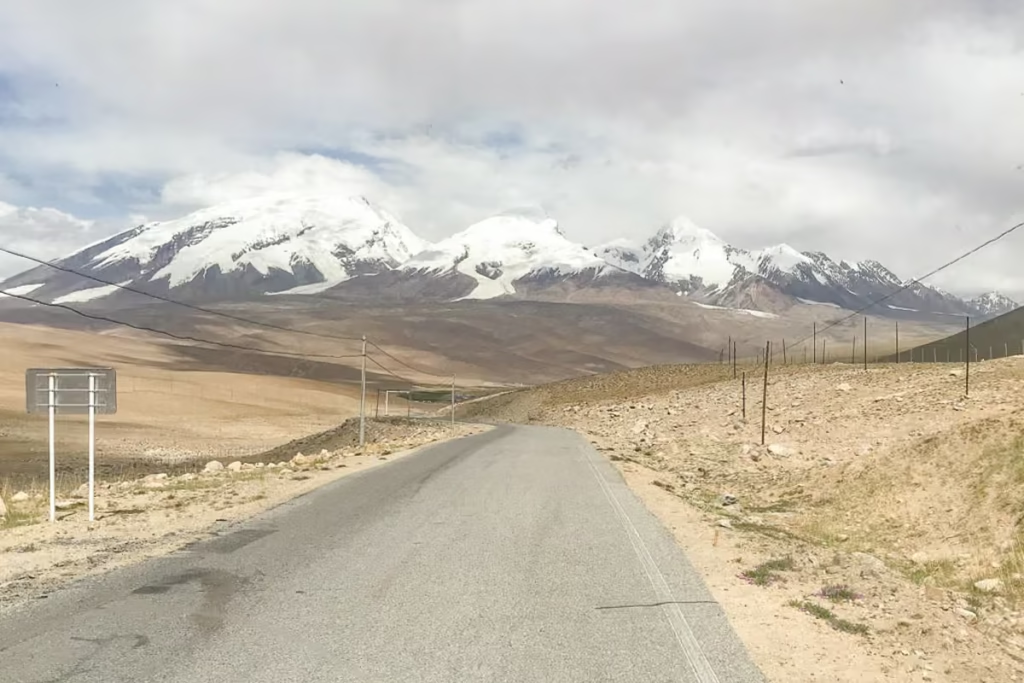
Qolma Pass Border Crossing
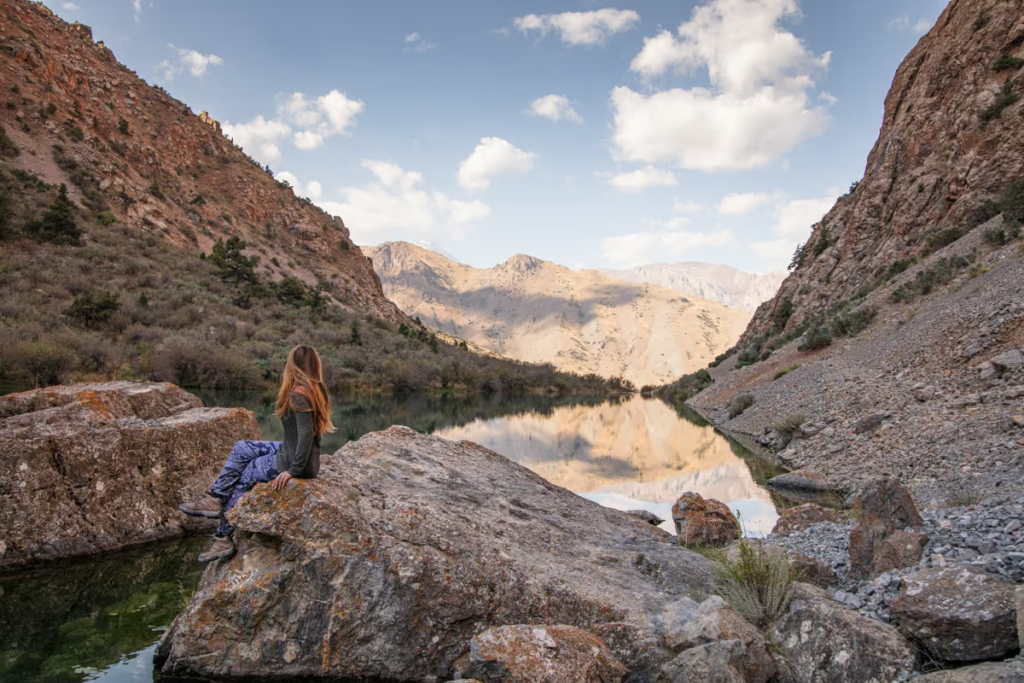
Tajikistan Travel Guide
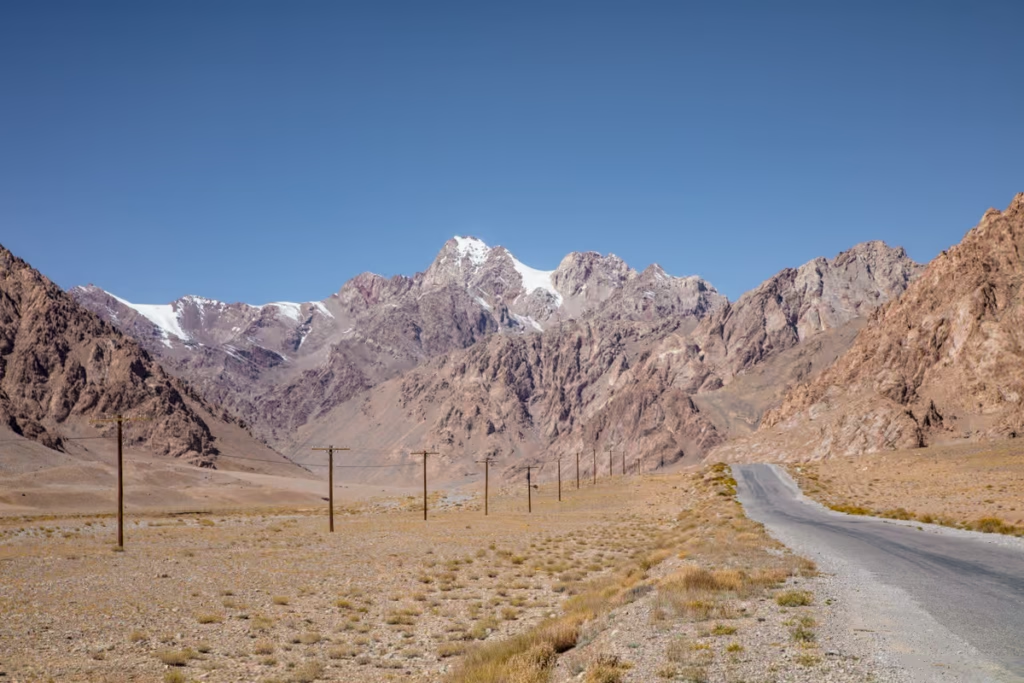
Pamir Highway Travel Guide
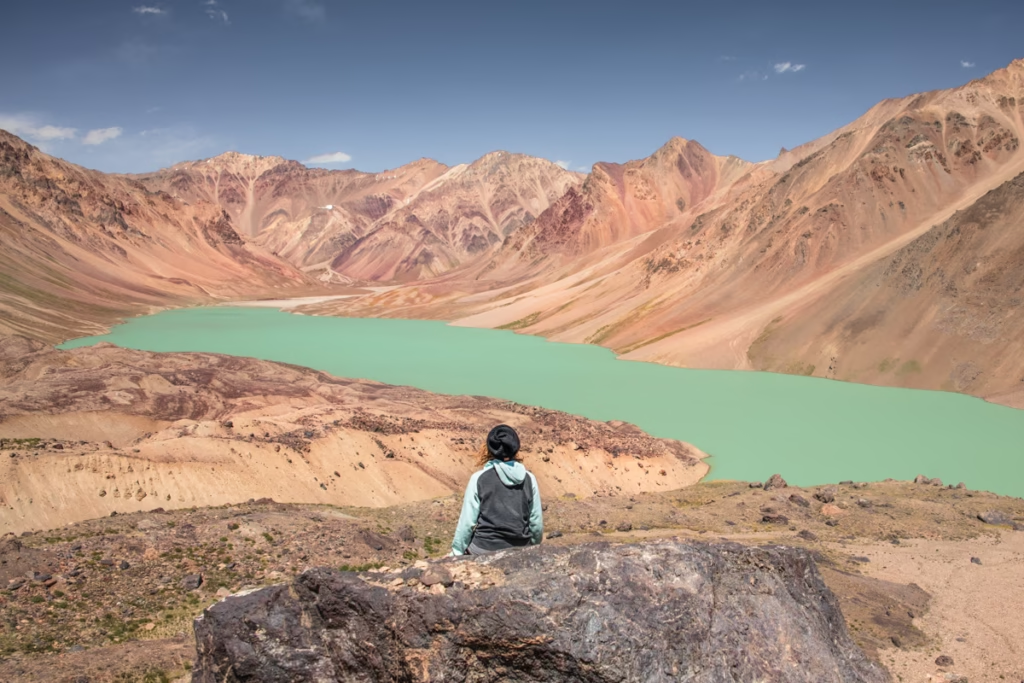
Top Things to Do Tajikistan
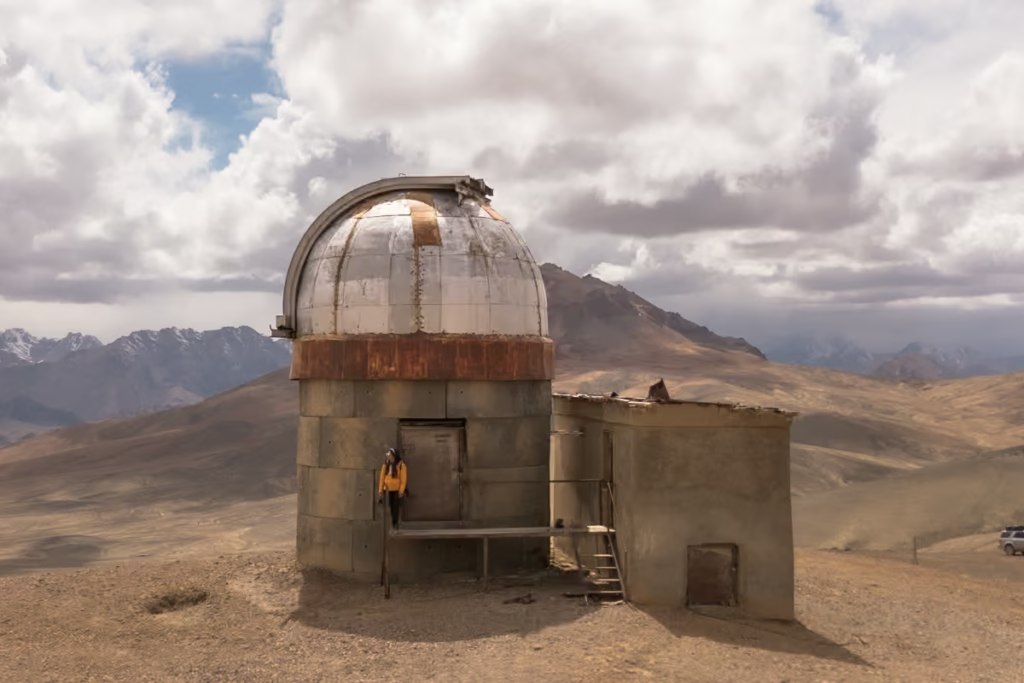
Shor Bulog Observatory, Tajikistan
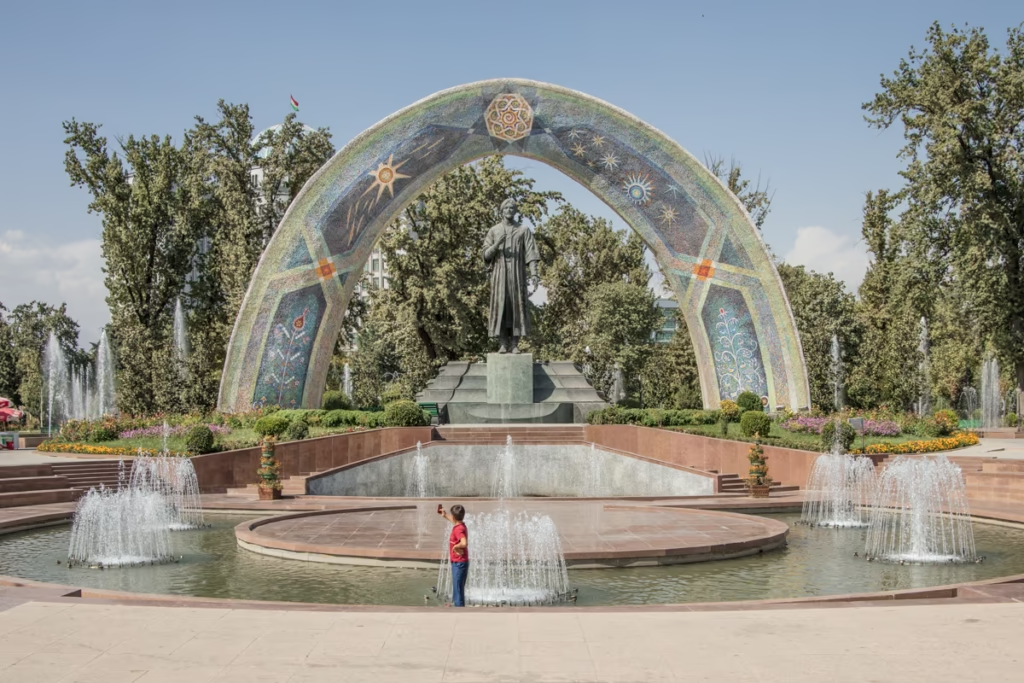
Dushanbe Travel Guide
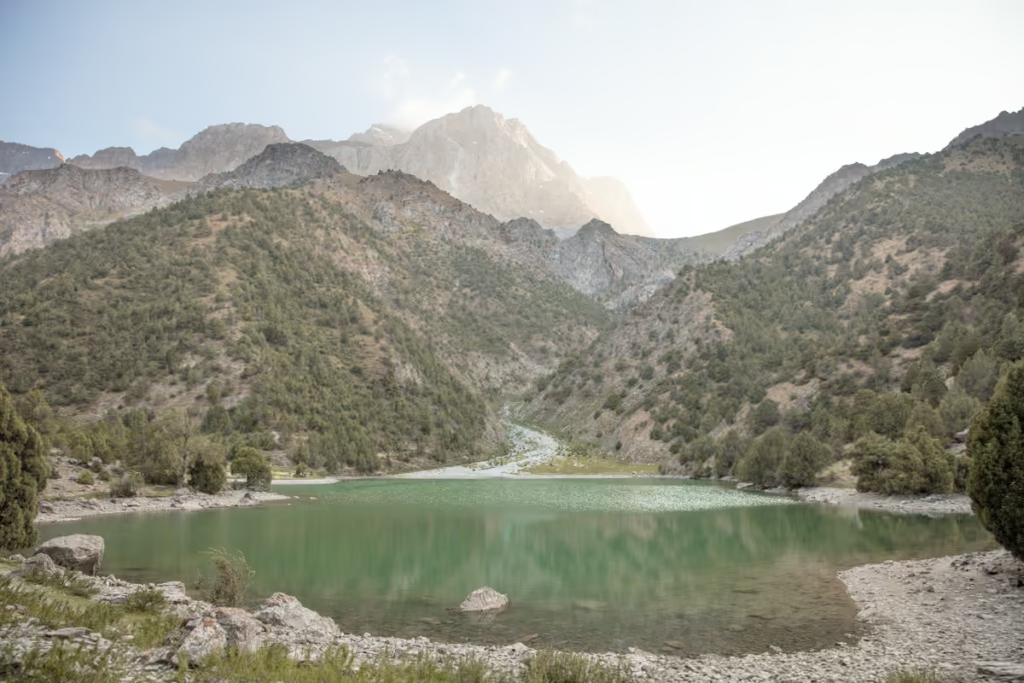
Best Hikes in Tajikistan
Kyrgyzstan in Photos
Solo Female Travel in Tajikistan
Beginner’s Guide to Central Asia Travel
Karkara Border Crossing Between Kazakhstan & Kyrgyzstan
Panjakent Travel Guide
Pamir Highway Itinerary
Panjakent-Samarkand Border Crossing
Fann Mountains Trekking Guide
Two Week Tajikistan & Uzbekistan Itinerary
Best Restuarants in Dushanbe
Why Foodies Should Flock to Karakol

How to Register Your Phone with IMEI.tj
Khatlon Travel Guide