
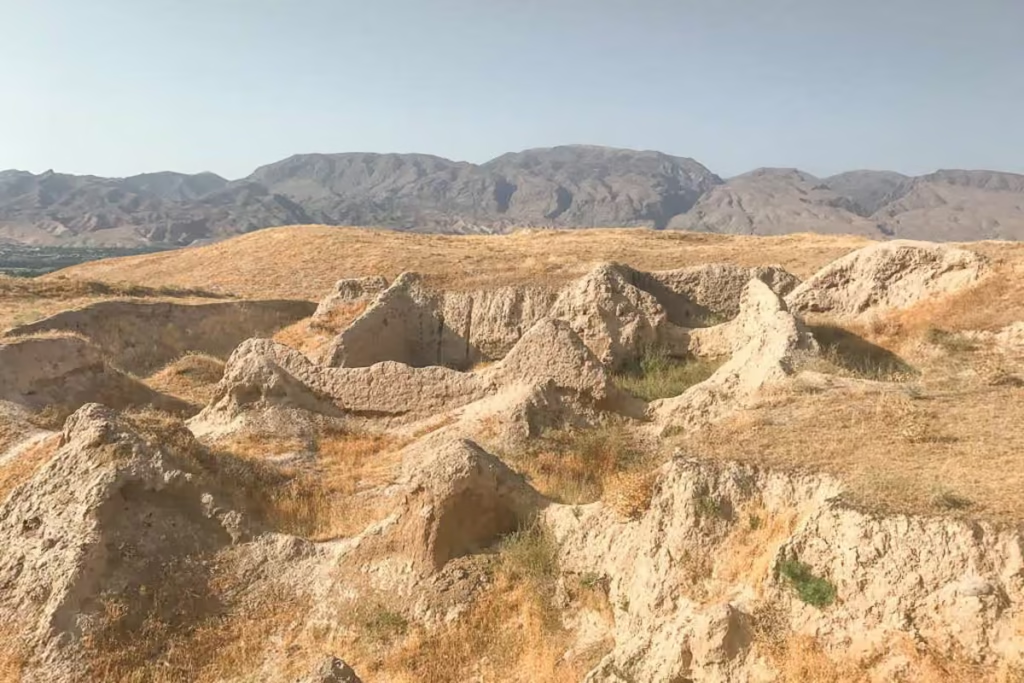
Panjakent Travel Guide: 7 Best Things to Do in Panjakent, Tajikistan
Updated September 2026, Panjakent Travel Guide: 7 Best Things to Do in Panjakent, Tajikistan was originally written in January 2020
Panjakent (also spelled Panjikent or Penjikent) is a small city in western Tajikistan near the Uzbekistan border, best known as the gateway to the Fann Mountains, the ancient Sogdian city of Ancient Panjakent, and the UNESCO-listed Sarazm archaeological site.
Its location makes Panjakent one of the most useful stops in northern Tajikistan. You can arrive from Samarkand, explore the ancient ruins and lively bazaar, stock up on supplies, and then head into the Fann Mountains or the Seven Lakes.
I’ve visited Panjakent several times over the years, and I’ve watched it change from a sleepy dead-end town into a much livelier border city following the reopening of the Tajikistan-Uzbekistan border in 2018.
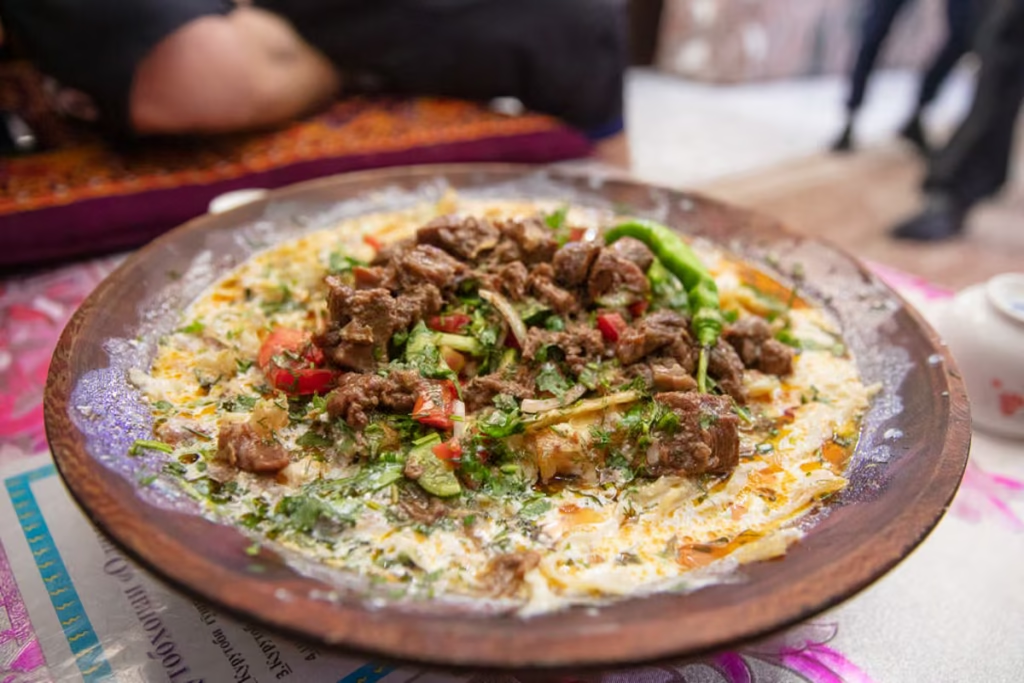
Panjakent itself isn’t the kind of place where you need a packed itinerary. Give yourself a day or two to wander the bazaar, check out the museums and Soviet-era mosaics, eat an aggressively filling plate of qurutob, and get your bearings before heading into the mountains.
In this Panjakent travel guide, I’ll cover the best things to do in Panjakent, how to get there from Dushanbe, Khujand, and Samarkand, where to stay and eat, how to continue into the Fann Mountains, and the best day trips from Panjakent.
Need Travel Insurance and Evacuation Services?
Start shopping for travel insurance plans over at IATI Insurance. Readers of the Adventures of Nicole get a 5% discount off your plan.
The Adventures of Nicole partners with Global Rescue to offer the world’s leading medical evacuation and security advisory services. To travel with peace of mind, explore their evacuation coverage.
- Panjakent Travel Guide at a Glance
- A Brief History of Panjakent
- Best Time to Visit Panjakent
- 7 Best Things to Do in Panjakent
- How to Get to Panjakent
- Where to Stay in Panjakent
- Where to Eat in Panjakent
- How to Get Around and Out of Panjakent
- Day Trips From Panjakent
- How Many Days Do You Need in Panjakent?
- My Thoughts on Panjakent
Panjakent Travel Guide at a Glance
| Location | Sughd Region, western Tajikistan |
| Best known for | Ancient Panjakent, Sarazm, the Fann Mountains and Seven Lakes |
| Border | Near the Tajikistan-Uzbekistan border |
| Nearest major city in Uzbekistan | Samarkand |
| How long to stay | 1–2 days in Panjakent, longer if using it as a base for the Fann Mountains |
| Best for | History, archaeology, trekking, food and overland travel |
| Main language | Tajik |
| Currency | Tajikistani somoni (TJS) |
| Best time to visit | Spring through autumn, depending on whether you’re visiting the city or trekking in the mountains |
A Brief History of Panjakent
Panjakent sits in the historic Zeravshan Valley, an area that has been an important crossroads of Central Asian trade and culture for thousands of years.
The city is particularly associated with Sogdiana, the ancient Iranian civilization that flourished across parts of present-day Tajikistan and Uzbekistan. The ruins of Ancient Panjakent, just outside the modern city, date from roughly the 5th to 8th centuries AD and preserve the remains of a major Sogdian settlement.
Ancient Panjakent was home to temples, houses, workshops, fortifications and richly decorated rooms. Archaeologists have uncovered remarkable wall paintings and other evidence of the city’s religious, commercial and artistic life.
The city was eventually abandoned during the Arab conquest of Transoxiana in the early 8th century. The Sogdian ruler Divashtich fled toward the Upper Zeravshan Valley before being captured and killed in 722 AD.
Some Sogdian communities subsequently survived in the remote mountain valleys to the east, including the Yagnob Valley. The Yagnobi language spoken there is descended from Sogdian, making the region particularly interesting for anyone fascinated by the ancient history of Central Asia.
Start here: The Ultimate Tajikistan Travel Guide
I recommend purchasing a copy of Bradt’s Tajikistan to help you plan your visit
Best Time to Visit Panjakent
The best time to visit Panjakent depends on what you want to do.
Spring and autumn are particularly pleasant for exploring the city, archaeological sites and surrounding valleys, while summer is the main trekking season in the higher Fann Mountains.
If you’re visiting Panjakent as part of a trek, check conditions in the mountains rather than planning around the weather in town. Panjakent sits in the relatively low Zeravshan Valley, while the Fann Mountains rise dramatically above it and can have very different conditions.
For a simple city visit, you don’t need more than a day or two. If you’re using Panjakent as a base for the Seven Lakes, Artuch or a longer Fann Mountains trek, give yourself additional time.
7 Best Things to Do in Panjakent
Explore Ancient Panjakent
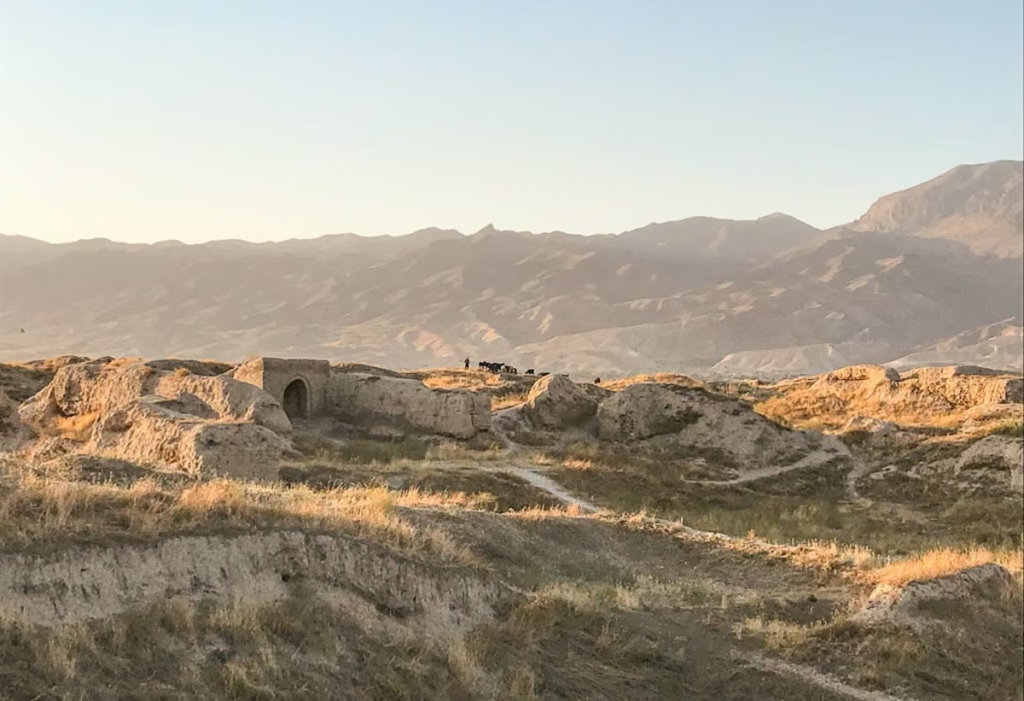
One of the main reasons to visit Panjakent is to see Ancient Panjakent, the ruins of the old Sogdian city just outside the modern town.
The settlement developed into an important Sogdian city between the 5th and 8th centuries AD. Archaeologists have uncovered temples, houses, fortifications, workshops and elaborate wall paintings that provide a fascinating glimpse into life in pre-Islamic Central Asia.
Russian archaeologist Boris Marshak spent more than five decades working on the site, uncovering pottery, sculptures, frescoes and manuscripts.
There’s still something wonderfully raw about walking among the sunbaked ruins. A lot of the most spectacular finds have ended up in museums elsewhere, but standing among the remaining walls gives you a much better sense of just how substantial this city once was.
The small Ancient Panjakent Museum sits near the archaeological site and explains some of the excavation work. Much of the material on display consists of replicas, but it’s worth visiting before walking through the ruins. Entry to the museum is 5 TJS.
How to get there: Marshrutka #5 from Panjakent can take you toward Old Panjakent. Ask for “Stari Panjakent” and confirm with the driver where to get off.
Wander Panjakent Bazaar
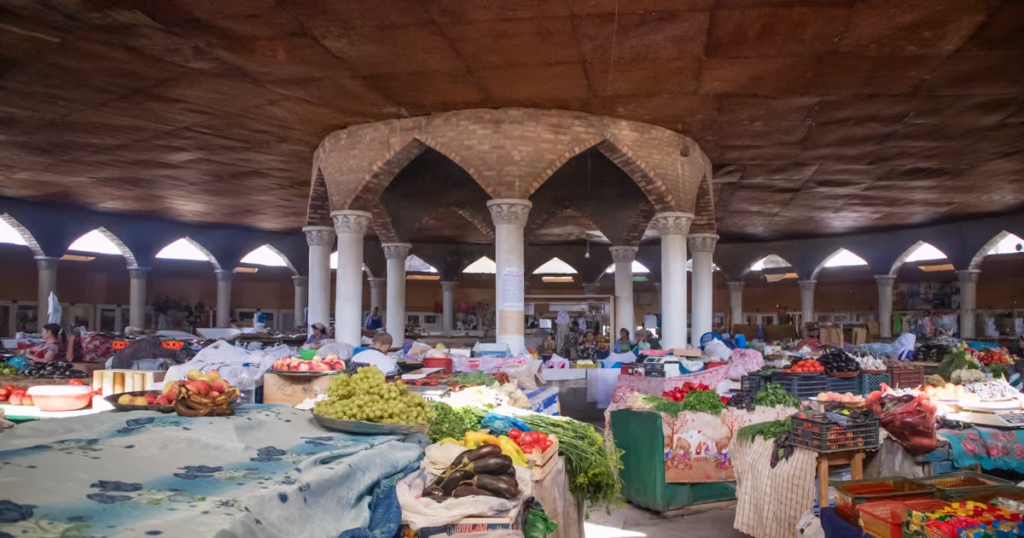
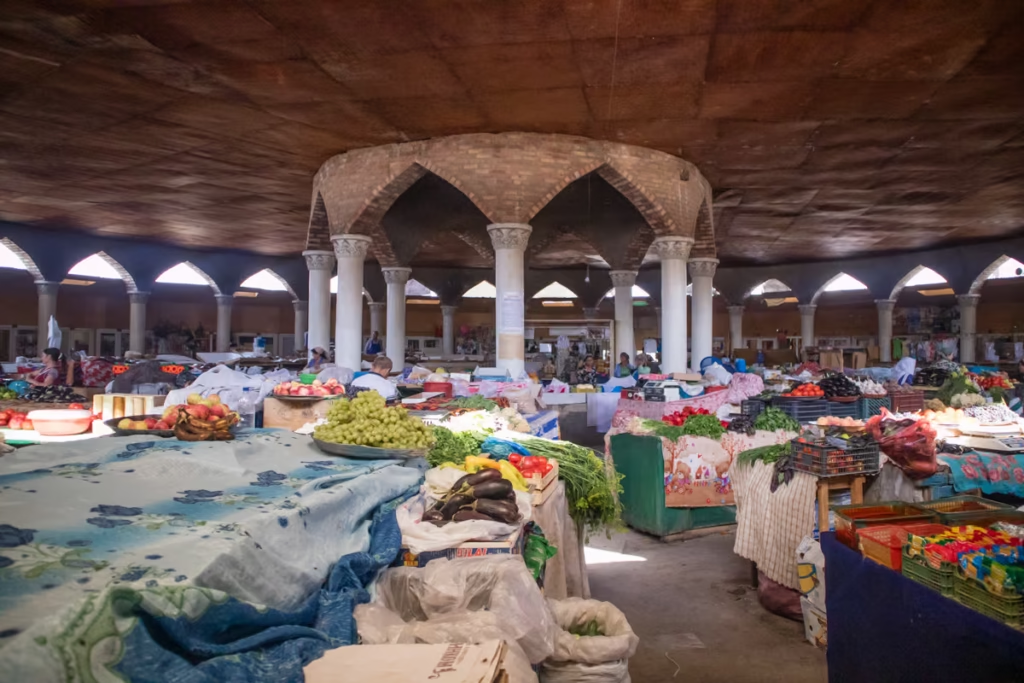
Panjakent Bazaar is one of the best places to experience everyday life in the city. It gets busy in the morning as locals and traders arrive from villages throughout the Zeravshan Valley and surrounding mountains.
The market is housed in a distinctive circular building and sells pretty much everything you’d expect from a Central Asian bazaar: fresh produce, bread, snacks, clothing, household goods and other everyday supplies.
If you’re heading into the Fann Mountains, this is also one of the best places in Panjakent to stock up on food and snacks before a trek.
The area around the bazaar is also an important transportation hub, with shared taxis departing toward destinations including Samarkand, Dushanbe, Khujand, Haft Kul, and the Fann Mountains.
Take a hike: The 10 best treks in Tajikistan
Visit Sarazm, a UNESCO World Heritage Site
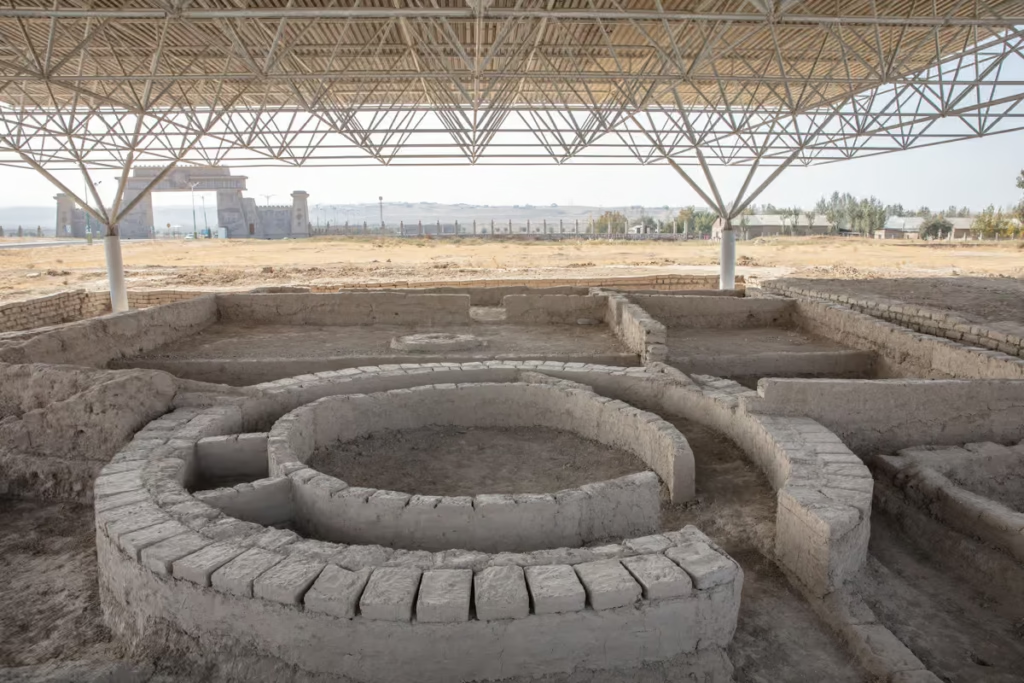
Just 15 kilometers west of Panjakent, near the Uzbekistan border, Sarazm is one of the most important archaeological sites in Tajikistan and a UNESCO World Heritage Site.
Unlike Ancient Panjakent, which is primarily associated with the Sogdian period, Sarazm takes you much further back in time. The settlement dates from the 4th millennium BCE to the late 3rd millennium BCE, making it one of the earliest known proto-urban settlements in Central Asia.
Archaeological discoveries at Sarazm show that the settlement was involved in long-distance trade and cultural exchange across Central Asia, the Iranian plateau and beyond. Excavations have uncovered evidence of early agriculture, metallurgy, crafts, jewelry and domestic life.
Today you can walk through the excavated areas and visit the small museum on site. Some of the archaeological structures have been covered to protect them from the elements.
How to get to Sarazm: Sarazm is about 15 kilometers west of Panjakent and can be reached by road or local marshrutka. If you’re traveling between Panjakent and the Uzbekistan border, it’s particularly easy to combine Sarazm with your journey.
Hunt Down Panjakent’s Soviet-Era Mosaics
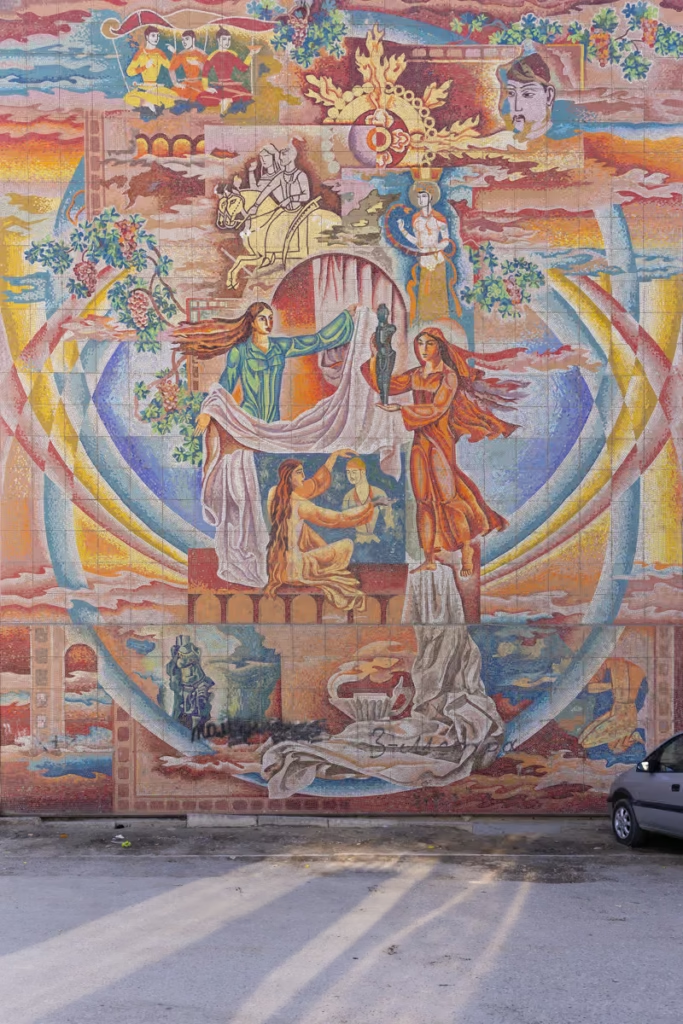
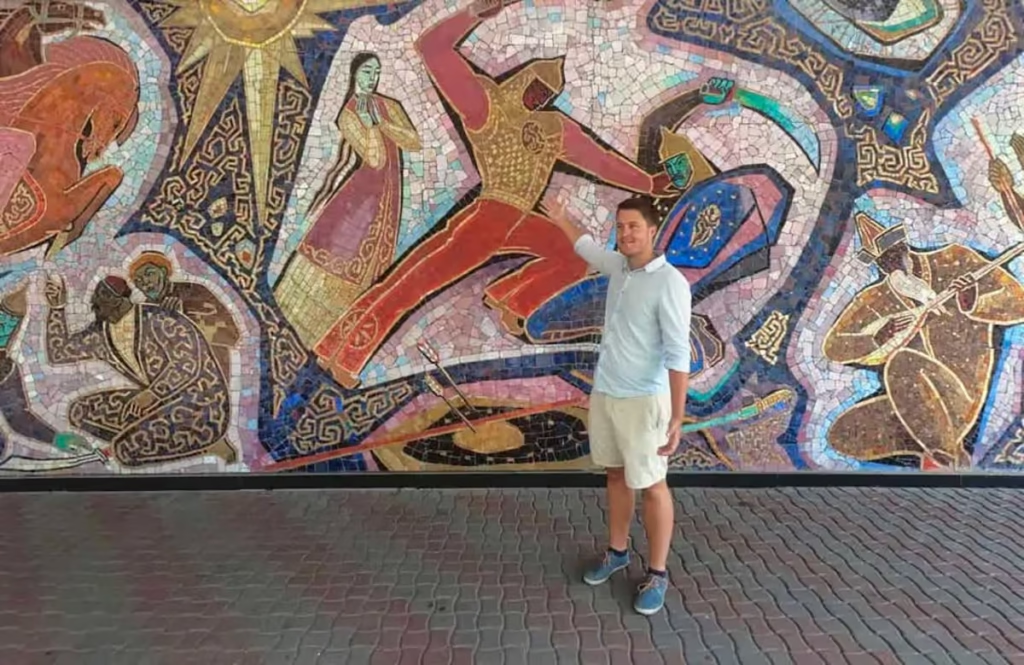
One of my favorite things to do in Panjakent is wander around looking for the city’s Soviet-era mosaics.
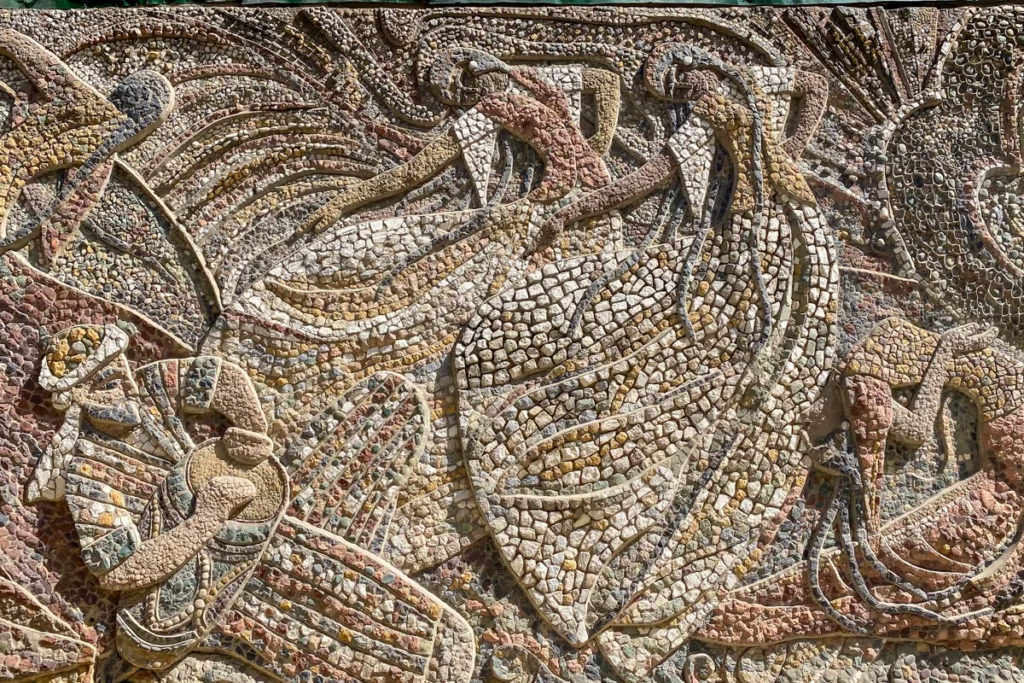
Several mosaics around town depict scenes connected to Tajik culture and history, including Nowruz celebrations, traditional life and themes connected to the region’s ancient Zoroastrian past.
They are an interesting reminder that Panjakent’s history doesn’t stop with Ancient Sogdiana. Soviet architecture and public art are another layer of the city’s story, and you can find these pieces while simply walking around town.
Some older buildings in central Panjakent have been affected by redevelopment, so if you’re interested in the mosaics, I wouldn’t assume every one will remain indefinitely. Photograph the ones you find and treat them as part of a rapidly changing cityscape.
Sadly, these mosaics will all be torn down with major development that will knock down older buildings along the main road to be replaced by giant soulless high-rises- a similar fate to the Dushanbe Mosaics.
Visit the Rudaki Museum
The Rudaki Museum is a worthwhile stop if you want to understand more about Panjakent and the wider Zeravshan Valley before heading into the mountains.
Several rooms cover regional history and ethnography, while exhibits focus on Abu Abdullah Rudaki, one of the most important figures in classical Persian-Tajik literature. Other displays include archaeological finds from Ancient Panjakent, historical artifacts, frescoes and ethnographic material.
There are also some replicas of archaeological discoveries, along with one particularly memorable collection of bad taxidermy, which is truly remarkable.
Admission: 30 TJS when I last visited, but check locally for current prices.
See Olim Dodkho Mosque and Madrasa
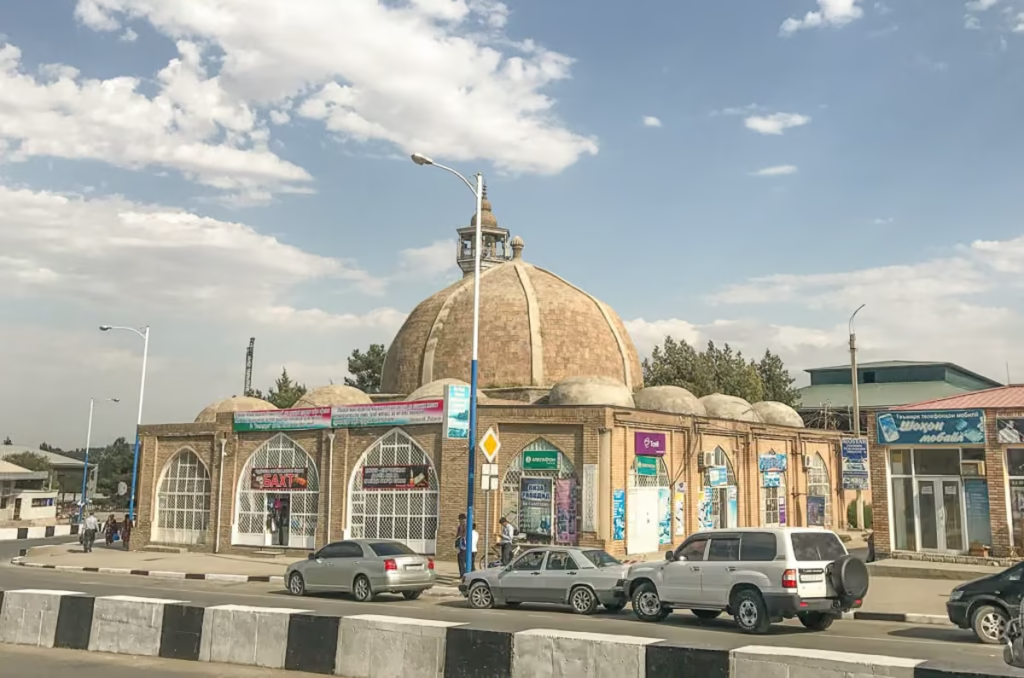
Olim Dodkho Mosque and Madrasa sits directly opposite Panjakent Bazaar, making it an easy stop while exploring the center of town.
The mosque is still used for worship, so remember that this is a functioning religious site rather than simply a tourist attraction. If you’re in Panjakent on a Friday, you’ll see the area become particularly lively around prayer time.
I enjoyed this stop partly because it gives a very different perspective on Panjakent from the archaeological sites. Ancient Sogdian history is the city’s big headline, but everyday Tajik religious and cultural life is happening right here in the middle of town.
Find Panjakent’s Statues
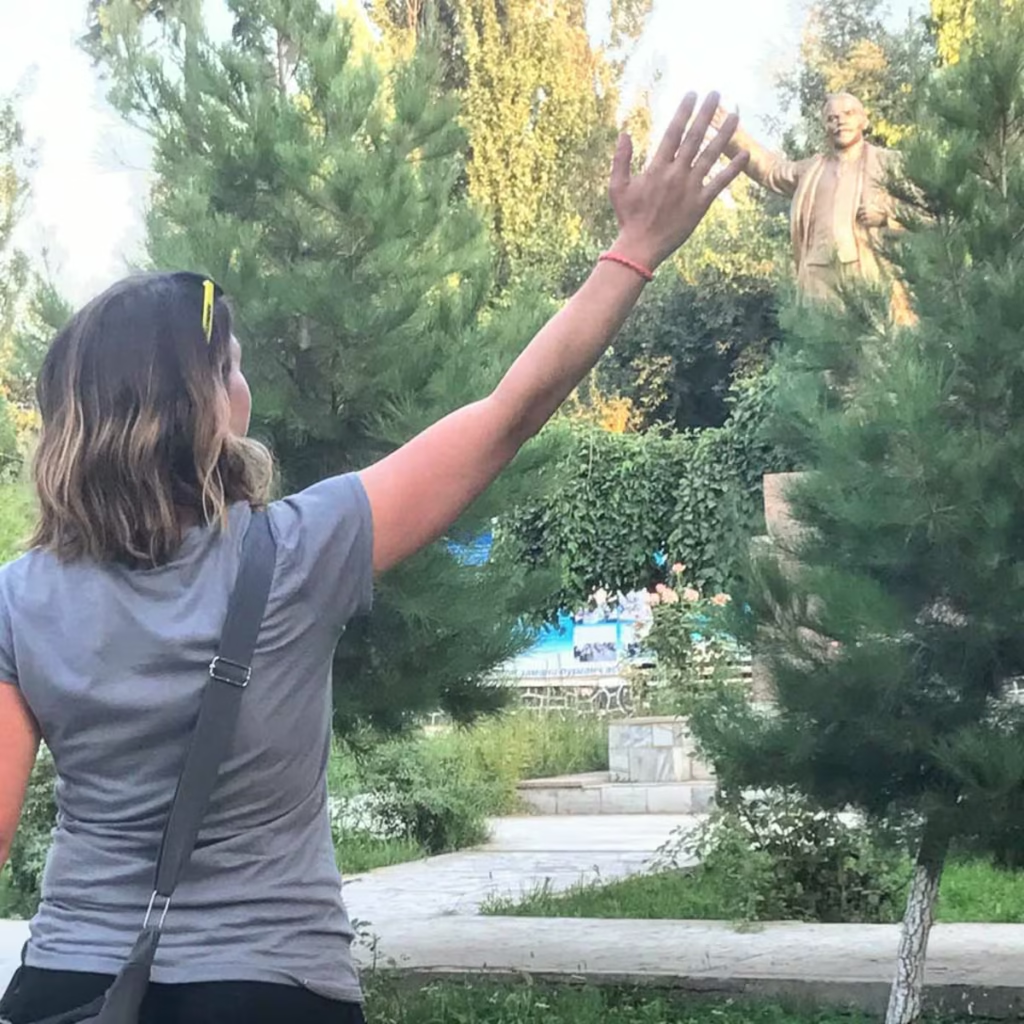
Panjakent has an eclectic collection of statues that reflect different chapters of Tajik history.
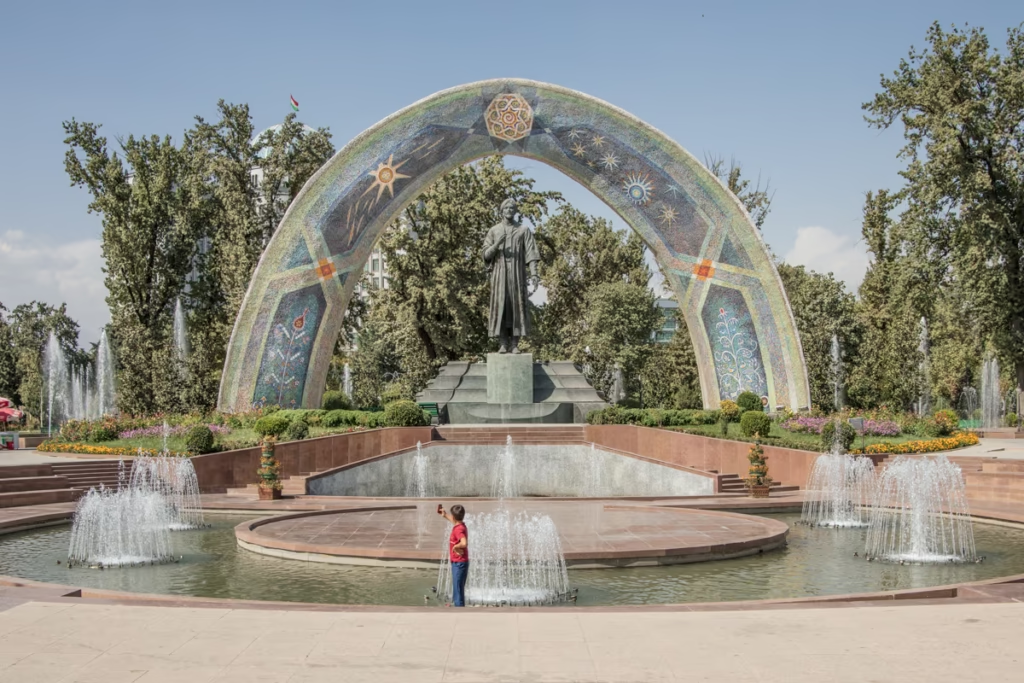
Look for monuments dedicated to Loik Sherali, Divashtich, Ismoil Somoni and Vladimir Lenin.
Loik Sherali was one of Tajikistan’s best-known modern poets, Divashtich was the Sogdian ruler associated with the final years of Ancient Panjakent, Ismoil Somoni was the founder of the Samanid dynasty, and Lenin needs considerably less introduction.
Seeing these figures together is a pretty good visual summary of Panjakent itself: ancient Sogdian history, Persian-Tajik literary culture, Islamic-era Central Asia and the Soviet period all sitting within the same small city.
Plan your trek into the Fann Mountains
How to Get to Panjakent
Panjakent is primarily reached by road. There is no commercial airport serving the city, so most independent travelers arrive by shared taxi or bus from Dushanbe or Khujand, or cross the Tajikistan-Uzbekistan border from Samarkand.
If you’re traveling overland through Central Asia, the Samarkand route is by far the most logical way to enter Panjakent.
From Dushanbe to Panjakent
Shared taxis and buses connect Dushanbe with Panjakent. Shared taxis generally take around 5–6 hours depending on road and traffic conditions. Shared-taxi fares around 150 TJS, although prices can change.
From Dushanbe, head to the Chor Bogh Taxi Stand on the north end of the city, used for journeys toward Khujand and Panjakent and confirm the destination before getting in.
From Khujand to Panjakent
Shared taxis to Panjakent leave from around Khujand’s Pakhtakor Bus Station. This is one of the most straightforward ways to travel between the two cities, although departure times depend on filling the vehicle. Shared taxis from Khujand to Panjakent cost about 150 TJS.
From Samarkand to Panjakent
Traveling from Samarkand to Panjakent is one of the easiest ways to add Tajikistan to an Uzbekistan itinerary. The two cities are connected by the Panjakent-Samarkand border crossing, making Panjakent a natural first stop after leaving Uzbekistan.
From Samarkand, travel toward the Jartepa border crossing on the Uzbek side. After crossing into Tajikistan at the Sarazm/Panjakent crossing, shared taxis and other local transport can take you onward to Panjakent.
The border is roughly 20 kilometers from Panjakent, and shared taxis from the area around the bazaar are commonly used.
For the latest border procedures, transport options and crossing experience, see my detailed Panjakent-Samarkand Border Crossing Guide.
Where to Stay in Panjakent
Budget
Salom Hostel
| +992 92 780 7716 |
Ran by the super friendly and helpful Zafar and family, Salom Hostel is tucked in a neighborhood behind the Rudaki Carnival. There are two dorm rooms and a lovely courtyard to lounge and have breakfast in.
Zafar can help you with just about anything you need as a traveler in and around Panjakent. I love hanging out in the courtyard on rest days between and after hikes. Salom is a great place to try and meet other travelers to join in the Fanns if you’re not keen on solo trekking.
Midrange
Umariyon Hotel
| Booking.com |
Umariyon Hotel is upstairs from a minimart and has rooms with private and shared bathrooms. I’ve always found the staff friendly when I’ve stayed at Umariyon, but it does have that ‘old Soviet hotel’ feel to it.
Where to Eat in Panjakent
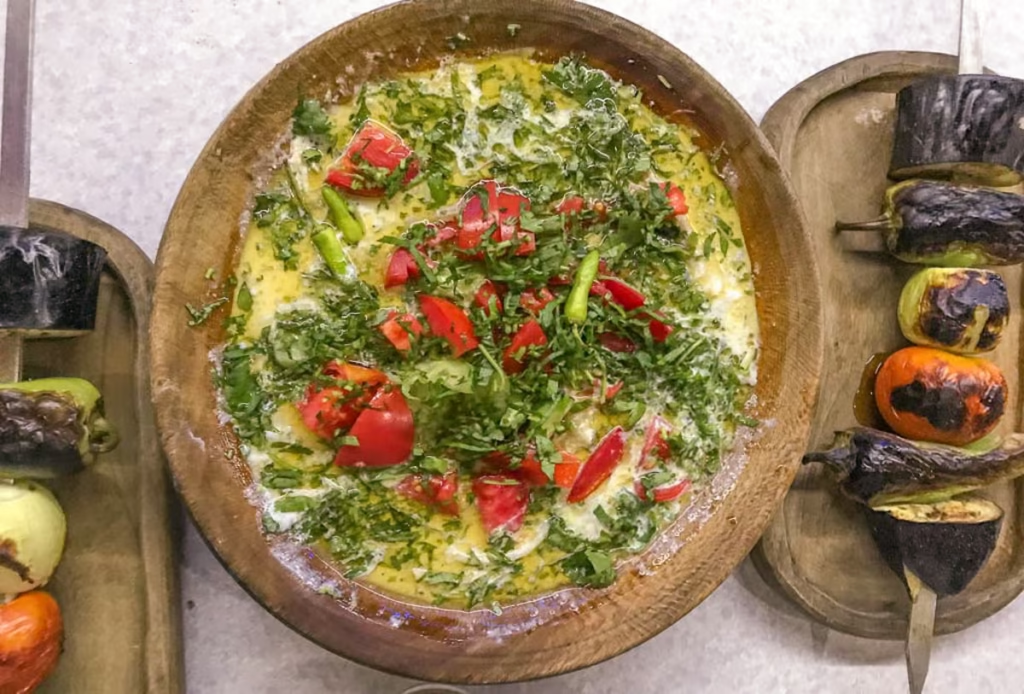
Bora Bora Cafe
Bora Bora Cafe is one of the newer additions to Panjakent’s food scene, with a menu that includes Central Asian dishes alongside some Georgian dishes. It’s also one of the better options in town if you’re craving a proper coffee.
Restaurant Dusti
Restaurant Dusti is a good choice for traditional Tajik and Central Asian food in the center of town. If you’re trying qurutob in Panjakent, this is one of the dishes I’d order.
If you turn up late and find the restaurant closed, check next door at Dusti Cafe, which is run by the same people and has a simpler fast-food menu.
Panjakent Bazaar
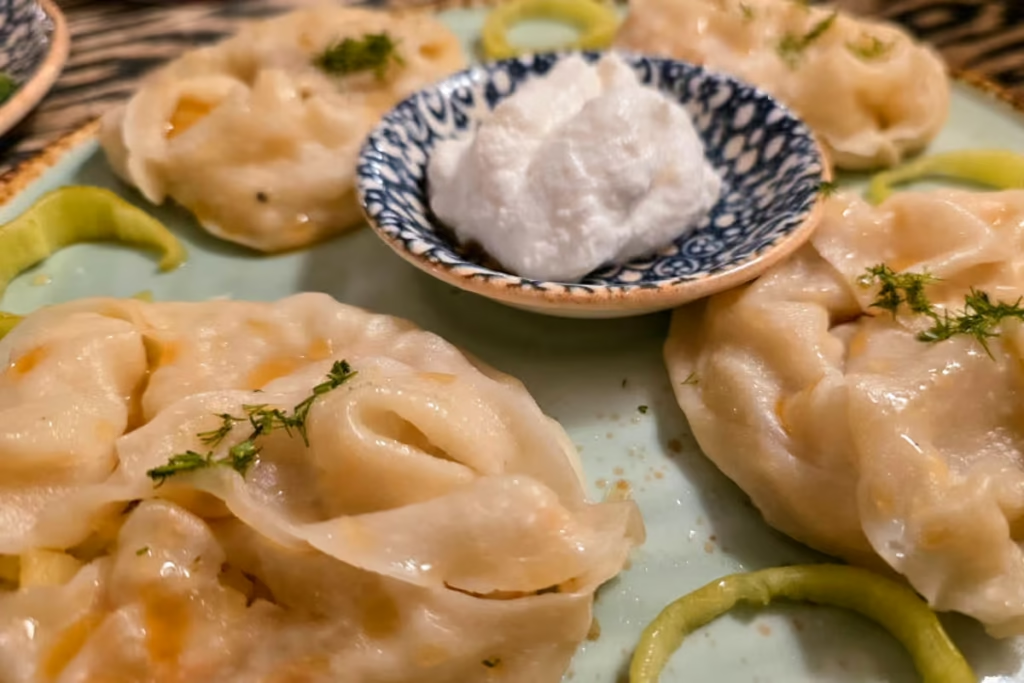
For a cheap and local meal, head to the small chaikhanas around Panjakent Bazaar. You’ll find Tajik food and Central Asian staples such as samsa, plov, manti and shashlik.
Heading to or coming from Uzbekistan? Check out my two week Tajikistan & Uzbekistan itinerary
How to Get Around and Out of Panjakent
To Dushanbe: Shared taxis leave from the bus station, 2 km east of the Panjakent Bazaar. You can usually find cars trying to fill up out in front of the bazaar too. A seat will cost you about 150 TJS.
To Samarkand: In the lot across the street from the Panjakent Bazaar you’ll find shared taxis waiting to fill up to make the 15 minute journey to the border. A seat will cost 15 TJS, or you can charter the entire car for 60 TJS. Once across the border, you’ll need to negotiate a shared taxi to Samarkand. Expect to pay about 8,000 UZS for a seat in a shared taxi, or charter the whole car for about 32,000 UZS. Read more about crossing the Panjakent border crossing.
To Khujand & Istaravshan: Both Istaravshan and Khujand bound shared taxis can be found in the lot opposite Rudaki Avenue from the clothing bazaar, or from the bus station 2 km east of town. Khujand bound shared taxis will cost about 150 TJS per seat, and Istaravashan shared taxis will cost about 100 TJS.
To Haft Kul: Shared taxis to the Haft Kul villages leave from around the bazaar for about 70 TJS, just ask around. For the 30 TJS minibus to Shing, the village just before the lakes, you’ll need to head up the street leading off of Rudaki at the bazaar before 2 pm.
To Artuch (Fann Mountains): To get to Artuch to begin a trek in the Fann Mountains to along the Lakes Loop, Chukurak, and beyond, you can either try to catch the 40 TJS minibus that leaves from near the bazaar at 9:30 am and 12 pm, or grab a shared taxi for about 80 TJS per seat.
Day Trips From Panjakent
Haft Kul
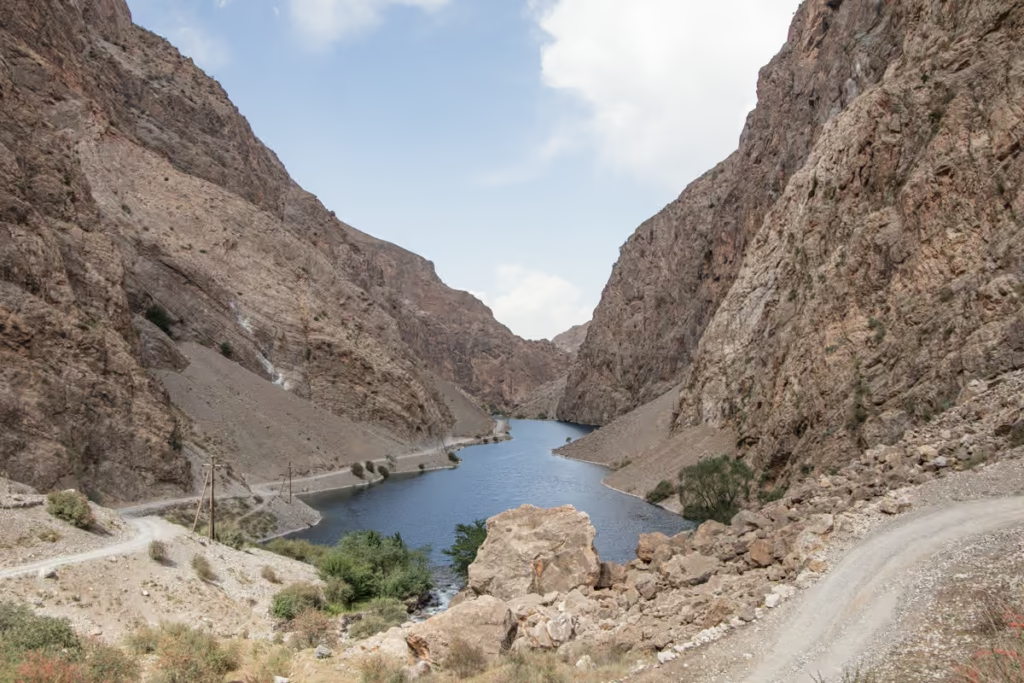
One of the best day trips from Panjakent is the Haft Kul, also known as the Seven Lakes.
The lakes are tucked into a dramatic valley in the Fann Mountains and are connected by a road, making it possible to visit several of them without committing to a multi-day trek.
If you’re short on time, you can visit Haft Kul as a day trip from Panjakent. If you have more time, spending a night or two in the valley is a much better way to experience it without rushing through the entire journey.
A private vehicle is generally the easiest option for a day trip, especially if you’re traveling with several people and can split the cost.Chartering a car for this day trip will cost you about 800 TJS return, but can be split amongst up to 5 travelers.
Panjrud
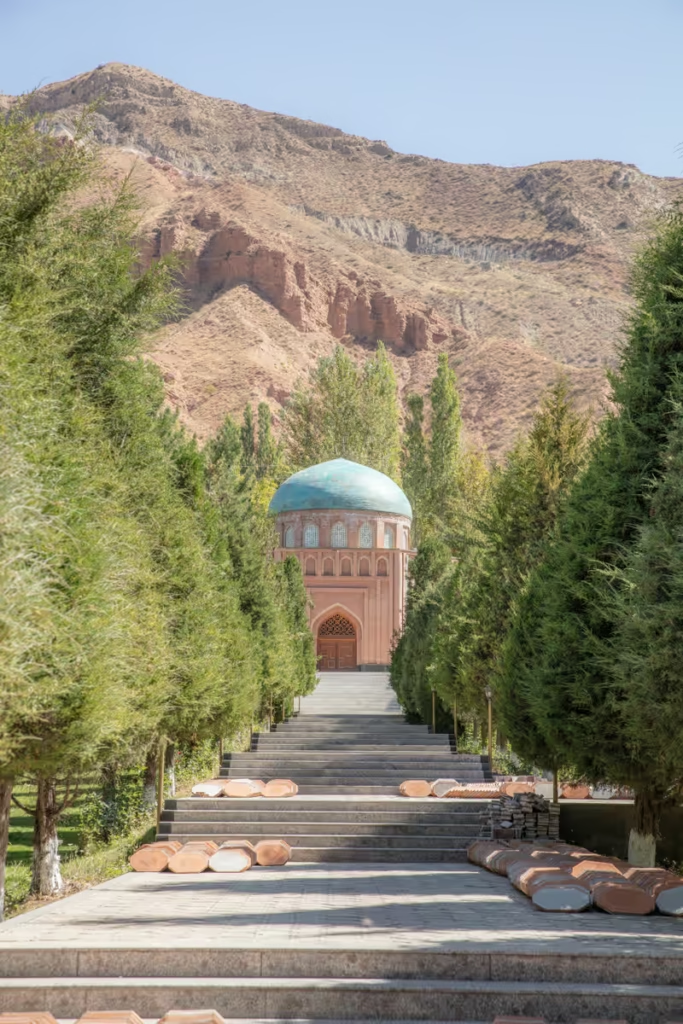
Panjrud is the birthplace of Abu Abdullah Rudaki, one of the most important early figures in Persian-Tajik literature.
His mausoleum sits just off the road toward Artuch, making Panjrud an easy stop if you’re already traveling into the Fann Mountains.
You can reach Panjrud by taking the minibus toward Artuch from Panjakent, although transport back can be less straightforward. If you aren’t in a hurry, ask locally about onward vehicles before getting out.
For travelers interested in Tajik literature and history, this is a particularly worthwhile detour because it connects the modern landscape with one of the region’s most important literary figures.
It’s possible to get to Panjrud by way of minibus from Panjakent (the same one bound for Artuch) for about 15 TJS, but getting out of Panjrud may take a while.
Mazor i Sharif
Mazor-i Sharif (not to be confused with the Mazar e Sharif in Afghanistan) is a small settlement near Panjakent known for the Mausoleum of Muhammad Bashoro.
I haven’t personally visited yet, so this is one of the places around Panjakent that remains on my own list rather than a stop I can give a first-hand review of. If you’re interested in exploring more of the Zeravshan Valley beyond the better-known attractions, it’s worth investigating as a possible side trip.
How Many Days Do You Need in Panjakent?
One day in Panjakent is enough to see the city’s main sights, visit the bazaar and Rudaki Museum, and explore Ancient Panjakent.
Two days in Panjakent gives you enough time to add Sarazm and slow down a little rather than treating the city as a box to tick before rushing into the mountains.
If you’re using Panjakent as a base for the Fann Mountains, Seven Lakes or Artuch, plan additional days depending on your trekking itinerary.
Personally, I’d give Panjakent at least two nights if your schedule allows. The city is small, but that’s part of its appeal. You don’t need to sprint around checking attractions off a list.
My Thoughts on Panjakent
Panjakent is one of those places that makes more sense once you actually spend a little time there. On a map, it can look like little more than a convenient stop between Samarkand and the Fann Mountains. In reality, it’s sitting on top of layer after layer of Central Asian history.
Ancient Sogdian ruins sit outside the modern city, the UNESCO-listed settlement of Sarazm reaches back thousands of years, Soviet mosaics survive among newer development, and the bazaar still functions as the everyday heart of town.
Then there are the mountains. Head east and the landscape changes quickly, with the Zeravshan Valley giving way to the dramatic Fann Mountains, Seven Lakes and some of Tajikistan’s best trekking.
So yes, you can visit Panjakent in a day. But if you have the time, I’d stay for two nights, eat some qurutob, wander the bazaar, poke around the old ruins and let the city be a city for a minute before heading into the mountains.
Panjakent may not be Tajikistan’s most famous destination, but that’s exactly why I keep coming back.
Have any Questions About Visiting Panjakent?
Ask your Panjakent travel questions in the comments section below.
Posts from Tajikistan
Jizeu, Tajikistan: Trek & Travel Guide
Tajikistan Travel Guide: Plan Your Trip
Dushanbe Travel Guide & Things to Do
Dushanbe Mosaics: Soviet-Era Art in Tajikistan
2 Week Tajikistan Itinerary
3 Week Tajikistan Itinerary
4 Week Tajikistan Itinerary
10 Day Tajikistan Itinerary
1 Week Tajikistan Itinerary
Panjakent Travel Guide: Things to Do

OVIR Registration in Tajikistan: Dushanbe Guide
Panjakent-Samarkand Border Crossing Guide
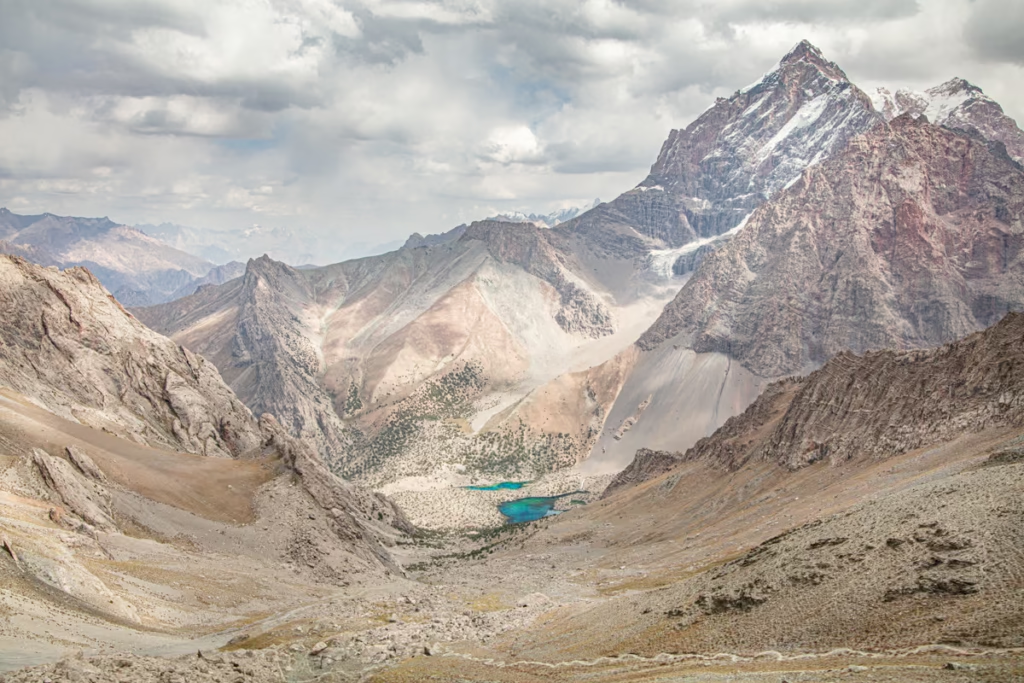
Fann Mountains Trekking Guide
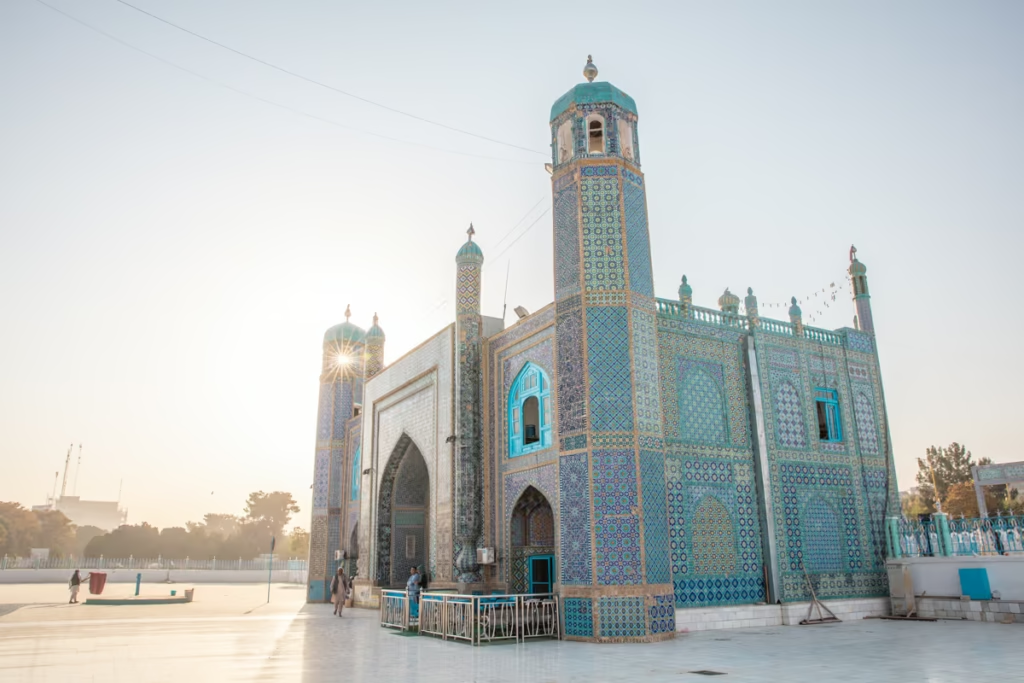
Central Asia Travel Guide
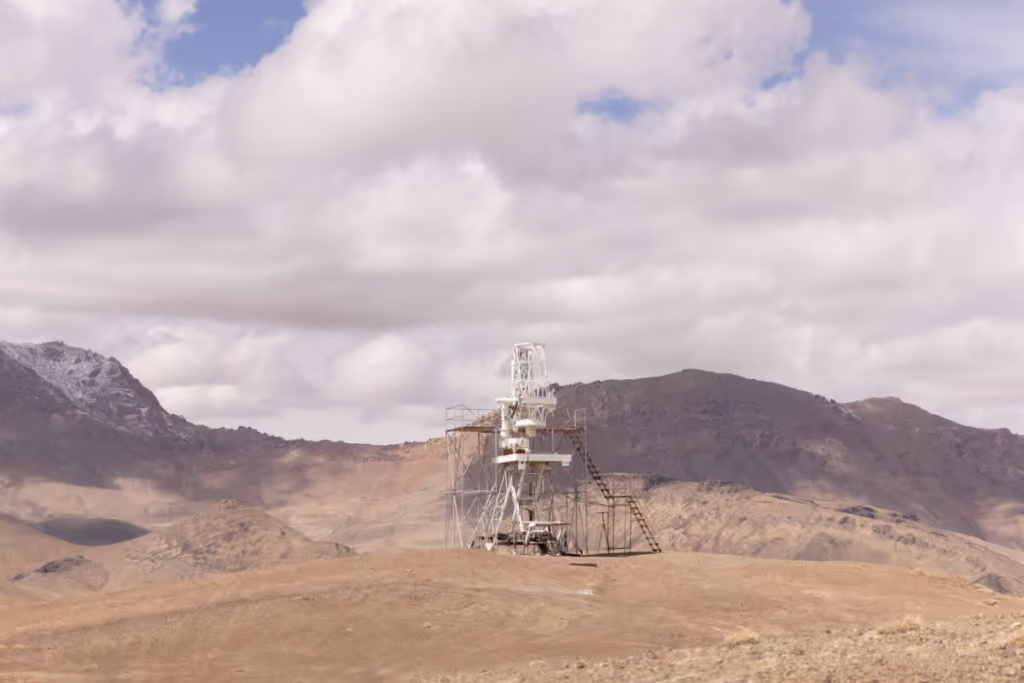
Tajikistan SIM & eSIM Guide
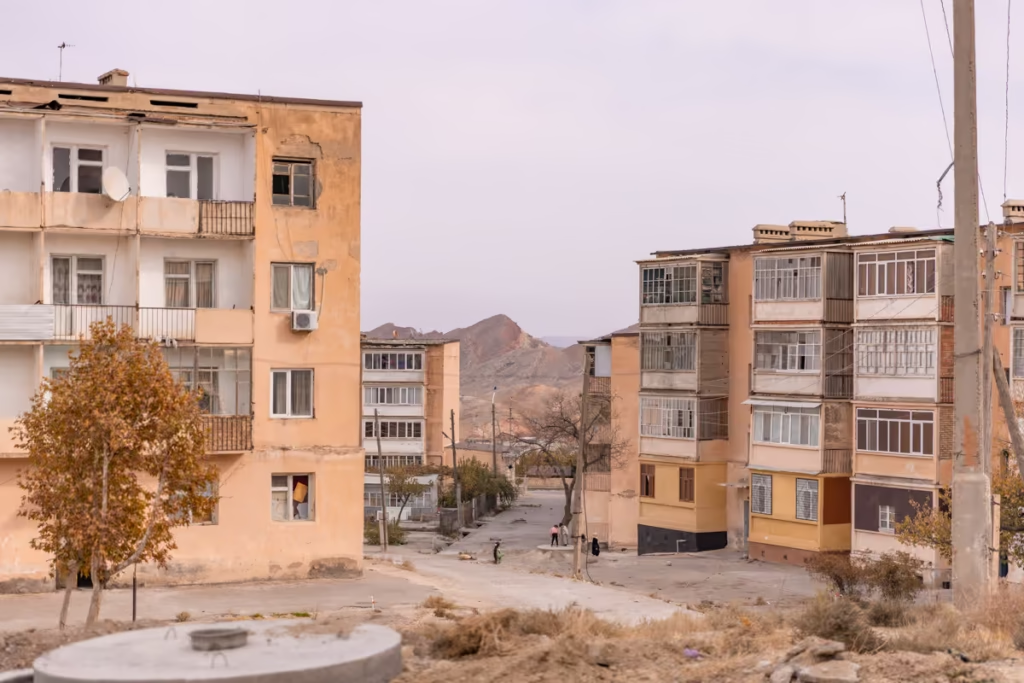
Shurab, Tajikistan: An Almost Forgotten City

Isfara-Batken Border Crossing Guide

Oybek Border Crossing: Tashkent to Khujand
Best Restuarants in Dushanbe | Where to Eat
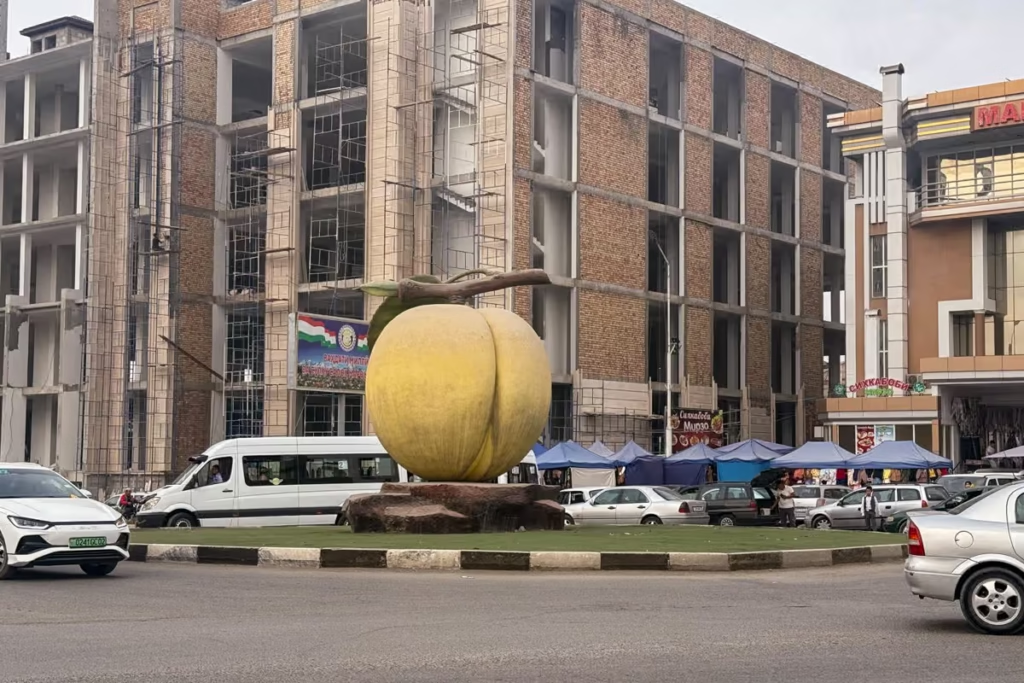
Isfara Travel Guide, Tajikistan
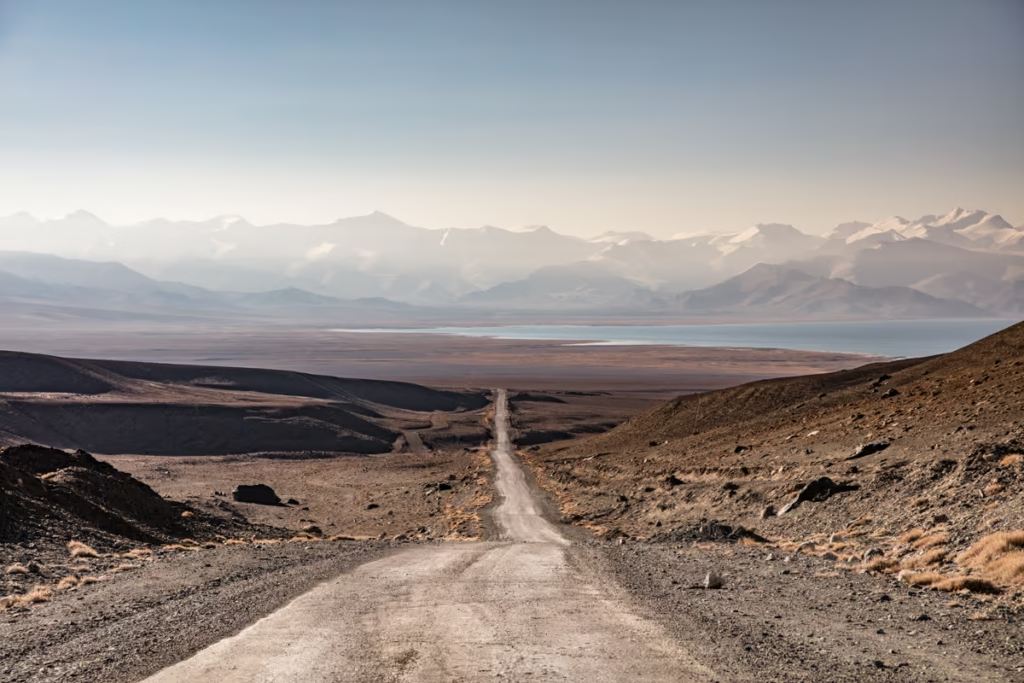
Pamir Highway Itinerary: 10 Days from Dushanbe to Osh
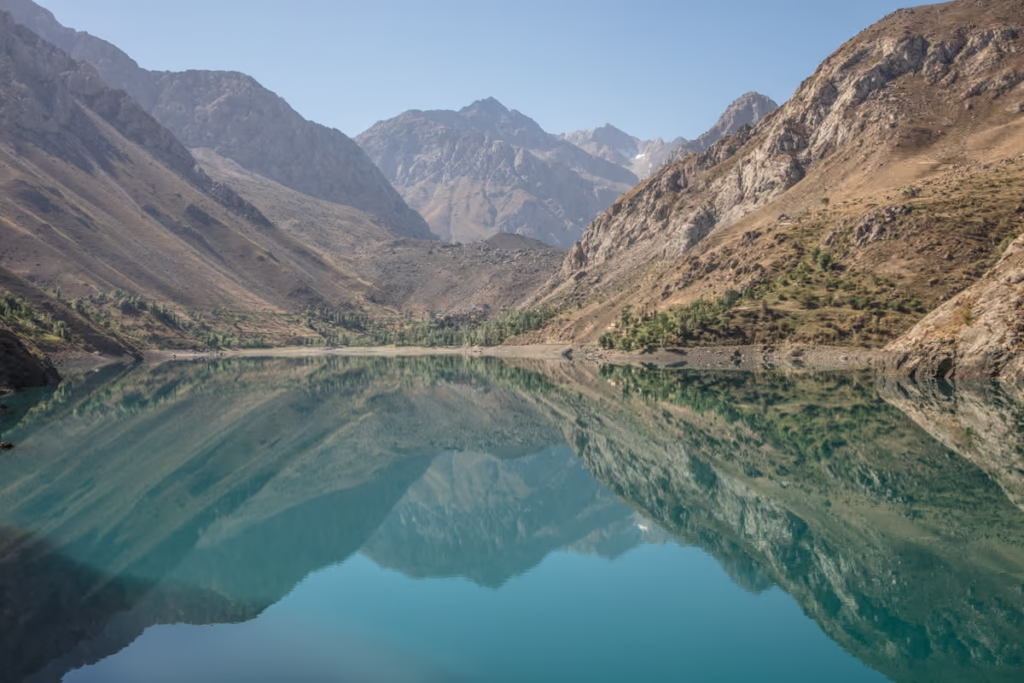
Haft Kul: A Guide to the Seven Lakes of Tajikistan
Tajikistan Letter of Invitation (LOI)
Jarty Gumbez, Tajikistan: A Complete Travel Guide
How to Use Payment Terminals in Tajikistan
Shor Bulog Observatory, Tajikistan
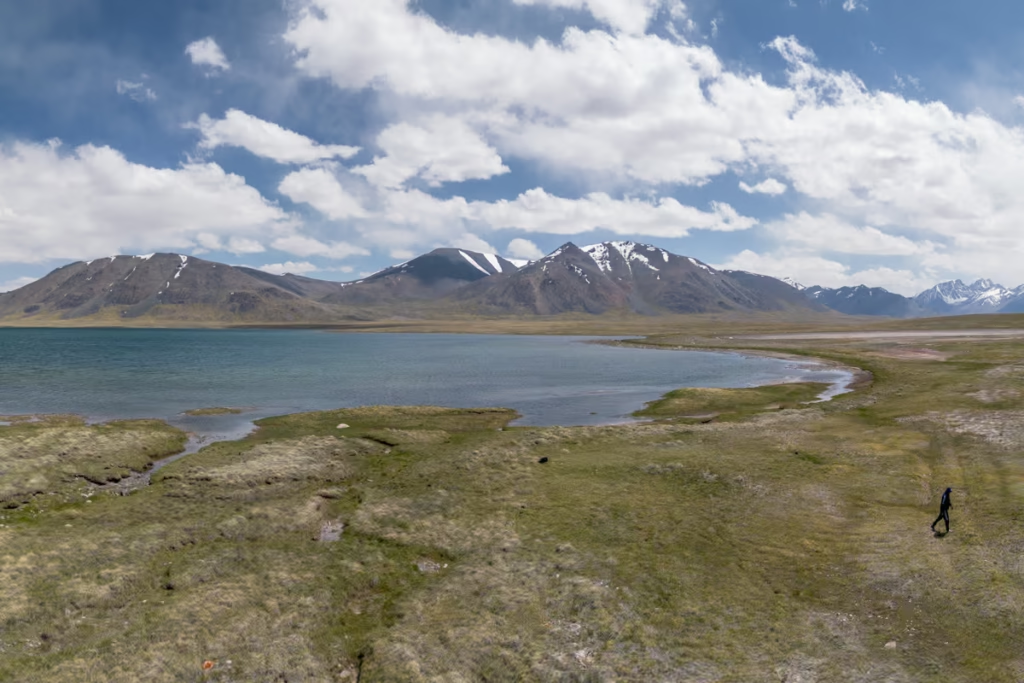
Visiting Zorkul, Tajikistan
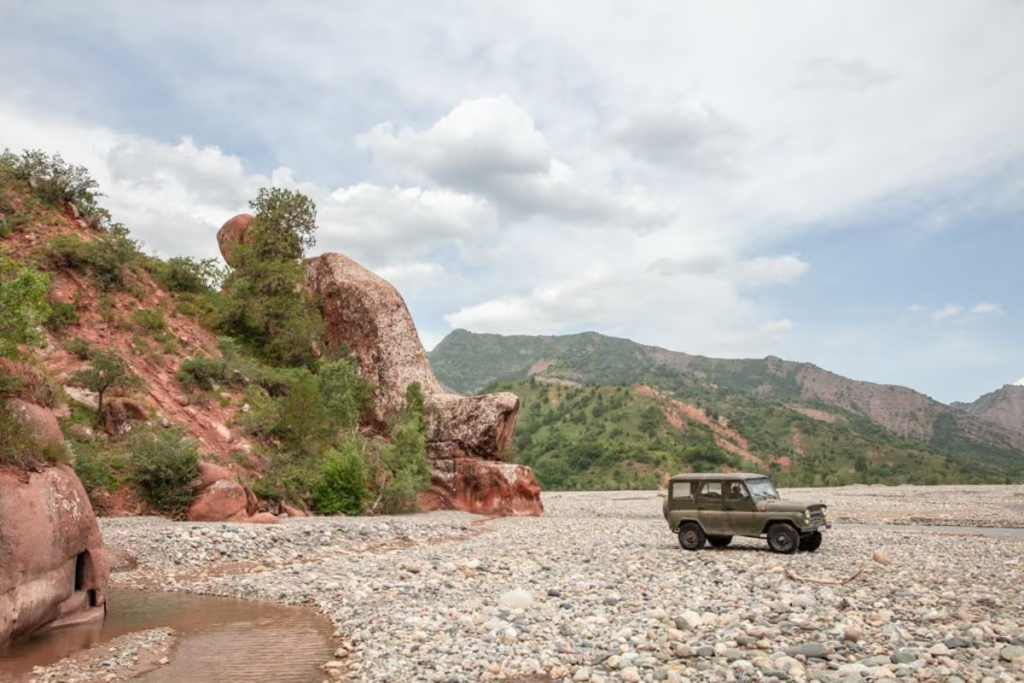
Visiting the Sary Khosar Nature Reserve
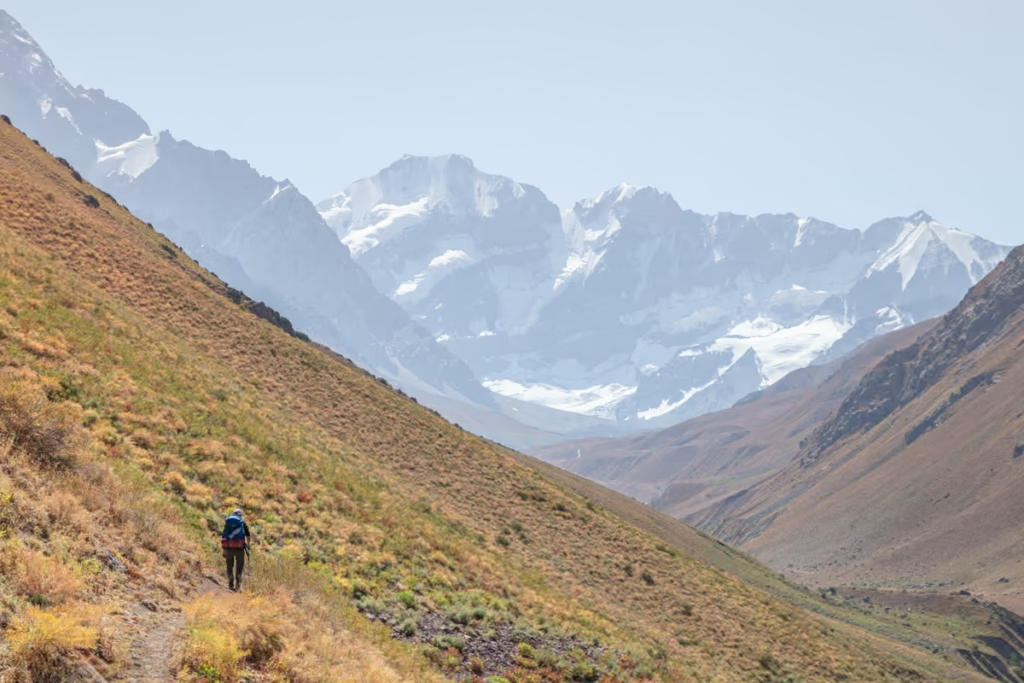
A Guide to Rasht Valley, Tajikistan
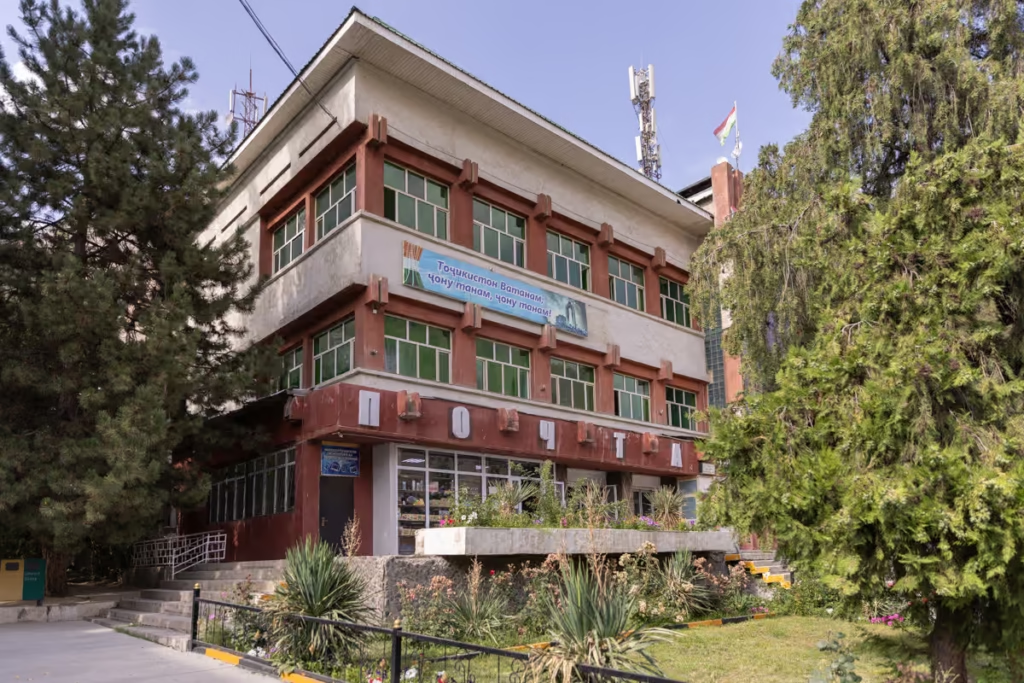
Soviet Architecture in Khorog
10 Essentials to Pack for Central Asia
The Gardan i Kaftar Hike in Tajikistan’s Rasht Valley
Stalin Statue in Asht, Tajikistan
Crossing Dukdon Pass in Tajikistan’s Fann Mountains
South Aral Peak Hike, Tajikistan
Shaimak Travel Guide Tajikistan
A Day Trip to Taboshar Uranium Mines in Istiklol, Tajikistan
How to Get to Timur Dara Lake, Tajikistan
How to Visit Childukhtaron, Tajikistan
Bolshoi Allo Lake, Tajikistan
Climbing Kyzyldong, Tajikistan
A Guide to the World Nomad Games
Registering with Tajikistan OVIR in Khorog
Karakul Travel Guide, Tajikistan
Gumbezkul Pass Hike, Tajikistan

Madiyan Hot Springs, Tajikistan
Dushanbe Day Trips
Central Asia Travel Tips
Vegetarian in Central Asia
nice information and good article thank you